Mossad-linked Israeli law firm loses anti-BDS case in US labour tribunal
MEMO | January 24, 2016
An Israeli law firm with links to Mossad has lost a case it brought against the United Electrical, Radio and Machine Workers of America (UE), after the trade union endorsed the Boycott, Divestment and Sanctions (BDS) movement at its national convention in August 2015.
A report on the UE website states that, on January 12, the National Labor Relations Board dismissed an unfair labour practice charge brought by Shurat HaDin. UE, an independent union representing some 35,000 workers in a manufacturing, public sector and private non-profit sector jobs, was the first national US union to endorse BDS.
The Israeli law firm had filed the charge on October 13, alleging that UE’s resolution violated the prohibition in US labour law against ‘secondary boycotts’. UE, meanwhile, argued that “Shurat Hadin’s action was an attempt to interfere with the First Amendment rights of the union and its members to express opinions on political and international issues.”
Responding to the decision by the National Labor Relations Board, an independent agency of the US government, UE National President Peter Knowlton said that the union had “withstood attempts by the US government to silence us during the McCarthy era in the 1950s,” and was “unbowed by the latest attempt of a surrogate of the Israeli government to stifle our call for justice for Palestinian and Israeli workers.”
He added: “The NLRB’s decision is a victory for the growing BDS movement across the US, which faces increasing political attempts to silence and intimidate critics of the Israeli government. As Americans who have a constitutional right to criticize our own government, we certainly have a right to criticize and, if we choose, boycott a foreign government that is heavily subsidized by US taxpayers.”
Shurat HaDin, in the words of the UE report, “is an Israeli organization that uses legal cases to harass supporters of Palestinian rights and critics of Israel.” Its director has “privately admitted to taking direction from the Israeli government over which cases to pursue.”
According to one Israeli journalist, Shurat HaDin “files lawsuits at the behest of the Israeli government”, yet still “dares to define itself as a ‘human rights organisation’.” The firm’s track record of failure includes a lawsuit against Jimmy Carter, and an ‘anti-discrimination’ case brought against a pro-boycott Australian academic.
Israeli forces detain Palestinian lawmaker, former minister in Hebron
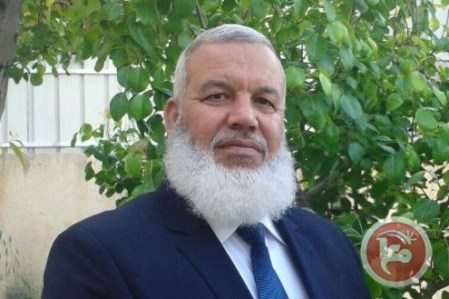
Palestinian security sources said Israeli forces detained Hatim Qafisha, a Hamas-affiliated member of the PLO’s Palestinian Legislative Council, from his home. (MaanImages)
Ma’an – January 24, 2016
HEBRON – Israeli forces detained at least six Palestinians, including a Palestinian lawmaker and a former Palestinian Authority minister, from their homes in the southern occupied West Bank district of Hebron overnight Sunday, Palestinian and Israeli sources told Ma’an.
Palestinian security sources said Israeli forces detained Hatim Qafisha, a Hamas-affiliated member of the PLO’s Palestinian Legislative Council, from his home in the Wadi al-Hariyya neighborhood of Hebron city.
Security sources added that unidentified assailants set fire to Qafisha’s private vehicle after he had been detained and Israeli forces had left the area.
Israeli forces also raided the Nimra neighborhood around dawn and detained Issa al-Jaabari, who served as the PA’s Minister of Local Governance in 2006.
Sources said Israeli forces blew the front doors off of al-Jaabari’s home before raiding the dwelling and detaining the former minister.
Furthermore, Israeli forces carried out a predawn raids in the al-Sheikh neighborhood of Hebron city and detained a former prisoner identified as Ibrahim Jamil Hassan after ransacking his home, along with several others in the neighborhood.
An Israeli army spokesperson did not confirm specific detentions, but said Israeli forces detained four Palestinians in Hebron city, all of which were reportedly detained for being “Hamas operatives.” The spokesperson added that two more Palestinians were detained in areas north and west of the city.
Israeli Rabbi Calls for Execution of Palestinians
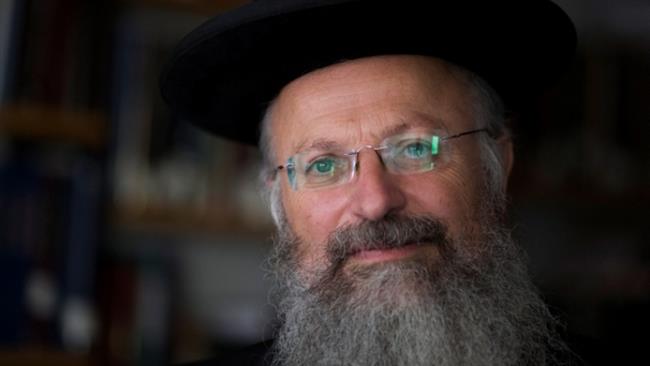
“We must eradicate this evil from within our midst”
IMEMC News & Agencies | January 24, 2016
Chief Israeli Rabbi Shmuel Eliyahu announced Tuesday, on Facebook, that Palestinians should be executed in order to establish safety in Israel.
“Israeli army has to stop arresting Palestinians,” he posted on his Facebook wall, “but, it must execute them and leave no one alive.”
According to the PNN, Eliyahu is well known for his racist behavior and controversial statements about Arabs and Muslims. He has been calling on the government to carry out state-sanctioned revenge against Arabs in order to, in his words, “restore Israel’s deterrence.”
The hard-right wing and bloodthirsty Chief Rabbi of Safed, and also a member of the Chief Rabbinate Council additionally declared that the Palestinians are the enemy of the Israeli occupation state and they “must be destroyed and crushed in order to end violence.”
In 2007, according to the Jerusalem Post, Eliyahu was quoted saying that “If they don’t stop after we kill 100, then we must kill a thousand. And if they do not stop after 1,000 then we must kill 10,000. If they still don’t stop we must kill 100.000, even a million.”
In 2012, Eliyahu was charged for racist statements. Among these were, according to Israel national news: “The Arab culture is very cruel,” and “The Arabs behave according to different codes, and violent norms that have turned into ideology.”
The rabbi allegedly stated that examples of this new Arab “ideology” now include stealing farm equipment from Jews and blackmailing farmers for protection against thefts. He also supposedly said that “the minute you make room for Arabs among Jews, it takes five minutes before they start to do whatever they want.” The justice ministry dropped the charges because the statements ‘may’ have been altered by reporters.
The Jerusalem Post reported him saying: “Should we leave them alive in order to then free them in another gesture to Palestinian Authority President Mahmoud Abbas? The fact that they still have a desire to commit terrorist attacks shows that we are not operating strongly enough,” he said.
Explaining more about his fatwa, Eliyahu wrote, on his facebook, page that “the Israel Police officers who do keep terrorist Palestinians alive should be prosecuted under the law.”
He went on: “We must not allow a Palestinian to survive after he was arrested. If you leave him alive, there is a fear that he will be released and kill other people.” He added: “We must eradicate this evil from within our midst.”
Also of interest: 2015: 130 Palestinians Detained for Social Media Posts
Yemen’s Plight and Britain’s “Creative Clout”
Arms Sales and Advice on Killing
By Felicity Arbuthnot | Dissident Voice | January 23, 2016
Today, I want to speak about the once-in-a-generation chance we have, together, to improve the way we enhance the cause of human rights, freedom and dignity.
— David Cameron. Speech on the European Court of Human Rights, January 25. 2012
In June of 2014, speaking in his official residence,10 Downing Street, Prime Minister David Cameron gave a speech on business:
“Britain has huge creative clout around the world … From Asia to America, they’re dancing to our music, watching our films and wearing our designers’ latest creations”, he trilled.
He omitted to say “and dying under our bombs.”
In December, United Nations High Commissioner for Human Rights, Prince Zeid Ra’ad Al-Hussein warned, regarding the Saudi-led bombing of Yemen:
I have observed with extreme concern the continuation of heavy shelling from the ground and the air in areas with high a concentration of civilians as well as the perpetuation of the destruction of civilian infrastructure – in particular hospitals and schools …
Yemen’s Ministry of Education’s data shows more than 1,000 schools inoperable, 254 completely destroyed, 608 partially damaged and 421 being used as shelter by those displaced by the Saudi-led, UK-assisted onslaught. Some destroyed schools were attacked repeatedly. Thus they were not errors, or that obscene US dreamt up whitewash for atrocities: “collateral damage.” The US also supplies “intelligence” for air strikes.
Three Medecines Sans Frontier medical facilities have also been destroyed and this month the Noor Center for the Blind was hit – twice. Abdullah Ahmed Banyan, a patient, said:
People with disabilities are being struck in their residence. Around 1.30 am, two missiles hit the live-in quarters of a home for the blind. Can you imagine they are striking the blind? What is this criminality? Why? Is it the blind that are fighting the war?
As in Afghanistan and Iraq, those other favourite targets of the US, UK and their allies, wedding parties, have again become victims. One gathering in two large tents bombed last September, killed thirty eight people. Another wedding celebration attack reportedly killed one hundred and thirty. In the country’s capitol, Sanaa a wedding party hall was also destroyed – what is this criminal obsession about weddings? The Chamber of Commerce was also destroyed.
Definition of war crimes include “intentionally directing attacks against buildings dedicated to religion, education, art, science or charitable purposes, historic monuments, hospitals and places where the sick and wounded are collected …” and “attacking or bombarding, by whatever means, towns, villages, dwellings or buildings which are undefended and which are not military objectives.”
None of which deters the UK from joining in. Foreign Secretary Philip Hammond has confirmed to Parliament that UK troops are helping the Saudi military identify targets. He said there had been “no evidence of deliberate breach of international humanitarian law.” He clearly has not bothered to do the research.
There is worse. Apart from aiding and abetting potential war crimes, the British government is profiting in eye watering sums from the human misery, deaths and destruction with arms sales to Saudi Arabia increasing by 11,000 percent in one three month period alone.
In spite of the United Nations stating that civilians are being disproportionately killed in Yemen, in just one three month period last year arms sales rose to over one Billion £s, up from a mere nine million £s from the previous three months.
The exact figure for British arms export licences from July to September 2015 was £1,066,216,510 in so-called “ML4” export licences, which relate to bombs, missiles, rockets, and components of those items.
Angus Robertson, Leader of the Scottish National Party in Parliament, is outraged, accusing during Prime Minister’s Questions this week, that:
Thousands of civilians have been killed in Yemen, including a large number by the Saudi air force and they’ve done that using British-built planes, with pilots who are trained by British instructors, dropping British-made bombs, who are coordinated by the Saudis in the presence of British military advisors.
Isn’t it time for the Prime Minister to admit that Britain is effectively taking part in a war in Yemen that is costing thousands of civilians lives and he has not sought parliamentary approval to do this? (Independent, January 20th, 2016. Emphasis added.)
Allan Hogarth for Amnesty International again confirmed that British advisors are “… actually located in the Saudi control room.”
David Cameron waffled inadequately with dismissive arrogance and supreme economy with the truth, that Britain was insuring that “… the norms of humanitarian law” were obeyed. Comments redundant.
Two days ago at Yemen’s Ras Isa port on the Red Sea, an oil storage facility was hit killing five people. The attack destroyed the part of the compound used to load tanker trucks with refined products for domestic distribution. So now a people, many of whom the UN has warned are facing near starvation, will face further shortages to cook what little they have and to heat
So much for Cameron’s vow to “improve the way we enhance the cause of human rights, freedom and dignity.”
MSF paramedic, civilian first responders killed in Saudi double-tap airstrike in Yemen
RT | January 22, 2016
Almost two dozen people, including civilian rescuers and an ambulance driver from an MSF-affiliated hospital, have reportedly been killed after Saudi-led coalition planes carried out repeated airstrikes on the same target in Sa’ada province, Yemen.
Médecins Sans Frontières (MSF) confirmed the fatal air raids in Sa’ada, saying the “planes went back to bomb areas already hit.”
“An ambulance driver from an MSF hospital [was] killed,” the NGO wrote, explaining that the first responders at the scene had been trying to help those wounded in the first round of strikes.
The ambulance had just picked up the victims when a direct strike killed everyone inside it, said the director of the Jumhuriya Hospital in Sa’ada province, according to the New York Times.
Yemen’s Health Ministry has strongly condemned the coalition’s actions as a “heinous massacre” that first targeted a residential building in Sa’ada, Saba news agency reports, citing ministry spokesperson Dr. Nashwan Attab.
According to reports, at least 20 people were killed and another 35 wounded, in what the medics claim was a deliberate attack. Following the initial air raid in the Dhahyan district of Sa’ada, first responders rushed to the scene to care for the wounded. But the planes soon returned to strike again in an attempt to “completely eliminate the few remaining medical staff in the province,” Dr. Attab said.
WARNING! DISTURBING VIDEO, VIEWER DISCRETION IS ADVISED!
“There are still people under the rubble and it is difficult to get them as a result of targeting by Saudi aggression of paramedics and medical personnel in the region,” he added.
Earlier this week, MSF said that the Saudi coalition continues to engage civilian targets on the ground, in particular medical treatment facilities, noting that over 100 hospitals have witnessed attacks since the Saudi-led intervention began last March.
The constant bombing of health clinics in Yemen has created conditions in which locals fear for their lives and try to avoid hospitals at all costs, MSF said. The United Nations has criticized the Saudi-led bombing campaign in Yemen for the disproportionate number of civilian deaths and the destruction of infrastructure.
The UN estimates that the violence has resulted in a dramatic increase in civilian casualties, with more than 5,800 people killed in Yemen since March.
READ MORE:
Yemeni hospitals seen as targets, people ‘avoid them as much as possible’ – MSF
Israeli sniper shoots Canadian citizen in West Bank
American Herald Tribune | January 21, 2016
In describing what she calls a lack of symmetry in recent escalations in Israel and the West Bank, Canadian-Palestinian artist and PhD student Rehab Nazzal told The Real News, “You have the Israeli occupation forces armed with all forms of weapons, and you have the youth, mainly the youth in their 20s, mostly they were born during what’s called, between quotations, the peace process.”
Nazzal is describing Palestinians born during the Oslo Accord negotiations of the 1990s, who have been protesting across Israel, the occupied West Bank and Gaza since the summer–and suffering for it.
Since 1 October 2015, 155 Palestinians have been killed by Israeli forces. 24 Israelis have been also been killed, many in stabbing or car ramming attacks.
Nazzal was photographing an Israeli skunk truck in the West Bank–an armored crowd control vehicle that shoots putrid water–when an Israeli sniper shot and wounded her on 11 December, 2015. Medics were prevented from attending to her because rounds of teargas were shot consecutively at them by Israeli forces.
She is recovering still in the West Bank, and plans to continue her Canadian federal government research council-funded research into “non-lethal” and crowd-control weapons.
Nazal contextualizes her shooting among the countless other shootings across the West Bank. “I am one of over 16,000 Palestinians who were injured during the past three months. Among these, over 6,000 with live bullets. Just yesterday, here in my neighborhood where I am now, there were tens of Palestinians who were injured, one seriously with live bullets, and one was killed. He was shot in the chest and was killed yesterday. Today was his funeral. And the city is just buried with tear gas and all forms of aggression,” she said.
She continues to speak about the inequity of aggression between Palestinian youths throwing stones and Israeli forces quelling the demonstrations with live bullets and the inability of nations–even her own nation–to act. “It’s very difficult. And the worst part of it, that the world is silent.”
According to Nazzal’s lawyer Dimitri Lascaris, there is little legal recourse to take because of “something called a State Unity Pact, which effectively bars a lawsuit against the government of Israel or any other government for human rights violations,” Lascaris said, clarifying that he is referring to the Canadian courts. He adds that what is “appalling about this law is that it does not provide immunity for states when they engage in commercial activities. But they could commit crimes against humanity, war crimes, you know, some of the most heinous offenses under international human rights law, and they’re completely immune from suit in the domestic courts of our country.”
Nazzal and Lascaris do intend to painstakingly document the event of Nazzal’s shooting, and in particular the impediment of medics by Israeli forces. And using political power, Lascaris said, “we’re going to call upon the government of Justin Trudeau to fulfill its promise of a more principled foreign policy than the predecessor Harper government, which was absolutely and unequivocally committed to supporting the government of Israel, no matter what atrocities it committed.”
As yet, the new Canadian prime minister Justin Trudeau has not provided a statement of support for the Palestinian struggle and continues to remain a close ally of Israel.
Trudeau is also principally opposed to the Boycott, Divestment and Sanctions movement, a Palestinian civil society-led grassroots movement to call on companies to end their complicity with the Israeli occupation.
Nazzal describes her disappointment with the Canadian government’s lack of response–she is a Canadian citizen–as well as the lack of response from the Canadian ambassador to Israel.
“Not even a condemnation to what happened… If we suppose that the Israeli soldiers don’t know I am a researcher doing work, but I am an unarmed civilian and standing away, far from protesters, even this, we haven’t heard any word… from the Canadian ambassador in Israel or the foreign minister.
Which brings that hypocrisy to our human rights violations in other countries. Why, why Israel is not being questioned. I am, again, a Canadian citizen. I have my career, my children there. I have my life there. Yeah, I am just in disbelief, as well.”
Human Rights After Euromaidan
By Volodymyr Chemerys | CounterPunch | January 22, 2016
We have to admit: after winning ‘Euromaidan’, the human rights situation in Ukraine has deteriorated significantly.
This trend became apparent already in 2014, evidenced by a number of laws approved during the post-Maidan wave. In particular, we are talking about the law allowing preventive detention of citizens for thirty days, despite the fact that under the Constitution a person may be detained only for 72 hours. Also, changes have been made to the Criminal Code to enable cases to open against a Ukrainian citizen for making critical comments about the military draft of citizens in the “Anti-Terrorist Operation zone”.
In 2015, this trend continued. A law was passed on “de-communization” which is in conflict with a number of fundamental rights and freedoms guaranteed by the European Convention for the Protection of Human Rights and Fundamental Freedoms. These include freedom of assembly and association (Article 11 of the Convention), freedom of expression (Article 10) and freedom of speech.
As a consequence, in Ukraine there are a large number of political prisoners. In this regard, it should be emphasized that the people usually referred to as “political prisoners” in our media are typically representatives of right-wing organizations, arrested for the murder of a renowned journalist or involved in the grenade explosion near the Verkhovna Rada last August–in other words, people who are accused of committing serious criminal offenses.
The real political prisoners are journalists such as Ruslan Kotsaba, arrested and charged in early 2015 for expressing his views on the Internet, or communists such as Alexander Bondarchuk, who was distributing newspapers and leaflets containing oppositional texts. These are just two examples of many more that could be cited.
The situation of the right of peaceful assembly in Ukraine has also seriously deteriorated. On the one hand, courts in Ukraine do not make many decisions prohibiting public meetings. In some regions, including Kiev, local authorities generally do not make requests to the courts to restrict the freedom of peaceful assembly.
But on the other hand, the holding of peaceful assemblies on certain issues is today extremely dangerous. This is due to the threat of attack from the far right. Organizers often abandon planned assemblies due to the threats that they receive.
For these reasons, rallies against rising social service tariffs, the military draft or fascism, or rallies in favour of establishing civil peace, etc have been cancelled. On March 17, 2015 in Odessa, there was an attempt to organize a rally against tariff hikes in public transport, but the people who came out for it were surrounded by members of the right-wing groups, such as ‘Automaidan’ and ‘Oberig’ and only miraculously managed to avoid a serious clash.
And on January 19, the ultra-right disrupted a rally in Kyiv aimed to commemorate two Russian antifascists, the lawyers Stanislav Markelov and Anastasia Baburova who were killed in Russia in 2009.
It can be said that today in Ukraine, carrying out public actions advocating for social, political or economic rights is almost impossible. Actions in support of civil peace are immediately declared “separatist”. At the beginning of 2015 in Ukraine, there were large and frequent spontaneous demonstrations against military draft mobilizations. These were broad, grassroots initiatives by a dissatisfied population. But their organizers and participants have been hit with administrative penalties or, worse, have been tried in courts.
In general, it seems that the Parliament, the government and the president are able to offer the population nothing but usurious tariff increases, unemployment, anti-social reforms and further impoverishment. Dissatisfaction is increasingly punished by persecution. We are repeatedly told that that there is a war in our country, and the opposition should be imprisoned while “patriots” should be forgiven even for acts of murder because they kill so-called separatists. Never mind that members of the ‘Tornado’ and ‘Aidar’ battalions have tortured people – you must understand that they wanted to defend the rights and freedoms of Ukrainians!
Alas, this patriotic propaganda that dominates today in the Ukrainian society is, in fact, no different from the Russian variant. We have returned to the realities of the Soviet era, when it was impossible to freely express a point of view or watch this or that film. Ukraine has proscribed the Russian film ‘Irony of Fate’ and many other films. And the Institute of National Remembrance, a kind of ‘Ministry of Truth’, refused to give permission to register a newspaper called ‘Left March’ because the name is the same as the title of the well-known poem by the communist poet Vladimir Mayakovski.
So the human rights situation in Ukraine has deteriorated significantly and it is a real challenge for human rights activists to do their work. If similar things had happened during the regimes of Yanukovych (2010-14), Yushchenko (2005-09) and Kuchma (1994-2005), all human rights activists would unanimously have said that systemic violations of civil rights are taking place. If during the time of President Yanukovych, a journalist were placed on trial, an opposition political party were banned– as today the Communist Party is banned, or opposition parties were prevented from participating in local election, it would certainly have provoked a huge outcry among Ukrainian human rights activists.
Unfortunately, today, the powerful voices of human rights defenders are practically silent. This is due, first of all, to the fact that talking about such things is potentially dangerous. Critical voices run the risk of being labeled “agents of the Kremlin” or “separatists” by both the authorities and the members of ultra-right organizations.
Despite all this, there are human rights activists in Ukraine who are speaking out in favour of human rights, even if they face threats and harassment for doing so. Of note among such people is Tatiana Montyan.[1]
As a rule in such a situation, the loudest voices of human rights defenders are international human rights organizations, most notably, Human Rights Watch and Amnesty International. But in the case of the latter, its statements criticizing the Ukrainian government are coming mostly from the organization’s headquarters in London while its Ukrainian division maintains a certain politesse.
The Helsinki Union and Amnesty International in Ukraine issued statements in support of the aforementioned Ruslan Kotsaba. However, in comments to the published texts of the group, one reads many allegations that human rights defenders have “sold themselves to Putin” and so on, while in fact the same organizations – from Human Rights Watch and Amnesty International to the Organisation for Security and Cooperation in Europe –constantly report on systematic violations of civil rights in Russia, just the same as in Ukraine.
One cannot remain silent about what is going on now in our country.
Translator’s notes:
[1] See a July 2015 interview with Tatiana Montyan translated and published here on Fort Russ.
[2] All Ukrainian passports list names in their Ukrainian and Russian literations. Hence, ‘ Volodymyr (Vladimir) Chemerys’.
From Wikipedia:
Volodymyr Chemerys, b 1962, is a founding member of the Ukrainian Helsinki Union, one of the first perestroika organizations in Ukraine advocating renaissance of national culture and independence. The Union is now a human rights advocacy group. Chemerys was a member of the Verkhovna Rada (parliament) of the second convocation (1994–1998), but he is mostly known as one of the informal leaders of the ‘Ukraine without Kuchma’ mass protest campaign of 2000-2001. He also took part in the legendary 1991 student protests in Kiev.
Beginning from a conservative outlook, Chemerys has moved to the political left since the disappointment of the Yushchenko presidency.
Original text in Ukrainian here, translated to English by Liva.com, Jan 21, 2016
Paris state of emergency to remain till Daesh defeat: French PM
Press TV – January 22, 2016
France says the state of emergency put in place in Paris after last November’s deadly terror attacks by Daesh will be extended until the world could totally get rid of the Takfiri terror group.
Prime Minister Manuel Valls said in an interview with BBC Europe that France would seek to keep the state of emergency in place until the end of what he called the “global war” against Daesh terrorists.
“As long as the threat is there, we must use all the means,” he said, adding the state of emergency should stay in place “until we can get rid of Daesh.”
The French premier also called for a “total, global and ruthless” war against Daesh, which has swathes of land under control in Iraq and Syria since June 2014.
The state of emergency was imposed assailants struck at least six different venues in and around Paris on November 13, 2015. The terrorist attacks, claimed by Daesh, left 130 people dead and over 350 others wounded.
The exceptional measures adopted under the state of emergency empower the French police to keep people in their homes without trial, searching houses without judicial approval and blocking suspicious websites.
The new measures also include a ban on public demonstrations and allow authorities to dissolve groups inciting any acts that seriously affect public order in France.
UN rights specialists have called on the French government not to extend the state of emergency beyond February 2016 and instead ensure protection against any abuse of power while combating terror.
A number of French nationals are fighting alongside terror groups in Syria.
Refugee crisis in Europe
Valls warned that the European Union faces a grave danger from the ongoing refugee crisis.
He said the EU could not take all refugees fleeing the “terrible wars in Iraq or Syria. otherwise,” he added, “our societies will be totally destabilized.”
Europe has been facing an unprecedented inflow of refugees fleeing wars and violence in Africa and the Middle East, particularly Syria.
According to Valls, Europe needed to take urgent action to control its external borders, emphasizing that “if Europe is not capable of protecting its own borders, it’s the very idea of Europe that will be questioned.”
“We cannot say or accept that all refugees … can be welcomed in Europe, “ Valls noted, criticizing German Chancellor Angela Merkel, who called for her European partners to take on quotas of refugees.
He also said the EU needs to say in the strongest terms “that we will not welcome all the refugees in Europe.”
Last year, more than one million asylum seekers – the most since World War II – arrived in the European continent after making dangerous journeys by land and sea.
Everyday, about 2,000 refugees arrive in the European Union, according to official numbers.
UK PM calls for limiting war legal claims
Press TV – January 22, 2016
British Prime Minister David Cameron says he wants to stamp out what he called spurious legal claims against war veterans.
He said ministers had been asked to draw up plans to restrict claims, including by curbing financial incentives for “no win, no fee” cases.
The statements come as about 280 UK veterans are currently being investigated over alleged abuse by soldiers during the Iraq War.
Lawyers said no-one was above the law, and many abuse cases had been proven.
The Iraq Historic Allegations Team (IHAT) was established to investigate allegations of murder, abuse and torture against Iraqi civilians by UK military personnel between 2003 and 2009.
According to media reports, IHAT has considered at least 1,515 possible victims – of whom 280 are alleged to have been unlawfully killed – and lawyers are continuing to refer cases of alleged abuse. The head of the inquiry, Mark Warwick, has said there are “lots of significant cases” and that discussions would be held over whether they met a war crimes threshold.
Earlier, Cameron said he feared people were being “solicited by lawyers” enticing them into making accusations, and was concerned many of them were fabricated.
“Our armed forces are rightly held to the highest standards – but I want our troops to know that when they get home from action overseas this government will protect them from being hounded by lawyers over claims that are totally without foundation,” Cameron said, adding he had ordered the National Security Council to produce “a comprehensive plan to stamp out this industry.
“It is very important that all forces should be responsible within the law,” a London-based political analyst Rodney Shakespeare told Press TV.
He said the UK society needs to uphold the principals of decent behavior adding this is disgraceful that the government is now putting heavy efforts into stopping the trend.
Featured Video

Why Hamas Really Attacked Israel on Oct. 7
or go to
Aletho News Archives – Video-Images
From the Archives
Israel: Strategic Ally or Liability?
By Stephen Sniegoski | My Catbird Seat | June 12, 2010
The claim that Israel serves as a valuable ally for the United States is made by both pro-Zionists and much of the anti-war and anti-Zionist Left that is influenced by Noam Chomsky. As a result of the Gaza flotilla massacre, which has caused a world-wide uproar against Israel, the value of Israel to the United States is being publicly questioned in more mainstream foreign policy forums. … continue
Blog Roll
 Aletho News
- Why Hamas Really Attacked Israel on Oct. 7
- Declassified UK exposes British man who fought for ‘Israel’ in Gaza
- West’s death cult in a theater near you
- How the Yandex ‘Russian bots’ lie fell apart
- Burnham’s ‘Russia did Brexit’ ruse crumbles
- Estonia making movies and games to encourage war against Russia
- Four in five new UK jobs taken by foreigners – report
- Here’s what Trump’s latest U-turn really means for Russia and Ukraine
- The Houthis Are Not an Iranian Proxy
- Europe’s Energy Hypocrisy, Russian LNG Profits and US Dependence
- If Americans Knew
- Activists Abused By Israel Return to New Freedom Flotilla Mission
- 60 Minutes won’t tell the full truth about Israeli settler violence
- Nearly 50,000 women, girls killed or severely injured in Gaza since October 2023: UN Women
- ADL is working with AI companies to suppress alleged ‘antisemitism’
- Israeli occupation forces using social media surveillance unit to target hundreds of Palestinians in the West Bank
- Israel’s New – and Terrifying – Security Doctrine
- Israeli Attacks Kill Five in Gaza, Including a four-year-old and a woman
- Air Force Major Who Called for Trump’s Impeachment Held in Solitary Confinement
- It’s a Genocide, I’m Into It’: Seinfeld Mocks Protest over Palestinian Children Killed
- Universities fire dozens amid pressure from Zionist billionaires
- No Tricks Zone
- New Study Suggests Large Regions Of The Pacific Ocean Have Been Cooling For The Last 80 Years
- Germany’s Green Energy Debacle: High Energy Costs Force Kahla Porzellan to Close After 182 Years!
- New Study: 50 Years Of The Most Aggressive ‘Net Zero’ Policies Can Only Affect The Global Climate By 0.03°C
- US September “Heat” Was No Record…Many Records Set Decades Ago
- Latest European Green Energy Debacle; Portugal’s Largest Flagship Solar Park Insolvent!
- Green Energy Debacle: German Expert Professor Fritz Vahrenholt Warns Of Severe Economic And Social Consequences
- Two More Paleo Reconstructions Affirm Meters-Higher Sea Levels Across Ireland, Brazil 7000-6000 Years Ago
- New Study: Earth And Venus Surface Warmth Largely Explained By Convection And Lapse Rate, Not CO2 Or Radiation
- 2025 Nature Paper Claiming Worsening Global Drought Gets RETRACTED …Heavily Flawed
- New Study: ‘Global Drought Shows No Detectable Recent Acceleration Under Climate Warming’

