Buy the Rights-Abusing Cops Lunch Says Texas Lieutenant Governor Dan Patrick

By Adam Dick | Ron Paul Institute | September 3, 2015
Texas Lieutenant Governor Dan Patrick issued a statement Wednesday that says that, to counter “America’s negative attitude toward our law enforcement officers,” people should all-but grovel at the feet of any police they come across. Patrick even suggests that “financially able” individuals (who presumably are already paying cops’ salaries via taxes) pay for the lunches of any cops they may see in a restaurant.
Here is Patrick’s complete list of groveling suggestions:
Join me in changing this negative attitude toward those that protect us, by practicing the following:
Start calling our officers sir and ma’am all of the time. It’s a show of respect they deserve.
Every time you see an officer anywhere, let them know you appreciate their service to our community and you stand with them.
If you are financially able, when you see them in a restaurant on duty pick up their lunch check, send over a dessert, or simply stop by their table briefly and say thank you for their service.
Put their charities on your giving list.
If your local law enforcement has volunteer-citizen job opportunities, sign up.
Interestingly, Patrick never mentions in his statement that a major contributor to the negative attitude many people in Texas and across America have toward cops is the many times cops act in manners bereft of respect for the rights, property, health, and lives of the individuals they encounter.
How about the cops who abused Sandra Bland or Angel and Ashley Dobbs in Patrick’s home state? “Thank you sir. Thank you ma’am. Please, let me pay for that sandwich!”
While some people would say that these abusive cops are just a few bad apples, reading through articles by Rutherford Institute President John W. Whitehead or journalist William N. Grigg, it becomes clear that the basket contains many bad apples. The fact is that many cops are more intent on harassing, abusing, and dominating people they encounter than on serving and protecting them. Rather than disrespect for cops being, as Patrick seems to believe, some irrational, mystical belief that showed up out of nowhere, the disrespect is a logical response to the horror show of abusive cops that plays out again and again in this age of police militarization.
Though often overlooked, the war on drugs is an underlying cause of the worsening police conduct. Because the growth, manufacture, sale, transfer, and use of drugs are nonviolent and victimless activities, with no complaining victim, police have resorted to all kinds of invasive, deceptive, and destructive tactics in fighting the war. For example, the drug war has been used as an excuse for vast expansion of police practices including covert surveillance, sting operations, pretext traffic stops, asset seizures without any court hearing whatsoever, and SWAT team raids on homes and businesses. All of this is supposedly justified to protect people from themselves.
Of course, the drug war, like alcohol prohibition before it, has also spawned gangs fighting over turf. This violence, in turn, is used as an excuse for the further militarization of the police — in equipment, tactics, and mindset.
But, according to Patrick, we should be thankful for the SWAT team members who raided a home last night, pointing guns at all the suddenly awoken family members, turning the place upside down in an effort to find even a fraction of an ounce of a forbidden drug, and maybe shooting someone or the family’s pet dog to boot.
The drug war corrosion runs even deeper. Beyond the SWAT team members, there are also the undercover cops trying to snag individuals in drug sale stings, the traffic cops who make up pretenses to conduct drug searches without consent or pressure drivers to “consent” to searches, and even the desk-bound cops who handle the paperwork that allows the drug war machine to relentlessly move forward.
Patrick laments that “America’s negative attitude toward our law enforcement officers” may result in less people choosing to become cops. Yet, having less cops around can actually lead to much enhanced safety.
Let’s call off the war on drugs, its danger-enhancing police practices, and the related drug war exception to the Fourth Amendment. Let people exercise their right to grow, manufacture, sell, transfer, and use drugs as they see fit. Let the violence prohibition engenders wither. Free the drug war prisoners.
With the end of the drug war, the number of cops can be significantly reduced. Ending the war may also be the single biggest step that may be taken immediately to increase Texans’ and Americans’ respect for police.
Six Palestinian Journalists Kidnapped in August
IMEMC News & Agencies | September 3, 2015
The Union of Palestinian Radio and Television documented about 20 Israeli violations regarding the rights of Palestinian journalists and media staff working in Palestine this August.
 The Union stated, in the monthly report issued on Thursday, that Israeli forces detained six Palestinian journalists and two photojournalists, including Hazem Obaid, who works for Al-Quds TV.
According to Al Ray, Obaid was detained while he was en route to travel via Al-Karama crossing. Authorities later extended his detention.
The number of journalists, writers and media activists detained in the Israeli jails was up to19 prisoners, by this time, to include Nidal Abu Aker, the director of Bethlehem’s Al-Wehda Radio and presenter of “In Their Cells” programs. Abu Aker has staged a continued hunger strike since August 20th, in protest against the administrative detention policy.
Palestinians, this past month, have witnessed an escalation in the organized attack against Jerusalemite journalists during their coverage of the continued incursions of Al-Aqsa Mosque and the daily events in the city, in general.
During Israel’s latest military offensive on the Gaza Strip, 17 journalists were reported killed by Israeli forces. According to the Palestinian Center for Development and Media Freedoms (MADA), over 80 percent of Palestinian journalists were engaged in self-censorship by late October of 2014. In a dangerous precedent, Israeli police recently fined Palestine TV photojournalists and crew members of Russia Today TV, under the pretext of “obstruction” caused during their coverage to prevent the entry of worshipers to the Al-Aqsa Mosque from Al-Silsila gate.
Israeli Minister of Culture says Soldiers Should Have Shot Nabi Saleh Women
Al Ray/ World Bulletin | September 3, 2015
 Israeli Minister of Culture, Miri Regev, has said that the Israeli army should have shot the Palestinian women who saved Mohammad al-Tamimi from abuse by an Israeli soldier. The incident took place during the Nabi Saleh village’s weekly demonstration against the illegal confiscation of their land, according to a report in Midde East Monitor.
In a Facebook statement, she said that the unarmed protesters should have been shot. Regev called on Defense Minister Moshe Ya’alon and Prime Minister Benjamin Netanyahu to change the army’s policy on the use of live-fire because of the “humiliation” the soldier endured.
“We need to decide immediately that a soldier that is attacked is permitted to return fire. Period. I call on the minister of security to put an end to the humiliation and change the open fire regulations immediately!”
“Anyone who tries to harm Israeli civilians and soldiers needs to know his blood is in his head,” Regev continued, using a Hebrew expression to convey that the Palestinians who assaulted the soldier are fair game for shooting.
Israeli forces took the parents of the boy into custody on Tuesday.
Texas Police Shot Man in Back, Autopsy Disproves Police Claim Victim “Charged At Officers”
By Cassandra Fairbanks | PINAC | September 2, 2015
The El Paso Police Department has maintained that Erik Salas Sanchez, 22, was shot for charging at police, however, the autopsy report has revealed that he was shot in the back.
 The police claim that Sanchez had threatened them with a “metal object,” and charged at the officers.
The cops allegedly attempted to tase Sanchez, but were unsuccessful, and that is when a 10-year-veteran Texas police officer opened fire with his service weapon.
Sanchez was shot three times, in the right side of his back, the left side of his back, and his buttocks. Quite a feat, as he was allegedly “charging at the officers.”
He was then handcuffed despite the severe injuries, and died soon after at the Del Sol Medical Center.
This west Texas police agency has released few details surrounding the incident which took place on April 29, when police were called to respond to a burglary in Sanchez’ neighborhood.
The fatal encounter did not take place at the residence that was allegedly burglarized however, and police will only say it was “different than the location he was suspected of burglarizing.”
The victim’s mother maintains that the shooting took place outside the home she shared with her son, after police arrived and asked her to come outside.
Erik Sanchez shouted in reply to the cops, which isn’t illegal.
It remains unclear why the El Paso police officers went to the family’s home in the first place.
The Mexican Consulate has also been involved with assisting the family, as Sanchez was a Mexican citizen who was living legally in the United States as many families whose lives straddle the border.
Mexico’s Consul General Jacob Prado is calling for a full investigation of the incident.
The El Paso officer who shot Sanchez was placed on administrative leave for a few days following the incident. We all know that’s just cop speak for paid vacation.
The officer is supposed to remain on administrative duties pending the outcome of the investigation by the Texas Rangers, the El Paso Police, and the District Attorney’s office.
The investigation is anticipated to be complete by “early next year,” according to Prado.
Parents of Tamimi Boy Jailed

All members of Al-Tamimi family, including parents, daughter and two sons. The two sons are in cast, one of them because of an assault by an Israeli settler.
IMEMC News & Agencies | September 3, 2015
Israeli forces took into custody, on Tuesday, the parents of Mohammad al-Tamimi, the Palestinian boy who was beaten by a masked Israeli soldier in Al-Nabi Saleh Village on Friday. The pictures of the boy went viral on internet.
“The Israeli army arrested Basil and his wife, Nariman, as they tried to cross an Israel military checkpoint at the entrance of Al-Nabi Saleh Village north of Ramallah,” Bassam al-Tamimi, a relative, said.
He further stated, according to Days of Palestine : “The Israeli soldiers arrested Basel and his wife and prevented all of the family members from communicating with them.”
Palestinian sources confirmed the arrest, noting that the parents were taken by the Israeli soldiers to an unknown place.
Regarding Mohammad, the Israeli soldier beat him savagely, claiming he had threw stones at him. However, this remains questionable, as the boy’s hand was broken and clearly in a cast.
Female family members pulled at the boy, as he refused to be led by the Israeli soldiers, who then released him.
After the incident, a request was reportedly submitted to the Israeli police for the arrest of the Al-Tamimi family, who were accused of “assaulting” the soldier.
Impunity for Jewish terrorism
When Israeli civilians try to kidnap a Palestinian child, the police do their best not to investigate
By Yossi Gurvitz | Yesh Din | September 2, 2015
The date is December 19, 2014. The Place: the AM/PM convenience store outside the West Bank village of Hawara. Majed Musa AbdAziz As’ous parks his vehicle across the road from the store, making certain the windows are open, and goes in for a quick purchase. In the front seat on his right sits five-and-a-half year old N.; two other children sit in the back seat.
As the father crosses the road, an Israeli vehicle — As’ous would later remember it being a red Subaru Justy, along with a few numbers from the license plate – with four young, Israeli men swerves into the scene. The Subaru parks near As’ous, with its back window adjacent to the windshield of As’ous’ car. The Israeli in the back seat of the Subaru leans across the window, seizes N., and tries to pull him into the Israeli vehicle.
Hearing N.’s terrified screams, As’ous runs back. He manages to see the Israeli vehicle escaping, only to catch a glimpse of the man who almost kidnapped his son. As’ous lodges a complaint with the Palestinian police the following day, which transfers it to the Israeli DCO.
In February 2015, two months after the incident, the complaint makes it to the Israeli police, which then pretend to investigate the case. They take As’ous’ testimony, who tells the cops he knows of another witness whom he can locate. In a second interview four days later, police investigator A.A. asks As’ous whether there are security cameras in the area — he says he thinks there are.
At this point, a reasonable man would assume A.A. would turn to the AM/PM shift manager, identify himself as a policeman, and ask for the relevant tapes. A.A. assumed that the chance that there is little chance these tapes exist (personally, I believe that his assumption was sound — too much time had indeed passed). Furthermore, wrote A.A. in a memo, it is not at all likely that the cameras actually covered the road area; from his rich experience, he believes they mainly cover the cash registers. Thus, A.A. decided not to look into the issue at all.
Rewind, slow motion: the crime – the attempted kidnapping of a child; the response of investigator A.A. – not to bother to even check whether evidence exists, or whether the cameras cover the road. He just assumes they don’t and closes the case under the ever-popular clause of Unknown Perpetrator.
Perhaps the cameras caught what had happened; perhaps they didn’t. Perhaps they did, but too much time had passed and the tapes were deleted. Or maybe, due to the whole mess of the kidnapping, the owners decided to keep the tapes for evidence. We’ll never know, because A.A. never bothered checking. He preferred to guess.
The negligence doesn’t end here. Leaving the tapes aside – the chance they still existed was indeed low – there were other, stronger leads. As’ous gave A.A. a fairly accurate description of the Israeli vehicle – but A.A. didn’t bother to cross that information with similar vehicles registered in the nearby outposts and settlements.
As’ous told him he knows of another witness – the police didn’t bother to summon him or take his statement. It’s just a Palestinian child, after all. As’ous says he thinks he may identify the kidnapper – but A.A., the SJPD’s Sherlock Holmes, doesn’t bother to ask him to look at the police felon photo book. In fact, A.A. doesn’t take any investigative action whatsoever; the entire case file is three pages long. When it comes to excuses, however, he’s a master.
All this information comes to us directly from the investigative files. Recently our attorneys, Noa Amrami and Michal Pasovsky, appealed the decision to close the case. Their demands are simple: carry out the aforementioned, minimalistic investigative actions, so that the life of a Palestinian child won’t be deemed negligible.
Our last post showed the Nationalistic Crime Section at its insufficient best; this time we show you the SJPD at its worst. It’s important to remember these days, when the SJPD and the Shin Bet tell you they’re doing everything they can to stop Jewish terrorists, that “all we can do” looks all too often like A.A.
Veolia sells its shares in the Jerusalem Light Rail and completes withdrawal from the Israeli market
Who Profits | August 2015
More than a decade after winning the tender for the construction and operation of the Jerusalem Light Rail (JLR), Veolia Environnement’s subsidiary, Transdev, has sold all of its holdings in the JLR to a group of Israeli investors.
The approval of the deal by the Israeli authorities and the completion of the ownership transfer, earlier this month, mark an end to Veolia’s operations in the Israeli market in general and to its involvement in the controversial JLR project in particular.
Israeli authorities’ approval and ownership transfer
Until August 2015, Trasndev, a Veolia Environnement subsidiary, held a minority interest (5%) in CityPass, a consortium tendered by the Israeli government to build the JLR, as well as full ownership (100%) of the train’s operator – Connex Jerusalem. The JLR was designed to connect the western part of Jerusalem with the illegal settlements surrounding the city. Operational since December 2011, the JLR crosses the Green Line and passes through the Palestinian neighborhoods of Shuafat and Beit Hanina.
On September 2nd 2014, Transdev (formerly: Veolia Transdev) signed a contract with the CityPass consortium for the sale of Connex Jerusalem and Transdev’s remaining 5% share in CityPass. The buyer, CityPass consortium, consists of three Israeli shareholders: The Ashtrom Group, IIF – Israel Infrastructure Fund and Harel Insurance.
Recent findings by Who Profits Research Center indicate that after almost a year- long negotiations between the companies, the Israeli authorities and the funding banks, the September deal was fulfilled and that the sale of Connex Jerusalem together with the 5% of CityPass shares reached completion.
On August 6th 2015, the Ashtrom Group – one of the buyers and a shareholder in CityPass, reported to the Israeli Stock Exchange that all conditions precedent in the JLR sale agreement with Transdev were fulfilled and that the agreement was completed. Ashtrom’s report also mentioned that on the same date, 1% of CityPass shares’ was passed into Ashtrom’s possession. For further information on the deal and necessary approvals, see Who Profits’ update from February 2014.
Later that month, on August 18th 2015, and according to the Israeli Companies’ Registrar, 100% of Connex Jerusalem shares’ were transferred from Transdev to an Israeli holding company jointly owned by the Ashtrom Group, IIF and Harel Insurance. According to the Registrar however, Transdev 5% share in CityPass still remained.
The Israeli financial newspaper – the Marker – has also confirmed the completion of the deal on August 2015. In an article (available in Hebrew), published on August 20th 2015, it was reported that Transdev received NIS 100 million for Connex Jerusalem. Contrary to Ashtrom’s report to the Israeli Stock Exchange and to the unaltered status of CityPass ownership in the Israeli Companies’ Registrar, The Marker reported that Trandev’s 5% share in CityPass was fully sold to IIF. Who Profits will continue to monitor the publications around the sale in order to determine which company is the current owner of Transdev’s former 5% share in CityPass.
Finally, Who Profits findings and analysis strongly suggest that the sale has been completed and that the formal ownership transfer of CityPass shares will soon show on public record.
The final step in a gradual withdrawal
The sale of the JLR is the final step in Veolia’s gradual withdrawal from the Israeli market and several illegal operations in the occupied Palestinian territory. Through its various Israeli subsidiaries, the company has engaged in multiple sectors of the local economy, including transportation, water, waste management and energy. Since the Israeli private sector, much like the Israeli government, considers the settlements as a legitimate part of Israel, Veolia’s Israeli subsidiaries operated freely beyond the Green Line. Their activities included the provision of public bus services to Israeli settlements in the West Bank, the operation of a landfill in the occupied Jordan Valley, wastewater treatment facility for settlements’ sewage, and finally the construction and operation of the controversial JLR.
In the last few years, Veolia Environnement sold its Israeli subsidiaries piecemeal. In September 2013, the company sold its local bus services subsidiary to Afikim Company and in April 2015, water, waste and energy activities in Israel were also sold to the US-based investment firm Oaktree Capital Management. At the same time, Veolia tried to distance itself from the JLR by decreasing its holdings in Veolia Transportation – the multinational’s transport services division. In 2011, Veolia Transportation was merged with Transdev UK, leaving Veolia with a 50% share in the new company. To further blur Veolia’s involvement in the JLR, the new subsidiary – Veolia Transdev, changed its name to Transdev.
Simultaneously, Veolia negotiated with the Israeli Ministry of Transportation its way out of Jerusalem. In 2010, the Ministry has effectively blocked Veolia’s attempts to sell its holdings in the light rail to the local Egged Company. It did so by demanding previous international experience form the replacing operator. Due to the controversy surrounding the light rail, it appeared that international companies were hesitant to take on Veolia’s role, additionally with an unexperienced local transportation sector, Veolia was unable to sell Connex Jerusalem and its minority share in CityPass for years. Apparently, negotiations have now ended with the removal of the Israeli government’s objection to an unexperienced buyer and the acceptance of the CityPass consortium as capable rail operator.
Aftermath
As of August 2015, Veolia Environnement is no longer active in the Israeli market and in the occupied Palestinian territory. Nevertheless, the company has left behind irreversible facts on the ground. The construction of the railway involved the expropriation of occupied land that was not done for the benefit of the occupied population, and hence contradicts international law and the Fourth Geneva Convention. The JLR continues to serve the Jewish settlement neighborhoods in occupied East Jerusalem and passes daily through the Palestinian neighborhoods of Beit Hanina and Shuafat, by doing so it will play a substantial role in the reinforcement of Israeli sovereignty over occupied East Jerusalem for years to come.
Only after a final determination of the owner of Transdev’s former 5% share in CityPass, Who Profits Research Center will remove the profiles of Veolia Environnement, Transdev and Caisse des Dépôts et Consignations(CDC) from its database.
82 Groups in US Demand Investigation of ‘Muslim-Free Zones’
teleSUR | September 2, 2015
In an open letter to the DOJ, 82 groups led by the Council on American-Islamic Relations (CAIR), expressed concern over a growing trend of businesses refusing to serve customers perceived as Muslim.
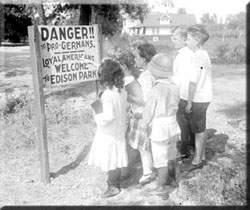 “American businesses posting ‘Muslim-Free Zone’ declarations are no different than the ‘Whites Only,’ ‘No Dogs, No Jews,’ ‘No Mexican’ and ‘Irish Need Not Apply’ signs that were posted during past shameful periods of our nation’s history that we hoped were over,” the letter stated.
The letter lamented the DOJ has “remained silent” on the issue, and called on the department to determine whether “Muslim-free zones” violate Title II of the 1964 Civil Rights Act.
“Title II specifically prohibits discrimination by places of entertainment like, in many instances, firing ranges,” the letter read.
Signatories to the letter include the American Civil Liberties Union, National Association for the Advancement of Colored People and others.
“The broad range of groups calling for government action on the ‘Muslim-free zone’ issue clearly indicates that the U.S. Department of Justice should speak out and take concrete action to protect the constitutional rights of American Muslims,” said CAIR National Executive Director Nihad Awad.
At least one business that has declared itself a “Muslim-free zone” is currently being sued by CAIR.
The lawsuit accuses Florida Gun Supply of Inverness and its owner Andrew Hallinan, 28, of violating the federal public accommodations law and seeks an injunction to stop the discrimination, according to the complaint.
U.S. Turns Teen into “Terrorist”
By Margaret Kimberley | Black Agenda Report | September 2, 2015
Ali Shukri Amin is 17-years old, a minor under American law, yet he was just sentenced to eleven years in federal prison. He pleaded guilty and was sentenced as an adult for providing material support for terrorists. This is a crime defined in any way the government wants it to be. Amin had a twitter account, @amreekiwitness, devoted to the group Islamic State, ISIS. He also helped a friend travel to Syria in hopes of joining ISIS. That is the substance of his crime, online opinion and facilitating travel.
The crime of providing material support for terrorists only came into existence with the Patriot Act passed in the aftermath of the September 11th attacks. There are now people serving very long prison terms for providing humanitarian aid, translating documents, sending money abroad, or expressing views in support of nations or groups the United States classifies as terrorist. These crimes are vaguely defined and are often of little consequence to ISIS or any other organization the federal government designates as an enemy.
The prosecutions of Amin and others are meant to make the case for continuing the “war on terror.” This is actually a war of American terror used to justify endless interventions around the world. The Department of Justice would have us believe that a teenager tweeting about making donations to ISIS via bitcoin posed a serious threat. Of course, the United States government is the biggest threat to life in the world. It is the most violent organization with the largest number of kills.
The application of the material support for terror statute is used to capture innocent or harmless people. Some are hoodwinked by agent provocateurs or, like Amin, pose little or no danger. Most importantly, ISIS would not be a credible force in Syria or Libya were it not for American machinations. The United States created the monster and now wants to punish anyone who interacts with it.
At one point Amin, who lived in a Virginia suburb of Washington, DC, had over 4,000 twitter followers who conversed about a variety of issues, including protests in Ferguson, Missouri.
“They cower in fear of us whilst they massacre and oppress you! It’s time to strike fear into the hearts of the oppressors. #FergusonUnderIS”
“May be time to organize Muslims in America upon haqq and mobilize to #Ferguson. Defend the oppressed, start jihad here.”
While Amin and thousands of others expressed their outrage about deadly police brutality, the State Department actually engaged in online debates with the teenager. A bizarre social media program called Think Again, Turn Away is a useless attempt to influence young Muslims who want to fight imperialism through jihad. Aside from having a name reminiscent of a love song title, the effort allowed Amin to engage in argument with and troll the State Department. When the would-be jihad deprogrammers pointed out that ISIS “slaughters innocent people,” Amin had a ready and accurate retort:
“slaughter innocents? You mean like AbdurRahman al-Awlaki, the 16 year old boy not involved with any militants? or what about the thousands killed in drone strikes weekly that make the news? The thousands that don’t? you are nothing more than criminals who betray the Muslims you claim to defend across the globe, butchering them 1.7 million in Iraq, hundreds of thousands in Afghanistan, left, right, everywhere. only an ignoramus who knows nothing about American foreign policy or any Muslim country could accept your lies.”
A few months after these embarrassing interactions, Amin’s mother and his imam unwisely reported him to the FBI in an effort to stop his online involvement with ISIS. He would not have been discovered otherwise.
Killer cops roam the streets with no fear of federal prosecution, but a confused teenager is sent to prison because he holds and expresses opinions contrary to those of the government. Prosecutors use children to make names for themselves and climb the ladder in a corrupt system. American terror is not just carried out abroad with drone strikes and invasions, but it is carried out on a daily basis by the criminal injustice system.
While the Saudis, Israelis and their allies use American money and arms to target civilians for death, anyone who crosses over the thin line of expression is at risk of prosecution and many years in prison. The hypocrisy is stunning but not really surprising. This system will use a child to make its point clear. We live in a police state and anyone who dares to speak up against it is at risk of being made an example.
The federal government does not operate any juvenile facilities. Ali Shukri Amin is now in custody in an adult facility. One need not be a follower of ISIS to see that this is a gross injustice unworthy of a country which claims to be a democracy.
Margaret Kimberley can be reached via e-Mail at Margaret.Kimberley(at)BlackAgendaReport.com.
Here’s How Law Enforcement Agencies Impersonate Your Friends
By Sonia Roubini | ACLU | August 31, 2015
We recently received a handbook from the DEA, in response to a Freedom of Information Act request, seeking information about the use of impersonation as an investigative technique. While the 1999 handbook, titled Online Investigative Principles for Federal Law Enforcement Agents, was almost identical to a version of the handbook that is available online, there is one notable difference: the version that the DEA sent us includes a copy of the DEA’s Consent to Assume Online Identity: Adult Consent form.
The DEA apparently used this fifteen-year-old form to obtain consent from individuals to impersonate their online identities. It states:
“I ____ hereby voluntarily provide consent to the Drug Enforcement Administration or other Federal, State or Local Task Force officers to assume my Internet online identity. My Internet screen name(s), nick name(s), and/or e-mail addresses are as follows.”
It goes on to state:
I understand that these law enforcement officers will changes [sic] the password(s) to this account so that I will no longer have access to these accounts. My Internet online identity may be used by these law enforcement officers for any official purpose relating to an official investigation, including sending and receiving e-mail, making direct communications on systems such as ICQ or AOL instant messaging, and any other electronic communications. I have been advised of my right to refuse to allow the assumption of my identity. I give this consent freely and voluntarily.
We filed this FOIA request because the impersonation of actual individuals and organizations by law enforcement agencies has the unique ability to erode our trust in each other’s identities. If government agencies impersonate Senate staffers, Internet repair technicians, newspapers, and individual citizens at will — as they appear to have done in the past — or others in our lives, it will erode a form of trust that is critical for relationships in a free society: our ability to trust stated identities.
Unfortunately, the documents released to us so far raise more questions than they answer. This consent form in particular raises some thorny ones, including:
- Under what circumstances can law enforcement agencies ask for consent to impersonate actual individuals?
- If the individual does not consent, can law enforcement get a warrant to impersonate someone?
- Once a law enforcement agency is impersonating someone, what is it allowed to do? Can it communicate with the individuals’ Facebook friends? Can it respond to emails from their family members?
- What factors do law-enforcement agencies consider in deciding whether the extraordinary risks of impersonation are worth the possible reward?
Without this information, it is difficult to assess the lawfulness or wisdom of the DEA’s impersonation of actual individuals — a practice which raises serious constitutional questions. The Fourth Amendment prohibits “unreasonable searches and seizures,” and while courts have generally approved of the government’s use of deception (for example, undercover officers), few have ruled upon the constitutionality of the impersonation of actual individuals.
A recent decision in a Las Vegas District Court involved evidence collected by members of the FBI who impersonated Internet repair technicians to gain physical access to suspects’ hotel rooms. During their investigation of an online gambling ring, FBI agents disconnected the Internet in three rooms of a Las Vegas hotel and impersonated technicians to enter the rooms without suspicion and to collect evidence later used against the suspects in court. The judge eventually tossed the evidence out on the grounds that it was “fruit of a poisonous tree” — legal jargon indicating that the evidence was obtained using an unlawful search.
In another case, the DEA created a fake Facebook profile for a real individual, Sondra Prince, who was arrested on drug charges in 2010, in order to investigate an alleged New York drug ring. The DEA agent who arrested Prince seized her cell phone and mined it for photographs. These were then used to create the fraudulent Facebook profile which was used by the agents as a critical part of their investigation into the drug ring. These photographs notably included ones of Prince in a bathing suit, and photos of her two young children. Prince ultimately sued the DEA over its impersonation of her profile. The Justice Department eventually paid $134,000 to settle the case, which drew the public’s attention to potential privacy violations at play in government agencies’ impersonation of individuals (not to mention the potential dangers involved).
The consent form also raises tricky questions about the scope of consent. Does the form allow the agents, for example, to answer incoming messages from the mother of the consenter? What about a romantic partner or close friends? The form does nothing to clarify these questions. Nor does it address the fact that asking people to turn over their passwords so that law enforcement can then log in to their accounts violates the terms of service of Facebook and a number of other major service providers, which all prohibit password sharing. The government itself has argued in other cases that such password sharing may be a crime under the Computer Fraud and Abuse Act.
Finally, the date of the form — 1999 — raises an obvious but unanswered question: what is the DEA’s current practice? Technology and social media have transformed our society in the last sixteen years. Have the DEA’s practices changed since then? Do they impersonate individuals routinely now? What are the rules that now govern that impersonation? We just don’t know, and that’s a problem.
Police video flap flares in Oakland
By Chris Reed | Cal Watchdog | August 31, 2015
Several local police forces in California got on the police body-cameras bandwagon well before police killings around the nation in the summer of 2014 triggered a broad push for their adoption. The Rialto Police Department was the focus of a 2013 New York Times story that emphasized how much body cameras improved interactions between officers and the public.
But in Oakland, it appears authorities will only release the body-camera videos when they exonerate police, and that the video will be kept from the public and the media in other circumstances on the grounds that it is part of an ongoing investigation. The East Bay Express recently reported on how the Oakland police are dealing with four police killings. In two cases, Police Chief Sean Whent won’t release any body-cam footage. In the other two cases, police wouldn’t release the footage to the public. Instead, on Aug. 19, the Oakland Police Department held a screening for 11 members of the media.
This account is from the East Bay Express :
[The] videos included police body camera footage taken by officers who were chasing Richard Linyard and Nathaniel Wilks (in two separate incidents). On July 19, Linyard was allegedly fleeing the police on foot when he was later found wedged between two buildings. A coroner’s report said Linyard died from injuries he suffered when he was apparently stuck between the buildings.
On August 12, Wilks allegedly fled the police in a vehicle and then on foot. Several officers confronted and shot Wilks near the intersection of 27th Street and Martin Luther King, Jr. Way.
Watson said OPD showed videos to select members of the media in order to dispel inaccurate reports that officers beat Linyard, and claims that Wilks was shot in the back. Both incidents sparked protests. “We held the viewing in the interest of the public, to be able to share information through fair and balanced reporting,” said Watson.
Watson, however, said that the video footage will not be released to the broader public, and that OPD believes the California Public Records Act allows the department to withhold the footage because it is evidence in several ongoing investigations.
‘Completely wrong’ to withhold some video
As the Bay Area News Group reported, giving the police the right to pick and choose which videos to release outraged local civil-rights lawyer Jim Chanin. “I think it’s completely wrong to have selective showings of one shooting and not another shooting, depending on how the department feels . … There’s an inference now that if (police) don’t show you a video, there could be something wrong or improper about (another) shooting,” he said.
Meanwhile, in Sacramento, a bill that would establish statewide procedures on access to and use of policy body-camera footage appears to have failed, U-T San Diego columnist Steve Greenhut wrote on Friday.
In April, a comprehensive bill by Assemblywoman Shirley Weber, D-San Diego, passed its initial committee vote. Per its official description, “Assembly Bill 66 would provide guidelines about when the cameras are to be operated, require notification of those being recorded, and prohibit law-enforcement officers involved in serious use-of-force incidents that result in serious bodily injury or death from viewing the video until they have filed an initial report.” Whent, the Oakland police chief, testified in favor of the bill.
But Weber’s bill was effectively killed within weeks. As Dan Walters wrote in the Sacramento Bee :
Weber’s body camera bill was beaten up in the Assembly Privacy and Consumer Protection Committee. Police unions, whose endorsements politicians crave, strongly opposed it as unfair, and the committee insisted that only local authorities decide when cops can see body videos.
Featured Video

Matt Bracken: US Plans Massive MOAB Strike on Iran?
or go to
Aletho News Archives – Video-Images
From the Archives
Confronting the Threat of Ethnic Bioweapons
By Tony Cartalucci – New Eastern Outlook – 29.11.2017
The United States Air Force’s 59th Medical Wing’s molecular biology branch recently was revealed to have been collecting specifically Russian RNA and synovial (connective) tissue samples, prompting fears in Russia of a possible US directed ethnic-specific bioweapons program. … continue
Blog Roll
 Aletho News
- Matt Bracken: US Plans Massive MOAB Strike on Iran?
- Russia accuses France of ‘piracy’ over tanker seizure
- Why Yemen Is Bombing Saudi Arabia’s Airports: The War Behind the Headlines
- Sally Rooney’s books pulled from UK over support for Palestine Action
- Bombs for Tel Aviv, Promises for Riyadh
- Israeli ad agency conducted vast global espionage campaign using online ads: Report
- Oct. 7 Forever Marks The Big Reveal: ‘We See You, Israel, We Revile You, We Reject You!’
- Meet the US generals and admirals advancing Israeli policy
- Israel’s Straw Widow Protocol: The Kill Zones Where Civilians Were Labelled ‘Terrorists’
- Leading Israeli Think Tank Publishes Psychotic Israeli ‘National Security’ Doctrine
- If Americans Knew
- Israeli firm used online ads to run vast spy operation, researchers say
- No, the world zionist movement is not an antisemitic conspiracy theory
- Hundreds of IDF investigations into killings still have no public outcome, BBC Verify finds
- After Ashley Moody Epstein Probe, Donors Linked to Him Poured Money Into her Senate Campaign
- Worried about Russian meddling in UK politics? Wait till you see what Israel is up to
- Israeli settlers attack West Bank center for disabled children, church leader calls for int’l action
- Pulling Out Teeth Just to Live: How Israel Has Devastated Dental Care in Gaza
- Gaza’s “ceasefire” death toll passes 1,500 – Daily Update
- Activists Abused By Israel Return to New Freedom Flotilla Mission
- 60 Minutes won’t tell the full truth about Israeli settler violence
- No Tricks Zone
- New Study Suggests Large Regions Of The Pacific Ocean Have Been Cooling For The Last 80 Years
- Germany’s Green Energy Debacle: High Energy Costs Force Kahla Porzellan to Close After 182 Years!
- New Study: 50 Years Of The Most Aggressive ‘Net Zero’ Policies Can Only Affect The Global Climate By 0.03°C
- US September “Heat” Was No Record…Many Records Set Decades Ago
- Latest European Green Energy Debacle; Portugal’s Largest Flagship Solar Park Insolvent!
- Green Energy Debacle: German Expert Professor Fritz Vahrenholt Warns Of Severe Economic And Social Consequences
- Two More Paleo Reconstructions Affirm Meters-Higher Sea Levels Across Ireland, Brazil 7000-6000 Years Ago
- New Study: Earth And Venus Surface Warmth Largely Explained By Convection And Lapse Rate, Not CO2 Or Radiation
- 2025 Nature Paper Claiming Worsening Global Drought Gets RETRACTED …Heavily Flawed
- New Study: ‘Global Drought Shows No Detectable Recent Acceleration Under Climate Warming’

