Israel ‘benefiting from re-displacing Palestinians’
Palestine Information Center – September 8, 2015
 ALGERIA – Dr. Abdul Razzaq Muqri, head of the Algerian Movement for a Society of Peace (MSP), said Monday that Israel would benefit from re-settling Palestinian and Syrian refugees in Europe.
He also held western countries responsible for the suffering of Palestinian and Syrian refugees, charging that western countries were the main reason for the instability in the region.
“Today, Europe is in dire need for immigration as new demographic studies confirm that Europe would need to bring one million new immigrants every year, a total of 47 million immigrants until 2050 in order to maintain positive growth rates.”
There is no doubt, Dr. Muqri continued, that Israel was delighted when New Zealand declared intention to receive 500,000 Syrian and Palestinian refugees. Instead of finding a solution for Israeli settlers who came to Palestine from all over the world, the land owners became asylum seekers fleeing from the oppression.
Operation Flavius and the Killer Cameron
By Craig Murray | September 8, 2015
Exactly twenty years ago the European Court of Human Rights found that the British Government had acted illegally in shooting dead three IRA members in Gibraltar, even though the court accepted that the government had a genuine belief that they were planning a bombing attack. Indeed the court accepted the victims were terrorists, and refused compensation to their families on those grounds. But the court refused to accept there was no possibility of foiling the plot through methods other than summary execution.
In the light of the decision that Operation Flavius contravened Article 2 of the European Convention on Human Rights, it is difficult to understand how the government can claim its killing of British men in Syria, with no trial, is anything other than murder. I personally find it difficult to imagine technically how men journeying in a car in Syria were imminently able to instantly wreak havoc in the UK so that it was impossible to prevent by any method other than their execution without trial. The level of certainty required for that decision would involve sufficient knowledge of what was to happen in the UK to stop it here. If there was vagueness about what was actually to happen in the UK, there cannot have been the certainty about the threat claimed. It is a logical impasse.
Frankly in twenty years of experience working with British security services their level of accuracy (remember Iraqi WMD) was never that good. And everybody is fortunately now deeply sceptical about the continual claims by the security services that there are thousands of dedicated Islamic terrorists in the UK conducting hundreds of plots every year, and yet miraculously never actually managing to kill anybody.
Just in case anybody had not worked out yet that the Guardian is a disgraceful neo-con rag, it has an article by its “legal correspondent” Joshua Rozenberg, married to the even more rabid Zionist militarist Melanie Phillips (who still believes the Iraqi WMD exist, hidden in the bed of the Euphrates). Rozenberg assures us it is absolutely legal for the British government to kill us without trial if it wants. He even suggests the murdered Mr Khan would not object:
“If he was waging war on British troops and civilians, he can hardly complain the UK’s armed forces were one step ahead of him.”
Astonishingly for a lawyer, the disgraceful Rozenberg does not seem to notice that the opening “if” is rather important. “If Mr Jones was engaged in insurance fraud, he can hardly complain at being banged up for twenty years”, so according to Mr Rozenberg we can dispense with all that nonsense about trials and evidence and just take the government’s word for it. Not to mention that the government has now instituted summary execution without trial in a country that does not even have the death penalty.
As I have argued, it is not unusual for British people to go to fight abroad. There were British citizens in the Israeli Defence Forces participating in the massacre of Palestinian civilians in Gaza last year. Our neo-con governments of both blue and red Tories have positively encouraged the mercenary companies Executive Outcomes/Sandline/Aegis of Tony Buckingham and Tim Spicer. There are Britons fighting now in the Ukraine. We started by positively encouraging factions in the Syrian civil war, with the Saudis and CIA arming and training them and some of those factions helped constitute ISIL. There is no evidence at all that Islamic State had any interest in attacks in the UK until we started to attack it. (That is not to say it is not a very bad organisation and did not commit actions against UK citizens in its “Caliphate area”. But it did not threaten the UK).
For the government to claim the right to kill British people through sci-fi execution, based on highly unreliable secret intelligence and a secret declaration of legality, is so shocking I find it difficult to believe it is happening even as I type the words. Are we so cowed as to accept this?
Why do Police Ignore Federal Guidelines and Shoot at Moving Vehicles, Killing Occupants?
By Noel Brinkerhoff and Steve Straehley | AllGov | September 7, 2015
Federal guidelines recommend police avoid shooting into moving vehicles because innocent people can be killed and it’s ineffective at stopping cars. Police continue to use this deadly tactic, however.
An investigation by The Guardian found at least 30 incidents in 2015 of police firing their weapons into moving cars or trucks, killing at least one person each time.
Black men made up more than 25% of those, although they comprise only 6% of the driving-age population, Jon Swaine, Jamiles Lartey and Oliver Laughland wrote.
The British newspaper reported police involved in those shootings justified the use of deadly force by claiming the vehicles they shot at posed a threat to them or their colleagues. But The Guardian found almost all of the incidents were examples of police ignoring federal guidelines that say officers should open fire only if a driver presents a separate deadly threat, such as a gun. In the cases examined by the newspaper, none of those killed were pointing guns at police, and in only three cases were police aware there was a weapon in the vehicle.
“If an officer puts himself in a position where they have no alternative but to use deadly force, they will use deadly force,” Chuck Wexler, the executive director of the Police Executive Research Forum, told The Guardian. “What you really want them to do is think ‘I should not stand in front of this car. I should not put myself in a position where I have no alternative.’”
The U.S. Department of Justice does not recommend shooting into moving cars because experts say it is widely viewed as ineffective for stopping oncoming vehicles, and doing so poses risks to innocent parties. Police departments in Denver, New York City, Cleveland, Cincinnati, Miami Beach, Los Angeles and Albuquerque, among other cities, heed this recommendation.
Others haven’t adopted it. Police in Indianapolis, for example, have twice in recent months shot and killed drivers in their cars. That department’s policy states that police may fire into vehicles if it’s “reasonably perceived that the vehicle is being used as a weapon against the officer or others.”
To Learn More:
Moving Targets (by Jon Swaine, Jamiles Lartey and Oliver Laughland, The Guardian )
Should Police Shoot at Moving Cars? (by Michael Anthony Adams, Indianapolis Star )
Denver Police Change Policy on Shooting at Cars (by Noelle Phillips, Denver Post )
Police Shoot to Death One Unarmed Person Every 3 Days in U.S. (by Noel Brinkerhoff, AllGov )
Police Officer Goes on Trial for Firing 49 Shots at Two Unarmed Drug Users (by Danny Biederman and Noel Brinkerhoff, AllGov )
SodaStream to shut down West Bank factory, new factory near planned township where Bedouins are being forcefully transferred
IMEMC News & Agencies | September 6, 2015
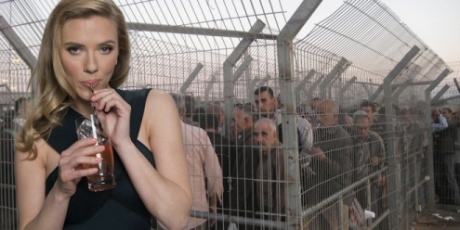
SodaStream announced, today, that it will finalize the closure of its West Bank factory in two weeks.
SodaStream CEO Daniel Birnbaum commented, earlier, that the boycott only had a “marginal” effect on their business and accused the movement of “antisemitism”, PNN reports.
Mahmoud Nawajaa, The Palestine Boycott National Committee (BNC) General Coordinator, said:
“Coming just as French multinational Veolia has abandoned the Israeli market following a 7-year campaign against its support for settlements that cost it billions of dollars, SodaStream’s announcement today provides further proof that the BDS movement is increasingly able to hold corporate criminals to account for their role in Israeli apartheid and colonialism.
“SodaStream may wish to try and smear our movement, but it is clear that BDS campaigning and the Scarlett Johansson controversy has persuaded retailers across Europe and North America to drop SodaStream and contributed to SodaStream’s share price to tumble by half in the space of a year.
“Even when this closure goes ahead, SodaStream will remain implicated in the displacement of Palestinians. Its new Lehavim factory is close to Rahat, a planned township in the Naqab (Negev) desert, where Palestinian Bedouins are being forcefully transferred against their will. Sodastream, as a beneficiary of this plan, is complicit with this violation of human rights.
“Israel willfully destroys the Palestinian economy in the West Bank, leading to unemployment and economic crisis. The way to tackle this is to challenge Israel’s system of colonialism and apartheid.
“The BDS movement is opposed to all forms of racism, including anti-semitism and Islamaphobia.”
The BNC is the Palestinian Boycott, Divestment and Sanctions National Committee (BNC), the broad coalition of Palestinian civil society organisations that works to support the boycott, divestment and sanctions (BDS) movement.
Israel Slammed Over Plans to Demolish 17,000 Palestinian Buildings
Sputnik – 07.09.2015
Israel has plans to demolish 17,000 Palestinian-owned buildings located on mostly occupied land of the West Bank, a UN report has revealed, with concerns the demolitions will cause poverty and leave many families in a “state of chronic uncertainty”.
A report from the UN Office for the Coordination of Humanitarian Affairs (OCHA) concluded that as a result of new and outstanding demolition orders, up to 17,000 structures, including houses, sheds and animal shelters could be knocked down, despite the fact that 77 percent of the buildings are located on privately owned Palestinian land.
The structures under the threat of demolition are located in Area C, a zone in the occupied Palestinian territory of the West Bank where the state of Israel retains full security and administrative control.
Around 300,000 Palestinians live in Area C, which covers 60 percent of the West Bank, and is also the location of many Israeli settlements with a population of around 360,000 — which are deemed illegal under international law.
Close to 4,500 demolition orders are to affect the land of Palestinian Bedouins, who human rights activists say are under threat of losing their homes in exchange for more Jewish settlements in the West Bank.
The UN report raised concerns about the impacts such proposed demolitions might have on Palestinians living in affected areas.
“These orders heighten the vulnerability of thousands of poor Palestinian households, some of whom are at imminent risk of forcible displacement.”
It also pointed out that the manner in which demolition orders are handled adds to the suffering of locals.
“Structures built without permits are regularly served with demolition orders. While only a minority of the orders issued are executed, these orders do not expire and leave affected households in a state of chronic uncertainty and threat,” the report found.
“Where the orders have been implemented, they have resulted in displacement and disruption of livelihoods, the entrenchment of poverty and increased aid dependency.”
‘Nearly Impossible’ Permits
While Israeli officials claim that the buildings are under threat as a result of not having the correct planning permission, others point out the extreme difficulty many face in trying to secure proper construction permits.
According to data from the governing body in charge of affairs in the West Bank — the Israeli Civil Administration — Palestinians submitted 2,020 applications for building permits in Area C between 2010 and 2014, while only 33 were approved.
The report said that planning and zoning rules made “it is nearly impossible for Palestinians to obtain building permits in most of Area C.”
Israeli officials have been accused of widespread discrimination over their treatment of Palestinians in Area C, with only one percent of the zone legally earmarked for Palestinian development.
This is contrasted to the 235 illegal Jewish settlements and outposts that have been constructed in the area in recent years. Many critics have argued that while authorities are harshly critical of Palestinian constructions, they turn a blind eye to any potential breaches in Jewish settlements.
The report follows international outrage over Israeli plans to demolish the West Bank village of Khirbet Susiya in July, with EU officials specifically asking Israel to stop the “forced transfer of population and demolition of Palestinian housing” in the area.
Israel building separation wall to keep refugees out
Press TV – September 6, 2015
Amid what is being referred to as the worst refugee crisis since WWII, the Israeli regime has announced construction of a separation wall to keep them out.
During a weekly cabinet meeting on Sunday, Israeli Prime Minister Benjamin Netanyahu announced that a 30-kilometer fence is being constructed along Israel’s border with Jordan to stop “migrants,” he associated with terrorists, to enter Israel.
Israel finished the construction of a 230-kilometer wall along the Egyptian border in 2013; it also has set up fences along the border with Lebanon and along the line between Syria and Israeli-occupied Golan Heights. Most of the West Bank has also been split by a barrier.
According to Bibi, the wall would connect with the Egyptian barrier and that construction has started along Israel’s eastern border between the city of Eilat and near the site of a new airport in Timna Valley.
“We will continue the fence up to the Golan Heights,” said the Israeli premier. “We will not allow Israel to be submerged by a wave of illegal migrants and terrorist activists.”
Golan Heights has been under the Israeli occupation since the 1960s. The Tel Aviv regime captured 1,200 square kilometers of the Golan Heights during the Six-Day War of 1967 and annexed the region in 1981.
Netanyahu cited Israeli’s “very small” size and lack of “geographic depth or demographic depth” as the reasons behind the measures.
His comments came amid a refugee crisis in Europe due to influx of asylum seekers from conflict-ridden countries in Africa and the Middle East.
The United Nations estimates that 300,000 people have left the Middle East and North Africa for Europe this year, but 2,500 have died in their attempt, mainly through dangerous voyages across the Mediterranean in rickety boats. Media reports, however, say 350,000 have crossed into Europe this year.
Many of the world’s asylum seekers are ill-fated Syrians, fleeing the violence perpetrated by the Daesh Takfiri group.
According to documents from Israeli hospitals, the regime’s army has paid millions of dollars for the costs of treatment to the foreign-sponsored militants, injured during battles with Syrian government forces since 2011.
Gaza water shortage catastrophic: ‘We can’t drink, cook or wash with it’

RT | September 6, 2015
More than 90 percent of the Gaza Strip’s water is undrinkable. The rest is quickly running out. A combination of factors is rapidly depriving the population of this most basic of needs. RT investigated day-to-day life under these conditions.
Just one fresh water source exists today, according to the locals – a coastal aquifer beneath the ground that is shared with Israel and Egypt. But Gaza is situated downstream from Israel, and Palestinians accuse the Jewish state of using the situation to its advantage, employing water deprivation as a tactic against the civilian population.
The grim water statistics are part of a recent UN report on Gaza, which says the strip will become uninhabitable by 2020. A number of reasons compound the problems, according to the document by the United Nations Conference on Trade and Development (UNCTAD).
The Gaza Strip’s GDP dropped 15 percent in 2014, with 72 percent of households suffering extremely low food security and unemployment at a record high of 44 percent. Further stress was added by relentless Israeli assaults. With three military operations in the last six years, coupled with eight years of economic blockade, prospects for recovery are looking very bleak.
The UN says that 500,000 people have been displaced in Gaza as a result of last year’s Israeli operation alone. More than 20,000 Palestinian homes were destroyed, and 148 schools and 15 hospitals and 45 primary health-care centers were severely damaged. Gaza is one of the most densely populated areas in the world.
But worse still is when the populace is deprived of the prime source of life – water. Without it, no reconstruction and no rebuilding of lives can take place. Medicine, sanitation, hygiene and crucial facilities that depend on water all suffer.
RT investigated the extent of the hardship under these conditions.
“We can’t drink it, cook with it, or wash in the kitchen with it… we are forced to buy all the clean water separately,” said Umm Ibrahim Amna Abdel’al, as she stood in her kitchen, little more four bare cement walls and a sink.
A delivery pickup truck trundled through the streets outside with a water tank sitting in the back.
“The last war on Gaza, of course, resulted in the destruction of some of the infrastructure, the water holes and the pumping stations were [heavily hit.] More than 50 percent of the water infrastructure could not be accessed,” said Mahmoud Elkhafif, UNCTAD’s special coordinator for assistance to the Palestinian people.
“Part, of course, vanished,” he added.
RT’s Lizzie Phelan tasted what remains of the Strip’s water for herself: “This coffee tastes like it has salt not sugar in it. That’s because the water that’s used to wash it – like much of Gaza’s water – is contaminated with sea water.”
The woman went on to describe how “tiny kids suffer from cramps and colic” – a syndrome commonly associated with stomach infections.
“See my hand?” she pointed to the irritated skin on her palm. “It is because of the salty water. I have a skin infection. The water is full of salt. It is like sewage.”
And salt isn’t the only problem. The water coming into homes is also full of nitrate – a carcinogen. The levels rose even higher last year, during Israel’s bombardment of sewage pipes and clean water pipes. Now, the two chemicals have mixed.
But even though the water is filthy, Gazans pay exorbitantly for it.
Elkhafif put it bluntly: “Gaza suffers a catastrophic issue with water quality and water supply. And it’s a shame on the world that they are still watching this.”
Unless the situation is resolved, the Strip stands on the brink of a full-scale humanitarian catastrophe much greater than any airstrikes can cause.
Labeling Israeli Settlement Products Not Good Enough
By Stephen Lendman | September 6, 2015
Last spring, 16 European foreign ministers urged EU foreign policy chief Federica Mogherini to require labeling of all Israeli settlement products – so consumers can buy or avoid them at their discretion.
Labeling is “an important step in the full implementation of EU longstanding policy,” they said. At best, it’s symbolic. At worst, a weak-kneed gesture with no meaningful effect on Israel’s economy.
By year-end or sooner, the EU is expected to decide up or down on labeling. Mogherini said “(t)he work is close to being finished but it is still ongoing.” If implemented, it’ll only be a guideline, not mandated policy. Individual EU states can do what they please – showing what’s being considered is a sham, an insult to long-suffering Palestinians.
Some EU nations already intend to require labeling – regardless of what the European Commission decides. “We have to make sure that consumers can distinguish products that come from the territories occupied by Israel,” Luxembourg Foreign Minister Jean Asselborn said.
Over 600,000 Israelis live on stolen Palestinian land – in the West Bank and East Jerusalem. Numbers keep increasing exponentially – Palestinians forcibly displaced from their land for exclusive Jewish development.
Palestinian human rights groups justifiably demand a total boycott of all Israeli settlement products. In 2013, Al Haq prepared a report titled “Feasting on the Occupation: Illegality of Settlement Produce and the Responsibility of EU Member States under International Law.”
“Given that trading in settlement goods amounts to a form of recognition and supports the sustainability of entities that violate peremptory norms of international law, a ban on settlement products… is to be considered amongst those actions that Third Party States should undertake to comply with their customary international law obligations,” it states.
Al Haq director Shawan Jabarin said products from settlements “help to sustain their very existence.”
“As things stand, the EU is doing little more than ticking a box by acknowledging that settlements are illegal. Until they support this rhetoric with action and ensure that no assistance or recognition are provided to settlements, even indirectly, any such criticism will continue to be meaningless.”
The EU is Israel’s largest trading partner. Settlement products represent a minuscule percent of Israeli exports. At the same time, they’re important “for the economic viability of many settlements,” the report said.
Economist Shir Hever said “(t)he significance of ending the import of colony products is much larger than the direct financial effect.”
“It (would be) a strong statement reminding Israel of the illegality of the colonization of the West Bank, and a blow to many Israeli and international companies who have turned the occupation into a source of profit.”
It would be a shot across the bow against all Israeli enterprises – a hopeful first step toward greater boycott and divestment from an apartheid state, aiming for total isolation.
Currently, nothing indicates business as usual changing. The 2000 EU/Israel Association Agreement governs relations between the Parties, including strengthening economic cooperation and trade.
Human rights groups blasted the enhanced partnership – showing EU officials say one thing and do another, effectively supporting Israeli high crimes.
After decades of mass slaughter and destruction, ethnic cleansing, illegal occupation and oppression, as well as international complicity with Israeli ruthlessness, mandated boycott, divestment and sanctions more than ever are essential – continued until Israel:
- recognizes Palestinian self-determination unconditionally;
- strictly observes international laws, norms and standards;
- ends its illegal occupation and Gaza blockade unconditionally;
- ends illegal aggression and all other hostile acts;
- dismantles its Separation Wall;
- frees all Palestinian political prisoners unconditionally;
- grants Israeli Arabs equal rights as Jews;
- ends apartheid racism;
- complies with UN resolution 194, affirming the right of diaspora Palestinians to return to their homes and property or be fully compensated for loss or damage if they prefer;
- recognizes East Jerusalem as Palestine’s exclusive capital within June 1967 borders; and
- gives Palestinians control over their land, borders, air space, coastal waters and resources.
Ending Israeli high crimes against defenseless Palestinians is long overdue. Nothing less than its full observance of international law is tolerable.
Hunger strikes continue: Protests across Palestine demand freedom, end of administrative detention
Palestinian Prisoner Solidarity Network | September 5, 2015
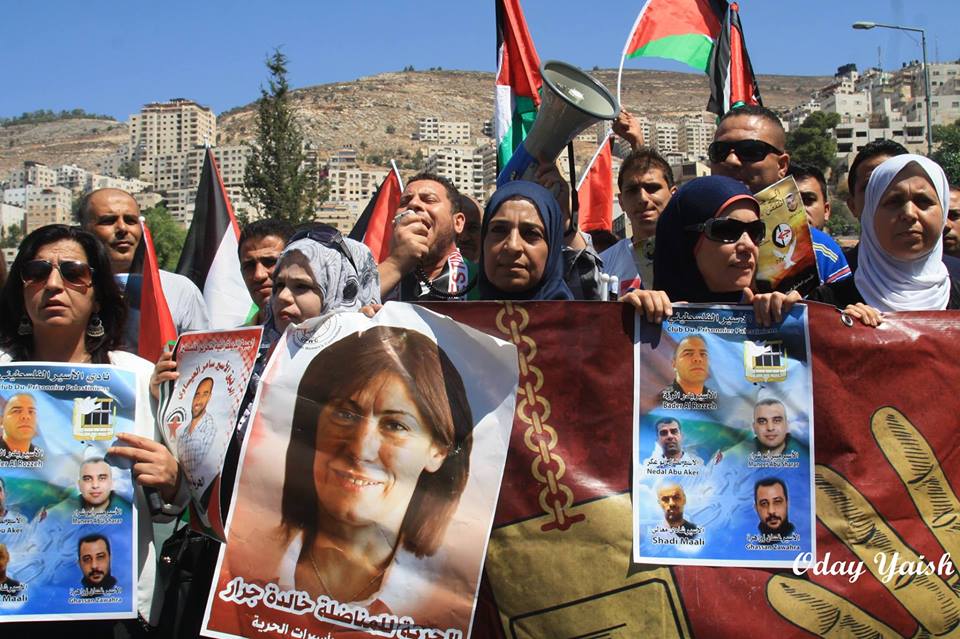
Nidal Abu Aker, Munir Abu Sharar, Badr al-Ruzza, Ghassan Zawahreh, and Shadi Ma’ali are engaged in the “Battle of Breaking the Chains” for the seventeenth day, continuing in their hunger strike to demand the end of administrative detention. All five are imprisoned by the Israeli military without charge or trial on the basis of “secret evidence” and have launched a hunger strike to demand not only their freedom personally, but an end to the policy that has been used against them.
Several more Palestinian prisoners have joined in the hunger strike and its demands: Bilal Daoud Saifi, who like Abu Aker, Zawahreh and Ma’ali is a Palestinian refugee who lives in Dheisheh refugee camp near Bethlehem, who started his strike on 30 August; Suleiman Eskafi of Al-Khalil, an administrative detainee on strike since 1 September; and Amir Shammas of Al-Khalil, an administrative detainee who previoulsy engaged in a hunger strike, had been promised that his detention would not be renewed, but since has had his detention renewed. In addition, Noor Shoukri Jaber, a Palestinian prisoner sentenced to life imprisonment, began a hunger strike on 2 September in protest of lack of medical care and his arbitrary transfer.

All of the striking prisoners have been thrown into isolation in an attempt to pressure them to end their strike and to stop other prisoners from joining the strike.
The “Battle of Breaking the Chains” is sparking actions of support in various cities in Palestine. A permanent tent of support has been set up at the main entrance of Dheisheh refugee camp, where four of the strikers – and three of its leaders – live, and demonstrations of support have been organized in Nablus, Al-Khalil, Bethlehem city, and Ramallah, among other cities.
Samidoun Palestinian Prisoner Solidarity Network expresses its strongest solidarity with the striking prisoners, and calls for international actions, mobilizations and events to demand their freedom. We cannot wait until these brave strugglers are facing death to act and demand not only their freedom as individuals, but the abolition of administrative detention – on the road to freeing every Palestinian prisoner held in Israeli occupation jails. It is not the case that Israeli military courts are any more legitimate, fair or acceptable than administrative detention – they are just as arbitrary, racist and illegitimate. But administrative detention is a weapon of mass terror used against the Palestinian people, and it is critical to bring this practice to an end. These Palestinian prisoners have put their bodies on the line in order to end administrative detention – and it is imperative that we act to support them. These prisoners’ struggle is not only about their individual freedom – it is part of their struggle for return and liberation for Palestine.
Take Action!
1. Sign on to this statement in support of the prisoners’ demand to End Administrative Detention. Organizational and individual endorsements are welcome – and organizational endorsements particularly critical – in support of the prisoners’ demands and their actions. Click here to sign or sign below:http://bit.ly/EndAdministrativeDetention
2. Send a solidarity statement. The support of people around the world helps to inform people about the struggle of Palestinian prisoners. It is a morale booster and helps to build political solidarity. Please send your solidarity statements to samidoun@samidoun.net. They will be published and sent directly to the prisoners.
3. Hold a solidarity one-day hunger strike in your area. Gather in a tent or central area, bring materials about Palestinian prisoners and hold a one-day solidarity strike to raise awareness and provide support for the struggle of the prisoners and the Palestinian cause. Please email us at samidoun@samidoun.net to inform us of your action – we will publicize and share news with the prisoners.
4. Protest at the Israeli consulate or embassy in your area. Bring posters and flyers about administrative detention and Palestinian hunger strikers and hold a protest, or join a protest with this important information. Hold a community event or discussion, or include this issue in your next event about Palestine and social justice. Please email us at samidoun@samidoun.net to inform us of your action – we will publicize and share news with the prisoners.
5. Contact political officials in your country – members of Parliament or Congress, or the Ministry/Department of Foreign Affairs or State – and demand that they cut aid and relations with Israel on the basis of its apartheid practices, its practice of colonialism, and its numerous violations of Palestinian rights including the systematic practice of administrative detention. Demand they pressure Israel to free the hunger strikers and end administrative detention.
6. Boycott, Divest and Sanction. Hold Israel accountable for its violations of international law. Don’t buy Israeli goods, and campaign to end investments in corporations that profit from the occupation. G4S, a global security corporation, is heavily involved in providing services to Israeli prisons that jail Palestinian political prisoners – there is a global call to boycott it. Palestinian political prisoners have issued a specific call urging action on G4S.
Israeli settlers pepper spraying Palestinians in Hebron attacks
Ma’an – September 5, 2015
HEBRON – Israeli settlers from the illegal settlement of Beit Hadasa in Hebron on Saturday attacked a young Palestinian man with pepper spray, witnesses said.
A Ma’an reporter identified the Palestinian man as Ayman al-Fakhori, and said that he had been transferred to Hebron hospital for medical treatment.
An activist group, Youth Against Settlement in Hebron, released video footage of the incident that appears to show the Palestinian scuffling with masked men and one Israeli soldier.
The masked men, identified by the activist group as settlers, then beat the Palestinian, before one of them sprays pepper spray directly into his face.
The masked men then run from the scene along with the Israeli soldier.
Earlier on Saturday, the official Palestinian Authority news agency Wafa reported another incident of a Palestinian being attacked and pepper-sprayed by Israeli settlers in Hebron.
Wafa identified the Palestinian as Jadawi Hani Abu Haykal, 21.
Abu Hakyal’s family reportedly told Wafa that he was attacked near the illegal Israeli settlement of Tel Rumeida and that his body was left severely bruised.
He was reportedly taken to hospital following the incident.
Settler attacks are a routine occurrence in Hebron, where 700 settlers live in 80 homes in the city center, surrounded by nearly 200,000 Palestinians.
Featured Video

Matt Bracken: US Plans Massive MOAB Strike on Iran?
or go to
Aletho News Archives – Video-Images
From the Archives
Confronting the Threat of Ethnic Bioweapons
By Tony Cartalucci – New Eastern Outlook – 29.11.2017
The United States Air Force’s 59th Medical Wing’s molecular biology branch recently was revealed to have been collecting specifically Russian RNA and synovial (connective) tissue samples, prompting fears in Russia of a possible US directed ethnic-specific bioweapons program. … continue
Blog Roll
 Aletho News
- Matt Bracken: US Plans Massive MOAB Strike on Iran?
- Russia accuses France of ‘piracy’ over tanker seizure
- Why Yemen Is Bombing Saudi Arabia’s Airports: The War Behind the Headlines
- Sally Rooney’s books pulled from UK over support for Palestine Action
- Bombs for Tel Aviv, Promises for Riyadh
- Israeli ad agency conducted vast global espionage campaign using online ads: Report
- Oct. 7 Forever Marks The Big Reveal: ‘We See You, Israel, We Revile You, We Reject You!’
- Meet the US generals and admirals advancing Israeli policy
- Israel’s Straw Widow Protocol: The Kill Zones Where Civilians Were Labelled ‘Terrorists’
- Leading Israeli Think Tank Publishes Psychotic Israeli ‘National Security’ Doctrine
- If Americans Knew
- Israeli firm used online ads to run vast spy operation, researchers say
- No, the world zionist movement is not an antisemitic conspiracy theory
- Hundreds of IDF investigations into killings still have no public outcome, BBC Verify finds
- After Ashley Moody Epstein Probe, Donors Linked to Him Poured Money Into her Senate Campaign
- Worried about Russian meddling in UK politics? Wait till you see what Israel is up to
- Israeli settlers attack West Bank center for disabled children, church leader calls for int’l action
- Pulling Out Teeth Just to Live: How Israel Has Devastated Dental Care in Gaza
- Gaza’s “ceasefire” death toll passes 1,500 – Daily Update
- Activists Abused By Israel Return to New Freedom Flotilla Mission
- 60 Minutes won’t tell the full truth about Israeli settler violence
- No Tricks Zone
- New Study Suggests Large Regions Of The Pacific Ocean Have Been Cooling For The Last 80 Years
- Germany’s Green Energy Debacle: High Energy Costs Force Kahla Porzellan to Close After 182 Years!
- New Study: 50 Years Of The Most Aggressive ‘Net Zero’ Policies Can Only Affect The Global Climate By 0.03°C
- US September “Heat” Was No Record…Many Records Set Decades Ago
- Latest European Green Energy Debacle; Portugal’s Largest Flagship Solar Park Insolvent!
- Green Energy Debacle: German Expert Professor Fritz Vahrenholt Warns Of Severe Economic And Social Consequences
- Two More Paleo Reconstructions Affirm Meters-Higher Sea Levels Across Ireland, Brazil 7000-6000 Years Ago
- New Study: Earth And Venus Surface Warmth Largely Explained By Convection And Lapse Rate, Not CO2 Or Radiation
- 2025 Nature Paper Claiming Worsening Global Drought Gets RETRACTED …Heavily Flawed
- New Study: ‘Global Drought Shows No Detectable Recent Acceleration Under Climate Warming’

