Israel backs bill to allow secret police interrogations to continue
MEMO | June 24, 2015
The Israeli Knesset is to extend a temporary bill that permits police interrogators not to use audio or video recordings to document interrogations of people suspected of security offences, Arab48.com reported yesterday.
The Legal Centre for Arab Minority Rights in Israel (Adalah) condemned the measure and sent a letter to the Israeli Public Prosecutor and the government’s Judicial Advisor demanding they appeal against the bill.
“This amounts to severe violation of basic prisoners’ rights, including the legal right to remain dignified and have just judicial measures,” Adalah said. “Extending this bill clearly undermines any opportunity to monitor the legality of interrogation measures and confessions raised to the court.”
The Israeli Knesset approved a bill in 2002 demanding security services document the questioning of any prisoner who may get more than ten years in prison for his crimes. The bill included an article which made such documentation unnecessary in cases of security-related offences.
According to Adalah, this article was a temporary measure agreed to remain in place for six years. In 2008, the Knesset extended it until 2012 and then it was extended to 2015. Adalah said Palestinian prisoners are affected most by this article.
Israel issues 30 administrative detention orders during June
Palestine Information Center – June 24, 2015
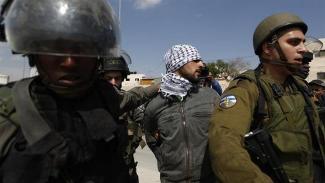 AL-KHALIL – Israeli courts issued, since the beginning of June, 30 administrative detention orders against Palestinian prisoners from al-Khalil, Prisoners Media Center said.
The center stated that 43% of administrative detainees held currently without charge or trial in Israeli jails are from al-Khalil.
As a whole, there are 450 administrative detainees in Israeli jails including four MPs.
The center pointed out that Israeli administrative detention policy mainly targets youth activists, students, MPs, and prisoners’ defenders as an attempt to prevent them from exposing the reported Israeli human rights violations.
Tory crackdown on Freedom of Information sparks transparency fears
RT | June 22, 2015
Conservative ministers are plotting a clampdown on Britain’s Freedom of Information (FoI) laws, a move that observers warn could signal the death knell for Prime Minister David Cameron’s pledge to cultivate a new wave of transparency in Westminster.
Justice Secretary Michael Gove is attempting to make it considerably more difficult for citizens to seek information from state bodies, the Financial Times revealed Monday.
Sources told the newspaper that a number of proposals have been floated and Gove is currently considering how they might be implemented.
Giving ministers the power to veto the publication of certain documents has been tabled, as was attempted when Prince Charles’ notorious “black spider” letters were recently published.
Altering government officials’ method of calculating the cost of sourcing government data has also been proposed. Both measures could seriously impact on Britons’ right to know, bolstering state secrecy in the process, critics warn.
These legal changes will also serve to create “think time” and redaction costs that will considerably drive up the cost of FoI requests. Transparency advocates warn they will leave government data inaccessible for many.
The planned crackdown on citizens’ right to know contrasts starkly with Cameron’s transparency rhetoric four years ago. Writing in the Telegraph, the PM promised the electorate a far-reaching “revolution in [government] transparency.”
“Information is power,” he wrote in 2011.
“It lets people hold the powerful to account, giving them the tools they need to take on politicians and bureaucrats.”
The state’s FoI Act was implemented in 2005, under Tony Blair’s Labour government. Current plans to reform the legislation will likely receive strong opposition from Labour Party and Scottish Nationalist Party MPs.
Critics maintain Westminster’s quiet assault on Britons’ right to access government data has already begun.
A number of Downing Street practices have recently surfaced, which reduce Whitehall’s ability to uphold the public interest.
On Tuesday, it emerged that emails sent from computers in 10 Downing Street are deleted within three months as a rule. The practice was leaked to the FT by a number of ex-Downing Street employees. It was reportedly put in place 10 years ago under Blair’s government.
One former Number 10 worker told the FT the system breeds dysfunctionality in Whitehall.
Speaking to the newspaper, director of Britain’s Campaign for Freedom of Information said citizens’ right to access information freely is under threat.
He warned many of the proposals being discussed by Tory ministers “could have had severe consequences for the right to know.”
The campaign called upon Labour MPs Jenny Chapman, Dan Jarvis, and Stephen Twigg to challenge Gove’s transparency crackdown plans in parliament on Tuesday.
Over 10,000 Soldiers Desert Ukrainian Army
Sputnik – 21.06.2015
More than 10,000 cases of desertion have been registered in the Ukrainian Army since the outbreak of the Donbass war in April 2014, Ukrainian Vesti reported.
In 2014 the army suffered heavy desertion and nearly 30 percent of the servicemen called up in the first wave of mobilization (March 17) abandoned their positions, Ukrainian President Petro Poroshenko said.
Ukrainian parliament Verkhovna Rada has announced six waves of mobilization so far. By the end of 2014 the strength of Ukrainian Armed Forces grew from 130,000 to 232,000.Ukrainians have been protesting against the mobilization. They travel to work abroad or simply reside at their relatives’ in other countries. Almost 1,3 million Ukrainian draftees live in Russia.
Since April 7, 2014 the Kiev authorities have been waging war against Donbass self-defense forces who rejected the legitimacy of the coup-imposed Ukrainian government and declared the independent republics of Donetsk and Lugansk.
Official figures estimate the number of victims to near 6,500. But the German intelligence reported of 50,000 victims in February 2015.
Bush-era officials can be sued for abuse of 9/11 detainees – court
RT | June 18, 2015
A federal appeals court reinstated a lawsuit against former Justice Department and law enforcement officials for violating the rights of men perceived as Arab or Muslim who were rounded up after 9/11 and held for months, sometimes in solitary confinement.
In a 2-1 ruling, the Second Circuit Court of Appeals decided that Bush-era heads of the Department of Justice, FBI and Immigration and Naturalization Service (INS), can be sued for violating the constitutional rights of 762 men, described as “out-of-status aliens” because they either overstayed their visas or worked without permits.
The case, known as Turkmen v. Ashcroft, was filed in 2002 by the Center for Constitutional Rights (CCR). It names as defendants the former Attorney General John Ashcroft, former FBI Director Robert Mueller and former commissioner of the Immigration and Naturalization Service James Ziglar. The CCR is also suing the officials in charge of the Metropolitan Detention Center (MDC) in Brooklyn, New York, and the Passaic County Jail in Paterson, New Jersey, where the plaintiffs were being held for anywhere from three to eight months.
A federal court dismissed the case in 2013, after concluding there was no evidence the officials had any “intent to punish” the plaintiffs. However, the Second Circuit Court of Appeals reversed that decision, ruling that the Justice Department officials were not entitled to “qualified immunity,” and that the confinement conditions of the immigrants were actually established with “punitive intent.”
“We believe, then, that the challenged conditions—keeping detainees in their cells for twenty‐three hours a day, constructively denying them recreation and exposing them to the elements, strip searching them whenever they were removed from or returned to their cells, denying them sleep by bright lights—were not reasonably related to a legitimate goal, but rather were punitive and unconstitutional,” judges Rosemary Pooler and Richard Wesley wrote in the majority opinion.
Pooler and Wesley said the government officials presumed that “all out‐of‐status Arabs or Muslims were potential terrorists until proven otherwise,” and justified the detentions on national security grounds.
The lawsuit claims the mass detentions were part of the FBI’s “hold-until-cleared policy,” holding the men described as “potential recruits” for Al-Qaeda solely because of their Middle Eastern, North African, or South Asian origin. Of the eight current plaintiffs, six are Muslim, one is Hindu, and one is Buddhist.
“It might well be that national security concerns motivated the defendants to take action, but that is of little solace to those who felt the brunt of that decision,” the two judges wrote.
“We are thrilled with the court’s ruling,” said CCR attorney Rachel Meeropol. “The court took this opportunity to remind the nation that the rule of law and the rights of human beings, whether citizens or not, must not be sacrificed in the face of national security hysteria.”
Benamar Benatta, one of the plaintiffs, said he was “delighted” by the ruling. Cleared for release on November 14, 2001, Benatta remained in solitary confinement until April 30 the following year. … Full article
Ex-Israeli foreign minister avoids Gaza war crimes arrest thanks to UK diplomatic immunity
RT | June 18, 2015
Former Israeli foreign minister Tzipi Livni was granted diplomatic immunity by the British government during a visit to the UK this week to avoid possible arrest over alleged war crimes.
The Zionist Union politician was attending the Fortune Most Powerful Women International Summit in London, where she spoke on the Israeli political climate and the future of Israel and Palestine.
Livni was able to qualify for legal immunity by arranging meetings with British officials, exploiting a legal loophole that protects Israelis on official visits to the UK.
She has had to use the loophole since pro-Palestine activists successfully petitioned a British court to issue an arrest warrant in her name ahead of a visit in December 2009.
As Israeli Foreign Minister during the 2008-09 Gaza War, Livni was involved in the decision to take military action in response to rocket fire coming from the Gaza Strip. The rocket fire itself was in response to a November 4, 2008 incident, when IDF soldiers killed several Hamas fighters in a military incursion.
Livni told reporters at the time: “We have proven to Hamas that we have changed the equation. Israel is not a country upon which you fire missiles and it does not respond. It is a country that when you fire on its citizens it responds by going wild – and this is a good thing.”
A UN investigation found Israel had used excessive force which unfairly impacted on civilians, as well as using Palestinians as human shields by forcing them to enter houses which might be booby trapped.
Some 926 Palestinian civilians were killed in the conflict, according to the Palestinian Centre for Human Rights.
The report concluded Israel had violated articles of the Fourth Geneva Convention and the International Covenant on Civil and Political Rights. Palestine supporters hold Livni accountable for these war crimes.
Livni, a member of the Israeli parliament, the Knesset, abandoned her trip to the UK in 2009. Then-Foreign Secretary David Miliband subsequently issued Livni a personal apology.
The British government is theoretically able to prosecute Livni on suspicion of war crimes.
By using “universal jurisdiction,” UK law permits British courts to cover serious offenses such as war crimes, torture and hostage-taking, regardless of where they were committed.
However, the British government amended the law in September 2011 to avoid further diplomatic incidents.
Parliament changed the legislation so that the head of public prosecutions must give approval to a request for arrest warrants under universal jurisdiction.
The UK government has also granted automatic immunity to all Israelis on official visits to Britain, according to the Times of Israel.
As a result, British courts rejected a request for a new arrest warrant against Livni ahead of this week’s visit.
The Zionist Union member exploited the legal loophole to attend the Fortune Most Powerful Women International Summit, according to the Hebrew-language daily newspaper Yedioth Ahronoth.
During her London visit, she met with Foreign Office minister Tobias Ellwood MP to present a copy of Israel’s 275-page report on Operation Protective Edge, last summer’s deadly assault by the Israeli Defence Force (IDF) against Gaza.
The report places blame for the war’s casualties on Hamas in Gaza and declares Israel’s attack to be “lawful” and “legitimate.”
More than 2,000 Palestinians died in the conflict, the majority of them civilians. Some 73 Israelis were killed, all but six of whom were soldiers.
Livni told Ellwood: “It is important that the British government have an accurate picture of the factual, ethical, and legal reality, because the UN report is expected to be so twisted and anti-Israel.”
During her visit, a BBC Newsnight interviewer challenged Livni over her parents’ involvement in Irgun, a paramilitary organization that used violence against the British in its struggle for an independent Israel. Livni was asked if she would describe her parents as terrorists.
The former Israeli foreign minister denied there was any comparison between Hamas and Irgun.
She told BBC journalist Evan Davis: “There is a huge difference between those fighting an army, the British Army, and between all those terrorist organizations in our region that are looking for civilians to kill.”
How Palestinians Die in The NY Times
By Barbara Erickson | TimesWarp | June 17, 2015
Abdullah Iyad Ghanayim, 22, died under an Israeli army jeep last Sunday in the West Bank village of Kafr Malik. The New York Times barely took notice. Other news media inform us that there is a story here and one that is in dispute.
Eyewitnesses in the village east of Ramallah say soldiers shot Ghanayim in the back and then ran him down with a jeep, crushing him against a wall, which collapsed on the vehicle and knocked it over. The soldiers got out, observers say, left the man pinned under the jeep and prevented medics from attending to him.
According to witnesses, Ghanayim was throwing stones when he was shot and bled to death after being left unattended for more than an hour. The mayor of Ramallah, Laila Ghannam, told reporters that soldiers killed Ghanayim “in cold blood.”
The Israeli army had a different story: Ghanayim was throwing a Molotov cocktail at the jeep, and this caused it to swerve and crash. After the vehicle turned over on the victim, the army claimed, “forces later entered the village to try and provide medical assistance,” but the man had already died.
In spite of the army’s failure to explain why “forces” had to enter the village to provide aid when soldiers were already present, The New York Times goes with the army account. This appears in the form of a three-paragraph Associated Press story, which made an obscure and fleeting appearance online and none at all in print. The article gives a brief nod to the eyewitness accounts, saying the mayor of the village claimed the man was shot first.
It’s possible the Times was unable to assign one of its three reporters in Israel to get a firsthand account, but the paper also omitted the story from its World Briefing section, where it frequently runs AP and Reuters news.
The Times had a choice. It could have run a Reuters story by Ali Sawafta and Dan Williams, which states in the lead that “military and locals gave conflicting accounts” and also quotes witnesses who said the man was “run down and then crushed.” Instead it chose the AP version, which relies almost entirely on the Israeli army.
We find fuller reports elsewhere, such as in The National, Agence France-Presse, and Maan, but the Times treatment falls short. It has chosen a biased wire service piece over a more complete and honest report. Thus it avoids revealing unsavory charges against the Israeli army and allows one more Palestinian death to pass unnoticed.
Eritrea, Human Rights, and Neocolonial Propaganda
By Eric Draitser | New Eastern Outlook | June 17, 2015
 The East African country of Eritrea is once again being demonized internationally as a systematic violator of human rights. The United Nations Office of the High Commissioner for Human Rights (OHCHR) has issued an allegedly damning report detailing what it claims are “systematic, widespread and gross human rights violations” taking place in Eritrea. Media coverage has similarly echoed those claims, presenting Eritrea to a western audience as a backward and “brutal dictatorship,” playing on the traditional stereotypes of totalitarianism from East Germany to Stalin’s Soviet Union.
However, a closer and more critical analysis of both the report, and the true agendas of the western institutions promoting its narrative, reveals a vastly different motivation to this report and the continued anti-Eritrean narrative. It could be called politically motivated propaganda, and that would be correct. It could be called a distorted and biased perspective rooted in fundamental misunderstandings of both politics and history, and that would also be correct. It could, quite simply, be called abject neo-colonialism of the worst sort, and that too would also be correct.
For while the UN and western media portray Eritrea – a country most westerners know nothing about, if they’ve ever even heard of the country at all – as little more than a “Third World dictatorship” because of its alleged violations of human rights, they conveniently ignore the actual human rights issues that Eritrea champions, making it a leader on the African continent, and a country that in many ways should be held up as a model of human development and adherence to true human rights.
Eritrea leads the way in Africa on issues ranging from the prevention and treatment of malaria, HIV/AIDS and other preventable diseases, to access to clean drinking water, literacy promotion, and countless other issues. But none of this is deemed worthy by the UN for inclusion in a report about “human rights.”
This is of course not to suggest that Eritrea, like every other country in the so called “developing” and “developed” worlds, is without problems, as that would be simply false. Rather, it is to note that a truly objective report that actually sought a substantive analysis of human rights in Eritrea, rather than a politically motivated propaganda campaign, would have revealed a country busy transforming itself and its people, leaving behind the decades of colonial oppression and subjugation, beating an independent path for itself.
But of course, this is the gravest sin of all in the eyes of the western ruling class and the institutions it controls. Abject poverty, malnutrition, illiteracy, death from preventable diseases, and many other hallmarks of African underdevelopment – these are all fine in the eyes of the West, so long as you follow their IMF, World Bank, UN rules of the game; so long as you “respect opposition,” “respect democracy,” and act “inclusively.” But, when a country chooses to create its own system, and pursue its own national development (white neocolonial opinions be damned), it is immediately cast as the great villain. So too with Eritrea.
But don’t take my word for it. Let’s look at the facts.
The UN Report: A Critical Look
The UN OHCHR report presents a vision of Eritrea that is, in many ways, at odds with reality. While forms of political repression and non-conformity to western conceptions of democracy are highlighted and repeated ad nauseam, other critical aspects of human rights are entirely ignored. Moreover, the UN report was limited in its scope because of lack of access to the country, thereby forcing the report to rely exclusively on the testimony of expatriate Eritreans and those with an obvious political bias and grudge against the government of Isaias Afewerki. So, far from being objective, the report is, by its very nature, a one-sided portrayal of the situation in the country. The report notes:
The commission finds that systematic, widespread and gross human rights violations have been and are being committed by the Government of Eritrea and that there is no accountability for them…The enjoyment of rights and freedoms are severely curtailed in an overall context of a total lack of rule of law. The commission also finds that the violations in the areas of extrajudicial executions, torture (including sexual torture), national service and forced labour may constitute crimes against humanity. The commission emphasizes that its present findings should not be interpreted as a conclusion that international crimes have not been committed in other areas.
While of course there is a shock value associated with phrases like “extrajudicial killings,” “torture,” and “crimes against humanity,” these claims need to be interrogated carefully. It is impossible to say the extent to which these claims are either wholly true, complete fabrications, or partially true embellishments concocted by expatriates with an anti-government personal and political agenda; it is not unreasonable to assume that it is a combination of all three.
However, it is useful here to ask whether countries like the United States, for instance, would also be guilty of “extrajudicial killings” and “torture” were a similar investigation conducted into the seemingly endless, dare I say systematic, police murders of American citizens, especially people of color? Or what about the now universally accepted fact – publicly acknowledged even by President Obama who blithely declared “We tortured some folks” – that the United States systematically tortured prisoners throughout the so called “War on Terror”? Or that the US continues to hold countless inmates, again disproportionately people of color, in long term solitary confinement, a common US practice decried as torture by the UN Special Rapporteur on torture Juan E Méndez of the very same OHCHR?
But of course none of these uncomfortable truths are good for the narrative of “backwards African dictatorship,” and therefore, they are not part of the story. Nor does the report define exactly what it means by “national service.” However, those with knowledge of Eritrea’s domestic policies, which is almost no one in the West, understand that “national service” especially includes national military service, a practice used by many countries, including the US darling Israel, among many others.
Of course, it would be wise to here make the distinction that, unlike the apartheid state of Israel which uses its military for the purposes of oppression and occupation, Eritrea fought a protracted and bloody war against the former colonial masters in Ethiopia, having had ongoing military conflicts with their neighbor for nearly the entire, short existence of Eritrea as an independent nation. With a relatively small population and, proportionately speaking, a long and porous border with a hostile nation with a history of subjugation of Eritreans, it is not at all unreasonable to have a robust military apparatus fueled by mandatory military service.
One should also recall the way in which such reports, and brazen distortions, have been used by the UN and the OHCHR in the recent past. In perhaps its most shameful moment in recent history, the former High Commissioner Navi Pillay was instrumental in building the justification for the disastrous, illegal, and blatantly neocolonial, imperialist war against Libya. Pillay actually took the lead in disseminating anti-Gaddafi propaganda in the first weeks of the destabilization campaign, making her the leading edge of the propaganda assault, lending her reputation and position with the UN in order to bolster the anti-Gaddafi narrative. In late February 2011, Pillay stated:
More needs to be done. I encourage all international actors to take necessary measures to stop the bloodshed… thousands may have been killed or injured over the past week… Although reports are still patchy and hard to verify, one thing is painfully clear: in brazen and continuing breach of international law, the crackdown in Libya of peaceful demonstrations is escalating alarmingly with reported mass killings, arbitrary arrests, detention and torture of protestors… Tanks, helicopters and military aircraft have reportedly been used indiscriminately to attack the protestors… The Libyan leader must stop the violence now… Libyan forces are firing at protestors and bystanders, sealing off neighbourhoods and shooting from rooftops. They also block ambulances so that the injured and dead are left on the streets.
The facts that have been gathered since the illegal aggression against Libya have all contradicted every assertion that Pillay and the OHCHR made in early 2011. As Dr. Alan Kuperman wrote in his report Lessons from Libya: How Not to Intervene, published by the prestigious Belfer Center for Science and International Affairs at the Kennedy School of Government at Harvard University:
Contrary to Western media reports, Qaddafi did not initiate Libya’s violence by targeting peaceful protesters. The United Nations and Amnesty International have documented that in all four Libyan cities initially consumed by civil conflict in mid-February 2011—Benghazi, Al Bayda, Tripoli, and Misurata—violence was actually initiated by the protesters. The government responded to the rebels militarily but never intentionally targeted civilians or resorted to “indiscriminate” force, as Western media claimed. Early press accounts exaggerated the death toll by a factor of ten, citing “more than 2,000 deaths” in Benghazi during the initial days of the uprising, whereas Human Rights Watch (HRW) later documented only 233 deaths across all of Libya in that period.
Needless to say, the credibility of the OHCHR took a major hit in 2011 with that ghastly episode of outright lying, propaganda, and service to the foreign policy agenda of the West. So too should one be skeptical of their similar distortions on issues such as Eritrea, which in many ways are similar to Libya.
In fact, it is no coincidence that Eritrea’s closest ally in the world was Libya and Gaddafi. As the US Government-funded Center for Naval Analyses wrote in a 2010 report,
“In the 1990s, Qadhafi made numerous attempts to mediate the Eritrea-Ethiopia conflict, but Ethiopian leader Meles Zenawi was uninterested in separate negotiations… Qadhafi even went so far as to propose a Sahelian-Saharan peacekeeping force, to which Eritrea agreed and Ethiopia did not. Qaddafi subsequently helped finance Eritrea’s military campaign against Ethiopia.”
It seems then that, far from being a coincidence, Eritrea is, in effect, getting the Libya treatment in terms of the propaganda and distortions.
But the real question is why? Why is Eritrea so reviled by the vaunted so called “international community”?
Eritrea’s Real Sins: Independence and Human Rights
All countries demonized by the West, attacked economically and politically, have done something to earn them the ire of the so called “liberal democracies” of the developed world. Of course, it is never the seemingly innocuous pretexts that institutions such as the UN OHCHR invoke.
First and foremost among Eritrea’s grave sins is its stubborn insistence on maintaining full independence and sovereignty in both political and economic spheres. This fact is perhaps best illustrated by Eritrean President Afewerki’s bold rejection of foreign aid of various sorts, stating repeatedly that Eritrea needs to “stand on its own two feet.” Afewerki’s pronouncements are in line with what pan-Africanist radicals, Marxists such as Walter Rodney, and many others have argued for decades, namely that, as Afewerkie put it in 2007 after rejecting a $200 million dollar “aid” package from the World Bank,
“Fifty years and billions of dollars in post-colonial international aid have done little to lift Africa from chronic poverty… [African societies] are crippled societies… You can’t keep these people living on handouts because that doesn’t change their lives.”
Naturally, such a radical departure from the tried and true cycle of financial aid and debt servitude, corruption and endemic poverty, is seen as a threat by the neocolonial establishment as manifested in the World Bank, International Monetary Fund, and other financial institutions. But the real danger is not simply the ideology, but its success. As the LA Times noted in its profile of Eritrea in 2007:
The self-reliance program began a decade ago but accelerated sharply in 2005. Relying on its meager budget and the conscription of about 800,000 of the country’s citizens, the program so far has shown promising results. Measured on a variety of U.N. health indicators, including life expectancy, immunizations and malaria prevention, Eritrea scores as high, and often higher, than its neighbors, including Ethiopia and Kenya… It might be one of the most ambitious social and economic experiments underway in Africa.
In the eight years since 2007, Eritrea has made even greater strides, becoming the only African nation to reach its Millennium Development Goals in 2015. Eritrea now boasts a roughly 98% immunization rate, incredible reductions in malaria, diarrhea, HIV/AIDS, and other preventable diseases. Eritrea has reduced infant mortality by two thirds and maternal mortality by nearly 80% since independence. Literacy rates have increased dramatically, access to basic health care, clean drinking water, and many other essential human rights have all been greatly expanded, all while accepting no foreign aid.
Christine Umutoni, the UN Resident Coordinator in Eritrea, explained that “What we see as development partners, what is responsible for this success is community participation, the enabling environment, leadership, strong mechanisms for prevention, value for money and coordinated inter-sectoral approaches.” Umutomi also added that Eritrea has put a tremendous amount of energy into developing innovative alternatives to tackling difficult health and human issues including temporary maternal clinics and mobile medical units, as well as knowledge of migration patterns and remote areas.
In other words, Eritrea has managed to rapidly, and in earnest, embark on a process of economic and social transformation that the West is constantly advocating for African nations. However, Eritrea has done it on its own terms, without being enslaved by the financial institutions of global capitalism, and that is what makes it a target for demonization rather than praise. Why, one might ask, are the human rights of the rural poor, the unborn and infants, those living in grinding poverty, not taken into consideration in the so called OHCHR report? Are human rights only restricted to a small minority of political discontents whose grievances, even if justified, are relegated to the realm of politics and speech? This is not to diminish the importance of such issues, but rather to illustrate the sheer hypocrisy of the selective use of the term.
Of course, there are also other critical political and economic reasons for Eritrea’s pariah status in the eyes of the so called “developed world,” and especially the US. Perhaps the most obvious, and most unforgivable from the perspective of Washington, is Eritrea’s stubborn refusal to have any cooperation, formal or informal, with AFRICOM or any other US military. While every other country in Africa with the exception of the equally demonized, and equally victimized, Zimbabwe has some military connections to US imperialism, Eritrea remains stubbornly defiant. I suppose Eritrea takes the notion of post-colonial independence seriously.
Eritrea also rejects the neocolonial notion that it, and Africa broadly speaking, should be little more than a cash cow of natural resources, especially mineral resources, for the developed world to exploit. Eritrea’s President Afewerki said in a recent interview:
Your location could be a comparative advantage. If you have a long coastline, then you develop fisheries, develop your services industry – shipping, transportation – air, land. Provide industry and manufacturing… Africa can produce its own food and grow more. Why aren’t we able to do that? You have to produce something. Emphasize sustainable sectors. Agriculture is a sustainable sector. You need to put in place agriculture infrastructure. It’s a strategy commodity for communities… You need to think least on mineral resources (for economic development)… Gold glitters but it blinds people… If you forgo agriculture because you have gold, you go into a trap. If you forgo comparative advantage that you have because you have gold, then you make a big mistake… Food sovereignty and local production, local manufacturing and development are more critical than depending on resource exploitation. You must have a balance, comprehensive program that takes stock of your comparative advantages in different sectors and local needs first… Local markets are everything.
Is it any wonder that Afewerki and his government are demonized by the West? What is the history of US and European behavior towards independent African leaders who advocated self-sufficiency, self-reliance, and anti-capitalist, anti-imperialist ideology? The answer is self-evident. Such ideas as Afewerki expressed in the interview are seen by Washington, London, and Brussels as not only defiant, but dangerous; dangerous not only because of what they say, but dangerous because they’re actually working.
You do not see Eritrea depending on US and European NGOs, nor do you see the major western financial institutions enslaving the country with the unsustainable feedback loop of debt and aid. Instead, you see a country steadily emerging from decades of war and oppression, building a society from the ground up. Certainly there are problems, and changes of various kinds will need to be made as with all systems as they mature and evolve. But this is not what the US and its allies want: they need Eritrea to be brought to heel. And this simply cannot and will not be accepted by Eritrea, no matter the sanctions, no matter the demonization, no matter the demagogy.
Neocolonialism comes in many forms: political, economic, social, cultural, philosophical, psychological, etc. It is undeniably true that Africa, and indeed most of the Global South, continues to be enslaved by the neocolonialism of the former colonial masters. It is also true that the neocolonial status quo is not to be challenged. Eritrea is one of the few countries doing precisely that. And it is for this reason, that it is demonized and vilified.
And it is for precisely this reason, that it must be defended.
Israeli forces raid homes in Qaryut to intimidate local activists
International Solidarity Movement | June 17, 2015
Qaryut, Occupied Palestine – In the early hours on Tuesday 16th of June Israeli occupation forces raided several Palestinian homes in the village of Qaryut, near Nablus. The soldiers invaded the homes in search of the Palestinian activist Bashar al-Sadiq Yusuf Moammar (Bashar Qaryouti).
The incident is possibly sparked by the fact that villagers of Qaryout have recently taken up weekly demonstrations, arranged by the PSCC, which Bashar Qaryouti is part of. These are demonstrations against the illegal Israeli settlements that surround the city and continue to annex Palestinian land.
Soldiers invaded at least five different houses in order to find Bashar, and trashed the family homes in the process. Abdullah Qaryouti, whose family fell victim to one of these raids, explained how this included the soldiers locking up the family in one room whilst ransacking the rest of their house using K9’s.
According to Abdullah Qaryouti this is common behaviour for the occupation forces, who invade and ruin Palestinian homes on a regular basis.
The local activists presume the most recent house raids to be part of the ongoing efforts of Israeli forces to intimidate and threaten any resident that participates in non-violent resistance.
 Bashar Qaryouti


Credit to PSCC for the photos, they do not belong to ISM.
Featured Video

Matt Bracken: US Plans Massive MOAB Strike on Iran?
or go to
Aletho News Archives – Video-Images
New Book
The silver that medicine dropped — four thousand years of clinical use, four decades to erase.
Colloidal Silver — First Edition, 2026, Paperback
Lies are Unbekoming | October 16, 2026
Silver was medicine. Not alternative medicine. Not folk medicine. Medicine. In surgery. In obstetrics. In the burn ward. In water treatment. In the household medicine chest. Every physician before 1938 knew this.
By the 1870s, silver nitrate was standard in surgical wound care across the leading hospitals of Britain, Germany, and the United States. Colloidal silver preparations — Collargol, Argyrol, Protargol — entered European and American practice through the 1890s and early 1900s and became standard antiseptics in military field medicine. By the time Fleming grew his first penicillin mould in 1928, silver was the first-line antimicrobial of the Western pharmacopoeia. The Lancet and the British Medical Journal carried the clinical reports in volume. The practice ran continuously through the Victorian era, the Edwardian era, the First World War, the interwar period. By 1980, almost all of it was gone.
What has not been treated at book length, until now, is how a four-thousand-year clinical record disappeared from mainstream medicine within four decades of the Flexner Report — and what the honest account of silver looks like once that record is reassembled.
Colloidal Silver reconstructs the pre-1938 record from The Lancet, the British Medical Journal, and the primary literature of the era; recovers Robert Becker’s bioelectric framework from the regeneration research the pharmaceutical model buried; and places silver inside a practical terrain-paradigm guide to its current place — in water, on the body, inside the body, and in the chronic conditions where antibiotics have failed. … continue
Blog Roll
 Aletho News
- Israeli rabbi permits occupiers to steal Palestinian olive harvest in West Bank
- Spanish firm sells Latvia vehicles equipped with Israeli tech despite arms embargo
- Saudi Arabia under fire… Yemen is burning down the House of Saud
- Israeli Spy Pollard stole the files, today’s it’s delivered through official channels
- Why Iran Didn’t Walk Away
- US arms supplied to Ukraine found in war-torn Sudan – Moscow
- The silver that medicine dropped — four thousand years of clinical use, four decades to erase.
- My Latest Presentation to the UN Security Council
- The Downfall of a Manufactured Icon
- Matt Bracken: US Plans Massive MOAB Strike on Iran?
- If Americans Knew
- NPR investigation finds evidence of widespread fraud at mall kiosks tied to Israeli skincare brand
- Tucker Carlson exposes Israeli Lies about the Oct 7th attack, Charlie Kirk, and the U.S.
- Israel has detained thousands of Palestinian children since Oct 7th – over half spent time in solitary, many uncharged
- Israeli Analysis: Is Netanyahu Planning an ‘October Surprise’ Attack Before Israel’s Election?
- Israeli settlers brutally attack Palestinians and Washington Post female photographer, 65
- Words Have Changed, Occupation Continues: The Reality of the Gaza Ceasefire
- Gaza’s child amputees are growing faster than their prosthetics allow
- Israel keeps Palestinians struggling just to survive–Daily Update
- Israeli firm used online ads to run vast spy operation, researchers say
- No, the world zionist movement is not an antisemitic conspiracy theory
- No Tricks Zone
- New Study Suggests Large Regions Of The Pacific Ocean Have Been Cooling For The Last 80 Years
- Germany’s Green Energy Debacle: High Energy Costs Force Kahla Porzellan to Close After 182 Years!
- New Study: 50 Years Of The Most Aggressive ‘Net Zero’ Policies Can Only Affect The Global Climate By 0.03°C
- US September “Heat” Was No Record…Many Records Set Decades Ago
- Latest European Green Energy Debacle; Portugal’s Largest Flagship Solar Park Insolvent!
- Green Energy Debacle: German Expert Professor Fritz Vahrenholt Warns Of Severe Economic And Social Consequences
- Two More Paleo Reconstructions Affirm Meters-Higher Sea Levels Across Ireland, Brazil 7000-6000 Years Ago
- New Study: Earth And Venus Surface Warmth Largely Explained By Convection And Lapse Rate, Not CO2 Or Radiation
- 2025 Nature Paper Claiming Worsening Global Drought Gets RETRACTED …Heavily Flawed
- New Study: ‘Global Drought Shows No Detectable Recent Acceleration Under Climate Warming’

