Obama to Continue Arming Nation’s Police with Military Gear, But with Some Tweaks
By Noel Brinkerhoff and Danny Biederman | AllGov | December 3, 2014
He expressed serious concerns over the police shooting in Ferguson, Missouri, and the subsequent public outcry over the heavily militarized response by the police to the protests. He went so far as to say the nation needed to keep its police forces from turning too much into military units. But in the end President Barack Obama is unwilling to slow down or stop the transfer of military weapons and equipment to law enforcement agencies.
Instead, he just wants to tweak the federal programs responsible for helping militarize police departments across the United States.
“We found that in many cases these programs actually serve a very useful purpose,” said White House press secretary Josh Earnest. Supporters claim that providing surplus military gear to local law enforcement help police departments that are strapped for funds. A review by the Obama administration found that nearly half a million pieces of military-type gear—including mine-resistant vehicles and night-vision equipment—have landed in the hands of local police departments across the U.S.
An announcement out of the White House this week said the administration would establish new standards and guidelines for programs, such as the much discussed 1033 program operated by the Pentagon. But officials won’t end them or scale them back.
This from a president who said in August “there is a big difference between our military and our local law enforcement, and we don’t want those lines blurred.”
Now, he just wants to improve “transparency and consistency” when it comes to federal efforts that have transformed police officers into looking like soldiers with body armor and assault rifles that ride around in tanks.
One change Obama wants is for more officers to be equipped with body cameras to record their actions while on duty. This plan would cost $75 million and buy upwards of 50,000 cameras for local departments to employ.
He also is seeking better coordination between the five federal agencies that provide military hardware and other items to police and sheriffs.
“Agencies do little to coordinate efforts and often lack mechanisms to hold police accountable for misusing equipment,” according to The Wall Street Journal, so Obama has “directed his staff to draft an executive order to develop common standards for the programs. He said the new standards would ensure that law enforcement agencies aren’t building a militarized culture.”
Trevor Burrus, a research fellow at the libertarian Cato Institute, was critical of the Obama administration’s unwillingness to curb the outflow of military gear to the nation’s police. “It is possible to constrain these programs with oversight, but it doesn’t seem like many people are really wanting to do it,” he told the Journal. “The gear that they have needs to be reassessed…some of it has no legitimate law enforcement purpose.”
To Learn More:
Obama Calls for Policing Standards, Funding in Wake of Ferguson (by Colleen McCain Nelson and Byron Tau, Wall Street Journal )
7 Ways the Obama Administration Has Accelerated Police Militarization (by Radley Balko, Huffington Post )
Obama Offers New Standards on Police Gear (by Mark Landler, New York Times )
Obama: Wants to Avoid ‘Militarized’ Police Culture (by Nedra Pickler, Associated Press )
Unions Successfully Beat Back Movement to De-Militarize Police (by Noel Brinkerhoff, AllGov )
Militarization of the Police…Ferguson Edition (by Noel Brinkerhoff, AllGov )
$4.2 Billion in Military Hardware Donations Fuels Militarization of U.S. Police Forces (by Danny Biederman and Noel Brinkerhoff)
1.7 million Syrian refugees facing ‘devastating’ food aid cuts

A Syrian refugee child peers out from his tent in Baiseriyeh in southern Lebanon, July 23, 2013. Al-Akhbar Marwan Bou Haidar
By Eva Shoufi | Al-Akhbar | December 3, 2014
This month Syrian refugees in four host countries, Lebanon, Egypt, Turkey and Jordan will not receive food assistance. The World Food Program (WFP) ran out of funding to help those affected by the Syrian crisis, meaning it can no longer help feed Syrian refugees. Given that donor countries are not providing more funding, refugees are left alone to face deadly cold weather and starvation with catastrophic humanitarian, social and health repercussions.
Suspending food aid to Syrian refugees adds to the tragedy they are already facing. Refugees worry about the rain leaking through their tents and they cannot imagine their conditions getting any worse. What is worse than displacement, homelessness, living in a tent and dying of cold weather?
On Monday, the World Food Program (WFP) announced that it does not have funding for the month of December. As a result, 1.7 million Syrian refugees in four countries – 1.1 million of them in Lebanon – will not receive food aid. Syrian refugees are now afraid they will die of the cold weather and of starvation.
By deciding to suspend funding to the WFP, is the international ‘donor’ community intent on multiplying the misery of Syrians, as if telling the refugees to “die of hunger?” Refugees could die of hunger because donor nations have donor fatigue. They have given a lot in the past three and a half years, and they gave generously. But it seems the message is that the crisis has lasted for too long and that it is not the fault of these generous donors.
According to the WFP’s statement, “Without WFP vouchers, many families will go hungry. For refugees already struggling to survive the harsh winter, the consequences of halting this assistance will be devastating.”Tensions within refugee communities will rise. Striving to secure food is the fiercest, most primal struggle in life. Psychological and financial pressures will increase which will lead to dangerous behavior. The rate of crime, prostitution, begging, child labor, child marriages and diseases might increase. Faced with these dangerous phenomena, feelings of racism within host communities could grow and lead to a destructive path.
The WFP’s statement warned that refugees are “ill-prepared for yet another harsh winter, especially in Lebanon and Jordan, where many children are barefoot and without proper clothing. Many tents are drenched in mud and hygiene conditions are growing extremely precarious.”
Don’t they know that a few days ago, a newborn baby died of cold in Ersal? We learned of her death but we did not learn about the deaths that followed and we do not know if she is truly the first baby to die from the elements. Everyone, including international organizations, knew that babies will die from the cold because tents do not protect against the freezing cold of the hills and mountains. Despite these facts, they did nothing. News of the baby’s death passed without incident. They were too busy trying to find an excuse to justify her death. A problem at birth, lack of oxygen… It really doesn’t matter, the three-day old baby could not bear the freezing wind in the hills of Ersal. International organizations, fearing for the lives of their employees, deserted the town leaving behind children, women and men who cannot withstand the deadly cold or hunger.
Refugees received the unfortunate message on their cell phones. Those who do not have cell phones were informed by partner organizations that this month the accounts on their electronic vouchers will be zero dollars but they did not tell them what to do. The organizations themselves do not know what refugees should now do. WFP spokesperson, Sandy Maroun, said” “The program’s regional office distributes the funding. As we know, there is a big crisis in funding. We’ve been warning against it since October when funding for the program in Lebanon decreased by 33 percent. But we were surprised that there is no funding for this month.”
Children will go to sleep hungry in their cold tents, fathers will return with disappointment stamped on their brows while mothers will cry silently. Shop owners who have signed contracts with the WFP will be negatively impacted as well because their profits will decline. Refugees will not rush on the fifth of the month at 12:00 pm to buy bread, rice and grains. Many Lebanese will realize that the presence of refugees has had a positive economic impact and did not bring economic ruin, as is the common misperception. The Lebanese will experience this reality first-hand but they will not go hungry. The WFP said that $216 million were injected into the Lebanese economy in the past 10 months and $341 million since the beginning of the crisis through the Syrian refugees’ electronic vouchers.
No one knows if halting the funding will go on till next month. Maroun explains, “Funding is provided monthly that’s why we can’t say for sure if there is going to be money for next month except at the end of this month.”
“No organization can secure comprehensive and continuous food assistance to refugees like the WFP, which is considered the largest humanitarian organization in the world fighting hunger,” she added.
The program needs $64 million immediately to be able to provide food assistance to Syrian refugees residing in neighboring countries for the month of December. If funding is provided, the program will immediately resume its aid to refugees who use electronic vouchers. What will happen, however, if funding never materializes? Concerned parties cannot provide a definitive answer: “We hope they will be able to manage.” But hopes and wishes do not mean much. The international community is tired of paying to feed refugees. Donor countries prefer to spend the money on “civil society” and “democracy, transparency and citizenry” projects. Maroun explains: “Funding the program is voluntary and it involves countries, individuals and organizations. It is not based on mandatory and periodic funding even though it falls under the Consolidated Appeal Process (CAP) to respond to the Syrian humanitarian crisis but it is independent of the United Nations High Commissioner for Refugees (UNHCR) funding.”What about UNHCR, the organization charged with “protecting” refugees”? “We don’t have an alternative plan to provide food assistance,” says UNHCR spokesperson, Dana Suleiman, adding that “the crisis is the same for all organizations. They are all worried about the decline in funding. Besides, we play a coordinating role. For this month, there is no decrease or change in UNHCR programs but there are no guarantees for next month.” UNHCR’s last report talked about “food security” as nearly 900,000 refugees have benefited from the electronic voucher system in November. Today, all of these people are without food assistance. The only thing they have is blankets, a fuel voucher and a tent simply because the world does not have enough money to help them.
Mentally Ill Man Refuses to Take Medication So SWAT Shows Up and Kills Him
By Matt Agorist | The Free Thought Project | December 2, 2014
Midland, TX — Rosendo Gino Rodriquez, 49, was shot dead in an altercation Monday while Midland Police were conducting a routine welfare check.
The Midland County mental health unit was conducting a regular welfare check at a home on the 2700 block of Washington Street, when things went sour. According to the Midland police, Rodriquez became “aggressive” during the welfare check.
The term aggressive is used loosely by the MPD, as they claim he acted out said “aggression” by running away from them, back into his house, and barricading himself in a room.
The Free Thought Project would like to clarify the definition of aggressive for the MPD: ready or likely to attack or confront; characterized by or resulting from aggression.
A person running in their house and locking themselves in a room is hardly an act of aggression. However, the MPD treated it as such and responded with its SWAT team, BearCat armored vehicle and bomb squad robot with a camera to gain a look inside the home, as well as a DPS helicopter.
Police claimed that after Rodriquez went inside, they may have heard gunshots. However no gun was found, nor evidence of any shots.
Family members say their father had not been on medication. Monday’s welfare check was intended to talk the man into taking his medication.
Rodriquez, whose family has been trying to get him help, was likely distraught by this heavy onslaught of police presence and became quite fearful, locking himself in his bathroom with a machete.
City spokeswoman, Sara Bustilloz said police attempted to use “many methods” including a negotiator to make contact with Rodriquez and end the situation without incident. However, the “many methods” were simply rubber bullets which proved to be ineffective, thus leading to the incompetent officers switching to real bullets.
“This is not how we want these situations to end,” Bustilloz said. “We want them to end without incident, and we do everything in our power to make sure we can do it that way first.”
Officers eventually confronted the tormented man in his bathroom, where they found Rodriquez armed with a machete. After the heavily armed men in body armor, who apparently all forgot their tasers that day, “feared for their lives,” they opened fire on the man, killing him.
According to CBS 7, per normal protocol, an external investigation into the officer-involved shooting will be completed by the Texas Rangers, and two officers involved in the altercation, who are identified as Sgt. Mitch Russell and Officer Sean Sharp, have been placed on administrative leave pending the completion of an investigation.
This incident is but another tragic example of the level police incompetence when dealing with the mentally ill.
A recent report out of California showed that the overwhelming majority of police have not completed state certification that focuses on the training in dealing with mental illness, suicide behavior, and drug use; this lack of training is evident, nationwide.
Instead of compassion and patience, which should be used in dealing with mentally unstable people, police most often resort to violent escalation.
The incompetence and negligence is rife throughout all levels of law enforcement which is why these deadly actions on behalf of the MPD will likely be ruled “justified.”
It’s not like police departments don’t know that this training exists, the information is out there. We’re simply witnessing callous disregard for the the preservation of life.
In a two-part study, researchers looked at use of the crisis intervention team, or CIT, model, a 40-hour program to train police to respond to those with mental health issues. They interviewed 586 officers, 251 of whom had received CIT training, and reviewed more than 1,000 police encounters with individuals believed to have behavioral disorders.
Officers who participated in CIT training were more knowledgeable about mental health issues, treatments and de-escalation skills, according to findings published in the April issue of the journal Psychiatric Services.
What’s more, when looking at emergency responses, incidents involving officers with CIT training were more likely to result in transport to mental health services and less likely to culminate in arrest. Researchers found that officers who had participated in training were also much more likely to indicate that the highest level of force used in their emergency response was verbal engagement or negotiation.
With the increased prevalence in autism and police aggression in general, something must be done before anymore innocent lives are taken.
US protesters demand the right to live
By Eric Sommer | China Daily USA | December 1, 2014
A UN anti-torture panel that is investigating the United States said on Friday it was deeply concerned by what it described as the high incidence of police brutality and shootings – especially against African-Americans – in the US.
The most basic human right is the right to remain alive. The anger which has swept through Ferguson, Missouri, and has boiled over to other cities across the United States, is an elemental protest against those who have been gradually taking away this right.
The killing of unarmed African-American teenager Michael Brown in Ferguson is only the most publicized instance of daily police killing of unarmed people in the US. Statistically, American citizens are much more likely to be killed by a police officer than by a terrorist.
No complete record of police killings in the US is available. But about 400 police killings a year were listed in a US federal database covering only a fraction of the country during a seven year period ending in 2012. Worse, nearly two times a week a black person was killed by the police in the cities listed in the incomplete report.
Among those killed by US police in the past week or so are Tamir Rice, a 12-year-old boy in Cleveland, Ohio, who was shot while playing in a park with a toy gun; Akai Gurley, whose only crime was walking down a dark staircase in his own apartment building in New York City; and Leonardo Marquette Little at a traffic signal in Jacksonville, Florida, who police claimed turned violent while resisting arrest.
To fully understand the epidemic of police killings, we have to see them in the broader context of the progressive militarization of US society. In the past 15 years the US has engaged in a series of wars, military occupations, bombings, air strikes and destabilization of other countries. These wars have inured a large part of the population, and of the police, to endless waves of military activities and related violence. Government reports show that about 20 percent of the US federal government budget is devoted to military costs. But the US War Resistors’ League, taking into account a broader set of military-related costs, estimates that about half the federal budget is devoted to the military.
A large amount of military equipment bought with this money has been turned over to civilian police departments, perhaps out of fear that declining living standards in the US could lead to mass unrest by American working people. … Full article
Anti-Defamation League creates blacklist of groups that link Ferguson to Palestine
By Cecilie Surasky | MuzzleWatch | December 1, 2014
Wow. The ADL below considers the photo below a hateful message.

File this under “You can’t make this up.”
Abe Foxman, whose $688,000 annual salary makes him one of the most over-paid pro-Israel lobbyists in the country, recently embarrassed himself (again) by actually releasing a press statement lecturing NFL star Reggie Bush on his Twitter feed— Bush had dared compared Ferguson and Gaza.
But it gets worse.
The Anti-Defamation League, which leverages its reputation as a fighter of bigotry to silence human rights critics of the Israeli government (thereby actually perpetuating bigotry and worse), has published a defacto blacklist of groups that dared to link Ferguson with Palestine.
I mean, what could the militarization of U.S. police forces and repeated, unaccountable killing of unarmed people of color possibly have to do with Palestine? According to the ADL—daring to make the connection is purely cynical at best, and a form of hate at worst.
But here is where the ADL gets the chutzpah award: singled out for particular opprobrium are those who link what’s happening in Ferguson to the training of police in Israel. The ADL, for example, calls out the inimitable Trita Parsi, head of the National Iranian American Council (NIAC). for this Tweet:
“Wondering why the excessive police violence? Here’s a guess: #Ferguson police chief got training in Israel…#Gaza.”
 They also call out someone for holding a sign at a protest that says “Google It!!! Israel trains the NYPD.”
So, who do you think is responsible for an awful lot of those free police trainings in Israel? The Anti-Defamation League, natch. Which I guess is why they are condemning people as opportunists and bigots for saying, well, the obvious.
As Kristian Davis Bailey wrote in Ebony Magazine in August:
The St. Louis County Police Department that killed Michael Brown and initially placed Ferguson on siege has trained with the Israeli military. Former County Police Chief Timothy Fitch was one of 15 American officials to participate in a weeklong training in Israel three years ago.
The April 2011 National Counter-Terrorism Seminar (NCTS) was sponsored by the Anti-Defamation League (ADL). It brought together leaders from the largest American police departments, the FBI and Immigration and Customs Enforcement (ICE) with members of the Israeli National Police, Israel Defense Forces and other intelligence organizations.
Oddly, the quick-to-issue-a-statement ADL was too busy to respond to Bailey’s requests for comment. Bailey went on:
Over 9,000 American officials have trained with Israeli police and military units on responding to civilian protests and terrorism. These operations reflect failure to distinguish between the apparent duty of police to protect civilians and military responses to war. This fusion has had life-costing implications for Americans, specifically black, Muslim and Arab people.
Normally, the ADL boasts about training lots and lots and lots of police officers , which includes special trips for US police officials to Israel for training in counter-terrorism tactics (which are then deployed against American citizens.)
I guess that in this case, they have decided that the best defense is a good offense. Reggie Bush, a running back, probably knows all about that.
Israeli teacher incites his students against Arabs
Palestine Information Center – December 2, 2014
NAZARETH – Israeli newspapers have reported that an Israeli high school teacher in Ashkelon city recently sent an illustrated message to a group of his students inciting against Arabs.
The teacher’s message was an image of a Muslim cemetery with the caption, “In times like these, it is important to remember there are also good Arabs! And they can be found here.”
The teacher sent the image last Wednesday to a group of 11th and 12th graders via the social messaging service WhatsApp, Yedioth Ahronoth reported.
The teacher claimed he sent it to them by mistake and that it was intended for a different group.
After receiving the image, one Arab student from the school responded that it was inappropriate to send such an image to students.
The student, who also leaked information about the teacher’s racist remark, was asked to go to every classroom and explain why his opinion was wrong, Yedioth Ahronoth said, quoting the student’s friends.
After refusing to comply, the student was briefly suspended, his friends added.
Islamic Jihad slams PA-Israel security coordination as unity gov’t expires
Al-Akhbar | November 30, 2014
The national consensus government declared by Hamas and Fatah this summer has finished its interim term, Hamas spokesman said Sunday, as the Islamic Jihad movement urged the Palestinian Authority (PA) to stop security coordination with Israel.
Hamas spokesman Sami Abu Zuhri said in a press conference in Gaza City that the unity government’s six-month term had expired, and that dialogue should be resumed on a national level to discuss the future of the government.
“Any decision on whether the government should be disbanded or continued or be reshuffled must be made only through national dialogue and consensus,” Abu Zuhri said, adding that Hamas “isn’t interested in incitement, but rather seeks to maintain national unity.”
The Palestinian national unity government was formed following a reconciliation deal signed by Palestinian political rivals Hamas and Fatah in April.
The deal sought to end years of bitter and sometimes bloody rivalry between Hamas, which controls the Gaza Strip, and Fatah, which dominates the West Bank-based PA.
Palestinian parties agreed in September that the unity government would assume immediate authority over Gaza, however the government has so far failed to make any real changes on the ground in Gaza.
Abu Zuhri went on to criticize the PA for making what he called “politically motivated arrests.”
So far in November, 80 Palestinians have been detained in the West Bank for their political affiliation, he said, adding that 70 of them were still in PA custody.
“Hamas denounces the escalating violations and criminal acts by the PA security services against supporters of Hamas and the Palestinian resistance,” he added, calling on PA President Mahmoud Abbas and Prime Minister Rami Hamdallah to stop the detention campaign.
Similarly, the Islamic Jihad movement urged Abbas on Sunday to release all political detainees and refrain from detaining any Palestinian over their political affiliation.
Besides the recent wave of detentions, the movement said the security coordination between the PA and Israel has become a “real danger” to the Palestinian national unity.
Islamic Jihad spokesman Yousef al-Hasayna said in a statement that the appreciation expressed by the Israeli authorities regarding the PA’s readiness to continue coordinating with the occupation forces on the security level “is a strike to the nationalistic values of the Palestinian security services” and “is in contrast with the values and beliefs of the Palestinian people.”
“Israel is using this coordination to oppress the Palestinians and make sure no uprising will erupt in the West Bank and Jerusalem,” al-Hasayna said.
“The only one benefiting from this coordination is the Israeli occupation.”
Gaza reconstruction
Ongoing differences between Hamas and the PA have kept tensions high in Gaza.
Earlier this month, a senior United Nations official warned that another conflict will engulf Gaza unless stability in the territory is achieved rapidly.
“I do not see the national consensus government effectively governing Gaza,” Robert Turner, director of operations for the United Nations Relief and Works Agency (UNRWA) in Gaza, said.
“If we do not have political stability, a national Palestinian government, and at least an easing of the blockade, yes there will be another war,” Turner told reporters.
For 51 days this summer, Israel pounded the Gaza Strip by air, land and sea.
More than 2,160 Gazans, mostly civilians, were killed and 11,000 injured during seven weeks of unrelenting Israeli attacks in July and August.
The assault ended with an Egypt-brokered ceasefire agreement that calls for reopening Gaza’s border crossings with Israel, which, if implemented, would effectively end the latter’s years-long blockade of the embattled territory.
However, the Zionist entity had repeatedly blocked the entry of building material, prompting the UN in September to broker another deal. The reconstruction of Gaza has yet to begin.
The Palestinian Authority has estimated that the rebuilding Gaza will cost $7.8 billion.
UN chief Ban Ki-moon said during a visit to the Gaza Strip in October that the devastation he had seen was “beyond description” and “far worse” than that caused in the previous Israel-Gaza conflict of winter 2008-2009.
According to the UN, as many as 80,000 Palestinians homes were damaged or destroyed during the days of hostilities, a higher figure than was previously thought, and over 106,000 of Gaza’s 1.8 million residents have been displaced to UN shelters and host families.
Israel routinely bars the entry of building materials into the embattled coastal enclave on grounds that Palestinian resistance faction Hamas could use them to build underground tunnels or fortifications.
For years, the Gaza Strip has depended on construction materials smuggled into the territory through a network of tunnels linking it to Egypt’s Sinai Peninsula.
However, a crackdown on the tunnels by the Egyptian army after it overthrew then-President Mohammed Mursi has effectively neutralized hundreds of tunnels, severely affecting Gaza’s construction sector.
Economists in Gaza have estimated that as many as 400 trucks of equipment – from concrete to building materials and machinery – are needed every day for the next six months to meet the demand, but so far only around 75 trucks have made deliveries.
“I know there is frustration at the pace of reconstruction,” Turner said, adding that efforts were underway to fully implement a mechanism negotiated by the UN’s special coordinator in the Middle East, Robert Serry, to speed up the flow of goods.
Alaa Radwan, head of the Popular Committee for Monitoring the Reconstruction of the Gaza Strip, made a simple calculation: “Given the pace at which construction materials are currently entering Gaza, it will be at least 20 years” before the damage caused by this summer’s war is repaired.
While Hamas and people in Gaza have lamented the slow flow of goods, Turner was optimistic that the volume could be greatly increased if political stability could be brought to bear and if Egypt and Israel fully lifted their combined blockade.
“I do not believe the crossings are a problem,” Turnor said. “All the technical problems can be addressed. The question for me is that the political choke points be addressed.”
“If the political will exists… expanding the crossing to 800 trucks a day is just a matter of paying for the expansion.”
The crisis between Hamas and Fatah has been delaying the flow of reconstruction material into war-battered Gaza because the opening of border crossings, both under Israeli and Egyptian control, is conditional on PA personnel being stationed there.
According to the UN-brokered deal, all materials going into Gaza should be extremely monitored, including GPS tracking and video surveillance of their storage, to ensure nothing goes missing and ends up being used for “military purposes.”
On top of the slow pace of reconstruction and the bureaucracy, Fatah’s failure to pay employees of Gaza’s former Hamas government has further escalated tensions between the two rivals.
Moreover, the situation in Gaza was thrown into doubt early November after bombs targeted the houses of some 10 senior Fatah officials in Gaza.
Even though Hamas leaders rushed to denounce the attacks and called upon security services in Gaza to investigate into the attacks and bring those responsible for it to justice, the Fatah-led Palestinian Authority security services accused Hamas of having knowledge of the blasts before they happened.
Hamas top member, Khalil al-Hayya, however, slammed the accusations as “groundless” and “baseless,” saying whoever was behind the blasts was trying to thwart reconciliation and ensure the Palestinian Authority did not re-extend its control over Gaza.
Hayya also warned against using the incident as an excuse to avoid reconciliation, calling on all sides to uphold their responsibilities towards the national good.
(Al-Akhbar, AFP, Ma’an)
Hearing collapses in Egypt trial of 494, including Irish teen
Reprieve | December 1, 2014
A mass trial hearing for almost 500 people collapsed this morning in Cairo, with the judge failing to attend and defendants unable to enter a court packed with masked pro-Government supporters.
Reports from the makeshift courtroom in Tora prison suggest that there was no judge in attendance throughout, and the room was full of supporters of the Government – many wearing masks in an apparent attempt to intimidate defence lawyers. The families of the 494 defendants were reportedly barred from entering the room, while the prisoners themselves were not called in.
The group of 494, arrested in August 2013 in a sweeping crackdown on protests, includes several juveniles being tried in violation of Egypt’s Child Laws – among them Irish teenager Ibrahim Halawa, who was 17 at the time of his arrest. Mr Halawa has reported being tortured and denied medical attention during his 18-month detention.
The 494 face potential death sentences, in the latest in a series of mass trials that has attracted condemnation from the UN, US, and Egyptian rights groups.
Today’s hearing has been postponed for another month – continuing a long hiatus in effect since August this year, when a three-judge panel resigned mid-hearing citing their ‘unease’.
The proceedings come days after another court handed down sentences totalling 340 years to 78 children in a mass trial at which their lawyers were not allowed to be present.
Maya Foa, head of the death penalty team at legal charity Reprieve, which is assisting Mr Halawa, said: “The chaos at today’s hearing shows this mass trial for what it is – a mockery of justice. The defendants and their families were shut out of the room, but masked Government supporters were allowed to attend in droves – and the judge didn’t even turn up. Meanwhile, these 494 people have already spent 18 months in prison, and been told they could face death at any time. The international community must intervene now to prevent this travesty from going any further.”
Interview with Uruguay’s Carlos Alejandro: Uruguay Elections
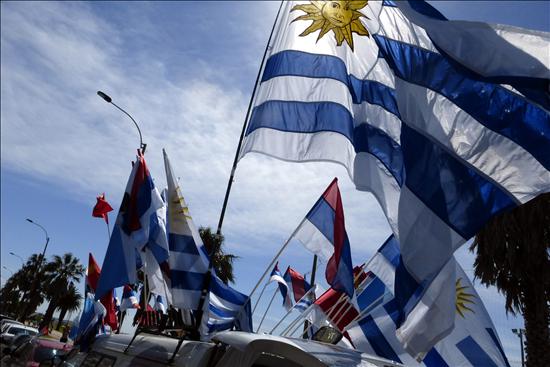
teleSUR | November 28, 2014
UPDATE: Vazquez wins Uruguayan presidential election
teleSUR talks to the Broad Front’s Carlos Alejandro, to understand in more depth the elections and their consequences.
teleSur: Carlos, what have been the standout points of the Broad Front’s campaign?
Carlos Alejandro: There is no political debate in the second round of elections. Really, the right wing has been knocked back, they experienced a serious setback in the first round. They really thought that polls would be right, and that the Broad Front wouldn’t get more than 45 percent of the votes.
The main point of this campaign is to uphold the Broad Front government’s achievements in all areas, especially those related to freedom and equality.
Over the past 10 years, we’ve approved a series of laws, like establishing the 7-hour work day for rural workers; a domestic worker law limiting the number hours they are allowed to work.; the same sex marriage act, a sexual and reproductive health law, which includes legislation on abortion. We want to clarify that it is not an abortion law, because that is one of the themes being debated.
Also being debated is the widening of political engagement among the population; a freedom of information law; the barriers to education; the role of women in politics; all of these are central to the election debate, coming above even economic matters. It’s a rare thing when the economy gets overshadowed in an election … it’s the only political debate they are having in Brazil.
Here in Uruguay what we’re debating is how to better ourselves, how to create better conditions, which is a debate we don’t want to have with the right wing, because they’ve shown us for the past 150 years that they cannot take care of those problems, problems we are resolving, and laying the ground work to have that debate with the people who will truly benefit from these policies.
TS: You have said that if Vazquez is re-elected, he would carry on with the Broad Front’s policies. However, there are many controversial policies that Jose Mujica implemented, like abortion, and the marijuana law, which Vazquez is known to oppose. What will happen if he is elected with regard to these topics?
CA: Tabare was against these projects. He didn’t support them, and furthermore, during his last administration, he vetoed the same law that was later approved under Mujica. But as they are both from the Broad Front, which passed the law, it’s not up for discussion. Nothing will change from the way it was approved during Mujica’s government. There is no political sign that suggests that Tabare will erase what Mujica did.
Regarding the marijuana law in particular, it is very clear within the party, that it is a law still being studied and analyzed, that can and will be corrected if necessary; it is new not only for Uruguay, but in the whole world; we know there are other places who have had similar experiences, like in some of the states in the U.S., but in our case, we want to resolve the drug problem, take the market for marijuana away from organized crime, and create conditions to rehabilitate not only marijuana users, but hard drugs too.
In this sense, our aim is to deepen the changes we have already made, improve what has been done, and improve what has been done badly.
TS: How is Vazquez viewed in Uruguay?
CA: Tabare is a man of the people, what we call “de a pie,” down to earth. He comes from a similar humble background as many other Uruguayans.. The Right cannot forgive him for paving the way —via his education and intellect— for the Left to get into power.
Tabare is a man of the Left, even though the political pragmatism he uses makes him seem more centrist, and not as left-wing as many would like; but he has a great feel for politics, and what both he and Mujica can do effectively is scope out what the people want, but in different ways.
Tabare ended his term with approximately 68 percent of approval, which shows that, beyond the problems that existed during that administration, Tabare ultimately received approval for what he did during his term. And I believe that the result of the October 26 elections shows that the Uruguayan people support his candidacy again.
TS: And how is right wing perceived the Uruguayan people?
CA: I think that the clearest example is that the Right didn’t have a clue how to face the second round of the elections. I’ll reiterate what I said before, they relied too heavily on the polls; they thought they were doing well, so did not work to create the conditions in case the scenario changed.
TS: Do you think that the Brazilian election result might influence the results in Uruguay?
CA: Not for this runoff, but yes, I do believe that the political change in the last days in the Brazil elections, with Marina Silva leading in the polls for so many months, and the possibility that the PT could lose the elections, caused some to be nervous, and a little bit worried. Not only us left-wing activists, but among people who would not necessarily identify themselves as left-wing.
TS: What challenges would a new Broad Front government face?
CA: I have said for many years that the most important thing is to not let down the electorate which voted for us and gave us the opportunity to govern. We have developed all of our policies that aim to improve the quality of people’s lives based on this basis; where we can keep generating societal change and evolution, and most importantly, within a region which is our neighborhood. Latin America is our neighborhood from which we relate to the rest of the world. In this sense, our internal policies have an external objective; to project the country within the region, prioritizing regional integration.
TS: So a Tabare Vazquez government would strengthen regional integration?
CA: Yes, definitely. We’re trying to create the conditions to solidify existing regional integration effortslike MERCOSUR, UNASUR, CELAC, ALBA … those projects are here to stay, and we want to make them robust.
We have shown we are a serious political party, dealing with, for example, the case of the Syrian refugees, and the problem of the Guantanamo prisoners. Doing so doesn’t mean we’re trying to cover-up for, or save Obama’s administration, but instead we are trying to resolve the situation for the prisoners, and help Guantanamo to go back to being part of Cuba.
TS: The case of the Syrian refugees is very interesting…
CA: Let me tell you an anecdote. The union for bank workers has a place for the children of its members to live in Montevideo if they go there to study. When President Mujica announced that Syrian families — who were refugees in Lebanese camps — would come to Uruguay, the young people living in the union’s accommodation talked to the leadership, and offered to share their bedrooms with the Lebanese translators who are there to help the Syrians with their Spanish, and adapting to life in Uruguay. For us, that gesture is not only seen as a humanitarian act, but it means that our youth is getting involved in a political issue that does not directly affect them, far away from our borders. That is very important to us, that they get involved, and understand what is it about.
This also shows the possibility and the capability that we have to resolve these issues. To welcome these Syrian families in Uruguay, so they can work here, have a life here. And it is the same with Guantanamo, a topic that Pepe [Mujica] said was not suspended, but on hold until November 30; and that after the elections, regardless who is the new president, he would continue to advocate for, and engage in, negotiations, so those six prisoners without a sentence can come to Uruguay and be free here. This is a very important political gesture by the Broad Front that needs to be highlighted, and it will reverberate with future governments.
Carlos Alejandro is the Broad Front’s director of international relations, as well as member of the Broad Front Commitment group. A member of the Broad Front since 1983, he has a background of union activism.
Darren Wilson Investigation Swayed by Favoritism from Start
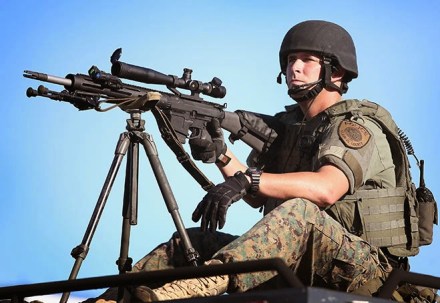
By William N. Grigg | PINAC | November 25, 2014
“Any time I’m involved in an officer-involved shooting, be it a fatal one or non-fatal, it is always during my initial investigation listed as an assault on law enforcement,” explained the St. Louis County Police Detective who inaugurated the investigation of the Michael Brown shooting. “Officer Wilson … was the victim of the assault we were investigating.”
Once it had been established that the living, armed individual was the “victim” and the dead, bullet-ridden body had belonged to the “assailant,” continued the detective in his September 3 grand jury testimony, “One of the sergeants with Ferguson [gave] me a brief walk-through to start my investigation so I [could] have a logical starting point from where I would start my video, photographs, and looking for evidence.”
That unnamed sergeant, most likely, was the supervisor who had told Darren Wilson to leave the scene after the shooter told him that Brown had tried to take his gun.
From its inception, the shooting of Michael Brown was not investigated as a potential criminal homicide, and the inquiry was an exercise in validating the killer’s story, rather than testing it against the available evidence. The assumption was that killing was part of his job description – or, as Wilson has subsequently told George Stephanopoulos, “I did what I was paid to do.”
If Wilson had been a member of the productive class, rather than a state employee licensed to dispense aggressive violence, he would have been presumed legally innocent, but required to justify his actions. Because of his occupation, however, Wilson was considered both legally innocent and presumptively correct, and the investigation became an exercise in justifying the shooter’s actions, rather than an inquiry into their propriety.
If Officer Wilson had been “merely” Darren Wilson, the deceased Michael Brown would have been identified as the presumptive “victim.” The shooter would not have been allowed to leave the scene without making a statement to the police, and his associates would not have been allowed to frame the crime scene for the benefit of the investigating detective.
Most importantly, if Wilson had been treated as a homicide suspect, rather than the “victim” of an “assault on law enforcement,” he would not have had the luxury of composing his story at leisure, in consultation with his attorney, to fit the facts as they emerged from the investigation.
“When you got back to the police department, after you washed off and everything, did you ever think at what time that I needed to write a report while it is fresh in my mind?” asked assistant St. Louis County prosecutor Kathi Alizadeh.
“No,” Wilson replied. “The protocol is whenever you are involved in a significant use of force, that you contact your FOP [Fraternal Order of Police] representative and then he will advise you of what to do step by step because they are the clear head in that situation. They have not been through a traumatic experience.” (See the transcript of Darren Wilson’s grand jury testimony, pages 77-78.)
When the shooter is a Mundane – that is, a common citizen, rather than a police officer – he may be similarly traumatized, but he can’t count on the “step-by-step” guidance of clear-headed police officers who have identified him as the victim. One of the first priorities for investigators in non-“officer involved” shootings is to get the original story from the shooter, and compare it against the evidence. As a police officer, however, Wilson wasn’t required to make an initial statement of any kind – either in an incident report, or to any of the investigating officers.
Asked by Alizadeh if he had committed his recollections to paper in a diary or journal, Wilson replied: “My statement has been written for my attorney.”
“And that’s between you and your attorney, then?” asked the unusually helpful prosecutor, who received an affirmative reply.
“So no one has asked you to write out a statement?” the assistant DA persisted.
“No, they haven’t,” Wilson acknowledged. He made one brief reference to speaking with a detective while in the hospital, but that communication was protected by Wilson’s “Garrity” privileges, which means that it could be used only for the purposes of an internal investigation, not in a criminal or civil proceeding.
In his November 24 press conference, St. Louis County DA Robert McCulloch made conspicuous mention of the fact that some witnesses had changed their testimony once their original story was found to be in conflict with subsequently discovered evidence. This is something that happens frequently to homicide suspects, as well. Wilson was never in danger of being caught in that contradiction because he was not treated as a suspect, nor was he required to make a statement to criminal investigators.
During Wilson’s examination before the grand jury, McCulloch’s deputy prosecutors were gentle and deferential, rather than being adversarial. This is to be expected, given that this was a conversation among colleagues.
At several points in his testimony, Wilson made statements that a motivated prosecutor would have aggressively pursued. For example: Wilson – who at 6’4” and roughly 225 pounds is no small man – said that when he grappled with Brown, he felt like a “five-year-old” who was trying to restrain “Hulk Hogan.” He likewise claimed that he had been struck twice by Brown with such force that he was concerned a third blow would be “fatal” – yet the medical examination displayed no evidence of corresponding trauma to his face.
Wilson didn’t explain how the right-handed Michael Brown could have punched the right side of his face while the officer was sitting in the driver’s side of his vehicle. Although Wilson claimed that the initial blows were inflicted while Brown was holding stolen cigarillos in his right hand, no broken cigars were ever recovered, either in the SUV or the surrounding area. The stolen cigars were not found by the medical examiner who arrived on the scene after the shooting. (Interestingly, that examiner never took photos of the deceased, because “My battery in my camera died,” nor did he take any measurements at the crime scene.)
A well-known and highly respected forensic analyst and expert witness on biomechanics and accident reconstruction takes note of several points the prosecution either ignored or minimized to the point of invisibility.
“The big issue as I see it, is how do the cops justify provoking a lethal confrontation with a kid over some damned cigarillos?” the analyst pointed out in an email to me. “Why not wait for ample backup and use non-lethal methods to subdue and arrest for shoplifting? This of course assumes grounds for an arrest. Why were the alleged cigarillos not found? And what did the DA mean when he stated on TV that Brown’s body was on the road 150 feet from the police car? How does an unarmed kid that far away with no weapons constitute an immediate threat to life?”
He also underscores the fact that the unarmed pedestrian Brown, rather than Wilson, may have had the stronger case for self-defense:
“As for what supposedly went on in the passenger compartment with the alleged grabbing of the cop’s arm – this is “consistent with” a kid whose life was threatened by an overly aggressive cop with a gun aimed at him and where the kid was so terrified of an immediate shooting that he felt compelled to take preemptive action to protect himself by disarming the cop.”
If Darren Wilson had been part of the wealth-producing class, as opposed to an armed emissary of the tax-consuming elite, those questions most likely would have been examined in a criminal trial. But, once again, owing to his occupation, this was never going to happen.
Robert McCulloch has a well-earned reputation for deference to the police, and a well-established habit of justifying every use of lethal force, no matter how questionable. Rather than simply seeking an indictment, McCulloch presented the case for the “defense” as well – a characterization that is an odd fit here, given that Wilson – it bears repeating – had been treated as the “victim” in this incident from the beginning.
“Had the prosecution desired an indictment against Ferguson Police Officer Darren Wilson, the presentment would have taken an hour, maybe two, and there would have been a true bill by close of business the next day, well before Michael Brown had been laid to rest,” points outattorney and civil rights advocate Scott Greenfield. “The grand jury isn’t the venue to present `all the evidence.’ That’s what trials are for. The grand jury serves a very limited function, to determine whether sufficient evidence exists so that there is probable cause to proceed to trial.”
A great deal of the media coverage has referred to the Grand Jury’s decision as a “verdict,” which is both technically incorrect and substantively true: Rather than seeking probable cause to indict Wilson, McCulloch and St. Louis County law enforcement built a case to convict Michael Brown of “an assault on law enforcement.”
Given the ambiguity of the evidence, Darren Wilson as a private citizen likely would not have been convicted of murder if the case had gone to trial, but a conviction on a lesser count would be a possibility. Under Missouri’s constitutionally perverse statute dealing with police homicide – which has been criticized by former federal judge Paul Cassell, who is broadly indulgent of killer cops – Officer Wilson was never in danger of being convicted of a crime.
It is not necessary to believe that Michael Brown was the embodiment of winsome innocence (it’s pretty clear that he was not) to take issue with the architecture of official privilege that protects Darren Wilson – and the other armed representatives of the political class – from accountability. The problem, in a single phrase, isn’t “white privilege,” but rather “blue privilege.”
Edmund Burke could have had this case in mind when he wrote these lines from his neglected essay “A Vindication of Natural Society”: “In a State of Nature, it is true, that a Man of superior Force may beat or rob me; but then it is true, that I am at full Liberty to defend myself, or make Reprisal by Surprise or by Cunning, or by any other way in which I may be superior to him. But in Political Society … if I attempt to avenge myself, the whole Force of that Society is ready to complete my Ruin.”
Egypt mass trial tomorrow could see death sentences for 500, including Irish teen
Reprieve | November 30, 2014
A mass trial for almost 500 people will resume tomorrow in Egypt, and could see death sentences handed down to the defendants – including an Irish teenager arrested last year while on holiday.
Ibrahim Halawa, from Dublin, was 17 at the time of his arrest during a military crackdown on protests in the city last August. He is one of 494 defendants who could face a death sentence in a makeshift courtroom expected to convene in the Tora prison complex in Cairo. It’s emerged that several other minors are also among the hundreds due in court.
Tomorrow’s hearing follows a mass trial several days ago at which authorities handed down sentences totalling 340 years to 78 children. At that hearing, lawyers were reportedly barred from entering the court.
At the last hearing for Mr Halawa’s mass trial in August this year, a three-judge panel resigned from the case mid-hearing, citing ‘unease’ with the proceedings amid protests from lawyers and defendants alike.
Egypt’s mass trials have been condemned by the UN as illegal and “rife with procedural irregularities”, and by Egyptian rights groups as “a grave violation of… the right to a fair trial”. A report published days ago from the UK Parliament’s Foreign Affairs Committee, meanwhile, criticised the UK Government for failing to list Egypt as a ‘country of concern’ in light of the mass trials and the handing down of death sentences.
Maya Foa, head of the death penalty team at legal charity Reprieve, which is assisting Mr Halawa, said: “It is extremely worrying that the mass trial appears to be going ahead as planned. This is a clear violation of internationally-accepted fair trial standards, and the international community must do all it can to halt them and prevent hundreds of people from potentially being sentenced to death.”
Featured Video

Trump asks Iran not to retaliate after he strikes Pickaxe Mountain
or go to
Aletho News Archives – Video-Images
Book Review
‘Why Fauci Must Rot in Prison’: A Tale of Two Diaries
By Jill Erzen | The Defender | October 13, 2026
Dr. Anthony Fauci’s private diary reveals a “mind-numbing” contradiction between what the former top U.S. infectious disease official knew about COVID-19 and what he told the public, senior White House adviser Peter Navarro, Ph.D., said last week on “American Thought Leaders.”
In his new book, “Why Fauci Must Rot in Prison,” due out Oct. 20, Navarro compares Fauci’s private entries to his own pandemic-era diary, and uses what he calls “a tale of two diaries” to argue that Fauci should face criminal prosecution.
“I show, actually, how a prosecution can and should happen … at the state level, most likely,” Navarro said. “He should wind up in prison, and we’ve got the receipts in this book to put him there.”
Navarro said Fauci repeatedly acknowledged important facts in private, then publicly pursued policies that contradicted those facts — with devastating consequences.
“What he says many times privately in his diary is so at odds with both his public behavior and public statements that it’s mind-numbing,” Navarro said.
Navarro examines the lasting damage caused by lockdowns and other pandemic policies, and the ongoing toll of long COVID.
His book also addresses questions about vaccine safety, including why healthy young people faced COVID-19 vaccination mandates despite concerns about myocarditis, and why women were not warned about miscarriage risks linked to the shots. … continue
Blog Roll
 Aletho News
- Yemen denounces international community’s silence on Saudi aggression, siege
- UAE and Saudi Arabia move toward renewed coordination against Sanaa
- How Iran’s two-week retaliatory strikes exposed cracks in US military architecture in Persian Gulf
- The mother of all propaganda: Why the hype over US MOAB strike against Iran is nothing but theater
- Iran says it possesses technology behind US 14-ton GBU bunker-buster
- Trump asks Iran not to retaliate after he strikes Pickaxe Mountain – w/ Prof. Marandi
- Vice President J.D. Vance’s Deceptive ‘Antiwar’ Campaign Speech
- Iran: Palestinians’ rights must not be compromised in Gaza’s future; US, Israel to blame for Hormuz situation
- Ongoing tales of Syrian chemical weapons
- Moscow blasts UN for ignoring torture of Russian POWs
- If Americans Knew
- Israeli rabbi permits occupiers to steal Palestinian olive harvest in West Bank
- Netanyahu’s spin on latest settler attack is laughable – Daily Update
- Israeli soldiers debunk Israel’s talking points
- In West Bank, Israeli settlers are totally out of control – Daily Update
- NPR investigation finds evidence of widespread fraud at mall kiosks tied to Israeli skincare brand
- Tucker Carlson exposes Israeli Lies about the Oct 7th attack, Charlie Kirk, and the U.S.
- Israel has detained thousands of Palestinian children since Oct 7th – over half spent time in solitary, many uncharged
- Israeli Analysis: Is Netanyahu Planning an ‘October Surprise’ Attack Before Israel’s Election?
- Israeli settlers brutally attack Palestinians and Washington Post female photographer, 65
- Words Have Changed, Occupation Continues: The Reality of the Gaza Ceasefire
- No Tricks Zone
- Predictions Made By Renowned Climate Proifessor Over Past Decades Have Been Proven To Be Poor
- New Study Suggests Large Regions Of The Pacific Ocean Have Been Cooling For The Last 80 Years
- Germany’s Green Energy Debacle: High Energy Costs Force Kahla Porzellan to Close After 182 Years!
- New Study: 50 Years Of The Most Aggressive ‘Net Zero’ Policies Can Only Affect The Global Climate By 0.03°C
- US September “Heat” Was No Record…Many Records Set Decades Ago
- Latest European Green Energy Debacle; Portugal’s Largest Flagship Solar Park Insolvent!
- Green Energy Debacle: German Expert Professor Fritz Vahrenholt Warns Of Severe Economic And Social Consequences
- Two More Paleo Reconstructions Affirm Meters-Higher Sea Levels Across Ireland, Brazil 7000-6000 Years Ago
- New Study: Earth And Venus Surface Warmth Largely Explained By Convection And Lapse Rate, Not CO2 Or Radiation
- 2025 Nature Paper Claiming Worsening Global Drought Gets RETRACTED …Heavily Flawed

