UN panel slams US for police brutality, torture, botched executions
RT | November 29, 2014
A UN report has condemned the United States for violating the terms of an international anti-torture treaty. The panel took Washington to task for police brutality, military interrogations, and capital punishment protocols.
“The Committee is concerned about numerous reports of police brutality and excessive use of force by law enforcement officials,” the paper released by the UN Committee Against Torture says, adding that in particular this brutality is seen against persons belonging “to certain racial and ethnic groups, immigrants and LGBTI individuals.”
The document was released on Friday, just days after the contentious decision of a Missouri grand jury not to indict a white officer accused of shooting Michael Brown, an unarmed black teen. The decision triggered a wave of protests nationwide.
Although the report didn’t specifically mention the events in Ferguson, Mike Brown’s parents met with the committee to discuss their son’s case in Geneva earlier this month.
The UN watchdog expressed “deep concern at the frequent and recurrent police shootings or fatal pursuits of unarmed black individuals.”
The 10-person panel, which periodically reviews the records of the 156 countries which ratified the Convention Against Torture – a non-binding international human rights treaty – cited mounting concerns over “racial profiling by police and immigration offices, and growing militarization of policing activities.”
The committee called on US authorities to “prosecute persons suspected of torture or ill-treatment and, if found guilty, ensure that they are punished in accordance with the gravity of their acts.”
“We recommend that all instances of police brutality and excessive use of force by law enforcement officers are investigated promptly, effectively and impartially by an independent mechanism,” said panel member, Alessio Bruni, at a news conference in Geneva.
Urging for tougher laws to define and ban torture, the committee called on Washington to reevaluate the treatment of detainees at the infamous Guantanamo Bay detention facility, which currently houses 148 prisoners.
“The Committee is particularly disturbed at reports describing a draconian system of secrecy surrounding high-value detainees that keeps their torture claims out of the public domain.”
In addition, the committee criticized the recent spate of botched executions, especially in Arizona, Oklahoma, and Ohio, citing reported cases “of excruciating pain and prolonged suffering that procedural irregularities have caused to condemned prisoners in the course of their execution.”
The UN body further highlighted “continued delays in recourse procedures which keep prisoners sentenced to death in a situation of anguish and incertitude for many years.”
“The Committee notes that in certain cases such a situation amounts to torture in so far as it corresponds to one of the forms of torture (i.e. the threat of imminent death) contained in the interpretative understanding made by the State party at the time of ratification of the Convention.”
The report urges US authorities to establish “a moratorium on executions with a view to abolish the death penalty” and “to commute the sentences of individuals currently on death row.”
US activists welcomed the findings as a call to action for the federal government.
“This report – along with the voices of Americans protesting around the country this week – is a wake-up call for police who think they can act with impunity,” said Jamil Dakwar of the American Civil Liberties Union (ACLU), as quoted by Reuters.
READ MORE: ‘We crossed the line’: US mea culpa at UN panel on use of torture
Israeli soldiers shoot Italian in the chest at Kafr Qaddum rally
Al-Akhbar | November 29, 2014
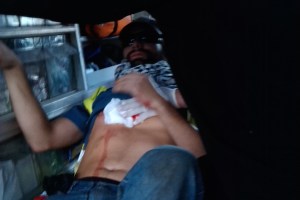
A pro-Palestinian Italian activist was shot and seriously wounded by Israeli gunfire during a Friday protest in the northern West Bank, medics and the activist’s organization said.
Palestinian security sources said Patrick Corsi, a 30-year-old member of the International Solidarity Movement (ISM), was shot during the weekly demonstration at Kafr Qaddum, west of Nablus.
Eyewitnesses said Corsi, who had participated in last week’s protest as well, had been documenting the event with a camera.
ISM, an activist group whose members frequently attend Palestinian protests to monitor the actions of Israeli soldiers, confirmed the shooting in a statement.
“The Italian activist, known as Patrick, was wearing a yellow high visibility jacket when he was shot with .22 live ammunition,” the statement said.
The statement added that 10 Palestinian protesters were wounded by rubber-coated steel bullets at the protest, in addition to 18-year-old Sami Jumma who was struck by live fire.
“We were standing with a group of Palestinian demonstrators when Patrick was shot. The military had fired three rounds of tear gas, and then a shot rang out and Patrick stumbled back. There was between five and ten minutes from the last tear gas canister fired and the bullet that shot Patrick.”
“He was just standing there, peacefully protesting, wearing a hi-viz jacket, he wasn’t doing anything and they just decided to shoot him,” the statement quoted an ISM volunteer at the scene as saying.
“The bullet entered Patrick’s chest near a main blood vessel, but thankfully did not puncture it. If God forbid it had, the lengthened journey to the hospital because of the closed road could have cost Patrick his life,” ISM media coordinator Ally Cohen was quoted in the statement as saying.
Due to an Israeli closure of Kafr Qaddum’s main road to Nablus, the travel time to the nearest hospital is around 30 minutes instead of 10.
Khaldoun Ishtewi, media coordinator for public campaigns in Kafr Qaddum, told Ma’an news agency that the Italian national was taken to the Rafidia Public Hospital in Nablus for treatment.
Ishtewi added that several Palestinians suffered from excessive tear-gas inhalation as a result of canisters fired by Israeli soldiers during the clashes.
An Israeli military spokesman did not immediately return a request for comment.
Palestinian Minister of Health Jawad Awwad told Ma’an that “shooting live fire at the upper part of the bodies of protesters is directly targeting them and is a deliberate attempt at murder.”
“Israel does not differentiate between foreign solidarity activists, Palestinians, or even journalists,” he added.
An Israeli army spokesman described the event as a “riot” during which 100 Palestinians allegedly hurled rocks at troops and burnt tires.
After failing to disperse people and “due to increased violence,” soldiers “fired small caliber rounds toward main masked instigators,” the spokesman said.
In the West Bank at the Qalandiya crossing between Jerusalem and Ramallah, Israeli border policemen “fired small caliber rounds toward two main instigators’ lower extremities” during a violent clash with some 150 Palestinians, the spokesman said.
There was no immediate report on their condition.
Protests are held every Friday in Kafr Qaddum against Israel’s closure of a main road linking the village to its nearest city, Nablus, as well as against the Israeli occupation more generally.
The West Bank and annexed East Jerusalem have been occupied by the Israeli military since 1967.
(AFP, Ma’an, Al-Akhbar)
Photo credit – ISM
Guantanamo force-feeding is illegal, says UN body
Reprieve | November 28, 2014
A United Nations panel has said that the force-feeding of hunger-striking detainees at Guantanamo Bay is a violation of the UN Convention Against Torture.
The report, released today by the UN Committee Against Torture, said that the practice “constitutes ill-treatment”, and called on the US to halt it. The Committee also noted that “detainees’ lawyers have argued in court that force feedings are allegedly administered in an unnecessarily brutal and painful manner” – an apparent reference to US litigation brought by international human rights NGO Reprieve on behalf of cleared Syrian detainee Abu Wa’el Dhiab.
As part of those legal proceedings, the Obama Administration has until Tuesday, December 2nd to appeal a recent court order to release over ten hours of classified footage showing the force-feeding of Mr Dhiab.
Commenting, Cori Crider, Strategic Director at Reprieve and Mr Dhiab’s attorney, said: “The UN is entirely right – abuse at Guantánamo is still happening on Obama’s watch, and I’ve seen the force-feeding footage to prove it. This assessment could not be more timely – the Obama administration has until next week to either face up to a court order to release these force-feeding videos, or to file an appeal, in hopes of covering up the evidence. The right course is clear – the American public has a right to see what’s being done in their name. Obama should release the tapes without delay, and end these abuses once and for all.”
Further detail on Reprieve’s force-feeding litigation can be found at the Reprieve US website.
Civilians killed in US drone attacks: Rights group
Press TV – November 28, 2014
A rights group says many civilians have been targeted and killed in US drone attacks in Pakistan and other countries where such raids are carried out, Press TV reports.
The UK-based rights group Reprieve revealed that civilians have been killed in Pakistan and other places before militants were targeted by US assassination drones.
Reprieve has presented several cases on how ruthlessly the US Central Intelligence Agency (CIA) has killed civilians but declared them militants through dubious reports in the media, which regularly cite anonymous Pakistani and US officials.
In one such case, the CIA killed 221 people, including over 100 children, in Pakistan in search of just four militants. This is while three of the militants are reportedly still alive and the fourth one has died of natural causes.
In another example, the report pointed out that on average each militant was targeted and reported killed more than three times before they were actually killed.
To kill one militant, sometimes “more than 300 people have been killed,” said Mirza Shazad Akbar, Reprieve’s representative in Pakistan.
“A former US drone operator said that by looking at the monitor and looking at people’s movement, he could actually tell who is a bad person and who is a good person… This is the extent of… the [US] flawed intelligence,” Akbar added.
But this is just the tip of the iceberg of the scale of tragedy in Pakistan’s tribal areas, where more than 3,800 people have been killed with the same pattern of the so-called precise surgical drone strikes.
The US carries out targeted killings through drone strikes in several Muslim countries, such as Afghanistan, Yemen, Pakistan and Somalia. Washington claims the targets of the drone attacks are militants, but local officials and witnesses maintain that civilians have been the main victims of such raids over the past few years.
The United Nations and several human rights organizations have identified the US as the world’s number-one user of “targeted killings,” largely due to its drone attacks in Pakistan and Afghanistan.
Lebanon’s war on ‘hashish’ indistinguishable from war on the poor

A cannabis farmer in the Bekaa Valley prays as Lebanese army men come to destroy his harvest. Al-Akhbar/Rameh Hamieh
By Amer Mohsen | Al-Akhbar | November 27, 2014
The cultivation of cannabis is popular in specific areas that have special characteristics like high altitude and sunlight, similar to the Bekaa region. This differential feature of Lebanon, which can revive the Lebanese countryside, has been overcome by the alternative agricultural policies required from abroad. The health risks associated with the use of cannabis are minimal compared to alcohol and tobacco, and compared with the results of the war on cannabis cultivation which only affects the poor segments of society.
A few years ago, Lebanese organizations, including left-wing movements, launched a media campaign warning against cannabis and the risk of its spread among the youth. The intention behind the campaign was noble, but it had several flaws: The first is related to the medical claims that accompanied the campaign – which are similar to the propaganda that was disseminated in America during the forties to scare people away from marijuana – saying that marijuana drives people crazy, makes them jump out of windows, and causes delinquency and crime. The main problem was in the “central-Beiruti” mentality, which led left-wing movements to claim their devotion to the grievances of the poor and the marginalized, and thus sought to combat and criminalize hashish rather than demand its legalization and lifting the ban on its cultivation.
The issue is very clear. There is a disregard – even contempt – by urban activists for the fates of hundreds of thousands of peasants in their country. They support policies and laws that have impoverished large parts of the Lebanese countryside, either because of their focus on “more important” issues (such as the rejection of the [parliamentary] extension and the “revolt against the sectarian system”), or because of a bourgeois view aimed at preserving morality and normalcy. There is no harm in adopting or defending such a view, but not when it is at the expense of the most vulnerable and disadvantaged segments of society. To date, there are no adequate studies on the social and economic deterioration that affected the villages of Bekaa and Hermel after the prohibition of cannabis cultivation in the nineties, and others on the prosperity witnessed in the region and the local development that resulted from it, while the rest of the country – paradoxically – was experiencing the worst stages of the civil war, and so the government left the farmers alone.
From the history of cannabis
In his book about the history of cannabis, Martin Booth (who also published a well-known book about opium) says that the cannabis is one of the oldest plantations that spread in human societies. He refers to one of the three major species of cannabis today, the “cannabis sativa,” whose name in Latin means “cultivated hemp” because it reached us in its hybrid version, which means that Neanderthals cultivated and hybridized it for thousands of years until the original “wild” seed has been lost and we now have the agriculturally-improved species.
The cultivation of cannabis was widespread not only because of its narcotic effect. Archeological excavations have shown that the consumption of cannabis was also part of religious rituals, and that the plant was an economic asset and resource used in the manufacturing of cloth, linen, ropes, and oils. A conspiracy theory popular among supporters of marijuana in the United States claims that the ban on cannabis cultivation is linked to influential circles in the timber industry, who sought to exclude cannabis as a competitive resource in the paper-manufacturing industry.
We also find many references to hashish and cannabis in Arab and Islamic history, which show its spread and recreational use in our countries through the eras, such as in the writings of chronicler Abdel Rahman al-Jabarti (who talked about his meeting with a mosque orator in Cairo, who claimed to be “under the effect of hashish” to justify his lack of focus during the sermon), as well as in the fatwas of Ibn Taymiyyah, where “Sheikh al-Islam” discussed the topic of hashish and ended up outlawing most of its uses. Based on his jurisprudential arguments, it appears that the people at the time used to consume cannabis either through melting it in tea, eating it directly, or cooking it with food (since the United States had not been discovered yet, and tobacco had not yet reached the ancient world). However, the prolonged explanation provided by Ibn Taymiyyah on the topic and his detailed justification of the prohibition show that the scholars of his day did not have a clear or decisive stance on the matter.
Lebanon and the differential feature
To be able to understand the secret behind the special relationship between Lebanon and hashish, and the differential feature that characterizes the Bekaa Valley and its surrounding hills in this regard, we have to know a few basics about the cultivation of this plant. According to Martin Booth, the “quality” of the hashish – i.e., the concentration of the principal psychoactive constituent Tetrahydrocannabinol (THC) in the female plants – is directly linked to two factors: altitude and sunlight. Cannabis needs large amounts of solar radiation during the maturity period so the plant can grow rapidly, and the growth of its genital parts, which contain the active substance, needs infrared (IR) radiation, whose concentration in the sun increases with altitude.
In other words, high-quality cannabis needs high-altitude mountainous areas, which are, at the same time, hot and exposed to the burning sun during the summer, which is rare in the world. For this reason, the cultivation of cannabis is prominent in specific areas that combine the characteristics of altitude and sunlight, like the Atlas Mountains in Morocco, the hills of Afghanistan … and the Lebanese Bekaa. This is a “geographic gift” that cannot be cloned or bought with money. It is limited to a few regions in the world – Booth says that the best and most expensive types of hashish are grown in India, on the foothills of the Himalayas and over-3,000-meter heights, and due to their rarity are preserved in special leather bags. These qualities have made Lebanon’s Bekaa and Hermel a center for cannabis cultivation since ancient times.
The charming town of Yamuna, which lies in a small internal valley in the highlands of Lebanon’s western mountain range, acquired its “market” reputation in the production of cannabis not because of its special soil, or the magic touch of al-Sharif. It is simply due to its high altitude in the barren areas and abundant water sources, which allows the cultivation of cannabis in perfect conditions. If the Hermel heights – which are rain fed areas today – were covered by irrigation projects – as it was supposed to be decades ago – the whole area would have been like Yamuna.
Lebanon’s gold
In the past two decades, new varieties of marijuana were bred in the West, and plantation techniques were developed in closed spaces under controlled lighting and temperature conditions to produce crops in which the concentration of the psychoactive constituent exceeds any product grown in nature.
However, this pattern of agriculture (which supplies the medical and commercial marijuana market in the West) requires the consumption of large amounts of energy for each plant separately. It is also less competitive – in the commercial sense – compared with lands that are, by nature, ideal for the cultivation of cannabis, and have been inherited by farmers over long years. Millions of meters of these lands can be cultivated at a low cost, and by relying solely on the generosity of the sun and the sky.
From here, we conclude that any kind of agriculture is – naturally – ideal for the marginal areas of Lebanon, and some have real differential features on a global level. A quick look at the labor force working in Lebanon, the price of land, and state policies is enough to understand that Lebanon’s competitive commodity – which will eliminate rural poverty and create development in rural areas – is most likely not potatoes or wheat. In addition, a main characteristic of agricultural property in eastern Lebanon is that [owned lands] are relatively small and fragmented. Also, most farmers own their land, which prevents the emergence of feudal and semi-feudal cartels (as in Afghanistan and South America), or huge agricultural companies that would exploit the peasants as laborers and monopolize profits for the benefit of major landowners. A significant part of proceeds from the cultivation of “contraband” plants in the Bekaa traditionally went to farmers.
This question should be raised, while the country that pressured and forced Lebanon to ban the cultivation of cannabis – the United States – has legalized the use of hashish in several states. The governments of the West no longer have a moral or legal excuse to impose such policies on our country. The general direction in the West is heading toward the legalization of cannabis derivatives, or at least not criminalizing it and prosecuting its users. But Lebanon is required to arrest its farmers who are seeking to avoid hunger and migration.
War on the poor
One of the reasons that triggered the wave of marijuana legalization in the West, even for recreational use, is the absence of a convincing medical argument – i.e. a threat to “public safety” – to justify the prohibition of hashish while allowing the sale of other “drugs” like alcohol and tobacco, which are far more dangerous and harmful than marijuana. As Professor As`ad AbuKhalil once wrote, if whiskey was produced by the countries of the South, while hashish was monopolized by the West, wine would be forbidden and frowned upon in Lebanon while ads by hashish companies would have filled the streets.
Science has become clear in this regard. Serious proven tests have shown that the consumption of cannabis may have side effects and can be dangerous for people who suffer from certain neurological problems. Also, heavy consumption can cause addiction and dependency in one out of 10 cases. However, these risks are insignificant compared with those of alcohol and tobacco, or even stress. Tobacco combustion may be the most dangerous thing in a “marijuana cigarette.” During the writing of this article, I consulted with a professor and researcher of Lebanese origin at Harvard Medical School, who graciously provided me with scientific studies and summaries. He expressed his opposition to the criminalization of cannabis cultivation, adding that its advantages in medical use are “very real,” and that the greatest harm results from the war on cultivation, as evidenced by the American experience, since it mainly affects – in Lebanon, as in America – the poorer classes, which do not have a voice in society.
This is one of the issues that will not be of concern to civil society organizations, and will not receive financing from European governments and institutions. However – unlike a lot of campaigns created by these organizations to justify their existence – it is achievable and can change – in the actual direct sense – many people’s lives.
It is possible to imagine a different future for large areas in Lebanon that are marginalized and disadvantaged today, in which farmers will be able to live in dignity and prosperity in their areas, and land and production will have real value.
The people living on the coast may migrate to internal areas, this time, in search of work and opportunities.
US helping Israel boycott Geneva summit on occupied territories – diplomatic sources
RT | November 27, 2014
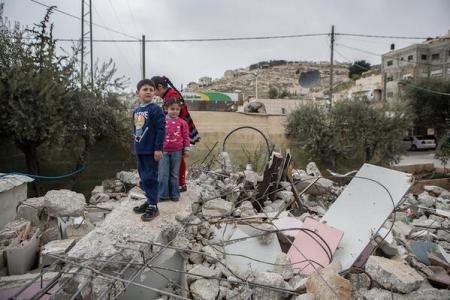
Switzerland is under diplomatic pressure from Israel, the US, Canada and Australia, which are trying to prevent an international conference in Geneva from taking place in mid-December on Israel’s occupation of Palestinian territories, Haaretz reports.
Delegations from nearly 200 countries are expected to head to Geneva to discuss the situation in the West Bank, Gaza Strip and East Jerusalem. Yet, according to Haaretz, Israeli and Western diplomats are ready to go for broke to prevent the gathering from taking place.
Switzerland, as the main sponsor of the summit, is bearing the brunt of diplomatic pressure from all sides.
Israeli authorities told the media outlet that Palestinians and Arab states are also pressing Swiss officials to send out letters of invitation to the conference within a matter of days, the Israeli daily reported on Wednesday.
It was in early April when Israel announced plans of constructing 700 new houses in occupied East Jerusalem, a move that pushed Palestinian Authority President Mahmoud Abbas to ask 15 international conventions to join them in the name of the Palestinian state.
One of those was the Fourth Geneva Convention (signed 1949, came into force 1950), which specifically addresses protection of civilians in war zones and territories under military occupation.
Washington finally accepted that its efforts to extend peace talks between Israel and the Palestinians have been torpedoed. Several weeks later, Palestinians and the Arab League sent an official request to Switzerland to hold an international conference of the Fourth Geneva Convention signatory states on the issues of the Israeli occupation of the West Bank and East Jerusalem, together with the damage caused by Israel’s armed forces to civilians in Gaza.
The last time the signatories to the Fourth Geneva Convention gathered in regard to the Israeli-Palestinian conflict was in 2001, after the outbreak of the second intifada. That conference was boycotted by Israel and the United States.
After that summit there have been four fruitless attempts to gather the Fourth Geneva Convention on the issue of Israeli-Palestinian relations. Even the bloody Israeli military Operation Cast Lead in the Gaza Strip in 2009 failed to raise broad international support for holding such a conference, according to the Swiss Foreign Ministry at the time.
The necessity to call the new conference has been not evident this time, too, so Swiss diplomats asked every Fourth Geneva Convention signatory separately whether the time had come to hold a summit.
What the Swiss diplomats have proposed is a three-hour conference at an ambassadorial level, no discussions and no media coverage except for a final press statement. The conference is set to be focused on implementation of the international humanitarian law in troubled Israeli-Palestinian relations.
“We made it clear we didn’t want a political event or debate club, or a conference that would blame or criticize one of the sides,” a Swiss diplomat said.
However small the scale of the proposed event is, Israel strongly objected to it. Israeli diplomats reportedly conducted negotiations in Bern and Geneva, trying to persuade Swiss counterparts to call off the initiative and threatening to boycott it anyway.
“They told us that holding the conference would help a one-sided Palestinian move intended to make Israel look bad and attack it in an international forum,” the Swiss diplomat said.
The US and Canada told Switzerland they are going to boycott the conference, too.
“We strongly oppose the convening of the High Contracting Parties to the Geneva Conventions and have made our opposition unmistakably clear,” a spokesman for the US State Department, Edgar Vasquez, told Haaretz.
It is true that the conference will have no authority to make any binding decisions, yet its work could engender further international criticism of Israel’s settlement policy on the occupied Palestinian territories.
Besides that, once Israeli diplomats received an updated draft of the conference’s proposed contents, they found out that the updated draft text had been phrased in a politicized way, directly naming Israel and going into detail on the issue of West Bank settlements.
Israeli Foreign Minister Avigdor Lieberman has reportedly been ringing colleagues around the globe, attempting to talk them into declaring a boycott to the conference. Part of this work has been delegated to Israeli ambassadors worldwide.
With all due support on the part of the US, Canada and Australia, these efforts are likely to be in vain, and the Swiss diplomacy is decisive to go on with the plan and announce the conference officially soon.
The Fourth Geneva Convention prohibits harming those uninvolved in a conflict, be they civilians, wounded soldiers or POWs, as well as obliging the occupying side to maintain human rights and decent living conditions of an occupied civilian population.
Israel joined the convention, but has never ratified it legislatively. The Israeli government regards the West Bank and East Jerusalem as ‘disputed’, not occupied, areas, therefore considering Israeli settlements as not violating the treaty.
Humanitarian aid is still a target for the Israeli occupation
By Ibrahim Hewitt | MEMO | November 26, 2014
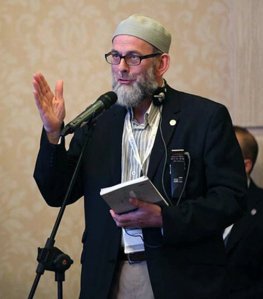 I have been the chair of trustees for 17 of Interpal’s 20 years as a British charity helping Palestinians in desperate need; it is a privilege to be in such a position. Being a trustee has enabled me to meet and work with some wonderful people, including our incredible beneficiaries in occupied Palestine, Jordan and Lebanon. They inspire us as we try to bring a degree of normality to their extraordinarily abnormal situation.It hasn’t been an easy ride. Interpal was declared by the US government in 2003 to be a “Specially designated global terrorist entity”; there was no due process, no investigation and no immediately obvious right to appeal against the decision. We discovered our new status via the BBC website. I called it “gesture politics” at the time, because claims that the US was freezing Interpal’s assets in America were nonsense; we didn’t have any assets there. In fact, the only money we have in the States now is around $100,000 which was confiscated by Citibank as the transfer of funds for our orphans’ programme in Jordan crossed a computer screen in New York. Orphans went without so that American and Israeli egos could be massaged.
A number of investigations and inquiries by Britain’s charity regulator have found no evidence of illegal activity by Interpal, and the US government has offered no evidence to justify its designation. The absence of any police involvement, said one senior Metropolitan Police officer, “is hugely significant”.
The “terrorist” tag originated in Israel, of course, which has a strong interest in blocking any kind of aid to the Palestinians living under its brutal military occupation; if life is made harsh enough, the theory goes, then perhaps the Palestinians will pack up and cross the Jordan into permanent exile. This is known in Zionist jargon as “silent transfer”. After almost 70 years of occupation, the Israelis obviously do not know the Palestinians, or the people who support them.
The UN Relief and Works Agency (UNRWA), whose senior spokesperson, Chris Gunness, has flown over to speak at Interpal’s 20th anniversary symposium in London, is at the forefront of working to keep the Palestinians afloat. Interpal is proud to be a valued partner of UNRWA and has a number of projects in the pipeline to continue such work in the months and years ahead.
Despite having such a high profile link to a UN agency, accusations of supporting “terrorism” have been thrown at Interpal almost since day one, with a claim in a major broadsheet that we “funded the training of suicide bombers” in 1996. A small charity has been seen as an easy target; we are the pebble in the Israeli shoe and just won’t go away. “Interpal,” said one Israeli politician, “is a tough nut to crack.”
The attack on our charity has been relentless which is odd, given our relatively small size. Italian journalist and author Loretta Napoleoni is an expert on “terrorist financing”. She told me that the US and Israeli governments are going after charities like Interpal precisely because they think that we are easy targets and can be shut down, at which point they can claim to be “cutting off terrorist funding”. The reality, she said, is that most of the $3 trillion drugs and terrorist economy is channelled through legitimate businesses, not charities. In 2012, HSBC confirmed that it was going to pay the US authorities $1.9bn (£1.2bn) in a settlement over money laundering. “A US Senate investigation said the UK-based bank had been a conduit for ‘drug kingpins and rogue nations’,” reported the BBC. The bank “admitted having poor money laundering controls and apologised.” There has been no special designation for a bank involved in very serious crime, but a small charity against whom there are only allegations from vexatious complainants face being driven out of existence; our only “crime” is helping Palestinians.
The message from our New York lawyer is that the US Treasury can only do so much about the designation: “It was a political decision and needs a political decision to rescind it.” In other words, the State Department must be involved, which is why Interpal has asked the Foreign and Commonwealth Office a number of times to speak on its behalf. Even though HM Government intervened on behalf of British banks facing legal action in the US, this British charity has been told “you need to raise it yourselves with the Americans”. Individual parliamentarians in both Houses have been very supportive over the years, but of government action there has been none.
Interpal distributes on average around £4 million a year and every penny is accounted for. In the great scheme of things, this is a relatively miniscule amount (Israel gets $8m a day from the US). The bureaucratic system that we have in place makes it ridiculous to suggest that we divert donations for illegal purposes.
The fact that many of the projects Interpal has funded are also funded by USAID doesn’t carry any weight in Washington, and America insists that we should discriminate along political lines in the distribution of our funds; discrimination of any kind is illegal for British charities, and rightly so. We will continue to support Palestinians with humanitarian aid without fear or favour, the only criteria being need.
Many of Interpal’s beneficiaries are women and children. The children of Palestine, Muslims and Christians alike, have had their childhood stolen from them; we should all hang our heads in shame at this. More than 80 per cent of the children in the Gaza Strip suffer from post-traumatic stress. Every time an Israeli jet flies overhead, or a helicopter, or a drone, these children wait for the bombs to follow; that is what they have come to expect. It is a shameful situation.
The recent news that the dedicated surgeon and activist Dr Mads Gilbert has been given a lifetime ban by Israel from entering the Gaza Strip illustrates perfectly the Israeli attitude towards anyone offering humanitarian assistance to Palestinians. It has nothing to do with “terrorism” and everything to do with enforcing an immoral and illegal blockade on the territory. What is being done in the name of “the only democracy in the Middle East” is not only undemocratic but also breaks international law. Israel’s leadership knows this but carries on regardless and with apparent impunity. NGOs and others will do likewise until justice is seen to be done and a free and independent Palestine emerges from the rubble.
This is an edited version of the speech given by Ibrahim Hewitt at Interpal’s 20th anniversary symposium in London on 25th November.
French Polynesia to demand nearly $1bn from Paris over tests
RT | November 25, 2014
In an unprecedented move, French Polynesia, an overseas territory governed by France, is to ask Paris for nearly $1 billion in compensation for damage caused by nuclear weapons tests carried out by France in the South Pacific between 1966 and 1996.
The Assembly of French Polynesia has prepared a demand for $930 million (754,2 million euros) over “major pollution” caused by the 193 tests carried out by France for 30 years, La Dépêche de Tahiti reported. On top of this, the proposed resolution seeks an additional $132 million for the continued occupation of the Fangataufa and Mururoa atolls, used for nuclear testing.
The conservative Tahoera’a Huiraatira party committee has been acting independently of Polynesian President Edouard Fritch, who said he was “sorry” for the motion “written without consulting him,” local press reported.
Meanwhile, the text of the resolution, set for approval by the Assembly, highlights a “very poor situation of the atolls,” and a clean-up “impossible in the current state of scientific knowledge,” Tahiti Infos reported. They write that French Polynesia has been “too long sidelined” from decisions on “waste conservation and monitoring modes whatever their nature as well as the rehabilitation options of the atolls.”
On 24 August 1968, France conducted its first multi-stage thermonuclear test at Fangataufa atoll in the South Pacific Ocean, the so-called ‘Canopus’ test. With a 2.6 megaton yield, its explosive power was 200 times that of the Hiroshima bomb, according to the Comprehensive Nuclear-Test-Ban Treaty Organization (CTBTO).
France began its last series of nuclear tests in the South Pacific in 1995, breaking a three-year moratorium, provoking international protests and the boycott of French goods. It conducted its final nuclear test in January 1996 and then permanently dismantled its nuclear test sites. Later in that year, France signed the Comprehensive Nuclear-Test-Ban Treaty (CTBT).
In 1996, in the wake of the nuclear testing, a $150 million annual payment was granted to French Polynesia, a territory of over 100 islands and atolls with its own government.
France, together with China, is not party to the 1963 Partial Test Ban Treaty, which bans nuclear explosions in the atmosphere, under water and outer space but not underground.
Last year it came to light that French nuclear tests carried out in the South Pacific had proved to be far more toxic than previously thought. According to declassified documents, seen by Le Parisien, plutonium fallout covered a much broader area than Paris had initially admitted, with Tahiti allegedly exposed to 500 times the maximum accepted levels of radiation.
According to the CTBTO, a study conducted between 2002 and 2005 of thyroid cancer sufferers in Tahiti, who had been diagnosed between 1984 and 2002, established a “significant statistical relationship” between cancer rates and exposure to radioactive fallout from French nuclear tests. Another survey carried out by an official French medical research body, Inserm, in 2006, also detected an increase in thyroid cancer among people who had been living within some 1,300 km of the nuclear tests conducted on the Polynesian atolls between 1969 and 1996.
In 2010, France pledged that veterans and survivors would be elegible for compensation, noting that this process would take time.
Israeli Authorities Prevent 100 Tons of Vegetables from Exporting out of Gaza
IMEMC News & Agencies | November 24, 2014
At Kerm Abu Salem crossing Israeli occupation authorities have barred ten truckloads of agricultural products from leaving the war-torn and economically besieged Gaza Strip, due to an alleged dispute between the Israeli army and the Ministry of Agriculture.
The dispute is preventing the trucks and their cargo from passing, and being exported to Saudi Arabia and West Bank, according to Al Ray Palestinian Media Agency.
Israeli website Walla reported, on Monday, that allowing the export of the agricultural products comes in the framework of “facilities” granted for Gaza residents in the wake of the last summer’s assault on the region, by Israel. Israeli authorities had agreed on the passage of ten truckloads per day.
Walla added that this shipment of vegetables weighs 100 tons, and has been held back since Sunday morning.
According to the Israeli system, after the truckloads pass to the military checkpoint on the Palestinian side of the crossing, they should be inspected and, then, loaded again onto Israeli trucks to pass to their planned route.
The office of the Coordinator of Government Activities in the occupied territories claims that the trucks are still stuck in the crossing because the Israeli Ministry of Health did not yet inspect them in accordance with regularities, with the Ministry itself citing a lack of staff to do that.
At this time, it is not clear when the shipment will pass.
‘The Jewish state law paves the way for displacing more Palestinians’
Palestine Information Center – November 25, 2014
GAZA – Senior Islamic Jihad official Yousuf al-Hasaina said that the Israeli cabinet’s approval of new racist legislation defining Israel as the nation-state of the Jewish people is a prelude to expelling the Palestinian people from their 1948 occupied lands.
In remarks broadcast by the media department of the Movement on Monday, Hasaina stated that the new law would open the way for the option of exchanging lands and residents between the Palestinian Authority and Israel.
Describing the law as racist created by an extremist and fascist cabinet and community, the Islamic Jihad official asserted that it would give the Jews alone unlimited rights.
“The law would tighten the noose around the indigenous Palestinian Arab population until forcing them willingly or unwillingly to leave their country, and this is what the occupation state is seeking to impose in the coming days on the Palestinian Authority and the Palestinian people,” Hasaina warned.
He noted that the most dangerous aspect of this law is its description of the Talmudic religious texts as the source of legislation in the Jewish state while many of these texts legalize the killing and displacement of non-Jews.
However, Hasaina expressed his belief that Israel is an illegal entity and neither its Talmudic laws nor the western support would save it from its destined demise.
Compare and Contrast: Human Rights Watch on Mexico and Ecuador
teleSUR | November 24, 2014
HRW statements about Ecuador’s policing are out of proportion compared to their statements about the disappeared students in Mexico.
The following two headlines are from news releases by Human Rights Watch (HRW) about two incidents that took place in September:
1) Mexico: Delays, Cover-Up Mar Atrocities Response
2) Ecuador: Police Rampage at Protests
The headlines suggest very similar events are described, but that’s not the case at all.
In Mexico, police fired on student protesters, killing three, and then disappeared 43 others by handing them over to a gang. Those basic facts are not disputed by anyone. In Ecuador, the allegations are vastly less serious and far more contested. There were no deaths, but police are accused of beating protesters, some of whom HRW concedes were violent.
Mexico is a close US ally, so HRW instinctively pulled its punches with the national government, which HRW accuses of actions that only “mar” – i.e. impair the quality of– its response to the atrocity. But the government’s failure to produce the missing students (alive or dead) over a month after their “arrest” does not simply “mar” the response. It has raised reasonable suspicions that the entire Mexican establishment is complicit in the crime. As Spanish singer-songwriter Joan Manuel Serrat put it, “They need to demonstrate that they are not accomplices of this barbarism, and of other barbaric acts the country has been enduring; this is a great opportunity for Peña Nieto to show it.” The atrocity has sparked protests all over Mexico and a great deal of international attention.
Ecuador’s left wing government, under Rafael Correa, is a member of ALBA, an alliance of left of center governments that includes, among others, Venezuela and Cuba. HRW’s statement about the much less serious allegations against Ecuador’s police was four times longer than the statement about disappeared students in Mexico, who, according to state-directed gang members’ admissions, were killed and incinerated. HRW officials rushed to Ecuador in September, immediately after the protests, to carry out a “fact-finding mission”. In addition to describing claims made by several alleged victims, HRW accused Correa’s government of “harassing” the private media in ways that foster impunity for police brutality. HRW’s evidence for this last allegation is very weak. For example, a private TV station was obliged to broadcast a seven-minute government rebuttal to a show about the protests that had aired the previous day.
HRW’s statement about the atrocities in Mexico, in contrast, says absolutely nothing about the government’s media policies. Even a very lengthy report (from last year) that HRW cited in their statement said nothing about the Mexican media. However, HRW’s 2014 World Report summary for Mexico does, very briefly, list some facts that show why the media is an important part of Mexico’s human rights disaster: “At least 85 journalists were killed between 2000 and August 2013, and 20 more were disappeared between 2005 and April 2013… ”. HRW said that “Journalists are often driven to self-censorship by attacks carried out both by government officials and by criminal groups, while under-regulation of state advertising can also limit media freedom by giving the government disproportionate financial influence over media outlets.”
State advertising? What about private sector elites who own the Mexican media as well as advertise in it, who are closely allied with the state, and who may have a vested interest in maintaining the blood-drenched status quo? Alice Driver wrote in Aljazeera.
“When I interviewed Juarez journalist Julian Cardona in 2013 for a film about violence in the Mexican media, he argued: ‘The media can be understood as a company that makes tacit or under the table agreements with governments to control how newspapers cover such government entities. You don’t know who is behind the violence.’”
[Mexican President] Peña Nieto’s close ties with Televisa, the largest media company in Latin America, have been widely documented and even earned him the nickname the ‘Televisa candidate’ during the elections.”
Televisa alone has about 70 percent of the broadcast TV market. Almost all the rest of the market is held by TV Azteca. A study, done by researchers with the University of Texas, of Mexican TV coverage during the 2006 presidential election found significant bias in favor of two of the three major parties that lean farthest to the right – one of which is the PRI, the party of current President Peña Nieto. The study concluded “both Televisa and TV Azteca gave significantly more coverage to the winning candidate, Felipe Calderón [of PAN], than to his main rivals, Andrés Manuel López Obrador [formerly of PRD] and Roberto Madrazo [of PRI] . Also, the tone of the news coverage was clearly favorable for Calderón and Madrazo and markedly unfavorable for López Obrador.” In US Embassy cables published by Wikileaks, US officials privately stated in 2009 that “Analysts and PRI party leaders alike“ were telling them that (then candidate) Peña Nieto was “paying media outlets under the table for favorable news coverage.”
Alice Driver has claimed that
“To create confusion, the Pena Nieto administration has pursued the strategy of making splashy high profile narco arrests, and of blaming all criminal activity, including murders and disappearances, on the fact that everyone involved was part of the drug trafficking business. This approach makes victims responsible for the violence they suffer, and it is promoted in the media in a way that makes all victims become suspects.”
Driver’s claim appears quite plausible and well worth HRW’s time to investigate. At the very least, there are extremely good reasons to doubt that Mexico’s private media can be relied on to expose the national government’s complicity with atrocities.
HRW’s 2014 World Report summary about Ecuador offers no evidence that Ecuadorian journalists are being murdered or disappeared under Correa (who has been in office since 2007) as their Mexican counterparts have been over the same period. But HRW nevertheless goes on at much greater length in critiquing Correa’s media policies. HRW’s critique is based on the assumption that private-sector elites pose no threat to freedom of expression or political diversity in the media. Any measure by a government – and especially left of center government like Correa’s – that clips the wings of private media barons is deplored. No positive suggestion is ever made by HRW for blunting the power of private media elites no matter how grave the human rights implications. It is this double standard that provides the basis of HRW executive director Ken Roth’s outrageous assertion that Ecuador and its ALBA partners—not U.S. allies such as Colombia, Honduras or Mexico—are “the most abusive” governments in Latin America.
In the case of the United States, HRW’s inability or unwillingness to identify the private media as major contributor, arguably the most important contributor, to its abysmal human rights record is truly farcical. There are striking examples, quite readily available as I mentioned here, of how the private media promotes a stunning level of ignorance about the scale of US government crimes, but HRW’s 2014 summary for the USA breezily asserts that the “United States has a vibrant civil society and media that enjoy strong constitutional protections”.
Then again, HRW is unwilling to even close its revolving door with US government officials, so the inability to challenge the way public and private power collude to stifle public debate in the USA, and in Mexico, is very unsurprising.
Featured Video

Why the U.S. Should Pull Back From the First Island Chain
or go to
Aletho News Archives – Video-Images
Book Review
‘Why Fauci Must Rot in Prison’: A Tale of Two Diaries
By Jill Erzen | The Defender | October 13, 2026
Dr. Anthony Fauci’s private diary reveals a “mind-numbing” contradiction between what the former top U.S. infectious disease official knew about COVID-19 and what he told the public, senior White House adviser Peter Navarro, Ph.D., said last week on “American Thought Leaders.”
In his new book, “Why Fauci Must Rot in Prison,” due out Oct. 20, Navarro compares Fauci’s private entries to his own pandemic-era diary, and uses what he calls “a tale of two diaries” to argue that Fauci should face criminal prosecution.
“I show, actually, how a prosecution can and should happen … at the state level, most likely,” Navarro said. “He should wind up in prison, and we’ve got the receipts in this book to put him there.”
Navarro said Fauci repeatedly acknowledged important facts in private, then publicly pursued policies that contradicted those facts — with devastating consequences.
“What he says many times privately in his diary is so at odds with both his public behavior and public statements that it’s mind-numbing,” Navarro said.
Navarro examines the lasting damage caused by lockdowns and other pandemic policies, and the ongoing toll of long COVID.
His book also addresses questions about vaccine safety, including why healthy young people faced COVID-19 vaccination mandates despite concerns about myocarditis, and why women were not warned about miscarriage risks linked to the shots. … continue
Blog Roll
 Aletho News
- Jennifer Kavanagh: Why the U.S. Should Pull Back From the First Island Chain
- Yemen denounces international community’s silence on Saudi aggression, siege
- UAE and Saudi Arabia move toward renewed coordination against Sanaa
- How Iran’s two-week retaliatory strikes exposed cracks in US military architecture in Persian Gulf
- The mother of all propaganda: Why the hype over US MOAB strike against Iran is nothing but theater
- Iran says it possesses technology behind US 14-ton GBU bunker-buster
- Trump asks Iran not to retaliate after he strikes Pickaxe Mountain – w/ Prof. Marandi
- Vice President J.D. Vance’s Deceptive ‘Antiwar’ Campaign Speech
- Iran: Palestinians’ rights must not be compromised in Gaza’s future; US, Israel to blame for Hormuz situation
- Ongoing tales of Syrian chemical weapons
- If Americans Knew
- Israeli rabbi permits occupiers to steal Palestinian olive harvest in West Bank
- Netanyahu’s spin on latest settler attack is laughable – Daily Update
- Israeli soldiers debunk Israel’s talking points
- In West Bank, Israeli settlers are totally out of control – Daily Update
- NPR investigation finds evidence of widespread fraud at mall kiosks tied to Israeli skincare brand
- Tucker Carlson exposes Israeli Lies about the Oct 7th attack, Charlie Kirk, and the U.S.
- Israel has detained thousands of Palestinian children since Oct 7th – over half spent time in solitary, many uncharged
- Israeli Analysis: Is Netanyahu Planning an ‘October Surprise’ Attack Before Israel’s Election?
- Israeli settlers brutally attack Palestinians and Washington Post female photographer, 65
- Words Have Changed, Occupation Continues: The Reality of the Gaza Ceasefire
- No Tricks Zone
- Predictions Made By Renowned Climate Proifessor Over Past Decades Have Been Proven To Be Poor
- New Study Suggests Large Regions Of The Pacific Ocean Have Been Cooling For The Last 80 Years
- Germany’s Green Energy Debacle: High Energy Costs Force Kahla Porzellan to Close After 182 Years!
- New Study: 50 Years Of The Most Aggressive ‘Net Zero’ Policies Can Only Affect The Global Climate By 0.03°C
- US September “Heat” Was No Record…Many Records Set Decades Ago
- Latest European Green Energy Debacle; Portugal’s Largest Flagship Solar Park Insolvent!
- Green Energy Debacle: German Expert Professor Fritz Vahrenholt Warns Of Severe Economic And Social Consequences
- Two More Paleo Reconstructions Affirm Meters-Higher Sea Levels Across Ireland, Brazil 7000-6000 Years Ago
- New Study: Earth And Venus Surface Warmth Largely Explained By Convection And Lapse Rate, Not CO2 Or Radiation
- 2025 Nature Paper Claiming Worsening Global Drought Gets RETRACTED …Heavily Flawed

