Human rights watchdogs turn blind eye on Gitmo hunger strikers
RT | March 19, 2013
Despite the prisoners’ hunger strike at Guantanamo Bay being acknowledged by the US military, there has so far been little reaction from the international humanitarian organizations to the action, which enters its 42nd day on Tuesday.
The United Nations has yet to acknowledge or comment upon the Gitmo hunger strike. RT has reached out to UN human rights bodies in Geneva and officials have promised to respond to the inquiry with a comment by Tuesday afternoon.
The only international organization to respond to what’s going on in Guantanamo is the Red Cross, which visited the island prison from February 18 to 23. It acknowledged that a hunger strike was really taking place, but so far all the organization has done is release a statement saying that “The ICRC believes past and current tensions at Guantanamo to be the direct result of the uncertainty faced by detainees.”
Military censorship makes it quite difficult to access any information about Gitmo prisoners. It was the attorneys for the detainees that first expressed urgency and grave concern over the life-threatening mass hunger strike that reportedly started in the Guantanamo Bay detention facility on February 6.
According to the Center for Constitutional Rights 130 prisoners went on a hunger strike to protest the alleged confiscation of personal items such as photos and mail and the alleged sacrilegious handling of their Korans.
Prison spokesman Navy Capt. Robert Durand, however, acknowledged only 21 inmates to be on hunger strike. He also denied all allegations of prisoners being mistreated.
Even if not for mistreatment and abuse, prisoners could have started the strike just to draw attention to their being kept in Guantanamo, with the US refusing to repatriate them, despite some being cleared for release.
“There are 166 people at Guantanamo. Of those there are probably 20 guys who are bad guys… like Khalid Sheikh Mohammed. The other people… more than half of them – 86 of them have been cleared at least for three years and some during the Bush administration – cleared as innocent people. And they are still there and they are frustrated,” says Thomas Wilner, a lawyer, who used to represent some of the Guantanamo detainees in court.
According to Durand, none of the inmates on hunger strike is in immediate health danger.
Lawyers for the prisoners believe otherwise. They have reported some of their clients had weight loss of up to or more than 20 pounds (8kg) and have been hospitalized. Medical experts say that by day 45, hunger strikers can experience potential blindness and partial hearing loss.
The Center for Constitutional Rights and habeas counsel have sent a letter to US Defense Secretary, Chuck Hagel, urging him “to address this growing crisis at Guantánamo before another man dies at the prison, this time under his watch. The hunger strike should be a wake-up call for the Obama Administration, which cannot continue to ignore the human cost of Guantánamo and put off closing the prison any longer.”
Meanwhile, JTF-GTMO announced that flights to the island prison from South Florida will be terminated on April 5. The step is seen by the prisoners’ attorneys as an attempt by the Defense Department to limit access to their clients.
Related article
Israel releases hunger striker Sharawneh, arrests his brother
Al-Akhbar | March 18, 2013
Israel arrested the brother of former-Palestinian prisoner Ayman Sharawneh in the West Bank early Monday just hours after the long-term hunger striker was released from Israeli prison and deported to the Gaza Strip, Ma’an News Agency reported.
Israeli forces raided the home of Jihad Sharawneh, 24, at dawn Monday in Deir Samir, southwest of Hebron.
An Israeli military spokesman told Ma’an that Jihad Sharawneh was arrested and taken in for security questioning.
Amjad Najjar, head of the Hebron branch of the Palestinian Prisoners Society, denounced the arrest as an act of revenge to punish the Sharawneh family.
Ayman Sharawneh signed an agreement with Israeli authorities to be deported to Gaza for 10 years, bringing an end to his eight-month-long hunger strike, Qadura Fares, head of the Palestinian Prisoners Society, said in a statement.
He arrived at the Erez crossing Sunday night, where a Palestinian ambulance was waiting to take him into Gaza. Hundreds of people crowded at the Palestinian side of the checkpoint to greet him.
Fares said that Israel had previously proposed to deport Sharawneh outside of Palestine, but then offered to exile him to Gaza after he refused to leave his homeland.
Sharawneh agreed to be deported after months of hunger striking to protest his detention, and after numerous warnings by doctors regarding the severe deterioration in his health, Fares added.
The 36-year-old father of nine had previously demanded that authorities allow him to return to Hebron to be with his family.
The under secretary of the PA Ministry of Detainee Affairs, Ziad Abu Ein, told Ma’an that Sharawneh’s agreement was signed without notifying the ministry.
Earlier Sunday, the Minister of Detainee Affairs Issa Qaraqe said the Palestinian Authority rejected the deportation of prisoners as political blackmail.
Sharawneh was released in the October 2011 prisoner swap deal between Israel and Hamas but was rearrested in January 2012 and accused of violating the terms of his release.
Israeli authorities refused to reveal how Sharawneh violated his release terms, even to his lawyers, and he was jailed without charge or trial.
Israeli prosecutors sought to cancel Sharawneh’s amnesty and jail him for 28 years, the remainder of his previous sentence. He went on hunger strike to demand his release.
Abu Ein said Israeli authorities were pressuring Samer Issawi, who has been on hunger strike for 228 days, to make a similar deal.
(Ma’an, WAFA, Al-Akhbar)
UN CSW condemns Israel for Human Rights violations

Press TV | March 16, 2013
The United Nations’ Commission on the Status of Women (CSW) has condemned Israel for violating the rights of Palestinian women.
In a resolution issued on Friday, the UN policy-making body, condemned Tel Aviv’s regime for the degrading living conditions for Palestinian women.
“The Israeli occupation remains the major obstacle for Palestinian women with regard to their advancement, self-reliance and integration in the development of their society…” the eight clause resolution read.
The resolution was passed by 29 votes. It was rejected only by Israel and the United States. 10 other countries also abstained.
The UN commission also issued a declaration, urging an end to violence against women across the world.
“The commission urges states to strongly condemn all forms of violence against women and girls and to refrain from invoking any custom, tradition or religious consideration to avoid their obligations with respect to its elimination,” said the declaration.
The declaration also called on the word’s countries to “devote particular attention to abolishing practices and legislation that discriminate against women and girls, or perpetuate and condone violence against them.”
The 18-page declaration includes the viewpoints of Iran and other Muslim countries. Activists have described the document as a victory for women.
Related article
- Israel has detained 15,000 Palestinian women since 1967 (alhittin.com)
Step by Step: Honduras Walk for Dignity and Sovereignty
By Greg McCain | Upside Down World | March 13, 2013

From February 25 to March 7, I participated in the 200 km Walk (about 124 miles) referred to as Caminata Dignidad y Soberanía Paso a Paso (Walk for Dignity and Sovereignty Step by Step), which culminated with over 400 people from various groups representing the social movements in Honduras reaching the National Congress in Tegucigalpa to demand three things:
1. Abolish the new mining law, which basically gives foreign mining companies carte blanche to take the natural resources of Honduras for their own enrichment while having no regulations to stop these companies from poisoning the rivers and ground water and destroying the environment through mountain top removal and deforestation. In addition, these mining companies have historically exploited the labor of the local communities, paying little to nothing while poisoning the local populations with chemicals such as cyanide used for extraction.
2. Abolish the new Model Cities legislation. This is new legislation passed by decree by the Congress after having been found unconstitutional by the Supreme Court in November of last year. The following month, the president of the Congress, Juan Orlando Hernandez(JOH), staged what has been referred to as the second coup by holding an emergency session of Congress to vote out 4 of the members of the Constitutional chamber of the Supreme Court who found the original version in violation of the sovereignty of Honduras. JOH and President Pepe Lobo claimed that these magistrates were traitors who were holding back the economic development of the country. He also claimed to have fixed the issues that these “traitors” found to be unconstitutional.
It is for all intents and purposes the same neo-liberal package that gives up huge areas of land to outside developers to create neo-colonial enclaves that don’t have to operate under constitutional regulations. The further claim is that the land under consideration is uninhabited. Two areas that have been proposed, the communities of Puerto Castillo and Santa Rosa de Aguán are traditional Garifuna land along the northern coast in the Department of Colon. The Garifuna are the Afro-Caribe people who have inhabited the northern coast of Honduras for over 200 years. They have been struggling to maintain their land from rich foreigners such as the Canadian Porn King Randy Jorgensen who has bought up at bargain prices much acreage in and around the area of Trujillo.
Jorgensen has built a cruise ship dock on the beachfront in the town of Trujillo, not far from Puerto Castillo, which is also the location of the fruit company, Dole’s, shipping docks. The Congress refers to the model cities as Special Development Regions (RED in its Spanish acronym). They will combine the exploitation of local labor and natural resources perpetrated by foreign corporations with the destruction of the natural environment such as has happened in Cancun, Mexico and other resort areas around the world, with all of the profits going to the foreign directors of the REDs, and their foreign investors.
3. Freedom for the Political Prisoner Jose Isabel “Chavelo” Morales Lopez. Chavelo Morales has become a symbol of the campesino movement and his imprisonment illustrates the criminalization of the campesinos as they struggle to maintain the land that is theirs by all rights under the agrarian reform laws that had existed prior to 1992. These laws were subverted by the ruling elite when so called “free” trade agreements were first being thought up and hammered out by corporate lobbyists in the US Capital.
Chavelo was framed for the 2008 murder of a family of rich landowners, the Osortos. This moneyed family had illegally obtained thousands of hectares of land at rock bottom prices (some of it free of charge) that were legally recognized as being set aside for peasant farmers. In the late 1990s, the Campesino Movement of the Aguán (MCA), of which Chavelo is a member, took legal routes to obtain the land and began to work it for their own subsistence. The Osortos and their paramilitary guards terrorized the communities, killing leaders of the MCA, and shooting into the houses of families. This occurred while the national police and the Honduran government turned their backs on the illegal actions of the Osortos, presumably due to the bribes that the rich landowners doled out. Indeed, the police and the district attorneys played an active role in criminalizing the campesinos by issuing trumped up arrests warrants (Currently there are over 3080 campesinos with arrest warrants against them). Click here for a more complete background of Chavelo’s story and the travesty of justice in his case.
Chavelo spent the first 2 years in jail without a trial. It was another 2 years before he received his sentence. This is a clear violation of Honduran Penal Process Code 188, which states that a person cannot be incarcerated for more than 2 years from the time of his arrest until sentencing. This alone should be enough for the Supreme Court to annul the conviction and set him free, and indeed this is what Chavelo’s lawyers are hoping to happen in their appeal of causation that they have filed with the high court. But additionally, the sentencing statement that the judges in Trujillo issued gives no concrete evidence linking Chavelo to the deaths that occurred other than a photo of him close by to the scene where some 300 other campesinos and dozens of police had been during a standoff at the Ranch of Henry Osorto, the ex-military, ex-police sub-commissioner, and current penal system investigator. It is with Osortos influence alone that Chavelo is currently imprisoned. Chavelo has spent close to 4 ½ years in prison based on hearsay evidence and the political and economic influence that Henry Osorto has over the judges. Chavelo faces 20 years in prison unless international pressure convinces the Supreme Court of Honduras otherwise.
With these three demands energizing our every step, we entered Tegucigalpa with 400+ walkers who made a silent vigil through the streets until we reached the National Congress. Once there, hundreds more joined us. A small group, accompanied by Padre Melo Moreno, a Jesuit priest and director of Radio Progress, was able to meet with Marvin Ponce, vice president of the Congress. Promises were made that the protesters concerns would be addressed. No one is holding his or her breath.
Another group was able to meet with the President of the Sala Penal of the Supreme Court, basically the chamber of the court that deals with prison issues. This group was made up of Omar Menjivar, Chavelo’s lawyer; Esly Benegas from COPA (the Spanish acronym for the Coordinated Popular Organizations of the Aguán); Merlin Morales, Chavelo’s brother; Myself, Greg McCain, representing La Voz de los de Abajo and the Honduran Solidarity Network, and Brigitte Gynther from SOA Watch. The President of the Sala Penal, Jacobo Antonio Cálix Hernández, began by stating that the court was backlogged by two years, they hadn’t even begun to hear cases that had been sent to the court in 2011. Chavelo’s case had just reached the court at the end of January 2013. He stated that cases were very complicated and that they took a lot of study on the part of the judges. He was basically letting us know that nothing happens fast in the justice system.
We each made our case for why we were there and what we expected from the court, reiterating the lack of evidence and the violation of the procedural code. Chavelo’s brother made explicit Osorto’s influence on the judges in the Trujillo tribunal and the fact that the only evidence was a photo of Chavelo and that the context of the photo was not addressed in the sentencing. He also made the emotional appeal that Chavelo has been unjustly incarcerated while his daughter, father, 2 aunts and grandfather have all passed away without his being able to attend the funerals. I piggybacked on Merlin’s plea by noting the money and political power of Osorto and my hope that it does not reach to the Supreme Court. I also underlined the amount of time that Chavelo has spent in jail and hoped that there weren’t further undue delays of justice.
Judge Cálix made the promise that he would speed up the process for having the trial transcripts of the lower court transcribed by no later than the following week. He then stated that he would schedule the hearing of the case for sometime between April 1st and the 5th. This hearing is basically a formality so that each side, the Defense and the Prosecutor, can present their cases. The judges then legally have up to a year to make a decision. This was huge news. We in the room, along with the threat of having 400+ demonstrators that were still at the National Congress converging on the Supreme Court, cut the process down by two years. Again, none of us are holding our breath. The campaign to put pressure on the Supreme Court has just begun. We need to reduce the year long wait and bring Chavelo home. Pronto!
To send emails and make phone calls to the court between now and the promised April hearing, click here, and you can also follow future actions and the progress of Chavelo’s case.
Related articles
- Honduras: Murdered Lawyer’s Brother Killed in Aguán (alethonews.wordpress.com)
- Will the World Bank Stop Investing in Campesino Assassinations? (alethonews.wordpress.com)
- Killings Continue in Bajo Aguán as New Report Documents Abuses by U.S.-Trained Honduran Special Forces Unit (alethonews.wordpress.com)
- NPR Examines One Side of Honduran “Model Cities” Debate (alethonews.wordpress.com)
New York Muslims protest police surveillance
RT | March 12, 2013
A new report by a coalition of Muslims has shed further light on the NYPD’s controversial surveillance program of the Muslim community, which they say generates widespread fear and has a “chilling effect” on their lives.
The New York Police Department has been found to spy on Muslims in mosques, restaurants, halal shops, cafes, hookah bars and other public places and has long outraged potential victims of the surveillance. Whether praying, conversing with friends, or walking down the street, the NYPD deploys cops that are always watching.
The surveillance “has stifled speech, communal life and religious practice and criminalized a broad segment of American Muslims,” Nermeen Arastu, fund attorney for the Asian American Legal Defense and Education Fund, told the Wall Street Journal.
The new report, compiled by the Muslim American Civil Liberties Coalition and its partners, specifically outlines the effect of the NYPD’s intimidation on New York City Muslims. As a result of sending spies throughout the city, some Muslims have stopped trusting anyone, fearful that something they say or do could land them in prison.
“Undercover Pakistani officers were sent into Pakistani communities and Arab-speaking officers were dispatched into the Egyptian community to ‘listen to neighborhood gossip’, and get an overall ‘feel for the community,’ ” the report says “They were instructed to visit schools and interact with business owners and patrons to ‘gauge sentiment.’”
By participating in school field trips and local cricket matches, undercover cops have crept into the personal lives of American Muslims, searching for any sign of illegal or terrorist intentions. The report, titled “Mapping Muslims”, claims that the far-reaching extent of the surveillance program has taken a toll on the Muslim community.
“[The NYPD] has repeatedly said that as long as you have nothing to hide, you have nothing to fear,” Diala Shamas, co-author of the report, told the Huffington Post. Instead, she said the study “shows that there are many disturbing impacts and consequences of the irresponsible, costly, harmful, completely ineffective surveillance program.”
Muslim college groups now forbid any discussion of politics, practicing Muslims have avoided mosques, and others have simply avoided making any sort of jokes that could be misinterpreted.
“People tell me ‘I’ll make mysalaah [prayer] at home.’ They mention the NYPD camera right outside the mosque as the reason,” Imam Mustapha, a Brooklyn-based religious leader, told authors of the report.
At some mosques, Muslims no longer trust religious leaders, fearing that they could be reporting to the NYPD.
“The relationship of trust and confidentiality between an imam and his congregation is no less sacred than that of pastors, rabbis and others, and those of whom they serve,” said Imam Al-Hajj Talib ‘Abdur-Rashid, Maklis Ash-Shura (Islamic Leadership Council) of Metropolitan New York. “The actions of the NYPD have compromised this sacred relationship… It not only weakens the capacity of some Muslim religious leaders to serve as advisors in sensitive matters, but it also compromises their effectiveness as partners in the struggle against extremism.”
New York City Muslims are afraid of growing beards, wearing traditional attire, participating in extracurricular activities, or talking to strangers.
The authors conclude the report with a plea to stop the pervasive program, claiming that the policing encourages deep-seated mistrust and distrust within the Muslim community.
“There’s a lot of collateral damage,” Park Slope Councilman Brad Lander told the Huffington Post.
The NYPD has so far spent more than $1 billion on the Intelligence Division, which conducts the surveillance program. But throughout six years of surveillance, the NYPD has never generated a lead, according to Assistant Chief Thomas Galati.
“I never made a lead from rhetoric that came from a Demographics report, and I’m here since 2006,” Galati said in a deposition last June. “I don’t recall other ones prior to my arrival.”
Related article
- Debunked NYPD Radicalization Report Just Won’t Die (alethonews.wordpress.com)
Despite Civilian-Targeting US Sanctions, Damascus University Excels
By Franklin Lamb | Al-Manar | March 11, 2013
Damascus – Students everywhere are special people and this observer has discovered that Syrian students are among the very best.
Meeting and interviewing students again this past week, before and following a frank and enlightening discussion with Prof. Dr. Mohammad Amer Al-Mardini, the indefatigable President of Damascus University, about the situation of the students and current instruction at the University, one cannot, even as a foreigner, fail to feel pride in Syrian students.
Good meeting places, among others on campus, include “outdoor cafes” — a ‘street student union’ of sorts — consisting of a few chairs and portable tables. They are scattered among the dozens of vendor stalls that line “DU Boulevard” outside the main DU campus in central Damascus. Here students can buy everything from school supplies to mobile phones to snacks. It’s a perfect place to meet and chat with students.
One learns from them about the many effects on the education system in Syria of the US-led sanctions. Some argue that the Obama administration actually fuels the current crisis with its sanctions and achieves the opposite result of what the White House and its allies claim they are seeking.
These freewheeling discussions leave a foreigner with a reminder why this student body ranks among the best in the World. How Damascus University has to date reacted to this crisis evidences the same status.
Currently there are more than 200,000 full-time and ‘open-learning’ students at Damascus University, the 6th largest in the World. The core institutes of the University were established in 1901; they were the medicine and law institutes that formed the basis of the Syrian University that was established in 1923. In 1958, it got its current name, Damascus University when Aleppo University was established.
All of the students are feeling the effects of the Obama Administration’s harsh civilian-targeting sanctions and many are increasingly in the cross-hairs of the “humanitarian sanctions which Washington and Brussels claim “exempt food, medicines and medical supplies” and therefore “should be considered humane.”
Among DU Faculties most severely affected by the US-led sanctions are the Science Departments and the Medical and Nursing schools according to administration and student sources. Chemicals used in various science classes, medicines and medical equipment cannot be found as before and if some are brought in from Europe or elsewhere, the University often has to pay four times the normal price.
Utah’s Brigham Young University gained the respect and appreciation of many in Syria for its shipments to DU’s nursing school of medicines and equipment and even “model doll babies” which in Syria use in baby care classes. All are now banned by the US sanctions which claim to exempt medical equipment and medicines.
Damascus University, with its 36 specialized faculties and five higher institutes is no banking-hours institution and its proven commitment is to give the highest possible quality education to as many students as possible. Syria’s largest university is now open for classes 365 days a year minus a few holidays and a few short breaks for her professors and overworked staff, partly due to the increased number of students arriving from across Syria. The DU administration and faculty work with faculties in war zones to guarantee students can continue their studies without missing key exams required for semester advancement. Still, about 20% of college level students are unable to attend due to transportation and displacement problems.
One direct and predictable severe impact of the US-led civilian-targeting sanctions in Syria is that they have essentially stranded approximately 700 Damascus University students in Europe and half a dozen in the US, forcing some to take leaves of absence and find jobs to survive. This is because, as is well known among the US Treasury Department “craftsmen” who devise the sanctions, these students are no longer able to receive funds for Damascus University to pay for their foreign tuition or living expenses because the banking system has been essentially shut down. More than 1500 Syrian students from other institution of higher learning are similarly stranded as a direct result of the US-led sanctions.
Never the less, Damascus University keeps its commitment to pay the students their tuition fees and their living cost as they are on full scholarships. Currently, parents must pick up the funds from the University accountant and find a way to transfer them. Should they decide to send it via Western Union, for example, a new “sanctions surcharge” of 70 euros for every 1,000 euros sent, is demanded by WU and other money transfer agencies, suggesting another form of war profiteering.
To make things even more difficult for the students, foreign universities which might consider lending their stranded Syrian students tuition money or might even consider aiding them with scholarships or a grant have been “chilled” and are backing-off because these institutions do not want to be accused of “sanction-busting” by the US Treasury hound dogs.
Few food or medicine suppliers — given the sanctions’ language, the meanings of which is uncertain even for their own lawyers, some of whom have declared it incomprehensible — want to risk the wrath of the US Treasury Department and be slapped with severe penalties including very expensive fines by dealing with anyone in Syria.
One of the US Treasury hound dogs is David Cohen, Under-Secretary for Terrorism and Financial Intelligence. Late last month, Mr. Cohen made a trip to the region (including Israel) to brief allies and businesses as well as NGO’s “to be sure the sanctions were biting hard” to use a favorite phase of UN Ambassador Susan Rice. The Obama administration, reportedly frustrated by the fact that its multi-tiered sanctions have failed to topple the governments of Syria and Iran, has been attempting to find and plug loopholes in the sanctions and are intensifying warnings to the international community not to mess with the US Office of Terrorism and Financial Intelligence (TFI) or the Office of Financial Assets Control (OFAC) by getting all wobbly-kneed and going soft on full sanction enforcement.
Meanwhile, Syria’s Department of Education is joining the struggle to shield Syria’s education institutions and is being joined by various student associations. To date, the Ministry of Education and Higher Education have not cut their substantial disbursements to schools and faculties. Tuition remains among the lowest in the world (almost free; 5 US $ a year with the current exchange rate) at Damascus University, which also provides housing for 15,000 students. The DU administration is currently under pressure to find more dormitory space for those needing housing.
Still, despite the conflict, even in Deraa near the Jordanian border where the current crisis started, DU’s campus continues to function.
Many DU students are also volunteering with assisting Syrian primary schools which urgently need their help. According to a December 2012 UNICEF education assessment of primary schools in Syria — at least 2,400 schools have been damaged or destroyed, including 772 in Idlib (50 per cent of the total), 300 in Aleppo and another 300 in Deraa. Over 1,500 schools are being used as shelters for displaced persons. The Damascus University community has also taken on the humanitarian challenge of assisting sister educational institutions that have been affected by the current crisis including campuses in Homs, Deir al Zur and Aleppo, among others.
This observer has met several Damascus University students among the 9,000 volunteers, including Palestinian refugees, who are donating their time working with the Syria Red Crescent Society (SARCS). Many DU students are also volunteering by assisting at primary schools.
The grim reality for Syrian families, hospitals, health care facilities and now university students and educational institutions across the country is that the claimed “humanitarian” exemptions for food, medicine and medical equipment is little more than News-Speak.
Rather than target the people who represent Syria’s future leaders, the White House would do better to cancel its sanctions and send Secretary Kerry to Damascus to meet face-to-face with the Syrian people and government and demonstrate a real American interest in stopping the bloodshed. Armored vehicles and assorted “non-lethal aid” to one side in this conflict will only prolong the killing, as any student here will attest.
Franklin Lamb is doing research in Syria and can be reached c/o fplamb@gmail.com
Illegal Israeli bullet claims a Palestinian life
 Mahmoud At-Teety – Facebook
Al-Akhbar | March 13, 2013
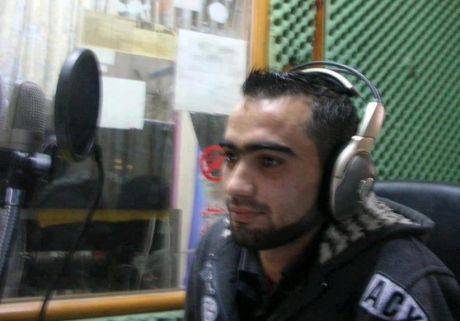
Israeli forces shot dead a young Palestinian protester Tuesday night using bullets prohibited by international law.
Mahmoud Adel Faris al-Teiti, 25, was hit in the head by expanding “dum dum” bullets during clashes at the al-Fawwar refugee camp near Hebron, according to local media.
“Dum dum” bullets, first made by British colonial forces in India’s Calcutta, expand on impact to limit penetration and produce a larger diameter wound. The use of expanding bullets is prohibited by the 1899 Hague Declaration and is listed as a war crime in the Statute of the International Criminal Court (Article 8(2)(b)(xix)).
Witnesses said Israeli soldiers raided Fuwar and opened fire after coming under a barrage of rocks from local Palestinians. Hospital officials said a 25-year-old man died after being shot in the head and two others were wounded by the Israelis.
Two other young men were shot and injured by live ammunition. Another six were hit by rubber-coated bullets.
Israeli forces say they only shoot live fire in ‘life-threatening situations’, but reports of their use in recent weeks have been abundant.
According to Palestinian officials, al-Teiti was the sixth Palestinian killed by Israeli fire in the Israeli-occupied West Bank since the beginning of this year. A seventh was killed on the Gaza border on January 11.
Palestinians have also taken to the streets to protest against Israel’s extrajudicial jailing of thousands of their countrymen. The resulting confrontations, often bloody, have drawn warnings on both sides that a full Palestinian revolt could be brewing.
(Al-Akhbar, Ma’an, Reuters)
Related article
- Israeli security officer brutally beats unarmed Palestinian shepherd (alethonews.wordpress.com)
Israeli security officer brutally beats unarmed Palestinian shepherd
By Saed Bannoura | IMEMC News | March 12, 2013
Israeli activists caught on film an attack by an Israeli settlement security guard on a Palestinian shepherd Monday, near the Palestinian village of Susya in the southern West Bank on Monday.
The shepherd was identified as Na’al Abu Aram, but the Israeli security guard, apparently from the Israeli illegal outpost called ‘Avigail’ that was built on stolen Palestinian land, was not identified.
The guard beat, punched, kicked and shoved the shepherd, then ran after his flock of sheep to scare them. Two Israeli soldiers were present at the time of the beating, but they did not intervene.
Avigail was established on stolen land by former Israeli soldiers in 2001. The soldiers entered the land, which belongs to local Palestinians, and installed trailers. They moved in, heavily armed, and began to harass the local villagers and shepherds. No attempt has been made by the Israeli government to remove the trespassing Israelis from the land that they illegally seized by force.
In Monday’s incident, the security guard told reporters with Ynetnews, which obtained and published the video of the incident, that he was being unfairly slandered, and that it was the shepherd who attacked him.
He claimed that the local residents were being accompanied by ‘anarchist activists’ who try to ‘incite provocations’. The guard was apparently referring to Israeli human rights workers who arrived on the scene to try to document abuses reported to them by local Palestinian residents.
Related article
SOUTH HEBRON HILLS: Eight villages face expulsion in Firing Zone 918
CPTnet | March 9, 2013
Imagine that your neighborhood was declared a firing range. You are threatened with forced evacuation. Demolition orders are issued for your home, your church and the school your children attend. Your land will cease to belong to you, and your livestock will be removed.
This is what a thousand Palestinians living in Masafer Yatta face.
Twelve villages lie within the area Israel claims as firing zone 918. Residents of four of the villages have been told they are excluded from the attempted eviction because the ammunition being used by soldiers training for war near their homes is not live. The one thousand residents of the other eight villages, half of them children, could lose their homes, schools, crops and livestock, their mosques and their way of life within the year.
These Palestinian families were forcibly removed by the Israeli military in 1999 and many of their homes, wells and animal shelters were destroyed. Some of the region’s residents returned in 2000 and live under constant threat of home demolition, settler violence and military harassment.
On 16 January 2013 the Association for Civil Rights in Israel (ACRI) filed a petition on their behalf and the Israeli court granted a temporary order preventing forcible transferring of the families pending a further decision. The temporary order is all that is currently preventing the forced removal of the families living in Masafer Yatta.
During the past month soldiers have repeatedly driven large vehicles across planted fields, confiscated residents’ cars, cameras, phones and livestock, landed helicopters next to dwellings and livestock, and threatened families with imminent eviction and destruction of their homes. Children in the region find unexplored ordnance as they walk to and from school, and families are awakened during the night by the sound of repeated firing and by military helicopters and jeeps driving near their homes.
Is there Hope of Justice for a Palestinian family in Israel’s Courts?
International Solidarity Movement | March 9, 2013
Ziad Jilani’s widow and daughters seek Justice for his killing by Israeli Border Policeman Maxim Vinogradov, for the third time. This Wednesday (13 March) Moira Jilani and her three daughters will come face to face with their husband and father’s killer.
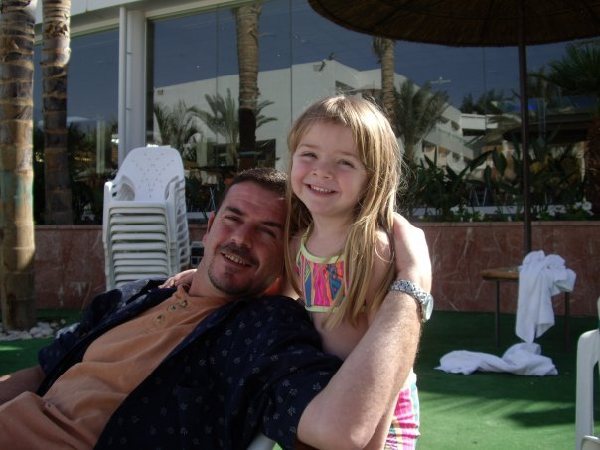 “I am dreading facing them for my daughters,” Says Moira, “I think I could face them myself but I’m afraid that when I see the pain in my daughters eyes it will kill me.” Her husband, Ziad Jilani was killed three years ago by Maxim Vinogradov, an Israeli border patrolman who put his rifle to Jilani’s head and pulled the trigger three consecutive times.
Now, for the third time, the family is appealing to Israeli authorities to press charges against Ziad’s killer. On the 16th of January 2011 the case was closed by police internal investigations (Machash) for the first time, for “lack of evidence”.
In the following month, on the 15th of February 2011, the family submitted an appeal to then Israel Attorney General, Menachem Mazuz. Despite a confession by Vinogradov that he had shot Ziad at zero range when he was lying on the ground because of the initial gunshot wound, an autopsy report pointing to a close range shooting, dozens of eyewitnesses who were also injured that day as a result of the incident, and very clear changes in Vinogradov’s testimonies before and after the autopsy, Mazuz did not see fit to change Machash’s decision to close the case.
With the help of the al-Mazaan Center for Human Rights, on January 4th 2012, the family submitted a second appeal. This time, to the Israeli Supreme Court, through the al-Mazaan Center for Human Rights, demanding that the new state prosecutor, Yehuda Weinstein, bring criminal charges against Ziad’s murderers.
“After Weinstein [Israel’s current Attorney General] had all the evidence we had hope that he would press charges against the killers,” Moira recalls, “but after he decided not to do so for the third time, it is hard to have hope that the court will do justice.”
According to Yesh Din in 2012 the MPCID received 240 complaints and various reports of suspected crimes allegedly committed by Israeli soldiers against Palestinians and their property in the West Bank and the Gaza Strip. Out of these registered complaints, only 103- not even half- have yielded investigations. Not one single indictment has been served to date.
The organization commented on the findings:
“The numerous defects in MPCID investigations of offenses against Palestinians, and in the Military Advocate General Corps’ supervision of the investigations, result in the closure of the vast majority of the files and a minimal number of indictments being served. This creates a feeling of lawlessness on the ground, which may be a central contributing factor in the rise in the number of killings over recent weeks.”
Moira describes this sense of lawlessness, “I still have hope, but its hard when we see everything that’s happening around us,” she says, “my husband’s case is one of what seems to be a systematic sweeping under the rug of violent incidences of Israeli soldiers against the Palestinian population under their authority.
We are not just going to court for Ziad Jilani. We are going to court for all the Palestinians killed before Ziad and those that will be killed thereafter.”
Related article
- Mother of Bilin protestor killed by Israel files court petition (alethonews.wordpress.com)
Featured Video

Liberty Cannot Exist Inside a Panopticon
or go to
Aletho News Archives – Video-Images
From the Archives
Left-leaning despisers of 9/11 Truth movement: Do you really believe in miracles?
David Ray Griffin | Global Research | 06 Jul 2010
An Open Letter to Terry Allen, Noam Chomsky, Alexander Cockburn, David Corn, Chris Hayes, George Monbiot, Matthew Rothschild, and Matt Taibbi.
[1]According to several left-leaning critics of the 9/11 Truth Movement, some of its central claims, especially about the destruction of the World Trade Center, show its members to be scientifically challenged. In the opinion of some of these critics, moreover, claims made by members of this movement are sometimes unscientific in the strongest possible sense, implying an acceptance of magic and miracles. … Full article
Blog Roll
 Aletho News
- EU sending ‘biased’ observers to interfere in Serbian election – president
- White House envoy declares kinetic action against Yemen ‘fruitless’
- Ukraine deployed thousands of microdrones in Iraqi Kurdistan: Tasnim
- Iran calls for emergency UNSC meeting over Trump’s ‘brazen’ bomb talk, Israeli threats
- Iranian sources reveal details of Russia-China Hormuz proposal
- Plan for more US-Israel integration puts our military tech at risk
- Another Round Against Iran Will Break What Is Left of the Gulf
- SVR Report on Ukraine’s Mexican Drug Gang Links Could Pressure Zelensky, Won’t Change US Policy
- British Government Employees Were Fact-Checking the News at the BBC. Nobody Told You.
- Albania on fire: who’s behind the riots?
- If Americans Knew
- Mysterious bot accounts reportedly spread fake ‘man on the street’ videos for Michigan Senate candidate
- Israeli Defense Minister Katz Says Over 60 Lebanon Villages Have Been Destroyed
- Why Is Israel Running TV Ads in Iowa Ahead of the Midterms?
- Hind Rajab’s Alleged Killer Is in the United States. HRF Demands His Arrest.
- US Officials Face Fresh Pressure After Another American ‘Brutalized’ by Israeli Settlers in West Bank
- Israel-Backed Palestinian Militias Terrorize Displaced Families in Gaza
- FBI subpoenas pro-Palestine activists over Israeli weapons plant disruption
- Fourth winter arrives in wartorn Gaza, too early – Daily Update
- More on how Bari Weiss is using CBS on behalf of Israel
- What the UK Is Doing to Pro-Palestine Novelist Sally Rooney Is an Act of Orwellian Villainy
- No Tricks Zone
- Predictions Made By Renowned Climate Proifessor Over Past Decades Have Been Proven To Be Poor
- New Study Suggests Large Regions Of The Pacific Ocean Have Been Cooling For The Last 80 Years
- Germany’s Green Energy Debacle: High Energy Costs Force Kahla Porzellan to Close After 182 Years!
- New Study: 50 Years Of The Most Aggressive ‘Net Zero’ Policies Can Only Affect The Global Climate By 0.03°C
- US September “Heat” Was No Record…Many Records Set Decades Ago
- Latest European Green Energy Debacle; Portugal’s Largest Flagship Solar Park Insolvent!
- Green Energy Debacle: German Expert Professor Fritz Vahrenholt Warns Of Severe Economic And Social Consequences
- Two More Paleo Reconstructions Affirm Meters-Higher Sea Levels Across Ireland, Brazil 7000-6000 Years Ago
- New Study: Earth And Venus Surface Warmth Largely Explained By Convection And Lapse Rate, Not CO2 Or Radiation
- 2025 Nature Paper Claiming Worsening Global Drought Gets RETRACTED …Heavily Flawed

