Lawyer: “Prior To His Death, Detainee Complained Of Pain Due To Ongoing Interrogation”
By Saed Bannoura | IMEMC & Agencies | February 24, 2013
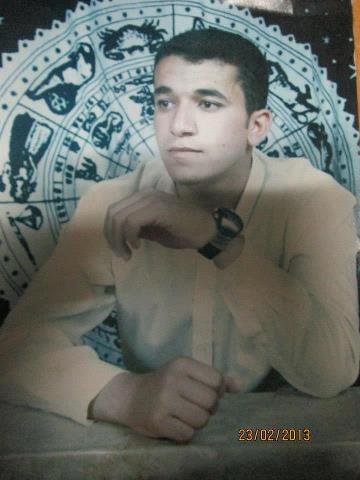 Attorney Kamil Sabbagh, who represented detainee Arafat Jaradat, who died Saturday at an Israeli interrogation facility, stated that Jaradat complained to him of sharp pain due to ongoing and extensive interrogation.
The lawyer said that he represented Jaradat during a court session that was held Thursday February 21.
The court session was the first time the detainee was able to see a lawyer since the army kidnapped him more than 12 days ago. The hearing was held at the Al-Jalama detention and interrogation center.
Sabbagh said that Jaradat complained of sharp pain in the back, and several other parts of his body. Jaradat told his lawyer that he was interrogated for several hours, every day, and repeatedly complained of sharp pain but was never seen by a physician.
The lawyer said that, during the court hearing, he told the military judge about the complaints made by Jaradat, and that the judge instructed the prison administration to grant him the needed medical attention, but the request was apparently ignored.
During the court hearing, the judge ordered Jaradat under interrogation for an additional 12 days.
Following the death of Jaradat on Saturday, several Israeli media agencies claimed that the detainee suffered a heart attack that led to his death.
Palestinian Minister of Detainees, Issa Qaraqe’, held Israel responsible for the death of Jaradat, and said that the detainee died only six days after the army kidnapped him on February 18.
Qaraqe’ demanded forming an international committee to investigate the death of Jaradat, and held Israel responsible for the lives of Palestinian detainees on hunger strike demanding an end to their illegal detention.
Hundreds of Palestinians held a protest in front of the home of Jaradat and chanted slogans against the Israeli occupation, Israel’s ongoing violations and attacks, and chanted for more solidarity with all Palestinian political prisoners held by Israel.
Protests have also been reported in different parts of the occupied territories.
Killings Continue in Bajo Aguán as New Report Documents Abuses by U.S.-Trained Honduran Special Forces Unit
By Alex Main | CEPR Americas Blog | February 22, 2013
A few days ago two more land rights activists were murdered in the Bajo Aguán, a region of Honduras where dozens of campesinos have been killed over the last three years. On February 16, Jacobo Cartagena, member of the Unified Campesino Movement of the Aguán (or MUCA, by its Spanish initials), was shot and killed as he waited for a bus. Hours later, José Trejo Cabrera, was shot down while driving a motorcycle near the town of Tocoa. Trejo was the brother of Antonio Trejo Cabrera, a lawyer who had defended small farmers’ land claims who himself was shot to death last September as he was leaving a wedding. Amnesty International has called on the Honduran government to “urgently investigate” José Trejo’s killing and noted that “the day before he was shot dead [he] had been in the Honduran capital Tegucigalpa, to meet with officials in an effort to ensure justice for his brother’s murder and visiting media outlets to keep the spotlight on the case.”
In an interview with the Associated Press, José Trejo had said “if they killed my brother, what will they not do to me?” He and others blamed the powerful businessman Miguel Facussé for his brother’s murder. Facussé and a handful of other wealthy landowners in the region have hundreds of armed security guards who are believed to be responsible for many of the numerous killings and other attacks targeting campesino activists. Honduran authorities have failed to bring those responsible for the killings to justice or to take effective measures to protect the activists. As the AP notes, “no one is serving time in prison for any of the 89 assassinations of campesinos committed in the Aguán Valley since December of 2009 when land occupations began…”
Since August of 2011, hundreds of Honduran soldiers have been stationed in the Bajo Aguán as part of the so-called Xatruch Intervention Force, ostensibly to mitigate the ongoing violence taking place there. But targeted killings of campesinos have continued unabated and representatives of land rights movements have accused military personnel of being involved in attacks on their members. A new report authored by Annie Bird of Rights Action adds significant weight to these allegations. It documents 34 cases of abuses directly involving members of Honduras’ 15th Battalion, a special forces unit of the Honduran army that has been present in the region for decades and has played a central role in the Xatruch Force.
The report describes in detail specific instances of torture, threats, forced disappearances and killings in which members of the 15th Battalion have been reportedly involved, often in tandem with police and private security forces operating in the Aguán. Only a small handful of these abuses have been partially investigated and none of those responsible have been prosecuted.
The report also examines how military officials have sought to criminalize the region’s campesino movements, associating them with terrorism and drug-trafficking, while steadfastly defending the property claims of powerful landowners.
Those who have reported on the abuses of security forces in the Aguán have also been criminalized by military officials. On February 18th the Commander of the Xatruch Intervention Force publicly accused various journalists, human rights defenders by name of “denigrating the actions of the armed forces” and of “besmirching the image of the Honduran nation.” Following the incident, Reporters Without Borders issued a release stating that the accusations were “a clear attempt to intimidate and censor” and that “this kind of public stigmatization directly exposes those concerned to significant risks, given the human rights situation in Aguán in particular and Honduras in general, where those who dare to provide information about land disputes and environmental problems are systematically criminalized.”
As Rights Action notes, the 15th Battalion reportedly receives training and assistance from the U.S. government. The Honduran media has reported that U.S. Army Rangers have trained personnel from the Battalion and that U.S. Special Operations South has funded the upgrading of the Battalion’s Rio Claro base.
A provision attached to the annual U.S. Foreign Operations Appropriations Act – known as the Leahy Amendment, after the U.S. Senator who first introduced it – prohibits U.S. military assistance to foreign units that commit gross human rights violations with impunity. The provision states: “No assistance shall be furnished under this Act or the Arms Export Control Act to any unit of the security forces of a foreign country if the Secretary of State has credible evidence that such unit has committed gross violations of human rights.” The only exception being if the “Secretary determines (…) that the government of such countries is taking effective measures to bring the responsible members of the security forces unit to justice.” A similar provision can be found in Defense Appropriations Acts, though it only deals with the funding of training activities for foreign troops.
Rights Action’s report appears to provide “credible evidence” that the 15th Battalion and other Honduran authorities are involved in gross abuses and there is no indication that Honduran authorities have pursued any form of judicial action to address these abuses. If the U.S. government has plans to fund further military assistance to the unit there may well be cause for the Secretary of State to cut off assistance until abuses are adequately investigated and any responsible military personnel are brought to justice.
Other recent incidents involving Honduran security forces have also appeared to be within the realm of Leahy Amendment action. Last November the AP reported on how Honduran soldiers trained and vetted by the U.S. murdered an unarmed teenager who ran through a check point last May. The same month, four Honduran villagers in the Moskitia region were killed in the course of a counternarcotics operation carried out jointly by the DEA and a special Honduran police unit trained and vetted by the U.S. As a joint report and previous posts have explained, the Honduran investigation of the incident was flawed and inconclusive, a fact which the State Department still appears unwilling to acknowledge.
Related articles
- Honduras: Murdered Lawyer’s Brother Killed in Aguán (alethonews.wordpress.com)
- Honduras: Two More Campesinos Murdered in Aguán (alethonews.wordpress.com)
- Honduras: Miguel Facusse is Tragically Misunderstood (alethonews.wordpress.com)
- NPR Examines One Side of Honduran “Model Cities” Debate (alethonews.wordpress.com)
Palestinians clash with Israeli troops across the West Bank
Ma’an – 23/02/2013
RAMALLAH – Clashes erupted across the West Bank after the Friday prayers between Israeli troops and Palestinian protesters who rallied to show solidarity with hunger-striking Palestinian prisoners.
Dozens were hurt as Israeli soldiers fired tear gas heavily to disperse the protesters.
Similarly, worshipers in Al-Aqsa Mosque in Jerusalem demonstrated in the compound after the Friday prayer before Israeli troops broke into the squares and clashed with the protesters.
According to Israeli radio station Reshet Bet, Israeli soldiers fired stun grenades to disperse the worshipers. The report highlighted that demonstrations started near the Moroccan Gate through which the soldiers stormed the compound and started to chase protesters.
In Ramallah in the central West Bank, 12 young men were hurt by tear gas and rubber-coated bullets during clashes with Israeli troops after the Friday prayers. Locals told Ma’an that the soldiers detained one Palestinian. The sources highlighted that the Friday prayer was performed near the main gate of Ofer detention center west of Ramallah.
They said about 100 Palestinians preformed Friday prayers near Ofer before Israeli soldiers showered them with tear gas as soon as they finished prayer.
As a result young men started to hurl stones at the soldiers and police officers. A Ma’an reporter said the soldiers directed their tear gas to journalists who gathered in the area to report about the event. He added that the soldiers fired live ammunition at a car for journalists, but nobody was hurt.
Further clashes took place in al-Arrub and al-Fawwar refugee camps in Hebron district.
Witnesses said young Palestinian men in al-Arrub camp north of Hebron pelted Israeli soldiers with stones. Clashes erupted first at the main entrance to the camp on the main road between Hebron and Bethlehem. Then the clashes extended to camp’s alleys resulting in more victims of tear gas as some canisters fell inside houses.
One owner of these houses was identified as Nayif Nimir al-Badawi. Four people were hurt by tear gas. Three others were hurt in house of Khamis Awad al-Badawi.
Israeli forces shut down the main entrance to al-Fawwar camp north of Hebron after young men hurled stones at Israeli soldiers. The soldiers responded with tear gas before they closed the main entrance to traffic.
In Tulkarem in the northern West Bank young Palestinians clashed with Israeli troops in the western part of the city. Soldiers fired tear gas as the young protesters pelted them with stones. The clashes erupted after hundreds of young men rallied after the Friday prayer chanting slogans against Israel’s treatment to Palestinian prisoners.
The northern West Bank city of Jenin also witnessed confrontations between young Palestinians and Israeli soldiers after the Friday prayer. Nine Palestinians were detained during the clashes and dozens were hurt by tear gas and rubber-coated bullets.
Jenin’s clashes started after young men marched from mosques toward al-Jalama checkpoint expressing solidarity with hunger striking Palestinian prisoners. A Ma’an reporter said Israeli forces fired hundreds of tear gas canisters at the protesters in addition to rubber-coated bullets and foul smelling liquids.
Local and security sources told Ma’an that Israeli soldiers detained nine young men. The sources identified one detainee as 14-year-old Amir Majid Irqawi. They said the soldiers assaulted him beating him brutally before he was detained.
Related article
Bedouin communities near Qalqiliya isolated by Israel and facing school demolition
International Solidarity Movement | February 22, 2013
Nablus, Occupied Palestine – The small Bedouin communities of ‘Arab Ramadin al-Janubi and ‘Arab Ab Farda lie south of Qalqilya between the apartheid wall and the green line,close to the illegal settlement Alfe Menashe. They are separated from the rest of West Bank from all sides by the Israeli apartheid wall. The communities, founded by people deported from areas in Negev and Netanya during and after the Nakba are today home to around 500 people. They suffer from multiple restrictions imposed by the Israeli authorities,including no permissions for new buildings or expansion of existing buildings, and limits to the amount of food and gas allowed for sale in the communities.
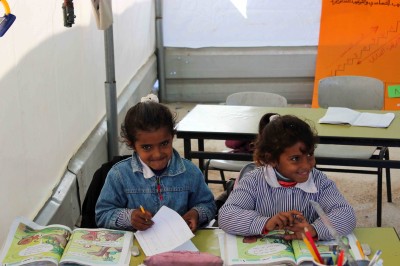
Bedouin girls at school
Access to the communities is limited by Israel with a permission system. The system of access permissions has effectively resulted in the social isolation of the communities, as people from the city of Qalqilya and neighboring villages face difficulties in obtaining permits for visiting the area.
The community of Abu Farda has no access to running water or electricity, and thus water has to be bought in tanks from the village of ‘Azzun. There is a well on the grounds of the village, but the illegal settlement Alfe Menashe has confiscated the well and closed access to it for the inhabitants of Abu Farda. People from the family Fayez living in Abu Farda told us:
“The lack of electricity is a big problem, as we are not able to refrigerate food bought from merchants or the yogurt and milk we produce ourselves for sale, and our children are not able to do their homework after dark due to lack of lighting.”
Furthermore, the Israeli authorities do not allow veterinaries access to the villages, while the village is largely dependent on the raising of livestock.
In October 2012 the community of Ramadin al-Janubi founded a school for 6 to 8 year old children. The new school gives it’s 25 students the opportunity to go to school without having to pass daily through the Israeli checkpoints between the community and a school in the nearby village of Habla. Children older than 8 years still have to go to school outside the community, and in order to reach their schools and go back home they need to cross the Israeli checkpoints twice every single day.
The school in Ramadin, consisting of 4 tents, received a demolition order from the Israeli authorities after two weeks of operation. The faculty of the school live in Qalqilya and have to spend from 30 minutes to over an hour every day passing through the checkpoint and having their papers and belongings examined by the IOF forces at the checkpoint in order to access the school. For now, the village has taken the demolition order to court, and is waiting to for the court hearings to take place.
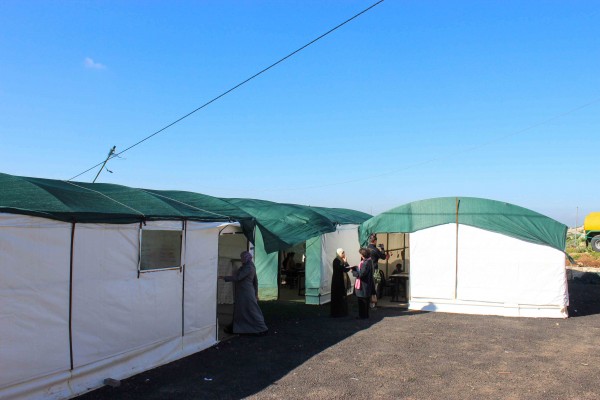
Bedouin school tents with demolition order
Related articles
- Palestinians’ Life in the Shadow of the Barrier Wall (alethonews.wordpress.com)
- West Bank: Aid agencies tread gingerly in Area C (alethonews.wordpress.com)
- Qalqiliya flooding exacerbated by separation wall (altahrir.wordpress.com)
- Israel to demolish Palestinian neighborhood (altahrir.wordpress.com)
Samer Issawi sentenced to 8 months in prison
Ma’an – 21/02/2013
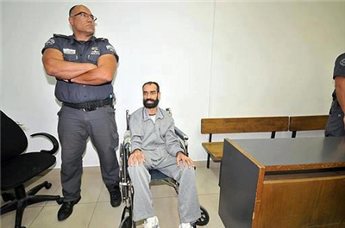 BETHLEHEM – An Israeli court on Thursday sentenced hunger-striker Samer Issawi to eight months in prison, but he has yet to face a military committee which could imprison him for 20 years.
Issawi has been on hunger strike for 204 days.
The magistrates court in Jerusalem sentenced Issawi for leaving Jerusalem, in violation of the terms of his amnesty granted in an Oct. 2011 prisoner exchange deal.
The sentence includes time served since Issawi’s re-arrest in July 2012, and will conclude on March 6, but Issawi also faces a possible sentence under an Israeli military order which allows a special military committee to cancel prisoners’ amnesty.
The committee could use secret evidence to sentence Issawi to serve 20 years, the remainder of his previous sentence.
Issawi was freed in an Oct. 2011 prisoner swap for captured Israeli soldier Gilad Shalit. Israel has subsequently re-arrested at least 14 prisoners since the deal.
Ahead of Thursday’s verdict, Israeli forces clashed with hundreds of Palestinians protesting near Ramallah on Thursday in solidarity with long-term hunger strikers like Issawi.
A Ma’an reporter said 29 protesters were injured by rubber-coated bullets and dozens more suffered tear gas inhalation.
Prisoners minister Issa Qaraqe and Fatah central committee member Mahmoud al-Aloul joined the rally, near Israel’s Ofer prison in the central West Bank.
An Israeli military spokeswoman said soldiers used “riot dispersal means” against Palestinians who hurled rocks at forces.
Protests have been held across the West Bank and in Gaza in support of Issawi, who has been on hunger strike for 204 days, and Tareq Qaadan and Jaafar Azzidine who have refused food for 86 days.
Also Thursday, the Ahmed Abu Rish Brigades on Thursday threatened to fire rockets at Israel if any jailed hunger striker is harmed.
“We will continue to work with rockets and we will not stand by idly. Military operations will be implemented to achieve the rights of prisoners and to free them,” brigades member Abu Ali al-Qawkabi said in a statement.
Al-Qawkabi called on Palestinian leaders in Ramallah to reject any negotiations with Israel and urged the Gaza government to refuse a truce until the detainees’ demands are met.
Islamic Jihad meanwhile has said a truce with Israel could unravel if any hunger striker dies.
On Tuesday, the Palestinian Authority called on the international community to step up efforts to protect and release prisoner like Issawi in Israeli detention facilities.
The cabinet also called on the World Health Organization to move forward on plans made last year to form a fact-finding committee to investigate the conditions in Israeli jails, specifically negligence.
Honduras: Murdered Lawyer’s Brother Killed in Aguán
Weekly News Update on the Americas | February 17, 2013
Unidentified assailants shot Honduran campesino José Trejo Cabrera on the evening of February 16th as he was riding on his motorbike to his home in the San Isidro section of Tocoa in the northern department of Colón. Trejo was taken to a local hospital, where he died a few minutes later. The victim’s brother, Antonio Trejo Cabrera, an attorney who defended campesino activists and fiercely opposed plans for autonomous “model cities” in Honduras, was gunned down the evening of September 22, 2012, in Tegucigalpa near the Toncontín International Airport [see Update #1145]. Both brothers were members of the Authentic Claimant Movement of Aguán Campesinos (MARCA), one of several campesino collectives seeking the return of land in the Lower Aguán Valley in northern Honduras that they say big landowners bought illegally.
The conservative Tegucigalpa daily La Tribuna reported that according to several neighbors the attackers were trying to steal Trejo’s motorbike, but Vitalino Alvarez, a spokesperson for the Unified Campesino Movement of the Aguán (MUCA), told the French wire service AFP that the killers had been “waiting for” Trejo. Some 85 campesinos have been killed in the Aguán since the land dispute intensified in late 2009; two were murdered just two weeks earlier, on Feb. 2 [see Update #1163]. The government of President Porfirio (“Pepe”) Lobo Sosa has militarized Colón department, claiming that this would reduce violence both from the land disputes and from common crime, but many campesinos feel the militarization was actually directed against them. “We don’t understand how we can go on being killed in a department that’s under siege by the army and the police,” Alvarez remarked.
Another campesino, Santos Jacobo Cartagena, was gunned down a few hours before Trejo on the afternoon of February 16th. Unidentified men riding in a car shot Cartagena, a MUCA member, as he was waiting for a bus at the La Confianza community. “More murders can be expected after the persecution and threats against the campesinos who struggle for land,” the Permanent Human Rights Monitoring Center for the Aguán, a Honduran human rights group, wrote on February 16th. (Vos el Soberano 2/16/13; La Tribuna 2/17/13; AFP 2/17/13 via Terra.com; Conexihon.info (Honduras) 2/17/13)
Obama Regime Refuses to Investigate Alleged DEA Killing of Women and Child in Honduras
By Noel Brinkerhoff | AllGov | February 17, 2013
 Democrats on Capitol Hill want the Obama administration to investigate the deaths of four civilians in Honduras last year during an anti-cocaine raid involving U.S. law enforcement agents. But administration officials have balked at the request.
On May 11, 2012, four villagers in a boat on the River Patuca, two pregnant women, a 21-year-old man and a 14-year-old boy, were killed when local police entered the town of Ahuas in northeastern Honduras to conduct a counternarcotics operation. Another four boat passengers were injured by gunfire. It was later learned that members of the U.S. Drug Enforcement Administration (DEA) participated in the raid, which raised questions of whether Americans were responsible for the killings.
The Honduran government investigated the incident and concluded the DEA was not at fault for the deaths.
But 58 House Democrats were not satisfied with the probe, which they called “deeply flawed” in a letter to Secretary of State John Kerry and Attorney General Eric Holder Jr. calling for the U.S. to conduct its own examination.
Officials with the State Department and the Department of Justice said their agencies have no intention of reopening the matter, according to The Washington Times.
More:
Government Won’t Probe of DEA Raid in Honduras (by Guy Taylor, Washington Times)
Collateral Damage of a Drug War (Center for Economic and Policy Research) (pdf)
Related articles
Stranded in Shuhada: Hebron’s Qurtuba school
By Salam Muharam – Ma’an – 15/02/2013
HEBRON — Children and teachers at Qurtuba school in Hebron say getting to class past Israeli soldiers and settlers is like navigating a minefield every day.
The school, for children aged 7 to 16, is adjacent to the illegal Jewish settlement of Beit Hadassah in the center of the West Bank city.
Israeli forces fenced off the school’s stairs with barbed wire in 2002. Now the only route to the school is a muddy path up a steep hill.
Some pupils live beside the school, but have to walk two kilometers around a circuit to reach the entrance, Najah Abu Munshar, a teacher in the school told Ma’an.
Across the street from the school, “Gas the Arabs” has been scrawled on a door. Next to the school gates, a mural of a girl holding a book, painted by a French activist, has been covered by racist graffiti. A gallery in a school corridor shows photos of Israeli soldiers and settlers assaulting students.
International volunteers escort children to and from school as a protective measure, but pupils and teachers are still frequently harassed and assaulted on their way to the school, which has been vandalized and set on fire.
“School students start their day by crossing the checkpoint of Shuhada street. I can only describe daily life at Qurtuba school as suffering and struggle,” school principal Noura Nasser told Ma’an.
Teachers must also pass an Israeli checkpoint and metal detectors to get to work, and Israeli soldiers decide whether to let them pass each day.
Pupil Yasmeen Ghareb, 12, says settlers have assaulted her and her siblings. “Sometimes they say bad words to me, and sometimes they throw fluids at me on my way to school.”

Yasmeen Ghareb stands in front of a checkpoint on her way to school
(MaanImages/Salam Muharam)
Other students told Ma’an that settlers have attacked them with stones, water and rotten vegetables.
Najah Abu Munshar has taught at Qurtaba school for 15 years. “The settlers used to let their dogs attack the students, and when settlers attack a student, I try my best to calm him or her down, and if he or she has any wounds, I provide first aid,” she told Ma’an.
The Ministry of Education hired a psychological counselor for the school, to work with children suffering psychological trauma which often manifests as bed wetting, Nasser, the school principal, told Ma’an. “The school focuses on the extracurricular activities and days of joy.”
Nasser said settler attacks were usually heightened during periods of political instability.
A grid of walls, fences and checkpoints divides Jewish settlers and Palestinians who live in close proximity to each other in Hebron, which was divided into two sections in the 1997 Hebron Agreement.
The Palestinian Authority controls the larger area, while Israeli forces control the city center, including the old market, the Ibrahimi Mosque and the historic Old City.
Qurtaba school lies on Shuhada street, a once-bustling thoroughfare and now a shuttered ghost town, with a military checkpoint restricting Palestinians’ access to this part of the city.
Israel started restricting access to Shuhada street after an Israeli settler Baruch Goldstein broke into the Ibrahimi Mosque and shot dead 29 Palestinians.
During the second intifada, Israel closed the street to traffic and many traders were not even able to collect their goods before their shops were welded shut.
Palestinian families who remained on Shuhada street must climb through side doors and across rooftops to get to their homes.
Waed Zeidan al-Sharabati, a 9-year-old pupil at Qurtuba school who lives on Shuhada street, recounted to Ma’an how settlers assaulted her and her cousin in 2011 when they were harvesting almonds nearby.
“They threw stones on us… The settler kidnapped my cousin, and I called the neighbor to come check the situation. My neighbor talked to the settlers, and after a long argument, my cousin was returned. One settler threw a stone on my leg. They tried to take me another time, but I escaped to my neighbor’s wife, and she hid my inside her home, and closed the door.”
“I got used to it, and at the beginning I used to be scared, but now I am not scared of them,” she told Ma’an.

Ward al-Sharabati, 9, lives on Shuhada street, a hub of settler violence in the West Bank
(MaanImages/Salam Muharam)
Related articles
- Local activist detained in Hebron (alethonews.wordpress.com)
- Israeli occupation forces kill woman near Hebron (alethonews.wordpress.com)
- Israeli army dogs attack elderly Palestinian, two-year-old child injured in the head in Jewish settlers’ attack (alethonews.wordpress.com)
- Israel detains Palestinian cartoonist, family says (alethonews.wordpress.com)
Message from Samer el Issawi, day 209 hunger strike
February 16, 2013
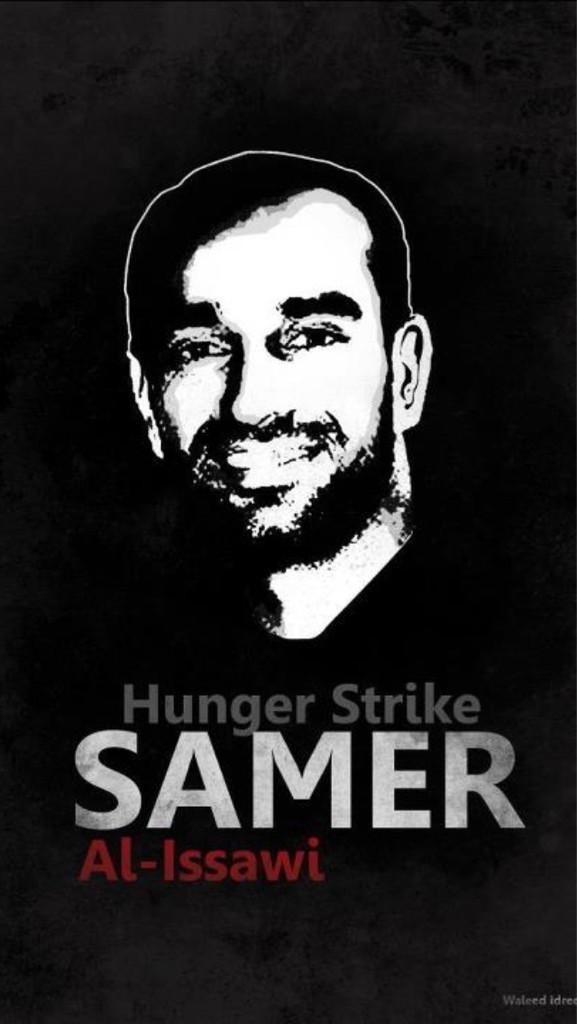 “I turn with admiration to the masses of our heroic Palestinian people, to our Palestinian leadership, to all forces, parties and national institutions. I salute them for standing by our fight to defend our right to freedom and dignity.
I draw my strength from my people, from all the free people in the world, from friends and the families of the prisoners who continue day and night chanting for freedom and an end to the occupation.
My health has deteriorated dramatically and I’m hung between life and death. My weak body is collapsing but still able to be patient and continue the confrontation. My message is that I will continue until the end, until the last drop of water in my body, until martyrdom. Martyrdom is an honor for me in this battle. My martyrdom is my remaining bomb in the confrontation with the tyrants and the jailers, in the face of the racist policy of the occupation that humiliates our people and exercises against us all means of oppression and repression.
I say to my people: I’m stronger than the occupation army and its racist laws. I, Samer al-Issawi, son of Jerusalem, send you my last will that, in case I fell as a martyr, you will carry my soul as a cry for all the prisoners, man and women, cry for freedom, emancipation and salvation from the nightmare of prisons and their harsh darkness.
My battle is not only for individual freedom. The battle waged by me and by my heroic colleagues, Tariq, Ayman and Ja’affar, is everyone’s battle, the battle of the Palestinian people against the occupation and its prisons. Our goal is to be free and sovereign in our liberated state and in our blessed Jerusalem.
The weak and strained beats of my heart derive their steadfastness from you, the great people. My eyes, which started to lose their sight, draws light from your solidarity and your support of me. My weak voice takes its strength from your voice that is louder than the warden’s voice and higher than the walls.
I’m one of your sons, among thousands of your sons who are prisoners, still languishing steadfast in the prisons, waiting for an end to be brought to their plight, their pains and the suffering of their families.
The doctors told me I became exposed to stroke because of the disorder of my heartbeats, the shortage of sugar and the drop in blood pressure. My body is full of cold and I can’t sleep because of the continued pain. But despite the extreme fatigue and chronic headaches, as I move on my chair, I’m trying to summon all my resources to continue on the road till its end. There is no going back, only in my victory, because I’m the owner of Right and my detention is invalid and illegal.
Do not be afraid for my heart if it will stop, don’t be afraid for my hands if they will be paralyzed. I am still alive now and tomorrow and after death, because Jerusalem is moving in my blood, in my devotion and my faith.”
**Via Rona Merrill, Neta Golan
Related article
- Shireen Al-Issawi: PA did not take prisoners’ issue to the UN (alethonews.wordpress.com)
Israel detains Palestinian cartoonist, family says
Ma’an – 16/02/2013
 JENIN – Israeli authorities on Saturday detained a Palestinian cartoonist on his way back to the West Bank from Jordan, according to his family.
Muhammad Abdul-Ghani Sabanah, 30, was detained at the Allenby Bridge crossing between Jordan and the West Bank, his brother Tamir told Ma’an, adding that Sabanah was in Jordan for a meeting.
He said that on his way back, Israeli troops detained Sabanah, who is from the Jenin town of Qabatia, without giving any explanation.
Sabanah’s cartoons are widespread in the Arab world. He is well-known for his criticism through his cartoons, which focus mainly on the Palestinian people’s problems and the Palestinian-Israeli conflict.
He works as a public information officer at the Arab American University in Jenin.
Related articles
- Israeli army dogs attack elderly Palestinian, two-year-old child injured in the head in Jewish settlers’ attack (alethonews.wordpress.com)
- EU demands rights for Palestinian hunger strikers (altahrir.wordpress.com)
The Drug Trade and the Increasing Militarization of the Caribbean
By Kevin Edmonds | The Other Side of Paradise | February 8, 2013
Given the current controversy surrounding the extent of the U.S. drone program and targeted killings, it is important to revisit that in the summer of 2012, the U.S. Customs and Border Protection Agency announced that unmanned drones would begin patrolling Caribbean airspace as an expansion of the Caribbean Basin Security Initiative (CBSI). This is only one aspect of how the War on Drugs in the Caribbean is increasingly looking like the War on Terror.
The U.S.–Caribbean border is the often ignored “Third Border,” which the Department of Homeland Security has referred to as an “open door for drug traffickers and terrorists.” A recent study by the National Defence University has stated that “the region’s nexus to the United States uniquely positions it in the proximate U.S. geopolitical and strategic sphere. Thus, there is an incentive, if not an urgency, for the United States to proactively pursue security capacity-building measures in the Caribbean region.”
While the drones are unarmed for the time being, they will be primarily used to locate drug traffickers operating fishing boats, fast boats, and semi-submarines and would relay information to the Coast Guard, Navy or Caribbean authorities to carry out the interception and arrests. It has been revealed that the drones will be operating out of bases in Corpus Christi, Texas, Cocoa Beach, Florida and potentially the Dominican Republic and Puerto Rico.
The shift towards the use of drones in the region is largely based off of an unconvincing pilot program carried out over 18 months in the Bahamas, in which “During more than 1,260 hours in the air off the southeastern coast of Florida, the Guardian (drones) assisted in only a handful of large-scale busts.” That said, the Caribbean governments increased militarization in the region when they implemented the never-ending War on Drugs without any public consultation or debate. This erosion of regional sovereignty may be a slippery slope to a dangerous future in which Caribbean nationals may very well find themselves on kill lists instead of facing a trial.
Such a conclusion is not baseless, as a November 2012 report by the U.S. House Committee on Homeland Security recommended that Latin American drug cartels be classified as terrorist organizations “so there is increased ability to counter their threat to national security.” Furthermore, in 2009, the U.S. Military drew criticism for placing 50 suspected Afghani drug traffickers on a “kill list” as part of their ongoing efforts to cut off finance stream of the Taliban. The controversy arose due to the fact that drug traffickers (generally classified as civilians) had now been placed into the same legal category as the Taliban “insurgents” and thus became legitimate targets.
This is especially important in light of how the extradition of Jamaican kingpin Christopher “Dudus” Coke was handled. In September 2009, the United States requested his extradition to face drug trafficking charges, but Jamaican Prime Minister Bruce Golding blocked the request due to his deep political connections with Coke. It was only after months of intense pressure that Golding caved in May 2010. Jamaican Police and the Jamaican Defense Forces led the bloody operation to arrest Coke, which resulted in the deaths of more than 70 civilians—the vast majority of which were unarmed.
The resulting scandal led to the downfall of Golding as Prime Minister but highlighted the power that drug traffickers and gang leaders have had in Jamaican government and politics. It has since been reinforced that the operation was “assisted by the U.S. government and carried out, to a large degree, at its behest.” Information has emerged which reveals that a U.S. spy plane participated in the raid of Coke’s stronghold of Tivoli Gardens, and a Freedom of Information Act action has recently been levied against the Drug Enforcement Agency (DEA) by a group of law students to reveal the extent of U.S. involvement.
To prevent such explosive outcomes in the future, there has been a call for closer integration between Caribbean police forces and the U.S. DEA in a clear escalation of the War on Drugs. A September 2012 Senate Report revealed that Jamaica has been floated as a target for a Sensitive Investigative Unit, which consists of a highly trained police that collaborate with the DEA. A similar program exists in Kandahar, where U.S. and British troops have created and participated in a task force made up of Afghan police officers and U.S. DEA agents to disrupt the drug trade and investigate corrupt Afghan officials.
According to a seemingly benign Department of Homeland Security (DHS) press release announcing the drone program, the “DHS is partnering with Caribbean nations to enhance border security in the region through the Caribbean Basin Security Initiative (CBSI) . . . . The DHS is conducting border security training in conjunction with CBSI to increase partner nation capacity to secure their borders.” The problem with such statements is that there is always more shady business going on behind the scenes. Given the direction of U.S. policy in the region, it will only be a matter of time until the War on Drugs becomes eerily similar to the War on Terror.
Related article
Featured Video

Liberty Cannot Exist Inside a Panopticon
or go to
Aletho News Archives – Video-Images
From the Archives
Left-leaning despisers of 9/11 Truth movement: Do you really believe in miracles?
David Ray Griffin | Global Research | 06 Jul 2010
An Open Letter to Terry Allen, Noam Chomsky, Alexander Cockburn, David Corn, Chris Hayes, George Monbiot, Matthew Rothschild, and Matt Taibbi.
[1]According to several left-leaning critics of the 9/11 Truth Movement, some of its central claims, especially about the destruction of the World Trade Center, show its members to be scientifically challenged. In the opinion of some of these critics, moreover, claims made by members of this movement are sometimes unscientific in the strongest possible sense, implying an acceptance of magic and miracles. … Full article
Blog Roll
 Aletho News
- EU sending ‘biased’ observers to interfere in Serbian election – president
- White House envoy declares kinetic action against Yemen ‘fruitless’
- Ukraine deployed thousands of microdrones in Iraqi Kurdistan: Tasnim
- Iran calls for emergency UNSC meeting over Trump’s ‘brazen’ bomb talk, Israeli threats
- Iranian sources reveal details of Russia-China Hormuz proposal
- Plan for more US-Israel integration puts our military tech at risk
- Another Round Against Iran Will Break What Is Left of the Gulf
- SVR Report on Ukraine’s Mexican Drug Gang Links Could Pressure Zelensky, Won’t Change US Policy
- British Government Employees Were Fact-Checking the News at the BBC. Nobody Told You.
- Albania on fire: who’s behind the riots?
- If Americans Knew
- Mysterious bot accounts reportedly spread fake ‘man on the street’ videos for Michigan Senate candidate
- Israeli Defense Minister Katz Says Over 60 Lebanon Villages Have Been Destroyed
- Why Is Israel Running TV Ads in Iowa Ahead of the Midterms?
- Hind Rajab’s Alleged Killer Is in the United States. HRF Demands His Arrest.
- US Officials Face Fresh Pressure After Another American ‘Brutalized’ by Israeli Settlers in West Bank
- Israel-Backed Palestinian Militias Terrorize Displaced Families in Gaza
- FBI subpoenas pro-Palestine activists over Israeli weapons plant disruption
- Fourth winter arrives in wartorn Gaza, too early – Daily Update
- More on how Bari Weiss is using CBS on behalf of Israel
- What the UK Is Doing to Pro-Palestine Novelist Sally Rooney Is an Act of Orwellian Villainy
- No Tricks Zone
- Predictions Made By Renowned Climate Proifessor Over Past Decades Have Been Proven To Be Poor
- New Study Suggests Large Regions Of The Pacific Ocean Have Been Cooling For The Last 80 Years
- Germany’s Green Energy Debacle: High Energy Costs Force Kahla Porzellan to Close After 182 Years!
- New Study: 50 Years Of The Most Aggressive ‘Net Zero’ Policies Can Only Affect The Global Climate By 0.03°C
- US September “Heat” Was No Record…Many Records Set Decades Ago
- Latest European Green Energy Debacle; Portugal’s Largest Flagship Solar Park Insolvent!
- Green Energy Debacle: German Expert Professor Fritz Vahrenholt Warns Of Severe Economic And Social Consequences
- Two More Paleo Reconstructions Affirm Meters-Higher Sea Levels Across Ireland, Brazil 7000-6000 Years Ago
- New Study: Earth And Venus Surface Warmth Largely Explained By Convection And Lapse Rate, Not CO2 Or Radiation
- 2025 Nature Paper Claiming Worsening Global Drought Gets RETRACTED …Heavily Flawed

