Israel arrests 22 Hamas members ahead of Fatah-Hamas talks
Al-Akhbar – February 4, 2013
Israeli forces led an arrest sweep of at least 22 Hamas members Sunday night and Monday morning, including 3 members of the Palestinian Legislative Council.
The Israeli military confirmed arrests were made but would not elaborate further.
The Palestinian Ma’an news agency identified two of the MPs as Hatim Qafisha of Hebron and Ahmad Attoun of Jerusalem. Qafisha has previously been detained six times by Israel, whereas Attoun was forcibly transferred from Jerusalem to the West Bank by Israeli forces.
The third MP was identified by WAFA news agency as Mohammad al-Tul from Dahrieh.
Israel has a history of arresting Palestinian politicians and legislators, mainly targeting members of the pro-Hamas Change and Reform bloc since 2006, when Hamas won a majority of seats in the Palestinian parliament.
According to prisoners’ rights NGO Addameer, nearly a third of all members of the Palestinian Legislative Council were held in Israeli prisons in 2009.
The recent upsurge in arrests is most likely a response to Friday’s planned talks between rival Palestinian parties Hamas and Fatah as a way to undermine attempts at Palestinian political unity, according to Murad Jadallah of Addameer.
“Israel wants to show it has the authority and the military power to decide whether reconciliation happens,” the activist told Al-Akhbar.
Addameer has recorded the arrests of at least 40 Palestinians in the past 48 hours.
As of January 1, Israel held 4,743 Palestinians in its prisons, including 12 Palestinian MPs and 178 held without charge, according to Addameer’s latest figures.
Citing security sources, AFP reported that Israel plans to step up arrests of “suspected militants” in the West Bank.
Extensive use of administrative detention is illegal according to international law, but is commonly practiced by Israel against Palestinians.
Stop EU funding of Israeli military companies and illegal settlements
Palestine Solidarity Campaign and International Solidarity Movement
Join and spread widely the latest EU-wide call to stop funding of Israeli military companies and illegal settlements:
As more and more of us become aware of the injustices against Palestinians denied their basic rights, the situation is becoming even more desperate on the ground. It has never been more important for us to make our elected representatives aware of the growing and unstoppable pressure for peace and justice.
The EU should be playing a leading role in implementing policies to ensure that Israel ends its illegal occupation and respect Palestinian human rights and international law. Instead, they are supporting Israel’s occupation by:
- allowing illegal settlement products to be traded in the UK and across Europe
- by using EU tax-payer money to fund Israeli military companies who are responsible for killing civilians and supporting Israel’s military occupation
It is time for actions, not words. Tell the EU to act today.
Read the full letter and sign the call here today: http://psc.iparl.com/lobby/96. Please spread widely.
Join and spread widely the call from Palestine to EU citizens to urge representatives to suspend trade agreements with Israel until it complies with international law, initiated by Palestinian grass-roots organizations recently:
Send letters to EU Prime Ministers and Foreign Ministers (in all EU languages!)
Send letters to Members of European Parliament (MEPs) (in all EU languages!)
Related articles
- Palestinians call for a boycott of Israeli diamonds (altahrir.wordpress.com)
- South African agricultural company cuts ties to Hadiklaim (alethonews.wordpress.com)
7 Year-Old Boy Handcuffed for $5 ‘Robbery’
By Alison Silveira | ACLU | February 1, 2013
Five dollars is apparently all it takes to land a 7-year-old in handcuffs in a New York City public school these days.
Parents across New York City awoke Wednesday morning to the news that Bronx third-grader Wilson Reyes was pulled out of class, handcuffed and interrogated over the course of 10 hours at his elementary school, and later, at a local precinct. Reyes was charged with robbery after someone said he grabbed $5 that a classmate had dropped on the floor, causing a scuffle among several boys.
Playground disputes that once amounted to a trip to the principal’s office have long since come under police jurisdiction in New York City, where over 5,000 agents assigned to the School Safety Division roam public school campuses under the auspices of the NYPD.
When Reyes’ mom was finally allowed to see her son, the New York Post reports, she found him handcuffed to a wall at the NYPD’s 44th Precinct, where she says he’d been interrogated and verbally abused for six hours. The shocking photo she took of her son in cuffs made front-page news on Wednesday.
Another student eventually admitted to taking the money, but it was well after Reyes had spent 10 hours handcuffed, interrogated and humiliated by the police. A police source told the NY Post that officers were responding to “a 9-1-1 call of a robbery and assault.”
Though shocking, Reyes’ story is far from unique. When police officers are involved in disciplining minors, a classroom disruption involving an “unruly” student can quickly escalate into a call for police back-up.
Nearly 900 arrests were made at New York City public schools during the 2011-2012 school year, and 90 percent involved black or Latino students, according to an analysis of NYPD data released last year. Another 1,666 summonses were issued for illegal conduct.
New York’s public school students are dragged out of classrooms and cafeterias by police officers for shouting in the hallways or scribbling on desks. Court summonses and assault charges are levied for playground fistfights, and students are carted from schools to precincts for the fear-inducing offense of carrying a cell phone on school grounds. In a number of cases, officers have also used excessive force to arrest children for violating school rules, at times leaving injuries requiring hospitalization.
That’s why the ACLU – along with the New York Civil Liberties Union, and law firm Dorsey & Whitney – is suing the City of New York on behalf of the city’s public middle and high school students, accusing the NYPD’s School Safety Division of violating students’ constitutional rights.
Yet the over-policing of our schools is not an issue unique to New York City.
The deployment of cops to public schools across the country epitomizes the national trend known as the “school-to-prison pipeline,” in which children of color are funneled from our public school classrooms into the juvenile and criminal justice systems.
There’s Kaleb Winston, the Salt Lake City 14-year-old who was interrogated by gang police at his school because of the design of his backpack and the sketches he made for art class. Or the Kansas sophomore whose arm was broken as a cop pulled a Taser gun to help arrest him for wearing saggy pants. One Wisconsin teen was arrested and fingerprinted for allegedly stealing a chicken nugget meal in the school cafeteria, while a Texas honor student was jailed for missing class. And then there’s the Georgia kindergartener who was handcuffed last year when she refused to calm down.
The stories are countless, and every one of them heartbreaking. In too many school districts across the country we are witnessing the increased criminalization of our youngest and most vulnerable students. Parents, teachers, principals, and mental health experts know children best. We should let them decide what’s best for their wellbeing. Putting cops in classrooms is not the answer to ensuring our children’s safety.
Israeli occupation forces kill 7 Palestinians, arrest 300 others during January
Palestine Information Center – 01/02/2013
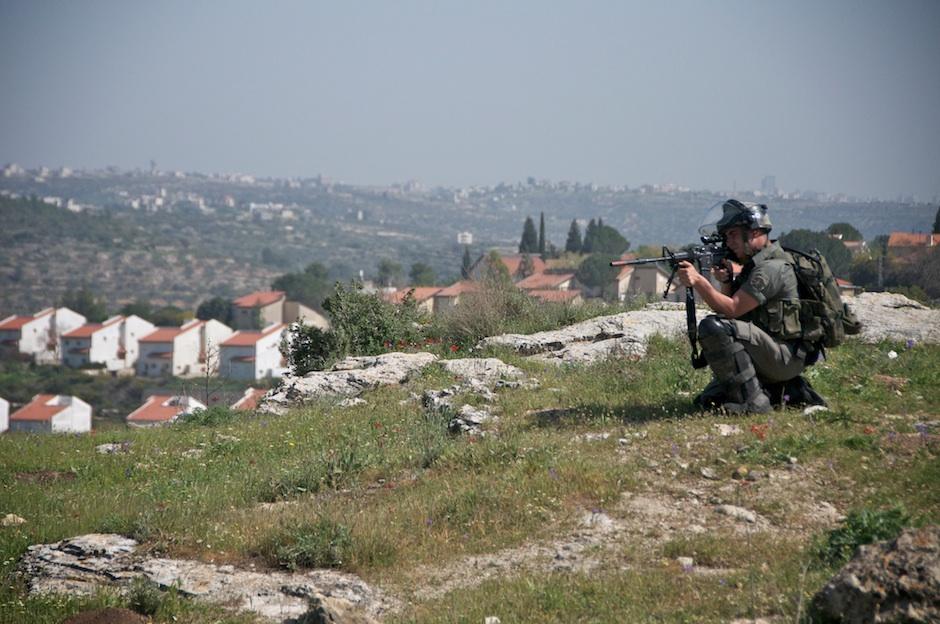
RAMALLAH — A Palestinian human rights report confirmed that the Israeli occupation forces (IOF) killed 7 Palestinians, and arrested more than 300 others during the month of January 2013.
Tadamun Foundation for Human Rights stated, in its monthly report released on Thursday, that four Palestinians, including two children and a woman were killed by Israeli fire in the occupied West Bank, while 3 other citizens were killed in the Gaza Strip, including a child.
Regarding arrests, the report pointed out that the occupation forces arrested more than 300 Palestinians across the West Bank and Gaza, including more than 60 children and 5 women.
The report noted that the arrest number does not include those detained during the clashes that erupted during the storming of Bab al-Shams village, built on Palestinian land slated for confiscation, near the city of Jerusalem.
The report added that the highest number of detention cases were in al-Khalil city, in the southern occupied West Bank, 80 arrests, and in occupied Jerusalem, 70 arrests.
The Foundation explained that a number of liberated prisoners, who have spent several years in Israeli jails, were among those arrested, such as Sheikh Jamal Tawil, Bajes al-Nakhla, and Fadi Sadak from Ramallah.
Related articles
- This Week in Palestine, January 25th, 2013 (indybay.org)
Israel boycotts UN forum, first state in history to ignore human rights review
RT | January, 2013
Israel has boycotted the UN human rights forum over fears of scrutiny of its treatment of residents of the occupied territories. Israel is now the first state in history to win a deferment of the periodical review of its human rights record.
Tel Aviv has refused to send a delegation on Tuesday to the United Nations Human Rights Council in Geneva for the Universal Periodic Review procedure where UN member states have their human rights record evaluated every four years.
Israel’s cooperation with the council stopped last March after the UN set up a committee to inspect the effects of the Israeli settlements on Palestinians.
Israel which earlier accused the United Nations of anti-Israel bias reiterated its stance, recalling that the council has passed more resolutions against Israel than all other countries combined.
“After a series of votes and statements and incidents we have decided to suspend our working relations with that body,” Yigal Palmor, Israeli foreign ministry spokesman, told the Financial Times. “I can confirm that there is no change in that policy.”
“There have been more resolutions condemning Israel than the rest of the world put together,” an Israeli government official said on Tuesday. “It’s not a fair game – it’s not even a game.”
Following the Israeli decision, the council has decided to postpone its review until no later than November.
The Council president has also called on the body to adopt a draft response to an unprecedented move by Israel.
Egypt’s representative meanwhile has warned that a “soft” approach would create a dangerous precedent and leave “a wide-open door for more cases of non-cooperation,” the AFP quoted.
Activist groups have lashed out against Israel’s disregard for international law.
“By not participating in its own review, Israel is setting a dangerous precedent,” Eilis Ni Chaithnia, an advocacy officer with al-Haq, a human rights organisation based in Ramallah has told the FT. “This is the first time any country has made a determined effort not to attend.”
Others thought that the council’s decision to delay gives Tel Aviv the opportunity to make amends. Eight Israeli human rights organizations issued a statement saying, “Israel now has a golden opportunity to reverse its decision not to participate,” adding “it is legitimate for Israel to express criticism of the work of the Council and its recommendations, but Israel should do so through engagement with the Universal Periodic Review, as it has done in previous sessions,” JTA quotes.
The investigation into Israel’s Human Rights record began in 2007, but last year the UN started to pay particular attention to Israel’s activities in the West Bank.
The probe at the time prompted an angry response from the country’s leader.
“This is a hypocritical council with an automatic majority against Israel,” Prime Minister Benjamin Netanyahu said.
Senior Israeli officials announced last month that Israel does not intend to cancel plans to accelerate settlement construction.
Netanyahu himself said in an interview with Israeli Channel 2 last month that the … area “is not occupied territory” and that he “does not care” what the UN thinks about it.
Around 500,000 Israelis and 2.4 million Palestinians live in the West Bank and in East Jerusalem, areas that, along with Gaza, the Palestinians want for a future state.
The United Nations regards all Israeli settlements in the West Bank as illegal. Tel Aviv last attended the human rights review in 2008. Israel is not a member of the Council, which is comprised of 47 UN member states.
Related article
- Israel plans boycott of UN human rights review (alethonews.wordpress.com)
Mahmoud Sarsak – Palestinian International Footballer
Free Gaza Scotland | January 29, 2013
On Wednesday 23rd of January I with other members of our group had the pleasure and honour to meet Mahmoud Sarsak in our appartment. He is a slight, quietly spoken young man, with a gentle manner and his good humour and patience with our questioning betray none of the pain he has suffered over the last 3 and a half years. When he begins to speak about his experience of imprisonment he tells his story with a matter of fact, quiet sincerity that is striking and makes the horror of his experience all the more shocking.
 Mahmoud was 21 years old, at the start of a playing career which had already seen him being recognised as one of the best young prospects in Palestine, already a regular for the Palestinian National side. He had an invitation to play for a football team in Nablus in the West Bank. This meant that he had to ask for permission from the Israelis to cross from Gaza through Erez crossing into Israel in order to travel on to the West Bank. This did not worry him as it was a trip he had already done twice before and when he recieved his permission he went to the crossing looking forward to the opportunity of playing in Nablus. However when he got to Erez at 9am on the 22nd July 2009 his whole world changed, instead of being allowed to cross he was arrested and taken to a Police Station, from here his family were called and informed that he was being taken to Ashkelon Jail.
He was made to take off his clothes and change into overalls, an ‘under investigation uniform’. He describes how for the first 18 days he was tied to a chair with his eyes covered, the only times he was untied was when he was given food and they untied his hands or when he was allowed to go to the toilet when his legs were untied. He explains that during this time he was kept awake, not fed properly and questioned daily, every 4 days he was taken to a court where a judge gave permission for him to be held for a further 4 days. This treatment he says ‘wasn’t so bad’ in comparison with what was to come although I think that most people would call it torture.
At the end of that 18 days he was taken to a Military Jail in the South where he was kept for 6 days and his treatment became much worse. He was beaten regularly and was put in what he described as a fridge, he also had very hot and very cold water put under his feet. During all of this time in both places he was questioned, his interrogators were wanting him to say that he had been involved in ‘activities against Israel’. He didn’t understand what they meant by this, he was a footballer, he had not been involved in anything else and so refused to make things up to make his interrogators happy. He had no idea why he had been arrested.
At the end of these 6 days he was taken back to a civilian jail for another 11 days where suddenly things got much better. He was fed and allowed to sleep properly, his captors became very friendly offering him his freedom, a new house, a salary, a car, access to proper training facilities to help his playing career and foreign travel. All he had to do was become a collaborator. He refused, which provoked many serious threats from his Israeli interrogators. They told him that they would burn his family home down, attack his family and kill his brothers. Despite the pressures upon him and his ordeal so far, he continued to refuse to collaborate.
Except for short visits to court when his lawyer was present, during this initial 35 days of incarceration he had absolutely no contact with anyone but his jailors and interrogators. His lawyer told him that he was going to be all right, the court had said he was going to be released. Instead he was told by a Military Officer that he was now being held under ‘The Law of An Illegal Fighter’ and that they no longer needed to go to court to ask permission to keep him. He was then taken to Kitseot Jail near Bersheva where at least he could see other prisoners and his time of interrogation was over. He asked the other prisoners what this ‘Law of an Illegal Fighter’ meant but none of them had ever heard of it. When he was finally allowed access to his lawyer and was able to ask him he was told that it was a law that the Israeli authorities use when they have nothing against you but they want to hold onto you. He then asked his lawyer what rights he had under this law and was told that he had none, he could now be held in jail for as long as the Israeli Military wanted to keep him.
Mahmoud was the first Palestinian who had been held under this law, the only other people he knows of who had previously been held under it were 2 Hizbollah members from Lebanon who were arrested in 1982. He thinks that because he had no rights he was put in a cell which was 2m x 1m for his time in Kitseot, this cell had only a matress and toilet in it and he developed chest, skin and back problems while there. He was not taken to a hospital while there, and was only seen briefly by a prison doctor for these problems. He was allowed out of his cell for 1 hour a day for exercise with his fellow prisoners when he played football with them.
On the 22nd of February 2010 Mahmoud was taken to Tel Aviv for a court hearing to extend his imprisonment and then to another court hearing for the decision in Jerusalem two weeks later. The journey to court and between jails is in what the prisoners call a ‘post bus’ which is metal bus with steel compartments in which you are jostled and hit off the steel walls. He knew before he was taken to the second hearing that he was going to be held for another six months. After this hearing he was also barred from playing football with his fellow prisoners for that precious hour in the mornings and was told that this was due to his back being too bad. At this time they also started to move him between prisons every 2 months and he was still taken to court every 6 months in order to have his stay in prison extended.
On the 23rd of August 2011 he was told that he was going to be released, he was happy and said goodbye to the other prisoners. He was taken by ‘post bus’ to Erez, his hands and legs were not tied as they usually were, the window was open and when he got there they opened the door of the prison van and the guards moved away talking among themselves. He stayed where he was as he didn’t know what was happening and he didn’t want to be shot if they thought he was trying to escape. He called to the guards to ask what was happening and they told him they were taking him back to jail, he wasn’t being released. He was taken to a different jail for 2 weeks with only the clothes he had on when they took him to Erez. He said that he was later told about another prisoner who had been taken to Erez and left in an open ‘post bus’ with his legs untied in the same way. He had gone to the door to look out and been instantly shot in the leg and accused of trying to escape. After this 2 week period he was taken back to the jail he had originally been in when first imprisoned, here his other clothes and small number of belongings were finally brought to him.
When he was taken to this jail he was given another 6 months but his lawyer was promised that he would be released when this time ended on the 23rd of February 2012. The 23rd of February came and went, 10 days after this he was taken back to court, he had decided that this time if he wasn’t released he would go on hunger strike and stay on hunger strike until they promised in writing that he would be released. So when he was told that he was going to be imprisoned for another 6 months he prepared himself for 10 days, eating less each day and gradually reducing his physical activity. On the 15th of March 2012 he started his hunger strike. He only took water and sometimes a little salt in order to prevent his stomach from beginning to rot.
7 days after he started they began to move him from jail to jail before putting him in Nafha Jail which meant he was put in with the Israeli criminal population. Then he was put into isolation for a spell followed by hospital in Bersheva for 2 days tied to his bed then back to Nafha. From here he was sent to Eshel jail where he was put in isolation again and became very sick. This time they wouldn’t take him to hospital but would only allow him to see the Doctor in Eshel. After 35 days of this the Doctor in Eshel refused to continue to be responsible for him and he was taken to the Prison hospital in Ramle jail where he was with another 5 Palestinian prisoners who were also on hunger strike. He refused treatment here and was put back into isolation, this time his isolation cell had no windows so he was in darkness. After 47 days on hunger strike he bagan to have serious problems with his stomach, he couldn’t even drink water without vomiting. First white then black then brown vomit. They took him back to Ramle Prison hospital then and gave him antibiotics.
Along with the other hunger strikers he was asked regularly to break his hunger strike, on the 15th of May he was told that if he would break his hunger strike he would be released on the 23rd of August and the other hunger strikers were also told that they would have their demands met if they broke theirs. 3 of them accepted but along with 1 of the others Akram Al Rihawy he refused, he had heard promises of release before and he insisted that he have the promise in writing signed by a senior Judge and a Minister from the Israeli Ministry of the Interior. He was also told that he would not be allowed to return to Gaza, he had to choose between Germany, France or Norway which he also refused to accept. At this time he finally began to get International Committee of the Red Cross visits twice a week and he was asked daily to break his hunger strike, he continued to refuse until he got it in writing that he would be released back to Gaza and that he would be properly monitored by a committee of doctors when he started eating again.
Eventually on the 18th of June 2012 on the 96th day of his hunger strike a Minister from the Israeli Ministry of the Interior came to see him with the signed paper that he had been asking for stating in writing that he would be released on the 20th of July 2012. The Minister asked him if he would now please give up his hunger strike and he agreed. The Minister asked him to drink a glass of milk in front of him so that he could confirm and report that he had indeed broken his hunger strike which he did alathough he immediately vomited this back up. His stomach couldn’t cope even with milk after such a long time with no more than water going into it. He said that even though his stomach rejected this cup of milk his whole body felt as though it had drunk and felt relieved.
For 14 days he had to build up to eating again with first intravenous vitamins and nutrition, followed by nutritional drinks, before finally eating his first bit of bread after this 14 day period, which he still vomited back up. During the time of his hunger strike he was only allowed 2 visits from his lawyer, on the 40th day and on the last day. I asked if he was allowed any visits from his family during his time in jail. He replied that because he was given no rights under the ‘Law of An Illegal fighter’ he was not only denied visits from family but was not even allowed the 6 monthly letters delivered to his fellow prisoners by the Red Cross. He wasn’t able to write to them either, not even one short note.
At no time during Mahmoud’s entire incarceration was he actually accused of anything other than being asked to admit to the vague term ‘activities against Israel’ and he was never charged with anything. He was very clear that he had no idea why he was arrested. He was a footballer. The court appearances he attended were simply formalities under Military Law which say that every 6 months any detention order must be renewed.
All Palestinians from the West Bank and Gaza who are arrested by Israel are dealt with under Military Law not Israeli Criminal Law and therefore it is not necessary for Israel to ever bring charges against them. Many who are prosecuted are those who have signed false confessions under torture and are not able to retract them afterwards. Mahmoud’s case was slightly worse than normal Military law, under which there are a few rights which at least give some protection in prison. Mahmoud had none of these rights under this so called ‘Law of an Illegal Fighter’ by which he was held.
I asked Mahmoud if he was back in training for football and if he thought that it would be possible for him to return to his playing career. He said that finally he had managed to attend 3 training sessions and was hoping to be able to return to the team at some point in the future once he was back to full fitness. I sincerely wish him luck with this and hope that he will reach that stage very soon.
This has to be one of the clearest examples of why the BDS (Boycott Divestment and Sanctions) campaign should be supported by everyone and why Israel should be barred from participating in International Sporting events. Currently the 2013 UEFA U-21 Championship is scheduled to be played in Israel. How can this be allowed when they can treat a Palestinian International Player like this? Not to mention that they bombed the only 2 football pitches in Gaza during Operation Pillar of Cloud as well as destroying many local playing areas in the West Bank over the years. I saw several during my visit there in 2004 including one in Ramallah which had been bulldozed.
Mahmoud told us that the other prisoner who had stayed on hunger strike with him, Akram Al Rihawy, had spent his whole sentence in hospital due to his medical problems. His reason for being on hunger strike was not for release but for proper medical treatment. He stopped his hunger strike after being told that he was going to be released on Wednesday the 23rd of January 2013. Yesterday, on the 25th of January 2013 we were told that he was not released as promised and that he is now back on hunger strike.
To join the campaign against Israel hosting the 2013 UEFA U-21 Championship go to the following link and get involved: http://redcardapartheid.weebly.com/
Related articles
- Former mayor put in administrative detention (alethonews.wordpress.com)
- Genocide by Proxy: Palestinian patient Salah Salluha dies at Erez due to prolonged security measures (occupiedpalestine.wordpress.com)
- Hundreds of Palestinians detained without evidence (occupiedpalestine.wordpress.com)
- Palestine: Documenting the torture of a boy in occupation jails, two wounded by shooting & East of Gaza flooded by Israelis (realisticbird.wordpress.com)
Data Privacy Day 2013: Twitter reveals US government makes 80% of info requests
RT | January 29, 2013
Twitter has released its second transparency report, which demonstrated a frightening increase in requests for user data by the US government and ignited serious concerns over privacy and free expression.
The list disclosed data requests from over 30 nations, and revealed that the US government was responsible for 815 of the 1,009 information requests in the second half of 2012 – just over 80 percent of all inquiries.
Twenty percent of all US requests were ‘under seal,’ meaning that users were not notified that their information was accessed.
The overall number of requests worldwide also steadily increased last year, rising from 849 in the January to June 2012 period to 1009 in the July to December 2012 period.
Twitter’s legal policy manager Jeremy Kessel blogged that, “it is vital for us (and other Internet services) to be transparent about government requests for user information.”
“These growing inquiries can have a serious chilling effect on free expression – and real privacy implications,” he wrote.
He went on to express hopes that the publication of the transparency data would be helpful in two ways – “to raise public awareness about these invasive requests,” and “to enable policy makers to make more informed decisions.”
The majority of US requests were subpoenas, which comprised 60 percent of government demands for information. Subpoenas usually seek user information such as email addresses affiliated with accounts and IP logs. A user’s whereabouts can generally be located by the IP address they are using.
Twitter complied with US government requests 69 percent of the time, according to the report.
Twitter released its transparency report on January 28, dubbed ‘Data Privacy Day.’ The US National Cyber Security alliance said it founded the day to “empower people to protect their privacy.”
According to Twitter’s report, several other governments made over 10 requests each for personal information, including Brazil, Canada, France, Japan and the UK. Japan ranked the second-highest on the list after the US; however, the US made 753 more demands for information than Japan.
Google released a statement marking the occasion, saying that the company “[doesn’t] want our services to be used in harmful ways,” and that it is “important that laws protect you against overly broad requests for your personal information.”
Earlier this month, France ruled that Twitter must disclose to authorities the identities of people writing anti-Semitic tweets using the hashtags #UnBonJuif [A Good Jew] and #UnJuifMort [A Dead Jew]. The social networking platform will be fined 1,000 euros a day until it complies.
The publication of the survey came shortly after Google published its own transparency report, which showed a similarly disturbing 25 percent rise in data requests from government authorities. The report also revealed that the US had made the most requests for private information to Google of any government: Over 8,438 in the second half of 2012.
UK-based rights group Privacy International later commented that “Google, Facebook and Twitter are highly vulnerable to government intrusion.”
“I am alarmed by the number of government requests and concerned that so many are done with merely a subpoena,” said John Simpson, a consumer advocate with the California-based group Consumer Watchdog. “A warrant should be required.”
Related articles
- Twitter Transparency Report v2 (twitter.com)
- Twitter: Government user data requests have risen 20 percent (sott.net)
Israel plans boycott of UN human rights review
Al-Akhbar | January 29, 2013
Israel planned on boycotting a routine review of its human rights situation by the United Nations Tuesday, despite threats of “unspecified action” by the UN Human Rights Council if it did not cooperate.
According to Israeli media, Israel would be the only UN member state to ever boycott the yearly UNHRC Universal Periodic Review since the process’ inception in 2006.
Israel unilaterally severed ties with UNHRC in March 2012 over a planned fact-finding mission over illegal West Bank settlements.
According to news website The Times of Israel, Israel has participated in the first round of reviews in October 2011, before asking the council to postpone Israel’s review with no justification.
Israel later accused the Human Rights Council of “anti-Israel moves.”
“We are under an ongoing policy of suspension of all our contacts with the Human Rights Council in Geneva and all its branches after their sequence of systematically anti-Israel moves, which have come to contradict the mission statement of the organizations and sheer common sense” Foreign Ministry spokesman Yigal Palmor told The Times of Israel Sunday.
Israel’s review is still scheduled to take place Tuesday afternoon, and it remains unclear as to whether a representative of the Jewish state will actually attend the meeting.
If Israel follows through with its boycott, it could set a negative precedent for other countries unwilling to respond to accusations of human rights violations.
The website for the UPR specifies that in case of “persistent non-cooperation,” “the Human Rights Council will decide on the measures it would need to take” against the offending state.
UNHRC spokesman Rolando Gomez warned that “if a delegation from the country was not to attend then action, as yet unspecified, would be taken.”
The UNHRC review of Israel is overseen by the Maldives, Sierra Leone and Venezuela.
Israel has fought back and criticized many investigations into its treatment of Palestinians, including on illegal settlements and the use of drones.
Its relationship with the Human Rights Council has been tense for years, most notably since 2007, when the council made Israel’s actions in Occupied Palestine a permanent item on the agenda.
The most violent settlement in the West Bank encroaches on Asira al Qibliya
International Solidarity Movement | January 27, 2013
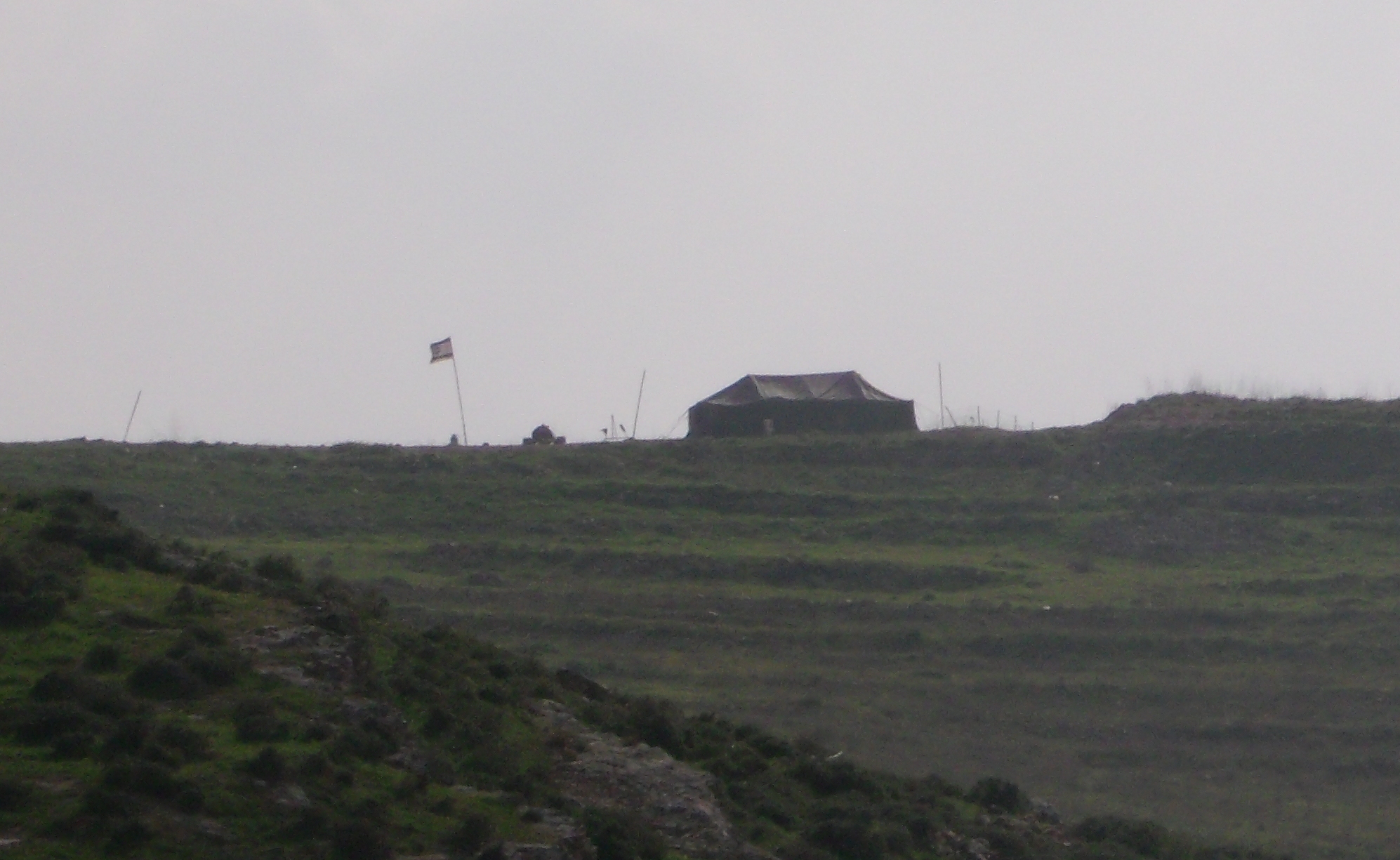
Asira al Qibliya, Occupied Palestine – According to OCHA statistics Yizhar is the most violent settlement in the whole of the West Bank with 70 recorded incidents in 2011 alone. Every week there is at least one attack by Yizhar settlers in the six affected villages.
Four months ago, settlers from Yizhar built a temporary outpost on top of a hill belonging to villagers from Urif. This continued until earlier in the week when Israeli authorities delivered maps to the village which showed that Yizhar had laid claim to 2 dunums of land. This was a massive understatement; they had in-fact seized the entire hill.
The land grab of this hillside seems to be all but complete; a shepherd who was working the land around the Yizhar outpost was recently beaten whilst tending to his sheep: the injuries he sustained were serious but not critical. In another incident, as the Palestinian owners of the land were walking along the road towards the hill this week, they were fired on by Israeli soldiers. Villagers want to challenge this latest land grab, however the law in this country is anything but just. The villagers are all too aware that if they resist they have only stones in the face of tear gas, stun grenades and the very real threat of being fired upon with live ammunition.
Harassment of the residents has also been on the rise. Currently at least once a week soldiers have been invading Asira in the middle of the night. They have been banging on villagers doors with the butts of their assault rifles, making sure people are disturbed in much the same way as has been reported in Urif as well as in Burin.
Yizhar a relatively small but very aggressive settlement in the north of the occupied West Bank. It is situated on a hill surrounded by six Palestinian villages which are all made to live in a state of constant fear.
Related articles
- Continued harrassment of the Nasser family in Madama (palsolidarity.org)
- Israeli Soldiers Attack, Evict, Bab Al-Shams, Arrest Dozens (alethonews.wordpress.com)
- PHOTOS | Settlers attack Urif and Qusra with guns, knives and stones (occupiedpalestine.wordpress.com)
Featured Video

Liberty Cannot Exist Inside a Panopticon
or go to
Aletho News Archives – Video-Images
From the Archives
Left-leaning despisers of 9/11 Truth movement: Do you really believe in miracles?
David Ray Griffin | Global Research | 06 Jul 2010
An Open Letter to Terry Allen, Noam Chomsky, Alexander Cockburn, David Corn, Chris Hayes, George Monbiot, Matthew Rothschild, and Matt Taibbi.
[1]According to several left-leaning critics of the 9/11 Truth Movement, some of its central claims, especially about the destruction of the World Trade Center, show its members to be scientifically challenged. In the opinion of some of these critics, moreover, claims made by members of this movement are sometimes unscientific in the strongest possible sense, implying an acceptance of magic and miracles. … Full article
Blog Roll
 Aletho News
- EU sending ‘biased’ observers to interfere in Serbian election – president
- White House envoy declares kinetic action against Yemen ‘fruitless’
- Ukraine deployed thousands of microdrones in Iraqi Kurdistan: Tasnim
- Iran calls for emergency UNSC meeting over Trump’s ‘brazen’ bomb talk, Israeli threats
- Iranian sources reveal details of Russia-China Hormuz proposal
- Plan for more US-Israel integration puts our military tech at risk
- Another Round Against Iran Will Break What Is Left of the Gulf
- SVR Report on Ukraine’s Mexican Drug Gang Links Could Pressure Zelensky, Won’t Change US Policy
- British Government Employees Were Fact-Checking the News at the BBC. Nobody Told You.
- Albania on fire: who’s behind the riots?
- If Americans Knew
- Mysterious bot accounts reportedly spread fake ‘man on the street’ videos for Michigan Senate candidate
- Israeli Defense Minister Katz Says Over 60 Lebanon Villages Have Been Destroyed
- Why Is Israel Running TV Ads in Iowa Ahead of the Midterms?
- Hind Rajab’s Alleged Killer Is in the United States. HRF Demands His Arrest.
- US Officials Face Fresh Pressure After Another American ‘Brutalized’ by Israeli Settlers in West Bank
- Israel-Backed Palestinian Militias Terrorize Displaced Families in Gaza
- FBI subpoenas pro-Palestine activists over Israeli weapons plant disruption
- Fourth winter arrives in wartorn Gaza, too early – Daily Update
- More on how Bari Weiss is using CBS on behalf of Israel
- What the UK Is Doing to Pro-Palestine Novelist Sally Rooney Is an Act of Orwellian Villainy
- No Tricks Zone
- Predictions Made By Renowned Climate Proifessor Over Past Decades Have Been Proven To Be Poor
- New Study Suggests Large Regions Of The Pacific Ocean Have Been Cooling For The Last 80 Years
- Germany’s Green Energy Debacle: High Energy Costs Force Kahla Porzellan to Close After 182 Years!
- New Study: 50 Years Of The Most Aggressive ‘Net Zero’ Policies Can Only Affect The Global Climate By 0.03°C
- US September “Heat” Was No Record…Many Records Set Decades Ago
- Latest European Green Energy Debacle; Portugal’s Largest Flagship Solar Park Insolvent!
- Green Energy Debacle: German Expert Professor Fritz Vahrenholt Warns Of Severe Economic And Social Consequences
- Two More Paleo Reconstructions Affirm Meters-Higher Sea Levels Across Ireland, Brazil 7000-6000 Years Ago
- New Study: Earth And Venus Surface Warmth Largely Explained By Convection And Lapse Rate, Not CO2 Or Radiation
- 2025 Nature Paper Claiming Worsening Global Drought Gets RETRACTED …Heavily Flawed

