West Bank: Aid agencies tread gingerly in Area C
IRIN | January 11, 2013
As night descends in the Jordan Valley in the occupied Palestinian territory (oPt), a family in the village of Ras Al-Ahmar lights a small paraffin lamp in the tent they call home.
There is no electricity here and the nearby Palestinian villages are enveloped in darkness. The only visible cluster of light is from a nearby Israeli settlement.
Humanitarian agencies are well aware of the needs in this part of the West Bank but they face a challenge: play by the rules established by Israel or face the risk of having projects demolished.
Despite being outside the state of Israel, 90 percent of the Jordan Valley is under full Israeli civil and military control as part of Area C, a zone that covers 60 percent of the West Bank.
Palestinian communities here, among the poorest and most vulnerable in oPt, desperately need access to water, electricity, sanitation and other basic infrastructure.
But despite the needs, development organizations that try to improve living conditions in Area C say they find their ability to make any lasting impact hampered by Israeli restrictions and bureaucracy.
Like Palestinians, organizations that want to build basic service infrastructure such as houses, schools or water systems are required to submit an application for a permit to the Israeli authorities.
Often, these permits are not granted. According to the UN Office for the Coordination of Humanitarian Affairs (OCHA), between January 2000 and September 2007, over 94 percent of applications submitted by Palestinians to the Israeli authorities for building permits in Area C were denied.
“The permit regime is very confusing. There is no clarity about the status of an application, whether paperwork has been received, if it is complete,” Willow Heske, media lead for Oxfam in oPt, told IRIN. “Agencies have sometimes waited for two years only to get a rejection that comes without any explanation.”
“A few years ago we put in plans to build a water reservoir in Al-Jiftlik, to provide half of Al-Jiftlik with running water,” said Heske.
“The reservoir was considered a `building’ and we didn’t get the permit. So we moved to a plan B which still involved setting up a reservoir and piping system but above rather than below ground. This too was not accepted. So as a last resort we had to go back to distributing water tanks. And of course people were frustrated and disappointed.”
Challenging the Occupation
Some NGOs, among them Palestinian organizations like Ma’an Development Centre (MDC), believe that adhering to the permit regime helps legitimize the occupation, and choose to ignore the rules altogether.
“If you’re playing within the rules of the occupation then you are legitimizing it. We don’t seek permits from the Israelis. If we put in a permit request we would likely get denied,” MDC project manager Chris Keeler told IRIN. “And also because of a moral stance. We don’t think that a Palestinian NGO should be seeking permission from Israel to be building on Palestinian lands.”
For international organizations, it’s not only the possibility of having a permit denied that affects their work, but also the multiple ways in which the Israeli state bureaucracy hinders their work by issuing “stop work” orders to existing projects, refusing to issue work visas, or refusing to renew existing work permits for foreign staff.
Even MDC finds that it must sometimes work within existing framework restrictions.
“There are houses all over the Jordan Valley that need renovations,” said Keeler. “If we do a project in some of the communities in the north, it would likely get destroyed. So we work a lot in Al-Jiftlik and Al-Fasayil. We need permits in those places too, but because they are more established communities, there is less risk that they will get destroyed. A lot of donors want reassurance that structures we build will not be torn down.”
IRIN was unable to get a response from the Israeli government despite repeated attempts, but in the past the Israeli government spokesperson has said Israeli policy is shaped by security concerns.
EU Move
In May 2012, the European Union (EU) Council of Foreign Affairs called on Israel to meet its obligations to communities in Area C, “including by accelerated approval of Palestinian master plans, halting forced transfer of population and demolition of Palestinian housing and infrastructure… and addressing humanitarian needs.”
The Council stated that the “social and economic developments in Area C are of critical importance for the viability of a future Palestinian state.”
The Israeli Ministry of Foreign Affairs criticized the recommendations, saying they were “based on a partial, biased and one-sided depiction of realities on the ground” and that they “do not contribute to advancing the peace process”.
The Ministry said 119 projects were authorized in Area C in 2011 and that they ensured that “planned projects” were “coordinated and in conformity… with the law”.
Oxfam’s Heske believes the recent EU recommendations are bold and courageous, even though it is still not clear how they will play out on the ground. “These conclusions mean that there is now a full political commitment to work on development in Area C,” she said. “How it will play out, we don’t know, if it happens with or without permits. But we don’t want to see just one token water network here and there.”
Since 2011, the Palestinian Authority’s ministry for local government and local Palestinian councils have submitted 32 master plans for development in Area C to the Israeli Civil Administration (ICA). Each master plan includes infrastructure development, health care, primary education, water provision, electricity and the development of agricultural land, and requires approval by the ICA through a lengthy process of negotiation.
However, according to Azzam Hjouj, acting general director for urban and regional planning in the Palestinian ministry of local government, even if master plans are approved by the ICA, it is expected that the Israeli authorities may issue demolition and “stop work” orders for some plans, particularly in areas like Al-Jiftlik in the Jordan Valley, and that political pressure will be required to ensure implementation.
Bedouin Villages
As for the more isolated Bedouin villages in the valley, the new master plans will not cover their areas.
“It’s difficult to make a master plan for these herding communities, because they are dispersed over large areas. They move around a lot and we don’t want to urbanize these areas, it’s their way of life,” Hjouj said. “And even if we made master plans, it would just give the ICA an excuse to congregate the herding communities into one area and take the remaining land.”
The Israeli Coordination of Government Activity in the Territories (COGAT – a unit in the Israeli Ministry of Defense that engages in coordinating civilian issues between the government of Israel, the Israel Defense Forces, international organizations, diplomats, and the Palestinian Authority) said that many of the construction projects in Area C are “illegal and poorly planned”.
A report compiled by COGAT relating to projects in Area C states that “illegal construction projects that ignore master plans undermine the possibility for future expansions and create problems for electrical, sewage and water systems.”
More Advocacy?
As with the wider crisis, there are no easy solutions for humanitarian agencies seeking to provide aid in Area C, and finding the line between purely humanitarian work, and political engagement is tough.
For economist Shir Hever, author of The Political Economy of Israel’s Occupation, Western governments and NGOs need to be more active in opposing the occupation of West Bank areas.
“Instead, donors put 99 percent of their work in doing what is allowed and 1 percent in protesting conditions,” he said.
Related articles
- Israeli occupation authorities halt entry of West Bankers to 1948 occupied Palestine (alethonews.wordpress.com)
- More evictions for Israeli army training in the Jordan Valley (alethonews.wordpress.com)
- Israeli forces evict West Bank Palestinian outpost despite court ruling (rt.com)
Time For Justice – A call from Palestine to EU citizens
International Solidarity Movement | January 11, 2013
Ask your governments and EMPs to suspend EU-Israel Association Agreement and stand up for human rights in 2013!

A call urging citizens of the European Union to tell their representatives to suspend the EU’s trade agreements with Israel, until Israel complies with international law, has been issued by grassroots networks and organizations from across Palestine.
The call has been endorsed by numerous European solidarity networks and organizations.
Join the action. Send letters to your representatives now by clicking on your country below:
AUSTRIA
BELGIUM (DUTCH / FRENCH)
BULGARIA
CYPRUS
CZECH REPUBLIC
DENMARK
ESTONIA
FINLAND
FRANCE
GERMANY
GREECE
HUNGARY
IRELAND
ITALY
LATVIA
LITHUANIA
LUXEMBOURG
MALTA
NETHERLANDS
POLAND
PORTUGAL
ROMANIA
SLOVAKIA
SLOVENIA
SPAIN (CASTILIAN / CATALAN)
SWEDEN
UNITED KINGDOM
For the full text click here.
Related
Yemenis condemn presence of US Marines in Sana’a
Press TV – January 9, 2013
Yemeni citizens, rights groups and lawmakers have vehemently condemned the presence of US Marine troops on Yemeni soil and the transformation of a five-star hotel in the capital, Sana’a, into a US military base, Press TV reports.
In interviews with Press TV, the legislators and human rights activists harshly criticized the conversion of the capital’s Sheraton Hotel into a military building and said they considered the presence of American forces as an occupation of their country.
The Yemenis argued that the US move to bring in the Marines for the protection of its diplomatic mission is merely a pretext for US domination on the ground.
“American Marines entered the country before the revolution and their numbers have increased… it’s similar to what happened when Britain occupied southern Yemen decades ago. The presence of Marine forces in the large number can only be described as an occupation,” political activist Abdu Ahmed said.
The US embassy in Sana’a reportedly booked all the rooms in the Sheraton Hotel, firing 200 members of the hotel’s staff after paying them a severance payment equal to six months of salary.
“We feel insecure. Anyone who goes up on the rooftop of his building will be targeted with a red light pointed to his chest. So if we can’t feel safe in our own country where can we find security and peace of mind?” said a Yemeni citizen.
The growing US domination has sparked numerous mass demonstrations, particularly in the Sada’a governorate to the north of the capital Sana’a.
The protesters in these demonstrations expressed the peoples’ total rejection of foreign intervention in their country’s affairs.
The increasing number of US assassination drone attacks, which mostly target innocent civilians, were also lambasted by the human rights groups.
The activists said the growing US interference in Yemen’s affairs is considered a flagrant violation of the Middle Eastern country’s sovereignty.
“Giving [approval to] US Marines to violate the country’s sovereignty is treason and those giving approval must be prosecuted. The assassinations are carried out right after the US intelligence apparatus received names of people suspected of being involved in al-Qaeda. There are a number of normal people on these lists, who can be easily arrested and brought to justice if found guilty,” human rights activist Abdulrahaman Barman noted.
Washington uses its assassination drones in Yemen, Pakistan, Afghanistan, and Somalia, claiming that they target the terrorists. The attacks, however, have mostly led to massive civilian casualties.
Related articles
- Thousands of Yemenis hold anti-US, anti-Israeli Protest in Sana’a (jafrianews.com)
Brennan’s Support for Torture Is Not an ‘Accusation’
By Jim Naureckas | FAIR | January 7, 2013
The New York Times’ Scott Shane (1/7/13), reporting on the news that President Barack Obama plans to nominate his terrorism adviser John Brennan to be head of the CIA, writes:
The president had considered naming Mr. Brennan to head the CIA when he took office in 2009. But some human rights advocates protested, claiming that as a top agency official under President George W. Bush, Mr. Brennan had supported, or at least had failed to stop, the use of interrogation techniques like waterboarding that are widely considered to be torture. Mr. Brennan denied those accusations but withdrew from consideration, and Mr. Obama gave him the advisory position, which did not require Senate confirmation.
That Brennan was a supporter of torture is not a claim or an accusation, though–it’s a matter of public record. As we pointed out after Brennan’s name was withdrawn in 2009, here’s what he had to say to CBS News in 2007 (Early Show, 11/2/07):
The CIA has acknowledged that it has detained about 100 terrorists since 9/11, and about a third of them have been subjected to what the CIA refers to as enhanced interrogation tactics, and only a small proportion of those have in fact been subjected to the most serious types of enhanced procedures…. There have been a lot of information that has come out from these interrogation procedures that the agency has in fact used against the real hard-core terrorists. It has saved lives. And let’s not forget, these are hardened terrorists who have been responsible for 9/11, who have shown no remorse at all for the deaths of 3,000 innocents.
If the words “support” and “torture” have any meaning, then Brennan is supporting torture there. This is another example of how in order to be an “objective” reporter, you have to deny that there’s any such thing as objective reality.
Related article
Israeli soldiers vandalise Hebron home and arrest a student
International Solidarity Movement | January 6, 2013
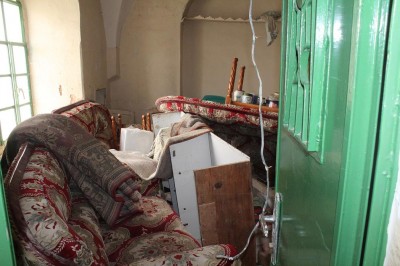
West Bank – Israeli occupation forces in Hebron raided a home, arrested a Palestinian and smashed his family’s belongings in the early hours of the morning.
Thirteen soldiers who came with two dogs broke down the door, arrested Ahmed Sharabati, 22, and vandalised the property without giving an explanation. As of this moment, Sharabati’s whereabouts are currently unknown.
The soldiers were present in the home for an hour and a half, during which time the terrified family was harassed, furniture was turned upside down and a window was smashed. The family spent six hours cleaning up after the raid.
 The soldiers took Sharabati, a student at Hebron university, without telling the family why or where he was being taken.
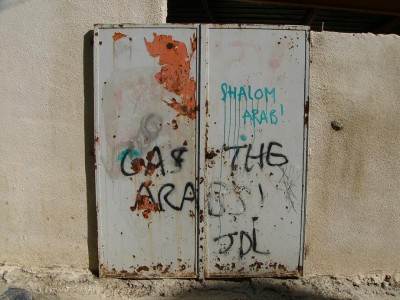
The family’s home is located in H2, the Israeli controlled part of Hebron. The close proximity of soldiers and illegal settlers means that Palestinians are always under threat from violence and harassment. Palestinians returning home from the city centre are subjected to humiliating checkpoints and the area is infamous for its “Gas the Arabs” graffiti.
The Israeli occupation forces soldiers in H2 are soon due to be replaced by other soldiers and the locals believe they are intentionally being more aggressive to leave a lasting impression.
Related articles
- Local activist detained in Hebron (alethonews.wordpress.com)
- Security video of killing of Hebron circus student shows claim of ‘toy gun’ fraudulent (alethonews.wordpress.com)
- Israeli forces kill teenager on his 17th birthday in Hebron (alethonews.wordpress.com)
- Second group of journalists beaten in Hebron (alethonews.wordpress.com)
Qusra settler attack, two hospitalised
International Solidarity Movement | January 7, 2013
 Qusra, Occupied Palestine – At around 2 p.m. seven settlers attacked a farm on the outskirts of Qusra. The farm belongs to Abu Nasser and his wife Nedda who are both in their sixties.
Nedda confronted the settlers after seeing them on their property cutting olive trees, warning them off with a solid wooden walking stick and a firm voice. At around 4 p.m. twelve settlers returned accompanied by around 12 jeeps and 60 Israeli Occupation Soldiers.
A small group from the local village confronted the settlers and soldiers to defend the farm and a conflict erupted. Consecutive rounds of tear gas were then shot onto the farm land and the settlers and the local youth (shabab) confronted each other. During the skirmish two shabab were shot at close range with rubber bullets: one in the shin and the other in the upper thigh. Both required hospital treatment, with the shabab who was shot in the upper thigh remaining in hospital for further treatment as the rubber coated bullet passed into the front of his thigh and out the side. One of the stones thrown by a shabab hit a settler in the head. In addition to this the Israeli Army fired several rounds of live ammunition. The village Mayor rang the DCO to report the incident and the DCO warned him that the settlers would return for ‘‘revenge’’.
As four volunteers from the ISM, we arrived at the village around 7p.m. and were welcomed to stay overnight at the small farm house of Abu Nasser and Nedda. The following day the settlers were seen gathering across the valley with Israeli soldiers. We were driven to the hilltop across from them and made our presence known, shortly after which they left. During our time in the village we learnt of other attacks on the village that occurred as frequently as 3-4 times a week. We were shown several olive fields where the olive trees had either been broken or cut. The villages estimate that in the previous 3-4 days around 400 olive trees had been killed in their surroundings by settlers from the illegal settlements Esh Kodish and Kida.
During a similar settler attack on the village on the 23/09/2011, the local villages went to stop settlers from cutting the trees and the Israeli Army arrived and shot dead a 32-years old father of 5, Islam Badram.
Related articles
- Red Crescent attacked during settler raids in Qusra (palsolidarity.org)
- Israeli army dogs attack elderly Palestinian, two-year-old child injured in the head in Jewish settlers’ attack (alethonews.wordpress.com)
- Settlers raid Nablus village homes and a tractor. Uproot 190 olive trees and burn Hebron car (occupiedpalestine.wordpress.com)
- Settlers raid Nablus village, fire live ammo (altahrir.wordpress.com)
US renews war on Iranian media
PressTVGlobalNews | January 5, 2013
The United States has imposed fresh sanctions on Iranian media despite Washington’s claims of respecting free speech. Sanctions have all been applied under the umbrella of concern for Iran’s nuclear program becoming militarized. The CIA and IAEA have constantly reported that Iran is not developing nuclear weapons while mainstream American media have promoted that Iran has or is producing a nuclear bomb. Many observers though contend that the many sanctions on Iran are an act of war as part of Western colonialism and imperialism that also serves the Zionists of Israel.
To further discuss the issue, Press TV’s News Analysis has conducted an interview with Joe Iosbaker, Stop FBI Repression, from Chicago, Kevin Barrett, a founding member of the Muslim-Jewish-Christian Alliance, from Wisconsin, and Daniel Pipes, founder and director of the Middle East Forum, from Philadelphia.
Follow our Facebook on: https://www.facebook.com/presstvchannel
Follow our Twitter on: http://twitter.com/presstv
Follow our Tumblr on: http://presstvchannel.tumblr.com
Related articles
- US imposes fresh sanctions on Tehran, including ban on Iranian media (alethonews.wordpress.com)
Israeli Prison Doctors To Amputate Leg Of Wounded Detainee
By Saed Bannoura | IMEMC & Agencies | January 06, 2013
Lawyer of the Palestinian Ministry of Detainees, Fadi Obeidat, stated that Israeli physicians at the Ramla Prison Clinic decided to amputate the left leg of detainee Nahedh Al-Aqra’, 41, from the Gaza Strip. The detainee lost his right leg after being shot by the army.
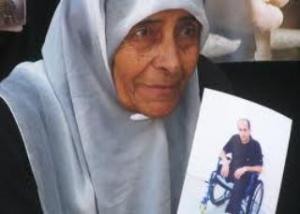
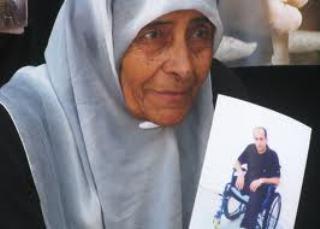
Mother Of Nahed Al-Aqra’ Holding His Picture – hskalla.wordpress.com
Al-Aqra’ is suffering from very sharp pain in his leg due to infections resulting from his injury and due to the lack of adequate medical treatment as the only medication he received was painkilling pills.
His family has not been allowed to visit him since he was kidnapped while returning from Jordan on July 7, 2000, where he received medical treatment for multiple gunshot injuries in his legs, and was sentenced to three life-terms.
Israel’s recent decision to allow family visits to Gaza Strip detainees did not include detainees who are hospitalized at the prison clinic. Gaza Strip detainees were denied visitation rights after the second Intifada started in late September 2000.
In prison, he suffered various complications, including infections, and his wound became septic; the doctors performed several surgeries but could not save his leg.
Al-Aqra is a father of four children who have not seen him since 2000 despite extensive efforts conducted by the Red Cross.
In related news, the family of detainee Mahmoud Hamdi Shabana, 40, stated Saturday that he is suffering from a sharp pain in his throat, especially the vocal cords, and that he is not receiving any medical treatment.
Al-Aqra’ is held at the Negev Detention Camp; he was kidnapped more than 35 months ago and was confined under repeatedly renewed Administrative Detention orders without charges or trial since then.
Related articles
- 18 Seriously Sick Detainees Facing Medical Neglect In Israeli Prisons (imemc.org)
- Israel Kidnapped 173 Palestinians This Month (arabworld360.blogspot.com)
“Did We Just Kill a Kid?”
By TOM McNAMARA | CounterPunch | January 4, 2013

In the spring of 1944, in the quiet little town of Alcolu, South Carolina, two young girls, Betty June Binnicker, age 11, and Mary Emma Thames, age 8, were brutally murdered while picking flowers along a railroad track. Their bodies were found in a nearby water filled ditch. The cause of death was determined to be multiple blows to their skulls with a metal railroad spike. A Mr. George Stinney was soon arrested for the murders. While there was no physical evidence or eyewitness accounts linking the defendant to the crime, unfortunately for Mr. Stinney, the two girls were white. He was black.
Two white police officers were able to get a confession out of Mr. Stinney within an hour, behind closed doors. It was the only evidence offered up during his trial, a trial that was held in one day and lasted only two and a half hours. It was attended by 1,500 people, all of them white. Blacks were not allowed in the courtroom. Mr. Stinney, his family having been driven from their small town, faced the trial alone. Council for the defense offered no evidence on its client’s behalf, and it requested no psychiatric evaluation of the defendant. A guilty verdict was reached after only 10 minutes of deliberation by the (all white male) jury. No recommendation for mercy was given. Had Mr. Stinney’s lawyer filed a simple one sentence appeal, the execution would have been automatically stayed for at least a year. But this was impossible due to the fact that Mr. Stinney did not see his attorney again from the time he left the court. Furthermore, his attorney never spoke to any members of the defendant’s family, let alone inform them that they had the right to appeal the death sentence. Just 81 days after his arrest, on June 16, 1944, Mr. Stinney would walk into the execution chamber.
There is one more tragic element to this already tragic story. Mr. George Junius Stinney Jr. was just 14 years old when he was put to death. He was the youngest person (legally) executed in the United States in the 20th century.
Being small for his age, weighing just 95 pounds (approximately 43 kilograms) and only five feet one inch tall (approximately 1.5 meters), it was with great difficulty that the death sentenced was carried out. But carried out it was. His small body was propped up with books in order to get him to fit properly in the electric chair (the original designers having carelessly overlooked the fact that one day their device might be used to execute a small child), allowing for an electrode to be attached to his right leg.
One commentator reported that George said nothing as the mask was lowered over his face. But after the first 2,400 volts passed through the boy’s small body “the death mask slipped from his face and his eyes were open when two additional shots of 1,200 and 500 volts followed.” George’s head “went up and the mask came of his face … and saliva and all was coming out of his mouth and tears from his eyes.”
The Governor, Olin Johnson, had received hundreds of letters and telegrams asking for leniency for the young boy. But facing a primary election in July, the Governor was not inclined to grant clemency. One telegram compared the execution of a child to something that Adolf Hitler would do. A stinging and bitter accusation considering that American troops had just landed on the beaches of Normandy ten days earlier in the D-Day invasion to liberate France from Nazi occupation and terror. On that one day alone, 9,000 Allied soldiers would die or be wounded fighting the Germans.
It can be argued that the execution of a 14 year old child was a social aberration from a bygone era. A simple anomaly. An isolated case that “fell through the cracks.” A repulsive event from a period when America was still suffering from racial and social ignorance. Surely, as a society, the United States has progressed far beyond the days of when it tolerated the State sanctioned execution of children, has it not?
Two pilots are sitting in an air-conditioned windowless room in New Mexico. Before them sit an array of 14 computer monitors and four keyboards. 6,250 miles away (about 10,000 kilometers) they are controlling a Predator drone that is circling lazily in a figure eight pattern over Afghanistan. They are observing a crude house made of mud when the order is given to launch a laser guided Hellfire missile at the target. With just seconds to go till impact, a small child walks out from behind one of the corners of the structure. A flash on the control screen confirms the impact and explosion, with parts of the structure collapsing and the child disappearing.
“Did we just kill a kid?” the co-pilot asks the pilot.
“Yeah, I guess that was a kid,” the pilot replies.
Confirmation as to whether or not a missile strike had just been carried out on a child was requested. “No. That was a dog,” comes the anonymous response from a military command center.
The pilots review the video of the drone strike that had just taken place.
A dog on two legs?
One of the pilots is no longer in the Air Force, declining to renew his enlistment contract when it was up. After 6,000 flight hours and six years of military service he says “I saw men, women and children die during that time. I never thought I would kill that many people. In fact, I thought I couldn’t kill anyone at all.” He has since been diagnosed with post-traumatic stress disorder by doctors with the Veterans’ Administration.
While the above incident could be deemed an “accident,” apparently the targeted murder of children is now accepted US military policy.
Lt. Col. Marion “Ced” Carrington, Commander of 1st Battalion, 508th Parachute Infantry Regiment, states, “It kind of opens our aperture. In addition to looking for military-age males, it’s looking for children with potential hostile intent” as well. While the Lt. Col would not elaborate on what exactly are the rules of engagement when encountering potential child combatants, reassuringly he tells us that he advises the soldiers serving under him to use “courageous restraint.”
Apparently this “courageous restraint” was lacking on October 14, 2012, when US Marines operating in Helmand province requested, and got clearance for, an airstrike on “shadowy figures” thought to be in the process of setting up an improvised explosive device (IED). The assailants killed in the strike turned out to be three children who were 12, 10 and 8 years old.
The International Security Assistance Force (ISAF), a part of NATO and the organization that is nominally in command of the war (the reality being, of course, that it is a US led affair), said that it may have “accidentally killed three innocent Afghan civilians.” Family members of the victims reported that the children were sent to gather dung, which is used for fuel.
America’s first war in Iraq and its associated sanctions are believed to have resulted in the deaths of over half a million children. America’s second war in Iraq is believed to have resulted in the deaths of over 600,000 Iraqis (most of them between the ages of 15 and 44). America’s targeted drone attacks in the Tribal Regions between Afghanistan and Pakistan have reportedly killed between 474 and 881 civilians, including 176 children
If these were the actions of China, Russia, Iran, or any other country on Earth, we would be able to see them clearly for what they are. War crimes and crimes against humanity of the highest order. We would also realize that they are the actions of a society that is in moral decline.
Why it is impossible for the vast majority of Americans to see this is incomprehensible.
Acknowledgement: The author would sincerely like to thank Professor Bryan A. Stevenson, founder and Executive Director of the Equal Justice Initiative, for making him aware of the story of George Stinney.
Tom McNamara is an Assistant Professor at the ESC Rennes School of Business, France, and a Visiting Lecturer at the French National Military Academy at Saint-Cyr, Coëtquidan, France.
Sources
“Afghan kids recruited for suicide attacks” by Joe Gould and John Ryan, July 18, 2012, Army Times. Accessed at:
“Attempts to clear name of 14-year-old boy who was executed in South Carolina 67 years ago” Reporter: Mark Potter, Anchor: Brian Williams, NBC Nightly News 6:30 PM EST (NBC News Transcripts), October 4, 2011.
“Attorney Decries Juvenile Executions (From Young Blood: Juvenile Justice and the Death Penalty, P 159-165, 1995, Shirley Dicks, ed. – See NCJ-166057)” by D. Bruck, 1995. Accessed at:
https://www.ncjrs.gov/App/Publications/abstract.aspx?ID=166066
“Columbia Journal; Prison Lures Them In (as Tourists)” February 22, 1994, The New York Times. Accessed at:
“D-Day June 6, 1944” United States Army Official Homepage. Accessed at:
“Do Targeted Killings Work?” by Daniel L. Byman, Senior Fellow Foreign Policy, Saban Center for Middle East Policy, July 14, 2009, The Brookings Institute. Accessed at: http://www.brookings.edu/research/opinions/2009/07/14-targeted-killings-byman
“Iraq Sanctions Kill Children, U.N. Reports” by Barbara Crossette, December 1, 1995, The New York Times. Accessed at:
“Living Under Drones: Death, Injury, and Trauma to Civilians From US Drone Practices in Pakistan” the International Human Rights and Conflict Resolution Clinic (Stanford Law School) and the Global Justice Clinic (NYU School of Law), September 2012. Accessed at:
Click to access Stanford_NYU_LIVING_UNDER_DRONES.pdf
“Questions Raised in Deaths of Afghan Children in Coalition Strike” by Alissa J. Rubin, October 17, 2012, The New York Times. Accessed at:
“Some Afghan kids aren’t bystanders” by Dan Lamothe and Joe Gould, December 3, 2012, Military Times. Accessed at:
http://www.militarytimes.com/news/2012/12/marine-taliban-kids-120312w
“Study Claims Iraq’s ‘Excess’ Death Toll Has Reached 655,000” by David Brown, October 11, 2006, The Washington Post. Accessed at:
http://www.washingtonpost.com/wp-dyn/content/article/2006/10/10/AR2006101001442.html
“The Human Cost of the War in Iraq: A Mortality Study, 2002-2006” by G. Burnham, S. Doocy, E. Dzeng, R. Lafta and L. Roberts, with the Bloomberg School of Public Health at Johns Hopkins University, Al Mustansiriya University and the Center for International Studies at the Massachusetts Institute of Technology, October 11, 2006. Accessed at:
Click to access human-cost-war-101106.pdf
“The Merciful Executioner: Spectacles of Sexual Danger and National Reunification in the George Stinney Case, 1944” by Annette Louise Bickford, University of Toronto, Southern Anthropologist Vol. 35, No. 1, 2010
“The Woes of an American Drone Operator” by Nicola Abé, December 14, 2012, Der Spiegel. Accessed at:
“War in Iraq: Humanitarian Relief Efforts” April 11, 2003, The Washington Post. Accessed at:
http://www.washingtonpost.com/wp-srv/liveonline/03/special/iraq/sp_iraq_zaidi041103.htm
“When Something Wicked This Way Comes: Evolving Standards of Indecency – Thompson and Stanford Revisited” by J. L. Whitney, 46 Clev. St. L. Rev. 801 (1998)
“World: Middle East Iraqis blame sanctions for child deaths” by Jeremy Bowen, August 12, 1999, BBC. Accessed at:
http://news.bbc.co.uk/2/hi/middle_east/418625.stm
~
Photo – George Stinney, 1944, executed at age 14 years old (Photo credit: Wikipedia)
Related articles
- US sets records with number of drone strikes in Afghanistan this year (rt.com)
- Newtown kids v Yemenis and Pakistanis: what explains the disparate reactions? [2 of 2] (wondersofpakistan.wordpress.com)
Featured Video
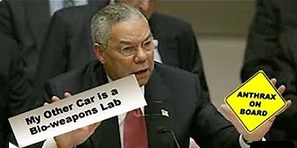
From Anthrax to Iraq
or go to
Aletho News Archives – Video-Images
Book Review
New paperback: Butchered by “Healthcare”
Lies are Unbekoming | October 20, 2026
 Butchered by “Healthcare” is Robert Yoho’s plain-spoken account of how American medicine stopped being a profession and became an industry. 341 pages. Over a thousand references. Thirty-eight chapters.
“Screening Tests Are Useless”, on tests that find diseases that would never have hurt you. “The FDA Protects the Big Drug Companies”, on an agency funded by the companies it regulates. “The Journals’ Sins Are the Editors’ Sins”, on ghostwritten studies and captured peer review. “Opioids and ‘Pain Management’”, on how a generation was prescribed its way into addiction. “Prozac and Relatives” and “Antipsychotics Are Disastrous”, on what psychiatry does to adults and children. “Surgery: Money Before Patients”. “Failed Cancer Treatments”. “Futile CPR and Overprescribing”. “Billing Scams & Specialty Warfare”. “Hospitals Are Sharks”. Each with a Patient Tips section at the end on how to survive it.
If you have ever walked out of a doctor’s office with a prescription you didn’t ask for, or watched a parent put through a treatment that made them worse, this is the book you want on your shelf before the next appointment. … Full review
Butchered by “Healthcare” is available on Lulu now.
Blog Roll
 Aletho News
- EU sending ‘biased’ observers to interfere in Serbian election – president
- White House envoy declares kinetic action against Yemen ‘fruitless’
- Ukraine deployed thousands of microdrones in Iraqi Kurdistan: Tasnim
- Iran calls for emergency UNSC meeting over Trump’s ‘brazen’ bomb talk, Israeli threats
- Iranian sources reveal details of Russia-China Hormuz proposal
- Plan for more US-Israel integration puts our military tech at risk
- Another Round Against Iran Will Break What Is Left of the Gulf
- SVR Report on Ukraine’s Mexican Drug Gang Links Could Pressure Zelensky, Won’t Change US Policy
- British Government Employees Were Fact-Checking the News at the BBC. Nobody Told You.
- Albania on fire: who’s behind the riots?
- If Americans Knew
- Mysterious bot accounts reportedly spread fake ‘man on the street’ videos for Michigan Senate candidate
- Israeli Defense Minister Katz Says Over 60 Lebanon Villages Have Been Destroyed
- Why Is Israel Running TV Ads in Iowa Ahead of the Midterms?
- Hind Rajab’s Alleged Killer Is in the United States. HRF Demands His Arrest.
- US Officials Face Fresh Pressure After Another American ‘Brutalized’ by Israeli Settlers in West Bank
- Israel-Backed Palestinian Militias Terrorize Displaced Families in Gaza
- FBI subpoenas pro-Palestine activists over Israeli weapons plant disruption
- Fourth winter arrives in wartorn Gaza, too early – Daily Update
- More on how Bari Weiss is using CBS on behalf of Israel
- What the UK Is Doing to Pro-Palestine Novelist Sally Rooney Is an Act of Orwellian Villainy
- No Tricks Zone
- Predictions Made By Renowned Climate Proifessor Over Past Decades Have Been Proven To Be Poor
- New Study Suggests Large Regions Of The Pacific Ocean Have Been Cooling For The Last 80 Years
- Germany’s Green Energy Debacle: High Energy Costs Force Kahla Porzellan to Close After 182 Years!
- New Study: 50 Years Of The Most Aggressive ‘Net Zero’ Policies Can Only Affect The Global Climate By 0.03°C
- US September “Heat” Was No Record…Many Records Set Decades Ago
- Latest European Green Energy Debacle; Portugal’s Largest Flagship Solar Park Insolvent!
- Green Energy Debacle: German Expert Professor Fritz Vahrenholt Warns Of Severe Economic And Social Consequences
- Two More Paleo Reconstructions Affirm Meters-Higher Sea Levels Across Ireland, Brazil 7000-6000 Years Ago
- New Study: Earth And Venus Surface Warmth Largely Explained By Convection And Lapse Rate, Not CO2 Or Radiation
- 2025 Nature Paper Claiming Worsening Global Drought Gets RETRACTED …Heavily Flawed

