Buck Dancing for Zion: Kenya’s and Nigeria’s Growing Love Affair With Israel
Israel has found new golems to exploit on the Dark Continent
José Niño Unfiltered | February 18, 2026
In October 2025, hundreds of Kenyans marched through Nairobi’s Central Business District carrying banners reading “Israel Belongs to God”. Bishop Paul Karanja declared to the crowd, “We are here to declare that Israel is not alone. We will continue to stand with them.” The demonstration commemorated the second anniversary of the October 7, 2023 Hamas attacks, but it represented something far more significant than a single day of solidarity. It revealed a geopolitical quirk that has left analysts scrambling for explanations.
According to a June 2025 Pew Research Center survey covering 24 countries, Kenya showed 50% favorable views toward Israel with 42% unfavorable. Nigeria registered 59% favorable and 32% unfavorable. These were the only two nations with majority positive sentiment toward Israel. In 20 of the 24 countries surveyed, majorities held negative views. Kenya and Nigeria, in addition to India, stand virtually alone in their enthusiasm for the Jewish state at precisely the moment when global opinion has turned sharply against it.
This pro-Israel shift among the populations in Kenya and Nigeria is not a sudden development born from the Gaza war. It represents years of cultivation, theological indoctrination, security partnerships, and strategic maneuvering that transformed two African nations into some of Israel’s most promising partners in the post-October 7 age.
The most fundamental explanation behind this rise in pro-Zionist sentiment lies in the explosive growth of evangelical and Pentecostal Christianity across both countries.
Nigeria houses one of the world’s largest evangelical populations, with Operation World estimating the country ranks either third or fourth globally in total evangelical numbers, trailing only the United States and potentially Brazil or China depending on methodology. Pew Research Center puts Nigeria’s total Christian population at 93 million as of 2020, a 25% increase from 2010, making it the sixth-largest Christian nation in the world and the largest on the African continent.
Pentecostalism has become deeply embedded in Nigerian Christianity, though its precise share remains debated. The U.S. State Department’s International Religious Freedom Report, citing the Christian Association of Nigeria, places Pentecostals at approximately 30% of the Christian population, with an additional 10% identifying as evangelical Christians in non-Pentecostal traditions and African-instituted charismatic churches accounting for another 5 to 10%. When Pentecostal and charismatic Christians across all denominations are counted together, researchers at the Center for the Study of Global Christianity at Gordon-Conwell Theological Seminary place the combined Pentecostal and charismatic share of Nigerian Christianity significantly higher, reflecting the deep penetration of charismatic practice even within mainline churches. That figure has exploded in recent decades, driven by aggressive evangelization, media expansion and the global reach of Nigerian-founded movements like the Redeemed Christian Church of God and Deeper Life Bible Church.
Kenya presents a different evangelical landscape but one equally conducive to pro-Israel theology. According to the 2019 national census, evangelicals comprise 20.4% of Kenya’s total population out of 47.6 million residents — roughly 9.6 million by the census’s strict denominational count. Broader estimates that apply a wider evangelical definition, including researcher Sebastian Fath’s figures cited by Lifeway Research, place Kenya’s evangelical population closer to 20 million. An estimated 30 to 35% of Kenya’s population identifies as Pentecostal, indicating significant overlap between evangelical and Pentecostal identities.
Together, Nigeria and Kenya account for approximately 78 million evangelicals under the broader definitional framework, representing over 42% of Africa’s estimated 185 million evangelical population. This concentration reflects broader patterns of African Christianity’s expansion and the global southward shift of Christian demographics.
The theological framework binding these believers to Israel rests on Christian Zionism, a dispensationalist interpretation that views the modern state of Israel as fulfillment of biblical prophecy. Genesis 12:3 serves as the foundational text. “I will bless those who bless you, and whoever curses you I will curse.”
The International Christian Embassy Jerusalem, a global evangelical organization, has actively cultivated ties with Nigerian churches, organizing pilgrimages and promoting pro-Israel narratives. Pastor Rex Ajenifuja of I Stand With Israel has mobilized grassroots campaigns emphasizing that “Nigeria loves Israel” and framing solidarity as a spiritual obligation. Prominent Nigerian pastors have explicitly connected pro-Israel theology to national prosperity. During visits to Israeli settlements in the Occupied Palestinian Territories, Adeboye explained, “The problems that we are seeing between the Jews and the rest of the world, is because they are the favorites of God. When you are special to God, then automatically the devil wouldn’t like you either.”
In Kenya, the theological stance intersects directly with political power. Current President William Ruto’s administration has deepened ties with evangelical leaders who have publicly endorsed Israel as part of their eschatological worldview. During prayer services, Ruto and First Lady Rachel Ruto — a devout evangelical known for her faith diplomacy program that enlists clergy in matters of state — have woven Israel into Kenya’s spiritual identity. Ruto himself prayed at Jerusalem’s Western Wall during a 2023 state visit, with the site’s rabbi noting it was the longest prayer by any world leader he had witnessed there. At a faith rally convened by Rachel Ruto, crowds waved Kenyan and Israeli flags together while praying for both nations. Influential evangelical figures have openly equated support for Israel with national blessing.
Bishop Dennis Nthumbi, Africa Director of the Israel Allies Foundation, has described Kenya’s bond with Israel as a “covenantal, long-standing relationship” that no politician can sever. Bishop Mark Kariuki, the presiding bishop of Deliverance Church Kenya and former chairman of the Evangelical Alliance of Kenya, has aligned himself with the broader conservative evangelical political theology that underpins pro-Israel sentiment across the continent. The Kenyan government provided active support for the October 2025 pro-Israel march. Speaking in a televised interview on Kenya’s Elevate TV ahead of the march, Africa-Israel Initiative president Bishop Joshua Mulinge confirmed that the government had granted permits and provided police escorts throughout the route. “The Kenyan government has been very supportive,” he said. “We thank God for our head of state and for the entire government.”
The Times of Israel reported that the October 2025 march aimed to call Kenyan Christians “out of the prayer closet and into the streets” to publicly express solidarity with Israel beyond private prayer. Speakers emphasized that “Christianity originated in Jerusalem and that the Church remains spiritually rooted in Israel.” A Norwegian representative of the Africa Israel Initiative stated, “I believe that anybody who blesses Israel, as the Bible says, is blessed. I think it should be in every Christian’s heart to support Israel.”
The political dimensions of evangelicalism in both countries reveal important patterns of religious influence on governance. In Nigeria, evangelical and Pentecostal movements have shaped political discourse around moral conservatism, prosperity theology, and spiritual warfare against corruption, even as the country’s Christian-Muslim demographic balance remains contested. Pew Research places Muslims at 56.1% and Christians at 43.4% as of 2020, though Afrobarometer surveys of adults have found Christians in the majority. Kenya’s evangelical community has achieved more direct political influence, particularly through President Ruto’s administration, which explicitly appeals to evangelical constituencies and employs religious rhetoric in governance.
A 2024 study by the French Institute for Research in Africa described Ruto as the first born-again president in what it called “the making of a born-again republic,” documenting how key evangelical leaders including Bishop Mark Kariuki of Deliverance Church Kenya, Bishop David Oginde of CITAM, and evangelist Teresia Wairimu of Faith Evangelism Ministries described Ruto as God’s appointed ruler during his 2022 campaign. This theological stance embraced by Ruto has been used to justify the suppression of pro-Palestinian activism, as evidenced by Kenyan police’s arrest of Kenyans displaying Palestinian flags in 2023.
Theology alone does not explain the depth of Kenya and Nigeria’s alignment with Israel. Strategic security cooperation provides pragmatic reinforcement for religious sentiment.
Nigeria’s fight against Boko Haram and Kenya’s struggles with al-Shabaab have led to intelligence sharing agreements and military training programs facilitated by Israel. These partnerships, while pragmatic, are often justified through evangelical rhetoric that conflates Islamist extremism with broader anti-Israel sentiment. Nigerian evangelicals have long portrayed Boko Haram’s insurgency as evidence of jihadist violence targeting Christians, reinforcing theological solidarity with Israel as a fellow victim of Islamist terrorism. That narrative, however, is contested by researchers including Brookings and conflict-monitoring group ACLED, which has found that the majority of Boko Haram’s victims have been Muslim, with religion-targeted attacks against Christians accounting for only 5% of civilian-targeting events recorded in its data.
In November 2011, Israeli Prime Minister Benjamin Netanyahu met with Kenyan Prime Minister Raila Odinga in Jerusalem and declared that “Kenya’s enemies are Israel’s enemies so we should be able to help,” pledging to build a coalition against fundamentalism that would bring together Kenya, Ethiopia, South Sudan and Tanzania. The meeting produced a memorandum of understanding on homeland security cooperation, with both Netanyahu and Israeli President Shimon Peres committing to help Kenya secure its borders against militant threats.
Similarly, Israeli ambassador Gil Haskel stated, “Israel is willing to send consultants to Kenya to help Kenya secure its cities from terrorist threats and share experience with Kenya because the operation in Somalia is very similar to Israel’s operations in the past, first in Lebanon and then in Gaza Strip.”
In February 2016, President Uhuru Kenyatta traveled to Jerusalem to strengthen counterterrorism cooperation, with discussions focused on combating al-Shabaab following the 2013 Westgate Mall attack and the 2015 Garissa University massacre. Nadav Peldman, Israeli deputy ambassador to Kenya, stated that Israel was “ready and willing to assist Kenya” in fighting terrorism, calling it “a heinous crime that should be confronted with the same force it projects.”
That defense relationship has since deepened under President William Ruto, who negotiated a $26 million Israeli government-backed loan in July 2025 to acquire the SPYDER surface-to-air missile system manufactured by Rafael Advanced Defense Systems. The system, delivered in December 2025, accounted for roughly 70% of Kenya’s Ministry of Defence development budget for FY2025/26. The partnership spans counterterrorism operations, cybersecurity infrastructure, intelligence sharing, and joint military training.
Israeli-Kenyan relations have an economic dimension to them as well. In Kenya, Israeli drip irrigation technology — including low-pressure systems distributed through MASHAV — has been deployed to boost food security, alongside a 2016 Jerusalem Declaration in which Kenya and Israel committed to a 10-point water and irrigation cooperation framework. On the digital side, Kenya and Israel launched the Cyber-Dome Initiative between Israel’s National Cyber Directorate and Kenya’s Communications Authority, and have held Cyberweek Africa in Nairobi annually since 2023 to expand cybersecurity capacity-building across the continent.
The Israel-Nigeria partnership followed a parallel trajectory, with Nigeria’s Ministry of Defence reaffirming in April 2025 its commitment to “enhancing military cooperation with the State of Israel” following a meeting between Permanent Secretary Ambassador Gabriel Aduda and Israeli Ambassador Michael Freeman. The two sides discussed joint operations, knowledge exchange, defense industry development, and plans to finalize a new bilateral defence agreement, with Aduda pledging that Nigeria would “engage in strategic initiatives to replicate successful Israeli military cooperation frameworks.”
Nigeria, meanwhile, hosts over 50 Israeli companies operating across construction, infrastructure, hi-tech, communications and IT, and agriculture and water management. Cultural ties have also deepened: in 2021 the Israeli ambassador to Nigeria and the country’s vice president initiated a collaborative film co-production between Israeli and Nollywood filmmakers to mark 60 years of diplomatic relations. Israel’s MASHAV agency, established in 1958, provides agricultural training, water management, and health programs across East Africa, with Kenya, Uganda, Tanzania, Malawi, and Seychelles identified as its primary African partners for capacity-building.
None of the growing pro-Zionist sentiment in Kenya and Nigeria is a coincidence. Well-funded pro-Israel organizations have systematically cultivated African Christian support through parliamentary lobbying, church mobilization, and faith-based diplomacy.
The Washington, D.C.-based Israel Allies Foundation maintains a global parliamentary network of more than 1,500 pro-Israel lawmakers, coordinating faith-based caucuses in Kenya, Nigeria, and across Africa. Bishop Scott Mwanza of Zambia served as the foundation’s inaugural Africa Director, coordinating existing caucuses across the continent. He was succeeded by Rev. Dennis Nthumbi, who currently oversees 16 Israel Allies Caucuses as Africa Director and has been a leading voice in mobilizing Christian parliamentary support for Israel across the region.
In September 2024, 25 African lawmakers from 19 countries gathered in Addis Ababa for the first Pan-Africa Israel Parliamentary Summit, where they signed the “Addis Ababa Declaration of Africa-Israel Cooperation and Partnership.” The declaration, which included lawmakers from Kenya and Nigeria among others, affirmed Jerusalem as “the legitimate, undivided, and eternal capital of the Jewish State of Israel,” condemned anti-Zionism as antisemitism, and called for strengthening bilateral ties and supporting Israel’s observer status at the African Union.
Key Kenyan organizations include the Africa-Israel Initiative, launched in Zambia in April 2012 by a coalition of African church leaders including Bishop Joshua Mulinge of Kenya, who now serves as its president and leads the movement across more than 20 African nations. The Israel Allies Foundation Africa Division is led by Rev. Dennis Nthumbi. King Jesus Celebration Church Worldwide, chaired by Bishop Paul Karanja, co-convened the 2025 “March for Israel” through Nairobi’s Central Business District alongside the Africa-Israel Initiative and the Israel Allies Foundation. The Evangelical Alliance of Kenya serves as the national umbrella body for evangelical churches.
Nigerian organizations include the Lagos-based I Stand with Israel International Friendship Organization, led by Pastor Rex Ajenifuja; Christians United for Israel Nigeria Chapter, part of the global CUFI network founded by American pastor John Hagee; and the Africa for Israel Christian Coalition, founded by South African Israel lobbyist Luba Mayekiso, whose Nigerian affiliates have mobilized over 3,000 pastors across 22 states.
Prominent Nigerian evangelical leaders include Pastor Chris Oyakhilome, founder of Christ Embassy; Pastor Enoch Adeboye, General Overseer of the Redeemed Christian Church of God, who has visited Israel multiple times and donated two ambulances to Magen David Adom, Israel’s emergency blood services organization; and the late Prophet TB Joshua, founder of Synagogue Church of All Nations, who was named “Tourism Goodwill Ambassador for Israel” by Minister of Tourism Yariv Levin following a 2019 evangelical crusade in Nazareth.
Nigerian Christian pilgrimages to Israel have become a significant phenomenon. According to the Nigerian Christian Pilgrim Commission, approximately 18,000 Christian pilgrims from Nigeria travel to holy sites in Israel and Jordan each year on average, with the NCPC targeting around 10,000 pilgrims annually for its organized exercises. The NCPC organizes multiple pilgrimage cycles throughout the year — including Easter, Women’s, Youth, and General pilgrimages — with participants praying for Nigeria’s leaders and offering intercessory prayers at holy sites. The 84,000 figure in the original text is not supported by Israeli tourism data; Israel Central Bureau of Statistics figures show Nigerian tourist arrivals peaked at 12,700 in 2019, while a 2025 analysis of the decade from 2015 to 2025 estimated over 80,000 total Nigerian Christian pilgrimages over that entire ten-year span.
Former President Goodluck Jonathan — a practicing Pentecostal Christian who, as sociologist Ebenezer Obadare documented in Pentecostal Republic, cultivated strong ties with Nigeria’s Pentecostal constituency — played a pivotal role in what might be called “pilgrimage diplomacy.” In October 2013, he became the first sitting Nigerian president to undertake a pilgrimage to Israel, leading a delegation that included six state governors — including Governors Elechi of Ebonyi, Obi of Anambra, Akpabio of Akwa Ibom, Suswam of Benue, Jang of Plateau, and Orji of Abia — along with ministers and church leaders including CAN President Pastor Ayo Oritsejafor.
Initial pre-trip reports of 19 governors and 30,000 pilgrims proved to be overblown. Jonathan visited holy sites, met with President Shimon Peres and Defense Minister Bogi Ya’alon, and signed bilateral agreements on aviation. He made a second private pilgrimage in 2014, meeting Prime Minister Netanyahu with an entourage of about 20 political and religious leaders.
Jonathan expressed security solidarity when he wrote to Prime Minister Netanyahu during the search for three Israeli teens abducted by Hamas in 2014, stating, “I assure you that we are in solidarity with you, as we believe that any act of terrorism against any nation or group is an act against our common humanity.”
These visits had diplomatic consequences. In December 2014, when the UN Security Council voted on a Jordanian-tabled resolution calling for Israeli withdrawal from occupied territories and Palestinian statehood within three years, Nigeria abstained — a last-minute reversal that left the resolution one vote short of the nine needed to pass. The Guardian reported that both Israeli Prime Minister Netanyahu and U.S. Secretary of State John Kerry had phoned President Jonathan to ask him not to support the resolution. Nigeria’s abstention, alongside those of the UK, Lithuania, South Korea, and Rwanda, meant the US and Australia’s opposing votes were sufficient to defeat the measure without Washington needing to invoke its veto — a significant diplomatic victory for Israel given Nigeria’s historical support for the Palestinian cause.
Kenyatta played a particularly instrumental role in the diplomatic warming between Kenya and Israel. In February 2016, he visited Jerusalem for counterterrorism talks with Netanyahu. Netanyahu then reciprocated with a historic visit to Kenya in July 2016 — the first visit by an Israeli prime minister to sub-Saharan Africa in nearly 30 years. It was during that Nairobi press conference, not during Kenyatta’s Jerusalem visit, that Netanyahu declared: “Israel is coming back to Africa, and Africa is coming back to Israel.” Kenyatta in turn pledged to help Israel regain observer status at the African Union.
Following the October 7, 2023 Hamas attacks, President William Ruto posted on X that “Kenya joins the rest of the world in solidarity with the State of Israel and unequivocally condemns terrorism and attacks on innocent civilians in the country. The people of Kenya and their government hereby express their deepest sympathy and send condolences to the families of all victims… Kenya strongly maintains that there exists no justification whatsoever for terrorism, which constitutes a serious threat to international peace and security. All acts of terrorism and violent extremism are abhorrent, criminal and unjustifiable, regardless of the perpetrator, or their motivations.”
The statement also called for de-escalation and a ceasefire — context omitted from early reporting — and drew sharp criticism from Kenya’s Muslim leaders and some opposition figures. Ruto subsequently softened his position at a November 2023 Arab-African summit in Riyadh, where he stated that “terrorism cannot be an answer to any conflict; neither is occupation” and reaffirmed Kenya’s support for a two-state solution.
Based on post-October 7 trends, the trajectory of support for Israel augurs a distinctly melanin-enhanced future, as centuries-old European animus toward organized Jewry—now reactivated by the industrial-scale genocide in Gaza—diminishes traditional alliances on the Old Continent. Under these circumstances, Israel must pivot toward emergent partners in the Global South, where nations like Kenya and Nigeria, buoyed by decades-long philosemitic trends, can provide millions of new golems for world Jewry to tap into.
Concomitant with Israel’s burgeoning alliance with India—itself a bastion of Hindu nationalist affinity for the Jewish state—this reconfiguration signals that pro-Zionism will inexorably become brown-coded within mere decades, as the Global South’s burgeoning populations eclipse fading Euro-American sympathies.
Russia doubts ‘bright future’ for US economic ties – Lavrov
RT | February 5, 2026
The actions of US President Donald Trump’s administration contradict its claims that it is willing to restore economic cooperation with Russia, Foreign Minister Sergey Lavrov has said.
Since returning to the White House more than a year ago, Trump has repeatedly said he wants to do business with Moscow. After a phone call with Russian President Vladimir Putin last March, the White House teased “enormous economic deals” between the two countries once the Ukraine conflict is settled.
Moscow doubts the sincerity of those claims by Washington, Lavrov said in an interview with RT’s Rick Sanchez on Thursday, ahead of Diplomatic Workers’ Day on February 10.
Not only the economic restrictions that had been slapped on Moscow under the previous administration of US President Joe Biden “all remain in place,” but “very harsh sanctions have been imposed against our largest oil companies, Lukoil and Rosneft, for the first time,” he said.
Washington’s move “surprised” Putin, the foreign minister recalled, coming just weeks after his face-to-face meeting with Trump in Anchorage, Alaska, in August, during which Moscow “supported the US proposal for a comprehensive settlement of the Ukrainian crisis.”
According to Lavrov, the Americans are now “openly trying to push Russian companies from Venezuela.” This follows a January raid by US commandos on the Venezuelan capital, Caracas, during which President Nicolas Maduro and his wife were abducted.
“India is being banned from buying Russian oil. At least, that is what was announced,” the Russian diplomat added.
Last month, Washington also said that “a state of emergency is being declared due to the threat Cuba poses to US interests in the Caribbean, including due to Russia’s hostile and malicious policies,” the minister noted.
The US is looking to introduce “a worldwide ban” on Russian oil and gas supplies, saying that they should be replaced by American oil and liquefied natural gas, Lavrov stressed.
“Well, the bright future of our economic and investment cooperation doesn’t really square with that,” he noted.
American Zionists are using Trump’s Republican Party to create a multicultural supremacist elite
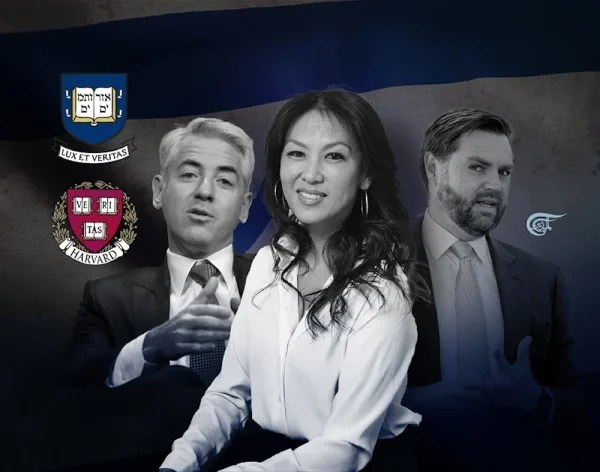
By Matt Wolfson | Al Mayadeen | February 2, 2026
On January 13, 2025, seven days before Donald Trump’s second inauguration as president, The Free Press, the online magazine created by the Zionist operator Bari Weiss who has powerful connections to the Trump Administration, ran a profile which may say more about the ultimate causes of America’s current policies, and where those policies will likely lead, than any other public document.
The profile was of Amy Chua, famously the author of Battle Hymn of the Tiger Mother, a mostly well-received cri de Coeur for what Chua sees as rigorous Chinese parenting; and less famously the John M. Duff, Jr. Professor of Law at Yale Law School. The profile, drawing explicitly on Chua’s most publicly recognizable achievement, was titled “The Tiger Mother Roars Back,” and its subtitle reinforced its approach, an ardent rave: “Yale tried to run Amy Chua out. Now her former students, J.D. Vance and Vivek Ramaswamy, are headed to Washington. So is she.”
For people who follow the politics of America and so of America’s empire, the forwardness of this profile raises questions. Construed as a gesture of support for two politicians, Vance and Ramaswamy, who are attempting to woo the public on populist credentials, it seems misthought. There is nothing populist about Chua—and her lacks are tells about the lacks of her mentees. Indeed, it was under Chua’s mentorship that Vance wrote a bestselling book with the encouragement of another Chua mentee, Vance’s future wife Usha, blaming the failures of his lower-income Appalachian upbringing on the “cultural” deficiencies of the community which raised him. This is a view that, since entering politics with the aim of appealing to precisely that community, he has quickly disavowed. Ramaswamy, for his part, has fallen deeply and predictably afoul of populist Americans precisely by making that case in public.
So why would Weiss, who if nothing else is a strategic operator, run a piece on Chua connecting her to Vance and Ramaswamy as well as broadcasting Chua’s views, which are anathema to the people from whom Vance and Ramaswamy want support?
The answer is that, though Weiss is an ideologue focused on advancing “Israel’s” immediate interests, there is a “positive,” longer-term Zionist play in the works among her and her allies. I have reported in miniature on this play last year, in a September investigation of the philanthropic education donations of Bill Ackman, the Zionist financier: to seed a new ruling elite based on technological and management skills. But the project goes deeper. It amounts to the legitimation of a new ruling class in America centered on a narrow cadre of elites of three groups— Zionists, Hindutvas (Hindu supremacists), and, discernably but least specifically definably, East and Southeast Asian supremacists often with connections to countries where Buddhism has exercised significant influence.
These elites use their present success in America’s military corporate complex to make claims to group superiority. They then use those claims to justify special treatment for their groups and nations that allow them to solidify their power, and to solidify the hold of American empire, which they see as the rightful disseminator of “merit.” Their accelerating project will likely realize itself through the Republican Party, via Chua’s mentees, the Vances and Ramaswamy, among others, and it may ally itself with other right-wing influences as seemingly dissimilar but actually imitative as the white supremacy of Nicholas J. Fuentes. It is only now taking recognizable shape, and understanding its origins and spread is crucial to understanding the havoc it is already beginning to wreak in America and abroad.
That understanding begins with examining the arguments which influenced Vance and Ramaswamy; arguments made by Amy Chua and Jed Rubenfeld, her husband, a Yale Law professor and Jewish Zionist who writes for The Free Press. These arguments are noteworthy in that they look for “warps” in cultures to explain problems which other scholars have put down to military corporate power and its brute effects (outsourcing, conglomeration, the Wars on Crime and Drugs, unauthorized and some kinds of authorized immigration) on American life.
Indeed, the most straightforward reason why Vance’s Appalachian Americans as well as Black and Latino Americans have notably struggled is American imperial policy that has started at the top: labor outsourcing and urban mis-development, misthought immigration policies, and military corporate buildup. These policies have accrued for 60 years, and academics and writers have made the case against them for almost 50.
This book of Chua and Rubenfeld’s, where they lay out their view (The Triple Package: How Three Unlikely Traits Explain the Rise and Fall of Cultural Groups in America) does not emphasize these structural, practical explanations. Instead, Chua and Rubenfeld put “winners’” success in America over the last sixty years down to three group traits: specifically, “a superiority complex,” “insecurity,” and “impulse control.” According to The Triple Package, “a superiority complex” means “a deeply internalized belief in your group’s specialness, exceptionality, or superiority” flowing from religion, civilization, or social traits. “Insecurity” means “a sense of being looked down on, a perception of peril, feelings of inadequacy, and a fear of losing what one has.” And “impulse control” means “the ability to resist… the temptation to give up in the face of hardship or quit.”
But the paradox of Chua’s and Rubenfeld’s explanation, which they don’t appear to realize, is that, taken logically on its face, it supports the structural, practical explanations they apparently ignore. Political theory and history show that groups in the grip of triple package holders’ emotional Cartesianism (possessing an a priori thesis, superiority, in the face of insecurity, and so willing to do anything to prove the thesis right) are reliable tools of arbitrary imperial power. Indeed, empires moving aspirant, insecure, determined groups into their own managerial elite is a defining feature of the Roman Empire; the British Empire in the American colonies and India; the German Empire; and the United Arab Emirates. In America’s empire, these co-opted groups have most prominently been the three which Chua and Rubenfeld write about most often and with whom they and their family most identify: Jewish Americans, Indian Americans, and East and Southeast Asian Americans.
All three of these groups experienced marginalization and persecution at the hands of various empires (the Russian and German; the British; the American) before 1950. Their members have attendantly experienced heightened levels of insecurity; and elite cadres of two of the three groups have adopted what most scholars consider to be clearly definable supremacist ideologies: Zionism, which was founded in 1897 and Hindutva ideology, which was founded in 1925. The third type of supremacy, East and Southeast Asian supremacy, is more diffuse but clearly discernable.
Unlike Zionism, which is linked to “Israel”, and Hindutva ideology which is linked to India, there are multiple countries at play and multiple labels under which claims of East and Southeast Asian supremacy are raised. Also, the way these claims are raised often surfaces less as outright supremacy and more as “cultural essentialism”—that there’s something in this group’s cultural “essence” that makes members more “successful.” Finally, research into outright supremacist manifestations from groups associated with them is more recent, usually under the headings of Buddhist or East Asian supremacy. Nonetheless, taking these distinctions into account, East and Southeast Asian success in America’s imperial complex and corresponding claims like Chua’s to superiority are recognizable trends: some of them embraced by supremacists who praise thinkers like Chua for what critics call their cultural supremacy.
I have reported at some length about how the process of these groups claiming power in American empire played out, beginning with Jewish Zionist elites in the 1960s. I examined these Zionist elites’ acceptance into the American military corporate complex by WASPs (White Anglo-Saxon Protestants). I also pointed out that Zionists’ overall success accessing this complex came from their pursuit of narrow applied skills valued by the WASPs: economics, management theory, administrative law, engineering, finance, and technological proficiencies; a model the WASPs took quite consciously from European Empires. Zionists, in their own description, were easy marks for this kind of invitation to power that ultimately deracinates the culture of the people who accept it.
Theodor Herzl, the founder of the movement who embodies the terms of its successes and failures, was a marquee possessor of Chua’s and Rubenfeld’s triple package. He had grown up a secular Jew with little connection to his religion but a strong sense of his own superiority, and only embraced Zionist Judaism with a manic intensity when the Dreyfus Affair made him decide that he could never realize his ambitions without identifying as Jewish.
An instructive echo of Herzl’s mentality comes in the memoir of Martin Peretz, one of the early entrants into America’s corporate complex in the 1960s. Peretz, who taught at Harvard, owned The New Republic, the most influential Zionist magazine in the country, and played a prominent connective role in and near Wall Street, is in many senses a later-day Herzl. He is a high-status secular Jew with an admitted sense of insecurity who is also a fervid Zionist, and he writes in his memoir about himself and his friends who “made it” that
We were… from a strong culture that was an outsider culture, in the first generation when that culture could assert itself in American institutions. We weren’t constrained by old obligations because we were coming into a world that didn’t want us anyway. We had each other’s backs because we knew the kind of resentment arrivistes, and Jewish arrivistes, unleashed… We were the first ethnicity to break through into the ruling class institutions following the wane of Protestant influence, and we saw those institutions as the key to our flourishing.
Peretz’s Harvard mentee, Bill Ackman, the Zionist financier, is a good example of how younger Zionists operating in Herzl’s and Peretz’s tradition have swallowed this model whole. Ackman’s view of Harvard, where he is also a donor, falls along just these lines of imperial functionality:
As one of the oldest and perhaps the most notable of this country’s academic institutions, Harvard represents the gateway to elite status and to ‘making it’ in modern day American society. One need only look at the disproportionate numbers of Presidents, Nobel Laureates, and chairmen of Fortune 500 companies who have graduated from Harvard to understand the power of the Harvard degree. As a result, admission to Harvard has become the target of groups seeking upward mobility.
What goes unacknowledged here is that “elite status,” “upward mobility” and the skills that create them have only been an aspiration for most Americans since 1945, when the Cold War allowed WASPs to expand their institutions and use them to try to mold the country in their image. Before this point, most Americans understood their country as being predicated on towns and cities and states; and on a high degree of associational thickness, communal coherency, and decentralized government which allowed individuals a say in the terms of their lives. But Zionists were never open to an argument like this. Their strategy, like Herzl’s, was to enter empire and use it to rise, and it is not a coincidence that, almost immediately on accessing America’s military corporate complex, they opened America’s doors to Hindu and East and Southeast Asian operators who approached the matter of institutions and power on their terms.
The Zionists’ tool was the 1965 Immigration and Nationality Act, which was sponsored by staunch Jewish Zionist Congressman Emmanuel Celler. The Act opened America’s elite universities to “high-skilled,” often upper-middle class arrivals from undemocratic or less democratic countries like India and China: people not particularly versed in constitutionalism but extremely well-versed in applied technical proficiencies valued by empire.
The most obvious beneficiaries were Hindu Americans. It was the 1965 legislation and its 1990 expansion by George H.W. Bush, the penultimate WASP president, which brought into this country the parents of Usha Vance; Vivek and Apoorva Ramaswamy; the pro-Zionist Republican operative and current Assistant Attorney General for Civil Rights Harmeet Dhillon; and the U.S. Representatives Ro Khanna, Raja Krishnamoorthi, and Suhas Subramanyam. More decisively, as I reported in December, it has brought into the defense-tech mecca of Silicon Valley aggressive Hindu financial operators who have deep political sway. Much as, in the telling of anti-Zionist Jews like Norman Finkelstein, the converging success of Israelis and American Zionists off the largesse of America’s imperial complex hardened these players’ Zionistic belief in their Jewish supremacy, so a similar trend appears to have taken place with American Hindus who adopt some version of Indian Prime Minister Narendra Modi’s Hindutva ideology. Their influence, as outlined by Andrew Cockburn in a groundbreaking article in Harpers, reaches deep and wide, in part through their connections to Zionists.
Somewhat more subtle than the Hindutva assumption of influence in America, but equally noteworthy has been the East and Southeast Asian, especially Chinese, accrual of influence here. WASPs had used their educational and financial influence to foster relationships with China going back to the 1870s. Later, Zionists took up that task: bringing Chinese elites into philanthropy and finance, aided by the 1965 legislation, which led to a sharp increase in high-skilled East and Southeast Asian immigration to America. Arguably the clearest window onto this process is the Committee of 100: a group with connections to Amy Chua founded in the late 1980s by influential Chinese Americans at the urging of Peretz ally and “Israel” defender Henry Kissinger, and with the aid of Peretz’s friend Yo-Yo Ma. As I traced in my report last year on the Committee’s growth, the Committee and some of its members have assiduously inserted themselves at crucial educational and philanthropic junctures. As I reported about their propaganda last April:
The obvious part of their message is that… America is a colorblind nation where, minus prejudice, anyone can succeed. In this schema, anyone questioning the loyalties or actions of those who have succeeded, like [members of the Committee] and their allies, are acting off of lower motives, and are anti-merit.
What is also instructive is that, despite vocal pushback to Chua’s ideas by regular readers, prominent East and Southeast Asian Americans and East Asian American organizations, including but not limited to the Committee of 100, have embraced Chua since she gained fame with her ideas and given her a public platform. Allies of Chua’s echo her arguments in a gentler way, among them the Chinese-American writer Sherryl WuDunn, a connection of Chua’s via other East Asian American organizations, whose husband Nicholas Kristof made a less constrictive, “essentialist” version of Chua’s cultural supremacist arguments in The New York Times. And cultural, ethnic, and even racial supremacists like the neoconservative Charles Murray have embraced Chua’s claims.
Jewish Zionists have been forging alliances with Hindu and East and Southeast Asian American arrivals at an accelerating rate for nearly 40 years. They have used these groups’ shared success to argue that any opposition to those groups with an outsized place in America’s military corporate complex comes from resentment and envy among people who don’t measure up.
In 1988, only 23 years after the Immigration and Nationality Act was signed, two years before the inception of the Committee of 100, and eight years before the Silicon Valley boom began, Bill Ackman, on the advice of his Harvard mentor Peretz, wrote an honors thesis entitled “Scaling the Ivy Wall: The Jewish and Asian Experience in College Admissions.” In the thesis, Ackman “draws parallels between the experience of Jews trying to gain admission to Harvard in the 1920s with the experience of applicants from Asia during the 1980s.” In 2024, gearing up for his crusade against anti-Zionism in universities, Ackman began making the rounds of newspapers, magazines, and online interviews, armed with his undergraduate thesis, arguing that the groups he wrote about in the 1980s (Jews and Asians) are technical achievers being discriminated against by opponents of merit.
That same year, Ackman’s ideological ally Bret Stephens featured in his Zionist magazine Sapir a piece quoting Ackman’s 1988 thesis by an ardent backer of Ackman’s ardent ally Vivek Ramaswamy: Rajiv Malhotra, arguably the most prominent Hindutva operating outside of India. Malhotra began this essay, an argument for “A Hindu Jewish Partnership”, by arguing that, like Asian Americans and Jews, Hindu Americans are “‘model minorities’ who have made much of the American dream” and must come together “to safeguard the world from the regressive movement against merit.” This notion that any resentment against those groups which seem to be steering American Empire flows from jealousy or resentment is shared by Amy Chua, who said, in a recent interview, that
There is tremendous resentment, fear, and insecurity about Asian-Americans because of college admissions… And then you’ve got China, a whole different source of insecurity.… Now on campus, I noticed that this anti-Chinese resentment slash fear is coming from both the Left and the Right, which is very unusual.
Tellingly, none of these arguments about “safeguarding merit” define merit as anything other than technical skills fit for empire, and this is not a bug but a feature of supremacist argument. Jewish, Hindu, and East and Southeast Asian supremacists justify their traditions based on their ability to impart skills that help empires claim power. Examples of this pattern range from Hindutvas who boast that “ancient Indians were proficient in stem cell technology and built aircrafts” in “an imagined Hindu golden age of scientific progress,” to equally remote Zionist narratives claiming that consumer innovations of all kinds originated with “Israel” to Amy Chua’s “conceptually loose” and factually dubious appropriation of her “meretricious” heritage for raising “successful” children. None of these arguments address the arguments of dissenters from within their traditions who think that, by attaching their traditions to a project of empire based on technical skills, supremacists have distorted the moral, intellectual, and cultural essences that made these traditions worth having. The most accurate description of the supremacists may in fact be “ethnopreneurs”: players who use their groups’ access to empire to show a public they assume is aspirant how to be like them, gaining recognition or profit by doing so.
The supremacists also have imitators, sometimes in the most seemingly unlikely of places. It was Nicholas J. Fuentes, nominally on the other side of the new Republican coalition from Ramaswamy and Chua and Rubenfeld and Weiss, who recently told Piers Morgan that “In Israel, they have my politics. If they had their way, it would only be Jewish people.” In fact, in “Israel”, it’s not Jewish people who are welcome; it’s only Jews openly committed to Jewishness as an imperial supremacist project, much as Fuentes is openly committed to an imperial supremacist project around white male Americans whom he says are victimized based on the superiority of their race.
Chua’s mentee J.D. Vance appears to be working to stabilize the Republican coalition in ways that may function, whatever his intent, to unite the supremacists. Even as Vance speaks implicitly in favor of including Nick Fuentes in the Republican Party and Vance’s ally Tucker Carlson gives Fuentes a platform, Vance’s most prominent ally, Erika Kirk, who is publicly committed to his 2028 presidential bid, is appearing in interviews with Zionists like Bari Weiss and Andrew Ross Sorkin. Vance only recently helped ink the deal that put Zionists, including Jared Kushner and the Ellisons, in control of TikTok; and in 2025 both Vance’s wife Usha and his mentor Chua gave rare, exclusive interviews to Weiss’s Free Press, which the Ellisons now own.
This year, Vance is scheduled to appear on CBS’s new Town Hall series, where he will be interviewed by Weiss. This looks like the rudiments of a new coalition of elites with nominally different heritages united by a shared conviction of supremacy. And policy is following suit to privilege these elites—not so much shrinking the “deep state” as Trump promised during his reelection campaign but redirecting it in ways that serve their interests:
“Israel”, with American support, is “modernizing” and “improving” Latin America and the Middle East using its technical prowess, compromising the sovereignty of nations and regions. Hindutva ideologists are coming to Silicon Valley, where Zionists arbitrate power. East and Southeast Asians are entering the Ivy League in record numbers with the aid of lawsuits from Zionist operatives, even as the Trump Administration has made no effort to shrink these universities’ power as the “gateway” to political influence.
The Muslim world, arguably Zionists’ and Hindutvas’ and Buddhist East Asians’ greatest enemy, has become our enemy. American Zionist operatives are using artificial intelligence to track anti-Zionist opinions online in conjunction with imperial outgrowths like Harvard in ways that sound quite similar to the Hindutva ideologue Rajiv Malhotra’s proposal in the Zionist magazine Sapir for an “Intellectual Iron Dome” in imitation of Israel’s defense system the Iron Dome. (This is a project seemingly imitative of Philip K. Dick’s dystopian novella The Minority Report: “to harness the powers of AI… to monitor and examine trends in antisemitism and Hinduphobia online and predict problems before they manifest.”) And, thanks to the Zionist Stephen Miller, the Trump Administration is deporting migrants of color while deracinating their “sh**hole” countries of oil in the name of serving the people for whom Fuentes claims to speak. Namely, a mostly white American population now “freed” from “third world” “leeches, killers, and entitlement junkies” but indentured in the same servitude to the military corporate elite.
In the face of unrelenting infiltration by these colonial supremacists of all sorts in pursuit of their own global Raj flowing from America, anti-imperial resistance at home and abroad, using law and popular politics, is the only sensible path.
Trump tells India to stop purchasing Iran oil, buy Venezuelan instead
Press TV – February 1, 2026
US President Donald Trump has told India to stop purchasing oil from Iran and instead supply its energy demands by buying crude from Venezuela.
“India is coming in, and they’re going to be buying Venezuelan oil as opposed to buying it from Iran. So, we’ve already made that deal, the concept of the deal,” Trump told reporters on board Air Force One on Saturday.
Earlier, Trump had threatened to slap fresh tariffs on India if New Delhi did not halt its purchase of oil from US adversaries.
However, New Delhi had resisted the threat, reminding the US president that Washington had no authority to determine the trading relations of other nations.
Trump is openly saying that he has taken full control of Venezuela’s oil industry following the US forces’ kidnapping of the South American country’s president, Nicolas Maduro.
Under the pretext of leading a cartel of drug and gun traffickers, Maduro was abducted from the presidential palace in Caracas last month and transferred to a prison facility in New York pending trial.
In the meantime, Trump has announced that the United States is controlling the proceeds of Venezuela’s oil sales. The Latin American country is among the top oil producers with the biggest proven reserves in the world.
“This Oil will be sold at its market price, and that money will be controlled by me, as President of the United States of America, to ensure it is used to benefit the people of Venezuela and the United States,” Trump wrote on his social media platform Truth Social earlier last month.
Legal experts say Trump’s claim to Venezuela’s oil reserves is unlawful. There is expert consensus that Venezuela’s oil proceeds belong solely to its people.
EU turns to India for defense cooperation as US ties fracture
The Cradle | January 26, 2026
The EU and India are set to sign a security and defense partnership aimed at opening the way for Indian involvement in European defense initiatives, Reuters reported on 26 January.
The draft partnership – expected to be signed on Tuesday during the India–EU summit – would establish a framework for consultations between Brussels and New Delhi on their respective military programs.
According to the document, the two sides will pursue cooperation “where there are mutual interest and alignment of security priorities,” with India potentially joining “relevant EU defense initiatives, as appropriate, in line with respective legal frameworks.”
The agreement creates an annual security and defense dialogue between the partners, and extends cooperation to maritime, cybersecurity, and counterterrorism.
European officials justified the expanded partnership by citing “the growing complexity of global security threats, rising geopolitical tensions, and rapid technological change” as the rationale behind seeking closer ties.
The partnership arrives as Europe actively distances itself from dependence on both the US and China, seeking alternative diplomatic and economic relationships across other regions.
The push also comes amid deteriorating relations between the US and EU over Greenland annexation threats – as well as the recent aggressive expansionist posture adopted by the US – that officials warn of a complete NATO collapse if military action is used against long-standing allies
The defense pact will facilitate Indian companies’ participation in the EU’s SAFE program, an approximately $177-billion financial mechanism designed to accelerate member states’ military readiness, with the partnership aiming to enhance interoperability between the Indian and European defense sectors.
Tuesday’s summit will simultaneously announce the completion of free trade agreement negotiations that began in 2007 but stalled in 2013 before restarting in June 2022.
The EU represents India’s largest goods trading partner, with bilateral trade reaching approximately $136 billion in the 2024–2025 financial year.
Officials indicated the summit agenda will address Russia’s ongoing military operations in Ukraine, alongside finalizing mobility frameworks between the partners.
The India–EU defense pact comes after India signed a separate major defense agreement with the UAE involving nuclear cooperation, enhanced military ties, and commitments to double bilateral trade to $200 billion within six years.
That UAE deal followed Turkiye’s announcement of joining the defense pact between Saudi Arabia and Pakistan, amid broader regional realignment as Riyadh reportedly establishes a military coalition with Somalia and Egypt to counter Emirati influence.
Deep-state forces from abroad instigated violence in Nepal – former foreign minister
RT | January 13, 2026
External deep-state forces were instrumental in instigating the September 2025 violence in Nepal that led to the ouster of the government, its former foreign minister has told RT India.
K.P. Sharma Oli resigned as Nepal’s prime minister after violent clashes – known as the Gen Z protests – killed 77 and injured more than 2,000. Pradeep Kumar Gyawali, a former foreign minister, has now backed Oli’s assertion that Gen Z protests that led to the ouster of the government were backed by external forces.
“Those elements who were actively engaged with the deep state, who used the cross-border misinformation and disinformation to instigate the violence, they were active,” he told RT India in an exclusive interview.
The remarks came after Oli told RT India about external influences in the uprising last year.
Gyawali said Kathmandu’s growing engagement with India and China and its aspiration of being a bridge for the economic development of Nepal between the two neighboring countries “was not a very good message to some powers.”
He added, “[They] wanted to use Nepal’s geostrategic location for their policy in their favor. So maybe our engagement with our neighboring countries may have some grievances to the big powers as well.”
The Grayzone has cited leaked documents to reveal that the US government’s National Endowment for Democracy (NED) had spent hundreds of thousands of dollars tutoring Nepalese young people to stage the protests.
The Gen Z protests happened as the US sought to neutralize Chinese and Indian influence over Kathmandu, Grayzone investigations revealed.
The NED is officially a US State Department-funded nonprofit that provides grants to support ‘democratic initiatives’ worldwide.
The International Republican Institute (IRI), a NED division, has been accused of funding clandestine activities in Bangladesh and Sri Lanka, apart from funneling tens of millions of dollars to Ukrainian political entities and anti-Russian interests.
Trump tells India to stop purchasing Iran oil, buy Venezuelan instead
Press TV – February 1, 2026
US President Donald Trump has told India to stop purchasing oil from Iran and instead supply its energy demands by buying crude from Venezuela.
“India is coming in, and they’re going to be buying Venezuelan oil as opposed to buying it from Iran. So, we’ve already made that deal, the concept of the deal,” Trump told reporters on board Air Force One on Saturday.
Earlier, Trump had threatened to slap fresh tariffs on India if New Delhi did not halt its purchase of oil from US adversaries.
However, New Delhi had resisted the threat, reminding the US president that Washington had no authority to determine the trading relations of other nations.
Trump is openly saying that he has taken full control of Venezuela’s oil industry following the US forces’ kidnapping of the South American country’s president, Nicolas Maduro.
Under the pretext of leading a cartel of drug and gun traffickers, Maduro was abducted from the presidential palace in Caracas last month and transferred to a prison facility in New York pending trial.
In the meantime, Trump has announced that the United States is controlling the proceeds of Venezuela’s oil sales. The Latin American country is among the top oil producers with the biggest proven reserves in the world.
“This Oil will be sold at its market price, and that money will be controlled by me, as President of the United States of America, to ensure it is used to benefit the people of Venezuela and the United States,” Trump wrote on his social media platform Truth Social earlier last month.
Legal experts say Trump’s claim to Venezuela’s oil reserves is unlawful. There is expert consensus that Venezuela’s oil proceeds belong solely to its people.
What’s on Trump’s mind as US adjusts to multipolarity
By M. K. BHADRAKUMAR | Indian Punchline | December 12, 2025
The world order’s transformation to multipolarity is a work in progress with the variables at work, but its outcome will be largely determined by the alignment of the three big powers — the United States, Russia and China. Historically, the ‘triangle’ appeared as the lid came off the Sino-Soviet schism in the 1960s and a ferocious public acrimony erupted between Moscow and Beijing, which prompted the Nixon administration to moot Henry Kissinger’s secret mission to Beijing to meet up face to face with Chairman Mao Zedong and Premier Zhou En-lai and, hopefully, work out a modus vivendii to jointly counter Russia.
Revisiting the Sino-Soviet schism, it is well understood by now that the US-Soviet – China triangle never really ran the course that Kissinger had envisaged. Kissinger’s failure to consolidate the opening of relations with China was partly due to his loss of power by January 1977 and, in a systemic sense, inevitably so, given the complexity of the boiling cauldron of Sino-Soviet schism where ideology mixed with politics and geopolitics — and realpolitik.
While the western mythology was that the US built up the foundations of China’s rise, historiography points in another direction, namely, that Beijing always had in mind the dialectics at work and even as a degree of compatibility of Chinese and American interests in checking the expansion of Soviet power existed, Beijing was determined to avoid military conflict with the Soviet Union and concentrated its attention on improving its tactical position within the US-Chinese-Soviet triangle.
On its part, the Soviet Union also consistently promoted increased exchanges with China despite the bitter acrimony and even military clashes with a view to undercut perceived advantages the US derived from the Sino-Soviet split — and even sought to persuade China to accept the military and territorial status quo in Asia.
In fact, to retard Sino-US cooperation against them in the early 1970s, the Soviets offered at one point to modify their territorial claims along their border, to sign non-aggression pacts and / or agreements prohibiting the use of force, to base Sino-Soviet relationship on the five principles of peaceful co-existence, and to restore high-level contacts, including party ties, in the interests of their common opposition to the US.
If China largely ignored these overtures, it was almost entirely due to the great turbulence in its internal politics. Suffice to say, no sooner than Mao, the Soviet Union’s nemesis, died in September 1976 (and the curtain descended on the Cultural Revolution), Moscow followed up quickly with several gestures, including Brezhnev sending a message of condolence (the first CPSU message to China in a decade), followed by another Party message in October congratulating the newly-elected CCP Chairman Hua Guofeng, and shortly thereafter in November sending their chief negotiator for border talks Deputy Foreign Minister Ilichev back to China in an attempt to resume the border talks. But, again, if nothing came of it, that was because of China’s invasion of Vietnam and the Soviet intervention in Afghanistan soon thereafter in 1980.
Indeed, looking back, the main legacy of the 1970s viewed through the prism of the US-China-Russia ‘triangle’ was the reorientation of China’s defence policy and its geopolitical realignment with the West. China made no contribution significantly to weaken the Soviet Union or to aggravate the stagnation and brewing crisis in the Soviet political economy.
Meanwhile, the Sino-US differences over Taiwan and other issues had reemerged by 1980-1982, compelling China to reassess its foreign policy strategy, which manifested in Beijing’s announcement in 1982 of its “independent” foreign policy — plainly put, an attempt to rely less explicitly on the US as a strategic counterweight to the Soviet Union — and the move to open “consultative talks” with Moscow, and a growing receptiveness towards the numerous pending Soviet overtures for bilateral exchanges (in sports, cultural and economic areas, etc), the overall direction being to reduce tensions with the Soviets and increase the room for manoeuvre for Beijing within the China-US-Soviet triangle.
Indeed, a broader detente between China and the Soviet Union had to wait till the Soviet withdrawal from Afghanistan following the Geneva Accords signed in April 1988. Nonetheless, a basic change in the Sino-Soviet relations through the 1980s appeared, which included regular scheduled summit meetings; resumption of cooperative ties between the CCP and the CPSU; Beijing’s acceptance of the pending Soviet proposals for non-aggression / non-use of force; and resumption of Sino-Soviet border questions at vice-foreign minister level.
Washington could sense the shift in Chinese policy directions vis-a-vis the Soviet Union. Notably, reviewing the marked shift in the Chinese strategy, a CIA assessment noted:
“More recently, Moscow followed Brezhnev’s call in 1982 for improved relations with China with a halt in most authoritative Soviet statements critical of China. When Sino-Soviet discussions resumed in October 1982, Soviet media cut back sharply on criticism of China. And they have remained restrained on this subject, although occasional polemic exchanges marked Sino-Soviet coverage at the time of Premier Zhao Ziyang’s visit to the United States in January 1984. Moscow has continued to be critical of China through the Soviet-based clandestine radio Ba Yi… China for its part has continued criticism of Soviet foreign policy, although past attention to Soviet “revisionist” internal policies has all but disappeared since China’s own economic policies have been significantly changed after Mao’s death.”
Succinctly put, with CPSU General Secretary Gorbachev consolidating power circa late 1988 by his election to the chairmanship of the presidium of the Supreme Soviet and on a parallel track, Deng had outmaneuvered political rivals and become China’s paramount leader by 1978 — and had launched the Boluan Fanzheng program to restore political stability, rehabilitate those persecuted during the Cultural Revolution, and reduce ideological extremism — the door had opened for the two erstwhile adversaries to enter the rose garden of reconciliation.
Significantly, the timing of Gorbachev’s visit to Beijing to meet up with Deng in 1989 was far from ideal by virtue of the Tiannenmen Square incidents, but neither side proposed to postpone or reschedule the meeting. Such was the intensity of their mutual desire for reconciliation.
Today, the above résumé has become necessary when we assess the future directions of the Trump administration’s China policies. The common perception is that Trump is attempting to create a wedge between Putin’s Russia and Xi Jinping’s China with a view to isolate the latter and thwart it from surpassing the US. But there is no shred of evidence available hinting at the potential for decoupling Russia from China.
All the signs are to the contrary in the direction of the steady integration of the two countries. Last week, the Kremlin announced a visa-free regime for Chinese citizens to visit Russia. Interestingly, this was a reciprocal move. FT reported recently that a Chinese businessman has been given equity in Russia’s biggest manufacturer of drones which supplies the military — in the first known collaboration in the area of defence industry.
With the Power of Siberia 2 on the anvil, China’s dependence on Russia for its energy security will increase further. Russia’s foreign trade is undergoing a profound shift, with China replacing the EU as Russia’s main trading partner. Overall, Sino-Russian relations are closer today than they have been in decades.
On the other hand, there is no credible suggestion that the Trump administration is preparing for a war with China. Japan under its new leadership is whistling in the dark.
So, what is on Trump’s mind? In his revolutionary agenda for the remaking of the new world order, Trump aims at a strategic concord between the US on one side and Russia and China on the other. The recent US National Security Strategy strongly points in that direction, too. The implications of this revolutionary thinking for multipolarity are going to be profound — for partners such as India or allies like Japan or Germany alike.
Washington’s ‘Waiver On, Waiver Off’ Game at Chabahar
By Salman Rafi Sheikh – New Eastern Outlook – December 9, 2025
In recent months, Washington has swung from revoking to restoring India’s sanctions waiver for operating Iran’s Chabahar port. The ‘waiver on, waiver off’ routine, however, comes with a clear strategic intent.
The move is not just leverage over New Delhi as trade talks loom; it’s also a signal to Central Asian states that their economic futures — including access to Chabahar — depend on aligning their foreign policies with US preferences.
In September 2025, the United States pulled the rug out from under one of India’s most carefully nurtured strategic ventures: the Chabahar Port in Iran. Long viewed by New Delhi as a critical gateway to Afghanistan and Central Asia, Chabahar suddenly became a high-stakes chess piece in Washington’s policy game. On September 16, the US Department of State announced it would revoke the special exemption granted in 2018 under the Iran Freedom and Counter-Proliferation Act (IFCA), with the revocation taking effect September 29. Overnight, Indian companies, shippers, insurers, and banks involved in the port’s operations were cast into uncertainty: their assets could be frozen, their access to the US financial system curtailed, and their commercial contracts imperilled.
This move did not occur in isolation. At the same time, New Delhi was itself involved in a high-stakes game with the US over bilateral trade. Specifically, it is resisting US pressure to halt oil imports from Russia. By targeting Chabahar, Washington signaled that it was willing to leverage unrelated strategic projects to enforce compliance elsewhere, effectively turning Indian economic and geopolitical interests into bargaining chips. Yet the situation shifted quickly: reports emerged on October 28 that Indian firms had halted Russian oil imports, and the very next day, the US issued a fresh six-month waiver, allowing Chabahar operations to continue without immediate penalty.
The rapid “waiver on, waiver off” cycle exposes the transactional and unpredictable logic of US sanction policy. A project that represents over $120 million in Indian investment, long-term regional connectivity, and painstaking diplomacy is reduced to a geopolitical pawn, its fate dictated less by commercial or developmental imperatives and more by Washington’s strategic calculus. This particular calculus, however, is not meant for India only. The politics of granting and restricting waivers is also tied very closely to Washington’s relationship with Central Asia.
The Central Asian gamble
Chabahar port is important not only for India but also for the landlocked states of Central Asia, offering a rare direct link to the Indian Ocean and a potential route to India that bypasses Pakistan. Several Central Asian states have expressed interest in using Chabahar Port for this purpose. Tajikistan has emerged as the most active player, signing a formal cooperation agreement with Iran in early 2025 and committing to developing a logistics hub with terminals and storage facilities. Uzbekistan has held discussions about utilising the port for trade and storage. While a lot of this is still far from being fully operational, there is little denying that a major roadblock has been the US sanctions.
In the same vein, the waiver also signals to Afghanistan, where India has recently become very active. The Taliban regime is currently involved in a border standoff with Pakistan. Kabul has suspended its trade with Pakistan, and the reopening of this route remains highly uncertain. At the same time, Washington has been pressuring the Taliban to come to terms with handing over the Bagram airbase to the US military for its potential operations against China. In this context, if Afghanistan wants to continue—and even expand—its trade with Central Asia and other countries beyond the region, i.e., with India itself, as an alternative to Pakistan, its best route goes through the Chabahar Port.
Beyond this, the US decision to grant the waiver—and unless it restricts it again in the future—also puts it in a position where it can influence several other regional trade and connectivity projects, including the Trans‑Caspian and broader International North-South Transport Corridor (INSTC) projects. By granting or revoking waivers, the US is signalling that it can create opportunities and or introduce uncertainty for companies and governments contemplating investment or trade through corridors that touch Iran.
For example, Central Asian states considering cargo flows via Chabahar—or via the Caspian Sea to Azerbaijan and beyond—must now weigh the risk that US sanctions could suddenly be applied, making insurance, financing, or banking services problematic and/or unavailable. Even if the Trans‑Caspian route itself does not pass through Iran, the interconnected nature of regional logistics networks means that a disruption at Chabahar could ripple across supply chains, raising costs or forcing alternative routing through Russia, Turkey, or China.
In essence, the waiver policy acts as a geopolitical lever. Its application is meant to put pressure on countries and companies so that they align their foreign and trade policies with US preferences, discouraging full exploitation of alternatives like the Trans‑Caspian corridor that could reduce American influence. The US has, for some time, been trying to expand its geopolitical footprint in Central Asia. Its ability to strangulate or allow Chabahar helps it signal its continued relevance. On the whole, the uncertainty imposed by such sanctions creates a risk premium, slows governmental and private investment, and subtly nudges regional actors toward pathways that the US finds strategically acceptable, even if they are less efficient or commercially less viable.
Salman Rafi Sheikh, research analyst of international relations and Pakistan’s foreign and domestic affairs
Putin’s India Visit Signals Folly of Western Pressure – Academic
Sputnik – 06.12.2025
Russian President Vladimir Putin’s visit to India may have sealed dozens of strategic partnerships, but its core purpose transcends trade: Moscow is using its Soviet-era ally to send a defiant message to the West that it will not be isolated over the conflict in Ukraine, US academic Ramesh Mohan says.
Putin left New Delhi on Friday after witnessing with Indian Prime Minister Narendra Modi the signing of over a dozen bilateral agreements on technology, agriculture, tourism and defense cooperation. The subject of Ukraine or the increasingly bellicose US and EU sanctions against Russian oil weren’t in any of the signed documents.
Yet, those in the room — or thousands of miles away in any of the Western capitals that had been plotting their next move against the Kremlin — could not have missed the true significance of Putin’s two-day visit, said Mohan.
“The core message here is that Russia still maintains strong global alliances despite the multitude of Western sanctions and attempts to isolate Moscow over the war in Ukraine,” Mohan, an economics professor at Bryant University in Smithfield, Rhode Island, told Sputnik.
Mohan, who also teaches about economics in international politics and regularly leads Bryant University study missions to Asia, said Modi was also sending a message to the world that US pressure will not dictate India’s policy.
“Modi is showing the West that India will not be cowed into abandoning its own national and strategic interests,” said Mohan. “The Russia-India alliance, particularly, is a long-standing, privileged partnership rooted in the Soviet era. I don’t ever see India forsaking that.”
The last time Putin met Modi was in the presence of Chinese President Xi Jinping when they attended the Shanghai Cooperation Organization (SCO) Summit in the Chinese port city of Tianjin in September.
The visual display of camaraderie between the three leaders had sent a message to the world even then that the so-called Global South solidarity could not be broken in the face of Western pressure, said Mohan.
Putin reveals new plans with China and India
RT | December 2, 2025
Moscow wants to further develop its economic ties with its key trade partners, China and India, President Vladimir Putin said at the ‘Russia Calling!’ investment forum on Tuesday.
Beijing and New Delhi have refused to join Western sanctions against Moscow over the Ukraine conflict and have instead boosted trade with Russia. The Russian leader hailed what he called a “rational and pragmatic” approach to cooperation taken by the two countries.
Putin paid tribute to “many years of friendship and strategic partnership” with both China and India, adding that the volume of trade with each has “significantly grown” over the past three years.
“We are aiming at taking cooperation with the People’s Republic of China and the Republic of India to a whole new level, including through enhancing its technological aspect,” Putin stated.
Russia and China nearly doubled their bilateral trade from 2020 to 2024, surpassing $240 billion last year. Last month, Russian Finance Minister Anton Siluanov said that the two nations had abandoned Western currencies in mutual settlements, with most payments now conducted in rubles and yuan.
Last month, Moscow and Beijing published a joint roadmap for further developing bilateral ties. They vowed to provide mutual assistance on issues ranging from agriculture, trade, ecology, and investment to AI and space exploration.
India’s exports to Russia are currently worth $5 billion, while imports from Russia amount to $64 billion. The countries are aiming to increase bilateral trade to $100 billion by 2030. Russia is also expanding joint production with India in many areas, both military and civilian.
Earlier on Tuesday, Kremlin spokesman Dmitry Peskov said that Moscow is also ready to share its technological knowledge with New Delhi. “Whatever can be shared with India, will be shared,” he said.
Putin is expected to discuss the joint production of Russia’s fifth generation Sukhoi Su-57 fighter jets with Indian Prime Minister Narendra Modi during his trip to India later this week.
Featured Video

Meet The Ellisons: Zionists, Technocrats, Moguls
or go to
Aletho News Archives – Video-Images
Frlom the Archives
With apparently fabricated nuclear documents, Netanyahu pushed the US towards war with Iran
By Gareth Porter | The Grayzone | April 29, 2020
President Donald Trump scrapped the nuclear deal with Iran and continued to risk war with Iran based on Israeli Prime Minister Benjamin Netanyahu’s claim to have proven definitively that Iran was determined to manufacture nuclear weapons. Netanyahu not only spun Trump but much of the corporate media as well, duping them with the public unveiling of what he claimed was the entire secret Iranian “nuclear archive.”
In early April 2018, Netanyahu briefed Trump privately on the supposed Iranian nuclear archive and secured his promise to leave the Joint Comprehensive Plan of Action (JCPOA). That April 30, Netanyahu took the briefing to the public in a characteristically dramatic live performance in which he claimed Israel’s Mossad intelligence services had stolen Iran’s entire nuclear archive from Tehran. “You may well know that Iran’s leaders repeatedly deny ever pursuing nuclear weapons…” Netanyahu declared. “Well, tonight, I’m here to tell you one thing: Iran lied. Big time.”
However, an investigation of the supposed Iranian nuclear documents by The Grayzone reveals them to be the product of an Israeli disinformation operation that helped trigger the most serious threat of war since the conflict with Iran began nearly four decades ago. This investigation found multiple indications that the story of Mossad’s heist of 50,000 pages of secret nuclear files from Tehran was very likely an elaborate fiction and that the documents were fabricated by the Mossad itself. … continue
Blog Roll
 Aletho News
- Meet The Ellisons: Zionists, Technocrats, Moguls
- US failures in Iran reveal Russia is key to South Korea’s strategic security
- ‘All ports in Persian Gulf will be legitimate targets if Iranian ports are attacked’
- 40 Years of Endless War, Data Point by Data Point
- Department of War Using Palantir AI to Pick Targets in Iran
- American bases do not protect – they attack the peoples of the Persian Gulf
- ‘We’ve Obliterated Their Missiles’
- Syrian president vows ‘absolute support’ to disarm Hezbollah
- Ukraine attacking Russian gas pipeline to stop deliveries to Europe – Defense Ministry
- ‘Heinous crime’: Iran denounces Israeli assassination of 4 Iranian diplomats in Lebanon
- If Americans Knew
- Israeli strategic plans to “remake the Middle East” from the 1950s and since
- Honoring Gaza’s women who refused to let the world look away
- 97% of victims of war on Iran are Iranian, 98% of victims in war on Gaza are Gazans – Not a ceasefire Day 152
- Early Iran strikes cost $5.6 billion in munitions, Pentagon estimates
- Israel Decided the War, But Trump’s America Fights and Pays the Bill
- Conscientious Objector Group: Phone ‘Ringing Off Hook’ As Huge Mobilization Underway
- U.S. support for Israel continues to plummet, despite media’s best efforts
- Threats and missiles fly, death tolls soar in Iran, Lebanon, Gaza – Not a ceasefire Day 151
- Lebanon: Israel’s White Phosphorous Use Risks Civilian Harm
- Corporate Media Go All Out To Support The US-Israeli War On Iran
- No Tricks Zone
- Destructive Green New Deal: German Energy And Metal Group Warns Of Drastic Crisis
- New Study Documents A 20-Year Pause In Arctic Sea Ice Decline – Driven By Internal Variability
- Wake-up Call: Survey Shows Majority Of Germans Now Favor Postponing Climate Targets!
- Televised! Leading German Political Candidate Tells Schoolchildren CO2 Makes Sun Hotter!
- New Study: A Century Warming Of 1.1°C Is ‘Commonplace’ And ‘Not Unusual’ During This Interglacial
- New Study: ‘Internal Noise’ And Volcanic Forcing Can Trigger 10-15°C Warming Within Decades
- Glaciers Worldwide Are Suddendly Surging, Experts Blame Warming!
- Surprising Discovery: Sahara Is Greening…Billions Of Trees Where Once Thought To Be Barren
- New Research Reaffirms Clouds, Aerosols, And Surface Solar Radiation Are ‘Driving The Climate System’
- Germany: Electric Car Catches Fire At Charging Station, Sets Off Local “Inferno”, Widespread Damage
 Aletho News