India set to boost Russian energy imports
Samizdat – April 19, 2022
Indian importers plan to increase purchases of Russian crude oil and coal at discounted prices, media reports have stated.
According to The Economic Times, India’s state-owned oil refiners plan to boost Russian imports, shifting their purchasing strategy from tenders to negotiated deals in order to get larger discounts.
“In the coming weeks, Indian importers expect an increase in oil purchases from Russia. Due to the events in Ukraine and the outbreak of Covid-19 in China, India can get more oil at a more attractive price than before,” the publication stated, citing market sources. India has already increased purchases of Russian oil, having bought 15 million barrels of it since late February at a 25% discount. The discounts were offered by Moscow to secure trade contracts, amid the sanctions, placed on Russia by the US and its allies in response to its military operation in Ukraine. India has declined to join the sanctions campaign.
Separately, S&P reported that India is looking to raise imports of Russian coal amid stockpile shortages, as Moscow’s discounted prices are much lower than those on Australian and South African coal. Also, new purchase offers are expected soon, as, according to data from India’s Central Electricity Authority, stockpiles at Indian power plants as of April 13 were enough for little over eight days of coal burn. India imported 1.76 million metric tons of coal from Russia in 2021, according to data from Iman Resources. Market sources say that the only obstacle to buying Russian oil and coal for Indian importers is the difficulty in finding a payment method.
Western countries have cut off Russian banks from using the SWIFT financial messaging network, which facilitates interbank payments, and have limited their ability to conduct business using the US dollar and the euro.
However, at the end of March reports emerged that Russia and India were working to create a new transaction mechanism for bilateral trade, which would allow for settlements in national currencies, rubles and rupees. Reports say the countries may opt for adopting the Russian Financial Message Transfer System (SPFS) for bilateral trade, which is an analog of SWIFT.
According to analysts, a rupee-ruble trade mechanism is key to continued trade growth between the two countries, as India’s economy needs Russian energy and commodities to grow and Russia needs the huge Indian market to offset the impact of Western sanctions.
India defies Western pressure to stop Russia trade
Samizdat | April 14, 2022
Weeks after snapping up discounted Russian crude, India is setting for a major increase in its purchases of coal from the sanctioned country. The world’s sixth biggest economy is focused on its energy security, disregarding attempts by the US and its allies to isolate Moscow.
In March, India’s coal imports from Russia reportedly surged to a two-year high. The Asian country purchased 1.04 million tons of Russian coal, the highest amount since January 2020, according to Matthew Boyle, lead dry bulk analyst at commodity intelligence firm Kpler, as cited by CNBC.
Last week, US President Joe Biden signed an executive order banning the import of Russian coal along with crude oil, gasoline, petroleum products, oils and liquefied gas as part of a new batch of penalties against Moscow over its military operation in Ukraine. Later, the European Commission proposed banning Russian energy imports, including coal. However, the bloc’s policy-makers have failed to agree on a new package of sanctions.
“Markets suspect that India and China may boost coal imports from Russia, offsetting some of the impact of a formalized EU ban on Russian coal imports,” Vivek Dhar, director of mining and energy commodities research at the Commonwealth Bank of Australia told media.
Last week, India’s steel minister Ramchandra Prasad Singh said that the country is looking to double imports of Russian coking coal, a vital ingredient for steel-making. Singh added that India had imported 4.5 million tons but did not indicate the period he was referring to.
Coal accounts for nearly 70% of India’s electricity generation, according to the International Energy Agency’s 2021 outlook. The nation is ranked as the world’s second-biggest consumer and importer of coal, after China. Last year, India was hit by a coal shortage amid soaring post-pandemic power demand.
Russia is the world’s sixth-largest coal producer. In 2020, 54% of the nation’s coal exports reportedly went to Asia, while about 31% went to Europe.
“Despite warnings from the West, India continues to lean into their supply-chain relationship with Russia for natural resources like oil and coal,” Samir N. Kapadia, head of trade at government relations consulting firm Vogel Group explained.
According to the analyst, a currency swap agreement would help the partners “to bypass some of the financing challenges in the market.”
India key to alternative payment mechanism for Russia
By Paul Antonopoulos | April 13, 2022
The war in Ukraine has focussed attention on Russia’s global exports as sanctions on the country have led to sharp rises in various commodity prices. As Russia is a key supplier of not just oil and gas, but also wheat, metals and fertilizers, the problem is further aggravated due to Russia’s exclusion from the Society for Worldwide Interbank Financial Telecommunication (SWIFT) mechanism, which means that payments for trade with Russia are not permissible in dollars.
Indian exporters have payments of around $400-500 million pending in Russia due to the war in Ukraine and the subsequent economic ban on the country and its exclusion from the SWIFT mechanism by the western powers. In 10 months of FY22, India’s exports to Russia totalled $2.85 billion against $7.90 billion of imports, according to Bank of Baroda Economic Research data.
Discussions on a Rupee-Ruble trade mechanism is an inevitability after Russia’s exclusion from SWIFT. As economic sanctions against Russia are used as a weapon of war by the western powers, the countries trading with the Eurasian Giant need to have an alternative mechanism for payments. Some experts have suggested to identify an Indian bank in which Russia would deposit rubles, while India will deposit rupees. Russia would use all the rupees it gets from Indian importers to buy goods; Indian exporters would use the rubles to pay for imports from Russia.
This is especially crucial for India as sanctions on Russia have adverse effects on Indo-Russian trade. Amidst the uncertainties, there has been a substantial depreciation in the Rupee (Rs. 77/Dollar), making Indian imports more expensive. However, India’s non-weapon non-oil trade with Russia is miniscule, and so the effect would be minimal.
None-the-less, the exclusion of Russia from SWIFT as part of sanctions meant that millions of dollars in payments for Indian tea, steel, chemicals and pharmaceuticals have been held up. Tea exporters say that the necessity of rupee payment has come if the dollar payment has become impossible. This is significant when considering that India is the largest exporter of tea to Russia, amounting to 43-45 million kilograms.
The rupee-ruble trade mechanism will likely open an alternative channel for the Global South to continue trading with Russia. This would be possible because many Russian banks are already present in India. Large Russian banks with a presence in India include VTB, Sberbank and Gazprombank. Russia’s state-owned development bank VEB is also engaged in such trade.
VEB and the Reserve Bank of India are in the process of finalising an alternative transaction platform to facilitate bilateral trade. Apart from facilitating India-Russia bilateral trade, the Rupee-Ruble platform might facilitate the Global South’s alternative financial transactions with Russia.
Increasing economic sanctions have created problems in other currency zones as well, particularly Iran, demonstrating why many countries are entering into currency swap deals to continue trading without depending on the dollar.
The post-World War western dominated financial architecture is a skewed global financial system. In view of this, the Rupee-Ruble mechanism may open an era of trade without dollars. The global financial system should not be leveraged as a weapon of war by any group of countries, otherwise it would lose trust.
The biggest problem for developing countries arises from the fact that Russia exports significant quantities of grains and has imposed a halt on grain shipments to its neighbours in the Eurasian Economic Union until the end of August. This is to “maintain stability on the Russian market”. The two largest buyers of wheat from Russia, Egypt and Turkey, have seen disruptions in supply due to closure of Black Sea ports as the war in Ukraine rages on. As Russia and Ukraine supply one-third of the total global supplies of wheat, the disruption in supply has pushed prices up.
What the West has not considered though is that the problem might be complicated further due to Russia’s exclusion from the SWIFT mechanism. In such cases, Rupee-Ruble trade will be another step towards the de-dollarization of the global economy as countries seek safety from potential sanctions and economic attacks from the West. As the Global South suffers from a war being waged in far off eastern Europe, it is inevitable that they will explore an alternative payment system as they do not want to lose their economic relations with Russia and will use the Indian model as a guiding principle.
Paul Antonopoulos is an independent geopolitical analyst.
Pentagon warns India of China threat
Samizdat | April 12, 2022
US Secretary of Defense Lloyd Austin hosted his Indian counterpart, Rajnath Singh, on Monday, calling for closer military ties between the countries and warning of security threats posed by China and Russia.
“We’re meeting at a critical moment in the US-India defense partnership,” Austin told Singh as Monday’s talks began. He added that Washington and New Delhi both believe in a “free and open Indo-Pacific” underpinned by respect for national sovereignty and the rule of law, but “we’re facing urgent and mounting challenges to this shared vision.”
Beijing is undermining security in the region by building “dual-use infrastructure” along its border with India and making unlawful territorial claims in the South China Sea, Austin said. “The United States stands with India in defending their sovereign interests,” he pledged.
Austin argued that like China, Russia is trying to “change the status quo by force,” adding, “Russia’s invasion of Ukraine and the humanitarian devastation that it has created are blatant attempts to undermine the international order that is grounded in the rules and the principles that we share.”
The US defense chief said that as the world’s largest democracy, India is “central to this rules-based order,” and he called for collaboration with “like-minded partners.” Those ties may include co-development of weapons.
Austin and Singh followed their talks by holding a so-called 2+2 meeting with US Secretary of State Anthony Blinken and Indian Minister of External Affairs Subrahmanyam Jaishankar. “This is a momentous moment in global affairs, and I think as a result, this partnership is even more consequential and more vital,” Blinken said.
However, the partnership has been strained in recent weeks amid efforts by the US and its Western allies to punish and isolate Russia over the Ukraine conflict. Late last month, a top US national security official warned India that there will be “consequences” for countries that try to “circumvent” Washington’s sanctions campaign against Moscow.
“We are keen for all countries, especially our allies and partners, not to create mechanisms that prop up the ruble and that attempt to undermine the dollar-based financial system,” deputy national security advisor Daleep Singh told reporters during his visit to New Delhi on March 31.
President Joe Biden’s top economic advisor, Brian Deese, reiterated those concerns last week, saying Washington had warned India that it would face significant and long-term costs if it aligned strategically with Russia. “There are certainly areas where we have been disappointed by both China and India’s decisions, in the context of the invasion,” he said.
India has declined to impose sanctions against Russia and has ramped up purchases of Russian oil. Indian and Russian officials also have discussed a ruble-rupee payment mechanism for trade between the countries, bypassing the dollar and the euro.
Another source of tension between Washington and New Delhi is India’s historic reliance on Russian-made weapons. India has ordered five S-400 anti-aircraft systems from Russia – in defiance of a warning from the US against the $5.5 billion deal – and it reportedly has an option to purchase more of the surface-to-air missiles.
Austin told US lawmakers last week that it’s not in India’s best interests to continue buying Russian weaponry, and the Pentagon is working with New Delhi to reduce its reliance on Moscow.
Asian fault lines of Biden’s war on Russia
BY M. K. BHADRAKUMAR | INDIAN PUNCHLINE | APRIL 11, 2022
The tremors of the United States’ tensions with Russia playing out in Europe are being felt in different ways already in Asia. The hypothesis of Ukraine being in Europe and the conflict being all about European security is delusional.
From Kazakhstan to Myanmar, from Solomon Islands to the Kuril Islands, from North Korea to Cambodia, from China to India, Pakistan and Afghanistan, the fault lines are appearing.
To be sure, extra-regional powers had a hand in the failed colour revolution recently to overthrow the established government in Kazakhstan, a hotly contested geopolitical landmass two-thirds the size of India, bordering both China and Russia, Washington’s sworn adversaries. Thanks to swift Russian intervention, supported by China, a regime change was averted.
Equally, the Anglo-American project to embroil Myanmar, bordering China, in an armed insurgency has floundered for want of a sanctuary in India’s northeastern region and due to the perceived congruence of interests among the surrounding countries in Myanmar’s stability.
In comparison, the North Korean fault line has aggravated. North Korea moves on its own timetable and has probably decided that the Ukraine crisis offers useful cover while it ramps up its testing program. Pyongyang explicitly supports Russia’s special operation in Ukraine, commenting that “the basic cause of the Ukraine incident lies in the high-handedness and arbitrariness of the United States, which has ignored Russia’s legitimate calls for security guarantees and only sought a global hegemony and military dominance while clinging to its sanctions campaigns.”
North Korea’s objective is to enhance its security and leverage by increasing the quality and quantity of its deterrent capabilities and strengthening its bargaining position.
On another plane, the Ukraine crisis injected a new urgency into the US efforts to cultivate new Asian partners. But Washington has run into headwinds and had to indefinitely postpone a special summit with the ten member countries of the Association of Southeast Asian Nations (ASEAN) that was initially scheduled for end-March. No new date has been proposed, although the US had hyped up the summit as “a top priority.”
Showing some ire, Washington has since sanctioned Cambodia, currently the ASEAN Chair. Clearly, the southeast Asian countries are chary of taking sides between the US and China or of voicing criticism against Russia.
Perhaps, the most direct fallout of the Ukraine crisis in Asia so far is the sharp deterioration in Japan’s ties with Russia. It is an unwarranted development insofar as Tokyo simply did a cut and paste job, copying all the US sanctions against Russia (including against President Putin). Prime Minister Kishida wantonly destroyed what his predecessor Shinzo Abe had carefully cultivated as a cordial, friendly relationship.
Japan now openly refers to Russian “occupation” of the Kuril Islands — something it hasn’t been doing in the past. Moscow retaliated by designating Japan as an “unfriendly” country. Yet, analysts were estimating until recently that Russia and Japan had congruent interests in blocking China’s Arctic ambitions and were, therefore, moving toward solving their dispute over the Kurils.
Suffice to say, Kishida’s motivations in an abrupt turnaround to make Kurils a potential flashpoint in relations with Russia are, to say the least, to be traced to the broader US strategy to isolate Russia.
Meanwhile, a contrarian development has also appeared in China’s challenge to the US’ Island Chain strategy in the Western Pacific by negotiating a new security deal with Solomon Islands. This game-changing development may have extensive consequences and is dangerously interwoven with the Taiwan issue. Biden is reportedly dispatching a top White House official to Solomon Islands to scuttle the deal with China.
The Biden administration is now doubling down on India to roll back its ties with Russia as well. That becomes a fault line in the US-Indian strategic partnership. What must be particularly galling for Washington is the likelihood of India pursuing its trade and economic cooperation with Russia in local currencies. Indeed, China and India have taken a somewhat similar stance on the Ukraine crisis.
Given the size of the Chinese economy and the high potential of growth for the Indian economy, their inclination to bypass the dollar would be a trend-setter for other countries. Russia, hit by Western sanctions, has called on the BRICS group of emerging economies to extend the use of national currencies and integrate payment systems.
Suffice to say, the “weaponised dollar” and the West’s abrasive move to freeze Russia’s reserves sends a chill down the spine of most developing countries. Nepal caved in to ratify the Millennium Challenge Corporation agreement following threat by a middle ranking US official!
There is no conceivable reason why the NATO should become the provider of security for the Asian region. That is why Afghanistan’s future is of crucial importance. Without doubt, the regime change in Pakistan is partly at least related to Afghanistan. The Russian Foreign Ministry has disclosed certain details of the US interference in Pakistan’s internal affairs and its pressure on former Prime Minister Imran Khan.
But time will show how realistic are Washington’s expectations of inducting Pakistan into the US orbit and making it a surrogate to leverage the Taliban regime in Afghanistan. Russia and China are making sure that the door remains closed to NATO’s return to Afghanistan. They have undercut Washington’s recent efforts to co-opt the Taliban leadership in Kabul. (See my blog US pips regional states at race for Kabul.)
The message out of the recent Foreign Ministers’ Meeting on the Afghan Issue Among the Neighbouring Countries of Afghanistan in Tunxi, China, is that in that country’s transition from chaos to order, the regional states hope to undertake a lead role. Thus, the regional states have incrementally marked their distance from the West’s exceptionalism and are instead adopting a persuasive track through constructive engagement. The joint statement issued at Tunxi reflects this new thinking.
The developments over Afghanistan provide a signpost that any attempt at imposing Western dominance over Asia will be resisted by the regional states. Most Asian countries have had bitter experiences with colonialism in their history. (See my blog India’s dilemma over West vs. Russia)
Although the American analysts underplay it, the fact remains that the conflict in Ukraine is bound to impact the “Asian Century” very significantly. The US is determined to transform NATO as the global security organisation that will act beyond the purview of the United Nations to enforce the West’s “rules-based order.”
The West’s desperate push to weaken Russia and tilt the global strategic balance in the US’ favour aims to clear the pathway leading to a unipolar world order in the 21st century. In a recent interview, Hal Brands, Henry Kissinger distinguished professor of global affairs at Johns Hopkins, put across the US strategy behind the war in Ukraine as very logical:
“Well, there’s long been a debate in the United States over whether we should prioritise competing with Russia or China or treat them as co-equals. And that debate has flared up again in the context of this war. I think what the war indicates, though, is that the best way of putting pressure on China, which is the more dangerous and the more powerful of the two rivals, is actually to ensure that Russia is defeated, that it does not achieve its objectives in this war, because that will result in a weaker Russia, one that is less capable of putting pressure on the United States and its allies in Europe and thus less useful as a strategic partner for Beijing.
“The United States simply can’t avoid the reality that it has to contain both Russia and China simultaneously.”
Unheeded US warning toward India highlights antipathy of non-Western countries
Global Times | April 7, 2022
The US warned India once again. White House top economic adviser Brian Deese claimed on Wednesday that the consequences of New Delhi’s “more explicit strategic alignment” with Moscow would be “significant and long-term.”
What a bullying manner! This is an open threat by the US toward India on the latter’s own business. When it comes to the Ukraine crisis, the US is blatantly displaying its hegemonic mentality – either you are with the US, or against the US. This echoes exactly the same slogan of George W. Bush, made in the wake of the 9/11 attacks, said Zhao Gancheng, a research fellow at the Shanghai Institute for International Studies.
The US is again telling the world: As a superpower, it has the right to define who you are.
Even if India has not “aligned” with Russia, and has kept a relatively balanced position during the Russia-Ukraine conflict, the US does not buy it.
“Remaining neutral makes no sense to the US. What Washington wants from New Delhi is completely standing by the side of the US,” Zhao said.
The US is afraid that ties among China, Russia and India may further develop due to the Ukraine crisis, although systematic cooperation of the three countries is not rare.
Moreover, the US expects that everything goes well in terms of the Quad summit, which is schedule to be held in Japan, tentatively by the end of June. Yet, if India does not make a statement in line with the US expectation, the summit may hardly take place. Constant warnings over “consequences” against India emerged from the US, revealing Washington’s anxiety.
Before Deese’s remarks, the US has already warned India more than once against constructing alternate payment mechanisms with Russia or buying more oil from Russia. Yet the threats turned out to be in vain, as India benefits from its ties with Russia, which can’t be substituted by the US.
Also, India’s response mirrors an increasingly obvious trend – the US has underestimated the antipathy the rest of the world holds for it. Not only India, but the majority of the general public in China and Latin American countries and other developing world have not taken sides with the US in the Russia-Ukraine conflict, even if the US believes it is standing on the moral high ground. They do not support sanctioning Russia. As Gérard Araud, former French ambassador to the US, put it, even if they don’t particularly like Russia, a lot of non-Westerners are supporting it only because they are confronting with the West.
Quite a few countries have long been bullied by the US. They have long developed a rebellious psychology. This time, the more sanctions Washington imposes on Russia due to the conflict, the more aversion the US will have to face.
The US has long believed it masters superior strength, values, and civilization, which in turn has given birth to its overbearing arrogance. As a result, when interacting with non-Western countries, the US either coerces them or issues warnings to them. Since Washington is accustomed to dealing with others from a position of strength, its relations with other countries have never been on an equal footing, Li Haidong, a professor from the China Foreign Affairs University in Beijing, told the Global Times.
That’s why the world has been witnessing the US talking about the so-called democracy while it makes dictatorial orders toward other countries.
The resentment from non-Western countries toward such hegemonic arrogance has long been lurking. It is now surfacing during the ongoing Ukraine crisis, along with the real status of the US in international society – It has imposed sanctions on Russia yet has failed to reach expected effects; It claims to be on the justified side, but most countries believe it is the US-led NATO that has turned Ukraine into a pawn, threw it under the bus, and worse, attempted to prolong the war; It pushed India, one of its closest partners, to take sides, but only gained India’s cold shoulder.
Since the outbreak of the conflict, Indian people seem to have been fed up with the US putting pressure on or threatening India. Many of them asked: What kind of a partner is this? New Delhi’s current balanced diplomacy is thus warmly welcomed by the Indian public. This is a sign of their repugnance toward Washington.
Today, the US would be self-defeating if it stubbornly believes that whoever it cozies up to would feel honored and dance to its tune. Gone is the time when US warnings work.
Interpreting The US’ Threat Of “Significant & Long-Term Consequences” For India
By Andrew Korybko | One World Press | April 7, 2022
Director of the White House National Economic Council Brian Deese told reporters on Wednesday that there will be “significant and long-term consequences” if his country assesses that India has engaged in a so-called “more explicit strategic alignment” with Russia. New Delhi has thus far impressively practiced a policy of principled neutrality towards Moscow’s ongoing special military operation in Ukraine and the New Cold War more broadly between the US on one hand and Russia and China on the other. This South Asian state is the world’s largest and most important non-aligned country that’s setting a proud example for the rest of its Global South peers. The US is afraid that countless more countries will follow India’s lead by continuing to bravely defy Washington’s unilateral hegemonic pressure to sanction Russia.
Deese’s remarks represent the most ominous American threat to India yet since ties between these two Great Powers became complicated from summer 2020 onwards into the present day. Considering the context of the rolling “South Asian Spring” regime change scenario that the US simultaneously activated against Pakistan and Sri Lanka over the weekend, his statement adds credence to suspicions that India is actually the ultimate target of this campaign. It’s unclear what “significant and long-term consequences” will befall Indian-American relations, but it certainly seems like their ties will at the very least continue deteriorating if the US continues aggressively pressuring India to sacrifice its objective national interests for its supposed partner’s sake.
The sudden onset of regional stability along India’s periphery is intended to destabilize that country itself, both immediately and over time. In the event that the Pakistan and/or Sri Lanka’s multipolar governments are replaced by American puppets, then US bases might pop up in those neighboring countries. The so-called “anti-Indian hawks” in Islamabad’s “establishment” might become emboldened to violate the year-long ceasefire with New Delhi in order to punish that country by proxy at Washington’s behest for its policy of principled neutrality. With respect to Colombo, a US naval base could threaten India’s Sea Lines Of Communication (SLOC). Washington might even use the island as a base to encourage separatist movements in Southern India.
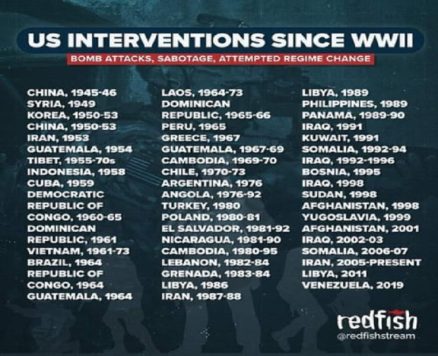
To be absolutely clear, India is not engaging in a so-called “explicit strategic alignment” with Russia, it’s simply advancing its objective national interests by remaining neutral in the Ukrainian Conflict and refusing to sacrifice its own for America’s sake. By default, however, the zero-sum unipolar hegemonic perspective embraced by US strategists influences them to regard this balanced policy as supposedly “taking Russia’s side” in the New Cold War. This false assessment is then in turn incorporated into its policy formulation towards that country, thus resulting in Deese’s ominous threat. Given the US’ decades-long track record of betraying former partners in the worst ways possible by orchestrating regime changes and even waging Hybrid Wars against them, India should be very concerned by what he just said.
America seems to be preparing for a fundamental change in its relationship with India, which will certainly affect the balance of interests in Eurasia. Thus far, New Delhi has been doing its utmost to retain that balance between itself, Russia, and China, ergo its policy of principled neutrality in order to ensure that Moscow doesn’t become disproportionately dependent on Beijing in response to the US-led West’s unprecedented pressure campaign. Nevertheless, India also hoped to retain excellent relations with the US at the same time in order to further synchronize the geo-economic aspects of their respective Indo-Pacific strategies. This grand strategic balancing act is now at risk of becoming unbalanced if the US unilaterally decides to worsen relations with India.
The form that this could take remains unclear, but the reader should remember that an intensification of information warfare against India as well as potential economic warfare and possibly even other more dangerous forms of Hybrid Warfare can’t be discounted due to the US’ track record. Security threats will spike in the event that the Pakistani and/or Sri Lankan governments are overthrown throughout the course of the ongoing “South Asian Spring” regime change campaign that the US has unleashed throughout the region. With these forecasts in mind, it’s of the highest importance that the South Asian states seriously consider reviving the South Asian Association for Regional Cooperation (SAARC) in order to advance “regional solutions for regional problems” and thus thwart the US’ plots.
Andrew Korybko is an American political analyst.
US warns India over Russian weapons
Samizdat | April 6, 2022
US Secretary of Defense Lloyd Austin said on Tuesday that India’s continued purchase of Russian weapons systems is “not in their best interest,” and that there will be a “requirement” that leaders in New Delhi swap some of these systems for US and allied armaments. India is the world’s largest military importer, and counts on Russia for nearly half of its external supply of weaponry.
Austin was responding to a question from Representative Joe Wilson (R-South Carolina), who described India as a “treasured ally” of the US and “the world’s largest democracy.” What, Wilson asked Austin, could the US do to convince “Indian leaders to reject Putin and align with its natural allies of democracy?”
Austin responded that the US has “the finest weapons systems in the world,” and would offer them to New Delhi.
“We continue to work with [India] to ensure that they understand that it’s not in their … best interest to continue to invest in Russian equipment,” Austin told the members of the House Armed Services Committee. “And our requirement going forward is that they downscale the types of equipment that they’re investing in and look to invest more in the types of things that will make us continue to be compatible,” he added.
Austin is not the first US official to talk of boosting arms sales to India. Former President Donald Trump inked a $3 billion arms deal with Indian Prime Minister Narendra Modi in 2020, selling India Apache helicopters and Hellfire missiles, in an apparent bid to counter China in South Asia.
Despite this boost in sales, the US remains India’s third-largest arms supplier, providing just 12% of New Delhi’s lethal imports between 2017 and 2021. France provides 27% of India’s imported weapons, while Russia provides a whopping 46%, with all figures supplied by the Stockholm International Peace Research Institute.
This partnership dates back to the Cold War, when India, as a founding member of the Non-Aligned movement, bought weapons from the Soviets without ever entering into a formal alliance with the USSR. According to some analysts, 85% of major Indian weapons systems to this day are of Russian or Soviet origin.
These include the Indian Air Force’s Su-30, MiG-21 and MiG-29 fighter aircraft, the Indian Army’s T90MS main battle tank, and the Indian Navy’s sole aircraft carrier, the Russian-built INS Vikramaditya. Furthermore, despite intense pressure from Washington, including veiled threats of sanctions, New Delhi has pressed ahead with acquiring the Russian S-400 air defense system.
It is unclear which weapons systems Austin wants India to “downscale” its investment in, but allied purchases of the S-400 in particular have irked Washington in the past. Turkey bought the Russian system despite repeated warnings from the US, and was sanctioned and booted from the F-35 fighter program in 2019 in response.
Austin’s call to divest comes as the US pressures other world powers to back its attempts to isolate Russia following the latter’s military offensive on Ukraine. While European nations have heeded the call and sanctioned Russia – even to the detriment of their own economies – India has refused to abandon its neutral stance and has continued to trade with Russia, despite the White House’s protestations.
The Rich Are Taking the Poor to the Cleaners on ‘Green’ Energy in Countries That Can Least Afford It
By Vijay Jayaraj | The Western Journal | March 30, 2022
Approximately 1.3 billion Indians have been informed that their cooking gas price will go up by 65 cents per liter. In a country like India, higher fuel prices can have quick and dangerous repercussions, resulting in greater morbidity and mortality.
The situation is similar in other developing countries and the poor economies of the African continent. Unfortunately, the establishment media does not sufficiently report on how hostility toward fossil fuels has contributed to the current energy crunch.
The populations of developing countries have been ill-served by leaders who waste precious resources on “green energy” infrastructure when they could have easily used those funds to improve the production and importation of coal, oil and natural gas.
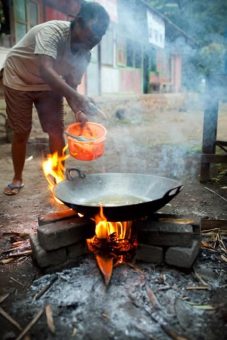 Consider India and Vietnam, two fast-growing Asian economies that have been undone by the “green” distraction that has squandered their domestic energy security in the name of climate wokeism.
Despite the acceleration of coal production, India finds itself in an energy mess thanks to billions of dollars invested in poorly performing renewable energy technologies. Between 2014 and 2019, India’s renewable energy industry received $64.4 billion in investments.
The country instead could have directed money to reliable and affordable coal power plants that would have cost only a fraction of the “green” boondoggles. In 2016, India’s renewable energy investment was equivalent to the construction costs of 11 coal power plants. Likewise, several small-scale oil refineries could have been commissioned and made operational in the last 10 years, reducing the need to import refined fuel at higher prices.
Many argue that a country like India is already using too much fossil fuel. But this argument falls flat when the nation raises fuel prices for those who can least afford it. There are 230 million people in India who earn less than $5 per day. For these people, and millions of middle-class households, the hike in fuel prices means an increase in commodity and transportation costs and an overall stagnation of economic development.
Another rapidly growing Asian economy is Vietnam, where leaders appear committed to increasing the share of “green” technologies in the energy market. This ignores problems created by the country’s move away from fossil fuels.
During the past many weeks of volatile oil prices, analysts have rued Vietnam’s missed opportunity to strengthen its domestic oil and gas infrastructure. Since February, gas retailers have faced severe shortages, with more than 300 petrol and oil retailers across the country stopping sales.
Situations like these could have been minimized had the country not been apathetic about energy security. A key reason for high gas prices is decreased production at Nghi Son Oil Refinery, which did not receive enough government support to avoid financial difficulties and a 90 percent reduction in output in January. The refinery serves 35 to 40 percent of the domestic petrol market.
Economist Dinh Trong Thinh says, “When the plant’s production is unstable or has a problem, it will affect the Vietnamese petroleum market because the market share of Nghi Son refinery is large. The risk of a factory shutdown is an important issue for the petroleum sector in particular and the economy in general, which urgently needs the intervention of state management agencies.”
However, this urgency is not reflected in government actions to retain an environmental tax that boosts fuel prices and continued investing in renewable energy projects that do nothing to improve energy security.
It is time that developing economies stop experimenting with proven failures like wind and solar and start developing infrastructure that can address international price volatility.
Vijay Jayaraj is a contributing writer to the CO2 Coalition and holds a master’s degree in environmental sciences from the University of East Anglia, England. He resides in Bengaluru, India.
Pakistani PM commends India
Samizdat | April 2, 2022
Pakistani Prime Minister Imran Khan has complimented regional rival India for maintaining an “independent foreign policy” amid US and allied pressure to adopt a harsher stance toward Russia.
Speaking Friday after accusing Washington of “interference” in Pakistan’s internal affairs, Khan went on to praise New Delhi’s unwillingness to go along with a barrage of sanctions and economic restrictions against Moscow.
“They protect their independent foreign policy which is centered on its people,” he said, as cited by local media. “No country is respected unless it stands on its own two feet.”
Facing a no-confidence vote on Sunday after losing his parliamentary majority following multiple defections from his party, Khan’s remark was quickly denounced by political opponents, with the leader of the opposition National Assembly, Shehbaz Sharif, blasting him for talking up the policy approach of Pakistan’s top adversary.
“His recurring praise for [Indian Prime Minister] Narendra Modi’s foreign policy is an insult to the sacrifices of valiant Kashmiris braving Hindutva,” he tweeted, referring to a Muslim-majority population in northern India and a form of Hindu nationalism. “Among other things, the damage done to our foreign policy is incalculable,” Sharif added.
Khan, however, quickly shot back, saying that his rivals believe his “statements will anger America” and that “Pakistan cannot survive without its support.”
“They [the United States] order us. They say that if the no-confidence motion does not become successful, there will be consequences for Pakistan,” the PM went on, arguing that his administration will not join the “bloc politics to achieve the same objectives” against Russia.
The Pakistani leader previously said a “foreign country” was seeking to remove him from office and is driving the no-confidence vote, openly naming that nation as “America,” ostensibly by accident, during a televised address on Thursday. The government also summoned the acting US envoy in Islamabad over the alleged political meddling on Friday, which it denounced as “blatant interference.”
Khan previously praised India’s “independent” policy in late March, stating that his own country, like New Delhi, would not “bow” to Western pressure to join the sanctions spree against Moscow. Despite international pressure and criticism for staying neutral, India adopted a pragmatic approach and continued purchasing Russian oil, even at a discount, to ensure the country’s own energy security.
US warns India not to help Russia undermine dollar
Samizdat | April 1, 2022
A top US national security official has called on India to scale back its economic and military ties with Russia, warning of “consequences” for any nation that helps Moscow avoid the recent wave of Western sanctions.
Speaking to reporters after meeting with Indian officials on Thursday, Washington’s deputy national security adviser for international economics, Daleep Singh, urged New Delhi not to boost Russian energy imports, and to avoid any moves that might “undermine” the US dollar.
“What we would not like to see is a rapid acceleration of India’s imports from Russia as it relates to energy or any other any other exports that are currently being prohibited by the US,” he said, adding that the United States is “very keen for all countries, especially our allies and partners, not to create mechanisms that prop up the ruble and that attempt to undermine the dollar-based financial system.”
While condemning Russia’s “needless war” on Ukraine, Singh said his visit to India was “in a spirit of friendship to explain the mechanisms of our sanctions,” but nonetheless warned that there would be “consequences [for] countries that actively attempt to circumvent or backfill” those penalties.
Asked what those consequences could entail, the adviser declined to elaborate, saying that was part of “private discussions that I’m not going to share publicly.”
Singh’s remarks followed reports that Moscow and New Delhi are currently working out a rupee-ruble payment system, which would allow the two nations to conduct bilateral trade in each others’ currencies. India also recently agreed to buy a quantity of Russian crude oil at a discount, an unpopular decision with the US and some allies, who have embarked on a punitive sanctions campaign designed to isolate Russia’s economy and wreck the ruble.
Russian Foreign Minister Sergey Lavrov also visited the Indian capital on Thursday, coinciding with official meetings with Singh as well as UK Foreign Secretary Liz Truss.
Though American, Australian and British officials have criticized India’s refusal to go along with the sanctions spree, US State Department spokesman Ned Price insisted that Washington is not “seeking to change” any nation’s “relationship with the Russian Federation,” citing India in particular.
“What we are seeking to do, whether it is in the context of India or other partners and allies around the world, is to do all we can” to ensure that “the international community is speaking in unison,” Price added in comments on Lavrov’s trip.
Often portrayed as the “architect” of the US sanctions regime on Moscow, Singh went on to cite growing ties between Russia and China, cautioning that their partnership could have major consequences for India, which has long been locked in a territorial dispute with Beijing along the Sino-Indian border.
“If you set that against the reality that China and Russia have now declared a no limits partnership, and that Russia has said that China is its most important strategic partner, by extension, that has real implications for India,” he said, claiming that Moscow would not “come running to India’s defense” in the event of a Chinese incursion.
Featured Video
Your Enslavement Begins in Gaza: The ‘Board of Peace’
or go to
Aletho News Archives – Video-Images
From the Archives
The US: The Century of Lost Wars
By James Petras | Global Research | September 12, 2018
Introduction
Despite having the biggest military budget in the world, five times larger than the next six countries, the largest number of military bases – over 180 – in the world and the most expensive military industrial complex, the US has failed to win a single war in the 21st century.
In this paper we will enumerate the wars and proceed to analyze why, despite the powerful material basis for wars, it has led to failures. … continue
Blog Roll
 Aletho News
- Israel, not America, first: Carlson’s Huckabee interview lays bare US foreign policy priorities
- Israeli troops executed Palestinian aid workers at ‘point blank range’: Report
- Iran war What if today’s Iran is resigned to a long, hellish war with the US?
- Why Israel Is Escalating Its War Crimes Against Lebanon
- Iran in the face of the armed diplomacy of imperialism
- The US build-up around Iran constitutes strategic war option, not ‘deterrence’
- Iran to US: Sanctions and war failed; try diplomacy and respect
- China supplies Iran with radar, surveillance tech to track US stealth aircraft: Report
- Zelensky rejects territorial concessions to Russia
- German leader of EU’s largest faction sounds the alarm of possibility of right-wing forces coming to power in France, Poland
- If Americans Knew
- Maria Farmer: Epstein Victim Reveals Explosive Information Covered Up by Media
- Average of five Palestinians killed by Israel every day in Gaza since ceasefire – Not a ceasefire Day 136
- Palestinian church leaders admonish Christian Zionist Mike Huckabee – Not a ceasefire Day 135
- Ominous messaging from Trump’s “Board of Peace” – Not a ceasefire Day 134
- ‘Christians Out’: Jerusalem Church Tagged With Hate Graffiti, Police Investigating
- Israeli Settlers Kill American Teen
- ‘We returned from hell’: Palestinian journalists recount torture in Israeli prisons
- No mercy for Gaza in Ramadan – Not a ceasefire Day 133
- The Israeli Government Installed and Maintained Security System at Epstein Apartment
- Tucker Carlson interrogated in Israel, has passport seized after interviewing US ambassador
- No Tricks Zone
- New Research Reaffirms Clouds, Aerosols, And Surface Solar Radiation Are ‘Driving The Climate System’
- Germany: Electric Car Catches Fire At Charging Station, Sets Off Local “Inferno”, Widespread Damage
- New Study: Canada’s New Brunswick Was 1°C Warmer Than Today During The Medieval Warm Period
- Coal Power Back In Trend As Globe Tries To Keep Pace With Growing Demand For Power
- New Study: A 4°C Warmer Beaufort Sea Had ‘No Sea Ice’ 11,700 – 8200 Years Ago
- Unfudging The Data: Dutch Meteorological Institute Reinstates Early 20th Centruy Heat Waves It Had Erased Earlier
- German Gas Crisis…Chancellor Merz Allegedly Bans Gas Debate Ahead of Elections!
- Pollen Reconstructions Show The Last Glacial’s Warming Events Were Global, 10x Greater Than Modern
- Germany’s Natural Gas Storage Level Dwindles To Just 28%… Increasingly Critical
- New Study Rebuts The Assumption That Anthropogenic CO2 Molecules Have ‘Special’ Properties
 Aletho News