India Responded To Trump’s Mediation Proposal By Killing More Kashmiris
By Andrew Korybko | EurasiaFuture | 2019-08-05
India defiantly responded to Trump’s mediation proposal by killing more Kashmiris and concocting yet another “politically convenient” conspiracy theory about so-called “Pakistani-backed terrorists” there in order to distract the world from its plan to unleash a wave of “Weapons of Mass Migration” that might forever change the demographic balance of this disputed territory to its long-term favor.
Modi’s Response To Trump
The situation in Indian-Occupied Kashmir (IOK) and along the Line of Control (LoC) is almost worse than it’s ever been before after New Delhi’s latest aggressive actions there that can be interpreted as an asymmetrical response to Trump’s recent mediation proposal. The US’ new military-strategic ally rejected the President’s earlier claims that Modi requested his assistance in mediating an end to the decades-long Kashmir Conflict, which coincided with increased shelling along the LoC that started during Pakistani Prime Minister Khan’s very successful visit to Washington last month and continues to this day. These provocations were shortly thereafter followed by the concocting of a “politically convenient” conspiracy theory about so-called “Pakistani-backed terrorists” there in order to distract the world from India’s egregious human rights abuses against the people of Kashmir and its illegal use of cluster bombs in targeting civilians on the Pakistani side of the LoC.
“Weapons Of Mass Migration”
While all of this might seem like a random flare-up of violence to the unaware observer, there’s actually a method behind the madness in that India is preparing to unleash a wave of “Weapons of Mass Migration” that might forever change the demographic balance of this disputed territory to its long-term favor. There were suspicions that the recent dispatch of over 20,000 more paramilitary forces to IOK wasn’t just to “protect Hindu pilgrims” like the Indian media alleged, but to reinforce the over half a million forces that are already there ahead of what turned out to be the repealing of constitutional clauses that guarantee a relative degree of “autonomy” for the region and prevented non-residents from purchasing property there. The implications of doing away with this special policy are enormous because they could lead to the large-scale influx of foreigners that would almost certainly provoke another wave of armed resistance from the desperate locals.
Machiavellian Perception Management
Anticipating this, India knew that it would inevitably have to dispatch more military forces to IOK, but it wanted to do so under the cover of a “publicly plausible” pretext in order to avoid international criticism, ergo the excuse of the latest reinforcement measures being due to what it claimed was the threat posed by “Pakistani-backed terrorists” to Hindu pilgrims. It then initiated a new round of shelling across the LoC, using cluster bombs in order to guarantee a response that it could then decontextualize and deceptively misportray as “Pakistani aggression”. This in turn led to New Delhi ordering non-Muslims to leave the region “in the interests of (their) safety and security” when the real reason that all of this is happening is so that they’re not caught up in the impending wave of violence that might soon be unleashed after the authorities revoked Kashmir’s “autonomous” status a little more than a week before India’s independence day later this month.
Exposing The Plot
This Machiavellian plot might very well backfire, though, because Pakistan is already preemptively exposing it in the international informational sphere and proving that there’s a reason why India can be regarded as a rogue state nowadays. Prime Minister Khan even tweeted about it too, thereby ensuring that the rest of the world pays more attention to Pakistan’s serious concerns about the deteriorating security situation along the LoC and the ever-worsening humanitarian one in IOK. In addition, India’s regional aggression is a personal affront to Trump’s peacemaking efforts, which might trigger him to double down on the game of “hardball” that he’s playing with it lately. The Democrats could also sense a self-interested political opportunity to put pressure on his administration by demanding that they cease further security cooperation with India until it stops its human rights violations in Kashmir, just as they’ve tried to do vis-a-vis Saudi Arabia and Yemen earlier this year.
Self-Inflicted Damage
Whichever way one looks at it, India’s recent aggression is counterproductive to its own interests. The country’s carefully crafted international image of supposedly being the peaceful land of Bollywood and yoga is shattered, and any revocation of Kashmir’s “autonomy” will return the region to being a global flash point, to say nothing of making it even more difficult for the military to indefinitely perpetuate its occupation in the face of heightened resistance from the locals. India had the chance to change history by admitting that it asked Trump to mediate in Kashmir and then taking his public disclosure of this secret as a signal to start that process, but it instead tried to make a fool out of him by pretending that no such request was ever made. Such strategic missteps as that one and the aforementioned risk isolating India even more in the international community and could even endanger its very existence in the event that they eventually lead to a hot war with Pakistan.
India strips Kashmir of autonomous status; Pakistan warns of ‘all options’
Press TV – August 5, 2019
The Indian government has scrapped the special autonomy status for the disputed region of Kashmir as part of attempts to fully integrate the Muslim-majority region with the rest of the country.
The Indian Ministry of Home Affairs announced on Monday that India’s President Ram Nath Kovind had signed a decree abolishing Article 370 of the constitution that grants a measure of autonomy to Jammu and Kashmir, including the right to draft its own laws.
The decree declared the measure came into force “at once.”
The president also moved a bill proposing that the Indian-administered part of Kashmir be divided into two regions directly ruled by New Delhi.
The government in New Delhi lifted a ban on property purchases by people from outside Jammu and Kashmir, opening the way for Indians to invest and settle in the disputed region like any other part of India, a measure likely to provoke a backlash in the territory.
The controversial move came after large parts of the Muslim-majority territory was placed under lockdown, with mobile networks, internet services and telephone landline services having been cut.
Moreover, prominent political leaders in the Indian-administered region of Kashmir were placed under house arrest and the Indian paramilitary forces deployed thousands of extra troops across the region, raising fears of a crackdown.
Indian Prime Minister, Narendra Modi, had earlier pushed for radical political changes in Jammu and Kashmir even before he won a re-election in May.
Modi said the old laws had hindered Kashmir’s integration with the rest of India.
Pakistan slams ‘illegal’ India move in Kashmir
The Indian government’s move on Monday to strip Kashmir of the special autonomy it has had for seven decades prompted a furious response from nuclear-armed rival Pakistan.
Pakistan’s foreign ministry denounced the move as “illegal” in a statement, saying, “as the party to this international dispute, Pakistan will exercise all possible options to counter the illegal steps.”
Meanwhile, a senior Pakistani security source said that a meeting of the Pakistani military’s top commanders had been called for Tuesday.
Kashmir has been split between India and Pakistan since it was partitioned in 1947. Both countries claim all of Kashmir and have fought three wars over the territory.
Indian troops are in constant clashes with armed groups seeking Kashmir’s independence or its merger with Pakistan. India regularly accuses Pakistan of arming and training militants and allowing them across the restive frontier in an attempt to launch attacks. Pakistan strongly denies the allegation.
In recent years, southern Kashmir has seen intense fighting between Indian forces and armed Kashmiri fighters, who are demanding independence for the Himalayan region.
The conflict has left tens of thousands dead, mostly civilians.
Is India Preparing To Unleash “Weapons Of Mass Migration” In Kashmir?
By Andrew Korybko | Eurasia Future | 2019-07-30
A Military Deployment For Political Ends
The indigenous population of Indian-occupied Kashmir is becoming seriously concerned that New Delhi is preparing to rescind Article 35A ahead of the country’s upcoming independence day celebrations next month following the planned deployment of 20,000 more paramilitary forces to the region. The aforementioned provision bars non-residents from purchasing property there, which was thought at the time to be a clever tactic for quelling pro-independence unrest following India’s occupation of the formerly independent country. Popular international political commentator and former Indian diplomat Melkulangara Bhadrakumar, however, revealed in a recent op-ed curiously published just a few days before the phased deployment began that “the Modi government plans to integrate J&K by divesting or eroding some of its so-called ‘special status’”, hinting that there might be some credence to the locals’ concerns given that such a well-connected individual as Mr. Bhadrakumar himself thought it fitting to publicly make his “reasonable guess” at such a coincidental time.
No Comparison To China
Should this scenario come to pass, then it could dangerously lead to the disruptive large-scale influx of foreigners along the lines of Ivy League scholar Kelly M. Greenhill’s “Weapons of Mass Migration” model whereby demographic changes in a targeted area are triggered and/or manipulated by certain actors for strategic ends. The Indian government no doubt considers occupied Kashmir to be what it terms as an “integral part of the country” despite its internationally disputed status and previous UNSC Resolutions being passed in the past demanding that the locals be allowed to hold a plebiscite on their political status, which is why it would frame events as a “purely internal matter” and might even provocatively attempt to draw comparisons to the situations in China’s Tibet and Xinjiang Autonomous Regions in order to deflect criticism (though doing so might also counterproductively provoke its own separate criticism from other quarters). Such a comparison would be very deceptive, however, since both Chinese regions are universally recognized components of the People’s Republic whereas Kashmir isn’t regarded the same way vis-a-vis India.
The Khalistan Factor
This means that the large-scale movement of Han and other Chinese from elsewhere in the People’s Republic to Tibet and Xinjiang is by legal definition a purely internal matter, whereas the large-scale movement of Indians to Kashmir is a purely international one because of the region’s UN-recognized status as a disputed territory. India’s motivations in curtailing some of Kashmir’s “autonomy” at this specific moment might also stem from the increasingly popular Khalistan movement in neighboring Punjab, which has revived interest in the revolutionary 1973 Anandpur Sahib Resolution‘s decentralization principles and could eventually form the core of an alternative national vision to the ruling Hindutva one. It could partially be because of those fast-moving developments that the Indian government is panicking and wants to gradually remove as much of the occupied Kashmiris’ “autonomy” as possible in order to preempt the scenario of the other minority-majority regions under its control demanding similar rights as well after becoming reacquainted with the aforementioned manifesto and realizing that there’s no reason why they can’t have their own special status too.
A Dangerous Mistake
As the Modi government has been prone to do over the past half-decade, this speculated policy would represent yet another massive mistake if it’s ever implemented. Not only has the planned military deployment already generated intense talk about occupied Kashmir’s “autonomy” — thus negating the possible purpose of keeping such discourse out of the national discussion following the revival of the Khalistan movement — but it could also lead to more forceful resistance from the locals who fear an impending demographic invasion of ‘Weapons of Mass Migration”. Modi clearly wants to deliver on his party’s recent election promise to eliminate Articles 370 and 35A granting “autonomy” to Kashmir and the right to residents to be the sole purchasers of property in the occupied region respectively, but the blind devotion to electioneering rhetoric could prove to be extremely dangerous in this context because of the high likelihood that it’ll backfire by drawing intense international condemnation and possibly even provoking uncontrollable violence.
‘Nuclear war is not an option’: Pakistani PM says he’d give up nukes if India did so too
RT | July 23, 2019
In a stunning statement, Pakistan’s Prime Minister Imran Khan said that he would be willing to give up his nation’s nuclear weapons if its rival India vowed to do the same. He also urged New Delhi to come to the negotiating table.
When asked by Fox News’ Bret Baier if India offered to relinquish it nuclear arsenal, would Pakistan, Khan answered with an emphatic “yes.”
“Because nuclear war is not an option. And between Pakistan and India, the idea of nuclear war is actually self-destruction, because we have two and a half thousand-mile border,” Khan said.
The Pakistani PM added that the recent escalation in tensions between the two nuclear rivals, following sporadic outbreaks of violence in the aftermath of a major terrorist attack, was unnecessary.
Khan said he had asked US President Donald Trump to mediate between the two regional powers over the Kashmir issue, which Khan said was the only reason for which, over the past “70 years that we have not be able to act like civilized neighbors.”
Khan played down India’s fiery response to reports of potential talks mediated by the US, in which New Delhi insisted that negotiations could only take place bilaterally. He instead urged India’s government to come to the table.
“We’re talking about 1.3 billion people on this Earth. Imagine the dividends of peace if somehow that issue could be resolved.”
If no CAATSA for Turkey, none for India either
By M. K. BHADRAKUMAR | Indian Punchline | July 18, 2019
President Trump’s statement on July 17 to block the sale of the advanced F-35 jet to Turkey and to remove Turkey altogether from the fighter jet programme marks an inflection point in the Turkish-American relations.
The development has profound implications for India as well, which is also procuring the S-400 Triumf anti-ballistic missile system from Russia.
Trump timed his decision on Turkey accepting the delivery of components of the Russian S-400 system last Friday. Washington is not holding back until the system has been fully delivered or deployed (in April next year, according to Turkey) or even for Turkish military personnel to receive training for Russia to operate the system. Washington estimates that it’s a done deal, a fait accompli.
Trump’s main argument is that S-400 is a “Russian intelligence collection platform that will be used to learn about its [F35] advanced capabilities.” He regretted that Turkey didn’t accept the US’s counteroffers “to meet its legitimate air defense needs” — specifically, its “multiple offers” on the Patriot system.
Trump brought the NATO into his argument, saying that the S-400 “undermines the commitments all NATO Allies made to each other to move away from Russian systems” and will have “detrimental impacts on Turkish interoperability with the Alliance”.
However, he went on to acknowledge Turkey’s record as a “longstanding and trusted partner and NATO Ally for over 65 years”, the great value Washington still attaches to its strategic relationship with Turkey, and the two countries’ relationship as NATO allies, which is “multi-layered, and not solely focused on the F-35.”
Trump concluded, “Our military-to-military relationship is strong, and we will continue to cooperate with Turkey extensively, mindful of constraints due to the presence of the S-400 system in Turkey.” Trump’s message is that this is the irreducible minimum he’s compelled to do under the circumstances. He eschewed any accusatory tone.
Importantly, Trump didn’t mention a word about sanctions under the legislation known as Countering America’s Adversaries Through Sanctions Act (2017) or CAATSA, which threatens third countries with sanctions over any “significant transactions” — defined as deals above $15 million — with Russian defense industry.
But then, it is useful to recall that even while signing the CAATSA into law in August 2017, Trump had stated that he believed the legislation was “seriously flawed — particularly because it encroaches on the executive branch’s authority to negotiate.” He said he’d implement it “in a manner consistent with the President’s constitutional authority to conduct foreign relations.”
So, Erdogan was right when he claimed after meeting Trump on the margins of the G20 in Osaka that the latter reassured him that there would be no sanctions. In Erdogan’s words, “We heard from him [Trump] that there won’t be anything like this [sanctions]. It is out of the question that such a thing takes place between two strategic allies. I believe it cannot happen.”
Indeed, Trump himself at a press conference in Osaka had refused to blame Turkey for its S-400 deal with Russia and instead flagged that Ankara was forced into the deal by the Obama administration. Trump added: “So what happens is we have a situation where Turkey is very good with us, very good, and we are now telling Turkey that because you have really been forced to buy another missile system, we’re not going to sell you the F-35 fighter jets?”
“It’s a very tough situation that they’re [Turkey] in, and it’s a very tough situation that we’ve been placed in, the United States. With all of that being said, we’re working through it, but it’s not really fair. Because they bought a Russian system, we’re not allowed to sell them billions of aircraft. It’s not a fair situation.”
To be sure, the CAATSA also gives Trump much discretion to waive sanctions on countries that buy Russian weapons. The waiver language was reportedly included to accommodate allies India and Vietnam. Now, isn’t Turkey an ally, too? But US Secretary of State Mike Pompeo told the Washington Post on Sunday he was confident the president would levy sanctions as CAATSA requires. “The law requires that there be sanctions and I’m confident that we will comply with the law and President Trump will comply with the law,” Pompeo said.
What explains Pompeo’s hawkish line on Turkey? Principally, in the Washington Beltway the Israeli lobby is hyperactive among think tankers, politicians, media people, etc. Under Erdogan, Turkey’s relations with Israel nosedived, as he openly began supporting the Hamas. Erdogan has likened Israel more than once to Nazi Germany, triggering hot exchanges with PM Benjamin Netanyahu. Israel has vowed to demonise Erdogan and take him down somehow.
Indeed, can India draw comfort from the above? Some tentative conclusions can be drawn. For a start, the crunch time comes by early 2021. The latest news from Moscow is that the issues concerning the mode of payments by India have been resolved and deliveries of S-400 Triumf missile systems are “planned to start after 2020 in accordance with the agreement.”
At any rate, there is nothing like an Indophobia prevalent in the US even if there are differences in the relationship. Trump will have a hard time imposing sanctions against India after being indulgent toward Turkey. The lawmakers are not going to cry for India’s blood if Trump grants a waiver. Basically, Trump has an aversion toward CAATSA, too.
The minions in his administration or the hangers-on in the think tanks (such as Ashley Tellis at the Carnegie, for example) periodically threaten India with CAATSA. But do they speak for Trump? (In fact, Erdogan said Trump told him in Osaka not to take them seriously.) Clearly, many of these minions who wave the Damocles’ sword at India have their own axe to grind, since they act as dalals for US arms manufacturers and keep hustling the Modi government to grant more arms deals to placate Trump. But in reality, for almost the same reasons that the US cannot do without its alliance with Turkey, India too is not easily replaceable in the US’ Indo-Pacific network of partnerships.
India has much to learn from Erdogan’s way of handling the issue. He stuck to his guns after carefully weighing that the S-400 ABM system’s induction boosts Turkish defence capability. He is even prepared to forgo the F-35. Analysts estimate that Turkey may simply turn elsewhere to procure weapons. Moscow has already indicated openness to selling its latest fighter jet, the Su-57 to Turkey.
The Turkish Foreign Ministry has warned that Washington’s decision on the F-35 jet will “irreparably damage relations” and that the unilateral move “neither complies with the spirit of alliance nor is it based on legitimate grounds.” The statement added, “It is unfair to remove Turkey, one of the main partners in the F-35 program.”
The cardinal lesson India can learn from Erdogan is that defending national interests will always come at a high price, especially when a superior power is involved. Turkey has a long history, situated on the outskirts of the western world, with searing experiences to recount through centuries. India too has a painful colonial history. (See an analysis by the European Council on Foreign Relations titled Unhappy anniversary: Turkey’s failed coup and the S-400.)
Israel Gets $50 Million Contract to Supply Air Missile Defence Systems for Indian Warships
Sputnik – July 17, 2019
State-owned Israel Aerospace Industries (IAI) on Wednesday announced a $50 million deal to supply complementary MRSAM (medium-range surface-to-air missile) systems to the Indian Navy and the Mazagon Dock Shipbuilders. The Israeli firm will also supply compatible systems for the Air Defence Systems (ADS).
The Indian Navy will equip its major warships with MRSAM to defend against incoming anti-ship missiles.
“The deal involves a follow-up order for a range of maintenance and other services for various sub-systems of IAI’s advanced MRSAM ADS,” the company said, adding the contract is a “breakthrough as it advances us from system development and delivery to looking after the operational needs of our customers”.
The MRSAM is the successor to the Barak missile that currently equips many navy ships. The Barak missile, having a range of 10-15 km, can successfully engage current generations of anti-ship missiles such as the Harpoon and the Exocet. The long-range version of the missile was developed under an agreement signed between New Delhi and Tel Aviv in 2006. The upgraded version of the missile has a range of over 70 km.
The MRSAM is considered more manoeuvrable and is capable of engaging next-generation anti-ship missiles.
On 30 January 2019, the Israeli firm announced a $93 million contract with the Indian Navy and Cochin Shipyard Limited (CSL), to provide systems complementary to the MR-SAMs. Last year, it won $777 million in contracts to supply additional Barak-8 MRSAM systems to the navy.
India’s first indigenous aircraft carrier INS Vikrant will be equipped with Israeli missile defence systems.
The Barak-8 system was developed by IAI in collaboration with Israel’s MOD, India’s DRDO (Defence Research and Development Organization), the navies of both countries, IAI’s ELTA Group, RAFAEL and other industries in India and Israel.
Trump is finished with the Afghan war
By M. K. BHADRAKUMAR | Indian Punchline | July 4, 2019
There could be several ways of interpreting the US State Department’s decision on Tuesday to designate the Baloch Liberation Army (BLA) as a Specially Designated Global Terrorist, which imposes economic sanctions on the group and anyone affiliated with it. What is absolutely certain is that this is by no means an altruistic decision by Washington.
The BLA is based in Afghanistan and has been waging a violent armed struggle against Pakistan for the past decade and a half upholding the right of self-determination of the Baloch people and demanding the separation of Balochistan province from Pakistan, apart from being involved in ethnic-cleansing of non-Baloch minorities in Balochistan.
Curiously, the BLA’s timeline (starting from 2004) has been co-terminus with the US’ occupation of Afghanistan. It is inconceivable that the US and NATO forces in Afghanistan were unaware of the BLA’s subversive activities or who were its mentors. Islamabad has been shouting and screaming from the rooftop all this while that its adversaries exploited the group as a proxy to destabilise Pakistan.
Put differently, the timing of the State Department decision banning the BLA is noteworthy. Why now, at this juncture?
These are extraordinary times when almost anything and everything that the US does in the Greater Middle East would have an eye on Iran with which it is locked in an epochal rivalry. Can it be that by making this gesture, Washington hopes to recruit Pakistani military and intelligence to strengthen further its ‘maximum pressure’ strategy against Iran? The possibility cannot be ruled out.
Of course, this is not to suggest that Pakistan will make hostile moves against Iran. Although Pakistan-Iran relations have been highly problematic through the past four decades since the 1979 Islamic Revolution, and their mutual animosity kept frothing from time to time, things never reached a flashpoint as both sides observed certain ground rules of how far to go and what not to do. In the present context, Pakistan will take utmost care not to get entangled in the US-Iran standoff.
Having said that, there is a vital US-Pakistani convergence over Iran that cannot be overlooked, either. That is, when it comes to the Afghan situation. Iran has made it clear that if the US attacks it, it will retaliate against American assets all across the region. There have been two statements at least by senior US officials lately that Iran is moving against American assets in Afghanistan. Iran, of course, has stoutly rejected the allegation, but the US is paranoid — and not without reason.
The point is, apart from the traditional links with the Shi’ite groups in Afghanistan, Tehran also has dealings with the Taliban. Coincidence or not, Washington moved against the BLA within days of an incident in the eastern Afghan province of Wardak on June 26 in which two US soldiers were killed by the Taliban in an ambush.
The incident took place only a day after after Pompeo stopped in the Afghan capital, Kabul, for daylong talks with Afghan President Ashraf Ghani as well as other senior leaders and opposition politicians to discuss two topics, namely, the US’ ongoing efforts to reach a peace agreement with the Taliban and the potential that Iran has to carry out actions that would jeopardise the US exit strategy out of Afghanistan. (Read a report in Geopolitics magazine entitled Two Topics Dominating Pompeo’s Visit to Afghanistan.)
In fact, the US apprehends that an extremely dangerous situation is arising in Afghanistan even as the withdrawal of American troops accelerates. President Trump disclosed in an interview this week with Tucker Carlson on FOX television that the US troop level has come down to 9,000 from 16,000 already. Trump made no bones about the fact that he is finished with the war in Afghanistan.
At one point in the interview, Trump bursts out, “I’d like to just get out.” Trump claims that he intends to keep a “very strong” intelligence presence in Afghanistan. He couldn’t care less anymore whether there will be a broad-based government in Kabul or a Taliban takeover. He’s well past that point of agonising. At one point, Trump implied to Carlson — who also happens to be an inveterate critic of America’s “endless wars” — that he no longer trusts the judgment or integrity of the military commanders. (By the way, Carlson accompanied Trump to the meeting with North Korea Kim Jong-Un in Panmunjom while NSA John Bolton was sent away to Mongolia.)
This is where Pakistani help becomes critical. Ghani’s government lacks legitimacy but the holding of a presidential election in September, as planned, depends heavily on a settlement with the Taliban. The US expects Pakistani help in three directions: one, persuading the Taliban to reach an agreement at the Qatar talks without any further delay; two, enabling the US to withdraw the troops expeditiously and in an orderly fashion; and, three, creating politico-security conditions to facilitate a peaceful transfer of power in Kabul. Of course, it is a tall order.
The Americans know that Iran can escalate in Afghanistan anytime it wishes. Afghanistan falls within the domain of the elite Quds Force of Iran’s Islamic Revolutionary Guard Corps, commanded by the legendary general Qassem Soleimani who was the bête noire of the US and Israel in Iraq and Syria. Of course, if Soleimani creates a hopeless situation like in Vietnam (which forced the US into a humiliating retreat from the rooftop of the American embassy in Saigon), that will be highly damaging for Trump politically in the midst of his campaign for the 2020 election. And that is precisely why Trump is impatient to cut loose and get out from Afghanistan without even waiting for the implementation of any peace agreement with Taliban.
All this should be a morality play for the Indian strategists and policymakers as they pick up the debris of their own Afghan policies and its $2 billion price tag, which has been predicated so heavily through the past decade and a half on the US strategy. Equally, this should be a wake-up call for the Indian lobbyists who still want to bandwagon with the US in other regional theatres such as Sri Lanka, the Maldives or Nepal. (See blog US eyes Sri Lanka as its military logistics hub.)
For sure, the Afghan war has not ended. Trump recalled poignantly that the 9/11 attacks were not staged by Afghans but the Hindu Kush provided the plotters a “lab for terrorists”. Now, the US can only take the word of the Taliban that such a thing will not repeat. Washington’s best hope will be that Pakistan will keep an eagle’s eye to ensure that the terrorists from Afghanistan will not come visiting the US.
In turn, that is going to create an interdependency between the US and Pakistan. The IMF bailout, the ban on the BLA, the near-certainty that Pakistan is off the hook at the upcoming plenary of the Financial Action Task Force, an official visit by Prime Minister Imran Khan to the White House — these are the starters from the US side. Pakistan is highly experienced in dictating the terms of engagement with the US.
US eyes Sri Lanka as its military logistics hub

Sri Lankan presidential aspirant Gotabaya Rajapaksa with the radical Buddhist monk Gnanasara Thera of Bodu Bala Sena. File photo.
By M. K. BHADRAKUMAR | Indian Punchline | July 3, 2019
The Easter Sunday terrorist attacks in Sri Lanka on 21st April in which 259 people were killed and over 500 injured were initially attributed to the Islamic State (IS). But no hard evidence is available to substantiate such a reading and it remains an open question as to the perpetrators.
The Sri Lankan President Maithripala Sirisena may have somewhat de-mystified the topic this week. On July 1, Sirisena charged at a public function that drug traffickers are behind the Easter Sunday bomb attacks. The following day he ordered the arrest of former Defense Secretary Hemasiri Fernando and the Inspector General of Police Pujith Jayasundara for their failure to prevent the Easter Sunday attacks despite prior knowledge of the attacks.
What lends enchantment to the view is that the United States had brilliantly succeeded in deploying to Sri Lanka the personnel of the Indo-Pacific Command within a couple of days of the Easter Sunday attacks on the pretext of investigating and assisting in Colombo’s upcoming fight against the IS. Historically, Sri Lanka is chary of allowing foreign military presence on its soil, but in this case Washington pressed home the deployment, since the ruling elite in Colombo was on the back foot, incoherent and in disarray in the immediate aftermath of the terrorist attacks.
In political terms, what Sirisena may have done this week is to reverse the ‘internationalisation’ of Sri Lanka’s terrorism problem. Indeed, for tackling a local drug mafia, Sri Lanka doesn’t need the expertise of the US’ Indo-Pacific Command.
This is just as well because in the downstream of the Easter Sunday attacks in April, Washington also began pushing hard for the signing of a Status of Forces Agreement (SOFA) with Sri Lanka, which Pentagon has traditionally demanded as the pre-requisite of establishment of military bases in foreign countries. (The SOFA establishes the rights and privileges of American personnel present in a host country in support of a larger security arrangement.)
Unsurprisingly, the Sri Lankan opinion militated against the SOFA project and suspected its real intentions. A huge uproar followed in the Sri Lankan media. Without doubt, the SOFA became yet another template of the power struggle between the staunchly nationalistic Sirisena and the famously ‘pro-western’ prime minister Ranil Wickremesinghe.
The net result is that the project which the US hoped to conclude in absolute secrecy, got derailed once the draft SOFA document under negotiation got somehow leaked to a Colombo newspaper. Interestingly, the US Secretary of State Mike Pompeo, who was scheduled to travel to Colombo following his recent visit to New Delhi was compelled to cancel the visit once it became apparent that the SOFA project has become a hot potato.
Meanwhile, the Empire strikes back. A case has been filed in the US District Court in central California by an American law firm claiming damages on behalf of alleged victims of human rights abuse during the war against separatist LTTE ten years ago. The plaintiffs have targeted Gotabaya Rajapaksa, then wartime defense chief and the younger brother of former president Mahinda Rajapaksa, as well as several government agencies, including military intelligence, the Criminal Investigation Department, the Terrorism Investigation Division, and the Special Intelligence Service, including some serving officials.
Of course, this is a blatant American attempt to put into jeopardy Gotabaya Rajapaksa’s plan to run for president in the upcoming Sri Lankan election in December. Gotabaya was a US citizen at the time of the war against the LTTE. He has dual citizenship and his request renouncing American citizenship is pending with Washington. Now, the catch is, the lawsuits in California could delay his bid to renounce his US citizenship, in which case he would not qualify to run for president under Sri Lankan electoral laws. Washington has tripped Gotabaya.
The US is making sure that the Rajapaksa family will not regain the calculus of power in Colombo following the December poll. Equally, the trial in California can expose former President Mahinda Rajapaksa as well — and even entangle Sirisena who had a direct role as acting defence minister in the final stages of the war. Clearly, Washington is interfering in the December election in Sri Lanka in a calibrated manner with a view to strengthen the prospects of a pro-American candidate such as Wickremesinghe or the Finance Minister Mangala Samaraweera who can be trusted to put the signature on the SOFA.
The US is determined to push ahead with the signing of the SOFA leading to the establishment of long-term American military presence in Sri Lanka. In August 2018, USS Anchorage, a Seventh Fleet vessel, and a unit of Marines visited the port of Trincomalee. In December 2018, the aircraft carrier USS John C. Stennis visited Trincomalee as part of the Pentagon’s plans to establish a logistic hub there for the US Navy. A Mass Communication Specialist on board USS John C. Stennis in a dispatch to the US Navy official web portal wrote:
“The primary purpose of the operation is to provide mission-critical supplies and services to U.S. Navy ships transiting through and operating in the Indian Ocean. The secondary purpose is to demonstrate the U.S. Navy’s ability to establish a temporary logistic hum ashore where no enduring U.S. Navy logistic footprint exists.”
The US disclaims any intention to set up military bases in Sri Lanka. This is factually true — except that it is sophistry. The US plan to use Sri Lanka as a ‘military logistics hub’ involves supportive measures that facilitate any American military operation in the Asia-Pacific region. Actually, this is well beyond the solitary use of a particular harbour such as Trincomalee as a military base. The point is, the entire island nation is being transformed into a ‘military logistics hub’.
Never before has there been such blatant US interference in Sri Lanka’s internal affairs. Washington tasted blood in the successful regime change project in January 2015 and it never looked back. The interference is so very extensive today that it is destabilising the Sri Lankan situation which is already highly polarised.
This is happening only due to India’s passivity bordering on acquiescence. The containment strategy against China in the Indian Ocean has become a common endeavour for Washington and Delhi. Is it in India’s long term interests that Sri Lanka is being destabilised, even if in the short term the Chinese Navy might be put to some difficulties in the Indian Ocean?
India’s medium and long term interests lie in regional stability. Its influence as a regional power is linked to regional stability. India cannot overlook that China has legitimate interests in our region. The US is a faraway power and is also in decline. It doesn’t make sense for India to bandwagon with the US in South Asia. A far more realistic approach will be to work with China and expand and deepen the common interests in regional security and stability.
‘Not Only Question of Oil’: M.K. Bhadrakumar Weighs in on Impact of US-Iran Escalation
Sputnik – July 1, 2019
US Secretary of State Mike Pompeo created a flutter of sorts last week, by saying that Washington and New Delhi have a shared understanding of the alleged threat posed by Iran.
The Indian government did not immediately react, restraining itself to saying, that all issues on the table between the two countries will be addressed in the context of national interests.
Over the last year, India has been following the standoff between the United States and Iran, in the context of its long-term economic effects on oil supplies. In the last financial year alone, according to government data, New Delhi imported 84 per cent of its crude from the conflict-prone Middle Eastern and West Asia region, including Iran. The US has ruled out any exemptions from its punitive sanctions on Iran for countries that buy oil from the latter, including India.
Bilateral ties between India and Iran are more than just a transactional relationship based on buying and selling crude. India’s foreign policy establishment is having discussions about Iran at various levels, understanding that the current crisis has numerous implications, says India’s former Envoy to Turkey and Uzbekistan M.K. Bhadrakumar.
Sputnik: US Secretary of State Pompeo’s recent statement that the US and India have a shared understanding of the threats posed by Iran created a flutter within the Indian foreign policy establishment, so much so, that New Delhi said Pompeo’s views did not reflect India’s position. What is your response?
Ambassador M.K. Bhadrakumar: Frankly, I don’t understand what Mr Pompeo meant when he said that the United States and India have a shared understanding of issues related to Iran. I don’t know what he meant by that, and I also don’t understand why our External Affairs Minister (S. Jaishankar) kept quiet about it.
Sputnik: In the context of India’s foreign policy initiatives under the present government of Prime Minister Narendra Modi, how much emphasis should be placed on the issue of oil imports from Iran?
M.K. Bhadrakumar: At the present moment, it is a very vital issue for India because it is not only a question of oil. In my opinion, India should also look at the emerging situation in terms of regional stability and security. This issue goes far beyond that of oil imports alone. It is about regional security and stability, and overall its impact on the Indian economy.
Sputnik: Can can you elaborate on the point about oil imports having an impact on the Indian economy?
M.K. Bhadrakumar: The belligerent and aggressive behaviour of the United States towards Iran has heightened tensions, and there is a lot of talk in the air, about the dangers of war. The United States is thousands of kilometres away. But this [the Persian Gulf region?] is India’s extended neighbourhood where nearly seven million Indians live and work.
Sputnik: The US maintains that Iran is the world’s largest state sponsor of terror. During his visit to New Delhi last week Secretary Pompeo said: “We know the Indian people have suffered from terror.” How would you assess this remark?
M.K. Bhadrakumar: I can recall the US Secretary of State saying that India is an affected party as a result of Iran’s behaviour and then characterising Iran as a supporter of terrorism. India has not experienced any such kind of threat nor has it harboured any such threat perceptions from Iran.
India’s concerns about terrorism are entirely different than those expressed by United States propagandists on Iran. What the United States says, or what Secretary Pompeo said just doesn’t make sense. I think India should have clarified its position right then and there.
Pompeo Might Have The Perfect Carrot To Dangle In Front Of Modi’s Mouth
By Andrew Korybko | EurasiaFuture | 2019-06-18
The US is planning to include India on its International Traffic in Arms Regulations (ITAR) list in order to place it at par with its NATO allies, “Israel”, and a few others for the export of high-level military technologies, which could be the perfect carrot for Pompeo to dangle in front of Modi’s mouth during his visit to the South Asian state next week in order to get him to ditch Russia, and it might actually end up being part of the “surprise” that he recently hinted he has in store for his hosts.
The Indian press is full of reports about the country’s possibly forthcoming inclusion on the US’ International Traffic in Arms Regulations (ITAR) list after two senators inserted the relevant amendments into a draft of the National Defense Authorization Act (NDAA) 2020. Should it pass into law by the end of the year, then India would be legally at par with America’s NATO allies, “Israel“, and a few others for the export of twenty categories of high-level military technologies including ballistic missiles, drones, spacecraft systems, nuclear weapons simulation tools, and directed energy weapons, et al. This could be a real game-changer for its military capabilities and help it to more confidently “contain” China at the US’ behest per their shared “Indo-Pacific” vision, though the Pentagon probably won’t allow India to have this privilege so long as it retains its military partnership with Russia.
Alice Wells, the head of the State Department’s South and Central Asia bureau, implied as much last week in a testimony to lawmakers about the possible consequences of India’s refusal to reconsider its S-400 deal with Russia, which she said could include both CAATSA sanctions and the imposition of severe limits on the country’s military interoperability with the US. If India bends to American pressure and ditches Russia in exchange for THAADs, Patriots, and possibly even F-35s like its Ambassador to the US strongly hinted New Delhi is deliberating doing, then it can avoid this self-inflicted harm to its new military-strategic alliance with Washington though at the expense of its old one with Moscow. The “surprise” that Pompeo suggested that he has in store for his hosts during his upcoming visit to the South Asian state next week might be a formal offer to put India on the ITAR list if it decisively pivots away from Russia.
Truth be told, that would be a pretty attractive carrot for Pompeo to dangle in front of Modi’s mouth and might even get the re-elected leader to finally bite the bait. India is obsessed with China and the global pivot state of Pakistan, and it’s the excessive fearmongering about the latter in response to the suspicious Pulwama incident and subsequent Bollywood-like “surgical strike” that’s largely believed to have been responsible for Modi receiving such a huge mandate at the polls last month, so it can’t be underestimated just how important New Delhi would regard this unprecedented expansion of its military-strategic alliance with Washington. Russia can’t provide India with the game-changing capabilities that it’s seeking in its quest to “contain” China and “punish” Pakistan, ergo why it began its pro-American pivot in the first place because the US is more than eager to meet New Delhi’s needs in order to advance their shared strategic objectives.
Even though the two allied Great Powers are presently in the midst of what the Mainstream and Alternative Medias are misinterpreting (and in some cases, deliberately misreporting) to be a so-called “trade war”, their economic disagreements with one another are completely separate from their military-strategic commonalities. It’s therefore very likely that Modi would be extremely receptive to Pompeo’s possibly proposed offer to place India on the ITAR list in exchange for it pulling out of the S-400 deal with Russia, especially since the US’ unique “Major Defense Partner” already clinched the LEMOA and COMCASA interoperability pacts with it, so the next natural step is to prepare it for receiving high-level military technologies in order to take their alliance to the next level. India’s playing “hard to get” in order to receive the best terms possible, but it seems to have already made up its mind about the necessity of agreeing to a deal, so all that’s left is to finalize the details.
India & Israel Are Officially Diplomatic Allies At The UN
By Andrew Korybko | EurasiaFuture | 2019-06-12
India just made history at the UN earlier this week, but in what’s sure to be interpreted as an ignoble way by the supporters of the emerging Multipolar World Order. Encouraged by the massive mandate that he received after his resounding re-election last month, Modi gave the go-ahead for his government to break with decades of its post-independence political traditions by unprecedentedly supporting “Israel” at the global body and voting against granting consultative status to a Palestinian NGO that allegedly has ties with Hamas.
The self-professed “Jewish State’s” deputy chief of mission in India praised this diplomatic pivot by tweeting “Thank you #India for standing with @IsraelinUN and rejecting the request of terrorist organization “Shahed” to obtain the status of an observer in #UN. Together we will continue to act against terrorist organizations that intend to harm”, in what certainly signifies that Modi’s second term in office will see his country more determinedly siding with the fading Unipolar World Order at the multipolar one’s expense.
India had hithero been trying to make inroads with the Organization of Islamic Cooperation (OIC), but its hopes for future progress on this front have likely been dashed by the self-inflicted soft power damage that it just did by diplomatically allying with “Israel” at the UN. Although Resistance leader Iran continues to beg India to reconsider its decision to abide by the US’ unilateral sanctions regime against it, it’ll now be doing so with the full knowledge that the South Asian state is officially one of its hated “Israeli” foes’ key allies in thwarting the attempts of the Palestinians to have a greater global voice in publicizing their plight. This would make the Islamic Republic’s further outreaches to India even more humiliating than before, possibly raising the chance that it might finally give up in order to save “face” and protect its hard-earned and very proud reputation as the world’s leading anti-Zionist state.
In parallel with this, the global pivot state of Pakistan is now by default the most prominent pro-Palestinian voice in South Asia, especially after Minister for Human Rights Dr. Shireen Mazari recently promised that her country will continue supporting the Palestinians and urged all her Muslim counterparts to do so as well. The fact of the matter is that the Palestinian and Kashmiri causes are inseparable because they’re essentially one and the same — the indigenous Muslim majority of each region have been oppressed by foreign occupiers for decades and have yet to be granted the right to democratically decide their own political futures. Actually, it’s precisely because of these interlinked conflicts that India and “Israel” initially began to ally with one another because they play the same roles in each of them. Accordingly, they’ve increased military cooperation to such a point that “Israel” is now India’s second-largest military supplier and India is “Israel’s” top arms destination.
It therefore shouldn’t be any surprise that India decided to add an official diplomatic dimension to its already-existing military-strategic alliance with “Israel” by supporting it at the UN against the Palestinians. Seeing as how the Indian side hasn’t protested the “Israeli” deputy chief of mission’s tweet thanking it for “rejecting the request of terrorist organization ‘Shahed’” and vowing that “together we will continue to act against terrorist organizations that intend to harm”, it can be logically assumed that New Delhi informally regards Hamas and all those allegedly affiliated with it as “terrorists”, which is only natural considering how fast its alliances with the US and “Israel” are progressing. As such, whether it concerns Russia, China, Iran, or even the Palestinian cause nowadays, India is no longer practicing its over-hyped policy of “multi-alignment” but is instead decisively pivoting against each of the aforesaid multipolar forces despite still clinging to this slogan in an unconvincing attempt to cover its tracks.
India’s Proposal For A Global “Terrorism” Conference Will Probably Backfire
By Andrew Korybko | EurasiaFuture | 2019-06-09
Indian Prime Minister Modi proposed a global “terrorism” conference while speaking in the Maldives during his first foreign trip following last month’s resounding re-election victory, but while this idea is obviously intended to contribute to his failed policy of “isolating” the global pivot state of Pakistan, it’ll probably backfire by drawing attention to his country’s policy of state terrorism against the Kashmiris, providing a platform for India’s new American-“Israeli”-Saudi allies to fearmonger about Iran, and putting Russia and the US in an awkward position for their diplomatic peacemaking ties with the Taliban.
Shifting The Blame For Regional Instability
Indian Prime Minister Modi is on his first foreign trip since winning a resounding re-election victory last month, during which time he told the Maldivian parliament that the world needs to urgently convene a global conference on “terrorism”. His supplementary remarks about “state-sponsored terrorism” and how some “people still try to create notions of ‘good terrorist, bad terrorist’” were interpreted as being aimed against the global pivot state of Pakistan’s political support for the Kashmiri freedom movement that India regards as “terrorists”, strongly insinuating that the intent behind Modi’s initiative is to contribute to his failed policy of “isolating” Islamabad. India also wants to deflect from the negative attention that it received worldwide after being exposed as the real rogue state in South Asia after it almost brought the region to the brink of nuclear war earlier this year following the suspicious Pulwama incident that it automatically blamed on Pakistan, desperately trying to continue pinning the blame on its neighbor for South Asia’s instability instead of taking responsibility for the being the reason behind this itself.
“Containing” China & Taking Revenge On Russia
Should this conference end up taking place, then it’s predictable that India will produce manufactured “evidence” in order to “prove” its point, exploiting the highly publicized opportunity to smear Pakistan’s reputation and provoke international concerns about investing in CPEC. This agenda has a much greater chance of succeeding if India convinces the US to impose unilateral sanctions against Pakistan on an “anti-terrorist” basis, understanding that the real purpose would be to indirectly sanction CPEC and consequently deal an asymmetrical blow to China in the so-called “trade war“. Furthermore, the negative attention that India hopes to heap upon Pakistan during that occasion could be weaponized to smear all of its targets’ partners by extention, including Russia, who New Delhi has been extremely angry with over the past few months after Moscow refused to take its side during the latest regional hostilities and instead opted to remain neutral as part of its balanced “Return to South Asia“. The news that President Putin might finally meet Prime Minister Khan during next week’s SCO Summit in Bishkek might have also motivated Modi to act as urgently as he did.
A Dose Of Modi’s Own Medicine
For as much as Indian strategists are expecting an optimistic outcome from Modi’s proposed global “terrorism” summit, there’s a very high likelihood that it’ll actually end up backfiring and causing many more problems than it’s worth. To begin with, Pakistan could use the international media coverage given to that event to draw attention to India’s use of state terrorism against the Kashmiri freedom movement that’s fighting for the right to their promised UN-mandated plebiscite to determine their political future. Not only that, but the “ModiMob” lynchings of dozens of Muslims over the past half-decade could be properly reframed as Hindu terrorist attacks if Pakistan plays its soft power cards right. In addition, the forthcoming event could also serve to remind the world of the testimony of convicted RAW Hybrid War operative Kulbhushan Jadhav after he admitted that he was tasked by his homeland to organize terrorist attacks in Pakistan, which could in turn lead to a wider discussion about India’s state sponsorship of the BLA and TTP terrorist groups .
Ranting About Iran & Talking Tough Against The Taliban
That’s not all, though, since the illusion of India’s “multi-alignment” would be ruined once and for all if its new American, “Israeli“, and Saudi allies exploit that platform to fearmonger about Iran, especially after New Delhi recently ditched it once Washington withdrew its sanctions waiver last month. Being responsible for sponsoring an anti-Iranian propaganda fest that raises the already high tensions in the Gulf would irreparably harm India’s reputation among the many countries of the emerging Multipolar World Order even if it endears it to the ones who are clinging to the fading unipolar one, showing without any doubt that New Delhi has made a decision to unapologetically pivot towards Washington. Nevertheless, India might also inadvertently harm its standing with the US if its representatives rant about the Taliban during that time, with whom Washington and Moscow are presently engaged in peacemaking diplomatic outreaches, but it might even stage a Bollywood-like drama to this effect to create some unconvincing ambiguity about its aforementioned pivot.
Concluding Thoughts
Modi thought that it would be a good idea to propose a global “terrorism” conference in order to put more international pressure on Pakistan, but upon further contemplation, it might be India itself that ends up coming under worldwide scrutiny if Islamabad takes advantage of this opportunity to raise awareness about New Delhi’s policy of state terrorism against the Kashmiris, the “ModiMob” Hindu terrorist lynchings of dozens of Muslims over the past half-decade, and Kulbhushan Jadhav’s confession that his homeland ordered him to organize terrorist attacks in Pakistan. Moreover, India’s reputation could be irreparably ruined in the eyes of the emerging Multipolar World Order if it sponsors an event that turns into an anti-Iranian propaganda fest for its US, “Israeli”, and Saudi allies to rant and rave against their rival, even if it stages a Bollywood-like drama by verbally attacking America’s peacemaking diplomatic ties with the Taliban to deflect from this fact. All told, more self-inflicted soft power harm than good might come out of India’s proposed global “terrorism” conference, though its strategists probably won’t realize this until after the fact.
Featured Video
Will the Gaza Genocide be the Beginning of The End of Israel & Zionism?
or go to
Aletho News Archives – Video-Images
From the Archives
Israeli rabbi says ‘kill everyone in Gaza, including babies’
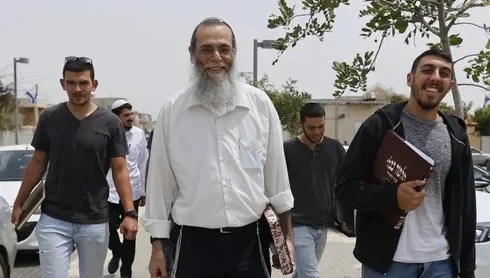
The Cradle | March 24, 2024
Rabbi Eliyahu Mali, head of the Shirat Moshe yeshiva (religious school) in the occupied city of Jaffa, called on the Israeli army to kill everyone in Gaza, including babies.
During a conference on 8 March, Mali said that “according to the halachic principle (a religious-ethical system of legal reasoning in Judaism), all residents of Gaza must be killed.”
When asked during the conference if babies should be killed as well, he said: “The same thing. You can’t be clever with the Torah. Today he’s a baby, tomorrow he’s a fighter. There are no questions here. Today’s terrorists were previously 8-year-old children.”
“Those who create the terrorists” should also be killed, he said in reference to women in Gaza.
The Rabbi went on to explain that Israel’s war on Gaza is a “Mitzvah war,” which is defined as a war of “commandment” in Jewish tradition. According to Jewish law, this kind of war does not require permission from a “Sanhedrin,” also known as a council or assembly, such as the war against Amalek – previously declared in a biblical reference by Israeli Prime Minister Benjamin Netanyahu at the start of the war on Gaza.
“There is a difference between a civilian population in other places and a civilian population in Gaza. In Gaza, according to estimates, 95 to 98 percent want us destroyed.”
“Since this is a sensitive issue, and I was told that it is being uploaded on the Internet, I want to be ahead of the curve and say that the bottom line is that you have to do exactly what is said in the IDF’s order,” Mali added.
The rabbi’s students in the Shirat Moshe yeshiva serve in the Israeli army. The Yeshiva is sponsored by the Israeli government. … Full article
Blog Roll
Recent Comments
Richard Ong on Israeli forces arrest writer a… Bill Francis on How reporting facts can now la… Gemma on Israel’s diamond industr… Bill Francis on Victoria Moves to Force Online… papasha408 on The Empire of Lies: How the BB… loongtip on US Weighs Port Restrictions on… Bill Francis on Chris Minns Defends NSW “Hate… Sheree Sheree on I was canceled by three newspa… Richard Ong on Czech–Slovak alignment signals… John Edward Kendrick on Colonel Jacques Baud & Nat… eddieb on Villains of Judea: Ronald Laud… rezjiekc on Substack Imposes Digital ID Ch…


 Aletho News
- The Epstein Saga: Chapter 3, Those friends in the Secret Service
- Venezuela under siege: Why US escalation could destabilize an entire region
- Italy arrests Palestinian activist amid crackdown on anti-Israel voices
- US Arms Sales to Taiwan Push Region Toward Conflict – Chinese Embassy
- Anti-Russia States Cannot Join Ukraine Peacekeeping – German Lawmaker
- Zelensky demands more money from Western backers
- HHS/CDC Fund Online Game ‘Bad Vaxx’ to ‘Psychologically Inoculate’ Vaccine Resistance
- NSW Premier Admits New “Security” Bill Restricts Civil Liberties, Promises More “Hate Speech” Laws Ahead
- US Under Secretary of State Slams UK and EU Over Online Speech Regulation, Announces Release of Files on Past Censorship Efforts
- Head of EU Parliament’s biggest faction wants German soldiers in Ukraine
- If Americans Knew
- Gaza hit with another winter storm – Not a ceasefire Day 79
- When will Israel’s crimes (and US complicity) end? – Not a ceasefire Day 78
- Christmas in the grip of genocide, occupation – Not a Ceasefire Day 77
- Palestinian Christians offer “Kairos,” an alternative Christmas Day sermon – Not a Ceasefire Day 76
- The Faces of AIPAC: the largest pro-Israel lobbying org in the US
- Gazan Christians mark 3rd Christmas under genocide – Not a Ceasefire Day 75
- Israeli scams children with cancer out of millions fundraised for their treatment, BBC finds
- Casey Kennedy Fired from AG Scientific Amid Zionist Troll Campaign Over Track AIPAC Work
- The Hasmoneans: The Jewish Dynasty That Gave Us Hanukkah Is a Symbol of Murder, Not Heroism and Hope
- Int’l NGOs may be blocked from Gaza starting Jan. 1 – Not a Ceasefire Day 74
- No Tricks Zone
- Meteorologist Dr. Ryan Maue Warns “Germany Won’t Make It” If Winter Turns Severe
- Merry Christmas Everybody!
- Two More New Studies Show The Southern Ocean And Antarctica Were Warmer In The 1970s
- Der Spiegel Caught Making Up Reports About Conservative America (Again)
- New Study: 8000 Years Ago Relative Sea Level Was 30 Meters Higher Than Today Across East Antarctica
- The Wind Energy Paradox: “Why More Wind Turbines Don’t Always Mean More Power”
- New Study Reopens Questions About Our Ability To Meaningfully Assess Global Mean Temperature
- Dialing Back The Panic: German Physics Prof Sees No Evidence Of Climate Tipping Points!
- Astrophysicist Dr. Willie Soon Challenges The Climate Consensus … It’s The Sun, Not CO2
- Regional Cooling Since The 1980s Has Driven Glacier Advance In The Karakoram Mountains
 Aletho News