UN to probe security agencies’ snooping
RT | December 3, 2013
The United Nations is set to carry out an investigation into the spying activities of the US and UK, a senior judge has said. The probe will examine the espionage programs and assess whether they conform to UN regulations.
UN special rapporteur Ben Emmerson QC told British newspaper The Guardian that the UN will conduct an inquiry into the NSA and the GCHQ’s spying antics. Following Edward Snowden’s revelations, which blew the whistle on both agencies’ intelligence gathering programs, Emmerson said the issue was at “the very apex of public interest and concerns.”
The report will broach a number of contentious issues, said Emmerson, including whether Snowden should be granted the legal protection afforded to a whistleblower, whether the data he handed over to the media did significant harm to national security, whether intelligence agencies need to scale down their surveillance programs and whether the UK government was misled about the extent of intelligence gathering.
“When it comes to assessing the balance that must be struck between maintaining secrecy and exposing information in the public interest, there are often borderline cases,” Emmerson told The Guardian.
Emmerson also mentioned the raid this summer on The Guardian’s London offices in search of hard drives containing data from Snowden. Addressing the allegations made by the chiefs of British spy agencies MI5, GCHQ and MI6, that publishing Snowden’s material was “a gift to terrorists,” Emmerson said it was the media’s job to hold governments to account for their actions.
“The astonishing suggestion that this sort of responsible journalism can somehow be equated with aiding and abetting terrorism needs to be scotched decisively,” said Emmerson, who will present the conclusions of his inquiry to the UN General Assembly next autumn.
Guardian editor-in-chief Alan Rusbridger is set to appear before a Commons home affairs committee in a hearing about the newspaper publishing of Snowden’s security leaks. British Prime Minister David Cameron issued a statement in September, warning of a possible crackdown if media continued to publish information on covert intelligence gathering programs.
He said the government had not yet been “heavy-handed” in its dealings with the press, but it would be difficult not to act if the press does not “demonstrate some social responsibility.” Cameron added that the UK was a more dangerous place after the Guardian published Snowden’s material.
Snowden’s revelations of the international spying activities of the UK and US have embarrassed the White House and Downing Street. Recent leaks show that the NSA and GCHQ not only monitored millions of civilian communications using programs such as PRISM and Tempora, but also eavesdropped on high-profile businessmen and politicians. Moreover, it was revealed that the NSA also spied on the UN’s headquarters in New York.
Both nations have sought to justify their intelligence gathering programs as being in the interests of national security.
Related article
Pakistan blows cover of suspected CIA chief after drone strike
RT | November 27, 2013
One of Pakistan’s major political parties has published the name of what it believes to be the CIA’s chief operative in Islamabad after a US drone strike killed five people last week. The group demanded on Wednesday that the spy chief face murder charges.
The Pakistan Tehreek-e-Insaaf (PTI), led by the country’s cricket star Imran Khan, dropped the name of the Central Intelligence Agency (CIA) operative to police in a letter in which the party demanded that the agent face up to the “gross offence” of the drone strike.
The letter was released to the media. However, the name could not be independently verified.
“I would like to nominate the US clandestine agency CIA (Central Intelligence Agency) Station Chief in Islamabad … and CIA Director John O. Brennan for committing the gross offences of committing murder and waging war against Pakistan,” PTI information secretary Shireen Mazarisaid wrote in the letter.
“CIA station chief is not a diplomatic post, therefore he does not enjoy any diplomatic immunity and is within the bounds of domestic laws of Pakistan,” the letter added. The complaint was lodged with Tal police station in Hangu district, northwestern Pakistan.
Intelligence agencies in foreign countries make a habit of keeping the identities of their agents and operatives private. If the PTI has successfully named the right person then he may be forced to leave the country.
This would not be the first time that an American operative has been outed in the country. In 2010 a former station chief was forced to leave Pakistan after his name was also revealed during a drone strike which led to the deaths of civilians.
The drone strike on 21 November was extremely provocative as it was one of the first outside the Federally Administered Tribal Areas, in the northwestern Khyber Pakhtunkwa province, and killed five militants – among them a senior commander of the Haqqani Network.
A separate strike at the beginning of November, which killed Pakistani Taliban chief Hakimullah Mehsud, prompted Khan to react with similar fury over how continued strikes could scuttle peace talks.
“The Taliban held only one condition for the peace talks and that was that drone attacks must end,” he said at a press conference. “But just before the talks began we saw this sabotage.”
CIA spokesman Dean Boyd would not confirm the Islamabad station chief’s name to the AP and declined to comment on the matter immediately.
NSA spied on 2010 G8, G20 summits in Toronto with Canadian help
RT | November 28, 2013
The National Security Agency conducted widespread surveillance during the 2010 G8 and G20 summits with the blessing of host country Canada’s government.
Documents supplied by former NSA contractor Edward Snowden show the US converted its Ottawa embassy into a security command for six days in June 2010 as world leaders met in Toronto. The covert operation was known to Canadian authorities, CBC News reported.
The documents do not reveal targets of the espionage by the NSA – and possibly by its counterpart, the Communications Security Establishment of Canada (CSEC). The NSA briefing notes say the operation was “closely co-ordinated with the Canadian partner.”
Ultimately, the documents obtained by the CBC do not give exact specifications of CSEC’s role, if any, in the Toronto spying. Former Guardian reporter and Snowden’s chosen journalist to receive the NSA documents, Glenn Greenwald, co-wrote the story for CBC.
But the documents do spell out that CSEC’s cooperation in the venture was crucial to ensuring access to telecommunications systems needed to spy on targets during the summits.
Both NSA and CSEC were implicated, along with British counterpart GCHQ, for monitoring phone calls and email of foreign leaders and diplomats at the 2009 G20 summit in London. In addition, it was recently reported that CSEC hacked into phones and computers at the Brazilian government’s department of mines. These revelations also came via documents from Snowden, who has received asylum in Russia.
The revelations also contradict a statement made by an NSA spokesman to The Washington Post on August 30, which said that the US Department of Defense – of which the NSA is is part of – “does not engage in economic espionage in any domain, including cyber.”
The NSA briefing document says the operational plan at the 2010 summit included “providing support to policymakers.”
The Toronto summit was chock full of major economic issues following the 2008 recession. Measures like the eventually-nixed global bank tax were strongly opposed by the US and Canadian governments. Further banking reform, international development, countering trade protectionism and other issues were on the docket – and on NSA’s list of main agenda items in the aim of supporting “US policy goals.”
The partnerships by some Western spying arms at the Toronto and London summits, not to mention other stories that have come out based on the Snowden documents, call attention once again to the “Five Eyes” surveillance coalition among Australia, Canada, New Zealand, the UK and the US.
Indonesia recalls its Australian ambassador alleging phone-taps on President Yudhoyono
RT | November 18, 2013
Indonesia is recalling its ambassador to Australia over allegations that Canberra listened in on phone conversations of the Indonesian president.
Indonesia said the ambassador was being called to Jakarta for “consultations”.
The move by Jakarta comes as the Australian Department of Defence and the Defence Signals Directorate, or DSD, (now known as the Australian Signals Directorate), has been accused of monitoring the phone calls of Indonesian President Susilo Bambang Yudhoyono, his wife Kristiani Herawati, as well as eight other high-ranking officials, including the vice president, Boediono.
The latest leak, provided in May 2013 by NSA whistleblower Edward Snowden, was released jointly by The Guardian newspaper and the Australian Broadcasting Corporation on Monday, and will likely aggravate another diplomatic firestorm between Canberra and Jakarta.
The top secret material from the DSD is in the form of a slide presentation, dated November 2009, and divulges information on the monitoring of mobile phones just as 3G technology was being introduced in Asia.
In one of the presentations, entitled Indonesian President Voice Events, a graphic of calls is given on Yudhoyono’s Nokia handset over a 15-day period in August 2009. The data provides CDRs – call data records – which record the numbers called, the duration of communications, and whether the transmission was a voice call or SMS.
The Australian spy agency “appears to have expanded its operations to include the calls of those who had been in touch with the president,” the report indicated. Another slide, entitled Way Forward, gives the simple command: “Must have content,” perhaps a reference to encrypted material.
Attached to the bottom of each slide in the 2009 presentation is the DSD slogan: “Reveal their secrets – protect our own.”
Also named in the surveillance slides are Dino Patti Djalal, then-foreign affairs spokesman for the president, who recently resigned as Indonesia’s ambassador to the US and is seeking the candidacy in next year’s presidential election for Yudhoyono’s Democratic party, and Hatta Rajasa, current minister for economic affairs and potential presidential candidate for the National Mandate party. Hatta served at the time of the surveillance as minister for transport; his daughter is the wife of the president’s youngest son.
Other high-level officials on the list of “IA Leadership Targets” are: Jusuf Kalla, the former vice-president who ran as the Golkar party presidential candidate in 2009; Sri Mulyani Indrawati, then a reforming finance minister and since 2010 one of the managing directors of the World Bank Group; Andi Mallarangeng, who was at the time the president’s spokesman, and later minister for youth and sports; Sofyan Djalil, who served until October 2009 as minister for state-owned enterprises; Widodo Adi Sucipto, a former head of the Indonesian military who served until October 2009 as security minister.
Another slide, entitled DSD Way Forward, acknowledges that the Australian spy agency’s must “capitalise on UKUSA and industry capability”, apparently a reference to assistance from telecom and internet companies, the same method that the NSA used to collect data on millions of individuals around the planet.
News of Australia’s high-level snooping on the Indonesian president and his top aides is certain to provoke a harsh response from Jakarta, especially considering this is not Australia’s first breach of trust between the Pacific Rim countries.
Tensions between Canberra and Jakarta began in October when top secret files revealed by the German newspaper Der Spiegel and published by Fairfax newspapers showed that Australian diplomatic posts across Asia were being used to intercept communications.
Marty Natalegawa, the Indonesian foreign minister, issued a harsh response and threatened to review bilateral initiatives on issues important to Australia, including people smuggling and terrorism.
During a visit last week to the Australian city of Perth, Vice president Boediono – not yet privy to information that his own Blackberry device had been compromised by Australian spy agencies – briefly mentioned the long-standing spying controversy.
“I think we must look forward to come to some arrangement which guarantees that intelligence information from each side is not used against the other,” he said. “There must be a system.”
Yudhoyono is the latest in a growing list of global leaders who have had their personal communications listened to by the American intelligence service.
It has recently been reported that the leaders of Germany, Brazil and Mexico have been listened to by the so-called Five Eyes, the collective name for the intelligence agencies of the United States, Britain, Australia, Canada and New Zealand, who share information.
German Chancellor Angela Merkel in late October demanded a personal explanation from US President Barack Obama as to why the NSA had tapped her mobile phone. The White House attempted to reassure the chancellor that her phone was “not currently being tapped and will not be in the future”.
It will be interesting at this point to see if the diplomatic backlash in wake of the recent wave of revelations will curb the Five Eyes’ surveillance program, or if it will just go deeper underground.
The Guardian then reported that the DSD worked together with the NSA to stage a massive surveillance operation in Indonesia during a UN climate change conference in Bali in 2007.
On Monday a spokesman for Australian Prime Minister Tony Abbott said: “Consistent with the long-standing practice of Australian governments, and in the interest of national security, we do not comment on intelligence matters.”
UN envoy ‘shocked’ by UK’s ‘unacceptable’ persecution of The Guardian over Snowden leaks
RT | November 16, 2013
A senior United Nations official responsible for freedom of expression has warned that the UK government’s response to revelations of mass surveillance by Edward Snowden is damaging Britain’s reputation for press freedom and investigative journalism.
The UN special rapporteur, Frank La Rue, has said he is alarmed at the reaction from some British politicians following the Guardian’s revelations about the extent of the secret surveillance programs run by the UK’s eavesdropping center GCHQ and its US counterpart the NSA (National Security Agency), it was reported in the Guardian.
“I have been absolutely shocked about the way the Guardian has been treated, from the idea of prosecution to the fact that some members of parliament even called it treason. I think that is unacceptable in a democratic society,” said La Rue.
Speaking to the Guardian La Rue said that national security cannot be used as an argument against newspapers for publishing information that is in the public interest even if doing so is embarrassing for those who are in office.
The Guardian as well as other major world media organizations including the New York Times, the Washington Post and Der Spiegel began disclosing details about the US and UK’s mass surveillance programs in June, after receiving leaked documents from former NSA contractor, Edward Snowden.
The publications have sparked a huge global debate on whether such surveillance powers are justified, but in Britain there have been calls for the Guardian to be prosecuted and the editor, Alan Rusbridger, has been called to give evidence to the home affairs select committee.
The Prime Minister David Cameron has even warned that unless the newspaper begins to demonstrate some social responsibility, then he would take “tougher measures” including the issuing of D notices, which ban a newspaper or broadcaster from touching certain material.
While on Friday the New York Times wrote an editorial entitled “British press freedom under threat”. It said, “Britain has a long tradition of a free inquisitive press. That freedom, so essential to democratic accountability, is being challenged by the Conservative-Liberal coalition government of Prime Minster David Cameron.”
The op-ed added that Britain, unlike the US has no constitutional guarantee of press freedom.
“Parliamentary committees and the police are now exploiting that lack of protection to harass, intimidate and possibly prosecute the Guardian newspaper,” the leader read.
Frank La Rue’s intervention comes just days after a delegation of some of the world’s leading editors and publishers announced they were coming to Britain on a “press freedom mission”.
The trip is being organized by the Paris based, World Association of Newspapers and News Publishers (WAN-IFRA), and will arrive on UK soil in January. WAN-IFRA says it will include key newspaper figures from up to five continents and that this is the first mission of this kind to the UK ever.
The delegation is expected to meet government leaders and the opposition, as well as press industry figures and civil society and freedom of speech organizations. Their discussions are expected to focus on the political pressure brought to bear on the Guardian.
“We are concerned that these actions not only seriously damage the United Kingdom’s historic international reputation as a staunch defender of press freedom, but provide encouragement to non-democratic regimes to justify their own repressive actions,” Vincent Peyregne, the Chief of the WAN-IFRA, told the Guardian.
newspaper posed a threat to the UK national security.
Also in October, British Prime Minister David Cameron called on The Guardian and other newspapers to show “social responsibility” in the reporting of the leaked NSA files to avoid high court injunctions or the use of D-notices to prevent the publication of information that could damage national security.
La Rue’s remarks come as an international delegation is set to visit Britain over growing concerns about press freedom in the country and a government crackdown on media reporting leaks and scandals.
Organized by the World Association of Newspaper and News Publishers (WAN-IFRA), the delegation, which includes publishers and editors from five continents, will arrive in January.
The team will reportedly meet with government, opposition figures and media representatives.
Related article
US govt intel researchers to ‘radically expand’ facial recognition capabilities
RT | November 13, 2013
The United States intelligence community’s research arm is set to launch a program that will thoroughly broaden the capabilities of biometric facial recognition software in order to establish an individual’s identity.
The Janus program of the Intelligence Advanced Research Projects Agency (IARPA) will begin in April 2014 in an effort to “radically expand the range of conditions under which automated face recognition can establish identity,” according to documents released by the agency over the weekend.
Janus “seeks to improve face recognition performance using representations developed from real-world video and images instead of from calibrated and constrained collections. During daily activities, people laugh, smile, frown, yawn and morph their faces into a broad variety of expressions. For each face, these expressions are formed from unique skeletal and musculature features that are similar through one’s lifetime. Janus representations will exploit the full morphological dynamics of the face to enable better matching and faster retrieval.”
Current facial recognition relies mostly on full-frontal, aligned facial views. But, in the words of Military & Aerospace Electronics, Janus will fuse “the rich spatial, temporal, and contextual information available from the multiple views captured by security cameras, cell phone cameras, news video, and other sources referred to as ‘media in the wild.’”
In addition, Janus will take into account aging and incomplete or ambiguous data for its recognition assessment goals.
IARPA was created in 2006 and is a division of the Office of the Director of National Intelligence. The intelligence agency is modeled after DARPA, the Pentagon’s notorious research arm that fosters technology for future military utilization.
In-Q-Tel, a not-for-profit venture capital firm run by the Central Intelligence Agency, invests in companies that develop facial recognition software.
In an age of ubiquitous surveillance video amid a severe lag of legal protections for privacy, civil liberties advocates are expressing concern.
IARPA’s effort to significantly boost facial recognition capabilities “represents a quantum leap in the amount of surveillance taking place in public places,” said Jay Stanley, a senior policy analyst with the American Civil Liberties Union’s Speech, Privacy and Technology Project, as quoted by USA Today.
Stanley noted that law enforcement and the like could easily run random facial recognition programs over surveillance video to assess the identities of crowds in public places without oversight.
IARPA gave industry representatives a solicitation briefing on the program in June, according to media reports.
Late last month, the Federal Bureau of Investigation published a request for information in developing “a roadmap for the FBI’s future video analytics architecture” as the agency prepares to make its high-tech surveillance abilities all the more powerful.
In September, the Department of Homeland Security tested its Biometric Optical Surveillance System (BOSS) at a junior hockey game in Washington state. When it’s fully operational, BOSS could be used to identify a person of interest among a massive crowd in just seconds.
Over the summer, the state of Ohio admitted it had access to a facial recognition database that included all state-wide driver’s license photos and mug shots without the public’s knowledge.
Related article
Senate committee approves funding for NSA, witch-hunt on leakers
RT | November 6, 2013
Congress has taken the first step towards expanding the abilities of the United States intelligence community by advancing a draft bill that will ensure the government’s spy budget stays intact into next year.
A Senate commitee approved the 2014 Intelligence Authorization Act during a closed door session on Tuesday, a bill that if signed into law will allow the US National Security Agency and other departments to keep receiving funding amid an international scandal that has caused calls for reform and even abolishment of the NSA both in the US and abroad in recent months.
Notwithstanding the backlash brought on by an array of secret NSA documents disclosed to the media by contractor-turned-leaked Edward Snowden since June, the Senate Intelligence Committee passed the draft bill by a 13-2 vote. Next, the full chamber will weigh in on the matter before it is reconciled with a sister act by way of the House of Representatives and sent to President Barack Obama to be signed into law.
If approved with all of its current provisions in place, the law will let the government continue to fund programs operated for purposes of counterterrorism and nuclear weapon proliferation prevention, authorizing initiatives within more than a dozen federal departments, including the NSA and others that deal in covert, intelligence-gathering operations.
In a press release issued Tuesday by the committee, however, its members also acknowledged that the bill expands certain intelligence community operations, including in particular the very programs enacted to prevent the unauthorized disclosure of classified information.
The bill, the committee wrote, “includes important provisions to enhance the conduct, accountability and oversight of the intelligence activities of the United States,” such as one intended “to protect against insider threats by adding necessary funds to deploy information technology detection systems across the intelligence community.”
The bill would also empower the Director of National Intelligence to “improve the government’s process to investigate . . . individuals with security clearances to access classified information,” while at same time “Instituting new statutory protections that protect the ability of legitimate whistleblowers to bring concerns directly to the attention of lawmakers, inspectors general and intelligence community leaders.”
Since the identity of the NSA leaker was revealed to be 30-year-old Edward Snowden, opponents of his actions have suggested that alternative, legal routes to questions the intelligence community’s tactics could have been taken, such as appealing to an inspector general. History, however, suggests that recent whistleblowers before him had a nearly impossible time doing as much, including Thomas Drake, a former senior NSA executive who was charged under the Espionage Act after he attempted to draw attention to waste, fraud and abuse within his agency years earlier. Speaking at an anti-NSA rally in Washington last month, Drake told a crowd of a couple thousand, “Any domestic surveillance legislation must include whistleblower protection for the credibility and enforcement of any reform effort, otherwise secrecy enforced by repression will turn into a faux reform passed into simply an honor system” for the NSA.
In a statement released on Tuesday, Committee Vice Chairman Saxby Chambliss (R-Georgia said, “This year’s intelligence authorization bill achieves both objectives by providing clear guidance and appropriate resources to the intelligence community, while enhancing the committee’s oversight of vital intelligence activities.”
If signed into law, the act will allow for funding to continue with regards to a number of intelligence-gathering operations conducted not just by the likes of the NSA, but also the Central Intelligence Agency, the Office of the Director of National Intelligence and the Departments of Defense, State, Treasury, Energy and Justice, among others.
Featured Video
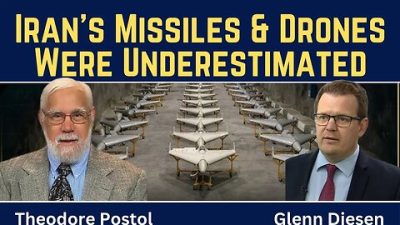
Theodore Postol: Iran’s Missiles & Drones Were Underestimated
or go to
Aletho News Archives – Video-Images
From the Archives
What is the Israeli Lobby in Australia Doing in Interfaith Dialogue?
By Ali Kazak | Dissident Voice | October 11, 2015
For years Israel and its lobby around the world have been trying to normalise their relations with Arabs and Muslims without solving the Palestine Question.
One of the methods they resorted to in the last few years is using human rights and community organizations such as interfaith dialogue and Multiculturalism to achieve this objective and to: isolate the Palestinians, marginalise the Palestine question, end Israel’s isolation, and prevent criticism of Israel, knowing that these organisations will be the first to stand against Israel’s violations, racial and religious discrimination.
The group responsible for this task in Australia is The Australia/Israel & Jewish Affairs Council (AIJAC); its Director of International & Community Affairs, Jeremy Jones is in charge of lobbying religious community organizations, specifically Muslims and Christians. Consequently he convened the Faith Communities for Reconciliation, founding participant in the Australian Partnership of Religious Organisations and the Australian National Dialogue of Christians, Muslims & Jews.
AIJAC is a private political propaganda group. It is recognised as the main Israeli lobby in Australia. It coordinates its activities and works intimately with the Israeli embassy in Canberra and different institutions in Israel. It is privately funded by some Jewish businessmen. It monitors closely Australian politicians, the media, ethnic and religious groups, (especially Arabs and Muslims), unions and academics on their stands towards Israel and the Palestine question. … continue
Blog Roll
 Aletho News
- Iran’s friends are about to make life much more difficult for Israel and the US
- The war of liberation of the Arab and Islamic peoples expands across the Gulf
- Envoy warns UN on Trump’s threat to ‘obliterate’ Iran’s civilian infrastructure
- The Larak Corridor: Iran’s Rial Gate With No US, No Israel, and No Way Around
- ‘Economic terrorism’: Steel facilities hit again in US-Israeli strike
- ‘War Crime’: Iran condemns attacks on Arak, Ardakan nuclear sites
- Two-thirds of Americans want quick end to Iran war even if goals unmet
- Trump to Give “Important Update on Iran” Wednesday in Prime-Time Speech
- Theodore Postol: Iran’s Missiles & Drones Were Underestimated
- Iran To Target Military Industrial-Tech Complex That Facilitated Gaza Genocide
- If Americans Knew
- Israel wants US to bomb more of Iran’s civilian structures (113,000 is not enough) – Not a ceasefire Day 173
- Ann Coulter Rips Into Fox News for Iran War Coverage
- Joe Kent Urges Americans To Call White House and Congress To Object To Sending Troops Into Iran
- DNC Resolution to Reject AIPAC Funding Puts Democratic Leaders in the Hot Seat
- Swedish foundation to build 400 schools as over 650,000 Gaza children remain without education for 2 years
- Israeli army admits photshopping image of slain Lebanese journalist
- This is how Israel is systematically killing health workers under the cover of war in Lebanon
- Carrying life under fire: Israeli invasion of Lebanon leaves pregnant women facing deadly risks
- Champagne all around for the new death penalty (for Palestinians) law – Not a ceasefire Day 172
- Why are Palestinian books struggling to be seen on Amazon?
- No Tricks Zone
- New Study Finds Warming Saves Lives…Cold Temperatures 12 Times More Deadly Than Excess Heat
- German Science Blog Accuses PIK Climate Institute Of Hallucinating Climate Tipping Points
- Devastating Assessment Of Comirnaty Vaccine By Former Senior Pfizer Europe Toxicologist
- New Study: CO2 Is ‘Effectively Negligible’ As An Explanatory Climate Change Factor Since 2000
- Former Pfizer Toxicologist Dr. Helmut Sterz Tells Bundestag Hearing Pfizer Vaccine Should Have Never Been Approved
- Energy Expert: Germany’s Nuclear Phaseout Was A “500 Billion Euro Mistake”
- New Research: South Australia’s Mid-Holocene Sea Surface Temperatures Were 4°C Warmer Than Today
- Storing Green Energy To Last Germany 10 Days Would Require A 60-Million Tonne Battery
- New Studies: UK Sea Levels Were 4 Meters Higher Than Today During The Mid-Holocene
- Destructive Green New Deal: German Energy And Metal Group Warns Of Drastic Crisis
 Aletho News