Aletho News

ΑΛΗΘΩΣ

Evaluating The Integrity Of Official Climate Records

Tony Heller of http://realclimatescience.com/ presents at the 34th Annual Meeting of Doctors for Disaster Preparedness, on July 9, 2016

July 22, 2016 Posted by | Deception, Science and Pseudo-Science, Timeless or most popular, Video | , , , | Leave a comment

The Preposterous Green Institute and the IPCC

The man now in charge at the IPCC belongs to a privileged, protected, secretive entity headed by the UN’s former top climate official.

By Donna Laframboise | No Frakking Consensus | October 19, 2015
GGGI_Hoesung_Lee

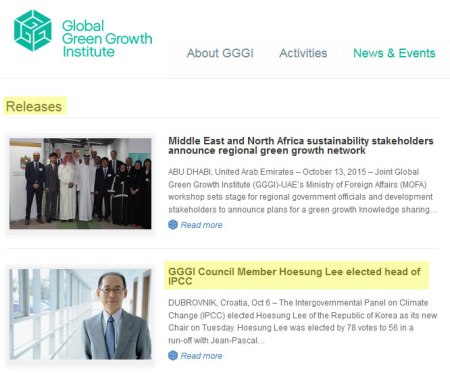
When Hoesung Lee was elected head of the Intergovernmental Panel on Climate Change (IPCC) recently, the Seoul-based Global Green Growth Institute (GGGI) issued a celebratory press release. Lee – who hails from South Korea – has a seat on one of the GGGI’s governing bodies.

But this little-known entity is no mere institute. In fact, it’s another creature of the United Nations. As a headline on the GGGI website makes clear, an international treaty was required to bring it into existence. Membership is restricted to UN-recognized countries. Its stated purpose is “the successful outcome of the United Nations process on sustainable development.” Its Director-General, Yvo de Boer, used to be the UN’s top climate official.

GGGI appears to have begun life in 2010 as a bona fide South Korean non-profit foundation, before throwing itself into the arms of the UN two years later. Documents connected to its 2012 transformation can be downloaded from its website (see this 33-page PDF). The GGGI immodestly claims to be devising “a new model of economic growth,” which it considers “essential for the future of humankind.” Some of the planet’s least developed nations have signed up to act as guinea pigs for projects administered by the GGGI and funded by Australian, Danish, Norwegian, and British taxpayers.

There are plenty of good people working on important issues, some of whom are employed by research institutes. But when it comes to perqs and privileges, the GGGI leaves everyone them in the dust. Calling the GGGI an institute is like calling Unilever – the multinational corporation that owns the Ben & Jerry’s, Lipton, Bertolli, Hellman’s, Becell, Knorr, and Dove brands – a soap company.

In actual fact, the GGGI enjoys a preposterous array of protections and immunities. We’re talking about the kinds of privileges normally reserved for nation states. Korea’s government has signed a document in which it has agreed to treat GGGI headquarters like an embassy. Korean authorities have no jurisdiction on its premises or over its records:

The Headquarters shall be inviolable. No person exercising any public authority within the Republic of Korea shall enter the Headquarters to perform any duties except with the express consent of the Director-General…The archives of the GGGI…shall be inviolable wherever located….The property of the GGGI…shall be immune from search, requisition, confiscation, expropriation and any other form of interference, whether by executive, administrative, judicial or legislative action. [pp. 1, 5, 6]

The GGGI and its staff enjoy “immunity from every form of legal process,” except in rare circumstances. The GGGI is exempt from taxation and customs duties, and may transfer funds in and out of Korea at will. The salaries of the roughly 100 people who comprise the GGGI staff are – drumroll, please – tax free.

People visiting the GGGI from outside Korea don’t need to produce passports as do mere mortals, since Korea’s government has agreed to treat GGGI-issued “travel certificates” as the equivalent of national passports. GGGI staff, their spouses, and their dependents are immune from “immigration restrictions” and baggage inspection “except in doubtful cases.” In the event of an international crisis, Korea will treat GGGI personnel and their families on a par with “diplomatic envoys.”

GGGI_secrets

As if all of the above weren’t sufficiently bizarre, we read that:

The GGGI shall have the right to use codes and to dispatch and receive official communications by courier or in sealed bags, which shall have the same privileges and immunities as are accorded to diplomatic couriers and bags. [bold added, p. 6]

So the police can’t touch you. The courts can’t touch you. Customs officials have been instructed to treat you like royalty. Your pay cheque is tax free, and there’s almost no risk of being caught should you choose to smuggle items in or out of the country.

Pardon me, but I have a few questions:

  1. What’s really going on here?
  2. What is so special about these people that they warrant require such extraordinary protections and immunities?
  3. What unwholesome activities is the UN undertaking via the GGGI that it considers sealed diplomatic pouches remotely necessary?

Circling back to Hoesung Lee, the person now in charge of the IPCC also belongs to a secretive entity headed by the UN’s former top climate official.

Translation #1: Lee is a UN insider. There isn’t a chance in a thousand that he’ll institute meaningful reform.

Translation #2: The IPCC is merely one bauble in the UN’s burgeoning toy box.

October 26, 2015 Posted by | Deception, Science and Pseudo-Science | , , , , | Leave a comment

What I Learned about Climate Change: The Science is not Settled

By David Siegel – October 16, 2015

What is your position on the climate-change debate? What would it take to change your mind?

If the answer is It would take a ton of evidence to change my mind, because my understanding is that the science is settled, and we need to get going on this important issue, that’s what I thought, too. This is my story.

More than thirty years ago, I became vegan because I believed it was healthier (it’s not), and I’ve stayed vegan because I believe it’s better for the environment (it is). I haven’t owned a car in ten years. I love animals; I’ll gladly fly halfway around the world to take photos of them in their natural habitats. I’m a Democrat: I think governments play a key role in helping preserve our environment for the future in the most cost-effective way possible. Over the years, I built a set of assumptions: that Al Gore was right about global warming, that he was the David going up against the industrial Goliath. In 1993, I even wrote a book about it.

Recently, a friend challenged those assumptions. At first, I was annoyed, because I thought the science really was settled. As I started to look at the data and read about climate science, I was surprised, then shocked. As I learned more, I changed my mind. I now think there probably is no climate crisis and that the focus on CO2 takes funding and attention from critical environmental problems. I’ll start by making ten short statements that should challenge your assumptions and then back them up with an essay.

The One Minute Climate Summary

1Weather is not climate. There are no studies showing a conclusive link between global warming and increased frequency or intensity of storms, droughts, floods, cold or heat waves.

2Natural variation in weather and climate is tremendous. Most of what people call “global warming” is natural. The earth is warming, but not quickly, not much, and not lately.

3There is tremendous uncertainty as to how the climate really works. Climate models are not yet skillful; predictions are unresolved.

4New research shows fluctuations in energy from the sun correlate very strongly with changes in earth’s temperature, better than CO2 levels.

5CO2 has very little to do with it. All the decarbonization we can do isn’t going to change the climate much.

6There is no such thing as “carbon pollution.” Carbon dioxide is coming out of your nose right now; it is not a poisonous gas. CO2 concentrations in previous eras have been many times higher than they are today.

7Sea level will probably continue to rise, naturally and slowly. Researchers have found no link between CO2 and sea level.

8The Arctic experiences natural variation as well, with some years warmer earlier than others. Polar bear numbers are up, not down. They have more to do with hunting permits than CO2*.

9No one has shown any damage to reef or marine systems. Additional man-made CO2 will not likely harm oceans, reef systems, or marine life. Fish are mostly threatened by people, who eat them.

10The Intergovernmental Panel on Climate Change and others are pursuing a political agenda and a PR campaign, not scientific inquiry. There’s a tremendous amount of trickery going on under the surface*.

Could this possibly be right? Is it heresy, or critical thinking — or both? If I’ve upset or confused you, let me guide you through my journey. … continue reading

October 17, 2015 Posted by | Economics, Environmentalism, Science and Pseudo-Science, Timeless or most popular | | Leave a comment

Scientist leading effort to prosecute climate skeptics under RICO ‘paid himself & his wife $1.5 million from govt climate grants for part-time work’

Climate Depot | September 20, 2015

Leader of 20 scientist effort to prosecute climate skeptics under RICO revealed as ‘Climate Profiteer’! ‘From 2012-2014, the Leader of RICO 20 climate scientists paid himself and his wife $1.5 million from government climate grants for part-time work.

George Mason University Professor Jagadish Shukla ( jshukla@gmu.edu) a Lead Author with the UN IPCC, reportedly lavishly profits off the global warming industry while accusing climate skeptics of deceiving the public. Shukla is leader of 20 scientists who are demanding RICO (Racketeer Influenced and Corrupt Organizations Act) charges be used against skeptics for disagreeing with their view on climate change.

Shukla reportedly moved his government grants through a ‘non-profit’. The group “pays Shukla and wife Anne $500,000 per year for part-time work,” Prof. Roger Pielke Jr. revealed.

“The $350,000-$400,000 per year paid leader of the RICO20 from his ‘non-profit’ was presumably on top of his $250,000 per year academic salary,” Pielke wrote. “That totals to $750,000 per year to the leader of the RICO20 from public money for climate work and going after skeptics. Good work if you can get it,” Pielke Jr. added.

September 21, 2015 Posted by | Corruption, Science and Pseudo-Science | , | Leave a comment

Climatologist Dr. Tim Ball On 97% Consensus: “Completely False And Was Deliberately Manufactured”!

By P Gosselin | No Tricks Zone | August 24, 2015

Canadian climate scientist Dr. Tim Ball recently published a new book on climate science: The Deliberate Corruption of Climate Science. What follows later (below) is a short interview with Dr. Ball.

“Government propaganda” … “corrupt science”

In the book Ball writes that the failed predictions of the Intergovernmental Panel on Climate Change (IPCC), coupled with failed alarmist stories such as the complete loss of Arctic sea ice by 2013, are making the public increasingly skeptical of government propaganda about global warming. People were already skeptical because they knew weather forecasts, especially beyond forty-eight hours, were invariably wrong, and so today more people understand there is no substance to global warming claims and that it is based on corrupt science. Now they are asking: Who perpetrated the deception and could a small group of people deceive the world?

In his book The Deliberate Corruption of Climate Science Dr. Ball explains who did it and why.

Ball was among the earlier dissidents and as a result he became the target of media articles and false information promoted by a scurrilous website funded by a chairman of a large environmental foundation. He was a real threat because they couldn’t say he wasn’t qualified.

Dr. Ball has been the subject of three lawsuits from a lawyer operating in British Columbia. For the first one, he decided to avoid the expense of a challenge and so he withdrew what he had written. Then, within nine days, he received two more from the same lawyer suing for defamation because of harsh criticism he made of a climate scientist. At that point, he and his family decided they had to fight back.

As Ball carries on his legal battle he maintains that climate deception continues and that the public is paying a high price for completely unnecessary energy and economic policies based on the pseudoscience of the IPCC. Not to mention the social devastation of communities devastated by job losses.

“Their last effective chance”

Dr. Balls says the rhetoric and stream of misinformation increases as the perpetrators, now including the Pope, build up to their last effective chance to influence an increasingly skeptical world. When the Global Warming theme failed, they tried Climate Change. The Climate Change theme has failed, so now they are trying Climate Disruption as defined by President Obama’s science Czar, John Holdren—all to justify expensive government programs. The impetus for a global carbon tax and global governance represent the central theme of a climate conference scheduled for Paris in December 2015, the United Nations Climate Change Conference or COP21.

INTERVIEW

What follows are some questions that Dr. Ball kindly answered:

By what scientific reason do you think CO2’s role is far less?

Water vapor is 95% of the total greenhouse gases by volume, while CO2 is approximately 4%. The human portion is only 3.4% of the total CO2. They try to claim CO2 is more effective, but it’s a false claim called “climate sensitivity”. The number the IPCC use for sensitivity has constantly declined and will reach zero.

What factor has been the most responsible for the warming over the past 25 years?

The same factor as it has always been, changes in the sun. The IPCC dismiss the sun because they only look at variation in radiative output, but that is only one of three ways the Sun affects global climate.

What do you think the global temperature will do over the next few decades?

Decline. The major short-term control of global temperature is variation in the strength of the Sun’s magnetic field. As it varies it determines the amount of cosmic radiation reaching the Earth. The cosmic radiation creates clouds in the lower atmosphere and it, like a shutter in the greenhouse it determines the sunlight reaching the surface and therefore the temperature.

What do you think of the claimed “97% consensus”?

It is completely false and was deliberately manufactured by John Cook at the University of Queensland. There are more detailed analyses of the corruption but this is the best layman’s account. www.forbes.com/sites/alexepstein/.

On a scale of 1 to 10, how honest have the major climate institutes been with the public?

-10. If they knew what was wrong it is deliberate and criminal. If they didn’t know they are grossly incompetent. 

Other comments by Dr. Ball:

The biggest problem for the public is they can’t believe that an apparent majority of scientists seem to support the IPCC science. The simple answer is, very few are familiar with the science. They, like most of the public, assume other scientists would not distort, manipulate, or do anything other than proper science. When scientists find out, they are shocked, as exemplified in German meteorologist Klaus-Eckert Puls’s comment:

“Ten years ago I simply parroted what the IPCC told us. One day I started checking the facts and data—first I started with a sense of doubt but then I became outraged when I discovered that much of what the IPCC and the media were telling us was sheer nonsense and was not even supported by any scientific facts and measurements. To this day I still feel shame that as a scientist I made presentations of their science without first checking it.”

August 27, 2015 Posted by | Book Review, Science and Pseudo-Science | , , | Leave a comment

Global Warming: Truth or Dare?

By Denis G. Rancourt | Activist Teacher | February 2007

NOT THE GREATEST POTENTIAL THREAT TO HUMANITY

Global warming is often presented as the greatest potential threat to humankind and as the greatest environmental and ecological threat on the planet. It is also presented as a problem that could be solved or contained by determined international collaboration – by political will if it were present.

I argue: (1) that global warming (climate change, climate chaos, etc.) will not become humankind’s greatest threat until the sun has its next hiccup in a billion years or more (in the very unlikely scenario that we are still around), (2) that global warming is presently nowhere near being the planet’s most deadly environmental scourge, and (3) that government action and political will cannot measurably or significantly ameliorate global climate in the present world.

I also advance that there are strong societal, institutional, and psychological motivations for having constructed and for continuing to maintain the myth of a global warming dominant threat (global warming myth, for short). I describe these motivations in terms of the workings of the scientific profession and of the global corporate and finance network and its government shadows.

I argue that by far the most destructive force on the planet is power-driven financiers and profit-driven corporations and their cartels backed by military might; and that the global warming myth is a red herring that contributes to hiding this truth. In my opinion, activists who, using any justification, feed the global warming myth have effectively been co-opted, or at best neutralized.

ERODING THE VENEER

Since the global warming myth is presently the dominant environmental paradigm in the First World middle class mainstream, let us put it into the relevant perspective of planetary warming mechanisms.

One should first recognise that the atmospheric greenhouse effect is a well known natural phenomenon, mostly caused by atmospheric water vapour, that keeps our planet warm and habitable whereas (anthropogenic = human-made) global warming refers to a small extra greenhouse warming (0.5-1 C/33 C; 1-5 %) allegedly arising from an increase in atmospheric concentration of the minority greenhouse effect gas CO2 (carbon dioxide) – the later increase in turn possibly arising from fossil fuel burning (see below).

This means that the global greenhouse effect gives earthlings a needed and much appreciated base warming of 33 C (degrees Celsius), whereas the alleged “global warming” would contribute an extra 0.5 to 1 C of warming (a 1 to 5 % increase), on a planet that has seen a dozen or so ice ages since human kind has appeared.

The most often cited reconstructed global average temperature curves (themselves somewhat tenuous, see below) show increases in global mean temperature of approximately 0.5-1 C in the last 100 years. Let us compare this to the extremes of temperature to which humans routinely adapt. Humans have thrived in every possible ecological niche on the planet, from deserts to tropical forests to the North Polar Regions, since well before present technological advances. These environments show mean temperature differences of as much as 50 C or more. Many of these environments also show day to night and seasonal differences of as much as 20-50 C. A sudden 0.5-1 C increase in mean annual temperature (not spread over 100 years) would be imperceptible to any human and indeed could barely be detected using all of the methods of the modern scientific enterprise.

In addition, whereas there is evidence of negative consequences to populations from sustained regional cooling (e.g., Europe’s Little Ice Age, 1300-1850 AD) and whereas global ice ages (occurring every 40-100 thousand years or so) clearly have significantly affected human populations, there is no known case of a sustained warming alone having negatively impacted an entire population. If it were not for the global greenhouse effect, the planet would on average be 33 C colder and inhabitable. As a general rule, all life on Earth does better when it’s hotter: Compare ecological diversity and biotic density (or biomass) at the poles and at the equator.

Humans have already adapted to dramatically different regional climates occurring in every corner of the planet and the alleged future global changes are very small compared to these existing variations. There are more displaced refugees from wars and from economic aggression than there will ever be displaced inhabitants from rapid climate-induced habitat transformations. In both cases, the solution is to accommodate those losing their homes and communities, not to attempt to control planetary processes and unpredictable events.

IS THERE GLOBAL WARMING?

Before ‘climate chaos’ became cliché, many scientists advanced evidence for detected amounts of global average Earth surface temperature increases occurring in the post-industrial age. These reports, taken as a whole, were the main original catalysts towards constructing the global warming myth, so it is useful to critically examine their validity.

It was no easy task to arrive at the most cited original estimated rate of increase of the mean global surface temperature of 0.5 C in 100 years. As with any evaluation of a global spatio-temporal average, it involved elaborate and unreliable grid size dependent averages. In addition, it involved removal of outlying data, complex corrections for historical differences in measurement methods, measurement distributions, and measurement frequencies, and complex normalisations of different data sets – for example, land based and sea based measurements and the use of different temperature proxies that are in turn dependent on approximate calibration models. Even for modern thermometer readings in a given year, the very real problem of defining a robust and useful global spatio-temporal average Earth-surface temperature is not solved, and is itself an active area of research.

This means that determining an average of a quantity (Earth surface temperature) that is everywhere different and continuously changing with time at every point, using measurements at discrete times and places (weather stations), is virtually impossible; in that the resulting number is highly sensitive to the chosen extrapolation method(s) needed to calculate (or rather approximate) the average.

Averaging problems aside, many tenuous approximations must be made in order to arrive at any of the reported final global average temperature curves. For example, air temperature thermometers on ocean-going ships have been positioned at increasing heights as the sizes of ships have increased in recent history. Since temperature decreases with increasing altitude, this altitude effect must be corrected. The estimates are uncertain and can change the calculated global warming by as much as 0.5 C, thereby removing the originally reported effect entirely.

Similarly, surface ocean temperatures were first measured by drawing water up to the ship decks in cloth buckets and later in wooden buckets. Such buckets allow heat exchange in different amounts, thereby changing the measured temperature. This must be corrected by various estimates of sizes and types of buckets. These estimates are uncertain and can again change the resulting final calculated global warming value by an amount comparable to the 0.5 C value. There are a dozen or so similar corrections that must be applied, each one able to significantly alter the outcome.

In wanting to go further back in time, the technical problems are magnified. For example, when one uses a temperature proxy, such as the most popular tree ring proxy, instead of a physical thermometer, one has the significant problem of calibrating the proxy. With tree rings from a given preferred species of tree, there are all kinds of unavoidable artefacts related to wood density, wood water content, wood petrifaction processes, season duration effects, forest fire effects, extra-temperature biotic stress effects (such as recurring insect infestations), etc. Each proxy has its own calibration and preservation problems that are not fully understood.

The reported temperature curves should therefore be seen as tentative suggestions that the authors hope will catalyze more study and debate, not reliable results that one should use in guiding management practice or in deducing actual planetary trends. In addition, the original temperature or proxy data is usually not available to other research scientists who could critically examine the data treatment methods; nor are the data treatment methods spelled out in enough detail. Instead, the same massaged data is reproduced from report to report rather than re-examined.

The most recent thermometer measurements have their own special problems, not the least of which is urban warming, due to urban sprawl, which locally affects weather station mean temperatures and wind patterns: Temperatures locally change because local surroundings change. Most weather monitoring stations are located, for example, near airports which, in turn, are near expanding cities.

As a general rule in science, if an effect is barely detectable, requires dubious data treatment methods, and is sensitive to those data treatment methods and to other approximations, then it is not worth arguing over or interpreting and should not be used in further deductions or extrapolations. The same is true in attempting to establish causal relationships. This is in contrast to the precautionary principle which, in this context, would dictate that humans should reduce their fossil fuel burning because a resulting increase in atmospheric CO2 **might** cause serious environmental harm. I argue that we should stick to known consequences rather than potential ones – displacing people displaces people, clearing forests clears forests, etc. – and that we can apply universally accepted norms of human justice and respect for nature in limiting exploiters’ impulses.

WARMING, CLIMATE CHANGE, AND CLIMATE CHAOS

Global warming myth advocates emphasize that the alleged extra-CO2-driven warming does not occur uniformly, in that some regions are warmed more than others while other regions are cooled below their pre-warming averages. They claim that many regions therefore already suffer significant departures from their pre-warming average temperatures, by as much as 5 C, even though the overall global average increase is difficult to detect.

Whereas regional changes in average temperature (e.g., warmer poles and cooler tropics) are not in themselves bad, global warming myth advocates argue that such changes have significant negative ecological consequences. They argue that when regional climate changes occur, rather than simply causing geographical redistribution of ecosystems and niche creation, they instead cause permanent damage in the form of habitat loss and species loss.

Global warming myth advocates also argue that global warming drives increased climate chaos. That is, overall increases in extreme weather events, such as more frequent and more intense tropical hurricanes, more frequent and more intense heat waves, more frequent and more intense droughts and floods, etc.

The available data does not support these claims and does not allow one to conclude that we have entered into a period of greater climate chaos, let alone that any perceived increase in climate chaos would be caused by extra-CO2-driven planetary warming. Similarly, it is impossible to reliably establish (see below) that inferred regional warmings in the Polar Regions are caused by an extra-CO2-driven global greenhouse effect increase.

Weather is by its nature chaotic and unpredictable. Every year weather events occur and will always occur that have never occurred before in recorded history. A given July heat spell in North Bay, Ontario, will last longer than any other such heat spell that has also had more than three consecutive day-time highs of more than 35 C, for example. For the first time in recorded history, three selectively chosen Canadian northern towns of more than 50,000 inhabitants will not have snow at Christmas. One hundred year old trees will be uprooted by a hurricane in some locality in Northern Quebec in September, etc.

Regional weather (including regional air current patterns) is well known by climatologists to have measurable variations over a broad range of magnitudes and on every time scale, from decadal, to centennial, to millennial and beyond, as documented in climate and weather event records such as historical documents, tree rings, lake sediments, soil profiles, geological weathering patterns, etc. Climatologists have, for over one hundred years, studied these variations occurring on all continents and have always attempted to relate them to potential causal factors, with little success. Modern satellite observations and recent global circulation models have provided few significant advances, despite the hype.

Media sensationalism notwithstanding, none of the recent reports of weather events step outside of the statistical samples gathered by climatologists, as they have often informed us. Among other things, climatologists, environmental scientists, and statisticians have pointed out that: (1) North America has less frequent but more intense forest fires because foresters manage forests, (2) insurance companies pay out more natural catastrophe claims because there are more people living in more precarious areas with more expensive installations, (3) more people suffer the consequences of flooding because more people live in flood plains, (4) more urban elderly die in heat waves because they are older and live in isolation and in high rises, (5) water tables fall because of deforestation and watershed management practices, and so on.

GLACIERS AND PERMAFROST: PHENOMENON VERSUS CAUSE

Although weather is business as usual, there are significant changes occurring on the planet and some of these appear at first sight to be regional climate related.

For example, many high altitude glaciers are receding. Some glaciers are growing but it appears that more studied glaciers are receding than growing. The next question is why? There are no reports of average air temperature increases in the vicinities of these glaciers. To melt or sublimate ice one must supply a large amount of energy, far beyond what could be supplied by thermal conduction driven by an undetected temperature increase.

The required energy clearly comes from the sun, just as spring sunlight melts snow in temperate climates much more than the increase in air temperature ever could. More radiant energy must be deposited on the receding glaciers. Either there is more incident radiant energy or the glaciers are more able to absorb rather than reflect the incident radiation or both.

The causes of increased incident radiation can be one or a combination of the following: (1) there is more solar radiation because the sun itself is putting out more energy, the solar “constant” has increased, (2) more solar radiation directly comes through the atmosphere because the atmosphere is more transparent rather than reflective (e.g., less cloudy, less ozone), (3) more infra-red is sent back to the glaciers rather than escaping to outer space because the atmosphere is more greenhouse active (e.g., higher water vapour content), and (4) more ambient infra-red radiation is sent towards the glaciers via atmospheric greenhouse scattering because there is more ambient infra-red radiation originating from neighbouring ice-free cover that has become more incident-solar-radiation absorbent. The latter ice-free surfaces could have become more absorbent by changes in their surface properties (i.e., surface coverings). For example, deforested soil is more incident radiation absorbent than a forest cover, bare rock is much more absorbent than snow-covered rock, etc.

The glaciers themselves could have become more absorbent for incident radiation by various mechanisms. For example, mineral or organic or pollution atmospheric dust loads (e.g., fossil fuel burning soot) could have increased leading to dust delivery to the glaciers. Such microscopic deposited dust in turn makes a glacier surface more radiation absorbent. The type of snow that can cover a glacier will also affect its radiation (light) absorption and reflection properties and snow type (granularity, dendrite structure, etc.) is in turn dependent on several atmospheric properties. Volcanic activity, large scale forest or grassland fires, dominant wind patterns, large scale changes in soil humidity and other conditions arising from changes in agricultural practices, can all significantly alter atmospheric dust loads and the latter are known to affect regional scale solar radiation budgets.

We see therefore that receding glaciers are not even most directly a sign of global warming and that the actual mechanism(s) can include a host of other causes. Indeed, paleoclimatologists studying global climate and ice age cycles believe the opposite causal direction: Radiative loading and water cycle factors change snow and ice cover which in turn change global radiation balance (planetary surface albedo) which then provides a positive feedback for further warming (resulting from increased radiative loading) or cooling (resulting from decreased radiative loading). Indeed, the accepted theory of ice age cycles is based on solar radiation forcing arising from cyclical Sun-Earth orbital variations.

As another example, let us accept, for the sake of argument; that Polar Region warming is occurring beyond statistical variations of the last 100 years, say; that permafrost (permanently frozen subsoil) is less extensive; and that polar ocean ice coverages are less prominent. The next question is why? Ocean currents have not dramatically changed, nor have measured sea level air temperatures.

These changes can again be due to solar radiative effects, along the same lines as explained above for receding glaciers. For ocean glaciers the above discussion of mechanisms for receding high altitude glaciers applies exactly whereas minor modifications are needed for receding permafrost.

In the case of permafrost, the seasonal duration of direct solar radiation loading to the soil is probably the dominant factor. This duration is inversely related to the duration of soil snow and ice cover which in turn can be controlled by the same factors discussed above that control high altitude glacier recession.

In conclusion, all the main easily observable and most cited regional warming effects are probably driven by radiative mechanisms having nothing to do with (i.e., not being caused by) global warming or increasing atmospheric CO2 concentration. More likely causal factors include: soot from coal-powered plants, mineral, soil, and organic matter dust from changes in agricultural practices, fires from changes in water and land management practices, increased high-altitude and polar atmospheric transparency, changes in the solar constant, etc.

This is not to say that these local and regional warming phenomena are not important and do not affect ecosystems and people’s lives. But then if we want to help these people (mostly Polar Region and high altitude aboriginal people) then we need only help them! For example, we could ask what help they most need rather than continuing to pollute their environment and destroy their lands by resource exploitation. If we want to stop destroying habitat, we could stop destroying habitat.

SCIENCE IS NOT THE ANSWER

Environmental scientists and government agencies get funding to study and monitor problems that do not threaten corporate and financial interests. It is therefore no surprise that they would attack continental-scale devastation from resource extraction via the CO2 back door. The main drawback with this strategy is that you cannot control a hungry monster by asking it not to shit as much.

Somewhere First World middle-classers will need to abandon the lies that we live in democracies, that the corporate profit motive guarantees environmental protection, that servicing manufactured debt advances society, that corporate agribusiness is the best way to feed people, that making a mess everywhere to serve share holders is the best way to generate well being, and that exploiting others is a good way to help them, not to mention that war is an acceptable method to bring justice and freedom to enslaved populations.

The planet will continue to change, adapt and evolve, with or without us. Recurring episodes of increased volcanic activity will continue to alter our climate. Ice ages will continue to come and go. Meteorites will continue to impact our planetary home. Disease and insect outbursts, wild fires, floods, and earthquakes will continue to wash over us as we adapt and respond. The sun will continue to vary its output and will eventually burn out. The atmosphere will continue to change as it always has under the influence of life and of geology. We can’t control these things. We can barely perceive them correctly. But we can take control of how we treat each other.

The best we can do for the environment and for the planet is to learn not to let undemocratic power structures run our lives. The best we can do is to reject exploitation and domination and to embrace cooperation and solidarity. The best we can do is to not trust subservient scientists and to become active agents for change beyond head-in-the-sand personal lifestyle choices.

We need to get political, beyond corporate-controlled shadow governments and co-opted political parties. We need to take charge more than we need to recycle. Concentrated power and capital are not about to give up their practices or their imperative for profit. Resistance to the insane return-on-investments hydra that inhabits our planet is our main responsibility if we are concerned about future generations.

There are real environmental problems on the planet. Agriculture, especially large-scale corporate chemical fertilizer and pesticide-based agriculture, is the main human force that has transformed the planet. Resource extraction and use is a close second, including energy, minerals, building materials, etc. Toxic substance pollution vies for an important place, with everything from persistent organic pollutants, to heavy metals, to radioactive substances, to pharmaceutical metabolites, all the way to industrially prepared food products. The industrial food-animal cycle is another wonderful experiment in attempted mass suicide, not to mention its grotesque inanimality.

THE BEST WAY TO STOP IS TO STOP

All in all, the best way to not pollute and destroy the environment is to not pollute and destroy the environment. The best way to not exploit others is to not exploit others. I am not talking only about personal lifestyle choices, alternative information sources, and volunteer work. I am talking about taking back control from undemocratically run corporations and illegitimate concentrations of power, by all the effective means we can muster and as though our survival depended on it. I am talking about activism.

Global warming is strictly an imaginary problem of the First World middle class. Nobody else cares about global warming. Exploited factory workers in the Third World don’t care about global warming. Depleted uranium genetically mutilated children in Iraq don’t care about global warming. Devastated aboriginal populations the world over also can’t relate to global warming, except maybe as representing the only solidarity that we might volunteer.

If we want to help island dwellers threatened by a predicted sea level rise then let’s help those island dwellers. If we are worried about victims of weather events then let us help those victims. The poorest Hurricane Katrina victims are still waiting.

It’s not about limited resources. [“The amount of money spent on pet food in the US and Europe each year equals the additional amount needed to provide basic food and health care for all the people in poor countries, with a sizable amount left over.” (UN Human Development Report, 1999)] It’s about exploitation, oppression, racism, power, and greed. Economic, human, and animal justice brings economic sustainability which in turn is always based on renewable practices. Recognizing the basic rights of native people automatically moderates resource extraction and preserves natural habitats. Not permitting imperialist wars and interventions automatically quenches nation-scale exploitation. True democratic control over monetary policy goes a long way in removing debt-based extortion. Etc.

BACK TO SCIENCE: THE PROBLEM WITH CO2

Regarding planetary greenhouse warming, by far the most important greenhouse active atmospheric gas is water vapour – it is a major constituent of the atmosphere whereas CO2 is a trace atmospheric gas. This is well known and it is established, for example, that even doubling the present atmospheric CO2 concentration, to the unattainable value of 800 ppm (parts per million) say, without changing anything else in the atmosphere, would have little discernable effect on global temperature or climate.

All of the climate models that relate CO2 concentrations to climate effects do so by arbitrarily linking a model increase in CO2 to an induced and larger increase in atmospheric water vapour. In other words, all the climate models postulate a large and positive feedback between CO2 and water vapour.

Several scientists have argued that these models are computer realizations of the tail wagging the dog. Water vapour is the dominant greenhouse factor and the behaviour of water in the atmosphere is far more complex than that of CO2 (clouds, rain, snow, evaporation, etc.) yet CO2 is taken to drive the water cycle rather than water taken to drive CO2 dynamics; using a fictitious multiplicative feedback factor.

On the contrary, for example: Water is often the determining factor in vegetation growth. Vegetation growth in turn consumes CO2 and is the greatest active bound-carbon (C) pool on the planet. Therefore, it is more correct to say that water drives the carbon cycle. Atmospheric CO2 concentration is only a remote witness to all the natural and anthropogenic processes that consume and produce CO2.

There is no known mechanism whereby an increase in CO2 concentration could directly cause an increase in water vapour concentration in the amount required by climate computer models. On the other hand, there are many known mechanisms whereby water vapour concentration can be dramatically affected by various external agents. Some examples are as follows: (1) solar input drives convection and winds which in turn largely determine atmospheric evaporation loading, (2) deforestation and agriculture expose soils which are sources of mineral and organic dust which in turn can induce precipitation or can affect solar radiation balances, (3) solar winds of cosmic rays can induce high altitude cloud formation thereby reducing solar radiation penetration, etc.

Ice core data shows strong temporal correlations between average global temperature (as recorded by the water oxygen isotope proxy) and atmospheric CO2 (as recorded in trapped gas bubbles) yet these correlations do not show causal relations. CO2 increases may accompany temperature increases rather than causing them. Indeed, some high resolution studies have suggested that the temperature increases precede the CO2 increases. Interestingly, also, ice core data shows strong temporal correlations between inferred temperature and amount of dust preserved in the ice core. Finally, the older geological record shows several dramatic examples of where CO2 concentration and global average temperature were either unrelated or even anti-correlated.

Just as solar radiation intensity and inclination determines our seasons and the differences between day and night, so too solar radiation variations related to solar winds, magnetic shielding, and solar intensity cycles (e.g., sunspots) probably have a greater impact on the water cycle than changes in any greenhouse active trace gas.
There is of course much more wrong with state-of-the-art global circulation models (climate models) than the assumption and implementation of CO2-H2O feedback. Although these models are among the most elaborate predictive models of complex non-linear phenomena, they are nonetheless sweeping oversimplifications of the global climate system and its mechanistic intricacies.

IF IT WERE CO2 THEN COULD WE CONTROL IT?

Disregarding the above objections, if we take CO2 to be the pivotal quantity, then even this CO2 concentration in the atmosphere is not easy for scientists to understand. While the value of the CO2 concentration can be measured reliably and accurately and while it is increasing, possibly in response to fossil fuel burning, the measured increase is not proportional to the known increase in fossil fuel consumption. There is not a simple relation between fossil fuel burning and atmospheric CO2 in two key respects: (1) the temporal variations of burning and of atmospheric CO2 concentration do not follow each other – the curves do not match, they do not have the same shape, and (2) the net extra (post-industrial) amount of CO2 in the atmosphere cannot be reconciled with the amount of CO2 produced by fossil fuel burning.

Regarding the latter point, the resulting amount of CO2 in the atmosphere depends on many processes that either produce CO2 (that are sources) or consume CO2 (that are sinks). Growth of plants is a sink. Degradation of soil or sediment organic matter is a source. Burying and preserving sedimentary or soil organic matter from oxidation is a sink. Breathing is a form of combustion and is a source. Photosynthesis is a sink. Fossil fuels are preserved organic matter not yet degraded by oxidation (or combustion). Deforestation is a net source since forests are larger repositories of bound carbon than are agricultural or grazing lands. The weathering of rocks and the erosion of mountains is a source, as is mining. Etc. As it turns out, when all the known sources and sinks are added up, scientists are not able to account for half of the CO2 produced by fossil fuel burning.

In other words, there is a “missing sink” that is taking up approximately half of the CO2 produced by fossil fuel burning; that would otherwise end up in the atmosphere. This is a massive amount that scientists simply cannot account for. Clearly, the complex source and sink mechanisms of the bio and geospheres are far from completely understood, as are the myriad of feedback mechanisms that can dramatically either slow or intensify the rates of sinking and sourcing.

The point here is that CO2 concentration itself, even if we stubbornly cling to it as a holly grail of climate mediation, most probably cannot be controlled by controlling anthropogenic CO2 emissions. There are more unknown and unforeseeable CO2 evolution feedback mechanisms then there are climate research institutes on the planet.

Even among human activities, there are many practices that can potentially affect atmospheric CO2 fluxes more than direct mitigation of fossil fuel burning. These include: distribution-of-wealth practices; world investment, trading and lending practices; democratic versus corporate control over the media, over marketing and over the mental environment in general; military intervention and intimidation practices; and so on. Each of the above areas of societal behaviour and organization can be shown to significantly alter or moderate global CO2 fluxes between the atmosphere and other compartments.

Excluding direct human activities (land and water use, etc.), there are major natural factors that affect CO2 atmospheric loading. These are only partially understood and include: geological weathering, ocean sedimentation, land plant growth, soil evolution, sediment diagenesis, ecological niche invasion, volcanic activity, continental subduction, and many others. Indeed, there is no accepted model that quantitatively explains atmospheric CO2 concentration, given our limited knowledge of these factors.

The atmosphere is one of the smallest pools or compartments for carbon (as CO2) and it responds quickly to any flux changes with the other compartments. These flux routes are varied and largely unknown, as are the mechanisms that control flux magnitudes. To believe that we could control atmospheric CO2 concentration by controlling only the flux from anthropogenic fossil fuel burning is naive. Burning mitigation or carbon sequestration practices could easily have no effect or opposite effects, even if significant societal efforts were dedicated to such efforts.

THERE ARE TRILLIONS TO BE MADE

What is more naïve than believing that humankind could control atmospheric CO2 levels by direct interventions, however, is the belief that the financial and corporate interests that benefit from fossil fuel burning and still have gargantuan profits to be made from the remaining fossil fuels of increasing value could in this world be convinced by law or agreement to voluntarily reduce production and to not exercise their clout in creating demand for the resource that they control.

Fossil fuel is the main economic commodity on the planet. Cheap fossil fuel equals cheap transportation equals globalized trade and globalized exploitation of labour and of natural resources. Cheap fossil fuel drives the automobile industry, the largest manufactured goods growth area in the developing world. Cheap fossil fuel is the raw material of the petro-chemical industry, including fertilizers, and drives agri-business. Cheap fossil fuel allows rapid military deployments. The entire planetary web of corporate and finance exploitation is presently reliant on fossil fuels. To think that governments of media-created stand-ins could negotiate restraints on a remote side effect (CO2) of the present day exercise of power, without ever addressing the real issues, is to be delusional. Optimism of the will is needed but let us start with pessimism of the intellect. Let us be realistic.

In this world, before renewable sources become the new basis of global economic extortion, oil exploration will be extended to every sensitive ecosystem on the globe and the world’s massive coal reserves will be liquefied and gasified. There are enough coal reserves to keep the wheels of corporate exploitation turning for another 1000 years or so at the present rate. This will happen unless citizens force democratic control over the major planetary economic instruments – private banking cartels, multinational corporations, and their government extensions that are the World Bank and the IMF. In this sense, anti-globalization activists are at the forefront of environmental activism.

Even if CO2 emissions could be controlled in actual practice, this would not impact CO2 concentration in a predictable way, and CO2 in turn does not control global climate. People, corporations, financial webs, and ecosystems all adapt to climate change. A global corporate and finance machine of profit and interest extraction based on renewable energy resources (that it would control) would not be less devastating than the present system and would continue to cause irreparable damage.

Climate is not an effectual lever for controlling the corporate and finance madness that is destroying human communities and natural habitats. Indeed, it is the kind of lever that is guaranteed to be ineffectual: It avoids the root causes, it does not challenge the relevant power structures, it entices us into collaboration, it seduces us into personal consumption responsibility as a substitute for effective political action, it turns our attention towards learning about atmospheric chemistry rather than about the relevant major human-controlled planetary forces, and it gives us something we relate to (the weather) rather than sensitizing us to real world problems. The global warming myth isolates us from the people of the Third World and from all exploited people outside of our class, rather than creating meaningful occasions for empathy and solidarity.

WHY GLOBAL WARMING? SCIENCE IS A BANDWAGON

Precisely because it is ineffectual… and deflects our attention away from the necessary confrontations with established power.

If you accept my critique that the global warming threat is a myth then the next question is why are so many resources being spent to keep the myth alive? Why is it so important to keep global warming at the forefront of our mental environment? Why have scientists and First World environmentalists bought into it with such conviction and dedication? Why are mainstream politicians allowed by their bosses to use it in their platforms?

Scientists are simple beings. In general, they have not studied politics or sociology or human history. They have had to specialize and to confine their methods and questions to those that are specific to their chosen fields. Outside of their disciplines, they construct a world view largely from the same sources as most middle class citizens; the mainstream media and popular culture. Their main comparison points are colleagues just like themselves that they meet at specialized conferences and in staff lounges.

At the same time, scientists, like the rest of working people, often search for a sense of doing something meaningful at work. They look for ways that their work might have broader societal implications, even though it is most often very specialized and has narrow applications. Ecologists and environmental scientists like to consider that they might help society to better treat the environment.

Science is a social construction and scientists must be seen by their peers as contributing “positively” to their fields and must mainly cooperate in order to get along and get ahead. This has the effect of creating an impetus for scientific consensus. Contrary positions are rarely deep or long lived and a lot of mileage is extracted from going along and echoing the dominant paradigms or opinions. Once something becomes popular, a scientist can repeat it without new supporting evidence comfortably and without awakening the ire of reviewers. Such statements are made in the introductions of scientific articles in order to motivate the specialized work or are made in giving broader (and more tenuous) interpretations or are made in the conclusions of papers to suggest possible implications of the specialized work.

Global warming has now become just such a popular theme among ecologists and environmental scientists. As a result, whereas specialized researchers in climate change itself continue to debate global warming and its many facets and continue to critique each others’ methods, data, and conclusions, most articles in scientific journals that mention global warming do so gratuitously – in a non-critical, superficial and self-serving way. Observers of science must therefore be careful in simply counting opinions expressed in the introductions and conclusions of scientific articles.

In addition, there are the international commissions mandated to sort out the scientific literature on topics that could have public relevance. A main relevant example is the Intergovernmental Panel on Climate Change (IPCC). These bodies are mostly composed of scientists but have political missions.

The board members typically study thousands of scientific papers written by climate change experts and others. These papers use different methods and report different types of data and sometimes come to contradictory conclusions. Most published papers, however, report inconclusive results and tenuous extrapolations, given the difficulty of the area of study. The authors of the original publications are usually careful and often do not overstate their conclusions. They also often qualify their interpretations and spell out the limits of their work and the most tenuous parts of their arguments.

Faced with this massive array of inconclusive or tentative or contradictory and incomplete results, the international (or national) commission must prepare a report that will be useful to governments and policy makers. They must attempt to identify the dominant or most likely trends, while keeping in mind that scientific truth cannot be established by a democratic vote or a popularity contest.

Having then identified the main trends and having extensively documented the pitfalls and limits of the reviewed papers, the international commission must also write an executive summary, for executives that want definitive statements. The executive summary is the only part of the report that has a chance of being read by the top decision makers and it is probably the only part of the report from which the media will cite. Few of the players who will read only the executive summary have the knowledge to appreciate its careful language and all the sacrifices of content and accuracy that have been made to produce it.

The international commission’s report then becomes a milestone that the commission itself, for political reasons of perceived legitimacy, cannot easily contradict in future reports. There is also a tendency for most scientists to accept the commission report’s main conclusions or proposed trends.

THE ENVIRONMENTALISTS

The environmental activists, on their side, are trying to reduce negative human impact on the natural world by whatever means they can. Many of them are astute political activists but more of them are simply environmentally responsible citizens who are mainly concerned with personal lifestyle choices to minimize personal ecological footprints. Environmentalists generally see global warming as a bonanza in public opinion outreach that has the potential to transform a majority of citizens into bicycle-riding anti-air-conditioning energy saving zealots that will also be sensitized to other and deeper issues.

Environmentalists also have an urgent sense that humankind is destroying the planet (which is true) and therefore do not have too hard a time believing that fossil fuel burning could directly cause the globe to burn up in a violent last tempest of floods and hurricanes that would destroy the last natural habitats and make civilization as we would like it virtually impossible. Besides, it makes sense, CO2 is a greenhouse effect gas and it is a product of organic matter combustion.

The main arguments I hear from environmentalists are: (1) that even if we are not attacking a root cause, forcing all to burn less fossil fuels will slow down humankind’s otherwise unimpeded destruction of the planet and (2) concentrating on this issue has much educational value and will help sensitize members of the public who may then later go a further step.

I don’t agree with either of the latter positions.

Finance-driven exploitation is creative and nimble and will always maximize short-term gain by whatever method it can get away with, whether limited (on paper) in its CO2 emissions or not, and all such exploitations of humans and of nature are always destructive beyond what should be tolerated in a democratic society.

On the “global warming issue as education” front, I again argue the opposite: That promoting the global warming myth trains people to accept unverified, remote, and abstract dangers in the place of true problems that they can discover for themselves by becoming directly engaged in their workplace and by doing their own research and observations. It trains people to think lifestyle choices (in relation to CO2 emission) rather than to think activism in the sense of exerting an influence to change societal structures. The first involves finding a comfort zone consistent with one’s values whereas the latter involves accepting confrontation and risk in order to challenge power structures. The first is needed for welfare, as are community, friendship, etc., while the second is needed to create sanity and justice in an insane world.

In that sense, the global warming myth is a powerful tool of co-optation that has even eroded one of the most fertile grounds of political activism: the environmental movement.

I find that those who defend the global warming myth most strenuously are also those who cling most to the notion that the best way to solve these problems is to somehow (“through awareness and education”) get everyone (or the majority) to minimize their footprints and consume responsibly. They usually also argue that corporate bosses and bank managers are people too and that we just need to reach out to them. They are allergic even to the notion of organized confrontation.

MAINSTREAM MIND F#?K

The beliefs of mainstream environmentalists are beliefs of the First World liberal middle class. As such, the global warming myth fits right in.

The global warming myth, as propagated by the mainstream media, also works wonders on the general population: A global problem that we can solve by just changing our light bulbs to the energy saving kind or by voting for the Democrats or by trusting our scientists to come up with a carbon sequestration plan or by going nuclear for our electricity…

The media are allowed to talk global warming because it does not threaten power in any significant way. Indeed, it deflects attention away from real world issues. It’s perfect. The scientists can debate it. The environmental activists are largely neutralized. Everyone thinks it’s about CO2. The economists can work out the carbon credits. The politicians can talk environment without actually saying anything. Those who want to do something can change their consumer habits. The others can just ignore it and continue chatting about the weather.

The fact that the global warming myth has now attained this degree of media promotion and entertainment industry integration means not only that the issue is not threatening to power but that it has also come to be understood by power to be quite useful. In this regard, the global warming myth has joined the other useful media-supported myths that include: increasing crime rates, the terrorist threat, the American dream, that we live in a democracy, that greed and selfishness are unavoidable overriding consequences of human nature, that we all attain the economic status that fits our talents and efforts, that we help developing and Third World countries (that would be worse off without us), etc.

I hope that this essay will convert a few myth consumers into temporarily disoriented environmentalists who will eventually become dedicated and effective social justice activists. The global warming myth will then have been useful for something of value.

Denis G. Rancourt is a professor of physics and an environmental science researcher at the University of Ottawa. His scientific research has been concentrated in the areas of spectroscopic and diffraction measurement methods, magnetism, reactive environmental nanoparticles, aquatic sediments and nutrients, and boreal forest lakes. Many related articles are collected and posted at ACTIVIST CLIMATE GUY.

Selected Supporting References

Balling Jr, RC, Cerveny, RS. 2003. Compilation and discussion of trends in severe storms in the United States: Popular perception v. climate reality. Natural Hazards 29: 103-12
Berner, RA, Caldeira, K. 1997. The need for mass balance and feedback in the geochemical carbon cycle. Geology 955-56
Betts, RA. 2000. Offset of the potential carbon sink from boreal forestation by decreases in surface albedo. Nature 408: 187-90
Caillon, N, Severinghaus, JP, Jouzel, J, Barnola, J-M, Kang, J, Lipenkov, VY. 2003. Timing of atomospheric CO2 and Antarctic temperature changes across termination III. Science 299: 1728-31
Caldeira, K, Jain, AK, Hoffert, MI. 2003. Climate sensitivity uncertainty and the need for energy without CO2 emission. Science 299: 2052-54
Calvo, E, Pelejero, C, Logan, GA, De Dekker, P. 2004. Dust-induced changes in phytoplankton composition in the Tasman Sea during the last four glacial cycles. Paleoceanography 19 (PA2020): 1-10
Changnon, SA. 2003. Shifting economic impacts from weather extremes in the United States: A result of societal changes, not global warming. Natural Hazards 29: 273-90
Conley, DJ. 2002. Terrestrial ecosystems and the global biogeochemical silica cycle. Global Biogeochemical Cycles 16: 68-1-68/8
Cox, PM, Betts, RA, Jones, CD, Spall, SA, Totterdell, IJ. 2000. Acceleration of global warming due to carbon-cycle feedbacks in a coupled climate model. Nature 408: 184-87
Davidson, EA, Trumbore, SE, Amundson, R. 2000. Soil warming and organic carbon content. Nature 408: 789-90
Davis, CH, Li, Y, McConnell, JR, Frey, MM, Hanna, E. 2005. Snowfall-driven growth in East Antarctic ice sheet mitigates recent sea-level rise. Science 308: 1898-901
Diaz, HF. 1996. Temperature changes on long time and large spatial scales: Inferences from instrumental and proxy records. In Climatic variations and forcing mechanisms of the last 2000 years, ed. Jones, P. D., Bradley, R. S., and Jouzel, J.pp. 585-601. Berlin: Springer.
Dufresne, J-L, Friedlingstein, P, Berthelot, M, Bopp, L, Ciais, P et al. 2002. On the magnitude of positive feedback between future climate change and the carbon cycle. Geophysical Research Letters 29: 43-1-43/4
Esper, J, Frank, DC, Wilson, RJS. 2004. Climate reconstructions: Low frequency ambition and high-frequency ratification. EOS, Transactions, American Geophysical Union 85: 113-20
Hall, MCG, Cacuci, DG. 1984. Systematic analysis of climatic model sensitivity to parameters and processes. In Climate processes and climate sensitivity, ed. Hansen, J. E. and Takahashi, T.pp. 171-79. Washington, D.C.: American Geophysical Union.
Hansen, J, Lacis, A, Rind, D, Russell, G, Stone, P et al. 1984. Climate sensitivity: Analysis of feedback mechanism. In Climate processes and climate sensitivity, ed. Hansen, J. E. and Takahashi, T.pp. 130-63. Washington, D.C.: American Geophysical Union.
Hansen, J, Nazarenko, L. 2004. Soot climate forcing via snow and ice albedos. Proceedings of the National Academy of Sciences 101: 423-28
Hansen, J, Sato, M, Ruedy, R, Lacis, A, oinas, V. 2000. Global warming in the twenty-first century: An alternative scenario. Proceedings of the National Academy of Sciences of the United States of America 97: 9875-80
Hansen, JE, Lacis, AA. 1990. Sun and dust versus greenhouse gases: an assessment of their relative roles in global climate change. Nature 346: 713-19
Hasselmann, K, Latif, M, Hooss, G, Azar, C, Edenhofer, O et al. 2003. The challenge of long-term climate change. Science 302: 1923-25
Houghton, JT, Ding, Y, Griggs, DJ, Noguer, M, van der Linden, PJ et al. 2001. Climate change 2001: The scientific basis. USA: Cambridge University Press.
Janssens, IA, Freibauer, A, Ciais, P, Smith, P, Nabuurs, G-J et al. 2003. Europe’s terrestrial biosphere absorbs 7 to 12% of European anthropogenic CO2 emissions. Science 300: 1538-42
Jenkinson, DS, Adams, DE, Wild, A. 1991. Model estimates of CO2 emissions from soil in response to global warming. Nature 351: 304-06
Johnsen, SJ, Dansgaard, W, Clausen, HB, Langway, CC. 1970. Climatic oscillations 1200-2000 AD. Nature 227: 482-83
Jones, PD, Bradley, RS, Jouzel, J. 1996. Climatic variations and forcing mechanisms of the last 2000 years. Berlin: Springer.
Jones, PD, Osborn, TJ, Briffa, KR. 2001. The evolution of climate over the last Millennium. Science 292: 662-67
Kalnay, E, Cai, M. 2003. Impact of urbanization and land-use change on cllimate. Nature 423: 528-31
Karl, TR, Trenberth, KE. 2003. Modern global climate change. Science 302: 1719-23
Karoly, DJ, Braganza, K, Stott, PA, Arblaster, JM, Meehl, GA et al. 2003. Detection of a human influence on North American climate. Science 302: 1200-03
Kelly, PM, Wigley, TML. 1992. Solar cycle length, greenhouse forcing and global climate. Nature 360: 328-30
Kerr, RA. 1991. Could the sun be warming the climate. A new correlation between solar variations and climate change hints, yet again, at a sun-climate connection. Science 254: 652-53
Khandekar, ML, Murty, TS, Chittibabu, P. 2005. The global warming debate: A review of the state of science. Pure Appl. Geophys. 162: 1557-86
Kirschbaum, MUF. 2000. Will changes in soil organic carbon act as a positive or negative feedback on global warming? Biogeochemistry 48: 21-51
Klironomos, JN, Allen, MF, Rillig, MC, Piotrowski, J, Makvandi-Nejad, S et al. 2005. Abrupt rise in atmospheric CO2 overestimates community response in a model plant-soil system. Nature 433: 621-24
Knorr, W, Scholze, M, Gobron, N, Pinty, B, Kaminski, T. 2005. Global-scale drought caused atmospheric CO2 increase. EOS, Transactions, American Geophysical Union 86: 178-81
Kump, LR. 2002. Reducing uncertainty about carbon dioxide as a climate driver. Nature 419: 188-90
Kump, LR. 2000. What drives climate? Nature 408: 651-52
Kump, LR, Arthur, MA, Patzkowsky, ME, Gibbs, MT, Pinkus, DS, Sheehan, PM. 1999. A weathering hypothesis for glaciation at high atmospheric pCO2 during the late Ordovician. Palaeogeography, Palaeoclimatology, Palaoecology 152: 173-87
Kurz, WA, Apps, MJ, Stocks, BJ, Volney, WJA. 1995. Global climate change: Disturbance regimes and biospheric feedbacks of temperate and boreal forests. In Biotic feedbacks in the global climatic system. Will the warming feed the warming?, ed. Woodwell, G. M. and Mackenzie, F. T.pp. 119-33 (Chapter 6). New York: Oxford University Press.
Lamb, HH. 1982-1995. Climate, history and the modern world. London: Methuen/ Routledge.
Laxon, S, Peacock, N, Smith, D. 2003. High interannual variability of sea ice thickness in the Arctic region. Nature 425: 947-50
Levitus, S, Antonov, JI, Wang, J, Delworth, TL, Dixon, KW, Broccoli, AJ. 2001. Anthropogenic warming of Earth’s climate system. Science 292: 267-74
Lovelock, JE, Whitfield, M. 1982. Life span of the biosphere. Nature 296: 561-63
Luterbacher, J, Dietrich, D, Xoplaki, E, Grosjean, M, Wanner, H. 2004. European seasonal and annual temperature variability, trends, and extremes since 1500. Science 303: 1499-503
Mann, M, Amman, C, Bradley, R, Briffa, K, Jones, P et al. 2003. On past temperatures and anomalous late-20th century warmth. EOS, Transactions, American Geophysical Union 84: 256-57
Maria, SF, Russell, LM, Gilles, MK, Myneni, SCB. 2004. Organic aerosol growth mechanisms and their climate-forcing implications. Science 306: 1921-24
Mastandrea, MD, Schneider, SH. 2004. Probalistic integrated assessment of “dangerous” climate change. Science 304: 571-75
Meehl. G.A., Tebaldi, C. 2004. More intense, more frequent, and longer lasting heat waves n the 21st Century. Science 305: 994-97
Meehl, GA, Washington, WM, Collins, WD, Arblaster, JM, Hu, A et al. 2005. How much more global warming and sea level raise? Science 307: 1769-72
Melillo, JM, Steudler, PA, Aber, JD, Newkirk, K, Lux, H et al. 2002. Soil warming and carbon-cycle feedbacks to the climate system. Science 298: 2173-76
Menon, S, Hansen, J, Nazarenko, L, Luo, Y. 2002. Climate effects of black carbon aerosols in China and India. Science 297: 2250-53
Michaels, PJ, Knappenberger, PC, Frauenfeld, OW, Davis, RE. 2002. Revised 21st century temperature projections. Climate Research 23: 1-9
Mitchell, JFB, Johns, TC, Gregory, JM, Tett, SFB. 1995. Climate response to increasing levels of greenhouse gases and sulphate aerosols. Nature 376: 501-376
Molnar, P, England, P. 1990. Late Cenozoic uplift of mountain ranges and global climate change: Chicken or egg? Nature 346: 29-34
Mooney, HA, Drake, BG, Luxmoore, RJ, Oechel, WC, Pitelka, LF. 1991. Predicting ecosystem responses to elevated CO2 concentrations. Bioscience 41: 96-104
Mopper, K, Zhou, X, Kieber, RJ, Kieber, DJ, Sikorski, RJ, Jones, RD. 1991. Photochemical degradation of dissolved organic carbon and its impact on the oceanic carbon cycle. Nature 353: 60-62
Morin, PJ. 2000. Biodiversity’s ups and downs. Nature 406: 463-64
Mudelsee, M, Börngen, M, Tetziaff, G, Grünewald, U. 2003. No upward trends in the occurrence of extreme floods in central Europe. Nature 425: 166-69
Murphy, JM, Sexton, DMH, Barnett, DN, Jones, GS, Webb, MJ et al. 2004. Quantification of modelling uncertainties in a large ensemble of climate change simulations. Nature 430: 768-72
Myers, N, Mittermeier, RA, Mittermeier, CG, da Fonseca, GAB, Kent, J. 2000. Biodiversity hotspots for conservation priorities. Nature 403: 853-58
Neff, U, Burns, SJ, Mangini, A, Mudelsee, M, Fleitmann, D, Matter, A. 2001. Strong coherence between solar variability and the monsoon in Oman between 9 and 6 kyr ago. Nature 411: 290-93
Nemani, RR, Keeling, CD, Hashimoto, H, Jolly, WM, Piper, SC et al. 2003. Climate-driven increases in global terrestrial net primary production from 1982 to 1999. Science 300: 1560-63
O’Dowd, CD, Facchini, MC, Cavalli, F, Ceburnis, D, Mircea, M et al. 2004. Biogenically driven organic contribution to marine aerosol. Nature 431: 676-80
Oechel, WC, Vourlitis, GL, Hastings, SJ, Zulueta, RC, Hinzman, L, Kane, D. 2000. Acclimation of ecosystem CO2 exchange in the Alaskan Arctic in response to decadal climate warming. Nature 406: 978-81
Oerlemans, J. 2005. Extracting a climate signal from 169 glacier records. Science 308: 675-77
Pagani, M, Zachos, JC, Freeman, KH, Tipple, B, Bohaty, S. 2005. Marked decline in atmospheric carbon dioxide concentrations during the Paleogene. Science 309: 600-03
Parker, DE, Jones, PD, Folland, CK, Bevan, A. 1994. Interdecadal changes of surface temperature since the late nineteenth century. Journal of Geophysical Research 99: 14373-99
Parmesan, C, Yohe, G. 2003. A globally coherent fingerprint of climate change impacts across natural systems. Nature 421: 37-42
Penner, JE, Dong, X, Chen, Y. 2004. Observational evidence of a change in radiative forcing due to the indirect aerosol effect. Nature 427: 231-34
Penner, JE, Zhang, SY, Chuang, CC. 2003. Soot and smoke aerosol may not warm climate. Journal of Geophysical Research 108 : 1-1-1/9
Petit, JR, Jouzel, J, Raynaud, D, Barkov, NI, Barnola, J-M et al. 1999. Climate and atmospheric history of the past 420,000 years from the Vostok ice core, Antarctica. Nature 399: 429-36
Piechota, T, Timilsena, J, Tootle, G, Hidalgo, H. 2004. The western U.S. drought: How bad is it? EOS, Transactions, American Geophysical Union 85: 301-04
Pierrehumbert, RT. 2004. High levels of atmosphere carbon dioxide necessary for the termination of global glaciation. Nature 429: 646-49
Pinker, RT, Zhang, B, Dutton, EG. 2005. Do satellites detect trends in surface solar radiation? Science 308: 850-54
Rahmstorf, S, Archer, D, Ebel, DS, Eugster, O, Jouzel, J et al. 2004. Cosmic rays, carbon dioxide, and climate. EOS, Transactions, American Geophysical Union 85: 38-41
Ramanathan, V, Cess, RD, Harrison, EF, Minnis, P, Barkstrom, BR et al. 1989. Cloud-radiative forcing and climate: Results from the Earth radiation budget experiment. Science 243: 57-63
Ramanathan, V, Crutzen, PJ, Kiehl, JT, Rosenfeld, D. 2001. Aerosols, climate, and the hydrological cycle. Science 294: 2119-24
Raymo, ME, Ruddiman, WF. 1992. Tectonic forcing of late Cenozoic climate. Nature 359: 117-22
Root, TL, Price, JT, Hall, KR, Schneider, SH, Rosenzweig, C, Pounds, JA. 2003. Fingerprints of global warming on wild animals and plants. Nature 421: 57-60
Sabine, CL, Feely, RA, Gruber, N, Key, RM, Lee, K et al. 2004. The oceanic sink for anthropogenic CO2. Science 305: 367-71
Santer, BD, Wigley, TML, Meehl, GA, Wehner, MF, Mears, C et al. 2003. Influence of satellite data uncertainties on the detection of externally forced climate change. Science 300: 1280-84
Sarmiento, JL, Le Quéré, C. 1996. Oceanic carbon dioxide uptake in a model of century-scale global warming. Science 274: 1346-50
Schär, C, Vidale, PL, Lüthi, D, Frei, C, Häberli, C et al. 2004. The role of increasing temperature variability in European summer heatwaves. Nature 427: 332-36
Schlesinger, ME, Ramankutty, N. 1992. Implications for global warming of intercycle solar irradiance variations. Nature 360: 330-33
Schwartzman, DW, Volk, T. 1989. Biotic enhancement of weathering and the habitability of Earth. Nature 340: 457-60
Sigman, DM, Boyle, EA. 2000. Glacial/interglacial variations in atmospheric carbon dioxide. Nature 407: 859-69
Smith, SD, Huxman, TE, Zitzer, SF, Charlet, TN, Housman, DC et al. 2000. Elevated CO2 increases productivity and invasive species success in an arid ecosystem. Nature 408: 79-82
Solanki, SK, Usoskin, IG, Kromer, B, Schüssler, M, Beer, J. 2004. Unusual activity of the Sun during recent decades compared to the previous 11,000 years. Nature 431: 1084-87
Stainforth, DA, Alna, T, Christensen, C, Collins, M, Pauli, N et al. 2005. Uncertainty in preditions of the climate response to rising levels of greenhouse gases. Nature 433: 403-06
Stommel, H, Stommel, E. 1979. The year without a summer. Scientific American 240: 176-86
Sun, S, Hansen, JE. 2003. Climate simulations for 1951-2050 with a coupled atmosphere-ocean model. Journal of Climate 16: 2807-26
Tans, PP, Fung, IY, Enting, IG. 1995. Storage versus flux budgets: The terrestrial uptake of CO2 during the 1980s. In Biotic feedbacks in the global climatic system. Will the warming feed the warming?, ed. Woodwell, G. M. and Mackenzie, F. T.pp. 351-66 (Chapter 20). New York: Oxford University Press.
Vaughan, DG, Doake, CSM. 1996. Recent atmospheric warming and retreat of ice shelves on the Antarctic Peninsula. Nature 379: 328-31
Veizer, J, Godderis, Y, François, LM. 2000. Evidence for decoupling of atmospheric CO2 and global climate during the phanerozoic eon. Nature 408: 698-701
Velbel, MA. 1993. Temperature dependence of silicate weathering in nature: How strong a negative feedback on long-term accumulation of atmospheric CO2 and global greenhouse warming? Geology 21: 1059-62
Venkataraman, C, Habib, G, Eiguren-Fernandez, A, Miguel, AH, Friedlander, SK. 2005. Residential biofuels in South Asia: Carbonaceous aerosol emissions and climate impacts. Science 307: 1454-56
Vitousek, PM, Mooney, HA, Lubchenco, J, Melillo, JM. 1997. Human domination of Earth’s ecosystems. Science 277: 494-99
von Storch, H, Zorita, E, Jones, JM, Dimitriev, Y, González-Rouco, F, Tett, SFB. 2004. Reconstructing past climate from noisy data. Science 306: 679-81
Watson, RT. 2003. Climate change: The political situation. Science 302: 1925-26
Wigley, TML. 2005. The climate change commitment. Science 307: 1766-69
Wigley, TML, Raper, SCB. 2001. Interpretation of high projections for global-mean warming. Science 293: 451-54
Wild, M, Gilgen, H, Roesch, A, Ohmura, A, Long, CN et al. 2005. From dimming to brightening: Decadal changes in solar radiation at Earth’s surface. Science 308: 847-50

April 10, 2015 Posted by | Environmentalism, Nuclear Power, Science and Pseudo-Science, Timeless or most popular | , | Leave a comment

IPCC ‘s Bogus Evidence for Global Warming

By S. Fred Singer | American Thinker | November 12, 2013

The United Nations Intergovernmental Panel on Climate Change (IPCC) was set up by the United Nations in 1988 and has been trying very hard to demonstrate the threat of a dangerous human influence on climate due to the emission of greenhouse gases. This is in line with their Charter, which directs the IPCC to assemble reports in support of the Global Climate Treaty — the 1992 Framework Convention on Climate Change (FCCC) of Rio de Janeiro.

It is interesting that IPCC “evidence” was based on peer-reviewed publications – but (reluctantly) abandoned only after protracted critiques from outside scientists.  E-mails among members of the IPCC team, revealed in the 2009 ‘Climategate’ leak, describe their strenuous efforts to silence such critiques, often using unethical methods.

I will show here that the first three IPCC assessment reports contain erroneous scientific arguments, which have never been retracted or formally corrected, but at least have now been abandoned by the IPCC — while the last two reports, AR4 and AR5, use an argument that seems to be circular and does not support their conclusion.  Australian Prof. “Bob” Carter, marine geologist and paleo-climatologist, refers to IPCC as using “hocus-pocus” science. He is a co-author of the latest (2013) NIPCC (Non-governmental International Panel on Climate Change) report “Climate Change Reconsidered-II” www.climatechangereconsidered.org .  We also co-authored a critique of the 2013 IPCC-AR5 Summary.

1.  IPCC-AR1 (1990)

This first report of the IPCC bases its entire claim for AGW on the fact that both CO2 and surface temperatures increased during the 20th century — although not in lock-step. They assign the major warming of 1910 to 1940 to a human influence — based on a peer-reviewed paper by BD Santer and TML Wigley, which uses a very strange statistical argument. But the basis of their statistics has been critiqued (by Tsonis and Swanson) — and I have demonstrated empirically elsewhere that their conclusion does not hold.

While this faulty paper has never been retracted, it is now no longer quoted as evidence by the IPCC — nor accepted by the overwhelming majority of IPCC scientists:  Most if not all warming of the early 20th century is due to natural, not human causes.

2.  IPCC AR2 (1996)

This report devotes a whole chapter, #8, to “Attribution and Detection.” Its main feature is what one might call the “invention” of the “Hotspot,” i.e. an enhanced warming trend in the tropical troposphere — never actually observed.

Unfortunately, the “evidence,” as presented by BD Santer, was published only after the IPCC report itself appeared; it contains two fundamental errors. The first error was to argue that the Hotspot is a “fingerprint” of human influence — and specifically, related to an increase in greenhouse gases. This is not true. The Hotspot, according to all model calculations, is simply an atmospheric amplification of a surface trend, a consequence of the physics of the tropical atmosphere.

[Technically speaking, it is caused by increased convective activity whereby cumulus clouds carry latent heat from the surface of the tropical ocean into the upper troposphere. In other words, the Hotspot is not human-caused, but arises from a “moist-adiabatic lapse rate” of the atmosphere. This effect is discussed in most meteorological textbooks and is widely accepted.]

How then did AR2 conclude that a Hotspot exists observationally? This is the second issue: The IPCC selected a short interval in the atmospheric temperature record that showed an increase — while the general trend was one of cooling. In other words, they cherry-picked their data to invent a Hotspot — as pointed out in a subsequent publication by PJ Michaels and PC Knappenberger [see graph below]

The matter of the existence of a Hotspot in the actual tropical troposphere has been the topic of lively debate ever since. On the one hand, DH Douglass, JR Christy, BD Pearson and SF Singer, demonstrated absence of a Hotspot empirically while Santer (and 17[!] IPCC coauthors), publishing in the same journal, argued the opposite. This issue now seems to have been finally settled, as discussed by Singer in two papers in Energy & Environment [2011 and 2013].

It is worth noting that a US government report [CCSP-SAP-1.1 (2006)] showed absence of a Hotspot in the tropics (Chapter 5, BD Santer, lead author). But the report’s Executive Summary managed to obfuscate this result by referring to global atmosphere rather than tropical.

It is also worth noting that while the IPCC-AR2 used the Hotspot invention to argue that the “balance of evidence suggest a human influence,” later IPCC reports no longer use the Hotspot argument.

Nevertheless, one consequence of this unfortunate phrase in AR2 has been the adoption of the Kyoto Protocol, an international treaty to limit emissions of greenhouse gases. Even though Kyoto expired in 2012, it has managed to waste hundreds of billions of dollars so far — and continues to distort energy policies with uneconomic schemes in most industrialized nations.

3.  IPCC AR3 (2001)

AR3 attributes global warming to human influences based on the “Hockey-Stick” graph, using published papers by Michael Mann, derived from his analysis of multi-proxy data. The hockeystick graph [bottom graph below] claims that the 20th century showed unusually rapid warming — and thus suggests a strong human influence. The graph also does away with the well-established Medieval Warm Period and Little Ice Age, which were shown in earlier IPCC reports [see top graph below].

It was soon found that the Hockeystick graph was in error and did not deserve continued reliance. Canadian statisticians Steven McIntyre and Ross McKitrick demonstrated errors in Mann’s statistical analysis and in the use of certain tree-ring data for calibration. In fact, they showed that Mann’s algorithm would generate a Hockeystick graph — even if the input data was pure noise.  [I served as a reviewer for M&M’s initial paper in Energy & Environment 2003.]

It is worth noting that the IPCC no longer uses the Hockeystick to support human-caused warming, even though AR3 still claims to be at least 66% certain that greenhouse-gas emissions are responsible for 20th century warming.

4.  IPCC-AR4 (2007) and AR5 (2013)

Both reports use essentially the same faulty argument in their attempt to support their conclusion of human-caused global warming. Their first step is to construct a model that tries to match the reported 20th-century surface warming. This is not very difficult; it is essentially a ‘curve-fitting’ exercise: By selecting the right level of climate sensitivity and the right amount of aerosol forcing, they can match the reported temperature rise of the final decades of the 20th century, but not the initial decades — as becomes evident from a detailed graph in their Attribution chapter. This lack of agreement is due to the fact that their models ignore major forcings — both from variations of solar activity and from changes in ocean circulation.They then use the following trick. They re-plot their model graph, but without an increase in greenhouse gases; this absence of forcing now generates a gap between the reported warming and unforced model. Then they turn around and argue that this gap must be due to an increase in greenhouse gases.  It appears to me that this argument may be circular. Even if the reported late-20th-century surface warming really exists (it is absent from the satellite and radiosonde records), the IPCC argument is not convincing.

It is ironic, however, that IPCC claims increasing certainty (at 90% in AR4 and at least 95% in AR5) for an attribution to human causes, which appears to be contrived.  Additionally, while AR4 calculates a Climate Sensitivity (for a doubling of CO2) of 2.0 – 4.5 degC, AR5 expands the uncertainty interval to 1.5 – 4.5 degC.  So much for the claim of increased certainty in the IPCC-AR5 Summary.

Yet, while claiming increased certainty about manmade global warming, both reports essentially ignore the absence of any surface warming trend since about 1998.  Of course, they also ignore absence of any significant warming in the troposphere, ocean record, and proxy data during the crucial preceding (1979-1997) interval.

Conclusion

In spite of much effort, the IPCC has never succeeded in demonstrating that climate change is significantly affected by human activities — and in particular, by the emission of greenhouse gases. Over the last 25 years, their supporting arguments have shifted drastically — and are shown to be worthless. It appears more than likely that climate change is controlled by variations in solar magnetic activity and by periodic changes in ocean circulation.

[Full disclosure: I have a very small dog in this fight, having demonstrated some time ago that solar-emitted magnetic fields, projected into interplanetary space by the solar wind, modulate the intensity of cosmic rays striking the Earth’s atmosphere; this is no longer a contentious, hot-topic issue. The exact mechanism by which cosmic rays then influence the climate is not known in detail, but current efforts, mainly by a Danish research group, focus on changes in Earth’s cloudiness.]

However, that there is no doubt about the existence of such a solar influence on climate.  As shown in the graph below, cosmic-ray intensity (as measured by the radioactive carbon isotope C-14) and terrestrial climate (as measured by the oxygen isotope O-18) correlate in amazing detail over an interval of at least 3000 years (see graph below; the bottom graph is the central section, blown up to reveal detail)

S. Fred Singer is professor emeritus at the University of Virginia and director of the Science & Environmental Policy Project. His specialty is atmospheric and space physics.

February 23, 2015 Posted by | Deception, Science and Pseudo-Science, Timeless or most popular | , , | Leave a comment

An unsettled climate

By Judith Curry | Climate Etc. | September 21, 2014

In a press conference last week, UN Secretary-General Ban-Ki Moon stated: “Action on climate change is urgent. The more we delay, the more we will pay in lives and in money.” The recently appointed UN Messenger of Peace Leonardo DiCaprio stated “The debate is over. Climate change is happening now.”

These statements reflect a misunderstanding of the state of climate science and the extent to which we can blame adverse consequences such as extreme weather events on human caused climate change. The climate has always changed and will continue to change. Humans are adding carbon dioxide to the atmosphere, and carbon dioxide and other greenhouse gases have a warming effect on the climate. However, there is enduring uncertainty beyond these basic issues, and the most consequential aspects of climate science are the subject of vigorous scientific debate: whether the warming since 1950 has been dominated by human causes, and how the climate will evolve in the 21st century due to both natural and human causes. Societal uncertainties further cloud the issues as to whether warming is ‘dangerous’ and whether we can afford to radically reduce carbon dioxide emissions.

At the heart of the recent scientific debate on climate change is the ‘pause’ or ‘hiatus’ in global warming – the period since 1998 during which global average surface temperatures have not increased. This observed warming hiatus contrasts with the expectation from the 2007 IPCC Fourth Assessment Report that warming would proceed at a rate of 0.2oC/per decade in the early decades of the 21st century. The warming hiatus raises serious questions as to whether the climate model projections of 21st century have much utility for decision making, given uncertainties in climate sensitivity to carbon dioxide, future volcanic eruptions and solar activity, and the multidecadal and century scale oscillations in ocean circulation patterns.

A key argument in favor of emission reductions is concern over the accelerating cost of weather disasters. The accelerating cost is associated with increasing population and wealth in vulnerable regions, and not with any increase in extreme weather events, let alone any increase that can be attributed to human caused climate change. The IPCC Special Report on Managing the Risks of Extreme Events and Disasters to Advance Climate Change Adaptation found little evidence that supports an increase in extreme weather events that can be attributed to humans. There seems to be a collective ‘weather amnesia’, where the more extreme weather of the 1930’s and 1950’s seems to have been forgotten.

Climate science is no more ‘settled’ than anthropogenic global warming is a ‘hoax’. I am concerned that the climate change problem and its solution have been vastly oversimplified. Deep uncertainty beyond the basics is endemic to the climate change problem, which is arguably characterized as a ‘wicked mess.’ A ‘wicked’ problem is complex with dimensions that are difficult to define and changing with time. A ‘mess’ is characterized by the complexity of interrelated issues, with suboptimal solutions that create additional problems.

Nevertheless, the premise of dangerous anthropogenic climate change is the foundation for a far-reaching plan to reduce greenhouse gas emissions. Elements of this plan may be argued as important for associated energy policy reasons, economics, and/or public health and safety. However, claiming an overwhelming scientific justification for the plan based upon anthropogenic global warming does a disservice both to climate science and to the policy process. Science doesn’t dictate to society what choices to make, but science can assess which policies won’t work and can provide information about uncertainty that is critical for the decision making process.

Can we make good decisions under conditions of deep uncertainty about climate change? Uncertainty in itself is not a reason for inaction. Research to develop low-emission energy technologies and energy efficiency measures are examples of ‘robust’ policies that have little downside, while at the same time have ancillary benefits beyond reducing greenhouse gas emissions. However, attempts to modify the climate through reducing CO2 emissions may turn out to be futile. The hiatus in warming observed over the past 16 years demonstrates that CO2 is not a control knob on climate variability on decadal time scales. Even if CO2 mitigation strategies are successful and climate model projections are correct, an impact on the climate would not be expected until the latter part of the 21st century. Solar variability, volcanic eruptions and long-term ocean oscillations will continue to be sources of unpredictable climate surprises.

Whether or not anthropogenic climate change is exacerbating extreme weather events, vulnerability to extreme weather events will continue owing to increasing population and wealth in vulnerable regions. Climate change (regardless of whether the primary cause is natural or anthropogenic) may be less important in driving vulnerability in most regions than increasing population, land use practices, and ecosystem degradation. Regions that find solutions to current problems of climate variability and extreme weather events and address challenges associated with an increasing population are likely to be well prepared to cope with any additional stresses from climate change.

Oversimplification, claiming ‘settled science’ and ignoring uncertainties not only undercuts the political process and dialogue necessary for real solutions in a highly complex world, but acts to retard scientific progress. It’s time to recognize the complexity and wicked nature of the climate problem, so that we can have a more meaningful dialogue on how to address the complex challenges of climate variability and change.

Related essays

In the midst of preparing my essay, Steve Koonin’s WSJ op-ed was published Climate Science is Not Settled.  Most of Koonin’s points are very similar to what I have been saying, I would say the main difference is related to decision making under deep uncertainty. Koonin states “We are very far from the knowledge needed to make good climate policy.” I argue that there are strategies for decision making under deep uncertainty that can be useful for the climate change problem, particularly if you are not trying to solve the problem of extreme weather events by reducing carbon dioxide emissions. But overall I am thrilled by Koonin’s op-ed — since he operates higher in the scientific and policy food chain than I do, his voice adds much gravitas to the message that I think needs to get out regarding climate science and policy. I would also like to add that Koonin chairs the APS Subcommittee that is reviewing the APS climate change policy statement (see my previous post on the APS Workshop, where I met Koonin).

In the midst of the ‘mad crowd’ in New York City attending the People’s Climate March, sober people are trying to figure out ways to broaden the policy debate on climate change and do a better job of characterizing the uncertainty of climate change (both the science itself and the media portrayal of the science). There is concern that the institutions of science are so mired in advocacy on the topic of dangerous anthropogenic climate change that the checks and balances in science, particularly with regard to minority perspectives, are broken.

Richard Lindzen’s CATO essay Reflections on Rapid Response to Unjustified Climate Alarm discusses the kickoff of CATO’s new center on rapid response to climate alarmism. Anthony Watts has announced the formation of a new professional society The Open Atmospheric Society for meteorologists and climatologists, with a new open access journal.  Both of these efforts emphasize public communication. I’m not sure what kind of impact either of these efforts will have, but I wish them well.

My thinking is that we need more voices from influential scientists like Steve Koonin, along with a more mature framing of the climate science problem and decision making framework that allows for dissent and examines a broader spectrum of solutions and approaches.

September 23, 2014 Posted by | Economics, Science and Pseudo-Science, Timeless or most popular | , | Leave a comment

The 97% ‘consensus’: Part II

By Judith Curry | July 27, 2013

My, the Cook et al. 97% consensus paper is a gift to the climate blogosphere that keeps on giving.  Some insightful new posts provide fodder for additional discussion on this.

Ben Pile

Ben Pile has a new post Tom Curtis doesn’t understand the 97% paper.  Here are a few excerpts that raise some interesting points:

We see now why many environmentalists are so hostile to debate. Permitting debate — even giving the possibility of debate a moment’s thought — shatters the binary opposing categories that have been established in lieu of an actual debate of substance on climate change and what to do about it. The division of the debate into scientists versus deniers is a strategy, but one which has worn thin, as Davey’s performance on The Sunday Politics show revealed, and which Hulme alludes to.

It has been somewhat gratifying that almost all of the criticism of my post I have seen so far is from angry trolls, mostly on twitter, but one or two popped up to comment on the post. From what I can tell their argument is circular: it is irresponsible to give air/blog time to sceptics because there’s a strong scientific consensus that says they’re wrong.

Tom Curtis (who is, as far as I can tell, a partner in the Skeptical Science blog enterprise) obliges, with archetypal green invective.

There is a large measure of idiocy in Ben Pile’s post, and in Mike Hulme’s endorsement of it.

The architects of the new consensus — Cook et al and their pals — really ought to understand the dynamics of a consensus. If you begin your defence of a consensus by calling those who might belong to it ‘idiots’, the only possible outcome is that the consensus will diminish.

I certainly do know for a fact that some people’s estimates of climate sensitivity are so low as to at least imply, contrary to the IPCC statement, natural variability might account for more than 50% of the warming in the second half of the C20th. My argument, however, was that the Consensus Project is too clumsy to capture such a position.

It’s all about endorsing with these guys, isn’t it… Endorsement and rejection. Hulme should have rejected Pile and endorsed Cook et al, because Pile rejects the consensus, whereas Cook et al endorse it, as do most climate scientists. They want agreements and disagreements to be black and white, yes and no, true and false, science and denier.

But as I explain in the post, in the case of Davey, the science is being ignored by a politician, it having been displaced from the debate by the 97% figure.

JC comment:  This is an important point.  In my No consensus paper, I argue “the consensus building process employed by the IPCC does not lend intellectual substance to their conclusions. “

Moreover, as we have seen in Davey, his predecessors, and his superiors, you can say anything you like about climate change, as long as it doesn’t contradict this view of sides. You could say, for instance, that there will be 10 metres of sea level rise by 2100 and that therefore climate policies are necessary. This claim would exist far away from ‘The Science’. But it would seem to be correct according to the tests applied to it by the Consensus Project. This is disappointing, because Curtis is nearly on to something…

Further, he appears to have picked up that strange censorial attitude noteworthy also in von Storch which presumes that because they do not believe that AGW will lead to catastrophe (which is a respectable position inside the consensus), that therefore scientists who do believe that it will (also a respectable position inside the consensus) must not state that belief in public.

Surely this is a frank admission that there is no consensus on catastrophic climate change? If so, then Curtis is now in a real bind, because this deprives the ‘warmist’ crowd of their moral imperatives. Moreover, most complaints from sceptics are that the catastrophism we are all too familiar with is undue — not that there is no such thing as climate change.

Dan Kahan

Dan Kahan has chimed in with a post The distracting counterproductive 97% consensus debate drags on.   Some points that caught my eye:

But it is demonstrably the case (I’m talking real-world evidence here) that the regular issuance of these studies, and the steady drum beat of “climate skeptics are ignoring scientific consensus!” that accompany them, have had no—zero, zilch—net effect on professions of public “belief” in human-caused climate change in the U.S.

On the contrary, there’s good reason to believe that the self-righteous and contemptuous tone with which the “scientific consensus” point is typically advanced (“assault on reason,” “the debate is over” etc.) deepens polarization.  That’s because “scientific consensus,” when used as a rhetorical bludgeon, predictably excites reciprocally contemptuous and recriminatory responses by those who are being beaten about the head and neck with it.

Such a mode of discourse doesn’t help the public to figure out what scientists believe. But it makes it as clear as day to them that climate change is an “us-vs.-them” cultural conflict, in which those who stray from the position that dominates in their group will be stigmatized as traitors within their communities.

Nevertheless, the authors of the most recent study announced (in a press release issued by the lead author’s university) that “when people understand that scientists agree on global warming, they’re more likely support politics that take action on it,” a conclusion from which the authors inferred that “making the results of our paper widely-known is an important step toward closing the consensus gap and increasing public support for meaningful climate change.”

Unsurprisingly, the study has in the months since its publication supplied a focal target for climate skeptics, who have challenged the methods the authors employ.

The debate over the latest “97%” paper multiplies the stock of cues that climate change is an issue that defines people as members of opposing cultural groups. It thus deepens the wellsprings of motivation that they have to engage evidence in a way that reinforces what they already believe. The recklessness  that the authors displayed in fanning the flames of unreason that fuels this dynamic is what motivated me to express dismay over the new study.

Members of the public are not experts on scientific matters. Rather they are experts in figuring out who the experts are, and in discerning what the practical importance of expert opinion is for the decisions they have to make as individuals and citizens.

JC comment:  In my post Climategate essay  On the credibility of climate research Part II rebuilding trust,  I wrote:  Credibility is a combination of expertise and trust.  While scientists persist in thinking that they should be trusted because of their expertise, climategate has made it clear that expertise itself is not a sufficient basis for public trust. Recent disclosures about the IPCC have brought up a host of concerns about the IPCC that had been festering in the background: involvement of IPCC scientists in explicit climate policy advocacy; tribalism that excluded skeptics; hubris of scientists with regards to a noble (Nobel) cause; alarmism; and inadequate attention to the statistics of uncertainty and the complexity of alternative interpretations. The experts do their science and ’cause’ a disservice by engaging in these behaviors.

Ordinary citizens are amazingly good at this.  Their use of this ability, moreover, is not a substitute for rational thought; it is an exercise rational thought of the most impressive sort. But in a science communication environment polluted with toxic partisan meanings, the faculties they use to discern what most scientists believe are impaired.

JC comment: In my paper No consensus on consensus, I wrote: While the public may not understand the complexity of the science or be predisposed culturally to accept the consensus, they can certainly understand the vociferous debates over the science portrayed by the media.   Further, they can judge the social facts surrounding the consensus building process, including those revealed by the so-called “Climategate” episode, and decide whether to trust the experts whose opinion comprises the consensus.  Beck argues that “in a public debate, the social practices of knowledge-making matter as much as the substance of the knowledge itself.”

The problem with the suggestion of the authors’ of the latest “97%” study that the key is to “mak[e] the results of [their] paper widely-known” is that it diverts serious, well-intentioned people from efforts to clear the air of the toxic meanings that impede the processes that usually result in public convergence on the best available (and of course always revisable!) scientific conclusions about people can protect themselves from serious risks.

Indeed, as I indicated, the particular manner in which the “scientific consensus” trope is used by partisan advocates tends only to deepen the toxic fog of cultural conflict that makes it impossible for ordinary citizens to figure out what the best scientific evidence is.

JC comment:  with the advent of the ‘pause’ in dominating the public debate on climate change,  deepening of the fog may be the objective of the  shriller perveyors of consensus.

But from what I see, it is becoming clearer and clearer that those who have dedicated themselves to promoting public engagement with the best available scientific evidence on climate change are not dealing with the admittedly sensitive and challenging task of explaining why it is normal, in this sort of process, to encounter discrepancies between forecasting models and subsequent observations and to adjust the models based on them.  And why such adjustment in the context of climate change is cause for concluding neither that “the science was flawed” nor that “there is in fact nothing for anyone to be concerned about.”

 JC comment:  Too many defenders of the consensus have become either ‘pause’ deniers or ‘pause’ dismissers.  A while back, I recommended that they ‘own’ the pause, and work on explaining it. Belatedly, we see a little bit of this happening, but of course it does not lead them to challenge the main IPCC conclusion on 20th century attribution.

JC summary:  It is really good to see this discussion about the role of consensus in the public debate on climate change and the problems this has caused for the science, the policy, and increasingly for the proponents of consensus.  It is however dismaying to see that continued influence that the existence of a ‘consensus’ has on the politics (especially President Obama’s citing of the Cook et al. study).

July 27, 2014 Posted by | Science and Pseudo-Science | , | Leave a comment

AGW has most of the characteristics of an “urban legend”

By Roy W. Spencer, Ph. D. | Watts Up With That? | October 24, 2009

About.com describes an “urban legend” as an apocryphal (of questionable authenticity), secondhand story, told as true and just plausible enough to be believed, about some horrific…series of events….it’s likely to be framed as a cautionary tale. Whether factual or not, an urban legend is meant to be believed. In lieu of evidence, however, the teller of an urban legend is apt to rely on skillful storytelling and reference to putatively trustworthy sources.

I contend that the belief in human-caused global warming as a dangerous event, either now or in the future, has most of the characteristics of an urban legend. Like other urban legends, it is based upon an element of truth. Carbon dioxide is a greenhouse gas whose concentration in the atmosphere is increasing, and since greenhouse gases warm the lower atmosphere, more CO2 can be expected, at least theoretically, to result in some level of warming.

But skillful storytelling has elevated the danger from a theoretical one to one of near-certainty. The actual scientific basis for the plausible hypothesis that humans could be responsible for most recent warming is contained in the cautious scientific language of many scientific papers. Unfortunately, most of the uncertainties and caveats are then minimized with artfully designed prose contained in the Summary for Policymakers (SP) portion of the report of the UN’s Intergovernmental Panel on Climate Change (IPCC). This Summary was clearly meant to instill maximum alarm from a minimum amount of direct evidence.

Next, politicians seized upon the SP, further simplifying and extrapolating its claims to the level of a “climate crisis”. Other politicians embellished the tale even more by claiming they “saw” global warming in Greenland as if it was a sighting of Sasquatch, or that they felt it when they fly in airplanes.

Just as the tales of marauding colonies of alligators living in New York City sewers are based upon some kernel of truth, so too is the science behind anthropogenic global warming. But there is a big difference between reports of people finding pet alligators that have escaped their owners, versus city workers having their limbs torn off by roving colonies of subterranean monsters.

In the case of global warming, the “putatively trustworthy sources” would be the consensus of the world’s scientists. The scientific consensus, after all, says that global warming is… is what? Is happening? Is severe? Is man-made? Is going to burn the Earth up if we do not act? It turns out that those who claim consensus either do not explicitly state what that consensus is about, or they make up something that supports their preconceived notions.

If the consensus is that the presence of humans on Earth has some influence on the climate system, then I would have to even include myself in that consensus. After all, the same thing can be said of the presence of trees on Earth, and hopefully we have at least the same rights as trees do. But too often the consensus is some vague, fill-in-the-blank, implied assumption where the definition of “climate change” includes the phrase “humans are evil”.

It is a peculiar development that scientific truth is now decided through voting. A relatively recent survey of climate scientists who do climate research found that 97.4% agreed that humans have a “significant” effect on climate. But the way the survey question was phrased borders on meaninglessness. To a scientist, “significant” often means non-zero. The survey results would have been quite different if the question was, “Do you believe that natural cycles in the climate system have been sufficiently researched to exclude them as a potential cause of most of our recent warming?”

And it is also a good bet that 100% of those scientists surveyed were funded by the government only after they submitted research proposals which implicitly or explicitly stated they believed in anthropogenic global warming to begin with. If you submit a research proposal to look for alternative explanations for global warming (say, natural climate cycles), it is virtually guaranteed you will not get funded. Is it any wonder that scientists who are required to accept the current scientific orthodoxy in order to receive continued funding, then later agree with that orthodoxy when surveyed? Well, duh.

In my experience, the public has the mistaken impression that a lot of climate research has gone into the search for alternative explanations for warming. They are astounded when I tell them that virtually no research has been performed into the possibility that warming is just part of a natural cycle generated within the climate system itself.

Too often the consensus is implied to be that global warming is so serious that we must do something now in the form of public policy to avert global catastrophe. What? You don’t believe that there are alligators in New York City sewer system? How can you be so unconcerned about the welfare of city workers that have to risk their lives by going down there every day? What are you, some kind of Holocaust-denying, Neanderthal flat-Earther?

It makes complete sense that in this modern era of scientific advances and inventions that we would so readily embrace a compelling tale of global catastrophe resulting from our own excesses. It’s not a new genre of storytelling, of course, as there were many B-movies in the 1950s whose horror themes were influenced by scientists’ development of the atomic bomb.

Our modern equivalent is the 2004 movie, “Day After Tomorrow”, in which all kinds of physically impossible climatic events occur in a matter of days. In one scene, super-cold stratospheric air descends to the Earth’s surface, instantly freezing everything in its path. The meteorological truth, however, is just the opposite. If you were to bring stratospheric air down to the surface, heating by compression would make it warmer than the surrounding air, not colder.

I’m sure it is just coincidence that “Day After Tomorrow” was directed by Roland Emmerich, who also directed the 2006 movie “Independence Day,” in which an alien invasion nearly exterminates humanity. After all, what’s the difference? Aliens purposely killing off humans, or humans accidentally killing off humans? Either way, we all die.

But a global warming catastrophe is so much more believable. After all, climate change does happen, right? So why not claim that ALL climate change is now the result of human activity? And while we are at it, let’s re-write climate history so that we get rid of the Medieval Warm Period and the Little Ice age, with a new ingenious hockey stick-shaped reconstruction of past temperatures that makes it look like climate never changed until the 20th Century? How cool would that be?

The IPCC thought it was way cool… until it was debunked, after which it was quietly downgraded in the IPCC reports from the poster child for anthropogenic global warming, to one possible interpretation of past climate.

And let’s even go further and suppose that the climate system is so precariously balanced that our injection of a little bit of that evil plant food, carbon dioxide, pushes our world over the edge, past all kinds of imaginary tipping points, with the Greenland ice sheet melting away, and swarms of earthquakes being the price of our indiscretions.

In December, hundreds of bureaucrats from around the world will once again assemble, this time in Copenhagen, in their attempts to forge a new international agreement to reduce greenhouse gas emissions as a successor to the Kyoto Protocol. And as has been the case with every other UN meeting of its type, the participants simply assume that the urban legend is true. Indeed, these politicians and governmental representatives need it to be true. Their careers and political power now depend upon it. And the fact that they hold their meetings in all of the best tourist destinations in the world, enjoying the finest exotic foods, suggests that they do not expect to ever have to be personally inconvenienced by whatever restrictions they try to impose on the rest of humanity.

If you present these people with evidence that the global warming crisis might well be a false alarm, you are rewarded with hostility and insults, rather than expressions of relief. The same can be said for most lay believers of the urban legend. I say “most” because I once encountered a true believer who said he hoped my research into the possibility that climate change is mostly natural will eventually be proved correct.

Unfortunately, just as we are irresistibly drawn to disasters – either real ones on the evening news, or ones we pay to watch in movie theaters – the urban legend of a climate crisis will persist, being believed by those whose politics and worldviews depend upon it. Only when they finally realize what a new treaty will cost them in loss of freedoms and standard of living will those who oppose our continuing use of carbon-based energy begin to lose their religion.

April 6, 2014 Posted by | Deception, Timeless or most popular | , , , , | Leave a comment

LA Times’ Tony Barboza gets caught fear mongering the IPCC report

Facts that don’t agree with claims

By Anthony Watts | Watts Up With That? | April 1, 2014

This sentence…

“One of the panel’s most striking new conclusions is that rising temperatures are already depressing crop yields, including those of corn and wheat.”

… is in this LA Times story by babout the latest IPCC report which has so much gloom and doom in it, one of the lead authors, Dr. Richard Tol, asked his name to be taken off of it for that very reason.

Problem is, the agricultural data doesn’t match the LATimes/IPCC claim, see for yourself:

wheat-corn-soybeans-yield-trend

Source: USDA data at http://apps.fas.usda.gov/psdonline/ plotted by Dr. Roy Spencer.

World-wheat-corn-rice_trends

Not only is the LATimes/IPCC claim about agriculture false for the world, but also the USA:

US_ag-trends

Source: USDA Data here compiled by Dr. Mark J. Perry at the Carpe Diem blog.

In fact, U.S. Corn Yields Have Increased Six Times Since the 1930s and Are Estimated to Double By 2030 according to Perry.

Note that temperatures in the US Corn belt aren’t rising, but models are, and as we know, the IPCC prefers model output over reality.USHCN_corn_belt_temperatures

Source: USHCN data from NOAA, CMIP5 model data plotted by Dr. Roy Spencer

Why is it that checking such simple facts are left to bloggers and independent thinkers like Roy Spencer, instead of “professional” journalists like ?

Maybe he’s just too lazy to check facts like this? Or, is it belief mixed with incompetence?

April 1, 2014 Posted by | Deception, Mainstream Media, Warmongering, Malthusian Ideology, Phony Scarcity, Science and Pseudo-Science, Timeless or most popular | , , , , , | Leave a comment

Lewis and Crok: Climate less sensitive to CO2 than models suggest

By Judith Curry | Climate Etc. | March 5, 2014

Nic Lewis and Marcel Crok have published a new report on climate sensitivity.

The title of the report is “A sensitive matter: How the IPCC buried evidence showing good news about global warming.”  The report is published by the GWPF. The long version of the report is found [here]; a short version is found [here].

From the press release issued by the GWPF:

A new report published by the Global Warming Policy Foundation shows that the best observational evidence indicates our climate is considerably less sensitive to greenhouse gases than climate models are estimating.

The clues for this and the relevant scientific papers are all referred to in the recently published Fifth Assessment report (AR5) of the Intergovernmental Panel on Climate Change (IPCC). However, this important conclusion was not drawn in the full IPCC report – it is only mentioned as a possibility – and is ignored in the IPCC’s Summary for Policymakers (SPM).

For over thirty years climate scientists have presented a range for climate sensitivity (ECS) that has hardly changed. It was 1.5-4.5°C in 1979 and this range is still the same today in AR5. The new report suggests that the inclusion of recent evidence, reflected in AR5, justifies a lower observationally-based temperature range of 1.25–3.0°C, with a best estimate of 1.75°C, for a doubling of CO2. By contrast, the climate models used for projections in AR5 indicate a range of 2-4.5°C, with an average of 3.2°C.

This is one of the key findings of the new report Oversensitive: how the IPCC hid the good news on global warming, written by independent UK climate scientist Nic Lewis and Dutch science writer Marcel Crok. Lewis and Crok were both expert reviewers of the IPCC report, and Lewis was an author of two relevant papers cited in it.

In recent years it has become possible to make good empirical estimates of climate sensitivity from observational data such as temperature and ocean heat records. These estimates, published in leading scientific journals, point to climate sensitivity per doubling of CO2 most likely being under 2°C for long-term warming, with a best estimate of only 1.3-1.4°C for warming over a seventy year period.

“The observational evidence strongly suggest that climate models display too much sensitivity to carbon dioxide concentrations and in almost all cases exaggerate the likely path of global warming,” says Nic Lewis.

These lower, observationally-based estimates for both long-term climate sensitivity and the seventy-year response suggest that considerably less global warming and sea level rise is to be expected in the 21st century than most climate model projections currently imply.

“We estimate that on the IPCC’s second highest emissions scenario warming would still be around the international target of 2°C in 2081-2100,” Lewis says.

I was asked to review this article prior to publication, and then was subsequently asked to write the foreword.  The text of my foreword:

The sensitivity of our climate to increasing concentrations of carbon dioxide is at the heart of the scientific debate on anthropogenic climate change, and also the public debate on the appropriate policy response to increasing carbon dioxide in the atmosphere. Climate sensitivity and estimates of its uncertainty are key inputs into the economic models that drive cost-benefit analyses and estimates of the social cost of carbon.

The complexity and nuances of the issue of climate sensitivity to increasing carbon dioxide are not easily discerned from reading the Summary for Policy Makers of the assessment reports undertaken by the Intergovernmental Panel on Climate Change (IPCC). Further, the more detailed discussion of climate sensitivity in the text of the fullWorking Group I reports lacks context or an explanation that is easily understood by anyone not actively reading the published literature.

This report by Nic Lewis andMarcel Crok addresses this gap between the IPCC assessments and the primary scientific literature, providing an overview of the different methods for estimating climate sensitivity and a historical perspective on IPCC’s assessments of climate sensitivity. The report also provides an independent assessment of the different methods for estimating climate sensitivity and a critique of the IPCC AR4 and AR5 assessments of climate sensitivity.

It emphasizes the point that evidence for low climate sensitivity is piling up. I find this report to be a useful contribution to scientific debate on this topic, as well as an important contribution to the public dialogue and debate on the subject of climate change policy.

I agreed to review this report and write this Foreword since I hold both authors of this report in high regard. I have followed with interest Nic Lewis’ emergence as an independent climate scientist and his success in publishing papers in major peer-reviewed journals on the topic of climate sensitivity, and I have endeavored to support and publicize his research. I have interacted with Marcel Crok over the years and appreciate his insightful analyses, most recently as a participant in climatedialogue.org.

The collaboration of these two authors in writing this report has resulted in a technically sound, well-organized and readily comprehensible report on the scientific issues surrounding climate sensitivity and the deliberations of the IPCC on this topic.

While writing this Foreword, I considered the very few options available for publishing a report such as this paper by Lewis and Crok. I am appreciative of the GWPF for publishing and publicizing this report. Public accountability of governmental and intergovernmental climate science and policy analysis is enhanced by independent assessments of their conclusions and arguments.

JC comments:  I did think twice about writing a foreword for a GWPF publication.  I try to stay away from organizations with political perspectives on global warming.  That said, GWPF has done some commendable things, notably pushing for inquiries into the Climategate affair.  And there really are very few options for publishing a report like this.

I think it is important to put forward alternative assessments of the key elements of the climate change debate — alternative to reports issued by the IPCC, the UK MetOffice, and the RS/NAS.

March 6, 2014 Posted by | Science and Pseudo-Science, Timeless or most popular | , , , , , | Leave a comment