What will a “European Armenia” bring?
By Erkin Oncan | Strategic Culture Foundation | January 14, 2025
The Armenian government has approved a draft law to initiate the country’s accession process to the European Union (EU). This proposal will be discussed in parliament before being put to a referendum.
European Parliament rapporteur Miriam Lexmann celebrated this development, stating, “I wholeheartedly welcome the Armenian government’s decision to begin the EU accession process.”
However, the Russian side has reacted negatively to this decision. Kremlin spokesperson Dmitry Peskov declared that Armenia cannot simultaneously be a member of both the EU and the Eurasian Economic Union (EAEU).
Russian Deputy Prime Minister Alexey Overchuk also commented, “We interpret this as the beginning of Armenia’s withdrawal from the Eurasian Economic Union. The Russian Federation will shape its economic policy toward Armenia accordingly,” comparing EU membership to “purchasing a ticket for the Titanic.”
Armenia’s Journey Towards Europe
Armenia and the EU have a long history of interaction.
In 1996, Armenia signed a Partnership and Cooperation Agreement with the EU, and in 2001 it became a member of the Council of Europe. Moreover, Armenia has benefited from the TACIS program, a European Commission initiative that provided technical assistance to former Soviet states to adapt to market-oriented economic systems.
In 2004, Armenia strengthened its ties with the EU under the European Neighbourhood Policy (ENP), joined the Eastern Partnership initiative in 2009, and, despite joining the Eurasian Economic Union in 2013, approved the Comprehensive and Enhanced Partnership Agreement (CEPA) with the EU in 2017. In 2018, the Velvet Revolution brought Nikol Pashinyan to power, accelerating democratic reforms.
Armenia has now become the seventh former Soviet country to initiate European integration. This political shift mirrors the tug-of-war between the EU and EAEU, as well as NATO and the Collective Security Treaty Organization (CSTO).
Can Armenia Join the EU?
Although Armenia is not geographically part of Europe, like Georgia, it strives to align itself with “European values and cooperation processes.” From a European perspective, Armenia’s significance stems not from its adherence to these values but from its geographic proximity to Russia and Iran.
EU membership is a challenging and lengthy process—a path that only three former Soviet states (Estonia, Latvia, and Lithuania) have successfully completed. Other countries like Ukraine, Moldova, and Georgia have long been politically shaped by their EU aspirations, experiencing intense internal conflicts between pro-Russian and pro-EU factions, often tied to so-called “color revolutions.” These parallels suggest that Armenia’s membership process could also stretch over many years. Furthermore, Armenia’s economic ties with Russia present significant challenges.
According to data from the Armenian Statistical Committee covering January-April 2024, trade between Armenia and Russia increased 3.1 times, while trade with EU countries decreased by 24.3%. During this period, Armenia’s trade volume with Russia reached $6.3 billion, whereas its trade volume with the EU was $695.5 million—making trade with Russia nearly nine times greater than that with the EU. Military ties between Armenia and Russia also remain a major topic of public debate.
For Armenia to fully “Europeanize,” it must entirely overhaul its economic system. However, the insistence of both the EU and Pashinyan’s administration on this path could lead to a deep economic crisis and political instability. This might result in Armenia entering the EU as a weakened state, perceived as a burden by EU leadership.
The EU’s primary objective appears to be not Armenia’s full membership but the continuation of the accession process, using it to advance strategic interests. A “European” Armenia would serve as a geopolitical defeat for Russia.
Broader Implications
Discussions around Armenia’s regional and international dynamics are often shaped in Turkey by nationalist narratives sown by imperialist forces, perpetuating historical prejudices that undermine solidarity among neighboring peoples. However, developments in Armenia carry significant clues about the future of the broader region.
Erkin Öncan, Turkish journalist focusing on war zones and social movements around the world.
Twitter: https://twitter.com/erknoncn Telegram: https://t.me/erknoncn
Will Trump Deliver Peace?
Glenn Diesen | January 11, 2025
I had a conversation with Professor Jeffrey Sachs and Alexander Mercouris about the possibility of Trump delivering peace in the Middle East and Ukraine. Trump recently posted a video of Professor Sachs criticising the presentation of international conflicts as a struggle between democracy and authoritarianism. In the video, Professor Sachs also scolded Netanyahu and blamed Israel for America’s wars in the Middle East over the past 30 years (Netanyahu will reportedly not attend Trump’s inauguration). Trump has also recognised that NATO expansionism was the source of the proxy war in Ukraine, and has been vocal about his desire to end the proxy.
These actions give some reason for cautious optimism that peace can be achieved at a time when the world appears to be heading toward major wars. The false narratives that conflict in the world derives from a struggle between democracy and authoritarianism create a dangerous Manichaean worldview. Peace then requires good defeating evil, while compromise and workable peace are derided as appeasement. Anyone contesting the Manichaean worldview can be accused of betraying liberal democratic values. Trump has many flaws, but his greatest strength is his ability to say what he wants and break away from the West’s ideological narratives and Manichaean worldview. By recognising the security interests of rival powers (a big taboo in the West), Trump can also mitigate these concerns as the foundation for any durable peace.
Jeffrey Sachs, Alexander Mercouris & Glenn Diesen on the Duran:
Iran plans $120bn worth of investment in petroleum projects
Press TV – January 11, 2025
Iran is planning to invest up to $120 billion in petroleum projects as the country seeks to increase its oil and gas production to respond to a rising demand for energy.
Oil Minister Mohsen Paknejad said on Saturday that Iran will invest some $50 billion to increase its oil production to 4.6 million barrels per day (bpd) by 2028, from a current output of 3.3 million bpd.
Paknejad said that Iran’s natural gas production should also increase from 1 billion cubic meters (bcm) per day to 1.35 bcm per day in the next four years, adding that the country will need to invest more than $70 billion to hit the target.
He said investment in gas fields will also cover projects to boost pressure at South Pars, the world’s largest gas field which straddles the maritime border between Iran and Qatar in the Persian Gulf.
The minister said seven pressure-boosting projects with a total investment of $18 billion will be executed in South Pars to help stabilize the output from the giant reserve.
Paknejad said Iran also seeks to increase its refining capacity by 0.5 million bpd per day until 2028 while trying to raise the output capacity of its petrochemical sector.
He said the development projects will be funded partly through finances provided by Iran’s sovereign wealth fund and partly through investment from foreign companies.
Iran’s plans to expand its petroleum sector come as the country is still subject to an extensive regime of US sanctions that bans the provision of technology and investment from abroad.
Since the sanctions were imposed in 2018, the Iranian Oil Ministry has mostly relied on domestic resources to develop the oil and gas fields in the country.
Multipolar world’s tech edge grows, leaves political West trailing behind
By Drago Bosnic – January 10, 2025
The end of last year saw some pretty incredible breakthroughs in military technologies, the most impressive among which is the first “Oreshnik” strike, demonstrating Russia’s growing dominance in hypersonic weapons. Apart from the “Oreshnik”, Moscow also started the large-scale deployment of its unrivaled S-500 SAM/ABM (surface-to-air missile/anti-ballistic missile) systems that can track and down all sorts of targets (including hypersonic). Multiple sources are also reporting that the Eurasian giant is speeding up its “sixth generation” program, with both the Sukhoi and MiG developing their own designs. In the meantime, existing and proven Russian fighter jets, such as the Su-30 (multirole), Su-34 (strike fighter), Su-35S (air superiority) and Su-57S (next-generation multirole) are not only conducting regular missions, but in the case of the Su-35 are also helping countries like Iran maintain security amid constant US/NATO threats.
Then we have China, which presented not one, but two working “sixth-generation” jet prototypes, named Chengdu J-36 and Shenyang J-50 by the media, respectively. The two aircraft show what can only be described as a quantum leap for Beijing, which is now ahead of Washington DC in jet technologies, an unimaginable prospect until just a few years ago. In fact, this was such a shock for the US-led political West that the mainstream propaganda machine is now openly engaging in a rather pathetic denial, claiming that the Pentagon supposedly “flew its own prototype years ago”, something for which there’s zero evidence. However, this development sent Lockheed Martin’s stocks crashing as concerns for the troubled F-35’s future in the USAF started emerging. However, to make matters worse for Washington DC, there are also reliable reports that China also flew the H-20, its first stealthy strategic bomber.
In addition to this aircraft, which the Pentagon expects to enter service in the next five years, Beijing also inducted a number of other weapon systems, including the KJ-3000 AEW&C (airborne early warning and control) aircraft and Type 076 carrier (named “Sichuan”). What’s more, China is also helping several other countries to strengthen their armed forces in the wake of the US-led aggression against the world. This includes Algeria, which got a license to locally produce the Chinese Type 056 corvettes, as well as Serbia, whose HQ-22 SAM systems acquired from Beijing just became fully operational. Thus, just like in the case of Russian Su-35 fighter jets for Iran, these Chinese systems will help others maintain security and sovereignty, which is greatly contributing to global peace by deterring war criminal organizations such as NATO, by far the world’s most aggressive racketeering cartel.
To that end, North Korea is also updating its already impressive arsenal, including the “Hwasong-16B” IRBM (intermediate-range ballistic missile) armed with an HGV (hypersonic glide vehicle). The weapon was test launched on January 6, demonstrating that Pyongyang is still ahead of the US in hypersonic technologies. Just like in the case of Chinese next-generation jets, the mainstream propaganda machine is also engaging its coping mechanisms with ludicrous claims that the Pentagon will “soon outpace” Russia and China in hypersonics, a laughable (and extremely unlikely) prospect given just how far behind the US is. In the meantime, North Korean Russian-derived ATGM (anti-tank guided missile) systems, specifically the “Bulsae-4”, are obliterating Western weapons in NATO-occupied Ukraine, which is yet another embarrassment and humiliation for the political West which regularly mocks Pyongyang.
India is also upgrading its armed forces with Russian missile technologies, specifically the “BrahMos” supersonic cruise missile which is set to be updated and deployed on a ground-based launcher. The weapon is based on the Russian P-800 “Onyx” supersonic cruise missile, one of the deadliest in its class, as proven by its superb performance during the special military operation (SMO). Inspired by Chinese advances, Delhi is also expected to invest heavily in next-generation aircraft, likely in cooperation with Moscow, while supporting and helping its domestic military industry. This also includes hypersonic technologies, based on both Russian and homegrown designs.
All these developments stand in stark contrast to America’s growing technological ineptitude. It turns out that its much-touted ABM systems aren’t exactly working as marketed.
Namely, military sources report that the THAAD (Terminal High Altitude Area Defense) system deployed in Israel failed to intercept Houthi missiles fired from Yemen. In addition, the Pentagon is reconsidering the future of its V-22 “Osprey” tiltrotor aircraft amid numerous crashes and operational faults. However, such failures don’t seem to deter the US and its vassals and satellite states from engaging in threats of more aggression against the world. There are numerous reports that Washington DC is preparing to attack Iran, with both the outgoing Biden and upcoming Trump administrations poised to do so regardless of their supposed differences in foreign policy approach. What’s more, there’s talk of the US annexing not just Canada, but also Greenland and even attacking Panama. What started out as a “joke” turned out to be anything but, once again confirming America’s aggressive nature.
Such developments demonstrate that expecting groundbreaking changes in American foreign policy is overoptimistic, to put it mildly. The outgoing Biden administration is making sure that some of the worst people on the planet, including unrepentant war criminals such as Hilary Clinton and Victoria Nuland still have major influence in US politics even after Trump takes office.
Namely, Clinton was recently awarded the so-called “Presidential Medal of Freedom”, along with the no less infamous George Soros. Individuals like Clinton, Nuland, Soros, etc. are extremely dangerous for sovereigntist nations and the multipolar world as a whole. Their activities, much akin to political (and, in many cases, literal) terrorism, aim to destabilize non-compliant countries that want to break free from the political West’s extremely malignant influence. All this makes the development of adequate defenses all the more important.
Drago Bosnic is an independent geopolitical and military analyst.
Iran Accuses US of Violating UN Charter Over Nuclear Facilities Strike Discussions
Sputnik – 07.01.2025
TEHRAN – US threats to attack Iran’s nuclear facilities are a gross violation of international norms, the UN Security Council must hold the US accountable internationally, Iranian Foreign Ministry spokesman Ismail Baghaei said.
Three days earlier, US media reported, citing three informed sources, that incumbent US President Joe Biden had discussed with his team, in particular with White House National Security Advisor Jake Sullivan, plans to strike Iran’s nuclear facilities. Biden ultimately made no final decision on the issue. The discussion was not prompted by new intelligence, but was aimed at working out possible scenarios, the publication’s sources noted.
“This issue has been raised repeatedly. From the point of view of international law, threats to use force by any country are a gross violation of international law and the UN Charter. This issue is doubly a violation of international agreements,” Baghaei said.
This US threat is a threat against the country’s peaceful nuclear infrastructure, he stressed.
“The UN Security Council should intervene and hold the United States internationally accountable for these statements,” Baghaei added.
On January 4, Iranian Foreign Minister Abbas Araghchi said that the Iranian authorities were ready to immediately enter into constructive negotiations with Western countries on their nuclear program if they lead to a new agreement. According to Iranian Deputy Foreign Minister for International Affairs Kazem Gharibabadi, a new round of consultations between Iran and Europe on the nuclear deal will take place on January 13.
Cecilia Sala, or the stupidity of the western narrative
Western propaganda made of distortion and manipulation has a new face of the month: Cecilia Sala
By Lorenzo Maria Pacini | Strategic Culture Foundation | January 4, 2025
Facts and… misdeeds
It is a familiar and perfectly functioning pattern that has been adopted in the case of Cecilia Sala, a mainstream Italian journalist, who arrived in Iran on 13 December on a journalistic visa and was arrested on the 19th ‘for violating the law of the Islamic Republic of Iran’. The event occurred a few days after the arrest in Italy, at Milan’s Malpensa Airport, of Iranian engineer Mohammad Abedini Najafabadi.
So far, nothing strange. These things happen for many reasons. People are arrested every day and this is not news.
The oddities, however, begin when you explore the background.
Let’s start with Abedini: an engineer specialising in drone design, who was on a business trip. He is arrested not for breaking any laws, but because… the United States of America asked for it. The master orders, the servant executes. Now the US has asked for his extradition and one can guess that they have no intention of treating Mr Abedini politely. The charge, of course, is international terrorism.
As far as Cecilia Sala is concerned, things are even more captivating. Her CV leaves little doubt. Born in 1995, she studied at Bocconi but did not graduate. She started working for Vice Italia, then went on to work for other magazines all from the same publisher and then appeared on television. The interesting thing is that he always passed under the aegis of Rupert Murdoch, one of the ‘oligarchs’ of British intelligence and politics, who in Italy invested a lot of money first in football and then in telecommunications, but also the man who owns Fox, News Corp and Disney. One of the richest men in the world, whose first interest is obviously to do independent and truthful journalism, right?
Curious that his numerous employees, especially journalists, have constant collaborations with the intelligence agencies of the USA, the UK and Israel, with offices appearing as veritable ‘schools’ of infowarfare and human intelligence; curious how there have already been convictions in this regard, as there were for the Sunday Times in the late 1970s and in 2011 with the News of the World ; equally curious that a good slice of mainstream information is in the hands of this man and his empire. And even more curious is that we should think of Cecilia Sala as a ‘clean’ person working for the universal good.
Since we are in the realm of fantasy, let’s try an imaginative suggestion: let’s think for a moment of Cecilia Sala as an advisor or intelligence agent, perhaps under a British or American flag, who goes to Iran, a country notoriously hostile to the two empires mentioned above, and is arrested. If we see it for just one minute like this, we immediately realise that there is nothing strange about it. If Abedini can be considered a ‘terrorist’ and arrested just because he deals with drones, why should we not be able to consider Sala a ‘spy’ who goes on a mission in a foreign land to do something she has been asked to do?
Let’s add another biographical detail: Cecilia Sala’s father was an executive at Monte dei Paschi di Siena and is Senior Advisor for Italy at J.P. Morgan Chase Bank and has been a member of the Greenmantle Think Tank since 2017. He is one of the Founding Members of the Canova Club in Milan. He is currently CEO of Advisor S.R.L. JP Morgan Chase & Co.
What a curious coincidence… because it is a coincidence, isn’t it?
A few blots on the Curriculum
It must be pointed out that Cecilia Sala was a well-known anti-Russian, anti-Chinese, anti-Palestinian and anti-Iranian propagandist, coincidentally a journalist for Il Foglio, in contact with the Zionist sectors of the anti-Iranian opposition, and despite this she was freely allowed to enter Iranian soil by the government in Tehran. This is not the case, for example, for Russian journalists.
After Abdeini’s anomalous arrest, since Ms Sala had all the elements to be detained by the Iranian justice system, culturally collaborating with part of that opposition that has carried out terrorist attacks on Iranian soil, even deadly ones, it did not follow that the government in Tehran, not being the monster depicted today by the western and Italian media, but simply a sovereign nation that does not accept interference, proceeded to detain the goliardic journalist.
We reiterate this for those who had not grasped the ‘subtle’ difference: Abedini’s arrest at Malpensa is entirely arbitrary, while Sala’s is justified under the laws in force in the Islamic Republic.
The Italian press immediately turned to somersaults worthy of the Olympics to attack Iran, ignoring both the truth of the facts – a subject, the truth, that most Western journalists have not been interested in for years – and how certain ordinary diplomatic protocols between hostile countries work.
Diplomatic bodies and intelligence agencies are in constant contact with each other and carry out such activities every day.
A journalist with Cecilia Sala’s CV does not just happen to be arrested. Is that clear?
We know nothing about the circumstances of her arrest. However, those who know a little about the country know that it is unlikely that she was arrested for her work as a reporter on women’s movements or for her opinions, which may transpire from her writings, which were certainly scrutinised by those who granted her the visa. Under normal conditions, i.e. not in this geopolitical context that has taken shape in the last year, and not with Iran as a ‘live’ and perhaps imminent target of the US, UK and Israeli administrations, we could have assumed a classic detention due to active participation in political demonstrations or more likely any photos at military, government or nuclear installations; however, it is very likely that Cecilia Sala knew these things very well and did not do this kind of journalism. Perhaps there is much more behind it.
The point is that this ‘more’ is not the subject of journalistic comment. The vast majority of western journalists are talking out of their ass about things they do not know.
The US ordered the capture in Italy of an Iranian engineer who was travelling, Iran arrested a journalist with a respectable resume to find a job with MI6 and the CIA because she violated the laws of the Republic. Incidentally, in America one can be arrested on the free initiative of a policeman, who can also shoot at a distance of 21 paces on his own free initiative. This, in Iran, is illegal. But the Western press does not know this and writes nonsense anyway.
The newspapers have spoken of the shadow of an Iranian ‘blackmail’, but if we are to accept it as such, we must remember two things: it is also American blackmail to countries called upon to arrest Iranian civilians on the basis of embarrassing and specious US laws, according to imposed sanctions that magically take effect even in vassal states; how it got to this point, after 20 years of assassinations of Iranian scientists and physicists, that is, to the point where Iran, under threat of bombing by Israel, uses even with a country considered a ‘friend’ like Italy the methods of diplomatic soft power to get a break in the interminable Western attack.
The point is that Iran is not a country born yesterday, nor is it just any old colony that can be exploited at will. Iranians still enjoy two things that are bitterly lacking in the West: sovereignty and dignity.
From slogan to slogan
In the sum of the parts, Cecilia Sala’s case is a great gimmick for anti-Iranian propaganda and will be used for a long time to come.
All this, of course, with the usual Western hypocrisy.
It is full of journalists who on social networks (sick!) are indignant about the arrest and write posts about the importance of free journalism, but not one of them has been tearing their hair out over all the crimes committed against freedom of the press and information in the West or in Israel, for example, with more than 200 journalists killed in Palestine in one year, even with targeted killings
Juicy news for the western press: much worse has come into Iran, Il Foglio fortunately counts for nothing in the world, and those who have come in have written much worse things than Cecilia Sala who, let’s be honest, is not worth a lira as a journalist (this is proven by her own articles and posts, many of which will remain in the annals of propaganda vileness).
In Iran, and elsewhere, as a foreigner they stop you or arrest you if they suspect you are a spy, and this is a fact we should learn to understand and keep in mind, because at home these terms and definitions or accusations belong only to the cinematic dimension but in certain quadrants of the world they are anchored in tangible reality.
In the past few days I read a brilliant commentary on the matter, which I quote from memory: ‘We have agreed to participate in the American sanctions festival – which began well before last year – and to consider as a ‘global threat’ even those who are not, or who are at worst for Israel, and not for us; we have agreed to harass, detain, interdict Iranian citizens who until proven otherwise are civilians and not guilty of any crime that has not been configured ad hoc in the American ‘acts’; we have even agreed at certain times to interrupt supplies of stocks of goods that have already been paid for, just as the USA has reserved the right to withhold tens of billions of dollars’ worth of Iranian state property for decades; we have decided to join a belligerent and hostile coalition, without yet having understood what role to play, other than that of paper-pusher. We should, however, be careful in the future about which cards we pass on to the next one’.
Once again, from slogan to slogan, the truth that journalism is supposed to investigate and tell will be of no interest to anyone. On the other hand, no one is interested in reporting on what is happening in Gaza, but there has never been a shortage of time to post some new hashtag to win the war against Russia, China, Iran and any other enemy, evidently terrified by the use of social network posts with a few well-functioning keywords for psy ops marketing.
Once again, we will have to settle for the words of Seneca: ‘Magis veritas elucet quo sepius ad manum venit’.
Neocon Sanctions Architect Beats Drums of War With Iran Amid Trump’s Looming Return
By Ilya Tsukanov – Sputnik – 02.01.2025
Donald Trump will be back in the White House in less than three weeks. While he’s expressed opposition to regime change in Iran, and pride in being the first president in decades not to start any new wars during his first term, his adamant support for Israel, and the tapping of hawks for his new administration have sparked fears of US aggression.
The United States “should give diplomacy a final shot – while preparing to use military force” against Iran to destroy its nuclear program, prominent Iran sanctions cheerleader and former State Department deputy special envoy Richard Nephew has suggested.
In a new piece for Foreign Affairs magazine, Nephew argues that while there are plenty of “good reasons not to bomb Iran,” like engulfing the Middle East in even greater turmoil and “undermin[ing] US credibility if the attacks don’t succeed,” the “case against military action is not so neat,” given Washington’s paranoia about ‘Iranian nuclear weapons’, and the limited prospects for sanctioning Tehran into submission given its newfound economic and security partnerships with BRICS allies.
Unless the Trump administration is “prepared to live in the world that Iranian nuclear weapons would create, it may have little choice but to attack Iran – and soon,” Nephew claims, even while admitting that “Iranian nuclear weapons would not present a near-term existential threat” to the US as much as it would its regional “partners” (i.e. Israel).
Nephew isn’t the first to float an attack on Iran following Trump’s reelection in November, with DC Beltway media running opinion pieces like “Israel should strike Iran now, paving way for Trump 2.0,” and sources telling the Wall Street Journal that Trump’s transition team is weighing an attack on Iran’s nuclear program. In November, former CIA chief Leon Panetta warned that Trump could give Israel a “blank check” on Iran and ultimately spark a war between the regional powers.
The brainstorming about a direct attack on Iran comes in the wake of the abject failure of the US’s 40+ year strategy of crushing the Islamic Republic through sanctions, saber-rattling and attempts at regime change, which have pushed the country to strive for economic and military self-sufficiency, and to expand its strategic footprint regionally.
Will Trump Attack Iran?
Trump is a well-known Iran hawk, pulling the US out of the Joint Comprehensive Plan of Action nuclear deal in 2018 at Israel’s behest, and expressing full-throated support for Tel Aviv amid its conflict with the Iran-led Axis of Resistance over the past 15 months. He’s also staffed his new administration with a number of avowedly pro-Israel Iran hawks, including Marco Rubio and Mike Waltz.
At the same time, Trump’s past frustrations with Benjamin Netanyahu, who rushed to congratulate Joe Biden after the highly contentious 2020 election, combined with resistance to advice from aides to escalate militarily against Iran, and support for initiatives to scale back the US military footprint in the Middle East during his first term, make the future of US policy vis-a-vis Iran and the Middle East region uncertain.
US judge awards pro-regime change journo Shane Bauer $113 million seized from Iran
By Alexander Rubinstein and Max Blumenthal · The Grayzone · January 1, 2025
UPDATE: U.S. District Senior Judge Richard J. Leon has awarded pro-regime change journalist Shane Bauer a whopping $113 million in money seized from Iran by the US sanctions regime.
Together with his ex-wife, Sarah Shourd, and their friend, Joshua Fattal, Bauer sued the Iranian government for millions in damages they claim to have incurred during their two year-long imprisonment in Tehran. The three Americans were arrested by Iranian soldiers near the border of the Kurdistan region of Iraq in 2009. At the time, Bauer was studying in Damascus, Syria on a US Department of Defense-sponsored fellowship. Judge Leon ruled that “Iran is liable for false imprisonment,” and “for intentional infliction of severe emotional distress as to all plaintiffs.”
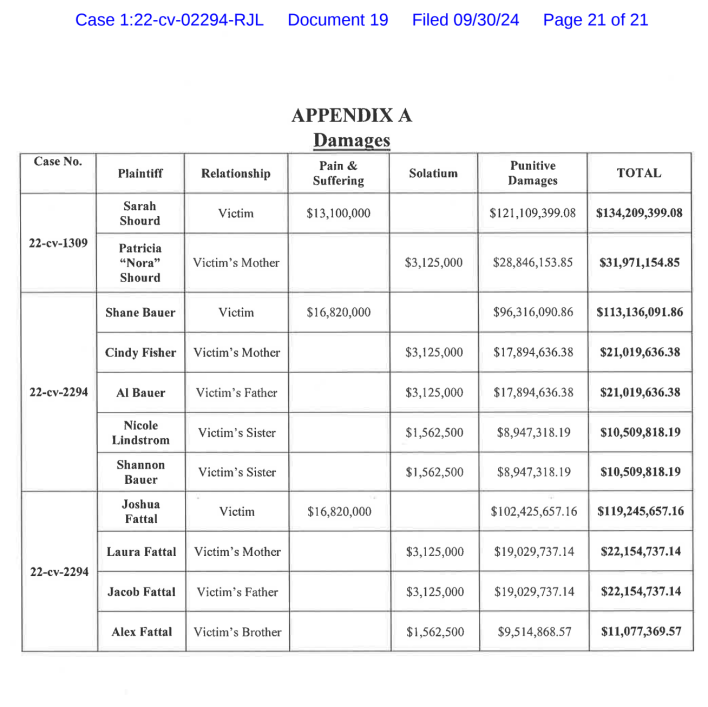
Leon has awarded Bauer, Fattal, Shourd and their families more than $500 million in seized Iranian state funds which could have been used to purchase medicine, sanitation equipment and food for citizens of the heavily sanctioned nation. As The Grayzone reported below, “Bauer and his ex-wife, Shourd, posed as staunch opponents of US sanctions against Iran and other nations. In 2016, for example, Bauer characterized Hillary Clinton’s call for Iran sanctions as ‘totally irresponsible.’ Shourd, for her part, condemned sanctions against Iran for ‘hitting the poorest of Iranians the hardest.’”
Bauer is currently reporting from Damascus, where the former Al Qaeda affiliate Hayat Tahrir al-Sham (HTS) has toppled the Syrian government and assumed power – a development he appeared to support. He and his fellow plaintiffs have not commented on the judgment they received against Iran.
Judge Leon’s full decision can be viewed here.
Below, in their initial August 30, 2022 report on Bauer’s lawsuit against Iran, Alexander Rubinstein and Max Blumenthal detail his history of agitation for Western-sponsored regime change operations across the globe, and his record of sordid attacks on The Grayzone, including his promotion of a failed frivolous lawsuit that aimed to destroy this publication.
Over a decade since he rose to prominence as a protagonist in an international drama of espionage and imprisonment, American journalist Shane Bauer and his family filed suit against Iran’s government in a Washington DC-based US District Court, seeking compensation for $10 million in damages resulting from his two year detention in Tehran.
Bauer’s ex-wife Sarah Shourd and their friend, Joshua Fattal, filed simultaneous lawsuits, seeking $10,000 and $10 million respectively.
The trio’s cases were filed in a Washington DC federal court with Judge Richard J. Leon – the same justice who ordered the Iranian government to pay the Washington Post’s Jason Rezaian $180 million in damages for his 18-month detention in the country.
In 2011, an Iranian court sentenced Bauer and Fattal to a total of eight years in prison each after they were convicted of illegally crossing the country’s border and spying for the United States. The two each served a total of two years, while Shourd was granted a compassionate release from Iranian prison after 13 months of detention.
Before his imprisonment, Bauer trekked throughout Africa and the Middle East while working as an English teacher and roaming reporter, racking up an impressive collection of passport stamps. Following his 2011 release, he established himself as a journalist specializing in undercover investigations, working a stint as a senior reporter for Mother Jones magazine in between various freelance gigs.
Bauer simultaneously emerged as a prolific apologist for US-backed regime change operations from Syria to Nicaragua, while justifying the US assassination of Iranian Maj. Gen. Qasem Soleimani. A relentless antagonist of anti-interventionist public figures, he has pushed for big tech platforms to censor media personalities that challenged Washington’s regime change agenda.
Bauer has even promoted a failed legal action against The Grayzone by a fellow journalist who had received a large sum of assets seized by the US government from Iran.
In 2018, Bauer’s book of undercover reporting, “American Prison,” which saw him take a job as a prison guard to gain inside access to a private prison, wound up on former President Barack Obama’s “Favorite Books of 2018.”
By the following year, as Bauer’s journalistic output declined, his attacks on anti-war media figures only escalated. Today, many of his most malicious tweets have been scrubbed, he is no longer employed by Mother Jones, and he says he is “working on a book about Americans in the Syrian war.” If Bauer scores a lucrative payout in US federal court, however, he may never need to worry about a freelance fee again.
And if successful, he and his former cellmates will ultimately be paid out with Iranian government assets seized by the United States through its international sanctions regime. In other words, the trio plans to benefit from looted public funds which Tehran could have otherwise used to purchase medicine, food, or fund social programs for its people.
Studies have found that the “Iranian economy and households are affected enormously” by sanctions targeting the country’s oil exports. In one particularly egregious instance of theft, the US government seized an Iranian oil tanker in 2021 and hauled it to Texas, where it sold the stolen crude for $110 million.
Before launching their lawsuits, Bauer and his ex-wife, Shourd, posed as staunch opponents of US sanctions against Iran and other nations. In 2016, for example, Bauer characterized Hillary Clinton’s call for Iran sanctions as “totally irresponsible.” Shourd, for her part, condemned sanctions against Iran for “hitting the poorest of Iranians the hardest.”
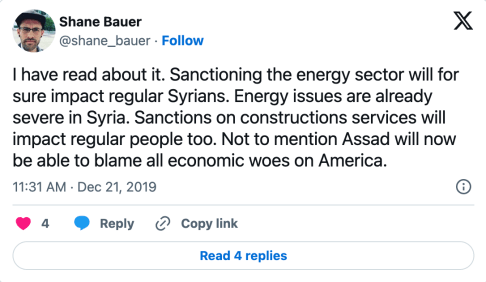
Bauer’s sudden bid for millions of dollars seized from the Iranian people by the US government raises new questions about a character whose journalistic career was shrouded in suspicion.
Long before his arrest in Iran, Bauer’s moves throughout Africa and the Middle East tracked closely with US foreign policy initiatives, and were sponsored by a US Department of Defense fellowship for several years.
To top it off, the lawyer Bauer enlisted to secure millions from Iran’s government counts one of Washington’s most infamous spies among her previous clients.
“the lack of coordination on the part of these hikers… indicates an intent to agitate”
The background to Bauer’s lawsuit originates in a July 2009 expedition he, his then-girlfriend Sarah Shourd, and their friend Joshua Fattal took to the Iranian border, where they were subsequently arrested.
The three Bay Area natives and self-described social justice activists insisted that their incursion into Iran was the result of an honest mistake. They claimed to have crossed the border unknowingly during a hiking trip near the Ahmad Awa waterfall in Iraq’s Sulaymaniyah Province, a region which fell under control of US-backed Kurdish militias following the US invasion of 2003.
According to Bauer’s legal complaint, when Iranian border guards arrested him and his companions, “Shane and Mr. Fattal instead became limp, as they would often do when protesting.”
While in Iranian custody, Bauer’s captors discovered photographs on Shourd’s camera showing they had visited Tel Aviv, Israel. The two said they traveled to Israel to visit an American friend, Tristan Anderson, who had been badly wounded and hospitalized by an Israeli teargas canister during a protest against Israel’s apartheid wall.
During Bauer’s trial, an Iranian judge listed each of the entry stamps on his second passport. They included Syria, Yemen, Iraq, Lebanon, Sudan and Israel.
Iran’s government was not the only party that rejected the trio’s excuses for their presence on the border. An Iraqi police officer claimed to the Iranian TV station Al-Alam the hikers were “working with the CIA.”
Meanwhile, a classified 2010 US military report stated that “the lack of coordination on the part of these hikers, particularly after being forewarned [of their proximity to the Iranian border], indicates an intent to agitate and create publicity regarding international policies on Iran.”
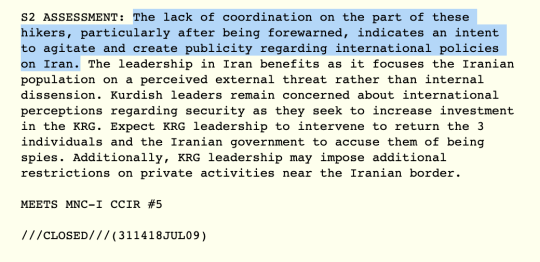
While Shourd denounced the US military assessment as “ridiculous,” her and her friends’ visit to the Iranian border came at a precarious time for the country’s government.
Indeed, their arrest occurred just weeks after President Mahmoud Ahmadinejad, a firebrand personality considered hostile to the West, secured reelection by a nearly 30 percent margin. The result sparked massive demonstrations in Tehran and gave way to the so-called “Green Movement,” a sustained protest campaign against Ahmadinejad’s mandate that eventually aided the 2014 electoral victory of Iran’s reformist bloc.
Throughout the summer of 2009, Western media granted the “Green Movement” wall to wall coverage, crediting it with drawing the largest protest crowds since Iran’s 1979 Islamic Revolution. In her memoir of captivity, Shourd recounted that during a trip to Sweden, “Stockholm’s sizable expatriate Iranian community protested in solidarity with the uprising in their home country.”
“My brother, Alex, and I documented the anti-Iran rally in Sweden,” she recalled.
Shourd later wrote that while imprisoned in Iran, the Green Movement “made me want to participate in undermining the regime that was causing me and my family so much pain.”
When the story of “Three American Hikers Held Hostage in Iran” emerged in July 2009, their tale was presented as further proof of the embattled government in Tehran’s anti-American sentiment and lack of regard for human rights. Shourd later expressed gratitude to the Iranian government “for using us to further deepen your own crisis of legitimacy around the world and with your own people.”
Their detention also corresponded with the launch of President Barack Obama’s economic assault on Tehran, a strategy which saw Washington levy hefty financial sanctions against Iran’s government in a bid to force it to negotiate limits on its domestic nuclear program.
Bauer’s lawyer represented top US spy jailed in Cuba
Bauer’s lawsuit accused the Iranian government of a slew of crimes against both himself and his family. Notably, it claims Bauer was subjected to torture, assault, and battery while in Iranian custody.
Bauer’s 2014 memoir, “A Sliver of Light,” which he co-authored with Shroud and Fattal, offers a strikingly different narrative, however. In the book, Bauer recalled taunting a prison guard to assault him and acknowledged that Iranian authorities were reluctant to do so.
“If he can’t frighten me, all he can do is hit me, and if he does that, he will be hurting himself,” Bauer explained.
“We are hostages, and hostages are currency, and currency is not to be damaged. Making him beat me is my only way to fight back,” he continued, after saying he repeatedly screamed at the guard: “Hit me!”
While Bauer’s lawsuit appeared to contradict the account offered in his memoir, it is far from an amateurish legal complaint. He and his family are represented by Emily P. Grim, a partner at the elite Gilbert, LLP law firm, which is located just blocks from the US Capitol.
Grim’s biography on Gilbert’s website boasts: “Her clients include Alan Gross, an American jailed in Cuba from 2009 to 2014 for his work on a U.S. Government project to increase Internet access in Cuba’s Jewish community, and Amir Hekmati, a former U.S. Marine imprisoned in Iran from 2011 to 2016 on false charges of espionage.”
Before he became Grim’s most famous client, Alan Gross was arrested by Cuban security officers in 2009. At the time, Gross was working for the United States Agency for International Development, or USAID, a soft power arm of American foreign policy that has overseen countless destabilization plots around the globe. The USAID program that sponsored Gross’ work in Cuba was funded through the 1996 Helms-Burton Act, a US law that explicitly called for regime change in Cuba.
When Cuban authorities apprehended Gross during his fifth trip to the country, they discovered his phone was linked to a SIM card that was distributed exclusively by the Pentagon and the CIA. The USAID employee had previously smuggled large amounts of illicit technology into Cuba, apparently as part of an effort to establish a network of covert internet access points throughout the country.
Amir Hekmati is the second-most notable client of Bauer’s lawyer, Emily Grim. A former marine, Hekmati helped develop a translation system financed by the Pentagon’s Defense Advanced Research Project Agency, or DARPA. Iran jailed Hekmati and sentenced him to death after convicting him on espionage charges. Following the diplomatic breakthrough of the Iran-US nuclear deal, he was released in 2016 as part of a prisoner swap.
Though Hekmati was initially rewarded a $20 million payout of seized Iranian assets, the Department of Justice eventually cut him off when the FBI became suspicious that the American had traveled to Iran to sell classified information about US operations in Afghanistan to the government, and not to visit his grandmother as he claimed.
Despite angry protestations, Grim’s firm has been unsuccessful in persuading the courts to complete her client’s payout.
Gilbert LLP has not responded to multiple emailed requests from The Grayzone regarding Bauer’s lawsuit. Bauer and Shourd have also ignored requests for comment delivered by Twitter and email.
Bauer sponsored by Pentagon grant that mandates “contributing to the national security of the United States”
Shane Bauer has lashed out at anyone who has accused him of having worked with the US government. However, his memoir raised more questions about his relationship with Washington than it has answered.
In one particularly revealing section, Bauer recalled an interrogation he experienced at the hands of an English-speaking Iranian he nicknamed “Weasel.”
“In our other sessions, you listed twenty-four countries that you have been to. Who funded those trips?” Weasel asked Bauer, who was 29 at the time.
“I know what he is getting at,” Bauer recalled, “and it is a legitimate question. If I can’t account for my funds, how can I prove that I am not being funded by the CIA? The problem is, I don’t think my honest answer is that believable.”
Bauer ultimately told Weasel that he saved money while “working as a welder” until he was 19 before traveling “through Europe and the Middle East.”
“Does this asshole believe a word I’m saying?” Bauer recalled wondering.
The line of questioning proceeded with Weasel asking whether the US government paid for any of Bauer’s trips.
“Shit! He knows about the grant…” wrote Bauer. ‘No,’ I say.”
Bauer was referring to the Boren Award, a Department of Defense sponsored grant that covered his Arabic studies in Yemen and Syria. When “Weasel” asked who funded the program, Bauer once again admitted to lying, telling him it was the State Department.
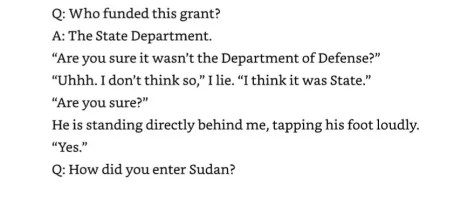
From Bauer’s co-authored account of captivity in Iran, “Sliver of Light”
Boren fellowship recipients are required to pay back their award through governmental service by “contributing to the national security of the United States in the Department of Defense, any element of the intelligence community, the Department of Homeland Security, or the Department of State.”

From the Boren Awards website
In less common instances, Boren recipients are allowed to fulfill their obligations to the US government in other departments. However, the overwhelming majority of grantees do so with the aforementioned agencies. Bauer never specified whether or not he fulfilled his obligation to the fellowship – or how he did it. He did claim, however, that the professor who encouraged him to apply for the grant stated none of their students actually went into government.
Yet when journalist David Ravicher inquired with a Boren representative about the program, he was informed “that 98 percent of its recipients fulfill this requirement and the rest receive deferments. Otherwise, the Treasury Department hunts them down.”
Before stepping into Iran, Bauer winds strange trail through the region
Shane Bauer entered journalism while enrolled at the University of California-Berkeley’s Peace and Conflict Studies program, which he graduated in 2007. It was at UC-Berkley where he met Shourd.
Bauer’s first dabbled in undercover journalism while in Yemen in 2005. At the time, the Houthi movement had just launched its insurgency against the Yemeni government. The civil conflict eventually triggered a brutal and ongoing military intervention by the US, Saudi Arabia, and the UAE to crush the Houthi advance.
According to the UC-Berkeley Alumni Association’s newsletter, Bauer was employed in Yemen by “a pro-government, English-language paper.” While the Alumni Association did not say which paper that was, Bauer earned a byline in 2005 from the Yemen Observer, a paper founded by the longtime press secretary to then-President Ali Abdullah Saleh.
Bauer eventually “decided to sneak into a city occupied by Houthi rebels which no Western journalist had visited,” the newsletter wrote. While disguised in local garb, Bauer and a British pal were detained by local authorities in the city of Saada and released a day later.
Bauer also spent two summers in the Darfur region of Sudan while enrolled at UC-Berkeley. At the time, between 2006-07, Darfur-based rebel groups from the Sudanese Liberation Army, or SLA, were facing international pressure to enact a peace deal with Sudanese President Omar Bashir, who was labeled a state sponsor of terror by the US.
In 2007, Bauer managed to score an interview with the vice intelligence director for SLA General Secretary Minni Minnawi, who had signed the deal. According to the Institute for International and Strategic Relations, a French think tank, Minnawi had been backed by the CIA as the only rebel faction leader to ink the agreement with Khartoum. He was later flown to Washington to meet with President George W. Bush. Today, he serves as the governor of Darfur while his forces fight in Libya under the command of Khalifa Haftar, another former CIA asset.
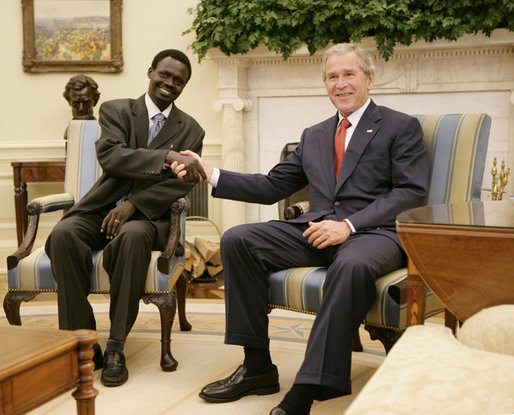
SLA General Secretary Minni Arko Minnawi and President George W. Bush
In his memoir of captivity in Iran, Bauer wrote that his interrogator demanded to know how he entered Sudan in 2007. The inquiry caused Bauer to worry that Iran may have been aware of his “history of government funding and my history of illegally crossing borders,” he recalled. Bauer told his interrogator that he “entered [Sudan] as a guest of the Sudanese Liberation Army.”
Not long after his jaunt into Darfur, Bauer arrived in Damascus, Syria with his then-girlfriend, Shourd, for several months. At the time, Washington was cultivating opposition to the government of President Bashar al-Assad through civil society networks around the country.
Bauer and Shourd said they studied Arabic at Damascus University, taught English to Iraqi refugees, and used the country as a base for reporting around the region. (On her personal webpage, Shourd says, “In 2007, I moved to Damascus, Syria…” In an interview with the Pulitzer Center, however, she states, “In 2008, I moved to Damascus, Syria…”)
A confidential November 2008 cable by Maura Connelly, then the Charges D’Affaires for the US Embassy in Damascus, identified English teachers and visiting Fulbright scholars in Syria as important cogs in US “public diplomacy” efforts against the government of President Bashar al-Assad.
The US embassy’s “English Language Fellow (ELF) for 2008-2009 remains in country and is using her numerous contacts among Syrian English teachers to conduct training in Damascus and country-wide,” Connelly noted.
Bauer and Shourd’s teacher in Damascus, Majid Rafizadeh, happened to have been on a Fulbright scholarship at the time. A Syrian-Iranian academic, Rafidzadeh has since emerged as a fervent supporter of Iranian regime change who has supplied testimony to Congress advancing the interventionist goals of hardline neoconservatives.
Bauer later reflected “how, back in 2009, my Syrian friends would fantasize about being rid of the dictator and his secret police, but no one could have imagined that the Arab Spring would come two years later.”
Bauer escalates online attacks, enters Syria under US occupation
Years after the so-called Arab Spring swept through the region like a hurricane, leaving unimaginable ruin in its wake, Bauer was still pumping out online attacks against prominent critics of US meddling.
By 2019, his attacks on opponents of the US-backed dirty war on Syria had grown so unhinged, his detractors began to taunt him with the refrain: “Take a hike.”
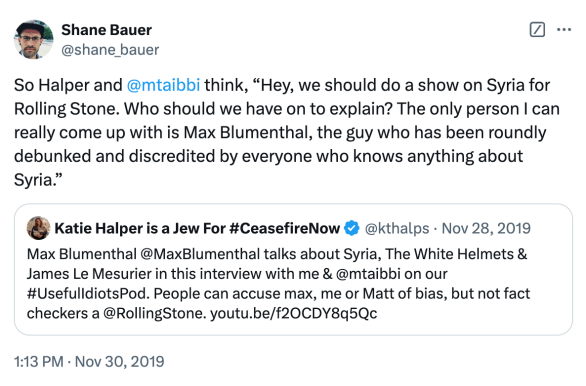
Bauer also took aim at former US Rep. Tulsi Gabbard for daring to criticize the US military occupation of northeastern Syria, insisting it was a noble anti-terrorist mission. In fact, Dana Stroul, a senior Biden Department of Defense official, has openly stated that the US military “owns” the “resource rich” region of Syria in order to exploit its wealth and starve Damascus into capitulating to the West’s agenda.
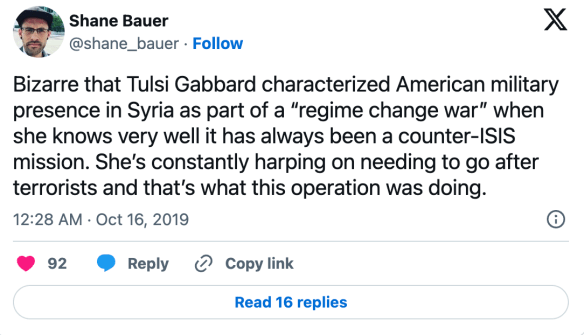
At the time, Bauer had recently returned from a visit to the US-occupied northeastern region of Syria for a series of field reports lamenting Washington’s refusal to remove Assad by force. Published in the May/June 2019 issue of Mother Jones, the series opened with a quote by a Kurdish border guard practically begging the US to plunder Syria’s natural wealth: “We have oil, so much oil. Let them stay and take the oil.”
Careful readers may be wondering whether Bauer entered the country legally or not. In fact, Syria’s government denied Bauer’s visa, prompting him to “sneak in” through the border controlled by the US military and its Kurdish allies.
Since Bauer’s reports from US-occupied Syria in 2019, he has produced only one article: a profile of a rogue local US police force for The New Yorker. That was nearly two years ago.
With no known sources of income apart from his two published books and the one apparently on the way, Bauer turned to the US government and the funds it seized from the Iranian people for a massive payday.
View the initial legal complaint, Shane Bauer v. the Government of the Islamic Republic of Iran, here.
US imposes sanctions on IRGC entity over alleged election interference
Press TV – December 31, 2024
The United States has announced sanctions on an entity it says is affiliated with the Islamic Revolution Guard Corps (IRGC) over its alleged interference in the 2024 US presidential elections.
The designation was announced by the US Treasury’s Office of Foreign Assets Control (OFAC) on Tuesday and targeted the IRGC subsidiary, which it identified as the Cognitive Design Production Center (CDPC).
A statement on the Treasury’s website claimed the CDPC had planned influence operations since at least 2023 to incite tensions among the US electorate on behalf of the IRGC.
Iran has repeatedly rejected accusations it has interfered in elections in other countries, including in the US.
Iran’s Permanent Mission to the United Nations issued a statement in late August to reject such allegations.
“Such allegations are unsubstantiated and devoid of any standing,” said the Mission after the US Federal Bureau of Investigation and several other American intelligence agencies claimed that Iran had been involved in the hacking of the campaigns of Trump and his Democratic rival Kamala Harris.
“As we have previously announced, the Islamic Republic of Iran harbors neither the intention nor the motive to interfere with the US presidential election,” said the statement.
Iranian authorities say that Washington’s policy of imposing numerous sanctions on the country is solely aimed at forcing the country into accepting political and military concessions.
Iran expects boom in trade after gaining EAEU’s observer status
Press TV – December 29, 2024
Iran expects a major boom in trade ties with members of the Eurasian Economic Union (EAEU) after the country gained observer status in the bloc and just months before the two sides enter into a free trade agreement.
Iran’s trade minister Mohammad Atabak said on Sunday that observer membership in the EAEU will enable Tehran to increase its presence in the bloc’s meetings and exchange more trade and economic information with its members.
Atabak made the remarks after returning from an EAEU Supreme Council meeting in Saint Petersburg, Russia, where he signed the agreement for Iran to become an observer member in the bloc on December 26.
During the meeting, EAEU members also gave their final endorsement to a free trade agreement signed between Iran and the bloc last year. The agreement, which has been ratified by parliaments of both Iran and five EAEU members, will officially come into effect in the next two months after Iran’s Guardian Council, which vets legislation passed by parliament, approves the deal.
Atabak said that the free trade deal with the EAEU will eliminate tariffs on nearly 87 percent of Iranian exports to members of the bloc, namely Russia, Belarus, Kazakhstan, Kyrgyzstan, and Armenia.
He expected that trade between Iran and the EAEU would increase several times with the implementation of the free trade deal.
“The Eurasian region is a very good market for Iranian goods. Iranian technical and engineering companies can also expand their activities in these countries,” he said.
The minister said that Iran is planning to hold a major trade exhibition in Tehran in the coming months to showcase its economic and trade potential to EAEU countries.
Iran FM: China visit marks ‘new chapter’ in strategic ties, heralds ‘golden’ era
Press TV – December 27, 2024
Iran’s Foreign Minister Abbas Araghchi says his visit to China will open a “new chapter” in strategic cooperation between the two countries and herald a “golden” era for bilateral relations.
Araghchi made the remarks in an article published by China’s official People’s Daily newspaper on Friday, on the day that he was to head to Beijing at the invitation of his Chinese counterpart, Wang Yi.
“The next golden 50 years of Iran-China relations will demonstrate that this visit marks the beginning of a new chapter of strategic cooperation between the two countries,” he wrote.
The top Iranian diplomat also noted that Iran and China have long engaged in “practical cooperation” to promote multilateralism and develop indigenous values, adding that both sides have defended each other’s fundamental interests in international forums.
He also hailed “pragmatic” Iran-China ties, citing close political and defense coordination, exchange of high-level delegations, as well as cooperation in the Belt and Road Initiative (BRI), the Shanghai Cooperation Organization (SCO), the BRICS group of emerging economies, and the Beijing-brokered deal between Iran and Saudi Arabia in March 2023.
“Iran and China share common interests and concerns not only at bilateral and regional levels, but also at the trans-regional and international levels,” he emphasized.
“While firmly believing in the significance of multilateralism and the benefits of joint cooperation towards the prosperity of human society, both countries keep cooperating closely in multilateral mechanisms, including the SCO and the BRICS.”
China is Iran’s largest trade partner. Both states are subject to different levels of illegal sanctions imposed by the US.
The two countries signed the long-term strategic partnership deal in March 2021 to reinforce their long-standing economic and political alliance.
In his article, Araghchi said that West Asia is facing numerous challenges, the core of which is the Palestine issue.
The humanitarian crisis in Gaza, caused by the Israeli genocide and supported by some world powers, has been exacerbated by the inaction of the international community and irresponsible behavior of some parties, he noted.
Iran and China believe that an immediate ceasefire in Gaza and the delivery of humanitarian aid are now the most important priorities, he said.
The Iranian foreign minister further referred to the recent developments in Syria, urging respect for the country’s unity, national sovereignty, and territorial integrity.
Tehran, he pointed out, believes that the Syrian people should decide the future of their country without destructive intervention or external imposition.
“We are witnessing unprecedented changes in the world that have simultaneously created complex “opportunities” and “challenges” and put countries at a historical crossroad, where they must choose between confrontation/cooperation, exclusion/inclusion, closeness/openness, chaos/peace,” he said.
“Some states are trying to restrict and force others to choose their desired values and interests by distorting the facts, falsely dividing the world into democratic and non-democratic, and resorting to sanctions, pressure and double standards. However, Iran and China will always stand on the right side of history and by the side of development, prosperity, cooperation, and friendship between the countries of the Global South in a bid to counter unilateralism and bullying.”
The Israeli Hit List – Iran Remains
If Americans Knew | December 18, 2024
The seven countries that the U.S. continues to meddle with and antagonize have a shared history and connection: Israel and the Zionists who pushed for the Jewish state want them to be destabilized, weakened, or eliminated. Jeffrey Sachs is a world-renowned economics professor, bestselling author, innovative educator, and global leader in sustainable development. Sachs serves as the Director of the Center for Sustainable Development at Columbia University, where he holds the rank of University Professor, the university’s highest academic rank. From 2001-18, Sachs served as Special Advisor to UN Secretaries-General Kofi Annan (2001-7), Ban Ki-moon (2008-16), and António Guterres (2017-18). Alison Weir is the founder of If Americans Knew and president of the Council for the National Interest, which works for “U.S. Middle East policies that represent the highest values of our founders and our citizens and that work to sustain a nation of honor, decency, security, and prosperity.” Weir is also author of the book, Against Our Better Judgment: The Hidden History of How the U.S. Was Used to Create Israel.
Source videos:
Jeffrey Sachs on Piers Morgan  • “WHY Are We Doing Netanyahu’s Bidding…
Alison Weir’s speech February 2017 • Israel-Palestine: Essential facts on …
Alison Weir – Iraq Tribunal: The Israel Connection – 2022 • Iraq Tribunal: The Israel Connnection…
Alison Weir’s speech September 2019 • Alison Weir Visits Clovis Community C…
Donald Trump on the invasion of Iraq 2016 • Does Trump think George W. Bush lied …
General Wesley Clark on Democracy Now • Gen. Wesley Clark reveals 2001 plan t…
General Wesley Clark’s speech at the Commonwealth Club of California • Gen. Wesley Clark reveals 2001 plan t…
Benjamin Netanyahu in Congress 2002 • Israeli Perspective on Conflict with …
Featured Video
NEW FAUCI EMAILS EXPOSE ATTACK ON NATURAL IMMUNITY
or go to
Aletho News Archives – Video-Images
From the Archives
Fourteen Incredible Facts About 9/11
By Kevin Ryan | Dig Within | August 8, 2015
… What is known about 9/11 is that there are many incredible facts that continue to be ignored by the government and the mainstream media. Here are fourteen.
- An outline of what was to become the 9/11 Commission Report was produced before the investigation began. The outline was kept secret from the Commission’s staff and appears to have determined the outcome of the investigation.
- The 9/11 Commission claimed sixty-three (63) times in its Report that it could find “no evidence” related to important aspects of the crimes.
- One person, Shayna Steiger, issued 12 visas to the alleged hijackers in Saudi Arabia. Steiger issued some of the visas without interviewing the applicants and fought with another employee at the embassy who tried to prevent her lax approach.
Blog Roll
Recent Comments
eddieb on Fourteen Incredible Facts Abou… Bill Francis on European leaders’ shift in the… seversonebcfb985d9 on Villains of Judea: Philip Esfo… loongtip on Report warns that ‘Jewish terr… Craig Nelms on New study shows that toxic gas… loongtip on A Funny Thing Happened on the… loongtip on EU free trade pact on hold as… John Edward Kendrick on Regime Change In Iran Is The F… Bill Francis on Australia Passes New Hate Spee… seversonebcfb985d9 on Australia Passes New Hate Spee… Bill Francis on Britain’s AI Policing Plan Tur… loongtip on Miami Beach Resident Questione…


 Aletho News
- Israel moves to restrict Palestinian re-entry to Gaza, ‘encourage outflow’: Report
- Trump aims to create new UN and own it, Brazil’s Lula warns
- UN rapporteur says Israeli demolition of UNRWA compound reflects broader attack on UN system
- From Proxy to Disposable: The US Betrayal of the Syrian Kurds
- Six injured in stabbing spree at Kurdish rally in Antwerp, victims stabbed ‘indiscriminately’
- US pledges to ‘starve’ Iraq of oil revenue if pro-Iran parties join new government
- Is China a threat to Greenland?
- South Korea’s Prime Minister Proposes US Send Special Envoy to North Korea — Report
- Pentagon downgrades China threat, shifts focus to homeland, hemisphere
- Ireland Moves to Legalize Spyware Use by Police
- If Americans Knew
- Another Gaza baby freezes to death on Netanyahu’s watch – Not a ceasefire Day 106
- Oppose Israel’s Abuses While You Still Can
- UNRWA Heads Tell Ha’aretz: ‘We Don’t Radicalize Palestinians – Their Lived Existence Does’
- Plans Call for “New Rafah” Built in Israel’s Image — Without Palestinians
- Posing as priest, reporter is spat at many times, highlighting anti-Christian sentiment in Israel
- Leaked Documents: “Planned Community” in Rafah Would Force Palestinians Into Israeli Panopticon
- ‘Permits of Humiliation’: How Israel Strangles Christian Education in Jerusalem
- “The world sees death, destruction and injustice – and they see dollar signs” – Not a ceasefire Day 105
- War criminal Netanyahu kills 11 in Gaza, joins Board of Peace – Not a ceasefire Day 104
- Another baby dies of cold in Gaza, as Rafah crossing remains locked down – Not a ceasefire Day 103
- No Tricks Zone
- Polar Colding…Antarctica Saw Its Coldest October In 44 Years!
- New Study: Sea Levels Rose 20 Times The Modern Rate During The Roman Warm Period
- As German Gas Storage Dips Dangerously Low…Shortage Hardly Avoidable
- New Study: Brazil’s Relative Sea Level Was 2+ Meters Higher And SSTs 3-4°C Warmer 6000 Years Ago
- Philosopher Schopenhauer: Climate Science Certainty Stems From Stupidity, Ignorance
- New Study: Species Extinction Rates Declining Since 1980 – ‘Climate Change Is Not An Important Threat’
- Denmark Places Climate Protection Above Animal Welfare, Poisoning And Culling Cows
- New Study: Greenland Was 3-7°C Warmer And Far Less Glaciated Than Today 6000-8000 Years Ago
- German Media Report That Current Frigid Weather Can Be Explained By Arctic Warming!
- Berlin Blackout Shows Germany’s $5 Trillion Green Scheme Is “Left-Green Ideological Pipe Dream”
 Aletho News
