Trump Claims Ceasefire, Reopening of Strait of Hormuz Agreement with Iran
By Kyle Anzalone | The Libertarian Institute | April 7, 2026
President Donald Trump posted on Truth Social that Iran had agreed to reopen the Strait of Hormuz, and a two-week truce would begin.
“Based on conversations with Prime Minister Shehbaz Sharif and Field Marshal Asim Munir, of Pakistan, and wherein they requested that I hold off the destructive force being sent tonight to Iran, and subject to the Islamic Republic of Iran agreeing to the COMPLETE, IMMEDIATE, and SAFE OPENING of the Strait of Hormuz, I agree to suspend the bombing and attack of Iran for a period of two weeks. This will be a double sided CEASEFIRE!” the President posted.
Trump did not specify if Israel was a party to the truce. Iran has not confirmed that it agreed to the ceasefire or to reopen the Strait.
The President explained that the pause in fighting will give time for the two sides to work out a peace deal based on a framework proposed by Iran. “We received a 10 point proposal from Iran, and believe it is a workable basis on which to negotiate. Almost all of the various points of past contention have been agreed to between the United States and Iran, but a two week period will allow the Agreement to be finalized and consummated,” he wrote.
A US official previously described the 10-point proposal as Iran’s “maximalist” position. The proposal called for establishing protocols for shipping in the Strait of Hormuz, a permanent end to the conflict, war reparations, and the lifting of sanctions.
Trump made the ceasefire announcement just 90 minutes before a deadline he imposed on Iran to reopen the Strait of Hormuz was set to expire. He vowed to permanently destroy the country of Iran if Tehran did not reopen the strait by 8 PM on Tuesday.
Russia, China block Bahrain-sponsored UN resolution on Strait of Hormuz
Press TV – April 7, 2026
Russia and China vetoed a UN Security Council resolution on Tuesday that called for states to coordinate efforts to protect commercial shipping in the Strait of Hormuz.
The draft resolution, prepared by Bahrain and supported by the United States, received 11 votes in favor, two against and two abstentions – Pakistan and Colombia.
The text was already diluted from the initial goal of obtaining clearance to “unblock” the strait by force.
The latest draft “strongly encourages states… to coordinate efforts, defensive in nature, commensurate to the circumstances, to contribute to ensuring the safety and security of navigation, including through the escort of merchant and commercial vessels.”
It also “demands” that Iran “immediately cease all attacks against merchant and commercial vessels and any attempt to impede transit passage or freedom of navigation in the Strait of Hormuz.”
The critical waterway has been nearly blocked since the United States and Israel launched their war of aggression on February 28, sending ripple effects throughout the global economy.
Iran says it has not blocked the strait but imposed restrictions due to the security conditions created in the wake of the war on the country.
Tehran says all vessels must coordinate with it before trying to pass the waterway, which lies within its territorial waters.
It says it will not allow ships affiliated with the aggressors and their supporters to pass through the strait.
The Iranian Parliament has recently been discussing legislation to create a new legal regime for the strait to charge fees for safe transit through the strait.
Trump’s Promise to Bomb Iran ‘Like Never Before’ Faces Brutal Logistics — Expert
Sputnik – 07.04.2026
Destroying Iran’s power grid and bridges is easier said than done, according to former Pakistan Air Force colonel Sultan M. Hali.
Here’s why:
- No Yugoslav-style campaign: Iran’s vast size and limited tanker basing options rule out a repeat of the 1999 Kosovo air war
- Vulnerable tankers: Long distances force refueling aircraft to operate from exposed forward bases or on risky long-range missions
- Layered air defenses: Russian-made Tor-M1 and indigenous Bavar-373 systems threaten low/medium-altitude strikes
- Dual threat to carriers: Drone swarms can overwhelm defenses, while short-range ballistic and cruise missiles can target ships and bases
“The danger is not absolute, but it is significant enough to force US planners into cautious, resource-intensive operations,” the expert said.
Nations across Asia strike direct deals with Iran for Hormuz passage
Al Mayadeen | April 7, 2026
As US President Donald Trump threatens to “obliterate” Iran’s energy infrastructure unless it reopens the Strait of Hormuz, a growing number of countries are now negotiating directly with Tehran to secure safe passage for their ships.
Several nations in Asia, arguably the region most affected by the ongoing fuel crisis, have been able to get their vessels through the chokepoint, through which about a fifth of the world’s oil and gas normally transits. Tehran effectively closed the Strait after the country was attacked by the US and “Israel” on February 28.
It is a state of affairs that reflects a new geopolitical reality: access to the world’s most critical energy chokepoint is no longer governed by international maritime law, but by direct diplomacy with Iran.
A ‘de facto toll booth regime’
According to maritime tracking platform Kpler, commodity traffic through the strait fell by 95 percent when the war began. Before the US-Israeli aggression, around 100 ships transited daily. On some days this past week, that number was in the single digits.
But Iran has not closed the Strait entirely. Instead, it has created what maritime intelligence firm Lloyd’s List has described as a “de facto toll booth regime,” a permissions-based system operated by the IRGC, in which vessels from friendly countries are escorted through a narrow northern corridor near Larak Island.
As of this week, a second southern corridor near the Omani coastline has become operational, with Windward Maritime Intelligence tracking 11 transits on Sunday split across the two routes.
Iran names friendly nations
Iran’s Foreign Minister Abbas Araghchi has publicly named the countries considered friendly enough for passage: China, Russia, India, Iraq, and Pakistan. Several others have since joined the list.
India was among the first countries to secure safe transit, reportedly without paying any fees. The Iranian embassy in New Delhi posted on social media that “our Indian friends are in safe hands.”
Pakistan was allocated 20 vessel slots by Tehran. “This is a welcome and constructive gesture by Iran,” Pakistani Foreign Minister Ishaq Dar said.
Thailand struck a deal after weeks of disruptions that included a Thai bulk carrier being struck by Iranian projectiles in March, leaving three crew members unaccounted for. A Thai tanker subsequently crossed without paying a fee.
Malaysia secures passage
Malaysia secured assurances of safe passage through what its Transport Minister described as a “good diplomatic relationship with the Iranian government.” The Iranian embassy in Kuala Lumpur said on Monday that the first Malaysian ship had passed through the strait since the war began. “Iran does not forget its friends,” it said.
A Malaysian Foreign Ministry statement confirmed that one of seven Malaysian-owned commercial vessels stranded in the strait has been granted safe passage and is now heading to its destination, following “high-level diplomatic engagements” and “constructive” talks with Iranian officials led by Prime Minister Anwar Ibrahim.
Other nations join the list
The Philippines, despite its close ties with the US, became the latest Asian country to secure an agreement after what its foreign secretary described as “a very productive phone conversation” with Tehran. Iran assured “safe, unhindered and expeditious passage” for Philippines-flagged ships.
China, Iran’s largest oil buyer, confirmed that some of its ships had sailed through. Windward’s data show Chinese-linked vessels account for around 10 percent of the limited traffic still moving through the strait.
Indonesia secured passage for two of its vessels following diplomatic engagement with Tehran. Iraq has also been granted an exemption, with Windward identifying 21 Iraqi-linked tankers already operating under the arrangement.
Japan joined the list this week after a vessel operated by Mitsui OSK Lines carrying liquefied natural gas passed through the strait.
A system based on political alignment
The system is selectively allocated based on political alignment rather than open maritime norms. Of the roughly 280 global transit requests tracked by one intelligence firm, only 17 were approved. Some 670 commodity vessels were still stranded west of the strait as of last week.
Iran’s parliament is pursuing legislation to formally codify the toll system, likely making permanent a wartime measure and turning one of the world’s most important shipping routes into a fee-paying corridor controlled by its military.
A strategy that works
While Washington threatens military action and demands European naval support, Iran has quietly built a parallel system: nations that engage with Tehran diplomatically get their ships through. Those who follow Washington’s lead find the strait closed.
As the US-Israeli war on Iran enters its sixth week, the message is clear. Iran controls the Strait. Iran decides who passes. And Iran is proving that diplomacy, not threats, is the only path through. The countries that need their ships to move are making their own deals, and they are getting results.
IRGC commander declares ‘new phase’ of reprisal attacks against aggressors
Press TV – April 7, 2026
Commander of the IRGC Aerospace Force has declared the start of a “new phase” in Iran’s retaliatory operations against the US aggression, as the elite force warned earlier that any violation of red lines by the enemies will trigger a crushing response.
Posting a video on social platform UpScrolled, Brigadier General Seyyed Majid Mousavi said, “And now, the new phase of the war [has begun] with fresh, twin launchers for Fateh and Kheibar Shekan missiles, all previous strikes doubled.”
In a statement announcing the launch of the wave 99 of Operation True Promise 4, the IRGC reiterated that Iran “has not been and will never be the one to initiate attacks on civilian targets.”
However, it added that the IRGC “will not hesitate to retaliate against despicable aggressions on civilian facilities.”
In response to any further attack on Iran’s civilian infrastructure, the IRGC forces “will inflict such damage on the infrastructure of the US and its partners that they will be deprived of the region’s oil and gas for years to come.”
The IRGC said that Washington’s regional allies need to be aware of the fact that the IRGC has so far “shown great restraint and exercised caution in selecting its targets for retaliation, out of respect for good neighborly relations.”
But the Iranian Armed Forces, the statement added, will cast aside all such considerations and self-restraint from now on.
Since the US launched its illegal war against Iran on February 28, the country’s civilian infrastructure has repeatedly been targeted in flagrant violation of international law.
In response to the aggression, Iran’s Armed Forces have carried out daily missile and drone attacks on American assets and bases in the region.
Under growing pressure at home to end the war, US President Donald Trump has once again threatened that he would bomb Iran’s bridges and power plants if the Islamic Republic does not reopen the Strait of Hormuz.
Iran has imposed restrictions on passage through the strait, days after the start of the military aggression, saying ships related to the aggressors could not use the waterway.
Israel’s air defenses overwhelmed by cluster-warhead Iranian missiles: Reports
Press TV – April 7, 2026
Iran’s changing tactics in firing missiles toward the Israeli-occupied territories have created a real challenge for the Israeli regime’s missile interceptor systems, according to sources within the regime who say the systems are effectively failing to counter the growing threat of Iranian missiles.
A Tuesday report by IRNA cited analyses published in the Israeli media showing that Iran’s increasing use of missiles equipped with multiple independently targetable reentry vehicles (MIRV) has become a major challenge for Israeli air defense systems.
It said Iran is in fact using a “tactical hole” in the structure of Israel’s missile defense by firing ballistic missiles with warheads that carry dozens of smaller sub-munitions.
Sources said that those sub-munitions are dispersed at a high altitude, approximately seven kilometers above ground level, and effectively turning one missile into dozens of missiles with lower explosive power but a much higher chance of passing through modern air defense systems.
Israeli sources say the new method used by Iran places immense pressure on the Israeli regime and has led to much higher consumption of interceptor missiles, particularly those used by the David’s Sling system and other medium-range systems.
The sources say Iran has fired more than 500 ballistic missiles in the past five weeks, a significant number of which were equipped with cluster warheads, including some Khorramshahr missiles that can carry about 80 smaller bombs, covering an area up to a radius of 13 kilometers in comparison to a single warhead that hits a specific point.
To be able to counter the threat of Iranian MIRV missiles, the Israeli regime is forced to use its costly Arrow 3 system as it seeks to hit the missiles before they release their payload. However, the missiles used in Arrow 3 are sourced from the US with an estimated cost of $3 million per unit and an annual supply of only 20 units.
A report last year suggested Israel had used 150 of such missiles in the 12-day war with Iran in June and is already facing an acute shortage of Arrow 3 missiles.
Experts say the Israeli regime has also been unable to come up with a solution to detect Iranian MIRV missiles before sub-munitions are separated from the main missile in the upper atmosphere, leaving air defense operators with no option but to use expensive interceptor missiles to counter relatively cheap bombs.
Striking Iran’s Infrastructure Would Have Little Military Impact – Report
Sputnik – 07.04.2026
US threats to target Iran’s electricity grid, refineries, and desalination plants would have devastating consequences for civilians while offering little military advantage, even the US-based Atlantic Council acknowledged.
“Striking Iran’s water-related infrastructure will immediately spark a crisis of disease, hunger, and thirst among Iran’s civilian population,” the report said.
The report also warns that targeting Iran’s infrastructure risks destabilizing the entire region. Gulf states, heavily dependent on energy-intensive desalination, could face severe water shortages within days if tensions escalate.
Rather than weakening Iran militarily, such actions could deepen mistrust of the United States and further aggravate the regional conflict.
“Destroying Iran’s civilian energy and water infrastructure would likely only serve to prolong and escalate the conflict,” the authors warn.
Earlier, US President Donald Trump threatened Iran with strikes on its civilian infrastructure in multiple posts on Truth Social.
What’s Behind U.S./Israeli Strikes On Iranian Pistachio Factories?
Inside The Role Zionist Billionaires Lynda and Stewart Resnick Have Played In Shaping The Iran War
The Dissident | April 6, 2026
Open source reports have indicated that “The pistachio warehouses of Iranian Pistachio Company near Rafsanjan Airport were targeted by American/Israeli fighter jets in the first week of Farvardin”, “ which has been described as “the heart of Iran’s pistachio industry.”
This strike was likely a gift to Lynne and Stewart Resnick, the Zionist billionaires who own the California-based Wonderful company, the largest producer of pistachios in the world.
Investigative journalist Yasha Levine has documented that Lynne and Stewart Resnick took over the pistachio market after the U.S. embargo on Iran in 1979, noting that, “For as long as anyone can remember, Iran had been the world’s main supplier of pistachios. But Carter’s 1979 embargo on the country effectively cut off Iranian pistachio growers from the American market and created a need for alternative pistachio production, which was virtually nonexistent in the United States.” Adding, “the Resnicks began to snap up thousands of acres from Mobil Oil and Texaco in order to create pistachio and almond orchards. They steadily bought up more and more acreage all through the 1980s for rock-bottom prices because of a long period of drought. By the end of the decade, the Resnicks had amassed enough farmland to rival Oligarch Valley’s biggest and oldest billionaire farmer clans: 100,000 acres—nearly 160 square miles—growing cotton, pistachios, almonds, oranges, lemons and grapefruit. They didn’t just grow the crops, but packaged, processed and distributed them as well.”
In a 2008 interview with the Independent, Stewart Resnick stated his desire to keep up American hostilities with Iran in order to corner the pistachio market.
“Three years ago, with the flourish of a visionary, pistachio king Stewart Resnick, the chief executive of processor Paramount Farms, started paying growers about twice what they were used to getting for their nuts,” the Independent noted, adding:
“How does one create enough demand for the increased supply that’s coming on in the industry?” Mr Resnick asked at a Paramount conference last week in Monterey.
His answer: export them, especially to Europe. Paramount plans to sell 300 million pounds of pistachios around the world over the next five years, with Europe representing nearly a third of that target.
The article added, “Along the way, it will run into its old foe, Iran. The man on Paramount’s front line taking on the challenge is the vice-president of worldwide sales, Mark Masten. ‘We don’t mind stealing share from the Iranians,’ he declared last week.”
As Yasha Levine has documented, Resnick has helped keep American hostilities with Iran going by funding neocon and Zionist think tanks lobbying for a hawkish American policy towards Iran.
“Economic sanctions are what have allowed the Resnicks to create their pistachio empire, which would suffer a severe blow if relations with Iran were ever normalized. Iran’s pistachios are considered to be superior to America’s, so much so that Israelis still buy Iranian pistachios shipped in through Turkey” Levine noted, adding that the “Resnicks did what any smart and ruthless American would do: they made common cause with oil companies, Islamophobes, neocons and Likudniks, and began funneling money to think tanks and political advocacy groups that take a hardline approach with Iran. Economic sanctions, sabotage, vilification—all these things worked in the Resnicks’ interest. Bombing some of Iran’s pistachio fields wouldn’t be so bad, either”.
Levine documented that:
Tax filings from 2008 show that Stewart Resnick and his wife Lynda are on the board of trustees of the highly influential Washington Institute for Near East Policy think tank, which was created as an AIPAC spin-off in the ’80s. In the realms of US government mid-east policy and media reporting about the region, the think tank is considered to be one of the most influential in the country. It is also ridiculously hawkish on Iran, calling for heavy sanctions and military strikes against the country. In 2005, the Resnick Foundation gave $20,000 to the Washington Institute for Near Eastern Policy. Unfortunately, the real amount of money the Resnicks have given to the institute is hard to gauge, as any funds that did not go through their personal foundation would not have to be reported on any of their IRS documents.
Stewart Resnick is also board member of the American Friends of IDC, a not-for-profit foundation that serves as the fundraising arm of the Interdisciplinary Center Herzliya, a think tank with close links to the Israeli intelligence and military establishment. Like the Washington Institute for Near East Policy, Herzliya is considered to be the most influential think tank in Israel on security matters. American Friends of IDC funneled $10 million to Herzliya in 2006.
Yasha Levine noted in 2018 that , “Stewart and Lynda Resnick are donors and supporters of of some of the most powerful and influential neoconservative organizations in America, including the AIPAC spinoff WINEP (Washington Institute for Near East Policy) where they have been on and off the board for over a decade. WINEP has been extremely hawkish on Iran. One of its executives has openly called on Israel to provoke a war with Iran in order to pull in the United States.”
“Through their family foundation, the Resnicks have also funneled money to the American Jewish Committee, which is one of the most active lobbyists pushing for a sweeping Iran sanctions bill that was eventually signed into law by Obama in 2010,” Levine added.
He also documented in 2024 that the Resnicks, have “given anywhere from $500,000 to $200,000 to the Israeli military every year, with most of it funneled through an outfit called the American Friends of the Israeli Defense Forces”, noting that this is done through a convergence of their loyalty to Israel and their pistachio monopoly “based off of U.S. meddling in the Middle East”.
Levine noted this January :
The Resnicks’ personal Zionist politics and their business politics are very much in alignment. It’s also very circular because American foreign policy created the Resnicks’ business: US meddling in Iran and subsequent economic sanctions created the conditions for the emergence of California’s pistachio industry. Then profits from that industry circulate and cycle right back into this imperial machine that works to basically create a consensus in America that Iran is our greatest enemy. When I first started reporting on the Resnicks back in 2009, there were numerous domestic Jewish lobby groups who were lobbying against Obama’s nuclear deal with Iran. At the time, the Resnicks were giving a lot of money to those Jewish organizations. Then, over the years, they have donated millions to American Friends of the IDF and sat on the board of the hawkish Middle East policy think tank, Washington Institute for Near East Policy. They are recycling their profits right back into supporting the imperial logic that made their business possible.
While America is losing the war with Iran, the Resnicks seem to be profiting from their investment in the war.
The New York Times reported :
More than a month into the war with Iran, ship traffic through the Strait of Hormuz is at historically low levels, which has stymied exports from the region.
The potential removal of a major player in the market is good news for farmers in California, who are likely to get higher prices for their pistachios.
“With this war, it’s going to limit what Iran is able to do, able to ship, to customers in Europe and China,” said Adam Orandi, who farms 1,600 acres of pistachio orchards in the San Joaquin Valley. His father imported saplings from Iran in the 1970s.
Given this context, the U.S./Israeli strikes on Iranian pistachio warehouses can be best seen as a gift to Lynne and Stewart Resnick, who have funded the Zionist and Neo-con lobbies behind the war based on a convergence of their Zionist loyalties and desire to corner the pistachio and take out a potential competitor.
Seyed M. Marandi: U.S. Military DIVIDED? Iran’s Secret Defense EXPOSED
Dialogue Works | April 6, 2026
An intense discussion on escalating U.S.–Iran tensions highlights internal divisions within the U.S. military and claims of miscalculation in confronting Iran’s long-prepared defense systems. The interview argues Iran’s capabilities remain largely intact, with underground bases and strategic planning shaping its response. It emphasizes regional involvement, warning that Gulf states hosting U.S. forces are deeply entangled. The conversation frames the conflict as potentially catastrophic globally, with risks to energy routes, economies, and civilian infrastructure, while stressing that continued escalation could trigger widespread retaliation and long-term geopolitical consequences.
37 days of war on Iran cost US staggering $42bln, tracker shows
Al Mayadeen | April 6, 2026
The US aggression against Iran has cost American taxpayers over $42.1 billion in nearly 37 days of war, according to the Iran War Cost Tracker portal.
The portal’s real-time tracking is based on a Department of War briefing for the US Congress on March 10, which stated that Washington spent $11.3 billion in the first six days of its aggression on Iran and plans to spend an additional $1 billion each subsequent day of the war.
Trump requests $1.5 trillion defense budget as war costs spiral
On Friday, US President Donald Trump asked Congress to enact a $2.2 trillion budget for discretionary programs, seeking a massive increase in defense spending, while also renewing his push for steep cuts to domestic agencies.
The budget proposal released on Friday requests $1.5 trillion for defense, a significant increase over the $1 trillion sought for fiscal year 2026. The new figure includes $1.1 trillion in base discretionary spending for the Department of War and another $350 billion in mandatory spending as the US carries out its war on Iran.
The sharp increase in military spending comes as the United States remains engaged in a war that has driven up costs and placed a growing strain on financial and military resources. The war cost Washington more than $11 billion in its first six days alone, with estimates placing daily expenditures at between $1 billion and $2 billion. Munitions stockpiles have been drawn down significantly, raising concerns about sustainability and replenishment.
War costs could reach hundreds of billions
Short-term projections from weeks ago cited by The Intercept suggest that the war could push costs to $250 billion in its eighth week, if it drags on this long.
A government official, speaking on condition of anonymity, acknowledged the uncertainty of these figures, telling The Intercept that “it’s a back-of-the-napkin estimate,” while another official told the outlet, “They really have no idea of the real cost.”
The proposed budget also aligns with a broader military buildup that includes investments in missile systems, naval assets, and advanced fighter jets, signaling preparations that extend beyond immediate battlefield needs. Against this backdrop, the proposed budget reflects a broader reallocation of resources toward sustaining prolonged military operations, while partially offsetting rising expenditures through cuts to domestic spending.
The budget blueprint comes ahead of the November 2026 midterm elections, with Republicans aiming to preserve their narrow control of both chambers of Congress. The proposal is also likely to face scrutiny from lawmakers who have already raised concerns over the scale of war-related spending and its long-term fiscal impact.
For American taxpayers, the message is clear: as the war on Iran grinds on with no end in sight, the costs continue to mount. And the administration’s solution is not to end the war, but to pour even more money into it, all while cutting domestic programs that ordinary Americans rely on.
Whether Congress will approve Trump’s request remains to be seen. But one thing is certain: the price of this war has only begun to be counted.
Baghdad tells Asian refiners, traders to begin loading Iraqi crude amid Iranian exemption
The Cradle | April 6, 2026
Baghdad has told Asian traders and refiners they can begin loading Iraqi oil into tankers for transit through the Strait of Hormuz following an Iranian exemption to transit the strategic waterway.
After the US and Israel began their unprovoked attack on Iran over one month ago, Iran closed the Strait of Hormuz, threatening to target vessels linked to the US and Israel with missile and drone strikes.
The move forced Iraq to cut its oil production by some 70 percent, as Baghdad had no major alternate route for exporting oil, which funds 90 percent of the state budget, and as its oil storage facilities quickly reached capacity.
Iraqi oil exports subsequently plunged by roughly 97 percent, to an average of 99,000 barrels per day (bpd).
However, in a notice sent on Sunday, Iraq’s State Organization for Marketing of Oil (SOMO) announced that Iraqi oil shipments were now “exempt from any potential restrictions.”
It asked Asian buyers to begin loading crude into vessels, saying export terminals, including in the city of Basra on the Persian Gulf, were “fully operational.”
According to Bloomberg, it was not immediately clear if the Iranian exemption would apply to all Iraqi oil or just the tankers owned by SOMO.
“Buyers expressed caution about the move,” the financial news outlet added.
The Ocean Thunder, a tanker carrying a million barrels of Iraqi crude, crossed the narrow strait on Sunday.
Iraq often sells oil on a free-on-board basis, meaning refiners arrange their own shipping. Asian buyers speaking to Bloomberg said they were seeking additional information, including whether Iraq would allow the use of its own tankers for extra security.
Transit of vessels through Hormuz has not only been hampered by Iranian threats, but by massive increases in maritime insurance premiums, as well as outright cancellations of insurance policies by western insurers.
Bloomberg notes that the number of vessels transiting through Hormuz has increased over the past week but remains at a “trickle” compared to before the war.
On 18 March, Baghdad reached a deal with leaders of the Iraqi Kurdistan region to resume oil exports via pipeline to Turkiye, though the volume the pipeline can hold is too small to make up for the disruptions of exports from Basra through Hormuz.
Roughly 300,000 bpd are now exported via the pipeline in the Kurdistan Region through Turkiye’s Ceyhan port.
This may aid Israel’s oil security, as Tel Aviv receives much of its oil from Azerbaijan, which ships to Ceyhan via the Baku-Tbilisi-Ceyhan pipeline. From there, Israel can import crude via oil tankers transiting to Haifa on the Mediterranean Sea.
Under fire, Moscow and Tehran close ranks
US–Israeli escalation is accelerating, rather than weakening, the Russia–Iran axis, reshaping the Caspian into a contested strategic corridor.

By Hazal Yalin | The Cradle | April 6, 2026
Hours after the US and Israel – increasingly referred to in some circles as the “Epstein coalition” – attacked Iran on 28 February, Russia’s Foreign Ministry issued a sharply worded response, describing the assault as “a deliberate, premeditated, and unprovoked act of armed aggression against a sovereign and independent UN member state, in direct violation of the fundamental principles and norms of international law.”
When interpreting diplomatic texts in general – and Russia’s statements in particular, given its near-obsessive adherence to traditional diplomacy – the importance of terminology is often overlooked. The concept of “aggression” is not an ordinary one; it signifies a violation of the very spirit of the UN Charter, especially Article 2(4).
A firm response to aggression
Just as significant as its use is its absence elsewhere. Aside from Russia, North Korea, and Cuba, no other state initially used the term “aggression” in condemning the attack—not even China, which only adopted the wording after 2 March.
This framing has been consistent across Russian statements and in President Vladimir Putin’s diplomatic readouts. At the same time, Moscow has walked a careful line in its engagement with Persian Gulf monarchies.
While avoiding endorsement of Iranian strikes on US and Israeli-linked targets in the Gulf, Russian officials have repeatedly stressed that the central issue remains US–Israeli aggression—and that criticism of Iran cannot be allowed to obscure this.
Foreign Minister Sergey Lavrov captured this balance on 5 March during the Ambassadorial Roundtable on the Ukraine crisis. While opposing Iranian strikes on Gulf states and questioning their military utility, he warned that “Simply saying that Iran has no right to do anything effectively means openly encouraging the United States and Israel to continue what they are doing.”
In line with this approach, Russia (and China) did not veto the UN Security Council resolution on 11 March condemning Iran. However, Russia’s permanent representative to the UN, Vasiliy Nebenzya, stated that the resolution was one-sided and “confused cause and effect.”
This stance is largely linked to the UAE’s critical role in facilitating capital movement for Russia under western sanctions.
Israeli irritation and escalation
Such an uncompromising definition of aggression – and the Kremlin’s apparent decision to avoid even routine contact with the Israeli government – was never likely to pass unnoticed in Tel Aviv.
The first notable rupture came via an interview with Israeli army spokesperson Anna Ukolova on Radio RBK. Referencing reports that Israel had hacked Tehran’s traffic cameras to track Iranian officials, she was asked whether similar access existed in Moscow. Her response was striking:
“The elimination of key figures – the leadership of all these proxy groups, including Iran’s Supreme Leader, Ali Khamenei – already demonstrates that we possess quite formidable capabilities, and that no one who seeks to do us harm will go unscathed.”
“Then again, the question is: Who would want to do us harm? I hope that, at this moment, Moscow does not wish Israel ill. I want to believe that.”
Israeli Prime Minister Benjamin Netanyahu’s extremist government has traditionally adopted a cautious and diplomatic stance in relations with Russia. Even if it had decided to shift toward open hostility, one would expect it to do so through diplomatic, economic, or even, at most, fifth-column activities within Russia. Ukolova’s direct threat – drawing a parallel of “elimination” against the Russian leadership – was unprecedented.
Attack on Bandar Anzali
The remark itself might have been dismissed as bluster were it not followed by something far more consequential: Israel’s reported strike on Iran’s Bandar Anzali Port on the Caspian coast.
The attack was first reported on 18 March by Israel’s Channel 12 as an “unusual attack” carried out 1,300 kilometers from Israeli territory.
Curiously, western media remained silent on the matter for some time. In Russia, Press Secretary Dmitry Peskov initially stated on 20 March that he had no information about it. When asked how Moscow would view a situation where the conflict escalated to engulf the Caspian Sea region, he said: “Russia would view it extremely negatively.”
Later that same day, Russia’s Foreign Ministry spokesperson Maria Zakharova confirmed the strike, warning that the Caspian Sea basin has always been regarded “as a safe zone of peace and cooperation. The aggressors’ reckless and irresponsible actions pose a threat of dragging Caspian states into an armed conflict.”
She also stressed that Bandar Anzali is “an important trade and logistics hub that is actively used in Russian–Iranian trade, including for food deliveries. The strike has affected the economic interests of Russia and the other Caspian states that maintain transport communications with Iran via that port.” Two days later, Peskov noted that the conflict was “showing a tendency to expand its boundaries.”
Because there is a general tendency to follow events through the lens of London or Washington, The story only gained wider traction on 24 March, when the Wall Street Journal (WSJ) ran it as a headline: “Israel Hits Russian–Iranian Weapons Smuggling Route in the Caspian Sea.”
Casting a sovereign logistics corridor as “smuggling” recodes the strike as pre-emptive policing rather than escalation. The same report noted that the attack threatened Iran’s food supply and signaled Israel’s capacity to inflict broader civilian hardship – language that treats civilian suffering as a strategic message.
Russia’s public response was strong – and predictably so – for two reasons.
The Caspian legal order
First, the legal status of the Caspian Sea. Unlike other bodies of water, the Caspian falls outside the UN Convention on the Law of the Sea. Its governance is defined instead by the 2018 Convention on the Legal Status of the Caspian Sea, agreed upon by its five littoral states.
Under this framework, all decisions concerning the Caspian must be made jointly by the five littoral states – Russia, Iran, Azerbaijan, Kazakhstan, and Turkmenistan. Non-littoral states are prohibited from maintaining a military presence (Article 3/6), and littoral states cannot allow their territory to be used for aggression against one another (3/7). Navigation security is a shared responsibility (3/9).
An attack carried out by a non-littoral actor via the Caspian undermines not only these provisions but the broader stability they are meant to guarantee.
While no explicit breach of Articles 3/6 or 3/7 has been formally identified, the presence of Israeli, US, and British military and intelligence networks – particularly in Azerbaijan – is widely acknowledged. This latent infrastructure adds a further layer of tension.
The strike on Bandar Anzali directly engages Article 3/9. It represents a breach of navigational security by an external actor, placing responsibility on all littoral states. Yet, aside from Russia and Iran, none have responded – an omission that speaks as loudly as any formal position.
Trade routes and strategic depth
The second factor is more straightforward: geography. The Caspian is the primary trade corridor between Russia and Iran, and Bandar Anzali is one of its key nodes.
This trade is not limited to civilian goods. Since the signing of the “comprehensive strategic partnership agreement” on 17 January 2025, it is widely understood that military logistics also transit this route.
The agreement was signed in Moscow on 17 January 2025 by Russian President Vladimir Putin and Iranian President Masoud Pezeshkian. It was approved by the Russian State Duma on 8 April 2025, signed by Putin on 21 April 2025, approved by the Iranian parliament on 21 May 2025, endorsed by the Guardian Council on 11 June 2025, and entered into force on 2 October 2025.
As previously noted by The Cradle, the agreement is not a binding mutual defense pact but a statement of strategic intent. Russia’s threshold for military support hinges on legal framing – specifically, whether an action qualifies as “aggression” in terms Moscow recognizes. Iran, for its part, has resisted any arrangement that would allow foreign military use of its territory.
Still, the agreement is far from symbolic. It outlines extensive cooperation in defense, security, and intelligence, and explicitly commits both sides to countering third-party interference across the Caspian, Central Asia, the Caucasus, and West Asia.
Articles 4, 5, and 6 set out broad military and security cooperation frameworks, while Articles 4/1 and 4/2 specifically formalize intelligence exchange, experience-sharing, and operational coordination between the two countries’ security and intelligence services.
Featured Video
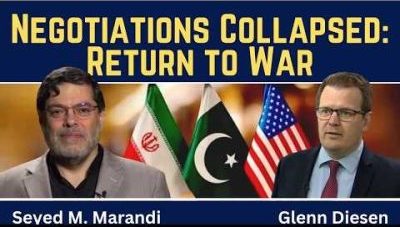
Seyed M. Marandi: Negotiations Collapsed – Return to War
or go to
Aletho News Archives – Video-Images
From the Archives
Wartime internment camps in Australia
National Archives of Australia
World War I
During World War I, for security reasons the Australian Government pursued a comprehensive internment policy against enemy aliens living in Australia.
Initially only those born in countries at war with Australia were classed as enemy aliens, but later this was expanded to include people of enemy nations who were naturalised British subjects, Australian-born descendants of migrants born in enemy nations and others who were thought to pose a threat to Australia’s security.
Australia interned almost 7,000 people during World War I, of whom about 4,500 were enemy aliens and British nationals of German ancestry already resident in Australia.
Records of World War I internment camps
World War II
During World War II, Australian authorities established internment camps for three reasons – to prevent residents from assisting Australia’s enemies, to appease public opinion and to house overseas internees sent to Australia for the duration of the war.
Unlike World War I, the initial aim of internment during the later conflict was to identify and intern those who posed a particular threat to the safety or defence of the country. As the war progressed, however, this policy changed and Japanese residents were interned en masse. In the later years of the war, Germans and Italians were also interned on the basis of nationality, particularly those living in the north of Australia. In all, just over 20 per cent of all Italians resident in Australia were interned. … continue
Blog Roll
 Aletho News
- Seyed M. Marandi: Negotiations Collapsed – Return to War
- Tomorrow’s naval blockade showdown
- ‘Israel’ attacks civilians to hide its embarrassing military failures & out of pure sadism
- Any Foreign Military Vessel Approaching Hormuz Under Any Pretext ‘Will Be Dealt With Severely’: IRGC
- Diplomats slam US negotiators’ performance in Iran talks
- Trump Refuses Exit Ramp, War with Iran will Continue
- Trump Says US Naval Blockade in Strait of Hormuz Will Begin Shortly
- US, Iran end 21-hour talks without agreement
- US IRAN TALKS: Who Are the Crazy Ones Here? /Lt Col Daniel Davis
- Talks with the US end without a deal over excessive US demands: Iran
- If Americans Knew
- US-Iran ceasefire negotiations make zero progress – Daily Update
- Pro-Israel ‘Thinktanks’ and Individuals who Influence U.S. Foreign Policy
- Mearsheimer reveals how Israel dictates US policies on Iran, Gaza – video
- After killing 350+, Israel still has a “score to settle” with Lebanon before ceasefire – Daily Update
- Military aid to Israel emerges as the latest political litmus test for Democrats
- The only Palestinian children’s rights organization closes following years-long Israeli campaign against it
- ‘I Can’t Forget the Smell’: Lebanese Reel After Israel Kills Over 300 in Single Day
- DNC Shoots Down Resolutions Calling Out AIPAC and Limiting Arms to Israel
- TCN: Is Israel Blackmailing President Trump?
- Israel killed at least 303 Lebanese yesterday – who were they? Daily Update
- No Tricks Zone
- Cave Discovery Reveals Today’s Desert Climates Were Recently Far Warmer, Wetter, Teeming With Life
- German Expert: Heat Dome Led To Record Temps In Western USA…Warmer In 1934, 1936
- New Study: No Linear Warming Or Glacier Retreat Along Northern Antarctic Peninsula Since 1980s
- An Inconvenient Tree: Uncovered In Alps… Europe Much Warmer Than Today 6000 Years Ago
- New Study Reports A 60% Slowdown In Greenland’s Ice Loss Rate In The Last Decade
- Low Intensity Tornado Wrecks Major Solar Farm, Creating A Potential Toxic Dump
- New Study Finds Warming Saves Lives…Cold Temperatures 12 Times More Deadly Than Excess Heat
- German Science Blog Accuses PIK Climate Institute Of Hallucinating Climate Tipping Points
- Devastating Assessment Of Comirnaty Vaccine By Former Senior Pfizer Europe Toxicologist
- New Study: CO2 Is ‘Effectively Negligible’ As An Explanatory Climate Change Factor Since 2000
 Aletho News