China-Iran deal is a major blow to U.S. aspirations in Central Asia
By Paul Antonopoulos | July 16, 2020
“Two ancient Asian cultures, two partners in the sectors of trade, economy, politics, culture and security with a similar outlook and many mutual bilateral and multilateral interests will consider one another strategic partners” – these were the opening words of an 18-page document that confirmed a multi-billion dollar deal between China and Iran that blatantly defies U.S. imposed sanctions against the Islamic Republic.
According to The New York Times, the agreement that Iran and China drafted is an economic and security partnership that would allow China to invest in Iran’s banking, telecommunications, ports, railways and dozens of other projects, “undercutting the Trump administration’s efforts to isolate the Iranian government because of its nuclear and military ambitions.”
In Tehran’s view, China and Iran are long-standing strategic partners who are now reinforcing their strategies on the international stage to oppose U.S. unilateralism. Both countries had already agreed on a strategic partnership in 2016, but this latest agreement allows Iran’s economy to have a semblance of normalcy with this flurry of desperately needed investments.
The New York Times claims that the military ties include “joint training and exercises, joint research and weapons development and intelligence sharing” to fight “the lopsided battle with terrorism, drug and human trafficking and cross-border crimes.”
Effectively, the agreement between the two countries “represents a major blow to the Trump administration’s aggressive policy toward Iran.” The agreement is expected to guarantee the supply of Iranian oil to China for the next 25 years, which undoubtedly benefits both parties as the U.S. intends to completely block Iranian crude exports to starve the country of foreign money.
The deal is a major win for China’s Belt and Road Initiative as Iran’s major new investments in transportation, rail, ports, energy, industry, commerce and services will improve China’s network in the region. Iran serves as a meeting point between South Asia, Central Asia, the Caucasus and the Middle East, making it one of the most important countries for the Belt and Road Initiative. The agreement secures the supply of oil and gas to China with an overland route that gives another option away from Southeast Asian waterways, especially at a time when hostilities between China and the U.S. in the South China Sea are increasing.
The deal will see $400 billion worth of Chinese investments into Iran’s infrastructure, including upgrades in the oil industry and the construction of a 900-kilometer railway between Tehran and Mashhad, the second city of Iran and a center of pilgrimage near the borders with Afghanistan and Turkmenistan. Not only will this railway line connect two of Iran’s most important cities, but as its on the doorstep of Central Asia, it will give both China and Iran greater access into Eurasia.
Zbigniew Brzezinski argued in his book The Grand Chessboard that Central Asia was the center of global power and that it was imperative that no power, indirectly referring to Russia and China, should arise that could challenge U.S. dominance in the region. If something like this happened, the global power of the U.S. would erode. Halford John Mackinder argued in his 1904 article, The Geographical Pivot of History, that whoever ruled the “Heartland,” ruled the world. He defined the Heartland as the great Eurasian expanse of Siberia and Central Asia.
Iran is certainly a major gateway into Central Asia, and China’s enormous investment into the Islamic Republic shows that it is making a strong push to control the region. In accordance to Brzezinski’s and Mackinder’s theories, by China being the major influencer in Central Asia, it is making a strong push to control the entire region and/or world. Although Russia is another major power with vast influence in Central Asia, their relationship with China in the region can be considered cooperative at best or friendly rivals at worst. However, both are making strong efforts to limit U.S. influence in the region.
Russia simply cannot economically challenge China in the region, but due to the long history of the Russian Empire and Soviet Union controlling the region, it still has large influence for historical reasons that also includes a significant Russian minority and Russian being the second language of Central Asia. Although Russia deals with Iran, it does not have the capabilities of investing hundreds of billions into the country, meaning that the Islamic Republic will certainly come under much stronger Chinese influence, and there is not much the U.S. can do to stop it.
“The United States will continue to impose costs on Chinese companies that aid Iran, the world’s largest state sponsor of terrorism,” a State Department spokeswoman wrote in response to questions about the draft agreement. “By allowing or encouraging Chinese companies to conduct sanctionable activities with the Iranian regime, the Chinese government is undermining its own stated goal of promoting stability and peace.”
It appears the U.S. will penalize Chinese companies dealing with Iran, but China would have anticipated this. How Beijing plans to deal with such penalizations that can unravel a worsening of already tense relations with the U.S. remains to be seen, but China certainly would have prepared for such a scenario. Despite some harsh words from the State Department, it is highly unlikely that Washington can respond to this immense deal that will give the beleaguered Iranian economy and currency a major lifeline. The deal will also encourage other states wary of U.S. sanctions to begin dealing with Iran again knowing that they can have Chinese support and backing.
Paul Antonopoulos is an independent geopolitical analyst.
Iran oil revenue dips but future holds bright promises
Press TV – July 15, 2020
The Organization of Petroleum Exporting Countries (OPEC) says Iran’s revenue from total crude oil exports and oil products in 2019 was just over $19 billion, less than a third of the previous year.
According to the organization’s annual report, Iran’s income from selling oil and oil products amounted to 60.5 billion in 2018, while it was $110 billion in 2011.
Iran’s average daily crude oil exports last year were 651,000 barrels per day, of which about 60,000 barrels went to Turkey and the rest to Asia, it said. In 2018, the figure was 1.85, and in 2017 more than 2.1 million barrels per day.
Iran’s oil industry is at the forefront of an economic war with the United States which has pledged to bring Tehran’s crude exports down to zero. The Islamic Republic exported around one million bpd until May 2019, when the United States tightened its sanctions, banning all oil exports from Iran.
The Iranian economy has been carrying on at a relatively steady clip after a period of turmoil when the Trump administration unleashed its most ferocious economic attack on the country in November 2018 with a pledge to sink its oil exports to zero.
According to OPEC, Iran also exported about 285,000 bpd of oil products including diesel and fuel oil last year.
Barring oil products, revenues from Iran’s crude oil exports last year were less than $9 billion, government officials have said.
The OPEC report said Iran’s total oil and non-oil exports reached $69 billion last year, down about a third from 2018.
Early this year, Industry Minister Hossein Modares Khiabani, then a deputy, told an exports quality summit in Tehran that Iran had exported $32 billion of non-oil goods in the 10 months up to January, shoring up its economy amid the unprecedented US sanctions.
“This is like a miracle in the current economic situation of the country,” he said. “Non-oil exports have almost replaced oil exports, and the country is governed by the revenues of the non-oil sector,” he added.
The Trump administration is tweaking the contours of its sanctions regime to put more aspects of the Iranian economy under strain.
In recent months, the US Treasury Department has announced new sanctions against Iran’s air and maritime transport industries, construction, manufacturing, textiles, mining, aluminum, copper, iron and steel industries to hit much of Iran’s economy as well as Chinese companies that have conducted business with Iran.
Iran-China partnership
China has long been Iran’s largest trading partner and the Islamic Republic is one of its major suppliers of oil. US officials have reportedly been working behind the scenes to pressure China into halting all its oil and condensate imports from Iran.
But recent reports of an imminent finalization of a roadmap for strategic partnership have put the kibosh on those reports.
On Sunday, The New York Times said the sweeping economic and security partnership would clear the way for billions of dollars of Chinese investments in energy and other sectors, undercutting the Trump administration’s efforts to isolate the Islamic Republic.
The paper said it had obtained details of an 18-page proposed agreement that would vastly expand Chinese presence in banking, telecommunications, ports, railways and dozens of other projects. In exchange, China would receive a regular supply of Iranian oil over the next 25 years, it said.
The partnership — first proposed by China’s leader Xi Jinping, during a visit to Iran in 2016 — was approved by President Hassan Rouhani’s cabinet in June, Foreign Minister Mohammad Javad Zarif said last week.
The deal “represents a major blow to the Trump administration’s aggressive policy toward Iran since abandoning the nuclear deal reached in 2015 by President Obama and the leaders of six other nations after two years of grueling negotiations,” The Times said.
Renewed American sanctions, including the threat to cut off access to the international banking system for any company that does business in Iran, have prompted Tehran to turn to China, which has the technology and appetite for oil that Iran needs.
China gets about 75 percent of its oil from abroad and is the world’s largest importer, at more than 10 million barrels a day last year.
The Chinese investments in Iran would reportedly total $400 billion over 25 years. China will invest $280 billion developing Iran’s oil, gas and petrochemicals sectors. There will be another $120 billion investment in upgrading Iran’s transport and manufacturing infrastructure.
Such an infusion would certainly help to revive Iran’s economy and create more jobs, according to Shireen Hunter, an affiliate fellow at the Georgetown University Center for Muslim-Christian Understanding.
“A major reason for Iran’s shift towards China and other Asian countries, known locally as the ‘pivot to the East’, has been the failure of Iran’s repeated efforts, beginning with the administration of Ayatollah Hashemi Rafsanjani, to expand economic relations with the West as a prelude to better political ties,” she wrote on the Middle East Eye news website.
Hunter cited the latest of Iran’s offers after the signing of the nuclear deal in 2015, including for buying Boeing and Airbus aircraft and welcoming American and European companies such as Total into the country – to which the West responded negatively.
“If the Iran-China agreement is implemented, it would revive Iran’s economy and stabilize its politics. Such an economic and political recovery would improve Iran’s regional position and perhaps incentivize adversaries to reduce tensions with Tehran, instead of blindly following US policies. Arab states could rush to make their own special deals with China,” she wrote.
“By pursuing an entirely hostile policy towards Iran, the US has limited its strategic choices in Southwest Asia and thus been manipulated by some of its local partners, such as Saudi Arabia and the UAE. China’s more pronounced interest in Iran should alert the US to review its past approach towards Tehran,” she added.
Iran slams ‘flurry of disinformation’ about potential China deal
Press TV – July 11, 2020
A senior Iranian foreign ministry official has slammed a “disinformation” campaign that seeks to stoke fears about the impacts of a potential agreement between Iran and China.
In remarks published on Saturday, Reza Zabib, a foreign minister aide for South Asia, dismissed “the hypothetical figures” reported in the media about Iran-China Comprehensive Strategic Partnership, saying nothing has yet been finalized about the deal.
“The objective of those who spread this disinformation is to destroy the (bilateral) relations, to prevent the signing of the deal and to pile accusations on the (Iranian) government and system,” said Zabib in an interview with Persian daily Shargh.
The seasoned Iranian diplomat also said that scaremongering about the deal is an attempt by certain political elements inside Iran to extract information about the deal and to force the Iranian government to disclose more information about the ongoing talks with China.
He said that Iran and China are now in agreement about at least 75 percent of the terms of a draft deal that was proposed by Iran during a visit to Beijing last year by Iranian Foreign Minister Mohammad Javad Zarif.
Zabib said that the Iran-China Comprehensive Strategic Partnership will allow the two countries to expand ties in three main fields of politics, military and economy.
He said that the economic part of the agreement would cover a wide range of areas, including energy, technology and infrastructure.
Zabib’s comments come against the backdrop of criticism suggesting that Iran has offered major discounts on its future sales of oil to China in return for Beijing’s long-term and sizable investment in the country.
Iranian authorities have dismissed the claims while also insisting that the potential deal with China would not be an attempt to offset the failure of a 2015 nuclear agreement involving major Western powers.
Zabib said China has always been a major economic partner for Iran, even at the times of normal relations between Tehran and some Western countries.
India to buy Venezuela oil under swap deal amid US sanctions
Press TV – July 10, 2020
India has decided to receive a cargo of Venezuelan crude under a swap deal in the face of a US sanctions regime which has put the Latin American country in throes of a fuel crisis.
Mumbai-based Reliance Industries Limited (RIL) announced its plan to load its first cargo of Venezuelan crude after a three-month recess due to lower demands.
The Indian multinational conglomerate company is scheduled this week to receive a 1.9-million barrel cargo of crude at Venezuela’s main oil port of Jose, a Reuters report said.
Reliance said in exchange for the Venezuelan crude oil, it will deliver diesel fuel to the Venezuelan state-owned oil and natural gas company, PDVSA.
The Indian firm has previously stated that a fuel-for-crude swap deal with PDVSA will continue despite crippling economic sanctions imposed in 2019 by the United States on Caracas in an effort to drive down oil revenue to the government of President Nicolas Maduro.
Washington has imposed several rounds of paralyzing economic sanctions against the oil-rich South American country, aiming to oust Maduro and replace him with US-backed opposition leader Juan Guaido.
Maduro has denounced the US government for its continuous “criminal sanctions” against the suffering Latin American nation amid the deadly coronavirus pandemic.
Caracas, in response, has vowed to take legal action against Washington at the International Criminal Court (ICC) over the sanctions imposed on the nation.
Venezuela has a similar fuel-for-crude swap deal with Italy’s Eni and Spain’s Repsol, who take Venezuelan crude in exchange for diesel supplied as part of debt repayment deals.
Iran has sent five tankers since April to Venezuela, breaching a de facto American blockade. Last month, the United States imposed sanctions on five Iranian ship captains who delivered oil to Venezuela.
US prosecutors have filed a lawsuit to seize the gasoline aboard four tankers that are currently heading to Venezuela, the latest attempt by the Trump administration to increase economic pressure on Caracas.
Iran and Syria sign agreement to boost military, security cooperation
Press TV – July 8, 2020
Iran will boost Syria’s air defenses, as part of a wider military security agreement between the two countries.
“We will strengthen Syria’s air defense systems within the framework of strengthening military cooperation between the two countries,” Chairman of the Chiefs of Staff of the Iranian Armed Forces Major General Mohammad Baqeri said on Wednesday after signing a “comprehensive” agreement with Syrian Defense Minister Ali Abdullah Ayoub in Damascus to boost military and defense cooperation.
The agreement provides for the expansion of military and security cooperation and the continuation of coordination between the Armed Forces of the two countries.
Speaking after signing the agreement at the headquarters of the General Command of the Syrian Army and Armed Forces, the top Iranian commander said the signed deal “increases our will to work together in the face of US pressure.”
“The people and countries of the region do not welcome the presence of the United States, and our response to the American prattling will continue,” Baqeri added.
The Iranian commander said the military-security agreement also envisages boosting the Syrian air defenses.
On the Turkish military presence on Syrian soil, the Iranian commander said that Turkey is dragging its feet regarding the implementation of its commitments under the Astana agreements on the withdrawal of terrorist groups from Syria.
He said that Turkey must realize that the solution to any of its security problems is through negotiation with the Syrian side, and not through military deployment in the Arab country.
Ayoub, for his part, lauded Damascus-Tehran relations.
“If the American administrations had been able to subjugate Syria, Iran and the axis of resistance, they would not have hesitated for a moment,” the Lebanese al-Mayadeen television channel quoted the Syrian minister as saying.
He described Israel as a “powerful partner” of the US in the war against Syria, adding that terrorist groups constituted part of the Israeli aggression.
He also lambasted the so-called Caesar sanctions imposed by the US against his country, saying Syria will counter the bans barring the provision of foodstuff and medicine to its people.
He stressed that Syria that has maintained its government structure since 2011 and will undoubtedly emerge victorious out of the war.
The two sides also underlined the need for the withdrawal of foreign forces who have been “illegally” deployed to the Arab country in violation of international law and said the forces are the main obstacle to the complete cleansing of armed terrorist groups in some parts of Syria.
The heads of the senior military delegations of Iran and Syria also stressed that the agreement was the result of years of military, security and technical coordination and cooperation in various areas of joint fight against terrorism.
At the end of the talks, a joint statement was also issued by the high-ranking military delegations of the two countries, which said a continued battle against Takfiri terrorism supported by some regional and international powers is among the goals of the agreement.
They also stressed in the statement that the comprehensive military agreement was signed to implement the directives of the political and military leaders of the two countries to enhance their defense capabilities and promote self-reliance against any possible foreign aggression.
Iran and Syria have signed different military and defense cooperation over the past years.
Iran began providing Syria with advisory military assistance after numerous countries, at the head of them the US and its Western and regional allies, started funding and arming militants and terrorists with the aim of deposing Syrian President Bashar al-Assad’s government.
Despite initially losing considerable expanses of territory to Daesh and other terror outfits, the country, however, rallied with the help of Iran and Russia, another Damascus’ ally, and reversed the balance in favor of itself on the battleground.
US violated UN Charter with drone strike on Soleimani – UN rapporteur on extrajudicial executions
RT | July 7, 2020
The US strike that killed Iranian General Qassem Soleimani was not justified by any ongoing or imminent attack on American interests and violated the UN charter, according to UN rapporteur on arbitrary executions Agnes Callamard.
Washington has produced insufficient evidence that there was any attack on US interests that might have justified the January 3 drone strike on Soleimani’s convoy as it left Baghdad airport, Callamard revealed in a scathing report due to be presented Thursday before the UN Human Rights Council.
“Major General Soleimani was in charge of Iran military strategy, and actions, in Syria and Iraq. But absent an actual imminent threat to life, the course of action taken by the US was unlawful,” an excerpt of the report published by Reuters on Monday reads.
Callamard, whose full title is UN rapporteur for extrajudicial, summary or arbitrary executions, is demanding accountability for targeted drone killings and wants the deadly weapons to be more strictly regulated. Speaking with Reuters, she called out the UN Security Council for being “missing in action” on the use of the unmanned craft in extrajudicial killings, noting that “the international community, willingly or not, stands largely silent.”
“The world is at a critical time, and possible tipping point, when it comes to the use of drones.”
The targeted killing was believed to be the first time any nation has claimed self-defense as justification for an attack against state forces in a third state’s territory, she added. However, despite the flagrant violation of the UN Charter, no international body has come forward to punish the US for the murder of Soleimani and several others traveling with him, including a high-ranking Iraqi commander.
The January drone strike was met with a barrage of rockets from Tehran, which hit two military bases in Iraq used by US and coalition forces. While no casualties were initially reported, the possibility of the conflict mushrooming into an all-out war led the Iraqi Parliament to issue a resolution ordering all foreign troops off Iraqi soil. However, the Iraqi government did not attempt to enforce that measure.
The US has repeatedly accused Iran of supporting terrorism and plotting attacks on US forces – claims it rarely attempts to back with proof. Tehran, in its turn, considers the assassination of Soleimani to be an act of state terrorism. Last week, Iran issued an arrest warrant for US President Donald Trump and 35 other Americans deemed responsible for the death of its beloved general, seeking the assistance of Interpol in apprehending the suspects.
If US attempts to seize Iranian tankers carrying oil to Venezuela now, de-escalation will be more difficult than ever
By Scott Ritter | RT | July 3, 2020
To expand its “maximum pressure” sanctions campaign targeting Iranian oil and the Iranian Revolutionary Guard Command, the US has a warrant to seize the cargo of four tankers heading to Venezuela. We should expect the worst.
Just weeks ago, in May and June, the world watched with bated breath as Iran dispatched five tankers carrying cargoes of gasoline and chemicals desperately needed by the Venezuelan nation, starved as it was of the ability to refine its own gas, due to the US’ stringent economic sanctions. While protesting the move, Washington did nothing to stop it, beyond sanctioning the ships involved. In what appears to be a replay, the Iranian government has now engaged four ships – the Bella, Bering, Pandi and Luna – to deliver approximately 1,163,000 barrels of gasoline to Venezuela.
In an effort to prevent this, the US government sought, and obtained, a federal forfeiture warrant on the grounds that the sale of the cargo violates the law regarding economic activity conducted by or on behalf of the Iranian Revolutionary Guard Command (IRGC), previously designated by the US as a foreign terrorist organization. The Iranian government has condemned the issuing of this warrant as an act of piracy.
How exactly the warrant will be executed, and what the consequences of such an action will be are scenario dependent. One possible scenario would be for the US to attempt a replay of last year’s gambit to bribe an Iranian ship’s captain to steer his vessel to a country that would then impound the tanker and its contents on behalf of the US.
The Iranian ship in question, a tanker named the Adrian Darya, had been seized by the UK on suspicion of violating EU sanctions regarding the sale of oil to Syria, and held in the port of Gibraltar. Iran, in retaliation, seized a British tanker operating in the Strait of Hormuz. After behind-the-scenes negotiations, a Gibraltan judge ordered the Iranian vessel to be released – but not before the US Justice Department had issued a warrant for the seizure of the ship.
Using the warrant as a stick, the State Department had its Special Representative for Iran, Brian Hook, contact the Iranian captain by email and offer him several millions of dollars to, in effect, defect with his ship and its cargo. The State Department was using a 1984 program known as ‘Rewards for Justice,’ which had been expanded under the Trump administration to target the IRGC by offering rewards of up to $15 million for information that led to the disruption of illicit Iranian activity.
In the case of the Adrian Darya, the effort failed. However, according to information contained in the complaint filed in support of the warrant, the owner of two of the ships engaged in the transport of gas to Venezuela, the Bella and Bering, both sailing under Liberian registry, indicated that he was concerned over what he called “the American threat.” The Iranian middlemen involved in the transaction had pressured him into undertaking the voyage and had offered to purchase the vessels outright, if needed. The key question for all involved is how the captains of any of the four vessels currently underway would respond if subjected to a similar solicitation of money as was made to the captain of the Adrian Darya.
Even if the US wasn’t able to entice a defection from one or more, possibly all, of the targeted tankers, the threat of seizure alone might suffice to compel the captains to abort their journeys and either return to their ports of origin, or seek to transfer the contents of their respective vessels to other tankers willing to complete the task of delivering the gasoline to Venezuela.
The consequences of a ship’s defection would more than likely be treated by Iran as the equivalent of having the vessels boarded and seized in international waters, as the end result – the confiscation of the ship’s cargo – would be the same.
Given past precedent, it is highly likely that Iran would conduct a tit-for-tat seizure of a vessel of similar capacity that was either sailing under the US flag or carrying a US-destined consignment. This would be a risky move that would probably lead to some sort of confrontation between the Iranian and American navies and might very well escalate into a general regional conflict.
Another option is that the tankers would seek to complete their mission by sailing in international waters with their onboard automatic identification system – a transponder that enables the ship’s movements to be tracked by other vessels using satellites – turned off.
This has been the practice that Iranian and Chinese vessels have engaged in during the delivery of Iranian oil to China in violation of US sanctions. Considered a very risky and dangerous move that could result in a collision with other vessels, it also makes a ship difficult to track and therefore interdict.
The US could respond by placing a screen of US naval vessels just outside Venezuelan territorial waters, creating a de facto blockade that the four tankers would have to run if their respective deliveries were to be made. Whether or not the US would actually attempt a boarding and seizure is another question, as it could be seen as a violation of international law. Moreover, the potential for direct conflict with the Venezuelan navy and air force would be high, given their practice of seeking to escort Iranian tankers once they arrive in Venezuelan waters.
In the past, both Iran and the US have shown restraint in seeking to avoid any major force-on-force confrontation between their respective militaries, knowing that once initiated, de-escalation would be difficult, and the transition to a general regional war all but assured. The social, economic, and political costs to all parties involved would be prohibitively high – a universally accepted reality that usually serves as a deterrent against rash action by either Iran or the US. But the present time finds US President Donald Trump in the political fight of his life, with polls indicating a difficult, uphill fight for re-election in November.
By undertaking this attempted delivery of gasoline to Venezuela, the Iranian government has placed Trump in a dilemma that he’s worsened by seeking, and getting, a warrant for the seizure of the involved tankers. Any inaction on the part of the US will be seized on by Trump’s political opponents as a sign of his impotence as a national leader, while a seizure that results in a war with Iran would destroy any chance of the post-pandemic economic recovery he’s betting on to help carry him to victory this fall.
Once again, the world is forced to watch while its collective future is decided not in terms of what is best for the global collective, but in terms of how an action is best interpreted from an American domestic political perspective.
Scott Ritter is a former US Marine Corps intelligence officer. He served in the Soviet Union as an inspector implementing the INF Treaty, in General Schwarzkopf’s staff during the Gulf War, and from 1991-1998 as a UN weapons inspector. Follow him on Twitter @RealScottRitter
Iran resumes gas exports to Turkey after pipeline fixed
Press TV – July 1, 2020
The Iranian Oil Ministry says it has resumed exports of natural gas to Turkey despite reports in the media suggesting that exports could stop for good because of price disputes.
A spokesman of the National Iranian Gas Company (NIGC) said on Wednesday that Turkey had finished repair work on a pipeline that came out of service after an explosion on March 31, allowing Iran to resume exports.
“Exports have resumed now that repairs on gas export pipeline in the Turkish territory have finished,” said Mohammad Asgari, adding, “Iran’s gas exports to Turkey is going on as before.”
The announcement puts an end to weeks of speculations about a potential decision by Turkey to halt imports of natural gas from Iran.
Reports in April had suggested that Turkey was unwilling to repair the damaged pipeline because it was unhappy with the price of gas supplied from Iran.
Those reports said a sudden fall in international oil prices, which are used as a benchmark to determine gas prices, had caused Turkey to press Iran for a fresh negotiation on gas prices.
Authorities in Turkey had denied there was a major issue with the price, insisting that repair work on the pipeline had been delayed because of the spread of the new coronavirus in the region.
That comes as oil prices have rebounded in recent weeks mainly because of an international agreement to cut the output.
Turkey is entitled to receive around 8.5 billion cubic meters of gas from Iran each year under a 25-year contract which began in 2001.
Based on the agreement, any change in oil prices would take at least six months to have an effect on the price of gas delivered by Iran to Turkey.
If Suez Canal Blocks Iran’s Aid Ships to Lebanon & Syria, Strait of Hormuz Will Be Closed: Al-Akhbar Report
Al-Manar | July 1, 2020
Amid the squeezing US economic blockade on Lebanon and Syria, the Islamic Republic of Iran seeks to aid allies and provide them with the basic consumption items by all means.
The Lebanese daily newspaper, Al-Akhbar, reported Wednesday that Iran has offered to sell oil to Lebanon which would pay in the national currency in return, adding that the Iranian ships are ready to sail without any political or geographical barrier.
In this context, the paper pointed out that the Iranians have threatened to close the Strait of Hormuz in case the Suez Canal is blocked to the aid ships heading to Lebanon and Syria, citing a positive Egyptian stance in this regard.
The Iranian offer, expected to leave Tehran losing hundreds of millions of dollars, is inexactly viewed in Lebanon, according to the Al-Akhbar report Hezbollah has informed the Lebanese authorities it will help finalize the deal when they approve it.
Hezbollah Secretary General Sayyed Hasan Nasrallah’s latest speech tackled the Iranian offer on the basis of a promise his eminence received from the Supreme Leader Imam Sayyed Ali Khamenei, Al-Akhbar mentioned.
Hafte Tir Bombing: A Blast which Shocked the Iranian People
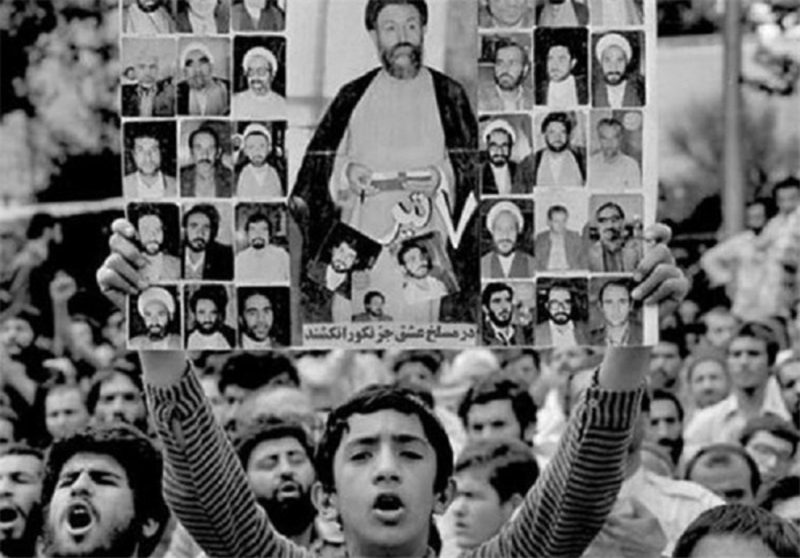
By Robert Fantina | American Herald Tribune | June 26, 2020
In 1979, the people of Iran successfully and mainly peacefully overthrew the United States-supported government, led by the brutal autocrat, the Shah of Iran. In ridding themselves of this repressive dictator and freeing themselves from the shackles of U.S. imperialism, they established the Islamic Republic of Iran.
While the revolution had widespread popular support, as does the government to this day, it was not without opposition groups. The MEK (Mujahedin-e Khalq, or the People’s Muhajedin Organization of Iran), is one such opposition organization. It is a violent terrorist group that is currently supported by the U.S. government. Members of the MEK have never accepted the revolution, and on June 28, 1981, three years after the revolution, they bombed the Islamic Republic Party headquarters in Tehran. This horrendous crime was committed during a meeting of party leaders, and killed seventy-three people, including the Chief Justice, Ayatollah Mohammad Beheshti, who had been a leader in the revolution.
Thirty-nine years have passed, but the memory of these martyrs has not dimmed.
Hujjat al-Islam Seyyed Mehdi Qureshi, Islamic Revolution Leader Representative in Iran’s West Azarbaijan Province, commented that “Iran’s stable position has been achieved thanks to the bravery of the martyrs.” Those martyrs’ names, many in addition to those who died on June 28, 1981, are etched upon the hearts of the Iranian people, and include General Qassem Soleimani, murdered by the U.S. in January of this year.
Any government has people who oppose it: citizens of the nation who disagree with one or more policies, and law-abiding people work within the system to achieve changes they seek. Generally, when a majority of the population wants certain changes, those changes are implemented.
Yet within Iran and outside it, a small terrorist group seeks the violent overthrow of the government, despite having so little support to do so. Why, one could ask, would the mighty United States support such a group, when it decries any terrorist activity?
The hypocrisy of U.S. government officials has been discussed and documented by this writer often. The U.S. is only interested in self-determination when the people of any nation choose a form of government that will follow all U.S. dictates. The leaders of the Islamic Republic of Iran will not do so. They form alliances with nations that the United States holds in contempt, and they come to the aid of those nations when required to do so, such as in fighting U.S.-financed terrorists in Syria.
Iran has not invaded another nation in over 200 years, and its leaders have a ‘no first strike’ doctrine. In the U.S.’s 244-year history, it has invaded at least 84 of the 193 countries that are recognized by the United Nations. And its continued hostility towards Iran has only increased with the administration of the unstable president, Donald Trump.
In the United States, lobby groups finance election campaigns, thus making the elected officials beholden to those groups, not their constituents. Prominent among these groups are pro-Israel lobbies, which consider Iran to be their rival for hegemony in the Middle East. Among the global community, only Israel and Saudi Arabia opposed the Joint Comprehensive Plan of Action (JCPOA), the agreement signed with Iran and several other countries that regulated Iran’s nuclear development program, in exchange for the lifting of sanctions. Only Israel and Saudi Arabia praised the U.S. violation of it.
After sanctions were re-imposed following this U.S. violation of international law, this writer contacted a friend in Tehran. He was told that, while the sanctions were unfortunate, the Iranian people are accustomed to living with them, and would continue to do so as long as necessary. There was no talk of defeat; he didn’t suggest that the government should or would accede to U.S. demands. He was not resigned: he simply indicated that the Iranian people would continue to live their lives and make whatever adjustments were necessary due to the sanctions.
This is the attitude that makes Iran great, and that inspires Iranians to sacrifice their lives for their country. When one powerful country is besieged by another, more powerful one, but refuses to surrender, its people’s pride in their nation only increases. And this year, on the anniversary of the Hafte Tir bombing, the memory of those who were working for the people and gave their lives in that mission will again be remembered. Also remembered will be other Iranian martyrs, those who died in the August 30, 1981 bombing of the Prime Minister’s office, General Soleimani and so many others, whose names may not be as well known, but who are remembered and beloved by their countrymen.
The anniversary of the Hafte Tir bombing should be commemorated around the world as a symbol of the destruction and death caused by terrorism, and as a memorial to those innocent servant-leaders who died in it. It should also serve as a reminder to some governments, such as that of the United States, that their unjust plans for world hegemony will not be achieved, and that support for terrorists is an affront to the basic human dignity of mankind. It should remind nations across the globe that the U.S., the most violent nation on the planet, continues its economic and medical terror against a free and peaceful nation.
It has been thirty-nine years since those seventy-three Iranian officials lost their lives in the service of their country. Their sacrifice will not be forgotten in Iran, or by people of decency and compassion around the world.
Featured Video
The Board For Peace – Whitewashing Ethnic Cleansing and Genocide
or go to
Aletho News Archives – Video-Images
From the Archives
Inside Job? Inside What?
By Prof. Tony Hall | American Herald Tribune | July 28, 2016
The Kevin Barrett-Chomsky Dispute in Historical Perspective – Sixth part of the series titled “9/11 and the Zionist Question”
In his chapter on “Left Gatekeepers” and the “Shame of Noam Chomsky,” Barrie Zwicker refers to the the “New World Order” as the “diaboligarchy’s” directing agency. Less compelling is Zwicker’s reference to the “New World Order” as the “diaboligarchy’s” directing agency. To me this unfortunate choice of words is much too closely associated with the often crude and chauvinistic populism of Alex Jones and his Infowars media network. Many have come to see Jones’ lucrative media operation as a limited hangout set in place by handlers trying to hold the activities of the 9/11 Truth Movement within manageable constraints.
Due to the important findings over fifteen years of the citizens’ investigation into 9/11, the culprits most deeply implicated in the crime can be identified with much more specificity than an entity vaguely described as a “New World Order.” As Kevin Barrett and many others insist, the time has come to name the names of the probable culprits, Noam Chomsky prominent among them.
While Alex Jones ultimately serves the same masters as Chomsky, the former’s media product is often much closer to the mark of what is really going on than the content of Noam Chomsky’s more magisterial pronouncements. Jones goes at least part of the way into realities of the deep state politics of the twenty-first century. Chomsky, however, sacrificed his capacity to contribute cogently to sensible discourse on contemporary geopolitics by making himself a primary instrument of the most consequential deep state deception of recent times. As a leading agent of disinformation in the psychological trenches of the ongoing Global War of False Flag Terrorism, Chomsky has reduced himself to the level of skeptic pretender Michael Shermer. In the style of Shermer, the elder Chomsky has become an establishment TV professor readily available on Netflix. … continue
Blog Roll
Recent Comments
eddieb on WEF Calls for ‘Cultural Revolu… loongtip on Trump wanted to play peacemake… Coronistan on EU member to sue bloc over ‘su… loongtip on Vicious loongtip on EU turns to India for defense… Coronistan on Donald Trump Is No Peace … seversonebcfb985d9 on French court jails pro-Palesti… eddieb on Fourteen Incredible Facts Abou… Bill Francis on European leaders’ shift in the… seversonebcfb985d9 on Villains of Judea: Philip Esfo… loongtip on Report warns that ‘Jewish terr… Craig Nelms on New study shows that toxic gas…


 Aletho News
- Conspiracy Denial
- Ukraine expects to join EU next year – Zelensky
- Here’s what’s behind the US shift on EU allies
- UN experts alarmed by prosecution of students protesting ETH Zurich’s Israel-linked research ties
- Exposed – How the UAE Became Central to Gaza’s Concentration Camp Plot
- How South Korea’s gas ambitions sustain the occupation of Gaza
- “Leaked document” exposes US blueprint for total control over Gaza
- Trump wanted to play peacemaker, Netanyahu made sure he failed
- Idea of limited, fast strike on Iran misjudges our capabilities: IRGC
- US Military Buildup on Land, Air, and Sea Raises Fears of Imminent Attack on Iran – Expert
- If Americans Knew
- Israel to seek new security deal from US, official says
- Leaked “Board of Peace” Resolution Outlines U.S.-Led Plan to Rule Over Gaza
- Jonathan Greenblatt Rolls Out Plan to Activate Hispanic Evangelical Golems
- Violence against hundreds of Gazan remains to find one Israeli – Not a ceasefire Day 109
- Greenpeace Demonstrator Exposes Folly of Protest Restrictions
- From CBS to TikTok, Pro-Israel Ellison is now in the driver’s seat
- Israel pays for UK advertisements attacking Doctors Without Borders
- Israel accused of extracting billions from Gazan people to pay for their own genocide
- ‘Deliberate Assassination’: 3 Journalists Among 11 Killed by Israeli Forces in Gaza
- In Gaza, We’re Struggling to Reintroduce Foods to Bodies Adjusted to Starvation
- No Tricks Zone
- New Study Affirms Rising CO2’s Greening Impact Across India – A Region With No Net Warming In 75 Years
- Germany’s Natural Gas Crisis Escalates … One Storage Site Near Empty …Government Silent
- Polar Colding…Antarctica Saw Its Coldest October In 44 Years!
- New Study: Sea Levels Rose 20 Times The Modern Rate During The Roman Warm Period
- As German Gas Storage Dips Dangerously Low…Shortage Hardly Avoidable
- New Study: Brazil’s Relative Sea Level Was 2+ Meters Higher And SSTs 3-4°C Warmer 6000 Years Ago
- Philosopher Schopenhauer: Climate Science Certainty Stems From Stupidity, Ignorance
- New Study: Species Extinction Rates Declining Since 1980 – ‘Climate Change Is Not An Important Threat’
- Denmark Places Climate Protection Above Animal Welfare, Poisoning And Culling Cows
- New Study: Greenland Was 3-7°C Warmer And Far Less Glaciated Than Today 6000-8000 Years Ago
 Aletho News