Iran, China launch new commercial railway bypassing US sanctions
The Cradle | May 26, 2025
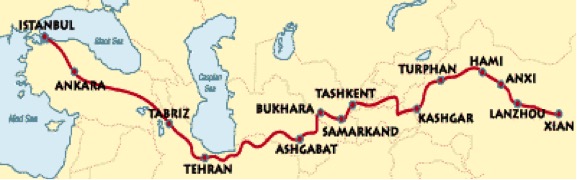
A new commercial rail route connecting China to Iran has officially launched with the arrival of the first cargo train from the eastern Chinese city of Xian at the Aprin dry port near Tehran.
Aprin’s CEO highlighted the port’s strategic role in lowering transport costs and reducing reliance on coastal freight hubs.
Railway infrastructure connecting Iran and China allows freight trains to travel from Shanghai to Tehran in 15 days, compared to 30 days via the maritime route.
On 12 May, railway officials from Iran, China, Kazakhstan, Uzbekistan, Turkmenistan, and Turkiye met in Tehran to advance a transcontinental rail network linking Asia to Europe, Tasnim News Agency reported on 25 May.
The six nations agreed on competitive tariffs and operational standards to streamline regional rail services and boost trade connectivity.
China and Iran have expanded trade and economic relations in recent years, as Tehran seeks to bypass US economic sanctions seeking to strangle its economy and oil exports.
The rail line between the two countries enables Iranian oil exports to China and allows Chinese goods to reach Europe without US naval interference.
In 2018, Iranian Supreme Leader Ali Khamenei stated that Iran should look to the east rather than the west. Since that time, China has become Iran’s largest oil purchaser, while Beijing has been able to supply Tehran with virtually all its needed manufactured goods, including electronics such as computers and cell phones.
The following year, Iran joined China’s “One Belt One Road” (BRI) initiative – President Xi Jinping’s hallmark strategic foreign policy initiative, seeking to recreate the economic ties that existed between ancient China and ancient Persia along the “Silk Road” dating back to the third century BCE.
China and Iran signed a historic 25-year economic cooperation agreement in 2021, reportedly worth $400 billion in trade.
In 2023, China’s growing relations with Iran helped it mediate a Saudi–Iranian rapprochement, which led to the resumption of diplomatic relations that had been cut in 2016.
Sic Transit Gloria Mundi
By William Schryver – imetatronink – May 22, 2025
The inexorable decline of the American Empire has arrived at an Imperial Paradox. It must either fight a war and die, or not fight a war and die.
Here are the options:
China
Neither South Korea nor Japan want anything to do with a war against China, leaving only the Philippines dumb enough to play along.
The US apparently pulled another brigade out of South Korea. They’ll pull out more in the future. They know damn well the North Koreans could easily conquer the entire peninsula if they chose to do so.
China and its local seas are a vast ocean away from America, and its capacity to defend its local seas is enormous and growing.
The Pentagon must understand it cannot sustain logistics in a war against China in the western Pacific. It simply cannot be done. Anyone who thinks otherwise must upgrade their proficiency in basic arithmetic.
Iran
In the context of a war against Iran, all the geography is against the US.
Iran is an exceedingly mountainous country that has, over the course of millennia, learned to use those mountains to defend itself against would-be conquerors.
They can field a satisfactorily well-equipped million-man army.
They have learned in the 21st century to burrow deep heavily fortified tunnels into their mountains.
Iran is also much more technologically advanced than most people understand. They have become impressively capable in terms of both offensive and defensive missiles. They pose a far greater challenge than the Yemeni have been over the past year and a half.
Indeed, they pose a “near-peer” challenge against US overseas power projection.
The US Navy could only operate at extreme risk in the southern Red Sea, the Gulf of Aden, the Gulf of Oman, the Strait of Hormuz, and the Persian Gulf.
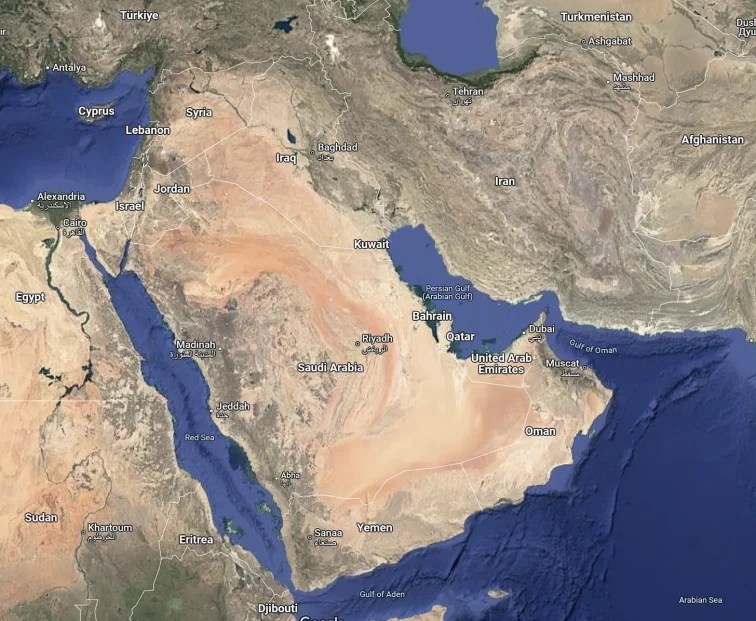
Iran’s sphere of influence
Every US base in the region is well within range of Iranian missile strikes.
The US Navy very demonstrably cannot secure seaborne logistics into the Persian Gulf. They lack both the sealift ships, and the ability to protect them.
They cannot even open the Bab-el-Mandeb!
Russia
From a geographic and logistical standpoint, the only remotely conceivable war is one in Ukraine against Russia.
The US at least has bases and forces already in place in the UK, Germany, Poland, Romania, Finland, and in Baltic chihuahua fantasy-land — and what has served until now as a reasonably secure logistics pathway into all those places.
Of course, whether or not such a condition persists long in a war scenario is another question altogether.
Because, you see, the Russians are now unquestionably the most formidable and battle-hardened military on the planet — at least in the context of a war fought on their doorstep.
So if you’re an empire that thinks it needs a war to reaffirm at least its short-term relevance and fading glory … well, these are your choices.
Europe must bear consequences of forcing return of UN sanctions against Iran: FM
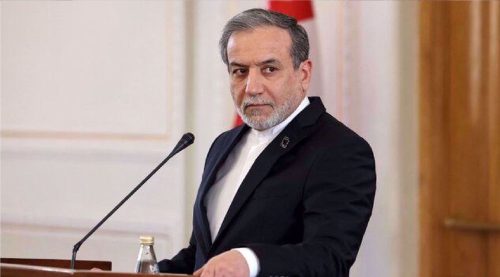
Iran’s Foreign Minister Abbas Araghchi
Press TV – May 21, 2025
Foreign Minister Abbas Araghchi has cautioned the US’s European allies in a 2015 nuclear agreement with Iran against invoking the so-called “snapback mechanism” to re-impose the United Nations sanctions against the Islamic Republic.
Speaking to Saudi Arabia’s Asharq News network on Wednesday, the top diplomat emphasized that such a move would end participation by the European parties — the UK, France, and Germany — in the deal that is officially known as the Joint Comprehensive Plan of Action (JCPOA).
He added that the trio’s potential recourse to the mechanism would lead to significant consequences and potential irreversible escalation of tensions, referring to the likelihood of strong retaliatory steps that the Islamic Republic could take in response.
Araghchi reiterated Iran’s readiness to engage in diplomacy, expressing hope that the European parties too would demonstrate determination to resolve the current impasse.
The deadlock occurred when the United States ditched the JCPOA in 2018, and returned the illegal and unilateral sanctions that the agreement had lifted.
This was followed by the European trio’s failure to return the US to the accord, as they had said would do, as well as their walking in Washington’s footsteps by returning their own sanctions.
In response to the betrayal, Iran began a number of legitimate and gradually escalating nuclear countermeasures.
“The situation we’re in is by no means Iran’s fault. It is the fault of the United States, which withdrew from the JCPOA, and the fault of the European countries that failed to compensate for the US’s withdrawal,” Araghchi added.
‘Uranium enrichment absolutely non-negotiable’
Addressing the topic of Iran’s peaceful uranium enrichment activities, the foreign minister said the activities were a principled and fundamental issue for Iran.
He emphasized that the enrichment program was a major scientific achievement developed by domestic scientists and held immense value for the Iranian people.
The official, meanwhile, paid tribute to the seven-strong Iranian nuclear scientists, who were assassinated amid their invaluable contribution to the Islamic Republic’s peaceful nuclear energy program.
According to Araghchi, the victims’ sacrifices towards advancement of the program had made the nuclear issue “absolutely non-negotiable.”
Fifth round of Iran-US talks to be held on May 23: Oman
Press TV – May 21, 2025
The fifth round of indirect negotiations between Iran and the United States will take place on May 23, according to Oman’s foreign minister.
Badr al-Busaidi made the announcement on Wednesday, adding that the talks will be held in the Italian capital, Rome.
Three of the previous rounds took place in the Omani capital, Muscat, and the second round in Rome.
Iranian and US officials have not commented on the announcement so far.
The talks focus on producing a replacement for the 2015 nuclear deal, which was derailed by American withdrawal in 2018.
Iran had previously declared it would decide whether to take part in the next round of the talks after US officials claimed any deal would not allow Tehran to enrich uranium.
Iran says it will not forgo its right to uranium enrichment, which is guaranteed under the Non-Proliferation Treaty.
MAGA influencers want an Iran deal and for hawks to shut up
Trump is unlikely to pay any political price if he disregards the old guard’s unrealistic demands
By Ben Armbruster | Responsible Statecraft | May 19, 2025
Neocons and their allies in Washington, Israel, and beyond are making unrealistic demands about the outcome of U.S. talks with Iran on limiting its nuclear program. But President Trump has absolutely no reason to listen to them and should not take them seriously.
The anti-Iran deal campaign kicked into overdrive last week when Republicans on Capitol Hill sent a letter to the White House calling on Trump to refuse any agreement that doesn’t include the complete dismantlement of Iran’s nuclear program.
“Every Republican senator except Rand Paul signed a letter to President Trump urging the administration to push for an end to Iran’s enrichment capacity,” Andrew Day, senior editor of the American Conservative, told RS. “They know that this demand is unacceptable to the Iranian regime and are clearly hoping to sabotage Trump’s diplomatic efforts.”
Center for International Policy senior non-resident fellow Sina Toossi called the letter’s demand “a poison pill.”
“Demanding zero enrichment, permanent restrictions, and total dismantlement of Iran’s nuclear infrastructure — after the U.S. already broke the 2015 deal — is not a negotiating position,” he told RS.
Meanwhile, other deal opponents say that Iran can be allowed to keep its program for civilian energy production purposes with the caveat that it cannot enrich its own uranium.
The good news for Trump though — and those who see an opportunity to box in Iran’s nuclear program and avoid war — is that this anti-Iran deal coalition has no constituency outside Washington and Israel, and Trump will pay very little to no political price if he just ignores them.
Take for instance a recent poll conducted by the SSRS Opinion Panel Omnibus in conjunction with the University of Maryland Critical Issues Poll program. That survey found that a large majority of Americans — 69% — favor “a negotiated agreement limiting Iran’s nuclear program to peaceful ends, with stringent monitoring” as opposed to military action. But perhaps more importantly for Trump’s political fortunes, 64% of Republicans surveyed — i.e. his base — agreed.
Opponents of diplomacy with Iran try to obfuscate this reality and muddy the waters. For example, Foundation for the Defense of Democracies CEO Mark Dubowitz — who’s been pushing for regime change in Iran for nearly two decades — promoted a poll last week finding that “76% of Americans say Iran’s nuclear-weapons facilities should be destroyed.”
Of course there is one problem: Iran doesn’t have nuclear weapons or a nuclear weapons program, and thus no nuclear weapons facilities, a fact that the U.S. intelligence community routinely concludes.
But it’s not just the American people or the GOP base that support Trump making a deal with Iran. Some of the more high profile figures in the MAGA-America First world back him too.
“It’s called sanity,” Steve Bannon said last week, referring to the SSRS/UMaryland poll. Bannon, of course, served as a senior adviser to Trump during his first term and remains influential within his orbit and among his supporters.
Rep. Marjorie Taylor Greene (R-Ga.), who also has clout with Trump’s base, has been very vocal recently against going to war with Iran. “There is no wedge between the base and President Trump,” she said earlier this month. “The wedge is between Congress and the establishment Republicans that are undermining the president’s agenda.”
And conservative media star Tucker Carlson, who like Bannon, has close ties to Trump world and is influential with the president’s base, has been similarly calling out neocons and others who are trying to kill Trump’s diplomacy with Iran and push for war.
“Thousands of Americans would die. We’d lose the war that follows. Nothing would be more destructive to our country,” he said last month. “Anyone advocating for conflict with Iran is not an ally of the United States, but an enemy.”
Popular right-wing podcaster Charlie Kirk has piled on as well. “[T]here are people in Washington inside the Pentagon and inside the administration who want to launch military strikes on Iran. Often, they say it’d be easy. Just one strike in and out,” he said recently. “Now pause. How often have they actually been correct about the one in and out thing? Has that ever actually been the case?”
“President Trump has consolidated his power over the Republican Party to a remarkable degree and could certainly sign a good deal with Iran without suffering politically,” Day said. “The base still loves him, and lawmakers and conservative media are afraid of him. The elites would fall in line for fear of MAGA turning on them.”
Ryan Costello, policy director at NIAC, agrees. “Trump wouldn’t have been elected president twice if his foreign policy echoed the discredited views of the Bush-Cheney wing of the Republican party,” he said. “Trump can have a deal with Iran or he can be pushed into war by adopting rigid and inflexible demands — the vast majority of Americans want him to lead with diplomacy.”
Meanwhile, it appears increasingly unlikely that Democrats — most of whom supported President Obama’s Iran nuclear deal back in 2015 — will try to make much political hay with any agreement Trump makes with Tehran.
“This is not a time for politics on Iran,” Rep. Ro Khanna (D-Calif.), a leading Democratic foreign policy voice in the House, said last week. “I support [Trump] trying to get a deal with Iran. I supported the Obama nuclear deal. How about we put the interest of our nation and peace above scoring political points at every moment?”
And what’s perhaps overlooked but maybe equally important: major regional powers like Saudi Arabia, who campaigned hard against Obama’s Iran deal, have changed their tune with Trump.
“Gulf leaders have been broadly supportive of the talks between the Trump administration and Iran because they don’t want to be caught in the crossfire of a regional escalation if they fail,” Ali Vaez of the International Crisis Group told Middle East Eye last week. “That support doesn’t necessarily translate into success at the negotiating table but it’s a shift from the 2015 talks.”
Perhaps most importantly, Trump can get a deal with Iran that places strict limits on its nuclear program with incredibly intrusive verification mechanisms that will satisfy his stated goal of preventing Iran from building a nuclear weapon, all without zero enrichment provisions or requiring Iran to dismantle its entire program.
“Not only will adopting a hardline ‘no enrichment’ position push Iran from the negotiating table entirely, it is not necessary for an effective agreement and would not fully address Iran’s proliferation risk,” the Arms Control Association’s Kelsey Davenport wrote recently, adding that “dismantling the infrastructure does not erase the knowledge Iran has gained about uranium enrichment.”
In short, she concluded, the U.S. “can find the right combination of limits and monitoring to block Iran’s pathways to nuclear weapons while allowing Iran to retain a less risky level of uranium enrichment.”
Ben Armbruster is the Managing Editor of Responsible Statecraft. He has more than a decade of experience working at the intersection of politics, foreign policy, and media. Ben previously held senior editorial and management positions at Media Matters, ThinkProgress, ReThink Media, and Win Without War.
Iran Nuclear Negotiations Bring New, Suprising Developments
By Ted Snider | The Libertarian Institute | May 20, 2025
In the past several days, there have been surprising developments in the negotiations between Washington and Tehran over Iran’s civilian nuclear program.
U.S. President Donald Trump has frequently, but not always, defined the goal of the negotiations as being limited to preventing Iran from getting a nuclear weapon. He repeated that definition as recently as May 25, saying Iran must “permanently and verifiably cease pursuit of nuclear weapons…They cannot have a nuclear weapon.”
But the message from his team has been contradictory. Then-National Security Advisor Mike Waltz said that the United States is demanding “full dismantlement,” and Trump’s special envoy Steve Witkoff said that “a Trump deal” means “Iran must stop and eliminate its nuclear enrichment and weaponization program.” Rubio said that Iran can have a civilian nuclear program, but by importing uranium enriched up to 3.67%, and no longer by enriching their own. On May 9, Witkoff told Breitbart News that “An enrichment program can never exist in the state of Iran ever again. That’s our red line. No enrichment.”
But Iran has drawn the mirror image red line. Iran’s Supreme Leader, Ayatollah Ali Khamenei, has placed a firm limit that Iran will not negotiate “the full dismantling of Iran’s nuclear infrastructure.” Iranian President Masoud Pezeshkian repeated that red line ahead of the talks, insisting that “Iran has never sought, is not seeking, and will never seek nuclear weapons” but that “Iran will not give up its peaceful nuclear rights.”
American insistence on ending Iran’s civilian enrichment program could put a quick end to the talks. Widening the negotiations to Iran’s missile program or to Iran’s relationship with its regional proxy groups could also jeopardize the talks.
But Trump raised that possibility on May 14 when he suggested that breaking off relations with proxy groups in the region must be part of any deal. Iran “must stop sponsoring terror,” he said, and “halt its bloody proxy wars.”
The contradictory statements emanating from the Trump administration appear to have been “because of a lack of decision on key strategic points,” Trita Parsi, Executive Vice President of Quincy Institute for Responsible Statecraft and an expert on Iran, told me. And, indeed, on May 7, Trump said, “We haven’t made that decision yet.”
“As a result,” Parsi said, “the debate on these points is now, rather unhelpfully, taking place out in public.”
That the talks have progressed to a fourth meeting suggests, at this point, that the public crossing of these Iranian red lines may not be being repeated in the private meetings. Iran’s Foreign Minister hinted at that possibility when he identified one of the difficulties in the negotiations as being “contradictions both inside and outside the negotiating room.” Supporting this possibility, when Trump introduced Iran’s support of regional proxies into the discussion, Araghchi called the remark, not unproductive or unhelpful, but “deceitful.”
And Araghchi may know. Barak Ravid of Axios has now reported that, during the fourth round of talks, the United States presented Iran with a written proposal. The report says that, during the third round, Araghchi gave Trump’s special envoy Steve Witkoff a document with Iran’s proposals for a deal. The U.S. studied it and returned it to Iran with “questions and requests for clarifications.” Iran replied, the U.S. prepared a new proposal, and then presented it to Araghchi who has now brought it back to Tehran for consultations with Supreme Leader Ali Khamenei and President Masoud Pezeshkian.
How far down the path to a settlement the proposal is is unknown. Araghchi said future negotiations now become more difficult. But he said that “despite the difficulty and frankness of the talks, very useful discussions were held.” He then said, “We can now say that both sides have a better understanding of each other’s positions.”
This major breakthrough may have been facilitated by another recent development: a subtle change in tone by Trump. Following a flurry of American threats, the fourth round of talks was postponed. Iranian officials said that [d]epending on the U.S. approach, the date of the next round of talks will be announced.”
Recently, that approach subtly changed. Previously, Donald Trump had formulated Iran’s choice as “If they don’t make a deal, there will be bombing. It will be bombing the likes of which they have never seen before.” But in his most recent remarks, which went largely unnoticed, Trump softened the consequence, saying only “If Iran’s leadership rejects this olive branch…we will have no choice but to inflict massive maximum pressure, drive Iranian oil exports to zero.” Notably, bombing was replaced with sanctions.
On May 15, Trump again seemed to reject the risk of war:
“Because things like that get started and they get out of control. I’ve seen it over and over again. They go to war and things get out of control, and we’re not going to let that happen.”
In another surprise development, Iran may have facilitated negotiations with a creative and unexpected proposal.
There are now reports that Iran has suggested for consideration that they could join with Saudi Arabia and the United Arab Emirates in a nuclear enrichment consortium. Iran would continue to enrich uranium but accept a cap at the 3.67% enrichment required by a nuclear energy program. Saudi Arabia and UAE, who would gain access to Iran’s nuclear technology, would be shareholders and funders.
If true, the proposal would be based on a consortium idea first proposed by Princeton physicist Frank von Hippel and former Iranian nuclear negotiator Seyed Hossein Mousavian.
Von Hippel told me that the idea was inspired by the URENCO enrichment consortium of Germany, the Netherlands and Britain and by the ABAAAC consortium of Brazil and Argentina.
The consortiums, he said, allow nuclear experts from each country to “visit each other’s facilities to assure themselves that the activities are peaceful.” He added that “decisions that might have proliferation implications are made by the [partner] governments.” Saudi Arabia’s, the Emirates’ and Iran’s watchful eyes would all help the International Atomic Energy Agency ensure that the program is peaceful.
Aside from the implications for the nuclear negotiations, this level of trust between Iran, Saudi Arabia, and the UAE was unthinkable only a very short time ago and testifies to the changes going on in the region and in the evolving Iran-Saudi Arabia relationship. That Iran would trust Saudi Arabia with access to its nuclear technology indicates that a region changing shift in the relationship is underway.
As Annelle Sheline, research fellow in the Middle East program at the Quincy Institute, told me:
“The Iranians’ willingness to join a consortium with Saudi Arabia and the UAE to develop civilian nuclear energy demonstrates significantly improved relations between these countries. This sends a strong signal that Tehran as well as Riyadh and Abu Dhabi would prefer to prioritize cooperation over conflict.”
She said that all three countries have growing motivation for peace in the region. Crown Prince Mohammed bin Salman needs to avoid violent conflict to encourage the foreign investment and tourism needed to fuel his planned economic diversification. Mohammed bin Zayed needs economic security in the face of competition from Saudi Arabia to be a regional hub. Iran needs to encourage peace in the region because of the recent weakening of its own strategic position in the region. Saudi Arabia and Iran have recently been moving towards enhanced friendship both bilaterally and through multinational organizations.
Sheline expressed the hope to me that “Trump should take advantage of these circumstances to sign a nuclear deal with Iran and avoid unnecessary war.”
All of these developments, from the contradictory American messaging, to the until now unreported existence of a written proposal, to the subtle and little noticed change in Trump’s tone to the Iranian idea of a nuclear consortium with Saudi Arabia and UAE are shocking and new. They may present an opportunity to return to a nuclear agreement with Iran and to usher in a new hope for peace and friendly relations both between the U.S. and Iran and in the region. Hopefully, the two sides will seize this opportunity.
Ball’s in Trump’s Court, But Iran Won’t Bow to US Pressure
By Ekaterina Blinova – Sputnik – 15.05.2025
There is a good possibility of a US-Iranian deal, Mohammad Marandi, a Tehran University professor who was on Iran’s team during the 2015 nuclear talks, tells Sputnik.
Marandi stresses, however, that Tehran won’t accept any agreement that infringes on the nation’s sovereignty.
Reduced, Not Suspended, Enrichment
“The reason why [Iran is] enriching uranium at 60% right now is in order to put pressure on the US to come to the negotiating table, to behave more reasonably and to force it to remove sanctions,” the professor tells Sputnik.
The US shouldn’t expect Iran to halt its uranium enrichment – Tehran will only reduce enrichment levels and expand the IAEA’s role in the country in exchange for US sanctions relief, the academic stresses.
“Iran is a country that’s deeply and profoundly independent in its foreign policy… so the US should not expect Iran to be a subordinate country.”
What’s the Real Cause of the US-Iranian Row?
- The root cause is “Iran’s support for the Palestinian people and… legitimate resistance to ethnic cleansing, to genocide, to apartheid,” says Marandi.
- “The US supports genocide, because they unconditionally support racism… and ethno-supremacism in our region.”
- The nuclear issue is an excuse — just like the “human rights” or “terrorism” accusations the US uses against Iran to appease Israel.
US: An Irresponsible Negotiator?
The US isn’t a trustworthy negotiator; it violates agreements, according to Marandi: Trump is constantly “flip-flopping” — be it Ukraine, trade wars, Yemen, or Gaza genocide.
“This is what makes it very difficult to come to any agreement,” the pundit concludes.
Iran’s Bold Nuclear Deal 2.0?
By Oleg Burunov – Sputnik – 14.05.2025
After the US unilaterally withdrew from the 2015 Iran nucleal deal in May 2018, subsequent efforts to revive the agreement have largely stalled.
Iran has suggested a joint nuclear enrichment project with US investments and regional Arab nations – Saudi Arabia and the United Arab Emirates.
Iranian FM Abbas Araghchi offered the idea as an alternative to US demand for the dismantling of Iran’s nuclear program during the recent talks with US Special Envoy Steve Witkoff in Oman, the New York Times reports.
Iran would use the venture to enrich uranium to a low grade, beneath the levels needed for nuclear weapons.
Representatives from other countries, including the US, will be on the ground to provide “oversight and involvement.”
FM: Raising concerns about Iran’s peaceful nuclear work while ignoring Israel’s nukes ‘unacceptable’
Press TV | May 10, 2025
Iran has called attention to the double standards of the international community regarding nuclear weapons, calling it “unacceptable” for Western powers to raise alleged concerns over the country’s peaceful nuclear energy program while overlooking the Israeli regime’s extensive nuclear arsenal.
Foreign Minister Abbas Araghchi made the remarks during an extended address during the Fourth Round of Iranian-Arab Dialogues conference in the Qatari capital Doha on Saturday.
The top diplomat reminded that the Islamic Republic’s nuclear energy activities were a peaceful and legitimate pursuit in contrast to the nuclear weapons possessed by the Israeli regime.
He reaffirmed that Iran did not seek nuclear weapons and that weapons of mass destruction had no place in the country’s security doctrine.
The foreign minister pointed out that the country was one of the initiators of a nuclear-weapon-free zone concept in Asia and called on Western countries to abandon their double standards regarding nuclear proliferation.
“Iran is committed to the international non-proliferation regime,” Araghchi explained, denouncing Western countries’ and their allies’ decades-old way of raising uncalled-for alarm about the nation’s peaceful nuclear energy program while turning a blind eye to the Israeli regime’s nuclear arsenal.
For decades, the United States, its European allies, and Washington’s allied parties elsewhere across the globe have been using allegations of Iran’s pursuing non-conventional arms to either enact or agitate anti-Iranian policies, including sanctions, and anti-Iranian discourse.
This is while Iran’s leadership has categorically ruled out such endeavor in line with moral and religious imperatives.
The Islamic Republic’s refusal to either pursue, develop or stockpiles such weaponry has also been unexceptionally proven during the International Atomic Energy Agency (IAEA)’s inspections, making the country the most-verified member of the United Nations nuclear watchdog.
‘Israel greatest threat to regional peace’
Pointing again to the Israeli regime’s nuclear weapons program and arsenal and instances of its deadly adventurism and expansionism across the West Asia region, the official said, “The existence of the Zionist regime remains the single greatest threat to peace in the region.”
He condemned the United States for supporting the regime unwaveringly and exponentially, calling Washington an accomplice in the regime’s atrocities, including its acts of violence and injustice targeting Palestinians.
The foreign minister described the regime’s ongoing genocidal and other aggressive measures as a direct attempt to erase the Palestinian nation.
Such prospect, he said, would amount to complete colonial erasure of the Palestinian nation through the most horrific forms of violence and forced displacement.
He identified the so-called “two-state solution” as a myth used to delay the realization of Palestinian rights for decades, and reminded that the regime, itself, had ruled out even that prospect.
Iran-US talks: A clarification on nuclear rights
As the fourth round of indirect talks between Iran and the United States was set to begin the following day, Araghchi said, “We will continue our discussions with the United States — and concurrently with Europe, Russia, and China — in good faith.”
However, he made it clear that if the goal of these discussions was to ensure that Iran was not pursuing nuclear weapons, that objective had already been achieved.
The official also firmly stated that if the aim was to deny Iran its legitimate nuclear rights and impose unrealistic demands, the Islamic Republic would not yield. “The Islamic Republic of Iran will never, under any circumstances, surrender any of the legitimate rights of the proud Iranian nation.”
In the same context, he underscored that Iran’s right to peaceful nuclear energy, including enrichment, was non-negotiable.
On regional cooperation, the path forward
Araghchi stressed the importance of regional convergence as the path forward for Western Asian nations.
He called for deeper trust-building and mutual understanding, advocating for cooperative initiatives in areas like cultural exchange, trade, and tourism.
According to Araghchi, prosperity in the region depends not on the rise of dominant nations, but on the success of a strong region as a whole.
Iran, Saudi Arabia foreign ministers discuss key bilateral, regional developments
Press TV – May 10, 2025
The top diplomats of Iran and Saudi Arabia met to discuss key issues related to bilateral relations, as well as regional and international developments.
Foreign Minister Abbas Araghchi met with his Saudi counterpart, Prince Faisal bin Farhan Al Saud, upon arriving in Jeddah on Saturday. His visit to Saudi Arabia is part of Tehran’s ongoing policy of strengthening ties with neighboring countries.
During the meeting, Araghchi also signed the Saudi Foreign Ministry’s memorial book.
Araghchi urged the Muslim world to take action to confront threats and challenges, including putting an end to the ongoing Israeli genocide in Gaza and preventing a conspiracy to annihilate Palestine in a colonial manner.
The top Iranian negotiator updated his Saudi counterpart on the latest developments regarding the Tehran-Washington indirect talks.
The Iranian and Saudi foreign ministers expressed the two countries’ determination to promote their common goal of expanding mutual relations in all fields.
On Friday, Araghchi announced that the fourth round of indirect talks between Iran and the United States will take place in Oman on Sunday.
His regional tour includes a visit to Qatar later on Saturday as part of his diplomatic engagements.
Speaking in an interview on Friday, Araghchi said his visit to Saudi Arabia would be in line with consultations between the two countries about regional issues and indirect negotiations between Iran and the United States.
He added that since the beginning of the talks in April, Iran has been in constant contact with regional countries to inform them about the process.
“The sustainability of any potential agreement largely depends on the considerations and concerns of the regional countries regarding the nuclear issue and their common interests with the Islamic Republic,” the Iranian foreign minister emphasized.
Mediated by Oman, Iran and the US have held three rounds of talks in the Omani capital of Muscat and the Italian capital of Rome on April 12, 19, and 26, with the aim of reaching a deal on Iran’s nuclear program and the removal of sanctions on Tehran.
Both parties have so far expressed satisfaction with the way the negotiations are moving on, praising the talks as “positive” and “moving forward.”
A fourth round of the talks was scheduled to be held on May 3 in Muscat but was postponed for “logistical and technical reasons,” as cited by the Iranian foreign minister.
Iran categorically rejects involvement in alleged plot to attack Israeli embassy in UK
Press TV – May 8, 2025
Tehran has categorically rejected Western media reports about Iranian nationals being involved in an alleged plot to target the Israeli embassy in London.
In a post on his X account on Thursday, Iranian Foreign Minister Abbas Araghchi said Tehran has not been informed of any allegations via “proper diplomatic channels”.
“Iran stands ready to engage to shed light on what has truly transpired, and we reiterate that UK authorities should afford our citizens due process,” he wrote.
The United Kingdom has arrested eight men, including seven Iranian nationals, as part of two investigations regarding alleged threats to national security.
London’s Metropolitan Police confirmed the arrests on Sunday, saying five men, including four of the Iranian nationals, were detained on suspicion of “preparation of a terrorist act” while the other three were being held under national security legislation introduced in 2023 to counter the actions of hostile states.
They were arrested as part of a “pre-planned” investigation into an alleged plot to “target specific premises,” the Metropolitan Police said, adding that the “affected site” was made aware and is being supported by police.
As part of a separate investigation led by the Met, three other Iranian men were arrested in London on Saturday.
The Met said three men — aged 39, 44 and 55 — were arrested under section 27 the National Security Act at separate addresses in north-west and west London, and had been taken into custody while searches continued.
In his post, Araghchi pointed to the stories in the media about the alleged involvement of Iranian nationals in a supposed plot to target the Israeli embassy in London and urged the UK to engage so that Tehran may assist any probe into credible allegations.
The top Iranian diplomat warned that third parties are resorting to desperate measures, including false flag operations, to derail diplomacy and provoke escalation.
“Timing and lack of engagement suggest that something is amiss,” he said.
In a post on his X social media account on Tuesday, the Iranian foreign minister called on the UK to respect the rights of Iranians arrested in Britain, underscoring Tehran’s readiness to assist investigations in the incident.
“Disturbed to learn that Iranian citizens have reportedly been arrested by UK security services,” Araghchi wrote.
Featured Video

ARE PATIENTS BEING PROPERLY INFORMED ABOUT OZEMPIC?
or go to
Aletho News Archives – Video-Images
New Book
Breast Cancer: Before You Consent
A new Unbekoming paperback
Lies are Unbekoming | September 18, 2026
Peter Gøtzsche reviewed every randomised mammography screening trial ever conducted for the Cochrane Collaboration. Cochrane’s headline is that, assuming a 15% mortality reduction, one woman in 2000 avoids dying of breast cancer over ten years. Ten are overdiagnosed and treated. Two hundred experience false alarms.
But that headline assumes the reduction. When Gøtzsche looked only at the trials with adequate randomisation — the higher-quality ones — the reduction disappeared. No effect on breast cancer mortality. No effect on all-cause mortality.
This is the Cochrane finding, published in the establishment’s own database of systematic reviews.
No woman being asked to consent to a mammogram this week knows it.
That is why the new Unbekoming paperback exists. … continue
Blog Roll
 Aletho News
- The Truth About the Trump Shootings with Ken Silva
- ARE PATIENTS BEING PROPERLY INFORMED ABOUT OZEMPIC?
- US lawmaker blocks $2.8 billion weapons sale to Israel: Report
- Yemeni army claims responsibility for strikes on sensitive sites in Saudi capital, Aramco facilities in Yanbu
- Iran Judiciary issues indictments against 159 US, Israeli officials for assassination of Leader, commanders
- Turkiye revokes Iranian bank license under US sanctions campaign
- US-Denmark Agreement on Greenland Is ‘PR Stunt’ Ahead of Midterms
- Araghchi: Military intervention cannot create security; coercion cannot bring peace
- Fraud Squared
- Breast Cancer: Before You Consent
- If Americans Knew
- Inside Gaza’s death trap of collapsing, bombed-out buildings
- The everyday items Israel bans from Gaza every day
- Inside the siege, the ruined buildings of Gaza – Daily Update
- Debunking The Claim That Macklemore Has A “History Of Antisemitism”
- CPJ demands release of arrested Palestinian-US journalist near Bethlehem
- Robert Kraft: The Billionaire Friend of Netanyahu Pulling The Strings Behind the Macklemore/Ed Sheeran Blow Up
- Columbia Administered Fund Gives Big Money to Pro-Israel Groups
- Deportation Case of Palestinian Activist Salah Sarsour Tests First Amendment
- ‘We Will Not Forget’: Palestinians Mark 44 Years since Sabra and Shatila
- Why do we let Zionists decide what we can and can’t say?
- No Tricks Zone
- 2025 Nature Paper Claiming Worsening Global Drought Gets RETRACTED …Heavily Flawed
- New Study: ‘Global Drought Shows No Detectable Recent Acceleration Under Climate Warming’
- Economic Masterminds: German Socialists Suggest Taxing Productivity Gains Stemming From Using AI
- The South China Sea Has Not Been Cooperating With The Climate Change Narrative
- Energy Crisis: Germany Enters Heating Season With Historically Low Gas Reserve Fill Levels
- New Study: The Antarctic Ice Sheet Gained Mass From 2020-2024 Due To Staggering Snow And Ice Accumulation
- Study: Ocean Heating Rates From Thousands Of Years Ago ‘Dwarf’ Modern Ocean Heating Rates
- Climate Extremists Target, Attack Large-Scale Power Grid Infrastructure In Germany!
- New Study: Antarctic Ice Melt Has Contributed Less Than 1 Centimeter To Sea Level Rise In The Last 30 Years
- Fear Of Debate: Alarmist German Climate Scientist Calls On Mainstream Media To Discredit Skeptic Voices
 Aletho News