The Myth of the Kurdish YPG’s Moral Excellence
By Stephen Gowans | what’s left | July 11, 2017
A barbed criticism aimed at the International Socialist Organization, shown nearby, under the heading “If the ISO Existed in 1865” encompasses a truth about the orientation of large parts of the Western Left to the Arab nationalist government in Damascus. The truth revealed in the graphic is that the ISO and its cognates will leave no stone unturned in their search for an indigenous Syrian force to support that has taken up arms against Damascus, even to the point of insisting that a group worthy of support must surely exist, even if it can’t be identified.
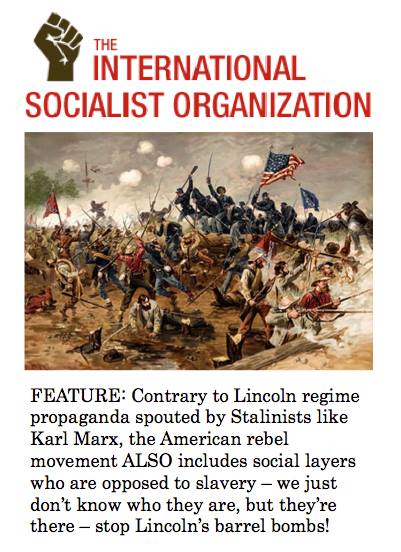
If the ISO existed in 1865.
Of course, Washington lends a hand, helpfully denominating its proxies in the most laudatory terms. Islamist insurgents in Syria, mainly Al Qaeda, were not too many years ago celebrated as a pro-democracy movement, and when that deception proved no longer tenable, as moderates.
Now that the so-called moderates have been exposed as the very opposite, many Leftists cling to the hope that amid the Islamist opponents of Syria’s secular, Arab socialist, government, can be found votaries of the enlightenment values Damascus already embraces. Surely somewhere there exist armed anti-government secular Leftists to rally behind; for it appears that the goal is to find a reason, any reason, no matter how tenuous, to create a nimbus of moral excellence around some group that opposes with arms the government in Damascus; some group that can be made to appear to be non-sectarian, anti-imperialist, socialist, committed to the rights of women and minorities, and pro-Palestinian; in other words, a group just like Syria’s Ba’ath Arab Socialists, except not them.
Stepping forward to fulfill that hope is the PKK, an anarchist guerrilla group demonized as a terrorist organization when operating in Turkey against a US ally, but which goes by the name of the YPG in Syria, where it is the principal component of the lionized “Syrian Democratic Force.” So appealing is the YPG to many Western Leftists that some have gone so far as to volunteer to fight in its units. But is the YPG the great hope it’s believed it to be?
Kurds in Syria
It’s difficult to determine with precision how many Kurds are in Syria, but it’s clear that the ethnic group comprises only a small percentage of the Syrian population (less than 10 percent according to the CIA, and 8.5 percent according to an estimate cited by Nikolaos Van Dam in his book The Struggle for Power in Syria. [1]
Estimates of the proportion of the total Kurd population living in Syria vary from two to seven percent based on population figures presented in the CIA World Factbook. Half of the Kurd community lives in Turkey, 28 percent in Iran and 20 percent in Iraq. A declassified 1972 US State Department report estimated that only between four and five percent of the world’s Kurds lived in Syria [2].
While the estimates are rough, it’s clear that Kurds make up a fairly small proportion of the Syrian population and that the number of the group’s members living in Syria as a proportion of the Kurd community as a whole is very small.

The PKK
Kurdish fighters in Syria operate under the name of the YPG, which is “tied to the Kurdistan Workers’ Party, or PKK, a radical guerrilla movement combining [anarchist ideas] with Kurdish nationalism. PKK guerrillas [have] fought the Turkish state from 1978” and the PKK is “classified as a terrorist organization by the European Union, Turkey and the U.S.” [3]
Cemil Bayik is the top field commander of both the PKK in Turkey and of its Syrian incarnation, the YPG. Bayik “heads the PKK umbrella organization, the KCK, which unites PKK affiliates in different countries. All follow the same leader, Abdullah Ocalan, who has been in prison in Turkey” [4] since 1999, when he was apprehended by Turkish authorities with CIA assistance.
Ocalan “was once a devotee of Marxism-Leninism,” according to Carne Ross, who wrote a profile of the Kurdish nationalist leader in The Financial Times in 2015. But Ocalan “came to believe that, like capitalism, communism perforce relied upon coercion.” Imprisoned on an island in the Sea of Marmara, Ocalan discovered “the masterwork of a New York political thinker named Murray Bookchin.” Bookchin “believed that true democracy could only prosper when decision-making belonged to the local community and was not monopolized by distant and unaccountable elites.” Government was desirable, reasoned Bookchin, but decision-making needed to be decentralized and inclusive. While anarchist, Bookchin preferred to call his approach “communalism”. Ocalan adapted Bookchin’s ideas to Kurd nationalism, branding the new philosophy “democratic confederalism.” [5]
Labor Zionism has similar ideas about a political system based on decentralized communes, but is, at its core, a nationalist movement. Similarly, Ocalan’s views cannot be understood outside the framework of Kurdish nationalism. The PKK may embrace beautiful utopian goals of democratic confederalism but it is, at its heart, an organization dedicated to establishing Kurdish self-rule—and, as it turns out, not only on traditionally Kurdish territory, but on Arab territory, as well, making the parallel with Labour Zionism all the stronger. In both Syria and Iraq, Kurdish fighters have used the campaign against ISIS as an opportunity to extend Kurdistan into traditionally Arab territories in which Kurds have never been in the majority.
The PKK’s goal, writes The Wall Street Journal’s Sam Dagher, “is a confederation of self-rule Kurdish-led enclaves in Iran, Iraq, Syria and Turkey” [6] countries in which Kurdish populations have a presence, though, as we’ve seen, an insignificant one in Syria. In pursuit of this goal “as many as 5,000 Syrian Kurds have died fighting alongside the PKK since the mid-1980s, and nearly all of YPG’s top leaders and battle-hardened fighters are veterans of the decades-long struggle against Turkey.” [7]
In Syria, the PKK’s goal “is to establish a self-ruled region in northern Syria,” [8] an area with a significant Arab population.
When PKK fighters cross the border into Turkey, they become ‘terrorists’, according to the United States and European Union, but when they cross back into Syria they are miraculously transformed into ‘guerrilla” fighters waging a war for democracy as the principal component of the Syrian Democratic Force. The reality is, however, that whether on the Turkish or Syrian side of the border, the PKK uses the same methods, pursues the same goals, and relies largely on the same personnel. The YPG is the PKK.
An Opportunity
Washington has long wanted to oust the Arab nationalists in Syria, regarding them as “a focus of Arab nationalist struggle against an American regional presence and interests,” as Amos Ma’oz once put it. The Arab nationalists, particularly the Ba’ath Arab Socialist party, in power since 1963, represent too many things Washington deplores: socialism, Arab nationalism, anti-imperialism, and anti-Zionism. Washington denounced Hafez al-Assad, president of Syria from 1970 to 2000, as an Arab communist, and regards his son, Bashar, who succeeded him as president, as little different. Bashar, the State Department complains, hasn’t allowed the Syrian economy—based on Soviet models, its researchers say—to be integrated into the US-superintended global economy. Plus, Washington harbors grievances about Damascus’s support for Hezbollah and the Palestinian national liberation movement.
US planners decided to eliminate Asia’s Arab nationalists by invading their countries, first Iraq, in 2003, which, like Syria, was led by the Ba’ath Arab Socialists, and then Syria. However, the Pentagon soon discovered that its resources were strained by resistance to its occupations of Afghanistan and Iraq, and that an invasion of Syria was out of the question. As an alternative, Washington immediately initiated a campaign of economic warfare against Syria. That campaign, still in effect 14 years later, would eventually buckle the economy and prevent Damascus from providing education, health care and other essential services in some parts of the country. At the same time, Washington took steps to reignite the long-running holy war that Syria’s Islamists had waged on the secular state, dating to the 1960s and culminating in the bloody takeover of Hama, Syria’s fourth largest city, in 1982. Beginning in 2006, Washington worked with Syria’s Muslim Brotherhood to rekindle the Brother’s jihad against Assad’s secular government. The Brothers had two meetings at the White House, and met frequently with the State Department and National Security Council.
The outbreak of Islamist violence in March of 2011 was greeted by the PKK as an opportunity. As The Wall Street Journal’s Yaroslav Trofimov recounts, “The PKK, once an ally of… Damascus… had long been present among Kurdish communities in northern Syria. When the revolutionary tide reached Syria, the group’s Syrian affiliate quickly seized control of three Kurdish-majority regions along the Turkish frontier. PKK fighters and weapons streamed there from other parts of Kurdistan.”[9] The “Syrian Kurds,” wrote Trofimov’s colleagues, Joe Parkinson and Ayla Albayrak, viewed “the civil war as an opportunity to carve out a self-governing enclave—similar to the one established by their ethnic kin in neighboring Iraq.” [10] That enclave, long backed by the United States and Israel, was seen as a means of weakening the Iraqi state.
Damascus facilitated the PKK take-over by withdrawing its troops from Kurdish-dominated areas. The Middle East specialist Patrick Seale, who wrote that the Kurds had “seized the opportunity” of the chaos engendered by the Islamist uprising “to boost their own political agenda” [11] speculated that the Syrian government’s aims in pulling back from Kurd-majority areas was to redirect “troops for the defence of Damascus and Aleppo;” punish Turkey for its support of Islamist insurgents; and “to conciliate the Kurds, so as to dissuade them from joining the rebels.” [12] The PKK, as it turns out, didn’t join the Islamist insurgents, as Damascus hoped. But they did join a more significant part of the opposition to Arab nationalist Syria: the puppet master itself, the United States.
By 2014, the PKK had “declared three self-rule administrations, or cantons as they call them, in northern Syria: Afreen, in the northwest, near the city of Aleppo; Kobani; and Jazeera in the northeast, which encompasses Ras al-Ain and the city of Qamishli. Their goal [was] to connect all three.” [13] This would mean controlling the intervening spaces occupied by Arabs.
A Deal with Washington
At this point, the PKK decided that its political goals might best be served by striking a deal with Washington.
The State Department had “allowed for the possibility of a form of decentralization in which different groups” — the Kurds, the secular government, and the Islamist insurgents — each received some autonomy within Syria. [14] Notice the implicit assumption in this view that it is within Washington’s purview to grant autonomy within Syria, while the question of whether the country ought to decentralize, properly within the democratic ambit of Syrians themselves, is denied to the people who live and work in Syria. If we are to take seriously Ocalan’s Bookchin-inspired ideas about investing decision-making authority in the people, this anti-democratic abomination can hardly be tolerated.
All the same, the PKK was excited by the US idea of dividing “Syria into zones roughly corresponding to areas now held by the government, the Islamic State, Kurdish militias and other insurgents.” A “federal system” would be established, “not only for Kurdish-majority areas but for all of Syria.” A Kurd federal region would be created “on all the territory now held by the” PKK. The zone would expand to include territory the Kurds hoped “to capture in battle, not only from ISIS but also from other Arab insurgent groups.” [15]
The PKK “pressed U.S. officials” to act on the scheme, pledging to act as a ground force against ISIS in return. [16] The group said it was “eager to join the U.S.-led coalition against Islamic State in return for recognition and support from Washington and its allies for the Kurdish-dominated self-rule administrations they [had] established in northern Syria.” [17]
The only people pleased with this plan were the PKK, the Israelis and the Americans.
“US support for these Kurdish groups” not only in Syria, but in Iraq, where the Kurds were also exploiting the battle with ISIS to expand their rule into traditionally Arab areas, helped “to both divide Syria and divide Iraq,” wrote The Independent’s veteran Middle East correspondent Robert Fisk. [18] Division redounded to the benefit of the United States and Israel, both of which have an interest in pursuing a divide and rule policy to exercise a joint hegemony over the Arab world. Patrick Seale remarked that the US-Kurd plan for Kurdish rule in northern Syria had been met by “quiet jubilation in Israel, which has long had a semi-clandestine relationship with the Kurds, and welcomes any development which might weaken or dismember Syria.” [19]
For their part, the Turks objected, perceiving that Washington had agreed to give the PKK a state in all of northern Syria. [20] Meanwhile, Damascus opposed the plan, “seeing it as a step toward a permanent division of the nation.” [21]
Modern-day Syria, it should be recalled, is already the product of a division of Greater Syria at the hands of the British and French, who partitioned the country into Lebanon, Palestine, Transjordan, and what is now Syria. In March, 1920, the second Syrian General Congress proclaimed “Syria to be completely independent within her ‘natural’ boundaries, including Lebanon and Palestine.” Concurrently “an Arab delegation in Palestine confronted the British military governor with a resolution opposing Zionism and petitioning to become part of an independent Syria.” [22] France sent its Army of the Levant, mainly troops recruited from its Senegalese colony, to quash by force the Levantine Arabs’ efforts to establish self-rule.
Syria, already truncated by British and French imperial machinations after WWI “is too small for a federal state,” opines Syria’s president Bashar al-Assad. But Assad quickly adds that his personal view is irrelevant; a question as weighty as whether Syria ought to become a federal or confederal or unitary state, he says, is a matter for Syrians to decide in a constitutional referendum, [23] a refreshingly democratic view in contrast to the Western position that Washington should dictate how Syrians arrange their political (and economic) affairs.
Tip of the US Spear
For Washington, the PKK offers a benefit additional to the Kurdish guerrilla group’s utility in advancing the US goal of weakening Syria by fracturing it, namely, the PKK can be pressed into service as a surrogate for the US Army, obviating the necessity of deploying tens of thousands of US troops to Syria, and thereby allowing the White House and Pentagon to side-step a number of legal, budgetary and public relations quandaries. “The situation underscores a critical challenge the Pentagon faces,” wrote The Wall Street Journal’s Paul Sonne; namely, “backing local forces… instead of putting American troops at the tip of the spear.” [24]
Having pledged support for Kurdish rule of northern Syria in return for the PKK becoming the tip of the US spear, the United States is “providing “small arms, ammunition and machine guns, and possibly some nonlethal assistance, such as light trucks, to the Kurdish forces.” [25]
The arms are “parceled out” in a so called “drop, op, and assess” approach. The shipments are “dropped, an operation [is] performed, and the U.S. [assesses] the success of that mission before providing more arms.” Said a US official, “We will be supplying them only with enough arms and ammo to accomplish each interim objective.” [26]
PKK foot soldiers are backed by “more than 750 U.S. Marines,” Army Rangers, and US, French and German Special Forces, “using helicopters, artillery and airstrikes,” the Western marionette-masters in Syria illegally, in contravention of international law. [27]
Ethnic Cleansing
“Large numbers of Arab residents populate the regions Kurds designate as their own.” [28] The PKK has taken “over a large swath of territory across northern Syria—including predominantly Arab cities and towns.” [29] Raqqa, and surrounding parts of the Euphrates Valley on which the PKK has set its sights, are mainly populated by Arabs, observes The Independent’s veteran foreign correspondent Patrick Cockburn—and the Arabs are opposed to Kurdish occupation. [30]
Kurdish forces are not only “retaking” Christian and Muslim Arab towns in Syria, but are doing the same in the Nineveh province of Iraq—areas “which were never Kurdish in the first place. Kurds now regard Qamishleh, and Hassakeh province in Syria as part of ‘Kurdistan’, although they represent a minority in many of these areas.” [31]
The PKK now controls 20,000 square miles of Syrian territory [32], or roughly 17 percent of the country, while Kurds represent less than eight percent of the population.
In their efforts to create a Kurdish region inside Syria, the PKK “has been accused of abuses by Arab civilians across northern Syria, including arbitrary arrests and displacing Arab populations in the name of rolling back Islamic State.” [33] The PKK “has expelled Arabs and ethnic Turkmen from large parts of northern Syria,” reports The Wall Street Journal. [34] The Journal additionally notes that human rights “groups have accused [Syrian and Iraqi Kurdish fighters] of preventing Arabs from returning to liberated areas.” [35]
Neither Syrian nor Democratic
The PKK dominates the Syrian Democratic Forces, a misnomer conferred upon a group of mainly Kurdish fighters by its US patron. The group is not Syrian, since many of its members are non-Syrians who identify as Kurds and who flooded over the border from Turkey to take advantage of the chaos produced by the Islamist insurgency in Syria to carve out an area of Kurdish control. Nor is the group particularly democratic, since it seeks to impose Kurdish rule on Arab populations. Robert Fisk dismisses the “Syrian Democratic Forces” as a “facade-name for large numbers of Kurds and a few Arab fighters.” [36]
The PKK poses as a Syrian Democratic Force, and works with a token force of Syrian Arab fighters, to disguise the reality that the Arab populated areas it controls, and those it has yet to capture, fall under Kurd occupation.
A De Facto (and Illegal) No Fly Zone
In August, 2016, after “Syrian government bombers had been striking Kurdish positions near the city of Hasakah, where the U.S. [had] been backing Kurdish forces” the Pentagon scrambled “jets to protect them. The U.S. jets arrived just as the two Syrian government Su-24 bombers were departing.” This “prompted the U.S.-led coalition to begin patrolling the airspace over Hasakah, and led to another incident… in which two Syrian Su-24 bombers attempted to fly through the area but were met by coalition fighter jets.” [37]
The Pentagon “warned the Syrians to stay away. American F-22 fighter jets drove home the message by patrolling the area.” [38]
The New York Times observed that in using “airpower to safeguard areas of northern Syria where American advisers” direct PKK fighters that the United States had effectively established a no-fly zone over the area, but noted that “the Pentagon has steadfastly refused to” use the term. [39] Still, the reality is that the Pentagon has illegally established a de facto no-fly zone over northern Syria to protect PKK guerillas, the tip of the US spear, who are engaged in a campaign of creating a partition of Syria, including through ethnic cleansing of the Arab population, to the delight of Israel and in accordance with US designs to weaken Arab nationalism in Damascus.
An Astigmatic Analogy
Some find a parallel in the YPG’s alliance with the United States with Lenin accepting German aid to return from exile in Switzerland to Russia following the 1917 March Revolution. The analogy is inapt. Lenin was playing one imperialist power off against another. Syria is hardly an analogue of Imperial Russia, which, one hundred years ago, was locked in a struggle for markets, resources, and spheres of influence with contending empires. In contrast, Syria is and has always been a country partitioned, dominated, exploited and threatened by empires. It has been emancipated from colonialism, and is carrying on a struggle—now against the contrary efforts of the PKK—to resist its recolonization.
The PKK has struck a bargain with the United States to achieve its goal of establishing a Kurdish national state, but at the expense of Syria’s efforts to safeguard its independence from a decades-long US effort to deny it. The partition of Syria along ethno-sectarian lines, desired by the PKK, Washington and Tel Aviv alike, serves both US and Israeli goals of weakening a focus of opposition to the Zionist project and US domination of West Asia.
A more fitting analogy, equates the PKK in Syria to Labor Zionism, the dominant Zionist force in occupied Palestine until the late 1970s. Like Ocalan, early Zionism emphasized decentralized communes. The kibbutzim were utopian communities, whose roots lay in socialism. Like the PKK’s Syrian incarnation, Labor Zionism relied on sponsorship by imperialist powers, securing their patronage by offering to act as the tips of the imperialists’ spears in the Arab world. Zionists employed armed conquest of Arab territory, along with ethnic cleansing and denial of repatriation, to establish an ethnic state, anticipating the PKK’s extension by armed force of the domain of a Kurdish state into Arab majority territory in Syria, as well as Kurd fighters doing the same in Iraq. Anarchists and other leftists may have been inspired by Jewish collective agricultural communities in Palestine, but that hardly made the Zionist project progressive or emancipatory, since its progressive and emancipatory elements were negated by its regressive oppression and dispossession of the indigenous Arab population, and its collusion with Western imperialism against the Arab world.
Conclusion
Representing an ethnic community that comprises less than 10 percent of the Syrian population, the PKK, a Kurdish anarchist guerrilla group which operates in both Turkey and Syria, is using the United States, its Air Force, Marine Corps, Army Rangers and Special Forces troops, as a force multiplier in an effort to impose a partition of Syria in which the numerically insignificant Kurd population controls a significant part of Syria’s territory, including areas inhabited by Arabs in the majority and in which Kurds have never been in the majority. To accomplish its aims, the PKK has not only struck a deal with a despotic regime in Washington which seeks to recolonize the Arab world, but is relying on ethnic cleansing and denial of repatriation of Arabs from regions from which they’ve fled or have been driven to establish Kurdish control of northern Syria, tactics which parallel those used by Zionist forces in 1948 to create a Jewish state in Arab-majority Palestine. Washington and Israel (the latter having long maintained a semi-clandestine relationship with the Kurds) value a confederal system for Syria as a means of weakening Arab nationalist influence in Arab Asia, undermining a pole of opposition to Zionism, colonialism, and the international dictatorship of the United States. Forces which resist dictatorship, including the most odious one of all, that of the United States over much of the world, are the real champions of democracy, a category to which the PKK, as evidenced by its actions in Syria, does not belong.
1. Nikolaos Van Dam, The Struggle for Power in Syria: Politics and Society under Assad and the Ba’ath Party, IB Taurus, 2011, p.1.
2. “The Kurds of Iraq: Renewed Insurgency?”, US Department of State, May 31, 1972, https://2001-2009.state.gove/documents/organization/70896.pdf
3. Sam Dagher, “Kurds fight Islamic State to claim a piece of Syria,” The Wall Street Journal, November 12, 2014.
4. Patrick Cockburn, “War against ISIS: PKK commander tasked with the defence of Syrian Kurds claims ‘we will save Kobani’”, The Independent, November 11, 2014.
5. Carne Ross, “Power to the people: A Syrian experiment in democracy,” Financial Times, October 23, 2015.
6. Dagher, November 12, 2014.
7. Dagher, November 12, 2014.
8. Dagher, November 12, 2014.
9. Yaroslav Trofimov, “The State of the Kurds,” The Wall Street Journal, June 19, 2015.
10. Joe Parkinson and Ayla Albayrak, “Syrian Kurds grow more assertive”, The Wall Street Journal, November 15, 2013.
11. Patrick Seale, “Al Assad uses Kurds to fan regional tensions”, Gulf News, August 2, 2012.
12. Seale, August 2, 2012.
13. Dagher, November 12, 2014.
14. David E. Sanger, “Legacy of a secret pact haunts efforts to end war in Syria,” the New York Times, May 16, 2016.
15. Anne Barnard, “Syrian Kurds hope to establish a federal region in country’s north,” The New York Times, March 16, 2016.
16. Dagher, November 12, 2014.
17. Dagher, November 12, 2014.
18. Robert Fisk, “This is the aim of Donald Trump’s visit to Saudi Arabia – and it isn’t good for Shia communities,” The Independent, May 18, 2017.
19. Seale, August 2, 2012.
20. Yaroslav Trofimov, “U.S. is caught between ally Turkey and Kurdish partner in Syria,” The Wall Street Journal, May 4, 2017.
21. Anne Barnard, “Syrian Kurds hope to establish a federal region in country’s north,” The New York Times, March 16, 2016.
22. David Fromkin, A Peace to End All Peace: The Fall of the Ottoman Empire and the Creation of the Modern Middle East, Henry Holt & Company, 2009, p. 437.
23. “President al-Assad to RIA Novosti and Sputnik: Syria is not prepared for federalism,” SANA, March 30, 2016.
24. Paul Sonne, “U.S. seeks Sunni forces to take militant hub,” The Wall Street Journal, April 29, 2016.
25. Dion Nissenbaum, Gordon Lubold and Julian E. Barnes, “Trump set to arm Kurds in ISIS fight, angering Turkey,” The Wall Street Journal, May 9, 2017.
26. Nissenbaum et al, May 9, 2017.
27. Dion Nissenbaum and Maria Abi-Habib, “Syria’s newest flashpoint is bringing US and Iran face to face,” The Wall Street Journal, June 15, 2017; “Syria condemns presence of French and German special forces in Ain al-Arab and Manbij as overt unjustified aggression on Syria’s sovereignty and independence,” SANA, June 15, 2016; Michael R. Gordon. “U.S. is sending 400 more troops to Syria.” The New York Times. March 9, 2017.
28. Matt Bradley, Ayla Albayrak, and Dana Ballout, “Kurds declare ‘federal region’ in Syria, says official,” The Wall Street Journal, March 17, 2016.
29. Maria Abi-Habib and Raja Abdulrahim, “Kurd-led force homes in on ISIS bastion with assent of U.S. and Syria alike,” The Wall Street Journal, May 11, 2017.
30. Patrick Cockburn, “Battle for Raqqa: Fighters begin offensive to push Isis out of Old City,” The Independent, July 7, 2017.
31. Robert Fisk, “This is the aim of Donald Trump’s visit to Saudi Arabia – and it isn’t good for Shia communities,” The Independent, May 18, 2017.
32. Dion Nissenbaum and Maria Abi-Habib, “U.S. split over plan to take Raqqa from Islamic state,” The Wall Street Journal. March 9, 2017.
33. Raja Abdulrahim, Maria Abi_Habin and Dion J. Nissenbaum, “U.S.-backed forces in Syria launch offensive to seize ISIS stronghold Raqqa,” The Wall Street Journal, November 6, 2016.
34. Margherita Stancati and Alia A. Nabhan, “During Mosul offensive, Kurdish fighters clear Arab village, demolish homes,” The Wall Street Journal, November 14, 2016.
35. Matt Bradley, Ayla Albayrak, and Dana Ballout, “Kurds declare ‘federal region’ in Syria, says official,” The Wall Street Journal, March 17, 2016.
36. Robert Fisk, “The US seems keener to strike at Syria’s Assad than it does to destroy ISIS,” The Independent, June 20, 2017.
37. Paul Sonne and Raja Abdulrahim, “Pentagon warns Assad regime to avoid action near U.S. and allied forces,” The Wall Street Journal, August 19, 2016.
38. Michael R. Gordon and Neil MacFarquhar, “U.S. election cycle offers Kremlin a window of opportunity in Syria,” The New York Times, October 4, 2016.
39. Michael R. Gordon and Neil MacFarquhar, “U.S. election cycle offers Kremlin a window of opportunity in Syria,” The New York Times, October 4, 2016.
Empire-Speak
By Jacob G. Hornberger – Future of Freedom Foundation – June 28, 2017
One of the most fascinating aspects of living under imperialism is the lexicon that this philosophy brings into existence. It’s called Empire-Speak. Given the complexity of this specialized language, it usually takes people years of education and training to master it.
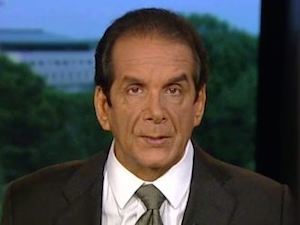
One of the finest examples of Empire-Speak appeared last week in a Washington Post op-ed by Post columnist Charles Krauthammer, who often appears as a commentator on Fox News. Krauthammer penned an op-ed entitled “The Great Muslim Civil War – and Us” that is an absolute masterpiece of Empire-Speak.
Comparing what is happening in the Middle East to Europe 1945, Krauthammer describes the “great Muslim civil war” that has enveloped the Middle East, which he writes, is “approaching its post-Islamic phase.” ISIS is about to be defeated on the battlefield, he writes, and the parties are now maneuvering, as they did after World War II, to “determine postwar boundaries and spheres of influence.” Once ISIS loses its hold on Mosul in Iraq and Raqqa in Syria, “the caliphate dies.”
So does that mean that the Pentagon and the CIA can finally declare victory in the Middle East and come home after more than 25 years of warfare in the Middle East? Does that mean that there can now be a ticker-tape parade in New York City honoring the victorious American forces?
Are you kidding? As Krauthammer points out, all that has gone before is just “the end of the beginning.” Things are just getting started. After all, as Krauthammer points out, “At stake is consolidation of the Shite Crescent.”
Who would have known? I’ll bet that 99 percent of Americans haven’t even heard of the “Shite Crescent” or that it’s being consolidated. Thank goodness we have Krauthammer and other people well-versed in Empire-Speak to tell us about it.
According to Krauthammer, the world is witnessing a gigantic battle between Shiite Muslims and Sunni Muslims.
Leading the Shiite side is Iran. Combined with Russia, Syria, Iraq, and Hezbollah (“which Krauthammer labels the “tip of the Iranian spear”), this is the so-called “Shiite Crescent.” According to Krauthammer, it poses a “nightmare for the entire Sunni Middle East.”
On the opposing side of this gigantic battle are the Sunnis, led by Saudi Arabia, Egypt, Jordan, and the United States. Needless to say, this is considered the good side of the war.
As I was reading through his op-ed, I kept hoping that Krauthammer would not omit one of my favorite terms in Empire-Speak: “the hegemon.” Isn’t that a great term? Whenever I hear an imperialist refer to the danger of the rise of a “regional hegemon,” I think of Transformers or Godzilla.
Krauthammer didn’t disappoint. He states that Syria is “the central theater of a Shiite-Sunni war for regional hegemony.” Moreover, Russia — yes, that Russia! — Krauthammer labeled “the outside hegemon.” OMG! Scary, right? Maybe even scarier than rise of communism and the Soviet Union, the two official enemies of the Cold War era.
What’s really going on here?
Krauthammer is simply preparing the American people for what lies ahead — more interventionism, more imperialism, more militarism, and more death and destruction at the hands of the US Empire. And, of course, more official enemies as old official enemies are defeated or disappeared.
You see, I bet you thought that once ISIS was defeated, the troops could finally be brought home and revel in their glorious victory. Sort of like “Mission Accomplished” after the US invasion of Iraq.
Not so. Undoubtedly expressing the mindset of the Pentagon, the CIA, and the rest of the US national-security establishment, Krauthammer is telling us that unfortunately we cannot rest. We must continue to soldier on, presumably until the Shiite Crescent is defeated and the world is no longer facing the possibility of a rise of a “regional hegemon.” And don’t even think for a moment that once that is accomplished, the war will finally be over. It will simply spell the beginning of the end of the beginning.
As I stated soon after the 9/11 attacks, the “war on terrorism” is going to be just like the war on drugs, where every drug lord they kill or capture is soon replaced by dozens more.
The real problem is that the US Empire keeps running out of official enemies. If we go back to the maneuvering after World War II to which Krauthammer refers, we see US officials converting their World War II partner and ally, the Soviet Union, to a new official enemy, one that necessitated, they said, the conversion of the federal government to a national-security state.
As we all know, for the next 45 years the Cold War was a bonanza for the Pentagon, the CIA, the NSA, and what President Eisenhower called the “military-industrial complex.” Ever-increasing budgets and powers. The best part, for them, was that it was never supposed to end. The Cold War was supposed to go on forever because communism and the Soviet Union were supposed to go on forever.
But life can be cruel. In 1989, the Soviet Union suddenly and unexpectedly dismantled itself, declared socialism a bankrupt philosophy, and unilaterally declared an end to the Cold War, thereby depriving the US Empire of its big official Cold War enemy.
No problem. A new official enemy was soon announced: Saddam Hussein, dictator of Iraq and former partner of the US Empire (just like Stalin had been). Throughout the 1990s, Americans obsessed over Saddam Hussein and how he was coming to get us and the rest of the world with his WMDs.
To oust Saddam from power, the Pentagon and the CIA began wreaking death and destruction in Iraq, including 11 years of sanctions that killed hundreds of thousands of Iraqi children.
That led to terrorist blowback and a new official enemy: “terrorism,” which ultimately enabled US officials to invade Iraq and oust their official enemy, Saddam Hussein, from power, and install a new regime in Iraq, a Shiite Muslim regime.
Over time, the “terrorists” have morphed into “the Muslims,” which are now viewed as the new official enemy.
Which brings us back to Krauthammer’s op-ed. If the Muslims are the new official enemy, how is that the United States is on the side of the Sunnis in what Krauthammer describes as a giant Muslim civil war that is now supposedly taking place? Aren’t Sunnis Muslims too?
Hmmm. So does this mean that we are no longer supposed to focus on Muslims in general or even “radical Muslims” or “extreme Muslims” but instead on “Shiite Muslims” as the new official enemy?
Oh, another thing Krauthammer doesn’t make clear: If we are now battling the Shiite Muslims, why did the US government use its invasion and occupation of Iraq to install a Shiite regime there? And why is it that US troops have been killing and dying for some 14 years to preserve the existence of that Shiite regime? Why are they still doing so? Were Americans wrong to thank the troops for their service in Iraq by bringing into existence a regime that is now part of the “Shiite Crescent,” which, according to Krauthammer, is now facing us on the field of battle?
Boy, imperialism sure is hard to learn and comprehend. Just like Empire-Speak.
Syrian Army, Hezbollah reaches border with Iraq for the first time in years
By Chris Tomson | Al-Masdar News | 09/06/2017
DAMASCUS – Late on Friday afternoon, the Syrian Arab Army (SAA), Hezbollah and allied Iraqi paramilitary contingents dashed through southeastern Homs and reached an Iraqi border point, thus slicing adrift the frontline between rebel forces based in the Al-Tanf region and ISIS militants in the neighboring Deir Ezzor governorate.
Unopposed by the US Airforce and its vetted Syrian proxies, the SAA and its allies drove through over 40 kilometers of abandoned desert territory and managed to link up with an Iraqi garrison across the border.
The advance was confirmed by the Russian Ministry of Defense and an Hezbollah-linked outlet moments ago.
Effectively, the SAA is now able to reopen trade between Damascus and Baghdad. Government forces have not controlled any parts of the largely ISIS-controlled border with Iraq since 2014.
In addition, Hezbollah is now able to be supplied with weapons from Tehran via an all-important land route. Previously, the Lebanese group relied on complicated airlifts for new armaments.
A confrontation is looming on the Iraq-Syria border
By Mehan Abedin | MEMO | June 6, 2017
Reports that the Syrian Democratic Forces (SDF) have warned Iraqi Shia militias not to enter SDF-controlled territory are, on the face of it, a potential addition to the complexity of the conflict in Syria. The SDF is dominated overwhelmingly by the People’s Protection Units (YPG), a Syrian Kurdish militia which is politically and ideologically aligned to the Kurdistan Workers’ Party (PKK). The YPG is the key US ally in Syria and the spearhead of the imminent assault on the Daesh stronghold of Raqqa.
While it remains to be seen to what extent this belligerent statement by the SDF reflects official YPG policy, there can be little doubt that the inspiration for the move was the United States and the intended recipient of the message is Iran. It is the latest sign of an aggressive US posture in Syria vis-à-vis Tehran and forces aligned with the Iranians. In this instance the primary US objective is to block Iran from constructing a land corridor from Iraq all the way to the Syrian Mediterranean coast.
However, this latest escalation will reinforce Tehran’s determination to press ahead with its plans and to reap the rewards of its considerable investment of blood and money in the Syrian conflict. Iran holds the advantage in this tug of war, for not only is Tehran willing to risk military confrontation but it also has more assets on the ground, as well as greater long-term strategic resolve.
Iraqi dimension
The spectre of Iraqi Shia militias formally organised as Popular Mobilisation Units (PMU) on the Iraq-Syria border is a clear sign of the shifting balance of power in Iraq in the wake of Daesh’s military collapse. Whilst the biggest winners of this collapse in north-western Iraq are the Iraqi Kurds, in the context of the US-Iran rivalry in the country, the Iranians have managed once again to outmanoeuvre their American foes. Both powers have invested considerable resources in the fight to dislodge Daesh from Mosul with a view to expanding their own influence in Iraq.
As the Iraqi army and specialised units of the federal Iraqi police force have borne the brunt of the fighting inside Mosul, by contrast the PMUs made a strategic push for areas west of the city. In view of the PMU’s multi-level connectivity to the infrastructure of Iranian influence in Iraq, this decision was almost certainly made in Tehran.
Control of sensitive points on the Iraq-Syria border is a key objective of the PMU, for reasons of deterrence and power projection. From a deterrent point of view, the control of borders creates a wider sense of security and deters Daesh and its allies from regrouping in nearby areas. In terms of power projection, the PMU needs to create an impression that it has the ability (if not the volition) to cross the border brazenly in organised form with a view to supporting the Syrian government and allied forces.
The volition aspect is important as hitherto the PMU has not formally crossed the border, even though large numbers of Iraqi Shia militiamen have undoubtedly crossed in order to augment their Syrian allies in multiple battle zones.
The latest belligerent statement by the SDF notwithstanding, in reality there is little risk of an imminent conflict between the PMU and the YPG. Despite their deep political and ideological differences, both sides share pragmatic common interests, not least antipathy towards Syrian rebels and jihadists.
Moreover, inside Iraq the PMU is allied to the Sinjar Resistance Units (SRU), an ideological compatriot of the YPG in so far as both groups are extensions of the PKK. There are reports that the PMU mopping-up operations at key points on the Iraq-Syria border are being supported actively by the SRU.
Syrian dimension
In grand strategic terms, PMU presence at key points of the Iraq-Syria border essentially means that Iran has established partial control over this sensitive border. Whilst this marks an expansion of Iranian influence in Iraq, its real significance lies in the messages it sends across the border in Syria.
In immediate terms, it is a response to recent US escalation, notably last month’s bombing of a pro-Syrian convoy close to al-Tanf. It is a sign of resolve by the Islamic Republic and a message that it will not sit idly by as the US sets about dominating north-east Syria by proxy, principally via the SDF.
At a deeper strategic level, it signifies Tehran’s resolve to construct the land corridor linking Iran to Syria. This project is vital to Iranian national security as well as wider economic and commercial considerations. Furthermore, the Iranians view this corridor as payoff for their unwavering support to the Syrian government from the onset of the conflict.
In view of the fact that a central aim of US concentration of forces, advisors and proxies in areas close to the Iraqi border appears to be to derail the Iranian land corridor project, a clash at some point is inevitable. De-escalation on this front by either party sends an unmistakable message of weakness with wider repercussions for control of post-conflict Syria.
Within Syria, though, the US is playing catch-up following years of relative disengagement. Absent the deployment of a sizeable military force to eastern Syria, the US is set to lose this tug of war with Iran. For a start, local US allies are neither reliable nor necessarily durable. As an umbrella organisation, the SDF is bound to fragment at some point, most likely following the military defeat of Daesh in Syria.
Whilst the core of the SDF, namely the PKK-aligned YPG, will remain a cohesive force, the durability of “Rojava” as a political entity inside Syria is not a valid proposition. All the key stakeholders in the conflict, notably the Syrian government, the Syrian opposition, the Syrian rebels on the ground, and not least Turkey, are fundamentally opposed to a PKK statelet inside Syria masquerading as Kurdish autonomy.
The battle for eastern Syria will begin in earnest following Daesh’s ejection from Raqqa and Deir ez-Zor. Absent a dramatic change in the confluence of perspectives, interests and events, US- and Iranian-aligned forces are set for a major clash in the region.
The scramble for control of Syrian-Iraqi border
By M K Bhadrakumar | Indian Punchline | June 4, 2017
The remark by the Syrian Kurdish militia spokesman Saturday that their final assault on the ISIS “capital” city of Raqqa will start “in the coming few days” highlights the keen struggle for control of eastern Syria bordering Iraq that is playing out. The ISIS is staring at defeat and the issue now is what follows thereafter.
The big question is whether Syria survives or will get balkanized. The Russian President Vladimir Putin flagged this stark reality when he said on Friday,
- Does the possible dismemberment of Syria arouse concern? It certainly does. We are establishing de-escalation zones now and we are afraid that these de-escalation zones may turn into a blueprint for future borders. Russia hopes these safety zones would serve to interact with the Assad government, to start at least some kind of a dialogue, some interaction, as this would help future political cooperation in order to restore Syria’s control over its entire territory and preserve the country’s territorial integrity.
Of course, there is the danger that Syrian war may become a “frozen conflict”. The key, therefore, lies in gaining control of Iraq’s border crossings with Syria across vast desert lands through which Iran renders vital help to the government forces and the Hezbollah and the Shi’ite fighters battling the insurgents and the ISIS.
As the map, here, shows, the Syrian-Iraqi border regions are largely under the control of either US-supported Kurdish and other insurgent fighters or the ISIS and other extremist groups. The Syrian government aspires to regain control of those regions.
Essentially, the struggle is for control of the border crossings that are depicted in the map. Clearly, the border crossing way up in the north is under the control of the Kurdish militia and it remains to be seen (a) whether the US would allow the Kurds to reach an understanding with Damascus; (b) whether Turkey will allow Kurds to consolidate their grip in that area; (c) whether the over-stretched government forces will take on the Kurds or, alternatively, will regard it to be tactically prudent to avoid a shooting match at this point and instead keep options open to eventually negotiate a power-sharing deal with the Kurds.
Unlike the northern front, the central and southern fronts are hotly contested. As the map shows, there is one border crossing in the central front at Al-Bukamal (where the Euphrates flows into Iraq) and another key border crossing is at Al-Tanf in the southern front.
In the central front, Bashar Al-Assad’s forces are in Palmyra and are making their way toward Deir Ezzor where a Syrian garrison is desperately holding out against a siege by the jihadi groups. The US appears to be encouraging the ISIS fighters in Raqqa to evacuate toward Deir Ezzor. But Russian cruise missile strikes recently targeted these ISIS convoys. (Sputnik) The US apparently prefers that somehow Assad’s forces must be prevented from reaching Deir Ezzor, because from there they could take control of the highway leading to the border crossing at Al-Bukamal. (See the map.)
Similarly in the southern front, the US is impeding the advance of the government forces to al-Tanf (which is connected to Damascus), another border crossing into Iraq. The US would hope that the rebel groups in al-Tanf will also seize control of the Al-Bukamal border crossing up north so that US proxies will be in control of the entire Syrian-Iraqi border as well as the southern Syrian region straddling the border with Jordan and the Golan Heights. The game here is essentially about cutting off Iran’s access to Lebanon (Hezbollah).
Why is it so important for the US to prevent Assad’s forces from taking control of the Al-Bukamal and Al-Tanf border crossings? Simply put, the spectre of a Damascus-Baghdad-Tehran land route reopening is what is haunting the US (and Israel), because such a solid land route will have a multiplier effect on Iran’s capacity to influence the future developments in Syria (and Lebanon).
The US has not directly jumped into the fray so far to take control of the Syria-Iraq border. It maintains the pretence that it is narrowly focused on fighting the ISIS. However, when it seemed that Assad’s forces were lunging toward Al-Tanf recently (May 18), the US forced them to turn back by launching an air strike.
The overall balance of forces does favour the Syrian government and in a conceivable future it should take control of Deir Ezzor, Al-Bukamal and Al-Tanf. Thus, the US will have to find a way to work around Assad (and Iran) than work against him. The other option will be to bear the heavy costs of a long-term, open-ended strategy of military intervention and occupation, which doesn’t figure in President Donald Trump’s foreign-policy calculus. The US’s best bet will be to seek some sort of understanding with Russia based on the premise that Moscow may not be fully sharing the agenda of Assad and his Iranian ally. But then, Moscow has no reason to bet on any other horse than the one it has been so far, which also happens to be a winning horse.
Syrian army ‘will ignore’ US air force border fight threat
Morning Star | May 30, 2017
SYRIA’S armed forces made clear yesterday that they will not obey US air force instructions to halt military operations near the Tanf border crossing with Iraq.
An army officer told Al-Masdar News that, despite the US air force dropping leaflets over Syrian army positions in south-east Homs at the weekend, army units will continue fighting against Free Syrian Army (FSA) and Isis militants until the entire Iraqi border with south-east Syria is sealed.
“Any movements toward Tanf will be considered hostile and we will defend our forces,” the US-led coalition leaflet read.
The officer added that the Russian military is deeply embedded with the Syrian army and their allies in southeast Homs and is backing continued operations.
Government forces greatly outnumber the Western-backed FSA in the region and the US allies also do not have the backing of the Iraqi government or the Shi’ite Popular Mobilisation Units that operate both in Iraqi desert areas west of Mosul and alongside Syrian government forces in south-east Homs.
US warplanes hit pro-Syrian government Palestinian fighters on May 18 on the pretext that they posed a threat to US troops and allied rebels near the border with Jordan.
Syrian army and allied paramilitary forces continued their successful campaign in the eastern Aleppo countryside yesterday afternoon, breaking through Isis defences and capturing the Ras al-Ayn village and its surroundings, heightening the pressure on the Isis stronghold of Maskanah.
The last batch of jihadist insurgents and their family members were transported in government-provided buses from the Barzeh suburb of east Damascus to Idlib province yesterday.
Their departure means that the Syrian government has full control of this suburb for the first time since late 2011.
Several rebels opted to remain in Barzeh and will have six months to resolve their status with the government.
Four members of the pro-Syrian government Harakat al-Nujaba militia, together with two Syrian army soldiers, were freed from year-long captivity in jihadi-controlled province Idlib on Sunday night after Nujaba fighters launched a behind-the-enemy-lines raid.
Featured Video
REDFIELD REWRITES THE RECORD
or go to
Aletho News Archives – Video-Images
From the Archives
Fake 9/11 Activism on 9/11. “Saudi Arabia was Behind the Attacks”
By Prof Michel Chossudovsky | Global Research | September 10, 2017
There is an element of confusion which has served to divide the 9/11 Truth movement. Saudi Arabia is said to have supported the alleged 9/11 highjackers.
What are the implications of “the Saudi did it” narrative?
It is very convenient to say that Saudi Arabia was behind the 9/11 terrorists. Why, because it upholds the official narrative of the 9/11 Commission Report and it whitewashes the US Deep State including its military and intelligence apparatus.
The official narrative –which has been amply refuted– states that 19 Al Qaeda hijackers brought down the WTC towers, i.e Muslims were behind the attack on America, –i.e. it was not an “inside job” or a false flag.
And now what is happening is that Saudi Arabia is blamed for having supported the al Qaeda hijackers.
And if Saudi Arabia is held responsible, pari passu the official narrative holds, namely the hijackers did it with the support of the House of Saud. … continue
Blog Roll
Recent Comments
loongtip on Trump tells India to stop purc… eddieb on The Old Testament and the Geno… papasha408 on Trump’s war posturing against… Coronistan on This is How We Should Have Res… Coronistan on NO MANDATES, NO PROFITS: MODER… Lutz Barz on Russia Vows to Protect Its Oil… loongtip on Russia Vows to Protect Its Oil… loongtip on Hamas never agreed to lay down… eddieb on Conspiracy Denial eddieb on WEF Calls for ‘Cultural Revolu… loongtip on Trump wanted to play peacemake… Coronistan on EU member to sue bloc over ‘su…


 Aletho News
- Mike Pompeo admits Washington ‘directly helped’ rioters in Iran
- Iranian FM reveals ‘fruitful’ indirect talks with US in push for de-escalation
- British journalism hits rock bottom with latest shocking revelations
- American Zionists are using Trump’s Republican Party to create a multicultural supremacist elite
- German calls for nukes are ‘madness’ – veteran politician
- REDFIELD REWRITES THE RECORD
- From Iraq war crimes to Gaza’s ‘board of peace’: Why Tony Blair belongs in The Hague
- Epstein email reveals plan to pursue frozen Libyan assets with help from former MI6, Mossad figures
- Trump tells India to stop purchasing Iran oil, buy Venezuelan instead
- How Trump’s Iran Gambit Could Blow Up the Entire Persian Gulf
- If Americans Knew
- One side emerged from a tunnel; the other side killed 31. Both must “exercise restraint” – Not a ceasefire Day 115
- Israel killed at least 32 Gazans on Saturday – Not a ceasefire Day 114
- Is Israel opening the Rafah border to depopulate Gaza? – Not a ceasefire Day 113
- NBA Star Stephen Curry’s Ties To Israeli Military Intelligence
- ‘Apocalyptic wasteland’: Biden admin. blocked warning on deteriorating Gaza situation after Oct. 7
- Why Israeli counterterrorism tactics are showing up in Minnesota
- Israel Went to Extremes to Return Ran Gvili’s Body. Why Doesn’t It Accord Dead Palestinians the Same Respect?
- Across the West, speaking for Palestine is now a crime
- A West Bank Bus Trip Through ‘the Best Documented Ethnic Cleansing in History’
- Mike Huckabee’s distorted theology does not speak for Christians worldwide
- No Tricks Zone
- One Reason Only For Germany’s Heating Gas Crisis: Its Hardcore-Dumbass Energy Policy
- 130 Years Later: The CO2 Greenhouse Effect Is Still Only An Imaginary-World Thought Experiment
- New Study Affirms Rising CO2’s Greening Impact Across India – A Region With No Net Warming In 75 Years
- Germany’s Natural Gas Crisis Escalates … One Storage Site Near Empty …Government Silent
- Polar Colding…Antarctica Saw Its Coldest October In 44 Years!
- New Study: Sea Levels Rose 20 Times The Modern Rate During The Roman Warm Period
- As German Gas Storage Dips Dangerously Low…Shortage Hardly Avoidable
- New Study: Brazil’s Relative Sea Level Was 2+ Meters Higher And SSTs 3-4°C Warmer 6000 Years Ago
- Philosopher Schopenhauer: Climate Science Certainty Stems From Stupidity, Ignorance
- New Study: Species Extinction Rates Declining Since 1980 – ‘Climate Change Is Not An Important Threat’
 Aletho News