Pompeo Rocks the Middle East: Lessons from a Former CIA Officer for the Secretary of State

By Philip Giraldi | American Herald Tribune | May 7, 2018
Former Central Intelligence Agency Director Mike Pompeo has recently completed his first trip to the Middle East as U.S. Secretary of State. Perhaps not surprisingly as President Donald Trump appears prepared to decertify the Joint Comprehensive Plan of Action (JCPOA) limiting Iran’s nuclear program creating a possible casus belli, much of what Pompeo said was focused on what was alleged to be the growing regional threat posed by Iran both in conventional terms and due to its claimed desire to develop a nuclear weapon.
The Secretary of State met with heads of state or government as well as foreign ministers in Saudi Arabia, Israel and Jordan during his trip. He did not meet with the Palestinians, who have cut off contact with the Trump Administration because they have “nothing to discuss” with it in the wake of the decision to recognize Jerusalem as Israel’s capital.
During his first stop in Riyadh, Pompeo told a beaming Foreign Minister Adel Jubeir that Iran has been supporting the “murderous” Bashar al-Assad government in Damascus while also arming Houthi rebels in Yemen. He noted that “Iran destabilizes the entire region. It is indeed the greatest sponsor of terrorism in the world…”
In Israel, Pompeo stood side by side with a smiling Prime Minister Benjamin Netanyahu and said “We remain deeply concerned about Iran’s dangerous escalation of threats to Israel and the region, and Iran’s ambition to dominate the Middle East remains. The United States is with Israel in this fight. And we strongly support Israel’s sovereign right to defend itself.”
At the last stop in Jordan, Pompeo returned to the “defend itself” theme, saying regarding Gaza that “We do believe the Israelis have a right to defend themselves and we are fully supportive of that.”
One hopes that discussions between Pompeo and his foreign interlocutors were more substantive than his somewhat laconic published comments. But given the comments themselves, it is depressing to consider that he was until recently Director of the CIA and was considered an intellectually brilliant congressman who graduated first in his class at West Point. One would hope to find him better informed.
Very little that surfaced in the admittedly whirlwind tour of the Middle East is fact-based. Starting with depicting Iran as a regional and even global threat, one can challenge the view that its moves in Yemen and Syria constitute any fundamental change in the balance of power in the region. Iranian support of Syria actually restores the balance by returning to the status quo ante where Syria had a united and stable government before the United States and others decided to intervene.
Israeli claims repeated by Washington that Iran is somehow building a “land bridge” to link it to the Mediterranean Sea are wildly overstated as they imply that somehow Iraq, Syria, and Lebanon are willing to cede their sovereignty to an ally, an unlikely prospect to put it mildly. Likewise, the claim that Iran is seeking to “dominate the region” rings hollow as it does not have the wherewithal to do so either financially or militarily and many of its government’s actions are largely defensive in nature. The reality is that Israel and Saudi Arabia are the ones seeking regional dominance and are threatened because a locally powerful Iran is in their way.
Support by Tehran for Yemen’s Houthis is more fantasized than real with little actual evidence that Iran has been able to provide anything substantial in the way of arms. The Saudi massacre of 10,000 mostly Yemeni civilians and displacement of 3 million more being carried out from the air has been universally condemned with the sole exceptions of the U.S. and Israel, which seem to share with Riyadh a unique interpretation of developments in that long-suffering land. The U.S. has supplied the Saudis with weapons and intelligence to make their bombing attacks more effective, i.e. lethal.
Pompeo did not exactly endorse the ludicrous Israeli claim made by Benjamin Netanyahu last week that Iran has a secret weapons of mass destruction program currently in place, but he did come down against the JCPOA, echoing Trump in calling it a terrible agreement that will guarantee an Iranian nuclear weapon. The reality is quite different, with the pact basically eliminating a possible Iranian nuke for the foreseeable future through degradation of the country’s nuclear research, reduction of its existing nuclear stocks and repeated intrusive inspections. Israel meanwhile has a secret nuclear arsenal and is a non-signatory of the Nuclear Non-Proliferation Treaty without any demur from the White House.
The Israeli-Pompeo construct assumes that Iran is singularly untrustworthy, an odd assertion coming from either Washington, Riyadh or Tel Aviv. It also basically rejects any kind of agreement with the Mullahs and is a path to war. It is interesting to note that the Pentagon together with all of America’s closest allies believe that the JCPOA should stay in place.
And then there is the claim that Iran is the world’s greatest sponsor of terrorism. In reality that honor belongs to the United States and Israel with Iran often being the victim, most notably with the assassination of its scientists and technicians by Mossad agents. Israel has also been targeting and bombing Iranians in Syria, as has the United States, even though neither is at war with Iran and the Iranian militias in the country are cooperating with the Syrians and Russians to fight terrorist groups including ISIS as well as those affiliated with al-Qaeda. The U.S. is actually empowering terrorists in Syria and along the Iraqi border while killing hundreds of thousands in its never-ending war on terror. Israel meanwhile has agreements with several extremist groups so they will not attack its occupied Golan Heights and also seeks to continue to destabilize the Syrians.
Pompeo also endorsed Israel’s “fight” against the Gazan demonstrators and pledged that America would stand beside its best friend. As of this point, Israel has used trained army snipers to kill forty-three unarmed protesting Palestinians. Another 5,000 have been injured, mostly by gunfire. No “threatened” Israelis have suffered so much as a broken fingernail and the border fence is both intact and has never been breached. Israel is committing what is very clearly a war crime and the United States Secretary of State is endorsing the slaughter of a defenseless people who are imprisoned in the world’s largest open-air concentration camp.
Donald Trump entered into office with great expectations, but if Mike Pompeo is truly outlining American foreign policy, then I and many other citizens don’t get it and we most definitely don’t want it.
*(Mike Pompeo meets with Israeli Minister Benjamin Netanyahu in Tel Aviv, April 2018. Image credit: U.S. Embassy Tel Aviv/ flickr)
US to Build World’s Largest Consulate Facility in Iraqi Kurdistan – Reports
Sputnik – 23.04.2018
US Ambassador to Iraq Douglas Silliman and Kurdish Prime Minister Nechirvan Barzani led the groundbreaking ceremony for the world’s largest US consulate in Erbil, the capital of Iraqi Kurdistan, local media reported Monday.
As of now, the United States rents buildings from local residents and business owners in Erbil’s district of Ainkawa to house its consulate, which opened in February 2007 and was upgraded to a consulate general in 2011, the Rudaw news agency reported.
“The new consulate building demonstrates that the United States will stand with the people of the Iraqi Kurdistan Region, as they build a future that will be brighter than the past,” Silliman said at the ceremony, as quoted by the media outlet.
The ambassador also called for strengthening US-Kurdish business relations.
Barzani, in turn, thanked Silliman and congratulated him on the decision to start construction.
“We see it as a significant and valuable step, and hope that it will be finished successfully at its schedule time,” he said.
Barzani also stressed that the development of relations between the United States and the Kurdistan Region lay “in the framework of the diplomatic relations it has with Iraqi federal government.”
The estimated cost of the new US consulate building is $600 million. It will be built on 200,000 square meters (2,152,782 square feet) of land on Erbil-Shaqlawa highway.
15 Years of War: To Whose Benefit?
By Charles Hugh-Smith | Of Two Minds | March 28, 2018
As for Iraq, the implicit gain was supposed to be access to Iraqi oil.
Setting aside the 12 years of “no fly zone” air combat operations above Iraq from 1991 to 2003, the U.S. has been at war for almost 17 years in Afghanistan and 15 years in Iraq. (If the word “war” is too upsetting, then substitute “continuing combat operations”.)
Since the burdens and costs of these combat operations are borne solely by the volunteers of the U.S. Armed Forces, the American populace pays little to no attention to the wars unless a household has a family member in uniform who is in theatre.
Permanent combat operations are now a barely audible background noise in America, something we’ve habituated to: the human costs are invisible to the vast majority of residents, and the financial costs are buried in the ever-expanding mountain of national debt. What’s another borrowed trillion dollars on top of the $21 trillion pile?
But a nation continually waging war should ask: to whose benefit? (cui bono) As near as I can make out, the nation has received near-zero benefit from combat operations in Afghanistan, one of the most corrupt nations on Earth where most of the billions of dollars “invested” have been squandered or stolen by the kleptocrats the U.S. has supported.
What did the nation gain for the tragic loss of lives and crippling wounds suffered by our personnel and Afghan civilians?
As for Iraq, the implicit gain was supposed to be access to Iraqi oil. As near as I can make out, the U.S. imports about 600,000 barrels of oil per day from Iraq, a relatively modest percentage of our total oil consumption of 19.7 million barrels a day.
(Note that the U.S. was importing around 700,000 barrels a day from Iraq before Operation Iraqi Freedom was launched in March 2003–and imports from Iraq declined as a result of the war. So what was the energy-security gain from launching the war?)
Meanwhile, Iraq exports over 2 million barrels a day to China and India, where the presumed benefit to the U.S. is that U.S. corporations can continue to produce shoddy goods using low-cost Asian labor that are exported to U.S. consumers, thereby enabling U.S. corporations to reap $2.3 trillion in profits every year.
(Before China joined the World Trade Organization (WTO), U.S. corporate profits were around $700 billion–less than one-third the current gargantuan sum. Isn’t this suggestive of the immense profits gained by offshoring production to Asia and reducing the quality of the goods being manufactured?)
Since “energy security”, i.e. access to oil, was the implicit reason for going to war, let’s ask: were all the sacrifices of lives and limbs and the direct costs of roughly $1 trillion worth the roughly $200 billion in oil that the U.S. has imported from Iraq– and if history is any guide, could have imported without going to war at all?
It’s far easier to blunder into war than it is to blunder out of war. But hey, it’s certainly been profitable for a few at the top of the financial heap.

Iraq +15: Accumulated Evil of the Whole
By Nat Parry | Consortium News | March 19, 2018
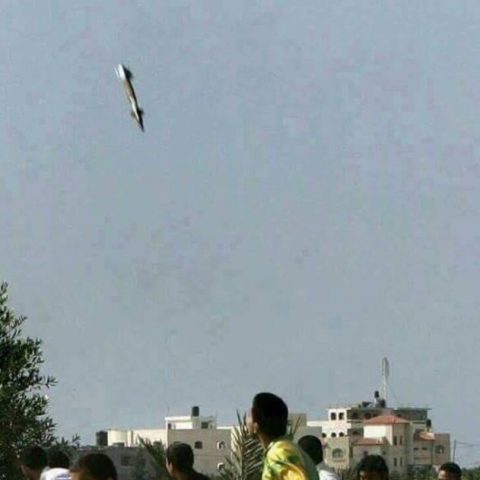
Robert Jackson, the Chief United States Prosecutor at the Nuremberg Trials of Nazi war criminals, once denounced aggressive war as “the greatest menace of our time.” With much of Europe laying in smoldering ruin, he said in 1945 that “to initiate a war of aggression … is not only an international crime: it is the supreme international crime differing only from other war crimes in that it contains within itself the accumulated evil of whole.”
When it comes to the U.S. invasion of Iraq 15 years ago today, the accumulated evil of the whole is difficult to fully comprehend. Estimates of the war’s costs vary, but commonly cited figures put the financial cost for U.S. taxpayers at upwards of a trillion dollars, the cost in Iraqi lives in the hundreds of thousands, and U.S. soldier deaths at nearly 5,000. Another 100,000 Americans have been wounded and four million Iraqis driven from their homes as refugees.
As staggering as those numbers may be, they don’t come close to describing the true cost of the war, or the magnitude of the crime that was committed by launching it on March 19-20, 2003. Besides the cost in blood and treasure, the cost to basic principles of international justice, long-term geopolitical stability, and the impacts on the U.S. political system are equally profound.
Lessons Learned and Forgotten
Although for a time, it seemed that the lessons of the war were widely understood and had tangible effects on American politics – with Democrats, for example, taking control of Congress in the midterm elections of 2006 based primarily on growing antiwar sentiment around the country and Barack Obama defeating Hillary Clinton in the 2008 primaries based largely on the two candidates’ opposing views on the Iraq War – the political establishment has, since then, effectively swept these lessons under the rug.
One of those lessons, of course, was that proclamations of the intelligence community should be treated with huge grain of salt. In the build-up to war with Iraq a decade and a half ago, there were those who pushed back on the politicized and “cherry-picked” intelligence that the Bush administration was using to convince the American people of the need to go to war, but for the most part, the media and political establishment parroted these claims without showing the due diligence of independently confirming the claims or even applying basic principles of logic.
For example, even as United Nations weapons inspectors, led by Swedish diplomat Hans Blix, were coming up empty-handed when acting on tips from the U.S. intelligence community, few within the mainstream media were willing to draw the logical conclusion that the intelligence was wrong (or that the Bush administration was lying). Instead, they assumed that the UN inspectors were simply incompetent or that Saddam Hussein was just really good at hiding his weapons of mass destruction.
Yet, despite being misled so thoroughly back in 2002 and 2003, today Americans show the same credulousness to the intelligence community when it claims that “Russia hacked the 2016 election,” without offering proof. Liberals, in particular, have hitched their wagons to the investigation being led by Special Counsel Robert Mueller, who is widely hailed as a paragon of virtue, while the truth is, as FBI Director during the Bush administration, he was a key enabler of the WMD narrative used to launch an illegal war.
Mueller testified to Congress that “Iraq has moved to the top of my list” of threats to the domestic security of the United States. “As we previously briefed this Committee,” Mueller said on February 11, 2003, “Iraq’s WMD program poses a clear threat to our national security.” He warned that Baghdad might provide WMDs to al-Qaeda to carry out a catastrophic attack in the United States.
Mueller drew criticism at the time, including from FBI whistleblower Coleen Rowley, for conflating Iraq and al-Qaeda, with demands that the FBI produce whatever evidence it had on this supposed connection.
Today, of course, Mueller is celebrated by Democrats as the best hope for bringing down the presidency of Donald Trump. George W. Bush has also enjoyed a revival of his image thanks largely to his public criticisms of Trump, with a majority of Democrats now viewing the 43rd president favorably. Many Democrats have also embraced aggressive war – often couched in the rhetoric of “humanitarian interventionism” – as their preferred option to deal with foreign policy challenges such as the Syrian conflict.
When the Democratic Party chose Clinton as its nominee in 2016, it appeared that Democrats had also embraced her willingness to use military force to achieve “regime change” in countries that are seen as a threat to U.S. interests – whether Iraq, Iran or Syria.
As a senator from New York during the build-up for military action against Iraq, Clinton not only voted to authorize the U.S. invasion, but fervently supported the war – which she backed with or without UN Security Council authorization. Her speech on the floor of the Senate on Oct. 10, 2002 arguing for military action promoted the same falsehoods that were being used by the Bush administration to build support for the war, claiming for example that Saddam Hussein had “given aid, comfort, and sanctuary to terrorists, including al-Qaeda members.”
“If left unchecked,” she said, “Saddam Hussein will continue to increase his capacity to wage biological and chemical warfare, and will keep trying to develop nuclear weapons. Should he succeed in that endeavor, he could alter the political and security landscape of the Middle East, which as we know all too well affects American security.”
Clinton maintained support for the war even as it became obvious that Iraq in fact had no weapons of mass destruction – the primary casus belli for the war – only cooling her enthusiasm in 2006 when it became clear that the Democratic base had turned decisively against the war and her hawkish position endangered her chances for the 2008 presidential nomination. But eight years later, the Democrats had apparently moved on, and her support for the war was no longer considered a disqualification for the presidency.
One of the lessons that should be recalled today, especially as the U.S. gears up today for possible confrontations with countries including North Korea and Russia, is how easy it was in 2002-2003 for the Bush administration to convince Americans that they were under threat from the regime of Saddam Hussein some 7,000 miles away. The claims about Iraq’s WMDs were untrue, with many saying so in real time – including by the newly formed group Veteran Intelligence Professionals for Sanity, which was regularly issuing memoranda to the president and to the American people debunking the falsehoods that were being promoted by the U.S. intelligence community.
But even if the claims about Iraq’s alleged stockpiles were true, there was still no reason to assume that Saddam Hussein was on the verge of launching a surprise attack against the United States. Indeed, while Americans were all but convinced that Iraq threatened their safety and security, it was actually the U.S. government that was threatening Iraqis.
Far from posing an imminent threat to the United States, in 2003, Iraq was a country that had already been devastated by a U.S.-led war a decade earlier and crippling economic sanctions that caused the deaths of 1.5 million Iraqis (leading to the resignation of two UN humanitarian coordinators who called the sanctions genocidal).
Threats and Bluster
Although the invasion didn’t officially begin until March 20, 2003 (still the 19th in Washington), the United States had been explicitly threatening to attack the country as early as January 2003, with the Pentagon publicizing plans for a so-called “shock and awe” bombing campaign.
“If the Pentagon sticks to its current war plan,” CBS News reported on January 24, “one day in March the Air Force and Navy will launch between 300 and 400 cruise missiles at targets in Iraq. … [T]his is more than the number that were launched during the entire 40 days of the first Gulf War. On the second day, the plan calls for launching another 300 to 400 cruise missiles.”
A Pentagon official warned: “There will not be a safe place in Baghdad.”
These public threats appeared to be a form of intimidation and psychological warfare, and were almost certainly in violation of the UN Charter, which states: “All Members shall refrain in their international relations from the threat or use of force against the territorial integrity or political independence of any state, or in any other manner inconsistent with the Purposes of the United Nations.”
The Pentagon’s vaunted “shock and awe” attack began with limited bombing on March 19-20, as U.S. forces unsuccessfully attempted to kill Hussein. Attacks continued against a small number of targets until March 21, when the main bombing campaign began. U.S.-led forces launched approximately 1,700 air sorties, with 504 using cruise missiles.
During the invasion, the U.S. also dropped some 10,800 cluster bombs on Iraq despite claiming that only a fraction of that number had been used.
“The Pentagon presented a misleading picture during the war of the extent to which cluster weapons were being used and of the civilian casualties they were causing,” reported USA Today in late 2003. Despite claims that only 1,500 cluster weapons had been used resulting in just one civilian casualty, “in fact, the United States used 10,782 cluster weapons,” including many that were fired into urban areas from late March to early April 2003.
The cluster bombs killed hundreds of Iraqi civilians and left behind thousands of unexploded bomblets that continued to kill and injure civilians weeks after the fighting stopped.
(Because of the indiscriminate effect of these weapons, their use is banned by the international Convention on Cluster Munitions, which the United States has refused to sign.)
Attempting to kill Hussein, Bush ordered the bombing of an Iraqi residential restaurant on April 7. A single B-1B bomber dropped four precision-guided 2,000-pound bombs. The four bunker-penetrating bombs destroyed the target building, the al Saa restaurant block and several surrounding structures, leaving a 60-foot crater and unknown casualties.
Diners, including children, were ripped apart by the bombs. One mother found her daughter’s torso and then her severed head. U.S. intelligence later confirmed that Hussein wasn’t there.
Resistance and Torture
It was evident within weeks of the initial invasion that the Bush administration had misjudged the critical question of whether Iraqis would fight. They put up stiffer than expected resistance even in southern Iraqi cities such as Umm Qasr, Basra and Nasiriya where Hussein’s support was considered weak, and soon after the fall of the regime on April 9, when the Bush administration decided to disband the Iraqi army, it helped spark an anti-U.S. insurgency led by many former Iraqi military figures.
Despite Bush’s triumphant May 1 landing on an aircraft carrier and his speech in front of a giant “Mission Accomplished” banner, it looked as though the collapse of the Baathist government had been just the first stage in what would become a long-running war of attrition. After the Iraqi conventional forces had been disbanded, the U.S. military began to notice in May 2003 a steadily increasing flurry of attacks on U.S. occupiers in various regions of the so-called “Sunni Triangle.”
These included groups of insurgents firing assault rifles and rocket-propelled grenades at U.S. occupation troops, as well as increasing use of improvised explosive devices on U.S. convoys.
Possibly anticipating a long, drawn-out occupation and counter-insurgency campaign, in a March 2003 memorandum Bush administration lawyers devised legal doctrines to justify certain torture techniques, offering legal rationales “that could render specific conduct, otherwise criminal, not unlawful.”
They argued that the president or anyone acting on the president’s orders were not bound by U.S. laws or international treaties prohibiting torture, asserting that the need for “obtaining intelligence vital to the protection of untold thousands of American citizens” superseded any obligations the administration had under domestic or international law.
“In order to respect the President’s inherent constitutional authority to manage a military campaign,” the memo stated, U.S. prohibitions against torture “must be construed as inapplicable to interrogations undertaken pursuant to his Commander-in-Chief authority.”
Over the course of the next year, disclosures emerged that torture had been used extensively in Iraq for “intelligence gathering.” Investigative journalist Seymour Hersh disclosed in The New Yorker in May 2004 that a 53-page classified Army report written by Gen. Antonio Taguba concluded that Abu Ghraib prison’s military police were urged on by intelligence officers seeking to break down the Iraqis before interrogation.
“Numerous incidents of sadistic, blatant and wanton criminal abuses were inflicted on several detainees,” wrote Taguba.
These actions, authorized at the highest levels, constituted serious breaches of international and domestic law, including the Convention Against Torture, the Geneva Convention relative to the treatment of Prisoners of War, as well as the U.S. War Crimes Act and the Torture Statute.
They also may have played a role in the rise of the ISIS terror group, the origins of which were subsequently traced to an American prison in Iraq dubbed Camp Bucca. This camp was the site of rampant abuse of prisoners, one of whom, Abu Bakr al-Baghdadi, later became the leader of ISIS. Al-Baghdadi spent four years as a prisoner at Bucca, where he started recruiting others to his cause.
America’s Weapons of Mass Destruction
Besides torture and the use of cluster bombs, the crimes against the Iraqi people over the years included wholesale massacres, long-term poisoning and the destruction of cities.
There was the 2004 assault on Fallujah in which white phosphorus – banned under international law – was used against civilians. There was the 2005 Haditha massacre, in which 24 unarmed civilians were systematically murdered by U.S. marines. There was the 2007 “Collateral Murder” massacre revealed by WikiLeaks in 2010, depicting the indiscriminate killing of more than a dozen civilians in the Iraqi suburb of New Baghdad – including two Reuters news staff.
There is also the tragic legacy of cancer and birth defects caused by the U.S. military’s extensive use of depleted uranium and white phosphorus. In Fallujah the use of depleted uranium led to birth defects in infants 14 times higher than in the Japanese cities targeted by U.S. atomic bombs at close of World War II, Hiroshima and Nagasaki. Noting the birth defects in Fallujah, Al Jazeera journalist Dahr Jamail told Democracy Now! in 2013:
“And going on to Fallujah, because I wrote about this a year ago, and then I returned to the city again this trip, we are seeing an absolute crisis of congenital malformations of newborn. … I mean, these are extremely hard to look at. They’re extremely hard to bear witness to. But it’s something that we all need to pay attention to, because of the amount of depleted uranium used by the U.S. military during both of their brutal attacks on the city of 2004, as well as other toxic munitions like white phosphorus, among other things.”
A report sent to the UN General Assembly by Dr. Nawal Majeed Al-Sammarai, Iraq’s Minister of Women’s Affairs, stated that in September 2009, Fallujah General Hospital had 170 babies born, 75 percent of whom were deformed. A quarter of them died within their first week of life.
The military’s use of depleted uranium also caused a sharp increase in Leukemia and birth defects in the city of Najaf, which saw one of the most severe military actions during the 2003 invasion, with cancer becoming more common than the flu according to local doctors.
By the end of the war, a number of Iraq’s major cities, including Fallujah, Ramadi, and Mosul, had been reduced to rubble and by 2014, a former CIA director conceded that the nation of Iraq had basically been destroyed.
“I think Iraq has pretty much ceased to exist,” said Michael Hayden, noting that it was fragmented into multiple parts which he didn’t see “getting back together.” In other words, the United States, using its own extensive arsenal of actual weapons of mass destruction, had completely destroyed a sovereign nation.
Predictable Consequences
The effects of these policies included the predictable growth of Islamic extremism, with a National Intelligence Estimate – representing the consensus view of the 16 spy services inside the U.S. government – warning in 2006 that a whole new generation of Islamic radicalism was being spawned by the U.S. occupation of Iraq. According to one American intelligence official, the consensus was that “the Iraq war has made the overall terrorism problem worse.”
The assessment noted that several underlying factors were “fueling the spread of the jihadist movement,” including “entrenched grievances, such as corruption, injustice, and fear of Western domination, leading to anger, humiliation, and a sense of powerlessness,” and “pervasive anti-U.S. sentiment among most Muslims all of which jihadists exploit.”
But rather than leading to substantive changes or reversals in U.S. policies, the strategy agreed upon in Washington seemed to be to double down on the failed policies that had given rise to radical jihadist groups. In fact, instead of withdrawing from Iraq, the U.S. decided to send a surge of 20,000 troops in 2007. This is despite the fact that public opinion was decidedly against the war.
A Newsweek poll in early 2007 found that 68 percent of Americans opposed the surge, and in another poll conducted just after Bush’s 2007 State of the Union Address, 64 percent said Congress was not being assertive enough in challenging the Bush administration over its conduct of the war.
An estimated half-million people marched on Washington on Jan. 27, 2007, with messages for the newly sworn in 110th Congress to “Stand up to Bush,” urging Congress to cut the war funding with the slogan, “Not one more dollar, not one more death.” A growing combativeness was also on display in the antiwar movement with this demonstration marked by hundreds of protesters breaking through police lines and charging Capitol Hill.
Although there were additional large-scale protests a couple months later to mark the sixth anniversary of the invasion, including a march on the Pentagon led by Iraq War veterans, over the next year the antiwar movement’s activities steadily declined. While fatigue might explain some of the waning support for mass mobilizations, much of the decline can also surely be explained by the rise of Barack Obama’s candidacy. Millions of people channeled their energies into his campaign, including many motivated by a hope that he represented real change from the Bush years.
One of Obama’s advantages over Clinton in the Democratic primary was that he had been an early opponent of the Iraq War while she had been one of its most vocal supporters. This led many American voters to believe in 2008 that they had elected someone who might rein in some of the U.S. military adventurism and quickly end U.S. involvement in Iraq. But this wasn’t to be the case. The combat mission dragged on well into President Obama’s first term.
War, War and More War
After its well-publicized failures in Iraq, the U.S. turned its attention to Libya, overthrowing the government of Muammar Gaddafi in 2011 utilizing armed militias implicated in war crimes and backed with NATO air power. Following Gaddafi’s ouster, his caches of weapons ended up being shuttled to rebels in Syria, fueling the civil war[sic] there. The Obama administration also took a keen interest in destabilizing the Syrian government and to do so began providing arms that often fell into the hands of extremists.
The CIA trained and armed so-called “moderate” rebel units in Syria, only to watch these groups switch sides by joining forces with Islamist brigades such as ISIS and Al Qaeda’s affiliate the Nusra Front. Others surrendered to Sunni extremist groups with the U.S.-provided weapons presumably ending up in the arsenals of jihadists or sometimes just quit or went missing altogether.
Beyond Syria and Libya, Obama also expanded U.S. military engagements in countries including Yemen, Somalia, Pakistan, and sent a surge of troops to Afghanistan in 2009. And despite belatedly withdrawing U.S. forces from Iraq, with the last U.S. troops finally leaving on December 18, 2011, Obama also presided over a major increase in the use of drone strikes and conventional air wars.
In his first term, Obama dropped 20,000 bombs and missiles, a number that shot up to over 100,000 bombs and missiles dropped in his second term. In 2016, the final year of Obama’s presidency, the U.S. dropped nearly three bombs every hour, 24 hours a day.
Obama also had the distinction of becoming the fourth U.S. president in a row to bomb the nation of Iraq. Under criticism for allowing the rise of ISIS in the country, Obama decided to reverse his earlier decision to disengage with Iraq, and in 2014 started bombing the country again. Addressing the American people on Sept. 10, 2014, President Obama said that “ISIL poses a threat to the people of Iraq and Syria, and the broader Middle East including American citizens, personnel and facilities.”
“If left unchecked,” he continued, “these terrorists could pose a growing threat beyond that region, including to the United States. While we have not yet detected specific plotting against our homeland, ISIL leaders have threatened America and our allies.”
Of course, this is precisely the result that many voices of caution had warned about back in 2002 and 2003, when millions of Americans were taking to the streets in protest of the looming invasion of Iraq. And, to be clear, it wasn’t just the antiwar left urging restraint – establishment figures and paleoconservatives were also voicing concern.
Retired Gen. Anthony Zinni, for example, who served as a Middle East envoy for George W. Bush, warned in October 2002 that by invading Iraq, “we are about to do something that will ignite a fuse in this region that we will rue the day we ever started.” Brent Scowcroft, national security adviser in the first Bush administration, said a strike on Iraq “could unleash an Armageddon in the Middle East.”
No matter, Bush was a gut player who had made up his mind, so those warnings were brushed aside and the invasion proceeded.
Campaign 2016
When presidential candidate Donald Trump began slamming Bush for the Iraq War during the Republican primary campaign in 2015 and 2016, calling the decision to invade Iraq a “big fat mistake,” he not only won over some of the antiwar libertarian vote, but also helped solidify his image as a political outsider who “tells it like it is.”
And after Hillary Clinton emerged as the Democratic nominee, with her track record as an enthusiastic backer of virtually all U.S. interventions and an advocate of deeper involvement in countries such as Syria, voters could have been forgiven for getting the impression that the Republican Party was now the antiwar party and the Democrats were the hawks.
As the late Robert Parry observed in June 2016, “Amid the celebrations about picking the first woman as a major party’s presumptive nominee, Democrats appear to have given little thought to the fact that they have abandoned a near half-century standing as the party more skeptical about the use of military force. Clinton is an unabashed war hawk who has shown no inclination to rethink her pro-war attitudes.”
The antiwar faction within the Democratic Party was further marginalized during the Democratic National Convention when chants of “No More War” broke out during former Defense Secretary Leon Panetta’s speech. The Democratic establishment responded with chants of “USA!” to drown out the voices for peace and they even turned the lights out on the antiwar section of the crowd. The message was clear: there is no room for the antiwar movement inside the Democratic Party.
While there were numerous factors that played a role in Trump’s stunning victory over Clinton in November 2016, it is no stretch of the imagination to speculate that one of those factors was lingering antiwar sentiment from the Iraq debacle and other engagements of the U.S. military. Many of those fed up with U.S. military adventurism may have fallen for Trump’s quasi-anti-interventionist rhetoric while others may have opted to vote for an alternative party such as the Libertarians or the Greens, both of which took strong stances against U.S. interventionism.
But despite Trump’s occasional statements questioning the wisdom of committing the military to far-off lands such as Iraq or Afghanistan, he was also an advocate for war crimes such as “taking out [the] families” of suspected terrorists. He urged that the U.S. stop being “politically correct” in its waging of war.
So, ultimately, Americans were confronted with choosing between an unreconstructed regime-changing neoconservative Democratic hawk, and a reluctant interventionist who nevertheless wanted to teach terrorists a lesson by killing their children. Although ultimately the neocon won the popular vote, the war crimes advocate carried the Electoral College.

Nawar al-Awlaki, 8, killed by US drone 1/29/17
Following the election it turned out that Trump was a man of his word when it came to killing children. In one of his first military actions as president, Trump ordered an attack on a village in Yemen on Jan. 29, 2017, which claimed the lives of as many as 23 civilians, including a newborn baby and an eight-year-old girl, Nawar al-Awlaki.
Nawar was the daughter of the al-Qaeda propagandist and American citizen Anwar al-Awlaki, who was killed in a September 2011 U.S. drone strike in Yemen.
Normalized Aggression
2017, Trump’s first year in office, turned out to be the deadliest year for civilians in Iraq and Syria since U.S. airstrikes began on the two countries in 2014. The U.S. killed between 3,923 and 6,102 civilians during the year, according to a tally by the monitoring group Airwars. “Non-combatant deaths from Coalition air and artillery strikes rose by more than 200 per cent compared to 2016,” Airwars noted.
While this spike in civilian deaths did make some headlines, including in the Washington Post, for the most part, the thousands of innocents killed by U.S. airstrikes are dismissed as “collateral damage.” The ongoing carnage is considered perfectly normal, barely even eliciting a comment from the pundit class.
This is arguably one of the most enduring legacies of the 2003 invasion of Iraq – an act of military aggression that was based on false pretenses, which brushed aside warnings of caution, and blatantly violated international law. With no one in the media or the Bush administration ever held accountable for promoting this war or for launching it, what we have seen is the normalization of military aggression to a level that would have been unimaginable 20 years ago.
Indeed, I remember well the bombing of Iraq that took place in 1998 as part of Bill Clinton’s Operation Desert Fox. Although this was a very limited bombing campaign, lasting only four days, there were sizable protests in opposition to the military action. I joined a picket of a couple hundred people in front of the White House holding a hand-made sign reading “IMPEACH HIM FOR WAR CRIMES” – a reference to the fact that Congress was at the time impeaching him for lying about a blowjob.
Compare that to what we see today – or, more accurately what we don’t see today – in regards to antiwar advocacy. Despite the fact that the U.S. is now engaged in at least seven military conflicts, there is little in the way of peace activism or even much of a national debate over the wisdom, legality or morality of waging war. Few even raise objections to its significant financial cost to U.S. taxpayers, for example the fact that one day of spending on these wars amounts to about $200 million.
Fifteen years ago, one of the arguments of the antiwar movement was that the war on terror was morphing into a perpetual war without boundaries, without rules, and without any end game. The U.S., in other words, was in danger of finding itself in a state of endless war.
We are now clearly embroiled in that endless war, which is a reality that even Senate war hawk Lindsey Graham acknowledged last year when four U.S. troops were killed in Niger. Claiming that he didn’t know that the U.S. had a military presence in Niger, Graham – who chairs the Senate Subcommittee on State, Foreign Operations, and Related Programs – stated that “this is an endless war without boundaries, no limitation on time or geography.”
Although it wasn’t clear whether he was lamenting or celebrating this endless and borderless war, his words should be taken as a warning of where the U.S. stands on this 15th anniversary of the U.S. invasion of Iraq – in a war without end, without boundaries, without limits on time or geography.
Pentagon Accuses Iran of Meddling in Iraqi Election
Sputnik – 16.03.2018
US Defense Secretary James Mattis accused Iran on Thursday of destabilizing Afghanistan and “mucking around in Iraq’s elections” by using money to sway the vote.
“We have worrisome evidence that Iran is trying to influence, using money, the Iraqi elections. That money is being used to sway candidates, to sway votes,” he told reporters.
The Pentagon chief, who was speaking after an unannounced trip to Afghanistan, said the US military believed the amount of money funneled by Iran to Iraq ahead of the May parliamentary polls was not “insignificant.”
He also suggested that the Iranian government was “doing things” in Afghanistan that were not helpful to US attempts to end the war there, although he did not give any details.
Iraq holds parliamentary election on May 12, with Haider al-Abadi seeking another term as prime minister.
Featured Video
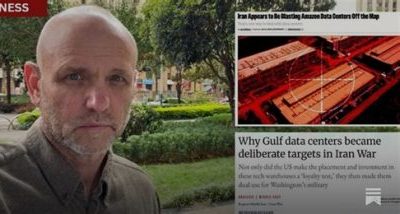
Iran spent $1 million to wipe out $30 billion in data center plans, and take down Amazon in the ME
or go to
Aletho News Archives – Video-Images
From the Archives
Clash of Civilization, Iran Part II
By Jamal Kanj – Intifada-Palestine.com – January 14, 2011
Israel’s survival kit is: perpetuate conflict, insecurity to rationalize collective hate and finally playing victim.
Devoid of conflict, Israel implodes internally; without hate, Zionism loses its justification; and playing eternal victim to continue blackmailing the West. Absence of this holy trinity, Israel ceases to exist. … continue
Blog Roll
 Aletho News
- Fuel Crisis Deepens: Pakistan Warns Tanker Attack in Red Sea Would Be an ‘Act of War’
- ‘Bucha massacre’ a false flag orchestrated by UK – Moscow
- China Rejects Outside Pressure on Trade Ties After New US Russia Sanctions Bill
- Houthis Keep Advancing as the Red Sea Crisis Deepens
- Iran spent $1 million to wipe out $30 billion in data center plans, and take down Amazon in the ME
- Zionist billionaire pressure to silence Macklemore sparks exodus from Ed Sheeran tour
- House Votes to End Iran War for Third Time
- North Korea Slams US Plan for ‘AUKUS 2.0’ with South Korea and Japan
- Prolonging US-Iran Conflict Not Meeting Interests of Int’l Community – China’s Wang Yi
- EU bans former Zelensky aide from parliament
- If Americans Knew
- AIPAC’s Network Has Already Spent $67.2 Million to Shape the Midterm Elections
- Jewish Supremacist Manufacturing a Civilizational Threat to License Bigotry
- US bans Palestinian president from speaking at the UN
- Israeli Forces Detain Journalist Alaa al-Rimawi amid Widespread West Bank Raids
- Even a pro-Israel Congress member has put a hold on 40,000 one-ton bombs to Israel
- As Gaza crumbles, Israel preps new ground invasion – Daily Update
- ‘We are not like everyone else’ laws that bind other nations do not apply to Israel, says Likud lawmaker
- Trump’s govt makes ‘treasonous’ claim of weapons shortages
- Palestinian-American Journalist Naqaa Hamed Imprisoned by Israeli Forces After Settlers Targeted Her
- U.S. Makes, Israel Takes: The Real Story of U.S.-Israeli Military Cooperation
- No Tricks Zone
- New Study: ‘Global Drought Shows No Detectable Recent Acceleration Under Climate Warming’
- Economic Masterminds: German Socialists Suggest Taxing Productivity Gains Stemming From Using AI
- The South China Sea Has Not Been Cooperating With The Climate Change Narrative
- Energy Crisis: Germany Enters Heating Season With Historically Low Gas Reserve Fill Levels
- New Study: The Antarctic Ice Sheet Gained Mass From 2020-2024 Due To Staggering Snow And Ice Accumulation
- Study: Ocean Heating Rates From Thousands Of Years Ago ‘Dwarf’ Modern Ocean Heating Rates
- Climate Extremists Target, Attack Large-Scale Power Grid Infrastructure In Germany!
- New Study: Antarctic Ice Melt Has Contributed Less Than 1 Centimeter To Sea Level Rise In The Last 30 Years
- Fear Of Debate: Alarmist German Climate Scientist Calls On Mainstream Media To Discredit Skeptic Voices
- End-Of-August Arctic Sea Ice Extent Hasn’t Fallen In 20 Years, Official Data Show!
 Aletho News