Pentagon quadruples troop levels in Syria to ‘stabilize’ liberated areas
RT | December 7, 2017
The US military has increased the number of troops in Syria from 500 to 2,000, the Pentagon says, adding that the “conditions-based” military presence is justified by the need to “stabilize” liberated areas.
The Pentagon has officially announced that there are now 2,000 troops in Syria – a fourfold increase from the previous figures given. “The United States will continue necessary counterterrorism and stabilization effort,” Pentagon spokesman Colonel Robert Manning said.
“The United States will sustain a conditions-based military presence in Syria to combat the threat of insurgent-led insurgency, prevent the resurgence of ISIS and to stabilize liberated areas.”
Manning claimed that the Iraqi Army and Syrian Democratic Forces (SDF) have liberated about 97 percent “of the people and land” previously controlled by Islamic State (IS, formerly ISIS) in Iraq and Syria respectively. He said the campaign to defeat IS is now in a new phase in these countries.
Coalition forces are still needed in the two countries, Manning said, adding that they will now focus on “train, advise and assist” missions. “As the terrorist group continues to lose territory, important work remains to ensure its lasting defeat.”
The US military has repeatedly refused to acknowledge the number of troops and “military advisers” it has fighting alongside anti-government rebel forces. Under the Obama administration, the Pentagon routinely announced foreign troop deployments, but the Trump administration stopped disclosing such information regarding Operation Inherent Resolve. The policy was reversed in the spring of 2017 in order to maintain the “element of surprise” against Islamic State in both Syria and Iraq.
Damascus views the US military engagement in Syria as illegitimate, as there was no official request for intervention from the government. Early in November, Syrian leader Bashar Assad said his government will deal with any “illegal invader force.” He added that the war in Syria will continue until there is a full “recovery of security and stability to all Syrian lands.”
Washington insists its military presence in Syria is lawful and justified by UN mandate. In mid-November, US Defense Secretary James Mattis claimed the United Nations sanctioned the US presence in Syria.
“You know, the UN said that… basically we can go after ISIS. And we’re there to take them out,” Mattis said. Moscow responded by saying the UN cannot greenlight a foreign invasion of Syria, as it is contrary to international law.
Media reports indicate that the US is not planning to leave any time soon. According to the Washington Post, the US wants to keep troops in Syria long after Islamic State is defeated to help the Western-backed SDF establish “new local governance” structures in order to prevent complete victory by the Syrian government and its ally, Iran.
Read more:
In Shocking, Viral Interview, Qatar Confesses Secrets Behind Syrian War
By Tyler Durden | Zero Hedge | October 28, 2017
A television interview of a top Qatari official confessing the truth behind the origins of the war in Syria is going viral across Arabic social media during the same week a leaked top secret NSA document was published which confirms that the armed opposition in Syria was under the direct command of foreign governments from the early years of the conflict.
And according to a well-known Syria analyst and economic adviser with close contacts in the Syrian government, the explosive interview constitutes a high level “public admission to collusion and coordination between four countries to destabilize an independent state, [including] possible support for Nusra/al-Qaeda.” Importantly, “this admission will help build case for what Damascus sees as an attack on its security & sovereignty. It will form basis for compensation claims.”

A 2013 London press conference: Qatari Prime Minister Sheikh Hamad bin Jassim bin Jabr Al Thani with U.S. Secretary of State John Kerry. A 2014 Hillary Clinton email confirmed Qatar as a state-sponsor of ISIS during that same time period.
As the war in Syria continues slowly winding down, it seems new source material comes out on an almost a weekly basis in the form of testimonials of top officials involved in destabilizing Syria, and even occasional leaked emails and documents which further detail covert regime change operations against the Assad government. Though much of this content serves to confirm what has already long been known by those who have never accepted the simplistic propaganda which has dominated mainstream media, details continue to fall in place, providing future historians with a clearer picture of the true nature of the war.
This process of clarity has been aided – as predicted – by the continued infighting among Gulf Cooperation Council (GCC) former allies Saudi Arabia and Qatar, with each side accusing the other of funding Islamic State and al-Qaeda terrorists (ironically, both true). Increasingly, the world watches as more dirty laundry is aired and the GCC implodes after years of nearly all the gulf monarchies funding jihadist movements in places like Syria, Iraq, and Libya.
The top Qatari official is no less than former Prime Minister Hamad bin Jassim bin Jaber al-Thani, who oversaw Syria operations on behalf of Qatar until 2013 (also as foreign minister), and is seen below with then-Secretary of State Hillary Clinton in this Jan. 2010 photo (as a reminder, Qatar’s 2022 World Cup Committee donated $500,000 to the Clinton Foundation in 2014).

In an interview with Qatari TV Wednesday, bin Jaber al-Thani revealed that his country, alongside Saudi Arabia, Turkey, and the United States, began shipping weapons to jihadists from the very moment events “first started” (in 2011).
Al-Thani even likened the covert operation to “hunting prey” – the prey being President Assad and his supporters – “prey” which he admits got away (as Assad is still in power; he used a Gulf Arabic dialect word, “al-sayda”, which implies hunting animals or prey for sport). Though Thani denied credible allegations of support for ISIS, the former prime minister’s words implied direct Gulf and US support for al-Qaeda in Syria (al-Nusra Front) from the earliest years of the war, and even said Qatar has “full documents” and records proving that the war was planned to effect regime change.
According to Zero Hedge’s translation, al-Thani said while acknowledging Gulf nations were arming jihadists in Syria with the approval and support of US and Turkey: “I don’t want to go into details but we have full documents about us taking charge [in Syria].” He claimed that both Saudi Arabia’s King Abdullah (who reigned until his death in 2015) and the United States placed Qatar in a lead role concerning covert operations to execute the proxy war.
The former prime minister’s comments, while very revealing, were intended as a defense and excuse of Qatar’s support for terrorism, and as a critique of the US and Saudi Arabia for essentially leaving Qatar “holding the bag” in terms of the war against Assad. Al-Thani explained that Qatar continued its financing of armed insurgents in Syria while other countries eventually wound down large-scale support, which is why he lashed out at the US and the Saudis, who initially “were with us in the same trench.”
In a previous US television interview which was vastly underreported, al-Thani told Charlie Rose when asked about allegations of Qatar’s support for terrorism that, “in Syria, everybody did mistakes, including your country.” And said that when the war began in Syria, “all of us worked through two operation rooms: one in Jordan and one in Turkey.”
Below is the key section of Wednesday’s interview, translated and subtitled by @Walid970721. Zero Hedge has reviewed and confirmed the translation, however, as the original rush translator has acknowledged, al-Thani doesn’t say “lady” but “prey” [“al-sayda”]- as in both Assad and Syrians were being hunted by the outside countries.
The partial English transcript is as follows:
“When the events first started in Syria I went to Saudi Arabia and met with King Abdullah. I did that on the instructions of his highness the prince, my father. He [Abdullah] said we are behind you. You go ahead with this plan and we will coordinate but you should be in charge. I won’t get into details but we have full documents and anything that was sent [to Syria] would go to Turkey and was in coordination with the US forces and everything was distributed via the Turks and the US forces. And us and everyone else was involved, the military people. There may have been mistakes and support was given to the wrong faction… Maybe there was a relationship with Nusra, its possible but I myself don’t know about this… we were fighting over the prey [“al-sayda”] and now the prey is gone and we are still fighting… and now Bashar is still there. You [US and Saudi Arabia] were with us in the same trench… I have no objection to one changing if he finds that he was wrong, but at least inform your partner… for example leave Bashar [al-Assad] or do this or that, but the situation that has been created now will never allow any progress in the GCC [Gulf Cooperation Council], or any progress on anything if we continue to openly fight.”
As is now well-known, the CIA was directly involved in leading regime change efforts in Syria with allied gulf partners, as leaked and declassified US intelligence memos confirm. The US government understood in real time that Gulf and West-supplied advanced weaponry was going to al-Qaeda and ISIS, despite official claims of arming so-called “moderate” rebels. For example, a leaked 2014 intelligence memo sent to Hillary Clinton acknowledged Qatari and Saudi support for ISIS.
The email stated in direct and unambiguous language that:
“the governments of Qatar and Saudi Arabia, which are providing clandestine financial and logistic support to ISIL and other radical Sunni groups in the region.”
Furthermore, one day before Prime Minister Thani’s interview, The Intercept released a new top-secret NSA document unearthed from leaked intelligence files provided by Edward Snowden which show in stunning clarity that the armed opposition in Syria was under the direct command of foreign governments from the early years of the war which has now claimed half a million lives.

The newly released NSA document confirms that a 2013 insurgent attack with advanced surface-to-surface rockets upon civilian areas of Damascus, including Damascus International Airport, was directly supplied and commanded by Saudi Arabia with full prior awareness of US intelligence. As the former Qatari prime minister now also confirms, both the Saudis and US government staffed “operations rooms” overseeing such heinous attacks during the time period of the 2013 Damascus airport attack.
No doubt there remains a massive trove of damning documentary evidence which will continue to trickle out in the coming months and years. At the very least, the continuing Qatari-Saudi diplomatic war will bear more fruit as each side builds a case against the other with charges of supporting terrorism. And as we can see from this latest Qatari TV interview, the United States itself will not be spared in this new open season of airing dirty laundry as old allies turn on each other.
US attempt to fuel Iraq-Iran rift backfires
By M K Bhadrakumar | Indian Punchline | October 26, 2017
The US project to create a rift between Iraq and Iran backfired just a couple of days of its launch from Riyadh on October 22 by US Secretary of State Rex Tillerson. Washington effectively sought out Saudi Arabia to project itself as counterweight to Iran in the Iraqi theatre, predicated on the presumption that Riyadh’s offer to extend funding to ‘rebuild’ post-ISIS Iraq will be found irresistible by Baghdad. Washington fancied that Iraqi Prime Minister Haider al-Abadi is looking for ways to push back at Tehran, as his dependency on Iran’s military support is diminishing with the defeat of ISIS.
Tillerson travelled to Riyadh over the weekend to be present as a special guest at the first inaugural meeting of the so-called Saudi Arabia-Iraq Coordination Council. Things seemed to go well and Tillerson’s remarks to the media exuded optimism. At a press conference in Riyadh, he said that the Saudi largesse will “strengthen Iraq as an independent and whole country… (and) this will be in some ways counter some of the unproductive influences of Iran inside of Iraq.” Tillerson then came to the point:
- Certainly, Iranian militias that are in Iraq, now that the fight against Daesh and ISIS is coming to a close, those militias need to go home. Any foreign fighters in Iraq need to go home and allow the Iraqi people to regain control of areas that had been overtaken by ISIS and Daesh that have now been liberated, allow the Iraqi people to rebuild their lives with the help of their neighbors. And I think this agreement that has been put in place between the Kingdom of Saudi Arabia and Iraq is a crucial element to assisting the Iraqi people to do that. (Transcript)
The reference was to the Shi’ite militia groups funded, trained and deployed by Iran’s Revolutionary Guards Corps, which literally bore the brunt of the fight against the ISIS in the recent years. Washington is particularly incensed over the lead role by the Shi’ite paramilitary groups in seizing Kirkuk recently from the Kurdish Peshmerga who are US allies. (See my blog Kirkuk bells also toll for US strategy in Syria.)
Evidently, Tillerson crossed the red line. The point is, these Shi’ite groups, collectively known as Popular Mobilisation Forces and several tens of thousands strong, are probably going to be designated as part of the Iraqi armed forces. Abadi’s office in Baghdad came out in no time with a stinging rebuke – “No party has the right to interfere in Iraqi matters” – and called the Shi’ite paramilitary groups “patriots.” The next day, when Tillerson showed up in Baghdad for a meeting with Abadi, the latter was fairly explicit. Abadi said the Popular Mobilisation Forces form “part of the Iraqi institutions” and they will be the “hope of country and the region.” (Reuters )
Later, in an interview with the American press, Abadi retorted: “We would like to work with you (US)… But please don’t bring your trouble inside Iraq. You can sort it anywhere else.” Abadi then began suggesting a US troop withdrawal from Iraq. He said that US air power won’t be needed anymore and Iraq’s requirements will be henceforth on intelligence sharing and help to train Iraqi forces. The way things are shaping up between Washington and Tehran, continued US military presence in Iraq may become problematic in a near future.
Meanwhile, having gambled on the independence referendum only to lose oil-rich Kirkuk, Iraqi Kurdish leader Massoud Barzani is suing for ceasefire and talks with Baghdad. The US is urging Abadi to respond to Barzani’s overture and engage with him in discussions. The Trump administration has secured strong Congressional support for its demands on Abadi. Signaling the seriousness of the demands, On Wednesday, House Speaker Paul Ryan, House Intelligence Committee Chairman Devin Nunes, House Foreign Affairs Committee Chairman Ed Royce, and House Armed Services Committee Chairman Mac Thornberry issued the following statement to pressure Baghdad:
- Ongoing clashes between forces aligned with the Iraqi government and Kurdistan Regional Government are undermining hard-fought gains in the fight against ISIS, and threatening to plunge Iraq into a new wave of sectarian violence. The bloodshed must stop immediately. We support a united Iraq under the federal government in Baghdad, and we support the Kurdistan Regional Government.
- To that end, we welcome today’s reports that the Kurds are offering to suspend results of their recent referendum in return for a ceasefire and negotiations with the central government. Baghdad should accept this offer and enter into meaningful discussions that address long-term Kurdish concerns about autonomy, share of the national budget, and oil revenues. Meanwhile, it is critical that the Iraqi government heed Secretary Tillerson’s concern about the role and activities of Iranian-backed Shia militias. We are very concerned about Iranian involvement in recent operations. These forces have been responsible for horrible abuses, including the deaths of Americans. They have no place in a peaceful, united, and stable Iraq.
But Abadi is parrying. He visited Ankara on Wednesday to consult President Recep Erdogan. (Rudaw ) The latest reports suggest that the Iraqi forces with the support of the Shi’ite forces might go for the jugular veins of the Iraqi Kurds. Baghdad will want to drive home the advantage that the Kurds are not cohesive and are split 3-ways with the PUK (which was led by late Talabani) inclined to cooperate with Baghdad and Tehran, thereby isolating Barzani who is reduced now increasingly as a US-Israeli proxy. (Turkey has also become hostile toward Barzani following his push for the Kurdish independence referndum.) The Russian news agency Sputnik reported today as ‘breaking news’ that Iraqi troops and Shi’ite militias had been pulling heavy artillery and tanks close to Peshmerga positions near Zummar and shelling their positions. (Sputnik ) If a flare-up ensues in coming days, the US will be in a tight spot, apart from the breakdown of ties between Washington and Baghdad.
The US’ problem, quintessentially, is that its intentions are suspect in all three key regional capitals confronting the Kurdish question – Ankara, Baghdad, Tehran. At a recent meeting with US ambassador Douglas Sliman, Iraqi Vice-President Nouri al-Maliki said with brutal frankness, “We will not allow the creation of a second Israel in northern Iraq.”
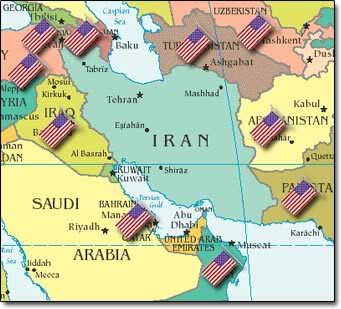 Last week’s events underscore three things. One, the US does not intend to end its military presence in Iraq (and Syria), although the pretext of the war against the ISIS is no longer there. Two, US is planning to turn Iraq into a major theatre of confrontation with Iran.
A US control of Iraq puts it in a position to pile pressure on Iran from different directions — interfering with Iranian supply routes to Syria and Lebanon; playing itself back to regain a role in the Syrian settlement; having a say in Iraq’s rising oil production and staging covert cross-border operations to destabilize the Iranian regime. Indeed, with the open-ended US military presence already in place in Afghanistan, the intention is to squash with a similar western neighbor under American tutelage.
Three, fundamentally, it becomes all too obvious that the US-Saudi alliance in regional politics is very much alive and kicking, and any reports to the contrary are greatly exaggerated. The US’ return to the centre stage in Iraq to challenge Iran’s regional influence will give much verve to the US alliance with Saudi Arabia.
Interestingly, the Saudi establishment daily Asharq Al-Awsat reported last week that the Pentagon plans to boost deployments to the Middle East specifically to counter Iran. The report cited General Joseph Votel, commander of the US Central Command, as saying, “The United States wants to help the Arab countries deal with Iranian threats. The Pentagon is working to achieve that desire and ensure its effective implementation. That includes the establishment of US military battalions sent as missions to the region and be designed specifically to provide advice and assistance.”
Hashd Commander: US Must Prepare to Leave Iraq after ISIL Defeat
Al-Manar | October 24, 2017
Leader of paramilitary force in Iraq, Assaeb Ahl Al-Haqq hit back at US Secretary of State remarks on Hashd Shaabi volunteer forces, saying Washington must prepare to withdraw its forces from the country following the defeat of ISIL Takfiri group.
Tweeting on his account on social media, Sheikh Qaiss Al-Khazali said: “To US Secretary we say: Your forces have to prepare to leave our country, Iraq, right after the pretext of ISIL presence is over.”
Al-Khazali was responding to Rex Tillerson, who on Monday called on Hashd fighters in Iraq to “go home” as the fight against the ISIL terrorist group was ending.
Assaeb Ahl Al-Haqq is one of the Hashd factions. The volunteer forces have a crucial role in defeating the Takfiri terrorists in Iraq.
Al-Khazali remarks come after Hadi Al-Ameri, leader of the Badr Organization, said that Tillerson is ‘persona non grata’, calling on Iraqi Prime Minister Haider Al-Abadi not to receive him.
US Mercenaries, Iraqi Highways and the Mystery of the Never-Ending ISIS Hordes
By Ulson Gunnar – New Eastern Outlook – 22.10.2017
While the US and European media provided little explanation as to how militants from the self-titled Islamic State (IS) managed to appear, expand and then fight for years against the combined military power of Iraq, Syria, Iran and Russia, it was abundantly clear to many analysts that the IS organization was not only receiving state sponsorship, but it was receiving reinforcements, weapons and supplies from far beyond Syria’s and Iraq’s borders.
Maps of the conflict stretching over the last several years show clear corridors used to reinforce IS positions, leading primarily from Turkey’s southern border and to a lesser extent, from Jordan’s borders.
However, another possible vector may be desert highways in Iraq’s western Anbar province where US military contractors are allegedly to “provide security” as well as build gas stations and rest areas. These highways contributed to the current conflict and still serve as a hotbed for state sponsored terrorism. Whether these US-controlled and improved highways pose a significant threat for a reorganized effort by the US and its regional allies to divide and destroy Iraq and Syria seems all but inevitable.
US Mercenaries “Guarding” Iraqi Highways
Al Monitor in an April 2017 article titled, “How Iraq is planning to secure key border road,” would claim:
Due to the imminent threats to the road, which is one of Iraq’s vital economic lines as it connects Basra in the south to Jordan in the west, Iraq commissioned an American company to secure and rebuild the road. The contract also included reconstructing bridges, 36 of which are destroyed.
The article would elaborate, stating:
A security source from the Iraqi intelligence service told Al-Monitor, “The American company will only secure the two roads reaching Terbil from Basra and Baghdad and will build gas stations and rest areas, in addition to building bridges and cordoning off the roads with barbed wires, as per distances that would be determined later.”
Al Monitor would claim that Iraq’s popular mobilization units found themselves unable to oppose the move made by the central government in Baghdad. It would also note that Iraq’s Hezbollah Brigades claimed, in opposition to the plan, that:
The road connecting Iraq and Jordan is a strategic gateway allowing the US and forces seeking to control it to tighten their grip on Anbar and the potential Sunni region as per a US-Gulf plan.
One could imagine future potential scenarios including these rebuilt roads, complete with gas stations and rest areas, leading from Jordan and Saudi Arabia and providing an efficient route for future wars waged either directly or by proxy against Iraq. The infiltration of fighters and supplies, for example, would be greatly expedited should the US and its partners decide to shift their efforts along this new axis.
Beyond this more obvious threat comes the fact that US-Jordanian-Saudi influence would be greatly enhanced with stronger logistical lines leading into Iraq’s western regions.
How the US Might Use its New Highways
The Islamic State’s de facto invasion of Syria and Iraq was a more massive and dramatic replay of an earlier surge of foreign militants into the region, following the 2003 US invasion of Iraq.
It would be America’s own Combating Terrorism Center at the West Point United States Military Academy in two reports published in 2007 and 2008 (.pdf) respectively that would describe in detail the networks some of Washington’s closest regional allies used to flood post-war Iraq with foreign fighters.
While these fighters indeed attacked US soldiers, what they also did was disrupt a relatively unified resistance movement before plunging Sunni and Shia’a militias into a deadly and costly “civil war.”
Fighters, weapons and cash infiltrated into Iraq from a network that fed fighters from across the Middle East and North Africa (MENA) region first into Turkey, through Syria via the help of many of the senior leadership of anti-government militant groups now fighting Damascus, and then into Iraq primarily where IS has been based and where the remnants of its militancy remains.
During the more recent conflict, these same networks were utilized successfully until Russia’s intervention in 2015 when these terrorist “ratlines” came under fire by Russian warplanes. The cause and effect of attacking these terrorist ratlines was visible on conflict maps, causing an almost immediate shrinking of IS-occupied territory and a corresponding atrophy of IS fighting capacity.
The Jordanian-Iraqi and Saudi-Iraqi border crossings and the highways running through them represent an alternative means to reorient Washington’s proxy conflict either now or in the near future.
US Already Planning to Weaponize the Project
Raising further alarm bells should be the New York Times’ May 2017 article, “U.S. Sees a Vital Iraqi Toll Road, but Iran Sees a Threat,” which helps frame the very sort of conflict US policymakers are seeking with this move and the reaction it has already provoked among America’s primary targets in the region, particularly Iran.
The article would claim:
As part of an American effort to promote economic development in Iraq and secure influence in the country after the fight against the Islamic State subsides, the American government has helped broker a deal between Iraq and Olive Group, a private security company, to establish and secure the country’s first toll highway.
This being Iraq, though, the project has quickly been caught up in geopolitics, sectarianism and tensions between the United States and Iran, which seems determined to sabotage the highway project as an unacceptable projection of American influence right on its doorstep.
The New York Times also helps prepare a narrative so that any attack on American contractors along the highway could easily be blamed on militias linked to Iran, or even on Iran itself. The article states:
Already, Iraqi militia leaders linked to Iran, whose statements are seen as reflective of the views of Tehran, have pledged to resume attacks against American forces if the Trump administration decides to leave troops behind to train the Iraqi military and mount counterterrorism missions, as appears likely. And the militia leaders have specifically singled out the highway project for criticism.
The New York Times ultimately admits that the US is attempting to control the highway specifically to continue its increasingly dangerous proxy war against Tehran. The article also admits that the highways will be entirely controlled by US contractors, including the collection of tolls of which only a portion would be handed over to the Iraqi government. The article also claims other highways, including one leading directly from Saudi Arabia, are being considered.
In essence, these would be terrorist ratlines directly controlled by the United States, leading directly out of the very epicenter of state sponsored terrorism in the region, Saudi Arabia, other Persian Gulf states and to a lesser but still significant extent, Jordan.
They would be terrorist ratlines difficult for Iraq’s central government or its allies to attack without providing a much welcomed pretext for Washington to directly retaliate against the faction of its choosing.
While the New York Times and US politicians and businessmen involved in the highway deal attempt to portray it as a means of providing peace, stability and economic prosperity for Iraq, a quick audit of US policy in the Middle East should ground those lofty promises in a much more frightening reality.
The scope of this project is nothing short of both a US occupation and a US-administered “safe zone” in which militant groups backed by the US and its regional partners can safely be harbored, and from which they can strike out against Iraq and its neighbors with the full protection of US military force.
Some US policymakers may feel that their failing proxy war against Syria involved a cart-before-the-horse policy in which the creation of US-administered and protected safe zones turned out to be more difficult to implement than initially anticipated, and that in the future, such zones should be created before another round of proxy-hostilities.
No matter what, the US presence and the more-than-certain intentions that underpin it will ensure not peace, stability or prosperity, but another decade of division and strife both in Iraq and beyond. Confounding this project, and those like it, and replacing them with actual projects to fulfill the promises of progress the US is merely hiding behind, will be key to truly moving Iraq and the region forward.
Netanyahu lobbies world powers to support Iraqi Kurds’ secession bid
Press TV – October 20, 2017
Israeli Prime Minister Benjamin Netanyahu is lobbying world powers to support the independence of the semi-autonomous Kurdistan region from the rest of the Iraqi territory, as Kurdish Peshmerga forces are losing ground to Iraqi army forces in the country’s oil-rich northern province of Kirkuk.
Israeli officials, requesting anonymity, said Netanyahu raised the Kurdish plans for independence with German Chancellor Angela Merkel last week, and with Russian President Vladimir Putin on Wednesday.
The 67-year-old Chairman of the Likud party also made a reference to the issue in his contacts with French authorities.
An Israeli official, who declined to be named, stated that the Tel Aviv regime has security interests in Kurdistan.
“This (territory) is a foothold. It’s a strategic place. It would be best if someone gave them weaponry, and whatever else, which we cannot give, obviously,” the official said without providing further detail.
Israel has maintained military, intelligence and business ties with Iraqi Kurds since 1960s.
“The issue at present is … to prevent an attack on the Kurds, extermination of the Kurds and any harm to them, their autonomy and region, something that Turkey and Iran and … other powers in Iraq and part of the Iraqi government want,” Israeli Intelligence Minister, Israel Katz, alleged in an interview with Tel Aviv radio station 102 FM on Friday.
“The prime minister is certainly engaging the United States, Russia, Germany and France to stop the Kurds from being harmed,” Katz said.
On Friday, Iraqi government forces wrested control of a strategic sub-district of Kirkuk province following clashes with Peshmerga forces.
“Iraqi Federal Police and Counter-Terrorism Service (CTS) forces, along with fighters from Popular Mobilization Units – commonly known by the name Hashd al-Sha’abi, have secured Kirkuk’s northern Altun Kupri sub-district,” the Iraqi Defense Ministry said in a statement.
Iraqi Army Captain Jabbar Hasan said Iraqi federal forces had given Peshmerga forces 24 hours to vacate their strongholds in Altunkopru, and withdraw to areas controlled by the Kurdistan Regional Government (KRG).
Peshmerga forces, however, had rejected the ultimatum, Hasan said.
The referendum on secession of the Kurdistan region was held on September 25 despite strong opposition from the central government in Baghdad, the international community, and Iraq’s neighboring countries, especially Turkey and Iran.
Following the vote, Baghdad imposed a ban on direct international flights to the Kurdish region and called for a halt to its independent crude oil sales.
On October 12, an Iraqi government spokesman said Baghdad had set a series of conditions that the KRG needed to meet before any talks on the resolution of the referendum crisis could start.
“The KRG must first commit to Iraq’s unity. The local authorities in the [Kurdistan] region… must accept the sovereign authority of the federal government on… oil exports, [as well as] security and border protection, including land and air entry points,” the unnamed Iraqi official added.
Iraqi Prime Minister Haider al-Abadi has already demanded the annulment of the referendum.
During a recent press conference in Paris, Abadi said his government did not seek confrontation with Iraqi Kurds, but reiterated Baghdad’s position that the vote was illegal and that problems should be solved within the framework of Iraq’s constitution.
US State Dept cautions Iraqi govt against troop advances in Kurdish territory
RT | October 20, 2017
The US State Department is advising Iraq’s federal authority to limit its military activity in the country’s Kurdish northern region, as it also calls for “all parties to cease all violence” in the wake of violence in the town of Altun Kupri.
On Friday, State Department spokeswoman Heather Nauert urged the Baghdad government to only make troop movements that were “coordinated with the Kurdistan Regional Government.”
This marks the most specific statement out of the State Department on the situation since Iraq regained control over the provincial capital Kirkuk on Monday, following a popular vote of 92 percent in favor of an independent Kurdistan late last month. Previously, the State Department has stuck to general calls for calm on all sides.
Nauert’s statement also declared that the disputed Kurdish areas remained disputed, despite Iraqi authorities crossing into the region.
“The reassertion of federal authority over disputed areas in no way changes their status – they remain disputed until their status is resolved in accordance with the Iraqi constitution,” the statement read.
According to security sources cited by Reuters, Iraqi troops gained control of the last district in Kirkuk on Friday, taking the oil-producing province from Kurdish Peshmerga fighters after three hours of hostilities.
Secretary of State Rex Tillerson has called the September 25 vote for Kurdish independence illegitimate, and said US policy rejects such unilateral moves.
This week, Kurdish Peshmerga fighters lost large swathes of territory held since 2014 or later, which had been gained during years of war against Islamic State fighters.
Featured Video
Iran spent $1 million to wipe out $30 billion in data center plans, and take down Amazon in the ME
or go to
Aletho News Archives – Video-Images
From the Archives
Clash of Civilization, Iran Part II
By Jamal Kanj – Intifada-Palestine.com – January 14, 2011
Israel’s survival kit is: perpetuate conflict, insecurity to rationalize collective hate and finally playing victim.
Devoid of conflict, Israel implodes internally; without hate, Zionism loses its justification; and playing eternal victim to continue blackmailing the West. Absence of this holy trinity, Israel ceases to exist. … continue
Blog Roll
 Aletho News
- Report: Saudi Arabia seeks allies’ assistance as missiles deplete amid war on Yemen
- Fuel Crisis Deepens: Pakistan Warns Tanker Attack in Red Sea Would Be an ‘Act of War’
- ‘Bucha massacre’ a false flag orchestrated by UK – Moscow
- China Rejects Outside Pressure on Trade Ties After New US Russia Sanctions Bill
- Houthis Keep Advancing as the Red Sea Crisis Deepens
- Iran spent $1 million to wipe out $30 billion in data center plans, and take down Amazon in the ME
- Zionist billionaire pressure to silence Macklemore sparks exodus from Ed Sheeran tour
- House Votes to End Iran War for Third Time
- North Korea Slams US Plan for ‘AUKUS 2.0’ with South Korea and Japan
- Prolonging US-Iran Conflict Not Meeting Interests of Int’l Community – China’s Wang Yi
- If Americans Knew
- Biden’s Genocide Accomplices Targeted by New Accountability Campaign
- AIPAC’s Network Has Already Spent $67.2 Million to Shape the Midterm Elections
- Jewish Supremacist Manufacturing a Civilizational Threat to License Bigotry
- US bans Palestinian president from speaking at the UN
- Israeli Forces Detain Journalist Alaa al-Rimawi amid Widespread West Bank Raids
- Even a pro-Israel Congress member has put a hold on 40,000 one-ton bombs to Israel
- As Gaza crumbles, Israel preps new ground invasion – Daily Update
- ‘We are not like everyone else’ laws that bind other nations do not apply to Israel, says Likud lawmaker
- Trump’s govt makes ‘treasonous’ claim of weapons shortages
- Palestinian-American Journalist Naqaa Hamed Imprisoned by Israeli Forces After Settlers Targeted Her
- No Tricks Zone
- New Study: ‘Global Drought Shows No Detectable Recent Acceleration Under Climate Warming’
- Economic Masterminds: German Socialists Suggest Taxing Productivity Gains Stemming From Using AI
- The South China Sea Has Not Been Cooperating With The Climate Change Narrative
- Energy Crisis: Germany Enters Heating Season With Historically Low Gas Reserve Fill Levels
- New Study: The Antarctic Ice Sheet Gained Mass From 2020-2024 Due To Staggering Snow And Ice Accumulation
- Study: Ocean Heating Rates From Thousands Of Years Ago ‘Dwarf’ Modern Ocean Heating Rates
- Climate Extremists Target, Attack Large-Scale Power Grid Infrastructure In Germany!
- New Study: Antarctic Ice Melt Has Contributed Less Than 1 Centimeter To Sea Level Rise In The Last 30 Years
- Fear Of Debate: Alarmist German Climate Scientist Calls On Mainstream Media To Discredit Skeptic Voices
- End-Of-August Arctic Sea Ice Extent Hasn’t Fallen In 20 Years, Official Data Show!
 Aletho News