Good Deaths in Mosul, Bad Deaths in Aleppo
By Robert Parry | Consortium News | October 17, 2016
Note how differently The New York Times prepares the American public for civilian casualties from the new U.S.-backed Iraqi government assault on the city of Mosul to free it from the Islamic State, compared to the unrelenting condemnation of the Russian-backed Syrian government assault on neighborhoods of east Aleppo held by Al Qaeda.
In the case of Mosul, the million-plus residents are not portrayed as likely victims of American airstrikes and Iraqi government ground assaults, though surely many will die during the offensive. Instead, the civilians are said to be eagerly awaiting liberation from the Islamic State terrorists and their head-chopping brutality.
“Mosul’s residents are hoarding food and furtively scrawling resistance slogans on walls,” writes Times’ veteran war correspondent Rod Nordland about this week’s launch of the U.S.-backed government offensive. “Those forces will fight to enter a city where for weeks the harsh authoritarian rule of the Islamic State … has sought to crack down on a population eager to either escape or rebel, according to interviews with roughly three dozen people from Mosul. …
“Just getting out of Mosul had become difficult and dangerous: Those who were caught faced million-dinar fines, unless they were former members of the Iraqi Army or police, in which case the punishment was beheading. … Graffiti and other displays of dissidence against the Islamic State were more common in recent weeks, as were executions when the vandals were caught.”
The Times article continues: “Mosul residents chafed under social codes banning smoking and calling for splashing acid on body tattoos, summary executions of perceived opponents, whippings of those who missed prayers or trimmed their beards, and destroying ‘un-Islamic’ historical monuments.”
So, the message is clear: if the inevitable happens and the U.S.-backed offensive kills a number of Mosul’s civilians, including children, The New York Times’ readers have been hardened to accept this “collateral damage” as necessary to free the city from blood-thirsty extremists. The fight to crush these crazies is worth it, even if there are significant numbers of civilians killed in the “cross-fire.”
And we’ve seen similar mainstream media treatment of other U.S.-organized assaults on urban areas, such as the devastation of the Iraqi city, Fallujah, in 2004 when U.S. Marines routed Iraqi insurgents from the city while leveling or severely damaging most of the city’s buildings and killing hundreds of civilians. But those victims were portrayed in the Western press as “human shields,” shifting the blame for their deaths onto the Iraqi insurgents.
Despite the fact that U.S. forces invaded Iraq in defiance of international law – and thus all the thousands of civilian deaths across Iraq from the “shock and awe” U.S. firepower should be considered war crimes – there was virtually no such analysis allowed into the pages of The New York Times or the other mainstream U.S. media. Such talk was forced to the political fringes, as it continues to be today. War-crimes tribunals are only for the other guys.
Lust to Kill Children
By contrast, the Times routinely portrays the battle for east Aleppo as simply a case of barbaric Russian and Syrian leaders bombing innocent neighborhoods with no regard for the human cost, operating out of an apparent lust to kill children.
Rather than focusing on Al Qaeda’s harsh rule of east Aleppo, the Times told its readers in late September how to perceive the Russian-Syrian offensive to drive out Al Qaeda and its allies. A Sept. 25 article by Anne Barnard and Somini Sengupta, entitled “Syria and Russia Appear Ready to Scorch Aleppo,” began:
“Make life intolerable and death likely. Open an escape route, or offer a deal to those who leave or surrender. Let people trickle out. Kill whoever stays. Repeat until a deserted cityscape is yours. It is a strategy that both the Syrian government and its Russian allies have long embraced to subdue Syrian rebels, largely by crushing the civilian populations that support them.
“But in the past few days, as hopes for a revived cease-fire have disintegrated at the United Nations, the Syrians and Russians seem to be mobilizing to apply this kill-all-who-resist strategy to the most ambitious target yet: the rebel-held sections of the divided metropolis of Aleppo.”
Again, note how the “rebels” are portrayed as local heroes, rather than a collection of jihadists from both inside and outside Syria fighting under the operational command of Al Qaeda’s Nusra Front, which recently underwent a name change to the Syria Conquest Front. But the name change and the pretense about “moderate” rebels are just more deceptions.
As journalist/historian Gareth Porter has written:
“Information from a wide range of sources, including some of those the United States has been explicitly supporting, makes it clear that every armed anti-Assad organization unit in those provinces [of Idlib and Aleppo] is engaged in a military structure controlled by Nusra militants. All of these rebel groups fight alongside the Nusra Front and coordinate their military activities with it. …
“At least since 2014 the Obama administration has armed a number of Syrian rebel groups even though it knew the groups were coordinating closely with the Nusra Front, which was simultaneously getting arms from Turkey and Qatar. The strategy called for supplying TOW anti-tank missiles to the ‘Syrian Revolutionaries Front’ (SRF) as the core of a client Syrian army that would be independent of the Nusra Front.
“However, when a combined force of Nusra and non-jihadist brigades including the SRF captured the Syrian army base at Wadi al-Deif in December 2014, the truth began to emerge. The SRF and other groups to which the United States had supplied TOW missiles had fought under Nusra’s command to capture the base.”
Arming Al Qaeda
This reality – the fact that the U.S. government is indirectly supplying sophisticated weaponry to Al Qaeda – is rarely mentioned in the mainstream U.S. news media, though one might think it would make for a newsworthy story. But it would undercut the desired propaganda narrative of “good guy” rebels fighting “bad guy” government backed by “ultra-bad guy” Russians.
What if Americans understood that their tax money and U.S. weaponry were going to aid the terrorist group that perpetrated the 9/11 attacks? What if they understood the larger historical context that Washington helped midwife the modern jihadist movement – and Al Qaeda – through the U.S./Saudi support for the Afghan mujahedeen in the 1980s?
And what if Americans understood that Washington’s supposed regional “allies,” including Saudi Arabia, Qatar, Turkey and Israel, have sided with Al Qaeda in Syria because of their intense hatred of Shiite-ruled Iran, an ally of Syria’s secular government?
These Al Qaeda sympathies have been known for several years but never get reported in the mainstream U.S. press. In September 2013, Israel’s Ambassador to the United States Michael Oren, then a close adviser to Israeli Prime Minister Benjamin Netanyahu, told the Jerusalem Post that Israel favored Syria’s Sunni extremists over President Bashar al-Assad.
“The greatest danger to Israel is by the strategic arc that extends from Tehran, to Damascus to Beirut. And we saw the Assad regime as the keystone in that arc,” Oren told the Jerusalem Post in an interview. “We always wanted Bashar Assad to go, we always preferred the bad guys who weren’t backed by Iran to the bad guys who were backed by Iran.” He said this was the case even if the “bad guys” were affiliated with Al Qaeda.
And, in June 2014, speaking as a former ambassador at an Aspen Institute conference, Oren expanded on his position, saying Israel would even prefer a victory by the brutal Islamic State over continuation of the Iranian-backed Assad in Syria. “From Israel’s perspective, if there’s got to be an evil that’s got to prevail, let the Sunni evil prevail,” Oren said.
But such cynical – and dangerous – realpolitik is kept from the American people. Instead, the Syrian conflict is presented as all about the children.
There is also little said about how Al Qaeda’s Nusra Front and its allied jihadists keep the civilian population in east Aleppo essentially as “human shields.” When “humanitarian corridors” have been opened to allow civilians to escape, they had been fired on by the jihadists determined to keep as many people under their control as possible.
Propaganda Fodder
By forcing the civilians to stay, Al Qaeda and its allies can exploit the injuries and deaths of civilians, especially the children, for propaganda advantages.
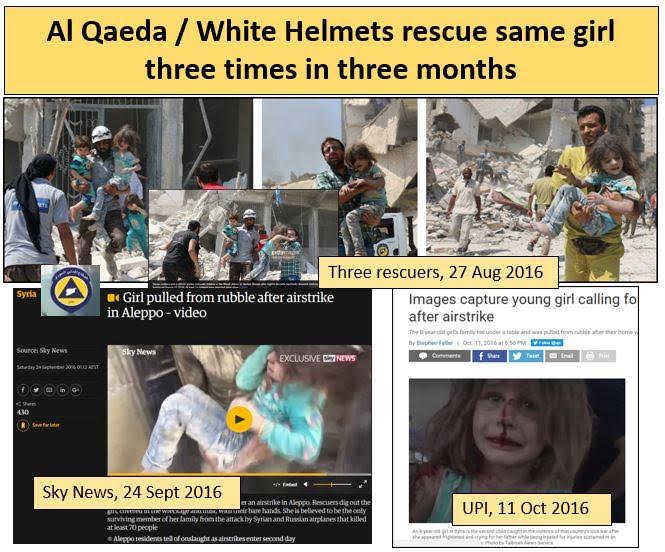
Going along with Al Qaeda’s propaganda strategy, the Times and other mainstream U.S. news outlets have kept the focus on the children. A Times dispatch on Sept. 27 begins:
“They cannot play, sleep or attend school. Increasingly, they cannot eat. Injury or illness could be fatal. Many just huddle with their parents in windowless underground shelters — which offer no protection from the powerful bombs that have turned east Aleppo into a kill zone.
“Among the roughly 250,000 people trapped in the insurgent redoubt of the divided northern Syrian city are 100,000 children, the most vulnerable victims of intensified bombings by Syrian forces and their Russian allies. Though the world is jolted periodically by the suffering of children in the Syria conflict — the photographs of Alan Kurdi’s drowned body and Omran Daqneesh’s bloodied face are prime examples — dead and traumatized children are increasingly common.”
This propagandistic narrative has bled into the U.S. presidential campaign with Martha Raddatz, a moderator of the second presidential debate, incorporating much of the evil-Russians theme into a question that went so far as to liken the human suffering in Aleppo to the Holocaust, the Nazi extermination campaign against Jews and other minorities.
That prompted former Secretary of State Hillary Clinton to repeat her call for an expanded U.S. military intervention in Syria, including a “no-fly zone,” which U.S. military commanders say would require a massive operation that would kill many Syrians, both soldiers and civilians, to eliminate Syria’s sophisticated air-defense systems and its air force.
Based on the recent Wikileaks publication of Clinton’s speeches to investment bankers and other special interests, we also know that she recognizes the high human cost from this strategy. In one June 2013 speech, she said, “To have a no-fly zone you have to take out all of the air defense, many of which are located in populated areas. So our missiles, even if they are standoff missiles so we’re not putting our pilots at risk — you’re going to kill a lot of Syrians. So all of a sudden this intervention that people talk about so glibly becomes an American and NATO involvement where you take a lot of civilians.”
Yet, during the campaign, Clinton has spoken glibly about her own proposal to impose a “no-fly zone” over Syria, which has become even more dangerous since 2015 when the Russians agreed to directly assist the Syrian government in fighting Al Qaeda and the Islamic State.
Also, left unsaid about such a U.S. intervention is that it could open the way for Al Qaeda and/or its spinoff Islamic State to defeat the Syrian army and gain control of Damascus, creating the potential for even a worse bloodbath against Christians, Shiites, Alawites, secular Sunnis and other “heretics.” Not to mention the fact that a U.S.-imposed “no-fly zone” would be a clear violation of international law.
Over the next few weeks, we are sure hear much about the Islamic State using the people of Mosul as “human shields” and thus excusing U.S. bombs when they strike civilians targets and kill children. It will all be the terrorists’ fault, except that an opposite set of “journalistic” rules will apply to Aleppo.
United States Must Answer for War Crimes in the Middle East
By Alexander KUZNETSOV | Strategic Culture Foundation | 15.10.2016
The West is feverishly seeking someone to blame for the catastrophic situation in the Middle East. Following on from John Kerry, French Foreign Minister Jean-Marc Ayrault has announced his intention to request that the International Criminal Court investigate Russian «war crimes» in Syria. Hillary Clinton, a contender for the post of US president, is also known for her attempts to put Russia in the dock. During the second presidential TV debate with Donald Trump on 9 October, she stated she supported efforts to probe «war crimes committed by the Syrians and the Russians and try to hold them accountable».
So do we need to clarify, once again, who is to blame? Let’s try.
America’s ‘Greater Middle East’ strategy, which involves violently redrawing the political map of a vast region, has destroyed the states of Syria, Libya, Iraq and Yemen, and has led to an unprecedented surge in terrorism, a tremendous loss of human life, and a large influx of refugees to Europe.
But America does not want to take the blame for what it has done.
Ahead of the change of administration in America, US legislators have been trying to make Saudi Arabia primarily responsible for the spread of terrorism. On 28 September, the US Senate and the House of Representatives passed the Justice Against Sponsors of Terrorism Act (JASTA), which entitles the relatives of US citizens killed in the 9/11 attacks to file lawsuits against Saudi Arabia and receive compensation.
Five days later, on 3 October, an article appeared in the Arab language newspaper Rai Al-Youm (published in London), written by its editor-in-chief Abdel Bari Atwan, that sheds light on which way the Arab world is leaning on the issue of who’s to blame.
A few words about the article’s author. Abdel Bari Atwan is the most prominent of today’s Arab journalists. The son of a refugee from Gaza, he was involved in the struggles of the Palestine Liberation Organisation (PLO) for a long time and was close to Yasser Arafat until they parted ways in 1993, when he disagreed with the hasty conclusion of peace with Israel. In the 1990s, he opposed UN sanctions against Iraq; not in defence of Saddam Hussein, however, but in defence of the rights and interests of the Iraqi people. In recent years, Atwan has written a great deal on the importance of establishing friendly relations between Sunni Arab states and Shi’ite Iran.
In his article, entitled «US law firms sharpening their knives for Saudi Arabia», Abdel Bari Atwan suggests how the Saudi authorities can oppose American blackmail. Here are his recommendations to Riyadh.
– Stop the senseless and bloody war in Yemen.
– Wind down its support of jihadist organisations in Syria.
– Take steps to normalise relations with Iran and Iraq.
– Seriously address the creation of an Arab lobby in the US (a pressing issue, since the Israel lobby in America is multilayered, works closely with the media and funds major research centres, while the Saudi lobbying effort is limited to banal bribery).
– Withdraw most of Saudi Arabia’s assets and investments from the US as soon as possible.
– Suspend all negotiations with Washington on an oil price agreement.
– Adopt measures allowing oil from the Persian gulf to be quoted in currencies other than US dollars (i.e. euro, yuan and roubles).
– File countersuits against the US through Muslim human rights organisations for war crimes committed in the Middle East between 2003 and the present day.
Abdel Bari Atwan says it is unlikely that the Saudi authorities will listen to him, but it seems as if the initiative has already struck a chord in other Arab countries. A group of Iraqi parliamentarians headed by Najeh al-Mizan has put forward a bill allowing Iraqi citizens to demand compensation from the US government for war crimes committed during the years of occupation (2003-2011) not just by the regular American army, but also contract soldiers from private military companies and ‘death squads’ set up using CIA money.
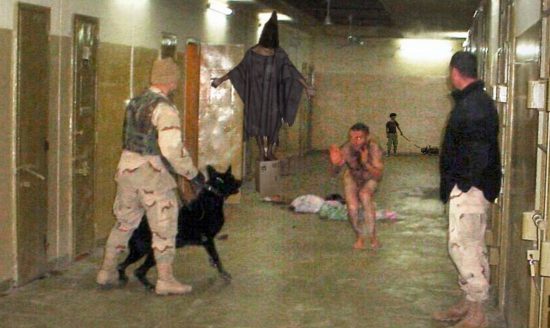
The outcome of America’s ‘presence’ in Iraq (or rather ‘the American genocide’) is truly horrifying. Even according to official (underestimated) data from the John Hopkins Institute, Americans and their accomplices killed 250,000 people (civilians) in Iraq during the occupation. According to Professor Juan Cole from the University of Michigan, this figure (direct losses) is as much as 450,000 people. Added to the victims of US sanctions in the 1990s, the number of deaths is close to one million. Most of these were children. Nobody can accuse US academic Juan Cole of incompetence or lobbying – he is a world-renowned expert on the modern Middle East and South Asia, a specialist in the history of Iran and Arab countries, and the author of 14 academic monographs.
But that is only the direct losses. There is also the destruction of Iraq’s state institutions and its law enforcement, health and education systems as a result of the American occupation, and the disintegration of relations between ethnicities and faiths.
The repercussions of the ‘Iraqi holocaust’ carried out by the Americans will be felt for many years to come. Here are some figures from the Australian scientist Dr. Gideon Polya. During the years of the crisis, there were 7.7 million refugees in Iraq. Of these, 5 million were internally displaced persons and 2.7 million fled the country. These included the cream of Iraqi society: doctors, teachers, engineers, university professors and businessmen. During the first few years of the occupation, 2,200 doctors and nursers were killed in Iraq. As a consequence of America’s use of bombs with low-enriched uranium, the number of cancer patients in the country increased from 40 per 100,000 people (1990) to 1,500 per 100,000 people (2005). And as a result of the actions of the occupation forces and sectarian fighting, there are currently three million widows and five million orphans in the country. 1.5 million Iraqi children are undernourished.
The world has not forgotten about the war crimes committed by America in the Middle East. Sooner or later, the US will have to answer for these crimes, no matter what Hillary Clinton says.
Making Al-Qaeda propaganda for Pentagon: Ex-PR worker describes secret campaign to RT
RT | October 4, 2016
A former employee of the UK PR firm that was hired by the Pentagon to create fake terrorist videos in Iraq told RT that he arrived thinking he would be working with media agencies, but ended up creating materials for a secret propaganda campaign instead.
Bell Pottinger’s staff was stationed inside a highly secured US military and intelligence HQ at Camp Victory in Baghdad.
“The arrival there [in Camp Victory in Iraq] was quite a shock… very very, I guess, distressing, really… You just felt you as if you didn’t know what was going to happen,” Martin Wells, a former employee of Bell Pottinger who worked for the US military in Iraq from 2006 to 2008, told RT.
The news that the Pentagon had paid Bell Pottinger over half a billion dollars to create fake terrorist videos in Iraq hit the headlines on Sunday when it was divulged by the Bureau of Investigative Journalism, which had received the information from Wells.
Wells says that he was initially told that he would be working on news.
“As it transpired, it was news, but not news as I expected. I expected it to be doing stuff for news agencies such as yourselves and Reuters. And just providing footage for them,” he said.
However, the reality turned out to be quite different from what the video editor had anticipated. Wells said that when he arrived at his workplace, he was introduced to the American intelligence staff there.
“I still at that point had no idea what I was doing, but I knew as soon as I walked through that door I certainly wasn’t doing news… Then, later as I went through… and worked out what I was actually doing, it transpired that it was essentially… a form of propaganda.”
The media was set completely abuzz when it was revealed that the Pentagon had paid Bell Pottinger $540 million for contracts from 2007 to 2011, with another contract for $120 million signed in 2006. The firm ended its work with the Pentagon in 2011.
Bell Pottinger is known for serving an array of controversial clients, including the Saudi government and Chilean dictator Augusto Pinochet’s foundation.
The firm reported to the CIA, the National Security Council, and the Pentagon on the project, with a mandate to portray Al-Qaeda in a negative light and track suspected sympathizers. Critics claim, however, that the videos may have actually promoted the terrorists’ agenda instead.
The Bell Pottinger operation, which began soon after the US invasion of Iraq, was tasked with promoting “democratic elections” for the administration before moving on to more lucrative psychological and information operations.
The firm created television ads showing Al-Qaeda in a negative light, as well as content which looked as though it had come from “Arabic TV.” The videos were created to play on Real Player, which needs an internet connection to run. The CDs were embedded with a code linked to Google Analytics that allowed the military to track the IP addresses the videos were played on.
They would also craft scripts for Arabic soap operas in which characters would reject terrorism with favorable consequences. The firm also created fake Al-Qaeda propaganda videos, which were then planted by the military in homes that they raided.
“In terms of the [fake Al-Qaeda] VCDs, I was the only one, who while I was there, cut those. Nobody else was tasked with those because I was running the department. The footage was also given to us, and it was genuine Al-Qaeda footage that they’d shot, and we then repurposed this for our footage to put on the VCDs and then went out and dropped them,” he explained.
“Most of the stuff we did went out on local news, on national news, and would be broadcast in different countries in the region. But the VCDs were targeted at Al-Qaeda themselves. That was used by marines – left of raids amongst a bunch of VCDs people had been using anyway. If you watched that when it opened up, it was on a player that was linked to an analytical site, so wherever in the world you watched it, it could be tracked. So you’d know where it was played, and the IP address would flash up, so you’d basically know who had watched it,” he said.
US-led air raid kills 20 Iraqi pro-government fighters
Press TV – October 5, 2016
At least 20 Iraqi pro-government fighters have been killed when the US-led coalition targeted their position near the militant-held northern city of Mosul, media reports say.
A local source, speaking on condition of anonymity, said the US-led military aircraft struck a building in the Kharaeb village of the al-Qayyarah region, located approximately 300 kilometers north of the capital, Baghdad, on Wednesday morning, leaving 20 Iraqi tribal fighters dead and five others injured, Arabic-language Shafaq news agency reported.
The source added that the fighters were members of a clan led by a tribal elder identified as Sheikh Nazhan Lahibi.
The pro-government forces had reportedly gathered at the site when the aerial attack took place.
Last December, over 20 Iraqi soldiers were killed and 30 injured in an air strike carried out by the US military.
Head of the Iraqi Parliament’s Security and Defense Committee, Hakim al-Zamili, said the incident took place near the town of al-Naimiya in the western province of Anbar after Iraqi government forces had liberated “a strategically important area” from Takfiri Daesh militants.
The United States and some its allies have been carrying out air strikes in Iraq since June 2014 allegedly targeting Daesh terrorists in the northern and western parts of the conflict-plagued Arab country.
Gruesome violence has beleaguered the northern and western parts of Iraq ever since Daesh extremists mounted an offensive there more than two years ago, and took control of portions of Iraqi territory.
Iraqi army soldiers and fighters from allied Popular Mobilization Units are trying to win back militant-held regions in joint operations.
America’s Worldwide Impunity
By Robert Parry | Consortium News | September 19, 2016
After several years of arming and supporting Syrian rebel groups that often collaborated with Al Qaeda’s Nusra terror affiliate, the United States launched an illegal invasion of Syria two years ago with airstrikes supposedly aimed at Al Qaeda’s Islamic State spin-off, but on Saturday that air war killed scores of Syrian soldiers and aided an Islamic State victory.
Yet, the major American news outlets treat this extraordinary set of circumstances as barely newsworthy, operating with an imperial hubris that holds any U.S. invasion or subversion of another country as simply, ho-hum, the way things are supposed to work.
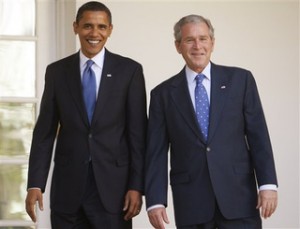
Barack Obama and George W. Bush at the White House
On Monday, The Washington Post dismissed the devastating airstrike at Deir al-Zour killing at least 62 Syrian soldiers as one of several “mishaps” that had occurred over the past week and jeopardized a limited ceasefire, arranged between Russia and the Obama administration.
But the fact that the U.S. and several allies have been routinely violating Syrian sovereign airspace to carry out attacks was not even an issue, nor is it a scandal that the U.S. military and CIA have been arming and training Syrian rebels. In the world of Official Washington, the United States has the right to intervene anywhere, anytime, for whatever reason it chooses.
President Barack Obama has even publicly talked about authorizing military strikes in seven different countries, including Syria, and yet he is deemed “weak” for not invading more countries, at least more decisively.
Democratic presidential nominee Hillary Clinton has vowed to engage in a larger invasion of Syria, albeit wrapping the aggression in pretty words like “safe zone” and “no-fly zone,” but it would mean bombing and killing more Syrian soldiers.
As Secretary of State, Clinton used similar language to justify invading Libya and implementing a “regime change” that killed the nation’s leader, Muammar Gaddafi, and unleashed five years of violent political chaos.
If you were living in a truly democratic country with a truly professional news media, you would think that this evolution of the United States into a rogue superpower violating pretty much every international law and treaty of the post-World War II era would be a regular topic of debate and criticism.
Those crimes include horrendous acts against people, such as torture and other violations of the Geneva Conventions, as well as acts of aggression, which the Nuremberg Tribunals deemed “the supreme international crime differing only from other war crimes in that it contains within itself the accumulated evil of the whole.”
Justifying ‘Regime Change’
Yet, instead of insisting on accountability for American leaders who have committed these crimes, the mainstream U.S. news media spreads pro-war propaganda against any nation or leader that refuses to bend to America’s imperial demands. In other words, the U.S. news media creates the rationalizations and arranges the public acquiescence for U.S. invasions and subversions of other countries.
In particular, The New York Times now reeks of propaganda, especially aimed at two of the current targets, Syrian President Bashar al-Assad and Russian President Vladimir Putin. With all pretenses of professionalism cast aside, the Times has descended into the status of a crude propaganda organ.
On Sunday, the Times described Assad’s visit to a town recently regained from the rebels this way: “Assad Smiles as Syria Burns, His Grip and Impunity Secure.” That was the headline. The article began:
“On the day after his 51st birthday, Bashar al-Assad, the president of Syria, took a victory lap through the dusty streets of a destroyed and empty rebel town that his forces had starved into submission.
“Smiling, with his shirt open at the collar, he led officials in dark suits past deserted shops and bombed-out buildings before telling a reporter that — despite a cease-fire announced by the United States and Russia — he was committed ‘to taking back all areas from the terrorists.’ When he says terrorists, he means all who oppose him.”
The story by Ben Hubbard continues in that vein, although oddly the accompanying photograph doesn’t show Assad smiling but rather assessing the scene with a rather grim visage.
But let’s unpack the propaganda elements of this front-page story, which is clearly intended to paint Assad as a sadistic monster, rather than a leader fighting a foreign-funded-and-armed rebel movement that includes radical jihadists, including powerful groups linked to Al Qaeda and others forces operating under the banner of the brutal Islamic State.
The reader is supposed to recoil at Assad who “smiles as Syria burns” and who is rejoicing over his “impunity.” Then, there’s the apparent suggestion that his trip to Daraya was part of his birthday celebration so he could take “a victory lap” while “smiling, with his shirt open at the collar,” although why his collar is relevant is hard to understand. Next, there is the argumentative claim that when Assad refers to “terrorists” that “he means all who oppose him.”
As much as the U.S. news media likes to pride itself on its “objectivity,” it is hard to see how this article meets any such standard, especially when the Times takes a far different posture when explaining, excusing or ignoring U.S. forces slaughtering countless civilians in multiple countries for decades and at a rapid clip over the past 15 years. If anyone operates with “impunity,” it has been the leadership of the U.S. government.
Dubious Charge
On Sunday, the Times also asserted as flat fact the dubious charge against Assad that he has “hit civilians with gas attacks” when the most notorious case – the sarin attack outside Damascus on Aug. 21, 2013 – appears now to have been carried out by rebels trying to trick the United States into intervening more directly on their side.
A recent United Nations report blaming Syrian forces for two later attacks involving chlorine was based on slim evidence and produced under great political pressure to reach that conclusion – while ignoring the absence of any logical reason for the Syrian forces to have used such an ineffective weapon and brushing aside testimony about rebels staging other gas attacks.
More often than not, U.N. officials bend to the will of the American superpower, failing to challenge any of the U.S.-sponsored invasions over recent decades, including something as blatantly illegal as the Iraq War. After all, for an aspiring U.N. bureaucrat, it’s clear which side his career bread is buttered.
We find ourselves in a world in which propaganda has come to dominate the foreign policy debates and – despite the belated admissions of lies used to justify the invasions of Iraq and Libya – the U.S. media insists on labeling anyone who questions the latest round of propaganda as a “fill-in-the-blank apologist.”
So, Americans who want to maintain their mainstream status shy away from contesting what the U.S. government and its complicit media assert, despite their proven track record of deceit. This is not just a case of being fooled once; it is being fooled over and over with a seemingly endless willingness to accept dubious assertion after dubious assertion.
In the same Sunday edition which carried the creepy portrayal about Assad, the Times’ Neil MacFarquhar pre-disparaged Russia’s parliamentary elections because the Russian people were showing little support for the Times’ beloved “liberals,” the political descendants of the Russians who collaborated with the U.S.-driven “shock therapy” of the 1990s, a policy that impoverished a vast number of Russians and drastically reduced life expectancy.
Why those Russian “liberals” have such limited support from the populace is a dark mystery to the mainstream U.S. news media, which also can’t figure out why Putin is popular for significantly reversing the “shock therapy” policies and restoring Russian life expectancy to its previous levels. No, it can’t be that Putin delivered for the Russian people; the only answer must be Putin’s “totalitarianism.”
The New York Times and Washington Post have been particularly outraged over Russia’s crackdown on “grassroots” organizations that are funded by the U.S. government or by billionaire financial speculator George Soros, who has publicly urged the overthrow of Putin. So has Carl Gershman, president of the National Endowment for Democracy (NED), which funnels U.S. government cash to political and media operations abroad.
The Post has decried a Russian legal requirement that political entities taking money from foreign sources must register as “foreign agents” and complains that such a designation discredits these organizations. What the Post doesn’t tell its readers is that the Russian law is modeled after the American “Foreign Agent Registration Act,” which likewise requires people trying to influence policy in favor of a foreign sponsor to register with the Justice Department.
Nor do the Times and Post acknowledge the long history of the U.S. government funding foreign groups, either overtly or covertly, to destabilize targeted regimes. These U.S.-financed groups often do act as “fifth columnists” spreading propaganda designed to undermine the credibility of the leaders, whether that’s Iranian Prime Minister Mohammad Mosaddegh in 1953 or Ukrainian President Viktor Yanukovych in 2014.
Imperfect Leaders
That’s not to say that these targeted leaders were or are perfect. They are often far from it. But the essence of propaganda is to apply selective outrage and exaggeration to the leader that is marked for removal. Similar treatment does not apply to U.S.-favored leaders.
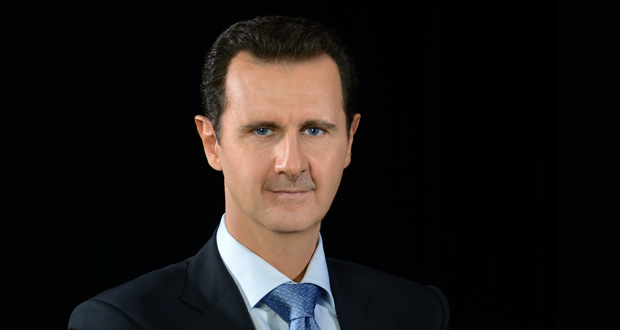
Syrian President Bashar al-Assad
The pattern of the Times and Post is also to engage in ridicule when someone in a targeted country actually perceives what is going on. The correct perception is then dismissed as some sort of paranoid conspiracy theory.
Take, for example, the Times’ MacFarquhar describing a pamphlet and speeches from Nikolai Merkushkin, the governor of Russian region of Samara, that MacFarquhar says “cast the blame for Russia’s economic woes not on economic mismanagement or Western sanctions after the annexation of Crimea but on a plot by President Obama and the C.I.A. to undermine Russia.”
The Times article continues: “Opposition candidates are a fifth column on the payroll of the State Department and part of the scheme, the pamphlet said, along with the collapse in oil prices and the emergence of the Islamic State. Mr. Putin is on the case, not least by rebuilding the military, the pamphlet said, noting that ‘our country forces others to take it seriously and this is something that American politicians don’t like very much.’”
Yet, despite the Times’ mocking tone, the pamphlet’s perceptions are largely accurate. There can be little doubt that the U.S. government through funding of anti-Putin groups inside Russia and organizing punishing sanctions against Russia, is trying to make the Russian economy scream, destabilize the Russian government and encourage a “regime change” in Moscow.
Further, President Obama has personally bristled at Russia’s attempts to reassert itself as an important world player, demeaning the former Cold War superpower as only a “regional power.” The U.S. government has even tread on that “regional” status by helping to orchestrate the 2014 putsch that overthrew Ukraine’s elected President Yanukovych on Russia’s border.
After quickly calling the coup regime “legitimate,” the U.S. government supported attempts to crush resistance in the south and east which were Yanukovych’s political strongholds. Crimea’s overwhelming decision to secede from Ukraine and rejoin Russia was deemed by The New York Times a Russian “invasion” although the Russian troops that helped protect Crimea’s referendum were already inside Crimea as part of the Sevastopol basing agreement.
The U.S.-backed Kiev regime’s attempt to annihilate resistance from ethnic Russians in the east – through what was called an “Anti-Terrorism Operation” that has slaughtered thousands of eastern Ukrainians – also had American backing. Russian assistance to these rebels is described in the mainstream U.S. media as Russian “aggression.”
Oddly, U.S. news outlets find nothing objectionable about the U.S. government launching military strikes in countries halfway around the world, including the recent massacre of scores of Syrian soldiers, but are outraged that Russia provided military help to ethnic Russians being faced with annihilation on Russia’s border.
Because of the Ukraine crisis, Hillary Clinton likened Vladimir Putin to Adolf Hitler.
Seeing No Coup
For its part, The New York Times concluded that there had been no coup in Ukraine – by ignoring the evidence that there was one, including an intercepted pre-coup telephone call between U.S. Assistant Secretary of State Victoria Nuland and U.S. Ambassador Geoffrey Pyatt discussing who should be made the new leaders of Ukraine.
The evidence of a coup was so clear that George Friedman, founder of the global intelligence firm Stratfor, said in an interview that the overthrow of Yanukovych “really was the most blatant coup in history.” But the Times put protecting the legitimacy of the post-coup regime ahead of its journalistic responsibilities to its readers, as it has done repeatedly regarding Ukraine.
Another stunning case of double standards has been the mainstream U.S. media’s apoplexy about alleged Russian hacking into emails of prominent Americans and then making them public. These blame-Russia articles have failed to present any solid evidence that the Russians were responsible and also fail to note that the United States leads the world in using electronic means to vacuum up personal secrets about foreign leaders as well as average citizens.
In a number of cases, these secrets appear to have been used to blackmail foreign leaders to get them to comply with U.S. demands, such as the case in 2002-03 of the George W. Bush administration spying on diplomats on the U.N. Security Council to coerce their votes on authorizing the U.S. invasion of Iraq, a ploy that failed.
U.S. intelligence also tapped the cell phone of German Chancellor Angela Merkel, whose cooperation on Ukraine and other issues of the New Cold War is important to Washington. And then there’s the massive collection of data about virtually everybody on the planet, including U.S. citizens, over the past 15 years during the “war on terror.”
Earlier this year, the mainstream U.S. news media congratulated itself over its use of hacked private business data from a Panama-based law firm, material that was said to implicate Putin in some shady business dealings even though his name never showed up in the documents. No one in the mainstream media protested that leak or questioned who did the hacking.
Such mainstream media bias is pervasive. In the case of Sunday’s Russian elections, the Times seems determined to maintain the fiction that the Russian people don’t really support Putin, despite consistent opinion polls showing him with some 80 percent approval.
In the Times’ version of reality, Putin’s popularity must be some kind of trick, a case of totalitarian repression of the Russian people, which would be fixed if only the U.S.-backed “liberals” were allowed to keep getting money from NED and Soros without having to divulge where the funds were coming from.
The fact that Russians, like Americans, will rally around their national leader when they perceive the country to be under assault – think, George W. Bush after the 9/11 attacks – is another reality that the Times can’t tolerate. No, the explanation must be mind control.
The troubling reality is that the Times, Post and other leading American news outlets have glibly applied one set of standards on “enemies” and another on the U.S. government. The Times may charge that Bashar al-Assad has “impunity” for his abuses, but what about the multitude of U.S. leaders – and, yes, journalists – who have their hands covered in the blood of Iraqis, Libyans, Afghans, Yemenis, Syrians, Somalis and other nationalities. Where is their accountability?
Investigative reporter Robert Parry broke many of the Iran-Contra stories for The Associated Press and Newsweek in the 1980s. You can buy his latest book, America’s Stolen Narrative, either in print here or as an e-book (from Amazon and barnesandnoble.com).
IMF: Mideast conflicts have erased development gains for whole generation
Press TV – September 16, 2016
The International Monetary Fund (IMF) says conflicts in the Middle East are not only devastating economies in countries such as Iraq, Libya, Syria and Yemen, but they have also erased “development gains for a whole generation.”
The fund issued a report titled the Economic Impact of Conflicts and the Refugee Crisis in MENA (Middle East and North Africa) on Friday, where it said conflicts were killing economies in the countries gripped by war and sapping growth in neighboring countries and those hosting millions of refugees.
Middle Eastern and North African countries battered by fighting have suffered average losses of 6-15 percentage points in the gross domestic product (GDP) in three years, compared to a 4-9 percentage-point average worldwide, according to the report.
The IMF report showed that the drops in economic output in Syria, Libya and Yemen in recent years have far exceeded the worldwide average.
Syria’s gross domestic product level is currently less than half the level it was five years ago before the start of the conflict, the IMF stated.
The report showed Yemen lost 25-35 percent of its GDP in 2015 alone, in the wake of the deadly Saudi campaign.
Oil-dependent Libya saw its GDP fall 24 percent in 2014, the IMF said.
Physical infrastructure damage, now estimated at $137.8 billion in Syria and more than $20 billion in Yemen, has reduced trade and output in neighboring countries, according to the report.
Countries bordering high-intensity conflict zone showed an average annual GDP decline of 1.4 percentage points worldwide, with a bigger drop of 1.9 percentage points in the Middle East and North Africa region.
Refugees’ plight
The fleeing of more than half of Syria’s 22 million population, 6.6 million internally and more than five million to other countries, has magnified economic losses, dramatically escalating poverty, unemployment and school dropouts in countries that were already struggling, the IMF said.
Many of the refugees seeking asylum in other countries are skilled workers and professionals forced by war and persecution to leave the conflict zones in hope of better lives.
However, according to the IMF, because refugees often have fewer rights than local populations, those landing in developing countries are often absorbed into already disadvantaged local communities forming a new underclass comprising refugees and the existing poor in the host country, which in turn leads to a detrimental effect on the host countries.
For those refugees that land in Europe, where the influx of refugees has only had a small impact on economy, there have been some positive effects on the host countries, according to the report.
More funds needed
The IMF report has revealed the huge scale of the refugee crisis and the pressure it put on several United Nations institutions, especially the United Nations High Commissioner for Refugees (UNHCR) and the World Food Programme.
The two UN organizations have been playing a leading role in the provision of humanitarian assistance, both to internally displaced people and refugees.
However, the IMF report says funding has not kept up with the sharp increase in needs.
For instance, the World Food Programme and the UNHCR have had to cut their services to refugees in Jordan due to funding constraints, which may have contributed to the acceleration of refugee flows to Europe from late 2014, according to the report.
The IMF report urged policymakers to scale up humanitarian aid in conflict zones and neighboring countries hosting refugees and prioritize fiscal spending to protect human life and serve basic public needs.
The report comes as the UN General Assembly is preparing to host a summit on refugees in New York next week.
The UN plans to use the summit as a platform to urge governments, private donors, and humanitarian agencies to support the organization in its efforts to ease suffering of the victims of world conflicts.
Analysts believe the MENA conflicts and the following refugee crisis are the outcome of the West’s policies in the Middle East and North Africa.
‘Saudi Arabian forces never once targeted ISIS militants in Yemen’
RT | August 29, 2016
The latest car bombing is most likely a personal vendetta, probably more of a gang problem inside Aden over who is going to take control, the rebels or Islamic State (IS, formerly ISIS/ISIL), political commentator Marwa Osman told RT.
Up to 60 people have been killed in a car bomb attack in the Yemeni city of Aden with dozens more injured. Most of the dead were pro-government troops.
ISIS has claimed responsibility for the attack.
RT: What is ISIS trying to achieve in this attack?
Marwa Osman: First, let’s tell people where ISIS targeted. They targeted a school compound which consists of the Popular Committee Forces who are allied with Abd Rabbuh Mansur Hadi, who was the president who resigned twice before the war in Yemen. So, they targeted these people who are already in war with “Ansar Allah” also known as the Houthis in the mainstream media. So, they are now targeting supposedly their own allies. And that is because there is a personal vendetta, probably more of a gang problem inside Aden over who is going to take control now. Is it the rebels who are actually backed by Saudi Arabia, who is still bombing and killing people in Saada and Sana’a? Or is it going to be ISIS which is also backed by Saudi Arabia which has been funneling money and arms by Saudi Arabia for the past seven or eight years in Yemen. Who is going to take control? That is the fight that is going on there. It is not a fight of fighting ISIS or fighting people who are there to try and liberate Yemen. No, because the actual thing is that both groups, these popular movements which are Hadi’s supporters and ISIS – they are both fighting “Ansar Allah” which is also getting beaten by the Saudi-led coalition. So, this is more of who is going to control the area.
RT: With this Saudi Arabian involvement you mentioned, is it possible that Saudi Arabia is using ISIS as some sort of proxy army to achieve its desires in that part of the world?
MO: It is not only possible, it is the only fact on the ground because up until now, since March 25, 2015 when the US coalition led by the Saudis ran… all over Yemen, they have never – not even once – targeted all of the Al-Qaeda-ISIS wilayat. They have eight wilayat inside of Yemen and not once have they targeted them. Why? Because they are actually there to run the on-ground incursion for the Saudis. And up until now they have not been able to do that; they were not able to go to Sana’a or to Saada for that matter. They only have been targeting Aden as we just saw today. It is obviously very devastating: 60 people dead because of the explosion. But these two proxy warriors for the war of Al-Saud, both rebels that supposedly represent Abd Rabbuh Mansur Hadi, the former president and also Al-Qaeda. It is the way it is going on in Syria, Iraq, Yemen and also Libya. So, when you talk about Saudi Arabia funding ISIS, it is the only way that it is going to gain any ground incursions on the Yemeni field. And yet this is not happening…
RT: Are you saying that ISIS is de facto a proxy army of mercenaries being used to achieve regime change?
MO: Yes, of course. And that what we have been saying since the beginning of 2010 and all 2011 when Al-Qaeda was changing into ISIS based on the ideology of Wahhabism, which is diffused and brought upon us by the monarchy of Al-Saud. Where they have got their weapons from, where they were funded from? It was obvious; we had all the reports and also the statements from both Qatar and Saudi Arabia. But then Qatar last year started to back off, but Saudi Arabia is still enraged by the incapability of their forces to take any control of Yemen. By God, Yemen is taking land inside of Saudi Arabia; it is that devastating for Al-Saud now. And when we talk about Iraq, Syria as well, it is also the same thing. They are still funding the same group that has the ideology of Al-Saud which is Wahhabism because they have no other choice. They are losing in Yemen; they obviously lost a lot in Syria and Iraq. There is no other place. The Iraqis are asking the Saudis to change their ambassador because he is the main person who is in contact with Al-Qaeda and ISIS inside of Iraq. So, when we talk about this, and talk about the role of Saudi Arabia, I don’t want to just demonize them. There are facts that demonize them. There are facts that Riyadh is still issuing a bloody campaign against Yemen. And there are US and UK so-called consultants inside of Riyadh in the control room of the war on Yemen. And we are still asking if they are funding ISIS or not. How did ISIS come to be if it were not for Al-Saud?
Read more:
At least 60 dead in Yemeni suicide bombing, ISIS takes responsibility
How the occupied mentality syndrome works
Saudi Arabia on the American chessboard – Part 3
By B. J. Sabri | American Herald Tribune | June 27, 2016
Read part 2: “The occupied mentality Syndrome“
Previously I argued whether Saudi Arabia’s repeated involvements in U.S. interventions and wars stem from free national will or in response to a specific condition. For starters, in Saudi Arabia there is no national will. In Saudi Arabia, the national will is the will of the Al Saud clan. Still, when a major Arab state allies itself with a superpower that committed unspeakable crimes against humanity in almost every Arab country, then something is wrong. This fact alone should compel us to examine the U.S.-Saudi relation for one exceptional reason. As a result of the U.S.-Saudi wars, hundreds of thousands of people in Afghanistan, Iraq, Iran, Libya, Syria, Yemen, and Somalia have lost their lives. Millions became displaced in their own homelands. And millions more rendered refugees.
Attributing the Saudi policies to the bonds of “partnership” with the U.S. is frivolous. There are no bonds between these two thugs except those of business, military deals, secret plots, and wars. Proving this point, bonds such as these have no space for the American and Saudi peoples to share significant cultural or societal exchanges. If partnership is not the reason for the Saudi contribution to the U.S. strategy of empire and imperialism, then another reason must exist.
This leads to three possibilities. (1) The Saudis are exercising their supreme national rights to do whatever they want. Or, (2), they are responding to inducement. Or, (3), they are complying with applied pressure. While the first possibility cannot be taken seriously, the remaining two possibilities are plausible. This means the Saudi participation in the U.S. wars—by proxy and directly—must have origins in factors other than the fluid concepts of alliance and partnership.
By the way, yielding to pressure is not new in international relations. In the age of today’s imperialism, the U.S. use of the UNSC to impose its policies is an example. If impositions fail, then the U.S. acts unilaterally. Examples: the imposition of the no-fly zone in Iraq 1991-2003 and the invasion in 2003. In the era of classical colonialism during 19th century, Britain’s gun boat diplomacy to force the opening of China to foreign trade is another example. Again, when a nation succumbs to another nation, that succumbence is never ordinary.
I also argued that succumbence to power is the result of protracted material, mental, and emotional processes performing as one element. From this premise I went on to coin the term: Occupied Mentality Syndrome (OMS) to describe such an element. Unlike other forms of mentalities (national, group, personal, and so on), the mentality I am debating is atypical. Driven by subjective factors but influenced by politically construed constraints—real or imagined—, this mentality has special traits. It competes with ideology, it conforms to pressure, it lays the blame on others, and it discards accountability.
Although such traits may not appear all at once, the presence of any one of them in a given situation is a reason to suspect that an OMS is lurking behind. Most interesting, those afflicted by this syndrome accept what comes next as a normal outcome of free deliberation. This is an anomaly. It is so because those who endorse it only calculate value versus detriment.
But calculations gutted from analysis, congruency of purpose, or the study of variables lead to contentious decisions. It is no mystery that decisions with far-reaching negative consequences impacting others could lead to tension or even open hostility. How does the Saudi regime get away from the impact of their decisions?
The usual act has been to reject any responsibility without discussion—as it happened with Iraq’s war against Iran. In doing so, the Saudi regime takes cues directly from Niccolò Machiavelli. Explanation: after converting the deliberation process into a justificatory procedure, the Saudi regime moves to the next phase: conferring legitimacy to already made decisions. Here is how they do it: make the decisions appear as if they were the result of (1) the collective national will—through the regime’s talking heads, preachers, and media,—and (2) purported adherence to the “Islamic Sharia”. The bogus legitimacy ruse that ensues is ludicrous. A tyrannical and obscurantist regime has now the authority to move forward with its decisions by calling on its citizens to observe a Quranic verse—taken out of context—calling on Muslims to obey their rulers.
To test the validity of the OMS concept, let me reprise my argument about how the Iranian Revolution and the Soviet invasion of Afghanistan shaped the mindset of the Saudi regime. Although the outcome of the 18-month long anti-Shah demonstrations was predictable, it, nevertheless, caught the U.S. and Saudi Arabia unprepared for his downfall. With the Shah gone, a psycho-political “drama” unfolded. The United States lost one of Nixon’s two pillars (the other is Saudi Arabia) in the Middle East; Israel lost its only ally in the Muslim world; Al Saud lost their inner confidence. The mere idea of a Khomeini-style revolution sweeping Saudi Arabia was enough to induce convulsive spasms in all those concerned with power, money, and oil.
Afghanistan was a different story. While the United States was mostly concerned with the Soviet power and on how to respond to the invasion, Saudi Arabia was literally terrified about the potential spread of “godless” Communism. . . . Thus was born the “special relationship” between U.S. ruling circles and a reactionary, absolutist clan.
What do we understand from the U.S.-Saudi relation?
Marked differences between the U.S. and Saudi polities make it intuitive that such a relation is no more than an opportunistic convergence between two regimes. Said differently, what we have here is a forum for massive business encounters and ideological boastings that both regimes struggle to call “alliance”. Generally, in the pre-9/11 period that relation had two sets of motives. While the American set is trite—empire-building, hegemony, oil, wars, and Israel—, the Saudi’s is issue-focused. (1) The clan must have the absolute primacy over Saudi life and society. (2) The clan defines its quest for security and survival in U.S. imperialistic context. That is, whatever the U.S. needs, the Saudi regime can supply in exchange for the clan’s needs.
It would be interesting to imagine the following scenario. The subject is Afghanistan. Was it ever possible for the Saudi regime to pursue a course independent from the objectives of the United States policy because they run against the legitimate interests of the Saudi people? To debate this point: was the spending of over $3.2 billion (indexed for that period) on the anti-Soviet Afghan war of any benefit to the Saudi society?
Let us make another supposition. Because Al Saud think of their clan as being the most powerful on earth, then a pressing question comes to mind. If they were that powerful, why did they not take alternative measures to counter U.S. pressure in the decades before 9/11? For instance, they could have purchased technology, weapons, and advanced commodities—and even “protection” from any industrial country other than the United States. [1] Or, with all the money they had, they could have started an autonomous national industrialization process like that of India, Iran, Turkey, China, South Korea, and others.
Ironically, even if the Saudi regime had the means to undertake that process, it would not have moved to implement it. Explanation: advanced statecraft mechanisms leading to independent decision making in any sector of the national life are unavailable because of the despotic nature of the regime. Not only that, but achieving sovereignty means also sovereignty for the people. This would surely curtail the power of the clan due to increased popular participation in the setting of national priorities.
Let us consider another point: the Saudis have always bragged that their “alliance” with the U.S. is unbreakable. This has an implication: the preventive imprisonment of their critical judgment and free will. Explanation: while the Saudis are unwilling to break with the U.S., the U.S. can discard them at will and play them at any given time—as happened recently with the story of the 28 pages never published from the 9/11 report. Tentative conclusion: from the clan’s perspective, it appears that whatever the U.S. wants can be addressed and accepted. Still, my earlier supposition that Saudi Arabia had the means and will to be independent from the United States has merit, It means, any U.S. pressure on the Saudis for burden sharing would be useless if the Saudis resist and go somewhere else for their needs.
If a counter-argument suggests that the Saudi spending in Afghanistan was worth it to deter a potential Russian aggression, then a reasoned rebuttal could be as follows. Fact 1: we know that the U.S.-Saudi relation revolves around deterring hypothetical “threats” against the kingdom. Fact 2: but we also know that neither the USSR, nor any other regional or international power has ever threatened to attack or invade Saudi Arabia. Amusingly, the only rumored threat of invasion came from Saudi Arabia’s “ally”, the United States (and from Britain) consequent to the Arab oil embargo in 1973. Conclusion: Al Saud had no impelling reasons to finance the U.S. imperialist enterprise in Afghanistan—even if they loathed the Soviets.
My argument: the Saudi regime has been concealing the primary motive feeding their “alliance” with the United States. Yet, it is not that difficult to guess what the clan thinks. Being a superpower with massive Zionist and Israeli influence, the United States offered the best guarantee for the survival of the regime on two fronts.
On the domestic front, the U.S. may help the regime survive if domestic unrest becomes unstoppable. The American-authorized French intervention to quell the Mecca uprising in 1979 is an example. As for The Zionist and Israeli component in American politics viewed from a Saudi angle, this is intuitive too. Like all Arab regimes, deluding themselves that the U.S. has a sovereign Arab policy, the Saudis thought of their U.S. relation as a buffer against America’s ally and protégée: Israel.
Furthermore, whereas Saudi motives are clan-based, those of the United States are system-based. This means, they are global, rationalized, and originate from how the ruling circles view the role of the United States in the world. Still, motives need forces to have effect. Consequently, the motives of a political state are the same motives of the ideological and material forces that drive it. For instance, in post-WWII United States, such forces worked as one construct to drive the purpose of U.S. hegemony. The economics, politics, and ideology of militarized capitalism, imperialism, colonialism, and Zionism are a few examples of such forces.
I mentioned colonialism as a force in the making of the United States. Does this apply to the United States of today? Here is how I see it. With military bases in over 160 countries, with bases count ranging from 761 to 900 plus, with military personnel in excess of 156,000, with a land mass of over 2,202,735 hectares (approx. 5,443,076 acres) occupied by the U.S. military, and with $150 billion annual budget, the United States is nothing but a global colonialist power whose bases are nothing less than outposts for a colonialist enterprise in progress. See deployment map in the article: These are all the countries where the US has a military presence. [2], [3], [4], [5], [6] [Note: I included several links to the issue of bases because some data differ from one source to another. Besides, the cited articles could offer an integrated view of the subject.]
Three motives define the course of U.S. power. These are (1) the determination to expand the spheres of U.S. influence, (2) the relentless intent to dominate geostrategic regions, and (3) wars as economic enterprises. How does the United States implement its domination project? The U.S. has an impressive array of tools and gadgets. Limited sampling: planned hostility, military interventions against countries resisting U.S. demands, wars against independent-minded countries that U.S. rulers love to call “rogue states”, seizure of foreign assets in the U.S., economic sanctions against “disobedient” states, applying U.S. laws on foreign states, dubbing adversaries as terrorists, harassment of big rival powers . . .
If examined in the context of classical colonialism, the U.S. domination of Saudi Arabia has all the signs of a colonialist dependency model. In this model, the periphery depends on the center in a way designed to consecrate the primacy of the center. But Saudi Arabia has never been a U.S. colony. This is true but irrelevant. The changing nature of modern dependency uses revamped practices. In one such practice, Washington makes the decisions and Riyadh implements them as if they were its own. The examples of Libya, Syria, and Yemen are instructive.
Keeping this in mind, I contend that many facts of the U.S.-Saudi relation point into the direction of multiple forms of dependency. The U.S. as a “protector” of the clan, massive Saudi purchase of U.S. arms, financial deals, and U.S. military presence in the kingdom are just the most prominent forms. One crucial aspect of the relation deserves stringent analysis. The U.S.-Saudi “alliance” goes beyond dependency, beyond petrodollar deposits, beyond investments in the U.S. economy, beyond the purchase of weapons, and beyond buying of treasury bonds. I am referring to a subject often overlooked: Saudi Arabia as a destructive interventionist tool in the hands of U.S. imperialists and Zionists.
To recap, stating that the U.S.-Saudi coupling is an alliance makes no sense. The alliance notion has different requirements, defining clauses, and formal obligations. Not even the claim of partnership is valid. Partnership takes its name from concepts such as equal sharing of burden, profits, and losses. This is not the case between the United States and Saudi Arabia. What we have here is an opportunistic platform between two different regimes pursuing separate agendas.
Again, prior to the collapse of the Soviet Union, U.S. aims included the opposition to Communism, containing Arab hostility to the U.S. and Israel, securing cheap oil, and providing basing rights for the U.S. military. On the Saudi side, preventing potential Iranian-style Islamic and progressive national revolutions in the region was the top concern. After the collapse of the Soviet Union, things changed. Generally, while the Saudis are obsessed with keeping the status quo in their regional milieu, the Americans are maneuvering their regional marionettes and intervening directly to alter the socio-structures and political assets of the entire region known as the Middle East.
Countless facts during the past 35 years attest that Saudi Arabia’s foreign policy coincided with or was in response to the U.S. world agenda. As a result, we can draw a preliminary conclusion. From 9/11 forward, the disoriented Saudi regime has been devotedly executing what the United States wants it to do in exchange for not complicating its life. With that, Saudi Arabia has become the material accessory and financing tool of the United States and Israel to remake (destroy) the Arab homeland according to the U.S. and Israeli plans. Iraq, Syria, and Libya are examples. [7], [8]
It is natural that an event such as 9/11 would have traumatized the clan and drove them to panic and despair. This is not only due to the nationality of some of the alleged attackers but also because Wahhabism, the creed of the Saudi state, has taken a post among the accused. For one, 9/11 worsened the socio-political instability of the clan and amplified their notorious arrogance. But 9/11 alone cannot explain the real reasons behind the intensified proclivity of the regime for violence toward the few remaining Arab states that still reject U.S. hegemony and Israeli settler colonialism.
However, in Saudi contest, the principal effect of 9/11 was “surgical”. It exposed the ugly face of Saudi barbarity by externalizing its warring enmity toward Iran and any Arab nation that opposes U.S. hegemony and the criminal practices of the Wahhabi state. That proclivity for violence and that foaming anti-Arab and anti-Iranian enmity were the means with which Al Saud thought they could placate post-9/11 United States and appease Israel in the process. Involving the Saudi ruling family in 9/11 was a master stroke of a strategy. With it, the United States has skillfully exploited the primal fear of the Saudi regime from losing power. And just like that, with one unsubstantiated accusation, the United States seized the grand moment—the prey was ready to be devoured.
It is beside the point to state that analyses meant to explain post-9/11 Saudi actions and policies must consider the determination of the Saudi regime to take whatever is needed to appease the United States. After 9/11 the Saudis thought they could silence the hyper-imperialist bully by withdrawing their recognition of Afghanistan under the Taliban rule. It did not work out. Then they moved, as requested by the United States, to cut off funding to religious organizations and Wahhabi-inspired schools in many countries. It did not work out either. Afterwards, they offered King Abdulla’s initiative to recognize Israel. Still, it did not work out. . . .
Here is what the crude mentality of Al Saud failed to comprehend. The appeasement the hyper-empire was thinking of was much wider, much deeper, and has no end—it is the unconditional Saudi willingness to play along with the U.S. plans and strategies.
I maintain, therefore, that explaining the Saudi post-9/11 wars and interventions against selected Arab states is ineffective without proper investigative tools. What we need are approaches that would enable us to see below, above, and around the appearances of events.
Another significant outcome of 9/11 was tangible: the transformation of Saudi Arabia from an American “ally” into a near hostage pliable for blackmail. For instance, the Saudi regime voiced concern and even some opposition to the planned U.S. invasion of Iraq in 2003. Still, they were unable to stop the U.S. from using their territory, airports, ports, and military facilities for that purpose. But when the invasion took its course, they mightily supported it. This is duplicity, of course; but I do not have to debate that such behavior says more than it could hide. Simply, it indicates fear from opposing U.S. moves.
I hold, therefore, that the radical change in Saudi Arabia’s post-9/11 regional conduct (the war against Libya, Syria, Yemen, Iraq; the harassment of Lebanon; the anti-Iran bellicosity; the tryst with Israel) was not in response to pressing Saudi needs, or to sudden wakening of the regime’s dormant “democratic values”. By extracting meanings out of statements, and by reading deeply into the cumulative consequences of the Saudi actions and their purpose, the answer should dispense with theoretical uncertainties. That is, those radical changes were in response to U.S. pressure or other forms of hard persuasion including implicit blackmail.
In which way did Iraq’s war against Iran confirm the U.S. scheme for the Middle East? What role did Al Saud play in that war? How does all this relate to and corroborate the occupied mentality syndrome?
Next: Part 4
Notes
- I should mention that Saudi Arabia has purchased missiles from China, as well as advanced weapons from Germany, Italy, Britain, Japan and other countries. Still, none of these deals would have been completed without the United States approving them first. The U.S. approval is motivated. First, U.S. military industry licenses the making of its weapons abroad and has deals to manufactures other weapons in partnership with many countries. Second, by submitting the weapons sale to its preventive approval, the United States establishes equal control on buyers and sellers. And this is how hegemony works. (Read: Why Did Saudi Arabia Buy Chinese Missiles? This is an imperialist view by the Foreign Policy Magazine. Pay attention to how Jeffrey Lewis explains the conditions that made the purchase possible. He writes, “Apparently with the approval of the George W. Bush administration.” [Italics mine]. Needless to say, the word “apparently” should have been omitted. . . .
- Gilbert Achcar, Greater Middle East: the US plan, Le Monde Diplomatique
- Mahdi Darius Nazemroaya, Plans for Redrawing the Middle East, Uruknet, 18 November 2006.
- David Vine, The United States has Probably More Foreign Military Bases than Any Other People, Nation, or Empire in History, The nation, 14 September, 2015
- David Vine, Where in the World Is the U.S. Military? Politico Magazine, July/August, 2015
- Julia Zorthian and Heather Jones, This Graphic Shows Where U.S. Troops Are Stationed Around the World, Time, 16 October 2015
- Tom Engelhardt, The US Has 761 Military Bases Across the Planet, and We Simply Never Talk About It, AlterNet, 7 September 2008
- Louis Jacobson, Ron Paul says U.S. has military personnel in 130 nations and 900 overseas bases, POLITIFACT, 14 September, 2011
Featured Video
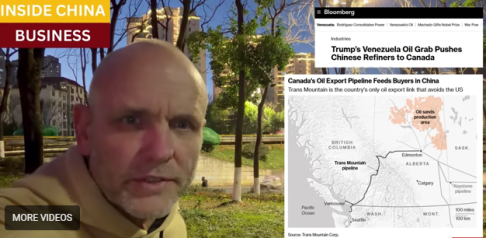
US traders struggle to find buyers for Venezuelan oil as China shifts to Canada
or go to
Aletho News Archives – Video-Images
From the Archives
Fake 9/11 Activism on 9/11. “Saudi Arabia was Behind the Attacks”
By Prof Michel Chossudovsky | Global Research | September 10, 2017
There is an element of confusion which has served to divide the 9/11 Truth movement. Saudi Arabia is said to have supported the alleged 9/11 highjackers.
What are the implications of “the Saudi did it” narrative?
It is very convenient to say that Saudi Arabia was behind the 9/11 terrorists. Why, because it upholds the official narrative of the 9/11 Commission Report and it whitewashes the US Deep State including its military and intelligence apparatus.
The official narrative –which has been amply refuted– states that 19 Al Qaeda hijackers brought down the WTC towers, i.e Muslims were behind the attack on America, –i.e. it was not an “inside job” or a false flag.
And now what is happening is that Saudi Arabia is blamed for having supported the al Qaeda hijackers.
And if Saudi Arabia is held responsible, pari passu the official narrative holds, namely the hijackers did it with the support of the House of Saud. … continue
Blog Roll
Recent Comments
loongtip on Showdown loongtip on New York Bans Israel-Linked Te… loongtip on Trump tells India to stop purc… eddieb on The Old Testament and the Geno… papasha408 on Trump’s war posturing against… Coronistan on This is How We Should Have Res… Coronistan on NO MANDATES, NO PROFITS: MODER… Lutz Barz on Russia Vows to Protect Its Oil… loongtip on Russia Vows to Protect Its Oil… loongtip on Hamas never agreed to lay down… eddieb on Conspiracy Denial eddieb on WEF Calls for ‘Cultural Revolu…


 Aletho News
- Showdown
- US traders struggling to find buyers for Venezuelan oil, as China shifts supply chain to Canada
- New York Bans Israel-Linked Terror Group
- UAE seeks to take over full civil administration in Gaza with Israeli backing
- Saudi media takes an anti-‘Israel’ turn: WSJ
- Fantasies of Fragmenting Iran Only Serve Israeli Interests
- Mike Pompeo admits Washington ‘directly helped’ rioters in Iran
- Iranian FM reveals ‘fruitful’ indirect talks with US in push for de-escalation
- British journalism hits rock bottom with latest shocking revelations
- American Zionists are using Trump’s Republican Party to create a multicultural supremacist elite
- If Americans Knew
- Trump Again Bypasses U.S. Congress to Push $6 Billion in Arms Sales to Israel
- One side emerged from a tunnel; the other side killed 31. Both must “exercise restraint” – Not a ceasefire Day 115
- Israel killed at least 32 Gazans on Saturday – Not a ceasefire Day 114
- Is Israel opening the Rafah border to depopulate Gaza? – Not a ceasefire Day 113
- NBA Star Stephen Curry’s Ties To Israeli Military Intelligence
- ‘Apocalyptic wasteland’: Biden admin. blocked warning on deteriorating Gaza situation after Oct. 7
- Why Israeli counterterrorism tactics are showing up in Minnesota
- Israel Went to Extremes to Return Ran Gvili’s Body. Why Doesn’t It Accord Dead Palestinians the Same Respect?
- Across the West, speaking for Palestine is now a crime
- A West Bank Bus Trip Through ‘the Best Documented Ethnic Cleansing in History’
- No Tricks Zone
- Polar Bear Numbers Rising And Health Improving In Areas With The Most Rapid Sea Ice Decline
- One Reason Only For Germany’s Heating Gas Crisis: Its Hardcore-Dumbass Energy Policy
- 130 Years Later: The CO2 Greenhouse Effect Is Still Only An Imaginary-World Thought Experiment
- New Study Affirms Rising CO2’s Greening Impact Across India – A Region With No Net Warming In 75 Years
- Germany’s Natural Gas Crisis Escalates … One Storage Site Near Empty …Government Silent
- Polar Colding…Antarctica Saw Its Coldest October In 44 Years!
- New Study: Sea Levels Rose 20 Times The Modern Rate During The Roman Warm Period
- As German Gas Storage Dips Dangerously Low…Shortage Hardly Avoidable
- New Study: Brazil’s Relative Sea Level Was 2+ Meters Higher And SSTs 3-4°C Warmer 6000 Years Ago
- Philosopher Schopenhauer: Climate Science Certainty Stems From Stupidity, Ignorance
 Aletho News