HTS extremists take control of Homs, no clashes reported as Syrian army withdraws
The Cradle | December 8, 2024
Extremist armed groups battling under the banner of Hayat Tahrir al-Sham (HTS) took control of the strategic city of Homs in central Syria on 7 December, after the Syrian Arab Army (SAA) “repositioned its forces” outside the city with no clashes reported.
“The SAA, paramilitary forces, and allies of the Syrian government withdrew from the city of Homs … No clashes were recorded in or around the city before orders were given out to soldiers to withdraw,” Al Mayadeen’s correspondent in Homs reported late on Saturday.
According to local sources, fighters from the Turkish-backed HTS and Syrian National Army (SNA) have taken control of “every neighborhood in the city.”
HTS, a UN-designated terrorist organization, launched a shock invasion of the Aleppo countryside on 27 November. Their numbers were reportedly bolstered by extremist groups from Central Asia that entered Syria via Turkiye. Ukrainian special forces have also been providing support to the armed groups.
Over the past 10 days, HTS and SNA fighters – most of them former members of Al-Qaeda and ISIS – have taken control of the cities of Aleppo, Hama, and Homs.
As the offensive gains speed, the SAA has repeatedly chosen to redeploy troops outside battle zones, largely avoiding clashes.
Homs is strategically positioned at a crucial crossroads between Damascus and Syria’s coastal provinces, Latakia and Tartus – the government’s stronghold and home to a vital Russian naval base.
Al Mayadeen reports that, after leaving Homs, the SAA has also withdrawn “from the mountains of Latakia towards the city on the Syrian coast.” The Syrian army also withdrew from the eastern Deir Ezzor governorate earlier this week under an “agreement” with the US-sponsored Syrian Democratic Forces (SDF).
With Damascus now in sight of the extremists, the Lebanese Armed Forces (LAF) has ordered reinforcements to the Hermel area, which borders Syria and is located around 40 km away from Homs.
“The seeds of the regime’s defeat have always been within it… the Iranians attempted to revive the regime, buying it time, and later the Russians also tried to prop it up. But the truth remains: this regime is dead,” HTS leader Abu Mohammad al-Julani, a former Al-Qaeda warlord and deputy of the notorious ISIS leader Abu Bakr al-Baghdadi, told CNN earlier this week.
Since the start of the offensive, western media launched a blitz to promote Julani and HTS as “diversity-friendly” moderates that will protect Syria’s religious minorities.
During the US-led war on Syria that began in 2011, the Nusra Front (HTS’ former name) and ISIS carried out large numbers of massacres of Christians, Shiites, Alawites, Yezidis, and even Sunnis who were supportive of the governments of Iraq and Syria.
“We called for an immediate end to hostile activities … and for this purpose called for the dialogue between the government and legitimate opposition,” Russian Foreign Minister Sergei Lavrov said Saturday from Doha after meeting his Turkish and Iranian counterparts.
Moscow has been providing aerial support for Damascus since the start of the offensive, killing hundreds of HTS and SNA-allied extremists.
Israeli jets strike Syria’s Palmyra from US-controlled airspace
The Cradle | November 20, 2024
Israeli jets bombarded the outskirts of the central Syrian city of Palmyra with violent airstrikes on 20 November, launched from within the airspace of Washington’s Al-Tanf military base in eastern Syria.
“Israeli warplanes launched a number of missiles from the airspace of the [US] base in the Al-Tanf area on the Syrian–Iraqi–Jordanian border, in the far southeastern countryside of Homs, targeting the vicinity of the city of Palmyra,” Sputnik’s correspondent reported, citing exclusive information.
The correspondent added that casualties were reported and that many ambulances were transporting the wounded to Tadmur National Hospital.
Nine members of the Syrian army’s auxiliary forces were wounded. Firefighting teams managed to contain the blaze that resulted from the Israeli attack. Images circulating on social media show large clouds of smoke in the area.
The US Al-Tanf base is surrounded by what is referred to as the 55-kilometer area.
According to numerous reports in the last couple of years, including Syrian and Russian officials, ISIS and other extremist groups receive training inside the Al-Tanf base, and are given logistical support to carry out hit-and-run attacks against Syrian military forces in the country’s desert region.
Earlier this month, Syrian troops foiled an ISIS ambush that originated from the 55-kilometer area in the vicinity of the US military base.
According to Israel, it has recently stepped up its violent and illegal campaign of airstrikes against Syria, particularly Syrian–Lebanese border crossings, in order to cut off the flow of weapons to Hezbollah in Lebanon, where it is waging a brutal and deadly campaign.
The Al-Tanf base lies approximately 218 kilometers from where Israel struck in Palmyra on Wednesday. In May 2015, ISIS launched a massive offensive against the Syrian government and captured the ancient city.
Moscow and Damascus announced the full liberation of Palmyra in March 2017.
Ukraine in league with Al-Qaeda – Syria
RT | November 12, 2024
Ukrainian agents have been working with Al-Qaeda in Syria, offering them drone warfare training and some of their US-supplied weapons in exchange for manpower, the government in Damascus has told RT.
The terrorist group Jabhat al-Nusra, since rebranded as Hayat Tahrir-al-Sham (HTS) has been reduced to parts of Idlib province in the northwest of the country, thanks in part to Russia helping the Syrian government defeat various rebel militants, including Islamic State (formerly ISIS).
RT’s Roman Kosarev has visited Syria and saw “undeniable evidence” that Kiev has made an alliance with HTS.
“We have real confirmation of the Ukrainian instructors’ presence in Syria,” a Russian soldier, identified only by the callsign ‘Gilza’, told RT. He said Kiev’s operatives have been teaching HTS militants how to fly suicide drones, as well as supplying them with such weapons.
Video footage filmed on a ship showed a US-made Switchblade 600 drone being delivered to the Syrian militants in crates labeled as humanitarian aid. Another video showed a man, wearing a black T-shirt with a Ukrainian trident symbol, chatting with a militant somewhere in Idlib.
Mohammed Hamra, a former government official who had to flee Idlib, has his own sources about what’s going on in the province. He told RT that around 250 Ukrainian instructors have been training HTS militants to kill Syrians and Russians.
Syrian intelligence has confirmed the presence of “several” Ukrainian operatives in Idlib. One of the Syrian officials, who sought anonymity, told Kosarev that Kiev’s instructors have been preparing HTS militants for attacks on government-controlled territory, in particular the Russian base at Khmeimim.
Kiev has delivered drones and even drugs – stimulants to keep militants alert – to HTS through Turkish territory, the Syrian said. In return for advice and technology, Kiev has asked HTS to release Chechen militants from their ranks so they could fight in Ukraine.
Moscow has “reliable information” that Islamic State militants and “similar groups” have been fighting in Ukraine under the guise of Chechen and Crimean Tatar units, according to Alexander Bortnikov, head of the Russian security service FSB.
Russia has accused Ukraine of “openly supporting terrorist groups in Africa,” pointing to an incident in Mali earlier this year involving Touareg militants. Ukraine’s HUR military intelligence agency has boasted about providing the Touaregs with information and drone warfare techniques to help them kill government soldiers and Russian security contractors.
Yezidis in Lebanon Flee the Terror of Israeli Bombs
By William Van Wagenen | The Libertarian Institute | October 28, 2024
Members of the Yezidi religious minority who fled ISIS and other Turkish-backed extremist groups in Syria are now seeking to flee Israel’s relentless bombing campaign in Lebanon.
“They bombed just next to our house. Just five meters from our building. I can’t handle another second here,” said Um Farhad, a Yezidi women living with her husband and two sons in a village near Baalbek in the Bekaa region of eastern Lebanon.
“By God, I don’t know what to do. We don’t know what to do. If we die here or if we don’t die, only God can help us,” she told the Libertarian Institute by phone.
The city of Baalbek, home to ancient Roman ruins, and its surrounding villages have been among the worst hit areas in Lebanon since Israel’s bombing campaign on Lebanon began on September 23.
In the first two days of the Israeli attack, warplanes bombed Baalbek city from all sides, hitting at least twenty-eight towns and villages, Lebanon’s National News Agency (NNA) reported.
One Israeli strike, in the town of Younine near Baalbek, hit a building housing Syrian workers, killing twenty-three people, mostly women and children.
The Yezidi religious community, whose ancient homeland covers regions throughout Iraq, Syria, Turkey, and Armenia was thrust into the international spotlight in 2014, following the genocide carried out against them by ISIS.
In a partnership with Kurdish security forces known as Peshmerga, the notorious terror group massacred thousands of Yezidi men and took thousands of women and children as slaves during an attack on the Sinjar region of Iraq.
But ISIS first grew powerful in neighboring Syria, as part of the broader western-backed insurgency to topple the Syrian government.
Um Farhad and her husband and children fled their home in the Ashrafiyeh neighborhood in Aleppo and came to Lebanon in 2013 after a Free Syrian Army (FSA) sniper shot and injured her son.
Um Farhad now hopes to flee another war, first by escaping the bombing in Baalbek to come to Beirut, and then flee to a safe country. “I just want to keep my family safe and get them to a safe place until the war ends. There is nothing that I care about more than that.”
But reaching safety is difficult. She and her family do not have a car and the road to Beirut is dangerous due to Israeli bombing. Even if they manage to reach the capital, many parts of which are also under heavy Israeli bombardment, they have nowhere to stay.
Over a million Lebanese from the south and east of the country have fled the war and are now displaced. Any open apartments in the major cities of Saida, Beirut, and Tripoli were quickly rented, often at high prices. Spaces in schools converted to shelters in places like the Hamra neighborhood in western Beirut also quickly filled up.
Many displaced Lebanese have had no choice but to live in tents in parks, on sidewalks, on the beach, or under highway overpasses.
Most of the 160 Yezidi families now in Lebanon come from the Kurdish-majority Afrin region in neighboring Syria. They were forced to flee their homes and farms in 2017 when Turkey and its Syrian proxy force, known as the Syrian National Army (SNA), invaded Afrin.
The SNA is comprised of former Syrian “rebels,” including former FSA, Nusra Front, and ISIS members, who fought with western and Israeli backing against the Syrian government starting in 2011. Many view the Yezidis as infidels that deserve to be exterminated.
Many Yezidi homes and farms in Afrin were taken by Turkish troops and their Syrian proxies after the invasion. Afrin is still under Turkish and SNA occupation, making a return to their former home region in Syria impossible.
Mato, a Yezidi man living in a Christian village in the Mount Lebanon region above Beirut, told the Libertarian Institute how he fled to Lebanon after he and his son were pulled off a bus by ISIS fighters while traveling between Aleppo and Afrin. They were imprisoned for four days but finally released after feigning to convert to Islam during a lengthy interrogation by an ISIS emir.
“For sixty years I worked to build a house that Daesh is now staying in,” Mato said. He now works doing manual labor, but there is little work.
Mato lives with his wife and son in a one room hut made of concrete blocks and a dirt floor covered with rugs as the cold mountain winter approaches. Demand for housing drastically increased as many displaced from across Lebanon have come to stay in the village. Before the war, Mato’s rent was $50 per month; now it is $300.
As the numbers of displaced in the village grew, local authorities stopped allowing new displaced families to come there.
Many in Lebanon are reluctant to welcome Syrians and other foreigners they don’t know into their communities, fearing they could be Israeli spies seeking to identify Hezbollah members or give the Israeli military information about locations to bomb.
One Yezidi family that fled from the danger in southern Lebanon to live in a tent in the Mount Lebanon region was forced to leave by local authorities just three days after they arrived.
The high prices resulting from the war have made it difficult for another Yezidi man, Kheiri, who spoke with the Libertarian Institute. “My wife is very sick right now. She is not able to get out of bed. I am not able to afford any medication for her, because rent and food is so expensive. We are old now, in our sixties, so it’s hard to find work,” he explained.
Yezidis in the Mount Lebanon area say the situation could change for the worse any day.
“A few weeks ago, there was a bombing about 3km away. We hope the area is safe now, but no one knows what will happen,” Saad, a Yezidi man living in Mount Lebanon area, told the Libertarian Institute. “When the war first started in Syria, we didn’t worry at first because the problems were far away in the south, in Deraa. But the war quickly moved to Damascus. Finally, it came to us in Aleppo and Afrin in the north. We worry the same thing will happen here and the whole country will be in war.”
The insecurity is made worse because Israel hits not only military, but also civilian, targets. “In war, the airplanes should attack military areas, not civilian areas. But the Israelis are hitting civilians, and this scares us,” Saad stated.
Signs that Israel’s war on Hezbollah may engulf the entire country and target all aspects of Lebanese society continue to emerge.
On October 10, Israeli Prime Minister Benjamin Netanyahu threatened to inflict “destruction and suffering like we see in Gaza.”
His warning was followed a week later by an Israeli strike on a home in a Christian town of Aitou in the mountains in the north of Lebanon. The strike killed twenty-three people from a Lebanese Shia family displaced from the south.
NBC News described the “overwhelming stench of rotting flesh mixed with concrete dust” pervading the aftermath. “A dead baby inside a destroyed pickup truck; a child’s severed arm buried in nearby rubble; toddler clothing and books shredded; flies swarming as officials collected body parts, some too small for body bags ending up in clear ziplock bags.”
Before the strike, Aitou seemed as far from the violence as possible. Everything “was calm; everything was quiet,” said Illy Edwan, the owner of the villa housing the family.
Amid the chaos, Saad is making an appeal for the protection of Yezidis, an ancient religious minority that has been subject to many campaigns of genocide in its long history. “We are trying to escape from the battle and the conflict. We are suffering a lot now because we are not able to find a safe and secure place. The situation is in crisis. We want to leave Lebanon and go somewhere where there is security and where we can finally just live in peace. This is what we are asking for.”
Ukraine offers ‘drones-for-fighters’ deal to Syrian extremist group: Report
The Cradle | September 10, 2024
Ukrainian government representatives recently met with members of Syria’s Hayat Tahrir al-Sham (HTS) extremist group to discuss a drones-for-fighters deal, Turkish newspaper Aydinlik reported on 9 September.
“A delegation from Ukraine went to Idlib in recent months and met with the leaders of the terrorist organization,” the newspaper said. According to the report, the meeting took place on 18 June.
The report said Kiev requested the release of a number of Chechen and Georgian militants being held in HTS prisons. In recent years, HTS began rooting out foreign fighters from its ranks, as well as those belonging to other armed opposition groups in northern Syria.
The newspaper added that in exchange for the release of the fighters – who Kiev plans to enlist in the fight against Russian forces – Ukraine offered 75 drones to HTS.
Aydinlik goes on to cite Kurdish reports as saying that “HTS accepted the conditions … and some radical figures were released from their prisons,” adding that “75 [Ukrainian] drones were handed over” to the extremist faction. It does note, however, that no further information or images have emerged to confirm this.
The report also says that Ukraine has been working with the Kurdistan Workers Party (PKK) and its affiliates in Syria “to conduct covert operations against Russian soldiers in Syria.”
Over the past two years, there have been numerous reports of HTS and ISIS militants being sent to fight Russia in Ukraine.
“The Kiev regime has been in contact with terrorists for a long time, and Ukrainian authorities themselves have already become an international terrorist group,” Russian Foreign Ministry spokeswoman Maria Zakharova said in response to the Turkish newspaper.
In July 2022, Sputnik cited a source as saying that the CIA was recruiting ISIS fighters and training them in preparation for deployment to Ukraine. The outlet had reported months earlier that scores of HTS fighters were being released from prisons in Idlib to be sent to the Ukrainian battlefield.
Before these reports started emerging, Syria’s ambassador to Russia, Bashar al-Jaafari, said, “We, as a state, have evidence that the US military in Syria is transferring terrorists from one place to another, especially members of ISIS and Jabhat al-Nusra [HTS] … So, one should not be surprised, and we do not exclude, that tomorrow ISIS terrorists will be sent to Ukraine.”
Russia steps in to quell tensions between US proxies and Syrian tribes
The Cradle | August 14, 2024
The US-backed Syrian Democratic Forces (SDF) ended on 13 August the siege it had imposed on the northern Syrian cities of Hasakah and Qamishli for the past week, thanks to the mediation of the Russian army.
“All roads that were closed to civilian movement have been opened, with the start of the entry of water, fuel, flour and food tankers into the centers of the cities of Al-Hasakah and Qamishli. Things have returned to how they were before the siege,” Hasakah governor Louay Sayyouh told Al Mayadeen on Tuesday.
Russian military officials held talks with SDF and Syrian army representatives in Qamishli on 13 August, Al Mayadeen and Sputnik reported.
Sputnik’s correspondent said “intensive Russian efforts” took place during the meeting between the commander of Russian forces in Syria and the head of the SDF, Mazloum Abdi, aimed at lifting the SDF siege and de-escalating tensions in the eastern Deir Ezzor governorate, where a large Arab tribal rebellion against Washington’s Kurdish proxy is ongoing.
“There was an initial agreement on the necessity of releasing all detainees in the Syrian army held by the SDF in the cities of Qamishli and Hasakah, along with the necessity of lifting the siege imposed by the SDF on the neighborhoods under the control of the Syrian Arab Army in the cities of Hasakah and Qamishli,” the Sputnik correspondent said.
The SDF siege on Damascus-held areas of Hasakah and Qamishli had been ongoing for the past seven days and was imposed in response to the Arab tribal offensive against the Kurdish militant group last week.
Prior to the Russian visit to Qamishli, which began last week, SDF leaders had “rejected mediation and insisted on continuing the siege,” according to Syrian journalist and TV presenter Haidar Mustafa.
Mustafa added that the SDF siege tactic will not “deter the tribal ‘resistance’ from continuing its project aimed at pressuring the US occupation and its Kurdish militias.”
The Russian mediation came as US forces continued attacks on Syrian army positions in the countryside of Deir Ezzor in support of its SDF allies, who are engaged in clashes with a coalition of Arab tribesmen said to be receiving support from Damascus. SDF forces have also been targeting Syrian military positions with artillery in recent days.
“US Army forces launched a violent attack using heavy artillery and drones on positions of the Syrian army’s auxiliary forces in the villages and towns of Khasham, Marat and Hawijat Sakr in the northeastern countryside of Deir Ezzor,” Sputnik’s correspondent reported during the early hours of 14 August.
The source of the US fire was Washington’s illegal military base in the Conoco oilfield.
On Sunday, several Syrian army soldiers were killed and others wounded in an airstrike targeting a vehicle near Syria’s eastern city of Al-Bukamal on the Syrian–Iraqi border. The strike was widely believed to have been carried out by US forces that had attacked Syria several times since last week’s tribal assault.
A coalition of Syrian Arab tribes launched a massive offensive against the SDF in Deir Ezzor’s countryside on 7 August as part of a rebellion launched against the US-backed militants last year.
The tribal fighters have since lost some of the towns and positions they managed to capture as a result of US air cover provided to the SDF.
The SDF helps oversee oilfields occupied by the US army in Syria and is complicit in Washington’s theft of the country’s natural resources.
It has also released hundreds of ISIS fighters held in its prisons across northern Syria – who have then gone on to attack Syrian troops and civilians.
The rebellion against the Kurdish militants represents a broader rejection of US occupation in Syria.
“The events unfolding today in Syria’s eastern region are a result of the repercussions of the Palestinian resistance’s Operation Al-Aqsa Flood and the broader spillover of conflicts across West Asia … while some may view the recent developments as a local conflict – either between Arab clans or between Arab clans and Kurds – the reality suggests otherwise, as the clans find common cause and common targets with the Axis of Resistance,” political affairs writer and researcher Dr Ahmed al-Druze told The Cradle on 12 August.
Syria’s Arab tribes revolt: US bases and allies become prime targets
The current uprising in Syria’s Deir Ezzor represents the growing armed resistance of local Arab tribes against US-backed Kurdish forces who control their land and resources – potentially opening up a new front for West Asia’s Axis of Resistance
By Haidar Mustafa | The Cradle | August 12, 2024
On 7 August, a coalition of Syrian Arab tribes recaptured several key towns from US-backed Kurdish forces in the eastern countryside of Syria’s Deir Ezzor governorate. These tribesmen, led by Sheikh Ibrahim al-Hafl, launched the largest assault on Syrian Democratic Forces (SDF) sites since the onset of the Arab tribal rebellion against the US-backed militia last year.
The renewed offensive has also reignited popular resistance against the US presence in the region, tracing its origins to the SDF leadership coup against the Deir Ezzor Military Council, which led to the arrest and removal of Arab leader Ahmed al-Khabil, also known as Abu Khawla.
The spark of resistance
In August 2023, the SDF’s arrest of the Deir Ezzor Military Council leader triggered a tribal uprising across several villages under SDF control – from Al-Baghouz to Al-Shuhail. This uprising quickly evolved into a more organized resistance when Sheikh Hafl announced in an audio statement the formation of a military command for the “Army of Tribes and Clans in the countryside of Deir Ezzor” last September.

Clashes along the Euphrates River in Deir Ezzor governorate
Since then, Hafl has become a constant menace to the SDF, with accusations flying that the Syrian government and Iran supported him. It is an obvious attempt to discredit the Arab tribal movement, which is genuinely focused on liberating land and reclaiming resources.
The SDF prematurely announced the “failure” of the attack, which it claims was carried out “upon the orders” of Hossam Louka, head of Syria’s General Intelligence Directorate. In a statement posted on Facebook, the SDF said:
Our sweep campaign continues against the remnants of the Syrian regime-backed mercenaries who attacked the villages of Al-Dhiban, Al-Latwa, and Abu Hamam.
US occupation forces have established prominent bases at the Al-Omar and Conoco oil fields, in a region largely inhabited by Arab communities who have long been persecuted by the SDF. When the US failed to control and co-opt these tribes into a loyal organization, it sought to instead characterize them as a threat aligned with Syrian and Iranian interests.
This narrative is consistent with the approach of the US project and its allies in the SDF, who seek to suppress any resistance movements that challenge their agenda and practices, including the theft of Syrian oil and wheat.
‘Iranian-backed’ tribal resistance
Sheikh Hafl called upon the tribes and clans, especially those beyond Syria’s borders, to support the resistance, leading to increased and sustained attacks against the SDF. The tribal resistance, primarily rooted in Dhiban, spread throughout the towns and cities east of the Euphrates, turning them into a continuous conflict zone.
This resistance posed a significant threat to US interests, with the so-called “Operation Inherent Resolve” reporting in its October–December 2023 quarterly update to the US Congress that tribal fighters have evolved into a “full-fledged resistance movement.”
These fighters, the report said, receive “explicit support from the Syrian regime and its Iranian allies on the western side of the Euphrates River, where resistance fighters resupply, rearm, and launch attacks across the river in SDF-controlled villages on the eastern side.”
Recognizing this threat, the US aircraft recently launched several raids targeting the Arab tribal forces to prevent them from advancing towards their bases or achieving their goal of expelling the SDF from “Arab land.”
Gaining ground as SDF lays siege to Hasakah
After a year of limited confrontations and small operations, Hafl re-issued the call to confront what he called the “Qandil” gangs. This announcement coincided with the launch of a violent attack by Arab tribal forces on SDF positions in the cities and towns of Deir Ezzor.
During this assault, tribal forces managed to cross into and expand control over areas including Dhiban, Al-Busaira, Ibriha, Al-Hariji, Al-Tayyaneh, Abu Hamam, Gharanij, Al-Kishkiya, and the entire riverbed. The SDF, in turn, responded by imposing a siege on the residents of Hasakah and Qamishli within Syrian government-controlled areas, cutting off supplies of flour, food, and water – a tactic the SDF frequently uses to pressure Damascus.
Insiders believe that the SDF is leading Hasakah into the unknown, as the imposition of a siege policy could trigger local confrontations within the city. This will not, however, deter the tribal “resistance” from continuing its project aimed at pressuring the US occupation and its Kurdish militias.
Notably, a Syrian-based Russian delegation arrived at Qamishli airport before Friday afternoon and held several meetings to mediate the crisis. According to Syrian daily Al-Watan, these discussions did not yield positive results after the SDF leaders rejected mediation and insisted on continuing the siege of Hasakah’s population.
Serving geopolitical goals
The US occupation of the Jazira region and the establishment of more than 20 American bases was not primarily to combat terrorism, as claimed by the international coalition, but rather because “ISIS” served as the pretext for strengthening the US obstruction of the strategic land links between the eastern Mediterranean, via Central Asia, to China, and to Iran on the Persian Gulf. The US further seeks to prevent the development of close ties between the Syrian and Iraqi arenas.
Political affairs writer and researcher Dr Ahmed al-Druze explains to The Cradle why the US continues to provide unlimited support for the SDF in opposition to the region’s inhabitants.
The American occupation will remain as long as it has the ability to do so, and it deals with the Arab tribes from this perspective.
Druze believes that the events unfolding today in Syria’s eastern region are a result of the repercussions of the Palestinian resistance’s Operation Al-Aqsa Flood and the broader spillover of conflicts across West Asia.
He highlights that, while some may view the recent developments as a local conflict – either between Arab clans or between Arab clans and Kurds – the reality suggests otherwise, as the clans find common cause and common targets with the Axis of Resistance.
Even if the situation temporarily stabilizes, with tribal forces retreating and the SDF lifting the siege on Hasakah and Qamishli, Druze believes the underlying international conflict will likely resurface, potentially tied to events in occupied Palestine and Gaza.
Though it may be premature to speak of a US existential predicament in the Jazira region, given that its losses currently remain limited, writer and political analyst Khaled al-Miftah argues that the US faces growing popular rejection and resistance.
The region is increasingly aware of Washington’s goals – to establish a separatist Kurdish entity and exploit Syria’s resources. Al-Miftah tells The Cradle that the US is beginning to feel the effects of the Turkish–Syrian rapprochement, which, if achieved under Russian auspices, could spell the end of the SDF’s separatist ambitions. Consequently, the US has begun to create obstacles to prevent this outcome.
Part of the region’s resistance
Despite the end of large-scale military conflict in most of Syria years ago, the eastern region remains embroiled in tension and ongoing strife. Armed confrontations between the SDF and pro-Turkish factions in the north continue, while the war with Arab tribal forces east of the Euphrates enters a new chapter, driven by different calculations than in past battles.
The tribes are now determined to expand their operations and have increased their readiness. US bases have become permanent targets for resistance forces on both the Syrian and Iraqi sides, with drones and rockets frequently striking occupation bases in the Omar and Conoco oil fields. Meanwhile, the tribes have expanded their control over villages that serve as the first line of defense for the SDF around US bases.
Meanwhile, with the SDF’s release of hundreds of ISIS fighters from prisons in July, ISIS continues its terrorist attacks in the region, despite the international coalition’s previous claims of having eliminated the group’s presence. ISIS cells periodically launch assaults on Syrian army positions and their allies in the Resistance Axis.
The Jazira region has essentially become a battleground where the US now reaps consequences from its forced occupation of Syrian territory, disregarding the impact on Syrian territorial unity and the strife it sows among the population.
The eastern region remains trapped in a cycle of escalation, with local and international actors involved, while the Syrian people bear the brunt, suffering both from ongoing violence and the theft of their resources.
Several Syrian soldiers killed in drone strike near Iraq border
The Cradle | August 11, 2024
Several Syrian army soldiers were killed and others wounded in an airstrike targeting a vehicle near Syria’s eastern city of Al-Bukamal on the Syrian-Iraqi border.
“A drone targeted a car carrying a number of fighters from the Syrian Arab Army’s (SAA) auxiliary forces, killing six members and wounding more than 15 others,” Sputnik’s correspondent in the eastern Deir Ezzor governorate reported on Sunday, citing local sources.
The military vehicle was carrying Syrian army personnel near the town of Al-Duwair in the eastern countryside of Deir Ezzor, as it was en route to a checkpoint near Al-Bukamal city, tasked with preventing ISIS infiltrations from Iraq into the Syrian border city, according to Sputnik.
“The wounded were taken to hospitals in Deir Ezzor city to receive treatment, and among them were critical cases,” the correspondent added.
Local sources told the outlet that the drone which targeted the car belonged to the US military.
The strike came as eastern Syria has witnessed significant escalation in recent days after a coalition of Syrian Arab tribes launched a massive offensive against Washington’s Kurdish proxy, the Syrian Democratic Forces (SDF), in Deir Ezzor’s countryside on 7 August, as part of a rebellion launched against the US-backed militants last year.
Damascus has been said to be supporting the Arab tribal rebellion against the SDF.
US airstrikes have targeted the Deir Ezzor countryside several times since the start of the tribal offensive.
A Syrian security source told Sputnik on Saturday that US helicopters bombed several villages in the eastern countryside of Deir Ezzor, enabling the SDF to regain villages and towns they lost days ago after violent battles with tribal forces.
“US warplanes, with the support of the SDF (Syrian Democratic Forces) militia, have launched several raids in Deir Ezzor, Hasakah, and Qamishli, targeting innocent civilians defending their families, villages, and properties,” the Syrian Foreign Ministry said on 10 August.
“The Syrian Arab Republic reaffirms that the US occupation of part of Syrian territory represents a flagrant violation of Syria’s sovereignty and the unity and integrity of its territories, and that US support for its agent separatist militias (SDF) represents a cheap tool to implement its hostile plans against Syria,” it added.
Arab tribes seize control of US-occupied Syrian towns in large-scale assault
The Cradle | August 7, 2024
A coalition of Syrian Arab tribes seized several towns from US-backed Kurdish forces in the countryside of eastern Syria’s Deir Ezzor governorate on 7 August.
Tribesmen launched the “largest” attack on Syrian Democratic Forces (SDF) sites since the start of the Arab tribal rebellion against the US-backed militia last year, Sputnik reported, adding that the attack took place “under the cover of artillery and mortar shells.”
“Violent clashes have been ongoing since the early morning hours between the forces of the SDF-linked Deir Ezzor and Hajin Military Councils on the one hand, and the attacking groups of the ‘Army of Tribes’ coalition on the other, in the vicinity of the towns of Abu Hamam, Dhiban, Al-Lattwa, Al-Kashkiya, and Gharanij,” the news outlet’s correspondent said.
The clashes were concentrated in the towns of Al-Sabha and Al-Tayana, east of Deir Ezzor, the correspondent added.
The Arab tribes used RPGs and machine guns against the SDF during the onset of the attack, according to Al Mayadeen.
“SDF militants imposed a complete curfew in the towns under their control in the Deir Ezzor countryside, after the arrival of large military reinforcements from Hasakah and Raqqa, coinciding with a wide search operation in the villages surrounding the areas of clashes,” the Sputnik correspondent went on to say.
Residents told Sputnik that many people were displaced as a result and that three civilians were killed while seven others were injured due to the fighting. Local sources also told the outlet that at least 10 SDF militants were taken captive by tribal fighters, who also seized large amounts of light and heavy weapons.
The SDF and the tribal coalition also took some casualties.
“Arab tribal fighters managed to damage three Hummer military vehicles in the vicinity of the American base in the Al-Omar oilfield,” Sputnik said.
The SDF imposed security belts and closed roads around several areas in Hasakah, northeastern Syria.
“American helicopters targeted a group of tribal forces using machine guns near the banks of the Euphrates River in the town of Dhiban, east of Deir Ezzor,” Al Mayadeen’s correspondent reported on Tuesday.
The US army also deployed reinforcements to the vicinity of its base in the Al-Omar oilfield.
Sheikh Ibrahim al-Hafel, who led the tribal rebellion against the US-backed armed group last year, was quoted by Al Mayadeen as saying on 7 August: “We will not accept submission to the SDF militants … [the tribes and] their sons have the right to liberate their areas from these militants.”
Arab tribes launched their rebellion against the SDF in late August last year, with fierce clashes raging for several weeks afterward.
Despite brief instances of de-escalation, tensions and armed clashes between the two sides have remained ongoing. At the time, it was said that the tribal forces were coordinating with and receiving military aid and training from the Syrian Arab Army (SAA).
“After continuous training received by the tribal forces during the past months, the tribes led by Sheikh Ibrahim Al-Hafel launched a violent attack on the largest in the cities and towns of Deir Ezzor, and took control of several military points in the city of Al-Busayrah and the towns of Ibriha, Al-Harijiya, Al-Tayana, Abu Hamam, Gharanij, Al-Kashkiya, Dhiban, Al-Latwa neighborhood, and all the riverside points,” Syrian journalist Mohammad Dabaa said on 7 August.
The tribal assault came a month after the SDF released hundreds of ISIS fighters from their prison camps in northern Syria.
America’s Syrian Gulag
By Brad Pearce | The Libertarian Institute | August 1, 2024
At the beginning of last month the U.S. Deputy Assistant Secretary of State for Near Eastern Affairs, Ethan Goldrich, granted an interview to Rudaw, which is something like PBS for Iraqi Kurdistan. He emphasized that the United States has no plan to end its occupation of northeast Syria, where the U.S. continues to maintain some nine hundred troops under the guise of preventing the resurgence of the Islamic State. The U.S. claims it is in Syria under the authorization of United Nations Security Council Resolution 2254 to bring an end to the “Syrian Crisis,” however much of the crisis has ended, and where it has not it is primarily due to foreign occupation. Overall, the interview shows that the U.S. is continuing its dead-end policy, but Goldrich does say something interesting: the United States has concerns about providing “humanitarian” assistance for a network of prisons for IS fighters.
To those who know about the United States’ continued presence in Syria supporting the Kurdish separatists and their military known as the Syrian Democratic Force [SDF], it is commonly said that the American motive is to steal Syrian oil and grain. One would also wonder how much nine hundred soldiers could accomplish, but of course as usual they are actually there as hostages, to ensure that in Syria cannot try to retake this area without killing Americans and thus unleashing the wrath of the U.S. government. This prison network provides another important angle to the occupation. While the prisons in Syrian Kurdistan are not secret, they are also not well known. However, CNN (of all places) recently featured an excellent investigation exposing that more than 50,000 humans are kept in a network of twenty-seven facilities in Syria. CNN’s chief international correspondent Clarissa Ward was given rare access to the prisons and her reporting is illuminating. All of the inmates are denied access to any form of legal process and have no chance of release besides a vague hope that their home countries may repatriate them. Everything the United States has done in Syria, of course, it has been done in the name of human rights; but it seems to be the case that all of these individuals would have had a better chance of receiving some form of trial and definite sentencing under the government of the Syrian Arab Republic. At the very least, they could not be denied a legal process to a greater extent than they currently are.
There are two primary categories of prisoners the U.S.-funded facilities are holding in Syria. The first are accused Islamic State terrorists—most of them probably are fighters captured by the SDF, but in the absence of a legal process it is impossible to know—and families of Islamic State militants. The largest prison is known as “Panorama” and holds 4,000 inmates. According to CNN, legal experts have called it, “A U.S.-funded legal black hole, worse than Guantanamo Bay.” Clarissa Ward was allowed to see two cells and speak to a handful of prisoners. The first thing one notices is that this is a “nice” facility. One would imagine the SDF would hold prisoners in some ancient Ottoman fortress, but this is clearly a modern and newly built prison for which the U.S. taxpayer has paid a fortune. It is overcrowded, but nothing like the images one commonly sees of third world prisons. Of course it was a managed tour, as Ward acknowledged in her report. The problem is that the inmates have been there for years and have no legal rights, though an SDF official claimed that they intend to reintegrate these people into society; it has just not been possible to make progress in that regard as no country will take them.
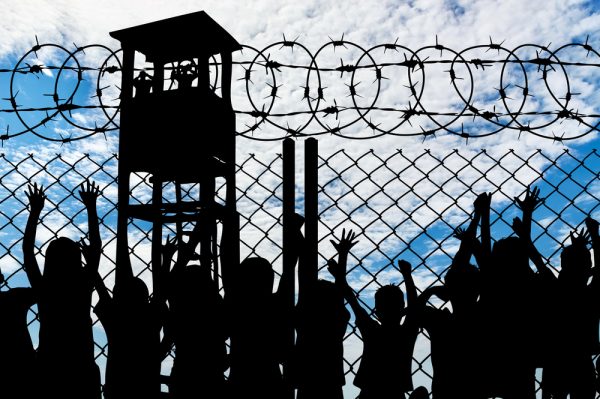
While the men are mostly kept in conventional prisons, the women and children, who are not accused of any crime, are kept in what must be the world’s largest literal concentration camp, Al Hol. The camp holds 40,000 people. Five years after the fall of the caliphate there is no plan for what to do with the individuals stored at this desert camp. Many of the women remain ideologically committed, though Ward also spoke to one former American citizen who has fully turned against IS and even stopped covering in the camp, but she has had her U.S. citizenship stripped on grounds that there was an error in her naturalization process. At a certain age—supposedly eighteen, but according to inmates as early as fourteen—the boys are removed from the camp and sent to the prisons to stop the teens from marrying and producing a “new generation of Islamic extremists.” While the conditions appear to to be broadly humane, if bleak, it is indeed hard to imagine a better breeding ground for radical Islam than this desert city of IS wives denied human rights by a United States proxy. It is of course the case that IS arose from American managed prisons in Iraq in the first place.
The biggest question is why CNN was given this access, with the SDF volunteering information about a prison system which has been criticized by basically every major human rights organization. Based on the interviews it seems to me that the SDF wants out of this obligation. The United States is functionally making them run a Gulag Archipelago and even if they are paid for it, running the prisons consumes an enormous amount of man hours by personnel who could be put to other uses. Further, there is the constant risk of breakouts (as happened in 2022) and of terrorist groups trying to liberate the camp. However, the United States clearly has no other plan for the ultimate fate of these humans, unless they intend to use them to unleash a new wave of terrorism. This is simply yet another policy where our ruling class has no exit strategy. It seems that the U.S. will occupy northeast Syria forever, if only to imprison some 50,000 people without trial. The irony, of course, is that they will continue to justify their presence by saying they need to bring human rights to Syria, just not for those trapped in this desert Guantanamo.
Made in America: The ISIS conquest of Mosul
The Cradle | July 2, 2024
Ten years ago this month, the notorious terror group ISIS improbably conquered Mosul, Iraq’s second-largest city. In only two days of fighting, a few hundred ISIS militants captured the city, forcing thousands of Iraqi soldiers and police to flee in chaos and confusion.
The western media attributed the city’s fall to the sectarian policies of then-Iraqi prime minister Nouri al-Maliki, suggesting that local Sunnis welcomed the ISIS invasion. US officials claimed they were surprised by the rapid rise of the terror organization, prompting then-US president Barack Obama to vow to “degrade and ultimately destroy” the group.
However, a close review of events surrounding the fall of Mosul and discussions with residents during The Cradle’s recent visit to the city shows the opposite.
The US and its regional allies used ISIS as a proxy to orchestrate the fall of Mosul, thereby terrorizing its Sunni Muslim inhabitants to achieve specific foreign policy goals. Says one Mosul resident speaking with The Cradle:
There was a plan to let Daesh [ISIS] take Mosul, and the USA was behind it. Everyone here knows this, but no one can say it publicly. It was a war against Sunnis.
‘Salafist principality’
As the war in Syria raged in August 2012, the US Defense Intelligence Agency (DIA) authored a now well-known memo providing the broad outlines of the plan that would lead to Mosul’s fall.
The memo stated that the insurgency backed by the US and its regional allies to topple Bashar al-Assad’s government in Damascus was not led by “moderate rebels” but by extremists, including Salafists, the Muslim Brotherhood, and Al-Qaeda in Iraq (Islamic State of Iraq).
The DIA memo stated further that the US and its allies, “the western powers,” welcomed the establishment of a “Salafist principality” by these extremist forces in the Sunni majority areas of eastern Syria and western Iraq. The US goal was to isolate Syria territorially from its main regional supporter, Iran.
Two years later, in June 2014, ISIS conquered Mosul, declaring it the capital of the so-called “Caliphate.”
Though the terror group was portrayed as indigenous to Iraq, ISIS only made the “Salafist principality” predicted in the DIA memo a reality with the help of weapons, training, and funding from the US and its close allies.
US and Saudi weapons
In January 2014, Reuters reported that the US Congress “secretly” approved new weapons flows to “moderate Syrian rebels” from the so-called Free Syrian Army (FSA).
In subsequent months, the US Army military and Saudi Ministry of Defense purchased large quantities of weapons from Eastern European countries, which were then flown to Amman, Jordan, for further distribution to the FSA.
After an exhaustive three-year investigation, EU-funded Conflict Armament Research (CAR) found that the weapons funneled to Syria by the US and Saudi Arabia in 2014 were quickly passed on to ISIS, at times within just “days or weeks” of their purchase.
“As far as our evidence shows, the diverters [Saudi and the US] knew what was going on in terms of the risk of supplying weapons to groups in the region,” Damien Spleeters of CAR explained.
The US-supplied weapons and equipment quickly reaching ISIS included the iconic Toyota Hilux pickup trucks, which became synonymous with the ISIS brand.
The Kurdish role
Another way US and Saudi-supplied weapons reached ISIS was through Washington’s main Kurdish ally in Iraq, Masoud Barzani. Discussing the secret funding for weapons approved by the US Congress in January 2014, Reuters noted that “Kurdish groups” had been providing weapons and other aid financed by donors in Qatar to “religious extremist rebel factions.”
In the following months, reports emerged that Kurdish officials from Barzani’s Kurdistan Democratic Party (KDP) were providing weapons to ISIS, including Kornet anti-tank missiles imported from Bulgaria.
Further evidence of Barzani’s support for ISIS comes from a lawsuit currently being litigated in the US District Court for the District of Columbia on behalf of the Kurdistan Victim’s Fund.
The expansive lawsuit, led by former US Assistant Attorney James R Tate, cites testimonies from sources with “direct clandestine access” to senior ranking officials in the KDP, alleging that Barzani’s agents “purposefully made US dollar payments to terrorist intermediaries and others that were wired through the United States,” including through banks in Washington, DC. These payments “enabled ISIS to carry out terrorist attacks that killed US citizens in Syria, Iraq, and Libya.”
Further, the agents made use of “email accounts serviced by US-based email service providers to coordinate and carry out elements of their partnership with ISIS.”
It is unthinkable that Barzani regularly arranged payments to ISIS from the heart of the US capital without the knowledge and consent of US intelligence.
An explicit agreement
In the spring of 2014, reports emerged of a deal between Barzani and ISIS to divide the territory in Iraq between them.
French academic and Iraq expert Pierre-Jean Luizard of the Paris-based National Centre for Scientific Research (CNRS) reported there was “an explicit agreement” between Barzani and ISIS, which “aims to share a number of territories.”
According to the agreement, ISIS would take Mosul, while Barzani’s security forces, the Peshmerga, would take oil-rich Kirkuk and other “disputed territories” he desired for a future independent Kurdish state.
According to Luizard, ISIS was given the role of “routing the Iraqi army, in exchange for which the Peshmerga would not prevent ISIS from entering Mosul or capturing Tikrit.”
In an unpublished interview with prominent Lebanese security journalist and The Cradle contributor Radwan Mortada, former Iraqi prime minister Nuri al-Maliki claimed that meetings were held to plan the Mosul operation in the Iraqi Kurdistan capital, Erbil, which were attended by US military officers.
When US officials denied any involvement, Maliki responded by telling them:
These are pictures of American officers sitting in this meeting … you are partners in this operation.
The UK pipeline
A resident from Mosul speaking with The Cradle states that many of the ISIS members he encountered during the group’s three-year occupation of the city were English-speaking foreigners, in particular the ISIS commanders.
But where did these English-speaking ISIS members come from?
In 2012, UK intelligence established a pipeline to send British and Belgian citizens to fight in Syria. Young men from London and Brussels were recruited by Salafist organizations, Shariah4UK and Shariah4Belgium, established by radical preacher and UK British intelligence asset Anjam Choudary.
These recruits were then sent to Syria, where they joined an armed group, Katibat al-Muhajireen, which enjoyed support from UK intelligence. These British and Belgian fighters then joined ISIS after its official establishment in Syria in April 2013.
Among these fighters was a Londoner named Mohammed Emwazi. Later known as the infamous Jihadi John, Emwazi kidnapped US journalist James Foley in October 2012 as a member of Katibat al-Muhajireen and allegedly executed him in August 2014 as a member of ISIS.
Made in America
The commander of Katibat al-Muhajireen, Abu Omar al-Shishani, also later joined ISIS and famously led the terror group’s assault on Mosul. Before fighting in Syria and Iraq, Shishani received US training as a member of the country of Georgia’s special forces.
In August 2014, the Washington Post reported that Libyan members of ISIS had received training from French, UK, and US military and intelligence personnel while fighting in the so-called “revolution” to topple the government of Muammar al-Qaddafi in 2011.
Many of these fighters were British but of Libyan origin and traveled to Libya with the encouragement of UK intelligence to topple Qaddafi. They then traveled to Syria and soon joined ISIS or the local Al-Qaeda affiliate, the Nusra Front.
“Sometimes I joke around and say that I am a fighter made by America,” one of the fighters told the Post.
There is no indication that the relationship between these fighters and US and UK intelligence ended once they joined ISIS.
‘Maliki must go’
US support for the ISIS invasion of Mosul is evident through the actions Washington refused to take. US planners monitored the ISIS convoys traveling across the open desert from Syria to assault Mosul in June 2014 but took no action to bomb them.
As former US secretary of defense Chuck Hagel acknowledged, “It wasn’t that we were blind in that area. We had drones, we had satellites, we had intelligence monitoring these groups.”
Even after Mosul fell, and as ISIS was threatening Baghdad, Washington planners refused to help unless Maliki stepped down as prime minister.
Maliki claimed in his interview with Mortada that US officials had demanded he impose a siege on Syria to assist in toppling Assad. When Maliki refused, they accused him of sabotaging the Syria regime change operation and sought to use ISIS to topple Iraq’s government.
American sources all but confirm Maliki’s claim. The US military-funded Rand Corporation noted that the US–Iraqi relationship at this time had become strained “because of the willingness of the Maliki government to facilitate Iranian support to the Assad regime despite significant American opposition.”
As Obama’s foreign policy advisor, Philip Gordon explained:
The president was clear he didn’t want to launch that campaign [against ISIS] until there was something to defend, and that wasn’t Maliki.
New York Times journalist Michael Gordon reported that Secretary of State John Kerry traveled to Baghdad two weeks after ISIS captured Mosul to meet with Maliki. Desperate for help, Maliki asked Kerry for airstrikes against ISIS to protect Baghdad, but the latter explained that the US would not help unless the former gave up power.
In July 2014, ISIS fighters were moving captured US artillery and armored vehicles back to Syria across the open desert. Gordon reports further that the ISIS convoys were “easy pickings for American airpower.”
However, when US Major General Dana Pittard requested authorization to conduct the airstrikes to destroy the convoys, the White House refused, saying the “political prerequisites” had not been met. In other words, Maliki was still prime minister.
Geopolitical gains
While claiming to be enemies of ISIS, the US planners and their allies deliberately facilitated the terror group’s rise, including its capture of Mosul.
ISIS relied on US and UK-trained fighters, US and Saudi-purchased weapons, and Kurdish-supplied US dollars – rather than popular support from the city’s Sunni residents – to conquer Mosul.
When self-proclaimed caliph and leader of ISIS, Abu Bakr al-Baghdadi, announced the establishment of the so-called Caliphate at the city’s historic Nuri Mosque, he set up the very Salafist principality outlined in the DIA document by US intelligence heads.
This orchestrated rise of ISIS not only destabilized the region but also served the geopolitical interests of those who claim to be combating terrorism.
Syria on the brink of recovery as Qatar and Turkey change their policies
By Steven Sahiounie | Mideast Discourse | June 3, 2024
The Emir of Qatar, Tamim al Thani, recently said that he supports the street protests in Idlib, where people are protesting the dictatorial rule of the Hayat Tahrir al-Sham (HTS) terrorist group.
This marks a monumental change in policy for Qatar, and maybe the first step toward restoring diplomatic ties with Syria.
Beginning in 2011, and the Obama administration’s US-NATO war on Syria for regime change, Qatar has been a close and loyal ally to the US, and was used as a financial backer of the various terrorist groups brought into Turkey, and trucked across the border to Idlib.
Sheikh Hamad bin Jassim bin Jaber bin Mohammed bin Thani Al Thani, former Prime Minister of Qatar, and foreign minister until 2013, gave an interview in which he admitted Qatar provided the money to bankroll the terrorists in Syria as they attacked the Syrian people and state. He made it clear that the cash delivered was sanctioned, and administered by the US in Turkey. Qatar was not working alone, but under a strictly controlled partnership with the US government.
In 2017, President Trump shut down the CIA operation Timber Sycamore which ran the failed project to overthrow the Syrian government.
Qatar is now turning their back on the terrorists who occupy Idlib. Mohamed al-Julani is the leader of HTS. He is Syrian, raised in Saudi Arabia, fought with Al Qaeda in Iraq against the US, aligned with ISIS founder Baghdadi, came to Syria from Iraq to develop Jibhat al-Nusra, the Al Qaeda branch in Syria.
Once Jibhat al-Nusra became an outlawed terrorist group, Julani switched the name to HTS in order to preserve his support from Washington, DC. Even though the US has a $10 million bounty on his head issued by the US Treasury Department, he is safe and secure in Idlib, where American journalists have visited him for interviews, in which he has sported a suit and tie, wishing to present himself as a western-leaning terrorist that the US can count on.
When the Syrian Arab Army and the Russian military would fire a bullet towards the terrorists in Idlib, the US would denounce it as an attack on innocent civilians. This kept Julani safe and secure, and in charge of humanitarian aid coming across the border from Turkey. The aid was from the UN and various international charities. While the 3 million people living in Idlib are not all terrorists, all the aid passes through the hands of Julani and his henchmen. If you bow down to Julani, you get your share of rations, but if you have complained, you are denied. Those who are cut off from the aid can buy their supplies from Julani at his Hamra Shopping Mall, which he built in Idlib, where he sells all the surplus aid sent to Idlib.
The civilians in Idlib have taken to the streets protesting the rule of HTS. Many people have been arrested by HTS, some tortured, and others killed. The people are demanding that Julani leave.
They are asking for freedom and a fair administration. The various aid agencies have complained that HTS will not allow any free programs for women, such as learning employable skills. Women there are not allowed to seek employment, except in places which are only female. HTS rules with a strict form of Islamic law, which they interpret to their benefit.
Saudi Arabia and Syria have established full normal relations, with an exchange of ambassadors. At the Arab League Summit in May in Bahrain, the Crown Prince of Saudi Arabia, Mohamed bin Salman (MBS) met personally with Syrian President Bashar al-Assad. They also met at the previous Arab League Summit in Saudi Arabia.
MBS recently announced a humanitarian grant to the UN to repair 17 hospitals in Syria which had been damaged in the 7.8 earthquake which killed 10 thousand in Syria.
MBS also sent spare parts for the Syrian Air commercial planes, which had suffered under US sanctions and were prevented from maintaining their safety by Washington. Recently, the very first planes of Syrians began flying to Saudi Arabia for the first time in 12 years, to perform the Haj pilgrimage.
On May 30, the leader of Iraq said he hopes to announce a Turkey-Syria normalization soon. Turkey, like Qatar, had been supporting the various terrorist groups in Syria in cooperation with the US.
Turkey also has made a turn-around in their position, and has been looking for a way to exit Idlib and the other areas it occupies in Syria, in preparation of a re-set with Damascus.
The relationship between the US and Ankara has remained tense after the US partnered with the Syrian Defense Forces (SDF). Turkey considers the SDF as a branch of the PKK, the outlawed international terrorists group who has killed 30,000 people over three decades, while wanting to establish a Kurdish State.
The SDF are planning to have elections on June 11 in an effort to gain western support for a Kurdish State. Erdogan has stated Turkey will never allow this to happen.
If the SDF were to lay down their arms, they could repair their relationship with Damascus, and at the same time Turkey could then withdraw their occupation forces from Syria. With Turkey out of Syria, their normalization process could begin.
When the SDF have repaired their broken relationship with Damascus, and the Turkish threat no longer exists, then the US military can withdraw their 900 occupation force from Syria.
Recently, General Mazloum, the leader of the SDF, said that the problems between the Kurds and Damascus are internal problems, and cautioned against any foreign interference, especially from Turkey.
The situation is changing rapidly in Syria. The economy is collapsed, with the inflation rate over 100% in the last year due to crippling US sanctions. Because the US military is occupying the largest oil and gas field in Syria, this prevents the production of electricity for the national grid, and Syrians are living with three hours of electricity per day.
US sanctions prevent some of the most vital medicines from being imported, as western medical companies are fearful of running afoul of the US sanctions, and have produced a culture of over-compliance, which deprives Syrian citizens’ life-saving medicines and medical supplies.
The battlefields have been silent for years, and the silence grew into a status-quo, where the American and Turkish foreign policy prevented a resolution to the conflict that has destroyed lives and prompted the largest human migration in recent history as Syrians have sought work abroad.
Turkey, Saudi Arabia and Qatar all played significant roles assigned to them by the US State Department under the Obama administration. There is a light at the end of the tunnel with the reversal of policies toward Syria, and Qatar and Turkey are set to play major roles in the recovery process in Syria. These reversals are also significant as they mark a change in the relationship between the US and several regional countries. This is part of the ‘New Middle East’ that Washington called for, but the role the US played has left them the loser.
Featured Video

Iran’s Next Strike May Not Explode. It Could Shut You Down
or go to
Aletho News Archives – Video-Images
From the Archive
Zionism’s Violent Legacy
By Donald Neff | Washington Report On Middle East Affairs | January 1996
On January 4, 1948, Jewish terrorists drove a truck loaded with explosives into the center of the all Arab city of Jaffa and detonated it, killing 26 and wounding around 100 Palestinian men, women and children.[1] The attack was the work of the Irgun Zvai Leumi – the “National Military Organization,” also known by the Hebrew letters Etzel – the largest Jewish terrorist group in Palestine. The Irgun was headed by Revisionist Zionist Menachem Begin and had been killing and maiming Arabs, Britons and even Jews for the previous ten years in its efforts to establish a Jewish state.
This terror campaign meant that at the core of Revisionist Zionism there existed a philosophical embrace of violence. … continue
Blog Roll
 Aletho News
- Trump’s Iran war is on an Israeli leash
- Saudi oil boss issues global supply warning
- Riyadh Says Its Oil System Is Intact. The Numbers Say Otherwise.
- Trump and Netanyahu Want to “Finish the Job” on Iran
- US ‘one-sided dictation’ not Iran’s beliefs makes rational talks impossible: Baghaei
- Iran’s Next Strike May Not Explode. It Could Shut You Down /Col Doug Macgregor
- Iran: US political targets legitimate if assassinations return
- Iraq shuts key border crossing with Iran under US pressure: Report
- Undersea Internet cables could be targeted in retaliation for attacks on Iran: IRGC deputy chief
- EU sending ‘biased’ observers to interfere in Serbian election – president
- If Americans Knew
- The Israel Lobby’s Changing Fortunes
- AIPAC has become such a political liability that it’s shifting to a more “nimble” approach to buying politicians
- At least 160 Israeli settler attacks in 2 weeks
- Will Gaza’s Ancient Christian Community Disappear Forever?
- Israel’s vision of regional security rests on keeping Arab states weak
- Heidi Levine recounts how Palestinian youths helped save her in settler attack
- DAILY UPDATE: Latest essential news on Palestine, Israel, & region
- Trump’s Intensifying Sabotage of the ICC, for Israel’s Sake
- Israeli military detain US and UK volunteers in West Bank including Democratic NY politician Brad Lander
- Americans at National Conservatism Conference held in Israel this year criticize Israel
- No Tricks Zone
- E-Cars Reduce CO2 Emissions By Only 41% Compared To Internal Combustion Engine Vehicles
- Predictions Made By Renowned Climate Professor Over Past Decades Have Been Proven To Be Poor
- New Study Suggests Large Regions Of The Pacific Ocean Have Been Cooling For The Last 80 Years
- Germany’s Green Energy Debacle: High Energy Costs Force Kahla Porzellan to Close After 182 Years!
- New Study: 50 Years Of The Most Aggressive ‘Net Zero’ Policies Can Only Affect The Global Climate By 0.03°C
- US September “Heat” Was No Record…Many Records Set Decades Ago
- Latest European Green Energy Debacle; Portugal’s Largest Flagship Solar Park Insolvent!
- Green Energy Debacle: German Expert Professor Fritz Vahrenholt Warns Of Severe Economic And Social Consequences
- Two More Paleo Reconstructions Affirm Meters-Higher Sea Levels Across Ireland, Brazil 7000-6000 Years Ago
- New Study: Earth And Venus Surface Warmth Largely Explained By Convection And Lapse Rate, Not CO2 Or Radiation

