Militant commander calls for Israeli support, strikes on Syrian troops
Press TV – December 7, 2024
A commander from the so-called Free Syrian Army (FSA) militant group has reportedly expressed hope for friendly relations with Israel, urging the occupying regime to extend both political and military support for their insurgency against the Syrian government.
In an article published on Friday, the Times of Israel quoted an unnamed FSA commander as stressing the need for a clear political stance from the Israeli regime.
“We have enough fighters on the ground. What we need from Israel is a clear political stance against the Assad regime,” he stated.
The commander also called for increased aerial support from the Israeli regime, suggesting that the regime should attack the forces in Syria “wherever it sees them.”
“We are trying to block them on the roads and ambush them, but Israel should also take action from the air,” said the commander.
Highlighting the potential for friendship, he noted that the armed group is open to alliances “with everyone in the region – including Israel.”
He also referenced recent Israeli airstrikes in Lebanon, stating that they have significantly aided the militant group in its advancements on Syrian soil.
“We are thankful to Israel for its strikes against Hezbollah,” he said, adding, “We hope that after the fall of Assad, Israel will plant a rose in the Syrian garden and will support the Syrian people.”
Asked about the future of Syria, the militant commander affirmed, “We will go for full peace with Israel, we will live side by side as neighbors,” insisting that the group has never made “any critical comments about Israel.”
His comments come as militants, having suffered setbacks due to years of retaliatory operations by the Syrian military and its allies, are attempting to regroup in northern Syria.
There are growing reports of substantial Western and Israeli support for anti-Damascus factions, including those affiliated with Hayʼat Tahrir al-Sham.
The Syrian military continues its extensive campaign, reversing some of the territorial gains by the militants.
Growing distrust of the USA globally
By Vladimir Mashin – New Eastern Outlook – December 7, 2024
The special military operation in Ukraine essentially puts an end to the unipolar world in which the Americans considered themselves the supreme ruler, bossing around other countries.
The movement from a unipolar world to a multipolar reality takes several years and this process is not always linear. It is appropriate to recall the words of N. G. Chernyshevsky: history is not the sidewalk of Nevsky Prospekt; it goes in zigzags, with digressions, etc.
At the same time, Israel’s war in Gaza, which began in October, 2023, has noticeably accelerated this process. There are many signs that Israel’s horrible military behaviour in the Palestinian enclave under the guise of self-defence had significant geopolitical consequences, which first and foremost manifested themselves in undermining the US’ status as a global superpower. The world is deeply polarised again; the Global South no longer sees the West as a defender of values and the rule of law.
The United States has seriously weakened the UN Security Council, repeatedly using its veto power to thwart draft resolutions calling for an unconditional ceasefire in Gaza. The fact that many so-called Western liberal democracies defended Israel’s policy of genocide has undermined the functioning of the existing world order.
US ‘mediation’ in favour of Israel
Israel has put itself above the law and it did so with the unconditional support of the United States. For many years, the US, which designated itself the exclusive mediator in the political settlement between Israel and the Palestinians, accepted without any reservations the expansion of illegal Israeli settlements in the occupied territories, ignoring the demolition of Palestinian houses, murder and the imprisonment of thousands of people. In fact, they encouraged the apartheid regime and used their influence in the UN Security Council to curb any attempts to hold Israel accountable.
During the first Trump administration, Washington went even further, unilaterally recognising Israel’s illegal annexation of East Jerusalem and the Syrian Golan Heights. By doing so, the Arab News newspaper emphasised in an article on November 26, “the United States itself became a rogue state violating international law and becoming guilty of Israeli war crimes”.
Israeli extremists assume that the United States will give them the green light to annex the West Bank of the Jordan River and thereby destroy any prospect of creating a Palestinian state.
It is the United States that is guilty of destroying many opportunities to settle the Arab-Israeli conflict. The Israeli newspaper Yedioth Ahronoth noted at the end of November this year that President Bill Clinton, wishing to go down in history as a peacemaker, made a bold diplomatic gesture on December 13, 1998, by visiting Gaza and the site of the future international airport of Palestine. Clinton and his wife Hillary were then greeted by Yasser Arafat and his wife Suha. The US president, whose term in office was ending, privately assured several Arab officials of his intention to declare his support for Palestinian statehood before leaving office. However, as always, his promises only remained on paper.
At the end of November this year, some Americans spread rumours that the Biden administration hinted at the possibility of supporting the Security Council resolution calling for the creation of an independent Palestinian state in an attempt to somehow wash the blood off its hands.
The West is no longer at the helm
Following the sharp international reaction to the war in Gaza, the United States are among the only open supporters of Israel’s actions. This obvious disregard by Washington and its allies for Palestinians lives has seriously undermined their authority and influence in many parts of the globe – and above all in the Global South.
The US position in the world is weakening as a result of Russia’s firm and consistent vector, China’s rapid economic growth, the birth of new coalitions of the Global South (such as BRICS, SCO, ASEAN, etc.). Regional powers such as Türkiye, Iran, Saudi Arabia, Brazil, Indonesia, South Africa, Malaysia, etc. are gaining strength.
The growing global influence of non-Western cultural movements, especially the media, challenges the power of traditional Western media. The proliferation of diverse sources and social media platforms significantly limits the role of the once dominant Western newspapers and TV channels. Not only is America’s position weakening, but there is an unprecedented drop in confidence in government structures in Western Europe.
The transition to a multipolar world is a reality that coincides with the decline of US global hegemony and Trump’s ‘America First’ policy. As the United States retreats to its chambers, its global influence will decrease.
In the United States, there is a growing awareness of the decline of the US role in international affairs. The West is no longer at the helm, the Bloomberg agency wrote on November 20; more and more countries no longer want to play by the old rules. The domestic political situation is so tense that Bloomberg concludes that the US is in a revolutionary situation and that the decline of ordinary people’s well-being decreases trust in the ruling elites.
However, the West is not going to give up its positions without a fight, so we are yet to face new crises and cataclysms.
Erdogan’s Idlib shock shadows “Kursk”
By Alastair Crooke | Strategic Culture Foundation | December 6, 2024
‘Doomsters’ is an occasional Russian expression used to categorise commentators that only see the ‘dark side to events’ (a vice quite prevalent during the Soviet era). Marat Khairullin, a highly respected Russian military analyst, says, “Today, a network of mercenary war bloggers has begun another round of moaning – this time about Syria, where apparently everything is lost for Russia”.
“Many see the events in Syria (and some add Georgia to the mix) as attempts to open additional fronts against our country. Perhaps that’s true. But in that case, it’s more appropriate to draw direct parallels with the reckless attack on Kursk, which left the Ukrainian armed forces in an almost hopeless position”.
Khairullin views the activation of this jihadist insurgency in Syria as a similarly ‘desperate’ act. The background is that the Syria-Russia-Iran coalition had – through the Astana negotiations – “cornered the remaining Syrian terrorists into a 6,000 sq. km enclave. Without delving into the details, it was a process reminiscent of the [Ukrainian] Minsk Agreements—both sides were utterly exhausted and thus agreed to a ceasefire. Importantly, all sides understood this was only a temporary truce; the contradictions were so profound that no one expected the conflict to end”.
Aleppo fell quickly these past days, as “one division of the Syrian National Army outright defected to the Islamists (read: Americans)”. The defection was a set up. Northern Aleppo was occupied by the Syrian National Army, fully controlled, armed and funded by Turkey, which dominates northern Aleppo.
The key, Khairullin says, is this crucial point: The land is flat criss-crossed by few roads:
“ … whomsoever controls the airspace controls the country. Last year, Russia formed a new aerial unit called the Special Air Corps, reportedly tailored for overseas operations. It consists of four aviation regiments, including a regiment of Su-35s. Currently, just two Su-35s are overseeing the entirety of Syria’s territory. Imagine the impact when 24 such aircraft are deployed. And Russia is fully capable of such a deployment”.
The second crucial point is that “Iran and Russia have drawn closer. At the start of the Syrian war, relations between the two were decidedly ‘neutral-hostile’. By late 2024 however, we now see a very strong alliance. Israel and the U.S., by violating the peace agreements through this Turkish insurrection, have provoked a renewed Iranian presence in Syria: Iran has begun to expand beyond its bases, redeploying additional forces into the country. This gives Assad and his allies a direct pretext to expel the American and Turkish proxies from Aleppo and Idlib. This isn’t speculation — it’s straightforward arithmetic”.
Syria, however, is a key component to the Israeli-American plan to remake the Middle East. Syria is both the supply-line for Hizbullah, as well as a hub of resistance to Israel’s “Greater Israel Project”. Now that the permanent ‘Anglo’ Security State unreservedly is backing Israel’s ambition to assert regional hegemony, the West has okayed Erdogan’s jihadist insurrection against President Assad. The aim is to split Iran from its allies, weaken Assad and to prepare for the putative Iran overthrow. Reportedly, the Turkish initiative was hurriedly brought forward, to fit with Israel’s ceasefire plan.
Khairullin’s point is that this Syria ‘ploy’ is akin to Ukraine’s “reckless attack on Kursk”, which diverted Ukrainian élite forces from the beleaguered Contact Line, and then marooned these forces in an almost hopeless position in Kursk. Instead of weakening Moscow (as intended), ‘Kursk’ inverted NATO’s original objective – by becoming opportunity to eradicate a major portion of Ukraine’s élite forces.
In Idlib, the Islamists (HTS), writes Khairullin, “had gained dominance – imposing a strict Wahhabi regime and infiltrating the Turkish-backed Syrian National Army. Both groups are patchwork organizations, with various factions fighting over money, border crossings, drugs, and smuggling. Essentially, it’s a cauldron—not very combat-effective but highly greedy”.
“Our Aerospace Forces obliterated all command centres (bunkers) of Tahrir al-Sham … and there is a strong likelihood that the entire leadership of the group has been decapitated”, notes Khairullin.
The Syrian Army’s main forces are advancing toward Aleppo; meanwhile, the Russian Air Force is bombing relentlessly; its Navy held a large drill off the Syria coast on 3 December with test launches of hypersonic and Kalibr cruise missiles; and Wagner and the Iraqi Hash’ad forces (Iraqi PM forces that are now part of the Iraqi army) are grouping on the ground in support of the Syrian Army.
Israeli Intelligence Chief’s lately have begun to scent problems with this ‘clever initiative’ that dovetails so exactly with Israel’s pause in the Lebanon fighting; With the supply route from Syria cut, Israel then – in theory – would be in a position to commence ‘Part Two’ of its attempted onslaught on Hizbullah.
But wait … Israeli Channel 12 reports the possibility that events in Syria are creating threats against Israel “where Israel would be required to act”.
Shades of ‘Kursk’ – rather than Hizbullah being weakened, Israel adds to its military commitments? Erdogan too, may have wrong-footed himself with this gamble. He has infuriated Moscow and Tehran, and is being flailed at home for siding with the U.S. and America against the Palestinians. Further, he has drawn no Arab support (apart from a Qatari studied ambivalence).
Yes, Erdogan has cards to play in the relationship with Putin (control of naval access to the Black Sea, tourism and energy), but Russia is an ascendant great power and can afford to play some hardball in negotiations with a weakened Erdogan. Iran also has cards to play: ‘You, Erdogan, equipped the jihadists with Ukrainian drones; We can deliver the same to the Kurdish Workers Party’.
In the background is the bellicose language emerging from Team Trump, some of whom take harshly aggressive and hardline positions. These Israel-Firster and hawkish appointees by Trump likely emit their bluster as much to project an image of Trumpist strength to the American public, as to project a substantive project.
Trump is known for waving a big stick – and when he has played that tune for a little while, he slips in from behind, to complete a deal.
So we have had (from Trump): “If the hostages are not released prior to January 20, 2025, the date that I proudly assume Office as President of the United States, there will be ALL HELL TO PAY in the Middle East”.
In the ‘Middle East’? To whom exactly is this addressed? And what does it suggest? (No mention of the thousands of Palestinian detainees and prisoners held by Israel)? Sounds more like Trump has sipped at the Israeli Kool-Aid: ‘All problems derive from Iran’; Israel is the innocent adrift a sea of regional malignity.
Trump’s disciples believe Trump will impose his will to achieve ‘quiet’ in the Middle East – and impose on Putin an end to the Ukraine War. They are convinced Trump can ‘cut a deal’ in the form of an offer to Putin that he cannot refuse. (For, ‘the current ‘owners of the world’ are never going to let China/Russia just waltz in, form BRICS and assume the position of World Hegemon’).
It is a return to the old formula of Zbig Brzezenski: Promise Putin normalisation with U.S. (and Europe) and full sanctions relief, and pull Russia back into the western sphere – severed from a besieged China and Iran (with BRICS scattered to the wind under threat of sanctions).
It fails, however, to take account of how much the world has transitioned in the intervening years since ‘Trump One’. Bluster simply doesn’t carry the effect it used to: America isn’t what it was; nor is it obeyed as it once was.
Does Trump understand this accelerating global metamorphosis (as Will Schryver puts it), that “the only deal to be made with Russia is that of agreeing to the terms Russia dictates”:
“That’s what happens in the real world when you win a big war. And make no mistake, in this war, the Ukrainians have been slaughtered, the U.S./NATO has been humiliated, and the Russians are emerging from it indisputably triumphant, and more powerful on the world stage than they have been since the peak of Soviet strength decades ago”.
In other words, ‘big stick; quick deal’ may not answer to the new world of today.
Putin, in response to a questioner at Astana on 29 November, repeated an earlier warning:
“Let me underscore the key point: the essence of our proposal [on Ukraine, given at the Russian Foreign Ministry] is not a temporary truce or ceasefire, as the West might prefer – to allow the Kiev regime to recover, rearm, and prepare for a new offensive. I repeat: we are not discussing freezing the conflict, but its definitive resolution”.
What Putin is saying – very politely – to the West is that: You still ‘don’t get it’. To seek a deal on Ukraine is to treat the symptom and to ignore a cure. The West has its policy back-to-front, in other words. Putin is clear: A definitive solution would be to delineate the frontier between Atlanticist security ‘interest’ and the security interests of the ‘World Island’ (in Mackinder’s terminology): i.e. to settle the security architecture between the ‘Heartland and the Rim-land’. Once that is done, Ukraine falls naturally into its place. It’s at the end of the agenda, not first.
One highly-regarded foreign policy sage, Professor Sergei Karaganov, explains (original only in Russian):
“Our [Russian] goal is to facilitate the U.S.’s incipient retreat, as peaceably as possible, from the position of global hegemon (which it can no longer afford) to the position of a normal great power. And to expel Europe from being any international actor. Let it stew in its own juices … The conclusion is obvious. We must end the current phase of direct military conflict with the West, but not the broader confrontation with it. Trump will offer to ease pressure on Russia (which he cannot guarantee) in exchange for Russia refraining from a close alliance with China. The Trump administration will propose a deal, alternating threats with promises … but the U.S. already understands that it cannot win. America will remain an unreliable partner for the foreseeable future. Fundamental normalization of our relations with the U.S. should not be expected in the coming decade. Trump’s hands are tied by the Russophobia fanned by liberals for years. The inertia of the Cold War is still quite strong, and so are anti-Russian feelings among most Trumpists”.
“The foremost goal of the current war should be the decisive defeat in Ukraine of Europe’s rising revanchism. This is a war to ward off World War III and to prevent the restoration of the Western yoke. The initial negotiating position is obvious, it has been stated and should not be changed: NATO’s return to its 1997 borders. Beyond that, various options are possible. Naturally, Trump will try to up the ante. So, we should act pre-emptively”, Professor Karaganov advises.
Recall too, that Trump is, at heart, a sworn disciple of the cult of American primacy; American greatness. “He will act accordingly … The Russians will dictate the terms of surrender in this [Ukraine] war because their strength affords them that privilege, and there is nothing the U.S. and its impotent European vassals can do to alter that reality. That said, a decisive strategic defeat is going to be a very bitter pill to swallow for this second Trump administration. Hopefully they won’t opt to set the world on fire in a fit of humiliated madness”.
Iran calls on Ukraine to stop arming, supporting anti-Syria groups
Press TV – December 6, 2024
The Iranian Foreign Ministry has strongly warned Ukraine against supporting anti-Syria armed groups as reports run rife about Kiev’s providing military assistance and training for the outfits.
“Experience shows that coalescence with terrorism only promotes expansion of insecurity and violence across the world, and would afflict its (terrorism’s) supporters sooner or later,” said Mojtaba Damirchiloo, Head of the ministry’s Eurasia Department, on Friday.
He underlined the dangerous nature of the armed outfits in Syria, which were blacklisted by the United Nations Security Council a long time ago, saying deploying such groups towards destabilizing the West Asia region amounted to adoption of an immoral policy that contradicted all the principles of the international law.
In September, an informed Syrian source told Russia’s Sputnik news agency that a group of 250 Ukrainian forces had reached the Idlib Province in northern Syria to train the armed groups.
According to the source, the Ukrainian instructors were set to train members of the Hayat Tahrir al-Sham (HTS) group in production and modernization of drones. “More than 250 unmanned aerial vehicles (UAVs) were delivered to HTS in Idlib in batches in the form of components along with civilian goods,” it added.
Damirchiloo pointed to such accounts as well as some other reports about a number of Ukrainian officials engaging in “illegal arms trade” involving the weapons that have been delivered to the European country by the United States, describing such illegal activity as Kiev’s clear violation of its commitments to “preventing and confronting terrorism,” and demanding immediate cessation of such measures.
Earlier this week, members of the HTS were reported to have overrun many government-controlled areas and killed dozens of soldiers in northern Syria.
The Syrian military and its allied Russian forces then began extensive operations against the outfit, reportedly managing to reverse some of its gains.
Damirchiloo, meanwhile, decried Ukrainian officials’ “repetitive and unfounded” claims about, what they describe as, Iran’s role in the underway conflict in the European country.
The Ukrainian officials, he said, were coming up with such remarks as a means of chiming in with the genocidal Israeli regime and the United States, and securing Western financial and arms support.
Reiterating Iran’s position, he asserted, “The Islamic Republic has announced its opposition to warfare since the beginning, is not involved in the conflict in no way, and has invariably invited all parties to negotiate towards finding a diplomatic solution to their differences.”
Palestinian prisoner dies in Israeli custody within a week of imprisonment
MEMO | December 5, 2024
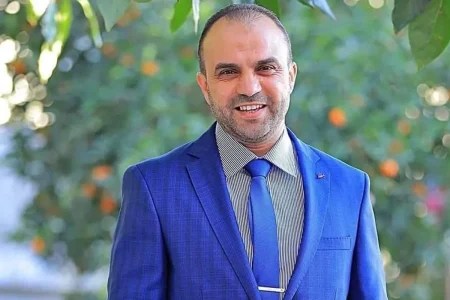
Palestinian prisoner, Mohammad Walid Hussein Ali, has died while in Israeli custody, announced the Palestinian Prisoners’ Commission and the Prisoners Society.
In a joint statement, the two organisations identified 45-year-old Ali as a resident of the Nur Shams refugee camp in the northern West Bank.
He had previously spent approximately 20 years in Israeli prisons and detention centres before being re-arrested last week and taken to the Jalamah interrogation centre in northern Israel.
Yesterday he was transferred to Rambam Hospital in Israel where he was pronounced dead.
According to Anadolu Agency, the details surrounding Ali’s death remain unclear; however, his passing after just a week of detention and interrogation raises concerns that torture may have played a role.
The Palestinian Prisoners’ Commission and the Prisoners Society emphasised that Ali was in good health before his detention, with no prior chronic medical conditions. He was married and expecting his second child at the time of his death.
Ali’s death brings the reported number of Palestinian deaths in Israeli prisons and detention facilities to 48 since the start of the ongoing Israeli genocide in Gaza last October.
It comes a month after two Palestinian prisoners, Sameeh Eleiwi from Nablus and Anwar Esleem from Gaza, also died in Israeli custody, just six days after being moved by Israeli occupation soldiers from the Ramleh Prison clinic to Assaf Harofeh Hospital.
The statement further noted that these figures exclude unconfirmed deaths, particularly of detainees from Gaza, which Israel has not disclosed.
The organisations warned of deteriorating conditions in Israeli detention centres following accounts of torture, overcrowding and lack of medical care, which have led to the deaths of thousands Palestinian detainees over the years.
‘Last shelters’ emptied at gunpoint in Gaza’s Beit Lahia as Israel displaces thousands
The Cradle | December 4, 2024
Israeli troops forcibly displaced thousands of Palestinian civilians from the last shelters in Gaza’s northern city of Beit Lahia on 4 December, as Tel Aviv continues its brutal extermination and expulsion campaign across the strip’s north.
“Occupation forces force displaced people to evacuate the last shelters in Beit Lahia, northern Gaza Strip. The occupation army ordered the evacuation of shelters via loudspeakers in quadcopter aircraft in Beit Lahia,” said Palestinian journalist Anas al-Sharif.
The evacuations are being ordered “under the threat of arms,” he added. Images on social media showed scores of displaced residents fleeing their shelters.
According to Gaza journalist Hossam Shabat, over 6,000 Palestinians have been displaced from schools in Beit Lahia, and have reached the Civil Administration checkpoint.
The Israeli army has stepped up its violent attacks on the area in order to put pressure on civilians to evacuate.
“Airstrikes, artillery shelling, and drones target homes and any citizen moving in the streets of Beit Lahia, north of the Gaza Strip. An Israeli drone is also calling out via loudspeakers to the displaced people inside the shelter schools in Beit Lahia, asking them to leave the schools. The situation in the area is escalating amid the occupation’s attempts to impose more pressure on civilians,” said RT correspondent Saed Swerki.
Israeli forces also committed massacres across Gaza on 4 December. At least five, among them several children, were killed in an Israeli drone strike on central Gaza’s Nuseirat camp.
Eighteen Palestinians, including children and women, have been killed in Israeli bombing across the Gaza Strip since dawn on Wednesday, according to medical sources cited by WAFA news agency.
Overnight, Beit Lahia was subjected to exceptionally violent attacks and forced displacement.
Israeli forces planted and detonated mines and explosive barrels between buildings in an attempt to forcibly expel what remains of northern Gaza.
Gaza’s Civil Defense described Beit Lahia as “uninhabitable” and declared that 60,000 Palestinians are at risk of death.
At least 100,000 Palestinians have been displaced from north Gaza as part of Israel’s unofficial implementation of the Generals’ Plan, which aims to kill or expel all the remaining residents of the northern strip and transform the area into an isolated military zone.
Colombia wants to end avalanche of mercenaries fighting in Ukraine
By Ahmed Adel | December 3, 2024
The involvement of Colombian mercenaries in the Ukrainian conflict highlights the structural roots of the paramilitary phenomenon that has plagued the Latin American country for decades. In this context, Colombia and Russia agreed to create a working group to address the issue, especially since hundreds of Colombian mercenaries have died fighting in the Ukraine conflict.
The meeting, led by Russian Foreign Minister Sergey Lavrov and Colombian Foreign Minister Luis Gilberto Murillo, took place amid growing concern about the participation of former Colombian military personnel in international conflicts. The decision, announced after the meeting in Moscow in November, seeks to establish joint mechanisms to mitigate the impact of this problem, which threatens Colombia’s internal politics and global security.
Colombian President Gustavo Petro tweeted on November 27 that “mercenary work must be banned in Colombia,” adding that to prevent recruitment by private contractors, raising the “standard of living” of soldiers was necessary. He also called for “criminal punishment” for those using mercenaries in foreign conflicts, thereby supporting the bill his government introduced to the Colombian Congress in August to approve the United Nation’s International Convention against the Recruitment, Use, Financing and Training of Mercenaries.
The creation of the Russian-Colombian working group reflects a necessary response to political pressure on Bogota due to increased military and ex-military personnel involved in conflicts abroad, especially in Ukraine. There is an alarming number of Colombian military and ex-military personnel captured or killed in combat against Russian military forces in Ukraine.
Nonetheless, the phenomenon is not limited to the crisis in Ukraine but is part of a broader trend in which former military personnel, paramilitaries, and guerrillas from the South American country are recruited to participate in conflicts in different parts of the world. Some media outlets, such as Cuestión Pública, estimate that around 4,000 former members of Colombia’s Public Force participate in foreign conflicts.
As mentioned, the bill will include measures to criminalize the use, hiring and training of mercenaries, an essential step considering the avalanche of Colombian mercenaries that affects not only Ukraine but also other countries in conflict, such as Libya and Sudan.
Another concern is, obviously, the ramifications in Latin America. For example, former members of the Colombian military are recruited by Mexican drug cartels not only for training but also for paramilitary operations on the ground.
Privatized war and military training in Colombia are rooted in the influence of Israel’s Mossad and American companies, such as Blackwater, and are linked to drug trafficking and extractive economies. In effect, Colombian mercenarism has been fueled by a system that perpetuates violence as a tool of control. The training that Colombian soldiers receive, based on American and British techniques, makes them ideal combatants for international conflicts and criminal activities.
Resolving the mercenary problem in Colombia lies in addressing both the structural causes and the regulations that allow its proliferation. Fully implementing the Peace Agreement signed in Havana in 2016 between the Colombian government and militant groups, which includes measures for substituting illicit crops and economic development in the areas most affected by the conflict, is critical.
The agreement between Colombia and Russia represents a significant step in controlling the export of mercenaries and their impacts. However, the problem transcends national borders. Colombia has a long tradition of internal conflict and a highly trained military that is poorly paid and vulnerable. The solution requires political will and a structural change in the power dynamics perpetuating violence. The only way to find peace is through dialogue and policies that dignify soldiers and deactivate patterns of war.
Until this occurs, though, Colombians will continue to be tempted to fight in Ukraine due to the promise of thousands of dollars a month. Although Colombians can earn more money fighting in Ukraine than having a conventional job at home, more than 300 of the 2,000 believed to have gone to the Eastern European warzone have been killed, while hundreds more have been wounded or deserted their positions.
Even if Colombian mercenaries survive unscathed, they still face other issues. Recently, two Colombian soldiers returning home were detained in Venezuela and sent to Russia, where they have been charged with mercenary activities.
With Colombian nationals exposed to financial rewards in Ukraine, caveated with a likelihood of imprisonment, injury or death, Murillo also confirmed that peace efforts were part of his discussions with Lavrov: “We delivered a message of peace regarding the war between Russia and Ukraine, encouraging political and diplomatic dialogue.” Only through peace will Colombian lives stop being wasted in far-off Ukraine, but as it appears, the Kiev regime is still holding out from any negotiations with Moscow.
Ahmed Adel is a Cairo-based geopolitics and political economy researcher.
Who is Massad Boulos, Tapped as Trump’s Advisor on Arab, Middle Eastern Affairs?
By Svetlana Ekimenko – Sputnik – 02.12.2024
Donald Trump lauded Massad Boulos as a “highly respected leader in the business world, with extensive experience on the International scene” in a post on his social media platform Truth Social on Sunday.
US President-elect Donald Trump has announced Massad Boulos as his pick for the position of senior advisor on Arab and Middle Eastern affairs.
Who is Massad Boulos?
Boulos is a Lebanese American businessman who is also father-in-law to Trump’s daughter, Tiffany.
Boulos helped Trump win back the swing state of Michigan by flipping Arab American voters frustrated with Joe Biden’s policies supporting Israel in its war on Hamas in Gaza and on Hezbollah in Lebanon, campaign officials told Reuters.
He assured Arab Americans during the election campaign that Trump was committed to ending the wars in the Middle East.
“Let’s move to peace, and let’s move to rebuilding Gaza and rebuilding Lebanon,” Boulos told Sky News in October, adding:
“We want Gaza to be prosperous. We want the Palestinian people to be prosperous, to live in peace, to live in harmony, side by side with the Israelis and full security on both sides.”
Trump’s in-law has ties to various factions in Lebanese politics, including the Free Patriotic Movement (Christian party aligned with Lebanese Shiite movement Hezbollah), and the Lebanese Forces Party, according to media reports.
He is familiar with Suleiman Frangieh, leader of the Christian Marada Movement and a candidate for Hezbollah’s faction in the 2022-2024 Lebanese presidential election, Reuters noted.
Massad Boulos, who has acted as a go-between for Trump and Mahmoud Abbas in the past, met with the Palestinian leader on the sidelines of the UN General Assembly in September, a senior Palestinian official told The Times of Israel. Abbas reportedly voiced willingness to work with Trump to reach a two-state solution to the Palestinian-Israeli conflict.
Boulos has friends who are close to Syria’s President Bashar Al-Assad, according to media reports.
South Lebanon Bombed Church
Craig Murray | November 30, 2024
At dusk, I visit the old church which Israel bombed, murdering 15 first responders. Israel has killed over 220 medics and paramedics in Lebanon.
ICC says facing threats over arrest warrants for Netanyahu, Gallant
Press TV – December 2, 2024
The International Criminal Court (ICC) says it has faced coercion and intimidation after judges issued arrest warrants for Israeli Prime Minister Benjamin Netanyahu and his ousted war minister over war crimes in Gaza.
Addressing the ICC members in The Hague, ICC President Tomoko Akane said the court faced “coercive measures, threats, pressure, and acts of sabotage.”
“We are at a turning point in history… International law and international justice are under threat. So is the future of humanity.”
“The International Criminal Court will continue to carry out its lawful mandate, independently and impartially, without giving in to any outside interference.”
The ICC issued the arrest warrants on November 21.
The court determined there were “reasonable grounds” that Israel’s siege and assault on Gaza “created conditions of life calculated to bring about the destruction of part of the civilian population.”
Following the issuance of the warrants, the United States, Israel’s great benefactor and an accomplice in the Gaza genocide, swiftly rejected the ICC decision.
Some US Republicans called on the Senate to sanction the ICC. President Joe Biden said the warrants were “outrageous.”
“Several elected officials are being severely threatened and are subjected to arrest warrants from a permanent member of the UN Security Council,” the ICC president stated.
“The court is being threatened with draconian economic sanctions from institutions of another permanent member of the Security Council as if it was a terrorist organization,” she said.
It is “appalling” that countries appear “scandalized” when the ICC hands down arrest warrants based on international law, Akane added.
“If the court collapses, this will inevitably imply the collapse of all situations and cases… The danger for the court is existential.”
DAWN, a US-based rights group that has welcomed the arrest warrants, has warned Biden administration officials – including Secretary of State Antony Blinken and Pentagon chief Lloyd Austin – that they could be next.
Israeli army razes 600 buildings in Gaza to build dozens of military bases, expand Netzarim Corridor
The Cradle | December 2, 2024
The Israeli army has been expanding its construction of military bases, outposts, and communication towers in the Netzarim Corridor in central Gaza, the New York Times (NYT) reported on 2 December.
The military has demolished over 600 buildings around the corridor in the past three months “in an apparent attempt to create a buffer zone,” the report states.
Satellite images reviewed by NYT showed the Israeli army has built at least 19 large bases throughout the area and dozens of small ones, suggesting plans for a long-term occupation.
“While some were built earlier in the war, the imagery also shows that the pace of construction appears to be accelerating: 12 of the bases were either built or expanded since early September,” NYT writes.
As a result of the construction, the corridor has slowly grown into a 46.6 square-kilometer military zone occupied by Israeli forces.
The paper said that control of the Netzarim Corridor, which cuts across Gaza from the border with Israel to the Mediterranean Sea, allows the army to “regulate” the movement of Palestinians.
The army’s control of the corridor allows Israel to prevent the return of hundreds of thousands of Palestinians displaced by Israeli bombing and ground operations from returning from the south of Gaza to their homes.
Israel has also constructed the Philadelphi Corridor, a buffer zone that divides Rafah in southern Gaza from Egypt, giving Israeli troops control of the Egypt border and crucial Rafah Crossing.
Israel is also creating another military corridor in the far north of Gaza, cutting off the towns of Jabalia, Beit Hanoun, and Beit Lahia from Gaza City in the center, according to satellite images studied by BBC Verify.
BBC reported that “Satellite images and videos show that hundreds of buildings have been demolished between the Mediterranean Sea and the Israel border, mostly through controlled explosions.”
Dr H.A. Hellyer, a West Asia security expert from the Rusi think tank, told BBC the Israeli army is “digging in for the long term. I would absolutely expect the north partition to develop exactly like the Netzarim Corridor.”
Construction of the new corridor in north Gaza starting in October corresponds with Israel’s implementation of the Generals’ Plan.
Under the strategy devised by former general Giora Eiland, the Israeli army issued orders for all Palestinians to leave northern Gaza, while those who are unable to or refuse to leave will be besieged, bombed, and starved.
Dr Hellyer suggested that the implementation of the Generals’ Plan would open the door to the permanent annexation of Gaza and the onset of Jewish settlement there relatively soon.
“Personally, I think they’re going to settle Jewish settlers in the north, probably in the next 18 months,” he said. “They won’t call them settlements. To begin with, they’ll call them outposts or whatever, but that’s what they’ll be, and they’ll grow from there.”
The Long War to reaffirm Western and Israeli primacy undergoes a shape-shift
By Alastair Crooke | Strategic Culture Foundation | December 2, 2024
The long war to reaffirm western and Israeli primacy is undergoing a shape-shift. On one front, the calculus in respect to Russia and the Ukraine war has shifted. And in the Middle East, the locus and shape of the war is shifting in a distinct way.
Georges Kennan’s famed Soviet doctrine has long formed the baseline to U.S. policy, firstly directed toward the Soviet Union, and latterly, towards Russia. Kennan’s thesis from 1946 was that the United States needed to work patiently and resolutely to thwart the Soviet threat, and to enhance and aggravate the internal fissures in the Soviet system, until its contradictions triggered the collapse from within.
More recently, the Atlantic Council has drawn on the Kennan doctrine to suggest that his broad outline should serve as the basis of U.S. policy towards Iran. “The threat that Iran poses to the U.S. resembles the one faced from the Soviet Union after World War II. In this regard, the policy that George Kennan outlined for dealing with the Soviet Union has some applications for Iran”, the Atlantic report states.
Over the years, that doctrine has ossified into an entire network of security understandings, based on the archetypal conviction that America is strong, and that Russia was weak. Russia must ‘know that’, and thus, it was argued, there could be no logic for Russian strategists to imagine they had any other option but to submit to the overmatch represented by the combined military strength of NATO versus a ‘weak’ Russia. And should Russian strategists unwisely persevere with challenging the West, it was said, the inherent contrariety simply would cause Russia to fracture.
American neocons and western intelligence have not listened to any other view, because they were (and largely still are) convinced by Kennan’s formulation. The American foreign policy class simply could not accept the possibility that such a core thesis was wrong. The entire approach reflected more a deep-seated culture, rather than any rational analysis – even when visible facts on the ground pointed them to a different reality.
So, America has piled the pressure on Russia through the incremental delivery of additional weapons systems to Ukraine; through stationing intermediate range nuclear-capable missiles ever-closer to Russia’s borders; and most recently, by shooting ATACMS into ‘old Russia’.
The aim has been to pressure Russia into a situation where it would feel obliged to make concessions to Ukraine, such as to accept a freezing of the conflict, and to be obliged to negotiate against Ukrainian bargaining ‘cards’ devised to yield a solution acceptable to the U.S. Or, alternatively, for Russia to be cornered into the ‘nuclear corner’.
American strategy ultimately rests on the conviction that the U.S. could engage in a nuclear war with Russia – and prevail; that Russia understands that were it to go nuclear, it would ‘lose the world’. Or, pressured by NATO, the anger amongst Russians likely would sweep Putin from office were he to make significant concessions to Ukraine. It was a ‘win-win’ outcome – from the U.S. perspective.
Unexpectedly however, a new weapon appeared on the scene which precisely unshackles President Putin from the ‘all-or-nothing’ choice of having to concede a bargaining ‘hand’ to Ukraine, or resort to nuclear deterrence. Instead, the war can be settled by facts on the ground. Effectively, the George Kennan ‘trap’ imploded.
The Oreshnik missile (that was used to attack the Yuzhmash complex at Dnietropetrovsk) provides Russia with a weapon, such as never before witnessed: An intermediate range missile system that effectively checkmates the western nuclear threat.
Russia can now manage western escalation with a credible threat of retaliation that is both hugely destructive – yet conventional. It inverts the paradigm. It is now the West’s escalation that either has to go nuclear, or be limited to providing Ukraine with weapons such as ATACMS or Storm Shadow that will not alter the course of the war. Were NATO to escalate further, it risks an Oreshnik strike in retaliation, either in Ukraine or on some target in Europe, leaving the West with the dilemma of what to do next.
Putin has warned: ‘If you strike again in Russia, we will respond with an Oreshnik hit on a military facility in another nation. We will provide warning, so that civilians can evacuate. There is nothing that you can do to prevent this; you do not have an anti-missile system that can stop an attack coming in at Mach 10’.
The tables are turned.
Of course, there are other reasons beyond the permanent security cadre’s wish to Gulliverise Trump into continuing the war in Ukraine, in order to taint him with a war that he promised immediately to end.
Particularly the British, and others in Europe, want the war to continue, because they are on the financial hook from their holdings of some $20 billion Ukrainian bonds which are in a ‘default-like status’, or from their guarantees to the IMF for loans to Ukraine. Europe simply cannot afford the costs of a full default. Neither can Europe afford to pick up the burden, were the Trump Administration to walk away from supporting Ukraine financially. So they collude with the U.S. interagency structure to make the continuation of the war proofed against a Trump policy reversal: Europe for financial motives, and the Deep State because it wants to disrupt Trump, and his domestic agenda.
The other wing to the ‘global war’ reflects a mirror paradox: That is, ‘Israel is strong and Iran is weak’. The central point is not only its cultural underpinning, but that the entire Israeli and U.S. apparatus is party to the narrative that Iran is a weak and technically backward country.
The most significant aspect is the multi-year failure as regards factors such as the skill to understand strategies, and recognize changes in the other sides’ capabilities, views and understandings.
Russia seems to have solved some of the general physical problems of objects flying at hypersonic speed. The use of new composite materials has made it possible to enable the gliding cruise bloc to make a long-distance guided flight practically in conditions of plasma formation. It flies to its target like a meteorite; like a ball of fire. The temperature on its surface reaches 1,600–2,000 degrees Celsius but the cruise bloc is reliably guided.
And Iran seems to have solved the problems associated with an adversary enjoying air dominance. Iran has created a deterrence fashioned from the evolution of cheap swarms drones matched up with Ballistic missiles carrying precision hypersonic warheads. It puts $1,000 drones and cheap, precision missiles up and against hugely expensive piloted airframes – An inversion of warfare that has been twenty years in the making.
The Israeli war however, is metamorphosing in other ways. The war in Gaza and Lebanon has strained Israeli manpower; the IDF have sustained heavy losses; its troops are exhausted; and the reservists are losing commitment to Israel’s wars, and are failing to show up for duty.
Israel has reached the limits of its capacity to put boots on the ground (short of conscripting the Orthodox Haredi Yeshiva students – an act that could bring down the Coalition).
In short, the Israeli army’s troop levels have fallen below present command ordered military commitments. The economy is imploding and internal divisions are raw and bruising. This is especially so due to the inequity of secular Israelis dying, whilst others stay exempt from military service – a destiny reserved for some but not others.
This tension played a major part in Netanyahu’s decision to agree to a ceasefire in Lebanon. The growing animus about Orthodox Haredi exemption risked bringing down the Coalition.
There are – metaphorically speaking – now two Israels: The Kingdom of Judea versus the State of Israel. In view of such deep antagonisms, many Israelis now see war with Iran as the catharsis that will bind a fractured people together again, and – if victorious – end all of Israel’s wars.
Outside, the war widens and shape-shifts: Lebanon, for now, is put on a low flame burner, but Turkey has triggered a major military operation (reportedly some 15,000 strong) in an attack on Aleppo, using U.S. and Turkish trained jihadists and militia from Idlib. Turkish Intelligence no doubt has its own distinct objectives, but the U.S. and Israel have a particular interest to disrupt weapons supply routes to Hizbullah in Lebanon.
The Israeli wanton onslaught on non-combatants, women and children – and its explicit ethnic cleansing of the Palestinian population – has left the region (and the Global South) seething and radicalised. Israel, through its actions, is disrupting the old ethos. The region is ‘conservative’ no more. Rather, a very different ‘Awakening’ is gestating.
Featured Video

Dan Dicks with James Corbett on Solutions Watch
or go to
Aletho News Archives – Video-Images
From the Archives
Secret document reveals plans for civil war in Lebanon, Israeli false flags, and invasion
By Randi Nord | Geopolitics Alert | April 5, 2019
Beirut – During his visit with US Secretary of State, Mike Pompeo, Lebanese President Michael Aoun reportedly received a US-Israeli document detailing plans for creating a civil war in Lebanon with covert false flag operations and possible Israeli invasion.
Although the source of the document is Israeli and created in partnership with Washington, no one knows who presented it to Aoun. The Lebanese TV station, Al-Jadeed, initially reported the document on Lebanese TV and a video on its website. Geopolitics Alert translated the report for this article. … continue
Blog Roll
 Aletho News
- Sheikh al-Asadi warns of Iraqi government compliance with US demands
- How to MAKE THE CONSPIRATORS PAY for their crimes! Dan Dicks with James Corbett on Solutions Watch
- There’s a drought in academia: A drought in honest research on the subject of drought and other weather extremes
- Department of War Awards $20.7 Billion Contract to Raytheon for Air-to-Air Missiles
- ‘Distance yourselves from Israel’: IRGC urges US population to question govt policies
- America’s Greenland deal has a radioactive backstory
- The RAF Fairford ‘terror plot’: Unpacking escalation in the UK echo-chamber
- EU Council Advances Chat Control 2.0 Scanning Proposal
- Ex-Greek MEP files complaint against Israeli spyware firm over alleged Pegasus surveillance
- Troubling ideas throughout the Torah, Talmud, Mishneh Torah and Tanya
- If Americans Knew
- New Report: “Scholasticide and Genocide in Gaza: Assessment, Testimonies and Legal Analysis”
- Ex-Biden officials are desperate for a Gaza scapegoat
- Israeli “settlers” Invade Al-Aqsa; Pour Boiling Water on 75-Year-Old
- Israel Has Kidnapped Another American Teenager
- US arms sales to Israel worth $21.6 billion in 20 months
- Three Palestinians Killed in Israeli Attacks on Gaza
- Revealed: German “Anti-Semitism Expert” Driving Crackdown on Palestine Solidarity is Former Israeli Spy
- Egypt’s Warning to Israel Before Oct 7
- Israel’s siege signals another cruel winter for 1.8 million Gazans – Daily Update
- Netanyahu Asked UAE Leader to Deny Report on Oct. 7 Warning in Secret Visit, Sources Say
- No Tricks Zone
- New Study: Earth And Venus Surface Warmth Largely Explained By Convection And Lapse Rate, Not CO2 Or Radiation
- 2025 Nature Paper Claiming Worsening Global Drought Gets RETRACTED …Heavily Flawed
- New Study: ‘Global Drought Shows No Detectable Recent Acceleration Under Climate Warming’
- Economic Masterminds: German Socialists Suggest Taxing Productivity Gains Stemming From Using AI
- The South China Sea Has Not Been Cooperating With The Climate Change Narrative
- Energy Crisis: Germany Enters Heating Season With Historically Low Gas Reserve Fill Levels
- New Study: The Antarctic Ice Sheet Gained Mass From 2020-2024 Due To Staggering Snow And Ice Accumulation
- Study: Ocean Heating Rates From Thousands Of Years Ago ‘Dwarf’ Modern Ocean Heating Rates
- Climate Extremists Target, Attack Large-Scale Power Grid Infrastructure In Germany!
- New Study: Antarctic Ice Melt Has Contributed Less Than 1 Centimeter To Sea Level Rise In The Last 30 Years

