What if the state that claims global military supremacy is now confronting a conflict it cannot win on its own terms?
President Trump’s repeated assertions that the US could defeat Iran and force it to surrender are now colliding with battlefield realities and geopolitical fissures that suggest otherwise. The very premise of a quick and decisive US victory is unravelling in real time, raising profound questions about American strategy, alliance cohesion, and power in a multipolar age.
The Illusion of Swift Victory in Tehran
President Trump’s pronouncements on Iran have been starkly ambitious. On multiple occasions he has touted rapid success and overwhelming military might in confronting Tehran — insisting that the US does not need British help to prevail and that Iranian forces will be “hit very hard.” Yet these claims increasingly look detached from both strategic reality and on‑the‑ground dynamics.
The US military doctrine has traditionally relied on superior air power and technological edge to achieve rapid dominance. In early March 2026, the Pentagon publicly stated that operations against Iran’s missile, air, and naval capabilities were underway, though officials stopped short of conceding a quick end to the campaign. But the timeline Trump once floated — nominally four to five weeks — has already blurred into ambiguity, with the White House acknowledging potential extensions and evolving objectives primarily because of the failure to achieve quick objectives. They thought that the assassination of Iran’s Supreme Leader would cause the regime to fall. That did not happen, forcing the US and Israel to rethink the nature and the duration of the campaign.
The expectation that air campaigns alone could cripple Iran’s military infrastructure — or compel unconditional political submission — misreads Tehran’s defensive resilience and strategic depth. A recent classified report from the US National Intelligence Council found that even large‑scale US use of force is unlikely to dismantle Iran’s entrenched political and military leadership. That insight undercuts the notion that a blitz of strikes can replace the complex sociopolitical calculus of regime transformation. The council’s document, drafted late last month, builds on work by the C.I.A. that assessed that a complete change of government was unlikely even if Ayatollah Ali Khamenei, the supreme leader, was killed in a US-led military operation.
Iran’s responses have also defied Washington’s expectations. Despite extensive targeting, Iranian forces have not capitulated; they have continued missile and drone strikes on US and allied targets across the Gulf region. Rather than collapse, Tehran appears to be adapting, leveraging both conventional responses and strategic signaling to blunt American efforts and maintain a posture of deterrence. Reports in the Western media show significant Iranian success in repeatedly targeting US military bases. Taken together, these developments erode the core of the Trump administration’s confidence in quick, decisive military outcomes, thus setting the stage for a campaign that may extend far beyond initial projections without achieving strategic objectives. As such, President Trump has now stopped threatening “certain death” to Iran and its people.
Eroding Alliances and Strategic Overreach
A second blow to US fantasies is the fraying of Western and regional support that Trump and his advisers presumed would form the backbone of sustained operations. Trump’s suggestion that the US does not need British assistance belies deeper tensions within the transatlantic alliance over legal responsibility, operational strategy, and political backing for war.
Across Europe, capitals are deeply divided over the US-led escalation. Spain has resisted aligning its military fully with Washington’s campaign, and the US leadership has grappled with legal and planning complications related to base access, epitomizing a broader transatlantic unease over the wisdom and legitimacy of war with Iran. These disagreements have reduced the coherence of NATO‑era cooperation, complicating US expectations for collective action.
The US’ handling of Gulf states has also strained ties with regional partners. Officials in several Gulf kingdoms privately expressed frustration at the lack of prior notification before strikes on Iranian territory and at US reliance on Gulf air defenses to intercept Iranian missiles with limited American support. This undercuts longstanding assumptions about the reliability of regional alignments and may incentivize some states to hedge their security calculations.
Domestically, American public opinion is also shifting in ways that undermine unilateralist ambitions. Polling suggests historically weak support for the operation against Iran, with a significant portion of the public expressing opposition and frustration at the perceived readiness of U.S. forces to engage in protracted conflict. This internal division complicates political sustainment of a drawn‑out campaign, particularly given the toll of casualties and financial costs that would accrue over time. Collectively, these fissures — within alliances, among regional partners, and on the home front — highlight the weakening of America’s hegemonic posture and raise questions about its ability to marshal durable coalitions in pursuit of major strategic objectives.
A Crisis of America’s Own Making
The deeper problem is not Iran’s resilience or the alliance falling apart; it is the strategic trap Washington has walked into. According to testimony before Congress, Pentagon officials repeatedly warned that Tehran posed no imminent threat of attacking the US directly. Yet the Trump administration chose to escalate, interpreting cautious intelligence as justification for preemptive strikes and forceful posturing. The result is a war the US did not need to fight, at a cost that will reverberate far beyond the battlefield.
This miscalculation is more than a tactical error; it is a strategic misstep that is reshaping global perceptions of American power. Allies are questioning Washington’s judgment, adversaries are emboldened, and the credibility of US deterrence is being tested. The costs are not just measured in military engagements or financial outlays; they are being paid in influence, alliances, and leverage in other regions of the world. The campaign against Iran is eroding the very hegemonic posture the US has relied on since the end of the Cold War.
The longer the conflict drags on, the more entrenched this erosion becomes. The US now faces a geopolitical deadlock of its own making: a situation where victory is unlikely, withdrawal risks loss of prestige, and every subsequent action is constrained by the consequences of a war initiated without necessity. What started as an assertion of American strength may ultimately be remembered as a cautionary tale of overreach, misreading intelligence, and underestimating both the limits of force and the resilience of regional actors.
In short, the crisis is not just in Iran. Rather, it is in Washington itself. A nation confident in its global supremacy has stumbled into a conflict that threatens to unravel the assumptions underpinning that supremacy, leaving the US not just challenged militarily, but on a path to strategic downfall.
Salman Rafi Sheikh, research analyst of international relations and Pakistan’s foreign and domestic affair
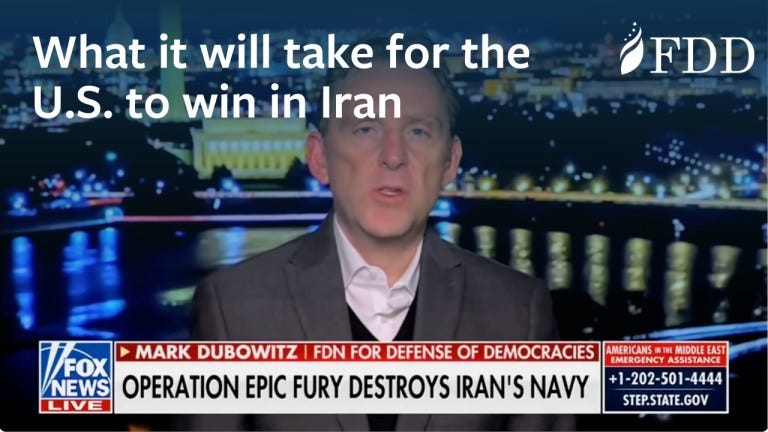
The Trump White House plagiarized its justification for attacking Iran from the Foundation for the Defense of Democracies, the main DC outfit promoting war with Tehran. The think tank was originally founded to “enhance Israel’s image,” and partners closely with the Israeli government.
The Trump Administration appeared to plagiarize its official justification for its war on Iran, copying almost word-for-word a document originally produced by the Foundation for the Defense of Democracies (FDD), a pro-war think tank with close ties to Israeli intelligence which was originally founded to “enhance Israel’s image.”
The FDD document was authored by Tzvi Kahn, the former assistant director for policy and government affairs at the American Israel Public Affairs Committee (AIPAC).
A March 2, 2026 statement issued by the White House accusing Tehran of 44 instances of terrorism against American citizens is “virtually identical” to the list published by FDD in June 2025, analyst Stephen McIntyre noted Thursday.
While the White House did make superficial alterations to the text, they largely consisted of appending the label “Iran-backed” to every mention of groups like Hezbollah and Hamas. In the few instances where Trump administration officials bothered to make significant changes to the original FDD list, the edits were almost always made in service of “ratcheting up the underlying allegation,” McIntyre concluded.
Among the most egregious examples was a 1996 attack on the Khobar Towers in Saudi Arabia, which FDD originally said merely that Hezbollah al-Hejaz was “deemed responsible” for. In the White House version, however, the group’s responsibility was “asserted as factual,” explained McIntyre, noting that serious questions about the incident remain unanswered to this day. “Clinton’s Defense Secretary William Perry subsequently wondered (along with many others) whether Khobar Towers should have been attributed to Al Qaeda,” he wrote.
A 2009 investigation by journalist Gareth Porter based on interviews with over a dozen former CIA, FBI and Clinton administration officials demonstrated that the FBI’s inquiry into the Khobar Towers attack was precooked to blame Iran, when Al Qaeda was mostly like the culprit. Porter found that Shia citizens of Saudi Arabia had been tortured into confessing to the crime by Saudi secret police.
While the White House declined to join FDD in blaming Iran for the Sept. 11, 2001 terror attacks, it echoed the Israel-oriented organization in blaming Tehran for 603 military deaths in Iraq, which both documents attributed to “Iran-backed militias.” But there are major discrepancies with the figure, which amounts to 60% of the total US combatant deaths attributed to Iran. As McIntyre noted, such a claim is “not made in the State Department annual reports on Global Terrorism.”
At least four of the Americans the Trump administration claims were killed by Iran had served in Israel’s military. These included a US citizen who died while invading Lebanon in 2006 and two Americans in the IDF’s Golani brigade who were killed while invading Gaza in 2014. The fourth American, who was born in Israel and had also served in the Golani brigade, was killed amid violent reprisals against settlers in the West Bank in 2015.
A number of the claims are undermined by the very sources they cite, including a December 2019 incident in which the Trump administration insisted “Iran-backed Kataib Hezbollah terrorists killed an American civilian contractor and wounded several U.S. service members in a rocket attack at K1 Air Base in Kirkuk, Iraq.” But the Reuters article cited by the White House as proof that Iran was responsible made no such claim, explicitly cautioning that “no group has claimed responsibility for the attack.” In reality, Reuterssuggested the attack was the work of “Islamic State militants operating in the area [who] have turned to insurgency-style tactics.”
Defense Secretary Lloyd Austin said at the time that “we don’t know” how operationally involved Iran was in the January 28 attack that killed three US troops, “but it really doesn’t matter.”
“We have FDD”: Israel’s favorite Washington cutout
In tax documents filed with the IRS upon its founding in 2001, FDD was originally named EMET, which is Hebrew for “truth.” The fledgling outfit described its mission as working to “enhance Israel’s image in North America and the public’s understanding of issues affecting Israeli-Arab relations.” It changed its name soon after, presumably to sound less overtly Israeli.
FDD has since emerged as the leading Washington-based think tank pushing the US toward war with Iran. During the first Trump administration, FDD participated in a $1.5 million dollar State Department initiative to attack critics of the policy of “maximum pressure” on Iran. At the time, FDD was openly promoting a military assault on Iran. The think tank’s staff are brought to testify before the House Foreign Affairs Committee more than those of any other think tank, invariably to advance conflict with Tehran.
During a 2017 conference of the Israeli American Council in Washington DC, then-Director General of Israel’s Ministry of Strategic Affairs Sima Vakhnin-Gil was recorded by undercover journalist James Kleinfeld during a private breakout session. The Israeli military-intelligence official named FDD as a partner in a covert campaign to spy on Americans involved in Palestine solidarity activity.
“This is something that only a country can do the best,” Vakhnin-Gil said. “We have FDD. We have others working on this.”
The Israeli American Council was sponsored by a billionaire who has also been a top donor to the FDD: the Sheldon and Miriam Adelson Foundation. Since the death of Sheldon Adelson, his Israeli widow, Miriam, has emerged as the top donor to Trump’s political campaigns. Having donated hundreds of millions to Trump and his allies, Adelson clearly expected him to wage war on Iran on behalf of Israel, according to conservative former Fox News host Megyn Kelly.
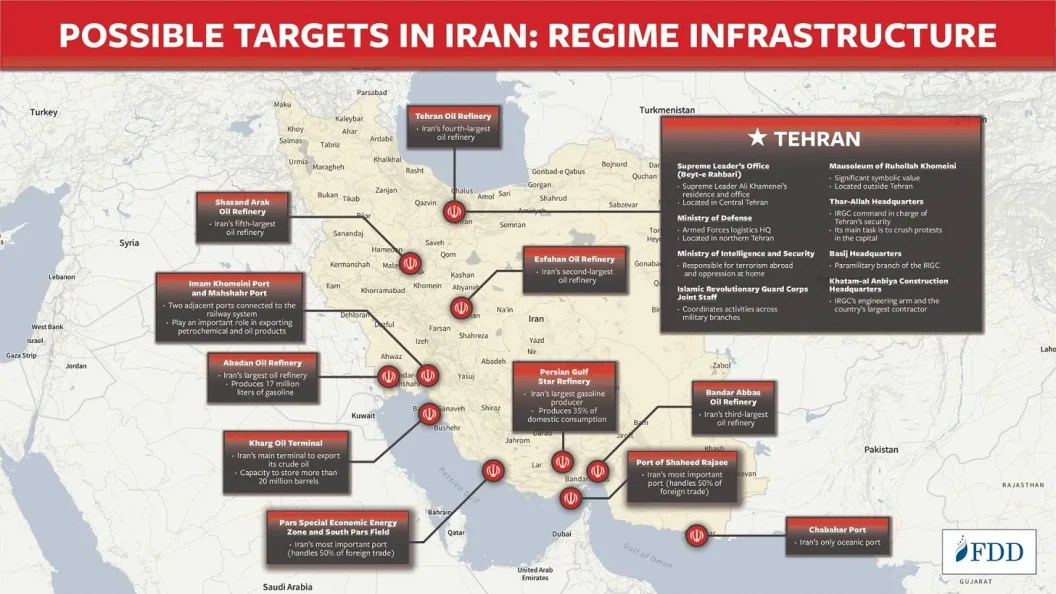
Since Trump thrilled his Israel-aligned donors by attacking Iran, FDD has provided the White House with more than talking points for justifying war on Iran. It has also proposed civilian targets in Iran for the US military to strike. These included the Tehran oil depot which Israel bombed on March 8, causing massive fires that shrouded the city of 9 million in toxic fumes.
After the strike triggered a wave of punishing retaliatory Iranian attacks on oil infrastructure in US-allied countries in the region, Trump advisors expressed regret. “We don’t think it was a good idea,” one told Axios. But by then, it was too late to avoid escalation. They had followed the FDD-authored, Israeli-designed script into a quagmire.
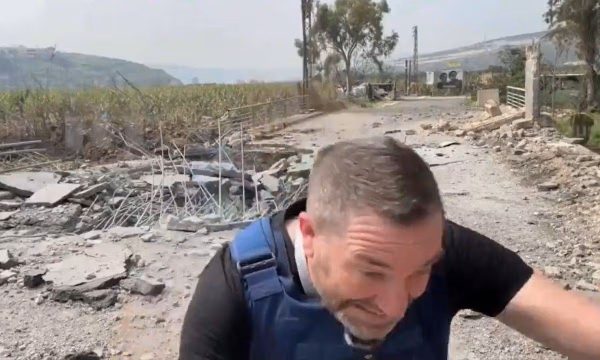
UK media has whitewashed Israel’s attempt to kill British war journalist Steve Sweeney and his Lebanese cameraman Ali Rida while they were broadcasting live from southern Lebanon on 19 March.
Footage shot by Rida shows Sweeney giving a news report about a previous Israeli strike when he realizes another strike is headed towards them. He quickly ducks as the missile is seen exploding as it hits the ground just meters behind him.
Sweeney was treated at the hospital to remove shrapnel from the bomb that was embedded in his arm.
While reporting on the strike, the BBC used a headline stating, “Missile lands next to presenter during live report from Lebanon.”
The headline did not mention that Israel had fired the missile, nor did it describe Sweeney as a journalist or war correspondent, while implying the strike was only random or simply an accident.
The Independent newspaper described the incident in a similar way, writing “A missile landed just a few feet away from a British journalist as he was reporting live from Lebanon.”
“Footage shared by Russian state broadcaster RT on Thursday (19 March) shows Steve Sweeney, its Lebanon bureau chief, running for cover as an explosion detonated behind him,” The Independent added, also failing to mention Israel had launched the strike.
The Daily Mail, a British tabloid, acknowledged Israel’s role, but referred to Sweeney’s statement that Israel tried to kill him as only a “claim.”
“British journalist Steve Sweeney has claimed Israel ‘tried to kill him’ in a targeted airstrike that left him and his cameraman with minor injuries,” the Daily Mail wrote.
The New York Post and CNN used similar headlines, omitting mention of Israeli responsibility, while taking Israel’s claims at face value that its military does not target journalists in the body of the article.
“Insane moment missile blows up just feet away from reporter in Lebanon,” stated the New York Post headline.
CNN wrote, “News crew narrowly escapes strike in southern Lebanon,” while publishing only the video and no other details on its website.
BBC, The Independent, and Daily Mail reports ignore Israel’s deliberate killing of Lebanese journalists covering Israeli war crimes since 2023.
The targeting of Sweeney and Rida came just one day after Israel assassinated Al Manar journalist Mohammad Sherri and his wife in a brutal strike on Lebanon’s capital, Beirut, as part of a series of deadly attacks that killed at least a dozen.
During its previous war on Lebanon – which started in 2023 and ended in a so-called ceasefire in 2024 – the Israeli army murdered three Lebanese journalists with an airstrike as they slept at a media guesthouse in southeast Lebanon.
“The 3:00 am airstrike turned the site – a series of chalets nestled among trees that had been rented by various media outlets covering the war – into rubble. Cars marked ‘PRESS’ were overturned and covered in dust and debris, and at least one satellite dish for live broadcasting was totally destroyed,” AP reported.
The strikes killed camera operator Ghassan Najjar and broadcast technician Mohammed Rida of Al Mayadeen TV, and camera operator Wissam Qassim, who worked for Hezbollah-affiliated Al Manar TV.
“The journalists thought they were safe because this south Lebanon area wasn’t in Israel’s evacuation zone,” PBS journalist Leila Molana-Allen wrote on X.
Molana-Allen, who is also currently reporting from Lebanon, said the journalists had given details of their movements to UN peacekeepers to send to the Israeli military.
“Turns out the IDF [Israeli military] used that info to bomb them while they were all inside asleep,” Molana-Allen reported.
Lebanese journalists had already been working for almost a year under the shadow of Israel’s killings of Reuters video journalist Issam Abdullah on 13 October 2023 and Al Mayadeen journalist Farah Omar, her cameraman Rabih al-Maamari, and their assistant Hussein Akil on 21 November 2023.
All four were killed reporting from the Lebanon–Israel border area after the war between Lebanon and Israel began on 8 October 2023, the next day after the launch of Hamas’s Operation Al-Aqsa Flood and Israel’s genocide of Palestinians in Gaza.
A Reuters investigation concluded that Abdullah was killed and six others were injured when Israeli troops fired two tank shells directly at a group of journalists from Reuters, AFP, and Al Jazeera who were filming at an open spot one kilometer from the border.
A record 129 journalists and media workers were killed worldwide in 2025, the Committee to Protect Journalists reported, with Israel responsible for two-thirds of the deaths, including many it killed in Gaza.
An anti-Zionist group has claimed responsibility for a fire at a warehouse belonging to a defense firm linked to Israel’s Elbit Systems in the Czech Republic.
The Earthquake Faction, which describes itself as “an internationalist underground network,” posted a video purportedly showing the arson attack on an industrial facility in the Czech town of Pardubice on Friday, along with images of the burned-out building.
It said the site was used to “develop weaponry used by the Zionist entity to massacre people daily in Palestine, Lebanon, Iran, and across West Asia.”
Firefighters extinguished the blaze, no injuries were reported, and police said there was no danger to the public. Officials said the incident is being treated as a suspected terrorist attack.
The facility is operated by LPP Holding, a Czech arms manufacturer producing civilian and military equipment. In 2023, the company announced cooperation with Israel’s Elbit Systems on drone development.
Headquartered in Haifa, the firm is Israel’s largest defense manufacturer, specializing in unmanned systems, precision weapons, and electronic warfare equipment.
The Czech Republic, an EU and NATO member, is a close ally of Israel. Czech officials have supported US and Israeli military actions against Iran and condemned Iranian missile and drone attacks.
TEHRAN – Iran proposes creating a Middle East security structure with the participation of regional countries, Iranian President Masoud Pezeshkian said on Friday.
“We are ready to resolve all problems with you. In order to ensure peace in the region, we propose to create a security structure in the Middle East, which will include Islamic countries, in order to ensure peace, stability and security,” Pezeshkian said in an address on the occasion of the Iranian New Year.
Middle Eastern countries do not need the presence of “outsiders,” the president said.
Pezeshkian said that the United States and Israel had no reason to assassinate late Iranian Supreme Leader Ali Khamenei.
“They killed our leader and our commanders without any reason or logic,” Pezeshkian said in a speech marking the upcoming Iranian New Year.
We discuss how the conflict is being viewed across Europe, why many allies are losing trust in the United States, and how countries like Russia and China may ultimately benefit from the crisis.
Israel’s veiled threat to Moscow came just after Russian media warned traffic cameras in Moscow were vulnerable to the same exploits that Israel reportedly used to monitor Ayatollah Khamenei’s residence before assassinating him.
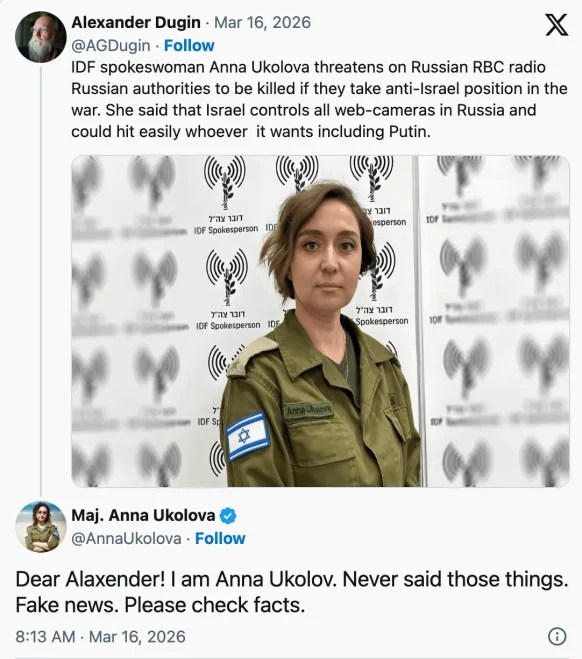
Israeli military spokeswoman Anna Ukolova has drawn outrage in Moscow after threatening that Russian authorities who “wish Israel ill” could be subject to “elimination,” while suggesting Israel could hack into Russian closed-circuit television cameras to identify and track targets.
Asked by a journalist with Russian radio broadcaster RBC whether Israel had access to Russian traffic cameras, Ukolova declined to answer directly but warned that “Khamenei’s elimination shows our capabilities are serious” and that “no one who wishes us harm will be left aside.”
She added, ominously, “I hope Moscow does not wish Israel ill right now – I’d like to believe that.”
In response to a post by Russian philosopher Alexander Dugin, who wrote that the IDF spokeswoman threatened that “Russian authorities [will] be killed if they take [an] anti-Israel position,” Ukolova claimed Dugin was spreading “fake news.” But she declined to clarify how her remarks had been incorrectly interpreted.
Ukolova’s statements came just days after it was revealed that a large number of Russian CCTVs were potentially using BriefCam – an Israeli video analysis software that closely matches the description of a program the Netanyahu regime reportedly deployed to track Iranian movements outside the home of Iran’s Supreme Leader before they assassinated him during their February 28 sneak attack.
On March 12, Russian outlet Mash revealed that the Israeli software BriefCam “has been used in Russia by private providers since the 2010s.” Founded at Israel’s Hebrew University in 2007, BriefCam uses AI to let users “review hours of video in minutes” and “make [their] video searchable, actionable and quantifiable.” In 2024, BriefCam was absorbed by a Dutch subsidiary of the Canon Group named Milestone Systems, which publicly pledges to “amplify what organizations of any size can see, do and achieve with video.”
“Our patented VIDEO SYNOPSIS® technology condenses hours of surveillance into a short summary by overlaying multiple events—each tagged with its original timestamp—onto a single frame, letting you filter them by object type and attributes,” the company’s BriefCam page crows. An analysis by Al Jazeera revealed those attributes include “gender, age group, clothing, movement patterns and time spent in a given location.”
Originally deployed by Israel’s Ministry of Housing and Construction to safeguard illegal settlements in occupied East Jerusalem, BriefCam has been used by governments all over the world, including those in the United Kingdom, New Zealand, Pakistan, Israel, Mexico, United Arab Emirates, Canada, Indonesia, Singapore, Thailand, Brazil, Germany, South Africa, Netherlands, Australia, Japan, India, Spain, Taiwan. It’s also been deployed in the US, with police in Hartford, Connecticut adopting the software in 2022. In 2025, a French court found the government’s use of BriefCam was illegal, citing multiple violations of French and European privacy laws.
As of publication, BriefCam appears to be incorporated into dozens of so-called “video monitoring systems,” including Milestone’s own VMS XProtect surveillance system.
A promotional video shows the numerous surveillance systems that BriefCam operates within.
According to the Russian outlet Mash, a number of prominent Moscow businesses, institutions, and buildings use VMS XProtect surveillance system, including the Institute of Theoretical and Experimental Biophysics of the Russian Academy of Sciences, a 72-story skyscraper named “Eurasia,” and a huge exhibit space known as the Zotov Center. Though Milestone officially ended operations in Russia in 2022 amid the war in Ukraine, Mash reports that some software distributors in Russia “still offer to install the hacked software and hide this in the documents.”
The spokesperson for the Iranian armed forces, Khatam al-Anibya Central Headquarters, Lieutenant Colonel Ebrahim Zolfaghari, warned on Thursday that Iran’s strikes against energy infrastructure in the region are not over.
He stressed that further strikes on Iran’s energy infrastructure would trigger an even stronger response that would target enemy assets and those of the allies of Iran’s enemies. Zolfaghari warned that future responses would not stop until adversary energy assets are “completely destroyed”.
SAMREF refinery in Yanbu under attack
On Thursday, an aerial attack targeted the Saudi Aramco-operated SAMREF refinery in Yanbu, an industry source told Reuters, in the latest escalation in the Gulf following US-Israeli strikes on Iranian energy infrastructure.
The SAMREF refinery, a joint venture between Saudi Aramco and Exxon Mobil, was struck in the Red Sea port city of Yanbu. The source claimed the attack caused minimal impact, with no immediate reports of significant disruption to operations.
It is worth noting that Gulf states have largely maintained limited and tightly controlled disclosures regarding attacks on critical infrastructure and US-linked military assets on their territory. Official statements have overstated the interception of incoming missiles and drones, often highlighting high success rates, while offering little detail on damage or operational disruption. The United Arab Emirates has even claimed that debris from interceptions hit its facilities and caused huge plumes of smoke to rise in al-Fujairah, instead of admitting that its defenses failed to intercept drones.
On Wednesday night, Saudi Arabia’s Ministry of Defense also reported that it successfully intercepted ballistic missiles targeting assets in Riyadh. Meanwhile, footage taken by migrant workers in the area showed multiple direct impacts.
Numerous energy facilities and assets in the UAE, Saudi Arabia, Kuwait, and Qatar were struck overnight.
Iran responds in kind to all
Iranian officials have repeatedly said that security can either be achieved for all or for none, emphasizing that insecurity in Iran will lead to insecurity across the region.
The attacks on US-linked energy facilities follow a series of US-Israeli strikes targeting Iran’s energy infrastructure, including the strategic South Pars gas field. In response, Iran’s Islamic Revolution Guard Corps (IGC) issued evacuation warnings for multiple oil and gas facilities across Saudi Arabia, the UAE, and Qatar, explicitly naming the Yanbu refinery among its targets.
Yanbu has emerged as a critical export hub since Iran effectively shut down the Strait of Hormuz for US-Israeli-linked vessels and products earlier in the war. The waterway, through which roughly a fifth of global oil supply typically passes, has long been a cornerstone of international energy flows.
With Hormuz disrupted, Yanbu and the UAE’s al-Fujairah port became key alternative outlets. However, Fujairah has also come under repeated attacks in recent days, forcing suspensions of operations.
Targeted assets
QatarEnergy reported that Iranian missile strikes on the Ras Laffan industrial city, home to the country’s primary liquefied natural gas processing facilities, caused “extensive damage”. A nearby vessel was also damaged in an attack in the morning.
UAE authorities halted operations at the Habshan gas facility following the alleged interception of a drone attack.
An oil refinery in Kuwait was targeted in a drone strike this morning, sparking a “limited” fire, according to state media. The fire at the Mina Al-Ahmadi refinery was reportedly contained, and there were no reports of injuries, according to the Kuwait News Agency. The oil refinery is located about 500 kilometers south of Kuwait City. It is one of the largest oil refineries in the region, with a petroleum production capacity of 730,000 barrels per day.
With key export terminals under mounting strain and alternative routes repeatedly disrupted, the escalation led by Trump and Netanyahu appears to have further compounded, rather than resolved, the very crisis their initial aggression set in motion, deepening instability across global energy markets.
The US has been drawn by Israel into an “unlawful war” against Iran and needs help to disengage, Omani Foreign Minister Badr Albusaidi has said.
In an opinion piece published in The Economist on Wednesday, the Middle East nation’s top diplomat called on US allies in the region to “tell the truth” about the conflict and admit that Washington “has lost control” of its own foreign policy. “There are two parties to this war who have nothing to gain from it,” he wrote, referring to the US and Iran.
The US maintains close security and defense partnerships with six Gulf states – Saudi Arabia, Kuwait, the United Arab Emirates, Qatar, Bahrain, and Oman – and has a significant military presence in the region, including bases and naval facilities.
The escalation has had economic and security consequences for these states, with Iran retaliating against targets on their territory. Gulf officials have reportedly complained they were not consulted or warned before the US and Israel launched the campaign against Iran on February 28.
Albusaidi, who acted as a mediator in nuclear talks between Washington and Tehran, wrote that the parties had twice come close to a deal in nine months, noting that the airstrike campaign began immediately after the most substantive talks.
”Israel and America again launched an unlawful military strike against the peace that had briefly appeared really possible,” he wrote, adding that Iran’s retaliation was “inevitable.”
He argued that Washington’s greatest mistake was “entering a war that is not its own,” adding that Israel seeks regime change in Iran, while US interests lie in ending nuclear proliferation and securing energy supplies.
The US leadership must “decide where its national interests really lie, and act accordingly,” Albusaidi wrote. He acknowledged that while returning to talks may prove difficult for both sides, renewed negotiations, potentially mediated by the Gulf states, may provide a path forward.
Tehran has described the negotiations as a US-Israeli deception operation. Former US National Counterterrorism Center head Joe Kent said that Israel and allied media figures ran a “misinformation campaign” to push Washington toward war with Iran, according to his resignation letter published on Thursday.
Former Saudi intelligence chief, Prince Turki al-Faisal, also blamed the conflict on Israel, claiming that Israeli Prime Minister Benyamin Netanyahu “somehow convinced” US President Donald Trump “to support his views.”
In the early hours of March 18, Israeli drones tore into four gas‑treatment plants in Assaluyeh on Iran’s southern coast, where sour gas from phases 3, 4, 5 and 6 of the South Pars field is cleaned, separated and turned into the fuel that keeps the country’s lights on, homes heated and factories supplied. Iranian officials ordered the plants offline to contain the fires, and industry analysts immediately warned that production from the offshore platforms feeding those trains would have to be cut back. Within an hour of the strike being reported, European gas prices and Brent crude jumped, because traders understood what most headlines did not. This was not a symbolic hit on an abstract “gas field,” but a deliberate attack on a conversion node at the heart of Iran’s domestic energy system and a critical pillar of the wider Gulf energy order.
At the same time, Donald Trump was on social media threatening that if Iran retaliated again against Qatar’s LNG hub at Ras Laffan, he would “blow up the entirety” of South Pars – the largest gas field on the planet, and interestingly, a reservoir Iran shares with Qatar. The man who joined Israel in authorising the first strikes on Iranian production facilities is now openly dangling the prospect of destroying the shared gas reservoir that keeps tens of millions of people warm, powered and employed. That is not deterrence, only a head of state experimenting in public with the language of total economic annihilation.
Trump’s own Truth Social post about the strike reads like a rambling attempt to distance Washington from the attack while threatening to “blow up the entirety” of South Pars if Iran hits Qatar again. The post deserves closer attention later in this story.
ASSALUYEH: WHERE GAS BECOMES POWER
To see what was attacked in Assaluyeh is to understand that the language matches the target. South Pars itself is the Iranian half of a single, giant reservoir under the Gulf, known as the North Field in Qatar, which together contain around a tenth of the world’s proven gas reserves. Iranian officials say South Pars covers 24 phases and provides between 70–75% of Iran’s gas production, feeding power plants, industry, petrochemical complexes and gasoline production. The gas that makes that possible must pass through places like Assaluyeh, where onshore plants strip out condensate, liquefied petroleum gases and natural gas liquids before returning dry gas to the grid and sending liquids on to refineries and export jetties. Over two decades, the South Pars Special Economic Energy Zone has grown into a dense cluster of processing trains and downstream plants with total gas‑processing capacity on the order of a billion cubic metres per day and around twenty‑one petrochemical units producing close to forty million tonnes per year of urea, methanol, polyethene, and other basic chemicals.
Israel did not attack the offshore reservoir. It attacked the pipes, columns and separators that turn raw gas into power, plastics, fertiliser and fuel. The four targeted plants process sour gas from phases 3, 4, 5 and 6, which are mature, are heavily integrated blocks that feed directly into Iran’s domestic grid and petrochemical system. Shutting those trains, even temporarily, forces operators to throttle back production on the linked platforms and starves downstream complexes of both dry gas and feedstock. In concrete terms, that means less gas available for electricity generation on a grid already prone to summer blackouts, less feed for petrochemical plants that supply everything from fertiliser to plastics, and less condensate flowing through the storage and export facilities that sit alongside the gas plants on the Persian Gulf shore.
Iranian reports speak of powerful explosions at several Assaluyeh facilities, fires around storage tanks and gas units, and workers being evacuated as emergency crews tried to contain the damage. From a planner’s point of view, this is a high‑leverage target: a handful of processing units at the convergence of offshore production and onshore consumption whose disruption sends shockwaves up the supply chain and down into the civilian economy. From the point of view of the people whose houses, factories and hospitals depend on those flows, it looks like something else entirely – an attack on the infrastructure of daily life.
That is the first truth this strike reveals: Israel has shifted from fighting Iran’s armed forces to fighting the country’s energy system, the circulation of fuel that keeps the state conscious.
This is not a one‑off aberration. During the twelve‑day war of June 2025, an earlier Israeli strike hit the Phase 14 processing plant at Assaluyeh, forcing a shutdown and firefighting operation before Iranian engineers brought the plant back online within two weeks. The March 2026 strikes returned to the same nerve centre but widened the cut: instead of Phase 14 alone, the drones went after four plants tied to phases 3–6, which together represent a much larger share of South Pars throughput and a deeper incision into Iran’s ability to turn offshore gas into usable energy. What is being tested here is not just Iran’s repair capacity. It is how much of its gas‑conversion system can be burned down before the political cost becomes untenable.
FROM MILITARY TARGETS TO CIVILIAN PUNISHMENT
The crucial point is that gas in Iran is not a luxury export commodity, but the country’s primary fuel for power generation, industrial heat and residential heating. Well over ninety per cent of the gas Iran produces is consumed domestically, not exported. It keeps homes warm in winter, feeds cement and steel plants, drives turbines in power stations and prevents rolling blackouts on a grid that is already fragile. When you hit Assaluyeh, you are not trimming a few cargoes of condensate to Asia. You are reaching into the core of a domestic energy system that supports nearly ninety million people – the apartment blocks in Tehran that already live with scheduled outages, the small factories in Isfahan that depend on steady voltage to keep lines moving, the provincial hospitals that cannot function when the generators sputter.
Even the outlets trying to normalise the strike cannot entirely avoid that reality. They call South Pars an “energy lifeline”, stress that it powers much of Iran’s electricity system and note that the onshore plants at Assaluyeh are central to separating condensate and LPG from the gas that then runs into Iranian networks. “Energy lifeline” is the language of necessity, not of optional revenue. To choose that target is to choose to tamper with the civilian infrastructure that stands between a functioning society and a rolling crisis of blackouts, shortages and industrial breakdown. “Collective punishment” is usually invoked in the context of bombs on apartment blocks or food embargoes. Here it is delivered through valves and turbines.
It is precisely at this point, when questions of necessity and legitimacy collide, that the recent behaviour of Washington’s own security establishment strips away the alibi that this was a war forced by urgent facts. In a few sentences at a Senate hearing, Director of National Intelligence Tulsi Gabbard told lawmakers that only the president can decide what is an “imminent threat” from Iran, even as senior aides were warning her that there was no evidence Iran had restarted enrichment or posed an immediate nuclear danger. Two days earlier, Joe Kent, the director of the National Counterterrorism Center, resigned, saying in his letter that he could not “in good conscience support the ongoing war in Iran,” that Iran posed “no imminent threat,” and that Israel had pressured the United States into the conflict. Those two moments do not need pages of commentary. Together they are enough: the official charged with guarding the integrity of U.S. intelligence rewrites “threat” as a presidential mood, and the official charged with synthesising terrorist threats walks out saying the war is manufactured.
In other words, while Israeli pilots and U.S. operators are hitting the infrastructure that keeps Iranian civilians alive, the people at the top of the American system are quietly admitting that the supposed emergency justifying those strikes does not exist in the way the public was told. The last line of defence, a reality defined by evidence rather than by political need, has been crossed, and it has been crossed at the exact moment the war shifted from military targets to the machinery of everyday survival.
Trump’s Truth Social statement makes that shift even starker. It is not a clarification, and reads more like a hostage note. South Pars is being turned into collateral for Qatar’s LNG security, and Trump denies U.S. prior knowledge of Israel’s first strike while claiming the right to decide if and when the entire shared field is destroyed. In one message, he signals that the energy backbone of Iran and Qatar is now a bargaining chip Washington is prepared to sacrifice to enforce its war.
That is the second truth of this episode: the war on Iran’s civilian infrastructure is being waged under a definition of “threat” that collapses into whatever the president needs it to be.
Once a president starts talking about “blowing up the entirety” of the field that keeps both Iran and Qatar running, the fiction that this is a contained war collapses.
Exporting the Energy Shock
By treating Iran’s South Pars complex and linked Gulf energy infrastructure as disposable targets, Israel and the United States have not just escalated a regional war; they have shifted the economic pain onto societies that never signed up for this fight, from Turkish households to European workers and Indian farmers now absorbing the fallout.
Turkey: forced into a rigged market
In Turkey, the cost of turning South Pars into a battlefield is already measurable. Analysts note that Iran supplies gas to Turkey by pipeline, and that any prolonged disruption would force buyers to look for replacement cargoes on the LNG market. That “elsewhere” is the spot market, where Asian demand has already begun pulling cargoes away from Europe as importers scramble to replace lost Gulf supply. In practice, a strike pitched as pressure on Iran becomes a higher import bill for a NATO member and another inflationary squeeze on households and industry.
Europe: dragged back toward 2022
In Europe, the impact showed up first on trading screens. After disruption to Qatari LNG output, benchmark gas prices on the Dutch TTF hub jumped by as much as 45%, reaching around €46 per megawatt-hour. Reuters then reported that Asian buyers scrambling for LNG replacement cargoes were already pulling shipments toward Asia, reinforcing the risk of another continental price shock. Europe’s dependence on LNG after cutting Russian pipeline supply means that attacks on South Pars-linked infrastructure in the Gulf do not stay regional for long.
India: paying for a war it did not choose
In India, the blowback is more than theoretical. Government sources told CNBC-TV18 that LPG supplies were already “feeling some heat” as the West Asia conflict disrupted shipping routes and pushed gas prices higher. The same report said Asian LNG prices had risen from about $6–8 per MMBtu to around $15 per MMBtu, while rerouting cargoes from alternative suppliers such as the United States or Norway would take longer. A later report said Indian LPG consumption fell 17.7% in the first half of March because of war-related supply disruption. That is what energy warfare looks like in human terms: shortages, higher costs and forced adjustment by people who had no role in launching the conflict.
China: tested, not insulated
China’s immediate exposure looks smaller on paper, but the same shock still hits Beijing’s energy calculus. Reuters reported that over 80% of Qatar’s LNG exports go to Asia, placing major buyers like China in the line of fire when Gulf supply is disrupted. Another report noted that China was among the key Asian markets exposed as the regional benchmark LNG price surged and traders sought replacement cargoes from farther afield. That leaves Beijing with more buffers than poorer importers, but not immunity from the price shock set off by attacks on Gulf gas infrastructure
WHEN A SHARED FIELD BECOMES A WAR ZONE
If the story stopped at Iran’s shoreline, it would already be devastating. But South Pars does not stop at Iran’s shoreline. The reservoir that feeds Assaluyeh stretches under the Gulf into Qatari waters, where it is known as the North Field and where it supplies Ras Laffan Industrial City, the most important LNG complex on Earth. Before the war, Ras Laffan’s trains exported around 77 million tonnes per year of liquefied natural gas, with plans underway to expand capacity towards 142 million tonnes by the end of the decade. Alongside LNG, Ras Laffan also produces Liquefied Petroleum Gas (LPG), ethane, condensate and sulphur, and hosts gas‑to‑liquids plants, power stations and desalination units. It is a central hinge in the global energy system, and on the day Iran’s missiles arrived, workers there were told to leave the plant that underwrites their families’ incomes because someone else had decided their shared field was expendable.
Qatar understood immediately what an attack on South Pars meant. Its foreign ministry condemned the strikes as “dangerous and irresponsible,” explicitly reminding the world that the field is geologically continuous with the North Field and warning that targeting infrastructure tied to that reservoir threatens global energy security. It has now gone further, calling Iran’s strike on Ras Laffan a “brutal targeting” of its gas hub, invoking Security Council resolutions and asserting its right to respond under Article 51 of the UN Charter. The United Arab Emirates, normally cautious about public criticism of Israel, issued its own statement that attacks on energy facilities linked to Pars risk catastrophic consequences. Those are not sentimental reactions. They are the reflex of states that suddenly realised the line between “hitting Iran” and “putting our own energy spine in the crosshairs” had effectively vanished.
Iran’s Revolutionary Guard then warned that key Gulf facilities had become “direct and legitimate targets” and urged workers to evacuate them before the strike. The list was specific: Ras Laffan; Mesaieed, Qatar’s original deep‑water export port and industrial hub, where gas and condensate are turned into NGLs, refined products, petrochemicals, aluminium and steel; Samref, a more‑than‑400,000‑barrels‑per‑day refinery in Yanbu on Saudi Arabia’s Red Sea coast with around 13 million barrels of storage; Jubail, the giant refinery‑petrochemical complex in eastern Saudi Arabia running at roughly 440,000 barrels per day and anchored by a 1.5‑million‑tonne‑per‑year ethylene cracker; and Al Hosn in the UAE, a sour‑gas project that processes about a billion cubic feet per day of raw gas, produces roughly half a billion cubic feet per day of sales gas for the Emirati grid and throws off tens of thousands of barrels of condensate and thousands of tonnes of sulphur every day.
In Kuwait, drones struck individual units at the Mina al‑Ahmadi refinery and Mina Abdullah refinery, triggering “limited” fires and forcing operators to temporarily halt parts of their output. Further east, Abu Dhabi’s Habshan gas facilities, already singled out in Iranian warnings, were shut down after debris from intercepted missiles fell on the site, underscoring that Tehran was willing to hit the very installations that underpin its rivals’ domestic energy security.
In other words, Tehran not only threatened but executed multiple strikes, and in the Ras Laffan’s case, it appears the Islamic Republic have struck the same class of conversion assets on Arab shores that Israel and the U.S. had just targeted at Assaluyeh, the plants where raw hydrocarbons become electricity, heating, industrial feedstock and exportable product.
It is crucial to understand that Ras Laffan’s LNG trains, Mesaieed’s NGL and refining complex, Samref’s crude units, Jubail’s crude‑to‑chemicals expansion and Al Hosn’s gas and sulphur trains are all parts of the same nervous system.
When one side authorises attacks on conversion nodes at South Pars, the other side’s answer is not to keep politely to its own coastline. It is to declare that the Gulf’s entire energy architecture is now part of the battlefield.
That is the third truth this strike exposes: by hitting a shared field, Israel and the U.S. have made their own allies’ energy spines part of the target set.
THE ENERGY WAR NOBODY CAN HONESTLY CALL ‘DEFENSE’
Seen from this angle, the Assaluyeh strikes were not a self‑contained tactical move. They were the opening of a new kind of war, a war on conversion infrastructure, that punishes civilians first and drags allies and markets along for the ride. Israel hit the plant that turns Iran’s gas wealth into heat, light and wages; Iran responded in kind by putting the plants that turn Qatar’s, Saudi Arabia’s and the UAE’s hydrocarbons into LNG, petrol and plastics in its sights. Trump then raised the stakes by threatening to “entirely blow up” the shared reservoir that makes all of this possible, as if the energy backbone of two states and a sizeable slice of Europe and Asia’s gas supply were a pawn to be removed from the board to prove a point.
At that stage, the legal and moral mask slips. A campaign that begins as “precision strikes” against military and command targets turns, almost in slow motion, into an assault on the infrastructure that keeps tens of millions of people from freezing, blacking out or losing their jobs, and into a form of extortion against the wider Gulf. In other words, people of Iran are being asked to accept that Iran’s energy lifeline can be bombed with impunity, or watch their own refineries and LNG terminals burn.
Iranian analysts now call this openly what it is, “economic warfare” centered on energy, and warn that destroyed or degraded capacity will worsen electricity shortages and deepen domestic hardship. When the same government waging that campaign has senior officials on record saying the “imminent threat” used to sell the war does not exist as advertised, it becomes very hard to sustain the fiction that this is self‑defense in any meaningful sense.
A war waged under those conditions cannot be sold as “precision.” It can barely, if at all, be sold as self‑defense. What they are doing, in the cold light of Assaluyeh’s burning stacks and Ras Laffan’s flares, looks like a campaign of collective punishment enforced through the energy system of an entire region, and once you see it that way, it becomes very hard to unsee.
The Iranian foreign minister says ordinary Americans bear the brunt of the illegal US-Israeli aggression against Iran with the trillion-dollar “Israel First tax” that is expected to hit US economy.
Abbas Araghchi made the remarks in an X post on Thursday after The Washington Post reported that the US Ministry of War seeks more than $200 billion in budget request for the military assault against Iran.
The top Iranian diplomat described the figure as “the tip of the iceberg” as the war is about to enter its fourth week, contrary to what the enemies had predicted to be a short one.
“We’re only three weeks into this war of choice, imposed on both Iranians and Americans,” he said.
“This $200b is the tip of the icerberg. Ordinary Americans can thank [Israeli Prime Minister] Benjamin Netanyahu and his lackeys in Congress for the trillion-dollar “First Israel tax” that is about to hit US economy.”
Citing informed sources, The Washington Post report said that the Pentagon’s demand for additional budget is aimed at increasing the production of weapons that have been destroyed or depleted during the war.
The figure also includes replacing modern missiles such as Tomahawk, as well as Patriot systems and THAAD interceptors, which have been used in recent weeks, according to the report.
Preliminary estimates indicate that the cost of the war in the first six days was about $11.3 billion and that ammunition worth over $ 5.6 billion had been used only in the first two days of the conflict.
The criminal US-Israeli aggression on Iran began on February 28 with airstrikes that assassinated senior Iranian officials and commanders.
The Iranian Armed Forces have responded by launching almost daily missile and drone operations targeting locations in the Israeli occupied lands as well as US military bases and assets across the region.
The retaliatory strikes have been carried out based on the principle of “eye for an eye,” inflicting heavy losses on the enemies.
War is often sold to the public as an act of national will: decisive, necessary, and under control. The bill arrives later, in a quieter form. It shows up in insurance markets, shipping rates, emergency guarantees, higher fuel prices, and sudden policy reversals designed to keep the economic damage from spreading too far or too fast. That is what is now happening with the U.S.-Israeli war on Iran. The fighting is not only destroying lives and widening instability. It is also revealing something more familiar about the American state: when private actors no longer want to bear the risk of a war Washington helped ignite, Washington moves to spread that risk across everyone else.
The clearest example came when maritime war-risk premiums in the Gulf surged, in some cases by more than 1000%, as ships and cargoes moved through a combat zone centered on one of the world’s most important energy chokepoints. This is what markets do when governments create danger: they start pricing reality honestly. Insurance underwriters do not care about speeches about resolve or credibility. They care about missiles, mines, damaged hulls, and the odds that a vessel will not make it home intact. Once those odds change, the market does what it is supposed to do. It becomes expensive to move goods through a war.
But the American state does not like that kind of honesty, because honest prices expose the real cost of intervention. So instead of letting war become unaffordable to the people escalating it, Washington stepped in. The U.S. International Development Finance Corporation announced a maritime reinsurance facility covering losses up to roughly $20 billion on a rolling basis, and later named Chubb as the lead insurance partner. In plain English, the government decided that if the private market was no longer willing to carry the full risk of this war, the state would help carry it instead. That is not a side effect of interventionism. It is one of its operating principles. Risk is privatized on the way up, then socialized when the numbers stop working.
The same pattern is visible in energy policy. As the war tightened shipping and pushed oil prices above $100 a barrel, Washington issued a thirty-day waiver allowing purchases of stranded Russian oil at sea to stabilize markets. That move was not just an emergency adjustment. It was an admission. The administration was effectively saying that one war had already become costly enough to require loosening pressure in another theater. A foreign policy that presents itself as hard and disciplined suddenly becomes very flexible when gasoline, shipping, and inflation begin threatening domestic politics. The slogans remain moralistic. The mechanics turn transactional overnight.
This is what statism looks like in practice. It does not simply bomb another country and call it security. It also rearranges the economic landscape at home and abroad so that the political architects of the war do not face the full consequences of their decisions. The cost is pushed outward onto taxpayers who did not authorize the war, consumers who will pay more for energy and goods, and trading systems that now have to absorb new shocks because Washington and Israel chose escalation over restraint. The state does not merely fight. It conscripts logistics, insurance, credit, and public balance sheets into the campaign.
That is why it is misleading to describe this as only a military conflict. It is also an exercise in political risk transfer. The Strait of Hormuz handles around twenty million barrels per day of crude oil and oil products and roughly a quarter of the world’s seaborne oil trade. Any government that helps turn that corridor into a war zone is not just making a strategic decision abroad. It is imposing a hidden tax on ordinary life. It is raising the cost of transport, trade, fuel, insurance, and eventually everything built on those foundations. And when those costs start climbing too fast, the same government asks the public to cushion the blow in the name of stability.
There is a moral evasion built into this arrangement. The public is told to think about war in the language of necessity and strength, while the real economics are handled behind the scenes through emergency waivers, public guarantees, and market interventions. Washington bypasses the discipline that peace would impose. It subsidizes the consequences of its own escalation, then presents the cleanup operation as responsible governance. That is not prudence. It is the imperial version of sending someone else the invoice.
The libertarian objection to this war is not only that it is reckless, unjust, and likely to widen. It is also that the state is once again doing what it does best: converting elite foreign-policy choices into burdens to be carried by everybody else. When insurers retreat, the government steps in. When sanctions collide with energy reality, the rules bend. When war becomes too expensive, the price is redistributed rather than paid by the people who chose it. That is the deeper scandal here. The state is not just waging this war. It is socializing its cost.
Fears of a greater Middle East escalation were triggered after Iran launched a massive drone and missile attack against Israel, aided by Hezbollah and the Yemeni Houthis. Iran said the attack was in response to Israel’s bombing of the Iranian consulate in Damascus, Syria, which killed seven members of the elite Revolutionary Guard Corps.
Iran’s massive retaliatory attack on Israel from its own territory is a sign that the conflict could “escalate out of control.”
Michael Maloof, a former senior security analyst in the office of the US secretary of defense, told Sputnik that the first ever direct Iranian attack on Israel set a dangerous precedent.
“My concern is that this could easily escalate into something not only between Iran and Israel, but beyond the Middle East region,” he said.
Iran’s assault, which it stated was an act of “self-defense” after the Israeli strike on its consulate in Damascus, was originally intended to be a “limited” one, said Maloof.
Iran first sent in “swarms of drones with lights on as a sign of psychological warfare,” but sending in cruise and ballistic missiles by Tehran was a “distinct escalation,” said Maloof.
The scale of Iran’s attack on Israel suggests that Tehran was sending a message, demonstrating that it possesses “extraordinary capabilities,” said Maloof. … continue
This site is provided as a research and reference tool. Although we make every reasonable effort to ensure that the information and data provided at this site are useful, accurate, and current, we cannot guarantee that the information and data provided here will be error-free. By using this site, you assume all responsibility for and risk arising from your use of and reliance upon the contents of this site.
This site and the information available through it do not, and are not intended to constitute legal advice. Should you require legal advice, you should consult your own attorney.
Nothing within this site or linked to by this site constitutes investment advice or medical advice.
Materials accessible from or added to this site by third parties, such as comments posted, are strictly the responsibility of the third party who added such materials or made them accessible and we neither endorse nor undertake to control, monitor, edit or assume responsibility for any such third-party material.
The posting of stories, commentaries, reports, documents and links (embedded or otherwise) on this site does not in any way, shape or form, implied or otherwise, necessarily express or suggest endorsement or support of any of such posted material or parts therein.
The word “alleged” is deemed to occur before the word “fraud.” Since the rule of law still applies. To peasants, at least.
Fair Use
This site contains copyrighted material the use of which has not always been specifically authorized by the copyright owner. We are making such material available in our efforts to advance understanding of environmental, political, human rights, economic, democracy, scientific, and social justice issues, etc. We believe this constitutes a ‘fair use’ of any such copyrighted material as provided for in section 107 of the US Copyright Law. In accordance with Title 17 U.S.C. Section 107, the material on this site is distributed without profit to those who have expressed a prior interest in receiving the included information for research and educational purposes. For more info go to: http://www.law.cornell.edu/uscode/17/107.shtml. If you wish to use copyrighted material from this site for purposes of your own that go beyond ‘fair use’, you must obtain permission from the copyright owner.
DMCA Contact
This is information for anyone that wishes to challenge our “fair use” of copyrighted material.
If you are a legal copyright holder or a designated agent for such and you believe that content residing on or accessible through our website infringes a copyright and falls outside the boundaries of “Fair Use”, please send a notice of infringement by contacting atheonews@gmail.com.
We will respond and take necessary action immediately.
If notice is given of an alleged copyright violation we will act expeditiously to remove or disable access to the material(s) in question.
All 3rd party material posted on this website is copyright the respective owners / authors. Aletho News makes no claim of copyright on such material.


 Aletho News