Sen. Schumer: I Will Continue to Fight to Give Israel All the Aid It Needs
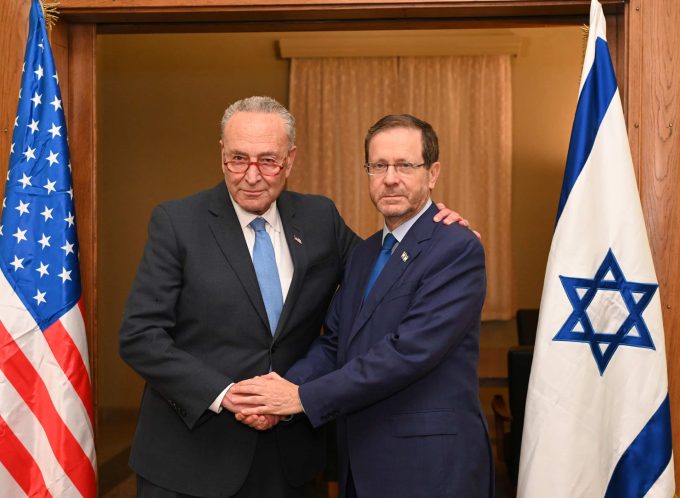
Photo by : Haim Zach / GPO
By Kyle Anzalone | The Libertarian Institute | February 4, 2026
Senator Chuck Schumer said that he would fight to get Israel “all the aid that it needs.”
“I will fight for aid to Israel. All the aid that Israel needs. I will continue to fight for it,” the Senate minority leader said on Saturday. He went on to refer to Israel aid as his “baby.”
The US has provided hundreds of billions in security assistance to Israel and fought several wars in the Middle East for Tel Aviv. Following the October 7, 2023, Hamas attack on Israel, the US sent Israel $14 billion in arms that were used to conduct a genocide in Gaza.
Schumer touted his role in passing that aid package to Israel. “We delivered more security assistance to Israel, our ally, under my leadership than ever, ever before. We will keep doing that,” he told the conference of Jewish-Americans. “As long as I’m in the Senate. This program will continue to grow from strength to strength, and we won’t let anyone attack it or undo it.”
The Democratic leader of the Upper Chamber also said that he hopes the ceasefire in Gaza turns into a lasting peace. However, Israel is undermining the truce with daily strikes on Gaza. Since Saturday, Israel has killed over 60 Palestinians.
While the US holds significant leverage over Israel via military assistance, statements like Schumer’s make it clear to Tel Aviv that Washington is unprepared to threaten Prime Minister Benjamin Netanyahu that if he does not comply with the ceasefire, Washington will end the flow of aid.
Israel to shut water, electricity at UNRWA facilities in occupied territories
Press TV – February 4, 2026
Israel will begin cutting off water and electricity to United Nations Relief and Works Agency (UNRWA) facilities in the occupied Palestinian territories, a top Israeli minister announced on Wednesday.
Israel’s Energy and Infrastructure Minister Eli Cohen told The Jerusalem Post that he will “personally” oversee the shutdown of utilities to UNRWA offices in occupied al-Quds starting today.
Cohen accused the agency of operating “in a systematic way to incite against Israel.” He said utility companies had been formally instructed to carry out the cutoff, which is expected to be completed within two weeks.”
“In principle, the law was passed about two weeks ago. Warning letters have already been sent to properties that we identified as belonging to UNRWA,” he added.
“We are now working to locate all UNRWA assets, evacuate them where necessary, and in some cases, seize the properties,” Cohen said. “Where they continue operating, we will disconnect electricity and shut down the buildings.”
Israel’s parliament, known as the Knesset, passed legislation in late December stripping UNRWA of diplomatic immunity. The law exposes the agency to legal action in Israeli courts, bars the regime’s companies from supplying it with water, electricity, or financial services, and allows authorities to seize its offices in occupied East al-Quds.
UN agencies are normally protected by diplomatic immunity under international conventions ratified by Israel. Tel Aviv’s move to revoke these protections comes amid a broader crackdown that began after it launched its genocidal war on Gaza in October 2023.
Israel also began demolishing UNRWA’s headquarters in al-Quds on Tuesday.
UNRWA Commissioner-General Philippe Lazzarini condemned the demolition, calling it “an unprecedented attack” and “a new level of deliberate defiance of international law.”
Francesca Albanese has called for Israel’s suspension from the United Nations following the regime’s destruction of UNRWA headquarters in occupied East al-Quds.
Established in 1949 by a UN General Assembly resolution, UNRWA provides assistance and protection to Palestinian refugees across Jordan, Syria, Lebanon, the occupied West Bank, and the Gaza Strip.
The shutdown of its facilities has drawn sharp international criticism since Israel first moved to curtail the agency’s operations in areas under its control.
The ban severed contact between UNRWA and Israeli authorities, severely restricting its ability to operate in Gaza and the occupied West Bank. Israel has also stopped issuing visas to UNRWA staff.
The agency, which provides essential education, healthcare and humanitarian aid to millions of Palestinians, played a central role in delivering food, medicine and shelter during Israel’s war on Gaza, with many of its schools used as shelters for displaced civilians.
Newly surfaced Epstein email ties him to Israel–UAE strategy targeting Qatar
MEMO | February 3, 2026
Newly uncovered emails dated July 2017 reveal disgraced sex trafficker Jeffrey Epstein, long accused of acting on behalf of Israeli intelligence, lobbying for political and financial pressure to be applied against Qatar at the height of the Gulf diplomatic crisis.
The email exchange, dated 6th July 2017, sees Epstein accusing Qatar of “terrorism financing,” describing its leadership as “dangerous,” and demanding that it be made to “come out against terrorism and not just say it.” He proposes creating a billion-dollar “victim fund” for terrorism survivors to be administered by the US, UK and UN, while calling on Qatar to either contribute financially or recognise Israel—framing both as tests of its sincerity in opposing terrorism.
Epstein outlines a strategy of reputational damage and financial pressure, proposing a Western-administered fund that would publicly test Qatar’s stance on terrorism. His language reflects the broader Israel–UAE effort at the time to isolate Qatar over its support for Palestinian rights and refusal to normalise relations with Israel.
The message was sent just weeks after the blockade on Qatar was launched by the UAE, Saudi Arabia and Bahrain in June 2017. Though publicly framed as a crackdown on terrorism and the Muslim Brotherhood, the blockade was seen as part of a broader effort to force Qatar to abandon its support for Palestine, close Al Jazeera, cut ties with Iran, and expel Turkish forces, demands that aligned directly with Israeli priorities.
As MEMO first reported in 2017, leaked emails from the UAE Ambassador Yousef Al-Otaiba revealed coordination with staunch pro-Israel figures in Washington, including Elliott Abrams and Dennis Ross, on strategies to “punish” Qatar. At one point, Abrams suggested that conquering Qatar would “solve everyone’s problems.” Al-Otaiba responded: “It would be an easy lift”.
Former German Foreign Minister Sigmar Gabriel later confirmed that the UAE had drawn up plans for a military invasion of Qatar. What prevented the assault was not US President Donald Trump, who publicly backed the blockade initially and called Qatar a “terrorism funder,” but then-Secretary of State Rex Tillerson, who intervened after being tipped off by Qatari intelligence, making over 20 calls in a frantic attempt to stop the invasion.
Throughout the crisis, Israeli and Emirati lobbyists jointly pressured US lawmakers to label Qatar a state sponsor of terrorism. The Foundation for Defense of Democracies, a pro-Israel neo-conservative outfit backed by billionaire and Benjamin Netanyahu ally Sheldon Adelson, worked closely with UAE officials to frame the narrative in Washington. Netanyahu himself met with UAE and Bahraini diplomats to coordinate efforts behind the scenes.
The email places Epstein—widely considered to have been a Mossad asset involved in sophisticated blackmail operations—squarely within the broader effort to isolate Qatar during the 2017 blockade. His proposals echo the strategy pursued by Israel and the UAE to punish Doha for its support of Palestinian rights and refusal to normalise relations with Israel
‘No nuclear program, no ballistic missiles, no support for resistance’: Israel sets red lines ahead of Iran–US talks
The Cradle | February 3, 2026
Israel is pushing the US to maintain the “three no’s” in upcoming talks with Iran, Israeli media reported – referring to the demand that Tehran end enrichment and give up its nuclear program, end its ballistic missile program, and halt support for resistance groups in the region.
“Israel is expected to call for the US to uphold ‘three no’s’ during the talks with Iran. These demands are that under any deal with the US, Iran agree to have no nuclear program, no ballistic missile program, and to give no support to armed proxy groups,” the Times of Israel said.
The report says the message will be delivered during a meeting with Israeli Prime Minister Benjamin Netanyahu ahead of US envoy Steve Witkoff’s expected engagement later this week with Iran’s top diplomat.
According to Israel’s Channel 12, the chiefs of Mossad and the Israeli army will be present at the meeting, as well as other security officials.
Iranian President Masoud Pezeshkian has announced that Tehran has agreed to hold a round of nuclear talks with Washington – in an effort to de-escalate tensions – on the condition that threats be halted and that “fair and equitable” negotiations take place.
“I have instructed my Minister of Foreign Affairs, provided that a suitable environment exists – one free from threats and unreasonable expectations – to pursue fair and equitable negotiations, guided by the principles of dignity, prudence, and expediency,” he said.
Iranian Foreign Minister Abbas Aragchi will meet Witkoff in Ankara on Friday.
Despite agreeing to hold talks, Tehran has categorically refused to capitulate to the “three no’s” demand.
“Iran’s defense is non-negotiable,” an Iranian source told Reuters.
Ali Shamkhani, senior advisor to Iran’s supreme leader, said the same thing in an interview with Al Mayadeen. He also said the US must “set aside unreasonable demands.”
He said Iran could potentially reduce enrichment, as was reported last year and hinted at by some officials.
“If the US attacks us, we will automatically regard Israel as a party to it, and we will inevitably respond accordingly. Any aggression against Iran, no matter how limited, will be turned into a very serious crisis, far greater than others imagine.” he added.
The Islamic Republic’s Supreme Leader, Ali Khamenei, has warned of a “regional war” if Iran is attacked. Officials have vowed that Tehran will strike Israel and US military bases across the region if the US decides to bomb.
Resistance groups in West Asia, including Lebanon’s Hezbollah, have warned that an attack on Iran would ignite the region.
Washington’s aircraft carrier, the USS Abraham Lincoln, has arrived in West Asia with several accompanying warships. Washington has also deployed additional fighter jet squadrons to the region.
Last week, Trump said that a “beautiful armada” is headed toward Iran, calling on the Islamic Republic to capitulate to US terms.
“If Iran doesn’t come to the talks on Friday with tangible things, it could find itself very quickly in a very bad situation,” a top official from a mediating country told Axios.
Araghchi recently said, “Let’s not talk about impossible things” when asked about the three main US-Israeli demands.
Iran riots 2026: How the Erfan Soltani “execution” story went viral – and fell apart
By Yousef Ramazani | Press TV | February 3, 2026
The release on bail of Erfan Soltani, an Iranian national detained during recent riots in the country, on Sunday did more than conclude a domestic legal episode.
It also dismantled a carefully constructed and extremely flawed international narrative that, for weeks, had weaponized misinformation to portray his “execution” as an imminent certainty.
In mid-January 2026, a wave of alarming headlines rippled across global media, claiming without evidence that Iran was preparing to execute a young man named Erfan Soltani.
Major outlets – including the BBC, Euronews, The Guardian, and Sky News – reported his supposed “sentence” as fact, citing scandalous Western-based “human rights groups,” and triggering diplomatic warnings and an avalanche of political reactions.
“Iran set to execute protester days after arrest as Tehran speeds up death sentences,” declared Euronews. ABC News ran with: “Relative speaks out on plight of arrested Iranian protester Erfan Soltani, who had faced execution.” The Hill asked: “Who is Erfan Soltani, Iranian protester Trump mentioned facing execution?”
As the initial fog of propaganda began to lift, the narrative quietly shifted. The Guardian, which had earlier warned of Soltani’s “imminent execution,” later revised its framing: “Execution of condemned Iranian protester postponed, family told.” The BBC followed suit with: “Who is Erfan Soltani, Iranian protester who reportedly had execution postponed?”
The storyline consistently casts Iran’s judiciary as carrying out summary executions – a familiar script deployed in previous cycles of engineered unrest.
Yet on February 1, Soltani was released on bail. His case remains open, but without any death sentence outcome, Iranian judicial authorities had already signaled weeks earlier.
For charges against him, the provision of execution does not exist; they had made it clear.
The stark gap between the initial global coverage and the eventual reality revealed more than a routine correction. It exposed a complex ecosystem in which unverified activist claims, geopolitical pressure, and coordinated digital disinformation converged to shape a predetermined narrative against the Islamic Republic.
This investigation traces how the story was constructed, amplified, and sustained amid foreign-backed riots across Iran. It focuses in particular on the systematic manipulation of Wikipedia by a network of accounts linked to the exiled Mujahedin-e Khalq (MKO) cult, designated as a terrorist organization.
It also shows how contemporary information warfare is waged not only through headlines and breaking news, but through the quiet, strategic curation of what is presented as the world’s most trusted knowledge repository.
How a legal case became a global human rights flashpoint
The international narrative surrounding Soltani ignited with striking speed and uniformity in the second week of January 2026, while riots and terrorism were at their peak across Iran.
The initial spark did not originate in mainstream newsrooms, but rather from organizations operating outside Iran. Among the first to circulate claims were the Norway-based, Kurdish-focused Hengaw Organization for Human Rights and the Iran Human Rights (IHR) group.
Both organizations reported that Soltani had been arrested, tried, and sentenced to death within an extraordinarily compressed timeframe – allegedly in a matter of days. These assertions were disseminated through their own platforms and amplified across social media.
Hengaw and IHR have a documented record of promoting anti-Iranian narratives and of repeatedly circulating unverified or later-debunked claims in high-profile cases, including those of Armita Geravand and Mahsa Amini.
Their statements contained severe allegations: that Soltani had been denied access to legal counsel, informed of a death sentence almost immediately after his arrest, and was facing imminent execution.
These claims were framed within a broader warning that Iran was embarking on a new wave of summary executions aimed at suppressing the “protest movement.”
The framing was particularly effective from their standpoint. It cast Soltani not as an individual defendant in an ongoing legal process, but as an early signal of an escalated phase of state repression.
Presented under the moral authority of human rights reporting, the narrative offered international media outlets a ready-made, emotionally charged storyline – one that aligned seamlessly with prevailing coverage of unrest and political tension in Iran.
Western media machine and the rush to judgment
Major Western media outlets swiftly amplified these unsubstantiated claims, often with little independent verification of the underlying judicial details.
Headlines quickly shifted from cautious phrasing to declarative assertions presented as fact. The Independent, for example, ran a story titled, “Iran set to execute first protester after ‘no trial and no due process’,” unequivocally treating the allegations as established reality.
The Guardian’s live coverage included an entry stating, “Execution of condemned Iranian protester postponed, family told,” reinforcing the impression that an execution date had already been set and merely delayed.
Broadcast and digital video platforms adopted even more sensational framing. On YouTube, outlets such as NewsX Live ran segments headlined: “Iran Protests Day 17: Iran Set to Execute Protester Erfan Soltani (26) After Fast-Tracked Trial.”
Across media outlets, the narrative structure was remarkably uniform: an innocent protester, a sham judicial process, and an impending state-sanctioned killing.
This coverage was frequently interwoven with statements from Western politicians, most notably reports that US President Donald Trump had warned his administration would take “strong action” should such executions proceed.
The result was a self-reinforcing feedback loop. Media reports appeared to justify political pressure, while political statements in turn validated and amplified the media’s gravest framing.
On social media, the story rapidly achieved viral status under hashtags such as #ErfanSoltani, where it was often stripped of nuance and circulated as categorical proof of Iranian “barbarity.”
At this stage, the narrative’s momentum became self-sustaining. The sheer volume of coverage by respected international outlets lent it an air of inevitability, crowding out a critical component: the perspective of Iran’s judiciary and state institutions.
Iranian counterpoint: Legal clarifications and a different frame
At the same time, from the earliest moments of the international media surge around this particular case, Iranian officials issued firm and detailed denials, grounded in logic.
The Judiciary Media Center described the reports as a coordinated rumor campaign driven by what it termed “media supporters of street terrorists.” Beyond dismissing the allegations, authorities sought to ground their response in legal specifics.
Officials stated that Soltani was arrested on January 10, 2026, during the deadly foreign-backed riots on Bahar Street in Karaj, and charged with “gathering and colluding against the country’s internal security” and “propaganda activities against the state.”
Crucially, they emphasized that these charges – under Iran’s Islamic Penal Code – carry penalties of imprisonment, not execution.
Authorities further stated unequivocally that no death sentence had been issued and that no final verdict had been reached in Soltani’s case, dismissing the media trial.
Some international wire services, including Agence France-Presse (AFP), as well as outlets such as Euronews and CBS News, did report these denials, resulting in a fragmented media landscape of competing claims.
However, these reports often appeared as secondary updates or were framed with distancing language – “Iran claims” or “Iran denies” – subtly casting doubt on the official statements while preserving the primacy of the original allegations.
As a result, the Iranian position struggled to gain equal footing. It was presented less as a substantive legal clarification and more as a predictable rebuttal from an accused state.
This imbalance allowed the execution narrative to remain the dominant global understanding of the case for weeks, despite the absence of any confirmed death sentence.
Digital battleground: Wikipedia’s vulnerability to coordinated influence
While the media storm raged with a familiar viciousness, a more subtle and insidious battle unfolded on Wikipedia – a platform whose content shapes the work of most Western journalists, researchers, and public perception.
Wikipedia’s open-editing model, a cornerstone of its success, also makes it uniquely vulnerable to coordinated influence campaigns orchestrated by well-resourced political actors.
The case of Soltani did not arise in isolation on the platform; rather, it was planted into a digital landscape already carefully cultivated by partisan forces.
For years, Wikipedia administrators have waged a silent war against a network of user accounts dedicated to advancing the agenda of the Mujahedin-e-Khalq (MKO) terror cult.
This cult, which fought alongside Saddam Hussein during the Holy Defense War in the 1980s and is designated a terrorist group by Iran, has long sought international legitimacy and crafted a narrative of popular resistance against the Iranian government.
Its digital strategy includes systematic infiltration of Wikipedia to whitewash its own controversial history and amplify content critical of the Islamic Republic.
From whitewashing to newsjacking: Soltani case as a target
The emergence in early January 2026 of a new Wikipedia user, PatriceON, exemplifies how this disinformation apparatus exploits breaking news to shape and distort narratives.
Created in July 2025, the account initially gained credibility through minor, low-profile edits before dramatically ramping up activity at the exact moment the Soltani story broke internationally.
PatriceON focused intensively on creating and editing biographies of individuals portrayed as “victims” of unrest, applying a formulaic narrative that emphasized their innocence and state brutality. The account’s sources consistently included exile media outlets and the same human rights groups driving the Soltani narrative.
When the Soltani story erupted, accounts like PatriceON were ready to embed it into Wikipedia’s permanent record with a dual purpose: to frame Soltani’s case through the now-debunked execution narrative, thereby enshrining it as historical fact, and to connect this content within a broader web of articles depicting systemic state violence.
This activity produces a self-referential information loop. For example, an article on “Human rights in Iran” cites the Soltani case, which in turn relies on sources from the very same partisan entities. This cycle creates an illusion of independent verification, effectively “source-washing” activist claims into encyclopedic knowledge.
Unmasking the network: A persistent playbook of deception
The tactics employed by PatriceON were far from novel, following a well-established playbook honed by a network of earlier accounts linked to MKO advocacy.
Wikipedia’s volunteer administrators have repeatedly documented this exact modus operandi across accounts such as Stefka Bulgaria, ParadaJulio, and TheDreamBoat – created between late 2016 and 2017 and eventually exposed and blocked in 2023.
Each account began with a “gnoming” phase, making hundreds of benign edits to non-controversial topics to build edit counts, avoid suspicion, and gain editorial privileges.
Once legitimacy was established, they abruptly pivoted to intense editing of articles on Iranian politics – whitewashing the MKO and promoting opposition biographies.
The sophistication and coordination of this network were revealed through behavioral forensics, including distinctive technical quirks like consistent template misuse that acted as a digital fingerprint. In one telling incident, a user accidentally pasted part of an external email containing instructions, exposing off-platform direction.
The MKO link was further confirmed when the Stefka Bulgaria account petitioned to remove Wikimedia Commons photos of paid non-Iranian (African) protesters at an MKO rally in Paris, an effort documented by journalists as crowd manipulation.
Wikipedia officials concluded these accounts were part of a “complex and multi-person operation” designed to subvert editorial guidelines and promote a singular viewpoint.
The campaign exhibited persistence; blocking one account was quickly followed by the emergence of another, indicating an organized, long-term strategy rather than sporadic activism.
How Wikipedia and media fuel each other
The interplay between covert Wikipedia editing and mainstream media is symbiotic, often indirect but mutually reinforcing.
Journalists working under tight deadlines frequently rely on Wikipedia for quick background. Articles citing reports from organizations like Hengaw or IHR, framed around an alleged impending execution—reinforce the story’s perceived legitimacy.
Conversely, after major outlets like the BBC or The Guardian publish stories, Wikipedia editors, including those linked to influence networks, swiftly cite these articles as “reliable sources,” leveraging mainstream media’s authority to legitimize the narrative within the encyclopedia.
This creates a closed informational loop: activist claims → media amplification → Wikipedia codification → further media citation.
Though initial sourcing traces back to a handful of partisan actors, the journey through respected media intermediaries obscures this provenance.
In the Soltani case, this feedback loop operated with remarkable speed, cementing the execution narrative as accepted fact well before judicial clarifications could surface.
Unraveling: Bail and the narrative’s collapse
The factual cornerstone of the entire international narrative collapsed on February 1, 2026, when Soltani was released from Karaj Central Penitentiary on bail of two billion tomans.
His lawyer, Musa Khani, publicly confirmed the release, and Iranian media reported the news straightforwardly. This outcome was irreconcilable with the widely circulated story of a man on death row facing imminent execution.
Some Western outlets, such as Sky News, acknowledged the release but continued to frame it with headlines like “Iranian protester Erfan Soltani released after death sentence threat,” perpetuating the discredited execution claim as a foundational part of the story.
The contrast was stark: a judiciary accused of summary executions had, in reality, processed a bail application and released the defendant pending trial, standard procedure in legal systems worldwide.
Soltani’s own mother revealed she first learned of the alleged death sentence not from Iranian authorities, but from the BBC, underscoring how the family became collateral in the international media battle.
Aftermath and lingering damage
Despite the resolution, the damage to accurate public understanding was profound. The initial false narrative had already reached global saturation, and diplomatic capital had been expended.
The hashtag #ErfanSoltani remained indelibly linked to “state execution” within the digital ecosystem of social media. On Wikipedia, correcting the record became a difficult and contested process.
Editors seeking to update Soltani’s entry to reflect the bail release faced resistance from those invested in maintaining the earlier narrative. The MKO-linked networks, despite periodic disruptions, showed resilience, the blocking of PatriceON in January 2026 being merely one episode in an ongoing campaign.
Their strategy is long-term and systemic. It does not hinge on winning a single edit battle over Soltani’s case but on persistently shaping hundreds of articles to construct an overarching meta-narrative of Iranian illegitimacy and oppression, into which individual cases like Soltani’s are seamlessly woven as examples.
The protest article as a propaganda platform
The systemic nature of this influence campaign is perhaps most starkly revealed in the ongoing manipulation of Wikipedia’s main article covering the 2025-2026 Iranian protests-turned-riots.
Far from serving as a neutral encyclopedic record, this entry functions as a curated propaganda platform, actively shaped by a coalition of interest groups – including MKO advocates, monarchist partisans, and pro-Israeli editors.
Its foundation is critically compromised by heavy reliance on sources such as the Saudi-funded, Israeli-linked outlet Iran International – a propaganda channel widely documented as a disinformation platform. Yet, its own Wikipedia article is systematically whitewashed by the very same network of editors who promote its narratives.
The result is a narrative rife with blatant falsehoods presented as fact: the article claims an unverified figure of “5 million protesters,” despite independent analysis indicating that, at the peak of the unrest on January 8 and 9, fewer than 20,000 people were on the streets.
It elevates the Israeli-aligned Reza Pahlavi as a principal leader of the “protests” and inflates casualty counts by an order of magnitude, attributing all deaths solely to state forces.
This curated version deliberately omits documented counter-evidence, including forensic proof of terrorist infiltration and shootings, video footage of armed violence against police, extensive damage to infrastructure, and the scale of pro-government counter-demonstrations.
Instead of portraying the complex on-the-ground reality, the article foregrounds imagery from diaspora monarchist rallies in Western capitals, effectively substituting actual events with an externally manufactured political narrative.
This distortion epitomizes the ultimate goal of the coordinated campaign: to entrench a partisan version of history within the world’s most trusted knowledge repository.
Saudi media takes an anti-‘Israel’ turn: WSJ
Al Mayadeen | February 2, 2026
Saudi Arabia’s state-backed media has adopted an increasingly hostile tone toward “Israel,” signaling diminishing prospects for diplomatic normalization between the two regional powers as the war on Gaza continues to reshape political calculations across West Asia.
The Wall Street Journal (WSJ) wrote on Monday that the shift has been reflected in official and semi-official outlets. In a January editorial, the daily Al-Riyadh accused “Israel” of disregarding international law and state sovereignty, stating that “wherever Israel is present, there is ruin and destruction.”
According to WSJ, religious figures have echoed the rhetoric. In a December sermon at the Grand Mosque in Mecca, Sheikh Saleh bin Humaid declared, “Oh God, deal with the Jews who have seized and occupied, for they cannot escape your power.”
Saudi officials say the increasingly sharp messaging is partly driven by the kingdom’s escalating rivalry with the United Arab Emirates, a regional competitor for economic leadership that has taken opposing positions to Riyadh in multiple West Asian conflicts. The UAE is also the most prominent Arab signatory of the series of US-backed normalization agreements with “Israel.”
Saudi officials acknowledged that the media campaign, while directed by the kingdom’s leadership, has also served as a means to sway public opinion against those normalization deals, which they described as an easy target amid widespread anger over the Gaza war.
UAE: The Israeli Trojan horse
In a recent online editorial for the Saudi publication Al-Jazirah, columnist Ahmed bin Othman Al-Tuwaijri accused Abu Dhabi of embracing Zionism to settle regional rivalries, writing that the Emirates had positioned itself as an “Israeli Trojan horse in the Arab world.”
Saudi Arabia disputes claims that the coverage is centrally coordinated but has nonetheless taken note of the tone, viewing it as a reflection of growing public anger toward “Israel” and the political pressure this creates for the leadership.
Bringing Saudi Arabia into the normalization agreements has long been a central objective for Washington and “Israel.” However, Saudi and Israeli officials say Riyadh’s calculations shifted sharply following the Gaza war, whose toll has hardened public and elite attitudes alike. While Saudi Arabia maintains that it remains open to normalization if it includes a credible pathway to a Palestinian state, officials say the urgency surrounding such a deal has diminished, allowing other foreign-policy priorities to take precedence.
Saudi media’s criticism of “Israel” is not unprecedented. Crown Prince Mohammed bin Salman previously referred to Israeli actions in Gaza as a genocide in November 2024. However, the current campaign marks a sharp reversal from years of quieter efforts aimed at softening public opinion and preparing Saudi society for possible diplomatic ties.
KSA-UAE dispute shaping stance on ‘Israel’
On that note, former US official Daniel Shapiro questioned whether the shift reflected a wavering commitment by Crown Prince Mohammed bin Salman to regional moderation, warning that abrupt policy changes in response to rivalry could undermine confidence in Saudi leadership.
According to the WSJ, Saudi Arabia’s embassy in Washington said the kingdom rejects antisemitism and remains open to normalization provided there is a firm commitment to Palestinian statehood. Defense Minister Khalid bin Salman recently traveled to Washington, meeting Jewish groups and emphasizing Saudi Arabia’s commitment to regional integration.
Washington-based analyst Mark Dubowitz said Saudi officials privately acknowledged that their dispute with the Emirates had crossed into an anti-“Israel” posture that was creating political difficulties in the United States, prompting efforts to lower tensions.
Israeli Prime Minister Benjamin Netanyahu said this week that “Israel” is monitoring Saudi developments closely, warning that normalization requires partners to refrain from aligning with forces opposed to peace, while reiterating his interest in ties with a “strong and secure Israel.”
Saudi Arabia and the UAE remain deeply divided over regional influence, economic leadership, and conflicts, including Yemen, where recent territorial shifts near the Saudi border have intensified tensions. Although relations between Riyadh and Abu Dhabi are at their lowest point in decades, analysts note that both countries share long-term security and economic interests, suggesting that a thaw between the two Gulf rivals is more likely to precede any normalization between Saudi Arabia and “Israel”.
Fantasies of Fragmenting Iran Only Serve Israeli Interests
By José Niño | The Libertarian Institute | February 2, 2026
A troubling convergence has emerged among Western think tanks, Israeli politicians, and exiled opposition figures advocating for the partition of Iran along ethnic and sectarian lines. This strategy represents a dangerous escalation from traditional regime change toward what can only be described as regime destruction, a policy shift that would benefit Israeli regional ambitions while catastrophically destabilizing the Middle East and creating humanitarian disasters that would dwarf the Syrian refugee crisis.
Iran’s demographic reality forms the pretext for these proposals. Persians constitute between 51 and 61% of the population, while Azerbaijanis comprise 16 to 24%, Kurds represent 7 to 10%, with smaller populations of Arabs, Baloch, Lurs, and Turkmen rounding out the nation’s ethnic composition. Rather than viewing this diversity as a national strength, Balkanization advocates frame it as a strategic vulnerability ripe for exploitation.
The Foundation for Defense of Democracies, a rabid neoconservative organization, has positioned itself at the forefront of this campaign. Analyst Brenda Shaffer has explicitly promoted Iran’s fragmentation comparable to Yugoslavia’s violent collapse, while maintaining undisclosed financial ties to Azerbaijan’s state oil company SOCAR. Her advocacy centers on promoting secession of Iranian Azerbaijan, revealing fundamental misunderstanding of Iranian internal dynamics. Both Supreme Leader Ayatollah Ali Khamenei and President Massoud Pezeshkian are Azerbaijani, thoroughly undermining narratives of Persian ethnic hegemony driving separatist sentiment.
Media outlets have amplified these calls with alarming explicitness. In June 2025, The Jerusalem Post editorial board urged formation of a “Middle East coalition for Iran’s partition,” proposing “security guarantees to Sunni, Kurdish and Balochi minority regions willing to break away.” The editorial advocated federalization or complete partition, explicitly comparing Iran’s potential dismemberment to Yugoslavia’s breakup. The Wall Street Journal similarly published arguments that a fractured Iran could frustrate Russian and Chinese interests while reducing threats to Israel, downplaying catastrophic risks.
Israeli political circles have demonstrated institutional support for partition. In 2023, thirty-two members of Parliament signed a declaration calling for Iran’s disintegration into six parts, advocating territorial separation from Tehran to Iranian Azerbaijan, merger of Iranian Kurdistan with Iraqi Kurdish regions, independence for Ahwaz, and alignment of Baluchistan with Pakistan. Though most lawmakers later rescinded signatures following backlash, the episode exposed significant appetite for fragmentation strategies within Israeli political establishment.
The ideological foundation for these proposals traces directly to the 1982 Yinon Plan, a strategic memorandum by Israeli journalist Oded Yinon advocating division of Middle Eastern states along ethnic and sectarian lines. The plan explicitly stated Israel must effect “the division of the whole area into small states by the dissolution of all existing Arab states,” operating on the premise that smaller states are weaker states and therefore easier to dominate. While the original document focused primarily on Arab states, contemporary partition advocacy has extrapolated these principles to Iran, effectively creating a Yinon Plan for the Iranosphere.
This represents the logical culmination of a strategy that has already produced catastrophic results across the region. Iraq’s 2003 invasion and subsequent sectarian fragmentation created hundreds of thousands of civilian deaths, millions of refugees, and the rise of ISIS rather than the democratic transformation promised. Syria’s fragmentation generated over half a million deaths and displaced half the pre-war population. Libya’s post-intervention collapse created ungoverned spaces exploited by terrorist networks and human traffickers. The pattern is consistent: balkanization produces chaos, humanitarian catastrophe, and conditions favoring extremist groups rather than stability or democracy.
For Iran specifically, partition would serve exclusively Israeli strategic interests while harming American national security. Israel seeks to leave Iran fragmented and dotted by warring statelets incapable of posing coherent challenge to greater Israeli regional ambitions. A broken Iran cannot develop nuclear capabilities, cannot support resistance movements, cannot project power beyond its borders. The United States has no corresponding interest in such outcomes. Iranian fragmentation would create massive refugee flows destabilizing neighboring states and requiring international humanitarian intervention. It would generate ungoverned territories exploited by terrorist organizations.
Turkey will never tolerate Western support for Kurdish separatism in Iran given its decades-long struggle with the Kurdistan Workers’ Party. Pakistan, already facing a Baloch insurgency movement, would view Western meddling in Iranian Balochistan as direct threat to its territorial integrity. Russia and China, both managing ethnic minority regions, would interpret Iran partition as validating their darkest suspicions about Western intentions, accelerating formation of anti-Western coalitions and hardening domestic crackdowns.
American efforts against Iran have already demonstrated the futility of maximum pressure approaches. Decades of sanctions have not produced regime change but rather entrenched hardliners and strengthened nationalist resistance. Covert operations including assassinations of nuclear scientists, Stuxnet cyberattacks, and support for exile groups have failed to alter Iranian strategic calculations. Direct military strikes destroyed facilities temporarily rebuilt within years. The historical record shows Iranian society rallies around the flag when facing external aggression rather than fragmenting along ethnic lines.
Iranian nationalism represents a powerful unifying force transcending ethnic divisions. Iran claims status as one of the world’s oldest continuous civilizations, with national identity predating modern ethnic categories. Unlike Iraq or Syria where borders reflected colonial cartography, Iran constitutes a historically integrated entity where internal diversity has coexisted with strong national consciousness for millennia.
The alternative to destructive partition fantasies requires sober policy recognizing previous failures. The United States needs fundamental strategic reorientation away from Middle Eastern interventions toward addressing genuine national security priorities. Border security in the Western Hemisphere, managing peaceful co-existence China, and rebuilding domestic infrastructure represent core American interests unrelated to fragmenting Iran.
Non-interventionism and restraint acknowledge that Iranian political evolution must emerge from internal dynamics rather than external manipulation. The lessons from Iraq, Syria, and Libya are unambiguous. Military intervention and support for fragmentation produce humanitarian catastrophes, empower extremist factions, and create conditions requiring prolonged American involvement rather than enabling withdrawal. The Middle East does not need another failed state generating refugee crises and terrorist safe havens. The American people deserve foreign policy serving national interests rather than outsourcing strategic decision-making to regional allies [?] pursuing incompatible objectives.
Iran’s partition would not take the country off the geopolitical chessboard as advocates claim. It would set that board on fire, creating unpredictable cascades of violence, displacement, and great power competition in one of the world’s most volatile regions. The humanitarian costs would be staggering, the strategic consequences counterproductive, and the benefits accruing exclusively to Israel rather than the United States or the Iranian people themselves.
A responsible approach recognizes Iran’s ninety million citizens deserve to determine their own political future, but such transformation cannot be imposed through external fragmentation. The path forward requires restraint, non-interventionism, and acknowledgment that decades of sanctions, covert operations, and military threats have consistently failed while strengthening the very regime they aimed to weaken.
From Iraq war crimes to Gaza’s ‘board of peace’: Why Tony Blair belongs in The Hague
By David Miller | Press TV | February 1, 2026
In the grotesque circus of international power plays, few performers rival Tony Blair for sheer audacity. The former British Prime Minister (1997-2007), once celebrated for his “Cool Britannia” sheen and Third Way politics, is now indelibly stained by the Iraq War debacle, a war built on deception that claimed hundreds of thousands of lives and shattered the region.
Yet in January 2026, Donald Trump appointed him to the Board of Peace, a White House-created entity chaired indefinitely by Trump himself to oversee Gaza’s “reconstruction” under a controversial 20-point plan.
The board’s founding executive includes heavyweights like Marco Rubio, Jared Kushner, Steve Witkoff, Marc Rowan, Ajay Banga, and Robert Gabriel—figures tied to Trumpworld and Zionist interests, with no Palestinian representation.
Blair’s role is lending “statesmanlike” cover to what is seen as a colonial oversight mechanism that could facilitate displacement and control in Gaza. This isn’t redemption; it’s impunity on steroids.
Blair belongs in The Hague facing charges for aggression and complicity in atrocities—not jet-setting as a “peace” architect. This article lays bare his record, his Zionist alliances, his profit-driven institute, his billionaire backer, and why his latest gig risks making him complicit in Gaza’s ongoing nightmare.
Blair’s war crimes: Lies, invasion, and bloodshed
Blair’s gravest sin remains the 2003 Iraq invasion, sold on bogus claims of weapons of mass destruction (WMDs) and Saddam Hussein’s imminent threat.
The Chilcot Inquiry (2016), an exhaustive British investigation, demolished his case: “We have concluded that the UK chose to join the invasion of Iraq before the peaceful options for disarmament had been exhausted. Military action at that time was not a last resort.”
It highlighted “flawed intelligence” that went “unchallenged” and Blair’s overestimation of his influence on George W. Bush. The infamous “dodgy dossier” asserted Iraq could deploy WMDs in 45 minutes—a claim later exposed as hyped and unreliable.
Under the Rome Statute, Blair could face ICC charges for:
- Crime of aggression: Planning and executing an illegal war without UN Security Council approval, violating the UN Charter.
- War crimes: Complicity in detainee abuses, including British forces’ role in cases like the death of Baha Mousa in custody.
- Crimes against humanity: Contribution to systematic civilian harm via indiscriminate tactics, with excess Iraqi deaths estimated in the hundreds of thousands. For example, studies estimated over 650,000 by 2006, as reported by The Guardian, citing a study in The Lancet medical journal. Later estimates put the toll at over a million.
What has been Blair’s response? “I did not mislead this country, I made a decision in good faith,” as he stated post-Chilcot. Prosecutors have tried—private attempts failed due to political barriers, as reported by the BBC on the High Court’s rejection of a 2017 bid by an Iraqi general—but the evidence mounts: the war was unnecessary, illegal, and devastating.
Blair’s Zionist ties: PM to quartet envoy, always ‘Israel First’
Blair’s pro-Israel stance is longstanding and blatant. As the British PM, he cultivated ties with Labour Friends of Israel (LFI) and accepted funding from Zionist-linked donors. He defended Israel’s actions during the Second Intifada, prioritising “security” while downplaying occupation and settlements.
Blair’s inner circle was riddled with pro-Israel influencers. Take Lord Michael Levy, a former record producer, dubbed “Lord Cashpoint” for his fundraising prowess: Introduced to Blair in 1994, Levy raised millions for New Labour, including from pro-Israel sources, and became Blair’s Middle East envoy post-2007.
Levy praised Blair’s “solid and committed support of the State of Israel,” as reported by Mishpacha Magazine. Another key figure was Sir Trevor Chinn, a major donor to Blair’s campaigns and LFI, who also funded Conservative Friends of Israel—showing cross-party Zionist commitment.
Chinn donated six-figure sums to keep Blair in power, as Lobster Magazine detailed. Then there’s Peter Mandelson, Blair’s spin master and a self-proclaimed pro-Israel advocate with family ties to the Jewish Chronicle—his father was the paper’s advertising manager as the Chronicle itself reported.
Mandelson revealed in his memoirs his “pro-Israel sentiments”, and close alliance with Levy in shaping Blair’s foreign policy. Most recently, in September 2025, Mandelson was sacked as British Ambassador to the US by Prime Minister Keir Starmer because of the disclosure of new information on his closeness to paedophile financier and Zionist intel asset Jeffrey Epstein.
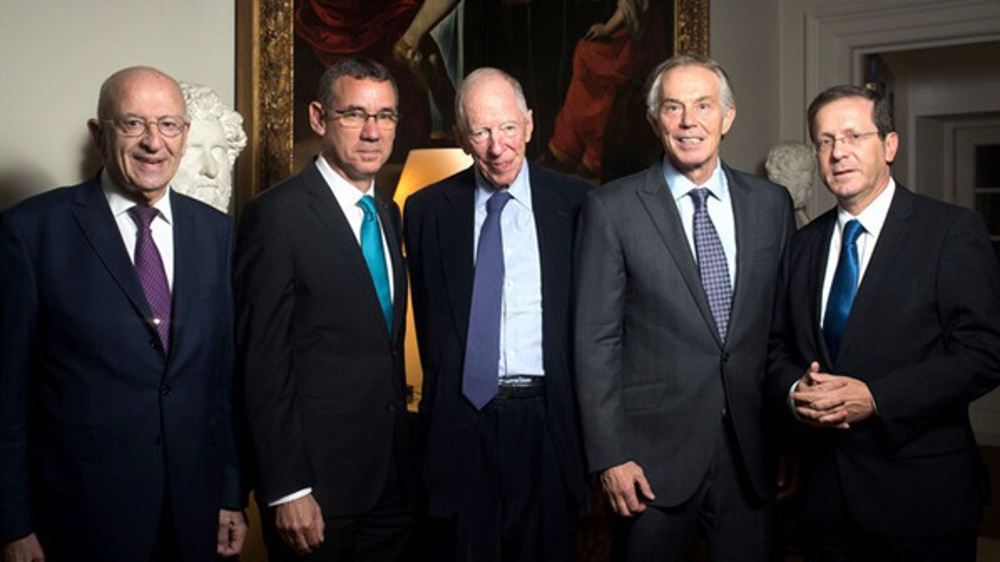
The Genocide Alliance: Chinn, Mark Regev, Jacob Rothschild, Blair and Isaac Herzog (2018)
This network fuelled scandals, like the 2006-2007 cash-for-honours affair, where Levy was arrested (though not charged) over allegations of selling peerages for donations, many from pro-Israel businessmen. The probe destabilised Blair, exposing how Zionist money influenced Labour.
Enter Lord Jon Mendelsohn: As Labour’s chief fundraiser in 2007, Mendelsohn was embroiled in a donations row involving illegal third-party contributions from property developer David Abrahams, who funnelled funds through proxies.
Mendelsohn admitted knowing about the scheme but claimed ignorance of its illegality, according to The Guardian. Fast-forward: Mendelsohn now directs Abraham Accords (UK) and co-chairs the APPG for the Abraham Accords.
Both promote normalisation between the Zionist colony and Arab states—essentially “Zionising” West Asia by embedding Zionist influence in economies and politics.
In a 2023 House of Lords speech, Mendelsohn hailed the Accords as a “historic opportunity,” ignoring Palestinian erasure. This evolution from Blair-era lobby scandals to regional normalisation underscores how Zionist networks persist, repackaging occupation as “peace.”
Blair’s fingerprints are all over the Abraham Accords, the sham “peace” deal normalising Israel’s apartheid with some regional countries while burying Palestinian rights.
In 2015, Blair brokered the first secret meetings between Benjamin Netanyahu and UAE officials in London, planting the seeds for the 2020 agreements. He attended the White House signing ceremony, gushing in a statement: “This is a momentous day… a new pathway is opening up for the Middle East.” Netanyahu later credited him with the Accords’ success, per reports from 2025.
As Quartet Envoy, Blair’s “economic peace” mantra—focusing on the occupied West Bank development while sidelining Gaza and sovereignty—paved the way for these deals, which critics slam as economic bribes to Arab states to ignore Israel’s horrendous war crimes.
Blair’s involvement wasn’t altruistic; it burnished his “peacemaker” image while entrenching Zionist hegemony, bypassing UN resolutions and Palestinian self-determination. His denial of Palestine, as Le Monde put it, is complete—treating the occupied as economic pawns in a Zionist game.
As Quartet Envoy (2007–2015), tasked with advancing the peace process, Blair faced repeated accusations of bias. Palestinian officials called him an “Israeli diplomat” in all but name; he focused on Palestinian “reform” while rarely challenging Israeli policies like Gaza’s blockade or settlement expansion.
The Guardian reported in 2011: Palestinian critics attacked him for favouring Israeli “security” needs over Palestinian rights. During Israel’s 2008-2009 Gaza offensive (1,400+ Palestinian killings), Blair echoed Israeli narratives blaming the Hamas resistance movement without addressing root causes.
A Source News analysis labelled him a “complete failure” for perceived one-sidedness. He resigned in 2015 amid conflicts of interest, but his record shows transactional Zionism—aligning with power to maintain influence.
Tony Blair Institute: Policy peddler with a dark side
The Tony Blair Institute for Global Change (TBI), launched in 2016, poses as a nonprofit promoting “good governance” and tech-driven reform. Before Larry Ellison’s funding in 2021, TBI had about 267 staff in 2020, per its annual accounts.
Post-Ellison, it ballooned to over 800 by 2023, nearing 1,000 in 45+ countries by 2025, with plans for 1,000+ by end-2026, as Ellison’s $375M+ pledges fuelled explosive growth, per POLITICO. Turnover jumped from $81M in 2021 to $121M in 2022, then over $150M, enabling global ops.
Beyond AI and digital IDs, TBI advises on climate policy, net-zero transitions, and governance—often to countries like Saudi Arabia and the UAE, drawing fire for whitewashing abuses.
It pushes “tech for good” like surveillance systems and economic reforms, but critics see neocolonialism. In Africa and the Global South, TBI embeds in governments, promoting privatisation and AI integration that favours Western tech giants.
Controversies pile up: TBI has consulted for many governments while raking in fees – including Saudi Arabia, the UAE, and Bahrain. Most damningly, reports linked TBI discussions to Gaza “reconstruction” plans condemned as ethnic cleansing blueprints, including ideas of “paying Palestinians to leave” or redeveloping Gaza as a “Riviera.”
Middle East Eye revealed TBI’s involvement in talks evolving into proposals critics slam as displacement schemes. The Guardian noted staff participation in such calls.
TBI pushes surveillance tech and net-zero policies, often funded by questionable sources, turning “global change” into elite profit. A 2024 Consultancy.uk critique ridiculed its AI studies as overhyped, while UnHerd questioned its opacity—meaning a lack of transparency in operations and funding that raises concerns over accountability and potential conflicts of interest.
Blair and Larry Ellison: Cash for influence, Zionism, and security risks
Oracle founder Larry Ellison, a staunch Zionist lobbyist and one of the world’s richest men, has poured at least £257 million ($375M+) into TBI since 2021 via his foundation.
Lighthouse Reports exposed how this cash transformed TBI into an Oracle sales and lobbying arm—pushing cloud tech, AI, and government contracts (for example, UK NHS data deals). Ellison gets policy access and favourable regs; Blair gets funding to sustain his empire and personal brand.
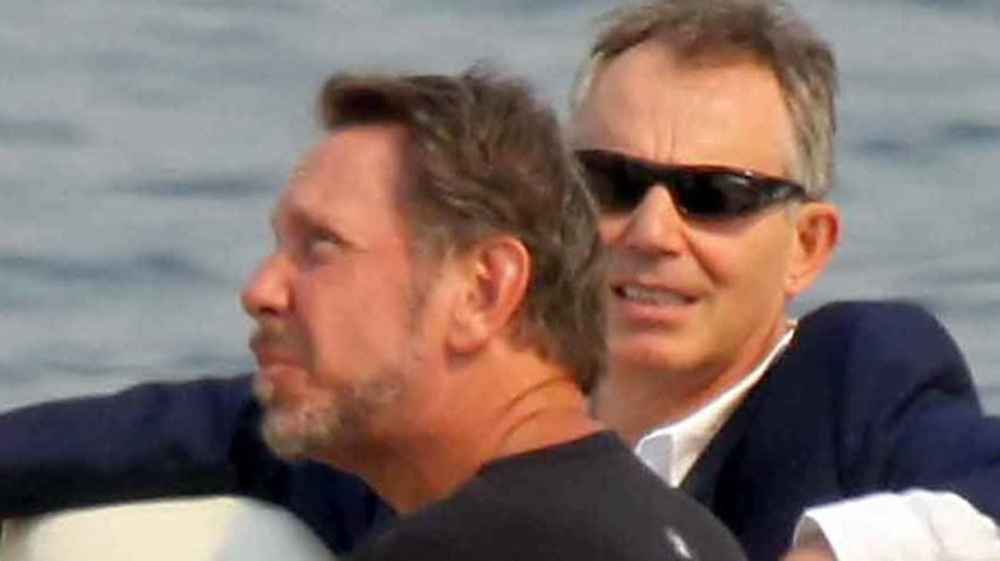
Larry Ellison and Blair
Ellison’s Zionism runs deep: He’s donated over $26M to Friends of the Israel Defense Forces (FIDF), including a record $16.6M in 2017—the largest single gift ever—and $10M in 2014.
At a 2017 gala, he declared: “Since Israel’s founding, we’ve called on the brave men and women of the IDF to defend our home,” as reported by The Times of Israel.
In videos and speeches, Ellison emphasised: “For two thousand years, we were stateless. Now we have our own country, defended by the brave men and women of the IDF,” as shared on Instagram. Oracle execs echo: CEO Safra Catz once told staff to “love Israel or maybe this isn’t the job for you”.
Ellison reportedly vetted Marco Rubio for Israel loyalty as revealed in leaked emails, and Oracle built a massive underground data center in Israel amid Gaza ops.
Oracle’s ties to the Israeli military are insidious and extensive, embedding the company as a pillar of Israel’s military machine. Since 2006, Oracle has held multi-year contracts with the Israeli military affairs ministry, supplying databases, Fusion middleware, and cloud services integral to its operations.
Oracle’s complicity in occupation and genocide includes training Israeli military personnel and providing tech that bolsters military logistics and intelligence.
Post-October 7, 2023, Oracle declared “We stand with Israel,” donating $1M to Magen David Adom, sending supplies to Israeli soldiers, and inscribing “Oracle Stands with Israel” on company premises at Catz’s demand.
Oracle’s ERP systems, databases, and IT infrastructure fuel the Israeli military’s genocidal campaigns. Oracle “married the IDF,” with employees embedded in military training and cloud services enabling real-time warfare.
Palantir’s role
This rot extends to Palantir, another Zionist tech behemoth that Blair’s orbit intersects via shared pro-Israel ecosystems. Palantir, co-founded by Peter Thiel ( who “defers to Israel” on AI ethics), signed a strategic partnership with the Israeli regime in 2024 for battle tech, meeting with military officials to deploy AI platforms.
Palantir provides militarized AI to Israeli intelligence, including Unit 8200’s Data Science and AI Center, enabling automated targeting in Gaza—essentially AI-generated kill lists amid genocide.
Palantir— fueled by Jeffrey Epstein funds and Thiel’s backing—has treated Gaza as a testing ground for surveillance tech that spies globally. The tech company, alongside Google and Amazon, arms Israel’s genocidal atrocities, with AI systems predicting and facilitating mass killings.
Blair’s TBI, Oracle-infused, echoes this by designing “data-driven” Gaza plans that could integrate such tech, turning “reconstruction” into perpetual occupation.
Infiltrating British intelligence cloud services
This alliance raises alarms: Oracle holds UK national security contracts. The Ministry of Defence (MoD) signed a 2026 cloud deal for AI and legacy migration. The Foreign, Commonwealth & Development Office (FCDO) uses Oracle Fusion for HR and finance. The Home Office inked a £54M ($72M) cloud pact in 2025.
These departments house most of the British intelligence community, like MI6 and GCHQ (FCDO), MI5 and the Homeland Security Group (Home Office), and Defence Intelligence and the Intelligence Corps (MoD). In 2021, the Cabinet Office terminated a specific procurement plan to migrate its own on-premises Oracle ERP system, so it is the only department housing British intelligence groups (including the Joint Intelligence Organisation, National Security Secretariat, National Security Council and Joint Intelligence Committee) that is not supplied by Oracle.
With Ellison’s Israeli military ties and Oracle’s Israel operations (potentially involving Unit 8200 cyber spies), backdoors pose risks—data leaks to Israeli intel could compromise UK security.
In the real world, such back doors are known to exist in the products of Israeli/Zionist firms like NSO Group with Pegasus spyware, exploited by intelligence to hack phones worldwide, as reported by The Guardian, and Cellebrite, whose tools unlock devices for surveillance as detailed by The New York Times.
Critics speculate Ellison wants Blair’s clout to secure more contracts, while Blair eyes Ellison’s billions for global sway.
Their shared obsession with digital IDs amplifies the menace, forging an Orwellian nightmare where surveillance becomes the new chains of empire.
In a World Government Summit discussion, Ellison told Blair: “The first thing a country needs to do is to unify all of their data so it can be consumed and used by the AI model,” advocating biometric IDs to replace passwords for total, inescapable control. Blair’s TBI relentlessly pushes digital IDs as “essential for modern governance,” per a September 2025 report, estimating UK implementation at £1.4 billion—but this is sinister code for dystopian tracking.
This convergence isn’t benign; it’s a blueprint for genocidal domination. In Gaza and the Levant, digital IDs could entrench Israel’s ethnic cleansing by enabling granular, AI-fuelled surveillance of Palestinians, restricting movement like digital cattle brands, and feeding into Oracle and Palantir’s targeting systems that have already slaughtered thousands.
Byline Times reported Blair’s institute designed Gaza recovery plans on “data-driven lines echoing Oracle-Palantir war systems,” potentially turning bombed-out ruins into a panopticon of apartheid, where every breath is monitored to crush resistance.
For pacification, these IDs would “identify” survivors in “humanitarian zones,” as in Blair’s Gaza International Transitional Authority proposal, which includes “digital government services and identity systems” for civil registry and permits—euphemisms for logging dissenters, enforcing starvation sieges, and facilitating forced expulsions under the veneer of “peace.”
Oracle’s Lebanon deal risks similar exposure, with data vulnerabilities amid Israel’s invasions, turning the Levant into a testing lab for Zionist tech tyranny. Blair and Ellison’s digital dystopia isn’t progress; it’s a genocidal wet dream, pacifying Gaza through algorithmic oppression while they rake in blood-soaked billions from the rubble.
It is difficult to imagine this techno-dystopia will not be enforced everywhere else the Zionists want, if they can get away with it, as they push forward with their so-called “Greater Israel” and “Pax Judaica” hews into view.
“Board of Peace”: Colonial control, potential complicity
Trump’s so-called “Board of Peace,” formalised in January 2026, vests sweeping authority in Trump (no term limit, veto power) to implement Gaza’s “humanitarian zones,” stabilisation force, and reconstruction—excluding Hamas and NGOs with “ties.”
Blair, credited with shaping elements, joins a roster heavy on Trump allies and pro-Israel figures. Al Jazeera critiqued it as putting “rights abusers in charge.”
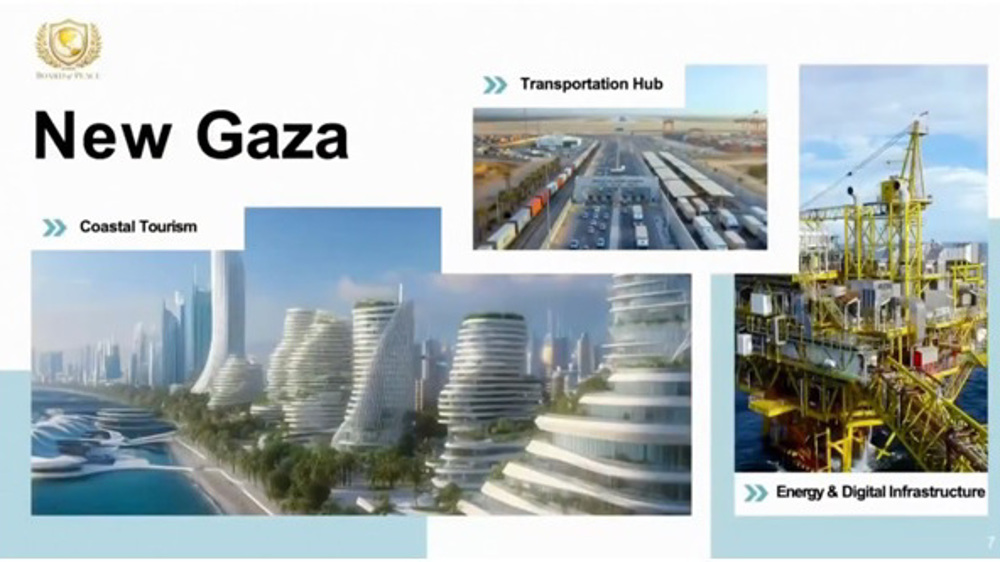
Kushner’s vision for Gaza
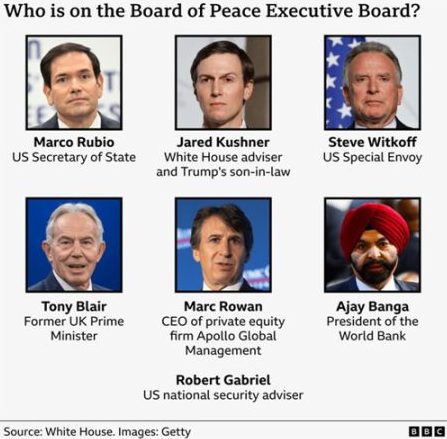
The Executive Board of the Board of Peace
Key members of the board
- Jared Kushner: As an Orthodox Jew, mega donor to the genocidal ultra-Orthodox Chabad-Lubavitch cult and architect of the Abraham Accords, Kushner has described Gaza as “valuable waterfront” property, suggesting redevelopment that critics argue implies ethnic cleansing. His role on the board aligns with his history of prioritising Israeli interests, having facilitated normalisation deals that sidelined Palestinian rights, as detailed by CNBC. Kushner’s Affinity Partners firm has ties to Middle Eastern sovereign wealth funds, raising concerns over conflicts of interest in Gaza’s reconstruction, as noted by the European Council on Foreign Relations.
- Steve Witkoff: This Jewish real estate mogul and mega Trump donor is a staunch pro-Israel advocate, serving as US Special Envoy to the Middle East (West Asia), where he has emphasised close US-Israel partnership on Gaza as reported byThe Times of Israel. Witkoff, described as having a “warm Zionist Jewish heart,” has been instrumental in delivering messages to Netanyahu and advancing Trump’s Gaza plan, as highlighted by OnePath Network. His background in property development fuels speculation that he views Gaza’s rebuilding as a business opportunity, aligning with pro-Israel policies that prioritise security over Palestinian sovereignty.
- Marc Rowan: The Jewish CEO of Apollo Global Management is a major AIPAC donor and led donor revolts against universities over perceived antisemitism, including boycotting the University of Pennsylvania for hosting a Palestinian literary festival, as reported byThe New York Times. Rowan’s anti-Palestine activism includes calling for the resignation of university leaders amid pro-Palestinian protests, as detailed byThe American Prospect. On the board, his financial expertise is poised to oversee investment in Gaza’s reconstruction, but critics argue his pro-Israel stance will entrench Zionist control, as noted by the BBC.
- Martin Edelman: This Jewish lawyer with pro-Israel ties specialises in international real estate transactions and has shaped US-UAE relations, facilitating deals that align with Zionist interests as reported by Watan. Edelman’s involvement in West Asia diplomacy includes roles that support normalisation efforts, bypassing Palestinian rights as highlighted by JNS.org. His position on the board likely focuses on legal frameworks for Gaza’s redevelopment, raising concerns over favouring Israeli interests as discussed by the Jerusalem Center for Foreign Affairs.
- Benjamin Netanyahu: As Israel’s Prime Minister and the chief architect of the Gaza genocide, Netanyahu embodies ideological Zionism, adhering to the “Iron Wall” doctrine of military dominance over Palestinians as explained byThe Conversation. His unwavering expansionism has led to policies even the New York Times calls apartheid. On the Board, Netanyahu’s inclusion ensures Israeli veto power, despite fuming at the presence of Turkish and Qatari officials, as reported by CNN.
- Tony Blair: As detailed throughout this article, Blair’s transactional Zionism and history of enabling Israeli policies make him a fitting but hypocritical addition to the board.
- Marco Rubio: This evangelical Christian is a fervent pro-Israel advocate, viewing support for Israel as biblically mandated as stated in his 2015 speech to the Republican Jewish Coalition. Rubio has pushed sanctions against Hezbollah and legislation to move the US embassy to occupied al-Quds, as reported by Liberty University. His role on the board aligns with Trump’s hardline stance, emphasising US-Israel alliances as critiqued by Sojourners.
- Susie Wiles: Wiles is reportedly an Episcopalian, but is not clearly a Christian Zionist. This is despite being aligned with Mike Huckabee through Florida politics and Trump’s circle, as noted by the Sarasota Herald-Tribune. She consulted for Likud in 2020, as detailed by The Washington Post. Despite her role on the BOARD, she has been described as a stabilising force who reportedly looked “alarmed” or shot “daggers” at Trump during press conferences where he proposed the genocidal mass relocation of Gaza’s inhabitants, as reported byThe Daily Beast.
- Ajay Banga: This Indian-American Sikh has not publicly taken a position on BDS or Zionism; however, Mastercard and Citigroup under his leadership opposed BDS and reportedly maintained operations in the occupied Palestinian territories. Banga described his board role as a “once-in-a-lifetime opportunity” to rebuild Gaza. Typically, he tried to ‘both-sides’ the genocide by condemning “unbelievable loss of life” on both sides as “unconscionable,” but critics like Ghada Karmi argue his participation aligns with a pro-Western, Zionist-adjacent framework, sidelining Palestinian self-determination.
- Robert Gabriel: As Deputy National Security Advisor since May 2025, Gabriel has served in Trump’s administration with a focus on policy, having worked as a special assistant to Stephen Miller, as reported by Wikipedia. His consulting firm, Gabriel Strategies, and closeness to Miller and Susie Wiles underscore his role in advancing hardline pro-Israel policies as detailed by LegiStorm. Gabriel’s background in Trump’s campaign positions him as a key enforcer of Zionist-aligned security measures in Gaza, as noted by the Brookings Institution.
Gaza’s death toll is in excess of 70,000 since 2023, according to the Palestinian Health Ministry, which even the Zionist military accepts. Academic studies suggest around 400,000 deaths or disappearances. With the ongoing crippling blockade, the board risks enabling further atrocities—restricted access, forced compliance, displacement under “redevelopment.”
Blair’s involvement lends false legitimacy, potentially making him an accessory to crimes if the plan entrenches occupation or ethnic cleansing. As the BBC reports, no Palestinians are on the board, though some Arab/Muslim leaders have joined, such as Bahrain’s Isa bin Salman Al Khalifa, Morocco’s Nasser Bourita, Jordan’s Ayman Al Safadi, UAE’s Reem Al Hashimy, Egypt’s Hassan Rashad, Qatar’s Ali al-Thawadi, and Turkey’s Hakan Fidan, as listed by CNBC.
Despite optimism from some quarters and claims that Netanyahu was not fully informed, as CNN reported, these figures are Zionist collaborators, with Turkey as a NATO member and most notably the UAE facilitating normalisation that sidelines Palestinian rights.
Does Trump see himself as “King of the World”? Chairing for life with vetoes, the Board positions him as a global arbiter. We might ask who, upon his death, would inherit the crown? Kushner, his Zionist son-in-law, is an obvious suspect, reinforcing Zionist control over Palestine’s fate.
Arrest Blair: End the impunity
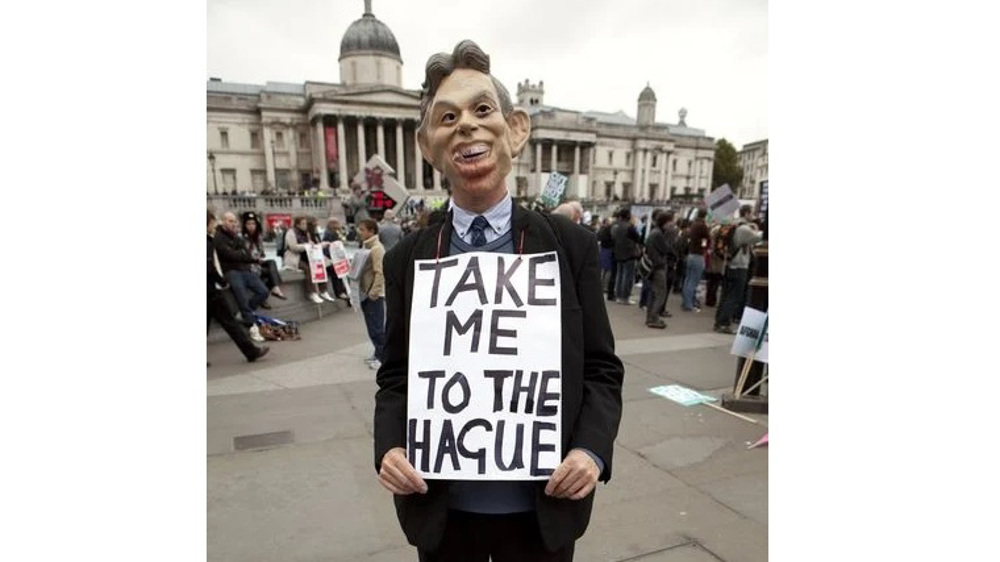
Message from London: Off to the Hague
As human rights advocates argue, Blair should face The Hague for his role in the invasion of Iraq and the war crimes there (based on the Chilcot report and the legal consensus) and his pattern of enabling power abuses—from Zionist bias to Gaza-linked schemes.
Public outrage persists: X users echo this, with posts declaring “Tony Blair should be in prison for war crimes” and calls like “Tony Blair should be heading to The Hague, not to Gaza.”
Strip his honours, prosecute under universal jurisdiction. Anything less mocks justice, say human rights campaigners worldwide as well as social media users.
Blair’s role on Trump’s board is seen widely as an ultimate insult—a war criminal overseeing “peace” in a land ravaged by over two years of genocide that his country facilitated.
Epstein email reveals plan to pursue frozen Libyan assets with help from former MI6, Mossad figures
MEMO | January 31, 2026
Newly released documents tied to Jeffrey Epstein show the convicted sex offender and an associate discussed plans to pursue access to Libya’s frozen state assets, including potential support from former British and Israeli intelligence officials, according to an email included in the files, Anadolu reports.
The correspondence surfaced after the US Justice Department released an additional batch of documents Friday related to the Epstein investigation.
The newly highlighted material includes a July 2011 email sent to Epstein that outlines what the sender described as financial and legal opportunities linked to political and economic uncertainty in Libya at the time.
According to the email, about $80 billion in Libyan funds were believed to be frozen internationally, including roughly $32.4 billion in the US. The sender described “stolen and misappropriated” Libyan assets as potentially worth three to four times that amount.
The correspondence argued that identifying and recovering even a small portion of such funds could generate “billions of dollars” in gains.
It also referenced expectations that Libya would need to spend at least $100 billion in the future on reconstruction and economic recovery, describing the situation as a broader opportunity.
The email characterized Libya as a country with significant energy reserves and strong literacy rates, factors it said could be advantageous for financial and legal initiatives.
It also stated that discussions had been held with some international law firms about working on a contingency-fee basis.
The message said certain former members of Britain’s foreign intelligence service, MI6 and Israel’s external intelligence agency, Mossad, had expressed a willingness to assist in efforts to identify and recover assets described in the email as “stolen.”
The email emphasized that early involvement in such a process could represent a “significant opportunity.”
Rafah crossing reopens under strict Israeli restrictions
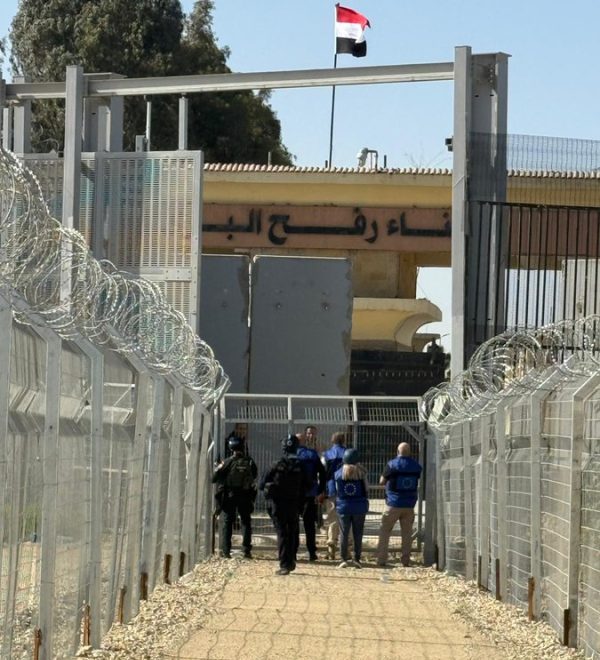
The Cradle | February 1, 2026
Southern Gaza’s Rafah border crossing with Egypt was reopened on 1 February from both sides for the first time in over a year and a half, under strict restrictions imposed by Tel Aviv.
The exit and entry of Palestinians via the crossing will begin on 2 February, Israel’s Coordinator of Government Activities in the Territories (COGAT) announced on Sunday.
It said the crossing has been opened for tests and an assessment of operation.
“The movement of residents in both directions, entry and exit to and from Gaza, is expected to begin tomorrow,” COGAT explained.
Hours earlier, Tel Aviv said the crossing would be opened for an “initial pilot phase.”
“As part of the pilot for the initial operation of the crossing, all involved parties are carrying out a series of preliminary preparations aimed at increasing readiness for full operation of the crossing,” COGAT said.
Around 80,000 Palestinians who were forcibly displaced from Gaza during the genocide are seeking to return.
There are also over 20,000 wounded and ill Palestinians who are in need of leaving the strip for urgent medical care.
“We are closely monitoring what is happening at the Rafah crossing, and several parties will be overseeing traffic at the crossing,” said Ismail al-Thawabta, director of the Gaza Government Media Office.
A Palestinian Authority-linked (PA) group of 40 security officers has arrived at the Egyptian side of the crossing, in line with Cairo’s previously announced initiative to train Palestinian officers for post-war Gaza.
The US-endorsed technocrats, who were previously barred from entering, are expected to be allowed in within the coming days.
Around 150 Palestinians will be allowed to leave daily. This includes 50 medical patients, each allowed two companions. Another 50 will be permitted entry into Gaza per day.
The Palestinians entering will be subject to strict restrictions. Individuals must register their names, which Egypt will then send to Israel’s Shin Bet security service for screening and approval.
All travelers will be subject to a checkpoint run by the PA and EU representatives, as well as an Israeli checkpoint, including body searches, X-ray screening, and biometric verification. Those leaving must also register and go through PA, EU, and Israeli-run checkpoints.
They will be required to undergo facial recognition screening.
According to a recent Reuters report, Israel is working to make sure that those exiting via the Rafah crossing are greater in number than those entering, in an effort to facilitate the outflow of Palestinians from Gaza and ethnically cleanse the strip.
The crossing’s reopening comes as Israel has escalated its daily violations of the ceasefire agreement. A massive wave of Israeli strikes targeting shelters, tents, and residential buildings killed at least 31 civilians across Gaza on Saturday.
Since the ceasefire was reached in early October, Israel has killed over 490 Palestinians, destroyed thousands of buildings, and expanded its presence inside Gaza in violation of the agreement.
Hamas rejects Israeli accusations as “lies meant to justify its massacres in Gaza”
Palestinian Information Center – January 31, 2026
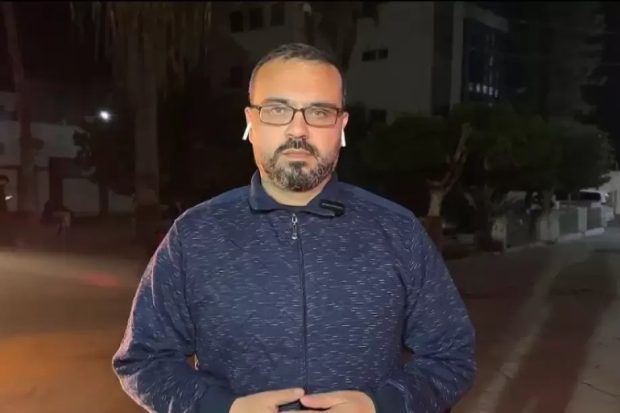
GAZA – The Hamas Movement has condemned Israeli claims that it violated the ceasefire agreement as “lies” and “intended to justify the massacres committed against civilians in the Gaza Strip.”
In a statement on Saturday, Hamas spokesman Hazem Qasem dismissed the Israeli accusations against his Movement as “baseless and unfounded,” saying they reflect Israel’s disregard for ceasefire mediators, sponsoring countries, and all the parties involved in the so‑called “Board of Peace.”
The spokesman called on the international community, the UN, and human rights organizations to “clearly condemn Israel’s massacres in Gaza, take practical steps to stop them, hold Israeli leaders accountable for their crimes, and end the policy of impunity, which encourages further killing and destruction.”
Interior ministry: Israeli strike on police building in Gaza shows disregard for mediators
Palestinian Information Center – January 31, 2026
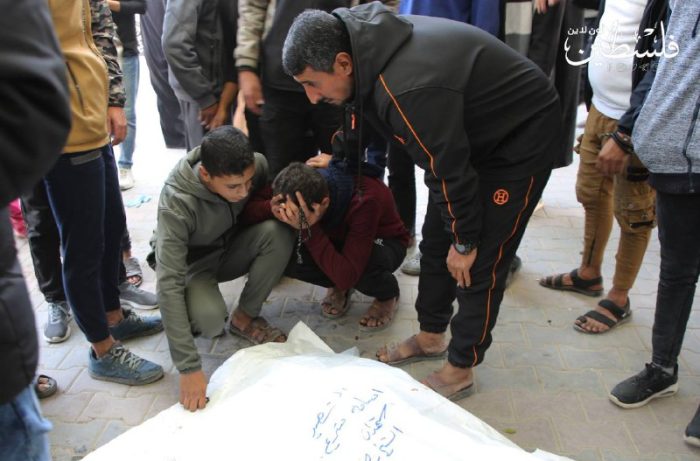
GAZA – Gaza’s interior ministry said that the Israeli targeting of the Sheikh Radwan police headquarters in Gaza City on Saturday morning was part of repeated ceasefire violations and reflected disregard for mediators and the international community.
In a statement, the ministry explained that the Israeli airstrike resulted in the martyrdom and injury of a number of police officers and personnel, along with several citizens inside and outside the headquarters.
The ministry described the attack as a “heinous crime” against a civilian institution that provides vital services to the population.
“This strike has joined a series of ongoing Israeli attacks that, in recent weeks, have targeted civilian and service facilities despite the ceasefire, amid growing warnings that the fragile understandings could unravel,” the ministry said.
The ministry affirmed that Israel’s ongoing attacks on civilians and humanitarian staff prove an intent to thwart international efforts to end the war and enforce a strategy of attrition and pressure on Gaza’s population.
The ministry urged regional and international mediators to shoulder their responsibilities, put real pressure on the Israeli regime to halt its violations, and provide protection for civilians and civilian facilities in Gaza.
Featured Video
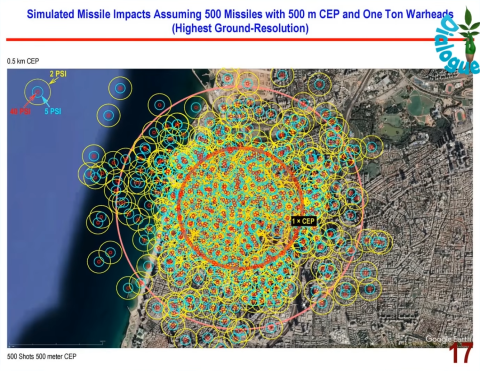
Prof. Ted Postol: US–Iran War? Israel’s Fatal Gamble
or go to
Aletho News Archives – Video-Images
From the Archives
Neocon Max Boot: Legal and illegal aliens need to enlist in the US army and die for Israel
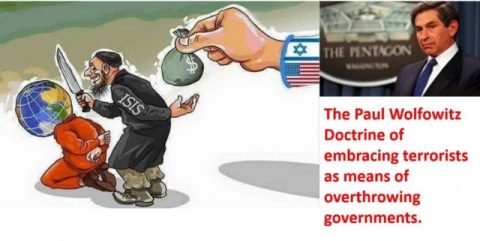
By Jonas E. Alexis | Veterans Today | October 16, 2107
In 1973 Irving Kristol, the godfather of the Neoconservative movement, made a stunning statement which is still relevant to understanding the Israeli influence in US foreign policy. Kristol said:
“Senator McGovern is very sincere when he says that he will try to cut the military budget by 30%. And this is to drive a knife in the heart of Israel… Jews don’t like big military budgets. But it is now an interest of the Jews to have a large and powerful military establishment in the United States…
“American Jews who care about the survival of the state of Israel have to say, no, we don’t want to cut the military budget, it is important to keep that military budget big, so that we can defend Israel.”
Read the statement again very carefully. A big military budget, said Kristol, is only good for Israel, not America or much of the Western World. In other words, precious American soldiers who go to the Middle East to fight so-called terrorism are just working for Israel, not for America.
So, whenever the Neocons use words such as “democracy” or “freedom,” they are essentially conning decent Americans to support Israel’s perpetual wars. … continue
Blog Roll
 Aletho News
- Friedrich Merz’s Push to End Online Anonymity Has a Troubling Subtext
- Macron: French citizens fighting for Israel cannot be labeled ‘genociders’
- US eyes Gaza security force drawn from armed gangs
- The Only Motive Behind The ‘Imminent’ U.S. War With Iran Is The Zionist Lobby
- Trump eyes 350-acre US military base housing 5,000 troops in Gaza
- Israel Pushing US Toward a Big and Damaging War With Iran – Ex-Pentagon Analyst
- Meet The Liberal Zionist And Ukraine War Supporter Advising AOC On Foreign Policy
- Buck Dancing for Zion: Kenya’s and Nigeria’s Growing Love Affair With Israel
- Israel installed, oversaw security system at Barak-Epstein residence in New York: Report
- ‘Britain’s Index of Repression’ documents 964 incidents of anti-Palestinian crackdown
- If Americans Knew
- Tucker Carlson interrogated in Israel, has passport seized after interviewing US ambassador
- 6,000 Amputees in Gaza Face Impossible Recovery amid Israeli War Ultimatum
- The Lancet: Gaza death toll far higher than reported – Not a ceasefire Day 132
- Compliant aid: Who are the Israel-approved NGOs scaling up in Gaza?
- Why won’t Trump’s “Board of Peace” bring peace? – Not a ceasefire Day 131
- Help end the injustice against Shadi
- Israel’s Favorite American President
- Israel’s “Yellow Line” Is a Death Trap for Palestinians. We Drove Into It.
- Why Israel’s expanding occupation in Syria presents a critical legal test
- Gaza is not a natural disaster. It is the victim of genocide enabled by global inaction
- No Tricks Zone
- Coal Power Back In Trend As Globe Tries To Keep Pace With Growing Demand For Power
- New Study: A 4°C Warmer Beaufort Sea Had ‘No Sea Ice’ 11,700 – 8200 Years Ago
- Unfudging The Data: Dutch Meteorological Institute Reinstates Early 20th Centruy Heat Waves It Had Erased Earlier
- German Gas Crisis…Chancellor Merz Allegedly Bans Gas Debate Ahead of Elections!
- Pollen Reconstructions Show The Last Glacial’s Warming Events Were Global, 10x Greater Than Modern
- Germany’s Natural Gas Storage Level Dwindles To Just 28%… Increasingly Critical
- New Study Rebuts The Assumption That Anthropogenic CO2 Molecules Have ‘Special’ Properties
- Climate Scientist Who Predicted End Of “Heavy Frost And Snow” Now Refuses Media Inquiries
- Polar Bear Numbers Rising And Health Improving In Areas With The Most Rapid Sea Ice Decline
- One Reason Only For Germany’s Heating Gas Crisis: Its Hardcore-Dumbass Energy Policy
 Aletho News