Prof. Rashid Khalidi quits Columbia over pro-‘Israel’ crackdown deal
Al Mayadeen | August 1, 2025
Esteemed Palestinian-American historian Rashid Khalidi has pulled out of teaching at Columbia University this fall, denouncing the institution’s decision to submit to the Trump administration’s campaign to silence pro-Palestinian voices on campus.
In a powerful open letter published in The Guardian, Khalidi, Edward Said Professor Emeritus of Modern Arab Studies, condemned Columbia’s recent $200 million settlement with the federal government, a deal he says strips the university of its integrity and hands over academic independence to a political agenda aimed at shielding “Israel” from criticism.
“Although I have retired, I was scheduled to teach a large lecture course on this topic in the fall as a ‘special lecturer’ but I cannot do so under the conditions Columbia has accepted by capitulating to the Trump administration in June,” he wrote.
Capitulation Pact
The agreement, reached under the threat of lost federal funding, comes after months of student-led protests demanding an end to the genocide in Gaza and university divestment from institutions complicit in Israeli apartheid. Rather than defending free speech and academic inquiry, Columbia chose to comply with demands that reflect a broader campaign to criminalize solidarity with the Palestinian struggle.
Under the deal, Columbia is required to expand its Institute for Israel and Jewish Studies, submit its Middle East curriculum to external review, and dismantle programs deemed “unlawful” by the federal government. An independent monitor appointed by Washington will oversee implementation. On top of the $200 million settlement, the university will pay $21 million to the Equal Employment Opportunity Commission, following claims of alleged discrimination against Jewish employees.
Critics, including faculty, students, and human rights advocates, have described the agreement as a dangerous precedent: one that empowers the state to dictate how Palestine can be taught, discussed, or even mentioned on campus.
Silencing Dissent
In his letter, Khalidi warned of the chilling effect such measures will have on truth-telling about “Israel’s” colonial violence. “Columbia chose to adopt a definition of antisemitism that ‘conflates Jewishness with Israel, so that any criticism of Israel, or indeed description of Israeli policies, becomes a criticism of Jews’,” he wrote.
He stressed that the settlement effectively outlaws honest scholarship about “Israel’s” founding and its current atrocities in Gaza. “The fearsome apparatus that Columbia has erected [will] punish speech critical of Israel, and … crack down on alleged discrimination, which at this moment in history almost invariably amounts simply to opposition to this genocide.”
Khalidi also denounced the intrusion of government oversight into academic spaces. “Agreeing to submit the syllabi and scholarship of prominent academics for review by outside actors is ‘abhorrent’,” he said.
His letter ends with a stark assessment of what Columbia has become: “Columbia’s capitulation has turned a university that was once a site of free inquiry and learning into a shadow of its former self, an anti-university, a place of fear and loathing, where faculty and students are told from on high what they can say and teach, under penalty of severe sanctions.”
For many, Khalidi’s stand reflects a growing crisis: as “Israel” intensifies its war on Gaza, academic institutions in the West are increasingly complicit in the silencing of Palestinian narratives and the repression of those who dare to speak against genocide.
Israeli soldier reveals ‘strange order’ to cancel Gaza border patrols on 7 Oct
The Cradle | July 31, 2025
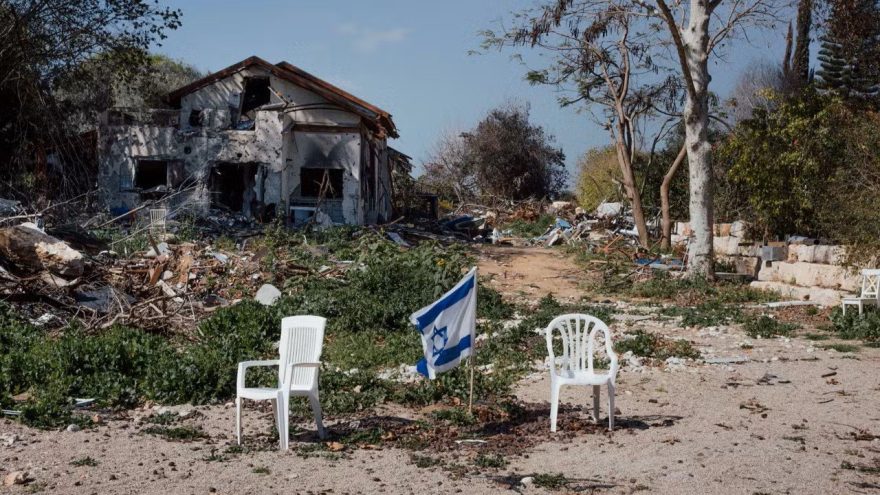
An Israeli soldier stated that he and his fellow soldiers stationed at a military outpost near Gaza received orders not to carry out their usual early morning patrol on the border fence on 7 October 2023, Israeli media reported on 17 July.
During the time the border patrol would have normally been carried out, members of Hamas’s armed wing, the Qassam Brigades, crossed the fence to attack Israeli army bases and settlements (kibbutzim).
Shalom Sheetrit, a soldier in the Golani Brigade, revealed the directive while giving testimony at a meeting of the lobby for reserve personnel in the Israeli Knesset.
He stated that on the night before the 7 October attack, he and two other soldiers, Yotam Sror and Itamar Ben Yehuda, sat by the battalion radio at the Pega military outpost near Kibbutz Be’eri.
“We were playing on the phone [at 5:20 am] and suddenly a strange message comes from my battalion commander,” the soldier explained, “and what he says on the call is something like this: ‘I don’t know why, but an order was issued that there are no patrols at the fence until nine in the morning.’”
Sheetrit said soldiers from the outpost carried out patrols on the border fence every morning “because you are in an operational battalion and that is part of the matter.”
Hamas fighters attacked the Pega outpost and killed 14 Israeli soldiers there during Operation Al-Aqsa Flood.
When asked if this was why many soldiers at the outpost were still sleeping when the Hamas attack began, Sheetrit stated, “I don’t know how to answer it that way. In our mortar department, there was an alert at dawn, and we woke up. It’s possible that in the patrol departments, they were told not to wake up. I don’t know. I don’t want to just say that.”
Sheetrit stated that the military units based in the Pega outpost were responsible for protecting Kibbutz Be’eri, which was also attacked by Hamas.
“Unfortunately, we were not up to the task. There were dozens against hundreds of terrorists, 25 against 150, and so we couldn’t arrive, unfortunately. I’m far from being a military man who can give answers to questions, the situation hurts me just as it hurts everyone,” the soldier explained.
A major battle took place at Be’eri in which over 100 Israelis were killed.
After the attack began, the Israeli air force deployed Apache Helicopters, tanks, and drones to bomb the kibbutz and the Gaza border nearby to prevent Hamas from taking captives with them back to Gaza.
As a result, Israeli forces burned to death hundreds of Israeli civilians and Hamas fighters in airstrikes in Be’eri and other kibbutzim near the border, as well as at the Nova Music Festival, per a secretive policy known as the Hannibal Directive. The deaths were all quickly blamed on Hamas.
“I tried to ask military personnel why and what happened there. The blood of my friends and the blood of many people in the country was spilled in a huge tragedy, and I tried to understand why it happened and how,” Sheetrit added.
The strange order to cancel routine patrols along the Gaza border adds to evidence that Israeli political and military leaders knew in advance about Hamas’s plan to attack on 7 October – and allowed it to happen to justify the conquest and ethnic cleansing of Gaza and the building of Jewish settlements on top of the ruins of the strip’s soon-to-be-destroyed cities.
Israeli military and intelligence officials ignored many signals on the night before the attack, and in the previous weeks and months, indicating that Hamas was planning a large attack to take captives to exchange for Palestinian prisoners.
Female Israeli soldiers tasked to observe activity on the Gaza border issued multiple warnings to their superiors that an attack was imminent, but they were ignored.
“In hindsight, we could have done a lot of things, we could have listened to the observers, we could have brought up the air force, and these things didn’t happen,” Sheetrit concluded.
“That’s the failure. It’s not a failure of the fighters on the ground, but of the higher levels in the army, of people who went down to Eilat even though we informed them a week in advance that there was intelligence information.”
‘America First’ clashes with ‘Israel First’ as Trump threatens Canada over Palestine recognition
MEMO | August 1, 2025
Donald Trump has provoked outrage among parts of his own political base after threatening to block a trade deal with Canada in retaliation for Ottawa’s decision to formally recognise the State of Palestine. The US president posted on Truth Social: “Canada has just announced that it is backing statehood for Palestine. That will make it very hard for us to make a Trade Deal with them. Oh’ Canada!!!”
Trump’s statement was widely interpreted as prioritising Israeli interests over domestic economic concerns, prompting fierce backlash from some right-wing influencers. Prominent conservative commentator Matt Walsh posted on X: “This is ridiculous. If a trade deal with Canada is beneficial to the American people then it should go forward regardless of Canada’s stance on Palestine. The benefit of the American people should be the guiding principle here.”
Walsh’s post drew thousands of responses, many supportive, but others accused him of failing to grasp America’s “special alliance” with Israel. However, critics have pointed out that it is Canada, not Israel, that is bound to the US through comprehensive economic and military treaties.
Along with the UK and France, Canada is one of Washington’s oldest and closest allies. By contrast, US-Israel ties, while historically deep, are often framed as ideologically and politically driven, bolstered by domestic lobbying pressure rather than national interest.
Observers say the incident highlights a deepening divide in US politics: on one side, a growing segment of voters who either support Palestinian rights or advocate for an “America First” foreign policy that avoids foreign entanglements; on the other, a political elite that consistently prioritises Israeli interests, often regardless of public opinion or national cost.
Despite mounting evidence of Israeli war crimes in Gaza and a global shift toward recognising Palestinian statehood, including by key Western allies, US lawmakers remain overwhelmingly aligned with Israel.
This split is becoming more pronounced as influential voices on the right, once assumed to be pro-Israel by default, now openly question the costs of that allegiance.
With Gaza as its compass, Yemen rewrites the rules of naval warfare
By Stasa Salacanin | The Cradle | August 1, 2025
After the Ansarallah-aligned Yemeni Armed Forces (YAF) announced that it would resume attacks on merchant ships linked to companies operating with Israeli ports, tensions in the Red Sea and beyond have reignited, as Tel Aviv’s ongoing genocide in Gaza fuels instability across West Asia.
As part of the fourth phase of the blockade, the Yemeni army sank two commercial vessels earlier this month, showcasing not only its enduring capabilities but also the failure of US-led strikes to curb its maritime campaign.
On 6 May, US President Donald Trump claimed, “The Houthis have declared they no longer want to fight. They simply don’t want to fight anymore. And we will honor that. We will stop the bombings, and they have surrendered.”
Yemeni officials immediately dismissed the claim, reiterating that Sanaa had not negotiated with Washington nor agreed to halt operations in support of Gaza. The Sanaa government’s naval campaign resumed soon after, with fresh attacks targeting Israeli-linked vessels – undermining Trump’s attempt to declare victory.
New red lines in the Red Sea
In a statement on Sunday, explaining the latest phase of the naval operations, YAF spokesman Brigadier General Yahya Saree said:
“This escalation includes targeting all ships belonging to any company that deals with Israeli ports, regardless of their nationality and wherever they may be, within our forces’ reach. We warn all companies to cease their dealings with Israeli ports, starting the hour this statement is issued.”
The new escalation comes just several weeks after the sinking of two Liberian-flagged, Greek-owned bulk carriers – the Magic Seas and the Eternity C. In the latter attack, four sailors were killed and two others wounded, while 11 other crew members were taken captive.
Following the sinking of the two ships, Ansarallah leader Abdul Malik al-Houthi revealed that the YAF had carried out over 1,679 attacks since November 2023 using missiles, drones, and warships in support of Gaza, warning of further escalation if the war does not end.
Although the Sanaa government agreed in May to a ceasefire with Washington, halting attacks on US warships, it maintains that this truce does not apply to vessels linked to the occupation state. These ships, Sanaa argues, continue to serve Israeli ports, part of “occupied Palestine.”
Contrary to western media narratives of indiscriminate aggression, maritime data from Lloyd’s List confirmed that both targeted vessels had routinely docked in Israeli ports over the past year.
The ongoing attacks have prompted international concern. The UN Security Council recently approved continued reporting on Red Sea maritime assaults. Twelve members of the 15-member council voted in favor, while Russia, China, and Algeria abstained over concerns about breaches of Yemen’s sovereignty.
China’s deputy UN Ambassador Geng Shuang called tensions in the Red Sea “a major manifestation of the spillover from the Gaza conflict.” At the same time, the Russian UN representative also stressed the link between normalizing the situation in the Red Sea and the need for a ceasefire in Gaza.
Challenging naval supremacy
Despite the presence of five major foreign military bases in Djibouti – home to US, French, Japanese, Chinese, and Italian forces – the Ansarallah-aligned army has continued to strike commercial vessels with precision. This raises uncomfortable questions about western and allied naval efficacy.
Speaking to The Cradle, Senior Research Fellow at The Soufan Center, Colin P. Clarke – who also teaches at Carnegie Mellon’s Institute for Politics and Strategy – says Yemen ranks among the most potent forces within the Axis of Resistance and shows no sign of retreat:
“Out of all the ‘Axis’ proxies, the Houthis are among the most potent and also have a lot to prove. I don’t expect them to wind down their military campaign at any point soon.”
Nicholas Brumfield, a Washington-based analyst on Yemen and maritime security, concurs. He tells The Cradle that Yemen’s campaign has remained largely undiminished despite nearly two years of US and Israeli airstrikes:
“The Houthi attacks since early July have thus far been limited to areas of the Red Sea where they have attacked before, so it’s unclear if there’s been any increase in their range. As for Trump’s claims of capitulation, that was always viewed by most researchers focused on Yemen as a bit of hot air. The US–Houthi ceasefire was a limited de-escalation between two parties, and the Houthis have more or less been continuing what they were doing before the truce in terms of attacking Israel directly.”
Clarke adds that Trump’s reluctance to escalate against Yemen stemmed from electoral optics and strategic caution against bogging the US down in “endless wars,” which is one of the reasons why the US involvement in bombing Iran was so circumscribed. “Trump believes, perhaps correctly so, that it would be extremely difficult to engage with the Houthis without being sucked into a quagmire from which it would be difficult to escape from. And the results would be hard to measure.”
According to Mohamed Aliriani of the Yemen Policy Center, the May ceasefire secured safe passage for US, UK, Chinese, and Russian vessels – thanks to the latter two’s ties with Iran. But ships from other nations remain exposed. European-led operations, he argues, are largely ineffectual in safeguarding their cargoes.
Aliriani tells The Cradle that “the current situation has created a two-tiered, protectionist system that benefits powerful states while driving up global insurance and shipping costs, setting a dangerous precedent for other strategic chokepoints.”
Persistently high insurance premiums reflect the enduring risk. “Had the threat been perceived as eliminated, traffic would have resumed, and rates would have dropped,” he explains. The Yemeni army’s targeting of oil and chemical carriers has introduced environmental and financial perils that keep insurers wary.
Redefining control at sea
These facts point to a stark reality: The Ansarallah-led naval campaign has largely succeeded in imposing an effective blockade on Israeli-linked maritime traffic.
Still, Aliriani cautions against overstating the extent of Sanaa’s control. “The Houthis do not exercise Sea Control over the Red Sea, as they lack a surface fleet capable of patrolling and commanding the waterways. What they have successfully achieved is Area Denial.” By demonstrating a credible capability to hold any vessel transiting the Bab al-Mandab Strait at risk, they have made passage through this critical chokepoint prohibitively dangerous for any vessel:
“Their strike range has proven to extend for hundreds of kilometers and given the information available about the weapons used, range likely exceeds 1,000 kilometers, effectively denying the use of a vast area without needing to control it physically.”
Independent force, not Iranian proxy
Western narratives often depict Ansarallah as mere Iranian proxies. Yet, there is scant evidence that Tehran directed these maritime attacks.
Brumfield points out that while Iran continues to supply advanced weaponry to its ally – as evidenced by a 750-ton arms shipment intercepted en route to Yemen – there is no indication of Iranian command over Ansarallah operations.
Former UN envoy to Yemen Jamal Benomar has consistently emphasized Sanaa’s autonomous decision-making, noting that they “have their own agendas and decision-making mechanisms.”
Palestine remains the compass
The timing of recent Yemeni operations suggests a clear link to developments in Gaza. Brumfield observes that Sanaa was notably quiet during last month’s 12-day war between Iran and Israel, only to escalate following reports of worsening conditions in the besieged enclave:
“When there was a ceasefire in Gaza, the Houthis completely stopped their maritime attacks. Recent reports of deteriorating humanitarian conditions in Gaza may have contributed to the group’s decision to re-escalate in this file.”
While some analysts suggest that Ansarallah’s pro-Palestinian rhetoric is a political maneuver to boost legitimacy amid domestic challenges, Benomar insists their stance on Palestine is ideologically embedded. “They’re not just being opportunistic as Palestine is a core part of their ideology.”
Although Tel Aviv has urged Washington to relaunch strikes on Yemen, most experts, including Aliriani, believe the US is unlikely to escalate unless the Ansarallah-allied military crosses a significant red line. So far, the YAF has targeted only vessels tied to Israeli trade.
However, Ansarallah’s recent decision to strike all ships linked to Israeli ports, regardless of nationality, may drag new actors – such as Egypt – into the fray. Cairo’s deepening logistical ties to Israeli trade may soon make it a target of Yemen’s expanding campaign.
“The Houthis” may not control the seas, but they have undeniably changed the rules of engagement.
Child in Gaza kisses aid worker’s hand before being fatally shot by Israeli forces
MEMO | July 31, 2025
 A resigned US Army soldier who served at an aid distribution point in Gaza, affiliated with the Gaza Humanitarian Foundation (GHF), has shared a heartbreaking account of the final moments of a Palestinian boy known as “Gaza’s little Amir”, who was shot dead by Israeli forces shortly after receiving a small portion of food.
In his testimony, the former soldier, Anthony Aguilar, recalled the tragic events of 28 May, when the boy Amir was killed while trying to get food.
Amir, who was barefoot and visibly thin, walked 12 kilometres under the scorching sun, hoping to find something to eat after hours of waiting. All he managed to gather was a handful of rice and lentils from the ground, Aguilar said.
He went on to describe a deeply emotional moment, saying that the child had approached him, set down his belongings, gently placed his small hands on the soldier’s face, kissed his hand, and thanked him in English. The boy then picked up his things and returned to the crowd. Just minutes later, as he was leaving with other civilians, Israeli forces reportedly opened fire with gas and live ammunition, striking Amir and killing him on the spot.
Aguilar added that the day was no different from others in Gaza — except that death came quicker.
Family urges release of 16 y/o Palestinian-American held in ‘Israel’
Al Mayadeen | July 31, 2025
The family of Muhammad Zaher Ibrahim, a 16-year-old Palestinian-American, is urging his immediate release from Israeli military detention. Ibrahim was detained in February while still 15 years old at his family’s home in the occupied West Bank village of Silwad. According to relatives, he was blindfolded and handcuffed before being transferred to Megiddo prison. He remains in pre-trial detention, accused of rock-throwing, an allegation his family denies.
The Ibrahim family, who divide their time between Silwad and Palm Bay, Florida, sought assistance from Republican Congressman Mike Haridopolos. Zaher Ibrahim, Muhammad’s father, wrote to the congressman in March after more than 45 days of no contact with his son. Describing the conditions at Megiddo as notorious for brutality, the family has exhausted all local legal options and turned to US authorities for support.
Haridopolos’s office acknowledged the outreach and forwarded the case to the State Department. The US embassy in “Israel” confirmed it was following standard procedures. A State Department spokesperson emphasized that ensuring the safety and security of US citizens is a top priority.
Human rights concerns
Human rights organizations have raised alarms over the treatment of Muhammad Zaher Ibrahim and others like him. A video seen by The Guardian shows Ibrahim being interrogated without legal counsel. Advocates argue that his US citizenship has provided little protection in a system known for detaining minors for extended periods without charges or family contact.
Ayed Abu Eqtaish from Defense for Children International-Palestine told The Guardian that Palestinian children in Israeli prisons are often isolated from the outside world, regardless of their nationality.
US government response
While US embassy officials have conducted welfare checks, their access has been increasingly restricted. Early reports from the embassy noted that Muhammad had lost 12 kilograms. In July, he was diagnosed with scabies, a contagious skin condition. The state department reported he was receiving medical treatment, but it remains unclear whether recent visits have occurred.
The department affirmed it provides consular support to detained US citizens, including ensuring access to necessary medical care and facilitating communication with families.
Targeting of Palestinian Americans
Since 2022, nine Americans have been killed by Israeli forces or settlers, including five since October 2023. Among the most recent cases is Sayfollah Musallet, the cousin of Muhammad Ibrahim, a 20-year-old from Tampa, Florida, beaten to death by settlers in July 2025. Others include Mohammad Khdour, Tawfic Abdel Jabbar, Amer Rabee, and Omar Assad, a 78-year-old who died after being gagged and handcuffed by Israeli soldiers.
Multiple Palestinian Americans have also been detained or subjected to travel restrictions and surveillance. In February 2024, American citizens Hashem and Borak Alagha were detained during a raid on their family shelter in Gaza. Samaher Esmail, a 46-year-old from New Orleans, was arrested in Beit Lahm for alleged incitement on social media. Families report minimal assistance from US authorities.
West Bank under Israeli occupation
Since the outbreak of the war on Gaza in October 2023, “Israel” has launched an unprecedented campaign of mass arrests across the occupied West Bank. By July 2025, approximately 18,000 Palestinians had been detained, nearly double the number held before the war. As of late July 2025, “Israel” currently holds around 10,800 Palestinians in its prisons, including about 450 children and 50 women.
A particularly concerning trend has been the rise in administrative detention, imprisonment without charge or trial. Over 10,000 administrative detention orders have been issued, and 37% of detained Palestinian children are now held under such orders, the highest on record.
The arrest campaign intensified further with “Israel’s” launch of Operation Iron Wall in January 2025, displacing 40,000 Palestinians from refugee camps in Jenin, Tulkarm, and Nur Shams. Most arrests during that period were concentrated in Jenin, which experienced severe aggression.
Gaza genocide case: 114 lawyers ask ICC to investigate French officials’ complicity
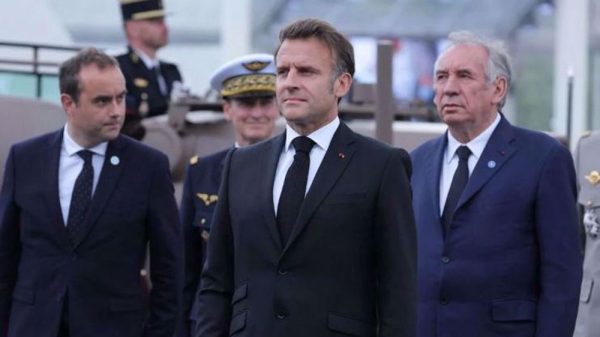
French President Emmanuel Macron (C), Prime Minister Francois Bayrou (R) and Defense Minister Sebastien Lecornu in Paris on May 8, 2025 (Photo by AFP)
Press TV – July 31, 2025
More than a hundred French lawyers have filed a petition with the International Criminal Court, formally requesting the ICC to initiate an investigation or prosecution of some French officials for their complicity “in the commission of war crimes, crimes against humanity and genocide” by the Israeli regime against Palestinians in Gaza and the West Bank.
The 56-page petition made public by the French investigative media outlet Blast on Monday named President Emmanuel Macron, Prime Minister Francois Bayrou, Foreign Minister Jean-Noel Barrot, Minister of the Armed Forces Sebastien Lecornu, and 19 lawmakers of the National Assembly’s European Affairs Committee as officials of the country facilitating Israeli crimes against Palestinians.
“Far from taking concrete measures to prevent the ongoing genocide against the Palestinians, the members of the French executive cited in this communication have continued to support the criminal actions” of Israel by “providing military, political, economic, diplomatic and propaganda support” including by providing the means to commit the crimes in question, the group of lawyers, who represent the Pour la Justice au Proche-Orient (“for justice in the Middle East”) organization, stated in the petition addressed to the Office of the ICC Prosecutor, in the Hague.
The lawyers also slam France for refusing to respect the 2013 Arms Trade Treaty (ATT), ratified by Paris, which imposes an absolute ban on exporting weapons if they have knowledge the arms could be used to commit war crimes, despite several requests from legal groups and NGOs.
The petition for legal action by the lawyers is equivalent to a formal criminal complaint to the ICC regarding a crime falling under its jurisdiction.
Now, it is up to the ICC Prosecutor to decide whether the request is in accordance with Article 15 of the Rome Statute, which states that the prosecutor may open proprio motu (which means on their own initiative) investigations based on information relating to crimes within the court’s jurisdiction.
The formal petition asking the ICC to investigate Macron and French ministers for Gaza genocide complicity was signed by 114 French lawyers.
The ICC acts as a court of last resort against individuals for war crimes, crimes against humanity, genocide, or the crime of aggression, complementing national courts in addressing these grave international crimes.
Karim Khan, the ICC’s chief prosecutor, issued arrest warrants for Israeli prime minister Benjamin Netanyahu and his former war minister, Yoav Gallant, on charges of war crimes and crimes against humanity in November 2024.
Israel is accused of using starvation as a method of warfare, intentionally attacking civilians and committing other inhumane acts during its genocidal military campaign in the besieged strip.
Israeli forces regularly attack starving Palestinians suffering from acute malnutrition and a severe lack of essential supplies.
Since the US-Israeli genocide started in October 2023, the death toll has reached over 60,100. Over 146,200 Palestinians have also been injured.
Nearly 1,000 Palestinians have also been killed by Israeli attacks in the occupied West Bank since the regime began its genocidal war on the Gaza Strip in October 2023.
Israelis committing genocide in Gaza, with US ‘complicit’: Mearsheimer
MEMO | July 31, 2025
John Mearsheimer, professor of political science at the University of Chicago, said that “the Israelis are executing a genocide in Gaza,” adding that the US is “complicit in that genocide,” Anadolu reports.
What is happening in Gaza is a systematic effort by Israel to dismantle the Palestinian national identity, Mearsheimer said in an interview with media personality Tucker Carlson published on Wednesday.
He added that Israel is targeting Palestinians specifically as a group, aiming not only to kill large numbers but also to erase their identity as a people.
Mearsheimer believed that the Israelis have long aimed to expel the Palestinian population from what they consider “Greater Israel.”
“If you look at Greater Israel, this includes the Israel that was created in 1948 and the occupied territories. This is the West Bank, Gaza, and what we call the Green Line Israel. That’s Greater Israel,” the scholar said.
“October 7th happens, and what the Israelis see is an excellent opportunity for ethnic cleansing. And they make this clear.
“In other words, it’s an excellent opportunity to go to war in Gaza and drive the Palestinians out of Gaza and solve that demographic problem that they face,” he added.
Israel also carried out large-scale ethnic cleansings in the region in 1948 and 1967, and Mearsheimer described the latest campaign in Gaza as “the third attempt at a massive ethnic cleansing.”
The Israeli army, rejecting international calls for a ceasefire, has pursued a brutal offensive on Gaza since Oct. 7, 2023, killing more than 60,000 Palestinians. The relentless bombardment has devastated the enclave and led to food shortages.
Israel wants to ensure that its neighbors are ‘weak’
One of Israel’s goals is also to ensure that its neighbors are “weak,” said Mearsheimer, noting that “that means breaking them apart, if you can, and keeping them broken.”
He said the ethnic cleansing is a topic “that the Zionists talked about from the get-go, and they talked about extensively because there is no way they could create a Greater Israel without doing massive ethnic cleansing.”
David Ben Gurion, Vladimir Jabotinsky, and other prominent Zionist leaders are fully aware that achieving their goals would require doing “horrible things” to the Palestinians, he said.
The scholar highlighted that those Zionist leaders acknowledged this and even stated openly that they did not blame the Palestinians at all for resisting the actions planned by Jews arriving from Europe.
“They fully understood that they were stealing their land. And they fully understood that it made perfect sense for the Palestinians to resist, which of course they did,” Mearsheimer noted.
“They (Israel) start with the goal of ethnic cleansing. I don’t believe they want to murder all of the Palestinians in Gaza.
“They simply want to drive them out. But the problem is they don’t leave. And then the question is, what do you do? And what they do is they continue to up the attacks, increase the attacks, (and) kill more and more people in the hope that they will drive them out,” he added.
Israel lobby in US
Mearsheimer stressed that when a major power like the US has conflicting interests with another country, it prioritizes its own, following an “America first” approach. However, regarding Israel, it’s the opposite — it is “Israel first,” he stated.
Washington’s policy in the Middle East clearly reflects this, with plenty of evidence to support it, the scholar underscored.
Mearsheimer, who is also the co-author of the book The Israel Lobby and U.S. Foreign Policy, said that the reason for this is due to the Israel lobby in the US.
“I think the lobby is an incredibly powerful interest group, and I’m choosing my words carefully. It has awesome power, and it basically is in a position where it can profoundly influence US foreign policy in the Middle East. And indeed, it affects foreign policy outside of the Middle East.
“But when it comes to the Middle East, and again, the Palestinian issue in particular, it has awesome power. And there’s no president who is willing to buck the lobby,” he added.
Tucker Carlson on Israel’s Shocking War Crimes and Genocide in Gaza
A Brief Note on Genocide
By Tucker Carlson | July 31, 2025
Accusations that the Israeli government is committing genocide in Gaza are becoming increasingly common. Professor John Mearsheimer made the claim on yesterday’s Tucker Carlson Show, and Marjorie Taylor Greene recently became the first Republican member of Congress to do the same.
It’s easy to predict how Washington’s Israel shills will react. John Fetterman provided an example on Wednesday.
“I [honestly] don’t care what crazy pants thinks,” the disgraceful Pennsylvania senator told a reporter when asked about Greene’s statement. “It’s not a genocide, you know, that’s just not the case. And she’s entitled to her opinion, but I’m entitled to not really care what her views on that is,” he added later.
See what he did there? In addition to sneaking in a classic ad hominem attack, Fetterman engaged in a semantics debate about the word “genocide” rather than bothering to acknowledge the fact that American tax dollars are funding the killing of children. That strategy is not an accident.
“Genocide” has a very specific definition. It is as follows, according to the Department of Justice:
“Violent attacks with the specific intent to destroy, in whole or in part, a national, ethnic, racial, or religious group.”
Based on that, Greene’s use of the word feels reasonable. But that’s not the point. Rather than defending the actions of the Israeli government, which at this point are indefensible, the Fettermans of the world prefer a middle-school-lunch-table-style argument over the precise meaning of “genocide.” The reason is simple. Such a debate serves as a convenient distraction from the heart of the issue, which is the Netanyahu government’s abhorrent behavior and Washington’s undeniable culpability.
Call what’s happening whatever you’d like. Genocide, ethnic cleansing, indiscriminate killing, or anything else. Regardless of anyone’s preferred word choice, the reality remains the same: tens of thousands of innocents are dead, and millions of lives are destroyed. The United States should play no role.
Senate Votes Down Two Resolutions to Block Israeli Weapons Sales
By James Rushmore | The Libertarian Institute | July 31, 2025
On Wednesday night, the U.S. Senate voted down two joint resolutions aimed at blocking additional weapons sales to Israel. Both measures were originally introduced by U.S. Senator Bernie Sanders (I-VT) in March.
The first resolution would have prohibited the sale of 20,000 fully automatic carbine rifles to Israeli forces, while the second resolution sought to cut off $675.7 million in arms sales. The latter measure would have barred the sale of 201 MK 83 1,000-pound bombs; 4,799 BLU-110A/B General Purpose 1,000-pound bombs; 1,500 Joint Direct Attack Munition (JDAM) guidance kits for MK 83 bombs; 3,500 JDAM guidance kits for MK 83 bombs; and related logistics and technical support services. Sanders argued that the weapons sales would violate both the Foreign Assistance Act and the Arms Export Control Act.
“History will condemn those of us who failed to act in the face of these horrors,” he said in the run-up to Wednesday night’s vote.
The two measures failed 27-70 and 24-73, respectively. More than half of the Democratic caucus voted in favor of the resolutions. The Republican caucus, including U.S. Senator Rand Paul (R-KY), voted unanimously against both measures.
Sanders forced the votes in response to the ongoing starvation crisis in the Gaza Strip and the IDF’s continued massacre of Palestinian civilians. He blamed the famine on Israeli Prime Minister Benjamin Netanyahu’s policies, citing the six-week siege on the Strip. He also condemned the Israeli-backed Gaza Humanitarian Foundation’s distribution model for leading to the deaths of over 1,000 Palestinians.
“U.S. taxpayers have spent tens of billions of dollars in support of the racist, extremist Netanyahu government. Enough is enough,” the senior senator from Vermont said. “We cannot continue to spend taxpayer money on a government which has killed some 60,000 Palestinians and wounded more than 143,000, most of whom are women, children, and the elderly. We cannot continue supporting a government which has blocked humanitarian aid, caused massive famine, and literally starved the people of Gaza.”
“The time is long overdue for Congress to use the leverage we have – tens of billions in arms and military aid – to demand that Israel end these atrocities,” he added.
Since the October 7 terrorist attacks, the U.S. has provided more than $22 billion in military aid to Israel. In May, Haaretz reported that the U.S. has covered about 70% of Israeli military spending since the genocide began.
During an interview with CNN’s Kaitlan Collins Wednesday night, Sanders stopped short of labeling Israel’s actions a genocide. “Genocide is a legal term. What is going on now clearly is absolutely horrific…But the important point is not what you call it. It is horror, and I think the whole world knows that. The answer is, what the hell do we do about it?” he said.
‘Compensation for war and security guarantees’: Iran sets conditions for US nuclear talks
The Cradle | July 31, 2025
Iranian Foreign Minister Abbas Araghchi said in an interview published on 31 July that Tehran is seeking financial compensation for Israel’s war, an explanation on why Iran was attacked during negotiations, and security guarantees for any resumption of nuclear talks with Washington.
Araghchi told the Financial Times that Iran will not accept going back to “business as usual” after Israel launched its unprovoked war on the country in mid-June.
“They should explain why they attacked us in the middle of … negotiations, and they have to ensure that they are not going to repeat that [during future talks]. And they have to compensate [Iran for] the damage that they have done,” Araghchi added.
He said he has exchanged messages with US envoy Steve Witkoff since the war ended, and that Witkoff has tried to convince him to return to negotiations.
“The road to negotiation is narrow but it’s not impossible. I need to convince my hierarchy that if we go for negotiation, the other side is coming with real determination for a win-win deal. We need real confidence-building measures from their side. My message [to Witkoff] is not that complicated. I said the recent aggression proved there is no military solution for Iran’s nuclear program, but a negotiated solution can be found,” the Iranian diplomat added.
Israel started its war on Iran on 13 June in the middle of nuclear talks between Tehran and Washington. Iran responded with successive barrages of ballistic missiles until the war came to an end on 24 June.
The US joined the war on 23 June with a bunker-buster attack on Iranian nuclear facilities, to which Tehran responded with a missile attack on its Al-Udeid base in Qatar.
Iranian nuclear facilities were heavily damaged, and western intelligence assessments have revealed that the Islamic Republic’s nuclear program has not been “obliterated” as Washington has claimed.
According to Araghchi, a new enrichment site that Tehran had revealed right before the war – in response to the International Atomic Energy Agency (IAEA) board vote against it – was also struck.
This is the first acknowledgment of an attack on this particular site.
“As far as I know, the preparations were made [for enrichment], but it was not active when it was attacked,” Araghchi said.
Araghchi’s comments come after recent threats by Israel to restart the war against Iran. Defense Minister Israel Katz said late last month that attempts by Tehran to move forward with its nuclear program will be met with force.
The Iranian foreign minister has said that a deal with Washington is not possible if the US returns to its previous “zero enrichment” demand, and that Iran will not back down from enrichment.
He has also reiterated Iranian warnings of a harsher retaliation to any renewed attack.
“If aggression is repeated, we will not hesitate to react in a more decisive manner and in a way that will be IMPOSSIBLE to cover up,” Araghchi said earlier this week, referring to Israeli censorship of coverage on sites targeted by Iran.
Featured Video

Bombing Hitler’s Hometown
or go to
Aletho News Archives – Video-Images
From the Archives
‘Conspiracy Theory’ Now Fact: Greater Israel Has Arrived
By Kit Klarenberg | Mint Press News | January 28, 2025
Ever since Tel Aviv’s 1948 creation, much has been said and written about ‘Greater Israel’ – the notion Zionism’s ultimate end goal is the forcible annexation and ethnic cleansing of vast swaths of Arab and Muslim lands for Jewish settlement, based on Biblical claims this territory was promised to Jews by God. The mainstream media typically dismisses this concept as antisemitic conspiracy theory, or at most the fringe fantasy of a minuscule handful of extremist Israelis.
In reality … continue
Blog Roll
 Aletho News
- Trump admits Iran hit USS Ford carrier: ‘We ran for our lives’
- Battle for Hungary: EU attacks on Orban are a sign of worse things to come
- Iraqi resistance conducts drone strike on US-run base in Syria
- Failing to Defeat Hezbollah, Israel & US Pressure Syria’s Ahmed al-Sharaa to Join War
- US-Israeli war on Iran drives global fertilizer prices up 40%
- Hezbollah’s Surprise Weapons Redefine Ground Battle with Israel
- Yemen joins fight against US, Israel by firing missiles at occupied territories
- Seizing the Kharg: Washington’s path to defeat in the Persian Gulf
- Iran reports 500 US casualties in strikes on covert US military sites
- Pro-Israel terrorist arrested before assassination of pro-Palestinian activist
- If Americans Knew
- Over 300 US service members wounded, majority have brain injuries – Not a ceasefire Day 169
- Researchers at Human Rights Watch Resign Over Blocked Report on Palestinian Refugee Return
- Jewish Groups Are Backing a War Americans Don’t Want
- Eric Fingerhut Thinks He’s the President of the Jews
- Top Jewish Philanthropists, Rabbis Urge Israeli President to Take Action Against ‘Jewish Extremists’
- Don’t Be Fooled. Zionist Leaders Have Always Wanted to Control Southern Lebanon
- Israel’s widespread use of torture is a core element of its genocide against the Palestinian people
- In Israel’s War on Iran, Many Middle East US Bases Rendered “All But Uninhabitable”
- ‘Burn the lawn’: Israel pursues ‘Rafah model’ in southern Lebanon
- A genocide here, an amputation there
- No Tricks Zone
- Devastating Assessment Of Comirnaty Vaccine By Former Senior Pfizer Europe Toxicologist
- New Study: CO2 Is ‘Effectively Negligible’ As An Explanatory Climate Change Factor Since 2000
- Former Pfizer Toxicologist Dr. Helmut Sterz Tells Bundestag Hearing Pfizer Vaccine Should Have Never Been Approved
- Energy Expert: Germany’s Nuclear Phaseout Was A “500 Billion Euro Mistake”
- New Research: South Australia’s Mid-Holocene Sea Surface Temperatures Were 4°C Warmer Than Today
- Storing Green Energy To Last Germany 10 Days Would Require A 60-Million Tonne Battery
- New Studies: UK Sea Levels Were 4 Meters Higher Than Today During The Mid-Holocene
- Destructive Green New Deal: German Energy And Metal Group Warns Of Drastic Crisis
- New Study Documents A 20-Year Pause In Arctic Sea Ice Decline – Driven By Internal Variability
- Wake-up Call: Survey Shows Majority Of Germans Now Favor Postponing Climate Targets!
 Aletho News