In an Appalling Act of Hypocrisy, NY Times Promotes Settlers as Peace Builders
By Barbara Erickson | TimesWarp | December 15, 2015
Gush Etzion Junction was a peaceful corner of the West Bank, according to The New York Times, until Palestinians ruined it with a series of attacks in the latest uprising. Such is the message in Isabel Kershner’s most recent attempt to whitewash Israel’s brutal and illegal occupation of Palestinian territory.
Readers are never reminded of the fact that Gush Etzion is an illegal Jewish-only settlement block located in the heart of the West Bank. Nor are they told that its presence means the loss of thousands of acres of land once vital to the livelihood of the indigenous Palestinians, the confiscation of water resources and a choking system of military checkpoints.
In her story today, Isabel Kershner makes no attempt to discern what Gush Etzion means to Palestinians, although it sprawls over a large tract of their heartland, on their confiscated hills and fields. She provides Gush Etzion’s Jewish history but says nothing of the Palestinian experience, and while listing recent attacks on Jews, she makes no mention of Palestinian injuries and deaths, which far exceed those of Israelis.
Her one attempt to provide a motive for Palestinian attacks is ludicrous: The junction has become a target because it is a “hub of coexistence.” Nothing is said about the crushing effects of the occupation, trigger-happy Israeli troops, the continuing confiscation of Palestinian land and the loss of hope.
She writes: “Jewish settler leaders have promoted the slightly shabby complex as a symbol of peaceful coexistence and evidence that Israelis and Palestinians can share the hotly contested territory.”
In other words, the settlers have the best of intentions. After stealing Palestinian land and water to build Jewish-only colonies, they insist that they want only to be good neighbors.
Kershner also makes a feeble effort to provide “balance,” bringing out her stock phrases to defend Israel’s crimes: “The Palestinians and much of the world consider all settlements in the territories seized in 1967 as illegal and an obstacle to establishing a Palestinian state.”
Much of the world. This is a duplicitous way to put it. In fact, the entire world opposes the settlements, even Israeli’s staunchest ally, the United States.
When Prime Minister Benjamin Netanyahu last year announced a huge land grab from Palestinian villages surrounding Gush Etzion, the world rushed to condemn the act. This is important context in any discussion of the block, but no mention of it appears in Kershner’s story.
Other factors undermine her claim of peaceful coexistence and good intentions from settler leaders. B’Tselem, the Israeli human rights monitoring group, has frequently charged that the Gush Etzion police station is notorious for torturing Palestinian teens in order to extract confessions. It has released reports over several years pointing to significant abuses in the heart of the settlement block.
Kershner makes much of the presence of Palestinian employees at Gush Etzion Junction and manages to quote one of them—at the end of her story—thus suggesting that it is a welcoming place, open and tolerant. The backstory, however, is more revealing. It can be found in this paragraph from The Economist, written after Netanyahu’s land grab announcement last year:
“Encircled by Mr Netanyahu’s latest appropriation, Palestinian residents of the bucolic village of Wadi Fukin have already lost all but 450 of the 3,000 acres they once had, and stand to lose more. The hillsides where the village’s 600 sheep and goats graze are set to go. Unable to farm, many men find work as builders, often on Jewish settlements nearby. They may yet be called upon to build homes for Israelis on land they regard as their own.”
Wadi Fukin is one of the villages destined to lose under the latest expansion of Gush Etzion. Its tragic tale and that of many others are entirely missing from the story in the Times today. In such a context-free effort, Kershner makes her claims of tolerant settlers and a peaceful oasis, and the result is an appalling act of hypocrisy and spin.
Follow @TimesWarp on Twitter.
Five Palestinian teens blackmailed into accepting 15 years prison term and exorbitant ‘fines’ for a crime that never happened
The Hares Boys campaign | December 13, 2015
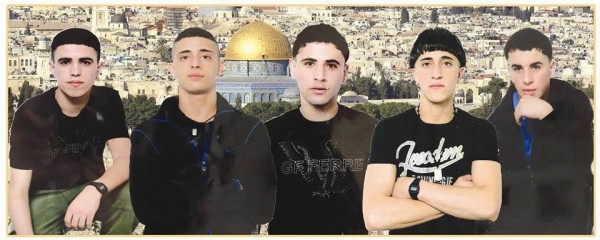
Hares, Salfit – It is with great sadness and anger that we hereby inform you of the outcome of the Hares Boys case: the five teenagers are being sentenced to 15 years in prison and are to pay a total of NIS 150,000 (~US $39,000 or €35,000) to the Israeli authorities. Failure to provide the exorbitant sum would, it is implied, result in more years of prison added to the boys’ sentences.
Ali Shamlawi, Mohammed Kleib, Mohammed Suleiman, Ammar Souf, and Tamer Souf have been kept in prison for 2 years and 8 months and are now being sentenced for a crime that never happened. The five teenagers (16-17 years old at the time) from the village of Hares (Salfit governorate, West Bank, occupied Palestine) were kidnapped from their homes by the Israeli army in March 2013. The teens were accused of throwing stones at illegal settler cars, one of which drove under a truck that was parked along Route 5 near the village of Hares. The driver’s children were injured during the accident and one of them died two years later after pneumonia complications. The boys denied throwing stones but were forced to sign ‘confessions’ following torturous interrogations at the hands of Israeli secret services. There was never any evidence of the boys’ guilt but it is sadly a reality in the Israeli military court system that does not comply with due process and convicts Palestinians at a 99.7% rate.
After almost 3 years of routine hearings at Israeli military courts, where the boys were initially accused of ‘attempted murder’, they were told on 26 November 2015 that they are now being charged with manslaughter and are being sentenced to prison terms of 15 years, provided their families pay ‘fines’ of NIS 30,000 [US $7,750 or € 7,100] each by the deadline of 28 January 2016. Failure to pay the amount requested by the Israeli military court would, it is understood, result in each boy’s sentence being prolonged, possibly to at least 25 years in prison.
There is no other way to describe this situation the five teens and their families have endured other than as criminal activity on behalf of the Israeli system of ‘justice’. Pressing the families to agree to a court ‘deal’ and threatening them with harsher sentences if they don’t accept is nothing less than extortion. Demanding that families pay large sums of money as a ‘fine’ or a ‘compensation’ to the occupying power is nothing less than a demand for ransom.
On behalf of the Free the Hares Boys campaign we condemn such acts of injustice committed by the Israeli military court.
We invite local and international human rights organizations, the world’s democratic government institutions and people of conscience to stand up to this injustice inflicted on the Palestinian people by the Israeli occupation and to demand justice for the Hares Boys. Please consider contacting your country’s diplomatic representatives in Tel Aviv or occupied Jerusalem; the Israeli Ministry of Justice; your local politicians; asking them to intervene and condemn such injustice and disrespect for the rule of law. Organize events in your community to highlight the Hares Boys case and the situation of hundreds of other Palestinian children who are being kept in occupation prisons.
Do not stay silent in the face of what is not right.
Further information and Contact:
Website: haresboys.wordpress.com Email: haresboys@gmail.com
Facebook: facebook.com/FreeTheHaresBoys Twitter: @HaresBoys
Israel releases Dawabsha arson suspect on house arrest
Ma’an – December 11, 2015
BETHLEHEM – Israel on Thursday released an Israeli settler arrested for suspected involvement in a fatal arson attack on a Palestinian family in July, Israeli media reported.
The settler, connected to a Jewish extremist organization, was arrested along with several others as a suspect in an arson that killed three members of the Dawabsha family in Duma village in the northern occupied West Bank district of Nablus.
The suspect was reportedly released and transferred to house arrest for five days at his home in the illegal Israeli settlement of Benyamin, east of Ramallah city.
The settler, whose name has not been released, is a married father of two.
The man was arrested 12 days ago by the Israeli intelligence and presented to an Israeli court on Wednesday, Israeli media reported. His detention was extended to Sunday, but was unexpectedly released on Friday.
On Dec. 3, Israeli forces announced that they had arrested several Israelis in connection to the Dawabsha arson. The information about the arrests was released after a weeks-long gag order was partially lifted on the investigation.
All other information regarding the investigation is still under a gag order requested by the Israeli police.
Suspects involved in the attack were identified by Israel’s defense establishment in September, but no charges were filed at the time, Israeli daily Haaretz reported.
On July 31, suspected Israeli settlers smashed the windows of the Dawabsha family home before throwing flammable liquids and Molotov cocktails inside.
The words “revenge” and “long live the Messiah” were sprayed in Hebrew outside of the house, immediately indicating that the arson was the work of Jewish extremists.
Ali Saad Dawabsha, one-and-a-half years old, was trapped in the house and burned alive. The infant’s mother and father, Riham and Saad, later died from severe burns.
Orphaned four-year-old, Ahmad Dawabsha, is the only remaining survivor of the attack and remains in the hospital receiving treatment.
The attack sparked criticism from the international community for Israel’s failure to hold Israeli settlers and Jewish extremists accountable for attacks on Palestinians, in effect being complicit in such attacks.
Israeli leadership at the time condemned the Dawabsha attack as “terrorism,” and pledged to bring the perpetrators to justice.
Israeli rights group B’Tselem slammed the reaction by Israeli officials as “empty rhetoric.”
“Official condemnations of this attack are empty rhetoric as long as politicians continue their policy of avoiding enforcement of the law on Israelis who harm Palestinians, and do not deal with the public climate and the incitement which serve as backdrop to these acts,” the group said at the time.
Thursday’s partial lift on the gag-order came one day after the United Nations Special Coordinator for the Middle East Peace Process, Nickolay Mladenov, criticized Israel for the “slow progress” in investigating the arson.
Israeli settlers prevent Hebron children from reaching primary school
Ma’an – December 10, 2015
HEBRON – A group of Israeli extremists prevented Palestinian children from going to school in the southern occupied West Bank’s Hebron city on Thursday, the director of the Palestinian Authority’s Ministry of Education Hebron office told Ma’an.
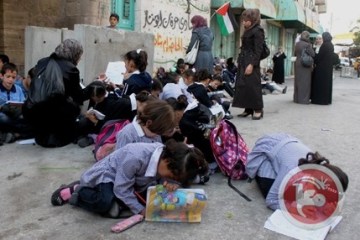 Bassam Tahboub said Anat Cohen, a well-known extremist who frequently harasses Palestinian residents in the area, first “attacked” the school children, “preventing” them from reaching Qurtuba middle school.
Following Cohen’s initial attack, other extremists reportedly joined in and began cursing and scaring the children. Instead of attempting to continue to school, the children decided to turn back and head home, Tahboub said.
Children who attend Qurtuba school, aged 7 to 16, are often harassed by settlers in area, as the school is adjacent to the illegal Israeli settlement of Beit Hadassah in the center of Hebron city.
According to Tahboub, Israeli settlers in the area have continuously attempted to have the school closed down.
Hebron has become the epicenter of recent violence over the last two months, as roughly 30 percent of the 115 Palestinians to be killed since Oct. 1 have been from the Hebron district.
Hebron’s city center is home to some 800 notoriously aggressive Israeli settlers, who live under the protection of thousands of Israeli forces, surrounded by more than 30,000 Palestinians.
In The NY Times, Palestinian Dead Are Nameless Numbers (At Best)
By Barbara Erickson | TimesWarp | December 9, 2015
Since the beginning of December at least 10 Palestinians have died at the hands of Israeli security forces. Only one of these deaths has received brief mention in The New York Times; the rest have been deemed unfit to print.
During this same period, no Israelis died from Palestinian attacks, so we can assume this is the reason for the show of indifference at the Times. Israeli deaths in these circumstances usually make headlines.
The recent Palestinian victims ranged in age from 15 to 37. All but one were male, and it was the lone female, Maram Hasouna, who managed to make the news in a story about young women joining the ranks of would-be attackers during the current Palestinian uprising.
The victims include: Ma’moun Raed al-Khatib, 16; Maram Hasouna, 19; Taher Faisal Fannoun, 17; Mustafa Fadel Fannoun, 19; Abdul Rahman Wajeeh Barghouti, 27; Anas Bassam Hammad, 21; Mazin Hasan Ureiba, 37; Omar Yasser Skafi, 21; Malek Akram Shahin, 18, and Ihab Fathi Miswadi, 21.
Security forces claimed that nine of the victims had attempted to attack Israelis. Only one, Shahin, was killed in other circumstances—during clashes that took place when troops invaded Dheisheh refugee camp in Bethlehem.
All of the deaths are newsworthy, but some of the fatalities involved details that add particular news value: Ureiba was a Palestinian Authority intelligence officer; Barghouti was an American citizen; and doctors reported that Shahin was shot in the head with a hollow point bullet, a weapon held to be illegal under international law. None of these factors, however, was enough to rouse the interest of the Times.
Instead, since the first of this month the newspaper has provided us with stories about wine making in Israel, the discovery of a possible ancient model of the Temple of Herod, the arrest of suspects in a fatal arson attack, a look at the risks of banning an Israeli Islamic group, the conviction of two Israeli youths in the killing of a Palestinian teen last year, the conviction of a Palestinian lawmaker and Israel’s attempt to draw Russian tourists.
The 10 who died so far this month are likely to appear as nothing more than numbers in future Times reports. As of today they have brought the total dead since Oct. 1 to at least 113. This compares with 17 Israelis.
Even in reporting this kind of data, the Times makes an effort to obscure the fact that Palestinians are suffering disproportionately at the hands of their well-armed occupiers. In a formulaic explanation for the numbers gap, the Times nearly always blames the victims entirely, saying that Palestinians were killed when they tried to attack Israelis or during violent protests.
Little or nothing will be said of the doubtful cases, in which witnesses dispute the official accounts and video evidence shows that the victims were posing no danger to troops. We can also expect that the Times will fail to mention human rights groups’ charges that a number of the victims were assassinated in “extrajudicial executions.”
The Palestinian dead rarely get their due in the Times, which prefers to consign them to tally sheets. Were they to appear in full context, as human beings with histories and families, this might elicit sympathy for them and condemnation of Israel, and this cannot be allowed.
Follow @TimesWarp on Twitter
Everyday humiliation of Israeli military occupation
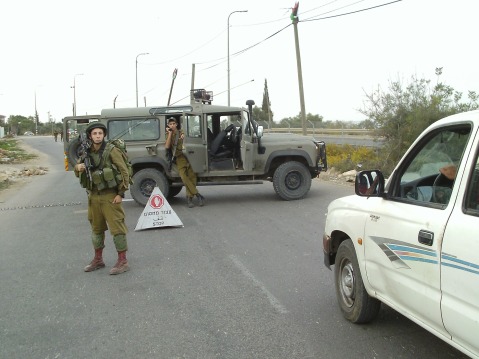
Israeli soldiers and the flying checkpoint outside the village
International Solidarity Movement | December 7, 2015
Hebron, occupied Palestine – Palestinians living in the Israeli militarily occupied West Bank face discrimination, racism and humiliation at the hands of Israeli forces on an everyday basis. Humiliation is entrenched in every aspect of daily life under the Israeli occupation. The message is clear: as a Palestinian you are always perceived as a threat, a possible terrorist or a menace – but never as a human being.
As a Palestinian citizen of the West Bank, freedom of movement is severely restricted and rather resembles trying to navigate a maze of road-blocks, permanent checkpoints and temporary ‘flying checkpoints’ that can suddenly pop up anywhere. All of these restrictions share one commonality: they are clearly intended to target only Palestinians – while Israeli settlers from the illegal settlements in the occupied West Bank are using roads that might not even be allowed for Palestinians to drive on.
In occupied al-Khalil (Hebron), the Israeli bus collecting passengers from the illegal settlements is not allowed for Palestinians to ride on, and thus passes Bethlehem checkpoint on the way to Jerusalem without even stopping – all the passengers are Israeli settlers anyways. On the Palestinian bus going through the same checkpoint, everyone, with the exception of tourists and elderly, are forced to get off the bus and wait for their IDs to be checked outside in any weather, and often their bags inspected by heavily-armed soldiers.
Right during rush hour on Thursday afternoon, Israeli forces set up checkpoints at all the entrances of occupied al-Khalil, resulting in endless queues of cars, on their way to visit family over the weekend on Friday and Saturday. As two soldiers thoroughly checked every passenger’s ID and car going in both directions, the queues grew longer and even ambulances with emergencies were denied passage and held up for at least ten minutes while being checked – ten minutes that hopefully weren’t critical for the emergency the ambulance was attempting to quickly get to. As Israeli forces strategically blocked every possible way to leave or enter al-Khalil either by permanent road-blocks completely blocking any sort of traffic except pedestrians or temporary checkpoints; there was no possible alternative than to either turn around and stay inside the city or to endure at least two hours of waiting to eventually be allowed to pass this checkpoint.
Finally passing one checkpoint successfully, though, in militarily occupied Palestine basically doesn’t mean anything: just a few hundred meters down the street might be another checkpoint. Palestinians try to avoid Gush Etzion junction on the way to Bethlehem, as settlers often attack Palestinians cars there, and soldiers stop and search cars with Palestinian license plates only; they take a detour through Palestinian villages. But in order to make the near-lockdown of al-Khalil ‘perfect’, Israeli forces set up checkpoints at entrances and exits of Sa’ir village. Thus, after an hour-long wait to leave al-Khalil city itself, Palestinian cars were stuck in yet another checkpoint just a twenty minutes drive away.
Waiting in the dark for seemingly endless hours to move ahead just one or two more meters in the line as a car was allowed to pass – or turned around, giving up the hope of ever crossing that night at all; Israeli settler cars speed past on a nearby road without any hurdles or hassles, just ‘normaly’ driving down a road at night. When finally slowly approaching the make-shift checkpoint with traffic spikes on the street, cars have to switch off their lights, so people next in line will only hazily see what’s going on. Once it’s their turn, everyone inside the car has to get out and stand a few meters away from the soldiers, while they inspect the IDs and cars. Depending on the soldiers mood, some people, mainly young adult males, will have to lift up their shirts and trouser-legs; while others will have to answer questions about their destinations and the reason of travels, and even about their families and private life. The only thing that is for sure is that you can never tell what will happen. The power dynamics is clear, the heavily armed soldiers have the ‘authority’ to decide over everything, the Palestinian passengers will have to obey whatever is asked of them. That none of this has to do with ‘security’ but everything with control and humiliation is obvious. This is the face of just a tiny little aspect of the everyday humiliation defining this military occupation.
Humiliation doesn’t even stop with death – the Israeli forces are still withholding the bodies of Palestinians they claim attacked Israeli soldiers – refusing an appropriate funeral and mourning for their families, relatives and friends. Denying even a last peaceful rest and a person’s family to mourn the death of a loved one is the last possible way to humiliate. Not even in death, does the humiliation stop or are Palestinians treated like human beings.
US donors gave settlements more than $220 million in tax-exempt funds over five years
MEMO | December 7, 2015
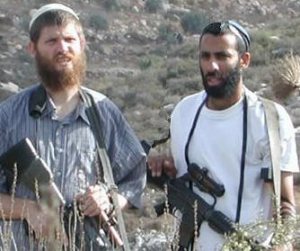 Private US donors are massively funding Israeli settlements by using a network of tax-exempt nonprofits, which funnelled more than $220 million to West Bank settlements in 2009-2013 alone, a Haaretz investigation has found.
The funding is being used for anything from buying air conditioners to supporting the families of convicted Jewish terrorists, and comes from tax-deductible donations made to around 50 US-based groups.
Nearly 80 percent of this income (about $224 million) was transferred to the occupied territories as grants, mostly through Israeli nonprofits. In 2013 alone, these organisations raised $73 million and allotted $54 million in grants.
The investigation stated: “Thanks to their status as nonprofits, these organisations are not taxed on their income and donations made to them are tax deductible – meaning the U.S. government is incentivising and indirectly supporting the Israeli settlement movement, even though it has been consistently opposed by every U.S. administration for the past 48 years.”
A senior White House official told Haaretz that “the policy of every administration since 1967, Democrat and Republican alike, has been to object to Israeli settlement beyond the 1967 borders.
“The present administration is no different,” the official continued. “Concordant with permanent U.S. policies, this administration never defended or supported any activity associated with the settlements. It doesn’t support or advance any activity that will legitimize them.”
Nisreen Azzeh continues to struggle after the death of her husband, Hashem Azzeh
International Solidarity Movement | December 6, 2015
Al-Khalil, Occupied Palestine – The 22nd of November, one month after the passing away of Palestinian activist and dear friend of the ISM, Hashem Azzeh, the team of al-Khalil (Hebron) visited his widow, Nisreen.
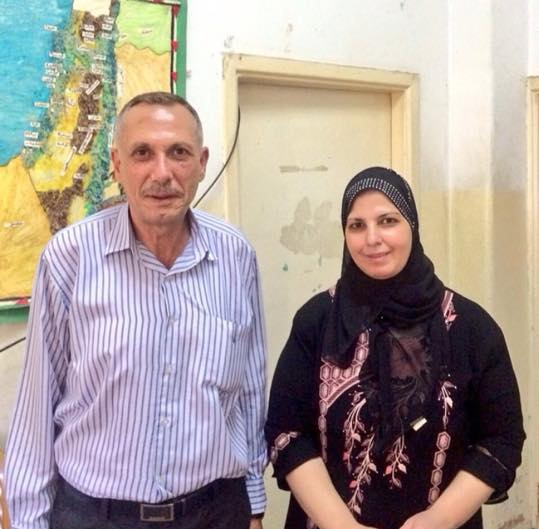
Nisreen with her late husband, Hashem Azzeh. Photo credit: Global Research
While sitting in her living room, Nisreen explained how, after her husband’s death, everyday life for her and her family has only gotten worse.
The Israeli army does not allow any visitors into the house. She also says that the army refers to them not by their actual names, but with numbers.
4 days before this conversation took place, Nisreen was coming back home to find the main access to the house closed. The Israeli soldiers had declared it a military closed zone. They asked her, “Why are you so nervous?” To which she replied, “Because the way is closed.”
The soldiers mockingly answered, “Call Mahmoud Abbas and tell him to stop the Intifada.” But Nisreen answered back to this cruel sarcasm, saying that this is H2 area, “which is ruled by Netanyahu.”
Since the main access to her home is now blocked, she is forced to use an alternative entrance where she must climb some very difficult rocks. Nisreen suffers from knee problems, and she can foresee that when the winter and the snow comes, this passageway will be very slippery, putting her in danger of falling.
Both Nisreen and her brother in law are afraid of their children going out alone on the street. They are especially afraid for Raghad, Nisreen’s oldest daughter who is 17, and her cousin, who is 19 years old. Because of their age, both of their parents are scared that the illegal Israeli settlers and Israeli army will shoot and kill them and place a knife next to their bodies, since this is what they have been doing, targeting youth of similar age, almost on a daily basis from the beginning of October. Read more about this here and here.
Therefore, Raghad is not going out of the house alone, and she had to stop walking her youngest sister to school. Now her mother has taken on that task.
Fear of settler violence is part of every day life for the inhabitants of Al-Khalil (Hebron). Nisreen will never forget how she suffered two miscarriages due to settlers’ attacks. During the first miscarriage, she was three months pregnant; the second time, she was four months pregnant.
After one of these miscarriages, which happened in 2003, she had decided to file a complaint to the Israeli Police. After waiting for 8 years, the case was finally brought to court in 2011. The settlers counted with three lawyers, whereas for her it was very hard to pay for all the necessary expenses.
She recalls how, during the first court hearing, the settlers did not show up saying they were sick. During the second court hearing, when the settlers came with three layers, she had presented a video showing how they had attacked her together with her son Younes, who was three years old at the time. The court even requested her to draw a map of the location where this took place. She did so, but the final decision of the court was that she was lying and she lost the case.
In the meantime, Nisreen continues her struggle to provide a life as normal as possible for her children.
For a deeper understanding of Al-Khalil’s daily life struggle, read an interview ISM made to late Hashem Azzeh in 2013 here.
Anti-Assimilation group protests Christmas tree event in Jerusalem
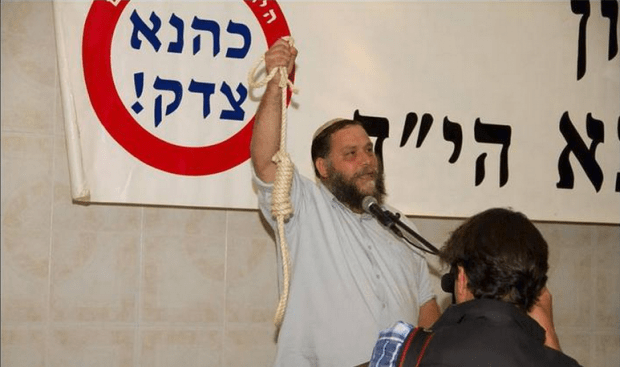
Benzi Gopstein holds a noose at a Lehava meeting shared on social media (Twitter/@ronnie_barkan)
IMEMC News | December 6, 2015
The right-wing Jewish group ‘Lehava’ held a protest outside of the YMCA in Jerusalem, shouting at Palestinian Christian children and families as they were entering and leaving the annual Christmas-tree decoration party.
Lehava is a group that calls for the expulsion of the indigenous Palestinian population from their homes in what is now Israel, in Jerusalem and in the West Bank. At a protest last year outside of a business that had some Palestinian employees, the group chanted “Stop hiring Arabs,” “stop dating our women” and “employing Arabs equals Assimilation.”
The group, whose name in Hebrew stands for the “Organization for the Prevention of Assimilation in the Holy Land”, has also disrupted weddings between Palestinians and Israeli Jews, and handed out fliers saying they are trying to “save the daughters of Israel” by preventing them from dating or marrying Arab men.
A 2011 investigation by the Israeli newspaper Ha’aretz found that around half of the annual budget of the controversial Lehava organization was funded directly by the Israeli government.
The leader of the group, Benzi Gopstein, was reportedly present at the YMCA protest on Friday. Gopstein is on the record voicing support for Pinhas Aburamed, an Israeli man who murdered a Palestinian who he thought was trying to flirt with a Jewish girl. Gopstein said that Aburamed is a hero and should receive a medal.
The event that the right-wing Jewish Lehava group chose to protest was a family event described on the YMCA’s website as “A festive evening in the YMCA lobby decorating the Christmas tree, singing carols and enjoying holiday treats.”
The protesters shouted anti-Palestinian and anti-Christian slogans at the children who came to decorate the Christmas tree, including, “The Arabs won’t defeat us with knifes, and the Christians won’t buy us with presents,” and “Jews want a hanukkiah [menorah], not a fir tree”, according to Israel National News.
Around 1% of the population of Israel, the West Bank and Gaza is Christian. The percentage had been higher before the Israeli military occupation and theft of Palestinian land began. The emigration of Palestinian Christians to other countries increased significantly after the Oslo Accords were signed in 1993 and Israeli settlement expansion increased exponentially.
Many Palestinian Christians in Bethlehem, Jerusalem and Nazareth can trace their ancestry back to early Christians who have remained continuously on the land where Christians believe that Jesus was born, died and resurrected.
Increasing collective punishment in occupied al-Khalil (Hebron)
International Solidarity Movement | December 3, 2015
Hebron, Occupied Palestine – Israeli forces closed the al-Hareka neighbourhood putting up new roadblocks and completely closing off a whole neighbourhood in occupied al-Khalil (Hebron).
The neighbourhood’s access to the main street has been blocked off with an iron gate for a long time already. Recently, a group of about twenty soldiers arrived to the neighbourhood to further limit the freedom of movement of the Palestinian residents.

One resident, a journalist documenting the soldiers putting the new roadblocks that completely barr any access to about 200-300 people living there, was detained by the soldiers for over an hour. Soldiers attempted to stop him from filming this measure of collective punishment, a clear infringement of freedom of the press. In order to reach the main road or leave their houses, people living behind the wall are now forced to walk all the way around and will thus need at least ten minutes more to reach the military gate that is already blocking their entrance.
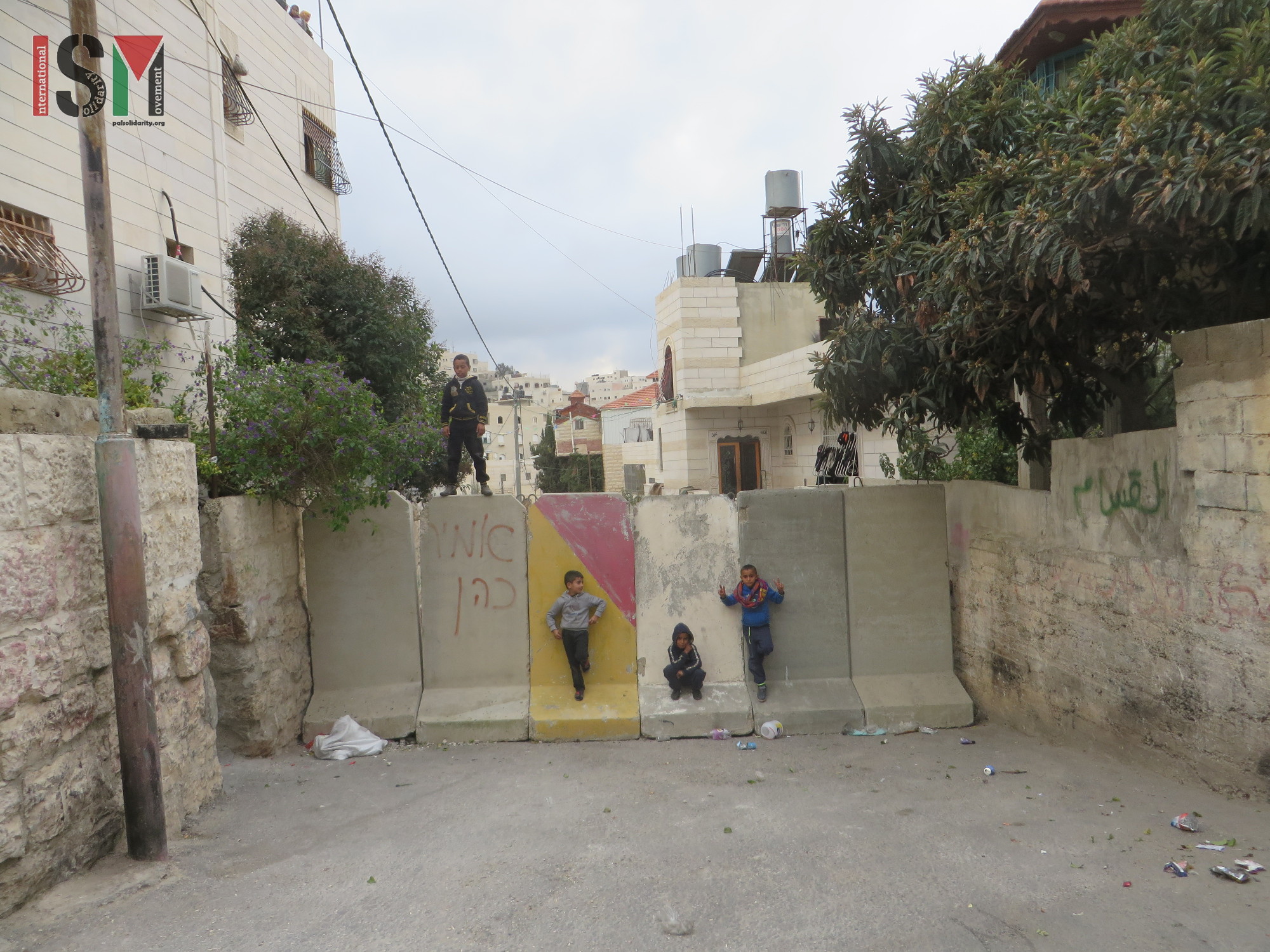
Additionally, soldiers have commanded the roof of a private family home for military purposes and have erected a small military base there. A group of six soldiers is permanently stationed on the family home and “they slept on the roof”, as a school-boy explained.

The al-Hareka neighbourhood is bordering the illegal settlement of Kiryat Arba, and thus is often the target of harassment and violence both from the Israeli forces as well as the settlers – often under the protection of the soldiers.
This is yet another measure to intensify the efforts to restrict – or completely stop – Palestinian freedom of movement. Such collective punishment measures have sky-rocketed in the recent weeks and months in occupied al-Khalil, and add to the increasing efforts to further exacerbate everyday life for Palestinians and eventually make them disappear completely.
Israeli forces invade homes and threaten families with nine children in Deir Istyia
International Solidarity Movement with IWPS | November 30, 2015
Deir Istyia, Occupied Palestine – Deir Istyia, in Salfit district, is a village of 4000 inhabitants who mostly live on agriculture. The Salfit district has 19 villages and 24 settlements. Land confiscation is ongoing in the area and many of the settlements are growing, as the road that connects them is widening.
The 3 families are now the only Palestinians living on the west side of the road.
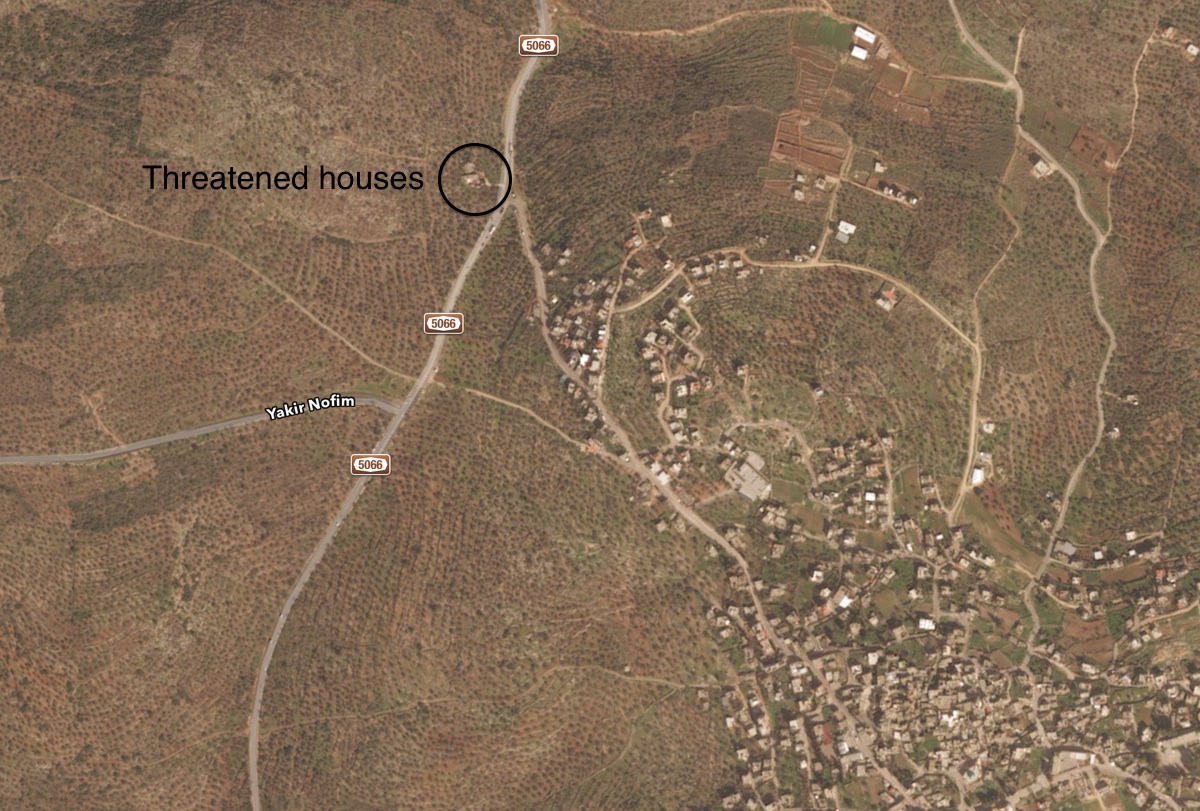
Now three families, living in the outskirts of Deir Istyia (see photo), are under daily threats and harassment from the Israeli forces. They don’t know if the goal is to take over their land or just to try to make their lives so unbearable that they will themselves decide to move from the land on which they have been living peacefully for many generations.
It started in the beginning of October this year, where the soldiers started to come to the houses and harass the families, mainly at daytime. Often the women are alone with the children during the day while the men are working. Israeli forces have chosen this time to come to the houses and scare the families. One of the women explained to us that the soldiers hit her, told her that the house wasn’t hers and that she soon would have to move away. They also told her that she was a terrorist, and that the soldiers would soon come back and shoot her.
Over the last 4 days the Israeli forces have been there day and night, telling the families that they have permission to stay on the roof of one of the houses. One night, they stayed all night and slept on the roof. They claim to have to watch the road and the surroundings, because of stone throwers, even though there hasn’t been any stone throwing in that area. Last Saturday, when the soldiers were there, they took pictures of the house and the yard.
Now, the children are very insecure, and their mothers don’t leave the houses as they are afraid of leaving them alone, a situation that makes them feel, as they describe it, as in prison. They can hear the soldiers walking around outside their houses and standing on the olive hill behind them at night.
Volunteers from International Solidarity Movement and International Women’s Peace Service will follow up on the situation of these families.
Illegal Israeli settlers threaten to burn family living at edge of Palestinian village
International Solidarity Movement | November 28, 2015
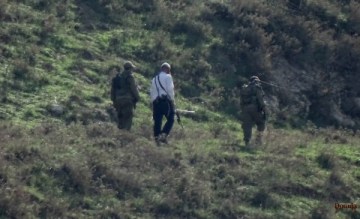 Madama, Occupied Palestine – Earlier today, November 28th, a group of Israeli illegal settlers, in the presence of three Israeli soldiers, threatened to burn down a family in the village of Madama, occupied West Bank.
At noon, 25 settlers from the nearby settlement of Yitzhar trespassed the land of the Palestinian village Madama. Once they had reached the outskirts of the village they started yelling and threatening a family.
The family, which previously had problems with settlers from Yitzhar, includes 9 children and an additional child is expected within two months.
The settlers, some of whom were armed with rifles, were standing within 100-150 metres from the family’s house when they were yelling at the family. The illegal settlers were threatening the family with facing the same end as the Dawasheh family, referring to a previous attack this year where a settler firebombed a Palestinian family. 18 month old Ali Dawasheh was burned alive and both his parents later succumbed from the arson attack, leaving 4 year old Ahmed as the only surviving member of the family.
The settlers today also yelled at the family that they would be the next Mohammed Abu Khdeir. Mohammed was only 16 years old when he was kidnapped outside his house in the neighborhood of Shuafat, East Jerusalem. The kidnappers, later found out to be Jewish Israeli nationalists, beat him up and forced him to drink gasoline before finally burning him alive, from the inside out.
After today’s attack, the family in Madama is feeling even more insecure. Due to repeated attacks by the settlers the family recently got founding from the authorities to put up a barb wire fence, surrounding the house. And the father of the family has put a cover on the windows to protect his family from potential rocks thrown by the settlers.
Featured Video

Stanislav Krapivnik: Russia-Iran Cooperation & Escalation in Ukraine
or go to
Aletho News Archives – Video-Images
Frlom the Archives
A dark page from the CIA’s history: What was Project Artichoke, launched 74 years ago?
By Erkin Oncan | Strategic Culture Foundation | August 22, 2025
One of the most useful instruments hidden behind the U.S. empire’s rhetoric of “freedom and democracy” was the Central Intelligence Agency, founded on September 18, 1947, as the successor of the Office of Strategic Services (OSS).
Since its creation, the CIA has carried out countless inhumane operations: assassinations, coups, drug trafficking, support for terrorism, conspiracies. The list of its crimes is endless. But among the darkest and most inhumane chapters of its record lie the notorious “mind control” experiments. … continue
Blog Roll
 Aletho News
- Are the Jews indigenous to Palestine?
- Stanislav Krapivnik: Russia-Iran Cooperation & Escalation in Ukraine
- Indonesia suspends participation in Board of Peace following attack on Iran
- ‘Operation Epic Fury’ burns an estimated $5.82 billion in just 100 hours
- Zionism’s grip over the world: From Epstein to Greater Israel
- How Israel and the FBI manipulated assassination plots to goad Trump into Iran war
- Iranian Strikes Dispel the Illusion of US Security Umbrella
- US Boasts of Destroyed Iranian Launchers Lack Credibility – Ex-DoD Official
- Europe not in position to cooperate with US and Israel against Iran
- Iran Has ‘Broken the Myth’ of Israeli Military Power: Former Pakistani Envoy
- If Americans Knew
- US troops were told war on Iran was ‘all part of God’s divine plan’, watchdog alleges
- Trump wants to run the show in Iran, but doesn’t know what he’s doing – Not a ceasefire Day 147
- ‘Dirty Work’ :The truth about how Israel was founded
- Mass Expulsion in Lebanon as Israel Expands War: “We Don’t Know Where to Go”
- Lies, distortions, and propaganda: how the U.S. mainstream media coverage on Iran hides the truth
- Palestinians in Gaza fear famine returning as Israel cuts off food amid Iran war
- AIPAC, other pro-Israel groups enter midterms with $100 million to spend
- Iranian girls killed by ‘double-tap’ strikes on Minab school
- Bari Weiss Is Going Full ‘Propaganda-Palooza’ With the Iran War
- Inside the Pro-Israel Campaign to Stop ‘The Voice of Hind Rajab’ From Winning an Oscar
- No Tricks Zone
- Televised! Leading German Political Candidate Tells Schoolchildren CO2 Makes Sun Hotter!
- New Study: A Century Warming Of 1.1°C Is ‘Commonplace’ And ‘Not Unusual’ During This Interglacial
- New Study: ‘Internal Noise’ And Volcanic Forcing Can Trigger 10-15°C Warming Within Decades
- Glaciers Worldwide Are Suddendly Surging, Experts Blame Warming!
- Surprising Discovery: Sahara Is Greening…Billions Of Trees Where Once Thought To Be Barren
- New Research Reaffirms Clouds, Aerosols, And Surface Solar Radiation Are ‘Driving The Climate System’
- Germany: Electric Car Catches Fire At Charging Station, Sets Off Local “Inferno”, Widespread Damage
- New Study: Canada’s New Brunswick Was 1°C Warmer Than Today During The Medieval Warm Period
- Coal Power Back In Trend As Globe Tries To Keep Pace With Growing Demand For Power
- New Study: A 4°C Warmer Beaufort Sea Had ‘No Sea Ice’ 11,700 – 8200 Years Ago
 Aletho News