Settlers breach wall of Palestinian home in Jerusalem’s Old City
Ma’an – January 4, 2016
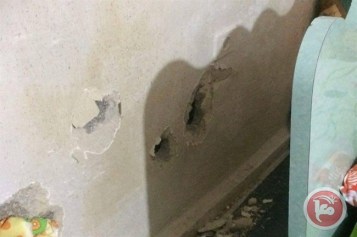
JERUSALEM – Israeli settlers on Sunday made a number of breaches through the wall of a Palestinian home belonging to Noura Sub Laban in the Old City of Jerusalem, family members told Ma’an.
Noura’s son, Ahmad Sub Laban, said the family was shocked to find at least six breaches through the wall, which borders a property that was taken over by settlers just two weeks ago.
Ahmad said the family called Israeli police, who arrived on the scene and asked that the settlers repair the damage without bringing any formal procedures against them, despite the settlers admitting to breaching the wall.
An Israeli police spokesperson had no immediate information on the reports.
Ahmad said: “I do not know the motivations behind this action, but this has confirmed that our house is in real danger as it is surrounded by Israeli enclaves on all sides, which means the house could be stormed at any moment.”
The far-right settlement organization Ateret Cohanim has been trying to seize the home of Noura Sub Laban, which lies in the Old City’s Oqbit al-Khalidiya area, since 2010, with the Sub Laban fighting to defend the home in Israel’s courts.
There are more than 500,000 Israeli settlers living in the West Bank, including East Jerusalem, in contravention of international law.
Ariel university continues to pollute Salfit environment
Palestine Information Center – January 3, 2016
SALFIT – The Ariel settlement university has continued to pour its harmful chemical waste through its sewer system onto Palestinian agricultural land in al-Matwi Valley in Salfit province, local sources complained on Sunday.
Residents from the area told the Palestinian Information Center that the Israeli university persists in disposing of hazardous chemical waste into the valley with no regard for the environment in the surrounding areas.
Palestinian researcher Khaled Ma’ali said that the Israeli human rights group B’Tselem had affirmed in previous reports that Israeli settlements and Ariel university in the West Bank violate international and local environmental protection laws.
Ma’ali invited international and local environmental institutions to visit Salfit province and witness its suffering from the pollution resulting from the flow of wastewater from several settlements, especially Ariel.
Israeli settlers attack Palestinian home near Nablus
Ma’an – January 3, 2015
NABLUS – Israeli settlers on Saturday attacked a Palestinian home in the village of Beit Furik near Nablus in the occupied West Bank, a Palestinian Authority official said.
Ghassan Daghlas, a PA official who monitors settlement activities in the northern West Bank, told Ma’an that settlers threw stones at the home of Nihad Hanani before leaving behind a Molotov cocktail and a letter.
Daghlas said that the settlers — believed to be from the nearby illegal settlement of Itamar — were chased by locals as they fled the scene after attacking the home. The attack is the most recent to be carried out by settlers in the occupied West Bank.
The Nablus area where Beit Furik is located is site to several settlements who have gained a reputation for being home to extremists who regularly carry out attacks on Palestinians and their property, also known as “price tag attacks.”
Palestinian residents in the area have often orchestrated nightly patrols of locals to protect their villages from such attacks, as Palestinian security forces have no jurisdiction over Israeli settlers and Israeli forces rarely intervene in such attacks on behalf of Palestinians.
Last week in the Ramallah area, suspected Israeli settlers threw tear-gas bombs into the home of a Palestinian family and spray-painted the phrases “revenge” and “hello from the detainees of Zion” in Hebrew on the side of the home.
No injuries were reported in the attack, which appeared to be a revenge attack for the arrest of Jewish extremists who carried out a deadly attack on a Palestinian family in the Nablus-area village of Duma last summer.
The US State Department’s 2013 Country Reports on Terrorism included price tag attacks for the first time, citing UN figures of some “399 attacks by extremist Israeli settlers that resulted in Palestinian injuries or property damage” that year.
Such attacks were “largely unprosecuted,” it said.
7-year-old girl chased by notorious Israeli settler in Hebron
Ma’an – December 29, 2015
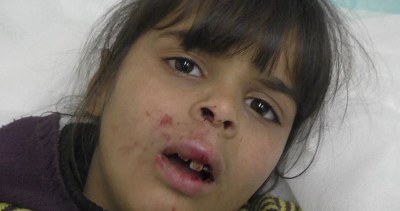
HEBRON – A Palestinian father living in Hebron’s Old City told Ma’an that his 7-year-old daughter was injured while being chased by notorious Israeli extremist Baruch Marzel on Monday.
Raed Abu Irmeileh said that he had to take his daughter, Dana, to the Hebron Governmental Hospital “after she had fallen to the ground while being chased by Baruch Marzel near the Ibrahimi mosque.”
Irmeileh told Ma’an that Israeli forces present in the area did not stop Marzel from chasing his children, and assaulted his 10-year-old son Hutasem as well as two brothers Nabil, 14, and Farhat Nader al-Rajabi, 10.
An Israeli army spokesperson did not have immediate information on the incidents.
Irmeileh is one of thousands of Palestinians living in the Israeli-controlled center of Hebron — the largest city in the occupied West Bank — among hundreds of Israeli settlers living illegally in the area.
Israeli rights group B’Tselem regularly documents Israeli settlers attacking locals under the protection of Israeli forces in Hebron.
Marzel is well-known among Palestinians living in Hebron who fear the right-winger, follower of radical rabbi Meir Kahana and member to the Kach movement — outlawed by Israel in 1994 under anti-terrorism laws.
Hebron’s Old City was declared a closed military zone in November, banning entrance to the area to all except registered Palestinian residents and Israeli settlers.
Palestinian PM Rami Hamdallah following the ban called for the presence of Palestinian security forces in al-Shuhada Street and Tel Rumeida areas of Hebron in order to provide “security and protection” for Palestinians against Israeli settler assaults.
Israeli Apartheid Wall destroys Palestinian lives

Palestine Information Center
On 29 March, 2002, the Israeli Occupation Forces (IOF) conducted a large-scale military operation in the West Bank, called “Operation Defensive Shield”. During the operation, the Israeli forces raided many Palestinian towns and villages and committed heinous crimes against the Palestinians.
The operation brought to light the Israeli government’s plans to conquer more Palestinian lands and to expel the Palestinians from their own homes. A major step in these plans was to build the Apartheid Wall, or what Israel calls the Separation Wall.
The Israeli government commenced building the Apartheid Wall on 23 June, 2002, at a planned length of 770 km. Now, around 406 km, i.e. 52.7%, of the Wall is completed.
The Wall in numbers
The Wall is 60-150 meters wide in some areas. This includes a buffer zone and roads on both sides of the Wall that the Israeli military uses to watch the Wall. The Wall is 8 meters high, and it contains:
1. Barbed wire
2. A 4-meter wide and deep trench, aiming to prevent the vehicles and pedestrians from passing
3. Military patrol roads
4. A sandy road to track footsteps
5. An electric fence with an 8-meter high cement wall
6. Watchtowers with cameras and sensors
The Wall separates an area of 733 km2 of the Palestinian lands that falls behind the Wall from the West Bank. In other words, these 733 km2 would be under full Israeli control, besides the occupied lands of 1948.
The Wall would also occupy 220 km2 of Jordan Valley, east of Palestine. The Valley is a main source of food for Palestinians, and is also known as their “food basket”.
The Wall passes through eight Palestinian governorates. In Jerusalem, building the Wall accelerated in 2006-2007. It separates a number of heavily populated Palestinian neighborhoods, like Shufat and Kafr ‘Aqab.
Effects of the Wall
In spite of the claimed Israeli security motives behind building the Wall, it negatively impacts the Palestinian people and cause.
First: Effects on the Palestinian daily life
As the Wall passes through the West Bank, it negatively impacts the lives of 210,000 Palestinians, who live in 67 Palestinian towns and villages.
Because of the Wall, 13 Palestinian neighborhoods would be isolated between the green line and the Wall. Furthermore, a second wall would create a security belt, stranding 19 Palestinian neighborhoods in isolated areas.
The Wall would also hinder the Palestinians’ movement and would prevent them from reaching their farms and selling their goods and produce.
Second: Economic and environmental effects
37% of the Palestinian villages, cut with the Wall, would lose their economic resources. Moreover, 12 km of irrigation systems were destroyed.
Confiscating and bulldozing Palestinian farms would cost the Palestinians 6500 jobs, in addition to harming the olive oil industry and fruit and vegetable farming.
The Apartheid Wall would affect the Palestinian water resources, as the West Bank would lose 200 million cubic meters of the Jordan Valley water.
Third: Effects on movement
Statistics show that the Wall would violate the right of movement of two million Palestinians. They will have to seek Israeli permits to be able to reach their houses and farms in different Palestinian areas. Such restrictions would force at least 2.8% Palestinians to leave their homes and find other places to live in.
Fourth: Effects on education and medical sectors
Many Palestinian students and teachers were affected by the Wall, as it prevented them from reaching their schools, forcing 3.4% Palestinians to drop out.
On the medical level, it is getting increasingly difficult for Palestinians to reach the hospitals and medical centers to the east of the Wall, and the Palestinian villages to the west of the Wall have no medical services at all.
Fifth: Effects on Palestinian water resources
The Israeli occupation has strategically chosen the path of the Wall in order to guarantee Israel as much water as possible and thus depriving Palestinians of a basic right. Once finished, the Wall will enable Israel to confiscate and control 165 water wells and 53 springs, which in total culminate into 55 million cubic meters annually. Furthermore, the Wall now means Israel controls an additional amount of 679 million cubic meters annually.
Stop unacceptable harassment of human rights defenders in Occupied Palestinian Territory – UN experts
UN Human Rights Council | December 18, 2015
GENEVA – United Nations independent experts today expressed grave concerns at continued reports that human rights defenders are being subjected to physical attacks, harassment, arrest and detention, and death threats, particularly in Hebron in the Occupied Palestinian Territory (OPT), in an apparent bid by Israeli authorities and settler elements to stop their peaceful and important work.
“Amidst a charged and violent atmosphere over past months in the OPT, Palestinian and international defenders are providing a ‘protective presence’ for Palestinians at risk of violence, and documenting human rights violations,” said the UN Special Rapporteur the situation of human rights defenders, Michel Forst.
“The continued harassment of human rights defenders in the OPT, who are exercising their rights to freedoms of expression and association, is simply unacceptable. It should cease immediately,” Mr. Forst stressed.
Earlier this month, a group of UN human rights experts urged the Israeli Government to ensure a protective environment where human rights defenders in the Occupied Palestinian Territory can work without unlawful restriction and without fear of retaliatory acts.
“We recently addressed concerns to the Israeli Government regarding retaliatory acts by Israeli authorities against members of one organisation based in Hebron, Youth Against Settlements, after its Centre was subjected to raids and settlers allegedly called for it to be closed,” noted the UN Special Rapporteur the situation of human rights in the OPT, Makarim Wibisono.
“The Centre has now effectively been shut down as a result of the Israeli military declaring the surrounding area a military zone,” Mr. Wibisono said. “We urge Israeli authorities to lift this military order.”
The experts’ statement has been endorsed by the Special Rapporteur on torture and other cruel, inhuman or degrading treatment or punishment, Mr. Juan E. Méndez, and by the Special Rapporteur on the rights to freedom of peaceful assembly and of association, Mr. Maina Kiai.
Israel plans to build walls around Palestinian towns
MEMO | December 18, 2015
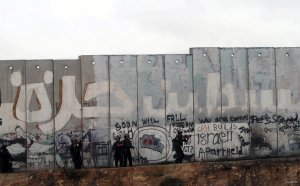 Media reports in Israel have reported that the army is planning to build walls around Palestinians towns and villages on the pretext that it will stop stones being thrown at illegal Jewish settlers.
“The army will build 9 metre high walls in the areas of Beit Ummar, Al-Arroub, Gush Etzion, and the areas surrounding Highway 60, south of the West Bank,” claimed Channel 2 TV.
In response, Mustafa Barghouti, the Secretary-General of the Palestinian National Initiative, told Anadolu, “The Israeli army’s decision to build walls around important and vital areas in the southern part of the West Bank aims to control large Palestinian areas for settlers. It also aims to isolate the areas from each other in order to prevent any chance to establish a Palestinian state.”
Such walls, added Barghouti, are in addition to the 676 military checkpoints in the occupied West Bank as part of the Israeli plan to divide the territory and control all of its vital areas.
In an Appalling Act of Hypocrisy, NY Times Promotes Settlers as Peace Builders
By Barbara Erickson | TimesWarp | December 15, 2015
Gush Etzion Junction was a peaceful corner of the West Bank, according to The New York Times, until Palestinians ruined it with a series of attacks in the latest uprising. Such is the message in Isabel Kershner’s most recent attempt to whitewash Israel’s brutal and illegal occupation of Palestinian territory.
Readers are never reminded of the fact that Gush Etzion is an illegal Jewish-only settlement block located in the heart of the West Bank. Nor are they told that its presence means the loss of thousands of acres of land once vital to the livelihood of the indigenous Palestinians, the confiscation of water resources and a choking system of military checkpoints.
In her story today, Isabel Kershner makes no attempt to discern what Gush Etzion means to Palestinians, although it sprawls over a large tract of their heartland, on their confiscated hills and fields. She provides Gush Etzion’s Jewish history but says nothing of the Palestinian experience, and while listing recent attacks on Jews, she makes no mention of Palestinian injuries and deaths, which far exceed those of Israelis.
Her one attempt to provide a motive for Palestinian attacks is ludicrous: The junction has become a target because it is a “hub of coexistence.” Nothing is said about the crushing effects of the occupation, trigger-happy Israeli troops, the continuing confiscation of Palestinian land and the loss of hope.
She writes: “Jewish settler leaders have promoted the slightly shabby complex as a symbol of peaceful coexistence and evidence that Israelis and Palestinians can share the hotly contested territory.”
In other words, the settlers have the best of intentions. After stealing Palestinian land and water to build Jewish-only colonies, they insist that they want only to be good neighbors.
Kershner also makes a feeble effort to provide “balance,” bringing out her stock phrases to defend Israel’s crimes: “The Palestinians and much of the world consider all settlements in the territories seized in 1967 as illegal and an obstacle to establishing a Palestinian state.”
Much of the world. This is a duplicitous way to put it. In fact, the entire world opposes the settlements, even Israeli’s staunchest ally, the United States.
When Prime Minister Benjamin Netanyahu last year announced a huge land grab from Palestinian villages surrounding Gush Etzion, the world rushed to condemn the act. This is important context in any discussion of the block, but no mention of it appears in Kershner’s story.
Other factors undermine her claim of peaceful coexistence and good intentions from settler leaders. B’Tselem, the Israeli human rights monitoring group, has frequently charged that the Gush Etzion police station is notorious for torturing Palestinian teens in order to extract confessions. It has released reports over several years pointing to significant abuses in the heart of the settlement block.
Kershner makes much of the presence of Palestinian employees at Gush Etzion Junction and manages to quote one of them—at the end of her story—thus suggesting that it is a welcoming place, open and tolerant. The backstory, however, is more revealing. It can be found in this paragraph from The Economist, written after Netanyahu’s land grab announcement last year:
“Encircled by Mr Netanyahu’s latest appropriation, Palestinian residents of the bucolic village of Wadi Fukin have already lost all but 450 of the 3,000 acres they once had, and stand to lose more. The hillsides where the village’s 600 sheep and goats graze are set to go. Unable to farm, many men find work as builders, often on Jewish settlements nearby. They may yet be called upon to build homes for Israelis on land they regard as their own.”
Wadi Fukin is one of the villages destined to lose under the latest expansion of Gush Etzion. Its tragic tale and that of many others are entirely missing from the story in the Times today. In such a context-free effort, Kershner makes her claims of tolerant settlers and a peaceful oasis, and the result is an appalling act of hypocrisy and spin.
Follow @TimesWarp on Twitter.
Five Palestinian teens blackmailed into accepting 15 years prison term and exorbitant ‘fines’ for a crime that never happened
The Hares Boys campaign | December 13, 2015
Hares, Salfit – It is with great sadness and anger that we hereby inform you of the outcome of the Hares Boys case: the five teenagers are being sentenced to 15 years in prison and are to pay a total of NIS 150,000 (~US $39,000 or €35,000) to the Israeli authorities. Failure to provide the exorbitant sum would, it is implied, result in more years of prison added to the boys’ sentences.
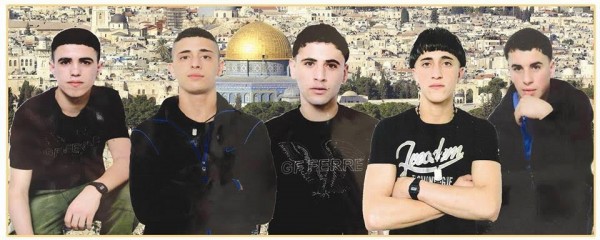
Ali Shamlawi, Mohammed Kleib, Mohammed Suleiman, Ammar Souf, and Tamer Souf have been kept in prison for 2 years and 8 months and are now being sentenced for a crime that never happened. The five teenagers (16-17 years old at the time) from the village of Hares (Salfit governorate, West Bank, occupied Palestine) were kidnapped from their homes by the Israeli army in March 2013. The teens were accused of throwing stones at illegal settler cars, one of which drove under a truck that was parked along Route 5 near the village of Hares. The driver’s children were injured during the accident and one of them died two years later after pneumonia complications. The boys denied throwing stones but were forced to sign ‘confessions’ following torturous interrogations at the hands of Israeli secret services. There was never any evidence of the boys’ guilt but it is sadly a reality in the Israeli military court system that does not comply with due process and convicts Palestinians at a 99.7% rate.
After almost 3 years of routine hearings at Israeli military courts, where the boys were initially accused of ‘attempted murder’, they were told on 26 November 2015 that they are now being charged with manslaughter and are being sentenced to prison terms of 15 years, provided their families pay ‘fines’ of NIS 30,000 [US $7,750 or € 7,100] each by the deadline of 28 January 2016. Failure to pay the amount requested by the Israeli military court would, it is understood, result in each boy’s sentence being prolonged, possibly to at least 25 years in prison.
There is no other way to describe this situation the five teens and their families have endured other than as criminal activity on behalf of the Israeli system of ‘justice’. Pressing the families to agree to a court ‘deal’ and threatening them with harsher sentences if they don’t accept is nothing less than extortion. Demanding that families pay large sums of money as a ‘fine’ or a ‘compensation’ to the occupying power is nothing less than a demand for ransom.
On behalf of the Free the Hares Boys campaign we condemn such acts of injustice committed by the Israeli military court.
We invite local and international human rights organizations, the world’s democratic government institutions and people of conscience to stand up to this injustice inflicted on the Palestinian people by the Israeli occupation and to demand justice for the Hares Boys. Please consider contacting your country’s diplomatic representatives in Tel Aviv or occupied Jerusalem; the Israeli Ministry of Justice; your local politicians; asking them to intervene and condemn such injustice and disrespect for the rule of law. Organize events in your community to highlight the Hares Boys case and the situation of hundreds of other Palestinian children who are being kept in occupation prisons.
Do not stay silent in the face of what is not right.
Further information and Contact:
Website: haresboys.wordpress.com Email: haresboys@gmail.com
Facebook: facebook.com/FreeTheHaresBoys Twitter: @HaresBoys
Israel releases Dawabsha arson suspect on house arrest
Ma’an – December 11, 2015
BETHLEHEM – Israel on Thursday released an Israeli settler arrested for suspected involvement in a fatal arson attack on a Palestinian family in July, Israeli media reported.
The settler, connected to a Jewish extremist organization, was arrested along with several others as a suspect in an arson that killed three members of the Dawabsha family in Duma village in the northern occupied West Bank district of Nablus.
The suspect was reportedly released and transferred to house arrest for five days at his home in the illegal Israeli settlement of Benyamin, east of Ramallah city.
The settler, whose name has not been released, is a married father of two.
The man was arrested 12 days ago by the Israeli intelligence and presented to an Israeli court on Wednesday, Israeli media reported. His detention was extended to Sunday, but was unexpectedly released on Friday.
On Dec. 3, Israeli forces announced that they had arrested several Israelis in connection to the Dawabsha arson. The information about the arrests was released after a weeks-long gag order was partially lifted on the investigation.
All other information regarding the investigation is still under a gag order requested by the Israeli police.
Suspects involved in the attack were identified by Israel’s defense establishment in September, but no charges were filed at the time, Israeli daily Haaretz reported.
On July 31, suspected Israeli settlers smashed the windows of the Dawabsha family home before throwing flammable liquids and Molotov cocktails inside.
The words “revenge” and “long live the Messiah” were sprayed in Hebrew outside of the house, immediately indicating that the arson was the work of Jewish extremists.
Ali Saad Dawabsha, one-and-a-half years old, was trapped in the house and burned alive. The infant’s mother and father, Riham and Saad, later died from severe burns.
Orphaned four-year-old, Ahmad Dawabsha, is the only remaining survivor of the attack and remains in the hospital receiving treatment.
The attack sparked criticism from the international community for Israel’s failure to hold Israeli settlers and Jewish extremists accountable for attacks on Palestinians, in effect being complicit in such attacks.
Israeli leadership at the time condemned the Dawabsha attack as “terrorism,” and pledged to bring the perpetrators to justice.
Israeli rights group B’Tselem slammed the reaction by Israeli officials as “empty rhetoric.”
“Official condemnations of this attack are empty rhetoric as long as politicians continue their policy of avoiding enforcement of the law on Israelis who harm Palestinians, and do not deal with the public climate and the incitement which serve as backdrop to these acts,” the group said at the time.
Thursday’s partial lift on the gag-order came one day after the United Nations Special Coordinator for the Middle East Peace Process, Nickolay Mladenov, criticized Israel for the “slow progress” in investigating the arson.
Israeli settlers prevent Hebron children from reaching primary school
Ma’an – December 10, 2015
HEBRON – A group of Israeli extremists prevented Palestinian children from going to school in the southern occupied West Bank’s Hebron city on Thursday, the director of the Palestinian Authority’s Ministry of Education Hebron office told Ma’an.
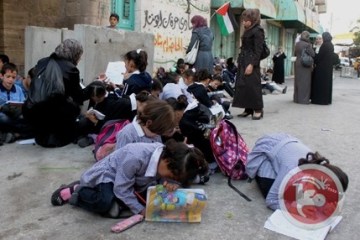 Bassam Tahboub said Anat Cohen, a well-known extremist who frequently harasses Palestinian residents in the area, first “attacked” the school children, “preventing” them from reaching Qurtuba middle school.
Following Cohen’s initial attack, other extremists reportedly joined in and began cursing and scaring the children. Instead of attempting to continue to school, the children decided to turn back and head home, Tahboub said.
Children who attend Qurtuba school, aged 7 to 16, are often harassed by settlers in area, as the school is adjacent to the illegal Israeli settlement of Beit Hadassah in the center of Hebron city.
According to Tahboub, Israeli settlers in the area have continuously attempted to have the school closed down.
Hebron has become the epicenter of recent violence over the last two months, as roughly 30 percent of the 115 Palestinians to be killed since Oct. 1 have been from the Hebron district.
Hebron’s city center is home to some 800 notoriously aggressive Israeli settlers, who live under the protection of thousands of Israeli forces, surrounded by more than 30,000 Palestinians.
In The NY Times, Palestinian Dead Are Nameless Numbers (At Best)
By Barbara Erickson | TimesWarp | December 9, 2015
Since the beginning of December at least 10 Palestinians have died at the hands of Israeli security forces. Only one of these deaths has received brief mention in The New York Times; the rest have been deemed unfit to print.
During this same period, no Israelis died from Palestinian attacks, so we can assume this is the reason for the show of indifference at the Times. Israeli deaths in these circumstances usually make headlines.
The recent Palestinian victims ranged in age from 15 to 37. All but one were male, and it was the lone female, Maram Hasouna, who managed to make the news in a story about young women joining the ranks of would-be attackers during the current Palestinian uprising.
The victims include: Ma’moun Raed al-Khatib, 16; Maram Hasouna, 19; Taher Faisal Fannoun, 17; Mustafa Fadel Fannoun, 19; Abdul Rahman Wajeeh Barghouti, 27; Anas Bassam Hammad, 21; Mazin Hasan Ureiba, 37; Omar Yasser Skafi, 21; Malek Akram Shahin, 18, and Ihab Fathi Miswadi, 21.
Security forces claimed that nine of the victims had attempted to attack Israelis. Only one, Shahin, was killed in other circumstances—during clashes that took place when troops invaded Dheisheh refugee camp in Bethlehem.
All of the deaths are newsworthy, but some of the fatalities involved details that add particular news value: Ureiba was a Palestinian Authority intelligence officer; Barghouti was an American citizen; and doctors reported that Shahin was shot in the head with a hollow point bullet, a weapon held to be illegal under international law. None of these factors, however, was enough to rouse the interest of the Times.
Instead, since the first of this month the newspaper has provided us with stories about wine making in Israel, the discovery of a possible ancient model of the Temple of Herod, the arrest of suspects in a fatal arson attack, a look at the risks of banning an Israeli Islamic group, the conviction of two Israeli youths in the killing of a Palestinian teen last year, the conviction of a Palestinian lawmaker and Israel’s attempt to draw Russian tourists.
The 10 who died so far this month are likely to appear as nothing more than numbers in future Times reports. As of today they have brought the total dead since Oct. 1 to at least 113. This compares with 17 Israelis.
Even in reporting this kind of data, the Times makes an effort to obscure the fact that Palestinians are suffering disproportionately at the hands of their well-armed occupiers. In a formulaic explanation for the numbers gap, the Times nearly always blames the victims entirely, saying that Palestinians were killed when they tried to attack Israelis or during violent protests.
Little or nothing will be said of the doubtful cases, in which witnesses dispute the official accounts and video evidence shows that the victims were posing no danger to troops. We can also expect that the Times will fail to mention human rights groups’ charges that a number of the victims were assassinated in “extrajudicial executions.”
The Palestinian dead rarely get their due in the Times, which prefers to consign them to tally sheets. Were they to appear in full context, as human beings with histories and families, this might elicit sympathy for them and condemnation of Israel, and this cannot be allowed.
Follow @TimesWarp on Twitter
Featured Video

“Historic Russia”: The Land Putin Will Not Give Back
or go to
Aletho News Archives – Video-Images
Book Review
Why the War on Conspiracy Theories Is Bad Public Policy
By Kevin Barrett • Unz Review • February 1, 2019
 A Review of Conspiracy Theories and Other Dangerous Ideas by Cass Sunstein (based on an earlier paper co-authored with Adrian Vermeule); In Defense of Troublemakers: The Power of Dissent in Life and Business by Charlan Nemeth; and Conspiracy Theories and the People Who Believe Them, edited by Joseph E. Uscinski
On January 25 2018 YouTube unleashed the latest salvo in the war on conspiracy theories, saying “we’ll begin reducing recommendations of borderline content and content that could misinform users in harmful ways—such as videos promoting a phony miracle cure for a serious illness, claiming the earth is flat, or making blatantly false claims about historic events like 9/11.”
At first glance that sounds reasonable. Nobody wants YouTube or anyone else to recommend bad information. And almost everyone agrees that phony miracle cures, flat earthism, and blatantly false claims about 9/11 and other historical events are undesirable.
But if we stop and seriously consider those words, we notice a couple of problems. First, the word “recommend” is not just misleading but mendacious. YouTube obviously doesn’t really recommend anything. When it says it does, it is lying. … continue
Blog Roll
 Aletho News
- BRITAIN’S WARNING: PREPARE FOR WAR
- “Historic Russia”: The Land Putin Will Not Give Back
- How the Cambridge Analytica scandal still haunts Mark Zuckerberg
- The Ongoing Cancellation Campaign Against a Dissenting Academic in Norway
- Yemen and ‘the Houthis’: Challenging Sami Hamdi’s Narrative
- No, Christians did not invent Zionism
- AIPAC-led lobbying network opens branches in Cypriot, Greek parliaments
- Araghchi blasts ‘parasitic’ alliance as US taxpayers pay for Israel’s war on Iran
- Easy fix for Europe’s chaos? Stop fueling war against Russia
- Putin’s key remarks on peace talks and Europe’s ‘schizophrenia’
- If Americans Knew
- Damning report shows the media must confront its failures on Gaza
- BBC senior broadcaster speaks out on Gaza coverage
- Netanyahu vows vast West Bank invasion in response to 20-minute skirmish that left 2 Israeli soldiers and 2 Palestinian fighters dead
- Tied up and tortured: Israel using US-made electroshock weapons on Palestinian detainees
- The outsourced risk: how newsrooms rely on Gaza’s freelancers without protecting them
- Gaza bakeries forced to shut as Israel blocks flour shipments
- Gaza’s breast cancer patients face a deadly wait for treatment amid Israel’s genocide
- DAILY UPDATE: Latest essential news on Palestine, Israel, & region
- The Israel Lobby’s Changing Fortunes
- AIPAC has become such a political liability that it’s shifting to a more “nimble” approach to buying politicians
- No Tricks Zone
- Two New Studies Find Thwaites Glacier Melt Cannot Be Driven By Human Activity Or A Warming Ocean
- E-Cars Reduce CO2 Emissions By Only 41% Compared To Internal Combustion Engine Vehicles
- Predictions Made By Renowned Climate Professor Over Past Decades Have Been Proven To Be Poor
- New Study Suggests Large Regions Of The Pacific Ocean Have Been Cooling For The Last 80 Years
- Germany’s Green Energy Debacle: High Energy Costs Force Kahla Porzellan to Close After 182 Years!
- New Study: 50 Years Of The Most Aggressive ‘Net Zero’ Policies Can Only Affect The Global Climate By 0.03°C
- US September “Heat” Was No Record…Many Records Set Decades Ago
- Latest European Green Energy Debacle; Portugal’s Largest Flagship Solar Park Insolvent!
- Green Energy Debacle: German Expert Professor Fritz Vahrenholt Warns Of Severe Economic And Social Consequences
- Two More Paleo Reconstructions Affirm Meters-Higher Sea Levels Across Ireland, Brazil 7000-6000 Years Ago

