Jewish settlers in Hebron harass FIFA tour delegation

Ma’an – May 8, 2015
HEBRON – Settlers harassed the head of the Palestinian National Union for Football and the South African head of an anti-racism group during a tour in Hebron’s Old City this week.
Palestinian football chief, Jibril al-Rajoub, was heading a FIFA delegation tour in the city on Tuesday when the incident took place. The group included Tokyo Sexwale, an anti-apartheid activist imprisoned for 13 years on Robben Island with Nelson Mandela, and co-chair of Global Watch: Say No To Racism-Discrimination In Sport.
The delegation was briefed on the difficult living conditions in the Old City by the Hebron Rehabilitation Committee and were shown videos documenting army and settler violence against Palestinians in the city.
Israeli forces then prevented the delegation from entering several areas of the Old City, with settlers verbally insulting the group as they tried to continue the tour.
Sexwale said that life for Palestinians in the city is intolerable, saying he was proud of the Palestinians for their determination to remain on their land.
The South African official had to enter Ramallah via the King Hussein Bridge to avoid entry from Tel Aviv.
The Palestinian Football Association (PFA) has called for a vote at the FIFA annual congress on May 29 calling for Israel’s expulsion for blocking Palestinian football through its sanctions on the Palestinian territories.
In its draft resolution for the FIFA congress, the PFA protests Israel’s treatment of Arabs and acts such as setting up clubs in the occupied Palestinian territories.
Israeli forces raided the PFA headquarters in the West Bank city of Ramallah in November.
Palestinian football chiefs have also condemned Israeli travel restrictions on Palestinian players and on importing equipment into the occupied territories
Israeli court approves demolition of Palestinian village
IMEMC & Agencies | May 5, 2015
An Israeli Court ruled Monday on the removal of Susiya Bedouin village, in Masafer Yatta area, south of the southern West Bank city of Hebron, after colonists of the illegal Susya settlement, demanded the removal of the Palestinian enclave.
Coordinator of the Popular and National Committee in southern Hebron Rateb Jabour told the WAFA News agency that the Israeli decision could be enforced at any given moment, rendering dozens of residents homeless.
He added that the head of the Susiya Village Council Jihad Nawaj’a, received an official Israeli order informing him of the intention to remove the village.
Nawaj’a stated that the Susiya has been subject to dozens of violations and assaults by Israeli soldiers and fanatical colonizers.
“Our village is a historic area; Israel wants to remove us to control it,” he added, “There are many Islamic and Roman archeological sites here.”
The villagers have been constantly suffering, and literally fighting for their very existence, since Israel started the construction of Susya colony in 1983 on privately owned lands belonging to five Palestinian families from Yatta.
The villagers were forcibly removed from their village in 1986, and relocated to the current location, yet again, are facing the same fate.
Removing the village means displacing at least 50 families, and the illegal annexation of hundreds of Dunams of private Palestinian lands.
Nawaj’a said the residents have all deeds proving ownership of their lands, but Israel continues to displace them, in addition to constantly preventing them from having any access to running water, electricity and other basic services.
Several Palestinian, Israel and international human rights groups frequently warned of the Israel plans, and said Tel Aviv is planning to destroy 13 Palestinian villages in Hebron, under the pretext of “being located in military training zones.”
Removing the 13 communities would lead to the displacement of around 1,650 persons.
This is what “lack of evidence” looks like when Jewish settlers shoot Palestinians

File photo IMEMC
By Yossi Gurvitz | Yesh Din | May 3, 2015
We see how seriously the prosecution takes its role when we realize it closed a file for lack of evidence — without so much as noticing the evidence.
The location was Qusra, a village in the Shiloh Valley; the date, September 16, 2011. Fathallah Mahmoud Muhammad Abu Rhoda went out with his three sons to pick figs. A short while after reaching their land, they noticed about 10 Israeli civilians standing around their water hole. The Palestinians demanded the Israelis leave the place; the interlopers refused. The residents of Qusra — a village that has already proven it can defend itself against marauders — began heading to the area. An argument ensued, and according to Abu Rhoda’s testimony to the police, three of the settlers (who were armed) opened fire on the Palestinians. One bullet hit Abu Rhoda in the thigh.
Of the three, two were armed with rifles and the other with a handgun. From the police testimony, we see that the handgun’s owner also sicked a dog on the Palestinians. The complainants managed to photograph some of their attackers, among them the handgun owner.
Four days after the incident, Abu Rhoda filed a complaint with the police. Almost three years later, on August 6, 2014, the prosecution informed us that it closed the case for lack of evidence. After a series of 14 phone calls, we managed to photocopy the case file on December 15, 2014 — more than four months after the case was closed. However, it was immediately apparent some of the material was missing. We continued requesting it until February 2015.
From the evidence we finally received, it turns out that there is more than enough evidence to indict the handgun owner, E. As previously mentioned, E. was identified by the Palestinians victims, and they even supplied the police with photos of him at the scene, which clearly show him holding a handgun in one hand and the dog in the other. The police picked up cartridges from the scene, and a ballistic fingerprinting – which took place on September 27, 2011 – found that one of the cartridges came from a 9mm Glock pistol (the others were fired from rifles.) E. was summoned for an investigation, invoked his right to remain silent, but admitted he owned a Glock. The gun was duly turned over to the police, which sent it to a ballistic fingerprinting. In February 2012 the police expert reached the conclusion that there is a match between the cartridges fired from E.’s handgun and the those that were examined on September 27.
In total, the following evidence was marshaled against E.:
A. He was identified and photographed by the complainants.
B. His handgun was identified as the one fired during the incident.
Despite the evidence, the police recommended that the case against E. be closed due to — get this — lack of evidence. The recommendation was accepted by the prosecution. Embarrassingly, the prosecution admitted this to us only in January 2015 — 10 months after it closed the case for lack of evidence. Only as a result of our request for more case files did the prosecution learn about the September 2011 memorandum, which identified the type of handgun owned by E. That is, when the prosecution decided to close the case for lack of evidence, it was lacking a major piece of evidence.
What about the two other shooters? I’m glad you asked. The police chased one of the suspects into the Esh Kodesh outpost, even so much as detaining him after he fled. However, despite the fact that the suspect fled arrest and refused to identify himself, there is no indication in the material we received from the police that any investigative action was taken against him. There is, for instance, no sign that he was even interrogated or gave testimony; he was detained, and immediately released.
The third suspect managed to flee in a vehicle and reach Esh Kodesh. The police identified the owner of the vehicle as well as another person who was with him in the car during the chase. But, lo and behold, the police neither bothered to interrogate them nor attempt to identify the third shooter.
This is how the police and the prosecution treat a violent incident, in which three Israeli civilians open fire on Palestinians who are on their own land. In a case that contains such clear forensic evidence, they managed, with extraordinary negligence, not to notice it. And in the other cases? They simply do not investigate.
In the beginning of March, our attorney Anu Deuel Lusky (briskly aided by Moriyah Shlomot) appealed the decision, asking the prosecution to bring E. to trial and conduct further investigations that would lead to the capture of the other two suspects. To quote the appeal:
“This appeal, in both its parts, raises a harsh and heavy feeling that both the police and the prosecution betrayed their duties as bodies entrusted with maintaining law and order. The current situation – in which the lives, bodies and property of Palestinians, considered protected persons by international law, can be harmed with impunity, both as a result of settler violence and as a result of law enforcement entities standing aside, not making the minimal effort to bring lawbreakers to justice – is intolerable, and undermines the rule of law.”
One wonders what is left of the rule of law after it has been so brazenly undermined.
Israeli military drill sparks fire on Palestinian farmland
Ma’an – April 27, 2015
TUBAS – A fire sparked by an Israeli military drill swept across thousands of dunams of Palestinian farmland in the northern Jordan valley on Monday, the Palestinian civil defense said.
Some 3,000 to 4,000 dunams of farmland in the Humsa area of eastern Tubas district were affected by the fire after Israeli forces opened fire during a military exercise.
The district of Tubas is one of the West Bank’s most important agricultural centers, and the civil defense said the land had been planted with wheat and barley.
Tubas Governor Rabih al-Khandaqji condemned Israeli “violations” in the area, aimed at “displacing people from their lands and deliberately inflicting grave losses to their resources.”
Civil defense crews arrived from Qalqiliya and Nablus to fight the fire but were prevented from reaching the area as Israel has declared it a closed military zone.
The majority of the Jordan Valley is under full Israeli military control, despite being within the Palestinian West Bank.
According to the Applied Research Institute of Jerusalem, more than 15,000 dunams of land in the Tubas district have been confiscated by Israel for military bases with a further 8,000 dunams seized for illegal Israeli settlements.
US court rejects lawsuit against charity funding of Jewish settlements
Ma’an – April 25, 2015
BETHLEHEM – The US Court of Appeals in New York has rejected an appeal from a group of 13 Palestinians seeking damages for alleged “terrorist attacks” by Jewish settlers in the occupied West Bank, Israeli media reported Friday.
The complaint was filed against US-based charities that financially support settlements, alleging that such support leads to terrorist activity and is in violation of US anti-terrorism laws, reported Israeli news source Jewish Telegraphic Agency.
The USA Patriot Act enacted in October 2001 prohibits citizens from “knowingly providing material support or resources to a foreign terrorist organization.”
Plaintiffs in the case argued that charities were financially supporting terrorist activity by funding settlers who have carried out acts of violence against Palestinians and their land, and desecrated houses of prayer.
Charities accused in the case included Christian Friends of Israeli Communities, the Hebron Fund, Central Fund of Israel, One Israel Fund and American Friends of Ateret Cohanim.
After District Judge Jesse Furman initially rejected the case last year, the appeal was rejected again this week by a panel of appellate judges.
“American federal judges recognize the difference between the financing of murder and violence… and legitimate bona fide financial support of the daily needs of peaceful Israeli settlements over the Green Line,” Israeli Haaretz quoted attorney Nathan Lewin, who represented the charities in the trials.
Privately funded violence
The dismissal of the case is a setback for those fighting to shed light on private US funding that is currently helping to sustain illegal settlement activity in the occupied West Bank, as well as the violence that results from it.
While the U.S. government has condemned ongoing settlement expansion, its citizens have been able to freely donate millions to the illegal enclaves.
The New York Times identified at least 40 American groups in 2010 that had collected over $200 million in tax-deductible gifts for Jewish settlement in occupied East Jerusalem and the West Bank over the last decade.
Israeli watchdog Americans for Peace Now have long fought against tax-exempt donations to settlements.
Among other criticisms, the groups point out that IRS regulations exempting charities from tax deduction define a charitable organization as one that “includes relief of the poor and distressed or of the underprivileged; advancement of religion; advancement of education or science; erection or maintenance of public buildings, monuments, or works; lessening of the burdens of government; promotion of social welfare.”
Such a definition does not extend to charities funneling funds to the Jewish-only settlements of the occupied West Bank and East Jerusalem, the group argues, and such donations should not be tax-exempt.
The court ruling on the 13 Palestinians’ appeal is only the latest example of a number of cases in which Israeli settlers have gained legal backing from the US government for illegal practices.
Attacks carried out with impunity
Human rights groups in Israel and the Palestinian Territories have long fought for effective Israeli law enforcement against the type of violent acts committed by Israeli settlers that the 13 Palestinians were drawing attention to.
Such acts are often termed “price-tag attacks,” and are carried out to retaliate perceived pressure from both Israeli and foreign governments against settlements, most often with Palestinian civilians as their victims.
They are nearly always carried out with impunity from the law.
Following price-tag attacks on Vatican-owned offices in occupied East Jerusalem in May 2014, Israeli Internal Security Minister Yitzhak Aharonovitch said the government planned to begin using administrative detention against suspected extremists.
Although Israeli police had made scores of arrests before that time, there had been few successful prosecutions for price-tag attacks and the government was facing mounting pressure to authorize the Shin Bet internal security agency to step in.
The US State Department’s Country Reports on Terrorism discussed price-tag attacks for the first time in 2013, citing UN figures of some “399 attacks by extremist Israeli settlers that resulted in Palestinian injuries or property damage.”
The report said such attacks were “largely unprosecuted.”
Prisoners’ day at weekly Bil’in demonstration
International Solidarity Movement | April 17, 2015
Bil’in, Occupied Palestine – Over 300 people attended the Prisoners’ Day demonstration in Bil’in. The Israeli army fired endless amounts of teargas and shot one person in the chest with a live ammunition.
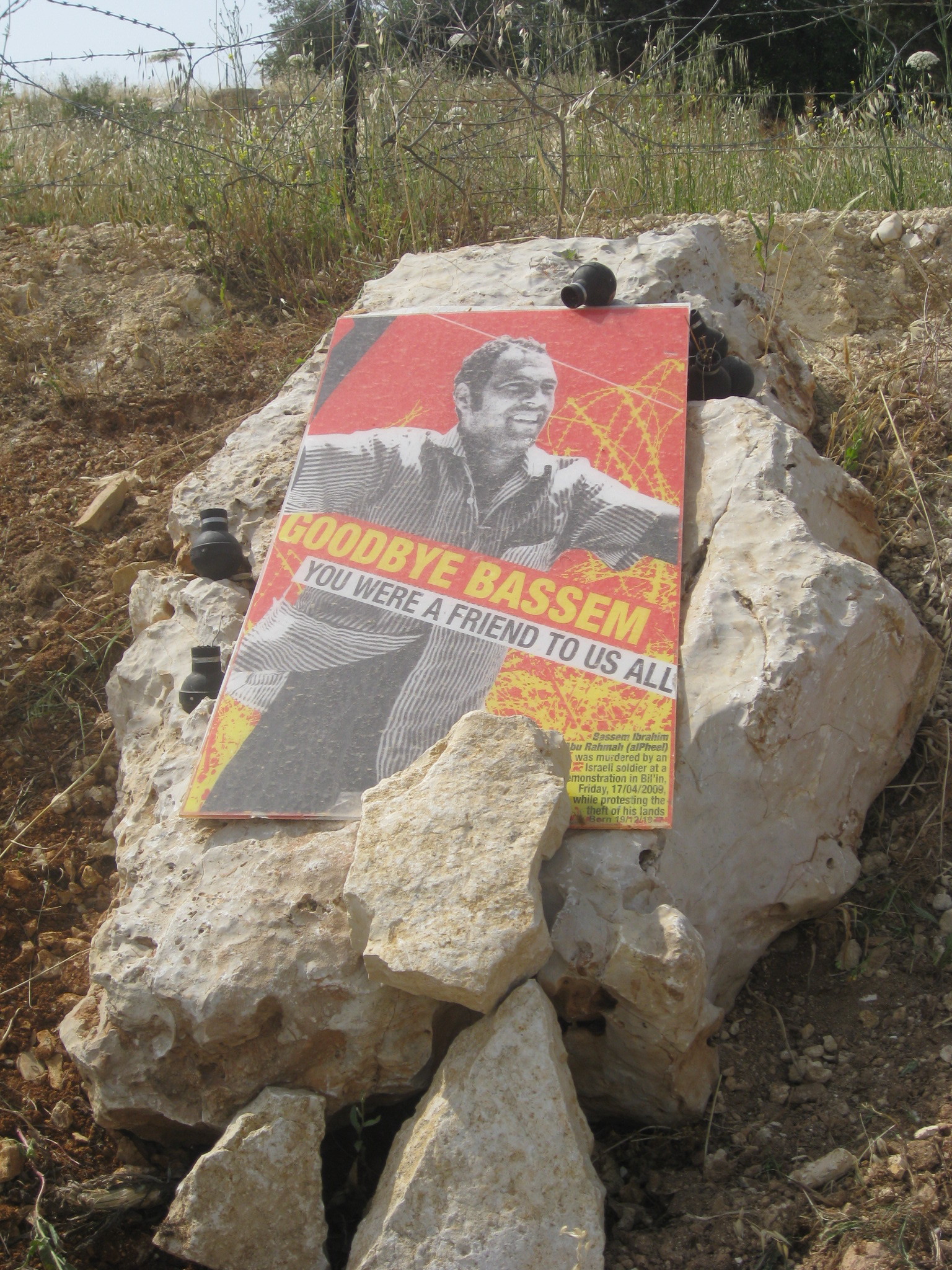
After the prayer, protesters marched towards the apartheid wall and the illegal settlement of Modi’in, situated just outside of Bil’in. A truck loaded with a sound system led the chanting crowd. Most were either waving Palestinian flags, holding up banners in support of the Palestinians imprisoned in Israeli prisons to mark Prisoners’ Day, or were holding posters of Bassem, a local who was killed six years ago by the Israeli army. As the march got closer to the wall, Israeli forces fired over 50 rounds of teargas canisters towards the protesters. The area was heavily clouded with this gas during most of the afternoon, which caused many to suffer from its inhalation. The shooting of this teargas also caused the dry grass between the olive trees to repeatedly catch fire.
During the protest, one person was shot with a rubber-coated steel bullet, while a 17 years old boy was shot in the chest with live ammunition. He was immediately taken to hospital by the ambulance. His condition is stable.
The 17th April is Prisoners’ Day in Palestine. Thousands of Palestinians are arrested arbitrarily on a daily basis by the Israeli forces, despite prohibition by international law. According to B’Tselem, “at the end of February 2015, 5,609 Palestinian security detainees and prisoners were held in Israeli prisons”. Since 1967, when Israel furthered its occupation to the West Bank, Gaza and East Jerusalem, an equivalent of approximately 20% of the total population in the Occupied Palestinian Territories (OPT), and 40% of all males have been detained (CEPR). While in prison, they are subject to wide-ranging violations of their rights and dignity. Such practices may include physical and psychological torture, deprivation of family visits, denial of access to lawyers and unlawful transfer out of the Occupied Palestinian Territories, among many other things. The Israeli occupying forces continue to violate the provisions of the Fourth Geneva Convention Relative to the Protection of Civilian Persons in Time of War, in particular against the Palestinian prisoners.
Today also marked the 6th anniversary of Bassem Abu Rameh’s death. Nicknamed Pheel, he was a much loved figure in the town of Bil’in. On the 17th April 2009, the Israeli army shot him with a teargas canister projectile which killed him shortly after. Aged 30, Pheel had been to all the non-violent protests, activities and creative actions against the apartheid wall in his town. Those who knew him remember him as a caring person who made everybody laugh and had the heart of a child, says Mohammad Khatib, a member of the Bil’in Popular Committee Against the Wall and Settlements.
According to the report by the United Nations Office for the Coordination of Humanitarian Affairs within the occupied Palestinian Territories, 442 people in the West Bank and 15 people in Gaza have been injured by the Israeli forces since the beginning of this year. On top of this, five people have been killed.
Home demolition in Jerusalem: “They want our land. We need help to protect it.”
International Solidarity Movement | April 1, 2015
Jerusalem, Occupied Palestine – Nureddin Amro and his brother Sharif Amro and their families were awakened at 5:30 am by over a hundred Israeli soldiers who came to demolish their home in the Wadi Al-Joz neighborhood of occupied East Jerusalem on Tuesday, March 31, 2015. Both men are blind. The brothers live with their ill 79-year-old mother, their spouses and children. Nureddin has three young children, Sharif has four; all are under 14. Israeli soldiers pointed their guns in through the windows of the house while the children were still asleep and cut the electricity and phone lines to the house.
“We were asleep. They banged on the doors and shouted. Soldiers completely surrounded the neighborhood. There were dogs and aircraft. It was frightening,” said Nureddin. “There was no advanced notice. No reason given. They announced that they came to demolish the house and they started doing it while we were still inside.”
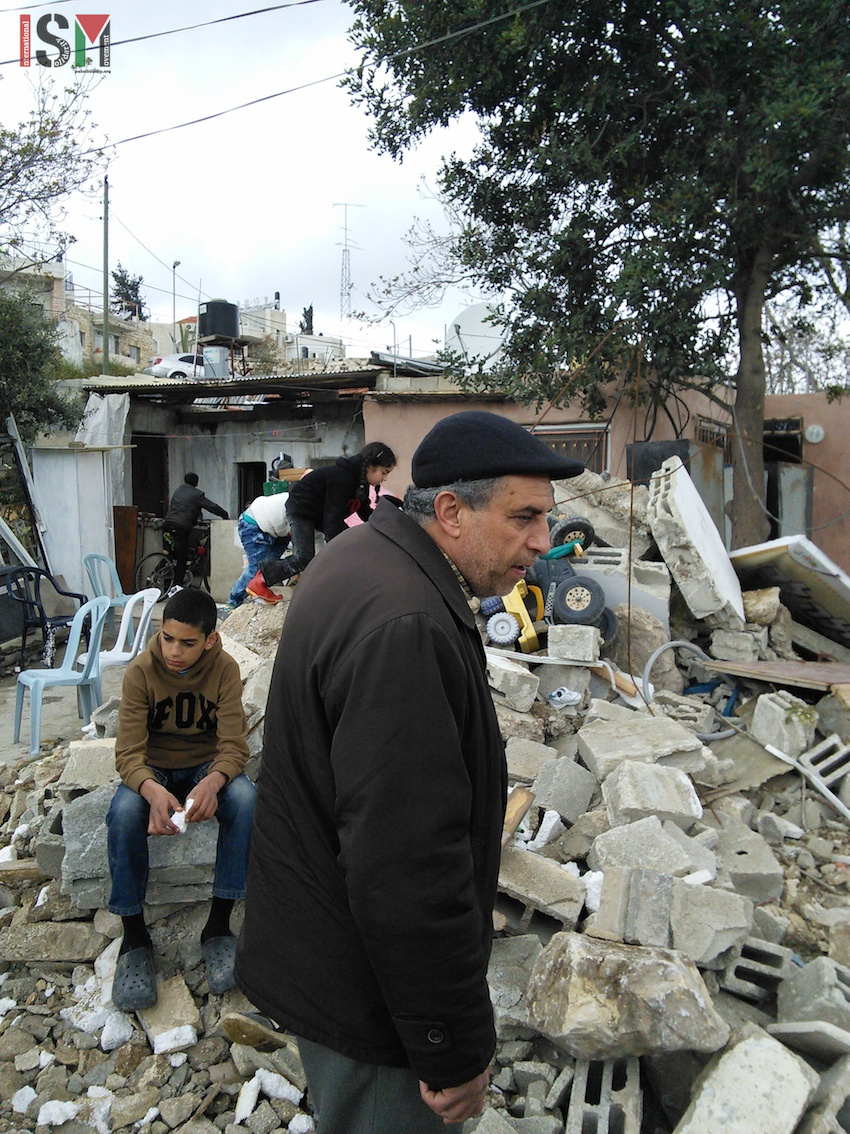
The Amro family stands in the rubble of their demolished home
Nureddin asked for time to go to court or the municipality for an explanation, but the soldiers refused. The soldiers assaulted the family, kicking Sharif and beating everyone, including the women and children. “They attacked us and locked us in one of the rooms. My son and brother were injured. They stayed for four hours and destroyed four rooms, the garden. They would not give us time to take anything from the rooms. All of our things, the children’s pets, their rabbits and chickens were killed under the rubble” Sharif was taken to the hospital after a soldier kicked the blind man hard in the ankle. Israeli forces refused to even let the family salvage their belongings before they tore it down.
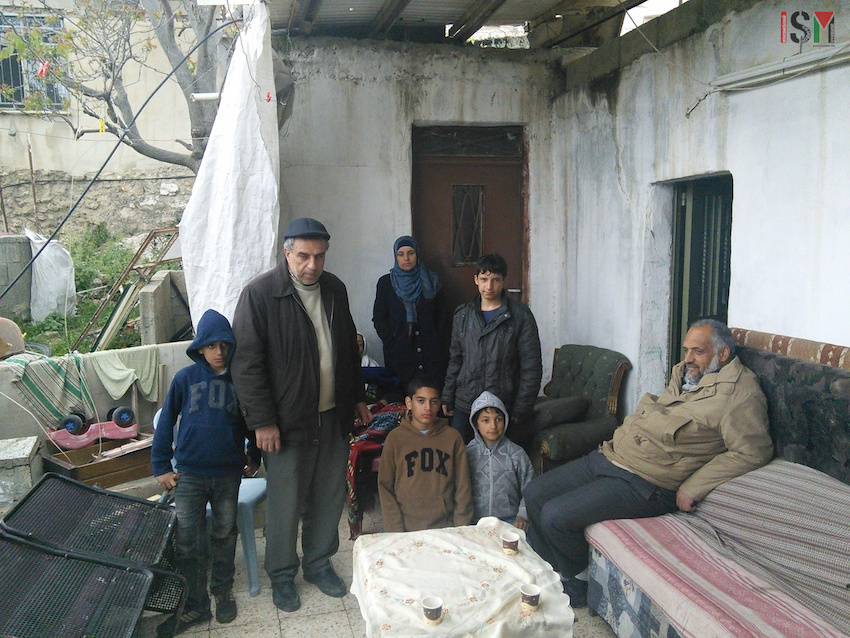
Members of the Amro family gathered beside the part of their home that is still standing
Nurredin is the founder and principal of the Siraj al-Quds School for visually impaired and sighted children in Jerusalem. He is a Synergos Institute Social Innovator and was recognized by the British Council for his leadership working for positive change and social development for people with special needs. According to Nureddin, there was no demolition order against the homes although there have been demolitions in the neighborhood before. They had received warnings a couple of months ago to clean up scrap wood, wires and materials that were around the house, and they did the cleaning as required.
While they were demolishing the rooms of the Amro family’s home Israeli forces destroyed a fence on the neighboring Totah family’s land, along with a shelter that housed a horse, chickens, and a dog. Soldiers also cut the family’s internet and broke the water line. The father of the Totah family was beaten, handcuffed, and arrested; he was later released.
As of this writing, the part of the house that remains standing where Nureddin and his brother are staying with their families; still has no electricity, water, sewage or telephone services. Soldiers returned to the family’s home again this morning, moving the rubble that was visible from the street and threatening that they would be back.
Israeli authorities have already annexed land across from the Wadi Al-Joz neighborhood, creating a national park which encompasses an illegal Israeli settlement. Local residents reported, speaking of the constant threat of settlement expansion under the Israeli occupation, that “they want to get rid of all the houses, all the neighborhood. They want to put their hands on this land from here to the Old City.”
The Roots of Netanyahu’s Electoral Victory: Colonial Expansion and Fascist Ideology
By James Petras :: 03.24.2015
“It is always a meritorious deed to get hold of a Palestinian’s possessions” – The code of Jewish Law revised and updated by Benjamin Netanyahu
Benjamin Netanyahu’s re-election makes him the longest serving prime minister in Israel’s history. His 20% margin of victory (30 Knesset seats to 24 for his nearest opponent) underlines the mass base of his consolidation of power.
Most critical commentators cite Netanyahu’s racist pronouncements; his rejection of any two state solution and his overt appeal for a mass Jewish voter turnout to counteract the ‘droves of Arab voters’ for his electoral victories.
There is no question that the majority of Israeli Jewish leaders and parties support Netanyahu’s racist pronouncements and ‘no-state’ solution and joined him in a coalition government. But the larger issue is the positive mass response to Netanyahu’s call to action. Nearly three quarters of the electorate turned out (73%) to elect him. Moreover, Netanyahu has been elected prime minister for four terms: between 1996-99 and more recently 2009-20.
What is more, the opposition has not differed from the Netanyahu coalition regime’s Judeo-centric policies and pronouncements. In other words, ‘racist’ ideology per se is not what drives the Israeli majority to repeatedly support Netanyahu.
Jewish-centered racism is an integral and accepted part of Israel’s political culture.
Social Colonialism and Netanyahu’s Popularity
There is a more fundamental, ongoing material basis which accounts for Netanyahu’s electoral victories and mass appeal: His regime’s aggressive, perpetual and escalating seizure and dispossession of Palestinians land and his massive financing of Israel’s Jewish colonial towns.
In other words, Netanyahu’s appeal is rooted in the large-scale, long-term housing which hundreds of thousands of low and middle income Israeli Jews have obtained via his brutal land-grabbing policy. The so-called ‘settlers’ are in part armed Israeli Jewish colonists who engage in open theft and defend Netanyahu, because they materially benefit from his policies… It is not only those who have already colonized Palestinian land grabbed after 1967 – over 650,000 Jews – who vote for Netanyahu, but there are the hundreds of thousands of others in Israel, priced out of the Israeli real estate bubble, who cannot afford comfortable housing and look to the West Bank and Jerusalem for a ‘Jewish solution’ at the expense of the Palestinian inhabitants.
Racism, the foul language directed at Palestinians, which pervades Israeli-Jewish culture (‘Arab scum’ is one of many such common expressions) found expression even among the songs celebrating Netanyahu’s latest electoral victory. Racism serves to justify the land grabbing. Can the settler mind even imagine that an ‘inferior people’ should complain about land grabs by the ‘chosen people’ ? Modern educated Jewish professionals wax indignant that shepherds and olive farmers should hold back the development of glitzy shopping malls, million dollar community centers (for Jews only, of course), hospitals, sports complexes and high tech industrial parks.
And if they – ‘the Arabs’ – object to their own displacement, all the better: Their resistance provides an excellent pretext for armed Jewish settler thugs to invade a village, drive out the inhabitant and call in Netanyahu’s bulldozers, as a prelude to establishing an ‘outpost’, first steps to a new Jews only colony!
The key to Netanyahu’s big vote is that he responds favorably and forcefully in favor of new colonies. The self-styled Israeli Defense (sic) Force (IDF) is dispatched to protect the local vandals and to shoot live ammo at any rock-throwing Palestinian adolescent defending the family patrimony.
Netanyahu acts and speaks for the rapacious Jewish colonial masses. The opposition criticized Netanyahu on the basis of his neglect of socio-economic issues in Israel, especially, the soaring prices of housing in the major cities. But they failed to attract many Jewish voters because Netanyahu offers a more attractive alternative solution – the seizure of more Palestinian land and the construction of Jewish homes, instead of fighting powerful Jewish real estate moguls, land speculators and corporate landlords inside Israel.
Extremism at the Service of Jewish Housing is No Vice
For the mass of Israeli Jews, looking for a cheap, easy and government-financed road to comfortable middle class housing, seizing and occupying Palestinian property is a very attractive and viable ‘solution’.
Netanyahu’s ‘final solution’ for the Palestinians – no state – is a guarantee that land, which is seized and housing which is built, will remain under Jewish jurisdiction. The ‘final solution’ for Palestinians is the housing solution for the Jewish masses.
Under Netanyahu, from 2013 to 2015, two-thirds of new housing construction (for Jews only) has taken place on stolen Palestinian lands. His regime spends $252 million dollars a year on Jews-only colonies (‘settlements’). The Netanyahu regime spends $950 for each Jewish colonist in the West Bank, double what is invested for each Jewish Israeli resident in Tel Aviv. For the most aggressive Jewish colonists, those who destroy the productive olive groves, torch Palestinian homes and who establish ‘settler outposts’, Netanyahu spends $1,483 a year . . . with promises of roads, electricity, schools, swimming pools and air conditioning to come!
Owning the Holy City Secures the Unsavory Vote
Netanyahu’s big vote in Jerusalem can be accounted for by the fact that over 300,000 Jews have been the beneficiaries of land grabs and sparkling high-rise condos in what had been centuries-old Palestinian neighborhoods.
Netanyahu assures the Jerusalem Jews that ‘their city’ is and always will be the capital of Israel, an undivided Jewish city.
Sticking his finger in the eyes of the EU and US officials, who claim otherwise, energizes and emboldens the Jewish voters
Netanyahu’s ethnic cleansing is unrelenting: That is why he is re-elected over and over again. Israeli colonial settlements grew by over 5% each year from 2009 – 2015. There is no backtracking with Bibi Netanyahu: at this rate of ‘erasure’ all of historical Palestine will be Judified by 2050 at the latest!
Netanyahu claims that Israeli Jews must have their ‘lebensraum’ . . .
Israel and other colonial powers, like England in the 19th century and Germany in the 20th century, ‘solve’ their domestic social problems and social unrest by exporting populations across borders. The attractiveness of this solution is that it preserves the power and privileges of the domestic economic elite and provides an ‘escape valve’ for the local disaffected masses.
Emigration to settler colonies requires violent dispossession of the local inhabitants. If stiff resistance emerges – the imperial powers resort to genocide; extermination of native peoples by the English, Slavic peoples by the Germans, Palestinian Arabs and other non-Jews by the Israeli Jews.
Long past is the notion that Israeli Jews would solve their social -economic problems via a collectivist economy and popular struggle against Jewish plutocrats.
Today Jewish-Israeli millionaires flourish alongside orthodox, secular, Sephardic, Ashkenazi, Sabra and Russian emigrant colonists. The former exploits labor and markets, while the latter dispossesses Palestinians. Netanyahu has discovered a formula for uniting quarrelsome Jewish parties, leaders and voters and for winning elections.
Moreover, Netanyahu has secured the financial and political backing of numerous overseas Jewish-Zionist billionaires. He has secured the unconditional support of tens of thousands of middle class Israel-First activists, academics and professionals who operate AIPAC and dozens of similar propaganda mills in Washington and Christian Zionists throughout the US. Netanyahu’s overseas backers ensure that the US government may grumble and criticize, but will never disrupt Netanyahu’s ‘plan’ of an ethnically pure ‘Greater Israel’ with Jerusalem as its ‘eternal’ capital. Obama may whine and talk to the press about ‘reconsidering US-Israeli relations’ but he has assured Israel and Netanyahu that military and economic ties will remain intact.
Conclusion
Netanyahu has succeeded in setting a colonial agenda for all Israeli-Jewish parties (bar one).
He has established the fact that competitive elections and opposition political parties are compatible and even facilitate violent colonial expansion.
He has established the fact that Israel and its people embrace a racist ideology and receive the endorsement of most Western leaders, and mass media and the unconditional support of its overseas fifth column.
Israel’s project for Palestine, the creation of a single Jewish state, is far more than the demented vision of one man. It has been taken to heart by the great mass of the Israeli-Jewish people and their overseas supporters. The victory of Netanyahu and his supporters marks a historic victory for all those regimes and people across the world who believe and fight for an imperial dominated world.
Resistance to the destruction of olive trees in Wadi Qana
International Solidarity Movement | March 22, 2015
Tuesday, 17th March 2015, four farmers in the Salfit valley of Wadi Qana were issued with notices that they had 48 hours to remove their olives trees or they would be removed at their own cost. Failure to execute the orders are punishable by imprisonment, or fines up to the maximum penalty of the law.
Supporters, many from the nearby village of Deir Istiya, as well as locals and internationals, turned out in anticipation of soldier presence or settler provocation, but no conflict took place.

A crowd of approximately 250 supporters gathering in the valley were met by a festive atmosphere. Representatives from various organisations in conjunction with the Deir Istiya Municipality converged to remove waste from the spring and its surroundings.
In 2008 and 2011 farmers of Wadi Qana were issued with similar notices. These removal orders were not carried out. In 2012 trees were removed without notice. Approximately 3,000 trees have been destroyed in Wadi Qana by settler attacks and by order of Israeli authorities.
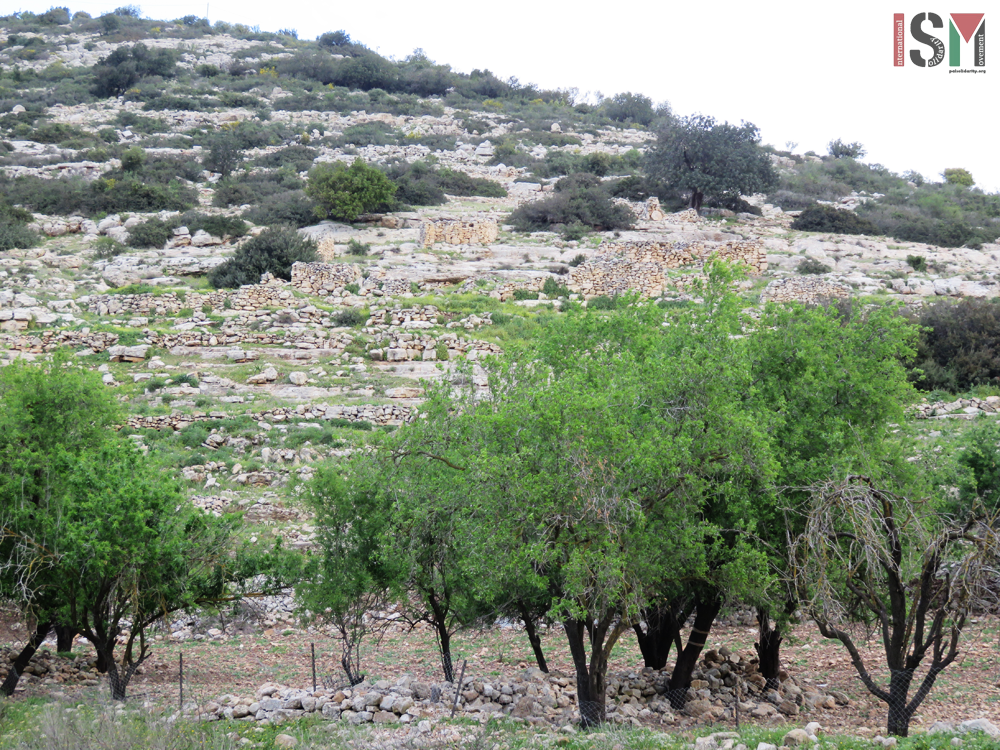
The Deir Istiya region has a population of approximately 12,000 people, 4,000 of whom live in town. The illegal settlements of the area, of which seven surround Wadi Qana, house approximately 15,000 settlers. Wadi Qana itself sits within the 31,000 hectares around Deir Istiya which has been zoned as Area C, leaving only the 1,527 hectares of the township in Palestinian controlled Area A. Under the Oslo Accords, Israeli law forbids Palestinians to build structures or plant trees in Area C, while conversely, entitling illegal Israeli settlements to develop and expand. (Al Jazeera has a good explanation of the different areas here.)
Speaking of the situation in Area C, a frustrated resident of Deir Istiya exclaimed, “They have the right to cut the old olive trees but we have no right to grow a new one. See the discriminations?”
Wadi Qana is a strategic area in the region, containing several significant natural springs. These springs and the crops which they irrigate have been under serious threat since 1994 when settlements began running sewage into the valley. While this practice was limited in 2005, many ocurrences have been identified, with four settlements’ waste currently believed to be pumping into the valley below.
While only two of the seventeen natural springs remain unpolluted, water from the underground aquifers is dropping due to the increasing demands of the ongoing settlement expansion. This has caused many farmers to move away from orange and vegetable crops to the more arid-adapted olive trees. The livelihoods of farmers of Wadi Qana are increasingly under threat because of the occupation and its apartheid laws.
Israeli forces level land east of Jerusalem
Ma’an – 10/03/2015
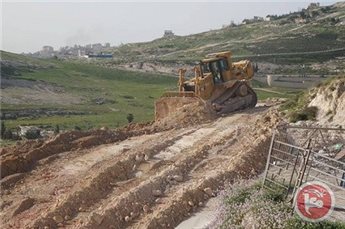 JERUSALEM – Israeli forces leveled vast areas of land in the East Jerusalem town of al-Issawiya on Tuesday morning, a local committee member told Ma’an.
According to Muhammad Abu al-Hummus, member of a local follow-up committee, large numbers of Israeli troops and municipality inspectors escorted bulldozers and excavators into the southeastern outskirts of the town, where they demolished stone walls and steel structures used by local farmers as store houses and livestock barns.
Abu al-Hummus said the bulldozers “deliberately” ruined the dirt roads used by farmers to access their fields.
The land is located in an area Israeli authorities have earmarked for a national park, in a controversial plan known as “11092”, which aims to turn 700 dunums of land in the Palestinian towns of al-Issawiya and al-Tur into Israeli parkland.
A statement from the Palestinian Center for Human Rights in 2013 previously stated that “the plan is part of the Israeli government’s plans to create a Jewish demographic majority in the occupied city.”
In September 2014, an Israeli planning council suspended the plan until the needs of the Arab towns could be assessed. However, the council, which previously approved the annexation of the 700 dunums, said that approval of the plan could be justified and was not fundamentally illegal.
According to Abu al-Hummus, the local Israeli municipality has ignored the plan’s suspension.
“Israeli forces brush aside court decisions and decisions made by different committees when it comes to implementing settlement expansion plans,” he said.
The land leveled on Tuesday is owned by the Abu Asab, Ubeid, Dari, Abu al-Hummus and Ulayyan among others.
East Jerusalem was seized by Israel along with the West Bank in 1967 during the Six-Day War, and since then, the Israeli government has undertaken a policy of “Judaization” across the city, constructing Jewish settlements and demolishing Palestinian homes.
There are now believed to be more than 300,000 Jewish settlers in East Jerusalem.
The international community views East Jerusalem as part of the Palestinian territories and recognizes the annexation and settlement programs as illegal under international law.
(MaanImages/Muhammad Sayyad)
Four Palestinians and one female German demonstrator shot with live ammunition at “Open Shuhada Street” protest

Israeli military sniper aiming up the road towards the Open Shuhada Street demonstrators
International Solidarity Movement | February 28, 2015
Hebron, Occupied Palestine – On February 27 in occupied Al-Khalil (Hebron), Israeli forces fired live ammunition towards nonviolent protesters participating in the annual Open Shuhada Street demonstration, injuring five including four Palestinian activists, one of them 17 years old, and one German citizen. More were also injured by rubber-coated steel bullets and stun grenades as soldiers and Border Police blocked the roads leading towards Shuhada Street and attacked the protesters.
Close to a thousand Palestinians, accompanied by Israeli and international supporters, marched towards one of the closed entrances to Shuhada Street carrying flags and signs and chanting. They called for the opening of Shuhada Street, whose closure to Palestinians has become a symbol of Israel’s Apartheid system, and for an end to the occupation. The march was turned back by stun grenades, rubber coated steel bullets and live ammunition fired by the Israeli military. Around twenty demonstrators were injured in total; Hebron Hospital reported that at least six were admitted and two required surgery. One Palestinian activist, Hijazi Ebedo, 25, was arrested at the demonstration; all he had been doing was chanting and holding a sign.
Issa Amro, coordinator and co-founder of Youth Against Settlements (YAS) stated: “The protest, which was joined by groups from all over Palestine, marked the twenty-first anniversary of the Ibrahimi Mosque Massacre. Israeli occupying forces shot live ammunition towards peaceful protesters, which is against international law. The Israeli military should be held accountable in international court for their actions.”
“Julia was standing and filming next to me when suddenly she fell to the ground,” stated Leigh, a Canadian activist who was standing next to Julia when she was shot.
Julia, the injured 22-year-old German activist from Berlin, was evacuated to Hebron Hospital where she is being treated for a live gunshot wound which entered and exited her leg. “The brutality of Israeli forces is unbelievable, it seems like they don’t have a limit,” she stated. “In Palestine I have seen Israeli forces shooting tear gas, stun grenades, rubber and live ammunition at any kind of demonstration that is against the occupation. It doesn’t matter for them if it is peaceful or if there are kids attending. Yesterday I saw the army attack children who had been dancing in the street. Two people were shot with live ammunition in Bil’in. They shot me as I was standing and filming. It seems the soldiers just shoot at any one.”
The Open Shuhada Street demonstration marks the anniversary of the 1994 Ibrahimi Mosque massacre, when right wing extremist settler Baruch Goldstein murdered 29 Palestinians while they worshipped in the mosque. Following the massacre, Israeli forces shut down Palestinian businesses on Shuhada Street–once a commercial center–and began to implement the policies which would lead to what is now a total closure of the vast majority of the street to Palestinians. Twenty one years after the massacre, settlers from illegal Israeli settlements use the street freely while Palestinians are assaulted, shot and arrested when they attempt to reach it en masse during the Open Shuhada Street demonstration every year.
Greek Orthodox Church decries attacks by Jewish settlers
MEMO | February 26, 2015
The Patriarch of the Holy City of Jerusalem and all Palestine, Theophilos III, denounced on Thursday what he called “repeated” attacks on Christian and Muslim places of worship in the Palestinian territories by extremist Jewish settlers.
“The targeting of churches and mosques is caused by pervasive racism and hatred,” he said in a statement.
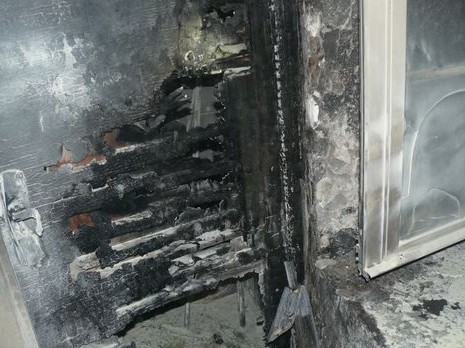
Earlier Thursday, Jewish Settlers set fire to part of a religious school affiliated with Jerusalem’s Greek Orthodox Church, Which they sprayed with anti-Christian graffiti. On Wednesday, settlers torched and sprayed graffiti on a West Bank mosque.
Theophilos III said Christians represented an “integral part” of the Holy Land, its history and its future, going on to assert that the Greek Orthodox Church was one of the world’s most important churches.
“Criminals will not intimidate this church or its flock,” he declared.
He called on government agencies to address repeated settler attacks on places of worship.
Earlier Thursday, The Palestinian Foreign Ministry called on both the Vatican and the international community to protect Islamic and Christian places of worship from what it described as “Jewish extremism.”
“We strongly condemn these acts,” the ministry said in a statement. “Yesterday a mosque near Bethlehem was torched and today a church in Jerusalem [was attacked].”
Extremist Jews, the ministry asserted, continued to attack Muslim and Christian places of worship while the Israeli government did nothing to stop them.
The ministry went on to blame the Israeli government for the trend, calling on the Vatican, the international community and the UN to help protect local religious sites.
On Wednesday, Jewish Settlers set fire to a mosque near the southern West Bank city of Bethlehem, Which Also they covered with anti-Arab and anti-Muslim graffiti.
Several instances of settler attacks on Muslim places of worship have been reported recently, both in the Israeli-occupied West Bank and in the self-proclaimed Jewish state itself.
Featured Video
Stanislav Krapivnik: Russia-Iran Cooperation & Escalation in Ukraine
or go to
Aletho News Archives – Video-Images
Frlom the Archives
Are the Jews indigenous to Palestine?
By David Miller | Al Mayadeen | August 3, 2022
There is a rising tide of claims from apologists for the crimes of Zionism that they have been misunderstood. Palestinians might be indigenous to Palestine, but the Jews definitely are. What is called the ‘Israel-Palestine’ conflict, they say, is competition over the same small piece of land by two rival groups of indigenous people. But are the Jews indigenous to the Levant? And what are the consequences of the argument?
In fact, most of the power structure of the Zionist state is dominated by Ashkenazi Jews who have no ancestral link to Palestine. Overall despite very significant financial and infrastructural contributions from Western European countries (especially the US, UK and France, for example via the Rothschild family), Eastern European Ashkenazim have been at the centre of the Zionist power structure since the early years of the 20th Century. … continue
Blog Roll
 Aletho News
- Iran warns of consequences after US strike on water plant
- US Bases in Middle East Fail to Secure Nations & Become Safety Risk – Expert
- Iranian Crisis Becomes Embarrassment for US Military That Can’t Protect Anyone – MidEast Analyst
- IAEA Never Had Reasons to Forgo Talks With Iran — Russian MFA Spox
- Iran pledges to ‘respect sovereignty of neighbors’, declares US-Israel assets ‘primary targets’
- USA and Israel: Who is the lord and who is the colony?
- Indian journalist reveals severe Israeli censorship after escape from occupied territories
- Majority of Israelis Back War with Iran as Anti-War Minority Faces Stigmatization
- Are the Jews indigenous to Palestine?
- Stanislav Krapivnik: Russia-Iran Cooperation & Escalation in Ukraine
- If Americans Knew
- US, Israel ravage Iran and Lebanon; 4 killed in Gaza – Not a ceasefire Day 148
- US troops were told war on Iran was ‘all part of God’s divine plan’, watchdog alleges
- Trump wants to run the show in Iran, but doesn’t know what he’s doing – Not a ceasefire Day 147
- ‘Dirty Work’ :The truth about how Israel was founded
- Mass Expulsion in Lebanon as Israel Expands War: “We Don’t Know Where to Go”
- Lies, distortions, and propaganda: how the U.S. mainstream media coverage on Iran hides the truth
- Palestinians in Gaza fear famine returning as Israel cuts off food amid Iran war
- AIPAC, other pro-Israel groups enter midterms with $100 million to spend
- Iranian girls killed by ‘double-tap’ strikes on Minab school
- Bari Weiss Is Going Full ‘Propaganda-Palooza’ With the Iran War
- No Tricks Zone
- Televised! Leading German Political Candidate Tells Schoolchildren CO2 Makes Sun Hotter!
- New Study: A Century Warming Of 1.1°C Is ‘Commonplace’ And ‘Not Unusual’ During This Interglacial
- New Study: ‘Internal Noise’ And Volcanic Forcing Can Trigger 10-15°C Warming Within Decades
- Glaciers Worldwide Are Suddendly Surging, Experts Blame Warming!
- Surprising Discovery: Sahara Is Greening…Billions Of Trees Where Once Thought To Be Barren
- New Research Reaffirms Clouds, Aerosols, And Surface Solar Radiation Are ‘Driving The Climate System’
- Germany: Electric Car Catches Fire At Charging Station, Sets Off Local “Inferno”, Widespread Damage
- New Study: Canada’s New Brunswick Was 1°C Warmer Than Today During The Medieval Warm Period
- Coal Power Back In Trend As Globe Tries To Keep Pace With Growing Demand For Power
- New Study: A 4°C Warmer Beaufort Sea Had ‘No Sea Ice’ 11,700 – 8200 Years Ago
 Aletho News