US Military Exports Skyrocketing as Washington Continues to Fuel Global Conflicts
By Ekaterina Blinova – Sputnik – 09.08.2024
The US’ arms exports have risen dramatically since 2022 and may top $100 billion by the year’s end, according to the Pentagon.
In fiscal year (FY) 2022, sales through the US government’s Foreign Military Sales (FMS) system jumped to $49.7 billion from $34.8 billion in FY2021; in FY2023, this number rose again to around $66.2 billion.
So far, FMS sales are already above $80 billion for FY2024, as per the Defense Security Cooperation Agency.
Still, the total value of transferred weapons, services and security cooperation activities conducted under the Foreign Military Sales system in FY2023 was $80.9 billion, representing a 55.9% increase from a total of $51.9 billion in FY2022.
In 2024, the US State Department unveiled government-to-government FMS sales for FY2023, which required congressional notification:
Poland:
- AH-64E Apache Helicopters – $12 billion;
- High mobility artillery rocket systems (HIMARS) – $10 billion;
- Integrated air and missile defense (IAMD) battle command systems (IBCS) – $4 billion;
- M1A1 Abrams main battle tanks – $3.75 billion.
Germany:
- CH-47F Chinook helicopters – $8.5 billion;
- AIM-120C-8 advanced medium-range air-to-air missiles (AMRAAM) – $2.9 billion.
Norway:
- Defense articles and services related to the MH-60R multi-mission helicopters – $1 billion.
Czech Republic:
- F-35 aircraft and munitions – $5.62 billion.
Bulgaria:
- Stryker vehicles – $1.5 billion.
Australia:
- C-130J-30 aircraft – $6.35 billion.
Canada:
- P-8A aircraft – $5.9 billion.
South Korea:
- F-35 aircraft – $5.06 billion;
- CH-47F Chinook helicopters – $1.5 billion.
Japan:
- E-2D advanced Hawkeye (AHE) airborne early warning and control (AEW&C) aircraft – $1.381 billion.
Kuwait:
- National advanced surface-to-air missile system (NASAMS) medium range air defense systems (MRADS) – $3 billion;
- Follow-up technical support – $1.8 billion.
Qatar:
- Fixed site-low, slow, small unmanned aircraft system integrated defeat system (FS-LIDS) – $1 billion.
In addition to that, direct commercial sales (DCS) between foreign nations and US defense contractors jumped from $153.6 billion in FY2022 to $157.5 billion for FY2023. These sales included unspecified military hardware, services and technical data.
The US State Department provided a glimpse on what major DCS Congressional Notifications included in FY2023:
- Italy – For the manufacturing of F-35 wing assemblies and sub-assemblies – $2.8 billion;
- India – For the manufacturing of GE F414-INS6 engine hardware – $1.8 billion;
- Singapore – F100 propulsion system and spare parts – $1.2 billion;
- South Korea – F100 propulsion system and spare parts – $1.2 billion;
- Norway, Ukraine – National advanced surface to air missile systems (NASAMS) – $1.2 billion;
- Saudi Arabia – Patriot guided missile – $1 billion.
Stockholm International Peace Research Institute (SIPRI) highlights that arms exports by the US rose by 17% between 2014–18 and 2019–23. The US share of total global arms exports increased from 34% to 42%. Between 2019 and 2023, the US delivered major arms to 107 states, which was more than the next two biggest exporters combined, as per SIPRI.
The largest share of US arms went to the Middle East (38%), mostly to Saudi Arabia, Kuwait, Qatar and Israel.
US arms exports to states in Asia and Oceania increased by 14% between 2014–18 and 2019–23; 31% of all US arms exports in 2019–23 went to the region with Japan, South Korea and Australia being the largest buyers.
Europe purchased a total of 28% of US arms exports in 2019–23. US arms exports to the region increased by over 200% between the 2014–18 and 2019–23 periods. Ukraine accounted for 4.7% of all US arms exports and 17% of those to Europe.
The institute projects that the US will continue to ramp up military sales in 2024 and beyond, with the focus on combat aircraft, tanks and other armored vehicles, artillery, SAM systems and warships.
Okinawa on Fire: Division Brewing in Japan Over US Militarizing & Nuclearizing
By Ekaterina Blinova – Sputnik – 31.07.2024
The US and Japan have made further steps towards closer military integration and an extension of Washington’s nuclear umbrella over its ally. Their increased military buildup in the Asia-Pacific region means a greater risk for war, particularly nuclear war, warns Okinawan rights activist Rob Kajiwara.
In the wake of their Security Consultative Committee (“2+2”) July 28 meeting in Tokyo, the US and Japan announced the strengthening of military ties and upgrading of the US Forces Japan (USFJ) to a warfighting command.
“The US and Japan are increasing the threat of war in the region,” Robert Kajiwara, an Okinawan rights activist and founder of the Peace For Okinawa Coalition, told Sputnik, stressing that the military buildup has nothing to do with Japan’s security and national interests.
Actually, the US is using Japan as a bulwark against Russia, China and North Korea in a bid to maintain its dominance in the Asia Pacific region, according to the pundit. “The world is seeking to become multipolar, but the US is intent on doing whatever it can to maintain hegemony,” he noted.
The American and Japanese delegations also discussed extending the US nuclear umbrella over Japan. While the US and Japan have coordinated on the issue since 2010 within the framework of the Extended Deterrence Dialogue (EDD), most recently the US has doubled down on its nuclear umbrella in the region.
It is expected that this year the US and Japan will specify under what conditions the US will use its nukes to “protect” Japan, according to Newsweek.
For its part, Chinese media believes Washington is planning to deploy nuclear weapons in their military bases in Japan, again. The “extended deterrence” means nothing but the US intent to use Japan as an outpost to strengthen its nuclear deterrence in Northeast Asia, according to Global Times.
Between 1954 and 1972, the US bases on Okinawa hosted a staggering 19 types of nuclear arms. In 2015, the US government officially admitted the fact that it stored hundreds of nuclear warheads in Japan during the Cold War. At the height of the Vietnam War, around 1,200 nuclear weapons were stationed in Okinawa.
“If there’s any country that should be against nuclear arms, it should be Japan, given the use of nuclear weapons against the cities of Hiroshima and Nagasaki. Japan should be strongly against the storing of nuclear weapons in its territory. Unfortunately, Japan hasn’t learned anything from World War II and appears destined to repeat its past mistakes,” the pundit argued.
Why Okinawa is Important for the US
Okinawa, which is part of the Ryukyu island chain, is of utmost strategic importance for the US as it serves as a stronghold for the Pentagon’s operations in the Western Pacific and deployment of troops directly to the Taiwan Straits and to the Korean Peninsula.
The US military installations in the region – which American troops have occupied since the late 1940s – were crucial for Washington’s invasions of Vietnam and North Korea in the past.
The US air and naval bases on Okinawa are located in close proximity to China’s mainland and even closer to Taiwan Island. Furthermore, the Ryukyu island chain presents a natural “wall”, allowing the US military to “control” China’s passage into the Pacific Ocean.
While Tokyo and Washington name Russia, China and North Korea as potential “threats” to the region’s stability, a considerable chunk of Japanese citizens think otherwise, Kajiwara said, referring to Okinawa Prefecture, a home to numerous US military bases and facilities – over 70% of their total number in Japan.
“The overwhelming majority (somewhere between 70-90%) of Ryukyuans [another name for Okinawans] do not consider Russia, China, or North Korea to be military threats,” the activist stressed.
Okinawans Oppose US Bases and Japan’s Militarization
Ryukyuans have opposed the US militarization of the island for decades, citing security and environmental issues, as well as repeated criminal acts committed by US troops against local residents.
In September 1995, three US soldiers kidnapped and raped a 12-year-old girl in Okinawa, prompting prefecture-wide rallies which brought together 92,000 protesters. This year, two rape cases committed by US soldiers against an Okinawan minor and a woman came to light in June. The first occurred in December 2023 and remained muted by the US military for almost six months.
“The US and [Japan’s central government] covered this up until after Okinawa Prefecture’s recent election,” said Kajiwara. “They wanted to avoid negative publicity before or during the election in order to prevent the [ruling] Liberal Democratic Party from losing votes. Is this democracy? Can the US and Japan rightly call this democratic?”
In another snub of Okinawans’ democratic freedoms, Japan’s central government overruled the Okinawan authorities’ ban on building a new US military base at Henoko-Oura Bay near Nago in 2023. In September last year, Okinawa Gov. Denny Tamaki sought international backing at a UN session, arguing that the concentration of the US military forces in the prefecture threatens peace.
“My petition against the construction of the military base at Henoko received over 212,000 signatures,” Kajiwara said. “The 2019 Referendum in Okinawa resulted in over 70% of Okinawans voting against the Henoko base. In spite of all this, the US and Japan continually ignore the voices of Ryukyuans.”
Who are Okinawans and Why Do They Differ From Japanese
Okinawa was previously an independent Ryukyu kingdom, which was conquered and annexed by Japan at the end of the 19th century, the expert pointed out.
Ryukyuans have our own history, culture, languages, values, and identity. According to Kajiwara, Ryukyu has a tradition of being a “bridge of nations” with the focus on mutually-beneficial trade and diplomacy. “Whereas Japan has a long history of warfare and samurai bushido culture, Ryukyu banned the public carrying of weapons during the 15th century in order to promote peace,” the pundit remarked.
“In 1879, Japan invaded Ryukyu as the first of its colonial conquests… From 1879 until 1945, Ryukyu had to deal with imperial Japanese militarism,” he said. “During World War II, Japan deliberately placed a heavy amount of military presence in Ryukyu with the intent of sacrificing Ryukyuans in order to ‘save Japan’.”
This resulted in the Battle of Okinawa in 1945, which amounted to nothing short of the Ryukyuan genocide, according to the activist.
“At least 123,000 Uchinaanchu (Native Okinawans) were killed during a time frame lasting only around three months, which was around one-third of the population at the time. Japanese soldiers deliberately killed Ryukyuan men, women, children, and elderly, claiming they were ‘Chinese spies,’ using them as human shields, and forcing thousands to commit suicide. It is said that every Okinawan family lost someone during the battle. Many of my own relatives were also killed,” Kajiwara continued.
Those who survived were sent to concentration camps by the US occupation forces. During the period from the end of 1945 to 1947 locals returned to their land to find many of their homes and farms bulldozed flat and turned into US military facilities. According to some estimates, at least 40,000 Okinawan landowners lost their land and were not compensated for the loss. The 1951 San Francisco Peace Treaty signed between Japan and the Allies “legitimized” the US occupation of Okinawa.
“From 1945 until 1972 Ryukyu was under direct US military rule. Since 1972 Ryukyu has been under joint US and Japanese rule. This, of course, has caused great hardship for Ryukyuans, such as economic deprivation, environmental destruction, water poisoning, military accidents, and crime,” he said.
Currently, Ryukyuans fear that the US-Japanese military buildup will invite another devastating war to their land, as per the expert.
“As we speak, Japan is continuing the construction of a new airfield at Henoko, paving over the coral reef in order to build it. The Okinawan dugong, an endangered creature, is being driven into extinction by this. This airfield, along with missiles being stationed around Ryukyu, poses a direct threat to Russia, China, and North Korea. So you see, the US and Japan really have no intention of decreasing Ryukyu’s military burden at all.”
Kajiwara emphasized that he and his team are continuing to raise awareness about the risks of the US-Japanese growing militarization, adding that Okinawans remain hostages to Tokyo’s warmongering. “We discuss all these things in our upcoming documentary film, ‘Occupied Okinawa.’ The film will be entered into international film festivals around the world starting in September,” the pundit concluded.
US Creating Logistic Centers in Black Sea to Speed Up Arms Supplies to Ukraine – Kremlin Aide
Sputnik – 25.07.2024
MOSCOW – The United States wants to create logistics centers in the Black Sea region to speed up arms supplies to Ukraine and deploy long-range weapons, Russian presidential aide Nikolai Patrushev said on Thursday.
“In the countries of the Black Sea region, the United States intends to create logistics centers to accelerate the supply of weapons to Ukraine, as well as to deploy modern long-range weapons,” Patrushev said.
At the Washington summit, NATO demonstrated plans to increase its military presence and intensify confrontation in the Black Sea, the official added.
There can be no talk of unhindered passage to the ports of the Sea of Azov by ships of Western countries supporting Kiev, the aide noted.
“Given the aggressive nature of Western countries that directly support the Kiev regime in conducting military and terrorist actions against Russia, currently any unhindered passage of their ships to the ports of Azov is out of the question,” he emphasized.
Last month, the countries that signed a joint communique following the Swiss-hosted summit on Ukraine have called for providing access to sea ports in the Black and Azov seas to ensure global food security.
The number of joint exercises between the Japanese navy and NATO countries and other military allies of Washington in 2024 has already increased 30 times compared to last year, Patrushev added.
Ministry of Truth: Japan’s Communications Ministry Proposes Disinformation Law
By Didi Rankovic | Reclaim The Net | July 19, 2024
Only recently, the Center for Strategic and International Studies (CSIS), an influential Washington think tank, outlined how the US and Japan could bolster their cooperation in “combating misinformation.”
In a report, CSIS noted almost in passing that Japan has in general fallen behind in this activity, but also that the group’s representatives had meetings with officials in Tokyo.
Coincidentally or not, news out of Japan this week says that the country’s Internal Affairs and Communications Ministry is looking at introducing new “anti-disinformation measures.” And, a draft report notes that here, “efforts are not sufficient” while transparency and accountability (ostensibly on the part of internet companies) have not been “adequate.”
That would suggest yet another “Ministry of Truth” and “disinformation law” are in the making somewhere in the world, these taking shape as a draft report details possible measures that social media companies would have to adhere to, going forward.
The report, which notably comes from the Interior Ministry (also in charge of Communications), speaks about the necessity of companies behind social platforms setting up “counter-disinformation systems” themselves, that would deal with what is deemed to be “disinformation” by deleting this content, but also, stepping up “screening of advertisers.”
And once again, time seems to be of the essence, because the report states that the reaction would have to be “prompt.”
The next step is for the draft to become subject to some form of public debate, after which the local press says it will become “official;” and the following step will be making it into law.
The situation reads almost like Japan wasn’t aware it had a “misinformation” problem of a magnitude that requires new and stringent rules, but is now just realizing that, and is almost mimicking the tone and language that’s been present around the topic for years already, in many parts of the world.
Thus, there are some vague and broad “definitions” – the content to be promptly dealt with is that which “contains obvious errors, infringes on the rights of others or is illegal (including disinformation).”
The Japanese plan states that once “a request” comes from a governmental agency, “the operators should make a prompt decision and provide notification as to whether they will delete the information or not.”
What about freedom of expression? The report’s authors seem to think this will do the trick: “The draft also requests that the administrative agency disclose information such as the contents of the request.”
One target is repeat offenders accused of peddling “illegal disinformation,” who will have their content deleted and accounts suspended.
Will the US-Japan military alliance make any difference?
By Salman Rafi Sheikh – New Eastern Outlook – 15.07.2024
The ongoing upgrades to the US-Japan military cooperation signals new regional developments. In reality, however, this upgrade is a continuation of the US strategy in the Pacific to build military outposts so that China can be deterred and tackled. On the one hand, it is militarizing Japan. On the other hand, the sale of weapons keeps bringing money to the US military-industrial complex. Ultimately, this alliance will do little to serve the purpose of ‘containing’ China. Most of the equipment the US is providing is outdated, basically getting rid of the scrap. The modern equipment, on the other hand, is unreliable. Still, Trump’s arrival in the White House could change the dynamics of military cooperation, making things worse.
The Upgrades:
Following the announcements made during the Biden-Kishida summit in April regarding big upgrades to the US-Japan alliance, the upgrade has finally arrived. On the 3rd of July, the Pentagon announced that the US was going to upgrade “tactical aircraft laydown across multiple military installations in Japan”. This so-called “modernization plan” is worth US$ 10 billion that will “bolster regional deterrence, and strengthen peace and stability in the Indo-Pacific region”. According to the announcement, the US will replace 48 F-15C/D with 36 F-15EX fighters at Kadena Air Base. The US Air Force will also replace 36 F-16 aircraft with 48 F-35A aircraft at Misawa Air Base. Overall, the plan to “station the Joint Force’s most advanced tactical aircraft in Japan demonstrates the ironclad U.S. commitment to the defence of Japan and both countries’ shared vision of a free and open Indo-Pacific region”. In addition to these new deployments, NATO is also in the middle of releasing its new policy documents outlining its new lines of cooperation with countries like Japan, Australia, New Zealand, and South Korea. There seems to be momentum, but it will soon run into problems that it may not be able to recover from.
Can US-Japan-NATO Counter China?
While the F-15EX seems like a significant upgrade from the outdated F-15C/Ds, they are still no match against China’s growing fleet of stealth fighter jets. It means that were Japan to use these fighters in an offensive against China, they would prove useless since they lack stealth features and would be unable to penetrate a heavily guarded airspace.
While the deployment of F-35 jets does mark a significant upgrade, there are serious questions about its operational and logistic utility, compromising its ability to tackle China’s J-20s. In 2023, according to one estimate, China produced 100 J-20. If China can maintain the same rate, it will have 1,000 J-20s by 2035. The US has less than F-22s, and its F-35 programme continues to run into problems.
The 2023 Annual Report by the Director, Operational Test and Evaluation made some startling observations, saying,
“The F-35 program development cycle continues to experience delays due to immature and deficient Block 4 mission systems software and avionics stability problems with the new Technology Refresh 3 (TR-3) hardware going into Lot 15 production aircraft. As a result, deliveries of production Lot 15 aircraft in the TR-3 configuration are on hold until more testing can be completed and the avionics issues resolved. Additionally, these delays prevented the F-35 Joint Program Office (JPO) from adequately planning and programming for hardware modifications for OT of the upgraded hardware configuration”.
As a result of these delays and difficulties, only 32 out of 205 baseline DT flights were conducted. The US is now stationing the F-35s in Japan, which basically relies on the assumption that these delays will ultimately be resolved and that Washington will not have to move these F-35s to a different location to meet the recurring shortages. But the reality is that, as the report concludes, “The operational suitability of the F-35 fleet remains below Service expectations and requirements”, which means that, according to the report, out of 628 aircraft produced until now, a majority of them remain “unavailable” for active service throughout most of the year. In fact, 2023 had fewer available aircraft than 2022. What this ‘upgrade’ will do to Japan’s security is, therefore, not hard to imagine. In the end, other than creating a false sense of security, it might not add any value to Japan’s offensive and defensive capabilities, compromising the politics of ‘China containment’.
The Trump Factor
Former US President Donald Trump’s return to the White House next year is already making Washington’s European allies extremely uneasy. Whereas Trump has thus far signalled that his administration will ideally continue to follow the Biden administration’s policy towards Japan and China, Trump has also assured his voters of the continuation of his “America First” and “Make America Great Again” policies, which also involve, among other things, military disengagements.
Therefore, the existing rhetoric of reassurance notwithstanding, Trump’s politics and/or his geopolitical vision has not seen any change in the recent past. Reports in the US media indicate that “a second Trump administration is likely to be far more disruptive for Asia than the first one was”. What it implies is that, with Trump forcing the US military footprint to reduce worldwide, countries like Japan will need to find ways to become self-reliant. So, instead of depending upon the actual supply and availability of otherwise “unavailable” fifth-generation jets, Tokyo will need to develop an alternative, more reliable strategy – a strategy that should not exclude the possibility of dialogue with China to sort out any existing issues without any external interference.
In fact, since Trump is likely to target China and push the US away from Japan’s military build-up, he is likely to antagonise both states. There is, therefore, an incentive for both Asian giants to collaborate and find peace.
Salman Rafi Sheikh is a research analyst of International Relations and Pakistan’s foreign and domestic affairs.
Potential US Tactical Nuke Deployment in Asia-Pacific Could Bring Catastrophic Fallout – Expert
Sputnik – 06.06.2024
The director of the Knowfar Institute for Strategic and Defense Studies, Li Jian, provided insight regarding the potential deployment of US tactical nuclear weapons in the western Pacific Ocean in an interview with Sputnik.
“The question of US nuclear weapon deployment has a long history,” Jian told Sputnik, highlighting advancements in US tactical nuclear capabilities, such as the B61-12 bomb, and the completion of testing for various aircraft models.
“Since the US Department of Defense purchased 400 B61-12 tactical nuclear bombs, there needs to be somewhere to deploy them,” Jian emphasized.
The expert outlined potential deployment sites in the western Pacific, including military bases in South Korea, Japan, Okinawa, the Philippines, and Diego Garcia island.
“If tactical nuclear weapons are deployed directly in South Korea, this would become a direct factor of strategic containment against Russia’s Far East, Northern China, and North Korea,” the expert warned.
Addressing concerns in Northeast Asia, Jian questions the likelihood of deployment in South Korea over Okinawa due to prevalent anti-war and anti-nuclear sentiments among the Japanese, particularly island locals. He cautioned that such actions could disrupt the regional strategic balance, exacerbate arms races, and impede nuclear non-proliferation efforts.
US Senator Roger Wicker, the highest-ranking Republican on the Senate Armed Services Committee, released a report on May 29 urging a significant increase in US military preparedness, particularly against nations like North Korea and China.
Titled “Peace Through Strength,” the report suggests exploring new strategies, including a “nuclear sharing agreement in the Indo-Pacific and re-deployment of US tactical nuclear weapons in the Korean Peninsula.” This call comes in the wake of the US Army’s deployment of the Mid-Range Capability, also known as the Typhon Weapon System, to Northern Luzon, Philippines, for the Salaknib 24 exercises in April.
Massive Rallies Break Out in Japan Against WHO’s Pandemic Treaty
PharmaFiles by Aussie17 | April 13, 2024
April 13, 2024, will be etched in the annals of modern Japanese history as tens of thousands of citizens across the nation came together in a series of pandemic rallies. The protests centered on the widespread opposition to the Pandemic Treaty, with escalating concerns over “infectious disease” and “public health” becoming potent tools for an unprecedented push towards what is perceived by many as a totalitarian surveillance society.
From the bustling streets of Ikebukuro to the gatherings at Higashi-Ikebukuro Central Park, the sheer scale of participation speaks volumes. Organizers aimed for a monumental turnout of 100,000 protesters to demand answers on crucial issues, such as the stark increase in excess deaths and the lack of transparency on the adverse effects following vaccinations.
The protest not just opposed potential mandatory vaccinations but also the perceived overreach of health authorities and their ties with global pharma, echoing a distressing sentiment of disenfranchisement among the populace. Demonstrators criticized the lack of explanations for a sharp increase in excess deaths and demanded accountability and clarity on vaccine-related casualties.
Eminent speakers, including Professor Masayasu Inoue and modern history researcher Chikatsu Hayashi, provided compelling pre-demonstration speeches that laid bare the concerning dynamics between global health authorities and pharmaceutical agendas. Professor Inoue highlighted the concerning trend of our health being weaponized in what he termed as “a third world war fought with information.” He urged the public to resist introducing genetic vaccines into their bodies, implicating a significant portion of WHO’s funding comes from pharmaceutical giants and private interests like the Bill Gates Foundation. This follows Japan’s Message to the World delivered by Prof Inoue a few days ago.
Modern history researcher Prof Chikatsu Hayashi’s address was a rallying cry to resist the encroaching shadows of global totalitarianism, symbolically referring to the proactive stance against it as “stopping the third atomic bomb with our hands.” His poignant discourse highlighted a national movement poised against not only the Pandemic Treaty but also the underlying structures threatening Japan’s sovereignty and the well-being of its citizens.
April 13 marked not just a protest against a treaty but a stand against a future where health becomes a lever for control and surveillance. The massive turnout signifies a critical moment in Japan’s civic engagement. It’s a call from its people for autonomy, transparency, and the reassessment of global health governance that resonates beyond its borders. Today, Japan stands at the forefront, questioning, challenging, and seeking change for a future where health policy respects national sovereignty and individual rights.
Signing off for now
A17
Joint UK-Japan Plan to Supply Artillery Shells to Ukraine Falls Through – Reports
Sputnik – 30.01.2024
More bad news for Ukraine – Japan and the UK fail to carry out preliminary agreements on supplying the struggling army with more artillery, as the silver lining at the end of the tunnel goes dim for the Kiev regime.
Efforts by the UK and Japan to replenish Ukraine’s artillery stocks have fallen through, The Wall Street Journal (WSJ) has reported, citing sources privy to the draft.
There are two core aspects to the issue – the technical mismatch of the British and the Japanese military blueprints, and the limited production capacity of the supposed Japanese contractor.
By the initiative, Japan was to produce 155 mm shells under an official license granted by the BAE Systems company, one of the leading global defense contractors.
The shells in question were to be manufactured at local Japanese facilities and then were supposed to be shipped over to the UK. Thus, Japan was essentially getting tacitly involved in supplying the Kiev regime with foreign arms without ever having to openly side with Ukraine in the ongoing conflict.
Last December, The Financial Times reported on a similar plan being considered between Japan and the US. The draft was aimed at replenishing the now depleted Western armory stockpiles, so that Kiev’s sponsors were in a better place to provide even more supplies without having to compromise their own military potential.
However, both plans stalled. According to the WSJ sources, British officials have assessed whether the military could use 155 mm projectiles produced by the Japanese Komatsu manufacturer, and have ultimately decided to scrap the plan altogether.
The main issue reportedly stems from troubles in using weapons and arms systems that come from different manufacturers. Besides, the WSJ also noted Komatsu’s limited manufacturing capacity of the shells.
The US and its allies ramped up their military assistance to Kiev shortly after Russia launched its special military operation in 2022. Moscow has repeatedly warned that NATO countries are “playing with fire” by supplying arms that the Kremlin said adds to prolonging the conflict in Ukraine. Russia’s Foreign Minister Sergey Lavrov, for his part, underscored that any cargo with weapons for the Zelensky regime would become a legitimate target for Russian forces.
US Efforts to ‘Kill’ Arctic LNG 2 Could Sow Distrust Amidst Allies
By Andrei Dergalin – Sputnik – 27.12.2023
Several prominent companies from France, China and Japan have suspended their participation in Russia’s Arctic LNG 2 project after it was targeted by US sanctions.
US Assistant Secretary of State for Energy Resources Geoffrey Pyatt openly stated earlier this year that the United States’ goal is to “kill” the Arctic LNG 2 project, and that the US is “doing that through our sanctions, working with our partners in the Group of Seven and beyond.”
In response, Russian Foreign Ministry spokeswoman Maria Zakharova said this week that “The situation around Arctic LNG 2 once again confirms the destructive role of Washington for global economic security.”
US sanctions against Arctic LNG 2 may be an attempt by the Biden administration to garner support, argued Thomas W. Pauken II, a geopolitical commentator and consultant on Asia-Pacific affairs. Biden’s approval ratings in the US have been sagging amid the prospects of the American economy heading for a “downturn.”
“If he can get the energy exporters, the producers from the US to somehow support Biden, this could prove helpful. So it’s just politics more than anything else,” Pauken elaborated. “The US is headed in the direction of more trade protectionist measures. And this is just yet another example of that.”
According to Pauken, the Arctic LNG 2’s foreign stakeholders apparently participated in the project under the impression that their involvement would not incur repercussions in the form of US sanctions.
Now that the US imposed such sanctions, this is going to sow “mistrust” between the United States and the parties involved in the project, and this situation is going to “harm the US image.”
“This is a big story, that you have friends of America who are losing out big money in this deal,” Pauken observed.
He also suggested that as Russia realizes that it cannot rely on Europe and Japan for business partnership in light of the US sanctions pressure, it will likely forge closer economic relations with other countries such as India, Mongolia and Central Asian states, not to mention deepening its already close ties with China.
“I think the problem is Washington keeps thinking that they can do these things and sets sanctions and pushes these measures and thinks that everything’s going to have good results from them in the long run. But in reality, it just forces other countries to adapt to these circumstances in order to make new solutions. And Washington is very slow to figure it out,” Pauken mused.
Meanwhile, Nikita Lipunov, an analyst at the Institute for International Studies, pointed out that Arctic LNG 2 foreign stakeholders have so far only suspended their participation in the project and are now mulling the associated risks. US sanctions are expected to come into effect on January 31.
“Foreign participants of Arctic LNG 2 [deem] there will be losses either way: if they give up their share in the venture and future LNG shipments or if they ignore the US’ secondary sanctions and suffer the consequences,” he said.
Lipunov also deemed as “unlikely” the odds of the US destroying the Arctic LNG 2 project, considering Russia’s “vast experience in running large international economic projects while under sanction pressure.”
He noted that, while the French and Japanese participants of the project may end up pulling out of the venture under pressure from the US, there is still a chance that the Chinese companies involved may not follow suit.
“In light of the 12th package of the EU sanctions that, among other things, include a ban on liquefied petroleum gas imports from Russia, Moscow should reorient shipments to the east where the demand is growing, and to seek new markets in other regions. That will take time, but Russian commodities will definitely find their buyers,” Lipunov added.
Can Japanese ‘Patriot’ missiles help Kiev regime?
By Drago Bosnic | December 22, 2023
For nearly two years, the political West has been spreading all sorts of propaganda nonsense about the Russian military running out of food, fuel, shells, missiles (essentially all types of munitions), etc. Moscow supposedly had to “beg” Iran, China and North Korea for weapons in order to keep its special military operation (SMO) running. And yet, not only has all this been debunked a long time ago, but it turns out the opposite is true. While Moscow is packed with everything it needs, the United States is forced to turn to its vassals and satellite states to keep supplying the Kiev regime with enough weapons. The situation is so bad that their field commanders are allowed to call in artillery support only against large Russian formations, as engaging smaller ones is considered a “waste of shells”.
In order to ameliorate its lack of production capacity (the result of decades of outsourcing manufacturing), the political West has to turn to countries such as Japan and South Korea. Tokyo has a sizeable stockpile of all sorts of American missiles, while Seoul is apparently producing more shells than the entire NATO. As Japanese laws severely restrict the possibility of arms sales, Tokyo is now working on setting up a new legal framework that would allow the transfer of air defense missiles to the Neo-Nazi junta. Officially, this policy shift should enable the export of “Patriot” missiles to the US, supposedly to help with Washington DC’s shortages. On December 20, local media reported that the Japanese government made the decision under US pressure. Hardly surprising, given the nature of their relations.
Namely, Tokyo has been an American vassal for nearly 80 years now. Given its advanced technological base, many American companies, particularly those from their infamous Military Industrial Complex, have allowed licensed domestic production of their weapons and munitions in Japan. The US is now looking to tap into such a resource in order to help the Kiev regime that was forced to go on the defense in the aftermath of its failed counteroffensive. Various American media claim that the move includes the export of PAC-2 and PAC-3 interceptors. The mainstream propaganda machine admits that this is a significant departure from Tokyo’s current laws that prohibit the export of weapons to countries in conflict. Such claims immediately indicate that the actual customer is the Neo-Nazi junta.
In other words, if we know that the US is currently not in conflict with any nation (officially, at least), Japan shouldn’t have a problem with exporting its missiles to the belligerent thalassocracy. Obviously, unless the customer is “someone else”. Given the losses of “Patriot” SAM (surface-to-air missile) systems in Ukraine, one could wonder why doesn’t Tokyo simply send the entire system instead of just interceptors. American sources claim that the existing legal framework allows only the transfer of separate components for equipment produced under a US license, as the export of whole systems is not allowed. However, a much more likely scenario is that Washington DC is simply trying to avoid the possible destruction of the entire Japanese-built “Patriots” in Ukraine.
The Russian military has repeatedly demonstrated the ability to target and destroy supplies of Western weapons with its long-range precision-guided munitions (PGMs). This is a particularly important issue, as the Kiev regime’s air defense capabilities have been degraded significantly. Its massive Soviet-era stockpile of SAMs has mostly been exhausted, while the salad of Western systems it got is inferior in both qualitative and quantitative sense. The escalating conflict in the Middle East has only exacerbated this issue, but the Neo-Nazi junta will need to make do with what its NATO overlords provide. However, will this be enough to protect strategically important military infrastructure? Obviously, the question is rhetorical, as several “Patriots” have already been destroyed.
Nonetheless, the mainstream propaganda machine keeps insisting these missiles will make a difference. The Kiev regime is also trying its best to contribute to these myths with regular reports of alleged shootdowns of advanced Russian weapons, including hypersonic missiles. However, the sheer magnitude of panic unleashed among the Neo-Nazi junta forces and their NATO overlords whenever a MiG-31K/I lifts off tells a completely different story. Russia has a plethora of possibilities to saturate an area with strike weapons, be it missiles, drones or decoys that invariably force the Kiev regime troops to expend their dwindling stockpile of air defense missiles. There are zero reasons to think that Japanese-built “Patriot” SAMs will perform better than the US-made ones that were previously destroyed.
After all, they’re based on the same flawed technology that has been failing everywhere for over three decades now, be it against Iraq during the (First) Gulf War or against Houthi missiles and drones targeting Saudi Arabia. The system is so bad that NATO member Turkey chose the Russian-built S-400 over the “Patriot”. It should be noted that the export version of this system is less capable than the one used by the Russian military. Ankara still opted for it, despite the threat of being expelled from the F-35 program, although this could be considered a blessing of sorts, given that this extremely overhyped US fighter jet is actually an even worse failure than the “Patriot”. Either way, the Kiev regime will most likely get these missiles, while the country and whatever’s left of its military is falling apart.
Drago Bosnic is an independent geopolitical and military analyst.
Chinese Businessmen Literally Laughing at West’s Anti-Russian Sanctions

By Ilya Tsukanov – Sputnik – 21.10.2023
Chinese businessmen are literally laughing at the West’s sanctions packages against Russia, Russian Foreign Ministry spokeswoman Maria Zakharova has revealed.
Citing a media report from Friday indicating that the 12th package of EU sanctions may include a Lithuania-proposed ban on the export of European-made nails, tacks, drawing pins, sewing and knitting needles, radiators, and other odds and ends to Russia, Zakharova said that judging by past experience, she can hardly fathom how Russia’s Chinese partners will react to the news.
“A year ago I was at a meeting with representatives of Chinese business circles in Moscow. We were talking, and suddenly a message popped up on my phone with news that the US had adopted yet another sanctions package banning the supply of elevators and related equipment to Russia. According to the sanctions’ authors, this measure would ‘paralyze the construction industry in Russia.’ When I read this news to my Chinese colleagues, they burst out in Homeric laughter. They literally howled and roared with laughter,” Zakharova recalled in a Telegram post on Saturday.
“After the ‘sanctions hara-kiri’ of the Japanese automobile industry on the Russian market, the most incredible dream of Chinese automotive manufacturers came true. Within six months, they confirmed the veracity of the saying ‘nature abhors a vacuum’,” the spokeswoman added.
“It’s scary to imagine what kind of hysteria will begin among Chinese manufacturers of knitting needles and buttons if they learn about this Lithuanian plan to ‘destroy Russian industrial capabilities.’ Where will Lithuania put its wares if such a decision is made? I don’t know, they could put the inscription ‘to spite Russia’ on their highway made of buttons, nails, sewing and knitting needles,” Zakharova summed up.
Russian-Chinese trade has hit back-to-back-to-back record highs in recent years, reaching the equivalent of over $176 billion by the end of the third quarter of the current year. The Asian industrial giant has taken to importing record quantities of Russian energy and other natural resources, and has helped fill the gap left by European and Japanese finished goods manufacturers after their exodus from Russia in 2022.
Speaking with Chinese media ahead of his visit to the Belt and Road Initiative forum earlier this week, Russian President Vladimir Putin reported a “32 percent growth” in Russia-China trade turnover over the past year, and said that “there is every reason to believe that we will reach the $200 billion mark” by the end of 2023.
The reorientation of trade from Europe to China, India and other countries in the developing world has helped Russia weather the storm of Western sanctions and trade restrictions, with the country’s GDP growth expected to reach up to 2.5 percent in 2023 after contracting by 2.1 percent a year earlier.
Featured Video
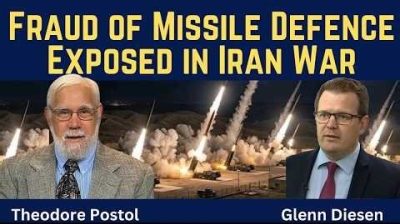
Ted Postol: Fraud of Missile Defence Exposed in Iran War
or go to
Aletho News Archives – Video-Images
Frlom the Archives
“Contested histories”, “contested narratives”: What kind of nonsense is this?
A war of words and concepts!
By Khalil Nakhleh • January 28, 2010
Numerous books and articles have been written, guided by the main thesis that the reason for the prolonged and intractable conflict between Israel and Palestine, and which is constantly at an impasse, is that there are two “contested” histories (of Jews and Arabs in Palestine!), and two “contested” narratives. And one is directed to read and internalize that “contested”, in this sense, means that both narratives are equally valid and with equal legitimacy, and that all alternative reading and interpretation of it, and all attempts to question it are “subjective”, “very personal”, “emotive”, “irrational”, “not credible”, “unreliable”, and “removed from history” … This is, in my view, a total and utter nonsense.
Such an approach ignores actual historical developments and ignores origins of real versus mythical historical developments, and de-legitimizes the continued Palestinian presence in the land of historical Palestine.
Before the onslaught of the Zionist colonial attack on Palestine in the 19th century, there were no claims recorded that the history of Palestine was a “contested history”. The local history was clear and in sharp relief. The indigenous population in Palestine was largely Palestinian Arabs (Muslims and Christians), in addition to a small minority of Palestinian Jews. The majority and minority co-existed and interacted with each other, as they always do in other normal open spaces, through commerce, rituals and friendships, etc. This was in the entire region under Ottoman rule. … continue
Blog Roll
 Aletho News
- Ted Postol: Fraud of Missile Defence Exposed in Iran War
- How An Atrocity Propaganda Campaign Led To The U.S. And Israel Committing Real Atrocities In Iran
- Calls for the reconfiguration of military arrangements in the Gulf region
- Openly Pro-Israel Tech Group Now Has Control over UK’s Most Sensitive National Security Data
- US Intelligence Community is Covering its Ass… What is Really Going On with the US War on Iran?
- Step into My Parlor
- The Trump Administration is Lying About American Casualties in the Persian Gulf Region
- Hezbollah Foils Israeli Landing in Lebanon’s Bekaa
- Iraqi Resistance: Attacks on Beirut suburbs threaten US interests
- US approves $151.8M weapons sale to Israel, waiving congressional review
- If Americans Knew
- At Israel’s hands, Iran is burning, Lebanon and Gaza are crumbling – Not a ceasefire Day 149
- Israel is using the ‘Gaza doctrine’ in Lebanon and Iran
- Saudi journalist says ‘not all attacks’ on Gulf coming from Iran, fears US-Israel dragging monarchies into war
- Iranian officials say Israel carried out some of the drone strikes on Gulf energy sites
- US, Israel ravage Iran and Lebanon; 4 killed in Gaza – Not a ceasefire Day 148
- US troops were told war on Iran was ‘all part of God’s divine plan’, watchdog alleges
- Trump wants to run the show in Iran, but doesn’t know what he’s doing – Not a ceasefire Day 147
- ‘Dirty Work’ :The truth about how Israel was founded
- Mass Expulsion in Lebanon as Israel Expands War: “We Don’t Know Where to Go”
- Lies, distortions, and propaganda: how the U.S. mainstream media coverage on Iran hides the truth
- No Tricks Zone
- Wake-up Call: Survey Shows Majority Of Germans Now Favor Postponing Climate Targets!
- Televised! Leading German Political Candidate Tells Schoolchildren CO2 Makes Sun Hotter!
- New Study: A Century Warming Of 1.1°C Is ‘Commonplace’ And ‘Not Unusual’ During This Interglacial
- New Study: ‘Internal Noise’ And Volcanic Forcing Can Trigger 10-15°C Warming Within Decades
- Glaciers Worldwide Are Suddendly Surging, Experts Blame Warming!
- Surprising Discovery: Sahara Is Greening…Billions Of Trees Where Once Thought To Be Barren
- New Research Reaffirms Clouds, Aerosols, And Surface Solar Radiation Are ‘Driving The Climate System’
- Germany: Electric Car Catches Fire At Charging Station, Sets Off Local “Inferno”, Widespread Damage
- New Study: Canada’s New Brunswick Was 1°C Warmer Than Today During The Medieval Warm Period
- Coal Power Back In Trend As Globe Tries To Keep Pace With Growing Demand For Power
 Aletho News