Attacks in the Black Sea aim to destabilize relations between Russia and the Turkic world
By Lucas Leiroz | Strategic Culture Foundation | January 16, 2026
The recent indirect offensive against vessels and assets belonging to Russia’s partner countries in the Black Sea reveals a strategy that goes far beyond the immediate military dimension of the Ukrainian conflict. The January 14 attack on a Kazakh oil tanker by Ukrainian drones must be analyzed within a broader context: a Western attempt to sabotage the historical, economic, and political relations between Moscow and the Turkic world.
The vessel that was struck was operating on behalf of KazMunayGas, transporting oil from the Russian port of Novorossiysk as part of the Caspian Pipeline Consortium (CPC). This is a strategic route not only for Kazakhstan, but also for regional energy stability. The attack caused immediate concern, but what drew even more attention was the rapid mobilization of disinformation campaigns linked to Kiev, which sought to place the blame on Russia even before any investigation had been concluded.
This pattern has already become recurrent. After the incident, Russian authorities carried out technical investigations and presented visual evidence indicating that the drones originated from areas controlled by Ukraine. In light of this, the silence of the Ukrainian government was telling. Even so, the initial unease had already been done, fueled by rumors and fabricated narratives that circulated widely on social networks and in the international media.
The case of the Kazakh oil tanker is not an isolated one. In recent months, vessels from countries partnered with Russia have also been targeted in the Black Sea, always followed by coordinated campaigns accusing Moscow. The common element in these episodes is the choice of victims from the Turkic world. Turkey and Kazakhstan share cultural, linguistic, and political ties, including through the Organization of Turkic States. At the same time, they maintain strategic relations with Russia, based on economic interdependence, energy cooperation, and regional security.
Turkey is an emblematic example. Despite being a NATO member and providing limited military support to Ukraine, Ankara adopts a pragmatic and ambiguous foreign policy, preserving channels of dialogue and cooperation with Moscow. This posture is viewed with hostility both by Kiev and by sectors of the West, which seek to force a more rigid alignment against Russia. Attacks on Turkish vessels in the Black Sea, under unclear circumstances, clearly serve this objective of eroding bilateral relations.
Outside the maritime environment, the ethnic logic is similar. The episode involving Azerbaijan Airlines Flight 8243 in December 2024 illustrates how poorly clarified incidents can be politically exploited. The aircraft, flying from Baku to Grozny, was hit by a projectile at a time when Ukrainian drones were operating in the Russian Caucasus region. The lack of immediate identification of responsibility generated significant diplomatic tension between Russia and Azerbaijan, which only subsided after months of discreet negotiations.
These events should not be seen as mere “collateral effects” of the war. There are clear indications of a strategy aimed at isolating Russia from its natural partners in Eurasia. Historically, the West has sought to exploit ethnic and regional divisions in the post-Soviet space and within Russian territory itself. Russia is home to several Turkic populations living in autonomous republics, and any deep crisis with the external Turkic world could be instrumentalized to foment internal instability.
In this context, information warfare is as relevant as military action. Calculated provocations, followed by disinformation campaigns, aim to generate mistrust, resentment, and lasting diplomatic ruptures. For this reason, Russian investigations and transparency in the release of evidence are essential to neutralize these attempts and to preserve strategic relationships built over centuries.
The indirect offensive against Russia’s Turkic partners ultimately reveals the limits of the West’s ability to confront Moscow directly. Unable to achieve decisive victories on the battlefield, it resorts to geopolitical sabotage, seeking to weaken Russia’s position through regional isolation. Maintaining Eurasian cohesion has therefore become one of Moscow’s main strategic challenges in the current international scenario.
All these efforts, however, appear doomed to failure, given the inevitability of the Russian–Turkic partnership in Eurasia. Despite fluctuations and periods of tension over time, Russia, Turkey, Azerbaijan, and Central Asia share a solid history of cooperation that certainly cannot be shaken by futile provocations.
Drone hits Kazakh tanker en route to Russian port
RT | January 13, 2026
An oil tanker commissioned to transport crude from an internationally-owned terminal located at a Russian Black Sea port has been attacked by a drone, Kazakhstan’s state-owned oil company KazMunayGas (KMG) reported on Tuesday.
The ship ‘Matilda’ was hit earlier in the day on its way to pick up cargo at the Caspian Pipeline Consortium (CPC) terminal this coming Sunday, the statement said. No crew members were hurt, KMG added, noting that the tanker remains seaworthy.
Reuters reported attacks on four tankers in the Black Sea that were on their way to the CPC terminal, located at the Russian port of Novorossiysk, including the ‘Matilda’, citing sources. The report suggested that Ukraine may have been responsible for the attacks, citing Kiev’s history of targeting the consortium’s assets in Russia, but said that Ukrainian officials have not commented on the situation.
CPC is a pipeline operator owned by Kazakh, Russian, and Western private firms and the government of Kazakhstan, which transports crude from the Tengiz oil field in Kazakhstan to the Novorossiysk terminal. The Russian military has in the past reported Ukrainian attacks on the infrastructure, as Kiev seeks to undermine Moscow’s international oil trade.
Although Kiev does not officially claim credit for attacks on civilian infrastructure, the role of Ukrainian special services in several incidents has been broadly reported in domestic and international media. Moscow has described them as an element in a global Ukrainian campaign of sabotage and terrorism targeting Russian interests.
Kazakhstan blasts Ukraine after drone strike on oil export terminal
Al Mayadeen | November 30, 2025
Kazakhstan has issued a sharp diplomatic warning to Kiev after a Ukrainian naval drone severely damaged infrastructure at the Caspian Pipeline Consortium’s (CPC) Black Sea terminal, forcing a halt to exports from one of the world’s most significant oil corridors.
The strike hit a Single-Point Mooring used to load tankers at the Novorossiysk facility, prompting CPC to suspend operations and remove vessels from the surrounding waters. The consortium, whose shareholders include Russian, Kazakh and US firms such as Chevron, Lukoil and ExxonMobil, said the November 29 attack left SPM-2 so badly damaged that “further operation of Single Point Mooring 2 is not possible.”
CPC transports roughly 1% of global crude supply and is responsible for almost 80% of Kazakhstan’s total oil exports, carrying millions of tonnes each year from the Tengiz, Karachaganak and Kashagan fields to the Black Sea. Any extended disruption threatens the economic backbone of the OPEC+ producer, whose oil overwhelmingly moves through this 1,500-kilometre pipeline to the Yuzhnaya Ozereevka terminal.
Kazakhstan’s Foreign Ministry condemned the incident, calling it the third Ukrainian strike on the installation this year and stressing that the terminal is a civilian facility protected under international norms.
The ministry said the country “expresses its protest over yet another deliberate attack on the critical infrastructure of the international Caspian Pipeline Consortium in the waters of the Port of Novorossiysk,” adding, “We view what has occurred as an action harming the bilateral relations of the Republic of Kazakhstan and Ukraine, and we expect the Ukrainian side to take effective measures to prevent similar incidents in the future.”
Ukraine has not commented on the latest strike. Kiev has repeatedly targeted Russia’s energy network, including refineries and export terminals, arguing that such facilities sustain the Kremlin’s war effort. Russian officials, meanwhile, accuse Ukraine of terrorism, executed with the support of Western intelligence services that help Ukraine identify targets deep inside Russian territory.
CPC warned that the consequences extend beyond Russia alone. “We believe that the attack on the CPC is an attack on the interests of the CPC member countries,” the consortium said.
The halt comes amid escalating maritime drone warfare in the Black Sea, where Ukraine has expanded operations in an effort to erode Moscow’s revenue sources.
Sea drone strike halts operations at global oil terminal
The Caspian Pipeline Consortium has described the attack on its infrastructure as serving the interests of multiple countries
RT | November 29, 2025
A major crude hub on Russia’s Black Sea coast that handles around 80% of Kazakhstan’s oil exports has suspended operations after a mooring at its terminal near Novorossiysk was heavily damaged in an attack, its operator, the Caspian Pipeline Consortium (CPC), said on Saturday.
“As a result of a targeted terrorist attack using unmanned boats at 4:06 a.m. Moscow time, Single Mooring Point 2 (SMP-2) sustained significant damage,” the CPC said in a statement on its website. “At the time of the explosion, the facility’s emergency protection systems successfully shut off the relevant pipelines. Preliminary reports indicate no oil has leaked into the Black Sea, and there are no injuries among staff.”
“Further operation of Mooring Point 2 is not possible,” it added.
There was no immediate confirmation of who carried out the strike, which follows a series of Ukrainian attacks on internationally-owned energy infrastructure in Russia. In September, Ukrainian drones hit the port of Novorossiysk, damaging the CPC’s office. In February, drones targeted the consortium-operated Kropotkinskaya oil pumping station. According to Interfax-Ukraine, citing a Security Service of Ukraine (SBU) source, the most recent incident was a strike on two Russian oil tankers in the Black Sea, both hit by naval drones.
The consortium, whose shareholders include major energy companies from Russia, the United States, Kazakhstan and several Western European countries, described the incident as an attack on infrastructure serving the interests of multiple states. “No sanctions or restrictions have ever been imposed on the CPC, reflecting the company’s recognized role in safeguarding the interests of its Western shareholders,” the statement said.
Kazakhstan has activated an emergency plan to reroute crude through alternative pipelines following the disruption.
CPC said that the strike was the third act of aggression against a civilian facility protected under international law. Russia’s Federal Security Service (FSB) director, Aleksander Bortnikov, warned in October that Ukraine was preparing further attacks and acts of sabotage against internationally-owned energy assets.
The consortium was established in 1992 to build and operate the 1,500km Caspian Pipeline, which links oil fields in western Kazakhstan to a marine terminal in Novorossiysk and is a key route for exporting Kazakh crude. Last year, the system transported around 63 million tonnes of oil, roughly 74% of it on behalf of foreign shippers.
From UAE to Kazakhstan: Trump’s Normalization Strategy Shows Signs of Exhaustion
By Robert Inlakesh | The Palestine Chronicle | November 8, 2025
This Thursday, US President Donald Trump announced that Kazakhstan will be joining his so-called Abraham Accords project, which seeks to bring together Arab and Muslim-majority nations in a quest to normalize ties and form a regional alliance. Yet, this move reflects desperation rather than a significant advancement.
On the Kazakhstan move, Trump took to Truth Social to explain that “We will soon announce a Signing Ceremony to make it official, and there are many more Countries trying to join this club of STRENGTH”.
The countries that Kazakhstan will join are the UAE, Bahrain, and Morocco.
While the Trump administration has been engaged in talks with the new Syrian leadership to bring them into the fold of the agreement, with its primary goal being the facilitation of a deal between Israel and Saudi Arabia, the US government is now settling with a non-Arab country that will have little bearing on the overall project.
Kazakhstan’s joining the so-called Abraham Accords makes no sense, not only due to its irrelevance when it comes to regional affairs, but the Central Asian country had normalized ties with Israel back in 1992.
A far cry from Riyadh or Damascus, Astana appears like a rather desperate attempt to keep the ball rolling and demonstrate that the normalization process is ongoing.
Although Saudi Arabia appeared poised to normalize ties with Israel, as its leader, Mohammed bin Salman, even hinted at, prior to October 7 of 2023, it remains clear that achieving such a deal now will prove very difficult.
This also seems to have been a factor in Riyadh’s recent military pact with Islamabad, which could serve as protection in the event of another regional escalation between the US-Israeli-led alliance and Iran.
Contrary to Donald Trump’s framing of the “Abraham Accords” as a peace alliance, the very opposite is the truth. It was, in fact, an initiative that was born out of the desire to kill Saudi Arabia’s ‘Arab Peace Initiative’, a project which entailed the Arab and Muslim-majority nations agreeing to sign onto normalization deals in exchange for a viable Palestinian State.
Ultimately, due to the weakness of the Palestinian Authority (PA), the Arab Peace Initiative served as the only remaining bargaining chip for achieving a Palestinian State inside the territories occupied by Israel during the June 1967 war.
Taking this chip off the table means the collapse of the PA’s leverage, hence putting them in the position where they must choose between two options: to disband and relaunch the liberation struggle, or to submit and accept the end of their role in the Palestinian cause.
Out of the three nations that committed themselves to the Trump normalization agenda, the only one that has seen any benefit has been the United Arab Emirates. However, even in the UAE’s case, the deal only works in favour of its rulers.
Bahrain is irrelevant and was likely only included due to Saudi Arabia’s testing of the waters, while Morocco was forced into the agreement through ultimatums.
There was not only immense pressure placed upon Rabat by the US, but also the UAE, which used all kinds of pressure points, such as port projects and the issue of Western Sahara, to force Morocco’s hand.
Similarly, following the ousting of former Sudanese President Omar Bashir, the new military leadership was blackmailed and pressured into committing itself to the accords. Sudan was stripped of its state sponsor of terrorism designation, had its sanctions removed, and offered financial relief, yet descended into a horrifying war that Israel played a role in helping to start.
Saudi Arabia knows the potential consequences of joining this alliance and that it would pit them against their neighbour Iran, in a way that sets them on the war path. The UAE is also rapidly becoming a Pariah for its role in Sudan, but also its overt collaboration with the Israelis in their genocide against the people of Gaza.
When it comes to Syria, its new leadership has attempted to reach a so-called “security agreement” with the Israelis, which, despite the best efforts of Damascus to frame it as falling short of normalization, is in essence a recognition agreement.
Yet, due to Syria’s leadership being so incredibly weak and proving incapable of running the country, the Israelis themselves have expressed doubts about the viability of such an agreement. If a deal with Tel Aviv is going to be struck, it will be on Israel’s terms and could cause enormous issues for Damascus.
Trump resorting to dragging along Kazakhstan comes off as desperate; it indicates that the Abraham Accords are far from attractive to regional countries at this time and adds no value to the strategy. More than anything, it serves as a public humiliation ritual that implicates Kazakhstan in the Gaza genocide.
Kazakhstan to audit USAID programs – media
RT | March 18, 2025
The Kazakh government is planning to audit all programs being implemented in the Central Asian nation under the auspices of the US Agency for International Development (USAID), local media outlet Orda.kz has reported.
Washington’s primary agency for funding political projects abroad found itself in the crosshairs of President Donald Trump shortly after he assumed office in January. The new administration imposed a 90-day funding freeze on USAID pending a review, citing concerns of corruption and inefficiency.
In an article on Tuesday, Orda.kz, citing Economy Minister Serik Zhumangarin’s response to a parliamentary inquiry, claimed that a special working group was set up within Kazakhstan’s Foreign Ministry last year, which is tasked with scrutinizing USAID’s activities in the country.
The publication quoted the official as clarifying that a “detailed analysis of funded projects and programs will be conducted, including an assessment of their alignment with stated goals and actual results.”
Moreover, the US agency’s “relationships with other organizations, including governmental and non-governmental” as well as its financial flows will reportedly be put under the auditors’ microscope to check for “possible cover-up schemes, inconsistencies in spending, and conflicts of interest.”
According to the Kazakh Foreign Ministry, throughout 2024, USAID had 28 long-term programs running in the country, encompassing the economy, energy, healthcare, civil society, and media sectors. The activities of some of those extended beyond Kazakhstan, targeting the broader Central Asian region.
The total funding allocated for Kazakhstan in 2023–2024 stood at $26.5 million.
Last month, the Indian Express reported that USAID’s allocation of $21 million, which had been frozen by Elon Musk’s Department of Government Efficiency (DOGE) and was presumably meant to foster “voter turnout in India,” was earmarked for neighboring Bangladesh.
Last August, Bangladeshi Prime Minister Sheikh Hasina was forced to step down following massive student-led protests.
In an interview with Tucker Carlson in February, Mike Benz, a former State Department official, alleged that USAID had funded last year’s regime change in the South Asian nation because of Hasina’s opposition to a US military base in the region. The US Department of State previously dismissed similar claims made by the deposed prime minister as “laughable.”
Amid reports of USAID’s involvement in India’s political processes, the Foreign Ministry in New Delhi stated that authorities were looking into the “deeply troubling” information.
West should repair oil infrastructure damaged by Ukraine – Putin

FILE PHOTO: A gas turbine produced by the German company Siemens © Global Look Press / IMAGO / Christoph Reichwein
RT | February 18, 2025
Repairs to an oil pumping station in southern Russia damaged by a Ukrainian drone strike on Monday should be covered by the facility operator’s Western co-owners, President Vladimir Putin has suggested. The infrastructure is operated by the Caspian Pipeline Consortium (CPC), which is partly controlled by US and EU companies.
The station was attacked on Monday by at least seven Ukrainian drones, Russia’s deputy prime minister and former energy minister, Aleksandr Novak, told Putin during a government meeting on Tuesday. The strike damaged some critical components, prompting its operators to resort to a reserve pumping scheme and slash capacity by 30-40%, the official said.
According to Novak, restoring the station’s full capacity would require “major repairs” since it used Western equipment, including from Germany’s Siemens, which has previously refused to supply equipment for Russian gas pipelines, citing sanctions. Repairing the facility could, according to Novak, take “quite along time.”
The Western CPC shareholders are also taking part in the damage assessment, Novak said, adding that the list of consortium members includes US giants Chevron and ExxonMobil.
The Russian president responded by saying that the Western companies should facilitate the repairs at the station and provide all the necessary equipment.
“Since they [the Western companies] are … interested in restoring the facility’s operational capacity, then let them arrange for the necessary equipment delivery despite all the sanctions,” Putin said. He pointed out that the CPC shareholders would be doing that “for their own benefit” anyway. Moscow should also provide all the assistance that is necessary, he added.
The Kropotkinskaya pumping station is located in the Russian Krasnodar Region, some 230 kilometers from the port city of Novorossiysk. It is a part of a pipeline project that transports oil from western Kazakhstan along with Russian products. US companies controlled some 40% of oil supplies shipped via the pipeline in 2024.
Former Russian President Dmitry Medvedev called the strike an attack against US companies, the global oil market, and US President Donald Trump’s agenda. On Tuesday, Novak also described the attack as Kiev’s “response” to the US desire to engage in dialogue with Moscow.
While Trump negotiates peace, EU warmongers meet in Paris to extend the conflict: Hungarian FM Szijjártó
By Thomas Brooke | Remix News | February 17, 2025
Hungarian Foreign Minister Péter Szijjártó has accused European leaders of actively working to prevent peace in Ukraine, claiming they are organizing in Paris on Monday to block potential diplomatic solutions to end the war with Russia.
Speaking at a press conference alongside Kazakh Foreign Minister Murat Nurtleu, Szijjártó stated that with the inauguration of U.S. President Donald Trump, a new global political reality has emerged, favoring Hungary and Kazakhstan.
“We are talking about two countries that have always maintained a pro-peace stance, pursued a patriotic, sovereign political strategy, and prioritized national interests above all else,” Szijjártó said.
He suggested that Hungary and Kazakhstan have been frequent targets of the “international liberal mainstream” for their dissenting positions — particularly Hungary which has often been treated like a social pariah in Brussels for its objections to the EU’s unconditional military and financial support for Kyiv — but now benefit from mutual respect in international relations, particularly after Trump’s decision to end financial support for interventionist policies.
Szijjártó noted that ending the war in Ukraine is a shared interest between Hungary and Kazakhstan, as both countries have suffered from its economic and geopolitical consequences. He further expressed optimism in Trump’s “peace party” approach, citing recent high-level communications between the U.S. and Russia as a positive step.
“We welcome the resumption of top-level Russian-American dialogue. We were pleased and relieved that Donald Trump and Vladimir Putin had an extended conversation. Furthermore, the discussions between U.S. Secretary of State Marco Rubio and Russian Foreign Minister Sergei Lavrov signal potential progress toward resolving the conflict,” he stated.
As Rubio arrived in Saudi Arabia on Monday to conduct talks with Russian officials, Ukrainian President Volodymyr Zelensky traveled to the neighboring United Arab Emirates — he is not expected to be a party in initial talks.
“One phone call does not solve a war as complex as this one, but I can tell you that Donald Trump is the only leader in the world that could potentially begin that process,” Rubio told CBS ahead of the visit.
Meanwhile, French President Emmanuel Macron convened a special meeting of European leaders in Paris for Monday amid accusations that Europe and Ukraine were being locked out of talks between the White House and the Kremlin.
“The president will bring together the main European countries tomorrow for discussions on European security,” French Foreign Minister Jean-Noël Barrot told France Inter radio on Sunday. “Only the Ukrainians can decide to stop fighting,” he added.
Szijjártó claimed, however, that while the U.S. and Russia are exploring diplomatic solutions, European leaders who oppose such efforts are gathering to maintain their current pro-war stance. “Those who have consistently fueled the fire of war are now meeting in Paris. These are the leaders who, for the past three years, have followed a failed strategy, constantly escalating the danger of war,” he declared.
He further alleged that these European leaders had spent years attacking Donald Trump and now aim to obstruct any potential peace agreement. “Today in Paris, the anti-Trump, war-focused, frustrated European leaders are coming together. They are the ones who want to prevent peace in Ukraine,” he said.
Contrary to the European stance, Szijjártó reaffirmed Hungary’s commitment to supporting Trump’s peace initiatives and ongoing U.S.-Russia negotiations. “Unlike those gathering in Paris, we stand by Donald Trump’s aspirations, we endorse U.S.-Russian talks, and we support peace in Ukraine.”
The Hidden Renewable Energy in Central Asia

By Brenda Shaffer and Svante Cornell | Real Clear Energy | January 22, 2025
One of the biggest threats to human health, and a major source of air pollution, is regularly hidden in statistical reports as “renewable energy:” the burning of dung, wood, and lump coal. While most of the world receives its energy from fossil fuels, over two billion people on the globe do not have regular access to modern energy and rely on traditional burning of gathered materials. The great majority of the people without access to regular energy live in sub-Saharan Africa. However, in many states, the access to energy is highly differentiated between the main urban centers and the rural population. Central Asia is a region with such a split: it has a high level of human development and electricity access is universal in major cities, but up to a third of the population continues to rely on traditional energy, due either to a lack of reliable access to heat and electricity or due to the latter’s prohibitive cost. One of the top development priorities in Central Asia and globally should be enabling access to modern energy, specifically natural gas, which will in turn vastly improve human health and lower air pollution.
All humans need energy to perform basic functions. Without access to modern energy sources, people burn biomass and other materials they can gather for free or very cheaply. For the first time since World War II, global access to electricity declined in 2022, and likely remained flat in 2023. This left more people relying on traditional energy sources, which leads to increased health threats and rising air pollution.
The extent of people relying on traditional energy is often hidden in the formal statistics on energy use, or goes underreported. Some organizations, such as the International Energy Agency, have begun to categorize traditional burning as renewable energy. The IEA has been able to show an increase in renewable energy consumption by this reporting and an increase in “women in the energy workforce” by classifying women who gather dung and sticks as “energy workers.” In some places, there is general underreporting of traditional energy use, since most of it does not involve traded or taxed goods or formal employment.
Central Asia is a case where despite high or very high levels of human development in all but one of the states of the region, and widespread electricity access, rates of traditional energy use are still very high. In Kazakhstan, 30% of households reported burning coal or wood for heat. Residential burning of coal is one of the main sources of air pollution in Kazakhstan, especially in the winter. The situation in Kyrgyzstan is even worse, with half of the country’s households burning lump coal or dung for winter heat. Due to this indoor air pollution, mortality rates from lung diseases are the highest in the world in Kyrgyzstan. In Tajikistan, many households rely on burning coal, dung and wood for winter heating, albeit precise data on the percentage of households is lacking.
While funding is available from the World Bank and foreign aid donors for renewable energy, few funds are offered to help countries move from health threatening energy use to cleaner fuels, such as natural gas. This is because the World Bank and the G-7 countries in 2021 stopped all funding for fossil fuel energy. Other sources of renewable energy are not a realistic option to provide a serious portion of the energy needs of Central Asia, due to the extreme cold climate of most parts of the region. Kazakhstan is among the world’s coldest countries, with winters lasting for six months. In Kazakhstan and most of Central Asia, reliable and affordable access to heat is necessary for basic survival.
The wealthy countries in the West believe that by denying access to fossil fuels, they can force people to adopt renewable energy. However, the case of Central Asia shows that people will expose themselves to the dangers of traditional energy, without access to safer forms of energy, when renewable energy is expensive, unreliable or not able to meet their geographic needs, such as for heat in the winter.
An IEA report on traditional heating in Kazakhstan suggested that heat pumps could help the population access cleaner energy. This illustrates the disconnect of many of these First World energy institutions from the real life of people. Many people in Central Asia that have access to electricity continue to burn lump coal or wood in their homes, despite the health risks, because it is cheaper and more reliable than electricity. While people in wealthy countries like the United States and the UK have installed heat pumps at a very low rate, poor people in Central Asia can’t even dream of expenses of this nature.
Yet Central Asia has significant resources of natural gas, which Western well-wishers would rather leave in the ground. But increased utilization of natural gas is the only practical option that can help Central Asians lower their dependency on traditional energy. Natural gas supplies have the potential of being both reliable and affordable. Access to new gas supplies will contribute significantly to improving public health and reducing pollution in Central Asia.
The Central Asian example illustrates the unintended consequences of the West’s blanket ban on supporting fossil fuel development, and its lumping together of cleaner natural gas with more polluting fuels like coal and oil. It also serves as a reminder that “renewable” energy does not always mean healthy energy. For many, such as in Central Asia, lack of funding for gas will not drive people to a world powered by wind or solar, but will leave them dependent on burning coal and dung.
Brenda Shaffer is a faculty member of the U.S. Naval Postgraduate School.
Svante E. Cornell is a co-founder and Director of the Institute for Security and Development Policy. He is the Director of the Central Asia-Caucasus Institute & Silk Road Studies Program, the Joint Center operated by ISDP in cooperation with the American Foreign Policy Council (AFPC).
Iran expects boom in trade after gaining EAEU’s observer status
Press TV – December 29, 2024
Iran expects a major boom in trade ties with members of the Eurasian Economic Union (EAEU) after the country gained observer status in the bloc and just months before the two sides enter into a free trade agreement.
Iran’s trade minister Mohammad Atabak said on Sunday that observer membership in the EAEU will enable Tehran to increase its presence in the bloc’s meetings and exchange more trade and economic information with its members.
Atabak made the remarks after returning from an EAEU Supreme Council meeting in Saint Petersburg, Russia, where he signed the agreement for Iran to become an observer member in the bloc on December 26.
During the meeting, EAEU members also gave their final endorsement to a free trade agreement signed between Iran and the bloc last year. The agreement, which has been ratified by parliaments of both Iran and five EAEU members, will officially come into effect in the next two months after Iran’s Guardian Council, which vets legislation passed by parliament, approves the deal.
Atabak said that the free trade deal with the EAEU will eliminate tariffs on nearly 87 percent of Iranian exports to members of the bloc, namely Russia, Belarus, Kazakhstan, Kyrgyzstan, and Armenia.
He expected that trade between Iran and the EAEU would increase several times with the implementation of the free trade deal.
“The Eurasian region is a very good market for Iranian goods. Iranian technical and engineering companies can also expand their activities in these countries,” he said.
The minister said that Iran is planning to hold a major trade exhibition in Tehran in the coming months to showcase its economic and trade potential to EAEU countries.
Russia to launch new gas pipeline to China – deputy PM
RT | December 25, 2024
Russia has begun developing a new gas pipeline to China via Kazakhstan that will have a planned annual capacity of 45 billion cubic meters (bcm), Deputy Prime Minister Aleksandr Novak told the broadcaster Russia 24 on Wednesday.
China will receive 35 bcm of gas per year via the conduit, while the remainder will go to Kazakhstan.
The official highlighted the project’s strategic importance during discussions on bilateral energy cooperation.
“The process has been launched,” Novak said, adding that it includes technical and economic feasibility studies and negotiations to finalize the framework of the agreement.
As part of the deal, Kazakhstan, which will host part of the pipeline’s infrastructure, is set to receive up to 10 bcm of gas annually.
Kazakh Energy Minister Almasadam Satkaliyev confirmed the country’s interest in the project, emphasizing its benefits for the country’s energy supply. “Kazakhstan fully supports this project [that] will [supply] our northern regions,” he told journalists on Tuesday.
China is Russia’s biggest trade partner and the economic cooperation between the two nations has been steadily increasing despite unprecedented Western sanctions on Moscow. Bilateral turnover is expected to surpass $200 billion by the end of the year, Russian Ambassador to China Igor Morgulov said back in October.
Russian energy major Gazprom reported a new daily record for gas deliveries to China via the Power of Siberia pipeline earlier this month. Under a bilateral agreement, Russia will supply 38 bcm of gas annually to the Asian country via the pipeline starting in 2025.
Kremlin comments on Türkiye’s SCO bid
Türkiye’s obligations to the US-led military bloc are not consistent with the Eurasian organization’s values, Moscow has said.
RT | July 12, 2024
Türkiye’s bid to become a full member of the Shanghai Cooperation Organization (SCO) is not compatible with its membership in NATO, Kremlin spokesman Dmitry Peskov said on Friday.
Last week, Turkish President Recep Tayyip Erdogan attended a summit of the Eurasian mutual defense group, in which his nation has observer status. While returning home from Kazakhstan, he told journalists that Ankara wants to “further develop” ties with the SCO and its founding members Russia and China. During the NATO leaders’ summit in the US this week, he said Türkiye wants to join the SCO as a permanent member.
Asked by journalists when Turkish accession could be expected, Peskov said there was a problem with such a proposal.
“There are certain contradictions between Turkish commitments and [its] position on fundamental issues as a NATO member and the worldview formulated in the founding documents of the SCO,” he explained.
The expansion of the SCO is of interest to many nations and remains on its agenda, but there is no specific timeline for accepting new members, he added. Commenting later during a press call on bilateral relations with Türkiye, Peskov said Russia was “open for attempts to reach agreements based on a certain worldview.”
Moscow perceives NATO as a hostile, aggressive military organization, which serves US geopolitical interests and is currently conducting a proxy war against Russia in Ukraine.
Despite being a NATO member state, Türkiye has maintained a neutral stance on the Ukraine conflict, refusing to impose economic sanctions on Russia and serving as an intermediary between Moscow and Kiev on several occasions. Ankara helped to mediate a nascent peace deal in the early months of the hostilities, which Kiev eventually ditched in favor of continued fighting. The Russian government believes that the US and its allies, particularly the UK, forced Ukraine to reject the proposal.
The SCO was founded in 2001 and currently has ten full members: Russia, China, India, Iran, Kazakhstan, Kyrgyzstan, Pakistan, Tajikistan, Uzbekistan, and Belarus. Kazakhstan holds the rotating presidency this year and hosted the leaders of member states on July 3 and 4 in Astana.
One of the key pledges to which SCO members subscribe is not to seek the improvement of their own national security at the expense of the national security of other parties. NATO policy does exactly that, according to its critics, including Russia.
Featured Video
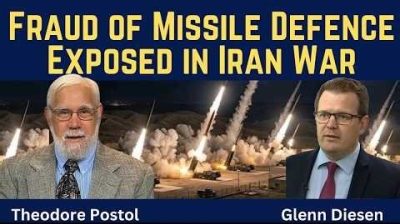
Ted Postol: Fraud of Missile Defence Exposed in Iran War
or go to
Aletho News Archives – Video-Images
Frlom the Archives
Containing the United States
By Edward S. Herman | Z Magazine | September 2016
“Containing the United States” is, of course, a ridiculous and self-contradictory idea in the U.S. and Western ideological and propaganda system. We all know that the United States had to “contain” the Soviet Union from 1945 to 1991, and since then has had the task of containing Russia and China. Only they threaten, bully, aggress and worry countries like Poland and Vietnam. Obama has had to reassure them both of our steadfast stand against Russian and Chinese military attacks. NATO has, of course, expanded greatly over the past several decades, despite the deaths of the Soviet Union and Warsaw Pact, but only to contain the renewed Russian — and Iranian, Libyan, Syrian and other — military threats; and we have “pivoted” to Asia, supported Japanese rearmament, bolstered our own forces in that area and jousted with the Chinese in their coastal waters solely to contain China. Earlier we had been obliged to contain North Vietnam, or was it the Soviet Union in Vietnam? Or China? Or “communism”? Or maybe all of them? Or none of them, but just needing an excuse to enlarge power?
The parallel propaganda has taken many forms. One is accepting as a premise that the United States only acts defensively and has no internal forces and interests that drive it to enlarge its sphere of control. I noted in an earlier article how Paul Krugman claims that internal Russian problems may well be the explanation of Russian “aggression,” but how at the same time it never occurs to him that the huge U.S. transnational corporate interests and “defense” establishment, and the pro-Israel lobby’s activities, might possibly make for an expansionist dynamic here.2 This reflects the standard establishment perspective that we are good and only react to evil. This was the view sustaining and justifying the invasion and occupation of Iraq from 2003. That attack was taken here as not evil but a response to evil, even if involving lies and mistakes, hence not describable as “aggression.” … continue
Blog Roll
 Aletho News
- When Tel Aviv decides, Washington fights
- Top official: Iran ready for a long war with US, no more diplomacy
- How Iran’s Toxic Rain Reveals US-Israel Discord
- Trump Admits He Is Destroying Iran For Israel
- Iran’s latest move in the GCC countries was a stroke of genius
- Blackmail and death threats, Zelensky embarrasses the EU, but there’s no condemnation
- Israel threatens to kill Iran’s new leadership
- Possible Scenarios for the Middle East
- The Horizon of the War. “Italy is being Dragged Into the War against Iran”
- A Second Vietnam War? Hanoi Waits and Prepares
- If Americans Knew
- Corporate Media Go All Out To Support The US-Israeli War On Iran
- US-Israel war on Iran is creating a steady growing number of amputees
- Israel planned this war on Iran for 40 years. Everything else is a smoke screen
- The wrong question about the war in Iran
- ‘Your Tax Dollars Being Used to Raise Your Gas Prices’: US-Israel Bomb Major Iranian Oil Depots
- ‘Bogus Evidence’: Former Nuclear Watchdog Head Debunks US Justification for Iran War
- EXPLAINER – Dimona: What to know about Israel’s nuclear site
- Fires and toxic air in Iran (thanks, Israel) – Not a ceasefire Day 150
- At Israel’s hands, Iran is burning, Lebanon and Gaza are crumbling – Not a ceasefire Day 149
- Israel is using the ‘Gaza doctrine’ in Lebanon and Iran
- No Tricks Zone
- Wake-up Call: Survey Shows Majority Of Germans Now Favor Postponing Climate Targets!
- Televised! Leading German Political Candidate Tells Schoolchildren CO2 Makes Sun Hotter!
- New Study: A Century Warming Of 1.1°C Is ‘Commonplace’ And ‘Not Unusual’ During This Interglacial
- New Study: ‘Internal Noise’ And Volcanic Forcing Can Trigger 10-15°C Warming Within Decades
- Glaciers Worldwide Are Suddendly Surging, Experts Blame Warming!
- Surprising Discovery: Sahara Is Greening…Billions Of Trees Where Once Thought To Be Barren
- New Research Reaffirms Clouds, Aerosols, And Surface Solar Radiation Are ‘Driving The Climate System’
- Germany: Electric Car Catches Fire At Charging Station, Sets Off Local “Inferno”, Widespread Damage
- New Study: Canada’s New Brunswick Was 1°C Warmer Than Today During The Medieval Warm Period
- Coal Power Back In Trend As Globe Tries To Keep Pace With Growing Demand For Power
 Aletho News