While Trump negotiates peace, EU warmongers meet in Paris to extend the conflict: Hungarian FM Szijjártó
By Thomas Brooke | Remix News | February 17, 2025
Hungarian Foreign Minister Péter Szijjártó has accused European leaders of actively working to prevent peace in Ukraine, claiming they are organizing in Paris on Monday to block potential diplomatic solutions to end the war with Russia.
Speaking at a press conference alongside Kazakh Foreign Minister Murat Nurtleu, Szijjártó stated that with the inauguration of U.S. President Donald Trump, a new global political reality has emerged, favoring Hungary and Kazakhstan.
“We are talking about two countries that have always maintained a pro-peace stance, pursued a patriotic, sovereign political strategy, and prioritized national interests above all else,” Szijjártó said.
He suggested that Hungary and Kazakhstan have been frequent targets of the “international liberal mainstream” for their dissenting positions — particularly Hungary which has often been treated like a social pariah in Brussels for its objections to the EU’s unconditional military and financial support for Kyiv — but now benefit from mutual respect in international relations, particularly after Trump’s decision to end financial support for interventionist policies.
Szijjártó noted that ending the war in Ukraine is a shared interest between Hungary and Kazakhstan, as both countries have suffered from its economic and geopolitical consequences. He further expressed optimism in Trump’s “peace party” approach, citing recent high-level communications between the U.S. and Russia as a positive step.
“We welcome the resumption of top-level Russian-American dialogue. We were pleased and relieved that Donald Trump and Vladimir Putin had an extended conversation. Furthermore, the discussions between U.S. Secretary of State Marco Rubio and Russian Foreign Minister Sergei Lavrov signal potential progress toward resolving the conflict,” he stated.
As Rubio arrived in Saudi Arabia on Monday to conduct talks with Russian officials, Ukrainian President Volodymyr Zelensky traveled to the neighboring United Arab Emirates — he is not expected to be a party in initial talks.
“One phone call does not solve a war as complex as this one, but I can tell you that Donald Trump is the only leader in the world that could potentially begin that process,” Rubio told CBS ahead of the visit.
Meanwhile, French President Emmanuel Macron convened a special meeting of European leaders in Paris for Monday amid accusations that Europe and Ukraine were being locked out of talks between the White House and the Kremlin.
“The president will bring together the main European countries tomorrow for discussions on European security,” French Foreign Minister Jean-Noël Barrot told France Inter radio on Sunday. “Only the Ukrainians can decide to stop fighting,” he added.
Szijjártó claimed, however, that while the U.S. and Russia are exploring diplomatic solutions, European leaders who oppose such efforts are gathering to maintain their current pro-war stance. “Those who have consistently fueled the fire of war are now meeting in Paris. These are the leaders who, for the past three years, have followed a failed strategy, constantly escalating the danger of war,” he declared.
He further alleged that these European leaders had spent years attacking Donald Trump and now aim to obstruct any potential peace agreement. “Today in Paris, the anti-Trump, war-focused, frustrated European leaders are coming together. They are the ones who want to prevent peace in Ukraine,” he said.
Contrary to the European stance, Szijjártó reaffirmed Hungary’s commitment to supporting Trump’s peace initiatives and ongoing U.S.-Russia negotiations. “Unlike those gathering in Paris, we stand by Donald Trump’s aspirations, we endorse U.S.-Russian talks, and we support peace in Ukraine.”
The Hidden Renewable Energy in Central Asia
By Brenda Shaffer and Svante Cornell | Real Clear Energy | January 22, 2025
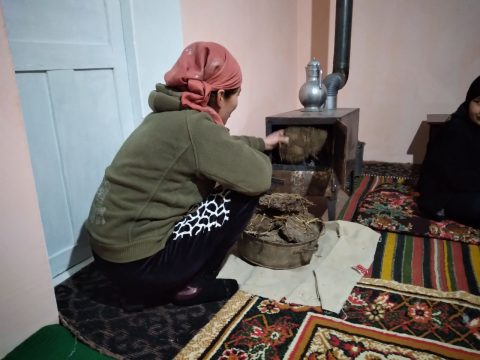
One of the biggest threats to human health, and a major source of air pollution, is regularly hidden in statistical reports as “renewable energy:” the burning of dung, wood, and lump coal. While most of the world receives its energy from fossil fuels, over two billion people on the globe do not have regular access to modern energy and rely on traditional burning of gathered materials. The great majority of the people without access to regular energy live in sub-Saharan Africa. However, in many states, the access to energy is highly differentiated between the main urban centers and the rural population. Central Asia is a region with such a split: it has a high level of human development and electricity access is universal in major cities, but up to a third of the population continues to rely on traditional energy, due either to a lack of reliable access to heat and electricity or due to the latter’s prohibitive cost. One of the top development priorities in Central Asia and globally should be enabling access to modern energy, specifically natural gas, which will in turn vastly improve human health and lower air pollution.
All humans need energy to perform basic functions. Without access to modern energy sources, people burn biomass and other materials they can gather for free or very cheaply. For the first time since World War II, global access to electricity declined in 2022, and likely remained flat in 2023. This left more people relying on traditional energy sources, which leads to increased health threats and rising air pollution.
The extent of people relying on traditional energy is often hidden in the formal statistics on energy use, or goes underreported. Some organizations, such as the International Energy Agency, have begun to categorize traditional burning as renewable energy. The IEA has been able to show an increase in renewable energy consumption by this reporting and an increase in “women in the energy workforce” by classifying women who gather dung and sticks as “energy workers.” In some places, there is general underreporting of traditional energy use, since most of it does not involve traded or taxed goods or formal employment.
Central Asia is a case where despite high or very high levels of human development in all but one of the states of the region, and widespread electricity access, rates of traditional energy use are still very high. In Kazakhstan, 30% of households reported burning coal or wood for heat. Residential burning of coal is one of the main sources of air pollution in Kazakhstan, especially in the winter. The situation in Kyrgyzstan is even worse, with half of the country’s households burning lump coal or dung for winter heat. Due to this indoor air pollution, mortality rates from lung diseases are the highest in the world in Kyrgyzstan. In Tajikistan, many households rely on burning coal, dung and wood for winter heating, albeit precise data on the percentage of households is lacking.
While funding is available from the World Bank and foreign aid donors for renewable energy, few funds are offered to help countries move from health threatening energy use to cleaner fuels, such as natural gas. This is because the World Bank and the G-7 countries in 2021 stopped all funding for fossil fuel energy. Other sources of renewable energy are not a realistic option to provide a serious portion of the energy needs of Central Asia, due to the extreme cold climate of most parts of the region. Kazakhstan is among the world’s coldest countries, with winters lasting for six months. In Kazakhstan and most of Central Asia, reliable and affordable access to heat is necessary for basic survival.
The wealthy countries in the West believe that by denying access to fossil fuels, they can force people to adopt renewable energy. However, the case of Central Asia shows that people will expose themselves to the dangers of traditional energy, without access to safer forms of energy, when renewable energy is expensive, unreliable or not able to meet their geographic needs, such as for heat in the winter.
An IEA report on traditional heating in Kazakhstan suggested that heat pumps could help the population access cleaner energy. This illustrates the disconnect of many of these First World energy institutions from the real life of people. Many people in Central Asia that have access to electricity continue to burn lump coal or wood in their homes, despite the health risks, because it is cheaper and more reliable than electricity. While people in wealthy countries like the United States and the UK have installed heat pumps at a very low rate, poor people in Central Asia can’t even dream of expenses of this nature.
Yet Central Asia has significant resources of natural gas, which Western well-wishers would rather leave in the ground. But increased utilization of natural gas is the only practical option that can help Central Asians lower their dependency on traditional energy. Natural gas supplies have the potential of being both reliable and affordable. Access to new gas supplies will contribute significantly to improving public health and reducing pollution in Central Asia.
The Central Asian example illustrates the unintended consequences of the West’s blanket ban on supporting fossil fuel development, and its lumping together of cleaner natural gas with more polluting fuels like coal and oil. It also serves as a reminder that “renewable” energy does not always mean healthy energy. For many, such as in Central Asia, lack of funding for gas will not drive people to a world powered by wind or solar, but will leave them dependent on burning coal and dung.
Brenda Shaffer is a faculty member of the U.S. Naval Postgraduate School.
Svante E. Cornell is a co-founder and Director of the Institute for Security and Development Policy. He is the Director of the Central Asia-Caucasus Institute & Silk Road Studies Program, the Joint Center operated by ISDP in cooperation with the American Foreign Policy Council (AFPC).
Iran expects boom in trade after gaining EAEU’s observer status
Press TV – December 29, 2024
Iran expects a major boom in trade ties with members of the Eurasian Economic Union (EAEU) after the country gained observer status in the bloc and just months before the two sides enter into a free trade agreement.
Iran’s trade minister Mohammad Atabak said on Sunday that observer membership in the EAEU will enable Tehran to increase its presence in the bloc’s meetings and exchange more trade and economic information with its members.
Atabak made the remarks after returning from an EAEU Supreme Council meeting in Saint Petersburg, Russia, where he signed the agreement for Iran to become an observer member in the bloc on December 26.
During the meeting, EAEU members also gave their final endorsement to a free trade agreement signed between Iran and the bloc last year. The agreement, which has been ratified by parliaments of both Iran and five EAEU members, will officially come into effect in the next two months after Iran’s Guardian Council, which vets legislation passed by parliament, approves the deal.
Atabak said that the free trade deal with the EAEU will eliminate tariffs on nearly 87 percent of Iranian exports to members of the bloc, namely Russia, Belarus, Kazakhstan, Kyrgyzstan, and Armenia.
He expected that trade between Iran and the EAEU would increase several times with the implementation of the free trade deal.
“The Eurasian region is a very good market for Iranian goods. Iranian technical and engineering companies can also expand their activities in these countries,” he said.
The minister said that Iran is planning to hold a major trade exhibition in Tehran in the coming months to showcase its economic and trade potential to EAEU countries.
Russia to launch new gas pipeline to China – deputy PM
RT | December 25, 2024
Russia has begun developing a new gas pipeline to China via Kazakhstan that will have a planned annual capacity of 45 billion cubic meters (bcm), Deputy Prime Minister Aleksandr Novak told the broadcaster Russia 24 on Wednesday.
China will receive 35 bcm of gas per year via the conduit, while the remainder will go to Kazakhstan.
The official highlighted the project’s strategic importance during discussions on bilateral energy cooperation.
“The process has been launched,” Novak said, adding that it includes technical and economic feasibility studies and negotiations to finalize the framework of the agreement.
As part of the deal, Kazakhstan, which will host part of the pipeline’s infrastructure, is set to receive up to 10 bcm of gas annually.
Kazakh Energy Minister Almasadam Satkaliyev confirmed the country’s interest in the project, emphasizing its benefits for the country’s energy supply. “Kazakhstan fully supports this project [that] will [supply] our northern regions,” he told journalists on Tuesday.
China is Russia’s biggest trade partner and the economic cooperation between the two nations has been steadily increasing despite unprecedented Western sanctions on Moscow. Bilateral turnover is expected to surpass $200 billion by the end of the year, Russian Ambassador to China Igor Morgulov said back in October.
Russian energy major Gazprom reported a new daily record for gas deliveries to China via the Power of Siberia pipeline earlier this month. Under a bilateral agreement, Russia will supply 38 bcm of gas annually to the Asian country via the pipeline starting in 2025.
Kremlin comments on Türkiye’s SCO bid
Türkiye’s obligations to the US-led military bloc are not consistent with the Eurasian organization’s values, Moscow has said.
RT | July 12, 2024
Türkiye’s bid to become a full member of the Shanghai Cooperation Organization (SCO) is not compatible with its membership in NATO, Kremlin spokesman Dmitry Peskov said on Friday.
Last week, Turkish President Recep Tayyip Erdogan attended a summit of the Eurasian mutual defense group, in which his nation has observer status. While returning home from Kazakhstan, he told journalists that Ankara wants to “further develop” ties with the SCO and its founding members Russia and China. During the NATO leaders’ summit in the US this week, he said Türkiye wants to join the SCO as a permanent member.
Asked by journalists when Turkish accession could be expected, Peskov said there was a problem with such a proposal.
“There are certain contradictions between Turkish commitments and [its] position on fundamental issues as a NATO member and the worldview formulated in the founding documents of the SCO,” he explained.
The expansion of the SCO is of interest to many nations and remains on its agenda, but there is no specific timeline for accepting new members, he added. Commenting later during a press call on bilateral relations with Türkiye, Peskov said Russia was “open for attempts to reach agreements based on a certain worldview.”
Moscow perceives NATO as a hostile, aggressive military organization, which serves US geopolitical interests and is currently conducting a proxy war against Russia in Ukraine.
Despite being a NATO member state, Türkiye has maintained a neutral stance on the Ukraine conflict, refusing to impose economic sanctions on Russia and serving as an intermediary between Moscow and Kiev on several occasions. Ankara helped to mediate a nascent peace deal in the early months of the hostilities, which Kiev eventually ditched in favor of continued fighting. The Russian government believes that the US and its allies, particularly the UK, forced Ukraine to reject the proposal.
The SCO was founded in 2001 and currently has ten full members: Russia, China, India, Iran, Kazakhstan, Kyrgyzstan, Pakistan, Tajikistan, Uzbekistan, and Belarus. Kazakhstan holds the rotating presidency this year and hosted the leaders of member states on July 3 and 4 in Astana.
One of the key pledges to which SCO members subscribe is not to seek the improvement of their own national security at the expense of the national security of other parties. NATO policy does exactly that, according to its critics, including Russia.
EU’s Russia sanctions ‘massively circumvented’ – study

RT | February 27, 2024
The EU’s sanctions on Russia are being “massively circumvented” via third countries, Euractiv reported on Monday, citing a study by the IESEG School of Management. The bloc has introduced 13 rounds of restrictive measures against Moscow over the Ukraine conflict.
The research found statistical evidence that the sanctions have been hugely dodged for so-called “high priority items,” which are subject to EU export restrictions and include manufacturing equipment and electrical components with potential military applications.
According to the report, EU exports of such items to Türkiye, the UAE, Kazakhstan, and other “Kremlin-friendly” countries skyrocketed by €2.9 billion ($3.2 billion), or over 80%, in the period from October 2022 through September 2023 compared to the previous twelve-month span. The data shows that at the same time EU exports of such goods to Russia decreased by $3.5 billion, or more than 95%.
The decline in EU sales of advanced technology and dual-use items to Moscow was seen as almost entirely compensated for by a sharp increase in exports of the same goods to countries in West and Central Asia, according to Euractiv.
“The surge of these purchases by third countries is too huge to be entirely caused by an increase in local demand, so that it can be suspected that a big part was thereafter exported to Russia,” the IESEG report claimed.
A senior associate at the German Institute for International and Security Affairs, Janis Kluge, told Euractiv that “Russia’s economy is resilient because it is, for the most part, still a market economy.”
The country adjusted to the sanctions through a “decentralized effort” by “thousands of [businesses] managers” to find their ways around the restrictions and “keep things working” – thus proving to be one of the key factors behind Russia’s relative “resilience” to Western sanctions, according to Kluge.
“There were new traders popping up who specialized in importing these goods through third countries. There’s a whole industry that has appeared, which is dedicated to the circumvention of sanctions – because it’s a billion-dollar business,” he stated.
The EU adopted its 13th package of sanctions against Russia last week ahead of the second anniversary of the start of the Ukraine conflict. The measures target 106 individuals and 88 entities and also further restrict trade in technologies and components that could be used by Russia’s defense industry. Components for the development and production of unmanned aerial vehicles have also been added to the blacklist. Some of the sanctioned entities are located in third countries, such as India, China, and Türkiye.
Kyrgyzstan Is The US’ Next Regime Change Target
BY ANDREW KORYBKO | AUGUST 13, 2023
Chairman of the Senate Foreign Relations Committee Bob Menendez conveyed his country’s intentions to overthrow the Kyrgyz government in the letter that he sent to President Sadyr Japarov last week. It’s even more damning than the newly leaked Pakistani cable from March 2022 regarding US pressure over Russia that implicated a leading diplomat in that country’s post-modern coup one month later. The present piece will point out the threats in Menendez’s letter and place them in the geostrategic context.
Right off the bat, he declared that “I write to you with deep concern regarding allegations of the Government of the Kyrgyz Republic’s assistance to the Russian Federation, or its proxies, in evading international sanctions, imposed with respect to Russia’s unlawful invasion of Ukraine.” This follows Kyrgyzstan’s foiled coup attempt in early June that was analyzed here and the Washington Post’s (WaPo) report last month on its role in facilitating Russia’s purchase of Western-sanctioned tech from China.
The way that events have thus far unfolded strongly suggests that the failed effort to overthrow the Kyrgyz government just two months ago was intended to punish it for allegedly violating the West’s anti-Russian sanctions regime. Afterwards, WaPo published their report to precondition the public to think that Kyrgyzstan is turning into a “rogue state”, which was meant to make the target audience more likely to accept Menendez’s threatening letter and the US-orchestrated destabilization campaign that’ll follow.
The Senator continued by writing that “I urge the Kyrgyz government to swiftly investigate these allegations and to establish more reliable processes to prevent the illicit flow of goods through your territory bound for Russia. I am also concerned that the Kyrgyz Republic’s failure to uphold international sanctions reflects the alarming erosion in democratic governance and extensive human rights violations occurring in the country.”
Kyrgyzstan doesn’t have to initiate any investigation on any country’s demand, but even if it was driven to do so by the desire to de-escalate rapidly worsening political tensions with the US, this would be futile unless it went along with the narrative that it allegedly violated the West’s anti-Russian sanctions. Anything less would be dismissed as a “sham” and exploited as the pretext to impose even more pressure upon it, which brings the analysis around to the next part of Menendez’s statement.
His unsolicited commentary on Kyrgyzstan’s domestic affairs takes WaPo’s preconditioning even further by making explicit what was previously only implied about that country becoming a “rogue state”. After once again lambasting it for allegedly violating the West’s unilateral restrictions, he then defends them on the grounds that they’re “a vital tool in holding Vladimir Putin to account and reducing threats to the sovereignty, independence, and territorial integrity of other nations, including those in Central Asia.
All of this built up to the threat that he then conveyed in his letter when writing that “In the face of potential threats from Russia, the United States remains steadfast in our support of upholding the sovereignty and independence of nations like the Kyrgyz Republic. However, assisting or permitting systemic sanctions evasion by Russia weakens their effectiveness, which could put at risk the security and economic interests of the Kyrgyz people.”
Menendez’s twisted logic is that the US imposed its anti-Russian sanctions on the partial pretext of supposedly defending Kyrgyzstan’s “sovereignty and independence” from Moscow without ever having asked Bishkek ahead of time and now it claims that the latter’s alleged violation of them will endanger it. Objectively speaking, “the security and economic interests of the Kyrgyz people” are “put at risk” by capitulating to American pressure dump their Russian ally, not strengthening ties with it.
The only realistic way in which Kyrgyzstan’s aforesaid interests “could be put at risk” by defying the US’ demands is if Washington ramps up its support for Color Revolution agents and rebels/militants/terrorists in parallel with imposing crushing secondary sanctions in response. These scenarios would have remained speculative and the Mainstream Media could have gaslit that they’re “conspiracy theories” had Menendez not threatened that these same interests might soon be harmed.
He then went for the kill shot:
“Furthermore, I fear that Kyrgyzstan’s failure to uphold international sanctions on Russia is simply a symptom of its continued democratic backsliding and widespread human rights violations. Your government has weakened institutions, repeatedly violated the rights of journalists and independent media, harassed human rights defenders, and placed restrictions on civil society actors.
A once shining beacon of democracy in Central Asia, the Kyrgyz Republic is headed down a dangerous path toward autocracy. I urge you to lift all restrictions on independent media and journalists, release imprisoned human rights defenders, and repeal measures restricting fundamental freedoms such as the freedom of association.”
This is a de facto declaration of Hybrid War.
What Menendez demands is nothing short of a soft coup brought about by voluntarily reversing Kyrgyzstan’s recent “Democratic Security” successes under the Damocles’ sword of “security and economic” consequences if it dares to refuse. The preceding concept refers to the wide range of counter-Hybrid Warfare tactics and strategies that President Japarov employed to safeguard his country’s national model of democracy from associated threats.
If Menendez has his way, however, then suspected Color Revolutionaries will be released from prison, Western “NGO” intel fronts will be allowed to meddle with impunity, and their allied propaganda outlets will once again incessantly spew anti-state disinformation for provoking riots. He then ended his letter on an ominous note by writing that “Your government’s commitment to these matters is critical for the security and prosperity of the Kyrgyz people. We look forward to receiving your prompt response.”
Neighboring Kazakhstan has already capitulated to American pressure to informally take its side over Russia’s in the New Cold War as proven by its partial compliance with the West’s sanctions regime. It also refuses to close its over $100 million biosecurity laboratory that’s funded by the US. Furthermore, the latest news that it’ll host Microsoft’s regional hub was met with harsh criticism from Moscow after Deputy Foreign Minister Mikhail Galuzin described these plans as serving the US’ intelligence interests.
By contrast, Kyrgyzstan refuses to follow in Kazakhstan’s footsteps and remains committed to maximizing the mutual benefits from its strategic partnership with Russia, which is all the more impressive when remembering that it’s smaller, less developed, and historically more unstable than its northern neighbor. Moscow appreciates this display of sovereignty and is actively implementing workarounds to retain trade with Bishkek in the event that Astana’s compliance with Western sanctions ends up impeding this.
The Governor of Astrakhan Region announced the creation last month of the “Southern Transport Corridor” across the Caspian Sea, which is more expensive and time-consuming than trading with the Central Asian Republics across Kazakhstan but makes up for these costs by being outside of US influence. As this analysis already explained, Kyrgyzstan is a stalwart Russian ally, just like the rest of the region remains apart from newly wayward and increasingly treacherous Kazakhstan.
For these reasons, Russia is expected to help those four countries withstand the “security and economic” punishments that the US might soon inflict on them for their brave defiance of its sanctions pressure, beginning with Kyrgyzstan. Its potential descent into Hybrid War havoc could have far-reaching consequences for all of Central Asia due to the very high risk of overspill, which is why it’s imperative for Russia to thwart the US’ impending destabilization plans lest a “second containment front” emerge.
Major oil producer fears ‘apocalyptic’ impact of Russia sanctions
RT | May 26, 2023
The stability of oil supplies from Kazakhstan to the global market relies on transit through Russia, the country’s ambassador to the US, Yerzhan Ashikbayev, has stated. He added that any disruption to flows caused by sanctions could trigger a dire scenario.
“We proceed from the mutual interest of all parties, the interest in the stability of the global market, in the stability of supplies. This is vital both for the functioning of our [Kazakh] economy and for the entire global economy,” the envoy told RIA Novosti on Thursday on the sidelines of the Trans-Caspian Forum in Washington.
When asked whether he sees any risk that sanctions could make it difficult or impossible for Kazakhstan to transit oil, the diplomat described it as “some kind of apocalyptic scenario.”
Kazakhstan supplies oil to the global market via one of the world’s largest pipelines, the Caspian Pipeline Consortium (CPC).
A multinational project, the CPC involves Russia, Kazakhstan and a consortium of leading oil companies. The pipeline system mainly collects crude from the large oil fields of western Kazakhstan, but also from Russia. Its total capacity is over 1 million barrels of oil per day, which is 2.3% of global seaborne crude trade.
The CPC delivers around 1.2 million barrels of crude oil daily from Kazakhstan to Europe, and for subsequent shipment to the US. The pipeline’s operations were interrupted last year by storm damage to equipment at a Black Sea terminal, with the disruption sparking concerns of a global supply crisis.
According to Ashikbayev, the CPC remains an important project for Kazakhstan, accounting for 80% of the country’s crude oil exports.
Kazakhstan has strengthened its oil and gas ties with Russia despite the threat of secondary sanctions from the US and EU.
Who is delusional?
By Gilbert Doctorow | May 18, 2023
Over the past several months, I have seen the word “delusional” applied to those, like myself, who bring nonconformist, non-mainstream news and views about Russia and the Ukraine war to the reading public. Language is constantly evolving, and the shop-worn label “Putin stooge” has now been replaced by this more generalized but similarly derogatory ad hominem labeling.
Allow me then to ask whether it is not the accusers who are truly “delusional” by insisting on a Washington narrative that is daily being ground into the dirt, as are Germany’s Leopard tanks and America’s Patriot air defense systems in Ukraine by technically superior Russian military hardware.
This military come-uppance is a story in itself. I involuntarily think back over a chance meeting I had four years ago with Russian-Americans during a tourist visit I made to a small and picturesque town in the Schwaebisch region of southern Germany with its typical half-timbered houses on the main square. We struck up a conversation while shopping in a souvenir store and this dentist was glowing with pride for his new Fatherland. Somehow the discussion turned to the newly announced strategic weapons systems that the Kremlin claimed had passed testing and were on their way to serial production. The dentist was beside himself with chuckles, insisting that this was all pure fabrication, pure propaganda and that Russia was incapable of designing and manufacturing any weapon system that could pose a threat to the good old USA.
But that ridicule for things Russian is a subject for another day. I will speak here first about the delusional framing and implementation of U.S. foreign policy today that is costing the United States more dearly in prestige and influence globally than anything that Donald Trump and his ‘diamond in the rough’ Secretary of State Pompeo accomplished during his presidency. And I will direct attention to one face in the vast group portrait of world leaders, Kassym-Jomart Tokayev.
Tokayev is the president of Kazakhstan and in recent months was being courted by the U.S. State Department in the hope and expectation that Kazakhstan could be induced to split with Russia and join the American team of countries sanctioning Moscow over its ‘war of aggression’ in Ukraine. Indeed, Secretary of State Blinken paid him a visit to woo or threaten him to follow the U.S. lead and this was reported enthusiastically by American mainstream media.
This U.S. policy can only be described as “delusional” insofar as it takes no cognizance of who is Tokayev and what are the realities of the geopolitical environment of Kazakhstan. The policy is based on willful ignorance of the counselors who formulated it, and that in turn is based on the assumption of America’s superior strength and ability to get its way by hook or by crook wherever in the world and whenever it so wishes.
Russian diplomacy is more discerning.
On 9 May, Tokayev was on the Red Square reviewing stand along with all the other presidents of the Central Asian republics. Together with them and with President Vladimir Putin, he then walked to the Alexander Gardens to place a red carnation before the eternal flame monument to the Unknown Soldier. That may have been picked up accidentally by one or another Western television broadcaster. What was not shown in the West was the side trip arranged for Tokayev to the town of Rzhevsk where he could pay tribute to the memory of his uncle, for whom he is named, Kassym Tokayev, who died in the Battle of Rzhev as a Red Army soldier and is buried there. That visit was broadcast on Russian and on Kazakh state television. Tokayev had no choice but to go, and his people had no choice but to see the historical connection with Moscow in the fight against Nazi Germany.
Last night there was another video of Tokayev on Russian television. He was shown descending from his plane in Beijing, where he is joined by all the other heads of state of Central Asia in a group meeting with the Chinese leadership. We were shown his tête-à-tête meeting with a senior official of the Chinese Ministry of Foreign Affairs, conducted in Mandarin, without translators. As anyone can easily learn from his Wikipedia entry, from 1970 Tokayev studied Chinese in his undergraduate years at the prestigious Moscow State Institute of International Relations (MGIMO) and in his final year there underwent training courses at the Soviet embassy in China for six months. He then served in the Russian Ministry of Foreign Affairs and in 1983 continued his language training at the Beijing Language Institute. He was later posted to the Soviet embassy in Beijing and was promoted to successively higher responsibilities there.
My point is that Tokayev knows the map of his region very well. He and his country find themselves between a rock and a hard place. They do not have much wiggle room. Somehow these facts of life elude America’s delusional policy makers.
I could go on about how the ignorance and complacency of high officials in the Biden administration result in self-defeating policies elsewhere. One example of what I mean occurred just a couple of days ago when similarly delusional behavior was shown by America’s messenger boy within the European Commission. Josep Borrell succeeded in alienating his hosts in India and humiliating himself by insisting that India curtail its purchases of Russian oil lest the EU ban imports of refined petroleum products, mainly diesel fuel, from India. The consequence of his ignorant warning that contradicted EU law on the subject was Borrell’s exclusion from the trade talks that the EU delegation was in Delhi to conduct.
©Gilbert Doctorow, 2023
Iran given roadmap for joining Russia and China in major bloc
Samizdat | September 15, 2022
Iran has signed a memorandum paving the way to transition from its current observer status to full membership of the Shanghai Cooperation Organization (SCO).
The Middle-Eastern nation, which the US has long sought to undermine with diplomatic isolation and economic sanctions, made a formal step on Thursday to become the ninth member of the organization. Among the SCO’s heavyweights are Russia and China, two major powers that are on Washington’s list of geopolitical opponents.
The SCO was created in 2001 as an intragovernmental forum aimed at fostering trust and developing economic and humanitarian ties in Asia.
It currently has eight permanent members: China, India, Kazakhstan, Kyrgyzstan, Russia, Pakistan, Tajikistan, and Uzbekistan. The last is currently hosting the annual summit of the leaders of the member states in the city of Samarkand.
Iran has been an SCO observer since 2005. Its delegation to the summit is headed by President Ebrahim Raisi, who met with senior Uzbek officials on Wednesday.
The memorandum, which spells the commitments that Tehran will undertake to become an SCO member, was signed by Iranian Foreign Minister Hossein Amir-Abdollahian and SCO Secretary-General Zhang Ming, the host country’s foreign ministry reported.
Yury Ushakov, a foreign affairs advisor to Russian President Vladimir Putin, said earlier this week that Iran could qualify for being upgraded to full membership before next year’s SCO summit in India.
Uzbek President Shavkat Mirziyoyev touted this year’s event as a turning point for the organization. He cited the rapidly growing interest of nations in closer involvement with the SCO and said that it served as an example of how a “deep crisis of trust at the global level” can be overcome by parties willing to do so. He also stressed the scale of the group, which accounts for roughly half of the world’s population and a quarter of global GDP.
Belarus, also an SCO observer, is set to start the formal process for full membership this year. Egypt and Qatar formally joined the organization as dialogue partners on Wednesday. Saudi Arabia is scheduled to do the same, while Bahrain, Kuwait, the UAE, Myanmar, and the Maldives are expected to begin their respective paths to receiving the same status.
Iran and SCO sign protocol to start accession process for Tehran
Press TV – March 12, 2022
Iran and the Shanghai Cooperation Organization (SCO) have started a formal process for Tehran’s accession to the major economic bloc.
A Saturday report by Iran’s IRIB News said that a document had been signed a day earlier in the Uzbek capital of Tashkent between representatives of the eight-member SCO and Iran to allow the organization to consider Iran’s accession bid.
Uzbekistan’s Foreign Ministry said in a statement that the signing of the protocol would practically allow the implementation of decision by SCO heads of state in Tajikistan last year to provide membership to Iran.
The next step in the process will be for Iran to sign a memorandum of commitment at an SCO summit in Uzbekistan’s Samarkand in September 2022, said the statement, adding that SCO heads of states will then decide to include Iran in the bloc.
Iran was an observer member of the SCO before applying to join the bloc that includes Russia, China, India, Kazakhstan, Kyrgyzstan, Pakistan, Tajikistan and Uzbekistan.
Experts says Iran’s accession to the SCO will be a major boost to the bloc’s influence in the region mainly because Iran’s massive transportation network can facilitate regional and international trade.
Iran is also expected to benefit economically from membership in the bloc. The Iranian customs office (IRICA) said on Saturday that Iranian exports to SCO members had increased by 41% year on year in the 11 months to late February to reach nearly $18.3 billion.
IRICA figures showed that Iran had imported $14.4 billion worth of goods from the SCO countries between March 2021 and February 2022, an increase of 31% against the previous similar period.
Featured Video
From Anthrax to Iraq
or go to
Aletho News Archives – Video-Images
Book Review
New paperback: Butchered by “Healthcare”
Lies are Unbekoming | October 20, 2026
 Butchered by “Healthcare” is Robert Yoho’s plain-spoken account of how American medicine stopped being a profession and became an industry. 341 pages. Over a thousand references. Thirty-eight chapters.
“Screening Tests Are Useless”, on tests that find diseases that would never have hurt you. “The FDA Protects the Big Drug Companies”, on an agency funded by the companies it regulates. “The Journals’ Sins Are the Editors’ Sins”, on ghostwritten studies and captured peer review. “Opioids and ‘Pain Management’”, on how a generation was prescribed its way into addiction. “Prozac and Relatives” and “Antipsychotics Are Disastrous”, on what psychiatry does to adults and children. “Surgery: Money Before Patients”. “Failed Cancer Treatments”. “Futile CPR and Overprescribing”. “Billing Scams & Specialty Warfare”. “Hospitals Are Sharks”. Each with a Patient Tips section at the end on how to survive it.
If you have ever walked out of a doctor’s office with a prescription you didn’t ask for, or watched a parent put through a treatment that made them worse, this is the book you want on your shelf before the next appointment. … Full review
Butchered by “Healthcare” is available on Lulu now.
Blog Roll
 Aletho News
- Undersea Internet cables could be targeted in retaliation for attacks on Iran: IRGC deputy chief
- EU sending ‘biased’ observers to interfere in Serbian election – president
- White House envoy declares kinetic action against Yemen ‘fruitless’
- Ukraine deployed thousands of microdrones in Iraqi Kurdistan: Tasnim
- Iran calls for emergency UNSC meeting over Trump’s ‘brazen’ bomb talk, Israeli threats
- Iranian sources reveal details of Russia-China Hormuz proposal
- Plan for more US-Israel integration puts our military tech at risk
- Another Round Against Iran Will Break What Is Left of the Gulf
- SVR Report on Ukraine’s Mexican Drug Gang Links Could Pressure Zelensky, Won’t Change US Policy
- British Government Employees Were Fact-Checking the News at the BBC. Nobody Told You.
- If Americans Knew
- Christiane Amanpour exits CNN with a legacy shaped by the debate over Israel
- Israel’s war on Iran is the final move in a decades-old strategy
- Israel Denies Entry to French Journalist, U.S. Researcher Amid Rise in Entry Denials
- Gaza’s hospitals are running out of life-saving fuel – Daily Update
- Mysterious bot accounts reportedly spread fake ‘man on the street’ videos for Michigan Senate candidate
- Israeli Defense Minister Katz Says Over 60 Lebanon Villages Have Been Destroyed
- Why Is Israel Running TV Ads in Iowa Ahead of the Midterms?
- Hind Rajab’s Alleged Killer Is in the United States. HRF Demands His Arrest.
- US Officials Face Fresh Pressure After Another American ‘Brutalized’ by Israeli Settlers in West Bank
- Israel-Backed Palestinian Militias Terrorize Displaced Families in Gaza
- No Tricks Zone
- E-Cars Reduce CO2 Emissions By Only 41% Compared To Internal Combustion Engine Vehicles
- Predictions Made By Renowned Climate Professor Over Past Decades Have Been Proven To Be Poor
- New Study Suggests Large Regions Of The Pacific Ocean Have Been Cooling For The Last 80 Years
- Germany’s Green Energy Debacle: High Energy Costs Force Kahla Porzellan to Close After 182 Years!
- New Study: 50 Years Of The Most Aggressive ‘Net Zero’ Policies Can Only Affect The Global Climate By 0.03°C
- US September “Heat” Was No Record…Many Records Set Decades Ago
- Latest European Green Energy Debacle; Portugal’s Largest Flagship Solar Park Insolvent!
- Green Energy Debacle: German Expert Professor Fritz Vahrenholt Warns Of Severe Economic And Social Consequences
- Two More Paleo Reconstructions Affirm Meters-Higher Sea Levels Across Ireland, Brazil 7000-6000 Years Ago
- New Study: Earth And Venus Surface Warmth Largely Explained By Convection And Lapse Rate, Not CO2 Or Radiation

