Mass Rally For Evo Morales in Opposition Stronghold
teleSUR – August 2, 2019
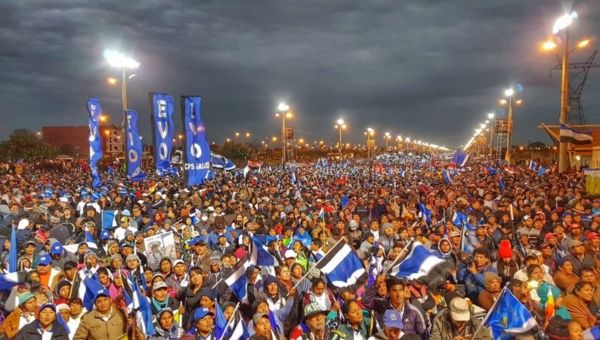
Bolivia’s leftist president, Evo Morales, was greeted by a huge rally in the eastern city of Santa Cruz. Hundreds of thousands of people attended despite the city normally being known as a stronghold of the right wing opposition. The rally was in support of Evo Morales’s Movement Towards Socialism (MAS) party, and to celebrate the anniversary of the country’s land reform.
President Morales addressed the crowd on Friday, saying, “We are rallied here so that Bolivia is never again in a state of dependency. So that the Bolivian people will never have to beg again. We are here sisters and brothers, so that neoliberalism nor U.S. military bases ever return.”
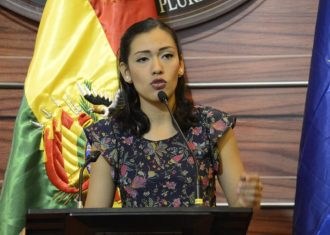 The MAS also presented their list of parliamentary candidates for the Santa Cruz region. Leading the list is Adriana Salvatierra, the 29-year-old President of the Senate, tipped by many as a possible successor to Morales.
The rally itself was organized by the local labor union federation, whose general secretary Rolando Borda, stood alongside Morales on stage. The day before Borda had laid out what he believes the mobilization represents.
“It is a ratification of our consciousness, and so that the economy of the country continues to grow and that the victory of October 20th is overwhelming,” he said.
Though the focus of the rally was the upcoming elections, the country was also celebrating the “Day of the Agrarian Revolution” falling on the anniversary of the Morales’ land reform, which redistributed millions of hectares to landless campesinos.
The main beneficiaries were the CSUTCB, the largest Indigenous campesino union. Their members were also in attendance at Friday’s rally, mostly Coca growers from the nearby Chapare region.
A buoyant economy has Morales well ahead of his rivals in opinion polls, however, none have indicated that a first round victory is certain. For that, Morales would need either 50 percent of the vote, or 40 percent if the second place candidate is behind by 10 points or more. Most polls have Morales just short of 40 percent, but leading his rivals by a comfortable margin of over 10.
“US Causes Instability Anywhere It Sets Foot”
Al-Manar | July 20, 2019
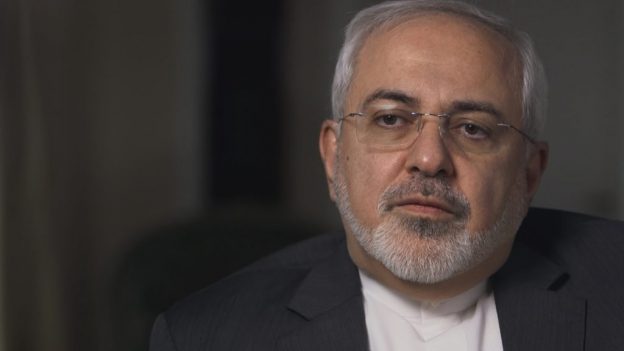
Iranian Foreign Minister Mohammad Javad Zarif said Saturday that the United States causes instability and insecurity everywhere in the world it sets foot, including the Persian Gulf and South America.
Iranian Foreign Minister Mohammad Javad Zarif arrived in the Venezuelan capital early Saturday after a six-day stay in New York.
Speaking to reporters upon arriving in Caracas, Zarif said that “anywhere the United States sets foot in, it causes instability there.”
“At the moment, the US is causing insecurity with its presence in the Persian Gulf, the Middle East, and also the South American region,” said Zarif.
He went on to add that, “I don’t know any place in the world where the US’s presence has brought stability.”
“Anywhere the US has set foot on, it led to pressure on the people and caused extremism and terrorism,” stressed the Iranian top diplomat.
While in Caracas, Zarif is slated to take part in the Ministerial Meeting of the Non-Aligned Movement (NAM) Coordinating Bureau (CoB) on 20-21 July under the theme: “Promotion and Consolidation of Peace through Respect for International Law.” He will also meet with a host of Venezuelan officials before making a visit to Nicaragua and Bolivia.
Bolivia’s Campesino Union Slams Opposition Protests as ‘Total Failure’
teleSUR | July 9, 2019
The head of Bolivia’s Indigenous Campesino union, the country’s largest social movement, has said opposition protests held Tuesday in the city of Santa Cruz have been a “total failure” after opposition parties mobilized in the eastern city against leftist President Evo Morales, attempting to block the region’s main roads, calling for the resignation of the country’s electoral council.
Teodoro Mamani of Bolivia’s Campesino union and Hugo Torres of the main Labor union federation have dismissed protests, supported by all the main opposition candidates standing at the upcoming elections. Speaking to state media, the two social movement leaders characterized the events as a “total failure”.
This comes after the largest pro-opposition media outlet in the city, El Deber, reporting that all public sector workers and services are operating normally without any staff absences.
The only difficulties reported have been of workers at the ministry of justice arriving by foot, and one person even arriving by horse, due to partial roadblocks near the building. However, workers at regional tax and migration offices were able to arrive normally, despite opposition attempts to block public transport.
State media reported that by midday Bolivian time, only one major road had been entirely blocked by protesters, the newly built freeway in Yapacani that connects Santa Cruz to the city of Cochabamba.
In La Paz, lawmakers from Morales’ ruling ‘Movement Towards Socialism’ (MAS) denounced the protests, David Ramos, former labor union leader, now legislator said: “It is not a mobilization for popular or social demands, it is a political mobilization whose aim is to destabilize, conspire and boycott the democratic system in our country”
Another MAS lawmaker, Edwin Muñoz, reported early in the morning on the roadblocks he saw, saying, “Right now, because of the route we took, we have seen luxury cars blocking some avenues and roundabouts, where four or five young people are there causing an inconvenience”
Protesters oppose the decision by the country’s electoral authorities to allow current Evo Morales to stand for a third term in elections being held in October 2019 despite term limits regulations in the country.
Morales hopes to continue the government’s current approach, that through state investment, nationalization of natural resources and strategic industries, has turned Bolivia into the fastest growing economy in the region.
RELATED:
Bolivia: Main Opposition Candidate Accused of Taking US Funds
Norway, Bachelet, and the Twilight of Guaido’s Insurrection
By Ociel Lopez | Venezuelanalysis | July 10, 2010
Guaido’s uprising is going through its terminal phrase. He does not yet appear to have reached his end as leader, as he still produces and consolidates an important consensus among the opposition. What has decisively failed is his attempt to form a government without elections with the backing of the hawks in Washington. In almost six months since his self-swearing in as “interim president,” it has become palpable that his governing is truly impossible. The coup de grace was delivered by Michelle Bachelet when she visited the National Assembly, of which he is president and a deputy. The UN high commissioner for human rights did not recognize him as president of the republic, but she did propose a roadmap for pressuring the Maduro government, which Guaido accepted even though it represents a deviation from Washington’s strategy.
The Trump administration invested a large part of its political and diplomatic capital in overthrowing Maduro, especially in the first six months of 2019. And it didn’t achieve it. Pence, Pompeo, Bolton, and Abrams squandered a valuable amount of time with disastrous results. Since talks began in Norway, the hawks have opted to wash their hands of the matter and leave Guaido to his own fate.
The fracture in the opposition deepens with every defeat. The faction of the opposition favored by the US government is stronger online than it is in the streets, where it grows weaker every day. Voluntad Popular (VP), Leopoldo Lopez and Juan Guaido’s minoritarian radical party with only 14 seats in the 165-seat legislature, was chosen by the hawks to lead a new offensive that has not only been defeated on its own terms, but VP has been accused of “appeasement” by its own radical sectors after promoting dialogue with the Maduro government under the auspices of Norway. As the Venezuelan popular saying goes, “they were left without the goat and without the leash.” That is, the much-anticipated invasion never came and the actors that could maneuver in the national political sphere, namely the large opposition parties, were displaced by those who imposed a media-driven politics that looks to foreign powers for solutions. And now what?
The anti-government march on July 5 demonstrated that the opposition now does not even mobilize the bases of its own parties. Looking at the social media feeds of the most radical and mobilized opposition currents, it’s clear that they blame Guaido for failing in his attempt to govern and for his inefficient endeavor to secure foreign military intervention. Also weighing heavy are the allegations of corruption on the part of his team in the provision of humanitarian aid, exposed by opposition media outlets.
From January of this year, when Guaido swore himself in, it was foreseeable that street mobilizations would not be enough to oust Maduro, not even those of January 23, whose widespread support was even evident in hardcore protests in some Caracas barrios. What was anticipated was some kind of direct action by the US armed forces, or those of a neighboring country, so that the escalation of the conflict in the media actually reached the national territory. The climax, which took place on February 23 around the attempted forced entry of humanitarian aid, quickly petered out. The same thing happened on April 30 with the coup attempt. They were very weak movements that drew Maduro and the armed forces closer together – the opposite of what was sought.
But the decline of Guaido does not mean a definitive victory for Chavismo. It can even debilitate it as we will see.
Bachelet’s report
The three-day visit to Venezuela by UN High Commissioner for Human Rights and former Chilean President Michelle Bachelet on June 19-21 and subsequent release of her report on July 5 can be read as a change of scene in the Venezuelan conflict.
During her stay, Bachelet met with President Maduro in the presidential palace and with Juan Guaido in the National Assembly. This may surprise us if we remember that since January over fifty foreign governments have recognized Guaido as “interim president,” although he has not been able to exercise any functions beyond naming “ambassadors.” Bachelet put an end to the farce and showed things as they really are, something which the international community has not dared to do: she removed the virtual throne from under Guaido and recognized Maduro as the only president.
Bachelet’s report effectively displaces the conflict to the political arena because it is accepted enthusiastically by the opposition, even though the document doesn’t repeat its mantra of the “end of the usurpation,” and is welcomed by Maduro, who made two important gestures: the release of 22 “political prisoners” and the rumored proposal for Bolivarian deputies to return to their seats in the National Assembly, which they had abandoned since the emergence of the National Constituent Assembly in August 2017. In this way, Maduro opens up the possibility of negotiation, in which the Norway experience can play a pivotal role.
The report presents interesting options for both parties in the conflict. For Maduro, it legitimates his refusal to recognize Guaido’s “interim presidency” and it sidelines Washington in the dispute for hegemony over the Venezuela question. For the opposition, which suffered another defeat and internal division following Bachelet’s recognition of Maduro, the report allows it to double down on its call for foreign military intervention. The radicals on either side have simultaneously launched a broadside of criticisms at the ex-president, but significant sectors in both camps have recognized the legitimacy of the report, which sets the table for Norway-mediated talks.
Chavismo in its trench
The elements of cohesion in Chavismo are more external than internal. Chavismo closes ranks when confronting an enemy force of the proportions of the governments of the US or Colombia, or when the opposition resorts to violence. Once the “Guaido effect” is exposed as an impotent act, the Maduro government is left standing without tangible opponents and begins to face a crisis situation in which it is itself completely helpless. That is when the seams in the institutional armor covering the government become visible, due to its inability to control an economy that is already liberalized.
What has also become apparent recently is the government’s lack of control over state security forces. Obviously, Chavismo resents having to confront situations like the death by alleged torture of Captain Acosta Arevalo on June 29, as well as the arrest of grassroots Bolivarian militant Jose Ramon Rodriguez on July 5. In the first case arrests have been made, and in the second, Ramon Rodriguez has been freed. However, the accusations of grave misconduct on the part of the security forces, detailed in the Bachelet Report, are a concern shared by some currents of Chavismo.
Other sectors, including the United Socialist Party of Venezuela, reject the Bachelet report. Even now Maduro has demonstrated – and Bachelet has recognized it – that he is making moves to set the stage for negotiations: is there movement towards a power-sharing agreement or rather tactical maneuvers to remain in power?
Regardless, it is undeniable that negotiations driven by Norway open the way for a scenario that can overcome the stalemate in the internal political game. A shift in political and diplomatic relations is needed in order to extricate Venezuela from its current economic quagmire, which is impacting the region.
Ociel Alí López is a Venezuelan researcher who has published numerous written and multimedia works. He is dedicated to analyzing Venezuelan society for several European and Latin American media outlets. He is a co-founder of alternative Venezuelan state television station Avila TV in 2006. He is the recipient of the CLACSO/ASDI researcher prize and the Britto Garcia literature award.
Why the US Puppet President of Venezuela is Toast

Photograph Source: The White House – Public Domain
By Roger Harris | CounterPunch | July 5, 2019
Even the corporate media are losing enthusiasm for the US government’s ploy to replace the democratically elected President Nicolás Maduro of Venezuela with the US-anointed security asset Juan Guaidó. Reuters reports in a July 1 article, “Disappointed Venezuelans lose patience with Guaidó as Maduro hangs on,” that the US-backed “military uprising” has “unraveled.” A critical reading of the article explains why.
Reuters correctly notes that “the 35-year old (Guaidó) had risen to prominence three months before,” though a little more background information would have been helpful. For instance, Guaidó was unknown to 81% of Venezuelans a little more than a week before he got a telephone call from US Vice President Pence telling him to declare himself interim president of Venezuela, which Guaidó dutifully did the following morning at a street rally flanked with US and Israeli flags. A member of a marginal far-right Venezuelan political party, Guaidó was not even in the top leadership of his own grouplet.
For background, Reuters tells the reader that President Maduro “took office in 2013 following the death of his political mentor, Hugo Chávez,” but fails to mention that Maduro took office via a democratic national election. Guaidó has never stood in a national election. He was elected to the National Assembly but became head of that body through a mechanism where the political parties in the legislature rotate which party’s representative occupies the office.
Reuters continues that after Maduro took office, he “has overseen an economic collapse that has left swaths of the once-wealthy country without reliable access to power, water, food, and medicines.” Not mentioned by Reuters is the economic war being waged against Venezuela by the US and its allies that has employed unilateral coercive measures – sanctions – responsible for taking the lives of some 40,000 people.
This illegal collective punishment of the Venezuelan people by the US government has diverted legitimate funds of the Venezuelan government. Reuters obliquely mentions “Guaidó has gained control of some of the Venezuelan assets in the United States.” In fact, the US government seized those assets, which would have gone to preventing the “economic collapse” that Reuters supposedly laments.
Reuters reports: “The opposition’s momentum has slowed since the April 30 uprising. Attendance at Guaidó’s public rallies has dropped and the opposition has held no major protests since then.” Reuters hints why Guaidó’s fortunes are eclipsing: “the opposition says it is…seeking to build a grassroots organization.” That is, the US surrogate does not have a meaningful grassroots presence.
This is further confirmed by Reuters’ admission that Guaidó’s organization is now “focused on expanding a network of Help and Freedom Committees…to organize at the local level – something the ruling Socialist Party has done successfully.” Reuters continues, “so far the committees have gotten little traction.” That is, Guaidó lacks significant organized popular support outside of Washington and its allies.
Guaidó visited Washington shortly before his self-appointment and subsequently toured a number of Latin American countries but has “only traveled to 11 of Venezuela’s 23 states,” according to Reuters. Guaidó’s handlers have directed him to “travel to at least five more this month to motivate his supporters.”
Recent polls cited by Reuters show support for Guaidó is falling. Reuters quotes a paid political consultant for Guaidó: “We can expect Guaidó’s popularity to continue to erode the longer he is not exercising power.”
President Maduro, according to Reuters, had waged a “crackdown on the opposition.” That is, the Venezuelan government has defended itself against US-backed assets who have actively engaged in attempts to violently overthrow the democratically elected government and assassinate key government and social movement leaders.
In the alternative universe of corporate media, which ignores the economic war being waged against Venezuela, Reuters bemoans that the “crackdown” on Guaidó’s agents has failed to receive “significant retaliation from the international community.” In reality, Venezuela has massively suffered from the US-orchestrated punishments for resisting reverting to the status of a client state.
While not consulting anyone associated with the elected government of Venezuela, Reuters gives full voice to an anonymous “US administration” official as is the practice of the corporate media. The US official states: “The United States continues to execute the president’s strategy of maximum pressure to achieve a peaceful transition to democracy in Venezuela.” Not mentioned is that the “military option” is a prominent part of the “peaceful transition”; deposing a democratically elected president is part of the “transition to democracy”; and “maximum pressure” is preventing vital foods and medicines from reaching Venezuela.
The anonymous US government official further claims, “Only Maduro wishes for the US to give up now.” Reuters does not question how incredibly circumscribed is the universe occupied by that official, which renders invisible the two-decade-old Bolivarian grassroots movement in Venezuela in support of their elected government and its international allies. The Venezuelans most adversely hurt by the US sanctions are those most militantly in support of their government.
Nor does Reuters question why in the US, with the conceit of a supposedly free press, the government is allowed to hide behind a cloak of anonymity. Reuters cites the names of a Venezuelan taxi driver, doctor, former police student, and teacher to give a patina of authenticity to the article but can’t name an official US government functionary who is quoted authoritatively.
Reuters reports Guaidó’s supporters “have demanded that Guaidó shift strategy and request a US-led military intervention.” So much for democracy! “We can’t get rid of Maduro with votes. It will have to be a violent exit.” Meanwhile, the polling firm Datanalisis, according to Reuters, tells us that less than 10% of Venezuelans support such an action.
In short, a critical reading between the lines of the Reuters article confirms that Washington has failed to cobble together a united opposition in Venezuela that is popular enough to win in the polls, so the alternative is violent regime-change supposedly in the name of “democracy.” The lesson that the Venezuelans themselves are the best agents of history to address their own destiny has yet to be learned by the world’s hegemon and its media apologists.
Revered Social Leader and Activist Killed in Colombia

teleSUR | July 5, 2019
Social leader Tatiana Paola Posso Espitia, 35, was shot twice in the head Wednesday morning in front of her house in El Copey located in the Department of Cesar when two men on motorcycles fired at the activist and fled the scene.
The assassination occurred just as Espitia’s taxi driver, Wilson Ortega Palomino, arrived at her home to take the social leader to work, according to local media reports. The bad timing resulted in Ortega also being shot four times by the hitmen. He is in critical condition at a nearby hospital.
The National Network for Democracy and Peace in Colombia published a communique on its Twitter account firmly condemning the murder.
“Posso Espitia was a social activist committed to humanitarian aid, helping vulnerable people and victims of the armed conflict that continue to affect Colombia,” said the report.
The organization added that the social activist, who was a candidate for the community council, was a beloved member of her community.
The document also explained how the city El Copey has had a long history marked by threats against social leaders, deaths and massive displacement of the population.
The tragic event comes as the Institute of Studies for Development and Peace (Indepaz) showed that since the signing of the peace agreement between the disarmed Revolutionary Armed Forces of Colombia (FARC) and the government of former president, Juan Manuel Santos in November 2016, 727 social leaders or human rights advocates have been killed in Colombia.
The assassinations have so far mainly targeted Afro-Colombian and Indigenous rights activists, in addition to rural farmers advocating for land and political rights in their respective regions.
Colombia’s Ombudsman announced Wednesday that at least 983 social leaders have been threatened with death in Colombia, 50 percent of them are women.
Last week, the ‘We Defend Peace in Colombia’ human rights organization called for major peaceful protests in the country and abroad meant to pressure the President Ivan Duque administration into fully addressing the rampant murders.
The global march is set to take place July 26 and is meant to “pay tribute to the (assassinated) social leaders and to demand action to end these crimes,” said organizers.
Bolton hails sanctions for ‘severing ties’ between Cuba & Venezuela
RT | July 4, 2019
US President Donald Trump’s national security hawk John Bolton has vowed to “sever ties” between Havana and Caracas with sanctions on oil and other exports after an Italian oil shipping firm folded under pressure.
The US State Department has lifted sanctions from the Italy-based PB Tankers oil shipping company, commending it for taking steps to “ensure that its vessels no longer were complicit in supporting the former Maduro regime.”
The company was sanctioned in April along with three others, accused by the US of aiding Maduro government by transporting oil from Venezuela, including to Cuba. The inclusion on the list came like a bolt out of the blue to PB Tankers, which said it was “shocked and concerned” by the development, while pledging to comply with the demands.
While the Italian firm caved in to the US’ browbeating, Washington slapped sanctions on Cubametales, a Cuban state-run company. In a statement on Wednesday, the State Department called it a “prime facilitator of oil imports from Venezuela” for its attempt to breach the US economic blockade.
Bolton apparently took pride in having bullied businesses into denying services to Venezuela, tweeting that the US “will continue to take actions” to end what he called an “oil for repression” scheme.
“We will continue to sever the ties between Cuba and Venezuela that contribute to repression,” he wrote.
Cuba has denounced the new sanctions as an illegal meddling attempt.
“The US has no right to impose unilateral measures on entities of Cuba or any other country trading with Venezuela,” Cuban Minister of Foreign Affairs Bruno Eduardo Rodríguez tweeted.
The Trump administration has been hell-bent on stamping out the close cooperation between Venezuela and Cuba, which along with Russia, China, Turkey and several other Latin American nations, took Maduro’s side in the ongoing political turmoil.
Washington has accused Havana of playing a “destabilizing” role in Latin America, and in Venezuela, in particular, hitting it with rounds of sanctions for refusing to abandon its major ally.
Bolton went as far as claiming the Venezuelan military would defect from Maduro to self-declared ‘interim president’ Juan Guaido if Cubans “let them do it.”
Bolton has never been shy about the US’ true intentions in Venezuela, openly encouraging regime change while claiming that Guaido enjoys “overwhelming public support” after the failed coup attempt, an assertion that did not age well considering that the stalemate between the Maduro government and the opposition is still ongoing.
Massive Embezzlement Scandal Threatens Juan Guaido’s Political Future
By Alexander Rubinstein – MintPress News – June 17, 2019
The political party of Juan Guaido — Voluntad Popular (Popular Will) — was never all that popular to begin with. The sixth largest political party in Venezuela, Popular Will is heavily financed by the United States Agency for International Development (USAID). Now, a recently exposed embezzlement scandal in Colombia risks to further alienate the party from the Venezuelan people.
What was supposed to be Guaido’s watershed moment has instead turned out to be a public-relations failure far worse than his quickly quelled attempted military coup, which MintPress News reported caused even the New York Times to describe Guaido as “deflated.”
What happened in Colombia appears to be so damning that not only is the Colombian intelligence service leaking documents exposing wrongdoing by Popular Will representatives appointed by Guaido, but the Organization of American States (OAS) — which is typically just as pro-opposition as the Colombian government — has called for an investigation.
In a tweet issued June 14 at 10:47 p.m. Venezuela time, Guaido called on his ambassador to Colombia — whom he had shut out of the aid event — to formally request an investigation by Colombian authorities, whose already-existing investigation is the reason the story came out in the first place. That was more than four hours after Secretary General of the OAS Luis Almagro called for an investigation that would clarify the “serious charges,” identify those responsible and effectuate accountability.
But Guaido had already been well aware of the charges, having dismissed his appointees who appear to be ringleaders of the embezzlement scheme. According to the report, he was contacted by the journalist who exposed the scandal 30 days before the story was published.
What happened in Cúcuta isn’t staying in Cúcuta
There’s barely a peep about the scandal in the Western press. A Google News search for “Juan Guaido scandal” and “Popular Will scandal” turned up nothing of relevance at the time of this article’s writing. But on Latin America social media, everyone is buzzing about it. American journalist Dan Cohen appears to be the first to highlight the scandal to an English-speaking audience.
It started with a request from Juan Guaido to billionaire investor and regime-change enthusiast Richard Branson.
The stated purpose of the concert was to help raise funds for humanitarian aid and spotlight the economic crisis. At least that’s how it was billed to Americans. To Venezuela’s upper class, it was touted as the “trendiest concert of the decade.”
It was to be a congregation of the elite with the ostensible purpose of raising funds for the poor. One director of Popular Will told Vice News in 2014 that “the bulk of the opposition protesters are from the middle and upper classes and are led by Venezuela’s elite.” The class character of the opposition has not changed since.
Meanwhile, USAID was to coordinate the delivery of aid alongside Guaido; and Elliot Abrams, who in Guatemala used “humanitarian aid” as cover for the delivery of weapons into the country, is running the White House’s policies toward Venezuela. And so the aid was widely criticized, even by the International Red Cross, as politicized. By others, it was called a Trojan Horse.
The concert was held in Colombia across a bridge linking the country to Venezuela. International media had claimed Venezuelan President Nicholas Maduro had the bridge shut down to prevent the delivery of aid, and Secretary of State Mike Pompeo demanded that the “Maduro regime must LET THE AID REACH THE STARVING PEOPLE.” But the bridge, in fact, has never been opened for use.
Nonetheless, Richard Branson sought to raise $100 million and promised that Guiado “will be coming to the other side of the bridge with maybe a million of his supporters.” In the end, it was a little more than 200,000 who came.
Meanwhile, Guaido told the President of Colombia, Ivan Duque, that more than 1,450 soldiers had defected from the military to join them. But that figure was also inflated. A new report by PanAmPress, a Miami-based libertarian newspaper, reveals that it was just 700. “You can count on your fingers the number of decent soldiers who are there,” one local told the outlet.
Despite the low turnout, organizers lived it up in Colombia. Representatives from Popular Will, which rejects the socialist leadership of Venezuela, found themselves living like socialites across the border.
There were earlier signs of excess and debauchery. One Popular Will representative was hospitalized and his assistant found dead after overdosing while taking drugs with prostitutes, although Senator Marco Rubio (R-FL) claims they were poisoned.b
The inflated soldier count meant more funds for the organizers, who were charged with putting them up in hotel rooms. Guaido’s “army was small but at this point it had left a very bad impression in Cucuta. Prostitutes, alcohol, and violence. They demanded and demanded,” the report said.
They also left a bad taste in the mouth of the authorities. The Colombian government was supposed to pay for some of the hotels, the UN High Commissioner for Refugees was to cover the costs of others, while Guaido’s people were only going to pony up the cash for two of the seven hotels.
But Popular Will never paid, leaving one hotel with a debt of $20,000. When the situation became completely untenable, the hotel kicked 65 soldiers and their families to the curb. One soldier anonymously told the outlet that the party was not taking care of their financial needs as promised.
Guaido’s ambassador to Colombia took money out of his own pocket to try to resolve the dispute, but the check bounced.
The responsibility of taking care of the needs of the defectors went to Popular Will militants Rossana Barrera and Kevin Rojas, as decreed by Juan Guaido in a signed statement. They were also charged with overseeing the humanitarian aid.
Barrera is the sister-in-law of Popular Will member of Congress Sergio Vargara, Guaido’s right-hand man. She and Rojas were managing all the funds.
But the pair started to live well outside their means, a Colombian intelligence source told the outlet. “They gave me all the evidence,” writes PanAmPress reporter Orlando Avendano. “Receipts that show excesses, some strangely from different check books, signed the same day but with identical writing styles.”
Rojas and Berrera were spending nearly a thousand dollars at a time in the hotels and nightclubs. Similar amounts were spent at times on luxurious dinners and fancy drinks. They went on clothes shopping sprees at high-end retail outlets in the capital. They reportedly overcharged the fund on vehicle rentals and the hotels, making off with the extra cash. Berrera even told Popular Will that she was paying for all seven hotels, not just the two. And they provided Guaido with the fake figure of more than 1,450 military defectors that needed accommodation.
In order to keep the funds flowing, Rojas and Berrera pitched a benefit dinner for the soldiers to Guiado’s embassy in Colombia. But when the embassy refused to participate, Berrera created a fake email address posing as a representative of the embassy, sending invitations to Israeli and U.S. diplomats. They canceled the event after Guaido’s embassy grew wise to the scheme and alerted those invited.
“The whole government of Colombia knew about it: the intelligence community, the presidency, and the foreign ministry,” writes PanAmPress, calling it an “open secret” by the time Guaido dismissed the pair. But that was after Guaido had been defending them staunchly, trying to avoid a firing by transferring responsibilities to the embassy.
Berrera was called to the embassy for a financial audit, represented by Luis Florido, a founding member of Popular Will. She turned in just a fraction of the records uncovered by Colombian intelligence, accounting for only $100,000 in expenditures. “The [real] amount is large,” the outlet reports, citing an intelligence agent who says far more was blown.
Meanwhile, “at least 60 percent of the food donated” by foreign governments “was damaged.”
“The food is rotten, they tell me,” the PanAmPress reporter said, adding that he was shown photographs. “They don’t know how to deal with it without causing a scandal. I suppose they will burn it.”
It isn’t yet known exactly how much was embezzled by Popular Will, but it is likely the truth will come out in due time, and more investigations are likely underway. On Monday, Venezuelan defectors said they will hold a press conference in Cucuta, showcasing more corruption by Popular Will. For now, however, the fallout remains to be seen.
One thing is certain: the scandal threatens to end Juan Guaido’s 15 minutes of fame. The de facto opposition leader had little name recognition inside Venezuela and never won a political position with more than 100,000 votes behind him. But the overnight sensation never had a lengthy life expectancy anyway.
Though he received so few votes (Venezuela’s population is nearly 32 million), Guaido became the president of the National Assembly because the body is controlled by a coalition of opposition groups, despite President Nicolas Maduro’s PSUV Party being the largest in the country. That was in January, and the length of the term lasts only one year. In 2015, the opposition coalition decided that after each term, the seat would be rotated to a representative of a different opposition party. While there is no law barring Guaido from being appointed president of the National Assembly again, tradition runs counter to it and another party may want to seize on a chance to get into the limelight.
Supporters of the coup — and Guaido’s self-declaration as interim president — claim that Maduro is derelict of his duties, which justifies a transition of presidential power according to the constitution. But the article that allows for such a transition in certain cases stipulates that ”a new election by universal suffrage and direct ballot shall be held within 30 consecutive days.”
To date, Guaido has run 145 days past his deadline to have elections held, and the opposition has made it clear they are not willing to accept new elections if Maduro runs.
This, of course, makes little dent in Guaido’s legitimacy in the eyes of the U.S. and other countries that have recognized his presidency. U.S. allies in Latin America have shown over the past few years that they have little regard for the sanctity of their constitutions. In 2017, a U.S.-backed candidate in Honduras, Juan Orlando Hernandez, ran for re-election in explicit violation of that country’s constitution and only wound up winning through fraud. Last week, Ecuador made the decision to allow the U.S. military to operate from an airfield in the Galapagos Islands despite a constitutional provision stating that the “establishment of foreign military bases or foreign facilities for military purposes shall not be allowed.”
Alexander Rubinstein is a staff writer for MintPress News based in Washington, DC. He reports on police, prisons and protests in the United States and the United States’ policing of the world. He previously reported for RT and Sputnik News.
West’s black ops like virus, secretly destroying nations until it’s too late – Russian intel chief
RT | June 18, 2019
Western secret services are perfecting clandestine tools which are designed to weaken countries like viruses weaken bodies, the Russian foreign intelligence chief has said. This kind of warfare is currently used in Venezuela.
The criticism came from Sergey Naryshkin, who heads Russia’s foreign intelligence agency SVR. He said spies are constantly improving the tool used to dispose of governments that the West does not like.
“We are talking about creating a universal algorithm for conducting clandestine influence operations in a continuous manner and on a global scale,” he said. According to the official, this clandestine work “never stops and targets not only enemies, but also friends and neutral powers in the times of peace, crisis and war.”
It can be compared to the action of a virus; it can spend decades destroying a human organism without symptoms, and once diagnosed, often it’s too late to treat it.
The methods used to influence and destabilize other nations include creating network-oriented structures that can operate on a premise of public activism, art, science, religion or extremism, the Russian official said. After collecting data on the fault lines in a targeted society, those structures are used to attack those weak points in a synchronized assault, overwhelming the nation’s capability to respond to crises.
Simultaneously the perpetrators push a narrative through local and global media and social networks that claims that the only way to resolve problems is to replace the government of the victim nation with another one, possibly with direct foreign support.
“We can observe this scenario being implemented in Venezuela,” Naryshkin said.
The US is currently trying to replace Venezuela’s elected President Nicolas Maduro with another person, Juan Guaido, whom Washington recognized as the legitimate head of the South American nation.
Among others, the US backs his bid with economic sanctions against Venezuela and a massive diplomatic and media campaign in support of the pretender. Guaido’s attempts to actually seize power in Caracas have been futile, so far.
The Russian intelligence chief was speaking at an international security forum in Ufa, Russia, which is hosted by the Russian National Security Council. The event is meant for officials directly involved in policy making on security issues. Almost 120 nations are participating in this year’s gathering.
Ottawa hires hit man to overthrow Venezuelan government
By Yves Engler · June 17, 2019

Allan Culham
Meet the hired gun Ottawa is using to overthrow the Venezuelan government.
The brazenness of Ottawa’s intervention in the South American country’s affairs is remarkable. Recently Global Affairs Canada tendered a contract for an individual to coordinate its bid to oust President Nicolás Maduro. According to buyandsell.gc.ca, the Special Advisor on Venezuela needs to be able to:
“Use your network of contacts to advocate for expanded support to pressure the illegitimate government to return constitutional order.
“Use your network of civil society contacts on the ground in Venezuela to advance priority issues (as identified by civil society/Government of Canada).
Must have valid Government of Canada personnel TOP SECRET security clearance.”
The “Proposed Contractor” is Allan Culham who has been Special Advisor on Venezuela since the fall of 2017. But, the government is required to post the $200,000 contract to coordinate Canada’s effort to overthrow the Maduro government.
Culham is a former Canadian ambassador to Venezuela, El Salvador, Guatemala and the Organization of American States. During his time as ambassador to Venezuela from 2002 to 2005 Culham was hostile to Hugo Chavez’s government. According to a WikiLeaks publication of US diplomatic messages, “Canadian Ambassador Culham expressed surprise at the tone of Chavez’s statements during his weekly television and radio show ‘Hello President’ on February 15 [2004]. Culham observed that Chavez’s rhetoric was as tough as he had ever heard him. ‘He sounded like a bully,’ said Culham, more intransigent and more aggressive.”
The US cable quotes Culham criticizing the national electoral council and speaking positively about the group overseeing a presidential recall referendum targeting Chavez. “Culham added that Sumate is impressive, transparent, and run entirely by volunteers”, it noted. The name of then head of Súmate, Maria Corina Machado, was on a list of people who endorsed the April 2002 military coup against Chavez, for which she faced charges of treason. She denied signing the now-infamous Carmona Decree that dissolved the National Assembly and Supreme Court and suspended the elected government, attorney general, comptroller general, and governors as well as mayors elected during Chavez’s administration. It also annulled land reforms and reversed increases in royalties paid by oil companies.
After retiring from the civil service in 2015 Culham described his affinity for another leading hard-line opposition leader. Canada’s current Special Advisor on Venezuela wrote, “I met [Leopoldo] López when he was the mayor of the Caracas municipality of Chacao where the Canadian Embassy is located. He too became a good friend and a useful contact in trying to understand the many political realities of Venezuela.” But, López also endorsed the failed 2002 coup against Chavez and was convicted of inciting violence during the 2014 “guarimbas” protests that sought to oust Maduro. Forty-three Venezuelans died, hundreds were hurt and a great deal of property was damaged during the “guarimbas” protests. Lopez was also a key organizer of the recent plan to anoint the marginal opposition legislator Juan Guaidó interim president.
In his role as Canada’s ambassador to the OAS Culham repeatedly took positions viewed as hostile by the Chavez/Maduro governments. When Chavez fell gravely ill in 2013, he proposed the OAS send a mission to study the situation, which then Vice-president Maduro described as a “miserable” intervention in the country’s affairs. Culham’s comments on the 2014 “guarimbas” protests and support for Machado speaking at the OAS were also unpopular with Caracas.
At the OAS Culham criticized other left-of-centre governments. Culham blamed elected President Rafael Correa for supposedly closing “democratic space” in Ecuador, not long after a failed coup attempt in 2010. When describing the Honduran military’s overthrow of social democratic president Manuel Zelaya in 2009 Culham refused to employ the term coup and instead described it as a “political crisis”.
In June 2012, the left-leaning president of Paraguay, Fernando Lugo, was ousted in what some called an “institutional coup”. Upset with Lugo for disrupting 61-years of one-party rule, Paraguay’s ruling class claimed he was responsible for a murky incident that left 17 peasants and police dead and the senate voted to impeach the president. The vast majority of countries in the hemisphere refused to recognize the new government. The Union of South American Nations (UNASUR) suspended Paraguay’s membership after Lugo’s ouster, as did the MERCOSUR trading bloc. A week after the coup Culham participated in an OAS mission that many member countries opposed. Largely designed to undermine those countries calling for Paraguay’s suspension from the OAS, delegates from the US, Canada, Haiti, Honduras and Mexico traveled to Paraguay to investigate Lugo’s removal from office. The delegation concluded that the OAS should not suspend Paraguay, which displeased many South American countries.
Four years later Culham still blamed Lugo for his ouster. He wrote: “President Lugo was removed from office for ‘dereliction and abandonment of duty’ in the face of rising violence and street protests (that his government was itself instigating through his inflammatory rhetoric) over the issue of land rights. Violence in both the countryside and the streets of Asuncion threatened to engulf Paraguay’s already fragile democratic institutions. Lugo’s impeachment and removal from office by the Paraguayan Congress, later ratified by the Supreme Court, launched a firestorm of protest and outrage amongst the presidents of Paraguay’s neighbours. Presidents Rousseff of Brazil, Hugo Chavez of Venezuela and Cristina Kirchner of Argentina, were the chief defenders of Lugo’s right to remain in office.”
After retiring from the civil service Culham became more candid about his hostility to those trying to overcome extreme power imbalances in the hemisphere, decrying “the nationalist, bombastic and populist rhetoric that many leaders of Latin America have used to great effect over the last 15 years.” For Culham, “the Bolivarian Alliance … specialized in sowing its own divisive ideology and its hopes for a revolutionary ‘class struggle’ across the hemisphere.”
Culham praised the defeat of Cristina Kirchner in Argentina and Dilma Rousseff Brazil.
In a 2015 piece titled “So long, Kirchners” he wrote, “the Kirchner era in Argentine politics and economics is thankfully coming to an end.” (Kirchner is the front runner in the upcoming election.) The next year Culham criticized Brazilian President Dilma Rousseff’s bid to have UNASUR challenge her impeachment, which he celebrated as “a sign of change in Latin America”.
Culham denounced regional integration efforts. In a long February 2016 Senate foreign affairs committee discussion of Argentina, he denounced diplomatic forums set up by Brazil, Ecuador, Bolivia, Argentina, Venezuela and others to break from US domination of the region. “Since I’m no longer a civil servant”, Culham stated, “I will say that CELAC [The Community of Latin American and Caribbean States] is not a positive organization within the Americas. Mainly because it’s built on the principle of exclusion. It purposefully excludes Canada and United States. It was the product of President Chavez and the Chavista Bolivarian revolution.” Every single country in the hemisphere except for Canada and the US were members of CELAC.
Culham criticized left-wing governments position at the US dominated OAS. Culham bemoaned the “negative influence ALBA [Bolivarian Alliance for the Peoples of our America] countries have brought to the OAS” and said Argentina “often sided with Bolivarian revolution members” in their “negative agenda” at the OAS, which he called “very close to my heart”.
In his comments to the Senate committee Culham criticized Kirchner for failing to pay the full price to US “vulture funds”, which bought up the country’s debt at a steep discount after it defaulted in 2001. He described Kirchner’s refusal to bow down to highly predatory hedge funds as a threat to the “Toronto Stock Exchange” and labeled a Scotia Bank claim from the 2001 financial crisis a “bilateral irritant” for Canada.
Canadian taxpayers are paying a hardline pro-corporate, pro-Washington, former diplomat hundreds of thousands of dollars to coordinate the Liberal government’s bid to oust Venezuela’s government. Surely, there is someone in the House of Commons willing to inquire about Canada’s Elliot Abrams?
Featured Video
Deception – Submarines against Olof Palme
or go to
Aletho News Archives – Video-Images
From the Archives
Woolsey Fire started at Santa Susana Field Lab — where “radioactive materials released were never accurately measured”
By John Laforge | CounterPunch | November 30, 2018
In my Nov. 16 column, I reported on potential radiation risks posed by California’s Woolsey wildfire having burned over parts or all of the Santa Susana Field Laboratory—south of Simi Valley, Calif., 30 miles outside Los Angeles—site of at least four partial or total nuclear reactor meltdowns.
The field laboratory operated 10 experimental reactors and conducted rocket engine tests. In his 2014 book Atomic Accidents, researcher James Mahaffey writes, “The cores in four experimental reactors on site … melted.” Reactor core melts always result in the release of large amounts of radioactive gases and particles. Clean up of the deeply contaminated site has not been conducted in spite of a 2010 agreement.
Los Angeles’s KABC-7 TV reported Nov. 13 that the Santa Susana lab site “appears to be the origin of the Woolsey Fire” which has torched over 96,000 acres. Southern Calif. Public Radio said, “According to Cal Fire, the Woolsey Fire started on the afternoon of Thursday, Nov. 8 … on the Santa Susana site.” … continue
Blog Roll
 Aletho News
- Feeling Better, Getting Worse: How Psychiatric Drugs Create the Illusion They Cure
- ‘Nobody Told Me’: Former Mental Health Patient Calls Out Dangerous Side Effects of Psychiatric Drugs
- Dr. Abu-Sitta: Beirut ‘felt like a day in Shifa Hospital’
- Iran Has Won the War, It Will Be Up to the US to Secure the Peace: Mohammad Marandi
- Iran condemns assassination threats against Iranian negotiators amid US talks
- Brussels cannot say where its own pipeline inspectors are as Hungary’s oil lifeline remains shut
- Israel’s Iran War: Myth and Reality
- Between war and industrial breakdown: The US-Israeli attrition crisis
- Pressure builds on Iran to ‘drop’ Lebanon ceasefire demand as Islamabad talks hang in balance
- In another clash report, US denies agreement to release Iran’s assets
- If Americans Knew
- Pro-Israel ‘Thinktanks’ and Individuals who Influence U.S. Foreign Policy
- Mearsheimer reveals how Israel dictates US policies on Iran, Gaza – video
- After killing 350+, Israel still has a “score to settle” with Lebanon before ceasefire – Daily Update
- Military aid to Israel emerges as the latest political litmus test for Democrats
- The only Palestinian children’s rights organization closes following years-long Israeli campaign against it
- ‘I Can’t Forget the Smell’: Lebanese Reel After Israel Kills Over 300 in Single Day
- DNC Shoots Down Resolutions Calling Out AIPAC and Limiting Arms to Israel
- TCN: Is Israel Blackmailing President Trump?
- Israel killed at least 303 Lebanese yesterday – who were they? Daily Update
- Amnesty: Urgent – Protect Lebanese civilians from brutal escalation in Israeli attacks
- No Tricks Zone
- German Expert: Heat Dome Led To Record Temps In Western USA…Warmer In 1934, 1936
- New Study: No Linear Warming Or Glacier Retreat Along Northern Antarctic Peninsula Since 1980s
- An Inconvenient Tree: Uncovered In Alps… Europe Much Warmer Than Today 6000 Years Ago
- New Study Reports A 60% Slowdown In Greenland’s Ice Loss Rate In The Last Decade
- Low Intensity Tornado Wrecks Major Solar Farm, Creating A Potential Toxic Dump
- New Study Finds Warming Saves Lives…Cold Temperatures 12 Times More Deadly Than Excess Heat
- German Science Blog Accuses PIK Climate Institute Of Hallucinating Climate Tipping Points
- Devastating Assessment Of Comirnaty Vaccine By Former Senior Pfizer Europe Toxicologist
- New Study: CO2 Is ‘Effectively Negligible’ As An Explanatory Climate Change Factor Since 2000
- Former Pfizer Toxicologist Dr. Helmut Sterz Tells Bundestag Hearing Pfizer Vaccine Should Have Never Been Approved
 Aletho News