Argentine ‘death flight’ pilots get life for 100s of junta opponents thrown into ocean
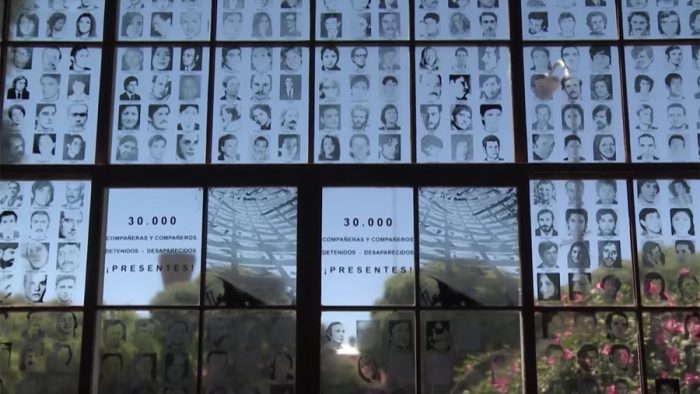
Images of junta victims at ESMA Museum in Buenos Aires © espaciomemoria / YouTube
RT | November 30, 2017
Judges in Argentina have given life sentences to the former ‘death flights’ pilots after hundreds of people opposing the country’s 1976-83 military junta – including a close friend of Pope Francis – were thrown into the ocean.
A major ruling on Wednesday marked the “first” such Argentinian judgment against pilots involved in the notorious ‘death flights,’ local media reports. During the operations, opponents of Argentina’s military regime that ruled the country from 1976 until 1983 were thrown into the waters of the Atlantic.
According to the verdict, the announcement of which lasted almost four hours, 29 former service members were sentenced to life imprisonment, 19 were sentenced to eight to 25 years, and six were acquitted, local media report.
There are 54 defendants in the major trial. It also involves cases of 789 victims of a secret detention center – known as the Navy Mechanics Higher School (ESMA) – where up to 5,000 people opposing the repressive junta regime are believed to have been vanished.
The five-year trial – called the ‘mega cause’ in Argentina – exposed the chilling practices of systematic torture and the killing of thousands of people, including left-wing opponents of the regime and members of Argentina’s urban guerrilla groups, but also human rights activists and relatives of those forcibly disappeared by junta forces.
In a series of hearings, it emerged that numerous victims were drugged, loaded onto ‘death flight’ aircraft, and thrown into the freezing waters of the southern Atlantic Ocean. Among ESMA victims was Esther Careaga, a close friend of Jorge Bergoglio, who later became Pope Francis. Careaga was thrown to her death from a plane one night in December 1977, along with two French nuns and nine others.
“Careaga was a good friend and a great woman,” Beroglio said when the body was identified in 2003. The future pontiff met Careaga, a biochemist and his boss at the time, when he worked as an apprentice at a pharmaceutical laboratory in Buenos Aires in the early 1950s.
Bolivia’s TIPNIS Dispute: How Liberal-Left Alternative Media Becomes a Conveyor Belt for US Regime Change Propaganda
Chicago ALBA Solidarity / November 30, 2017
As has become a standard operating procedure, an array of Western environmental NGOs, advocates of indigenous rights and liberal-left alternative media cover up the US role in attempts to overturn the anti-imperialist and anti-neoliberal governments of Rafael Correa in Ecuador[1] and Evo Morales in Bolivia.
This NACLA article[2] provides an excellent example. Bolivia’s TIPNIS (Territorio Indígena y Parque Nacional Isiboro Secure) dispute arose over the Evo Morales government’s project to complete a road through the park, opposed by some indigenous and environmental groups.
As is NACLA modus operandi, the article says not one word about US and rightwing funding and coordination with the indigenous and environmental groups behind the TIPNIS anti-highway protests. (This does not delegitimize the protests, but it does deliberately mislead people about the issues involved).
In doing so, these kinds of articles cover up US interventionist regime change plans, be that their intention or not.
NACLA is not alone in what is in fact apologetics for US interventionism. Include the Guardian, UpsideDownWorld, [3] Amazon Watch, so-called “Marxist” Jeffery Weber,[4] Jacobin, ROAR, [5] Intercontinentalcry, Avaaz, In These Times, in a short list of examples. We can add to this simply by picking up any articles about oil drilling in Ecuador’s Yasuni during Rafael Correa’s presidency, or the protests in Bolivia’s TIPNIS and see what they say about US funding of protests, if they even mention it.
This is not simply an oversight, it is a cover-up.
What this Liberal Left Media Covers Up
On the issue of the TIPNIS highway, we find on numerous liberal-left alternative media and environmental websites claiming to defend the indigenous concealing that:
- The leading indigenous group of the TIPNIS 2011-2012 protests was being funded by USAID. The Confederation of Indigenous Peoples of the Bolivian East (CIDOB) had no qualms about working with USAID — it boasted on its website that it received training programs from USAID. CIDOB president Adolfo Chavez, thanked the “information and training acquired via different programs financed by external collaborators, in this case USAID”. [6]
- The 2011 TIPNIS march was coordinated with the US Embassy, specifically Eliseo Abelo. His phone conversations with the march leaders – some even made right before the march set out — were intercepted by the Bolivian counter-espionage agency and made public.[7]
- “The TIPNIS marchers were openly supported by right wing Santa Cruz agrobusiness interests and their main political representatives, the Santa Cruz governorship and Santa Cruz Civic Committee.” [8] In June 2011 indigenous deputies and right wing parties in the Santa Cruz departmental council formed an alliance against the MAS (Movement for Socialism, Evo Morales’s party). CIDOB then received a $3.5 million grant by the governorship for development projects in its communities.
- Over a year after the TIPNIS protests, one of the protest leaders announced he was joining a rightwing anti-Evo Morales political party.[9]
- The protest leaders of the TIPNIS march supported REDD (Reduce Emissions from Deforestation and Degradation). The Avaaz petition (below) criticizing Evo Morales for his claimed anti-environmental actions also covered this up. As far back as 2009 “CIDOB leaders were participating there in a USAID-promoted workshop to talk up the imperialist-sponsored REDD project they were pursuing together with USAID-funded NGOs.” [10]
REDD was a Western “environmental” program seeking to privatize forests by converting them into “carbon offsets” that allow Western corporations to continue polluting. That REDD would give Western NGOs and these indigenous groups funds for monitoring forests in their areas.
- These liberal-left alternative media and environmental NGOs falsely presented the TIPNIS conflict as one between indigenous/environmentalist groups against the Evo Morales government. (e.g. the TIPNIS highway was “a project universally[!] condemned by local indigenous tribes and urban populations alike”)[11] Fred Fuentes pointed out that more than 350 Bolivian organizations, including indigenous organizations and communities, even within TIPNIS, supported the proposed highway.
CONISUR (Consejo de Indígenas del Sur), consisting of a number of indigenous and peasant communities within TIPNIS, backed by Bolivia’s three largest national indigenous campesino organizations, organized a march to support of the road. They argued that the highway is essential to integrating Bolivia’s Amazonia with the rest of the country, as well as providing local communities with access to basic services and markets. [12]
The overwhelming majority of people in the West who know about the TIPNIS protests, or the Yasuni protests in Ecuador, where a similar division between indigenous groups took place, never learned either from the liberal-left media or the corporate media, that indigenous groups marched in support of the highway or in support of oil drilling.
- The TIPNIS conflict is falsely presented as Evo Morales wanting to build a highway through the TIPNIS wilderness (“cutting it in half” as they dramatically claim). There are in fact two roads that exist there now, which will be paved and connected to each other. Nor was it wilderness: 20,000 settlers lived there by 2010.[13]
- Anti- highway march leaders actually defended industrial-scale logging within TIPNIS. Two logging companies operated 70,000 hectares within the national park and have signed 20-year contracts with local communities.[14]
- They often fail to note that the TIPNIS marchers, when they reached La Paz, sought to instigate violence, demanding Evo Morales removal. Their plot was blocked by mobilization of local indigenous supporters of Evo’s government.
If we do not read Fred Fuentes in Green Left Weekly, we don’t find most of this information. Now, it is true that some of the media articles did mention that there were also TIPNIS protests and marches demanding the highway be built. Some do mention USAID, but phrase it as “Evo Morales claimed that those protesting his highway received USAID funding.”
Avaaz Petition Attacking Evo Morales over TIPNIS
The TIPNIS campaign, which became a tool in the US regime change strategy, was taken up in a petition by Avaaz. It included 61 signing groups. Only two from Bolivia! US signers included Amazon Watch, Biofuelwatch, Democracy Center, Food and Water Watch, Global Exchange, NACLA, Rainforest Action Network.[15] Whether they knew it, whether they wanted to know it, they signed on to a false account of the TIPNIS conflict, placed the blame on the Bolivian government, target of US regime change, and hid the role of the US.US collaborators in Bolivia and Ecuador are painted as defenders of free expression, defenders of nature, defenders of the indigenous. The US government’s “talking points” against the progressive ALBA bloc countries have worked their way into liberal-left alternative media, which echo the attacks on these governments by organizations there receiving US funds. That does not mean Amazon Watch, Upside Down World or NACLA are themselves funded by the US government – if it somehow exculpates them that they do this work for free. Even worse, much of this propaganda against Evo and Correa appears only in the liberal-left alternative press, what we consider our press.
The USAID budget for Latin America is said to be $750 million, but estimates show that the funding may total twice that. [16] Maria Augusta Calle of Ecuador’s National Assembly, said in 2015 the US Congress allocated $2 billion to destabilize targeted Latin American countries.[17]
This information, how much money it is, what organizations in the different countries receive it, how it is spent, ought to be a central focus of any liberal-left alternative media purporting to stand up for the oppressed peoples of the Americas.
Yet, as Fuentes points out: “Overwhelmingly, solidarity activists uncritically supported the anti-highway march. Many argued that only social movements — not governments — can guarantee the success of [Bolivia’s] process of change…. with most articles written by solidarity activists, [they] downplay the role of United States imperialism…. Others went further, denying any connection between the protesters and US imperialism.”[18]
Why do they let themselves become conveyer belts for US regime change propaganda?
Why did this liberal-left media and NGOs let themselves become conveyer belts for US propaganda for regime change, legitimizing this US campaign to smear the Evo Morales government?
Some of it lies in the liberalish refusal to admit that all international issues can only be understood in the context of the role and the actions of the US Empire. As if conflicts related to countries the US deems hostile to its interests can be understood without taking the US role into account. Some liberal-left writers and groups do understand this, just as they do understand they may risk their positions and funding by looking to closely into it.
It seems easier to not see the role the Empire plays and simply present a liberal-left “critique” of the pluses and minuses of some progressive government targeted by the US. That is how these alternative media sources end up actually advocating for indigenous groups and environmental NGOs which are US and corporate funded. They even criticize countries for defending national sovereignty by shutting down these non-governmental organizations, what Bolivian Vice-President Linera exposes as “foreign government financed organizations” operating in their countries.
Some of it lies in the widely held anti-authoritarian feeling in the US that social movements “from below” are inherently good and that the government/the state is inherently bad. The reporting can be informative on social movements in Honduras, Guatemala, Mexico, Colombia where the people struggle against state repression. But when these social movements in Ecuador or Bolivia were able to win elections and gain hold of some real state power, reporting soon becomes hostile and misleading. “Support social movements when they struggle against governmental power; oppose them once they win government power,” they seem to say. Their reporting slides into disinformation, undermining our solidarity with other struggles, and covering up US regime change efforts. UpsideDownWorld is an excellent example of this.
Some of it lies in what many who call themselves “left” still have not come to terms with: their own arrogant white attitude they share with Western colonizers and present day ruling elites: we know better than you what is good for you, we are the best interpreters and defenders of your socialism, your democracy, your human rights. They repeatedly critique real or imagined failures of progressive Third World governments – targets of the US.
Genuine solidarity with the peoples of the Third World means basing yourself in opposition to the Empire’s interference and exposing how it attempts to undermine movements seeking to break free from the Western domination.
Some of it lies in deep-rooted white racist paternalism in their romanticizing the indigenous as some “noble savage” living at one with nature, in some Garden of Eden. Providing these people with schools, health clinics, modern conveniences we have, is somehow felt not to be in their best interests.
A serious analysis of a Third World country must begin with the role the West has played. To not point out imperialism’s historic and continuing exploitive role is simply dishonest, it is apologetics, it shows a basic lack of human feeling for the peoples of the Third World.
A function of corporate media is to conceal Western pillaging of Third World countries, to cheerlead efforts to restore neocolonial-neoliberal governments to power. However, for liberal-left media and organizations to do likewise, even if halfway, is nothing other than supporting imperialist interference.
[1] https://www.counterpunch.org/2016/02/16/propaganda-as-news-ecuador-sells-out-indigenous-tribes-and-the-environment-to-china/
[2] https://nacla.org/blog/2017/08/22/why-evo-morales-reviving-bolivia%E2%80%99s-controversial-tipnis-road
[3] http://upsidedownworld.org/main/bolivia-archives-31/4864-bolivias-conamaq-indigenous-movement-we-will-not-sell-ourselves-to-any-government-or-political-party
[4] https://mronline.org/2011/08/20/separating-fact-from-fantasy-in-bolivia-a-review-of-jeffery-r-webbers-from-rebellion-to-reform-in-bolivia/
http://www.wrongkindofgreen.org/2012/03/28/the-morales-government-neoliberalism-in-disguise/
[5] https://roarmag.org/essays/bolivia-authoritarianism-mas-elections/
[6] Fred Fuentes, Bolivia: Solidarity activists need to support revolutionary process; Rumble over jungle far from over http://links.org.au/node/2611
[7] http://www.strategic-culture.org/news/2012/09/26/end-to-usaid-spying-looms-in-latin-america.html
[8] http://www.wrongkindofgreen.org/2012/03/28/the-morales-government-neoliberalism-in-disguise/
[9] http://www.la-razon.com/nacional/Pedro-Nuni-lideres-regionales-proyecto_0_1946805357.html
[10] http://www.wrongkindofgreen.org/2012/03/28/the-morales-government-neoliberalism-in-disguise/
[11] http://www.coha.org/corrupted-idealism-bolivias-compromise-between-development-and-the-environment/
[12] http://www.wrongkindofgreen.org/2012/03/28/the-morales-government-neoliberalism-in-disguise/
[13] Linda C. Farthing, Benjamin H. Kohl Evo’s Bolivia: Continuity and Change (2014: 52)
[14] http://links.org.au/node/2611
[15] http://amazonwatch.org/news/2011/0921-appeal-to-bolivian-president-evo-morales-protect-the-rights-of-the-indigenous-peoples-of-tipnis
[16] http://www.globalresearch.ca/usaid-spying-in-latin-america/5306679
[17] http://www.hispantv.com/noticias/ecuador/37659/eeuu-destino-$2000-millones-para-desestabilizar-america-latina
Honduras in limbo as election results suddenly shift
Press TV – November 29, 2017
Honduras was in a state of limbo on Tuesday as presidential election results began to trickle in after a 24-hour delay, with a TV host’s surprise lead suddenly starting to plunge, prompting him to claim that electoral fraud was taking place.
President Juan Orlando Hernandez, who won US praise for helping tackle the flow of migrants and deporting drug cartel leaders, was favored to win before the Sunday vote in the poor Central American nation with one of the world’s highest murder rates.
But a delayed, partial count on Monday morning pointed toward an unexpected victory for TV entertainer Salvador Nasralla, 64. Inexplicably, election authorities then stopped giving results for more than 24 hours.
When, under mounting criticism from international election monitors over a lack of transparency, the electoral tribunal began updating its website again, the tendency rapidly began to change.
In a television interview on Tuesday evening, an angry Nasralla said the election was being stolen from him and asked his supporters to flock to the capital, Tegucigalpa, to protest.
“We’ve already won the election,” he said. “I’m not going to tolerate this, and as there are no reliable institutions in Honduras to defend us, tomorrow the Honduran people need to defend the vote on the streets.”
Nasralla accused the conservative president of plotting to rig the vote, saying his “survival instinct” was hijacking democracy.
He also said Hernandez was colluding with the army and the electoral authorities to forge new result sheets and give himself the edge in the Sunday presidential election.
“He controls the media. He’s going to have the result sheets he wants validated and change the will of the people.”
“He’s trying to sow chaos so he can declare a state of emergency and take control with the help of his people and the army.”
The Electoral Observation Mission of the Organization of American States (EOM/OAS) in Honduras urged people to remain calm and wait for official results, which it said should be delivered as quickly and transparently as possible.
“The credibility of the electoral authorities and the legitimacy of the future president depend on this,” it said in a statement.
On Tuesday evening, Nasralla’s original five-point lead had thinned to under 2 percentage points, with nearly 71 percent of ballots counted, according to the election tribunal.
Nasralla said in a later television interview that the election tribunal was only counting ballots from regions where Hernandez had won, skewing the results and giving the false sense that the president was heading for victory. He asked the tribunal to include ballots from regions where he was stronger.
The election in this poor, gang-plagued country has turned into a drawn-out showdown between Nasralla, 64, and Hernandez, 49, who is going for four more years in office despite a constitutional limit of just one term.
Both candidates have declared victory, but the results are far from clear.
Hernandez’s conservative National Party — which controls the executive, legislative and judicial branches of government — contends that a 2015 Supreme Court ruling allows his re-election.
Nasralla and his coalition, the Opposition Alliance Against the Dictatorship, have denounced the incumbent’s bid, saying the court does not have the power to overrule the 1982 constitution.
Difficult negotiations
On Tuesday, Hernandez reiterated that he had won, and refused to concede, telling supporters they should wait for final results.
“The result is more than clear,” he said at the presidential residence. “It is important for everyone to be patient, for everyone to be considerate with Honduras.”
After Hernandez spoke, thousands of his blue-clad supporters gathered outside the presidential residence to celebrate his supposed victory.
“We won the election with Juan Orlando Hernandez, and we won’t let them remove him from power,” said 35-year-old housewife Maria Aguirre, who hailed from a rough neighborhood on the outskirts of Tegucigalpa.
Meanwhile, two European diplomats who spoke on condition of anonymity said the election tribunal’s delay was due to difficult negotiations between Hernandez’s National Party and Nasralla’s alliance. Behind closed doors, the parties were discussing immunity from prosecution for current officials and how to carve up positions in government, the diplomats said.
But in an interview on Tuesday, Nasralla denied he was in talks with the National Party.
He vowed to review whether to keep US troops stationed at a base in the country if he wins the election but also promised to deepen security cooperation with the US.
Hernandez’s National Party appears set to retain control of Congress in the election, giving it the second-most important perch in the country.
The European Union’s chief observer for the election, Marisa Matias, urged election officials to maintain an open channel of communication as they finalized the results.
The electoral body had been so certain Hernandez would win that it showed unprecedented transparency during the contest, one of the diplomats said. That left the body with little room to maneuver when Nasralla came from nowhere to take a strong lead.
Nasralla is backed by former president Manuel Zelaya, who was ousted in 2009 after he proposed a referendum on his re-election. The possible return to a position of influence for one-time leftist Zelaya risks fueling concern in Washington.
Situated in the heart of Central America’s “Northern Triangle,” where gangs and poverty are rife, Honduras has one of the highest murder rates in the world Hernandez was credited with lowering the murder rate and boosting the economy, but he was also hurt by accusations of ties to illicit, drug-related financing that he denies.
Ex-Israel soldier heading child prostitution ring deported from Colombia
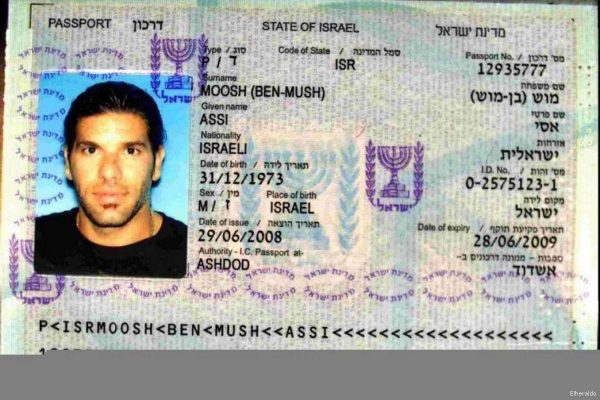
MEMO | November 29, 2017
A former Israeli soldier was deported from Colombia for alleged links to a criminal network suspected of drug trafficking, child prostitution and tax offenses that spanned across several countries in Latin America.
Forty-three-year-old Assi Moosh was expelled by Colombia and returned to Tel Aviv under escort by immigration officers last weekend. In a statement confirming the deportation, security officials said: “Police in Santa Marta, capital of the Magdalena department, hereby announce the removal of an Israeli citizen who owns a spa hotel frequented by many foreign tourists. Deportation procedures have been commenced as per law and will be carried out due to the Israeli’s conduct, which has harmed Colombia’s national security.”
Colombian news agencies reporting on the deportation revealed details surrounding the expulsion of Moosh who was exposed as being part of a group of ex-Israeli soldiers that had turned a small fishing village in Taganga into a “sex and drug den” from their base in a luxury resort that was known to locals as “little Israel”.
El Heraldo, a regional newspaper, revealed Moosh as the head of an “international network of human trafficking, micro-trafficking and sex tourism”. The Israeli gained a reputation locally for organising private parties in a room within his hotel. From their base in “little Israel” Moosh is reported to have run similar clubs exploiting drugs and children in Cartagena, Bogotá, Medellín, Ecuador, Mexico and Brazil.
Local sources reported that Moosh was arrested when he arrived in the immigration office in Santa Marta accompanied by a group of armed men. It’s believed that he had been trying to obtain Colombian citizenship.
According to the national police, Moosh had raised suspicion after it was discovered that his permits for tourism and hotel operation were obtained through a third party, enabling him to carry out criminal activities undetected for a decade.
Locals are said to be “relived” by the arrest. Residents told journalists that Moosh “had been one of those who destabilised the social order of the people.” Many felt he should have been arrested long ago.
The mystery for many locals, according to El Heraldo, was the Benjamin hotel. Residents of Taganga described the resort as a “bunker” run by Moosh “exclusively for Jews”. While it’s unlikely that many of the locals would have actually seen the inside of the luxury resort, the feeling that it was an unwelcome place for non-Israelis has even been reported by visitors on TripAdvisor. “Not Israeli? Forget about it” wrote one visitor who had given the hotel two stars in the review. “First off this is a good hotel/hostel but if you are not from Israel I wouldn’t go there, my wife and I were made to feel very uncomfortable even had people come up to us and say ‘are you from Israel?’ I said ‘no’ to their reply ‘then why would you come here’.”
Reports of how “ex-soldiers turned a Colombia fishing town into a sex and drug den” had been on the media’s radar for a while. In February Colombia Reports uncovered the tension within the popular tourist region caused by the Benjamin hotel. The report found that “Benjamin [hotel] employs and accommodates almost exclusively Israeli citizens, and was officially opened by 20 rabbis brought over especially from Israel”.
Security in the hotel is reportedly coordinated by a Willington Vasquez, who, according to the report is also known as “Manuel, a former member of a paramilitary death squad”. Locals from Taganga complained that the Israeli “tourism entrepreneurs” were running a drug trafficking network and prostitution business.
The friction between locals in Taganga and the Israelis was also reported in 2012. “Four Israeli ex-soldiers are the new ‘masters’ of Taganga” was the headline in the El Tiempo. The paper alleged that the Israeli “businessmen” were selling cocaine and sexually exploiting young girls.
A journalist from El Tiempo investigating the allegations spoke with local officials, residents and the Israeli businessmen who pleaded innocence saying that “the community is wrong, everything is false”.
But the report proved otherwise. The authorities said that they were clear “several Israeli ex-soldiers who arrived in that village” were “leaders of criminal gangs”. The authorities complained that the Israelis took over social premises, violated rules on tax payments and permits and were involved in selling drugs and sexually exploiting children.
The ex-Israeli soldiers became known as “the untouchables”. El Tiempo journalists travelled to the area and established that some of them were living in a concrete mass, guarded by eight security cameras. Others carry arms and move in 4×4 trucks with the Israeli flag.
Testimonies from villagers and local authorities, who, El Tiempo said requested anonymity for fear of reprisals, exposed the drug and prostitution industry that had blighted the small fishing village.
Their standoff with the ex-Israeli soldiers led locals to create a committee and to request help from the Santa Marta administration.
Mayor of Santa Marta at the time, Carlos Caicedo, told El Tiempo that the situation in Taganga is serious and that he will ask the Israeli embassy and the Ministry of Foreign Affairs to review the legal status of the ex-military personnel settled in the Benjamin hotel.
Residents of Taganga appealed to their government to end the criminal activity in their village and a request was also made to the Israeli embassy, according to El Tiempo, to sanction the criminal behaviour of its nationals.
As for Moosh, it’s reported that Colombian authorities have imposed sanctions on him which prevent him from returning to country for at last ten years.
How America Spreads Global Chaos
By Nicolas J.S. Davies | Consortium News | October 30, 2017
As the recent PBS documentary on the American War in Vietnam acknowledged, few American officials ever believed that the United States could win the war, neither those advising Johnson as he committed hundreds of thousands of U.S. troops, nor those advising Nixon as he escalated a brutal aerial bombardment that had already killed millions of people.

U.S. F-105s bomb North Vietnam in 1966
(Photo credit: U.S. Air Force)
As conversations tape-recorded in the White House reveal, and as other writers have documented, the reasons for wading into the Big Muddy, as Pete Seeger satirized it, and then pushing on regardless, all came down to “credibility”: the domestic political credibility of the politicians involved and America’s international credibility as a military power.
Once the CIA went to work in Vietnam to undermine the 1954 Geneva Accords and the planned reunification of North and South through a free and fair election in 1956, the die was cast. The CIA’s support for the repressive Diem regime and its successors ensured an ever-escalating war, as the South rose in rebellion, supported by the North. No U.S. president could extricate the U.S. from Vietnam without exposing the limits of what U.S. military force could achieve, betraying widely held national myths and the powerful interests that sustained and profited from them.
The critical “lesson of Vietnam” was summed up by Richard Barnet in his 1972 book Roots of War. “At the very moment that the number one nation has perfected the science of killing,” Barnet wrote, “It has become an impractical means of political domination.”
Losing the war in Vietnam was a heavy blow to the CIA and the U.S. Military Industrial Complex, and it added insult to injury for every American who had lost comrades or loved ones in Vietnam, but it ushered in more than a decade of relative peace for America and the world. If the purpose of the U.S. military is to protect the U.S. from the danger of war, as our leaders so often claim, the “Vietnam syndrome,” or the reluctance to be drawn into new wars, kept the peace and undoubtedly saved countless lives.
Even the senior officer corps of the U.S. military saw it that way, since many of them had survived the horrors of Vietnam as junior officers. The CIA could still wreak havoc in Latin America and elsewhere, but the full destructive force of the U.S. military was not unleashed again until the invasion of Panama in 1989 and the First Gulf War in 1991.
Half a century after Vietnam, we have tragically come full circle. With the CIA’s politicized intelligence running wild in Washington and its covert operations spreading violence and chaos across every continent, President Trump faces the same pressures to maintain his own and his country’s credibility as Johnson and Nixon did. His predictable response has been to escalate ongoing wars in Syria, Iraq, Afghanistan, Yemen, Somalia and West Africa, and to threaten new ones against North Korea, Iran and Venezuela.
Trump is facing these questions, not just in one country, Vietnam, but in dozens of countries across the world, and the interests perpetuating and fueling this cycle of crisis and war have only become more entrenched over time, as President Eisenhower warned that they would, despite the end of the Cold War and, until now, the lack of any actual military threat to the United States.
Ironically but predictably, the U.S.’s aggressive and illegal war policy has finally provoked a real military threat to the U.S., albeit one that has emerged only in response to U.S. war plans. As I explained in a recent article, North Korea’s discovery in 2016 of a U.S. plan to assassinate its president, Kim Jong Un, and launch a Second Korean War has triggered a crash program to develop long-range ballistic missiles that could give North Korea a viable nuclear deterrent and prevent a U.S. attack. But the North Koreans will not feel safe from attack until their leaders and ours are sure that their missiles can deliver a nuclear strike against the U.S. mainland.
The CIA’s Pretexts for War
U.S. Air Force Colonel Fletcher Prouty was the chief of special operations for the Joint Chiefs of Staff from 1955 to 1964, managing the global military support system for the CIA in Vietnam and around the world. Fletcher Prouty’s book, The Secret Team: The CIA and its Allies in Control of the United States and the World, was suppressed when it was first published in 1973. Thousands of copies disappeared from bookstores and libraries, and a mysterious Army Colonel bought the entire shipment of 3,500 copies the publisher sent to Australia. But Prouty’s book was republished in 2011, and it is a timely account of the role of the CIA in U.S. policy.
Prouty surprisingly described the role of the CIA as a response by powerful people and interests to the abolition of the U.S. Department of War and the creation of the Department of Defense in 1947. Once the role of the U.S. military was redefined as one of defense, in line with the United Nations Charter’s prohibition against the threat or use of military force in 1945 and similar moves by other military powers, it would require some kind of crisis or threat to justify using military force in the future, both legally and politically. The main purpose of the CIA, as Prouty saw it, is to create such pretexts for war.
The CIA is a hybrid of an intelligence service that gathers and analyzes foreign intelligence and a clandestine service that conducts covert operations. Both functions are essential to creating pretexts for war, and that is what they have done for 70 years.
Prouty described how the CIA infiltrated the U.S. military, the State Department, the National Security Council and other government institutions, covertly placing its officers in critical positions to ensure that its plans are approved and that it has access to whatever forces, weapons, equipment, ammunition and other resources it needs to carry them out.
Many retired intelligence officers, such as Ray McGovern and the members of Veteran Intelligence Professionals for Sanity (VIPS), saw the merging of clandestine operations with intelligence analysis in one agency as corrupting the objective analysis they tried to provide to policymakers. They formed VIPS in 2003 in response to the fabrication of politicized intelligence that provided false pretexts for the U.S. to invade and destroy Iraq.
CIA in Syria and Africa
But Fletcher Prouty was even more disturbed by the way that the CIA uses clandestine operations to trigger coups, wars and chaos. The civil and proxy war in Syria is a perfect example of what Prouty meant. In late 2011, after destroying Libya and aiding in the torture-murder of Muammar Gaddafi, the CIA and its allies began flying fighters and weapons from Libya to Turkey and infiltrating them into Syria. Then, working with Saudi Arabia, Qatar, Turkey, Croatia and other allies, this operation poured thousands of tons of weapons across Syria’s borders to ignite and fuel a full-scale civil war.
Once these covert operations were under way, they ran wild until they had unleashed a savage Al Qaeda affiliate in Syria (Jabhat al-Nusra, now rebranded as Jabhat Fateh al-Sham), spawned the even more savage “Islamic State,” triggered the heaviest and probably the deadliest U.S. bombing campaign since Vietnam and drawn Russia, Iran, Turkey, Israel, Jordan, Hezbollah, Kurdish militias and almost every state or armed group in the Middle East into the chaos of Syria’s civil war.
Meanwhile, as Al Qaeda and Islamic State have expanded their operations across Africa, the U.N. has published a report titled Journey to Extremism in Africa: Drivers, Incentives and the Tipping Point for Recruitment, based on 500 interviews with African militants. This study has found that the kind of special operations and training missions the CIA and AFRICOM are conducting and supporting in Africa are in fact the critical “tipping point” that drives Africans to join militant groups like Al Qaeda, Al-Shabab and Boko Haram.
The report found that government action, such as the killing or detention of friends or family, was the “tipping point” that drove 71 percent of African militants interviewed to join armed groups, and that this was a more important factor than religious ideology.
The conclusions of Journey to Extremism in Africa confirm the findings of other similar studies. The Center for Civilians in Conflict interviewed 250 civilians who joined armed groups in Bosnia, Somalia, Gaza and Libya for its 2015 study, The People’s Perspectives: Civilian Involvement in Armed Conflicts. The study found that the most common motivation for civilians to join armed groups was simply to protect themselves or their families.
The role of U.S. “counterterrorism” operations in fueling armed resistance and terrorism, and the absence of any plan to reduce the asymmetric violence unleashed by the “global war on terror,” would be no surprise to Fletcher Prouty. As he explained, such clandestine operations always take on a life of their own that is unrelated, and often counter-productive, to any rational U.S. policy objective.
“The more intimate one becomes with this activity,” Prouty wrote, “The more one begins to realize that such operations are rarely, if ever, initiated from an intent to become involved in pursuit of some national objective in the first place.”
The U.S. justifies the deployment of 6,000 U.S. special forces and military trainers to 53 of the 54 countries in Africa as a response to terrorism. But the U.N.’s Journey to Extremism in Africa study makes it clear that the U.S. militarization of Africa is in fact the “tipping point” that is driving Africans across the continent to join armed resistance groups in the first place.
This is a textbook CIA operation on the same model as Vietnam in the late 1950s and early 60s. The CIA uses U.S. special forces and training missions to launch covert and proxy military operations that drive local populations into armed resistance groups, and then uses the presence of those armed resistance groups to justify ever-escalating U.S. military involvement. This is Vietnam redux on a continental scale.
Taking on China
What seems to really be driving the CIA’s militarization of U.S. policy in Africa is China’s growing influence on the continent. As Steve Bannon put it in an interview with the Economist in August, “Let’s go screw up One Belt One Road.”
China is already too big and powerful for the U.S. to apply what is known as the Ledeen doctrine named for neoconservative theorist and intelligence operative Michael Ledeen who suggested that every 10 years or so, the United States “pick up some small crappy little country and throw it against the wall, just to show we mean business.”
China is too powerful and armed with nuclear weapons. So, in this case, the CIA’s job would be to spread violence and chaos to disrupt Chinese trade and investment, and to make African governments increasingly dependent on U.S. military aid to fight the militant groups spawned and endlessly regenerated by U.S.-led “counterterrorism” operations.
Neither Ledeen nor Bannon pretend that such policies are designed to build more prosperous or viable societies in the Middle East or Africa, let alone to benefit their people. They both know very well what Richard Barnet already understood 45 years ago, that America’s unprecedented investment in weapons, war and CIA covert operations are only good for one thing: to kill people and destroy infrastructure, reducing cities to rubble, societies to chaos and the desperate survivors to poverty and displacement.
As long as the CIA and the U.S. military keep plunging the scapegoats for our failed policies into economic crisis, violence and chaos, the [elite elements of] United States and the United Kingdom can remain the safe havens of the world’s wealth, islands of privilege and excess amidst the storms they unleash on others.
But if that is the only “significant national objective” driving these policies, it is surely about time for the 99 percent of Americans who reap no benefit from these murderous schemes to stop the CIA and its allies before they completely wreck the already damaged and fragile world in which we all must live, Americans and foreigners alike.
Douglas Valentine has probably studied the CIA in more depth than any other American journalist, beginning with his book on The Phoenix Program in Vietnam. He has written a new book titled The CIA as Organized Crime: How Illegal Operations Corrupt America and the World, in which he brings Fletcher Prouty’s analysis right up to the present day, describing the CIA’s role in our current wars and the many ways it infiltrates, manipulates and controls U.S. policy.
The Three Scapegoats
In Trump’s speech to the U.N. General Assembly, he named North Korea, Iran and Venezuela as his prime targets for destabilization, economic warfare and, ultimately, the overthrow of their governments, whether by coup d’etat or the mass destruction of their civilian population and infrastructure. But Trump’s choice of scapegoats for America’s failures was obviously not based on a rational reassessment of foreign policy priorities by the new administration. It was only a tired rehashing of the CIA’s unfinished business with two-thirds of Bush’s “axis of evil” and Bush White House official Elliott Abrams’ failed 2002 coup in Caracas, now laced with explicit and illegal threats of aggression.
How Trump and the CIA plan to sacrifice their three scapegoats for America’s failures remains to be seen. This is not 2001, when the world stood silent at the U.S. bombardment and invasion of Afghanistan after September 11th. It is more like 2003, when the U.S. destruction of Iraq split the Atlantic alliance and alienated most of the world. It is certainly not 2011, after Obama’s global charm offensive had rebuilt U.S. alliances and provided cover for French President Sarkozy, British Prime Minister Cameron, Secretary of State Hillary Clinton and the Arab royals to destroy Libya, once ranked by the U.N. as the most developed country in Africa, now mired in intractable chaos.
In 2017, a U.S. attack on any one of Trump’s scapegoats would isolate the United States from many of its allies and undermine its standing in the world in far-reaching ways that might be more permanent and harder to repair than the invasion and destruction of Iraq.
In Venezuela, the CIA and the right-wing opposition are following the same strategy that President Nixon ordered the CIA to inflict on Chile, to “make the economy scream” in preparation for the 1973 coup. But the solid victory of Venezuela’s ruling Socialist Party in recent nationwide gubernatorial elections, despite a long and deep economic crisis, reveals little public support for the CIA’s puppets in Venezuela.
The CIA has successfully discredited the Venezuelan government through economic warfare, increasingly violent right-wing street protests and a global propaganda campaign. But the CIA has stupidly hitched its wagon to an extreme right-wing, upper-class opposition that has no credibility with most of the Venezuelan public, who still turn out for the Socialists at the polls. A CIA coup or U.S. military intervention would meet fierce public resistance and damage U.S. relations all over Latin America.
Boxing In North Korea
A U.S. aerial bombardment or “preemptive strike” on North Korea could quickly escalate into a war between the U.S. and China, which has reiterated its commitment to North Korea’s defense if North Korea is attacked. We do not know exactly what was in the U.S. war plan discovered by North Korea, so neither can we know how North Korea and China could respond if the U.S. pressed ahead with it.
Most analysts have long concluded that any U.S. attack on North Korea would be met with a North Korean artillery and missile barrage that would inflict unacceptable civilian casualties on Seoul, a metropolitan area of 26 million people, three times the population of New York City. Seoul is only 35 miles from the frontier with North Korea, placing it within range of a huge array of North Korean weapons. What was already a no-win calculus is now compounded by the possibility that North Korea could respond with nuclear weapons, turning any prospect of a U.S. attack into an even worse nightmare.
U.S. mismanagement of its relations with North Korea should be an object lesson for its relations with Iran, graphically demonstrating the advantages of diplomacy, talks and agreements over threats of war. Under the Agreed Framework signed in 1994, North Korea stopped work on two much larger nuclear reactors than the small experimental one operating at Yongbyong since 1986, which only produces 6 kg of plutonium per year, enough for one nuclear bomb.
The lesson of Bush’s Iraq invasion in 2003 after Saddam Hussein had complied with demands that he destroy Iraq’s stockpiles of chemical weapons and shut down a nascent nuclear program was not lost on North Korea. Not only did the invasion lay waste to large sections of Iraq with hundreds of thousands of dead but Hussein himself was hunted down and condemned to death by hanging.
Still, after North Korea tested its first nuclear weapon in 2006, even its small experimental reactor was shut down as a result of the “Six Party Talks” in 2007, all the fuel rods were removed and placed under supervision of the International Atomic Energy Agency, and the cooling tower of the reactor was demolished in 2008.
But then, as relations deteriorated, North Korea conducted a second nuclear weapon test and again began reprocessing spent fuel rods to recover plutonium for use in nuclear weapons.
North Korea has now conducted six nuclear weapons tests. The explosions in the first five tests increased gradually up to 15-25 kilotons, about the yield of the bombs the U.S. dropped on Hiroshima and Nagasaki, but estimates for the yield of the 2017 test range from 110 to 250 kilotons, comparable to a small hydrogen bomb.
The even greater danger in a new war in Korea is that the U.S. could unleash part of its arsenal of 4,000 more powerful weapons (100 to 1,200 kilotons), which could kill millions of people and devastate and poison the region, or even the world, for years to come.
The U.S. willingness to scrap the Agreed Framework in 2003, the breakdown of the Six Party Talks in 2009 and the U.S. refusal to acknowledge that its own military actions and threats create legitimate defense concerns for North Korea have driven the North Koreans into a corner from which they see a credible nuclear deterrent as their only chance to avoid mass destruction.
China has proposed a reasonable framework for diplomacy to address the concerns of both sides, but the U.S. insists on maintaining its propaganda narratives that all the fault lies with North Korea and that it has some kind of “military solution” to the crisis.
This may be the most dangerous idea we have heard from U.S. policymakers since the end of the Cold War, but it is the logical culmination of a systematic normalization of deviant and illegal U.S. war-making that has already cost millions of lives in Afghanistan, Iraq, Syria, Libya, Somalia, Yemen and Pakistan. As historian Gabriel Kolko wrote in Century of War in 1994, “options and decisions that are intrinsically dangerous and irrational become not merely plausible but the only form of reasoning about war and diplomacy that is possible in official circles.”
Demonizing Iran
The idea that Iran has ever had a nuclear weapons program is seriously contested by the IAEA, which has examined every allegation presented by the CIA and other Western “intelligence” agencies as well as Israel. Former IAEA Director General Mohamed ElBaradei revealed many details of this wild goose chase in his 2011 memoir, Age of Deception: Nuclear Diplomacy in Treacherous Times.
When the CIA and its partners reluctantly acknowledged the IAEA’s conclusions in a 2007 National Intelligence Estimate (NIE), ElBaradei issued a press release confirming that, “the agency has no concrete evidence of an ongoing nuclear weapons program or undeclared nuclear facilities in Iran.”
Since 2007, the IAEA has resolved all its outstanding concerns with Iran. It has verified that dual-use technologies that Iran imported before 2003 were in fact used for other purposes, and it has exposed the mysterious “laptop documents” that appeared to show Iranian plans for a nuclear weapon as forgeries. Gareth Porter thoroughly explored all these questions and allegations and the history of mistrust that fueled them in his 2014 book, Manufactured Crisis: the Untold Story of the Iran Nuclear Scares, which I highly recommend.
But, in the parallel Bizarro world of U.S. politics, hopelessly poisoned by the CIA’s endless disinformation campaigns, Hillary Clinton could repeatedly take false credit for disarming Iran during her presidential campaign, and neither Bernie Sanders, Donald Trump nor any corporate media interviewer dared to challenge her claims.
“When President Obama took office, Iran was racing toward a nuclear bomb,” Clinton fantasized in a prominent foreign policy speech on June 2, 2016, claiming that her brutal sanctions policy “brought Iran to the table.”
In fact, as Trita Parsi documented in his 2012 book, A Single Roll of the Dice: Obama’s Diplomacy With Iran, the Iranians were ready, not just to “come to the table,” but to sign a comprehensive agreement based on a U.S. proposal brokered by Turkey and Brazil in 2010. But, in a classic case of “tail wags dog,” the U.S. then rejected its own proposal because it would have undercut support for tighter sanctions in the U.N. Security Council. In other words, Clinton’s sanctions policy did not “bring Iran to the table”, but prevented the U.S. from coming to the table itself.
As a senior State Department official told Trita Parsi, the real problem with U.S. diplomacy with Iran when Clinton was at the State Department was that the U.S. would not take “Yes” for an answer. Trump’s ham-fisted decertification of Iran’s compliance with the JCPOA is right out of Clinton’s playbook, and it demonstrates that the CIA is still determined to use Iran as a scapegoat for America’s failures in the Middle East.
The spurious claim that Iran is the world’s greatest sponsor of terrorism is another CIA canard reinforced by endless repetition. It is true that Iran supports and supplies weapons to Hezbollah and Hamas, which are both listed as terrorist organizations by the U.S. government. But they are mainly defensive resistance groups that defend Lebanon and Gaza respectively against invasions and attacks by Israel.
Shifting attention away from Al Qaeda, Islamic State, the Libyan Islamic Fighting Group and other groups that actually commit terrorist crimes around the world might just seem like a case of the CIA “taking its eyes off the ball,” if it wasn’t so transparently timed to frame Iran with new accusations now that the manufactured crisis of the nuclear scare has run its course.
What the Future Holds
Barack Obama’s most consequential international achievement may have been the triumph of symbolism over substance behind which he expanded and escalated the so-called “war on terror,” with a vast expansion of covert operations and proxy wars that eventually triggered the heaviest U.S. aerial bombardments since Vietnam in Iraq and Syria.
Obama’s charm offensive invigorated old and new military alliances with the U.K., France and the Arab monarchies, and he quietly ran up the most expensive military budget of any president since World War Two.
But Obama’s expansion of the “war on terror” under cover of his deceptive global public relations campaign created many more problems than it solved, and Trump and his advisers are woefully ill-equipped to solve any of them. Trump’s expressed desire to place America first and to resist foreign entanglements is hopelessly at odds with his aggressive, bullying approach to every foreign policy problem.
If the U.S. could threaten and fight its way to a resolution of any of its international problems, it would have done so already. That is exactly what it has been trying to do since the 1990s, behind both the swagger and bluster of Bush and Trump and the deceptive charm of Clinton and Obama: a “good cop – bad cop” routine that should no longer fool anyone anywhere.
But as Lyndon Johnson found as he waded deeper and deeper into the Big Muddy in Vietnam, lying to the public about unwinnable wars does not make them any more winnable. It just gets more people killed and makes it harder and harder to ever tell the public the truth.
In unwinnable wars based on lies, the “credibility” problem only gets more complicated, as new lies require new scapegoats and convoluted narratives to explain away graveyards filled by old lies. Obama’s cynical global charm offensive bought the “war on terror” another eight years, but that only allowed the CIA to drag the U.S. into more trouble and spread its chaos to more places around the world.
Meanwhile, Russian President Putin is winning hearts and minds in capitals around the world by calling for a recommitment to the rule of international law, which prohibits the threat or use of military force except in self-defense. Every new U.S. threat or act of aggression will only make Putin’s case more persuasive, not least to important U.S. allies like South Korea, Germany and other members of the European Union, whose complicity in U.S. aggression has until now helped to give it a false veneer of political legitimacy.
Throughout history, serial aggression has nearly always provoked increasingly united opposition, as peace-loving countries and people have reluctantly summoned the courage to stand up to an aggressor. France under Napoleon and Hitler’s Germany also regarded themselves as exceptional, and in their own ways they were. But in the end, their belief in their exceptionalism led them on to defeat and destruction.
Americans had better hope that we are not so exceptional, and that the world will find a diplomatic rather than a military “solution” to its American problem. Our chances of survival would improve a great deal if American officials and politicians would finally start to act like something other than putty in the hands of the CIA.
Nicolas J. S. Davies is the author of Blood On Our Hands: the American Invasion and Destruction of Iraq. He also wrote the chapters on “Obama at War” in Grading the 44th President: a Report Card on Barack Obama’s First Term as a Progressive Leader.
Why the United Socialist Party of Venezuela (PSUV) Won the Election
By James Petras | Axis of Logic | October 27, 2017
Introduction
Every major newspaper, television channel and US government official has spent the past two years claiming that the United Socialist Party of Venezuela (PSUV), founded by the late Hugo Chavez, had become a marginalized political party, supported only by ‘hard core Chavistas’ and public employees. The US government, under Presidents Obama and Trump, backed gangs of violent demonstrators, who rampaged through the streets, as ‘the true democratic representatives’ of the will of the voters. Secretary General of the Organization of American States Luis Almagro, a veteran running dog for Washington, railed against President Nicholas Maduro, denouncing him as a ‘dictator’ and openly demanded that the Venezuelan people and neighboring Latin American regimes unite to oust him – even through violence. President Trump imposed brutal economic sanctions designed to strangle the economy and guaranteed Washington’s support for the rightwing opposition, the self-styled Democratic Unity Roundtable, (‘Mesa de la Unidad Democratica’ – or MUD).
MUD took advantage of the economic crisis facing Venezuela with the sharp decline of the price oil, of its main export. MUD has spent the past three years attacking the government and mobilizing its supporters through street violence and parliamentary maneuvers to paralyze the government’s socio-economic agenda. Vital public services, like power stations, were frequent targets of MUD-orchestrated sabotage, even leading to the assassination of public employees, like police and firefighters.
MUD rejected the government’s proposal for peaceful negotiations with the opposition. President Maduro asked for a dialogue with the US, which was sponsoring MUD, but President Trump replied with his usual bombast and threats of violent intervention.
The economic blockade and drop in oil prices had devastating consequences: Inflation hit triple digits in Venezuela. There were increasing food shortages, long lines and valid consumer complaints. As a result, the opposition coalition won the Congressional elections of 2015 and immediately tried to impeach President Maduro. Rather than using their electoral mandate to govern and address the country’s problems, they focused exclusively on forcing ‘regime change’. This monomania led to voter dissatisfaction with MUD and, contrary to Washington’s hopes, predictions, threats and sanctions, the PSUV won the gubernatorial elections by a wide margin in October 2017.
The opposition was decisively defeated. Over a thousand independent outside observers, who had monitored the Venezuelan elections and voting procedures, declared the elections to be the free and valid expression of the citizens will. The opposition immediately rejected the result. The entire US-EU press predictably converged on Caracas, screaming ‘fraud’, echoing the rabid right-wing politicos in the US, the OAS and Europe. They saw no need to back their claims with ‘evidence’.
In truth, the Opposition-MUD was roundly defeated: They had secured only 39% of the vote and only 5 of the 23 governorships. The PSUV, for its part, increased its voter support from 44% in the 2015 to 54% in October 2017.
The real question, which is being ignored, is how the PSUV won and the Opposition lost, given the enormous outside support for MUD and the economic crisis in Venezuela? Why did the opposition lose 2.7 million votes in two years following their much-ballyhooed parliamentary victory? How could the US, the OAS and the EU miss this trend and waste their money and credibility?
Ten Reasons for the Socialist Victory and the Rightist Defeat
Understanding the reasons for the Socialist victory requires that we first analyze the strengths and weakness of the MUD.
- The PSUV retained its committed and loyalist core, despite hardships endured by the masses of Venezuelans, because of the socialists long-term, large-scale socio-economic programs advancing the citizens’ welfare over the previous decade and a half.
- Many low-income voters feared that, once in power, the rightwing extremists in MUD would reverse these social advances and return them to the pre-Chavista era of elite domination, repression and their own marginalization.
- Many right-of center-voters were appalled by MUD’s support for violence and sabotage, leading to the destruction of public buildings and private businesses and paralyzing public transportation. They decided to abstain and/or vote for the PSUV, as the party of law and order.
- Many independent voters supported the PSUV as the greater defender of Venezuelan sovereignty. They were appalled by the opposition coalition – MUD’s endorsement of Washington’s economic sanctions and blockade and President Trump’s brutal threats to intervene to force ‘regime change’.
- Probably most decisive for the shift to the left by many former MUD voters was the right-wing opposition’s failure to offer any positive alternative. Apart from promoting violence and dismantling the Chavista social programs, MUD lacked any concrete program or policies to address the ongoing economic crisis. It was clear to voters that MUD’s constant harping on the ‘failures’ of the PSUV offered no viable way out of the crisis.
- The MUD was not able to use its electoral majority in Congress to obtain overseas economic aid to provide social services, or to arrange trade deals or loans. Washington was only willing to subsidize MUD’s campaign for violent regime change but not to support any opposition congressional proposals for Venezuela’s schools or its health system. MUD was stuck in a self-perpetuating cycle, telling people what they already knew, with no serious proposals to address the people’s everyday problems.
- MUD constantly denigrated the memory of President Hugo Chavez, whose legacy represented the ‘best of times’ for millions of Venezuelans. Many voters recalled the decade of Chavez’s Presidency – his generous welfare policies, his own humble origins, his courage, his folksy sense of humor and his links to the grassroots. This was in stark contrast to the MUD leaders’ ‘Miami mentality’, their fawning over US consumerism and Washington’s militarism, their servility to the upper class’s cultural elitism and contempt for the dark-skinned mestizo population.
- The MUD congressmen and women focused their time in Congress with sectarian political name-calling when they weren’t busy plotting regime change in the posh upper class salons of the Caracas’ elite. They failed to articulate any realistic grassroots solution to everyday problems. Their complaints over ‘dictatorship’ carried little weight since they held the majority in Congress and did nothing for the electorate.
- The MUD’s unsuccessful attempts to incite a military coup among Venezuela’s patriotic military officers alienated moderate liberal-democrats, some of whom either ‘jumped ship’ to support the Left or, more likely, abstained in October’s election.
- President Maduro’s moves toward negotiating favorable trade and investment deals with Russia, China and Iran encouraged voters to imagine that viable alternatives to the crisis were on the government’s agenda.
Many voters may have placed more trust in Maduro’s promise of serious new programs and policies to revive the economy. But more significantly, the PSUV’s established programs and future prospects were more appealing than MUD’s predictable denunciations of election fraud; and almost two-thirds of the electorate chose to participate in October’s elections. These ‘fraud’ charges only worked with MUD’s true believers who had either abstained, virtually ensuring a victory for the Left, or had voted and therefore made themselves ‘accessory to electoral fraud’, which they had denounced.
Conclusion
The MUD lost the state governor elections of October 2017, less than 2 years after they had won the congressional elections, by demonstrating their incompetence, their propensity for violence against serious democratic adversaries and their incapacity to fulfill any programmatic promises.
The PSUV won because of the Chavez legacy, the decision by middle-of-the-road voters to support a pragmatic ‘lesser evil’ over a violent opposition ‘greater evil’ promising chaos. Many voters are desperate for new and better policies to address Venezuela’s current economic challenges. Finally, many Venezuelans rejected US President Trump and OAS President Almagros’ blatant, arrogant assumption that they knew what was best for the people of Venezuela – even if it meant blood in the streets.
In the end, the Chavez legacy of successful class and national struggles carried more weight with the voters than the negative, chaotic impotence of a subservient opposition. The US/Venezuelan mass media’s efforts to undermine the government were defeated because the people responded to the socialist message that US-led economic warfare, and not government mismanagement, was the key cause of their social and economic decline. They had experienced more than a decade of independent foreign policy and Bolivarian socialist programs to compare with the chaos of ‘regime change’ promised by Washington and the opposition.
The Left won the battle for now but the war continues.
Please note James Petras’s most recent book:
THE END OF THE REPUBLIC AND THE DELUSION OF EMPIRE
ISBN: 978-0-9972870-5-9
$24.95 / 252 pp. / 2016
EBOOK ISBN: 978-0-9972870-6-6
ORDER E-BOOK: $19.00
© Copyright 2017 by AxisofLogic.com
Canada Rejects Venezuela Vote, EU Mulls Sanctions & Russia Congratulates Government
By Rachael Boothroyd Rojas | Venezuelanalysis | October 18, 2017
Twenty-eight European Ministers jointly agreed to “establish the legal framework” for pursuing sanctions against the Venezuelan government Monday in the wake of the country’s regional elections, Europa Press has reported.
Venezuela’s government won eighteen out of twenty-three states in regional elections this past Sunday, but the results have been disputed by the right-wing opposition, the US, Canada and France, on the basis of alleged foul play.
Opposition spokespeople have so far been unable to corroborate their allegations of fraud, while international electoral observers have testified to the veracity of the results. Venezuelan political commentators have said that mass abstention of opposition voters due to disillusionment with their leaders was the reason for the shock result.
Speaking at an EU meeting in Luxembourg Monday, EU Foreign Policy chief Federica Mogherini cautiously described the election results as a “surprise” and asked for investigations to “clarify what happened in reality”.
Ministers also agreed to advance in the preparation of “selective, gradual and reversible” sanctions against members of Venezuela’s Nicolas Maduro administration, with some apparent reticence from Portugal.
The EU has been discussing the potential implementation of sanctions against individuals within the Venezuelan government since the US imposed economic sanctions against Venezuela in August. Canada also followed suit shortly after with asset freezes targeting top Caracas officials.
Venezuelan President Nicolas Maduro responded to the decision Tuesday, accusing Mogherini of only listening to opposition voices in Venezuela, and inviting her to call him or arrange a meeting in Brussels.
Meanwhile, Canada officially added its voice to the international chorus of condemnation against the regional election results Tuesday.
In an official statement, Canadian Foreign Affairs Minister Chrystia Freeland said that “Sunday’s elections were characterized by many irregularities that raise significant and credible concerns regarding the validity of the results.”
She also added her government would continue to “stand for the Venezuelan people and for the defence and restoration of democracy in Venezuela.”
Freeland had already tweeted on Monday that her government was “”very concerned by yesterday’s polling centre closures & relocations – clearly favouring #Venezuela regime, hindering free + fair elections”. Her stance was criticized by Canada’s Communist Party.
Canada is a member of the so-called Lima Group – a regional organization made up of right-wing regional governments opposed to the Maduro administration, including Argentina, Brasil, Canada, Chile, Colombia, Costa Rica, Guatemala, Honduras, Mexico, Panama, Paraguay, and Peru.
On Tuesday, the Lima Group likewise claimed that the elections were marred by irregularities, and demanded a full “independent audit” of results. Venezuelan President Nicolas Maduro had already called for an audit of 100 percent of votes Sunday.
The Lima Group is due next to meet in Canada on October 26, when it will discuss Venezuela’s regional elections and the ongoing stand-off between the government and opposition.
But not all international governments have condemned the elections, and the Maduro administration has received supportive statements from Russia, Cuba, Bolivia and other Latin American leaders.
For its part, Russia said the elections represented a new opportunity to address the “pressing economic and social problems facing the country” and criticised the opposition’s refusal to accept the results.
“The population demonstrated its commitment to civilized, first of all electoral, ways of settling political differences,” reads a statement from the Russian Foreign Ministry.
“Given this, the opposition’s refusal to recognize the results of the voting and calls for more street protests and tougher international sanctions are fraught with negative consequences. This may frustrate the emerging scenario of compromise and trigger another spiral of violence and confrontation,” the ministry added.
In addition, Russia urged Venezuelan political forces to refrain from violence, and spoke in support of dialogue between the opposition and national government “to stop attempts at destructive interference from outside.”
“The counter-productiveness of force and sanction pressure on Venezuela is obvious,” the ministry underscored.
Meanwhile, the government of Cuba also congratulated the Maduro government on the election win.
“Dear Nicolas: I congratulate you for the results of state elections. Venezuela has shown another example of peace, democratic vocation, courage and dignity,” Cuban President Raul Castro said in a letter published by Cuba’s Foreign Relations Ministry.
Bolivian President Evo Morales also took to Twitter to say that “In Venezuela, peace triumphed over violence, the people triumphed over the empire. [Organization of American States Secretary-General] Luis Almagro lost, along with his boss [US President] Trump”.
En Venezuela triunfó la paz frente a la violencia, triunfó el pueblo frente al imperio. Perdió Luis Almagro con su jefe Trump.
— Evo Morales Ayma (@evoespueblo) October 16, 2017
In similar statements, former Ecuadorean President Rafael Correa said that the election results had “exposed” how biased international media coverage is on Venezuela.
Many international media outlets had predicted that Venezuela’s opposition would sweep to victory on Sunday, in a repeat of the 2015 National Assembly elections.
Venezuela Regional Elections: chavismo in triumph, opposition in disarray and media in denial
By Ricardo Vaz | Investig’Action | October 18, 2017
As the President of the Venezuelan Electoral Commission (CNE) read the results from the regional elections that took place on Sunday, October 15, one could feel the agony in the editorial rooms of mainstream media outlets. Chavismo had just won 18 out of 23 (1) governorships, a result that, according to them, could not have happened. International observers praised the electoral process and opposition claims of fraud, while uncritically echoed by the media, do not have a leg to stand on.
The United Socialist Party of Venezuela (PSUV) had a tremendous victory in these elections. Among the three quarters of the governorships secured, some were quite significant. Hector Rodríguez, a young and charismatic chavista leader, won the governorship of Miranda state back from the opposition. Miranda includes part of Caracas and was the main hotspot of opposition violence in recent months. Another example was Chávez’s home state of Barinas which also saw some unrest in recent months. Chávez’s younger brother Argenis was the candidate and the state was successfully held by the PSUV.
The opposition lost all three governorships won in 2012 (Miranda, Amazonas and Lara) and won five others (Anzoátegui, Mérida, Nueva Esparta, Táchira and Zulia), with three of them being on the border with Colombia and raising some fears of increased paramilitary activity. Overall participation was 61%, compared to 54% five years ago, and the PSUV had 54% of the vote, some 5.6M votes. This marked a complete reversal from the legislative elections of 2015. It showed that chavismo’s core support remains very strong, and that, due to its less than coherent actions, it was the opposition that failed to mobilise its supporters.

Electoral map after Sunday’s regional elections. Chavismo took 18 (red) governorships, and the opposition took five (blue).
The media reaction was one for the history books. Having not paid much attention to these elections, the run-up had just the same recycled narrative: “if the elections are free and fair, the opposition will win by a landslide”. Once the results came out, rather than look to understand them and figure out what had gone wrong in their predictions, the media simply went down the rabbit hole. According to their biased narrative and historically inaccurate polls, this simply was not possible!
The evidence to back this impossibility was also less than convincing. There were the usual unsubstantiated, or easily disproved, claims of “fraud” (more on that later). The New York Times added the very scientific claim that “turnout appeared to be lower”, while Reuters, with its ever decreasing credibility, went further and talked about voters being forced to vote at gunpoint! Several analysts were paraded to claim that this result was not possible, some even argued it was “inconceivable”. It seems like these journalists and analysts have violated one of the cardinal rules of (information) trafficking: don’t get high on your own supply. Simply put, they have started believing too much in their own propaganda.
A resounding defeat for the Venezuelan opposition
Let us look at the actions of the US-backed Venezuelan opposition in the recent past. First they kicked off a wave of street violence in April that left more than 100 dead (most of them caused by opposition violence). With the media propaganda in overdrive they claimed they were on the verge of “tumbling the dictatorship”. But barring a few isolated occasions, the violence never spread far beyond the opposition strongholds, mainly in eastern Caracas.
After Maduro proposed the Constituent Assembly, the opposition refused to participate and claimed that they would stop it from taking place. They even staged their own “referendum” to reject the Constituent Assembly and call for intervention of the armed forces. But in what was a massive chavista show of strength, as well as a rejection of opposition violence, more than 8M people voted on July 30th. All the opposition, and the media, could do was claim that the figure was false, based on shoddy exit polls and unsubstantiated claims from Smartmatic (2). These elections and the swearing in of the Constituent Assembly effectively brought peace to the streets.
So after all the talk of tumbling the dictatorship and demanding that Maduro step down tomorrow, the opposition turned to their supporters, and with a straight face asked them to go out and vote in the regional elections. Some of the more hardline factions refused to take part (and are now chiding the leadership for having done so) but most of the opposition parties carried on with the absurd discourse of “voting against the dictatorship”. In the end the absurdity caught up to them and the result was a resounding defeat. And then, like clockwork, the opposition claimed the results were fraudulent. Frankly, what else was left for them to do? They can send the defeated candidates to Washington DC and continue forming their “government in exile”. (3)

Opposition leader Julio Borges’ contradictions with regard to the regional elections (Translated from Misión Verdad)
Fraudulent “fraud” claims
If the media coverage of Venezuela had any vestige of honesty, articles would explain how the voting works, so that these “fraud” allegations can be put into context. In a nutshell, voters mark their vote in a machine, a paper ballot is printed, and if this matches the electronic vote, they deposit the paper ballot in a box. After the voting is completed, a audit is conducted in 54.4% of the voting centres, randomly selected. This consists of tallying up the paper ballots and seeing if they match, up to a very small margin, against the electronic tally. This ensures that statistically the results are pretty much final, and that is what the CNE President Tibisay Lucena means when she says the results are “irreversible”.
Chavista, opposition and international monitors take part in pre-voting checks, are present at voting centres during the day, and they are also present during this audit. At the end of this process they sign an act (acta). So it is very hard to claim there was actual electoral fraud. In fact, defeated opposition candidate in Miranda, Carlos Ocariz, said himself that he had the acts and that was not the problem. Therefore it is ridiculous for France and the US State Dept. to claim there is anything wrong with the tabulation process.
The main “fraud” complaint in the media were that over 200 voting centres (out of 13.500) had been relocated away from areas where the opposition is strongest and into traditionally pro-government areas. What, conveniently, was left unsaid, is that these were centres that could not open for the Constituent Assembly elections because of opposition violence, which makes the CNE’s security concerns more than justified.
There were also protests that opposition candidates that had lost a (contentious) primary vote were left on the ballot, with the CNE arguing that the requests to remove them from the ballot were not filed on time. But looking at the results, all the contests were virtually two-horse races, with hardly any votes for third-placed candidates and with the winner taking over 50% of the vote, so any consequence of this was negligible (with the possible exception of Bolívar).
Another complaint was that some of the voting centres did not open on time. But given that, even after polls close at 6PM, everyone who is standing in line still gets to vote, this complaint does not hold water. All in all, the Venezuelan opposition, their sponsors, and the media, would have the world believe the elections were fraudulent because middle-class voters did not want to wait in line and much less see poor people on their way to vote.

Chavista celebrations after the electoral triumph (photo by AVN)
The road ahead
It is hard to see where the Venezuelan opposition can go from here, with signs of in-fighting already clear. With their “doomsday cult” behaviour they are unlikely to have any success in reactivating the street violence, and thus their fate rests essentially on what the US empire can do. They will be hoping that (more) sanctions can inflict enough pain on the Venezuelan people to give them a chance of winning the presidential election next year. The most fanatical ones might hope that Trump follows through on the threats of military intervention.
One thing they can count on is the unwavering, unconditional support from the mainstream media. While opposition voters and supporters may use their memory and call out the inconsistencies and contradictions, no such thing is to be expected from the media. They will keep echoing claims that there was fraud in these elections, that the turnout on July 30th was inflated, and continue to milk the story of the former prosecutor who goes around saying she has proof of corruption involving high government officials. As with everything that can be used against the Bolivarian government, no evidence is ever needed.
As for chavismo, it is unquestionable that the two most recent electoral showings have been tremendous victories. Western analysts time and again fail to grasp the vitality of the Bolivarian Revolution, and belittle chavistas either as brainwashed zealots or people who simply fear losing their benefits (4). The reality is that, even through a deep economic war/crisis that has hit them hard, and regardless of what the leadership should have done differently, the Venezuelan poor and working-class still see this project as their own, one in which they are actors and not just spectators.
Maduro’s term has arguably seen chavismo playing defence all the time, with an economic war, a steep drop in oil prices, two incarnations of guarimba violence and constant international pressure and sanctions. Fresh off this electoral win and with the Constituent Assembly in place, it is imperative that chavismo seizes the moment to radicalise, to go on the offensive, with a year to go until the presidential elections. The support that it has retained through this storm should not be taken for granted, and there is now a window to fight corruption, increase working-class control in the economy, increase the influence of the communes, etc. This is not just a matter of keeping the grassroots involved, this is how the economic war will be won, this is how socialism will be built.
Notes
(1) The initial results were only final for 22 out of the 23 states. In the southern state of Bolívar the PSUV candidate was later confirmed to be the winner in a tight contest.
(2) Smartmatic, the company responsible for the software in the voting machines, claimed that “without any doubt” the turnout had been inflated by at least 1M votes. The claim was rejected by Venezuelan electoral authorities because the company does not have access to electoral data. Several solidarity organisations delivered a letter to Smartmatic CEO Antonio Mugica on September 8 demanding that the company either present evidence for its claims or issue an apology. There has been no response to this day.
(3) Right on cue, Maria Corina Machado has urged the opposition-controlled National Assembly, which has been in contempt of court since mid-2016, to nominate new electoral authorities. One hopes there is enough office space in OAS headquarters in Washington DC.
(4) If only they had a deep and mature political understanding such as the opposition and their “we do not want to be Cuba” slogans…
Cover photo: President Maduro lauded the election victory as a message against imperialism (photo by AVN)
Colombian Social Leader Assasinated Weeks After 7 Campesinos Were Killed

Jose Jair Cortes | Photo: UN
teleSUR | October 17, 2017
A Colombian social leader, Jose Jair Cortes, was murdered in a rural area of Tumaco municipality located in the southwest department of Narino.
Jair Cortes, a member of the local council of the Alto Mira and Frontera Community, was killed in a sector called Y, located in the heart of the city of Tumaco. The social leader was one of seven community leaders to receive death threats in recent months.
The governor of Narino, Camilo Romero Galeano, denounced the murder that occurred just weeks after a massacre that left seven people dead in the village of El Tandil, in the same municipality.
The state government has urged the authorities to investigate the exact details of the community leader’s murder.
“We have once again resisted accepting that the war will continue to make its mark on the Narino pacific,” Romero said. “Our voice of solidarity for the family of Jose Jair Cortes in this painful moment that keeps the mourning in our south.”
“We are profoundly affected by this death, just days after we met in Tumaco with him and the other members of this Junta de Gobierno, corresponding to the territory where the painful events that six peasants and dozens of wounded and still remain of research,” the official statement said.
The community council in the area has repeatedly denounced human rights violations against the Afro-Colombian, Mestizo and Indigenous peasants in the region. The campesinos in the area have been protesting against government’s plan to reduce the production of Cocoa crop, an important means of livelihood for many in the region.
In the western department of Cauca, over 40 campesinos have been injured and one journalist killed in clashes between the Indigenous community members and the Colombian police.
The Indigenous community members who began their protests 10 days ago are demanding the property in the Coconuco Indigenous Reservation, a rural area of Purace municipality, where the government had promised them land in 2013.
The Mobile Anti-Riot Squads (ESMAD) accused the natives of encroaching private property. ESMAD member, Capt. Edgar Garcia, told Caracol, a local radio station that the natives threw “immense rocks that destroy sticks and all around, equally, they shoot us with artifacts, stones, bottles, and explosives to intimidate us, while we are defending the private property.”
Whereas, a spokesman for the protesters quoted by the local radio station, said that “about 10 ESMAD trucks, two tanks and all the artifacts against the indigenous peoples, entered the community.”
Featured Video
Seyed M. Marandi: Negotiations Collapsed – Return to War
or go to
Aletho News Archives – Video-Images
From the Archives
Wartime internment camps in Australia
National Archives of Australia
World War I
During World War I, for security reasons the Australian Government pursued a comprehensive internment policy against enemy aliens living in Australia.
Initially only those born in countries at war with Australia were classed as enemy aliens, but later this was expanded to include people of enemy nations who were naturalised British subjects, Australian-born descendants of migrants born in enemy nations and others who were thought to pose a threat to Australia’s security.
Australia interned almost 7,000 people during World War I, of whom about 4,500 were enemy aliens and British nationals of German ancestry already resident in Australia.
Records of World War I internment camps
World War II
During World War II, Australian authorities established internment camps for three reasons – to prevent residents from assisting Australia’s enemies, to appease public opinion and to house overseas internees sent to Australia for the duration of the war.
Unlike World War I, the initial aim of internment during the later conflict was to identify and intern those who posed a particular threat to the safety or defence of the country. As the war progressed, however, this policy changed and Japanese residents were interned en masse. In the later years of the war, Germans and Italians were also interned on the basis of nationality, particularly those living in the north of Australia. In all, just over 20 per cent of all Italians resident in Australia were interned. … continue
Blog Roll
 Aletho News
- Seyed M. Marandi: Negotiations Collapsed – Return to War
- Tomorrow’s naval blockade showdown
- ‘Israel’ attacks civilians to hide its embarrassing military failures & out of pure sadism
- Any Foreign Military Vessel Approaching Hormuz Under Any Pretext ‘Will Be Dealt With Severely’: IRGC
- Diplomats slam US negotiators’ performance in Iran talks
- Trump Refuses Exit Ramp, War with Iran will Continue
- Trump Says US Naval Blockade in Strait of Hormuz Will Begin Shortly
- US, Iran end 21-hour talks without agreement
- US IRAN TALKS: Who Are the Crazy Ones Here? /Lt Col Daniel Davis
- Talks with the US end without a deal over excessive US demands: Iran
- If Americans Knew
- US-Iran ceasefire negotiations make zero progress – Daily Update
- Pro-Israel ‘Thinktanks’ and Individuals who Influence U.S. Foreign Policy
- Mearsheimer reveals how Israel dictates US policies on Iran, Gaza – video
- After killing 350+, Israel still has a “score to settle” with Lebanon before ceasefire – Daily Update
- Military aid to Israel emerges as the latest political litmus test for Democrats
- The only Palestinian children’s rights organization closes following years-long Israeli campaign against it
- ‘I Can’t Forget the Smell’: Lebanese Reel After Israel Kills Over 300 in Single Day
- DNC Shoots Down Resolutions Calling Out AIPAC and Limiting Arms to Israel
- TCN: Is Israel Blackmailing President Trump?
- Israel killed at least 303 Lebanese yesterday – who were they? Daily Update
- No Tricks Zone
- Cave Discovery Reveals Today’s Desert Climates Were Recently Far Warmer, Wetter, Teeming With Life
- German Expert: Heat Dome Led To Record Temps In Western USA…Warmer In 1934, 1936
- New Study: No Linear Warming Or Glacier Retreat Along Northern Antarctic Peninsula Since 1980s
- An Inconvenient Tree: Uncovered In Alps… Europe Much Warmer Than Today 6000 Years Ago
- New Study Reports A 60% Slowdown In Greenland’s Ice Loss Rate In The Last Decade
- Low Intensity Tornado Wrecks Major Solar Farm, Creating A Potential Toxic Dump
- New Study Finds Warming Saves Lives…Cold Temperatures 12 Times More Deadly Than Excess Heat
- German Science Blog Accuses PIK Climate Institute Of Hallucinating Climate Tipping Points
- Devastating Assessment Of Comirnaty Vaccine By Former Senior Pfizer Europe Toxicologist
- New Study: CO2 Is ‘Effectively Negligible’ As An Explanatory Climate Change Factor Since 2000
 Aletho News