US May Drop Program Helping Cuban Doctors Defect
teleSUR | January 9, 2016
The White House may end a program encouraging Cuban doctors sent abroad to defect and move to the United States.
The program, created under George W. Bush in 2006, is under review as a part of ongoing negotiations to normalize relations with Cuba, reported Reuters on Friday. Cuba considers it a “reprehensible practice” that is designed to “deprive Cuba and many other countries of vital human resources.”
The island sends medical personnel to countries suffering from health crises, including to South Africa in the post-apartheid brain drain and to West Africa to treat patients infected with Ebola.
The dispatches are a significant export and source of income for the country. In exchange for staff Cuba receives 100,000 barrels of oil a year from Venezuela.
Under the Cuban Medical Professional Parole Program, U.S. embassies in over 60 countries have discretionary authority to grant Cuban doctors abroad U.S. visas.
Despite being compared to slaves or prisoners on parole, out of over 40,000 medical workers in third world countries, the program accepted a total of 7,117 applicants. In 2015, 1,663 applicants were approved, a record in its nine-year history.
“It’s not only an issue of quantity, but of the quality of the specialists, the brains that the North American government has been selectively robbing… which is also a source of income for the problems that our people are confronting daily,” Marcos Agustín del Risco, director of Human Capital in the Ministry of Public Health, told Radio Rebelde.
The defectors “seriously affected” Cuba’s own free health care system, causing President Raul Castro to recently announce that the government will re-impose limits on the number of medics leaving the country. Last summer, controversy over Cuban doctors who had fled to Colombia to process U.S. visas became a major question in U.S.-Cuba relations.
“It’s an unusual policy, and I think as we look at the whole totality of the relationship, this is something that we felt was worth being in the list of things that we consider,” Ben Rhodes, a national security adviser that participated in Cuba talks last year, told Reuters.
Venezuelan Opposition Swears in Suspended Deputies to Parliament
teleSUR | January 7, 2015
All 112 members of the Venezuelan right-wing coalition MUD elected to the National Assembly were sworn in as legislators Wednesday, despite three being suspended pending an inquiry into electoral fraud.
Three members of MUD and one of the socialist alliance PSUV from the state of Amazonas were suspended after a decision by the Supreme Court of Justice to investigate allegations of vote-buying.
But on the second day of the new parliament the MUD ignored the ruling and swore the three deputies in regardless.
According to PSUV lawmakers, this represents a violation of the constitution, and that decisions made by the National Assembly while the suspended deputies are seated will be void.
PSUV deputy Tania Diaz said, “At this moment, the new leadership of the National Assembly violates the constitution and ignores the powers. Forever coup-mongers.”
“On swearing in three deputies whose declaration was suspended by a decision by the Supreme Court of Justice, all the decisions that the National Assembly takes are nullified,” she added.
Former National Assembly president, Diosdado Cabello, said that what the opposition had done was “extremely serious.”
“The act today is very serious, extremely serious. It violated the national constitution. The act violated correspondence between the powers, and the respect between the powers, for the Supreme Court,” he said.
“This assembly now has no legitimacy, it cannot decide anything,” he told reporters.
Why Did the Venezuelan Supreme Court Accept a Challenge to Election Results?
teleSUR – January 4, 2016
On Dec. 30, 2015, the electoral chamber of the Venezuelan Supreme Court accepted a request to challenge the results of the Dec. 6 parliamentary elections in the states of Amazonas, Yaracuy, and Aragua, as well as one of the seats reserved for Indigenous peoples.
The Supreme Court also accepted a request for an emergency precautionary measure in the state of Amazonas, which temporarily suspended the swearing in of four candidates, three from the opposition and one from the ruling socialist party.
In the decisions posted online, the court did not specify the reasons for upholding the challenge, however the candidates who submitted the challenge cite a number of electoral irregularities, including possible fraud, a high number of blank votes, and, most importantly, vote buying.
The allegation that candidates and politicians were engaged in vote buying in the state of Amazonas emerged shortly after the elections and well before the court ruled to suspend the four candidates.
On Dec. 16, Jorge Rodriguez, a leading figure inside Venezuela’s socialist party and the head of that party’s campaign, released a recording that allegedly provides evidence of vote buying and implicates Victoria Franchi, an associate of the opposition governor of Amazonas.
In the recording Franchi can be heard speaking to an unidentified person, described as an undercover agent, concerning a plot to pay people to accompany seniors and people with low literacy on voting day in order to ensure that these people vote for candidates from the opposition coalition.
Franchi is also heard offering to pay for people to pose and vote on behalf of the deceased.
“We want to win by any means necessary,” says Franchi toward the end of the recording.
Should the allegations of vote buying be proven to be true, it would constitute a crime under Venezuela’s electoral law. Authorities would then need to determine if the crime was severe or significant enough to warrant new elections in the affected state.
Rodriguez called on authorities to investigate the allegations.
“We insist that results should be recognized, but attacks against the constitution … attacks against electoral laws, attacks against the electoral system, and finally attacks against a voter’s intention, should be investigated,” said Rodriguez.
Venezuela’s intelligence service, known as Sebin, subsequently detained Franchi, who was later released.
Past Incidents of Fraud in Amazonas State
The governor of Amazonas, Liborio Guarulla, denies Franchi is a person of significance inside his government, but nonetheless came to her defense, first by posting a message of support on his Twitter account and then offering to have her legal expenses covered by his government.
“This is how the national government acts: Sebin detains Victoria Franchi and they are torturing her with the aim of finding justification for their defeat in Amazonas.”
The involvement of Governor Guarulla brings up an intriguing and relevant piece of history.
He sits as governor of Amazonas thanks to the intervention of the Supreme Court and electoral authorities after regional elections were held in 2000.
In the 2000 election, Bernabe Gutierrez, of the opposition Democratic Action party, had initially been declared the winner, besting Guarulla by only 221 votes. Guarulla challenged the results, as he was entitled to do under electoral law.
The Supreme Court ultimately agreed there was basis to believe fraud had occurred and annulled the results from seven voting stations. The National Electoral Council held a re-vote in the affected voting areas.
Guarulla subsequently won the election and was sworn in as governor Feb. 13, 2001, due in thanks to the intervention of the Supreme Court and electoral authorities.
The MUD coalition, which Guarulla supports, says it will not recognize the court’s ruling and will attempt to have their suspended candidates forcibly take office.
Such has been the pattern of the Venezuelan opposition, only respecting electoral authorities when it suits them.
Ahead of the Dec. 6 election the opposition had refused to commit to recognizing the result, they warned that should they fail to win they would cry fraud. It was only when results emerged indicating their victory that they recognized the results.
In other electoral contests where the opposition has lost, they have leveled unsubstantiated claims of fraud.
That they now refuse to recognize the perfectly legal decision by the Supreme Court should surprise no one.
U.S. Senator Menendez Claims Venezuelan ‘Regime’ Obstructing Democracy
teleSUR – January 5, 2016
A key U.S. lawmaker accused the Venezuelan government on Monday of interfering in the National Assembly, which will convene for the first time on Tuesday.
“I write to urge you and your administration to take immediate steps to ensure that Mr. Maduro’s regime is denied the space to obstruct Venezuela’s path to democratic order,” U.S. Senator Robert Menendez wrote in a letter to President Barack Obama. “I believe you can accomplish this with a combination of close monitoring of key international organizations and meaningful, internationally imposed penalties.”
Mendendez suggests petitioning the Organization of American States to invoke the Inter-American Democratic Charter, which would apply pressure on member states accused of anti-democratic activity.
Menendez was indicted on federal corruption charges last year, accused of trading political favors for money and gifts.
Since the December 6 elections that saw Venezuela’s opposition win a majority in the National Assembly, Venezuelan President Nicolas Maduro and his PSUV party have organized numerous meetings to defend the Bolivarian Revolution. On Monday, Maduro announced the creation of a new block of PSUV deputies tasked with revealing what he claims is the opposition’s true agenda of rolling back gains for the poor and working class.
Maduro’s most controversial move since the election has been his announcement of an Emergency Economic Plan that grants more autonomy to the central bank, insulating it from opposition pressure. That plan drew fire for bypassing the now opposition-dominated National Assembly, which would like to overhaul the body.
U.S. Department of State spokesman John Kirby also expressed concern Monday that the Venezuelan Supreme Court could prevent 13 legislators from taking office due to election irregularities.
President Maduro has defended the court’s investigation, accusing the opposition of cheating to win. “(The right) had electoral success because they deepened their line of action outside the rules of the game: the economic, criminal and electrical warfare, among others, and then they hid behind a buddy,” said Maduro. He also reproached the United States for interfering in Venezuelan politics, saying the country would “not accept imperialism.”
Mexico: Almost 100 Mayors Targeted for Assassination Since 2006
teleSUR – January 5, 2016
Nearly 100 mayors and over 1,000 municipal officials in Mexico were targets of assassination attempts over the past decade, according to an association that represents local governments.
The group, the Association of Local Authorities of Mexico, demanded an end to the impunity of the criminal organizations which it said have not been held accountable for any of the assassination attempts.
The association reported its findings following the murder on Saturday of the mayor of Temixco, one of the most violent municipalities in Morelos, just south of Mexico City. Gisela Raquel Mota was in office for just one day before the shooting.
Police arrested three suspects—including a minor and a 32-year-old woman—and two others were killed in a shootout with law enforcement. The purported assassins were allegedly paid US$30,000 and were reported by El Universal to belong to the Los Rojos cartel.
Mota, 33, was part of the center-left Partido de la Revolucion Democratica (PRD) and had earlier announced she would ratify the Mando Unico, or single command, allowing state police into the municipality.
Half of the 33 municipalities in Morelos oppose the police command, fearing retribution like assassination of Mota, but the state governor Graco Ramirez said in a press conference on Sunday that all would be subject to the security protocol.
According to the local government association, mayors are by far the most targeted local officials: even if they choose to cooperate with a criminal gang, they invite revenge from a rival group. Even lower officials are affected, with AFP reporting that over 100,000 local council members killed since 2006 amid a militarized crackdown on narcotrafficking.
UN: Mexican Authorities Must Compensate Jailed Mayan Journalist

A drawing of Mayan journalist Pedro Canche Herrera, jailed in 2014 in the state of Quintana Roo for taking photos of a protest. | Photo: Twitter
teleSUR – January 3, 2016
The United Nations has urged Mexican officials in the south-eastern state of Quintana Roo to compensate a Mayan journalist who was jailed for more than nine months for taking photos of a protest, local media reported on Sunday.
Accused of the felony of sabotage against the government of Quintana Roo, Mayan journalist Pedro Canche Herrera was arrested on Aug. 30, 2014, and spent more than nine months in prison without bail or the right to request legal protections, the Mexican daily La Jornada reported.
Canche’s case will be submitted this week to Mexico’s Executive Commission for Victim’s Care under the Istanbul Protocol, the international U.N. guidelines regarding the documentation of torture, to rule on whether the journalist was subjected cruel and inhumane treatment.
The U.N. called on Quintana Roo Governor Roberto Borge Angulo to apologize to Canche and pay him reparations.
Canche was released from prison on May 30, 2015 after Mexico’s National Human Rights Commission and the U.N. working group on arbitrary detentions both urged Quintana Roo authorities to stop all harassment and threats aimed at the journalist and let him go free, according to El Universal.
Mexico has the highest murder rate of journalists and media workers in Latin America and the Caribbean region.
One in every three murders of media and communication workers in Latin America happens in Mexico, making the country one of the most dangerous places in the world for journalists, according to the Inter-American Commission on Human Rights.
Canche has worked as an independent journalist for over two decades, focusing on communicating the demands on Mayan communities.
According to Mexico’s El Universal, Canche hopes his case can set a precedent so that other Mexican journalist and human rights defenders are not persecuted in the same way.
US Could Spend US$30M in 2016 to ‘Promote Democracy’ in Cuba
teleSUR – January 2, 2016
The United States government could potentially spend up to US$30 million on “democracy development” programs in Cuba in 2016, according to bills waiting for approval at U.S. Congress.
Two draft bills related to U.S. State Department’s budget for foreign spending were approved by the Appropriation Committees of both the House of Representatives and the Senate.
The draft bill approved by the House Committee on Appropriations states that the National Endowment for Democracy, or NED, the State Department and the Agency for International Development would share US$30 million in Cuba democracy funds.
Of the funds appropriated by this Act under the heading ‘Economic Support Fund, “$30,000,000 shall be made available to promote democracy and strengthen civil society in Cuba,” the draft bill said. It was approved by the House’s committee in June 2015.
It added that such funds could not be used “for business promotion, economic reform, entrepreneurship, or any other assistance that is not democracy-building.”
Meanwhile, the draft bill approved by the Senate Committee on Appropriations said that US$20 million should be used for Cuba democracy programs, including up to $5 million for “private Cuban entrepreneurs.” This draft was approved by the committee in July last year.
The Senate version of the bill also authorizes US$50.5 million “for programs to promote Internet freedom globally,” and says a portion of the funds would likely be used “to support Internet freedom in Cuba.”
Neither bill has been approved by any of the corresponding government bodies yet.
Over the years, programs such as the NED or the United States Agency for International Development (USAID) have received mounting criticism over meddling in other nations political spheres in order to promote U.S. interests, unlike their claim of promoting democracy and aid.
Both programs are funded by the U.S. congress.
Republican Congressman Ron Paul, who ran for the U.S. presidency twice, has argued against such programs. In 2005, he stated that NED has “very little to do with democracy. It is an organization that uses U.S. tax money to actually subvert democracy, by showering funding on favored political parties or movements overseas.”
The NED has been banned in various countries over meddling claims.
Venezuelan Supreme Court OKs Challenge to Electoral Results in 3 States
teleSUR | December 30, 2015
The electoral chamber of the Venezuelan Supreme Court accepted Wednesday a request to challenge and analyze the results of the Dec. 6 parliamentary elections in the states of Amazonas, Yaracuy, and Aragua, as well as one of the seats reserved for indigenous peoples.
The decision by electoral chamber, which was published on the website of the Supreme Court, also accepted a request for an emergency precautionary measure in one state. In six of the seven challenges brought forward, the court rejected the request for a precautionary measure, effectively an injunction.
However in the case of the election results for the state of Amazonas, the court ordered the “temporary and immediate suspension” of proclamations by the National Electoral Council, Venezuela’s electoral body.
The precautionary measure affects all results in the state of Amazonas, including those elected by party list and by electoral district, as well as the seat reserved for indigenous peoples for the “southern region” of the country, for a total of four seats.
The challenge in the state of Amazonas was brought forward by Nicia Marina Maldonado, a candidate in the state for the United Socialist Party of Venezuela. The case will be followed up by Justice Indira Maira Alfonzo Izaguirre.
The results in the state of Amazonas saw two members of the opposition Democratic Unity Roundtable and one member of the socialist party elected to the National Assembly. The candidate for indigenous peoples in the “southern region” is also affiliated with the opposition.
In all seven challenges, a justice will review the voting process and the tabulation of votes to determine if the result was legitimate. The electoral chamber of the Supreme Court has called on the National Electoral Council to provide the necessary documentation.
Though the court decision did not specify the reasons for upholding the challenge, some Venezuelan leaders have made allegations about vote buying in certain districts.
Wednesday’s decision does not immediately annul the results in the aforementioned states, however the court could ultimately annul the results of it deems the process illegitimate and could call for fresh elections in those states.
In the case of the results for the state of Amazonas, the precautionary measure will temporarily prevent the four candidates from being sworn in on January 5, 2016 when the new National Assembly takes office.
Israel threatens Brazil with cold diplomacy unless it accepts settler ambassador
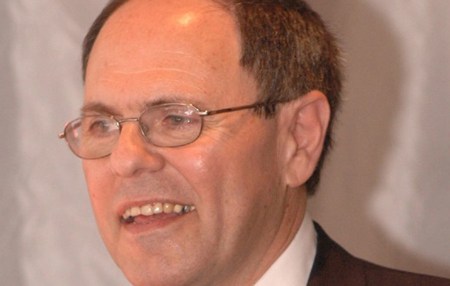
Dani Dayan © Wikipedia
RT | December 28, 2015
Israel has warned Brazil that relations will deteriorate unless it accepts the former Israeli head of the West Bank settlement program as ambassador. The appointment was made four months ago and has still not been approved by Brazil’s government.
The country has continuously failed to give in to diplomatic pressure, leading Israel to up the stakes and issue threats.
Brazilian refusals have gone on since August, when the political appointment was made by Prime Minister Benjamin Netanyahu.
The main sticking point for Brazilian opposition to the appointment is the fact that Dani Dayan – the nominee – lives in the occupied West Bank, as well as being the former head of the Council of Jewish Communities of Judea and Samaria.
Like most [all] of the international community, Brazil’s leftist government believes the building of Israeli settlements on occupied Palestinian land to be illegal. But condemnation at all levels has not resulted in any action on the part of Israel.
Reda Mansour, Israel’s previous ambassador, left Brasilia last week, and now the Israelis are warning that if Dayan does not replace him, there will be consequences for bilateral relations.
“The State of Israel will leave the level of diplomatic relations with Brazil at the secondary level if the appointment of Dani Dayan is not confirmed,” Deputy Foreign Minister Tzipi Hotovely said in an interview to Israel’s Channel 10, according to Reuters. Israel has refused to nominate another candidate for the position.
Hotovely then said Israel would continue to press Brasilia through various means, including the Brazilian Jewish community, as well as direct appeals from Prime Minister Benjamin Netanyahu, who is one of the more outspoken defenders of Israel’s settlement-building in the West Bank.
According to Hotovely, as cited by the Jerusalem Post, this lobbying will take place with the aim of showing that Dayan is “a man who is respectable, worthy, and accepted across Israel’s political spectrum.”
Hotovely added that in the event of Brazil’s refusal, there will be “a crisis in relations between the two countries, and it is not worth going there.”
There has been no comment yet from President Dilma Roussef on whether Brasilia would cave to Israeli demands, but a senior source in the Foreign Ministry told Reuters they “do not see that happening.” And if Dayan is not, in fact, named the next ambassador, the only real alternative will be to have the next highest-ranking official acting in his stead.
Dayan for months remained silent, but on Saturday, in an interview to Channel 2, attributed Brazil’s refusal to “classic BDS” – or boycott, divestment and sanctions. He believes the entire situation owes itself to pressure from Israeli activists, Palestinians and select circles in Brazil.
Tensions between the two countries have been on the rise since the last administration, when Luiz Inacio Lula da Silva worked to warm Brazilian ties with Iran. They rose further last year when an Israeli Foreign Ministry spokesman labeled Brazil “a diplomatic dwarf.” This was after Brasilia recalled its ambassador from Israel as a show of protest over the continuing military offensive in Gaza.
Ex-Salvadoran President Released From Prison
teleSUR December 22, 2015
Salvadoran ex-President Francisco Flores was transferred from prison to a state of house arrest Monday while awaiting trial for allegedly embezzling US$15 million from a Taiwanese aid fund to his personal and political bank accounts.
The former head of state, who governed from 1999 to 2004, was relocated from a high-security prison to a luxury residential area, after an appeals court judge dropped charges of money laundering against him.
In response, the ruling Farabundo Marti National Liberation Front (FMLN) party issued a press release expressing “indignation” over the ruling.
Several local NGO’s including the Social Initiative for Democracy and the Foundation for Legal Studies criticized the court decision, saying the resolution contained “incongruities and irregularities that should be the subject of an investigation”.
Flores was accused earlier this year by the attorney general’s office of allocating a US$15 million Taiwanese donation, intended for earthquake relief and social programs, to fund his Arena electoral campaign.
Flores’s trial on charges of illicit enrichment and embezzlement will begin on Jan. 18, 2016. He denies the charges.
In recent years, the ruling FMLN party has taken several steps to curb political corruption through the establishment of the Anti-corruption and Complex Crimes Unit, which handles cases involving corruption by public officials and administrators. The Constitution has also established a Court of Accounts charged with investigating public officials and bodies.
Argentina’s New President Won’t Seek to Revive Deal with Iran
teleSUR | December 12, 2015
Argentina’s newly elected President Mauricio Macri will not appeal a court’s decision to strike down a deal with Iran over investigating a deadly 1994 bombing of a Buenos Aires Jewish community center, Reuters reported on Friday.
Former leader Cristina Fernandez had said she would appeal the ruling last year voiding the agreement she signed with Iran in 2013 to investigate the country’s suspected role in the bombing.
The memorandum would have launched a joint “truth commission” comprised of five independent judges from third-party countries to investigate the bombing. It would also have allowed for Iranian suspects in the case to be questioned.
Tehran denies any responsibility in the attack that killed 85. No one has yet been found responsible or tried in court over the incident.
Earlier this year, in April, a bill to compensate the victims was passed by parliament, after receiving unanimous approval from the Argentine senate. The legislation provides a one-time compensation of US$170,000 for the relatives of those killed in the attack. The hundreds who suffered “extremely grievous” injuries will receive 70 percent of that amount, while those who suffered “grievous” injuries will receive 60 percent of that amount, according to the Jerusalem Post.
The bombing of the AMIA Jewish center made headlines recently after the mysterious death of Federal Attorney Alberto Nisman who was investigating the case. The Argentine opposition has used his death to try to implicate Kirchner’s government, even though it was not in power in 1994.
Hillary Clinton and a Venezuelan Murder Mystery: Who Killed Luis Manuel Díaz?
By Mark Weisbrot | The Huffington Post | December 4, 2015
On November 30, Hillary Clinton stated that she was “outraged at the cold blooded assassination of Luis Manuel Díaz on stage at a rally last week.” She was referring to the killing of a local opposition leader in Venezuela on November 25. It was clear from her remarks that she was blaming the government for the murder. Her statement appeared to be part of an international campaign to delegitimize Sunday’s congressional elections in Venezuela, and it spread quickly throughout the global media.
Clinton is familiar with these types of international campaigns for regime change. In her recent book, “Hard Choices” she acknowledges her role in helping prevent the democratically-elected president of Honduras, overthrown in a military coup, from returning to office in 2009; and recently released emails add further detail.
This shooting and its aftermath are worth looking at in some detail because they provide a compelling, if typical, example of how the international media has been manipulated, for more than 15 years, to create an image of Venezuela that conforms to certain objectives of U.S. foreign policy.
Within hours of the killing, facts began to emerge that cast doubt on the widely disseminated version of events. Venezuelan authorities started investigating the murder, and issued statements claiming that Díaz was part of a local mafia and was killed by rivals in revenge for a murder that he was implicated in.
For a day or two, these statements did not even appear in the English language media. As the days passed, more details began to emerge. According to these reports, Díaz, the victim, who was the local secretary general of the opposition party Acción Democrática (AD) in Guarico state, was himself on trial for involvement in a murder. He was allegedly a member of a local criminal group, “Los Plateados,” involved in a turf war with a rival gang, “El Maloni.” The 2010 murder in which he was accused of participating involved two members of the rival gang. According to witnesses, he rarely went out of his house for fear for his life. The man accused of killing him at the political rally, Oscar de Jesús Noguera Hernández, was a member of “El Maloni.”
Clearly there are two narratives: the government narrative that this was a mafia killing, resulting from a dispute between rival gangs; and the Hillary Clinton/Venezuelan opposition/international media narrative that it was a political killing linked to the government, intended to intimidate the opposition. Which one is most likely true?
One clue can be found by looking at the Venezuelan opposition’s response to the news and investigative reports about the involvement of Diaz and his accused killers in organized crime. Opposition politicians, who had quickly blamed the government for the murder when it happened, haven’t said anything. They are normally not shy about ridiculing the government for putting its spin on events. According to press reports, politicians from Acción Democrática, a Venezuelan political party, did not show up at Díaz’s funeral. The overall silence has been deafening. This could be because everyone has concluded that the government’s version of the story is basically true.
And reporters for the international and Venezuelan opposition media have shown no interest in the criminal investigation or related facts. Since this was a major event that has shaped perceptions of the electoral process in Venezuela in the middle of a hotly-contested campaign, one might think it would be of interest to reporters covering the campaign. (Another missed story: how did Acción Democrática end up with an organized crime figure as their statewide secretary general?)
So far, no journalist has even bothered to ask opposition politicians, or supporters such as Hillary Clinton or OAS Secretary General Luis Almagro, if they believe this was a political killing in light of the criminal investigation. Almagro has been campaigning against Venezuela since the election campaign started. Immediately after the murder, he issued a statement that strongly implied that the government was responsible.
On Thursday, Venezuela’s attorney general released a statement that one of the arrested suspects, Ronald Hernandez, had confessed to having fired the bullets that killed Díaz. As of this writing, no major English language news outlet has reported this news.
The wheels of justice grind slowly in Venezuela, so it will probably be a while before there is a trial of the accused perpetrators. But for the U.S. government, Hillary Clinton, and their opposition allies, it is mission accomplished. Probably 98 percent of the world who has heard anything about the Venezuelan elections now thinks that the Venezuelan government is assassinating political opponents. Proponents of “regime change” will take international public opinion into account when they decide whether to recognize the results of Sunday’s election, or take to the streets with violent demonstrations as they did in the 2013 presidential elections.
This is how public opinion is shaped when the U.S. government targets a country for regime change, whether it is a dictatorship like Iraq or a democracy like Honduras or Venezuela. It is good to keep this in mind when you are reading the international news.
Mark Weisbrot is a co-director of the Center for Economic and Policy Research in Washington, D.C., and the president of Just Foreign Policy. He is also the author of the new book “Failed: What the ‘Experts’ Got Wrong About the Global Economy” (2015, Oxford University Press).
Featured Video
Ian Proud: Economic Reset with Russia to Save Europe
or go to
Aletho News Archives – Video-Images
From the Archives
Magic Hour for Gates

By Gary Jordan | Wake The F*** UP | March 15, 2021
Bill Gates wants to know everything about you.
He wants to control every aspect of your life.
His insatiable thirst for the supervision and scrutiny of every human being alive has sparked a US$1 billion investment that will blanket the earth in video surveillance satellites, providing real-time feedback with a mere one-second delay. He advocates for Orwellian digital tools to track your every move and has bankrolled US$1.7 billion to provide artificial intelligence that will be used to scan each and every visitor to major event venues worldwide. He wants to do away with end-to-end encryption, so he can snoop on your private conversations. He wants to know when and where you travel and who you travel with. He wants you to eat whatever he says you should eat, drink whatever he says you should drink, think how he wants you to think and know only what he wants you to know. Plus he wants to dictate what goes inside your body.
But he doesn’t want you to know a lot about him.
For instance… continue
Blog Roll
Recent Comments


 Aletho News
- US seizes oil tanker for ‘defying Trump’s quarantine’
- Ian Proud: Economic Reset with Russia to Save Europe
- Senator Rand Paul Introduces Federal Bill to END Vaccine Makers’ Liability Shield
- The Hidden Map: US and Israel May Use Unexpected Neighbors to Attack Iran
- Trump, Netanyahu Agree to Target Iranian Oil Exports to China
- Russia open to discussing Ukraine’s ‘external governance’ – senior diplomat
- US Caribbean Buildup Near $3B — Report
- Munich Security Conference and the U.S. elephant in the room
- Epstein Pitched JPMorgan Chase on Plan to Get Bill Gates ‘More Money for Vaccines’
- Germany’s CDU Pushes Real-Name Social Media Mandate and ID Checks
- If Americans Knew
- Israel-backed border guards, GHF-linked aid – Not a ceasefire Day 128
- Israel battles Palestinian right of return, one Palestinian at a time – Not a ceasefire Day 127
- Noor’s short life of unimaginable suffering
- Israel Destroyed Gaza’s Hospitals. Now It’s Banning Doctors Without Borders.
- Is Spite of What Zionists Say, It’s a Good Thing to Criticize Governments
- Palestinian mother, daughter recount strip searches, harsh conditions in Israeli detention
- Israel used weapons in Gaza that made thousands of Palestinians evaporate
- ADL’s Stats Twist Israel’s Critics Into Antisemites
- Why Is the World Silent When the Gaza Genocide Is Not Over?
- In Gaza: 8,000 bodies under rubble, 3,000 missing – Not a ceasefire Day 126
- No Tricks Zone
- Unfudging The Data: Dutch Meteorological Institute Reinstates Early 20th Centruy Heat Waves It Had Erased Earlier
- German Gas Crisis…Chancellor Merz Allegedly Bans Gas Debate Ahead of Elections!
- Pollen Reconstructions Show The Last Glacial’s Warming Events Were Global, 10x Greater Than Modern
- Germany’s Natural Gas Storage Level Dwindles To Just 28%… Increasingly Critical
- New Study Rebuts The Assumption That Anthropogenic CO2 Molecules Have ‘Special’ Properties
- Climate Scientist Who Predicted End Of “Heavy Frost And Snow” Now Refuses Media Inquiries
- Polar Bear Numbers Rising And Health Improving In Areas With The Most Rapid Sea Ice Decline
- One Reason Only For Germany’s Heating Gas Crisis: Its Hardcore-Dumbass Energy Policy
- 130 Years Later: The CO2 Greenhouse Effect Is Still Only An Imaginary-World Thought Experiment
- New Study Affirms Rising CO2’s Greening Impact Across India – A Region With No Net Warming In 75 Years
 Aletho News