Former Colombia President Alvaro Uribe’s Brother Arrested for Links to Death Squads
teleSUR | February 29, 2016
The brother of former Colombian President Alvro Uribe was arrested Monday accused of having ties with paramilitaries — also known as death squads — in the country as well as other crimes.
Santiago Uribe Velez was arrested in the coastal city of Medellin by officials from the attorney general’s office, who have long been monitoring the former president’s brother.
Velez is accused of forming and developing the paramilitary group known as “Los Doce Apostoles” (The Twelve Apostles) in the 1990s.
According to testimony by officials in the municipality of Yarumal in Velez’ home state of Antioquia, Velez was among a group of farmers who had the idea of forming an armed group to protect traders who were victims of extortion in the region.
The group then created an armed paramilitary unit in the 1990’s that committed various crimes, with the complicity of the Antioquia police department.
Juan Carlos Meneses, chief of police for Yarumal, said that when he arrived to the region in 1993, there was “a group of people doing cleaning, or social cleansing, or disappeared people who identify themselves as guerrillas, as thieves, as kidnappers, extortionists or even if they only had a vice, or vices. The only thing you have to do is, when that group goes to do a job, you have to collaborate with them.”
Meneses added that he would “collaborate” by giving Velez a sum of money every month and pointed out that Velez’ group had the full support of the state and national authorities, reported Colombian daily El Espectador.
While Uribe was president (2002-2010), his administration was tarnished by scandals. This included accusations of housing death squad members at his ranch in the 1980s — some of the most violent times in the country — when he was governor of Antioquia. He was accused of maintaining those ties while leading the country.
Paramilitary groups targeted not only guerrilla fighters, but also political opponents, left-wing activists, as well as academics and have been found guilty of committing numerous human rights abuses.
Even though these groups were technically demobilized between 2003-2006 under an agreement with the government, they continue to be a strong force across the country.
Human rights groups have long demanded that Uribe clarify his role, if any, in the formation of paramilitary groups. However, he has denied all allegations and continues to be active in politics, serving as a senator for the Center Democratic party.
Argentine State Workers Join National Strike Against Macri
teleSUR – February 24, 2016
Argentine public sector workers will converge in front of the presidential palace Wednesday as part of a national strike to protest the policies of President Mauricio Macri.
Macri has fired approximately 10,000 state workers since the beginning of 2016, with even more layoffs expected in the coming months as government ministries continue to review contracts.
Wednesday’s national strike is being organized by the Association of State Workers, known as ATE, together with the Argentine Workers Union.
ATE President Hugo Godoy added that there would be marches and demonstrations in provincial capitals as well.
President Macri is ideologically disposed to reducing the public sector, arguing that private investment should be the source of new employment.
During an event where he announced the elimination of retention taxes on mining, Macri said the public sector employment generated during the previous five years, under the administration of his predecessor, was “unnecessary” and a product of “clientelism.”
Vice-President Gabriela Michetti has accused public sector workers of being “Kirchner militants,” referring to the supporters of the governments of the late Nestor Kirchner and his successor and wife, Cristina Fernandez de Kirchner.
Wednesday’s demonstrations will be an opportunity to observe the reaction of state security forces in light of a new security protocol implemented by the Macri government, which now allows police to break up protests.
Critics have said the security protocol opens the door to criminalization and repression of protest.
Colombian Army Kills 7 ELN Rebels, Maybe Peace Talks Too?
teleSUR – February 21, 2016
The Colombian army killed at least seven ELN guerrillas in a special operation Saturday that took place near its border with Venezuela – an attack that is sure to have repercussions for the preliminary peace negotiations between the rebel group and the Colombian government.
Two other ELN (National Liberation Army) members were captured in Sunday’s offensive in the northern department of Arauca.
The Colombian Defense Ministry later tweeted that six rebels were successfully “neutralized” in the special operation. Meanwhile, the presidency tweeted a special congratulations to its troops for the “strong blow against the ELN in Arauca.”
According to Army Commander, General Alberto Mejia, the attack was a joint operation between army intelligence, the national air force, the national police and had the full support of the attorney general.
However, the attacks come as the ELN and the government have been trying to undergo preliminary peace discussions in an effort to end the ongoing fighting in the country. The talks have been tense in past weeks as both sides have accused the other of stalling negotiations while aggression on the ground continues.
The ongoing hostilities threaten to put in jeopardy the peace talks between the government and the FARC (Revolutionary Armed Forces of Colombia) rebels – Colombia’s largest guerrilla group – who are aiming to sign a final peace deal by their self-imposed deadline of March 23.
The two sides have been undergoing negotiations in Havana, Cuba, for over three years in an attempt to bring the five decades of fighting to an end, which has seen over 220,000 people killed and millions more displaced or disappeared.
However, there remain several critical factors to actually reaching peace in the country, which include making peace with the second largest guerrilla group in the country, the ELN.
‘Paz Colombia’: the Latest US Attempt to Control Colombia?
By Justin Podur – teleSUR – February 8, 2016
The U.S. has announced funding for a new Plan Colombia as the country moves towards a resolution to its civil war. What is its real purpose?
Colombia’s peace process has entered its final phase. Agreements have been reached on land reform, political participation, and the rights of victims. The discussions are now focused on ending the conflict and implementation and verification of the accords. The deadline for a final agreement is March 23, and it might be met.
In this last phase of negotiations, Colombia’s president reached out to the US for aid. On February 4, a new initiative was unveiled in Washington by presidents Santos and Obama: the new version of Plan Colombia, which they called “Paz Colombia”. Obama began by commemorating the success of Plan Colombia, a plan that brought military helicopters and escalated aerial fumigation to the country. “We were proud to support Colombia and its people as you strengthened your security forces, as you reformed land laws, and bolstered democratic institutions,” he said. “And after 15 years of sacrifice and determination, a tipping point has been reached. The tide has turned.”
Santos elaborated on the successes since Plan Colombia was rolled out in 2000: “Today we can say without a doubt that the goals that we had in 2000 — such as fighting the drug war, strengthening institutions, and imposing the rule of law, and to take social programs to great parts of remote Colombian territory — those objectives have been met.”
The history of Plan Colombia is slightly different than that presented by Obama and Santos. As lawyer Dan Kovalik outlined in this article for teleSUR English, the problems the president’s claim Plan Colombia solved were mostly made worse by it.
Take Santos’s objectives, which Plan Colombia supposedly met: The drug war? There may be a peace agreement between the government and FARC, but the drug war promises to go on and on. The rule of law and the strengthening of institutions? These were certainly areas of struggle over the past 15 years, but any gains made there were fought for by the people, not flown in by the military helicopters of Plan Colombia. Social programs and protections? Many have been lost under neoliberalism – some have been preserved by struggle by Colombia’s movements.
What about Obama’s list? Security forces were strengthened, to be sure. New equipment was introduced and soldiers were trained in its use. But the Plan Colombia years were years of collaboration between the military and the paramilitaries, who were responsible for the most horrific violence. Reformed land laws? The 15 years of Plan Colombia were a time of losses of land and of rights to land. Colombia’s 1991 Constitution was one of the most progressive in Latin America when it came into force. Indigenous and Afro-Colombian territorial rights were enshrined. Paramilitary violence escalated after this constitution, as elites deployed their forces to create facts on the ground: specifically, to use terror and massacre to force people to flee the territories they had just won legal rights to. Millions of people were displaced from their lands in this way. Legal changes under the 15 years of Plan Colombia, the “reformed land laws”, attempted to retroactively legalize this loss of land. As for the bolstering of democratic institutions, it was in the Plan Colombia years that the “para-politica” or “para-Uribe” scandal occurred – evidence of signed contracts between politicians and paramilitaries to kill and displace local people.
There were other scandals too, in the Plan Colombia years. The Colombian security services wiretapping politicians involved in the peace process. The Colombian military entrapping and murdering completely innocent peasants, dressing them up as guerrillas, and using the deaths to inflate the numbers of casualties their units were inflicting (“false positives”).
At the announcement of the Paz Colombia plan, Obama said that the US would support the peace the same way it had supported the war. If this is the plan, it is frightening. When Plan Colombia started in 2000, there was actually a peace process underway between the FARC and the government. It had begun just a year before, in 1999. There is little question that Plan Colombia helped to derail it, steering the Colombian government towards a military solution.
At $450 million USD, the scale of Paz Colombia was reportedly disappointing to President Santos. The original Plan Colombia was announced at $1.3 billion USD, most of which paid for US-manufactured attack helicopters. Colombia paid several times that amount out of its own budget for Plan Colombia. Colombians paid for Plan Colombia, and they will be paying for Paz Colombia.
Those were not the only costs Colombians paid. The environmental and health costs of the spraying are difficult to calculate. In 2008, Ecuador took Colombia to court over the ecological and health damage caused by aerial fumigation on the Colombia-Ecuador border. In 2013, the lawsuit was settled for $15 million, which environmentalists argued was an extreme undervaluation of the damage. The true damages might be in the billions.
Many problems remain. Neither the peace accords nor Paz Colombia deal with the bigger cause of violence over the decades: the paramilitaries. Implementation will be fraught with difficulties. When previous guerrilla groups disarmed and joined politics (Union Patriotica and M-19), they were devastated by state-backed paramilitary assassination campaigns. Unarmed social movements have struggled during the talks, as they did during the war, to get their voices heard and their sacrifices recognized.
But a negotiated end to the armed conflict has long been a demand of these movements, and its realization is to be celebrated. The movements will be the ones fighting to prevent Colombia’s post-war reality from being “mired in structural poverty and violence and endemic corruption”, as Hector Perla wrote in teleSUR last week.
It is not accurate to say that the US is standing with Colombia in peace as it did in war. It might be more accurate to say that the US is trying to control the peace as it controlled the war. If the history of Plan Colombia is a guide, an independent path might yield a better peace.
The Wages of Plan Colombia Have Been Death

United Self-Defense Forces of Colombia (AUC) paramilitaries patrol a small village. The AUC have been responsible for torture, extrajudicial killings, war crimes and crimes against humanity. Photo: Justice for Colombia
By Daniel Kovalik | teleSUR | February 3, 2016
Plan Colombia’s 15th anniversary will be celebrated in Washington Thursday. But the legacy of the plan is marked by massacres, mass graves, and death squads.
According to Colombia’s Victims Unit, the number of victims of Colombia’s civil war has surpassed 7 million. This number includes those who have been killed, disappeared or displaced since 1956. For a country of under 50 million citizens, these numbers are staggering, and certainly newsworthy, but apparently not for the mainstream media.
Of course, the violence and human rights abuses in Colombia have constituted inconvenient truths for the Western media as the U.S. has been a major sponsor of the violence and abuses in that country.
Indeed, a notable fact in the Colombia Victims Unit report is that “that the majority of victimization occurred after 2000, peaking in 2002 at 744,799 victims.” It is not coincidental that “Plan Colombia,” or “Plan Washington” as many Colombians have called it, was inaugurated by President Bill Clinton in 2000, thus escalating the conflict to new heights and new levels of barbarity. Plan Colombia is a plan pursuant to which the U.S. has given Colombia billions in mostly military and police assistance.
As Amnesty International has explained, these monies have only fueled the human rights crisis in Colombia:
Amnesty International USA has been calling for a complete cut off of US military aid to Colombia for over a decade due to the continued collaboration between the Colombian Armed Forces and their paramilitary allies as well the failure of the Colombian government to improve human rights conditions.
Colombia has been one of the largest recipients of US military aid for well over a decade and the largest in the western hemisphere. . . . Yet torture, massacres, “disappearances” and killings of non-combatants are widespread and collusion between the armed forces and paramilitary groups continues to this day. . . .
“Plan Colombia” — the name for the US aid package since 2000, was created as a strategy to combat drugs and contribute to peace, mainly through military means….
Despite overwhelming evidence of continued failure to protect human rights the State Department has continued to certify Colombia as fit to receive aid. The US has continued a policy of throwing “fuel on the fire” of already widespread human rights violations, collusion with illegal paramilitary groups and near total impunity.
Furthermore, after 10 years and over $8 billion dollars of U.S. assistance to Colombia, U.S. policy has failed to reduce availability or use of cocaine in the US, and Colombia’s human rights record remains deeply troubling. Despite this, the State Department continues to certify military aid to Colombia, even after reviewing the country’s human rights record.
However, what Amnesty International did not explain are two salient facts.
First, the human rights group does not mention that Plan Colombia was initiated in the midst of peace talks between the Colombian government and FARC guerillas, and actually played a key role in derailing these talks, and with them the prospects for peace – prospects which have only been revived recently.
Second, Amnesty International does not mention that the paramilitaries which continue to collaborate with the U.S.-backed military in Colombia were actually a creation of the U.S. Thus, these paramilitaries were the brainchild of the Kennedy Administration back in 1962 – that is, two years before the FARC guerillas were even constituted.
As Noam Chomsky has mentioned a number of times, Kennedy commenced the U.S.’s counterinsurgency program, of which paramilitaries were a key component, in order to combat the scourge of Liberation Theology unleashed by Vatican II. And indeed, as Chomsky has also noted, the U.S. School of the Americas has bragged about how it helped “destroy liberation theology,” which emphasizes the “preferential treatment of the poor.”
Colombia has been ground zero for this plan which has targeted, among others, Catholic clergy for assassination. Accordingly, as documented by the Episcopal Conference of Colombia, over 80 Catholic clergy have been murdered in Colombia since 1984 — including 79 priests and 2 bishops — for the crime of advocating on behalf of the poor.
One brave Colombian Liberation Priest, Father Javier Giraldo sent a letter in September of 2011 to the U.S. Ambassador to Colombia, P. Michael McKinley, imploring him to prevail upon President Barack Obama to reconsider his decision to release millions of dollars in military aid to Colombia in light its abysmal human rights record.
In this letter, Father Giraldo informed the Ambassador that Colombian military’s directive known as EJC 3-10 – a directive based upon General Yarborough’s 1962 recommendation to organize paramilitary groups – is still very much in effect today in the form of paramilitary groups which both the U.S. and Colombian governments attempt to dismiss as mere criminal bands known as “BACRIM.”
According to Father Giraldo, these neo-paramilitary groups, as before, continue to work “in close harmony with the Army and Police” to carry out crimes against humanity, including forced displacement, with the number of internally displaced people in Colombia now at over 6 million; extra-judicial killings which have resulted in the proliferation of mass graves throughout Colombia; and “the systematic crime of forced disappearances, which according to national and international agencies now affects more than 50,000 families.”
And, he also places the responsibility for these continued abuses firmly at the feet of the U.S. Thus, Father Giraldo informs the U.S. ambassador that “[t]he current commanders take part in the same immunity, and impunity and the assistance from your government only reinforces their criminal activity.”
As Father Giraldo explains, the U.S.’s military/paramilitary policy is part and parcel of an unjust economic policy which allows for the unconstrained penetration of Colombia by multinational corporations at the expense of the Colombian people. He states:
The permits issued for mining exploitation to numerous transnational businesses have activated paramilitaries and armed conflict tremendously. They are leaving huge populations of poor people without any land or resources. The destruction of the environment and the destruction of indigenous, campesino and Afro-Colombian communities by these projects are leading to every kind of resistance. This means that the security of these companies and of their destructive projects is only effective with the protection of enormous contingents of paramilitaries secretly co-opted by the armed forces and by the government security agencies, which do not hesitate to murder the leaders of the resistance.
Father Giraldo further describes:
The permanent genocide that is being carried out in Buenaventura, where the neighborhoods and the Community Councils around the port are being invaded by paramilitaries supported or tolerated by the armed forces. They cut people in pieces with horrifying cruelty throwing the body parts in to the sea, if any of them dare to resist the megaproject for the new port. This included the expulsion of people living in the poorest areas and it includes the expropriation of the plots of garbage dumps where these people, in the midst of their misery, have over decades tried to survive.
Not surprisingly, Father Giraldo’s prophetic voice fell on deaf ears, and Obama proceeded with the release of the military aid to Colombia. And, it is the deathly silence over the horrifying human rights situation in Colombia which allows the U.S. to continue its destructive military/economic policy in that country.
Son of Argentine Indigenous Leader Charged for ‘Threats’
Activist Sergio Chorolque was hit with charges just days after his mother was ordered to remain behind bars

Human rights advocates that support Chorolque have alleged the charges are motivated by him and his mother’s activism. | Photo: Diario Veloz
teleSUR – January 31, 2016
The son of a prominent Argentine indigenous activist was charged Saturday on allegations his advocates say are politically motivated.
Sergio Chorolque is accused of issuing death threats to a municipal worker, and could face up to two years imprisonment.
Human rights advocates that support Chorolque have alleged the charges are motivated by his and his mother’s activism.
Chorolque’s mother Milagro Sala has already been described by some human rights activists as the first political prisoner of the new government of President Mauricio Macri.
The well-known indigenous leader, founder of the 70,000 member Tupac Amaru organization, was arrested on January 16 in the Jujuy on charges of inciting violence after protesting in a month-long sit in against Governor Gerardo Morales, who ordered her arrest.
A judge cleared Sala of those charges on Friday, but before she walked out of jail she was handed down a new set of accusations and ordered to stay behind bars while investigations into charges of “illicit association, fraud, and extortion” are launched at the request of the Jujuy government, local media reported.
As authorities peg various charges on the popular social leader, now one of Sala’s children has been charged with leveling death threats against a labor activist.
According to the conservative Argentine newspaper La Nacion, Morales has had a tense and “estranged” relationship with Sala for years. Morales has also had an antagonistic relationship with the social organizations and collectives with which Sala is aligned. Before her arrest, Sala was protesting in support of various organizations at risk of losing their legal status and social benefits after Morales threatened to suspend them via decree.
Sepur Zarco Trial: Guatemala Women Seek Justice for Sex Slavery
teleSUR – January 30, 2016
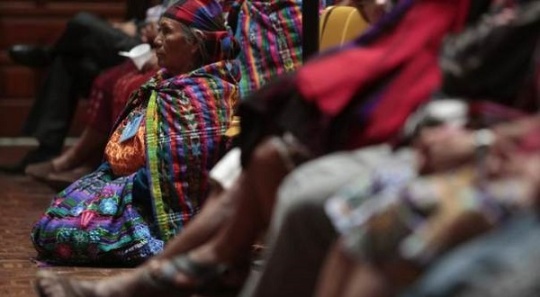
Fifteen Mayan women who were raped and forced to be sex slaves after their husbands were disappeared are demanding justice 30 years after the abuses.
Guatemala is about to launch a landmark trial against former military officers accused of committing sexual enslavement and forced disappearance during the most brutal years of the country’s 36-year civil war.
Here’s what you need to know about the historic trial that is scheduled to kick off Monday, Feb. 1.
1. Fifteen women were sexual and domestic slaves.
Guatemalan soldiers forcibly disappeared 15 men from an eastern Maya Q’eqchi’ village in 1982. It was one of the bloodiest years of Guatemala’s civil war, when dictator Efrain Rios Montt’s military regime was unleashing a scorched earth campaign targeting rural Mayans. After the army disappeared the men, they came back for their wives.
The women were raped and their belongings destroyed. They were taken captive and forced to live at the Sepur Zarco military base, where they were enslaved as domestic servants for the soldiers and systematically raped. The women were forced to labor in 12 hour “shifts,” an abhorrent system that lasted several months.
Though the enslaved shifts ended at the end of 1983, 11 of the 15 women were forced under military threat to stay at Sepur Zarco doing domestic chores for the soldiers for six years until the base closed in 1988. The other four women managed to flee to the mountains with their children where they endured painful hardship for years, including suffering the deaths of most of their children.
All of the women, now in their 70s and 80s, bear enormous physical and emotional trauma from the experience. They also faced stigma in their communities for the violence they endured, and did not share what had happened to them for 30 years, finally coming forward in 2011 to seek justice.
The trial accuses two defendants, former Sepur Zarco chief Esteelmer Reyes Giron and former regional military commissioner Heriberto Valdez Asij, of committing crimes against humanity, including sexual violence and sexual slavery, domestic violence, murder, and forced disappearance. They have been held in remand since 2014 awaiting the trial.
2. The Sepur Zarco case is an internationally historic trial.
The trial of two former military officers for crimes against humanity marks the first time in history that sexual slavery charges are prosecuted at the national level, in the country where the crimes were committed.
The more internationally high-profile case of sexual slavery during armed conflict, the case of Japan’s “comfort women,” was rejected by a Japanese court. Former comfort women subjected to sexual slavery during World War II put Japan on trial in a mock war crimes tribunal in Tokyo in 2000, but the case never officially went to court in the country.
Guatemala’s Sepur Zarco trial could set a new precedent for prosecuting sexual violence in the context of armed conflict, which rights defenders say is one of the most widespread yet under-recognized violations of human rights.
3. It is also a historic trial for Guatemala.
The Sepur Zarco trial marks the first that that Guatemala will consider a sexual violence case as an international crime, which could set a precedent for future trials.
The crime of sexual slavery has been recognized internationally since the early 1900s, when the 1907 Hague Convention prohibited rape and the use of prisoners of war as slaves. The 1926 Slavery Convention elaborated anti-slavery laws with a definition that applies to sexual slavery. The Rome Statute of the International Criminal Court, which came into force in 2002, specifically criminalized sexual slavery.
A standing definition of sexual slavery was detailed in the 1998 U.N. Special Rapporteur’s final report on contemporary forms of slavery, “Systematic Rape, Sexual Slavery, and Slavery-Like Practices During Armed Conflict,” also known as the McDougall Report.
The report defined sexual slavery as “the status or condition of a person over whom any or all of the powers attaching to the right of ownership are exercised, including sexual access through rape or other forms of sexual violence.” More simply put, the McDougall report explained: “Slavery, when combined with sexual violence, constitutes sexual slavery.”
The trial will consider the crimes committed as war crimes and crimes against humanity.
Rape was widespread during the civil war. The Sepur Zarco case has the potential to be a precedent-setting trial to break the cycle of impunity for sexual violence in Guatemala.
4. Rape was a concerted strategy in the civil war.
In 1999, three years after the peace accords were signed in Guatemala, the U.N.-backed Truth Commission investigating civil war atrocities found that rape was systematic and widespread during the conflict. According to the commission, “the rape of women, during torture or before being murdered, was a common practice aimed at destroying one of the most intimate and vulnerable aspects of the individual’s dignity.”
The Truth Commission also found that violence against women, include rape, torture, and murder, was often motivated by their political affiliations, social participation, and ideals, and often combined with other human rights abuses. The report attributed 93 percent of all recorded human rights violations to the state, 85 percent for which the army was responsible.
Despite the countless cases of sexual violence during the civil war, the Sepur Zarco case is the only one that has gone to trial in the country where impunity for war crimes has long remained the norm.
According to the Guatemalan organization Women Transforming the World, sexual violence continues to be inflicted on women by state security forces in conjunction with other human rights violations, such as forced displacement.
5. The victims in Sepur Zarco were targeted for defending their land.
Maya Q’eqchi’ communities in Guatemala have long suffered deep inequality, poverty, and precarious access to land. Before they were disappeared in 1982, the 15 husbands of the victims in the Sepur Zarco case were fighting for legal titles to defend the land they had lived and worked on for years. Because they were standing up for their land rights, they were despised by local large landowners, labeled as leftist insurgents, and made into targets to be silenced.
Land conflicts and unequal ownership are central to the history of Guatemala’s civil war. In 1954, a CIA-backed coup ousted the democratically elected president and reversed the fledgling agrarian reform program that aimed to expropriate idle lands from elite landowners and redistribute land to campesinos. The coup not only triggered more than three decades of civil war, but also helped to lock in one of the most unequal land distribution patterns in Latin America.
Rios Montt’s U.S.-backed bloodshed was nominally a campaign to crush leftist guerrilla uprisings in Guatemala, but in practice many poor Mayan campesinos were targeted as “insurgents” as the military protected the interests of elite landowners.
Photo credit – Reuters
Featured Video
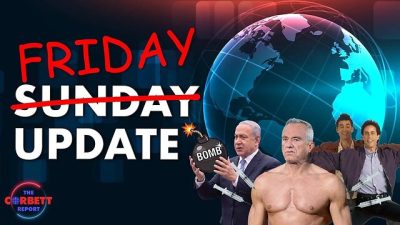
Racist Seinfeld Dances for Joy as Bibi Unveils His New Map
or go to
Aletho News Archives – Video-Images
TV Drama Review
Japanese drama projects Japan’s wartime atrocities onto Chinese characters

Global Times | October 25, 2026
By portraying Chinese characters as perpetrators of ruthless violence while casting Japanese Self-Defense Forces (SDF) intelligence operatives as defenders, the season 2 of the Japanese drama Vivant has recently drawn criticism from Chinese netizens, who argue that its depiction turns historical reality on its head while ignoring Japan’s wartime atrocities.
The TBS drama series – a spy suspense story in which an alleged unofficial intelligence unit of the SDF operates across the globe — has attracted a passionate fanbase. Its currently airing season 2 opened with a household rating of 18.8 percent, the highest for a TV drama this year, according toa commentary article by Japanese media Toyo Keizai.
What draws attention is the portrayal of the enemies in the series, the article noted. Scenes in which the Chinese organization subjects kidnapped members of the SDF unit to brutal torture are repeated with unrelenting intensity.
It is rare for Japanese TV dramas to explicitly portray a real-life country as the enemy, the article noted.
Japanese Prime Minister Sanae Takaichi also made a reference to the drama, saying that she has been recording Vivant and hopes to binge-watch it over the year-end and New Year holidays, according to Japanese media outlets.
China’s CCTV News report on Sunday revealed that the drama features scenes in which Chinese personnel cut off the fingers of and stab Japanese intelligence operatives in the abdomen. Such acts bear striking similarities to the torture inflicted on Chinese nationals by invading Japanese troops during the World War II.
The drama distorts the truth by attributing these atrocities to modern Chinese characters. Beneath the surface, it subtly glorifies Japan’s cross-border overseas operations, blurs the functional boundaries of the SDF and implicitly promotes an expansionist narrative, per CCTV News. … continue
Blog Roll
 Aletho News
- EU facing trillion-euro debt hole while seeking more cash for Kiev
- How US, Europe, Persian Gulf states exhausted missile stockpiles, splurged billions to defend Israel
- Up in arms… Koreans reject U.S. empire’s plan to make South Korea the next Ukraine
- Iran, Turkey, Pakistan, Saudi Arabia could advance region-led security framework in Tehran: FM spox
- Netizens condemn Japanese drama for projecting Japan’s wartime atrocities onto Chinese characters
- Racist Seinfeld Dances for Joy as Bibi Unveils His New Map
- A West Bank War for Netanyahu’s Election Campaign, Could It Backfire?
- Yemen denounces European Parliament’s ‘hypocritical’ push to blacklist Ansarullah
- Qalibaf: UAE’s UN bid aims to ‘clear the runway’ for ‘Greater Israel’, whitewash genocide
- Pakistan reopens Iran border after boosting security: Report
- If Americans Knew
- An error has occurred; the feed is probably down. Try again later.
- No Tricks Zone
- Sudden Stratospheric Warming, Powerful El Niño Combination May Lead To Extreme Europe Cold, Energy Crisis!
- Two New Studies Find Thwaites Glacier Melt Cannot Be Driven By Human Activity Or A Warming Ocean
- E-Cars Reduce CO2 Emissions By Only 41% Compared To Internal Combustion Engine Vehicles
- Predictions Made By Renowned Climate Professor Over Past Decades Have Been Proven To Be Poor
- New Study Suggests Large Regions Of The Pacific Ocean Have Been Cooling For The Last 80 Years
- Germany’s Green Energy Debacle: High Energy Costs Force Kahla Porzellan to Close After 182 Years!
- New Study: 50 Years Of The Most Aggressive ‘Net Zero’ Policies Can Only Affect The Global Climate By 0.03°C
- US September “Heat” Was No Record…Many Records Set Decades Ago
- Latest European Green Energy Debacle; Portugal’s Largest Flagship Solar Park Insolvent!
- Green Energy Debacle: German Expert Professor Fritz Vahrenholt Warns Of Severe Economic And Social Consequences

