Venezuela’s Political Killings: A Sign of the Repression to Come?
By Ryan Mallett-Outtrim | Venezuelanalysis | April 4, 2016
A mayor gunned down in a drive by shooting just meters from his own doorstep. A legislator shot by paramilitaries in plain sight outside a bodega. A solidarity activist butchered in a home invasion. Two police run over by militants in a stolen bus. These are just the latest in a wave of killings in Venezuela. The motives behind most of these killings remain unclear, though it’s hard to not be disturbed by what appears to be a growing wave of political violence gripping the country. In response, Venezuela’s right-wing, the mass media and even most human rights groups are all following a well worn script that seeks to downplay these killings, or at least deflect attention away from the context behind the violence. For example, Human Rights Watch’s latest report on Venezuela is basically just a call for Venezuela’s supreme court to be stacked with supporters of the right-wing political coalition, the MUD. Another of their recent reports focused on claims that imprisoned right-wing political figure Leopoldo Lopez didn’t receive a fair trial. Their third most recent report (at the time of writing) was another complaint about the Maduro administration’s human rights record, including false claims that “security forces violently cracked down on largely peaceful protests” in 2014. As I saw myself at the time, those suppressed “largely peaceful protests” included gangs of armed right-wing militants throwing Molotovs at hospitals, sniping at civilians from rooftops and setting up barricades to hold neighbourhoods hostage. Then and now, Venezuela is increasingly becoming a dangerous place for leftists.
Indeed, all the recent victims were either leftists, or police seeking to contain violent right-wing demonstrations. The latest victim was Marco Tulio Carrillo, the socialist mayor of a municipality in Trujillo state. Other victims include Haitian-Venezuelan solidarity activist Fritz Saint Louis, Tupamaro legislator Cesar Vera, and two police officers in Tachira state.
These killings take on a new dimension when contextualised: the right-wing MUD is preparing to oust Maduro, and wrestle control of all branches of the state from the left.
If they achieve this, the worst case scenario would be a return to the repression of the 20th Century, when leftists were all too often the targets of neoliberal regimes. Today’s right-wing has repeatedly shown it not only has no interest in disavowing violence, but is willing to turn on the Venezuelan people for their own political gain. From the 2002 coup to the violence of 2014, there has always been a sector of the right-wing that has never been afraid to use terror against ordinary Venezuelans. If it takes complete power, perhaps the MUD will learn to speak out against violence such as the recent killings, or perhaps not. After all, much of the MUD is generally slow to condemn violence against leftists, if they do so at all. So if they take complete power, will the right reign in their excesses, or rule with terror?
Colombia: ‘Armed Strike’ Forced on Residents by Paramilitaries
teleSUR – April 1, 2016
As the possibility of a peace deal is becoming more certain, a surge of paramilitary violence in the country raises concerns of lasting peace.
In what’s being called an “armed strike” the Usuga Clan, a nacro-paramilitary outfit, ordered local residents in three northern departments in Colombia to stop all their activities for two days. Flyers distributed beforehand threatened them with retaliation if they dared to leave their homes.
They also forced local shops to shut down and intimidated children not to go to school, while blocking roads and rivers, said Colombia’s Ombudsman Alfonso Cajiao.
In the department of Sucre, education centers were shut down and two people were assassinated since the beginning of the forced strike, reported a local organization.
An assassination attempt on human rights activist and ex-senator Piedad Cordoba Friday is believed to be the work of paramilitaries. The Usuga Clan also killed a policeman and a military officer Thursday. Both officers were unarmed and dressed as civilians when they were killed.
President Juan Manuel Santos strongly condemned what he called a “criminal group” in a press conference.
“I insist that the Usuga Clan is a criminal organization, and will not be granted any political treatment. I can only recommend that they hand themselves over to the country’s justice,” he added, reporting that security forces arrested 56 members belonging to the armed group Friday, who were allegedly intimidating the local population on social media and in the streets.
The armed strike comes as various far-right sectors and paramilitary groups are calling for a national mobilization Saturday to protest against the peace deal currently being negotiated between the Colombian government and the Revolutionary Armed Forces of Colombia in Havana.
On Thursday, far-right leader and ex-president Alvaro Uribe, criticized the peace deal, saying the deal was “not a peace deal, it is an impunity deal,” in an interview with the Spanish-based journal, ABC.
“The agreement could end up sending to prison all those who fought terrorism,” he dramatically warned, denying any form of state terrorism or paramilitary violence like the scandal of “false positives” carried out during his presidency.
As the agreement is gets closer, a surge of paramilitary violence has also raised concerns among progressive sectors and activists in the country who fear that the Colombian state will be unable to guarantee their security even after the peace deal is signed.
Venezuelan Socialist Politician Slain in ‘Vile’ Killing
By Ryan Mallett-Outtrim | Venezuelanalysis | April 1, 2016
Venezuelan authorities announced Friday they were investigating the killing of a socialist politician in Trujillo state.
Marco Tulio Carrillo was “shot repeatedly” outside his home in Trujillo Thursday night, according to a statement from Venezuela’s public prosecutor’s office. Carrillo was the mayor of the La Ceiba municipality, and a member of President Nicolas Maduro’s socialist party, the PSUV.
The prosecution said Carrillo was hit by eight bullets fired from a passing car. No suspects have yet been named.
The killing has been condemned by other socialist politicians.
“Another worthy revolutionary has been vilely felled,” tweeted PSUV legislator Hugbel Roa.
Carrillo is the third pro-Maduro political figure to be killed in the past week.
Over the weekend, Haitian Venezuelan political figure and solidarity activist Fritz Saint Louis was gunned down in his home. Saint Louis had served as the international coordinator for the United Haitian Socialist Movement, as well as secretary-general of the Haitian-Bolivarian Culture House of Venezuela. It’s unclear whether Saint Louis’ killing was politically motivated, though in 2015 he ran as a candidate in the PSUV’s National Assembly election primaries.
His death followed the suspected assassination of another socialist politician last Thursday. Legislator Cesar Vera was shot in Tachira state, in what local authorities say may have been a paramilitary attack.
Vera was a member of the Great Patriotic Pole, a political coalition of parties aligned with the PSUV. He was also a prominent figure in the leftist militia, the Tupamaro movement.
In another incident of political violence, two police officers were killed by right-wing militants earlier this week. The officers were killed while responding to a protest in Tachira state. Witnesses have said the pair were run over by a bus that had been hijacked by militants.
Derailing Peace Deal in Colombia
By Jonathan Marshall | Consortium News | March 31, 2016
Cuban and U.S. leaders overcame immense obstacles to end more than a half century of confrontation between their countries with President Barack Obama’s visit to Havana. But they were unable to end more than a half century of political violence in Colombia by brokering a peace pact that was scheduled to be signed in Havana on March 23, one day after Obama departed.
That target date was set by Colombian President Juan Manuel Santos and leaders of the Revolutionary Armed Forces of Colombia, or FARC, during negotiations hosted by Cuban President Raúl Castro last September. Now the parties are aiming for a new deadline at the end of this year.
After 52 years of conflict, they are used to setbacks and delays. But the armed struggle has already killed more than 220,000 and claimed 7.9 million registered victims — including 77,000 who disappeared — so Colombia desperately needs peace and reconciliation as soon as possible.
The key sticking point concerns parties who are not at the negotiating table. They include a smaller but still potent rebel group, the National Liberation Army, or ELN. More important are right-wing and criminal paramilitary groups who have the motive and means to massacre FARC soldiers and their civilian sympathizers if they get the opportunity.
Until Bogota — and Washington — find a convincing way to restrain these paramilitary terrorists after FARC lays down its arms, Colombia will never find peace.
The peace process has made great strides over the past year. Overall violence is down. The government pardoned some FARC prisoners and helped them return to civilian life. FARC promised to end child recruitment and release children under the age of 15 from its ranks; it also conducted an historic ceremony of public apology for its part in killing civilians during a 2002 firefight with paramilitary forces. The two sides engaged in clearing mines for the first time this spring. They have jointly asked the United Nations Security Council to monitor an eventual ceasefire.
But the Colombian government demands that FARC guerrillas demobilize and hand over their weapons in remote rural “concentration zones.” They would be spared arrest as long as they remain in isolation. FARC insists that it be permitted to store weapons in the zones and be granted their freedom anywhere in the country.
Explaining the organization’s reluctance to totally disarm, a FARC negotiator pointedly questioned whether the government could guarantee their security in the face of paramilitary threats.
“In the last month, more than 28 community organizers, human rights defenders and peasant farmers have been murdered and their killers continue to enjoy impunity,” he said. “Solving the paramilitary problem the main challenge we are facing today, to help this process move ahead.”
Opposing the Peace Process
The U.N. Human Rights Council for Colombia reported in March that “diverse local interests and groups opposed to change resulting from the peace process” — including armed political and criminal groups engaged in land seizures, drug trafficking, illegal mining and extortion — “are already employing violence and intimidation to protect their interests, and the State has not had a sufficiently effective response.”
It added, with a strong affirmation of FARC’s concerns, that “demobilizing guerrillas . . . could also be vulnerable.”
Referring to right-wing death squads that annihilated supporters of a prominent leftist political party affiliated with FARC, the report declared, “The hundreds of assassinations of Unión Patriótica political party leaders and members in the 1980s and 1990s illustrate the elevated risk for new political movements. Security guarantees and transformation of the political reality are essential to avoid repetition of this situation.”
Many experts estimate that more than 2,000 Unión Patriótica members were murdered by right-wing death squads serving powerful drug lords and allied government security forces. The victims included two of the party’s presidential candidates, one elected senator, eight congressmen, 70 councilmen, and dozens of deputies and mayors. The assassination campaign ended a ceasefire reached by FARC and the government in 1987 and destroyed hopes for peace.
Much of this terrorist violence was perpetrated by the United Self-Defense Forces of Colombia (AUC), a paramilitary organization that eventually took over the cocaine trade from its original patron, the Medellín Cartel. The AUC enjoyed support from government and military officials who appreciated its help in the war against FARC (which also had dirty hands in the drug trade).
The AUC’s 30,000 members officially demobilized in 2006. Subsequent testimony by some of them helped convict 60 former congressmen and seven former governors for collaborating with the criminal organization. Former President Alvaro Uribe accepted money from the AUC for his 2002 presidential campaign; his brother Santiago was arrested in February on charges of helping to create a paramilitary group of his own.
The Colombian human rights group MOVICE reported in March that a new generation of criminal bands have launched a campaign of murder and intimidation to disrupt the current peace talks. Their victims include community leaders and peasants who claim their lands were illegally seized.
“I think part of the message [of the killings] is to intimidate the FARC, and let them know what awaits them if they enter politics,” said a MOVICE spokesman.
Rightist Drug Lords
Chief among the threats to FARC and its community supporters is Colombia’s most powerful drug trafficking organization, “Los Urabeños,” which has muscled its way into many former guerrilla territories and today controls much of the country’s Caribbean coast. It is a direct successor to the United Self-Defense Forces of Colombia.
“We feel obligated to continue our anti-subversive fight,” a spokesman for Los Urabeños declared soon after the group announced it formation.
The Santos government has made genuine moves to seek justice against the instigators of political violence. It recently arrested a senior general on charges of overseeing the grisly killing of thousands of civilians whom the Army falsely claimed were guerrillas in order to inflate body counts and win bonuses.
State prosecutors also said they will arrest a former head of the army — and ally of former President Uribe — for the same crime, known as the “false positives” scandal.
According to Human Rights Watch, at least 16 active and retired army generals are currently under investigation by the Attorney General’s office for “false positive” killings, and about 800 lower-ranking soldiers have been convicted. But human rights groups warn that rules tentatively worked out by the government and FARC to promote reconciliation by granting immunity for war crimes could prevent further prosecution of false positive cases.
The United States, which bears a heavy responsibility for promoting state violence and the growth of paramilitary organizations to combat communism in Colombia in the 1950s and 1960s, can make partial amends by supporting President Santos’s efforts at reconciliation while pressing to see that justice is served by holding war criminals accountable.
In the interests of peace and justice, Washington should also offer all reasonable aid to help Colombia suppress organizations like Los Urabeños that continue the terrible legacy of previous terrorist and criminal paramilitary groups.
As Adam Isacson, a Colombia security analyst at the Washington Office on Latin America, noted recent murders by the new generation of paramilitary forces “make it a lot harder for the FARC leadership to convince their rank and file to demobilize. The U.S. has to make it clear that the paramilitaries…are right up there with the Zetas, Sinaloa [cartels] and the MS-13 as security threats, because of their ability to threaten a peaceful outcome in Colombia.”
Jonathan Marshall is author or co-author of five books on international affairs, including The Lebanese Connection: Corruption, Civil War and the International Drug Traffic (Stanford University Press, 2012).
A ‘Silent Coup’ for Brazil?
By Ted Snider | Consortium News | March 30, 2016
Brazil keeps its coups quiet (or at least quieter than many other Latin American countries). During the Cold War, there was much more attention to overt military regime changes often backed by the CIA, such as the overthrow of Guatemala’s Jacobo Arbenz in 1954, the ouster of Chile’s Salvador Allende in 1973 and even Argentina’s “dirty war” coup in 1976, than to Brazil’s 1964 coup that removed President João Goulart from power.
Noam Chomsky has called Goulart’s government “mildly social democratic.” Its replacement was a brutal military dictatorship.
In more modern times, Latin American coups have shed their image of overt military takeovers or covert CIA actions. Rather than tanks in the streets and grim-looking generals rounding up political opponents – today’s coups are more like the “color revolutions” used in Eastern Europe and the Mideast in which leftist, socialist or perceived anti-American governments were targeted with “soft power” tactics, such as economic dislocation, sophisticated propaganda, and political disorder often financed by “pro-democracy” non-governmental organizations (or NGOs).
This strategy began to take shape in the latter days of the Cold War as the CIA program of arming Nicaraguan Contra rebels gave way to a U.S. economic strategy of driving Sandinista-led Nicaragua into abject poverty, combined with a political strategy of spending on election-related NGOs by the U.S.-funded National Endowment for Democracy, setting the stage for the Sandinistas’ political defeat in 1990.
During the Obama administration, this strategy of non-violent “regime change” in Latin America has gained increasing favor, as with Secretary of State Hillary Clinton’s decisive support for the 2009 ouster of Honduran President Manuel Zelaya who had pursued a moderately progressive domestic policy that threatened the interests of the Central American nation’s traditional oligarchy and foreign investors.
Unlike the earlier military-style coups, the “silent coups” never take off their masks and reveal themselves as coups. They are coups disguised as domestic popular uprisings which are blamed on the misrule of the targeted government. Indeed, the U.S. mainstream media will go to great lengths to deny that these coups are even coups.
The new coups are cloaked in one of two disguises. In the first, a rightist minority that lost at the polls will allege “fraud” and move its message to the streets as an expression of “democracy”; in the second type, the minority cloaks its power grab behind the legal or constitutional workings of the legislature or the courts, such as was the case in ousting President Zelaya in Honduras in 2009.
Both strategies usually deploy accusations of corruption or dictatorial intent against the sitting government, charges that are trumpeted by rightist-owned news outlets and U.S.-funded NGOs that portray themselves as “promoting democracy,” seeking “good government” or defending “human rights.” Brazil today is showing signs of both strategies.
Brazil’s Boom
First, some background: In 2002, the Workers’ Party’s (PT) Luiz Inacio Lula da Silva came to power with 61.3 percent of the vote. Four years later, he was returned to power with a still overwhelming 60.83 percent. Lula da Silva’s presidency was marked by extraordinary growth in Brazil’s economy and by landmark social reforms and domestic infrastructure investments.
In 2010, at the end of Lula da Silva’s presidency, the BBC provided a typical account of his successes: “Number-crunchers say rising incomes have catapulted more than 29 million Brazilians into the middle class during the eight-year presidency of Luiz Inacio Lula da Silva, a former trade unionist elected in 2002. Some of these people are beneficiaries of government handouts and others of a steadily improving education system. Brazilians are staying in school longer, which secures them higher wages, which drives consumption, which in turn fuels a booming domestic economy.”
However, in Brazil, a two-term president must sit out a full term before running again. So, in 2010, Dilma Rousseff ran as Lula da Silva’s chosen successor. She won a majority 56.05 percent of the vote. When, in 2014, Rousseff won re-election with 52 percent of the vote, the right-wing opposition Brazilian Social Democratic Party (PSDB) went into a panic.
This panic was not just because democracy was failing as a method for advancing right-wing goals, nor was the panic just over the fourth consecutive victory by the more left-wing PT. The panic became desperation when it became clear that, after the PT had succeeded in holding onto power while Lula da Silva was constitutionally sidelined, he was likely returning as the PT’s presidential candidate in 2018.
After all, Lula da Silva left office with an 80 percent approval rating. Democracy, it seemed, might never work for the PSDB. So, the “silent coup” playbook was opened. As the prescribed first play, the opposition refused to accept the 2014 electoral results despite never proffering a credible complaint. The second move was taking to the streets.
A well-organized and well-funded minority whose numbers were too small to prevail at the polls can still create lots of noise and disruption in the streets, manufacturing the appearance of a powerful democratic movement. Plus, these protests received sympathetic coverage from the corporate media of both Brazil and the United States.
The next step was to cite corruption and begin the process for a constitutional coup in the form of impeachment proceedings against President Rousseff. Corruption, of course, is a reliable weapon in this arsenal because there is always some corruption in government which can be exaggerated or ignored as political interests dictate.
Allegations of corruption also can be useful in dirtying up popular politicians by making them appear to be only interested in lining their pockets, a particularly effective line of attack against leaders who appear to be working to benefit the people. Meanwhile, the corruption of U.S.-favored politicians who are lining their own pockets much more egregiously is often ignored by the same media and NGOs.
Removing Leaders
In recent years, this type of “constitutional” coup was used in Honduras to get rid of democratically elected President Zelaya. He was whisked out of Honduras through a kidnapping at gunpoint that was dressed up as a constitutional obligation mandated by a court after Zelaya announced a plebiscite to determine whether Hondurans wanted to draft a new constitution.
The hostile political establishment in Honduras falsely translated his announcement into an unconstitutional intention to seek reelection, i.e., the abuse-of-power ruse. The ability to stand for a second term would be considered in the constitutional discussions, but was never announced as an intention by Zelaya.
Nevertheless, the Supreme Court declared the President’s plebiscite unconstitutional and the military kidnapped Zelaya. The Supreme Court charged Zelaya with treason and declared a new president: a coup in constitutional disguise, one that was condemned by many Latin American nations but was embraced by then-Secretary of State Hillary Clinton.
This coup pattern reoccurred in Paraguay when right-wing Frederico Franco took the presidency from democratically elected, left-leaning Fernando Lugo in what has been called a parliamentary coup. As in Honduras, the coup was made to look like a constitutional transition. In the Paraguay case, the right-wing opposition opportunistically capitalized on a skirmish over disputed land that left at least 11 people dead to unfairly blame the deaths on President Lugo. It then impeached him after giving him only 24 hours to prepare his defense and only two hours to deliver it.
Brazil is manifesting what could be the third example of this sort of coup in Latin America during the Obama administration.
Operation Lava Jato began in Brazil in March of 2014 as a judicial and police investigation into government corruption. Lava Jato is usually translated as “Car Wash” but, apparently, is better captured as “speed laundering” with the connotation of corruption and money laundering.
Operation Lava Jato began as the uncovering of political bribery and misuse of money, revolving around Brazil’s massive oil company Petrobras. The dirt – or political influence-buying – that needed washing stuck to all major political parties in a corrupt system, according to Alfredo Saad Filho, Professor of Political Economy at the SAOS University of London.
But Brazil’s political Right hijacked the investigation and turned a legitimate judicial investigation into a political coup attempt.
According to Boaventura de Sousa Santos, Professor of Sociology at the University of Coimbra in Portugal and Distinguished Legal Scholar at the University of Wisconsin-Madison, although Operation Lava Jato “involves the leaders of various parties, the fact is that Operation Lava Jato – and its media accomplices – have shown to be majorly inclined towards implicating the leaders of PT (the Workers’ Party), with the by now unmistakable purpose of bringing about the political assassination of President Dilma Rousseff and former President Lula da Silva.”
De Sousa Santos called the political repurposing of the judicial investigation “glaringly” and “crassly selective,” and he indicts the entire operation in its refitted form as “blatantly illegal and unconstitutional.” Alfredo Saad Filho said the goal is to “inflict maximum damage” on the PT “while shielding other parties.”
Neutralizing Lula
The ultimate goal of the coup in democratic disguise is to neutralize Lula da Silva. Criminal charges — which Filho describes as “stretched” — have been brought against Lula da Silva. On March 4, he was detained for questioning. President Rousseff then appointed Lula da Silva as her Chief of Staff, a move which the opposition represented as an attempt to use ministerial status to protect him from prosecution by any body other than the Supreme Court.
But Filho says this representation is based on an illegally recorded and illegally released conversation between Rousseff and Lula da Silva. The conversation, Filho says, was then “misinterpreted” to allow it to be “presented as ‘proof’ of a conspiracy to protect Lula.” De Sousa Santos added that “President Dilma Rousseff’s cabinet has decided to include Lula da Silva among its ministers. It is its right to do so and no institution, least of all the judiciary, has the power to prevent it.”
No “presidential crime warranting an impeachment has emerged,” according to Filho.
As in Honduras and Paraguay, an opposition that despairs of its ability to remove the elected government through democratic instruments has turned to undemocratic means that it hopes to disguise as judicial and constitutional. In the case of Brazil, Professor de Sousa Santos calls this coup in democratic disguise a “political-judicial coup.”
In both Honduras and Paraguay, the U.S. government, though publicly insisting that it wasn’t involved, privately knew the machinations were coups. Less than a month after the Honduran coup, the White House, State Department and many others were in receipt of a frank cable from the U.S. embassy in Honduras calling the coup a coup.
Entitled “Open and Shut: the Case of the Honduran Coup,” the embassy said, “There is no doubt that the military, Supreme Court and National Congress conspired on June 28 in what constituted an illegal and unconstitutional coup.” The cable added, “none of the . . . arguments [of the coup defenders] has any substantive validity under the Honduran constitution.”
As for Paraguay, U.S. embassy cables said Lugo’s political opposition had as its goal to “Capitalize on any Lugo missteps” and “impeach Lugo and assure their own political supremacy.” The cable noted that to achieve their goal, they are willing to “legally” impeach Lugo “even if on spurious grounds.”
Professor de Sousa Santos said U.S. imperialism has returned to its Latin American “backyard” in the form of NGO development projects, “organizations whose gestures in defense of democracy are just a front for covert, aggressive attacks and provocations directed at progressive governments.”
He said the U.S. goal is “replacing progressive governments with conservative governments while maintaining the democratic façade.” He claimed that Brazil is awash in financing from American sources, including “CIA-related organizations.” (The National Endowment for Democracy was created in 1983, in part to do somewhat openly what the CIA had previously done covertly, i.e., finance political movements that bent to Washington’s will.)
History will tell whether Brazil’s silent coup will succeed. History may also reveal what the U.S. government’s knowledge and involvement may be.
Colombia and ELN Rebels to Begin Formal Peace Talks
teleSUR – March 30, 2016
The Colombian government announced the launch of formal peace talks on Wednesday with the country’s second-largest rebel group the National Liberation Army or ELN. The announcement takes place after the guerrilla group freed two hostages to meet a government condition for the start of formal peace talks.
During a joint press conference Wednesday, the Colombian government’s top delegate for the ongoing FARC peace talks, Frank Pearl, outlined the key aspects of negotiation between the ELN and the Colombian government, which will include six major points: participation of society, peace through democracy, transformations necessary for peace, victims rights, the end of the armed conflict, and the implementation and signature of the agreement.
Pearl also confirmed that Cuba, Norway, Venezuela, Chile, Brazil and Ecuador will act as guarantor countries.
Meanwhile, moving forward, the ELN commander Antonio Garcia promised to communicate on all future progress made during the talks and vowed “to create a favorable environment for peace.”
Shortly after the press conference, Colombian President Juan Manuel Santos delievered a statmenent in which he emphasized the importance of the peace talks with the ELN, stating, “We have to finish this conflict in order to construct peace in our country.”
During his speech, the Colombian President likened the talks to the ongoing negations between the government and the FARC, saying that, “the objective is the same, which is to eliminate violence.”
The announcement marks a new stage in peace negotiations as the government also closes in on a deal with the country’s largest guerrilla group, the Revolutionary Armed Forces of Colombia, known as the FARC.
Leading up to the joint press conference, ELN officials thanked the Venezuelan government via Twitter for their role in the Colombian peace process.
“We would like to thank the Venezuelan people for their unconditional support in helping us get to this point.”
Meanwhile, the regional integration bloc, UNASUR, also issued its support in a statement saying, “The Union of South American Nations (UNASUR ) welcomes this agreement, which was made possible in part due to the participation of several regional governments.”
The Foreign Ministry of Ecuador also praised the news, expressing its “profound satisfaction” regarding the recent announcement.
The government and the ELN had been in preliminary talks for more than two years, but had failed to begin formal negotiations until today.
Colombia has seen armed conflict between the state, paramilitaries, crime syndicates and revolutionary left-wing groups such as the FARC and the Marxist-Leninist ELN since the 1960s.
UN says disputed Falkland Islands are in Argentina territorial waters
RT | March 29, 2016
Argentina has officially expanded the outer limits of its continental shelf beyond the UK-claimed Falkland Islands, following a UN commission ruling which increased its maritime territory by 35 percent to include the waters around the disputed islands.
According to the Argentinian Foreign Ministry, the newly introduced continental shelf borders are based on a “unanimous” decision by the UN Commission on the Limits of the Continental Shelf, that ruled in Argentina’s favor earlier in March.
According to UN ruling, Argentinian waters have expanded by 1.7 million sq km, which encompass those surrounding the disputed Falklands, or as they are known in Argentina, Islas Malvinas. Essentially the UN ratified the country’s 2009 petition to fix the limit of its territorial waters at 200 to 350 miles from its coast.
“We’re reaffirming our sovereignty rights over the resources from our continental shelf, minerals, hydrocarbons and sedentary species,” Foreign minister Susana Malcorra said, when making the announcement. “I sincerely believe that is a very significant foreign policy achievement of Argentina.”
“This is a historic occasion for Argentina because we’ve made a huge leap in the demarcation of the exterior limit of our continental shelf,” she added.
The UN ruling increased Argentinian territory by 35 percent, as under the previous 200 nautical mile extension Argentina’s shelf consisted of 4.8m sq km. Deputy Foreign Minister Carlos Foradori who chaired the panel presentation at San Martin Palace, said that UN ruling was carried out by design and planning and not by accident.
It “is not a sovereignty dispute, but the creation of national sovereignty quietly and in peace, with all Argentines working in a team, for years, under different governments with a common objective. It was the generation of a policy by design and planning, and not by accident,” Foradori said.
Meanwhile, UK Independence Party’s (UKIP) defense spokesman Mike Hookem slammed the decision, while adding that the British government must “stand by the Falkland Islanders and tell the United Nations it does not accept its decision on Argentina’s Exclusive Economic Zone (EEZ).”
“The Falkland Islands do not lie in Argentinian waters and the UN should not be altering customary international law for the sake of one country whose actions in 1982 cost over one thousand lives,” he said in a statement on UKIP’s website.
“I thought the UN was supposed to be a global arbitrator and stick to its own laws, not pick favourites at the expense of its own principles,” he added.
The UN is yet to officially confirm Buenos Aires announcement, but according to Article 76, paragraphs four to seven of the Convention, the coastal state can “delineate the outer limits of its continental shelf, where that shelf extends beyond 200 nautical miles from the baselines …” London is also yet to comment on Argentina’s announcement.
In the long standing dispute, Buenos Aires claims it inherited the Falkland Islands from the Spanish crown in 1816, while London justifies its position saying it has continuously administered the territory since 1833, as well as the islands’ population, which is almost entirely of British descent.
While the islands are self-governed, London provides for its defense and foreign affairs, and fought a war with Argentina to protect its claim in 1982. The British government also maintains that islanders cannot accept Argentinian sovereignty against their will. During the 2013 referendum 99.8 percent of residents favored the status quo.
The people of the Falkland Islands are trying to find out from the British government about “what, if any, decisions have been made, and what implications there may be” for the territory in relation to the UN decision.
“As soon as we have any firm information we will make it available,” Mike Summers, chairman of the Legislative Assembly of the Falkland Islands, said in an e-mailed statement to the Associated Press. “Our understanding has always been that the UN would not make any determination on applications for continental shelf extension in areas where there are competing claims.”
UN Group Rejects US Sanctions Against Venezuela
teleSUR – March 24, 2016
The G77 and China affirmed their solidarity with Venezuela after President Barack Obama renewed an executive order classifying Venezuela as a threat.
The Group of 77 and China reiterated this week, “its rejection to the latest decision of the government of the United States of America to renew its unilateral sanctions against the government of the Bolivarian Republic of Venezuela.”
A March 3 executive order signed by President Obama renewed sanctions against Venezuela, referring to the South American state as “a national emergency with respect to the unusual and extraordinary threat to the national security and foreign policy of the United States posed by the situation in Venezuela.”
The G77 is the largest intergovernmental organization of developing countries in the United Nations, which “provides the means for the countries of the South to articulate and promote their collective economic interests and enhance their joint negotiating capacity on all major international economic issues within the United Nations system, and promote South-South cooperation for development,” according to their website.
The group represents the global South, and features many Latin American countries such as Cuba, Ecuador, Venezuela, Brazil and Bolivia. Other regions are represented by members, including the Middle East, Asia and Africa.
The statement goes on to say that the “G77 and China underlines the positive contribution of Venezuela to the strengthening of South-South cooperation, solidarity and friendship among all peoples and nations, with a view to promoting peace and development, conveying solidarity.”
It also demands the U.S. government “evaluate and implement alternatives for a dialogue” with Venezuela, “under the principle of respect to sovereignty and self-determination of the peoples. Therefore, it urges to repeal the aforementioned executive order.”
Venezuela Faces Outside Threats, Says Russian Foreign Minister
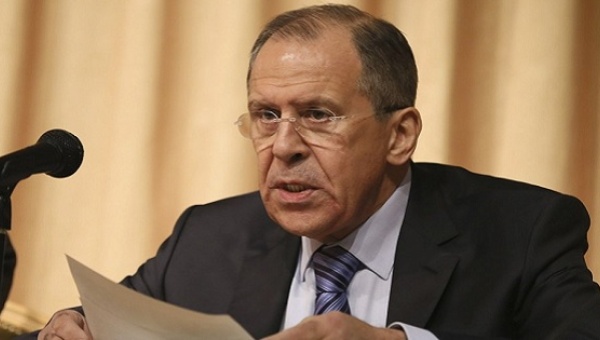
Russian Foreign Minister Lavrov reaffirms his country’s friendship with Venezuela. | Photo: PSUV
teleSUR – March 25, 2016
Russian Foreign Minister Sergei Lavrov said that his country has been closely following the situation in Venezuela and stressed that such is exacerbated by external interference.
“Venezuela is a friend country that they (opponents) are trying to destroy from outside,” Lavrov said Thursday during a meeting in Moscow with Venezuelan diplomats and Latin American students who are attending a course in diplomatic studies organized by the Russian Foreign Ministry.
At the meeting, the top diplomat explained the vision of Russia in Latin America and said he is pleased to see how Latin American countries have unanimously rejected coups led by right-wing opposition.
U.S. President Barack Obama issued an Executive Order March 9, 2015, declaring a “national emergency with respect to the unusual and extraordinary threat to the national security and foreign policy of the United States posed by the situation in Venezuela.” Obama then renewed that decree March 3, 2016, claiming that alleged conditions that prompted the first order had “not improved.”
All 33 members of the Community of Latin American and Caribbean States expressed their opposition to the U.S. government’s aggressive move and called for it to be reversed.
Murder Epidemic Halts Colombia’s Peace Process
By W. T. Whitney | CounterPunch | March 24, 2016
Paramilitaries and armed thugs have long sullied politics in Latin America, most notably in Colombia and recently in Honduras. A recent increase in politically motivated killings in Colombia coincided with final preparations for signing a peace agreement between the Revolutionary Armed Forces of Colombia (FARC) and the Colombian government, at war for 50 years. The much anticipated accord never materialized.
In Honduras the murder of longtime environmental and indigenous rights activist Berta Cáceres caps a wave of killings there of journalists, teachers, women, and especially of agrarian rights activists.
Governments and private parties serving predatory interests evidently regard terror at the hands of thugs or paramilitary forces as useful for maintaining dominion. Colombia’s paramilitary phenomenon warrants a look now because paramilitary attacks have brought Colombia’s peace process to a halt. Fortunately documentation of paramilitary offenses in Colombia provides much by way of details and particulars, more so than in Honduras, for instance. That’s because Colombian paramilitaries have long met resistance and gained special notoriety.
On March 23, after 40 months of talks in Havana, negotiators on both sides in the Colombian peace talks were to have announced a “Final Agreement,” one covering five agenda items they had set out to discuss. But an impasse developed over the last one, designated as “end of conflict.” It entails a “bilateral and definitive cease of fire and hostilities” and laying down arms.
FARC negotiators held back; an epidemic of killings during March revived long-held FARC concerns about the safety of ex-guerrillas in a time of peace. Others worry too.
The Executive Committee of the Patriotic Union (UP), a leftist political party, reported March 18 that in the previous three weeks “unknown armed men,” presumably paramilitaries, had carried out 11 politically motivated killings and “disappeared” three other people – whose bodies were found later.
Speaking to reporters, Aída Avella, the UP president, accused business leaders of financing the resurgence of paramilitaries. She also accused military leaders of being “immersed” in paramilitary operations. Avella herself went into foreign exile for 17 years in 1996 after a rocket destroyed the car in which she was a passenger.
In an open letter to Colombian President Juan Manuel Santos, Andrés Gil, a leader of the Patriotic March, condemned the assassinations. “[I]f we continue to be killed,” he wrote, “then the conclusion will be that really there’s no room for anyone on the left…. You will pass into history not as the president for peace but as the one who didn’t take the fight against paramilitaries seriously.”
Referring to the flood of paramilitary victims, the FARC peace delegation released a statement asking, “How can this be in the midst of a peace process now approaching the signing of a final accord?” Colombian authorities, the FARC said, “can no longer delay clearing away the phenomenon of paramilitarism.”
The FARC has reason to be alarmed. Many FARC guerrillas left the insurgency in 1985 in accordance with an agreement signed with President Belisario Betancur. They engaged in electoral politics as candidates for the UP party. That provoked a massacre; some say almost 5000 UP activists have since been murdered.
FARC negotiator Carlos Antonio Lozada may have been thinking of that experience when he told reporters March14 that, “[W]e have to take measures to avoid being betrayed and attacked as happened in the past.” He noted that the government recently dismissed a technical sub-commission report, already agreed upon, calling for “a bilateral and definitive ceasefire.”
The FARC negotiating team took the occasion of Secretary of State John Kerry’s visit with them on March 21 to seek help in regard to the paramilitary problem. Kerry had accompanied President Obama on his historic visit to Cuba. The negotiators released a communication saying, “Mr. Kerry, we ask through you that the United States help curb paramilitary violence, which in the midst of the peace process keeps mowing down the lives of defenders of human rights and social leaders.”
The request is not without irony. The United States provides funds for the Colombian army, known to facilitate paramilitary operations. And in the early 1960s U.S. military experts advised the Colombian government to utilize paramilitaries to augment its campaign then of pushing back against leftist guerrillas.
In a joint press conference February 4 with President Santos in Washington, President Obama introduced a U. S. plan called “Peace Colombia.” The two leaders had met to celebrate the upcoming peace accord and the end after 15 years of Plan Colombia, that U.S. mechanism for supporting counterinsurgency and drug-war efforts in Colombia.
For Voz newspaper editor Carlos Lozano, the name of the new venture signifies a “Pax Romana, or peace of the graveyard.” He lamented that “within Peace Colombia there’s not one entry for combating paramilitarism, which is the principal obstacle to peace in Colombia.”
Trivializing the FARC and thereby perhaps signaling the guerrillas’ irrelevance in a Colombia at peace, the New York Times recently headlined a reporter’s story thus: “Inside a Rebel Camp in Colombia, Marx and Free Love Reign.” It celebrated the collapse of communism by likening the supposed decline of the FARC to the fall of the Berlin Wall.
To the extent that such triumphalism extends to official U.S. attitudes, prospects for peace in Colombia are diminished.
Nevertheless, neither Colombia’s government nor the United States will likely have the final say in regard to disruptions at the hands of paramilitaries. Other forces, powerful and based on realities, are in play, and have been. A voice on their behalf is heard from, of all places, inside prison.
Political prisoner Húbert Ballesteros joined the Communist Party and Patriotic Union in 1986. More recently he’s been a leader of both the Fensuagro agricultural workers’ union and the CUT labor federation. Writing on March 12, he reflects upon “the killings in Antioquia, Sur de Bolívar, Arauca, Bogotá, and Cauca; the jailing of social leaders in Cauca, and the spread of paramilitary bands the length and breadth of the country.” According to Ballesteros, “We can no longer continue assuming that this oligarchy wants peace [other than] a cheap peace, a silencing of the guns.”
He knows what to do: “[W]hile we are building scenarios of peace, we must organize the people for resistance, and do so massively and convincingly so that this government understands that people are no longer content to live under its domination.” We must deal with “the true problems of the country, which are unemployment, poverty, corruption, and social and political marginalization.”
W.T. Whitney Jr. is a retired pediatrician and political journalist living in Maine.
Featured Video
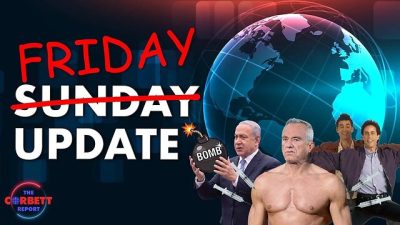
Racist Seinfeld Dances for Joy as Bibi Unveils His New Map
or go to
Aletho News Archives – Video-Images
TV Drama Review
Japanese drama projects Japan’s wartime atrocities onto Chinese characters
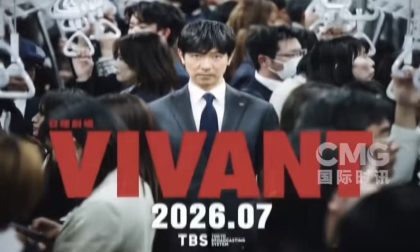
Global Times | October 25, 2026
By portraying Chinese characters as perpetrators of ruthless violence while casting Japanese Self-Defense Forces (SDF) intelligence operatives as defenders, the season 2 of the Japanese drama Vivant has recently drawn criticism from Chinese netizens, who argue that its depiction turns historical reality on its head while ignoring Japan’s wartime atrocities.
The TBS drama series – a spy suspense story in which an alleged unofficial intelligence unit of the SDF operates across the globe — has attracted a passionate fanbase. Its currently airing season 2 opened with a household rating of 18.8 percent, the highest for a TV drama this year, according toa commentary article by Japanese media Toyo Keizai.
What draws attention is the portrayal of the enemies in the series, the article noted. Scenes in which the Chinese organization subjects kidnapped members of the SDF unit to brutal torture are repeated with unrelenting intensity.
It is rare for Japanese TV dramas to explicitly portray a real-life country as the enemy, the article noted.
Japanese Prime Minister Sanae Takaichi also made a reference to the drama, saying that she has been recording Vivant and hopes to binge-watch it over the year-end and New Year holidays, according to Japanese media outlets.
China’s CCTV News report on Sunday revealed that the drama features scenes in which Chinese personnel cut off the fingers of and stab Japanese intelligence operatives in the abdomen. Such acts bear striking similarities to the torture inflicted on Chinese nationals by invading Japanese troops during the World War II.
The drama distorts the truth by attributing these atrocities to modern Chinese characters. Beneath the surface, it subtly glorifies Japan’s cross-border overseas operations, blurs the functional boundaries of the SDF and implicitly promotes an expansionist narrative, per CCTV News. … continue
Blog Roll
 Aletho News
- EU facing trillion-euro debt hole while seeking more cash for Kiev
- How US, Europe, Persian Gulf states exhausted missile stockpiles, splurged billions to defend Israel
- Up in arms… Koreans reject U.S. empire’s plan to make South Korea the next Ukraine
- Iran, Turkey, Pakistan, Saudi Arabia could advance region-led security framework in Tehran: FM spox
- Netizens condemn Japanese drama for projecting Japan’s wartime atrocities onto Chinese characters
- Racist Seinfeld Dances for Joy as Bibi Unveils His New Map
- A West Bank War for Netanyahu’s Election Campaign, Could It Backfire?
- Yemen denounces European Parliament’s ‘hypocritical’ push to blacklist Ansarullah
- Qalibaf: UAE’s UN bid aims to ‘clear the runway’ for ‘Greater Israel’, whitewash genocide
- Pakistan reopens Iran border after boosting security: Report
- If Americans Knew
- An error has occurred; the feed is probably down. Try again later.
- No Tricks Zone
- Sudden Stratospheric Warming, Powerful El Niño Combination May Lead To Extreme Europe Cold, Energy Crisis!
- Two New Studies Find Thwaites Glacier Melt Cannot Be Driven By Human Activity Or A Warming Ocean
- E-Cars Reduce CO2 Emissions By Only 41% Compared To Internal Combustion Engine Vehicles
- Predictions Made By Renowned Climate Professor Over Past Decades Have Been Proven To Be Poor
- New Study Suggests Large Regions Of The Pacific Ocean Have Been Cooling For The Last 80 Years
- Germany’s Green Energy Debacle: High Energy Costs Force Kahla Porzellan to Close After 182 Years!
- New Study: 50 Years Of The Most Aggressive ‘Net Zero’ Policies Can Only Affect The Global Climate By 0.03°C
- US September “Heat” Was No Record…Many Records Set Decades Ago
- Latest European Green Energy Debacle; Portugal’s Largest Flagship Solar Park Insolvent!
- Green Energy Debacle: German Expert Professor Fritz Vahrenholt Warns Of Severe Economic And Social Consequences

