‘Until genocide stops’: Colombia to suspend coal exports to Israel
Press TV | June 8, 2024
Colombia has said it would stop its coal exports to the Israeli regime as long as the latter sustained its months-long genocidal war against the Gaza Strip.
“We are going to suspend coal exports to Israel until the genocide stops,” Colombian President Gustavo Petro said in a post on X on Saturday.
He also posted a draft decree, which said that coal exports would only resume if the regime complied with a recent order by the International Court of Justice that mandated that Tel Aviv withdraw its troops from the Gaza strip.
Data provided by Colombia’s National Statistics Department shows that the exports were worth more than $320 million in the first eight months of the last year.
According to the Colombian government, the export ban will enter into force five days after the decree was published in the official gazette.
On May 1, the Colombian head of state said the country had decided to cut its diplomatic relations with the Israeli regime over the war.
“And we here in front of you, the government of change, the president of the republic informs that tomorrow diplomatic relations” with the Israeli regime “will be cut,” he said at the time, adding, “[We cut diplomatic ties] because of them having…a genocidal president.”
More than 36,801 Palestinians, most of them women and children, have been killed in the war that began after Al-Aqsa Storm, a retaliatory operation staged by Gaza’s resistance groups.
Russia’s Growing Media Influence in the World Sparks Alarm in the West
Sputnik – 28.05.2024
Russian broadcasters such as Sputnik may be outperforming their Western counterparts in terms of media coverage abroad, UK-based non-profit called Association for International Broadcasting (AIB) claims.
In its written evidence submission to the UK Parliament International Development Committee’s Inquiry into Future funding of the BBC World Service, AIB stated that “the global distribution of Russia’s international [media] operations is possibly greater than that of Western broadcasters.”
Sputnik and RT TV and radio services are being broadcast in many of the Global South countries – “including, but not limited to Venezuela, Syria, Mexico, Guatemala, India, Pakistan and South Africa” – and these media operations help Russia spread its influence around the world, AIB laments.
All this praise, however, should perhaps be taken with a grain of salt, seeing how the main purpose of the AIB’s document appears to be securing more British government funding for the BBC.
What do pro-Palestine student protesters at Brazilian universities want?

By Eman Abusidu | MEMO |May 20, 2024
As pro-Palestine protests continue at US and European universities, thousands of students at Latin America’s most prestigious university, the University of São Paulo (USP), have joined the movement against Israel’s genocide in the Gaza Strip. The Brazilian students from various faculties have set up tents in the History and Geography Building of the Faculty of Philosophy and Human Sciences, flying a giant Palestinian flag and chanting “Free Palestine” as they call for an “immediate ceasefire”.
The protests by USP students are being organised by the Student Committee in Solidarity with the Palestinian People of USP (ESPP-USP), as well as Brazilian student union and other popular organisations which express their support within and beyond the university campus.
The students are demanding that the university should divest from Israeli companies and those which benefit from the Israeli occupation of Palestine.
They also want an academic boycott of Israeli institutions with the renunciation of current academic agreements or any other ties and an end all academic relationships with Israeli institutions.
In particular, they are putting pressure on the USP’s Faculty of Philosophy and Human Sciences to suspend agreements with the University of Haifa in occupied Palestine. A petition has also been drafted demanding that Brazilian institutions, universities and the government should sever relations with Israel. As far as the students taking part in the protests are concerned, the university’s agreements with Israeli universities and organisations, such as “Israel Corner”, help to develop the technology used in the Israeli offensive against the Palestinians in Gaza.
The Israeli Federation of São Paulo has expressed its dissatisfaction with these demonstrations and sees them as hate speech against Jews. Such allegations by Israel and its supporters are entirely predictable.
One of those taking part in the protest, João Conceição, explained the students’ demands to MEMO :
“We demand the immediate cancellation of the seven academic agreements that USP has signed with Israeli universities and the Israeli Consulate in São Paulo,” said Conceição. “President Lula and the Brazilian government need to break all relations with Israel, whether diplomatic, military or commercial. The solidarity with the Palestinian people must be within and beyond the university walls, in light of the ongoing genocide.”
He pointed out that the demonstrations at USP draw attention to the fact that the humanitarian tragedy in Gaza is the result of the ongoing genocide and massacre of the Nakba for over 76 years. “We believe that breaking relations with Israel is the practical answer that can leave Israel in international isolation as a global outcast.”
According to Conceição, the governments of Latin America have done very little in real terms, because, “The majority of them have direct or indirect associations with Zionist entities, and they are committed to the Israeli and international bourgeoisie to defend what is happening today in Gaza.” He was critical of Lula’s stance. “He speaks harshly and compares what happens in Palestine to the Holocaust, but the actions on the ground are different.”
Brazilian activist and member of the country’s Boycott, Divestment and Sanctions (BDS) movement, Fabio Bosco, said that the student demonstrations are very important to gain public support for Palestine and send a message to the Palestinian people that they are not alone in their struggle for liberation.
“The protests at American universities, for example, are very positive and are cornering the US President, Zionist Joe Biden. Furthermore, they serve as a symbol of solidarity and humanity for the entire world,” noted Bosco. “Lula da Silva acknowledged that there is an ongoing genocide in Gaza and supported South Africa’s action against Israel at the International Court of Justice, and yet he maintained diplomatic relations with the occupation state and has bought Israeli military goods.”
He suggested that the main thing that the Latin American countries can offer to Gaza is to break economic and diplomatic relations and thus isolate the “criminal” Zionist entity. “We hope that the example set by the students in São Paulo inspires students across the country and expands solidarity activities with the Palestinian people within trade unions and social movements.”
The protests at the University of São Paulo are expected to be the first of many on the USP campus and other Brazilian universities to challenge any promotion related to the Israeli apartheid regime. Palestine solidarity movements are growing in strength within Brazilian universities despite the Zionist presence in Brazil. Palestinian and Brazilian activists have in the past succeeded in forcing the cancellation of the Israeli Universities Festival. It is hoped by activists that other successes will follow.
US losing ground globally to Russia and China – report

RT | May 9, 2024
While both China and Russia have improved their standing in the world over the past year, the US has seen its approval rating deteriorate in the Middle East and even in Europe, according to respondents from 53 countries.
Dubbed Democracy Perception Index 2024, the survey was compiled by the German company Latana, on behalf of Alliance of Democracies, a NGO headed by former NATO Secretary-General Anders Fogh Rasmussen.
Russia and China are now viewed as positively as the US in most of the surveyed countries in Asia and the Middle East/North Africa (MENA), as Washington’s approval plummeted due to the conflict in Gaza. Things aren’t looking up for the US in Europe, either.
“For the first time since the start of the Biden administration, many Western European countries have returned to net negative perceptions of the US,” according to Frederick DeVeaux, the senior researcher at Latana.
The reversal of previously positive attitudes has been “particularly stark in Germany, Austria, Ireland, Belgium and Switzerland,” DeVeaux said.
America’s global reputation took a beating since last year, in particular in Muslim-majority countries surveyed – Algeria, Egypt, Indonesia, Malaysia, Morocco, and Türkiye. The researchers attributed this to President Joe Biden’s unequivocal support to Israel’s war on Gaza.
Meanwhile, sentiments about Russia and China in every region except Europe are steadily getting more positive.
The European region is the only one besides the US that still supports cutting economic ties with Russia over the Ukraine conflict, while the rest of the world prefers to keep doing business with Moscow. The world is also divided “between the West and the rest” when it comes to possibly sanctioning Beijing if it were to “invade” the island of Taiwan.
The Democracy Perception Index is an annual survey carried out in 53 countries. This year’s research canvassed some 63,000 respondents for opinions about “democracy, geopolitics and global power players.”
Human Rights Experts and Activists: UNHRC Is Lending Support to US Regime Change Plans for Nicaragua
Nicaragua Solidarity Coalition | Alliance for Global Justice | April 18, 2024
Masaya, Nicaragua – Human rights experts and activists are expressing concern over a flawed and seriously unbalanced report of the Group of Human Rights Experts on Nicaragua (GHREN), released by the UN Human Rights Council (UNHRC) on February 24, 2024.
The UNHRC, says the Nicaragua Solidarity Coalition, is lending itself to the U.S. regime-change strategy against Nicaragua by highlighting only evidence supplied by opponents of Nicaragua’s government, while omitting highly pertinent information submitted to the GHREN by a number of individuals and groups.
An open letter has been sent to the President of the UNHRC, the UN High Commissioner for Human Rights and the UN Secretary General, pointing this out. Former UN Independent Expert on International Order, Alfred de Zayas, described the GHREN as set up for the purpose of “naming and shaming” the Nicaraguan government, not for objective investigation. Signed by leading human rights experts, 49 organizations and more than 300 individuals, the letter says that the GHREN’s report should never have been published.
Coordinator of the Nicaragua Solidarity Coalition, Barbara Larcom, said:
“The work of the UN’s so-called group of experts is a disservice to the Nicaraguan people. It has deliberately ignored considerable evidence sent to it which contests its findings. This unprofessional report should immediately be withdrawn by the UN Human Rights Council and the group disbanded.”
The Coalition, which represents individuals and organizations across Nicaragua, other Latin American countries, the US and Europe, notes that April 18, 2024, marks the sixth anniversary of an attempted coup in Nicaragua. According to considerable evidence, this was financed by US agencies intent on regime change. Since the failed coup, the US has continued to apply pressure via other methods, including the GHREN report, using these to justify sanctions against Nicaragua’s economy and society.
Link to open letter, online version (Spanish): https://bit.ly/NicaCartaONU2024
Link to open letter, online version (English): https://bit.ly/NicaLetterUN2024
See full list of signatories: https://bit.ly/NicaUN2024Signers
The Nicaragua Solidarity Coalition is an international coalition of organizations and individuals in solidarity with Nicaragua, supporting its sovereignty and affirming its achievements. We are not affiliated with any governmental entity of any nation. We provide accurate, verifiable information and other resources about Nicaragua, and we work to counter misinformation about the country disseminated by the media, public events, and other sources.
Email: johnperry4321@gmail.com
NicaSolidarity.net
NicaraguaSolidarityCoalition@gmail.com
Colombia suspends Israeli arms purchases following attack on Palestinian crowd
The Cradle – March 1, 2024
Colombian President Gustavo Petro on 29 February announced the country would suspend all arms purchases from Israel in protest against the ongoing genocide of Palestinians in Gaza.
“Asking for food, more than 100 Palestinians were killed by Netanyahu. This is called genocide and is reminiscent of the [Holocaust] even if the world powers do not like to recognize it. The world must block Netanyahu. Colombia suspends all purchases of weapons from Israel,” Petro said via social media after the latest massacre of civilians by Israel in Gaza.
Israel has killed at least 30,035 and injured 70,457 others in Gaza while inflicting mass destruction and shortages of basic necessities on the strip.
Colombia is among the countries that fully supported South Africa’s genocide case against Israel at the International Court of Justice (ICJ). Petro has also continuously condemned Tel Aviv for its indiscriminate attacks against Palestinians since 7 October, taking a similar stance as the leaders of other Latin American nations like Bolivia, Brazil, Venezuela, Cuba, Honduras, and Nicaragua.
“If we have to suspend foreign relations with Israel, we suspend them. We do not support genocides,” Petro said via social media on 15 October.
His comments came after Israel suspended all security exports to the South American country in response to Petro’s public stance on the genocide unfolding in Gaza.
Petro drew the ire of Israel after posting on social media: “Neither the Yair Kleins nor the Raifal Eithans will be able to say what the history of peace in Colombia is. They unleashed the massacre and genocide in Colombia.”
Former Israeli army colonel and mercenary Yair Klein in the 1980s was responsible for training fighters from the United Self-Defense Forces of Colombia, a right-wing paramilitary group responsible for multiple war crimes during Colombia’s internal war. Klein was later brought to Colombia to train the National Police.
Raifal Eithan, the former chief of staff of the Israeli army, served as an advisor to former Colombian president Virgilio Barco and once proposed killing the members of the Patriotic Union political party, which was born from the failed peace process with the Revolutionary Armed Forces of Colombia (FARC) in 1984.
Far-right Colombian paramilitaries are responsible for killing tens of thousands of civilians, including social leaders, environmental activists, and campesinos, and forcing millions more out of their homes. Furthermore, all branches of the Colombian armed forces use Israeli weaponry as standard, and all have been trained by Tel Aviv in combat techniques.
Maduro Orders ‘Defensive’ Military Drills After UK Deploys British Warship Off Guyana Coast
Sputnik – 28.12.2023
CARACAS – Venezuelan President Nicolas Maduro ordered on Thursday the armed forces to launch “the activation of a joint defensive action” in response to the deployment of a British warship off the coast of Guyana.
“I have ordered the activation of a joint defensive action of the Bolivarian National Armed Forces” off the coast of Essequibo, he said in a state televised broadcast, but did not provide more information.
Earlier this month, the British media reported, citing a British defense ministry spokesman, that the United Kingdom would deploy a patrol ship off Guyana’s coast as a sign of support for the state in the territorial dispute over Essequibo. The head of Venezuela’s defense ministry, Vladimir Padrino Lopez, called it a provocation.
Venezuelan Foreign Minister Ivan Gil had previously called on his British counterpart David Cameron not to interfere in the affairs of Latin American and Caribbean countries, and to mind his own business.
“From Venezuela, we ask the infamous failure David Cameron, foreign minister of the former imperial power of the United Kingdom, to take his hands off our Latin America and the Caribbean and to take care of his own affairs, which are very complicated,” Gil wrote on social media.
Venezuela’s territorial dispute with Britain and Guyana, a former British colony, has been ongoing since the 19th century. The Bolivarian government stepped up its actions after Guyanese authorities began handing over fossil-rich areas of the disputed shelf to oil companies for development.
Caracas held a referendum on December 3 in which an absolute majority of participants supported the annexation of the territory west of the Essequibo River, and began legislative work to legally back its actions.
Guyana’s President Irfaan Ali has since said that the country views Caracas’ actions as a threat to national security and intends to appeal to the UN Security Council as well as its international partners. During a recent news conference, Ali did not rule out that Guyana may go for a military base for its allies in the region, and on December 7, the US Army’s Southern Command carried out “flight operations” in the country.
The leaders of Venezuela and Guyana, following recent talks on the territorial dispute over Essequibo, pledged not to use force under any circumstances and to resolve it in accordance with the 1966 Geneva Agreement.
UK to Deploy Royal Navy Warship to Ex-Colony Amid Guyana-Venezuela Dispute
By Svetlana Ekimenko – Sputnik – 24.12.2023
Guyanese President Irfaan Ali and Venezuela’s leader Nicolas Maduro met in mid-December under the aegis of the Community of Latin American and Caribbean States and the Caribbean Community to defuse tensions around the disputed region of Essequibo. The two agreed to “continue dialogue to resolve the dispute over the Essequibo territory.”
The UK has decided to re-task Royal Navy warship the HMS Trent and deploy it to Guyana after Christmas, according to British media reports.
Instead of scouring the Caribbean in search of drug smugglers, the warship will take part in joint naval exercises with the former British colony and Commonwealth member. The decision was reportedly prompted by the current flare-up of the territorial dispute between Guyana and Venezuela.
“HMS Trent will visit regional ally and Commonwealth partner Guyana later this month as part of a series of engagements in the region during her Atlantic Patrol Task deployment,” a UK Ministry of Defense spokesperson was cited as saying.
The HMS Trent is a Batch 2 River-class offshore patrol vessel, named after the River Trent. Commanded by Commander Tim D. Langford, it is designed to carry out tasks that include “counter-piracy, anti-smuggling, fishery protection, border patrol, counter terrorism, humanitarian aid, search and rescue, general patrols and defence diplomacy,” as per the Royal Navy website.
The warship will stay in Barbados, the Caribbean region of the Americas, during Christmas, after which it will be heading for Guyana. Its activities will reportedly be carried out at sea, and will not involve docking in Guyana’s capital, Georgetown.
Earlier in December, when Britain’s Foreign Office Minister for the Americas and Caribbean David Rutley visited Guyana, he was quoted as saying that the UK would work internationally “to ensure the territorial integrity of Guyana is upheld.”
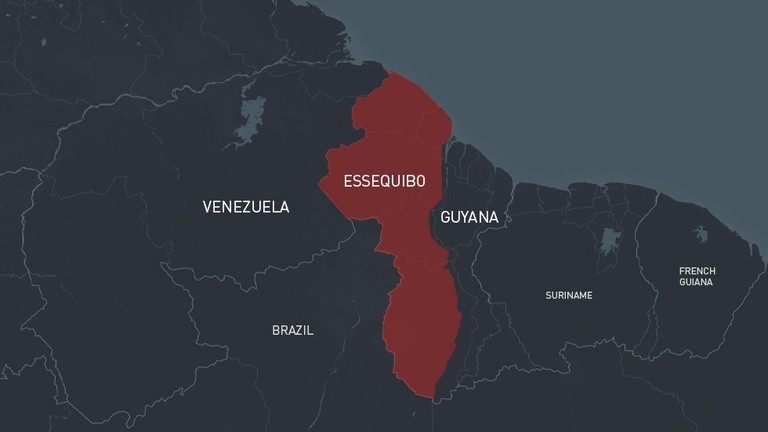
The border between Guyana and Venezuela, which runs through the Guyana-Essequibo region, known for its abundant oil reserves, has been a source of territorial dispute for several decades.
Venezuela gained independence from Spain in 1845 and recognized Essequibo – a zone of 160,000 sq. km – as part of its sovereign territory. In 1899, however, the United Kingdom filed and won an arbitration claim to recognize Essequibo as part of its then-Caribbean colony of British Guiana. Independent Guyana referred the dispute to the International Court of Justice (ICJ) in 2018. This came after Venezuela’s President Nicolas Maduro objected to former Guyanese president David Granger granting oil exploration rights off the Essequibo coast to ExxonMobil, the US-French oil transnational.
Venezuela held a referendum earlier this month in which almost 96% of the population voted in favor of incorporating the Essequibo region, which makes up two-thirds of the territory controlled by Guyana, into the country. Venezuelan President Nicolas Maduro put forward a proposal to the parliament, suggesting the establishment of Venezuela’s 24th state, named Guyana-Essequibo. He also produced a new map showing the disputed region of Essequibo as part of Venezuela. Besides referring to Essequibo as a “zone of integral defense,” Venezuela’s president proposed a deadline of three months for oil companies to halt offshore operations in the area. Last Sunday, a referendum was conducted to reaffirm Caracas’s claim to Essequibo. The majority of citizens voted in favor of establishing a state on the disputed territory.
According to Venezuelan media, President Nicolas Maduro has already officially signed decrees to incorporate the western region of neighboring Guyana into Venezuela, ratifying a total of six documents. In addition, Maduro signed a decree facilitating the creation of specialized units within the state oil and gas company PDVSA — PDVSA Essequibo and the Guyana Venezuelan Corporation — CVG Essequibo. To oversee the newly formed state, Major General Alexis Rodriguez Cabello was appointed as the sole head of the 24th state.
Venezuela and Guyana have since agreed not to threaten or use force in any circumstances to settle the dispute, as per a joint statement, published by Venezuelan President Nicolas Maduro. The sides also agreed to meet in Brazil within the next three months to “consider any matter with implications for the territory in dispute” and immediately establish a joint commission on the level of foreign minister and experts to address the dispute.
Venezuela, Guyana to hold talks on disputed Essequibo region
RT | December 10, 2023
The presidents of Venezuela and Guyana – Nicolas Maduro and Mohamed Irfaan Ali, respectively – will sit down next week to discuss a long-standing territorial dispute that has recently intensified, the prime minister of Saint Vincent and the Grenadines has revealed. While Caracas has laid claim to the oil-rich Esequibo region since the late 19th century, President Maduro recently took steps toward gaining actual control over the area, which covers some 160,000 square kilometers.
Earlier this week, the Spanish daily El Pais reported that the Venezuelan government had deployed troops to the border with Guyana.
Saint Vincent and the Grenadines PM Ralph Gonsalves, who also serves as president pro tempore of the Community of Latin American and Caribbean States (CELAC), broke the news after speaking with Maduro on Saturday, saying the negotiations would take place on Thursday.
The Venezuelan government has confirmed the planned talks, saying they hoped to “preserve our aspiration to maintain Latin America and the Caribbean as a zone of peace.”
The Office of the President of Guyana, for its part, stressed that “Guyana’s land boundary is not up for discussion.”
Also on Saturday, Brazilian President Luiz Inacio Lula da Silva spoke with Maduro, calling for dialogue and warning against unilateral measures that could escalate the situation. The Brazilian head of state has also been invited to take part in Thursday’s talks as an observer.
Speaking on Tuesday, the Venezuelan president said Caracas wanted the “peaceful rescue of the Guayana Esequiba,” which “has been de facto occupied by the British Empire and its heirs and they have destroyed the area.” Maduro also unveiled a new map of Venezuela that incorporates the disputed territory, and appointed a new governor to the region.
Guyanese President Irfaan Ali, in turn, gave a televised address to the nation, accusing Venezuela of attempting to annex more than two thirds of his country.
“This is a direct threat to Guyana’s territorial integrity, sovereignty, and political independence, and a violation of fundamental principles of international law,” the leader stressed.
“The Guyana Defense Force is on high alert… Venezuela has clearly declared itself an outlaw nation,” Ali added.
The recent escalation followed Sunday’s referendum, in which 10.4 million Venezuelan voters backed Caracas’ claim to Guayana Esequiba.
The territorial dispute stems from the US’ decision in 1899 to assign the territory to what was then British Guiana – a move Venezuela never accepted as legitimate.
Henry Kissinger and the Assassination of Gen. Rene Schneider
By Jacob G. Hornberger | FFF | December 4, 2023
The recent death of former National Security Advisor Henry Kissinger provides an opportunity to revisit one of Kissinger’s most infamous acts — the role he played in the 1970 kidnapping and murder of Gen. Rene Schneider, the overall commander of the Chilean Armed Forces.
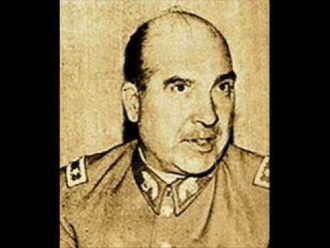 Let me emphasize one thing right off the bat: Schneider was an entirely innocent man. Why, he wasn’t even a communist. Instead, he was simply a man of great integrity who believed that he had a responsibility to support and defend the constitution of Chile. That’s what got him killed.
In the 1970 presidential election in Chile, a socialist named Salvador Allende received a plurality of the votes. Since he had not received a majority, the election was thrown into the hands of the Chilean congress.
U.S. President Richard Nixon, along Kissinger, together with CIA officials, decided that U.S. “national security” would be threatened by the election of a socialist president in Chile.
So, Nixon, Kissinger, and the CIA conspired to produce a two-level plan to prevent Allende from assuming the presidency. The first level involved the secret payment of bribes to the members of the Chilean congress, using, of course, U.S. taxpayer money. The second level was more ominous — to persuade the Chilean national-security branch to take charge of the Chilean government. (Chile was a national-security state, just as the U.S. had become.)
However, Gen. Schneider said no. He continued standing steadfastly in support and defense of the Chilean constitution, which did not provide for a national-security coup as a way to “save” the country from a president who, it was claimed, posed a grave threat to Chile’s “national security.”
Nixon, Kissinger, and CIA officials conspired to launch a violent kidnapping of Schneider to remove him as an obstacle to their plot. During the kidnapping attempt, which took place on the streets of Santiago, Schneider fought back. The kidnappers shot him dead.
The Schneider children later sued Kissinger for his role in the conspiracy to kidnap and murder their father. The federal courts threw them out on their ear. The courts held that when it comes to foreign policy, including kidnapping and assassination, the federal courts would never interfere.
Needless to say, the attitude of the Justice Department was the same. Even though there was clear and convincing evidence of a conspiracy involving felonious actions in Washington, D.C., and Langley, Virginia, the Justice Department never sought any indictments for the conspiracy to kidnap and murder an entirely innocent man. After all, it is important to keep in mind the U.S. felony-murder rule, which holds that if a person is murdered as part of a felonious action, all of the parties to the felonious action are criminally liable for the murder, even if they didn’t participate in it or intend it to happen.
Ironically, the Chilean people were so outraged over Schneider’s murder that the Chilean congress was pressured to elect Allende as president. Thus, the bribery part of the U.S. scheme didm’t work either.
Three years later, U.S. officials finally succeeded in ousting Allende from power through a violent U.S.-supported coup that left Allende and some 3,000 innocent Chilean people dead. It also left the Chilean citizenry to suffer under a brutal U.S.-supported military dictator, one in which 50,000 innocent Chilean citizens were violently rounded up and subjected to torture and rape at the hands of Pinochet’s goons. Kissinger had a close relationship with Pinochet and, in fact, visited him in Chile soon after the coup and offered him generous U.S. support for his brutal dictatorship.
For a detailed analysis of the Schneider murder, I recommend reading “The CIA and Chile: Anatomy of an Assassination” on the website of the National Security Archive.
For a good summary of the lawsuit that Schneider’s sons brought against Kissinger — and the deferential attitude of the federal courts toward foreign-policy actions like kidnapping and assassination — see René Schneider et al. v. Henry A. Kissinger et al on the website of the International Crimes Database.
Kissinger & the Americas: How the US Built Order ‘on The Ashes of Genocide’
Sputnik – December 3, 2023
“A huge loss.” “A cherished friend and mentor.” “His appointment said as much about his greatness as it did America’s greatness.” Tributes are pouring in after the death of Henry Kissinger, America’s best known diplomat.
Kissinger died Wednesday at the age of 100 at his home in Kent, Connecticut. Having served as US Secretary of State for eight years under the presidencies of Gerald Ford and Richard Nixon, Kissinger strove to maintain global US dominance during a time when it was in doubt. His influence molded America’s foreign policy for years to come.
But not everyone celebrates the empire built by the highly consequential statesman.
An Argentine speaks with Sputnik about how her family was affected.

Guillermo Montes (right) pictured next to his brother (left), the father of Agustina Montes © Courtesy of Agustina Montes
“What it really is, is a kingdom built on the ashes of genocide,” said Agustina Montes in an interview with Sputnik.
Montes is an Argentine citizen now living in New Zealand. Inflation neared 150% in her home country last month amidst an economic crisis that’s wreaked havoc on Argentina for half a decade.
Compounding the financial disruption, Montes sees an Argentine society still torn apart by its recent history.
“Genocide denialism is at an all time high,” laments the 37-year-old. “With the elections in Argentina, it’s more pressing than ever. Politicians make barely veiled threats about military uprising. We know what that can mean.”
Argentina’s vice president-elect Victoria Villarruel has downplayed the brutality of the South American country’s seven-year military dictatorship. Villarruel made headlines last month when she criticized UNESCO’s decision to declare Buenos Aires’ ESMA Navy school a World Heritage site. Tens of thousands passed through the facility before being tortured or killed.
Among them were Montes’ uncles, Miguel and Guillermo.
Reorganization
The “National Reorganization Process” was the benign name for the regime that seized power in 1976.
Argentines knew it was a military dictatorship. They’d seen several throughout the 20th century. If the generals sought to “reorganize” Argentine society it was through the barrel of a gun.
Amid the violence, one figure in Washington provided Argentina’s new rulers with the legitimacy they craved.
“We have followed events in Argentina closely,” said then-Secretary of State Henry Kissinger to the country’s new foreign minister Admiral Cesar Augusto Guzzetti. “We wish the new government well. We wish it will succeed. We will do what we can to help it succeed.”
“If there are things that have to be done, you should do them quickly.”
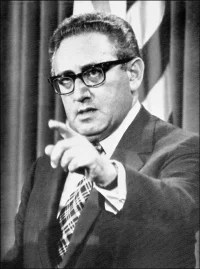
Photograph taken on April 29, 1975 in Washington of the then US Secretary of State Henry Kissinger. © AFP 2023 / GENE FORTE
For the junta, the things that had to be done were kidnapping, torture, and murder. The regime faced pressure from armed resistance groups. Some of them aligned with charismatic former President Juan Perón. Many were socialists. The regime was intent on snuffing them out.
“I have a ‘desaparecido’ on each side of my family,” Montes told Sputnik, using the Spanish term for people who vanished during that period. “My dad’s brother Guillermo and my mum’s brother Miguel Angel.”
“Miguel Angel Fiorito – Milan to his family – was taken on July 12th, 1976, so pretty early in the dictatorship. My uncle was 21 and very idealistic, I’ve been told he was very funny and warm. He worked in the villas, or slums, and had a very keen sense of social justice.”
“Guillermo Montes was my dad’s brother. He was a bit older when he was taken, about 27 or 28. He made it to 1977. He was a massive man, called ‘the Yeti’ by his companions. He went to work one day and never came back.”
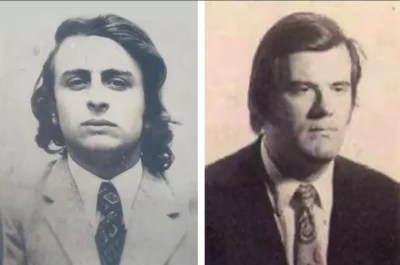
Left: Miguel Angel Fiorito, Right: Guillermo Montes © Courtesy of Agustina Montes
In the repressive fog of the time, “disappeared” became the euphemism for those who fell prey to the reorganization. The word was terrifying as much because of the uncertainty it implied as anything else. Families rarely received closure. “The army never spoke,” says Montes.
Parents throughout the country sought answers. The Madres de Plaza de Mayo was formed when a group of mothers came together in Buenos Aires’ central square. The group became known for their unique form of silent protest, wearing white headscarves symbolizing the cloth diapers of their disappeared children.
Montes said her grandmother knew of the Madres, but “she lacked the political beliefs they had. She loved her son but didn’t believe that what he had done was right.”
Politics provoked sharp divisions in Argentine society in those days.
“My mum’s family was pretty pro-dictatorship up until that point [that Miguel was kidnapped],” says Montes, “mostly because they were anti-Perón.” Montes explained that Miguel began Argentina’s required military service in March of 1976.
“He was also a part of the Montoneros, one of the leftist anti-dictatorship movements. Growing up in the ‘90s, where the rhetoric was that everyone involved in the guerrilla was a terrorist, I had a deep sense of shame about this. We did not discuss politics in my house.”
“My uncles were very present ghosts but we would not talk about them.”
The Chilean Method
The divisions within Montes’ family mirrored those throughout Latin America. Cuba’s revolution sent shockwaves across the region with the reverberations felt at the highest echelons of American power. They only intensified as grassroots movements approached political legitimacy.
Washington’s worst fears were realized in 1970, when the socialist Salvador Allende was elected president of Chile.
“I don’t see why we need to stand by and watch a country go communist due to the irresponsibility of its people,” said Kissinger during a closed-door meeting with Nixon. “The issues are much too important for the Chilean voters to be left to decide for themselves.”
The CIA immediately went to work destabilizing Allende’s democratic government, infiltrating Chile’s trade unions, provoking strikes, fomenting opposition within the military. Within three years Allende was overthrown in a military coup backed by Kissinger. The country’s new leader General Augusto Pinochet declared war on the left, and Santiago’s national soccer stadium was filled with dissidents waiting to be tortured, jailed, and killed.
Nixon’s embrace of Pinochet was justified under the Cold War banner of anticommunism. Socialists, democratically-elected as they may be, were also simply bad for business as it turned out. Concerned about their investments in Chile, the US-based International Telephone & Telegraph Corporation funneled millions of dollars toward forces plotting Allende’s downfall.
Three years later, Argentina’s military government sought a similar approach to repress opposition. “Their theory is that they can use the Chilean method,” aide Harry Shlaudeman informed Kissinger in 1976. “That is, to terrorize the opposition – even killing priests and nuns and others.”
By then an axis of dictatorship stretched across the Southern Cone, with American-backed juntas in Chile, Uruguay, Paraguay, Bolivia, Brazil, Peru, and now Argentina. Under the coordination of the US Central Intelligence Agency the governments coordinated their efforts in a campaign of state terror known as Operation Condor.
“I don’t remember the first time I heard or read his name,” said Montes of Kissinger. “My family didn’t speak about this, and back then this whole period of Argentine history was completely erased from history classes at school.”
“I think of his name in proximity to the names of our dictators: Videla, Massera. Kissinger, the CIA, ‘Plan Condor.’ Like shadowy figures behind it all.”
Montes is likewise unsure about what drew her uncles towards issues of social justice.“They didn’t get that from their families,” she insisted. “None of my grandparents were particularly socialist, quite the contrary. I believe they saw the disparities, the injustice all around them. But they were both middle class. My mum always says Miguel would give the clothes off his back if it meant helping someone else.”
The Latin American left was a diverse array of forces. Some admired the guerrilla tactics of Che Guevara. Others simply advocated for Western European-style labor reforms. Still, others professed Liberation Theology, a strain of Catholicism that stressed concern for the poor.
But after Cuba’s popular uprising against US-backed dictator Fulgencio Batista trended towards socialism, any movement from below could be suppressed in the name of fighting the communist threat.
“Some people still say that my uncles and others like them were terrorists,” claims Montes, “that they did all sorts of horrible things, bombed child care centers and schools. Where is the evidence of that?”
“And if they did, why did the military – that was in control of the government, the police and the judicial system – not put them through a trial and in jail? Why did they disappear them and destroy any evidence and witnesses of what they allegedly did?”
Miguel and Guillermo stood firm by their beliefs, even as the military consolidated its rule.
“There is resentment towards them from my parents and grandparents,” says Montes. “They both could have escaped Argentina. They chose to stay knowing what could happen to them.”
Heaven and Earth
Kissinger stayed on as secretary of state through 1977. Then-US President Jimmy Carter continued to support the junta until the following year; when he moved to end arms transfers, Kissinger registered his opposition by attending the 1978 World Cup in Argentina as the personal guest of dictator Jorge Videla.
US relations with the regime were restored and expanded after the election of Ronald Reagan in 1980 as the CIA sought their assistance in training Central American death squads.
Lieutenant General Videla’s government shaped up to be perhaps the most repressive of all those of the Condor era. Of the 60,000 who were killed across the continent, it’s estimated that around half of them were Argentines.
Montes’ grandparents were determined to make sure Miguel and Guillermo weren’t among them.
“[Miguel] was taken and my grandma, who was also widowed around that time, started moving ‘heaven and earth,’ as we say, to find him,” she said. “She was threatened by police and even by the church when she went there, they told her she would end up just like him.”
“My parents met through their mothers’ – my grannies’ – fight to find out what happened to their sons. I used to think it was a very romantic story when I was a child. But the reality is that two very broken people met each other because of one of the most horrific things that happened to them.”
The final years of the dictatorship saw mounting economic instability. The military attempted to distract from the matter by waging war against the United Kingdom for control of the Falkland Islands. When they failed, the days of the junta were numbered.
Liberal democracy was restored in 1983. Time went by, but Miguel and Guillermo were still gone. President Carlos Menem’s pardon of the junta leaders six years later suggested a desire to forget about the nightmare of Argentina’s Dirty War.
It was only in 2003, when new investigations were opened, that the relatives of Argentina’s desaparecidos finally saw the potential to receive some closure. For Montes’ family the process would take over a decade.
“We didn’t get to find out what happened to my uncles until very recently, almost 40 years after the fact,” says Montes. “The only reason we know what happened is because of witnesses, people that survived, who saw them.”
In that moment Miguel and Guillermo reappeared, but only in memory as Montes’ family imagined their tragic last days.
“They were both taken to the same concentration camp, the ESMA. Miguel Angel was tortured with electricity until he died. We don’t know what happened after, his body was likely burned.”
“Guillermo was able to survive the electric torture. He was drugged and put on a plane, and dropped alive in the River Plate.”
Very Present Ghosts
Montes recounts the horrible toll of her uncles’ kidnappings on her family.
“My mum was around 14 years old when her brother disappeared and her dad died. That family was destroyed… Most of the people this happened to have been destroyed: mentally, physically. My parents have had substance abuse issues, mental health issues.”
“A lot of people in my country want us to ‘move on’ from what happened, to stop talking about it. But how can you do that when the collective trauma still remains?”
Montes now feels much differently about her uncles – especially Miguel, who she’s heard many stories about.
“I have since learned a lot about my uncle and believe he was an incredible man. It feels weird to say, when he died at 21. But what made Miguel and Guillermo literally give their lives for what they believed in? I don’t know. I wish I got to meet them, to talk to them.”
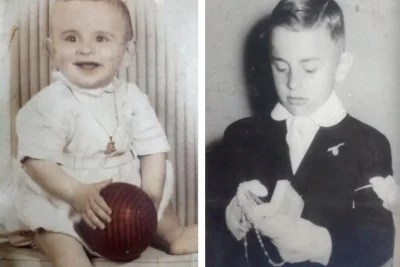
Young Miguel Angel Fiorito as an infant (left) and young boy (right) © Courtesy of Agustina Montes
Among the many condolences and the judicious praise of Kissinger as a friend, a pioneer, and even a peacemaker, the eulogy of former US ambassador to Israel Martin Indyk may contain the most truth: “He was deeply skeptical of those who would aim to try to achieve a peaceful world. He was much more focused on establishing order because order was more reliable than peace.”
“I’m not surprised,” responded Montes. “Order for most, freedom for few.”
And what about George Bush’s comment, that Kissinger was a symbol of “America’s greatness?”
“I feel like they are saying the quiet part out loud. He is a symbol of America’s imperialism,” says Montes.
“Living in South America – and I’m sure this is true of many other so-called ‘Third World countries’ – we get sold this glossy idea of the US, you know? The Land of the Free, of Opportunity, of Freedom and Dreams.”
“I used to be enamored with the US! I grew up watching US TV shows and movies. I learned English from watching ‘Friends.’ It’s only when you grow up a bit that you start seeing it for what it is.”
The Palestinian American scholar Edward Said once remarked:
Every single empire in its official discourse has said that it is not like all the others, that its circumstances are special, that it has a mission to enlighten, civilize, bring order and democracy, and that it uses force only as a last resort.
And, sadder still, there always is a chorus of willing intellectuals to say calming words about benign or altruistic empires, as if one shouldn’t trust the evidence of one’s eyes watching the destruction and the misery and death brought by the latest mission civilizatrice.
When asked about the influence of the junta – and that of Kissinger and the United States – Montes is unequivocal.
“Their legacy is seen in the poverty in the villas, in the sunken eyes of hungry kids all over the world, in the missing but remembered, in the children of women who were taken that we are still looking for. It’s still very much there.”
But Montes doesn’t think the final chapter has been written in the story of Latin America. “I wholeheartedly believe in justice.”
Featured Video
Chinese jet fuel and the myth of energy independence
or go to
Aletho News Archives – Video-Images
From the Archives
The Dirty Little Secret behind the “Global Terrorism Index”
The Omission of Israeli Terrorism in the Occupied Palestinian Territories
By Karin Brothers | Global Research | December 6, 2014
… The Israeli settlements — all of which are illegal – have been identified as a major impediment to peace. The refusal of a major “global” terrorism report to name the Israeli settlers as one of the groups most responsible for terrorism not only misrepresents a major source of regional violence but exposes the Global Terrorism Index as a propaganda tool that supports a U.S. agenda.
In recent years, governments have been attempting to thwart terrorism by blocking supportive fund-raising. When it comes to Israeli settlements, however, the US and Canada actually encourage fund-raising by giving organizations (such as Christian Friends of Israeli Communities (CFOIC) and the Jewish National Fund) financial support in the form of donor tax-deductions.
Charities which provide funds for the Israeli settlements should be regarded as terror-financing organizations. They should not only lose their tax-deductible status, but they should be banned because they support the violation of international humanitarian law. The terror-financing laws that are being strictly enforced for Muslim charities should be applied to Christian and Jewish charities as well. … Read full article
Blog Roll
 Aletho News
- Chinese jet fuel and the myth of energy independence
- Ukraine Sea Drone Fired From Libya Hit Russian Tanker in Mediterranean
- IRGC: Iranian forces launched no attacks during ceasefire hours
- Trump Administration Moves To Automate U.S. Military Draft Registration
- Spain orders reopening of Tehran embassy, condemns Israel’s carpet bombing of Lebanon
- Israel faces ‘unsustainable’ strategic crisis following 40-day war against Iran: Analyst
- Iran restricts Hormuz access to 15 vessels per day under ceasefire terms: Report
- The ‘Opposition Party’ Has Done Nothing to Stop the Iran War and Much to Goad Trump Into Continuing It
- Moscow backs Tehran on status of Lebanon in US-Iran deal
- How UK Regulator Ofcom Quietly Bypassed International Law to Police American Speech
- If Americans Knew
- Amnesty: Urgent – Protect Lebanese civilians from brutal escalation in Israeli attacks
- Is The War Against Iran Over?
- Inside the Israeli army’s propaganda wing
- Hundreds of Gaza Amputees Stranded in Legal Limbo
- The gallows law: Israel moves toward executing Palestinian children
- Tucker Carlson: The Path to Peace requires ending ‘special alliance’ with Israel
- This is ceasefire? Israel’s biggest massacre yet in Lebanon, another journalist killed in Gaza – Daily Update
- Tucker Carlson on Israel: This Is the Behavior of an Ally? Really?
- Gazans face a triple crisis: severe shortages of water and bread, healthcare in tatters
- NY Times reports how Netanyahu took the US into Iran War
- No Tricks Zone
- An Inconvenient Tree: Uncovered In Alps… Europe Much Warmer Than Today 6000 Years Ago
- New Study Reports A 60% Slowdown In Greenland’s Ice Loss Rate In The Last Decade
- Low Intensity Tornado Wrecks Major Solar Farm, Creating A Potential Toxic Dump
- New Study Finds Warming Saves Lives…Cold Temperatures 12 Times More Deadly Than Excess Heat
- German Science Blog Accuses PIK Climate Institute Of Hallucinating Climate Tipping Points
- Devastating Assessment Of Comirnaty Vaccine By Former Senior Pfizer Europe Toxicologist
- New Study: CO2 Is ‘Effectively Negligible’ As An Explanatory Climate Change Factor Since 2000
- Former Pfizer Toxicologist Dr. Helmut Sterz Tells Bundestag Hearing Pfizer Vaccine Should Have Never Been Approved
- Energy Expert: Germany’s Nuclear Phaseout Was A “500 Billion Euro Mistake”
- New Research: South Australia’s Mid-Holocene Sea Surface Temperatures Were 4°C Warmer Than Today
 Aletho News