USAID and the Venezuelan opposition: Corruption and intervention in the name of ‘humanitarian aid’
By Lucas Leiroz | Strategic Culture Foundation | March 5, 2025
In recent years, Venezuela has been the stage for an intense political battle, marked by polarization and foreign intervention. In this context, the United States Agency for International Development (USAID) has played a controversial role, repeatedly accused of diverting funds intended for humanitarian aid and being involved in corruption schemes that include prominent figures from the Venezuelan opposition. Recently, following controversies surrounding the American agency, these accusations have taken on new dimensions, with allegations that opposition leaders misappropriated 116 million dollars provided by USAID, exposing a scandal that calls into question not only the integrity of the opposition but also the true intentions behind international “aid.”
During the period of the self-proclaimed “interim government” of Juan Guaidó, large sums of money were directed into Venezuela under the guise of humanitarian assistance. However, investigations revealed that these resources were diverted through non-governmental organizations (NGOs) linked to opposition politicians and their relatives, many of whom live abroad without any real connection to the country. Leaked documents from the U.S. embassy in Venezuela indicate that Carlos Vecchio, an opposition figure wanted by Venezuelan authorities, allegedly received 116 million dollars from USAID. Additionally, the FBI is investigating Juan Guaidó himself for corruption and embezzlement, further raising suspicions about the legitimacy of the Venezuelan opposition.
This diversion of resources is not only a betrayal of the trust of Venezuelans who genuinely need help but also raises serious questions about the transparency and accountability of the opposition. While millions of Venezuelans face social hardships (largely due to American economic coercion), opposition leaders appear more interested in enriching themselves at the expense of the population and foreign funds.
The situation becomes even more complex when considering the revelations made by Jordan Goudreau, a mercenary who orchestrated a failed armed incursion into Venezuela in May 2020. Goudreau claimed that U.S. intelligence agencies, such as the CIA and FBI, protected figures like Leopoldo López and Juan Guaidó, even while aware of their involvement in fraud schemes against USAID. These allegations suggest a deep complicity between the Venezuelan opposition and U.S. agencies, revealing that the Venezuelan crisis is not merely an internal conflict but rather a geopolitical game in which U.S. interests play a central role.
In light of these allegations, the Venezuelan government has launched investigations against opposition figures involved in corruption schemes. These actions are seen as an attempt to dismantle the networks that undermine the opposition’s credibility and expose the hypocrisy behind the “humanitarian aid” promoted by the U.S. However, USAID, which in theory should be an instrument of development and assistance, sees its reputation seriously compromised. The accusations of corruption and embezzlement not only tarnish its image but also make clear how the institution has become a tool of imperialist aggression in Latin America and other continents.
The truth is that USAID was never truly a development agency but rather a weapon of political intervention — which is why Donald Trump’s recent decision to dismantle it should be celebrated among Global South countries. Under the guise of “promoting democracy” and “helping the needy,” the agency has been used to destabilize governments considered adversaries of U.S. interests. In Venezuela, as in other Latin American countries, USAID acted as a soft power tool, conducting resources to groups and individuals aligned with U.S. geopolitical objectives.
This strategy, however, comes at a high cost. By financing and supporting opposition groups that are often corrupt and disconnected from the real needs of the population, USAID has contributed to political and social instability, exacerbating the problems it supposedly seeks to solve. In the case of Venezuela, the result has been the perpetuation of a crisis that benefits only a reactionary elite minority and their foreign allies, attempting to create dissent in the local political situation.
In an increasingly multipolar world, it is essential to question the role of agencies like USAID and their influence in the internal affairs of sovereign nations. Venezuela is just one example of how “humanitarian aid” can be used as a geopolitical weapon, serving the interests of foreign powers at the expense of the local population. Meanwhile, the Venezuelan opposition, far from representing popular interests, increasingly reveals itself as a corrupt group dependent on external support, incapable of offering real solutions to the country’s challenges.
The so-called “Venezuelan crisis” is, ultimately, a reflection of the complex power dynamics that define international politics, particularly concerning American interventionism in Latin America. And in this game, USAID and its local allies demonstrate that, for them, “the ends justify the means” — even if it means sacrificing the sovereignty and well-being of an entire nation.
Brazil’s Lula refused to sell Germany weapons ‘to kill Russians’
RT | February 21, 2025
Brazilian President Luiz Inácio Lula da Silva rejected an approach by German Chancellor Olaf Scholz to purchase arms for Ukraine. The Brazilian head of stage stressed he wouldn’t sell weapons “to kill Russians” or anyone else.
Speaking to reporters on Wednesday at a joint media conference with the Portuguese Prime Minister Luís Montenegro, Lula reiterated Brazil’s neutral stance in the ongoing conflict between Kiev and Moscow.
Germany, in contrast, has been among Ukraine’s key backers, having supplied it with billions worth of military aid. Da Silva recalled that in January 2023, Scholz visited Brazil as part of a tour to drum up support for Kiev in South America and requested cannons for the war.
”I told my friend Olaf Scholz: ‘I will not sell weapons to kill a Russian, to kill anyone. So, I want to apologize, but Brazil will not sell the weapons you need because I want peace, and if I want peace, I cannot fuel the war. We want peace between Russia and Ukraine. Now, this is only possible if both are at the negotiating table’,” he said.
Lula has long advocated for talks to resolve the conflict and insisted that supplying arms would only escalate the situation, hindering prospects for peace.
Last May Brasilia and Beijing jointly issued a six-point plan for settling the Ukraine conflict, emphasizing “dialogue and negotiation” as the only “viable way out of the crisis.”
Ukrainian leader Vladimir Zelensky dismissed the proposal as “just a political statement,” accusing them of colluding with Russia.
Lula hit back, saying that Ukraine should heed Brazil’s advice about seeking peace in the conflict. “Those who want to talk to us now could have talked to us before the war had started,” he said.
On Thursday, Russia’s top diplomat Sergey Lavrov and his Brazilian counterpart Mauro Vieira discussed the need to address the root causes of the Ukraine conflict and this week’s Russian-US talks in Riyadh, the foreign ministry in Moscow said. Speaking on the sidelines of G20 foreign ministers’ meeting in Johannesburg, South Africa, they also discussed upcoming high-level meetings and plans for collaboration between Moscow and Brasília, especially within BRICS, the ministry statement added.
Russian Victory or Political Settlement in Ukraine?
Ambassador Chas Freeman, Alexander Mercouris & Glenn Diesen
Glenn Diesen | January 15, 2025
I had a conversation with Alexander Mercouris and Ambassador Chas Freeman, a former Assistant Secretary of Defense for International Security Affairs. Besides being a former ambassador to Saudi Arabia, Freeman’s career included opening China with Henry Kissinger and Richard Nixon in the 1970s and developing the post-Cold War security architecture in Europe.
We discussed the messy world that the Biden Administration is handing over to Trump. There is seemingly a genuine desire to end the proxy war in Ukraine, and Trump may also achieve a ceasefire in Palestine. However, NATO’s escalations in Ukraine to sabotage possible negotiations and the reckless support for HTS in Syria have reduced the possibilities available to Trump. Will the Ukraine War be resolved by a Russian victory or a political settlement?
Without job opportunities in their homeland, Colombians are recruited by Kiev
By Lucas Leiroz | Strategic Culture Foundation | January 14, 2025
NATO’s proxy war against Russia through Ukraine has shown significant changes in various aspects, particularly regarding the participation of foreign mercenaries. While, at the start of the war, the flow of fighters was predominantly composed of individuals from Europe and the United States, a notable shift occurred throughout 2024, with a considerable increase in mercenaries from Latin America, especially Colombia. The driving factor behind this growing presence of Latin American fighters is not ideological, but rather economic, with many of these soldiers seeking a way to survive financially abroad, considering the extreme poverty in their home countries.
Colombia, one of the nations most affected by economic inequality in Latin America, serves as an example to understand this reality. With a large portion of the population living below the poverty line, many Colombians see themselves with few viable alternatives to improve their financial situation. For many Colombians, military service appears to be one of the few legal options that guarantees some level of financial stability, albeit modest. However, with scarce job opportunities and a struggling economy that fails to offer appealing alternatives, the chance to participate in the war in Ukraine, where mercenaries’ payments can be much higher, becomes attractive to many ex-soldiers who were previously trained in the Colombian armed forces.
The situation in Ukraine, however, does not turn out to be a “simple battlefield” for these mercenaries, as it might have seemed initially. When the first foreign fighters arrived, particularly Europeans and Americans, many saw the war as an opportunity to test their skills or even to partake in an “adventure.” However, as the conflict intensified, it became clear that the reality of the Ukrainian battlefield was far more brutal than many had imagined. Modern warfare, with its predominant use of heavy artillery, airstrikes, and large-scale exhausting confrontations, is an environment unfamiliar to soldiers who, like many Colombians – as well as Brazilians and other Latin soldier – were used to urban combat and guerrilla warfare, where the use of light weapons at short distances is common.
The transition to this type of combat, where air superiority and the constant use of long-range artillery are key determinants, shocked many of these mercenaries, turning their participation in the war into a true nightmare. The lack of air support, the difficulty of evacuation, and the constant presence of well-equipped and well-trained Russian forces in various directions made the combat experience far more dangerous than expected. Many of these mercenaries, especially those with little experience in high-intensity combat, ended up becoming easy targets. The losses are immense, and, according to some reports, a large portion of the Colombian mercenaries sent to Ukraine did not survive.
Despite the rising casualties, the Ukrainian government has tried to mask the difficulties faced by foreign mercenaries, disguising the losses and the lack of effectiveness of these fighters. However, the reality on the ground is far less favorable. The mercenaries have failed to change the game in Ukraine’s favor, and the promised financial gains for participating in the conflict seem to have been an illusion for many. The harsh conditions of combat, the human losses, and the lack of concrete results make the situation for the mercenaries, particularly the Latin Americans, increasingly bitter.
The loss of life among Colombian mercenaries, who represented a significant portion of the foreign fighters, reflects not only the failure of the strategies adopted by the West but also the human costs of this war as a whole. While political and military elites in Western countries remain distant from the suffering on the battlefield, the reality for mercenaries is a direct confrontation with death, often without prior reconnaissance or appropriate support.
And the problems go beyond that. For Colombia, a country already marked by decades of internal conflict, this new generation of mercenaries, who, if they survive, may return to their homeland radicalized and experienced in combat, could become a real ticking time bomb. In the same vein, recent news has emerged about pro-Ukrainian Colombian mercenaries being arrested in Venezuela for a conspiracy to assassinate Nicolás Maduro. In practice, the surviving mercenaries will likely become professional criminals, willing to serve Western interests for money anywhere in the world – especially in their home region.
From all perspectives, the involvement of Latin American mercenaries in Ukraine is a human, social, and economic tragedy. It is urgent to develop efficient mechanisms to prevent ordinary people from Global South countries from accepting to participate in foreign wars defending the interests of hostile powers.
You can follow Lucas on X (formerly Twitter) and Telegram.
Colombia wants to end avalanche of mercenaries fighting in Ukraine
By Ahmed Adel | December 3, 2024
The involvement of Colombian mercenaries in the Ukrainian conflict highlights the structural roots of the paramilitary phenomenon that has plagued the Latin American country for decades. In this context, Colombia and Russia agreed to create a working group to address the issue, especially since hundreds of Colombian mercenaries have died fighting in the Ukraine conflict.
The meeting, led by Russian Foreign Minister Sergey Lavrov and Colombian Foreign Minister Luis Gilberto Murillo, took place amid growing concern about the participation of former Colombian military personnel in international conflicts. The decision, announced after the meeting in Moscow in November, seeks to establish joint mechanisms to mitigate the impact of this problem, which threatens Colombia’s internal politics and global security.
Colombian President Gustavo Petro tweeted on November 27 that “mercenary work must be banned in Colombia,” adding that to prevent recruitment by private contractors, raising the “standard of living” of soldiers was necessary. He also called for “criminal punishment” for those using mercenaries in foreign conflicts, thereby supporting the bill his government introduced to the Colombian Congress in August to approve the United Nation’s International Convention against the Recruitment, Use, Financing and Training of Mercenaries.
The creation of the Russian-Colombian working group reflects a necessary response to political pressure on Bogota due to increased military and ex-military personnel involved in conflicts abroad, especially in Ukraine. There is an alarming number of Colombian military and ex-military personnel captured or killed in combat against Russian military forces in Ukraine.
Nonetheless, the phenomenon is not limited to the crisis in Ukraine but is part of a broader trend in which former military personnel, paramilitaries, and guerrillas from the South American country are recruited to participate in conflicts in different parts of the world. Some media outlets, such as Cuestión Pública, estimate that around 4,000 former members of Colombia’s Public Force participate in foreign conflicts.
As mentioned, the bill will include measures to criminalize the use, hiring and training of mercenaries, an essential step considering the avalanche of Colombian mercenaries that affects not only Ukraine but also other countries in conflict, such as Libya and Sudan.
Another concern is, obviously, the ramifications in Latin America. For example, former members of the Colombian military are recruited by Mexican drug cartels not only for training but also for paramilitary operations on the ground.
Privatized war and military training in Colombia are rooted in the influence of Israel’s Mossad and American companies, such as Blackwater, and are linked to drug trafficking and extractive economies. In effect, Colombian mercenarism has been fueled by a system that perpetuates violence as a tool of control. The training that Colombian soldiers receive, based on American and British techniques, makes them ideal combatants for international conflicts and criminal activities.
Resolving the mercenary problem in Colombia lies in addressing both the structural causes and the regulations that allow its proliferation. Fully implementing the Peace Agreement signed in Havana in 2016 between the Colombian government and militant groups, which includes measures for substituting illicit crops and economic development in the areas most affected by the conflict, is critical.
The agreement between Colombia and Russia represents a significant step in controlling the export of mercenaries and their impacts. However, the problem transcends national borders. Colombia has a long tradition of internal conflict and a highly trained military that is poorly paid and vulnerable. The solution requires political will and a structural change in the power dynamics perpetuating violence. The only way to find peace is through dialogue and policies that dignify soldiers and deactivate patterns of war.
Until this occurs, though, Colombians will continue to be tempted to fight in Ukraine due to the promise of thousands of dollars a month. Although Colombians can earn more money fighting in Ukraine than having a conventional job at home, more than 300 of the 2,000 believed to have gone to the Eastern European warzone have been killed, while hundreds more have been wounded or deserted their positions.
Even if Colombian mercenaries survive unscathed, they still face other issues. Recently, two Colombian soldiers returning home were detained in Venezuela and sent to Russia, where they have been charged with mercenary activities.
With Colombian nationals exposed to financial rewards in Ukraine, caveated with a likelihood of imprisonment, injury or death, Murillo also confirmed that peace efforts were part of his discussions with Lavrov: “We delivered a message of peace regarding the war between Russia and Ukraine, encouraging political and diplomatic dialogue.” Only through peace will Colombian lives stop being wasted in far-off Ukraine, but as it appears, the Kiev regime is still holding out from any negotiations with Moscow.
Ahmed Adel is a Cairo-based geopolitics and political economy researcher.
Bolivia denies Israel accusations of hosting Iran, Hezbollah bases
MEMO | October 23, 2024
Bolivia has denied accusations that it is hosting Iranian and Hezbollah bases within its borders, urging South American nations not to fall for such allegations and become divided.
In a virtual press conference on Monday, Israel’s Ambassador to Costa Rica, Mijal Gur Aryeh, stated that there are “other countries in the region that have Iranian and Hezbollah bases, particularly Venezuela and Bolivia”, without providing evidence or specific details on such an allegation.
Bolivia’s Foreign Ministry yesterday denied those accusations, however, saying in a statement that “Bolivia is a pacifist state that promotes the culture of peace, which is why it has constitutionally assumed the prohibition of installing foreign military bases in its territory.”
Calling Aryeh’s words “irresponsible, unfounded, and self-serving”, the Ministry called on other South American countries “not to fall into these provocations that seek to affect the relations of brotherhood between states and peoples of the region.”
It asserted that the Ambassador’s comments ”seek to generate confrontation between Latin American states, governments and peoples, against the objective outlined in the Community of Latin American and Caribbean States (CELAC) of consolidating Latin America and the Caribbean as a zone of peace”.
As the West tries to silence RT, the Global South speaks out
The US-led “diplomatic campaign” to suppress RT worldwide is not getting the warm reception Washington hoped for
By Anna Belkina | RT | September 28, 2024
The United States government has recently issued new sanctions against RT, with the State Department announcing a new “diplomatic campaign” whereby – via US, Canadian, and UK diplomats – they promise to “rally allies and partners around the world to join us in addressing the threat posed by RT.”
In other words, the plan is to bully countries outside of the Collective West into shutting off their populations’ access to RT content in order to restore the West’s almost global monopoly on information. Latin America, the Middle East, and Africa appear to be of particular concern to the State Department’s James Rubin, as it is in those regions where US foreign policy has failed to find universal purchase.
As Rubin said during a press conference, “one of the reasons… why so much of the world has not been as fully supportive of Ukraine as you would think they would be… is because of the broad scope and reach of RT.”
Clearly not trusting anyone outside of the Western elite circles to think and decide for themselves which news sources people should or should not have access to, Rubin promised that the US will be “helping other governments come to their own decisions about how to treat” RT.
The statement reeks of patronizing and neo-colonialist attitudes, especially when you consider the countries that are being targeted.
Therefore, it has been reassuring to observe over the past couple of weeks the diversity of voices that have spoken out against this latest US-led crusade.
The Hindu, one of India’s newspapers of record, was among the first, reporting that while “US officials have spoken to [India’s] Ministry of External Affairs about joining their actions” against RT, “government officials said that the debate on sanctions is not relevant to India, while a former diplomat said that banning media organizations showed ‘double standards’ by Western countries.”
This position was seconded by Indian business newspaper Financial Express : “India is unlikely to act on this request [to ban RT], given its longstanding friendly relations with Russia and its own position on media censorship… In India, RT enjoys significant viewership, with its content reaching a large number of English-speaking audiences and also expanding its reach through a Hindi-language social media platform. RT has grown in popularity in India and other parts of the world, claiming that its main mission is to counter the Western narrative and offer Russia’s perspective on global affairs.”
In the Middle East, Saudi Arabia’s Okaz paper said, “it is paradoxical, that when [free] speech becomes a threat to the US and the West, they impose restrictions on it, as it happened with the ban on RT under the pretext of lack of transparency, spreading false information, interfering in internal affairs and inciting hatred – something that Washington and the West themselves do in relation to other countries.”
Leading Lebanese daily Al Akhbar wrote: “despite all the attempts to ban it… RT continues to broadcast and causes concern among supporters of imperial wars. These efforts also demonstrate the hypocrisy of their authors and their false claims about ‘freedom of speech’ and ‘freedom of the press,’ among their other loud proclamations. They claim that RT is a ‘mouthpiece of disinformation,’ but if this is so, then why is there such fear of it? If the channel really is spreading lies, won’t the viewers be able to notice? [This only works] if Western rulers view their citizens as simple-minded and easily deceived, which in turn explains the misinformation coming from every side of the Western media.”
It is safe to say that “Western rulers” view with such disregard and distrust not only their own citizens, but most of the world’s population… But I digress.
In Latin America, Uruguay-based current affairs magazine Caras y Caretas praised RT for “maintain[ing] a truthful editorial line, beyond being a state media outlet, and [it] has increased its popularity and credibility by exposing a perspective that makes it creative, original and authentic… RT has helped open the eyes of a very large part of the world’s population and of increasingly numerous governments and countries. That is the reason for the sanctions that the US and hegemonic media conglomerates such as Meta and Facebook have imposed on RT and its directors, adjudicating against them with the charges that are not believable, and are ridiculous. The statements of top US administration officials claiming to be defenders of press freedom and accusing RT of being a front for Russian intelligence is only an expression of impotence in the face of an alternative narrative to the hegemonic imperialist story.”
Rosario Murillo, the vice president of Nicaragua, sent RT a letter of support. In it, she berated the US authorities for their actions against the network, asking when they will “learn that the aggressions that they shamelessly call Sanctions, (as if they had divine powers to dispense punishments)… have no more sense than establishing their claims to the position [of] dictators of the World.” She praised RT’s “work and the creative, thoughtful, illustrative, sensitive and moving way” that RT “manage[s] to communicate.”
A number of African outlets have also spoken out about the hypocrisy of America’s global censorship. Nigerian newspaper The Whistler summarized the latest Western media diktat and its colonialist undertones thusly: “The Americans got into some quarrel with Russia and then shut down this Russian news channel. An order signed by some American politician in Washington got the European company supplying Multichoice to stop streaming RT… The result? We in Nigeria woke up one day to find we could no longer watch RT on TV or stream them on Facebook because of some drama happening in Washington and Moscow. Imagine the audacity! It was a decision made by Americans and Europeans without asking anybody here in Africa how we felt about it. They decided what we could and could not watch on our own TVs.”
It is heartening to see that so many different countries, with incredibly varied politics, societies, and cultures, speaking out against Washington’s imposing its world order on them. They prove that RT’s voice continues to be not just necessary, but welcomed and sought after.
Last night, as part of RT’s response to the actions of the US government, the bright green RT logo lit up the facade of the US Embassy building in Moscow with the message: “We’re not going away.”
Not in the US, not in the West at large, not in other parts of the world.
See you around!
Biden’s ‘Performative’ Lecture on Democracy at UN Belies True US Role in World
By John Miles – Sputnik – 25.09.2024
Biden has made his claimed struggle for democracy a primary argument for the Democratic Party’s campaign against former President Donald Trump, but a closer look reveals the malign role of the United States in preserving countries’ sovereignty and self-rule.
US President Joe Biden spoke before the United Nations General Assembly Tuesday, taking the opportunity to deliver what is likely one of the final major speeches of his political career.
The yearly gathering of world leaders and diplomats, which takes place each September in New York City, has served as the backdrop for several significant moments throughout its almost 80-year history. Cuban revolutionary Ché Guevara addressed the assembly in 1964, touting Havana’s literacy campaign and assailing US intervention in Latin America. Former Libyan leader Muammar Gaddafi delivered a highly memorable speech in 2009, as did ex-Venezuelan President Hugo Chávez, who blasted George Bush, neoliberalism, and the US War on Terror in a 2006 broadside.
The week-long event provides an important forum for developing nations, who are briefly granted equal footing with great world powers. But the General Assembly is often criticized as a “talk shop” by those who claim the recognition granted to countries is more symbolic than tangible. Author and analyst Caleb Maupin joined Sputnik’s The Final Countdown program Tuesday to discuss the 78th session of the annual event and break down Biden’s address before the international audience.
“He talked about democracy and how he’s committed to democracy,” said Maupin, noting that Biden touched on themes he has frequently spoken about during the 2024 presidential election season. “He talked against Russia. He talked against Venezuela. He talked against the Palestinians. He talked up support for Israel. Joe Biden made a series of remarks going over standard US foreign policy.”
“Joe Biden really likes to do these kinds of performative, ideological shows, and that’s what his summit for democracy that he bragged about in his UN speech was,” the analyst claimed. “He loves to do these little performances where he talks about how he’s sticking up for democracy and democratic ideals.”
Biden has made his claimed struggle for democracy a primary argument for the Democratic Party’s campaign against former President Donald Trump, but a closer look reveals the malign role of the United States in preserving countries’ sovereignty and self-rule. A 2015 study found the US provides military support to 73% of nations labeled “dictatorships,” with Saudi Arabia and Juan Orlando Hernández’s oppressive former regime in Honduras providing perhaps the most prominent examples.
Former US Secretary of State Henry Kissinger, still lauded as one of America’s most admired and consequential statesmen, made his contempt for democracy clear in 1970, when he vowed to intervene in Chile if the country elected an anti-imperialist leader. “I don’t see why we need to stand by and watch a country go communist due to the irresponsibility of its own people,” said the controversial figure, who spearheaded a campaign of social and economic subversion of the Latin American country after the election of Salvador Allende.
Three years later Chile’s democratically-elected president would be removed in a bloody US-backed military putsch, ushering in almost two decades of bloody dictatorship resulting in the death and torture of tens of thousands. The model was duplicated in Bolivia, Brazil, Peru, Uruguay, Paraguay, and Argentina in a campaign of state terror and repression known as Plan Cóndor.
The US has worked to support coups and subvert democracy in dozens of countries around the globe, but its role in Palestine has generated perhaps the most attention in recent years. The United States has frequently undermined the influence of the UN and the force of international law in the name of defending Israel from criticism, recently downplaying the importance of a vote by the UN Security Council that called on the country to end its campaign in Gaza. The US has also led a group of Western countries in defunding the UN Relief and Works Agency for Palestine Refugees in the Near East (UNRWA), a crucial lifeline for refugees facing hunger and displacement that Israel has long viewed as an impediment.
“There is a lot of criticism that can be leveled at the United Nations Relief and Works Agency,” noted Maupin. “[With] Israel though, in particular, there is a political issue there, which is the UN frequently criticizes Israel and calls out Israel for its treatment of the Palestinians.”
“Israel considers any connection with the legitimate elected government of Gaza, which is Hamas… support for terrorism,” he continued. “If the UN set up a health care clinic and an elected official who’s part of the government in Gaza – that would be a member of Hamas – showed up and got health care, that would be considered aid to terrorism.”
Former US Secretary of State Hillary Clinton revealed the country’s actual views on democracy in leaked audio of comments from 2006, in which she demonstrated that the United States’ support for democratic elections is highly contingent upon voters choosing candidates in line with views and policies supported by Washington.
“I do not think we should have pushed for an election in the Palestinian territories. I think that was a big mistake,” Clinton said of the ballot that brought Hamas’s armed resistance movement to power in Gaza.
“If we were going to push for an election then we should have made sure that we did something to determine who was going to win,” she claimed, appearing to suggest the United States should have intervened to rig the outcome.
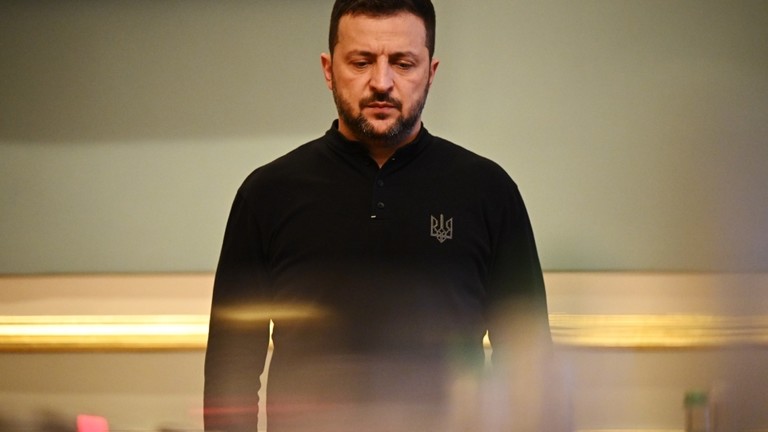
Zelensky cancels meeting fearing PR disaster – media
RT | September 19, 2024
The Ukrainian government has canceled a meeting intended to involve Vladimir Zelensky and Latin American leaders out of fear it would become a PR disaster, Brazilian newspaper Folha de S.Paulo reported on Tuesday. Very few of the invitees confirmed that they would attend the event, the paper wrote.
Kiev initially planned to hold the talks on the sidelines of the UN General Assembly scheduled to convene on September 24. According to Folha, the idea behind the meeting was to demonstrate symbolic support for Ukraine in its conflict with Moscow.
Ukrainian officials reportedly said it would be “an appropriate platform” for Zelensky to present what they called “relevant and reliable information” about the conflict. Kiev also wanted to rally support for the so-called Zelensky ‘peace formula’ – a set of demands put forward by Ukraine as pre-conditions for peace talks. Moscow has rejected the demands, calling them unacceptable.
Kiev had to scrap the meeting after it received only a “few confirmations of attendance,” Folha reported, adding that the government decided it was “necessary to avoid a situation that could possibly be interpreted as a lack of support.”
The paper did not provide the number of confirmations or name the leaders who said they would attend, except for Guatemalan President Bernardo Arevalo.
Ukraine has received steady support from the West since the conflict with Russia broke out in February 2022, but has failed to gain much backing in other parts of the world. Many Asian, African, and South American countries, including China, India, and Brazil, have remained neutral and called for a diplomatic resolution.
Mexico’s president-elect, Claudia Sheinbaum, recently told journalists she would pursue a policy of non-intervention on the world stage and has no plans to make a state visit to Ukraine. “Searching for the peaceful resolution of conflicts is the cornerstone of our foreign policy. This is our policy, and it won’t change,” she said on Wednesday.
Kiev has dismissed any proposals that are not in line with the ‘Zelensky formula’, claiming they play into Moscow’s hands. Last week, Zelensky rejected a six-point roadmap proposed by China and Brazil. Brazilian President Luiz Inacio Lula da Silva responded by saying he would not allow his country to be dragged into the conflict.
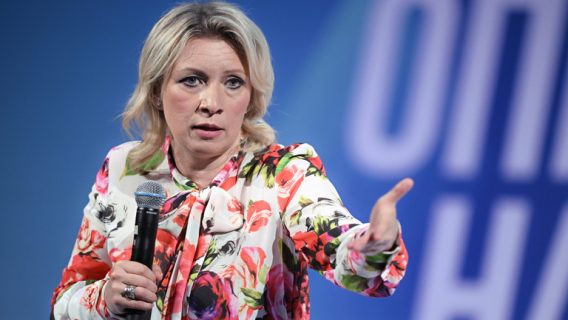
US has declared war on free speech – Russia
RT | September 15, 2024
The US crackdown on Russian media amounts to a declaration of war on free speech, Foreign Ministry spokeswoman Maria Zakharova said on Sunday. She described the new sanctions against RT and other news outlets as “repressions unprecedented in scale.”
US Secretary of State Antony Blinken announced new sanctions against RT on Friday, accusing it of engaging in “covert influence activities” and “functioning as a de facto arm of Russian intelligence.” Earlier in September, Washington imposed sanctions on RT Editor-in-Chief Margarita Simonyan and three other senior RT employees over alleged attempts to influence the 2024 US presidential election.
“The US has declared war on freedom of speech throughout the world, turning to open threats and blackmail against other states in an effort to set them against the domestic media and establish sole control over the global information space,” Zakharova said, promising that the punitive measures Washington was using to target Russian media would not go unanswered.
She added that accusations of attempts to influence the elections are a mere “witchhunt” and “spy-o-mania” done to manipulate public opinion and protect its citizens from any information that is inconvenient for them.
The head of the State Department’s Global Engagement Center (GEC), James Rubin, told reporters on Friday that the “broad scope and reach” of RT was one of the reasons many countries around the world did not support Ukraine. The GEC has funded propaganda games aimed at children and forced Twitter to censor pro-Russian content. Rubin admitted last year that he wanted to use the GEC to shut down Russian media outlets around the world.
“We are going to be talking… in Latin America, Africa and Asia… to try to show all of those countries that right now broadcast – with no restrictions or control – RT and allow them free access to their countries,” Rubin said, arguing that RT’s presence has “had a deleterious effect on the views of the rest of the world about a war that should be an open and shut case.”
Reacting to the new restrictions, Simonyan argued that Washington’s claims about RT collaborating with Russian intelligence are a “classic case of projection.”
“The idea that you can’t achieve results without being part of the intelligence service has exposed them for what they are,” she said.
US Seizes Venezuelan Jet Plane Confirming who is the Rogue Nation
By Rick Sterling | Dissident Voice | September 7, 2024
The Biden/Harris administration is renewing its attacks on Venezuela. On Monday, September 2, US officials seized a jet plane belonging to the Venezuelan government when it was in the Dominican Republic for servicing, then flew it to Florida.
Contrary to a false report in the NY Times, the plane was not “owned by Venezuela’s Nicolas Maduro”. It is owned by the Venezuelan government and used for travel by various Venezuelan officials in addition to the president.
The NYT article claims, “The Biden administration is trying to put more pressure on Mr. Maduro because of his attempts to undermine the results of the recent presidential election.” This is another inversion of reality. The US government is trying to undermine the results determined by the Venezuelan National Election Council (CNE) and ratified by their Supreme Court.
Contrary to Western claims, the Supreme Court and Election Council are not synonymous with the government. They are approved by Venezuela’s elected national assembly. While one opposition member of the Election Council criticized the results, he did not attend the count or meetings. He does not ordinarily live in Venezuela and has returned to his home in the USA. Meanwhile, another opposition member of the Election Council, Aime Nogal, participated and approved the council’s decision.
Before the election, polls showed vastly different predictions. The US-funded polling company, Edison Research, showed the Gonzalez/ Machado opposition winning. Other polls showed the opposite. Polls are notoriously unreliable, especially when the poll is funded by an interested party. A better indication was the street demonstrations where the crowd in support of the coalition led by Maduro was near one million people. In contrast, the crowd for Gonzalez was a small fraction of that.
Increasingly, countries throughout the Global South are rejecting and criticizing Washington’s intervention in other nations’ internal affairs. On August 28, the president of Honduras, Xiomara Castro Zelaya, terminated the long standing extradition treaty with the United States and denounced US meddling after the US Ambassador commented negatively on Honduran – Venezuelan discussions. Along with many other Latin American countries but to the dismay of the US, Honduras recognized the results of the Venezuelan election.
For over twenty years, the US has been trying to overturn the Bolivarian revolution. In 2002, the US government and elite media supported a coup attempt against President Hugo Chavez. To their chagrin, the attempt collapsed due to popular outrage. Since then, there have been repeated efforts with the US supporting street violence, assassination attempts, and invasions. Under Obama, Venezuela was absurdly declared to be a “threat to US national security”. This was the bogus rationale for the economic warfare which the US has waged ever since. Multiple reports confirm that tens of thousands of Venezuelans have died as a result of hunger and sickness due to US strangulation of the economy. Again, the truth is the opposite of what Washington claims: the US is a threat to Venezuela’s national security.
Unknown to most U.S. residents, in December 2020 the U.N. General Assembly declared US unilateral coercive measures (sanctions) are “contrary to international law, international humanitarian law, the Charter of the United Nations and the norms and principles governing peaceful relations among States.”
Illegal U.S. measures were used to justify the kidnapping and imprisonment of Venezuelan diplomat, Alex Saab. They have now been used to justify the theft of a jet plane needed by Venezuelan officials.
Previously, sanctions were used to justify the seizure of Venezuela’s CITGO gas stations and freezing gold reserves in London. It comes after the U.S. and allies pretended for several years that an almost unknown politician, Juan Guaido, was the president of Venezuela.
The reasons for Washington’s repeated efforts to overturn the Bolivarian revolution are clear: Venezuela has huge oil reserves and insists on its sovereignty. Under Chavez and Maduro, the Bolivarian revolution has sought to benefit the vast majority of Venezuela’s people instead of a small elite of Venezuelans and foreigners. Washington cannot tolerate the idea that those resources are used to benefit the Venezuelan people instead of billionaires like the Rockefeller clan, which made much of its wealth from Venezuela.
Under the Bolivarian revolution, Venezuela insists on having its own foreign policy. In 2006, Venezuelan President Hugo Chavez denounced the U.S. invasion of Iraq and compared U.S. President Bush to the devil. In May this year, Venezuelan President Maduro denounced Israel’s genocide in Gaza and accused the West of being “accomplices.”
The cost of seizing Venezuela’s plane on foreign soil was probably greater than the $13 million value of the plane. So why did the Biden administration do this now? Perhaps it is to garner the votes of right-wing Cubans and Venezuelans in Florida. Perhaps it is to distract from their foreign policy failures in Gaza and Ukraine.
Whatever the reason, the theft of the Venezuelan jet plane is an example of U.S. foreign policy based on self-serving “rules” in violation of international law. It shows who is the rogue state.
President Xiomara Castro of Honduras is representative of the wave of disgust with US interference, crimes, and arrogance. In the past, Honduras was called a “banana republic” and known as “USS Honduras”. Now its president says, “The interference and interventionism of the United States … is intolerable. They attack, disregard and violate with impunity the principles and practices of international law, which promote respect for the sovereignty and self-determination of peoples, non-intervention and universal peace. Enough.”
Featured Video
Iran’s Next Strike May Not Explode. It Could Shut You Down
or go to
Aletho News Archives – Video-Images
From the Archive
Zionism’s Violent Legacy
By Donald Neff | Washington Report On Middle East Affairs | January 1996
On January 4, 1948, Jewish terrorists drove a truck loaded with explosives into the center of the all Arab city of Jaffa and detonated it, killing 26 and wounding around 100 Palestinian men, women and children.[1] The attack was the work of the Irgun Zvai Leumi – the “National Military Organization,” also known by the Hebrew letters Etzel – the largest Jewish terrorist group in Palestine. The Irgun was headed by Revisionist Zionist Menachem Begin and had been killing and maiming Arabs, Britons and even Jews for the previous ten years in its efforts to establish a Jewish state.
This terror campaign meant that at the core of Revisionist Zionism there existed a philosophical embrace of violence. … continue
Blog Roll
 Aletho News
- Trump’s Iran war is on an Israeli leash
- Saudi oil boss issues global supply warning
- Riyadh Says Its Oil System Is Intact. The Numbers Say Otherwise.
- Trump and Netanyahu Want to “Finish the Job” on Iran
- US ‘one-sided dictation’ not Iran’s beliefs makes rational talks impossible: Baghaei
- Iran’s Next Strike May Not Explode. It Could Shut You Down /Col Doug Macgregor
- Iran: US political targets legitimate if assassinations return
- Iraq shuts key border crossing with Iran under US pressure: Report
- Undersea Internet cables could be targeted in retaliation for attacks on Iran: IRGC deputy chief
- EU sending ‘biased’ observers to interfere in Serbian election – president
- If Americans Knew
- The Israel Lobby’s Changing Fortunes
- AIPAC has become such a political liability that it’s shifting to a more “nimble” approach to buying politicians
- At least 160 Israeli settler attacks in 2 weeks
- Will Gaza’s Ancient Christian Community Disappear Forever?
- Israel’s vision of regional security rests on keeping Arab states weak
- Heidi Levine recounts how Palestinian youths helped save her in settler attack
- DAILY UPDATE: Latest essential news on Palestine, Israel, & region
- Trump’s Intensifying Sabotage of the ICC, for Israel’s Sake
- Israeli military detain US and UK volunteers in West Bank including Democratic NY politician Brad Lander
- Americans at National Conservatism Conference held in Israel this year criticize Israel
- No Tricks Zone
- E-Cars Reduce CO2 Emissions By Only 41% Compared To Internal Combustion Engine Vehicles
- Predictions Made By Renowned Climate Professor Over Past Decades Have Been Proven To Be Poor
- New Study Suggests Large Regions Of The Pacific Ocean Have Been Cooling For The Last 80 Years
- Germany’s Green Energy Debacle: High Energy Costs Force Kahla Porzellan to Close After 182 Years!
- New Study: 50 Years Of The Most Aggressive ‘Net Zero’ Policies Can Only Affect The Global Climate By 0.03°C
- US September “Heat” Was No Record…Many Records Set Decades Ago
- Latest European Green Energy Debacle; Portugal’s Largest Flagship Solar Park Insolvent!
- Green Energy Debacle: German Expert Professor Fritz Vahrenholt Warns Of Severe Economic And Social Consequences
- Two More Paleo Reconstructions Affirm Meters-Higher Sea Levels Across Ireland, Brazil 7000-6000 Years Ago
- New Study: Earth And Venus Surface Warmth Largely Explained By Convection And Lapse Rate, Not CO2 Or Radiation

