Hamas commends withdrawal of Ecuadorian ambassador from Tel-Aviv
MEMO | July 19, 2014
The Palestinian Islamic movement Hamas hailed on Friday the Ecuadorian decision to withdraw his country’s ambassador to Tel-Aviv in protest against Israeli aggression on Gaza.
Speaking to the Palestinian newspaper Al-Resalah, Hamas spokesman Fawzi Barhoum said: “This is a very advanced position, to which the countries in the region have not arrived at.”
Barhoum described the withdrawal of the ambassador as a “courageous” decision.
Ecuador’s Foreign Minister Ricardo Patino said the Ecuadorian government condemned the Israeli invasion on the Gaza Strip.
“We condemn the Israeli military incursion into Palestinian territory, we require cessation of operations and indiscriminate attacks against civilians,” Patino said.
Barhoum also called for the UN Security Council to pass a resolution to lift the eight-year siege on Gaza and stop Israeli aggression on Gaza, which has continued for 13 days.
Ecuador announced Thursday that it was calling in its ambassador to Israel, according to La Informacion and El Universo.
The Problem with the Venezuela Sanctions Debate
By Peter Hayakawa | Center for Economic and Policy research | July 18, 2014
As murmurs of U.S. sanctions against Venezuela continue in the aftermath of the protest violence there, researcher Michael McCarthy recently published an article in World Politics Review making some good arguments for why they would be a bad idea. He points out that unilateral sanctions lack regional support, and argues that they would discourage dialogue within Venezuela, would likely be ineffective, and may even harm U.S. interests by scuttling efforts to improve and maintain ties in the region.
McCarthy claims that the push for sanctions represents a “symbolic action” on the part of U.S. officials to communicate “universal support for human rights.” This assumption is pervasive in the mainstream debate about Venezuela sanctions; most commentators assume that the moral basis of imposing sanctions is sound and that the only real debate is on whether they will have the desired practical effect. In this context, some of the most obvious questions are missing from the discussion—in particular: a) what right does the U.S. have to enact coercive, unilateral economic measures against democratically-elected governments (measures that in this case, happen to be nearly universally opposed in the rest of the region and, as a study by pollster Luis Vicente Leon recently presented at the Washington Office on Latin America shows, are overwhelmingly opposed domestically in Venezuela)? And b) what integrity does the U.S. have when it comes to promoting human rights?
Last year, over a thousand unarmed protestors were killed by the U.S.-backed military government of Egypt after an illegal coup overthrew the country’s first democratically-elected president. Among those killed was a young journalist, Ahmed Assem el-Senousy, who had the misfortune to film his own murder at the hands of a government soldier who had spotted his camera. It was a grim echo of an event from another era—in June, 1973, Swedish journalist Leonardo Henrichsen similarly filmed his own death in Chile at the hands of a soldier in an unsuccessful military coup attempt that presaged Augusto Pinochet’s U.S. supported takeover three months later. The State Department claims that U.S. interests always align with democracy and human rights, but it is hard to miss the glaring gap between U.S. rhetoric on these issues and its actions.
While officials and Congress members throw unfounded accusations at the Venezuelan government and continue to discuss punitive measures, there are no comparable discussions about removing tax-payer funded military aid to U.S. allies with abysmal human rights records – let alone imposing sanctions — including states like Israel, Egypt, Saudi Arabia, and many others. The U.S. ended its partial freeze of military aid to Egypt this January and has quietly defended Israel during its latest assault on Gaza, even as Palestinian casualties rise at an alarming rate. In this hemisphere, in places like Honduras and Colombia, countries ruled by rightwing allies of the Obama administration, the laws that condition U.S. military and security aid on human rights standards are nearly systematically ignored, just as they are in the Middle East.
Over the past dozen years, the U.S. government has made no secret of its hostility toward the government of Venezuela – even supporting and getting involved in a 2002 military coup against Chávez – despite the fact that, over and over again, it has been elected democratically. In her recent book, “Hard Choices,” former Secretary of State Hillary Clinton even refers to Chávez as a “self-aggrandizing dictator.” She is much more sympathetic toward Egypt’s former president, Hosni Mubarak, whom she doesn’t label a dictator, though she does qualify her praise of his commitment to Middle East peace by mentioning that he is an “autocrat at home.” Clinton is not shy in explaining how she urged President Obama not to call for Mubarak to step down during the height of the 2011 Egyptian protests, citing her concerns about U.S. interests, just as she is not shy about detailing how she intervened to ensure that democratically-elected President Manuel Zelaya was not reinstalled after an illegal military coup in Honduras. Most importantly, while Mubarak was in office and while she was Secretary of State (i.e. when it mattered), Clinton, like virtually every other U.S. official, consistently defended the U.S. relationship with Egypt. Instead of referring to him as an autocrat while she headed the State Department, she famously referred to Hosni Mubarak and his wife as “friends of the family.”
Last November, the current Secretary of State, John Kerry, visited Latin America and announced the “end of the Monroe Doctrine,” stating that the U.S. would no longer work to undermine the sovereignty of its hemispheric neighbors in order to promote its own interests. The open secret is that U.S. officials still actively reserve the right to define human rights and democracy in ways that serve U.S. objectives. Over the decades and right up to the present, the U.S. has spent hundreds of billions of taxpayer dollars to arm some of the world’s least democratic actors, often with some of the worst human rights records, from Suharto to Sisi. Even if one disagrees that the U.S.’s historic disdain for left governments in Latin America is not a factor in the push for sanctions against Venezuela, considering the role that the U.S. continues to play in supporting human right abuses around the world, why accept the U.S. government’s own terms in the debate?
Russia backs Argentina’s call to curb Western dominance
Press TV – July 13, 2014
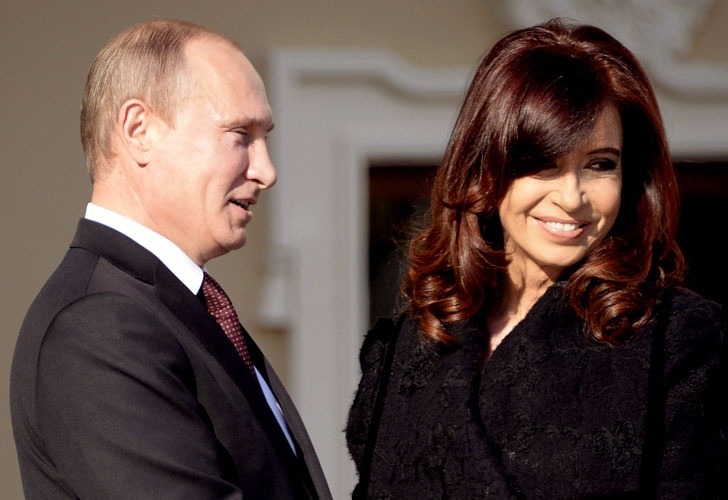
Russian President Vladimir Putin has endorsed a call by his Argentinean counterpart Cristina Fernandez de Kirchner to curb Western dominance in international politics.
Putin gave his support during a meeting with Kirchner in the Argentinean capital, Buenos Aires, on Saturday.
The Russian leader also said Moscow and Buenos Aires share a close view on international relations.
During the meeting, Kirchner emphasized that global institutions must be overhauled and made more multilateral, adding, “We firmly believe in multipolarity, in multilateralism, in a world where countries don’t have a double standard.”
In addition, the two leaders discussed military cooperation and oversaw their delegations signing a series of bilateral deals, including one on nuclear energy.
Putin’s visit to Argentina is part of his six-day tour of Latin America aimed at boosting trade and ties in the region, according to Russian state media.
The Russian leader’s trip will next take him to Brazil, where he is scheduled to attend the gathering of the economic alliance, BRICS (Brazil, Russia, India, China and South Africa), in Brazil on July 15 and 16.
Putin’s Latin American tour began on July 11 in Cuba, where he met with President Raul Castro and his brother, Fidel Castro. During his stay in the capital, Havana, Putin signed a law writing off 90 percent of Cuba’s USD 35-billion Soviet-era debt.
Following his visit to Cuba, Putin made a surprise visit to Nicaragua, where he held talks with President Daniel Ortega.
Whitewashing Venezuela’s Right Wing
In the heated media war over Venezuela, studies produced by well-funded NGOs (usually with ties to powerful states) have been regularly cited by the western corporate media to paint a grim picture of the country.
A Venezuela report released by the International Crisis Group (ICG) in May might give some people the impression that it is an even handed account done by authors committed to decreasing political violence in Venezuela. The report makes a few good recommendations, but it actually reveals that the ICG’s commitment to whitewashing right wing extremists is much stronger than any commitment to sensible analysis or to reducing political violence.
In the crucial section of the report where it discusses protest related violence, the ICG claims that there is only “weak evidence” that any opposition supporters ever used firearms:
In contrast to the abundant evidence linking security forces and pro-government civilians to deaths and injuries, it is unclear whether some in the opposition used firearms. In any case, the evidence on this is weak. The only deaths that appear clearly linked to the protesters are those involving accidents caused by barricades, including the use of barbed wire or other obstacles.
As far as the ICG is concerned, the bodies of several police and other pro government people shot to death while attempting to clear barricades in opposition strongholds are “weak evidence” of firearm use by anyone in the opposition. It might be argued that “concrete proof” of the exact individuals who shot every one of those victims is lacking. However saying that anti-government protesters are not very strongly implicated in the shootings of any government supporters or police is beyond preposterous.
In an attempt to make the evidence appear weak, the ICG mentions one incident in which a journalist working for a right wing business newspaper, El Universal, claims that a government supporter shot and killed a policeman at an opposition barricade. This kind of counter claim had also been made by government officials about some opposition protesters who have been shot (some government officials claiming the shots were fired by other opposition people), but the ICG wouldn’t dare use these claims to conclude that there is only “weak evidence” that government supporters had ever used firearms. In fact, the ICG discusses the death of opposition protester Génesis Carmona without ever mentioning government claims that she had been shot by another protester. Such inconsistent and biased standards for assessing evidence cannot possibly lead to a reliable version of events.
In addition to various opposition aligned sources, the ICG defers to the New York City based Human Rights Watch (HRW) to assess responsibility for violence. HRW was very recently sent a letter signed by two Nobel Peace Prize laureates Adolfo Pérez Esquivel and Mairead Maguire; former UN Assistant Secretary General Hans von Sponeck; current UN Special Rapporteur on Human Rights in the Palestinian Territories Richard Falk; and over 100 scholars all requesting that it take steps to close the revolving door between it and the US government. The letter noted:
In a 2012 letter to President Chávez, HRW criticized the country’s candidacy for the UN Human Rights Council, alleging that Venezuela had fallen “far short of acceptable standards” and questioning its “ability to serve as a credible voice on human rights.” At no point has U.S. membership in the same council merited censure from HRW, despite Washington’s secret, global assassination program, its preservation of renditions, and its illegal detention of individuals at Guantánamo Bay.
Ken Roth, head of HRW, once referred to Venezuela and a few other ALBA countries as the “most abusive” in Latin America – an insane remark as he should know by merely sampling his own organization’s reports about Colombia. Daniel Wilkinson, another HRW official, went so far as to lie about the Venezuelan TV media in an op-ed published in the New York Review of Books. HRW’s responses to the 2002 coup in Venezuela and as well as the 2004 coup in Haiti were disgraceful. By now, anyone who uncritically cites HRW about any country at odds with the US is, at best, uninformed about HRW’s track record.
The ICG’s report makes no mention of numerous falsified images the opposition has spread through social media to bolster its allegations of repression. Even a corporate outlet like Reuters made mention of this tactic but the ICG ignored it. The ICG also cites the anti-government newspaper El National various times – a newspaper whose dishonesty is so flagrant it has sometimes dismayed opposition people. An atrocious record doesn’t “weaken” El Nacional articles as evidence in the view of the ICG or provoke any statement of caution.
Attempts to put the 2004 recall referendum results under a cloud
The ICG report made the astounding remark that the opposition merely lacked “concrete proof” of fraud in the 2004 recall referendum that was won by Hugo Chavez. The report stated:
Concrete proof [of fraud] was not presented, though a peer-reviewed statistical analysis of the results later found significant anomalies. Maria M. Febres and Bernardo Márquez, “A Statistical Approach to Assess Referendum Results: The Venezuelan Recall Referendum 2004”, International Statistical Review, vol. 74, no. 3 (2006), p. 379. Jennifer McCoy, Carter Center election observation head in Venezuela, found the anomalies had not affected the referendum outcome.
In fact, elaborate statistical arguments – one of them based on “anomalies” in the distribution of votes – were made immediately after the referendum took place, not years later as the ICG implies. The Carter Center hired a team of very specialized statisticians – not simply Jennifer McCoy as the ICG very sloppily suggests – whose only job was to assess those arguments. The statisticians explained why the arguments did not substantiate allegations of fraud. The oppositions’ various “statistical analyses” received expert scrutiny that decided something far more important than acceptability for publication (which is what peer-review committees decide for journals) and that required extensive review of the arguments made by both sides. One of the key points made by the Carter Center’s statisticians was that there was no credible explanation how the government could have perpetrated fraud such that the random audit of the results would have failed to expose it.
The government’s victory in the 2004 referendum was subjected to a remarkably severe test. One of the key monitors, the Carter Center, is deeply tied to the US establishment which has been very hostile to Chavista administrations. In spite of all that, the ICG still pretends that there is reasonable doubt about the results. That will encourage the members of the opposition who allege that Chavista victories are stolen no matter how overwhelming the evidence is against them.
It’s unsurprising, given the ICG’s willingness to smear the 2004 referendum which was very far from close, that it also published a hopelessly one-sided account of the dispute surrounding the vastly closer presidential election of April 2013. The ICG absolved the opposition in advance for any act of violence by stating that the government must “clarify” the validity of the results or face “violent consequences”. In reality, the Election Day audit of the results, as CEPR has reported, already proved that the odds of a Capriles victory were less than one in 25 thousand trillion. The audit was, nevertheless, expanded.
It is quite clear to anyone who has been paying attention that opposition claims of electoral fraud are not driven by the facts but by the level of support they expect from the US government, foreign media and groups like the ICG.
Speaking the opposition’s language
In section IX of the report the ICG contrasts the “left leaning regimes” of the Bolivarian Alliance for our America (ALBA) with “those representing more market-friendly, centre and right-leaning governments”. On the left the ICG describes “regimes” while elsewhere on the political spectrum it describes “governments”.
Some political scientists use the word “regime” in a neutral way, but it is most commonly used to describe an oppressive and undemocratic government. I can find no example of the ICG ever referring to US government as a “regime” despite its abysmal human rights record and money-dominated political process. However it is very easy to find ICG reports replete with the word “regime” to describe states that the US government opposes.
The ICG also adopts the use of the word “coletivo” to mean an armed government supporter. It acknowledges that this is highly partisan usage by noting that it “is a term that covers pro-government community organisations of various kinds, most of them non-violent. But it has come to be used in particular for armed groups of the revolutionary left that have proliferated under chavista governments.”
In short, the opposition media (whom the ICG attempts to hide through the use of passive voice “has come to be used”) has demonized the word “colectivo” and the ICG reflexively follows suit.
Tamara Pearson, a proud colectivo member who has been living and working in Venezuela for several years, remarked about the media vilification campaign:
Where previously everything, even the drought or the actions of big business, were Chavez’s fault, now it must be “the collectives”. Now that Chavez is gone and the opposition still hasn’t got its electoral victory, they have realised it’s not enough to call the current president a “dictator” and belittle him because of his lack of formal university education, they need to demonise the active and organising people too. Because they aren’t going away.
A few good suggestions completely undermined
The ICG said that “the opposition can, and should, drop calls for the Maduro administration to step down “. This is a sound suggestion, no doubt, but one that is hypocritical and ineffective coming from the ICG. Whitewashing opposition violence and impugning clean elections, as the ICG does, is a propaganda gift to the “regime change” crowd.
The ICG recommends that Venezuela’s “international partners” should “help de-escalate the violence by sending clear messages that only peaceful methods will be tolerated.” UNASUR, and even the OAS which has traditionally towed Washington’s line, have already sent that message. The ICG is sending the opposite message.
Written for teleSUR English, which will launch on July 24
Colombia Peace Talks Survive Elections, May Have Lasting Implications for Regional Integration and US-Led “War on Drugs”
By Peter Hayakawa | CEPR Americas Blog | June 19, 2014
Ending a very close race, incumbent Juan Manuel Santos won a decisive five-point victory Sunday in Colombia’s second round of presidential elections, beating challenger Óscar Iván Zuluaga, who had won the first round in an upset. The campaign had centered on two related issues: first, the future of the Santos-led peace process under way in Havana between the Colombian government and the rebel group FARC that may have the potential to end a half century of civil war, and second, a referendum on Santos’ shift away from the militaristic policies of his predecessor, Álvaro Uribe.
Zuluaga, who had been hand-chosen by Uribe and ran in opposition to the peace talks (though he had softened his position slightly after the first round), quickly conceded defeat this Sunday. Uribe, however, wasted no time in claiming that the elections had been marred by “massive fraud.” Santos ran on not only defending the peace talks which he had played a primary role in instigating, but also on repairing ties with regional neighbors (ties that he himself, as a defense minister under Uribe, had played a key role in breaking).
Santos’ victory has certainly dealt a major blow to ‘Uribismo.’ Colombians largely seem to support the peace process as well as recent moves toward regional integration, and it looks as though few were convinced by Uribe’s wild charges during the campaign that the peace process would open the path to “Castrochavismo,” allowing the “FARC to run this country from Havana.” Uribe has long loomed over Colombian politics, but Zuluaga’s defeat signals that his influence may be waning, even on the political right. Meanwhile, Santos’ support of the peace talks won him the backing of some of Colombia’s most prominent business people, in addition to endorsements from indigenous groups and left-wing coalitions.
Uribe might have thought twice about investing so much political capital in opposing the negotiations. While it is true that the peace talks had the support of Venezuela and Cuba, they also had the support of virtually every other country in the region, as well as the United Nations, in addition to broad domestic support. More to the point, the peace talks have throughout had the quiet endorsement of the United States. Just a month ago, on May 18th, U.S. Secretary of State John Kerry reaffirmed U.S. support for the peace process, which, given that they were the central subject of the elections, arguably amounted to an endorsement of Santos.
One might be able to forgive Uribe for being confused. While he was president, Uribe was the U.S.’s closest regional ally. At the time, his antagonistic posture toward neighbors Venezuela and Ecuador, including his repeated accusations of their support for the FARC, were highly appreciated by the U.S. (and not just by the Bush administration). More recently, his accusations tying Santos to Cuba, with their anti-Castro fervor, seem to come right out of the U.S.’s Cold War-era playbook. There is no evidence that Cuba is influential enough to be able to “run” Colombia, and the language betrays a loyalty to the U.S. perspective. Thus, it might have shocked him to learn that Secretary Kerry had basically endorsed Santos.
Indeed, U.S. support for Santos is a little puzzling, given the extent to which Santos has started to move away from U.S. policy on several important fronts; for example, emerging as a champion of regional cooperation and as a key participant in a regional effort to change course in the U.S.-led “War on Drugs.” But despite what might be a natural preference for a more pro-U.S. candidate (as any Uribe-endorsed candidate surely would have been), the U.S. simply might be unable to publicly oppose the almost universally-supported peace talks without risking serious and coordinated push-back. This development can be seen as another sign of Latin America’s growing independence from the U.S., though it’s important to remember that Santos also continues to cooperate with the U.S. militarily, and is one of the last remaining champions of U.S.-promoted “free trade’” agreements in the region.
The Peace Talks, Paramilitaries, and the “War on Drugs”
The negotiations have taken on momentum over the past year. Before the election, a framework emerged that will include the vital input of the civil war’s victims as well as mutual acknowledgement of responsibility for crimes committed during the course of the war. Perhaps most importantly, the talks have now widened to include negotiations between the government and Colombia’s second-largest guerrilla group, the ELN, increasing the reach of any potential deal. Since the talks began, the Colombian government claims that violence committed against civilians has significantly decreased.
There are plenty of reasons to be skeptical about these peace talks, particularly about the chances they will lead to real justice for the victims. While the FARC have committed many human rights abuses, the Colombian military and paramilitary groups with which the military has closely worked have been responsible for most of the violence. During the course of the war, paramilitaries alone have been responsible for up to 80 percent of all of the killings in the country, according to the United Nations. The fact that there is strong collusion between these paramilitary groups and the Colombian government is not a point of serious debate. In a move that bodes ill for the prospects for justice, in March, the government announced that it would release hundreds of paramilitary soldiers who had served lenient sentences for extremely serious crimes.
It is also almost guaranteed that U.S. policy makers and multinational companies, like DynCorp and Chiquita Banana, which have played a large role in fueling this conflict over the decades (primarily through the “War on Drugs” and the U.S.’s obsession with counterinsurgency), will also not be held to account. The U.S. has used the pretext of anti-narcotics campaigns to justify funding the Colombian military and Colombian political allies despite longstanding evidence of their ties to paramilitary groups. Paramilitaries, who are major players in the drug trade themselves, have among a litany of other abuses, declared war on unions, aiding the Colombian military in efforts that have nothing to do with counter-narcotics. In 2006, the “parapolitics” scandal story broke in Colombia, and 45 Colombian congressmen and seven governors were eventually convicted of ties to some of the country’s most notorious paramilitary groups. But even after these ties were brought out in the open, the U.S. government still defended the military aid it gave to Colombia. At the height of the scandals, a partial, temporary freeze was enacted by a handful of Senate Democrats against the wishes of the Bush administration. After the even more shocking “false positives” scandal emerged in 2008, when it was discovered that the Colombian army had hired paramilitaries to kill civilians and dress the bodies up as rebel fighters, declassified documents released by the National Security Archive show that the U.S. knew as early as 1994 that U.S.-backed Colombian security forces had ties to groups engaging in “death squad tactics” similar to those brought to light in the false positives scandal. There is evidence that the U.S. was still providing resources directly to some of these military units as recently as 2010. If the U.S. role is left out of the discussion and paramilitary groups are not held to account, this will greatly diminish the credibility of the peace process.
But despite these obvious shortcomings, the peace talks may eventually lead to a huge change in the “War on Drugs.” An under-discussed aspect of the negotiations is the fact that both the government and the FARC have already agreed on key issues, including commitments to seriously limit the U.S.-led aerial eradication program (where tens of millions of U.S. taxpayer dollars are spent annually to spray powerful herbicides on coca plants in rural Colombia), and also on a commitment to implement badly-needed land reforms for rural Colombians as well as programs to create economic incentives for Colombian farmers to grow crops other than coca. If these reforms are implemented, many Colombian subsistence farmers may one day be able to lead normal lives, instead of being terrorized by aerial eradication that makes no distinction between coca plants and the food that farmers grow to feed themselves. Aerial eradication has entailed huge human and environmental costs, while being shockingly ineffective [PDF] in limiting cocaine production, despite U.S. claims to the contrary.
At the same time, other countries are taking a stand against harmful anti-drug policies. In Peru, which in 2012 overtook Colombia as the world’s largest producer of cocaine, the government recently began a program to provide assistance to farmers to grow alternative crops. Since then, the reduction in the production of coca has been so significant that the government recently decided to postpone forced eradication efforts (Peru and Bolivia had both already banned aerial eradication in the past). The government of Peru also recognized that popular opposition to forced eradication has been a primary reason why the remnants of Peru’s Shining Path guerrillas have any popular support. If the Colombian peace talks succeed, there is a chance that the decades-long struggles of Colombian farmers against aerial eradication might eventually take a decisive positive turn in the place where the policy has caused the most harm—where for a time, an astounding 8 percent of the arable land in Colombia was subject to the program.
In the coming months, it will be important to see how the U.S. reacts to developments in the peace talks, which may have big implications for U.S. policy in Latin America. Despite U.S. support for the talks, the U.S. government has been clear that it wants aerial eradication and other “Drug War” policies to continue. But if the talks are successful, there is a chance that the U.S. may be forced to accept real change—not just a curtailment of destructive counter-drug policies, but perhaps also a process of demilitarization that might loosen the U.S.’s grip on a key regional foothold of military power.
Venezuelan President and High Ranking Officials to Declare Wealth, Ex-Minister Investigated for Corruption
By Z.C. DUTKA | Venezuelanalysis | June 18, 2014
San Francisco – Venezuelan comptroller Adelina Gonzalez announced yesterday that all senior officials in public office must update their sworn declaration of wealth (DJP) between the 1st and 31st of July.
The DJP has been required for select offices since the ratification of the Law Against Corruption in 2003. A government website for the task was set in place in 2009. The last DJP summons was for all police bodies, though the current injunction – detailed in the Official Gazette published just days after president Nicolas Maduro’s election to office – is much broader in scale.
The mandate extends to all state, federal, and municipal employs of superior rank, as well as any functionary working within the realm of public accounting. This includes President Nicolas Maduro, as well as magistrates of the Supreme Court, military generals and high ranking army personnel, the National Electoral Council, the Attorney General’s Office, governors, ministers and vice ministers, ambassadors, consuls, notaries, the Central Bank directors’ office and university rectors.
Those who do not comply with this requirement will be fined or, as articles 38 and 39 of the corruption law indicate, may be removed from their post and banished from all public office for up to 12 months.
Maduro’s firm stance against corruption has defined his presidency from the beginning, though critics believe his policies have been largely unsuccessful. Since he took office in April of 2013, there have been arrests and investigations within the tax and customs office, Seniat, the goods and services monitor, Indepabis, and state owned iron ore company, Ferrominera.
While addressing the National Assembly last October, the head of state implored deputies to reject the notion of corruption as “normal in political life.”
“I call on the people to not tolerate corruption,” he said, “neither of those with a yellow collar [opposition supporters] nor the corruption of those with a red collar [supporters of the Bolivarian revolution]. It’s the same thuggery, no matter how you dress; it’s the same anti-people and anti-country behavior.”
In an interview last September, Interior Minister Miguel Rodriguez Torres went into detail, “This problem of corruption neither started with the revolution, nor did it increase during the revolution. Rather, it began when the republic began. I believe that we should see corruption as part of an effort to dominate sectors of the public administration… In all public institutions there used to be parallel institutions. There always was someone who you would pay [on the side], to take care of the procedures. This created a culture.”
He explained how increasing government efficiency and eliminating bureaucracy are two key methods of destroying the normalized institution of corruption. He reminded reporters that in the pre-Chavez era, there was only one moment when politicians were publicly accused of corruption. That moment involved a scheme which left the country with “literally zero dollars in foreign currency reserves.
“Some experts who have studied this say that this was the greatest fraud in the history of the world,” Rodriguez stated.
Though the conspiracy was of vast proportions and markedly reliant on government insiders, only one man was accused and convicted for the renowned “RICADI fraud,” Rodriguez said.
Ex-minister accused
The Attorney General’s Office, presided over by Luisa Ortega Diaz, is currently conducting an investigation on Eugenia Sader, Health Minister from 2010 to 2013. Sader, a known supporter of Hugo Chavez, was replaced in her position shortly after Maduro took office.
An alleged Justice Department informant leaked information to local newspapers that Sader’s trial will begin on Thursday, at which time she will be questioned regarding numerous “irregularities in management” during her time as Health Minister. The informant took this to mean corruption and embezzlement, but others interpreted the term differently.
On Tuesday a house deputy for the opposition Justice First party and physician, Dinorah Figuera, asked attorney general Diaz to clarify what the charges against Sader are to be. Figuera told reporters she believes the case corresponds with a number of grave complaints her office made in regards to public hospital management under Sader’s administration, including emergency rooms closed for improvements that were never reopened.
An auditing commission of the national assembly last year questioned Merida city mayor and member of the opposition Lestor Rodriguez, in response to a dozen accusations of embezzlement gathered by a city councilor. At the time, the mayoralty had not collected trash in Merida since the previous year, though Rodriguez had claimed it was for lack of funds.
Rodriguez was later indicted for corruption.
Mexico: Jailed Activist’s Family Threatened
Weekly News Update on the Americas | June 15, 2014
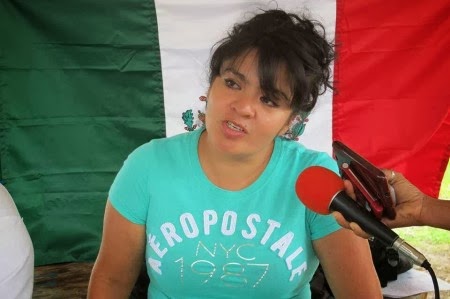
A group of Mexican legislative deputies announced on June 2 that they would call on the federal Governance Secretariat to guarantee the security of family members of Nestora Salgado, an imprisoned community activist from the largely indigenous town of Olinalá in the southwestern state of Guerrero. The announcement came one day after an attack on a bus that Salgado’s daughter Saira Salgado was riding from Olinalá to Mexico City for a scheduled meeting with legislators. Armed men stopped the bus shortly after it left Olinalá and without explanation executed a woman passenger. Saira Salgado said the victim was dressed the way she herself is usually dressed. After the murder, the men left without harming or robbing the other passengers. Deputy Roberto López, of the center-left Party of the Democratic Revolution (PRD), charged that the attack was not an isolated incident.
Nestora Salgado is a naturalized US citizen from Olinalá who migrated to the US and settled in Washington state. In recent years she began visiting her hometown and became involved in community affairs there; eventually she was elected head of the community police force. Community police forces are legally recognized in Guerrero, and Salgado originally had good relations with the state government. But in August 2013 she ordered the arrest of a local official, Armando Patrón Jiménez, in connection with cattle rustling and the deaths of two ranchers. Five days later Salgado herself was arrested on charges of kidnapping and was removed to a federal women’s prison at Tepic in the western state of Nayarit. She has been held there ever since without access to a lawyer; her daughter’s meeting with legislators was intended to discuss their plan to have her transferred to a more accessible prison in Mexico City.
Mexican and US activists have organized a campaign for Salgado’s release, along with a petition drive. The US government had done nothing to help with Salgado’s case despite her status as a US citizen, Deputy Loretta Ortiz Ahlf, of the small leftist Labor Party (PT), said on June 2. (La Jornada (Mexico) 6/3/14; Desinformémonos (Mexico) 6/8/14)
Maduro Unveils Policy to Eradicate Extreme Poverty in Venezuela
By Ewan Robertson | Venezuelanalysis | June 9, 2014
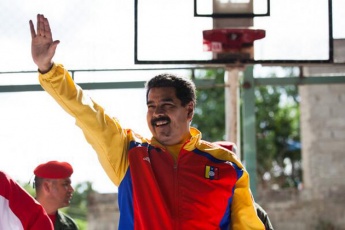
Mérida – Venezuelan president Nicolas Maduro unveiled a new policy to focus on the needs of the least well off as part of his pledge to eradicate extreme poverty in the country by 2018.
The policy involves creating almost 1,500 special attention points that group together various social programs in areas where extreme poverty still prevails, in order to meet the basic needs of these communities.
The attention points, called Social Mission Bases, will house government social programs such as free community food kitchens, subsidised food stores, and free medical clinics. They will be spread out over the 255 of the country’s 1163 local districts where households experiencing extreme poverty still exist.
Venezuela’s National Institute of Statistics estimates that 5.5% of Venezuelan households still experience extreme poverty. This is calculated using the regionally based Unsatisfied Basic Needs (UBN) structural poverty indicator, which considers as extremely poor those homes where two or more basic needs, such as access to basic services, adequate living conditions, or schooling, are not met.
The percentage of households in extreme poverty has decreased steadily over the previous decade from 12.7% in 2003 to 5.5% currently. In the same period, overall structural poverty has decreased from 30.5% to 19.6%.
President Nicolas Maduro has vowed to eliminate extreme poverty altogether by 2018, the end of his current term of office, as well as to continue to reduce overall structural poverty.
“In the year 2018 I’ll be…able to say that we’ve achieved the goal of zero misery in Venezuela… the Bolivarian revolution must end poverty to establish a system of equality [and] justice,” he said as the first Social Mission Base was founded in the coastal state of Miranda.
Maduro also informed the country that the Social Mission Bases will be complemented with multidisciplinary teams of social program workers, such as community doctors, sports therapy trainers and cultural promoters, who will visit deprived communities house by house to assess living conditions and attend to differing needs.
“The great battalion [multi-disciplinary team] … won’t have another objective but to fight a strong battle along with our people to eradicate extreme poverty,” the president said, while also encouraging supporters to participate in the work of the Social Mission Bases.
The policy announcements come amid a debate over poverty in Venezuela, with government critics pointing to an increase in income-based poverty between the second half of 2012 and the first half of 2013, in the context of a sharp increase in annual inflation.
“The days when poverty was a winning issue for chavismo are over. Official statistics now show that poverty is rising rapidly,” wrote anti-government blogger Juan Nagel for Foreign Policy magazine recently.
Nevertheless income-based poverty actually decreased in the second half of 2013 to lower than it was in early 2012, and in keeping with the level of income-based poverty recorded in recent years, at 32.1%, down from 62.1% a decade earlier.
The Social Mission Bases policy also comes not long after Maduro announced reforms to the country’s national system of welfare programs, in order to improve their performance and reduce bureaucracy and overlapping functions.
The programs, known as “missions”, include free health clinics, free educational programs, subsidised food outlets, and the construction of heavily subsidised housing. They are held as one factor behind the large reduction in poverty since the Bolivarian government was elected to power in 1999.
Brazil: Worker’s Struggle Trumps Sports Spectacle
By James Petras :: 06.03.2014
Introduction
For decades social critics have bemoaned the influence of sports and entertainment spectacles in ‘distracting’ workers from struggling for their class interests. According to these analysts, ‘class consciousness’ was replaced by ‘mass’ consciousness.
They argued that atomized individuals, manipulated by the mass media, were converted into passive consumers who identified with millionaire sports heroes, soap opera protagonists and film celebrities.
The culmination of this ‘mystification’ – mass distraction –were the ‘world championships’ watched by billions around the world and sponsored and financed by billionaire corporations: the World Series (baseball), the World Cup (soccer/futbol), and the Super Bowl (American football).
Today, Brazil is the living refutation of this line of cultural-political analysis. Brazilians have been described as ‘football crazy’. Its teams have won the most number of World Cups. Its players are coveted by the owners of the most important teams in Europe. Its fans are said to “live and die with football” . . . Or so we are told.
Yet it is in Brazil where the biggest protests in the history of the World Cup have taken place. As early as a year before the Games, scheduled for June 2014, there have been mass demonstrations of up to a million Brazilians. In just the last few weeks, strikes by teachers, police, construction workers and municipal employees have proliferated. The myth of the mass media spectacles mesmerizing the masses has been refuted – at least in present-day Brazil.
To understand why the mass spectacle has been a propaganda bust it is essential to understand the political and economic context in which it was launched, as well as the costs and benefits and the tactical planning of popular movements.
The Political and Economic Context: The World Cup and the Olympics
In 2002, the Brazilian Workers Party (PT) candidate Lula DaSilva won the presidential elections. His two terms in office (2003 – 2010) were characterized by a warm embrace of free market capitalism together with populist poverty programs. Aided by large scale in-flows of speculative capital, attracted by high interest rates, and high commodity prices for its agro-mineral exports, Lula launched a massive poverty program providing about $60 a month to 40 million poor Brazilians, who formed part of Lula’s mass electoral base. The Workers Party reduced unemployment, increased wages and supported low-interest consumer loans, stimulating a ‘consumer boom’ that drove the economy forward.
To Lula and his advisers, Brazil was becoming a global power, attracting world-class investors and incorporating the poor into the domestic market.
Lula was hailed as a ‘pragmatic leftist’ by Wall Street and a ‘brilliant statesman’ by the Left!
In line with this grandiose vision (and in response to hoards of presidential flatterers North and South), Lula believed that Brazil’s rise to world prominence required it to ‘host’ the World Cup and the Olympics and he embarked on an aggressive campaign. . . Brazil was chosen.
Lula preened and pontificated: Brazil, as host, would achieve the symbolic recognition and material rewards a global power deserved.
The Rise and Fall of Grand Illusions
The ascent of Brazil was based on foreign flows of capital conditioned by differential (favorable) interest rates. And when rates shifted, the capital flowed out. Brazil’s dependence on high demand for its agro-mineral exports was based on sustained double-digit economic growth in Asia. When China’s economy slowed down, demand and prices fell, and so did Brazil’s export earnings.
The PT’s ‘pragmatism’ meant accepting the existing political, administrative and regulatory structures inherited from the previous neo-liberal regimes. These institutions were permeated by corrupt officials linked to building contractors notorious for cost over-runs and long delays on state contracts.
Moreover, the PT’s ‘pragmatic’ electoral machine was built on kick-backs and bribes. Vast sums were siphoned from public services into private pockets.
Puffed up on his own rhetoric, Lula believed Brazil’s economic emergence on the world stage was a ‘done deal’. He proclaimed that his pharaonic sports complexes – the billions of public money spent on dozens of stadiums and costly infrastructure – would “pay for themselves”.
The Deadly ‘Demonstration Effect’: Social Reality Defeats Global Grandeur
Brazil’s new president, Dilma Rousseff, Lula’ protégé, has allocated billions of reales to finance her predecessor’s massive building projects: stadiums, hotels, highways and airports to accommodate an anticipated flood of overseas soccer fans.
The contrast between the immediate availability of massive amounts of public funds for the World Cup and the perennial lack of money for deteriorating essential public services (transport, schools, hospitals and clinics) has been a huge shock to Brazilians and a provocation to mass action in the streets.
For decades, the majority of Brazilians, who depended on public services for transport, education and medical care, (the upper middle classes can afford private services), were told that “there were no funds”, that “budgets had to be balanced”, that a “budget surplus was needed to meet IMF agreements and to service the debt”.
For years public funds had been siphoned away by corrupt political appointees to pay for electoral campaigns, leading to filthy, overcrowded transport, frequently breaking down, and commuter delays in sweltering buses and long lines at the stations. For decades, schools were in shambles, teacher rushed from school to school to make-up for their miserable minimum-wage salaries leading to low quality education and neglect. Public hospitals were dirty, dangerous and crowded; under-paid doctors frequently took on private patients on the side, and essential medications were scarce in the public hospitals and overpriced in the pharmacies.
The public was outraged by the obscene contrast between the reality of dilapidated clinics with broken windows, overcrowded schools with leaking roofs and unreliable mass transport for the average Brazilian and the huge new stadiums, luxury hotels and airports for wealthy foreign sports fans and visitors.
The public was outraged by the obvious official lies: the claim that there were ‘no funds’ for teachers when billions of Reales were instantly available to construct luxury hotels and fancy stadium box seats for wealthy soccer fans.
The final detonator for mass street protest was the increase in bus and train fares to ‘cover losses’ – after public airports and highways had been sold cheaply to private investors who raised tolls and fees.
The protestors marching against the increased bus and train fares were joined by tens of thousands Brazilians broadly denouncing the Government’s priorities: Billions for the World Cup and crumbs for public health, education, housing and transport!
Oblivious to the popular demands, the government pushed ahead intent on finishing its ‘prestige projects’. Nevertheless, construction of stadiums fell behind schedule because of corruption, incompetence and mismanagement. Building contractors, who were pressured, lowered safety standards and pushed workers harder, leading to an increase in workplace deaths and injury. Construction workers walked out protesting the speed-ups and deterioration of work safety.
The Rousseff regime’s grandiose schemes have provoked a new chain of protests. The Homeless Peoples Movement occupied urban lots near a new World Cup stadium demanding ‘social housing’ for the people instead of new five-star hotels for affluent foreign sports aficionados.
Escalating costs for the sports complexes and increased government expenditures have ignited a wave of trade union strikes to demand higher wages beyond the regime’s targets. Teachers and health workers were joined by factory workers and salaried employees striking in strategic sectors, such as the transport and security services, capable of seriously disrupting the World Cup.
The PT’s embrace of the grandiose sports spectacle, instead of highlighting Brazil’s ‘debut as a global power’, has spotlighted the vast contrast between the affluent and secure ten percent in their luxury condos in Brazil, Miami and Manhattan, with access to high quality private clinics and exclusive private and overseas schools for their offspring, with the mass of average Brazilians, stuck for hours sweating in overcrowded buses, in dingy emergency rooms waiting for mere aspirins from non-existent doctors and in wasting their children’s futures in dilapidated classrooms without adequate, full-time teachers.
Conclusion
The political elite, especially the entourage around the Lula-Rousseff Presidency have fallen victim to their own delusions of popular support. They believed that subsistence pay-offs (food baskets) to the very poor would allow them to spend billions of public money on sports spectacles to entertain and impress the global elite. They believed that the mass of workers would be so enthralled by the prestige of holding the World Cup in Brazil, that they would overlook the great disparity between government expenditures for elite grand spectacles and the absence of support to meet the everyday needs of Brazilian workers.
Even trade unions, seemingly tied to Lula, who bragged of his past leadership of the metal workers, broke ranks when they realized that the ‘money was out there’ – and that the regime, pressured by construction deadlines, could be pressured to raise wages to get the job done.
Make no mistake, Brazilians are sports minded. They avidly follow and cheer their national team. But they are also conscious of their needs. They are not content to passively accept the great social disparities exposed by the current mad scramble to stage the World Cup and Olympics in Brazil. The government’s vast expenditure on the Games has made it clear that Brazil is a rich country with a multitude of social inequalities. They have learned that vast sums are available to improve the basic services of everyday life. They realized that, despite its rhetoric, the ‘Workers Party’ was playing a wasteful prestige game to impress an international capitalist audience. They realized that they have strategic leverage to pressure the government and address some of the inequalities in housing and salaries through mass action. And they have struck. They realize they deserve to enjoy the World Cup in affordable, adequate public housing and travel to work (or to an occasional game) in decent buses and trains. Class consciousness, in the case of Brazil, has trumped the mass spectacle. ‘Bread and circuses’ have given way to mass protests.
Zapatistas Retire Subcommander Marcos
HAVANA TIMES — May 26, 2014
Subcommader Marcos has spoken “his last words in public,” reads a statement from the Zapatista National Liberation Army (EZLN). According to the statement, the figure of Marcos is “no longer necessary,” reported Pulsar news agency.
Marcos announced he will no longer be the spokesperson for the EZLN and will change names to subcommander Galeano, in tribute to the indigenous leader killed on May 2 during an attack on the small farmer and farm worker organization Central Independiente de Obreros Agrícolas y Campesinos Histórica (Cioac).
The new Zapatista spokesperson is subcommander Moses, explained Marcos. He noted that “the baton of command is not passed on due to illness or death or by internal displacement, purging or cleansing, it is due to internal changes that took place and take place in the EZLN.”
Recalling the birth of the character “subcommander Marcos”, he said it was “a complex maneuver of distraction, a trick of terrible and wonderful magic, a malicious move of the native heart.”
“The character was created and now its creators, the Zapatistas, destroy it,” said Marcos.
“It is our belief that to rebel and fight that neither leaders, political bosses, messiahs or saviors are necessary. To fight it just takes a little sense of shame, a bit of dignity and a lot of organization,” concludes the Zapatista statement.
Featured Video
US Marines Seized Panama in 1903
or go to
Aletho News Archives – Video-Images
From the Archives
Precedents for Pizzagate
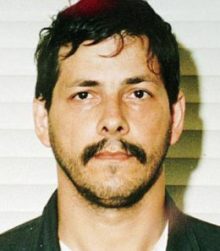
Marc Dutroux, Belgian pedophile, sadist, and serial killer with friends in high places
By Aedon Cassiel | Counter – Currents | December 23, 2016
To reiterate a point that should be clear to the more astute reader, my goal in this series (part 1, part 2) has not been to defend “Pizzagate” as such. My goal has been to defend the people who want to investigate it against specific accusations levied against them by people who think Pizzagate has revealed no intriguing information at all—for a specific reason, which I will be honing in and focusing on much more directly in this closing entry.
Whereas the mainstream critics of Pizzagate would have you believe that the dividing line is between paranoid conspiracy theorist followers of “fake news” and level-headed people who follow trustworthy news sources and rely on cold, hard reason to determine the truth, my goal has been to show that—whatever is or is not happening with Pizzagate itself—this framing of the issue is arrogant, insulting, and the product of extremely narrow tunnel vision. … continue
Blog Roll
 Aletho News
- Trump stalls over Iran strike plan, Iran holds all the aces
- Zelensky’s Ceasefire for Elections is Strategic Gambit, Not Democratic Move
- US and Dutch pilots flying F-16s for Ukraine – Western media
- West’s Claims of Non-Involvement in Ukraine Conflict ‘Epitome of Hypocrisy’ – Expert
- Putin aide urges retaliation to ‘Western piracy’
- The Depth Charge in the Womb
- ‘Fox guarding the henhouse’: AMA, Vaccine Integrity Project to conduct their own vaccine safety and efficacy reviews
- Macron, Merz, and von der Leyen Defend Expanded Speech Controls
- Keir Starmer-tied think tank paid PR firm to target The Grayzone
- ‘Israel’ threatens to genocide Gaza if Hamas refuses disarmament
- If Americans Knew
- In Gaza, “rats run over our faces” – Not a ceasefire Day 129
- Israel-backed border guards, GHF-linked aid – Not a ceasefire Day 128
- Israel battles Palestinian right of return, one Palestinian at a time – Not a ceasefire Day 127
- Noor’s short life of unimaginable suffering
- Israel Destroyed Gaza’s Hospitals. Now It’s Banning Doctors Without Borders.
- Is Spite of What Zionists Say, It’s a Good Thing to Criticize Governments
- Palestinian mother, daughter recount strip searches, harsh conditions in Israeli detention
- Israel used weapons in Gaza that made thousands of Palestinians evaporate
- ADL’s Stats Twist Israel’s Critics Into Antisemites
- Why Is the World Silent When the Gaza Genocide Is Not Over?
- No Tricks Zone
- New Study: A 4°C Warmer Beaufort Sea Had ‘No Sea Ice’ 11,700 – 8200 Years Ago
- Unfudging The Data: Dutch Meteorological Institute Reinstates Early 20th Centruy Heat Waves It Had Erased Earlier
- German Gas Crisis…Chancellor Merz Allegedly Bans Gas Debate Ahead of Elections!
- Pollen Reconstructions Show The Last Glacial’s Warming Events Were Global, 10x Greater Than Modern
- Germany’s Natural Gas Storage Level Dwindles To Just 28%… Increasingly Critical
- New Study Rebuts The Assumption That Anthropogenic CO2 Molecules Have ‘Special’ Properties
- Climate Scientist Who Predicted End Of “Heavy Frost And Snow” Now Refuses Media Inquiries
- Polar Bear Numbers Rising And Health Improving In Areas With The Most Rapid Sea Ice Decline
- One Reason Only For Germany’s Heating Gas Crisis: Its Hardcore-Dumbass Energy Policy
- 130 Years Later: The CO2 Greenhouse Effect Is Still Only An Imaginary-World Thought Experiment
 Aletho News