FARC accuses US, UK, Israel in Colombia war
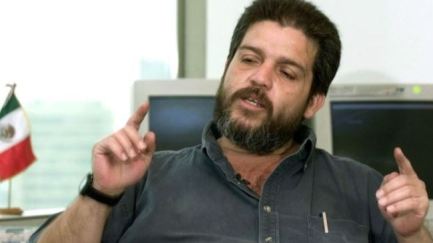
FARC negotiator Marcos Calarca
Press TV – September 7, 2014
The Revolutionary Armed Forces of Colombia (FARC) has accused the United States, the United Kingdom, and Israel of prolonging Colombia’s guerilla war.
FARC negotiator Marcos Calarca leveled the accusation on Saturday at a news conference ahead of another round of peace talks with a delegation of the Colombian government in the Cuban capital Havana.
He pointed to “the responsibility of the government of the United States, of companies involved in the business of war, various intelligence agencies, especially the British and Israeli, whose involvement throughout the conflict encouraged its continuation, escalation and intensification.”
The latest accusation against Israeli and British agencies is a new twist in the 28th round of peace talks in Havana.
He, however, said, “The FARC will acknowledge its responsibility where it concerns us, on the understanding that our military actions have had essentially political goals, derived from our political project to take power.”
The FARC is Latin America’s oldest insurgent group and has been fighting the government since 1964.
Bogota estimates that 600,000 people have been killed and more than 4.5 million others have been displaced due to the fighting.
The rebel organization is thought to have around 8,000 fighters operating across a large swathe of the eastern jungles of the Andean nation.
Argentina passes law to reclaim default debt from New York
RT | September 5, 2014
Argentina’s Senate has passed a law that will let the country continue paying off its default debt by transferring international bond payments from New York to local banks, which would let other investors buy Argentine debt.
The scheme, to get around a US judge’s order to immediately pay back $1.6 billion to “vulture” hedge funds in Manhattan, is the initiative of President Cristina Fernandez de Kirchner. The bill passed by a vote 39 to 27.
The initiative proposes to begin challenging payments through third parties, and allowing them to trade their bonds for new debt issued under Argentine law. Argentina’s state Banco de la Nacion could become the trustee for payments, replacing the Bank of New York Mellon. Another proposal is to make Paris a main destination for debt payments.
The US district court that ruled on Argentina’s debt maintains this is illegal.
Next week the law will be discussed in Argentina’s lower house Chamber of Deputies.
It is a brazen move against the ‘vulture’ funds that sent the country into default in July after demanding the immediate payment of $1.6 billion ($1.3 billion plus interest) in restructured debt, instead of the planned $539 million to bondholders. The ruling banned Argentina from making interest payment on restructured debt before settling with the New York hedge funds. The hedge funds had rejected Argentina’s requests to restructure the debt in 2005 and 2010.
“Sometimes there are court decisions that cannot be followed,” Miguel Angel Pichetto, head of the government’s Victory Front coalition in the Senate, said on Thursday.
Argentina has said it will take the US to the International Court of Justice for judicial malpractice.
“To pay the vulture funds would be very dangerous,” Pichetto said.
U.S. Senators Urge Ecuador to Restore Relations with Israel
teleSUR | August 27, 2014
Ecuador will continue supporting Palestine despite U.S. pressure to restore diplomatic relations with Israel.
The successful campaign “Ecuador with Palestine” organized by civil society and the Ministry of Foreign Affairs resulted in 20 tons of medical supplies and other crucial donations that will be delivered to Gaza next week.
The end of the campaign on August 25 coincided with a letter sent by U.S. Senators Marco Rubio, Bob Menendez, Mark Kirk and James Risch, urging the governments of Ecuador, Brazil, El Salvador, Peru and Chile to restore diplomatic relations with Israel.
The letter read, “Your actions send a troubling message to the United States about your government’s commitment to long-lasting peace between Israel and the Palestine Liberation Organization.”
In early August President Rafael Correa canceled a trip to Israel scheduled for the second half of this year. This decision was made in the midst of the “Operation Protective Edge,” which saw a ceasefire begin Tuesday after leaving more than 2,200 Palestinians dead.
The government of Ecuador recalled its ambassador in Tel Aviv and has opened an embassy in Ramallah.
Reacting to the letter sent by the senators, Foreign Minister Ricard Patiño said, “These men should give advice in their own house, they are not going to give the Ecuadorian government advice, worse is this type of advice of a political nature.”
“We are going to keep developing other agreements to enter in strong bilateral relations,” said Palestinian Ambassador in Ecuador Hani Remawi, “We have a lot to give Ecuador, and Ecuador also has more, much, much more to offer Palestine.” … Full article
Ghosts of Olavarría: Human Rights Trial in Argentina Seeks Justice for Victims of Military Dictatorship
By Nick MacWilliam | Upside Down World | August 26, 2014
The central quarter of the Argentine city of Olavarría, with its leafy main square, whitewashed church, and historical architecture, merits its National Heritage status. Thanks to mineral extraction of the rock on which it stands, Olavarría is a prosperous and tranquil place, and home to the social science and engineering schools of the University of Buenos Aires Province. Now, however, this seemingly pleasant city has become the latest battleground in Argentina’s ongoing struggle to bring justice to those guilty of crimes during the military dictatorship of 1976–1983.
Olavarría, a city of around 100,000 inhabitants, is the setting for the upcoming trial of several ex-army officials accused of human rights abuses during the dictatorship. A high level of public interest surrounds the proceedings, due to one of the defendants’ alleged involvement in a case which has dominated national media in recent weeks.
 In early August, the human rights organization Grandmothers of the Plaza de Mayo announced that the long-lost grandson of its president Estela de Carlotto had been identified and was living in Olavarría under a different name. Guido Montoya Carlotto had been taken from his detained mother in 1978 when just a few hours old, one of hundreds of babies born in captivity and then raised by families linked to the military authorities. In most cases, their biological parents were murdered by the military. The Grandmothers of the Plaza de Mayo have campaigned since the 1970s to reunite the stolen babies with their natural families and to expose the guilty parties.
Estela de Carlotto The recent news, a welcome dose of positivity on front pages of the country’s newspapers, has received intense media interest. Estela de Carlotto is highly-respected within Argentine society for her tireless campaigning as president of the famous headscarf-wearing Grandmothers. But, as the story has moved on from its initial feel-good element, there are now many questions over who was responsible for taking Guido from his mother, Estela’s 22-year-old daughter Laura Carlotto, who was killed soon after giving birth. The father, Walmir Montoya, abducted alongside his pregnant partner, had been murdered several months earlier.
The spotlight has shifted to Olavarría, location of the impending trial and the city in which Guido Montoya had lived until recently as Ignacio Hurbán. Although the trial date was set several months ago, it is now alleged that one of the accused participated in the transfer of Laura Carlotto’s baby to an adoptive family. Laura, who was handcuffed to a stretcher throughout the entire labor and birthing process, spent only a few hours with her newborn before being returned to her cell at the La Cacha detention center in La Plata.
On September 22, a court will begin listening to evidence against a number of ex-military officials charged with crimes against humanity, including kidnapping, torture and murder, committed at the Monte Peloni detention center in Olavarría. The officials on trial are: the local commander, Ignacio Verdura; Chief of Intelligence, Walter Grosse; Officer Horacio Leites; and Sub-Officer Omar Ferreyra. All of them are currently serving sentences for earlier convictions. While the trial is not directly connected to the removal of the Montoya Carlotto baby, it is suspected that Verdura was involved in the appropriation of babies.
For the last few years, the Grandmothers of the Plaza de Mayo have claimed that an Olavarría businessman, Carlos Francisco Aguilar, acted as an intermediary between the military and adoptive families. Aguilar, who died earlier this year, owned the land on which Guido Montoya’s adoptive parents worked and was known to have strong links to the armed forces and the church. As a wealthy landowner, he moved in the same social circles as high-ranking military figures, such as Ignacio Verdura, the then-chief of the regional 2nd Tank Regiment.
Throughout the 1970s, Olavarría was a site of left-wing militant activity, which brought the city to the military’s attention. State repression began with worker organizations before targeting the lawyers representing them, and later moving on to the student movement. Those who felt the heavy hand of the state included striking workers at the Loma Negra (Black Hill) cement company. The company’s response to the strike was to call in the military to end the dispute with detentions and other suppressive tactics.
Carlos Moreno was a lawyer who represented the Loma Negra workers. He was detained in Olavarría and tortured before being killed in May 1977. A trial in 2012 exposed links between the military and civilians who had allowed their property to be used for detaining prisoners. The trial also ordered an investigation into the role of Loma Negra, whose president was Amalia Lacroze de Fortabat, one of the world’s wealthiest women until her death two years ago at the age of 90.
Speaking to the Página 12 newspaper, Moreno’s son Matías said companies such as Loma Negra reaped the benefits of military rule.
“Before the dictatorship, Loma Negra was suffering losses, but its profits tripled under the dictatorship. The abduction of my father was intended as a disciplinary measure, after which there was a fall in labor costs,” said Matías. This was the aim of all the abductions.”
He also revealed that Commander Verdura lived next-door to the Moreno family. Any neighborly recognition, however, was irrelevant when it came to the military eliminating its opponents.
The Monte Peloni detention centerThe Monte Peloni detention center, where the majority of those detained in the zone were held, was a farmhouse in the countryside near Olavarría. Several prisoners, many of whom remain disappeared, passed through the center, which was administrated by the 2nd Tank Regiment of Ignacio Verdura.
Among the crimes that Verdura and his cohorts stand accused of are the disappearance of a young couple, Isabel Gutiérrez and Juan Carlos Ledesma, the detention of Isabel’s father Francisco Gutiérrez, and the murders of Jorge Oscar Fernández and Alfredo Serafín Maccarini. The latter was a prison guard whose rumored empathy for political prisoners made him a target for the military. Another ex-prisoner, Lidia Araceli Gutiérrez, who was raped and tortured in Monte Peloni, is to give evidence at the trial.
The Olavarría trial is the latest step in the legal battle to hold those involved in the abuses of the dictatorship accountable. As many as 2,000 people connected to the dictatorship have been accused of complicity in abuses, as, according to Human Rights Watch, Argentina has made “significant progress in prosecuting military and police personnel for enforced disappearances, killings and torture during the country’s ‘Dirty War.’” Yet the fact remains that a great many of those who willingly participated in dictatorship abuses have yet to answer for their crimes.
The stealing of babies from people who were subsequently killed continues to be a matter of great sensitivity, as the majority of stolen babies are now unidentified adults living normal lives in Argentine society. The Guido Montoya case was the 114th positive identification of a baby forcibly removed from its biological parents. However, it is estimated that there are hundreds of other citizens now approaching middle-age with little idea of their true identities. For families of the disappeared, the discovery of lost relatives can serve as an act of closure for their longstanding grief. Having spent decades dwelling on the past, they are finally able to look ahead.
In 2012, the dictator Rafael Videla, already serving a life sentence for human rights abuses, was given a further 50 years for his part in the systematic transfer of babies from prisoners to families linked to the military regime. Several other officials, including the country’s last military leader Reynaldo Bignone, have been convicted and imprisoned for their involvement in abuses. Bignone, who like Videla had already been found guilty of torture and murder in earlier trials, was said by the court to be complicit in “the crimes of theft, retention and hiding of minors, as well as replacing their identities.”
But the campaign of forced removal was perpetrated at all levels of the military hierarchy. As Guido Montoya Carlotto said in a recent interview with the newspaper El Popular de Olavarría, in his hometown “there are people who have to thoroughly explain themselves … I hope that people learn to question that which has been covered up, so that this not only represents my restitution but also the restitution for other people experiencing doubts.”
As Argentina continues to come to terms with the traumas of military rule, stories like the Carlottos’ provide inspiration for the justice movement to keep fighting. Yet, this is a journey that is unlikely to ever be fully resolved. The entrenched political system of brutality and repression was too widespread to hold all the guilty to account. But each small step signifies progress. Many will be closely watching the Olavarría trial in the hope that Argentina continues on its path toward redemption.
Nick MacWilliam is a British freelance writer and editor based in Buenos Aires.
This is Palestine – Shadia Mansour
Shadia Mansour
~

Still from the music video for the song, Somos Sur. The song is a collaboration between Chilean MC, Ana Tijoux (pictured in the back), and Palestinian MC, Shadia Mansour (pictured in front of Tijoux). Somos Sur is a powerful track establishing solidarity between Latin America and Palestine for their independence from imperialist and colonizing forces.
Picture courtesy of Absenta Musical.
Ana Tijoux – Somos Sur (Featuring Shadia Mansour)
EU to urge Latin America not to export food to Russia
RT | August 12, 2014
The European Union is reported to be planning to dissuade Latin American countries from providing Russia with agricultural produce, saying it would be unfair and ‘difficult to justify.’
“We will be talking to the countries that would potentially [be] replacing our exports to indicate that we would expect them not to profit unfairly from the current situation,” the Financial Times quotes one senior EU official talking at a briefing on the situation in Ukraine on Monday.
The food producers could sign new contracts with Russia, but it would be “difficult to justify” the desire of the countries to pursue the diplomatic initiatives to fill the gap left by the EU, the official added.
Another EU official explained that negotiations could be part of political discussions aimed at addressing the importance of a united international front on Ukraine, rather than hindering food exports to Russia.
Despite being the world’s largest trading bloc, the EU has little influence, as its 15-year negotiations with Latin America’s Mercosur have been mired in difficulties over market access.
Since Russia imposed an import ban on agricultural products from the EU, US, Australia, Norway and Canada, several Latin America countries and trade groups have said Moscow’s measures could offer them a lucrative windfall.
Chile is already tipped as a major beneficiary of Russia’s embargo on European fish, while Brazil immediately gave a green light to about 90 meat plants to start exporting chicken, beef and pork.
“Russia has the potential to be a large consumer of agricultural commodities, not just meat,” Seneri Paludo, Brazil’s Secretary for Agricultural Policy said, citing that Russia may also increase procurement of corn and soya beans.
Besides Latin America benefitting from the embargo, Belarus and Turkey are also believed to win from the supply gap.
The EU member states are meeting in Brussels on Thursday where they are expected to work out a comprehensive response to Russia’s food embargo.
US refuses to recognize UN court jurisdiction on Argentina’s debt
RT | August 9, 2014
Washington has refused to allow the UN International Court of Justice (IJC) to hear Argentina’s claims that US court decisions on the country’s debt have violated Argentina’s sovereignty.
“We do not view the ICJ as an appropriate venue for addressing Argentina’s debt issues, and we continue to urge Argentina to engage with its creditors to resolve remaining issues with bondholders,” the US State Department told Reuters in an email.
The State Department sent an email with the same content to one of Argentina’s leading newspapers, the Clarin.
Argentina complained against Washington’s decisions on its debt to the International Court of Justice in The Hague on Thursday.
But according to existing norms, Buenos Aires needs Washington to voluntarily accept the ICJ’s jurisdiction for the proceedings to begin.
The US withdrew from compulsory jurisdiction back in 1986 after the UN court ruled that America’s covert war against Nicaragua was in violation of international law.
Since then, Washington accepts International Court of Justice jurisdiction only on a case-by-case basis.
On Friday, US District Judge Thomas Griesa, who oversees Argentina’s legal battle with hedge funds, threatened that a contempt of court order may be implemented.
Griesa said it will be put forward if Argentina continues to “falsely” insist that it has made a required debt payment on restructured sovereign bonds.
The warning caused confusion, as the judge didn’t specify who will face the punishment – Argentina or its lawyers.
It will be quite difficult to sanction the Argentinean state, as US federal law largely protects the assets of foreign governments held in the US, said Michael Ramsey, a professor of international law at the University of San Diego.
“You can’t put Argentina in jail, so I’m not sure what he’d have in mind besides monetary sanctions,” Ramsey said.
Later on Friday, Argentina’s economy ministry issued another statement, accusing the US judge of “clear partiality in favor of the vulture funds.”
“Judge Griesa continues contradicting himself and the facts by saying that Argentina did not pay,” the statement said.
Previously, Argentina announced the restructuring of 93 percent of its 2001 debt, but creditors holding the other seven percent of the bonds demanded full payment and initiated a legal battle.
A New York court ruled that Argentina had to pay $1.33 billion to the hedge funds, blocking the transfer of $590 million that Buenos Aires forwarded in order to cover its restructured debt.
The judge said Argentina had to start talks with the lenders that didn’t approve the debt restructuring and negotiate to postpone the payment with those who did agree.
With lenders unable to receive payment, international regulators and rating agencies announced Argentina’s ‘selective’ default.
Argentina files lawsuit against US over debt dispute
Press TV – August 8, 2014
Argentina has attempted to sue the United States at the International Court of Justice (ICJ) in The Hague, the UN’s highest court, over a debt dispute.
The lawsuit was filed on Thursday after a US judge blocked Argentina from servicing its restructured debt, with Buenos Aires accusing Washington of violating Argentinean sovereignty.
New York District Judge Thomas Griesa has ruled to freeze Argentina’s June debt payment of $539 million in a US bank because two American hedge funds are demanding a full repayment of their money.
The two hedge funds, NML Capital and Aurelius Capital Management, have been described by Argentina as “vulture funds” that are seeking profit out of the country’s financial misery.
“Given that a state is responsible for the conduct of all the branches of its government, these violations have generated a controversy between the Republic of Argentina and the United States, which our country submits to the ICJ for resolution,” President Cristina Kirchner’s office said in a statement.
However, the ICJ declined to take any action, claiming that it is powerless to act “unless and until the United States of America consents to the court’s jurisdiction.”
Argentina’s 2001 economic collapse caused the country to default on more than $100 billion in debt. Argentina is still fighting to deal with the crisis.
Last week, Argentinean Economy Minister Axel Kicillof went to New York to try to resolve the impasse on the eve of his country’s default. There, he slammed the US judge for his ruling.
“A judge in one jurisdiction can’t be allowed to block the debt payments of an entire country,” he said. “There’s something called sovereignty.”
What the NML vs Argentina case means for the world
By Oscar Ugarteche | ALAI | July 29, 2014
At the end of June, 2014, a New York Second District Judge ruled in favour of a hedge fund, NML Capital, and against the Republic of Argentina. The issue at stake was if a hedge fund that bought debt paper three years after a debt restructuring, had or not the right to collect on the same terms as the rest of creditors. The ruling was, yes it has. The problem is that in the original debt restructuring creditors received new instruments with a strong haircut that made the payback possible for Argentina, while the old instruments do not have any debt reduction. In this way, the profitability of the hedge funds in buying, in 2008, those old unwanted instruments of a debt rescheduled in 2005, and unpaid since 2001, will be of 1,600%. The way the hedge fund works is through buying, at a very heavy discount, the debt paper that was not included in the rescheduling, and then suing the Argentine Government for full payment of capital plus all the interest due. Interest comes free when debt paper is under impaired value credit category. Elliott Associates, major shareholder of NML Ltd., has made a reputation for cornering Governments in times of need and getting away with it. Panama was the first one, Congo, Peru, Argentina amongst others. Their argument is that these lawsuits discipline the debtors.
The international relevance of this sort of activity is that it brings to the fore the nature and presence of US law and rulings in international finance. Most US dollar-denominated debt is issued under US law and subject to the Southern district courts of New York City, those near Wall Street. This means that if Botswana borrows from Uganda in US dollars, it is almost certain those contracts will be written under NY law. The ramifications of this are that any legal action between those two countries will be subject to New York law, with the implication that New York law becomes world law and is applied worldwide, becoming a mechanism of coercion. The enforcement of payment in the ruling is executed through bank account or asset embargoes. For example, in 2012 the Argentine frigate Libertad was seized in a port in Ghana under orders from the New York judge. She was released after some months under a ruling from the UN International Tribunal for the Law of the Sea because she holds diplomatic immunity.
The last ruling includes non-dollar denominated instruments signed under British and other laws, with the argument that the payment due to one creditor is equally due to all. Ecuador, a debtor that defaulted and bought its debt at a 70% discount in 2008 decided in May 2014 to buy back 80% of the held out debt plus interest and got it over with.[1] The huge return on investment for unpaid bondholders was less of a problem for Ecuador than the likelihood of having its accounts frozen after the new loans were disbursed, given it is a dollar denominated economy.[2]
Vulture Funds
Vulture funds are hedge funds specialised in buying debt paper from problem debtors who have solved or are in the process of solving a default problem. They jump over their prey, the struggling country, purchase his debt instruments not included in the final debt restructuring arrangement at a small percentage of face value and sue the country for full payment including interest. If the country is undergoing duress, the fund is perfectly happy to subject her citizen’s to more hardship in exchange for a huge profit. This is possible because debt papers before 2001 did not have collective action clauses (CAC) yet, which means that if most creditors agreed to a debt workout solution, this included only those who joined voluntarily. With a CAC, if a large portion of the creditors are in favour of a workout, all instruments are included.
The lack of CAC was made evident when Elliott sued Peru[3] in the 1990s and won the case in 2000. Peru had undergone the longest sovereign default in history, from 1984 to 1994, and came out with a debt restructuring that included a sharp haircut and new Brady bonds. Only four instruments were left at Swiss Bank Corp., the Peruvian manager of the Brady deal, belonging to Banco Popular, a bankrupt bank closed in 1992. These four instruments were sold by Swiss Bank, the agent for Peru’s debt, to Elliott not to Peru, after the Brady deal had been signed in what appeared to be a breach of contract on Swiss bank’s side. Elliott then sued Peru and apparently got a helping hand from a Peruvian lawyer who happened to be an official at the Ministry of Finance in 1994. There was much information passed in 1994 from the Ministry of Finance to the creditors leading to the trial of Finance Minister Camet, responsible for this operation. He died in 2013 serving prison term at home for this and other cases.
Elliott sued Peru for 100% of capital. It had paid 5% of the face price of the papers. On top it sued it for unpaid interest since 1984. The profitability on the Peruvian operation was 1,600%. Peru’s case was made using the Champerty Doctrine that says that no debt purchased with the sole purpose of harming a debtor should be taken into account by the US judiciary. Investors who become creditors through the purchase of debt instruments at a time when the debtor is undergoing hardship should not be taken into legal consideration. Nevertheless, the New York judge ruled against Peru. Amongst the group of investors was a former US ambassador to Peru. It remains unclear if the former ambassador was there on his own right or as a representative of the US State Department. The Peruvian Government lost the case and the appeal and as a result all Society for Worldwide Interbank Financial Telecommunication (SWIFT) dollar transactions were blocked. After that, Elliott sued Peru in the Belgian courts that ruled in favour of Elliott and prevented the use of Brussels based Euroclear.[4] It then proceeded to use Clearstream in Luxembourg, but knowing this would also be blocked. The argument of the Belgian Court was pari passu, all creditors should be treated equally.
The Argentine operation[5]
NML associates, a subsidiary used by Elliott to do the Argentine operation, purchased 50 million dollars of debt paper that had not entered the restructuring scheme in 2005 and has sued for 1,500 million USD. The holders of those unrestructured papers sold them to NML in 2008 after the 2005 swap was arranged and before the 2010 swap was finalised. They then started the legal proceedings that have lasted six years until finally the judiciary ruled in favour of NML. The Argentine debt is held with creditors in many jurisdictions and not all are subject to US law, theoretically. Equally there are dollar and non-dollar denominated instruments and agent banks operating outside the US. The ruling however starts from a peculiar reading of the principle of pari passu, equal payments must be made to all creditors either if they restructured or if they did not, regardless of the law applied in their contract. The Trustee in charge of making the payments is Bank of New York who must abide by this ruling and comply with the law.
This ruling essentially takes away the incentive to restructure sovereign debts normally done on the basis of debt reductions. Worse, it places legal creditors who underwent the restructuring procedure on the same basis as highly speculative investors who operate on bad faith buying the debt after the swaps are finalised, in the spirit of Champerty. The gravest consequence is that a New York ruling is converted into a global ruling for any Argentine assets held by anyone anywhere. An explanation was given that the ruling is not meant to be a precedent[6] which means the ruling was done as a specific punishment reminding the ruling of the Court of the Hague against Austria in 1931 when it decided it wanted to form a customs union with Germany. Then as now, if it is not a precedent, it is a punishment. The question is why.
Ways forward
Argentina’s position is that it is the right of a sovereign debtor to restructure its debt. It believes in the principle of non-intervention in foreign states and does not admit legal actions executed outside the natural range of the justice of the United States. In so doing it believes it is defending the property rights of the holders of Argentine bonds, especially those whose right is not governed by justice of the United States. But also of those who entered willingly and in good faith in the swap agreements of 2005 and 2010 and who this ruling has declared, for all purposes, invalid. Argentina is opening the fight by depositing the money at the Bank of New York so bondholders will collect. As the money belongs to the bondholders, they should be able to do so. This is the sense of a communique published in the international press in July, 2014, a week after the ruling was made public.
The vultures, being what they are, have a press campaign stating that Argentina does not want to pay any of its debt nor comply with US law. Argentina, on its side, has informed the clients it will pay through Euroclear which should protect them from the US international payment embargo, as book entry accounts in Euroclear enjoy unconditional immunity from attachment.
Finally
The international support given to Argentina is an expression of what is globally perceived as being an unjust ruling from a court that should not have extraterritorial functions over currencies and assets that are not US assets. The capture of a payment for Cuban cigars traded between Germany and Denmark under US law is an expression of the extraterritorial use of US law, which is unacceptable.[7] If the international system is going to evolve it must go in the direction of international law and international courts and not in the direction of local law with a local court with global ramifications. This implies a new financial architecture which, following the lines of the BRICS in terms of financial reforms, could mean the creation of a clearing house and greater use of non-dollar means of payments in international transactions. The creation of an international financial law process in the United Nations sphere, similar to that being developed for international trade law (UNCITRAL), is vital. This should come together with the development of the concept of international tribunals for debt arbitration in order to obtain reasonable debt workouts of sovereign defaults following the principles of fair and transparent arbitration that should begin with a debt audit, keeping the Champerty principle in mind.
There are major flaws in the international financial architecture that allow the supreme court of the leading debtor country in the world to rule over the lives of millions of people in another land in an unjust, unfair and non-transparent manner. The ruling affects the position of other bondholders in non-dollar denominated instruments issued under other legal domains and opens the possibility of embargoes worldwide. It also opens up the possibility of disavowing the debt to international bondholders, following the same logic in reverse.
The practice of extorting money from troubled nations in favour of a minuscule group of investors who purchase debt paper after debt negotiations with the rightful creditors are finished, with the sole purpose of extorting an unfair profit from it, is sanctioned by US law. This is called the Champerty Doctrine. This sort of practice was outlawed in New York by Judiciary Law §489 http://codes.lp.findlaw.com/nycode/JUD/15/489#sthash.TroVCUs0.dpuf. The rulings from the New York courts, however, seem to favour the vultures and the application of the rulings worldwide has dire consequences on the debtor.
The lesson from the NML-Argentina case is that non-OECD countries in the future should not issue debt instruments in US dollars nor be subject to New York law and courts, given the risk expressed above. Given the world power structure change, BRICS should continue to develop a new international financial architecture. International trade should equally not be settled in US dollars and a new non-OECD international clearing house should be started to prevent harassments from dubious US rulings. International capital is not going to give up its power to extort wealth from distressed countries.
Newcastle and Fortaleza, 15 July, 2014.
– Oscar Ugarteche, Peruvian economist, is the Coordinador del Observatorio Económico de América Latina (OBELA), Instituto de Investigaciones Económicas de la UNAM, México – http://www.obela.org. Member of SNI/Conacyt and president of ALAI http://www.alainet.org
[1] “Ecuador Sells $2 Billion in to Bond Market,” Bloomberg, 17 June, 2014, at http://www.bloomberg.com/news/2014-06-17/ecuador-plans-bond-market-return-today-five-years-after-default.html
[2] “Argentina’s Woes don’t Chill Ecuador’s New York Bond Sales”, Bloomberg, June 24, 2014 at http://www.bloomberg.com/news/2014-06-24/argentina-s-chilling-effect-on-new-york-debunked-by-ecuador-sale.html
[3] Congreso del Perú. Comisión Investigadora de la Corrupción. Caso Elliott. Junio, 2003. Fallo judicial. http://www.congreso.gob.pe/historico/ciccor/anexos/CASO%20ELLIOT%20ASSOCIATES%20LLP%20TOMO%20II.pdf
[4] Rodrigo Olivares-Caminal, “The Pari Passu Interpretation in the Elliott Case. A Brilliant Strategy but an awful (mid long term) outcome”, Hoftsra Law Review, 2011, Vol. 40, pp. 39-63.
http://www.hofstralawreview.org/wp-content/uploads/2013/09/BB.4.Olivares-Caminal.final_.pdf
[5]Conversations with various Argentine officials over the February to June 2014 period.
[6] “Don’t worry about an Elliott vs Argentina precedent”, January 11, 2013, http://blogs.reuters.com/felix-salmon/2013/01/11/dont-worry-about-an-elliott-vs-argentina-precedent/
[7] “US snubs out legal cigar transaction.” Copenhagen Post, February 27, 2012. http://cphpost.dk/news/us-snubs-out-legal-cigar-transaction.898.html
Featured Video
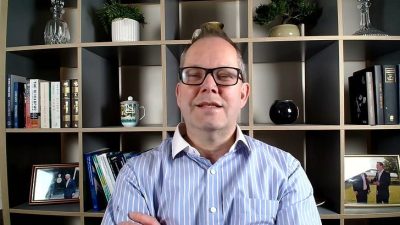
EUROPE FEARS RUSSIA’S NEXT MOVE / Ian Proud
or go to
Aletho News Archives – Video-Images
New Book
New Book: No Autoimmunity The Body Doesn’t Attack Itself
Lies are Unbekoming | September 24, 2026
 The label for Humira, once the best-selling drug in the world, lists its risks in plain print. One of them, in the label’s own words, is new “autoimmune” disease.
A drug prescribed for a condition labelled autoimmune carries a warning that it can cause a condition labelled autoimmune. That contradiction sits in every box, on a folded paper almost nobody reads.
My new book starts there.
No Autoimmunity: The Body Doesn’t Attack Itself
For seventy years, “your body is attacking itself, and we don’t know why” has ended the conversation for people diagnosed with multiple sclerosis, lupus, rheumatoid arthritis, Hashimoto’s, Type 1 diabetes, Crohn’s and psoriasis. More than eighty conditions now carry the autoimmune label. The diagnosis comes with a prescription for life. It almost never comes with a question about cause.
This book asks the question and answers it from the framework’s own records: its drug labels, its journals, its regulatory filings, and its own experiments. … continue
Blog Roll
 Aletho News
- New Book: No Autoimmunity The Body Doesn’t Attack Itself
- EUROPE FEARS RUSSIA’S NEXT MOVE / Ian Proud
- Big tech hands in its DSA censorship reports to the EU
- ‘A Big Victory’ – Palestine Chronicle Wins Two-Year Legal Battle
- IAEA inspectors cannot return to Iran amid US threats: Russia
- Senate Rejects Iran War Powers Resolution Passed By House
- ‘We did not attack Pakistan with drones’: Afghan sources
- Iraqi Resistance faction links arms to sovereignty, questions US exit
- Cannon fodder no more… South Korea rejects Trump’s pressure to join his criminal war on Iran
- Neria Leiter Was A Legitimate Military Target
- If Americans Knew
- ‘This is where I live now, the back of a truck’: a day in the life of a grandmother in Gaza
- In UN Speech, Iran’s President Displays Pictures of Children Killed by US, Brings Attention to Israel’s Nuclear Arsenal
- Israel displaces hundreds of Palestinians amid wave of demolitions in West Bank
- Aid, reconstruction, and Israel’s history of obstruction in Gaza
- Trump administration digs an ever-deeper hole of complicity in genocide – Daily Update
- US-Israel $2.8 Billion Arms Deal, 40,000-Bomb Supply Faces New Gaza Complicity Accusations
- Caught on Tape: AIPAC CEO Boasted of Controlling Trump’s National Security Officials
- Why Hamas Attacked Israel in October 2023 – Israeli professor Ilan Pappé
- They see them, then kill them: Israeli quadcopters track, deliberately target civilians in Gaza
- Winter could turn Gaza’s treacherous, war-damaged buildings into deathtraps
- No Tricks Zone
- New Study: Earth And Venus Surface Warmth Largely Explained By Convection And Lapse Rate, Not CO2 Or Radiation
- 2025 Nature Paper Claiming Worsening Global Drought Gets RETRACTED …Heavily Flawed
- New Study: ‘Global Drought Shows No Detectable Recent Acceleration Under Climate Warming’
- Economic Masterminds: German Socialists Suggest Taxing Productivity Gains Stemming From Using AI
- The South China Sea Has Not Been Cooperating With The Climate Change Narrative
- Energy Crisis: Germany Enters Heating Season With Historically Low Gas Reserve Fill Levels
- New Study: The Antarctic Ice Sheet Gained Mass From 2020-2024 Due To Staggering Snow And Ice Accumulation
- Study: Ocean Heating Rates From Thousands Of Years Ago ‘Dwarf’ Modern Ocean Heating Rates
- Climate Extremists Target, Attack Large-Scale Power Grid Infrastructure In Germany!
- New Study: Antarctic Ice Melt Has Contributed Less Than 1 Centimeter To Sea Level Rise In The Last 30 Years

