Honduras: Candidate’s Brother Killed in Electoral Dispute
Weekly News Update on the Americas | February 23, 2014
Indigenous Honduran campesino Justiniano Vásquez was found dead on Feb. 21 in San Francisco de Opalaca municipality in the western department of Intibucá, where the victim’s brother Entimo Vásquez is challenging the results of a Nov. 24 mayoral election. Justiniano Vásquez’s body had deep wounds, and there were signs that his hands had been bound. Community members charged that the killing was carried out by Juan Rodríguez, a supporter of former mayor Socorro Sánchez, who the electoral authorities said defeated Entimo Vásquez in the November vote. Rodríguez had reportedly threatened Entimo Vásaquez in the past. San Francisco de Opalaca residents captured Rodríguez and turned him over to the police. The Civic Council of Grassroots and Indigenous Organizations of Honduras (COPINH), which reported Vásquez’s death, demanded punishment for the perpetrators and called on the authorities “to carry out their work objectively [and] effectively.”
Entimo Vásquez ran for mayor as a candidate of the new center-left Freedom and Refoundation Party (LIBRE) in the November presidential, legislative and local elections; Socorro Sánchez was the candidate of the rightwing National Party (PN). Vásquez formally challenged the results, but the Supreme Court of Justice (CSJ) backed Sánchez. Community residents, who are mostly members of the Lenca indigenous group, charged that the vote was fraudulent and also accused Sánchez of irregularities during his previous term as mayor. Vásquez’s supporters have occupied the town hall since late January, preventing Sánchez from taking office. (La Tribuna (Tegucigalpa) 2/13/14; COPINH 2/21/14; La Prensa (Nicaragua) 2/22/14 from AFP)
In related news, on Feb. 10 a court in the western department of Santa Bárbara issued a definitive dismissal of weapons possession charges against COPINH general coordinator Berta Cáceres. A group of soldiers arrested Cáceres and another COPINH official on May 24 last year, claiming they had found an illegal firearm in the activists’ car [see Update #1178]. Cáceres was in Santa Bárbara at the time to support protests by indigenous Lenca communities against the construction of the Agua Zarca dam on and near their territory. In an interview with the Uruguay-based Radio Mundo Real on Feb. 13 Cáceres said national and international solidarity had been fundamental for winning dismissal of the charges. (Radio Mundo Real 2/13/14)
Related article

True Colors of Venezuelan Student Movement Apparent in Feb. 22nd Releases
By Alex Main | CEPR Americas Blog | February 24, 2014
On the night of February 22nd, a bizarre incident took place in the Venezuela media-sphere. At around 4:00 pm Venezuela time, a number of the country’s private media outlets posted a release from a protest group identified only as the “student movement.” The rhetoric and tone of the statement matches the positions often expressed by extreme rightwing factions within Venezuela’s opposition over the last 14 years. Venezuela, it alleges, is in the grip of Cuban communists:
Foreign forces have laid a military siege on Venezuela. Their mercenaries attack us in a vile and savage manner. Their goal is to enslave us and be the masters of our existence, dishonoring the flags that we have held up in the street and that we will defend with our lives.
We want our Freedom. To protect it it’s vital to defend the Sovereignty of the Nation, expelling the Cuban communists that are here usurping the government and the Armed Forces.
The release demands that “the usurper [Venezuelan president] Nicolas Maduro and all of his cabinet be deposed” and states that the protests will continue until this and other demands are met. The statement also calls for defensive action against state security:
The regime has declared war on any civilian who doesn’t accept its marxist ideology. Our call is for defense: to not allow the invaders profane your street, your avenue, your property. Prevent their access so that they don’t shoot up your neighborhood, don’t destroy your properties, don’t hurt your loved ones and, above all, so that they know that here there are battle-seasoned Venezuelans, who won’t allow themselves to be enslaved through the use of force.
The rhetoric found in this release is reminiscent of the language used by the promoters of the “guarimba” protests in 2004 which – similarly to many of the protests that have been occurring in Venezuela over the last two weeks – involved protesters blocking major roads and with bonfires and barricades and damaging public property. The explicit goal of the 2004 guarimba protests was to create enormous chaos in city streets thereby forcing the government to either step down or engage in mass repression. Or, in the words of Luis Alonso, the main promoter of the guarimba ten years ago:
THE ONLY objective of “THE GUARIMBA” (…) is to create anarchistic chaos on the national level with the help of all citizens and in the main cities of Venezuela, so as to force the CASTRO-COMMUNIST regime of Venezuela to order “PLAN AVILA [a military contingency plan to enforce public order that was used during the 1989 Caracazo protests and that left thousands dead].”
If mass repression occurred, the guarimberos believed that elements of the military opposed to the “Castro-communist” project would rebel and oust the government.
Needless to say, the terminology and goals of the students’ release probably doesn’t reflect the point of view of most Venezuelan opposition supporters and it certainly doesn’t reinforce the common portrayal of the young protesters as peaceful and reasonable.
But then, as if by magic, the original release of the unnamed “students’ movement” was removed from many sites and in a few cases replaced with a much less polemical text. Here is a link to the early version of an El Nacional article on the student movement release that contains the text of the original statement. Later that evening the editors quietly replaced the original statement with the second one, as you can see in this updated version of the same article. El Nacional, one of the largest newspapers in the country, and other outlets that made the switch, never informed their readers of having done so. Here’s a translation of a few key excerpts from the second release:
[Venezuela’s] youth can’t stay silent in the face of the profound pain in all Venezuelans’ hearts resulting from the hate and division that is being sowed. Our consciences remain clear in protesting those who wish to establish violence, ignore the country’s most urgent problems and trample human rights.
The exacerbation of insecurity, the deterioration of the quality of life of Venezuelans, the economic crisis, the repression and criminalization of citizens’ protests cause us to raise our voices. We want reconciliation and respect for democratic principles and the Constitution.
(…) We dream of a Venezuela where inclusion, peace and prosperity are possible.
No more talk of “Cuban communists” that have taken over the government and army or of the need to remove the “usurper” Nicolás Maduro. Instead, we see a series of demands that, while based at times on highly questionable premises, appear to be more reasonable, e.g., “liberty for all of the detained young people, (…) the disarming of violent groups, (…) the end of media censorship [regarding the claim of censorship, I recommend reading Mark Weisbrot’s latest post on the Venezuelan media].”
However, one demand from the re-worked release is similar to the main demand of the original release: the second release calls for “the renovation and re-legitimizing of public powers.” Though this language may seem innocuous at full glance, the basic meaning is clear: those in power are not legitimate and should be removed. In the most charitable interpretation, this can be read as a call for immediate elections, despite the fact that Maduro was elected less than a year ago and that his popular legitimacy was reaffirmed in municipal elections last December in which pro-government parties won the total vote by a ten-point margin.
It is also interesting to note that, unlike most recent youth protest movements like the 2011-2013 Chilean movement, the 2012 Quebec student protests or even the U.S. Occupy Wall Street movement, the demands of the Venezuelan students who have taken to the streets focus neither on social justice issues nor on the government’s education policies. It is telling that the University of Chile Student Federation which was instrumental in ending the Pinochet dictatorship and played a key role in the 2011-2013 protests, released a statement which had the following to say about the Venezuelan student movement:
We reject any attempt at destabilization, hoarding of food and of coup-mongering that aims to bypass the sovereign decisions of the people of Venezuela (…) Similarly, we don’t feel represented by the actions of Venezuelan student sectors that have taken the side of the defense of the old order and are opposed to the path that the people have defined.
Violence and Vulnerability in Buenaventura, the Dark Side of Development
By Margaret Boehme | Red Hot Burning Peace | February 24, 2014
From the tenth-floor balcony of our hotel in Buenaventura, we sit with community leader Miguel Duarte and watch as the sunset over the Pacific Ocean streaks the sky with peach and mauve before fading to a shroud of lavender-gray and darkness. Below us, teenage girls chase a soccer ball. A few hundred yards away, a patch of the island is covered with tree tops like the heads of broccoli. “Take a photo of that island,” says Duarte, pointing at the tree line. “There are thousands of dead bodies buried on it.”
“We need a commission from the Attorney General’s office to count the bodies,” he continues. “The island is controlled by paramilitaries.”
The violence in Buenaventura is staggering, yet reliable statistics are hard to attain: official documentation is lacking and it’s left to community leaders, like 18-year-old Jesús, to try to compile the data independently. At our meeting, he pulls out his notebook and begins reading off his handwritten list of victims from a recent massacre. He gets to the end of his list, glances up, and says, “Children were cut up and heads were found in barrios Santa Monica and Campo Alegro. Last night Alberto’s cousin was killed in a confrontation. That one made the newspaper.”
According to a report issued in January 2014, the city sees two-to-three murders and three-to-six forced disappearances daily. In November 2013 alone, fighting between different armed groups displaced 2,500 families in Buenaventura.
“We’re convinced of one thing,” says Duarte. “This pressure is so that people leave.”
On the heels of shoot-outs in waterfront neighborhoods, city officials arrive and ask residents if they’re ready to sign documents in which they agree to vacate the zone. On February 5 and 6, local security forces staged an elaborately orchestrated tsunami drill for neighborhoods near the port, with armed men blocking off streets and redirecting traffic into the night. According to Colombian Process of Black Communities (PCN), the exercise was yet another effort to brainwash Buenaventura’s Bajamar residents into believing that it’s not safe to live in the area and that they should be ready to evacuate at a moment’s notice.
Many point out that Buenaventura is dangerous for people who live in neighborhoods slated for commercial development but that, paradoxically, these same areas are safe for tourists. Below our hotel, a seafood fusion-sushi bar does slow business just yards from a neighborhood where armed groups recently did battle.
It’s Friday night in this commerce town, and clubs cater to weekend carousers with pockets full of pesos. Against a backdrop of giraffe-like cranes, half-built high-rises sprouting rebar, and a balmy breeze dispersing salsa beats, Duarte explains that 15 or 20 years ago, people began to talk about megaprojects in the region: port expansion, a cargo terminal, a tourist boardwalk, and an international airport in nearby Cali. Those conversations coincided with the beginning of the market liberalization process, as the port changed from public to private ownership.
Over the past 15 years, as the armed conflict arrived to nearby rural areas, many residents fled their farming communities at the outskirts of Buenaventura and settled in ocean-front neighborhoods near the city center, joining communities of Afro-Colombians who had arrived generations ago. In 2005, the FARC and Colombian military battled in Buenaventura. In 2006, paramilitaries entered the urban zone to protect businesses and terrorize the local population.
The first interurban displacement in Buenaventura—in which people fled from one neighborhood to another within the city—was in 2009. Today, ground zero for violent displacement coincides perfectly with zones marked for port expansion, a coal warehouse, a massive container storage area, and a tourist promenade. The violence, PCN states, is “part of the war strategy to control territory and clean out the zone to bring in projects.”
Residents in vulnerable neighborhoods are not opposed to the city’s economic growth, per se. But many feel that projects should benefit all people in the area, not bring prosperity to few while forcing misery on most.
That’s what Remedios’ husband, Eduardo believed. Their home in Caucana, about 45 minutes from the port, is along the road being widened to facilitate port expansion and accompanying projects in order to make Buenaventura competitive for Free Trade Agreement projects.
The old road is narrow, windy, and unpaved, meaning that it currently takes a truck seven or eight hours to make the trip from Buenaventura to Bugalagrande, a town along the Pan-American Highway. The new road will reduce the journey to about an hour.
Eduardo opposed the road expansion through their community because small children play there, and the project was contaminating their air and bad for people’s health. Remedios said, “He’d been looking to strengthen the community. He didn’t want to leave people in misery.” He’d been advocating for the community’s right to Free Prior and Informed Consent for new projects on their land guaranteed under Law 70, or the “Law of Black Communities.”
One morning Eduardo got a call that warned him he’d be killed if he ran in upcoming community council elections. For months he lived under the dark cloud of death threats, and on February 23, 2013, he was murdered. A year later, despite the efforts of his wife and other community members to seek justice, the government has made no progress in the investigation of his death.
“It has left me desperate, my kids too. They’re struggling at school. They don’t remember their vowels, just sleep, play, fight, scream….My children want to know why their father was murdered. They’re small, thinking bad thoughts, seeking vengeance. I’m asking for help because I don’t want my kids to become bad people.”
While we are in Buenaventura, a death threat is circulated, naming as military targets indigenous groups, campesinos, Marcha Patriotica members, protestors who block roads, and “guerilla-defending” NGOs—the name often used by paramilitaries to refer to NGOs that work on human rights issues.
Back on the tenth-floor balcony, a man whose community is surrounded by illegal armed groups looks out over the port, past the island of dead bodies, to the green lights blinking at the edge of the bay. He says, “If we don’t act quickly in Buenaventura, there will be more deaths.”
Margaret Boehme is a member of the Witness for Peace Colombia team based in Bogotá.
Related article

Chávez in The Americas: Increasing Autonomy in Latin America and the Caribbean
By Stephanie Pearce, NACLA
This article originally appeared in the Summer 2013 edition “Chavismo After Chávez: What Was Created? What Remains?”
Countries in the “developing world” have, since the end of formal colonialism, seen their ability to act autonomously systematically constrained by a variety of factors. These include, but are not limited to, macroeconomic policy conditions attached to World Bank and IMF loans, poor terms of trade with the Global North, lack of effective agency in international organizations, and the actions of multinational corporations operating in their territory.
Venezuela’s regionally oriented foreign policy during the Chávez era counteracted each of these dynamics, and in doing so opened up autonomous policy space for other states in Latin America and the Caribbean. The concrete achievements of a number of mechanisms, including counter-trading and credit provision within the PetroCaribe framework, and the recent establishment of a virtual regional currency, the SUCRE, all played a part in this process.
The first crucial action undertaken by Hugo Chávez as Venezuelan President in protecting regional economies was to vociferously oppose the proposed Free Trade Area of the Americas (FTAA) at the third summit of the Americas, held in Quebec in 2000. The proposal represented the perfect consolidation of U.S. economic power, and was designed, in the words of General Colin Powell, to “guarantee control for North American businesses…over the entire hemisphere.”1 After Chávez voiced concerns, the Mercosur countries followed suit, stopping the FTAA conclusively at the subsequent Mar del Plata summit in 2005. If the FTAA had gone ahead, it would have resulted in the substantial economic subordination of Latin America to U.S. corporate interests. Agricultural sectors in particular would have suffered from an influx of low-cost subsidized U.S. products. In addition, areas of the public sphere that had previously avoided commoditization or privatization would have been fair game for trans-national corporations. Under the FTAA, Amanothep Zambrano, ALBA Executive Secretary, told me last August that states would not have been able to “lead any aspect of economic policy, and therefore their political capacity to solve social problems” would have been heavily constrained.
Their shared opposition to these proposals encouraged Cuba and Venezuela to form an alternative regional integration framework, the Bolivarian Alliance for the Peoples of Our America (ALBA) in 2004. This quickly matured from a bilateral socio-centric cooperation agreement to a nascent regional bloc, or alliance, with the addition of Bolivia in 2006. Bolivia’s newly elected president, Evo Morales, brought with him the idea of a “Peoples Trade Treaty” (TCP), which extended the ALBA’s self-identified principles of solidarity, complementarity between economies, and respect for sovereignty, into a 23-point agreement that systematically opposed the tenets of orthodox free trade agreements. The TCP opened the possibility of pursuing economic policies outside of the market fundamentalist approach of the neoliberal era, for example by stating that people’s right to access healthcare should be prioritized above protecting pharmaceuticals’ corporate profitability. In the following three years, membership of the ALBA-TCP grew to nine countries encompassing much of Central and South America as well as the Caribbean.
During this time, the Venezuelan government also constructed PetroCaribe, a framework designed to facilitate the supply of its oil products to neighboring Caribbean states under preferential conditions, which at the time of writing had 18 members. Through these two channels the Venezuelan government has opened up autonomous policy space in the region, to some extent overcoming the constraints identified above. Venezuela has, largely through ALBA and PetroCaribe, become an important source of funding in the region. Oil supply agreements, signed between Venezuela and several members of both frameworks, permit countries to defer payment on set portions of their oil bill and use the capital obtained for government spending. Crucially this capital is obtained without the macroeconomic conditionality and policy prescriptions associated with World Bank or IMF loans. PetroCaribe agreements, for example, state that “member nations of the group are allowed to defer payment of 60% of their oil bills to Venezuela for 25 years, at 1% interest, in addition to a 90-day grace period on all payments, and a two year initial grace period on the credit facility.”2
This credit facility offers an alternative to IFI loans, while maintaining small Caribbean nations’ ability for autonomous decision making, which is considered critical in the post-colonial context. Specifically, credit provision has enabled Jamaica and Antigua to delay recourse to IMF loans, and put them in a better negotiating position so, I was told in August 2011 by Norman Girvan, former Secretary General of the Association of Caribbean States, “they were able to make an easier deal.” Venezuela, under the current administration, has also purchased billions of dollars’ worth of bonds issued by the Argentine government, enabling the country’s early exit from all of its IMF debts and associated policy prescriptions.
As a result of this mechanism, PetroCaribe funding to the Caribbean now exceeds both EU and U.S. aid by a wide margin, with only remittances from the Caribbean diaspora exceeding it in funding to the signatory states.3 For Dominica, Venezuela is now the “single largest creditor…surpassing traditional sources of credit such as regional development banks and the IMF.” Venezuela is owed 27.7% of the country’s total debt, which grew 12.6% in 2011 alone, to $8.8 billion.4 Such figures inevitably raise concerns that the agreement is increasing debt levels in the region and developing dependence on Venezuelan largesse. Barbados’s Prime Minister, Owen Arthur, has stated that his country would not join because he “would not permit the present generation of Barbadians to consume oil now to be paid for by succeeding generations of Barbadians.”5 However, the deferred portion of the bill does not constitute debt in the orthodox sense, as it is kept by the Caribbean partners and can be spent as capital towards any project deemed socio-productive, or saved to accrue interest to offset the bill, as has been the case in Guyana. The domestic opposition sees the PetroCaribe scheme as Chávez “giving away” oil irresponsibly. However, the amount is relatively small and sustainable. Supply to PetroCaribe members, including Cuba, peaked in 2009 at an average of 196.4 thousand barrels daily, which constituted only 7% of total Venezuelan oil exports that year, and operates under market prices in accordance with Venezuela’s OPEC membership.6
Due to a high level of dependence on imports, Venezuela has also been uniquely able to position itself as a regional alternative to North American and European markets. This dynamic has, again, been apparent within both ALBA-TCP and PetroCaribe. In 2008, the PetroCaribe framework was augmented with a “compensatory exchange mechanism” via which oil bills from Venezuela could be offset by the export of domestically produced goods and services. The Venezuelan market is particularly important for Caribbean countries who suffer from poor terms of trade with the North due to dependence on primary commodity exports, the continued use of tariff and non-tariff barriers by developed nations, and the erosion of colonial trade preferences. For example, up to 90% of Guyanese rice exports per annum were going to EU countries when, in 2000, the Overseas Territories (OCT) loophole was closed, resulting, I was told by the Guyanese Ambassador to Venezuela, in a “50-60%” drop in prices. When the compensation mechanism was announced, the then-president of Guyana, Jagdeo Bharrat, actively sought a better deal with Venezuela through the PetroCaribe framework. The resultant export of both rice and unprocessed paddy has seen Venezuela become the single largest importer of Guyanese rice, replacing Portugal.7
In the case of ALBA countries, a strategic reorientation towards intra-regional trade, and particularly export to Venezuela, has reduced dependence on the United States and subsequently its ability to constrain autonomous action. For example, when Bolivia expelled the U.S. ambassador in 2008 following his alleged involvement in separatist actions in the Santa Cruz Department, Washington retaliated by excluding Bolivia from the Andean Trade Promotion and Drug Eradication Agreement (ATPDEA). Bolivia lost its U.S. tariff advantages, which was a particularly painful blow to its textile industry. Chávez immediately offered them a market under “the same or better conditions” that Bolivia had enjoyed with the United States. As a result, says the Bolivian Ambassador to Venezuela, in 2010 Venezuela “imported almost 50 million dollars in textiles alone, or nearly double that which [Bolivia] used to export to the USA” annually.
The purchase agreement was supported by initiatives by both governments to facilitate small and medium sized businesses’ entry into the regional market. A fund was established in the Bank of ALBA to provide short-term interest-free credit to Venezuelan importers in order to purchase Bolivian textiles, paired with a fund in the Bolivian national development bank to provide small textile producers credit to purchase raw materials. This agreement therefore not only minimized the impact that U.S. market sanctions could have over autonomous decision making by the Bolivian government, but also created direct relations between regional producers and consumers.
These patterns are part of a wider renewed focus on South-South trade, both within the region and with extra-hemispheric partners. However, the United States remains the region’s single most important trading partner. The objective is not to be “anti-American,” rather to reduce the U.S. ability to exert controlling influence over its Latin American and Caribbean neighbors by creating alternatives to the dollar in international trade. One way in which this was achieved was through the PetroCaribe mechanism and similar counter-purchase agreements with other regional allies. As direct non-market transactions, they circumvented the use of the dollar, thereby avoiding its automatic privileging in international trade, and avoiding the transaction costs associated with its use.
This concept was extended by the ALBA’s virtual common currency, the Unified Regional System for Economic Compensation (SUCRE). The SUCRE is essentially a series of clearing accounts between Cuba, Bolivia, Venezuela, and Ecuador that allow the countries to trade freely without transaction costs. Accounts are balanced every six months with one hard currency transfer. The value of trade conducted via the SUCRE in its first year of operations, 2010, was just over $8 million. It grew exponentially, to almost 100 times that the following year ($172,905,344).8 Though the SUCRE’s value was originally set against the dollar ($1 to XSU1.25), and it is typically used as the convertible currency to make balancing payments, in the long term the intention is to no longer use the dollar at all. The direct and deliberate countering of U.S. economic hegemony that the SUCRE represents has been of particular importance to Ecuador, whose macroeconomic policy options have been constrained by a prior administration’s decision to dollarize the economy in 2001. In fact, the mechanism was largely designed by Ecuadoran economists, and of the $170 million traded in 2011, $140 million was for Venezuelan purchases from Ecuador (mainly tuna).9
As we have seen, Chávez’s time in office saw an unequivocal reassertion of the state as economic actor throughout the region. This dynamic was particularly felt in the crucial energy sector. In Venezuela, governmental control of the state oil industry was consolidated, while both Bolivia and Argentina nationalized hydrocarbons with investment and technical assistance from Petroleos de Venezuela (PDVSA), via agreements with YPFB and Enarsa, state owned gas and oil companies in Bolivia and Argentina respectively. Even in centrist or center-right Caribbean nations, Venezuelan investment has enabled state-owned oil companies and agencies to supply oil products directly to their population, “to effectively intervene in their markets to minimize retail prices” in the energy sector which had previously been “dominated by foreign companies.”10
Where state energy companies or agencies did not exist prior to PetroCaribe, they have been formed to facilitate the direct import of oil products from PDVSA. These can take the form of joint ventures with the PDVSA subsidiary PDV Caribe. Venezuelan credit and grants have also been used to fund improvements in energy infrastructure; that is namely the capacity of the member countries to store and refine oil, and in turn to generate and distribute energy. Central to this scheme has been investment in the Cienfuegos refinery in Cuba and at the Kingston refinery which now almost exclusively refines Venezuelan crude. The refinery is run by Petrojam Ltd, a mixed state enterprise in which Jamaica Oil Company owns a 51% stake and PDV Caribe 49%. This reassertion of state control over energy resources is seen as a fundamental facet of PetroCaribe’s “new oil geopolitics…at the services of our peoples not at the service of imperialism and big capital.”11
The right and power of multinationals to dictate domestic policy has been systematically undermined, both through a reassertion of the state as economic actor and in the tenets of the TCP which we briefly touched on earlier. This offers a stark contrast to the World Trade Organization’s policies such as Trade Related Intellectual Property Rights (TRIPs), which consistently privilege corporate interests, and/or offer beneficial “loopholes” for developed nations. This has been possible through the creation of new regional forums in Latin America and the Caribbean, in which members’ interests are not subordinate to those of more powerful nations. For example, in the TCP, economic asymmetries between members are recognised and therefore tariff reductions do not have to be reciprocal, disregarding the “most favored nation” principle. In addition, ALBA has no supranationality; it is best described as a framework for cooperation rather than an integration body in the orthodox sense. All programs and agreements are optional, flexible, and voluntary, thereby protecting the national autonomy of members.
Though statist in its organization, ALBA facilitates continual dialogue through presidential and ministerial summits, which have also been attended by international observers. Non-member countries are also represented in the council for social movements, whose proponents include groups such as the Brazilian Landless Workers’ Movement. ALBA proved to be the first in a series of new regional spaces, catalysed by massive rejection of the FTAA proposal—a rejection led by Chávez—and culminating in the formation of the Community of Latin American and Caribbean States (CELAC), which was put together as an alternative to the Organization of American States (OAS), and includes all the countries of the Americas except the United States and Canada. In this way, lessened economic dependence has resulted in increased diplomatic autonomy from the United States.
There are those who argue that Venezuelan projects in the region created new constraints, replaced one set of dependencies with another. But this is not the case. Though he was a catalyst for and investor in regional development, Chávez avoided constructing a position of power or privilege for Venezuela. This is evident in the lack of conditionality attached to credit mechanisms and the fact that the controlling stake of each mixed state enterprise was maintained by the partner country. Though oil wealth put Chávez in a unique position to invest in regional projects, these were not unilaterally devised or constructed; the TCP came from Bolivia, SUCRE is an Ecuadoran concept, and of course ALBA social programs were exported from Cuba. However, these ideas were made a reality by the capacity for rapid implementation that oil largesse afforded. Such apparently altruistic actions led many to question Chávez’s motives. It is important to point out that these frameworks and counter-purchase agreements have also helped reduce Venezuela’s dependence on the United States as a market and refining destination for oil. The volume of Venezuelan oil exported to the United States decreased from 1,500,000 barrels per day in 2008, to 1,166,000 bpd in 2011, a drop of 334,000 barrels per day. This can, in part, be attributed to the diversification of markets in Latin America (190 bpd to PetroCaribe, plus supply agreements with Argentina among others). This is in addition to securing crucial imports without financial outlay, specifically agricultural commodities, which are often then provided to the Venezuelan population at low cost through state owned agencies such as the supermarket chain Mercal.
***
Under the last ten years of Hugo Chávez’s Presidency, Venezuela’s foreign policies resulted in an opening up of autonomous policy space in Latin America and the Caribbean. What was begun in 2004 with the rejection of the proposed FTAA continued into the post-crisis conjuncture, when Chávez was instrumental in creating a new regional financial architecture to limit the power exerted by Washington-based IFIs. PetroCaribe credit provided funds for capital expenditure, without imposing macroeconomic conditionality. In addition, guaranteed oil supplies allowed the small and energy dependent nations that made up its membership to move beyond reactive policies and look to longer term socio-productive investment.
Venezuela’s concurrent strategy of sourcing imports from the region offered primary-commodity-dependent economies some opportunity to diversify their markets and baskets, with better terms of trade than offered by the United States or ex-colonial metropoles in Europe. Chávez also took the bite out of attempted control via market sanctions, as was clearly demonstrated in the Bolivian example.
These regional imports often took the form of non-market exchanges and counter-purchase agreements within PetroCaribe, ALBA, and beyond. Combined, they arguably represented a strategic de-linking from international trade and finance systems, specifically from the U.S. dollar. As such, these frameworks have lessened both the dependence on, and influence of, the United States in the region, protecting countries’ ability to act autonomously and not follow the dictates of Washington. Chávez effectively undermined U.S. economic power by offering alternatives to the hegemony of the dollar, with the SUCRE in particular offering a concerted challenge. Lessened economic dependence in turn allowed for greater diplomatic autonomy from Washington, demonstrated in its strategic exclusion from the newly formed CELAC. The various new regional initiatives provide space to build development strategies and devise economic policies, beyond the constraints of “market-friendly” logic. This allows for a reassertion of the state as an economic actor and service provider, within a culture of regional cooperation. Though the Venezuelan state is not operating outside of capitalism per se, from the initial rejection of the proposed Free Trade Area of the Americas in 2001 the Chávez government demonstrated that there are alternatives beyond the policy prescriptions of the neoliberal era, and what’s more, facilitated their use throughout the region to mutually beneficial ends.
1. Colin Powell cited in Katharine Ainger, “Trading Away the Americas,” New Internationalist, Issue 351, November 1, 2002, available at newint.org
2. “Venezuela: Two Countries Hold Out Against Cheap Loans and Barters,” Countertrade & Offset, 26:15 (2008)7
3. Sir Ronald Sanders, “The Chavez Effect: A life belt for the Caribbean,” Kaieteur news online, July 27, 2008, available at kaieteurnewsonline.com
4. Andrés Rojas Jiménez “Deuda dominicana con PDVSA aumentó durante 201,” El Nacional, February 16, 2012, available at elnacional.com
5. Wendell Mottley, Trinidad and Tobago’s Industrial Policy 1959-2008 Kingston. (Randle, 2008) 157.
6. This data, and all data not otherwise cited, elaborated from PDVSA annual reports, 2009-2011.
7. Guyana Rice Development Board, “Guyana Rice Development Board Annual Report 2010,” 2011.
8. Consejo Monetario Regional del SUCRE, “SUCRE Informe de Gestión 2011,” 2012.
9. Ibid
10. Curtis Williams, “Venezuela Urged to Fast-track Petrocaribe Initiative,” Oil and Gas Journal, 102 (2004):26.
11. Hugo Chávez Frías, Petrocaribe, Towards A New Order in Our America, (Colecciones Discursos, Ministerio de Poder Popular para Comunicación.)
Stephanie Pearce is a doctoral candidate at the School of Politics & International Relations, Queen Mary College, University of London. Her research focuses on the role of countertrade in Venezuela’s “Bolivarian Revolution.”
Read the rest of NACLA’s Summer 2013 issue: “Chavismo After Chávez: What Was Created? What Remains?”
Most Venezuelans have a blind spot on their own country according to James Bloodworth
By Joe Emersberger | ZBlogs | February 20, 2014
James Bloodworth, when he isn’t applauding Obama’s murderous drone attacks on Pakistan, occasionally takes time out to complain about leftists supporting the Venezuelan government. He claims that Venezuela has become a “nightmare” and that, despite elections that he appears to acknowledge are clean and transparent, Venezuelans are, nevertheless, “living under tyranny” because of the government’s “unwillingness to tolerate dissent”.
Bloodworth says that he supported the Chavista movement when a US backed coup violently ousted Hugo Chavez in 2002. “I have no trouble remembering which side I was on” he claims – very dubiously as I’ll explain.
Bloodworth doesn’t remember that Leopoldo Lopez was among the leaders of that coup. This video shows Leopoldo Lopez and Henrique Capriles (a state governor who ran against Maduro in April of 2013) supervising the illegal “arrest” of a Chavez government minister during the 2002 coup. Bloodworth objects to Lopez’s arrest for leading protests over the past few weeks that are clearly aimed at repeating what happened in 2002, but Bloodworth never considers an incredibly obvious point. Lopez would have been locked up for decades (if he were lucky) had he participated in the violent overthrow of the UK or US governments. If not for the Venezuelan government’s unusually high tolerance for dissent, Lopez and Capriles (his “moderate” ally) would never have been around to lead protests, much less hold public office as Capriles now does. One can only shudder at what their fate would have been in the USA after participating in a briefly successful coup. Chelsea Manning has been locked up for years and openly tortured simply for exposing human rights abuses and embarrassing the US government. Manning will not be leading violent protests or holding public office (even if she wanted to) any time soon.
Bloodworth also forgets (or more likely doesn’t know or care) that Human Rights Watch (HRW) utterly disgraced itself during the 2002 coup. He takes HRW assessments of Venezuela at face value but does not recall that during the 2002 coup HRW failed to denounce the coup, failed to call on other countries not to recognize the Carmona dictatorship, failed to invoke the OAS charter, and did not call for an investigation of US involvement. Thankfully, most governments in the region denounced the 2002 coup at once, exactly as HRW would have done had it not been penetrated by US State Department officials and other elites as Keane Bhatt recently noted.
Bloodworth’s effort to dismiss the Venezuelan government’s record on poverty alleviation is pitifully inept. He considers only the 2007-2011 period to argue that Venezuela’s record is unimpressive compared to Brazil, Uruguay and Peru. Does he not recall that Hugo Chavez first took office in 1999? Could somebody who claims to have opposed the 2002 coup be that ignorant? The United Nations Economic Commission for Latin America (ECLAC) found that from “1999 to 2010 Venezuela achieved the second highest rate of poverty reduction”. Extreme poverty fell by 70% during Hugo Chavez’s time in office. The 2002 coup and related efforts to overthrow the Chavez government severely disrupted progress for about 2 years or the economic gains might have been even better. Bloodworth might know this if he had actually opposed the 2002 coup as he claims he did.
Predictably, Bloodworth promotes the most cherished dogma of Venezuelan government opponents over the past 15 years: the myth of the voiceless opposition. The Carter Commission exploded this myth very effectively last year – without really trying to and in very polite language. It examined TV news media during crucial weeks of the April, 2013 Presidential election that pitted Henrique Capriles against Nicolas Maduro. It found a 57% to 34% edge in coverage for Maduro over Capriles by simply totaling minutes of coverage on the major networks. That finding alone refutes the myth of the voiceless opposition but it gets worse for people who peddle this myth. Three quarters of Capriles’ coverage was in the private news media which (the Carter Commission found) had nearly three times the audience share (72% to 24%) of the state news media where Maduro received most of his coverage.
Bloodworth has nothing to say about Maduro government opponents spreading falsified images of the protests through social media – a tactic they could rely on the private media to deploy on a massive scale in 2002. The most anti-democratic faction of the opposition claims that media coverage of their protests is now inadequate and that is enough for Bloodworth to completely agree. Similarly, one of the sources Bloodworth uncritically cites about Venezuela’s economy is Moisés Naím, one of the architects of the brutal austerity polices of the early 1990s that ultimately led to the Caracazo uprisings in which up to 3000 people were murdered by Venezuela’s security forces. Does Bloodworth not know this about Naím, or just not care?
In order to claim that violent deaths are more numerous in Venezuela than Iraq, Bloodworth ignores peer reviewed scientific studies (published in 2006, 2008 and 2013) showing that anywhere from one half to only one twelfth of violent deaths are captured in Iraq by standard data collection methods. He also appears oblivious to scholarly research suggesting that Venezuela’s murder rate may have been falling since 2008.
Perhaps worst of all, Bloodworth completely ignores the decisive defeat the opposition received in December’s municipal elections which the opposition worked very hard to frame as a referendum on Maduro’s government. The results were easy to understand if one looks beyond the reactionary talking points about Venezuela’s economy that Bloodworth mindlessly parrots. The economy has not gone into recession since Maduro was elected despite the spike in inflation. Moreover inflation is not a direct measure of living standards. Many of the poorest countries in the world have very low levels of inflation (Mali, Rwanda, Chad among others).
Additionally, despite serious economic problems in 2013 poverty fell from 21.6 to 19.6%, extreme poverty from 6.3 to 5.5%, unemployment from 5.9% to 5.6%
It is not really foreign supporters of Maduro’s government whom Bloodworth attempts to dismiss, it is the majority of Venezuelan voters.
Honduras and Mexico: Open Season for Journalists
By Nick Alexandrov | CounterPunch | February 7, 2014
Last December, the New York Times’ David Carr reported on Vice President Biden’s trip to China, where he “spoke plainly about the role of a free press in a democratic society.” The benighted audience was surely keen to learn about this Western institution, and “it was heartening to see the White House at the forefront of the effort to ensure an unfettered press,” Carr affirmed. No doubt. Down here on Earth, meanwhile, Washington has long been at the forefront of an effort to promote cultural devastation, targeting journalists, artists, and independent thinkers more generally. This cultural ruin is a predictable consequence of U.S. support for repressive regimes—a tradition Obama has worked hard to uphold.
Consider the June 2009 coup against Honduran President Manuel Zelaya, which four School of the Americas graduates helped orchestrate. Even the attorney responsible for giving it a legal veneer admitted the ouster was “a crime,” and in its aftermath Obama recognized Porfirio Lobo, winner of a fraudulent election marred by political violence and ballot irregularities, as the country’s new leader. Now, Honduran journalists are weathering a “deluge of threats, attacks and targeted killings,” PEN International reported recently. Honduran “economic elites have established unwritten limits as to what can be investigated by major news agencies,” and independent journalists face similar restrictions. Whoever ignores these limits pays the ultimate price.
Nahúm Palacios “opposed the 2009 coup and turned his TV station into an openly pro-opposition channel,” PEN notes. The military threatened him, but he persisted, and he and his girlfriend were murdered in March 2010. Israel Zelaya Díaz covered politics and crime, and managed a program aired on San Pedro Sula’s Radio Internacional. Assailants torched his home in May 2010, and then shot him to death three months later. A group of men stopped television producer Adán Benítez, who had put out a story on gang activity, in July 2011; they demanded his valuables, and then killed him. Medardo Flores Hernández was a volunteer reporter and finance minister for a pro-Zelaya organization when he was gunned down in September 2011. Early the following month, Obama received Honduran President Lobo at the White House, commending his “strong commitment to democracy.” Radio journalist Luz Marina Paz Villalobos, a coup critic, was murdered on December 6, 2011.
Mexican reporters are also at risk, as theirs “has become the most dangerous country in the Western Hemisphere for journalists,” Emily Edmonds-Poli wrote in a Wilson Center report last April, reviewing the situation in this “drug war” ally. In the state of Veracruz, for instance, there was a series, in the spring of 2012, of high-profile killings: a group of men invaded investigative reporter Regina Martínez’s home in Xalapa, and murdered her there. The dismembered bodies of three photojournalists pursuing stories on organized crime were discovered on the side of a highway four days later. “The fear is terrible and well founded,” an ex-reporter told the Guardian’s Jo Tuckman. “The heroes are in the cemetery.” This woman is hardly the only one to have abandoned the profession. A university official in Veracruz, quoted by Edmonds-Poli, surveyed the corpse-strewn landscape: “It’s not that they’re just killing reporters, they’re killing the drive to become one.” The destructive effects are equally far-reaching in Honduras. PEN quotes Honduran activists who “stressed that the neglect, marginalization and underfunding of cultural spaces” have gutted the nation’s creative sector, sharply delimiting the range of questions to which artists and independent researchers can safely respond.
The Honduran and Mexican governments restrict inquiry with generous U.S. assistance. Both states have strong ties to organized crime: efforts to distinguish legitimate from outlaw Honduran institutions, for example, are often meaningless, given the government’s illicit origins in the June 2009 coup. “A representative from a leading NGO in Honduras says at least four high-ranking police officials head drug trafficking organizations,” InSight Crime’s Charles Parkinson wrote on January 29, and Honduran history reveals that such activity is no obstacle to continued U.S. funding. When a Reagan-era DEA agent amassed evidence implicating the country’s top military officials in prohibited activities, for instance, the organization responded by shutting down its Honduran office in 1983. At the time, Washington’s core concern was the vital role Honduras played in the anti-Sandinista crusade. Their ally’s involvement in drug-smuggling was a non-issue, as irrelevant then as today, when the projected 2014 U.S. governmental military and police aid is over 1.75 times the 2009 figure.
Mexican institutions resemble their Honduran counterparts: ties between political elites and organized crime can be traced back at least a century, and this connection was blatantly obvious by the 1970s. That was the decade the national intelligence arm—the Dirección Federal de Seguridad (DFS)—aided by “the attorney general’s office and Federal Judicial Police,” established itself as “the country’s major criminal mafia,” Paul Kenny and Mónica Serrano point out. U.S. officials knew DFS facilitated drug trafficking’s expansion, and “continued to defend and protect the agency” because it “played a central part in Mexico’s fight against left-wing subversion, both directly and through a death squad organized under [DFS head Miguel] Nazar’s supervision, the ‘White Brigade,’” Peter Dale Scott and Jonathan Marshall write. Years later, Mexican law enforcement committed “one out of every three crimes against journalists” from 2009-2011, Edmonds-Poli reports in her Wilson Center study. That three-year span overlaps with the period—between 2008 and 2010—when Washington “allocated over $1.5 billion to Mexico” via the Mérida Initiative, and “U.S. military and police aid in each of these years marked nearly a 10-fold increase over 2007 levels,” according to Witness for Peace. Obama then extended the program—a true Nobel Peace Laureate, reminiscent of luminaries like Henry Kissinger.
In June 1976, for example, Kissinger proclaimed his support for Argentina’s military dictatorship: “We have followed events in Argentina closely,” he stated. “We wish the new government well. We wish it will succeed.” These remarks came six weeks after “military officers organized an exemplary event to combat immorality and communism,” Fernando Báez—author of A Universal History of the Destruction of Books—notes, when they burned volumes “confiscated from bookshops and libraries in the city of Córdoba,” loudly condemning Freud, Marx, Sartre and others. In August 1980, “trucks dumped 1.5 million books and pamphlets… on some vacant lots in the Sarandí neighborhood in Buenos Aires.” After a federal judge gave the command, “police agents doused the books with gasoline and set them on fire. Photos were taken because the judge was afraid people might think the books were stolen and not burned.” The situation was much the same in neighboring Chile, under Pinochet, when “thousands of books were seized and destroyed” during his dictatorship. In 1976, Kissinger met with Pinochet in Santiago, assuring him Washington was “sympathetic with what you are trying to do here.”
Washington also sympathized with South Vietnam’s Ngo Dinh Diem, who in the late 1950s “banned works of fiction that presented the government in an unflattering light,” Joint Chiefs of Staff historian Willard J. Webb wrote. Diem thus proved himself a worthy heir to Pope John XXII, who in 1328 “ordered a book burned because it cast doubt on his omnipotence,” Báez observes, arguing that we have to look further back in time, to 1258, to comprehend the effects of the recent U.S. assault on Iraq. It was in the mid-13th century that “the troops of Hulagu, a descendant of Genghis Khan, invaded Baghdad and destroyed all its books by throwing them into the Tigris.” Hulagu’s particular form of savagery was unsurpassed until the U.S. occupation—“nation-building,” liberal commentators insist, but in reality just one case of Washington-supported cultural destruction.
Nick Alexandrov lives in Washington, DC.
Venezuelan University Developing Experimental Bamboo for Green Homes
By Ryan Mallett-Outtrim | Venezuelanalysis | February 6, 2014
Merida – Venezuelan researchers are studying ways to use bamboo to provide cheap, environmentally friendly housing.
With funding from the Ministry of Science, Technology and Innovation, students and educators at Venezuela’s Simon Bolivar University (USB) are undertaking research into improving the durability and lifespan of bamboo, along with conducting studies into possible uses of the material in housing construction.
Initial tests have already been carried out on experimental, reinforced bamboo developed at the university, according to a press release from the government’s National Foundation for Science and Technology (Fonacit). The foundation is supporting the study.
“The preliminary results were positive,” director of the USB’s Centre for Surface Engineering Professor Joaquín Lira stated.
Lira explained that the experimental bamboo has been strengthened with polymers mixed with ceramic powders. According to the professor, the reinforcing mixture succeeded in “plugging holes made by pests” and improved the uniformity of the material.
In a second phase of the study, researchers hope to construct a prototype apartment block with the reinforced bamboo. According to Lira, the modified bamboo is intended for future use as a “structural element for green, affordable housing”.
A mission to provide affordable housing to the country’s poor was launched by former president Hugo Chavez, has been continued under his successor, President Nicolas Maduro. By the end of last year, over 500,000 homes had been constructed since mid 2011 under the housing mission, according to the government. The Maduro administration has committed to constructing three million new homes by 2019. Although current construction figures are behind schedule, the government has pledged to speed up building.
Lira argued that bamboo is a logical choice for construction material in South America.
“Venezuela , Brazil and Colombia are countries with high production potential for… bamboo…adapted for construction,” Lira stated.
“In these countries, it’s estimated that there are 11 million hectares of bamboo,” the professor said.
The USB is sourcing its bamboo from 200 growers in Aragua state.
Bamboo is one of the fastest growing plants in the world. It can reportedly grow as much as 250cm in 24 hours, depending on climate and soil conditions. Lira also argued that bamboo is cheaper than other construction materials, strong and environmentally friendly.
However, the professor indicated that more research should be undertaken, particularly to reduce bamboo’s susceptibility to insects.
“Technically, we know little about bamboo [construction],” Lira stated, though the plant has been used in buildings for centuries.
“There are three story homes, bridges and churches built with this plant,” Lira said.
The research is expected to be completed by the first quarter of 2015.
Related article

Prosecution of Forced Sterilizations in Peru Still Possible
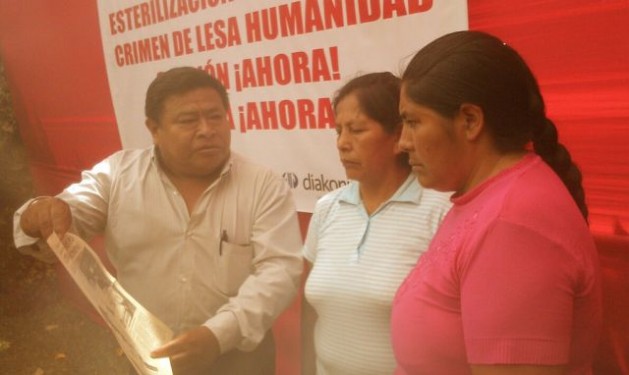
Alfonso Ramos (left) shows a newspaper reporting the death of his sister Celia in Piura due to forced sterilisation. Micaela Flores (centre) and Sabina Huillca are sterilisation victims from Cusco. All three have been waiting for justice for 17 years. Credit: Milagros Salazar/IPS
By Milagros Salazar | IPS | February 6, 2014
Shelving the case of the forced sterilization of more than 2,000 women in Peru during the Alberto Fujimori regime was a surprise move by the prosecutor in charge. What happened? An IPS investigation found that legal avenues to pursue justice have not been exhausted.
On Jan. 24, prosecutor Marco Guzmán announced an end to the investigation of forced sterilizations carried out in Peru between 1996 and 2000. He said he would not pursue criminal charges against Fujimori (1990-2000), three former health ministers and other officials accused of being responsible for the crime.
“The doors were padlocked. They carried me off in a stretcher, tied my feet and cut me.” — Micaela Flores
“They took us in trucks. We got in quite innocently and contentedly. But then we heard screams and I ran… The doors were padlocked. They carried me off in a stretcher, tied my feet and cut me,” Micaela Flores, then a mother of seven from Anta province in the southern region of Cusco, told IPS.
On that occasion about 30 women went to the health center, duped by a campaign offering general check-ups, she said.
Guzmán has decided to prosecute only health personnel in the northern department of Cajamarca. The sterilizations were part of the Voluntary Surgical Contraception Program (AQV – Anticoncepción Quirúrgica Voluntaria), created by Fujimori and his government to bring about a drastic reduction in the birth rate in the poorest parts of the country, especially among rural Quechua-speaking women.
Guzmán, as head of the second supra-provincial prosecutor’s office, assumed the case in July 2013 after the investigation was reopened in November 2012.
There are currently 142 volumes of evidence in this longstanding case. In May 2009 the prosecution shelved the probe into the former ministers and other officials for the first time, in spite of repeated urging for its completion from the inter-American human rights system.
In 2003, the Peruvian state signed a friendly settlement agreement before the Inter-American Commission on Human Rights (IACHR) in the case of Mamérita Mestanza, who died in 1998 as a result of a poorly performed tubal ligation procedure done without her consent.
The government promised to pay an indemnity to her family and investigate and bring to trial the government officials who devised and implemented the forced sterilization campaign.
After years of delays and foot-dragging, human rights organizations had their hopes raised when Guzmán showed interest in investigating Fujimori’s command responsibility for the generalized, systematic practice of sterilizations.
In late November the prosecutor said there were “indications of the alleged participation of Alberto Fujimori in the crimes,” and expanded the investigation into the cases of Mestanza and others.
Rossy Salazar, a lawyer with the women’s rights organization DEMUS who is representing the victims, told IPS that this statement by the prosecutor appears on page 60277 of the file as part of a report on the case addressed to Víctor Cubas, the prosecutor who coordinates all human rights cases.
In an interview with IPS, Guzmán acknowledged having said “there were indications that Fujimori had participated.” At that point he had interviewed over 500 victims, mainly in the northwestern department of Piura and in Cusco, he said, although in his latest 131-page decision he states he only interviewed around one hundred.
Guzmán was also in possession of evidence that the program had targets, incentives, and even sanctions for personnel who did not fulfill sterilization quotas, according to documents obtained by government agencies that investigated the facts of the case.
DEMUS invoked these official documents in an appeal against the prosecutor’s decision to shelve the case, which it presented Jan. 28 before the Office of the Public Prosecutor.
The appeal refers to four letters from the former health minister, Marino Costa, to Fujimori in 1997. In one document the minister reports to the president on the increased numbers of AQV operations performed and says “by the end of 1997 our total production should be fairly close to the target.”
IPS asked Guzmán: “After determining in November that there were indications of Fujimori’s participation, why did you absolve him from responsibility so soon afterwards?”
“In order to examine him I had to interrogate him. I went to interrogate Fujimori and he answered some questions, but not others. For some he invoked the right to silence. Then his defense lawyer gave me a number of documents. This was important because Fujimori had never been questioned about this case before,” he said.
Fujimori’s interrogation on Jan. 15 in the Barbadillo prison, where he is serving a 25-year sentence for human rights abuses, lasted less than three hours. One week later, Guzmán closed the case against the ex president.
“Was your interview with Fujimori decisive for determining whether he participated in the crimes?” persisted IPS.
“It was taken into consideration, but it was not decisive. The decisive thing is the legal package I have to apply… There is no legal support for imputing guilt,” Guzmán said.
The prosecutor argued that Peruvian law does not provide for the crime of forced sterilization, and therefore there is no legal support. In his decision he said the victims’ complaints would not be classed as crimes against humanity, which refer to generalized or systematic attacks on a civilian population and have no statute of limitation.
In international terms, the Rome Statute, which established the International Criminal Court, does recognize the crime of forced sterilization. The statute entered into force in Peru in July 2002, after the sterilizations were committed and denunciations were initiated, but “the international community has regarded forced sterilization as a crime since the early 1990s,” Salazar said.
In its appeal, DEMUS argues that the prosecutor’s decision “should not halt the criminal investigation.” It is “only the first step in the search for truth” and does not end the evidence collection phase. DEMUS asks for a higher level prosecutor to bring charges so that the case can continue. Another means of re-opening the case would be for another victim to bring a new complaint.
DEMUS also plans to bring the case to the attention of the IACHR in March.
On Jan. 31, an article by Guzmán was published in the newspaper El Comercio, saying that “the only way Fujimori could be held responsible is by demonstrating command responsibility, and according to the Constitutional Court the requirements for this are not fulfilled, because there is no rigid vertical structure involved, and doctors cannot be obliged to operate against their will.”
“They are isolated cases,” he told IPS.
According to the Health ministry, 346,219 sterilizations were performed on females and 24,535 on males between 1993 and 2000, 55.2 percent of them in the period 1996-1997 alone. During that period an average of 262 tubal ligations were carried out a day.
More than 2,000 persons were documented to have been deceived or threatened into undergoing sterilization. Women in Cusco were among the worst affected, because on average nearly five operations a day were performed there, according to Health ministry figures and the testimony of victims.
Sabina Hillca, from Huayapacha in the Cusco region, told IPS that she set out for the health center in Anta when she was due to give birth to her daughter, Soledad, but the birth happened on the way.
The nurses told her she should stay to be “cleansed” and avoid infection. The next day she woke up crying, with sharp pain, an incision close to her navel, and tied to the bed. Afterwards she fled to her village, cleaned the wound with soap and water, removed the stitches as best as she could, and went to her mother for herbal treatments.
“Now I have cancer because dry blood collected in my ovaries,” she said, showing the dark scar on her abdomen.
The Hypocrisy of Human Rights Watch
By Keane Bhatt | NACLA | February 5, 2014
Over more than a decade, the rise of the left in Latin American governance has led to remarkable advances in poverty alleviation, regional integration, and a reassertion of sovereignty and independence. The United States has been antagonistic toward the new left governments, and has concurrently pursued a bellicose foreign policy, in many cases blithely dismissive of international law.
So why has Human Rights Watch (HRW)—despite proclaiming itself “one of the world’s leading independent organizations” on human rights—so consistently paralleled U.S. positions and policies? This affinity for the U.S. government agenda is not limited to Latin America. In the summer of 2013, for example, when the prospect of a unilateral U.S. missile strike on Syria—a clear violation of the UN Charter—loomed large, HRW’s executive director Kenneth Roth speculated as to whether a simply “symbolic” bombing would be sufficient. “If Obama decides to strike Syria, will he settle for symbolism or do something that will help protect civilians?” he asked on Twitter. Executive director of MIT’s Center for International Studies John Tirman swiftly denounced the tweet as “possibly the most ignorant and irresponsible statement ever by a major human-rights advocate.”1
HRW’s accommodation to U.S. policy has also extended to renditions—the illegal practice of kidnapping and transporting suspects around the planet to be interrogated and often tortured in allied countries. In early 2009, when it was reported that the newly elected Obama administration was leaving this program intact, HRW’s then Washington advocacy director Tom Malinowski argued that “under limited circumstances, there is a legitimate place” for renditions, and encouraged patience: “they want to design a system that doesn’t result in people being sent to foreign dungeons to be tortured,” he said, “but designing that system is going to take some time.”2
Similar consideration was not extended to de-facto U.S. enemy Venezuela, when, in 2012, HRW’s Americas director José Miguel Vivanco and global advocacy director Peggy Hicks wrote a letter to President Hugo Chávez arguing that his country was unfit to serve on the UN’s Human Rights Council. Councilmembers must uphold the highest standards in the promotion and protection of human rights, they maintained, but unfortunately, “Venezuela currently falls far short of acceptable standards.”3 Given HRW’s silence regarding U.S. membership in the same council, one wonders precisely what HRW’s acceptable standards are.
One underlying factor for HRW’s general conformity with U.S. policy was clarified on July 8, 2013, when Roth took to Twitter to congratulate his colleague Malinowski on his nomination to be Assistant Secretary of State for Democracy, Human Rights and Labor (DRL). Malinowski was poised to further human rights as a senior-level foreign-policy official for an administration that convenes weekly “Terror Tuesday” meetings. In these meetings, Obama and his staffers deliberate the meting out of extrajudicial drone assassinations around the planet, reportedly working from a secret “kill list” that has included several U.S. citizens and a 17-year-old girl.4
Malinowski’s entry into government was actually a re-entry. Prior to HRW, he had served as a speechwriter for Secretary of State Madeline Albright and for the White House’s National Security Council. He was also once a special assistant to President Bill Clinton—all of which he proudly listed in his HRW biography. During his Senate confirmation hearing on September 24, Malinowski promised to “deepen the bipartisan consensus for America’s defense of liberty around the world,” and assured the Foreign Relations Committee that no matter where the U.S. debate on Syria led, “the mere fact that we are having it marks our nation as exceptional.”5
That very day, Obama stood before the UN General Assembly and declared, “some may disagree, but I believe that America is exceptional.” Assuming that by “exceptional” Obama meant exceptionally benevolent, one of those who disagreed was Brazilian president Dilma Rousseff, who had opened the proceedings at the same podium by excoriating Obama’s “global network of electronic espionage,” which she considered a “disrespect to national sovereignty” and a “grave violation of human rights and of civil liberties.” Rousseff contrasted Washington’s rogue behavior with her characterization of Brazil as a country that has “lived in peace with our neighbors for more than 140 years.” Brazil and its neighbors, she argued, were “democratic, pacific and respectful of international law.”6 Rousseff’s speech crystallized Latin America’s broad opposition to U.S. exceptionalism, and therefore shed light on the left’s mutually antagonistic relationship with HRW.
*
Malinowski’s background is but one example of a larger scenario. HRW’s institutional culture is shaped by its leadership’s intimate links to various arms of the U.S. government. In her HRW biography, the vice chair of HRW’s board of directors, Susan Manilow, describes herself as “a longtime friend to Bill Clinton,” and helped manage his campaign finances. (HRW once signed a letter to Clinton advocating the prosecution of Yugoslav President Slobodan Milosevic for war crimes; HRW made no case for holding Clinton accountable for NATO’s civilian-killing bombings despite concluding that they constituted “violations of international humanitarian law.”)7 Bruce Rabb, also on Human Rights Watch’s Board of Directors, advertises in his biography that he “served as staff assistant to President Richard Nixon” from 1969-70—the period in which that administration secretly and illegally carpet bombed Cambodia and Laos.8
The advisory committee for HRW’s Americas Division has even boasted the presence of a former Central Intelligence Agency official, Miguel Díaz. According to his State Department biography, Díaz served as a CIA analyst and also provided “oversight of U.S. intelligence activities in Latin America” for the House Permanent Select Committee on Intelligence.9 As of 2012, Díaz focused, as he once did for the CIA, on Central America for the State Department’s DRL—the same bureau now to be supervised by Malinowski.
Other HRW associates have similarly questionable backgrounds: Myles Frechette, currently an advisory committee member for the Americas Division, served as Assistant U.S. Trade Representative for Latin America and the Caribbean from 1990-93, and then became U.S. Ambassador to Colombia from 1994-97. Frechette subsequently worked as the executive director of a “nonprofit” group called the North American-Peruvian Business Council, and championed the interests of his funders in front of Congress. His organization received financing from companies such as Newmont Mining, Barrick Gold, Caterpillar, Continental Airlines, J.P. Morgan, ExxonMobil, Patton Boggs, and Texaco.10
Michael Shifter, who also currently serves on HRW’s Americas advisory committee, directed the Latin America and Caribbean program for the National Endowment for Democracy (NED), a quasi-governmental entity whose former acting president Allen Weinstein told The Washington Post in 1991 that “a lot of what we do today was done covertly 25 years ago by the CIA.”11 Shifter, as current president of a policy center called the Inter-American Dialogue, oversees $4 million a year in programming, financed in part through donations from the U.S. Agency for International Development (USAID), the embassies of Canada, Germany, Guatemala, Mexico and Spain, and corporations such as Chevron, ExxonMobil, J.P. Morgan, Microsoft, Coca-Cola, Boeing, and Western Union.
To be sure, not all of the organization’s leadership has been so involved in dubious political activities. Many HRW board members are simply investment bankers, like board co-chairs Joel Motley of Public Capital Advisors, LLC, and Hassan Elmasry, of Independent Franchise Partners, LLP. HRW Vice Chair John Studzinski is a senior managing director at The Blackstone Group, a private equity firm founded by Peter G. Peterson, the billionaire who has passionately sought to eviscerate Social Security and Medicare. And although Julien J. Studley, the Vice Chair of the Americas advisory committee, once served in the U.S. Army’s psychological warfare unit, he is now just another wealthy real-estate tycoon in New York.
That HRW’s advocacy reflects its institutional makeup is unremarkable. Indeed, an examination of its positions on Latin America demonstrates the group’s predictable, general conformity with U.S. interests. Consider, for example, HRW’s reaction to the death of Hugo Chávez. Within hours of his passing on March 5, 2013, HRW published an overview—“Venezuela: Chávez’s Authoritarian Legacy”—to enormous online response. In accordance with its headline’s misleading terminology, HRW never once mentioned Chávez’s democratic bona fides: Since 1998, he had triumphed in 14 of 15 elections or referenda, all of which were deemed free and fair by international monitors. Chávez’s most recent reelection boasted an 81% participation rate; former president Jimmy Carter described the voting process as “the best in the world.”12 The article neglected to cite a single positive aspect of Chávez’s tenure, under which poverty was slashed by half and infant mortality by a third.
In contrast, HRW’s August 21, 2012 statement regarding the death of Ethiopian leader Meles Zenawi was decidedly more muted: “Ethiopia: Transition Should Support Human Rights Reform,” read the headline. Leslie Lefkow, HRW’s deputy Africa director, urged the country’s new leadership to “reassure Ethiopians by building on Meles’s positive legacy while reversing his government’s most pernicious policies.” Regarding a leader whose two-decade rule had none of Chávez’s democratic legitimacy (HRW itself documented Ethiopia’s repressive and unfair elections in both 2005 and 2010), the organization argued only that “Meles leaves a mixed legacy on human rights.”13 Whereas HRW omitted all mention of Chávez-era social improvements, it wrote, “Under [Meles’s] leadership the country has experienced significant, albeit uneven, economic development and progress.”
The explanation for this discrepancy is obvious: as a New York Times obituary reported, Meles was “one of the United States government’s closest African allies.” Although “widely considered one of Africa’s most repressive governments,” wrote the Times, Ethiopia “continues to receive more than $800 million in American aid each year. American officials have said that the Ethiopian military and security services are among the Central Intelligence Agency’s favorite partners.”14
*
HRW has taken its double standard to cartoonish heights throughout Latin America. At a 2009 NED Democracy Award Roundtable, José Miguel Vivanco described Cuba, not the United States, as “one of our countries in the hemisphere that is perhaps the one that has today the worst human-rights record in the region.” As evidence, he listed Cuba’s “long- and short-term detentions with no due process, physical abuse [and] surveillance”—as though these were not commonplace U.S. practices, even (ironically) at Guantánamo Bay.15 Vivanco was also quoted in late 2013, claiming at an Inter-American Dialogue event that the “gravest setbacks to freedom of association and expression in Latin America have taken place in Ecuador”—not in Colombia, the world’s most dangerous country for trade union leaders, or in Honduras, the region’s deadliest country for journalists (both, incidentally, U.S. allies).16
Latin America scholars are sounding the alarm: New York University history professor Greg Grandin recently described HRW as “Washington’s adjunct” in The Nation magazine.17 And when Vivanco publicly stated that “we did [our 2008] report because we wanted to show the world that Venezuela is not a model for anyone,” over 100 academics wrote to the HRW’s directors, lamenting the “great loss to civil society when we can no longer trust a source such as Human Rights Watch to conduct an impartial investigation and draw conclusions based on verifiable facts.”18
HRW’s deep ties to U.S. corporate and state sectors should disqualify the institution from any public pretense of independence. Such a claim is indeed untenable given the U.S.-headquartered organization’s status as a revolving door for high-level governmental bureaucrats. Stripping itself of the “independent” label would allow HRW’s findings and advocacy to be more accurately evaluated, and its biases more clearly recognized.
In Latin America, there is a widespread awareness of Washington’s ability to deflect any outside attempts to constrain its prerogative to use violence and violate international law. The past three decades alone have seen U.S. military invasions of Grenada and Panama, a campaign of international terrorism against Nicaragua, and support for coup governments in countries such as Venezuela, Haiti, Honduras, and Guatemala. If HRW is to retain credibility in the region, it must begin to extricate itself from elite spheres of U.S. decision-making and abandon its institutional internalization of U.S. exceptionalism. Implementing a clear prohibition to retaining staff and advisers who have crafted or executed U.S. foreign policy would be an important first step. At the very least, HRW can institute lengthy “cooling-off” periods—say, five years in duration—before and after its associates move between the organization and the government.
After all, HRW’s Malinowski will be directly subordinate to Secretary of State John Kerry, who conveyed the U.S. attitude toward Latin America in a way that only an administrator of a superpower could. In an April 17, 2013 House Foreign Affairs Committee hearing, a member of Congress asked Kerry whether the United States should prioritize “the entire region as opposed to just focusing on one country, since they seem to be trying to work together closer than ever before.” Kerry reassured him of the administration’s global vision. “Look,” he said. “The Western Hemisphere is our backyard. It is critical to us.”19
1. Kenneth Roth, followed by John Tirman’s response, Twitter, August 25, 3013, http://twitter.com/KenRoth/status/371797912210407424.
2. Greg Miller, “Obama preserves renditions as counter-terrorism tool,” Los Angeles Times, February 1, 2009.
3. José Miguel Vivanco and Peggy Hicks, “Letter to President Chavez on Venezuela’s Candidacy to the UN Human Rights Council,” Human Rights Watch, November 9, 2012.
4. Jo Becker and Scott Shane, “Secret ‘Kill List’ Proves a Test of Obama’s Principles and Will,” The New York Times, May 29, 2012.
5. Senate Foreign Relations Committee, “Statement for the Record by Tom Malinowski,” September 24, 2013.
6. “Text of Obama’s Speech at the U.N.,” The New York Times, September 24, 2013. Statement by H.E. Dilma Rousseff, United Nations, September 24, 2013.
7. Human Rights Watch, “Major Rights Groups Oppose Immunity for Milosevic,” October 6, 2000. HRW, “New Figures on Civilian Deaths in Kosovo War,” Februrary 8, 2000.
8. Human Rights Watch, “Board of Directors,” www.hrw.org, accessed November 16, 2013.
9. U.S. Department of State, “Franklin Fellows Alumni,” September 8, 2011, http://careers.state.gov/ff/meet-the-fellows/franklin-fellows/miguel-diaz, accessed November 16, 2013.
10. Ways and Means Committee, “Statement of Myles Frechette, the North American Peruvian Business Council,” U.S. House of Representatives, May 8, 2001.
11. David Ignatius, “Innocence Abroad: The New World of Spyless Coups,” The Washington Post, September 22, 1991.
12. Keane Bhatt, “A Hall of Shame for Venezuelan Elections Coverage,” Manufacturing Contempt (blog), nacla.org, October 8, 2012.
13. Human Rights Watch, “Ethiopia: Government Repression Undermines Poll,” May 24, 2010.
14. Jeffrey Gettleman, “Meles Zenawi, Prime Minister of Ethiopia, Dies at 57,” The New York Times, August 22, 2012.
15. National Endowment for Democracy, “José Miguel Vivanco: 2009 NED Democracy Award Roundtable,” Youtube.com, Jun 29, 2009.
16. Eva Saiz, “Indígenas de Ecuador denuncian en EEUU la norma de libre asociación de Correa,” El Pais, October 28, 2013.
17. Greg Grandin, “The Winner of Venezuela’s Election to Succeed Hugo Chávez Is Hugo Chávez,” The Nation, April 16, 2013.
18. Venezuelanalysis.com, “More Than 100 Latin America Experts Question Human Rights Watch’s Venezuela Report,” December 17, 2008.
19. Committee on Foreign Affairs, House of Representatives, “Hearing: Securing U.S. Interests Abroad: The FY 2014 Foreign Affairs Budget,” April 17, 2013.
Related articles
Washington and São Paulo: Spying and a Fading Friendship
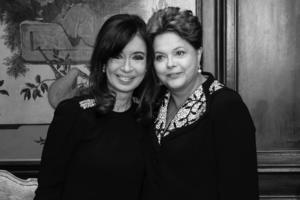
Rousseff and Kirchner at the UN, 2013. – Roberto Stuckert Filho
By Mark Weisbrot | NACLA | January 30, 2014
The only thing missing from Brazilian President Dilma Rousseff’s speech at the UN General Assembly last month was “it still smells like sulfur.” For those who don’t remember, these were the immortal words of Venezuela’s President Hugo Chávez in 2006, describing the podium where “the Devil”—his name for President George W. Bush—had spoken the day before. Chávez’s speech received hearty applause and prompted some New Yorkers to hang a banner from a highway overpass that said “Wake Up and Smell the Sulfur.”
Dilma’s speech also got a lot of applause at the General Assembly, and because she spoke immediately before President Barack Obama, her remarks were even more pointed. She presented a stinging rebuke to the Obama administration’s mass surveillance operations, at home and abroad:
“As many other Latin Americans, I fought against authoritarianism and censorship, and I cannot but defend, in an uncompromising fashion, the right to privacy of individuals and the sovereignty of my country. In the absence of the right to privacy, there can be no true freedom of expression and opinion, and therefore no effective democracy. In the absence of the respect for sovereignty, there is no basis for the relationship among nations. We face, Mr. President, a situation of grave violation of human rights and of civil liberties; of invasion and capture of confidential information concerning corporate activities, and especially of disrespect to national sovereignty.”
Dilma also took a swipe at Obama’s previously planned—and then cancelled due to popular demand—bombing of Syria: “[W]e repudiate unilateral interventions contrary to international law, without Security Council authorization.”
Her remarks were a reminder, and for some a new discovery, that the differences among the left-of-center governments of South America on hemispheric and foreign policy issues were mostly a matter of style and rhetoric, not of substance. The speech came in the wake of the cancellation of Dilma’s scheduled October state visit to the White House, which would have been the first by a Brazilian president in nearly two decades. It was another blow to the Obama administration’s tepid efforts to improve relations with Brazil, and with South America in general.
At this moment, U.S.-South American relations are probably even worse than they were during the George W. Bush years, despite the huge advantage that President Obama has in terms of media image, and therefore popularity, in the hemisphere. This illustrates how deeply structural the problem of hemispheric relations has become, and how unlikely they are to become warmer in the foreseeable future.
The fundamental cause of the strained relationship is that Washington refuses to recognize that there is a new reality in the region, now that a vast South American majority has elected left governments. In Washington’s foreign policy establishment—including most think tanks and other sources of analysis and opinion—there has been almost no acknowledgement that a new strategy might be necessary. Of course, most of the foreign policy establishment doesn’t care much about Latin America these days. And there is no electoral price to be paid for stupidity that leads to worsening relations with the region. On the contrary, the main electoral pressure on the White House comes from the far right, including neocons and old-guard Cuban-Americans. And Obama is not above caving to these interests when the White House and State Department are not already on their side. But among those who do care about Latin America—from an imperial point of view—the lack of imagination is breathtaking.
The establishment has, over the past 15 years, sometimes adopted a “good left, bad left” strategy that sought first and foremost to try and isolate Venezuela, often lumping in Bolivia, Ecuador, and sometimes Argentina as the “bad left.” But in the halls of power, they really do not like any of the left governments and are hoping to get rid of them all. In 2005, according to State Department documents obtained under the Freedom of Information Act, the U.S. government promoted legislation within Brazil that would have weakened the Workers’ Party, funding efforts to promote a legal change that would make it more difficult for legislators to switch parties. This would have strengthened the opposition to Lula’s Workers’ party (PT) government, since the PT has party discipline but many opposition politicians do not.
So it is not surprising that Brazil has been, according to the documents revealed by former NSA contractor and whistleblower Edward Snowden, the top Latin American target for U.S. spying. It is a lot like all the other left governments that Washington would like to get rid of, only bigger. It is true that countries with U.S.-allied governments like Mexico were also targeted, but in the context of Brazil’s alliance with other left governments, the large-scale espionage there—which reportedly included monitoring of Dilma’s personal phone calls and emails—takes on a different meaning.
In the past decade of Workers’ Party government, Brazil has lined up fairly consistently with the other left governments on hemispheric issues and relations with the United States. When the Bush administration tried to expand its military presence in Colombia, Brazil was there with the rest of the region in opposition. The same was true when Washington aided and abetted the overthrow of “targets of opportunity” among the left governments: Honduras in 2009 and Paraguay in 2012—although in these cases Washington and its allies still prevailed. Brazil also supported other efforts at regional integration and independence, including UNASUR (the Union of South American Nations), which has played an important role in defending member countries from right-wing destabilization attempts as in Bolivia in 2008, or in the April elections in Venezuela, where the Obama administration supported opposition efforts to overturn the results with obviously false claims of electoral fraud (A CEPR study showed that the probability of getting the April 14 election day audit results confirming Nicolás Maduro’s win, if the vote had actually been stolen, was less than one in 25 thousand trillion).
Lula made a conscious decision that Brazil would look more to the south and less to the United States as a leader in its foreign and commercial policy. In an interview with the Argentine daily Pagina 12 this past October, he explained how important the turning point of Mar del Plata was, when the proposed Free Trade Area of the Americas (FTAA) was finally buried at the Summit of the Americas in 2005:
“It was fundamental that we had stopped this proposal to form the FTAA, at Mar del Plata. It was not a true project of integration, but one of economic annexation. With its sovereignty affirmed, South America looked for its own path and a much more constructive one. . . . When we analyze this history of South America we can see that it is one great conquest. If we had not avoided the FTAA, the region would not have been able to take the economic and social leap forward that it did in the past decade. Argentina, Brazil, and Venezuela played a central role in this process. Néstor Kirchner and Hugo Chávez were two great allies in accomplishing this.”
In 2002, when Lula was elected, Brazil’s exports to the United States were 26.4% of its total exports. By 2011, they were down to 10.4%. Meanwhile, China’s economy is by some measures already bigger than the U.S. economy, and it may well double in size over the next decade. That projection, which would require only a 7.2% annual rate of growth, is quite probable, as likely as any ten-year projection for the United States—perhaps even more so. The United States will become increasingly less important to Brazil, and to South America generally. Given that Washington still does not respect Latin American sovereignty, much less the goals and aspirations of its democratic governments, the steady decline of U.S. economic power has to be seen as a good thing for the region.
Mark Weisbrot is co-director of the Center for Economic and Policy Research, in Washington, D.C. He is also president of Just Foreign Policy.
Related articles
Latest Human Rights Watch Report: 30 Lies about Venezuela
By Tamara Pearson | Venezuelanalysis | January 23, 2014
In the six pages that HRW dedicates to Venezuela in its World Report 2014, released this week, it manages to tell at least 30 serious lies, distortions, and omissions. Pointing out these lies is important, because many people believe that HRW is a neutral authority on human rights, and the mainstream press publish articles and headlines based on HRW report conclusions. Here are some of the headlines in both English and Spanish (translated to English) that have come out of the 2014 report:
Global Post – Venezuela intimidates opponents, media: HRW report , PanAm Post – Human Rights Watch: A black eye for Latin America , AFP – HRW criticises Venezuela in its annual report on human rights, El Economista – HRW: Democracy in Venezuela is fictitious, El Universal – Human Rights Watch report denounces persecution of media in Venezuela, El Siglo – Human Rights Watch: Venezuela is an example of “fictitious democracies”, El Colombiano: HRW describes Venezuela as a fictitious democracy , NTN24 – HRW warns that Venezuelan government applies “arbitrary” measures against media that is critical of its policies
The headlines which talk about a “fictitious” or “feigned” democracy, are referring to the start of the report, where HRW put Venezuela, along with other countries, under the category of “abusive majoritarianism”. There, HRW provides a very limited definition of democracy; “periodic elections, the rule of law, and respect for the human rights of all” and argues that Venezuela has adopted “the form but not the substance of democracy”. HRW cites Diosdado Cabello not letting legislators who didn’t recognise democratically elected President Maduro speak in parliament – yet the punishment seems soft, considering the crime.
Below, I’ve grouped the lies and omissions according to HRW’s own subheadings in its chapter on Venezuela. Unlike with other countries such as the US, HRW omits all of Venezuela’s human rights achievements in its assessment, and in reality a range of other subheadings would be deserving, such has right to have access to housing, people’s right to be consulted about policy, right of the poorer people to be heard in the media, right to education, the right to health care, to land, and so on. Of course, nowhere in the report does HRW mention the economic crimes committed by the business sector against Venezuelans’ right to access affordable goods (hoarding, speculation, etc).
15 lies and distortions
Introduction
1. “The Supreme Court and the National Electoral Council rejected appeals filed by the opposition candidate, Henrique Capriles Radonski, challenging the results [of the April 2013 presidential elections]”. – The CNE did meet with the opposition and they came to an agreement to do a manual recount of the remaining 46% of votes which hadn’t already been revised on the day of the election. The entire recount was televised live. Given how incredibly flimsy Capriles’ “evidence” was, the Supreme Court would have been ridiculing itself to do anything but reject his case.
2. “Under the leadership of President Chavez and now President Maduro, the accumulation of power in the executive branch and the erosion of human rights guarantees have enabled the government to intimidate, censor, and prosecute its critics.” – HRW offers very little evidence to substantiate such accusations. The reality is the opposite; private media makes up the vast majority of the media, and freely criticises the government on a daily basis, to the point where it invents news and blames the national government for things it isn’t even responsible for. Just last week here in Merida a few opposition students held a protest by burning tires on a main road. For a week, traffic to a key hospital was blocked, and the students had no placards stating the reason for their protest. The police closed off the roads around them to protect their right to protest.
3. “In September 2013, the Venezuelan government’s decision to withdraw from the American Convention on Human Rights took effect, leaving Venezuelans without access to the Inter-American Court on Human Rights, an international tribunal that has protected their rights for decades in a wide array of cases.” – The IACHR has not protected Venezuelans’ rights. From 1969-1998, a repressive period of disappearances, political repression, and massacres such as those at Cantaura, Yumare, and the Caracazo, it only considered six cases, and of those only one was brought to the commission. In contrast, from 1999 to 2011 it ruled on and processed a total of 23 cases. It did not take any action after the coup attempt against democratically elected president Hugo Chavez in 2002.
Post-Election Violence
4. “Security forces used excessive force and arbitrary detentions to disperse anti-government demonstrations after the April elections, according to local groups”. -Though it may have varied from region to region, unlike HRW, I was at those protests, and took photos of and interviewed opposition protesters in Merida – one of their strongholds. Despite threatening to take over and destroy the CNE and the PSUV head offices, with large piles of projectiles like rocks and shrapnel and Molotov cocktails, the police merely cordoned off those areas. They were not armed, and there were no injuries or arrests observed. The threats were not empty ones either, as seen by other destruction carried out by the opposition around the country. HRW also needs to specify what it means by “security forces”, as the police system here is complicated and most police continue to be managed at a state level, but HRW implies that the national government is entirely responsible. Finally, merely attributing these claims to “local groups” is very vague. One might also say, HRW is a capitalist front, said local groups.
5. “Official sources reported that nine individuals were killed at the time, although the circumstances in which the deaths occurred remain unclear. President Maduro and other high level officials have used the threat of criminal investigations as a political tool, attributing responsibility for all acts of violence during demonstrations to Capriles”. – Does HRW want an investigation or not? The violence occurred the day after the presidential elections, and all of the victims and buildings destroyed were Chavista supporters or part of national programs. It was clearly political, why is it a problem to mention that, and why does it become a “threat” when Maduro talks about bringing murderers and those who set fire to public hospitals, to justice? A thorough investigation was conducted, and those who were responsible for the deaths were arrested.
Judicial Independence
6. “The judiciary has largely ceased to function as an independent branch of government”. – While it is true that there are serious problems in Venezuela’s court system: HRW doesn’t mention those: the delays and corruption. Instead, it argued the judiciary is not “independent” because it doesn’t always rule against the government, as HRW would like. If it is not independent, why were almost a hundred supposedly pro government workers in SAIME, SENIAT, the China-Venezuela bank, and so on, arrested last year for corruption?
Freedom of Media
7. “Over the past decade, the government has expanded and abused its powers to regulate the media… fear of government reprisals has made self-censorship a problem” – No it hasn’t. What the government has done, over the last four years or so, is pass legislation which limits media abuse: racism, extreme violence, and sensationalism that is so extreme it can be psychologically damaging. Those regulations apply equally to the private, public, and community media, but the reality is it is the private media which tends to be most abusive. Nevertheless, Conatel has emitted less than 10 fines over the last few years.
8. “The government has taken aggressive steps to reduce the availability of media outlets that engage in critical programming.” – HRW is not able to cite any examples to back up this statement. Instead, it refers to one case from years ago, RCTV, who’s license was not renewed after it played an active role in the 2002 coup.
9. “In April 2013, Globovision was sold to government supporters… since then it has significantly reduced its critical programming”. The owners of Globovision sold it to a group of Venezuelan investors headed by businessman Juan Domingo Cordero, who is not a government supporter. Since then, Globovision’s coverage is somewhat less extreme and sensationalist, but it is just as critical.
10. “The government has also targeted other media outlets for arbitrary sanction and censorship”. – The government has not censored any media. Today alone, for example, Tal Cual freely published these headlines: “The fiscal report is a time bomb”, “The government uses violence as an excuse to censor the media” , “Dance with death” (to refer to the government) and “The government tragicomedy”. El Nacional received a fine in August last year for using a three year old photo of naked corpses on its front cover, and that is it.
Human Rights Defenders
11. “The Venezuelan government has sought to marginalise the country’s human rights defenders by repeatedly accusing them of seeking to undermine Venezuelan democracy with the support of the US government”. – The lie here is “the country’s human rights defenders”. HRW is referring to a select few organisations such as itself and other individuals, who use human rights as a front for their right-wing political agenda. The government is completely within its right in pointing that out.
Abuses by Security Forces
This section is somewhat accurate, but lacks any causal analysis.
Prison Conditions
These criticisms are also somewhat legitimate, though the information is selective. For omissions, see below.
Labour Rights
12. “Political discrimination against workers in state institutions remains a problem. In April 2013, Minister of Housing Ricardo Molina called on all ministry personnel who supported the opposition to resign, saying that he would fire anyone who criticised Maduro, Chavez, or the revolution”. Though perhaps a bit extreme, HRW forgets to point out that Molina made that remark in the context of the opposition not recognising a democratically elected president. That there is political discrimination against workers is largely untrue, though may occur in isolated situations. It is no secret that most of the public education and health workers, for example, support the opposition.
13. “The National Electoral Council (CNE), a public authority, continues to play an excessive role in union elections, violating international standards that guarantee workers the right to elect their representatives in full freedom” – Actually, what the CNE provides to unions is logistical support: machinery that makes cross-country elections much easier. If there were concern about the CNE somehow influencing elections, the opposition would not have also used its logistical support for its primaries in February 2012.
Key International Actors
14. “For years, Venezuela’s government has refused to authorise UN human rights experts to conduct fact-finding visits in the country” – That’s why the UNESCO and the FAO have both recently praised Venezuela’s education and food development. The Office of the High Commissioner for Human Right’s most recent report on Venezuela was made in September last year, it was about Venezuela’s elimination of racial discrimination.
15. “In June 2013, Venezuela became the pro-tempore president of Mercosur… The Asuncion Protocol…states that “full respect of democratic institutions and the respect of human rights” are essential…By not addressing the absence of an independent judiciary in Venezuela, as well as the government’s efforts to undermine human rights protections, the other Mercosur member states have failed to uphold these commitments” – See previous and subsequent comments on Venezuela’s judiciary and treatment of “human rights” protections.
15 omissions
The following very important facts on Venezuela’s human rights record were completely omitted from the report. Such omissions are as serious as lying.
Post-Election Violence
1. HRW conveniently doesn’t mention that the 15 “health centres” that were “vandalised” (ie they were set on fire on medical equipment was destroyed) were CDIs- Cuban-Venezuelan run free health centres that have come to be a symbol of the Bolivarian revolution. HRW doesn’t mention that opposition supporters attacked them, it lets readers believe that the government supported such violence.
2. HRW doesn’t criticise the extremely undemocratic move by Capriles to not recognise the president whom the majority of voters chose in the April presidential elections. Their omission to do so amounts to tacit support of Capriles. That sort of context is also necessary when HRW criticises the fact that there were arrests following the elections: it’s possible that some arrests were not justified, but given that the Bolivarian revolution has already suffered one (failed) coup, and the continent has suffered many successful and bloody ones, it is reasonable to arrest participants in that. Any other country would do the same.
3. HRW focuses on the post election violence, and blames the national government for it, rather than recognising the opposition’s role. It purposefully omits to mention that while Capriles called for a “venting of rage”, Maduro called on supporters to play music and dance in the street.
Judicial Independence
4. HRW criticises the imprisonment of “government critic” judge Afiuni, but omits to mention that she was arrested for illegally releasing a bank president who stole US$27 million from state currency body, CADIVI. Does HRW advocate such judicial corruption? In June Afiuni was awarded conditional release.
5. There are, however, other cases of court inefficiency and bribery of judges, which HRW completely ignores, perhaps because the victims are mostly Bolivarian revolution supporters. Over the last year, many rural workers, commune members, trade unionists, and indigenous activists were murdered by hired killers, and though the killers are usually easy to identify, few have been arrested and prosecuted.
6. HRW criticises Venezuela for withdrawing from the IACHR, but omits to mention that that court is totally under the thumb of the US. It then hypocritically comments on Venezuela’s so called “lack of judicial independence”.
Freedom of Media
7. While in most countries, people who aren’t rich don’t have the right to run their own media, that right is being promoted in Venezuela, with the state materially and legally supporting over 500 community and alternative radios, television stations, and newspapers. That is an important development in media freedom, but HRW completely ignored it.
8. HRW states that, “In November 2013, the broadcasting authority opened an administrative investigation against eight Internet providers for allowing web sites that published information on unofficial exchange rates”. HRW intentionally omits to point out that those sites were illegally publishing those figures, and that those figures have contributed to the three and four fold price increase of basic products. At no point does HRW criticise the role of business of deliberately making basic food and goods unaffordable for Venezuelans.
9. HRW also doesn’t mention the almost one thousand free internet centres the government has set up, its promotion of freeware, and its distribution of laptops to school children: part of the government’s efforts to make the right to information a reality.
Human Rights Defenders
10. HRW criticises the government for supposedly “marginalising” “human rights defenders” by investigating their sources of funding, but fails to mention the fact that the US does use such groups as a front for funding the undemocratic wing of the opposition. It fails to criticise this affront to Venezuela’s right to sovereignty.
11. Likewise, it doesn’t mention the important role played by the real human rights defenders in Venezuela: gender and sexuality activists and movements, indigenous and afro-descendents organisations, the Cuban doctors defending the right to free and quality health care, community activists, environmental movements, volunteer teachers, social mission workers, activist analysts who are constructively critical of the situation in the country, and so on. Many of these movements and workers receive financial, institutional, and/or legal support from the state, though there are improvements to be made there as well, such as legalising gay marriage, abortion, and so on.
Abuses by Security Forces
12. Here it is telling that HRW simply doesn’t mention Venezuela’s creation of the UNES, a university training police in human rights and preventative policing. While it is legitimate that HRW points out ongoing problems within the police forces, it doesn’t mention that such corruption has significantly decreased, nor that police political repression has been almost completely eliminated.
Prison Conditions
13. HRW rightly points out the ongoing problems of overcrowding and organised prisoner violence in prisons, but simply omits to mention anything the government is doing to improve prisoner rights, including letting those who have committed minor offences out during the day time to work or study, internal prison education and productive work programs, assistance on leaving prison, cultural workshops such as video production in prisons, and government meetings with prisoners.
Labour Rights
14. For HRW it seems labour rights are limited to the right of opposition supporters to work in governmental programs that they don’t agree with (a right they have). HRW omits to mention the Labour Law which came into effect in May last year, which beats most of the world in providing workers with rights to permanent work (contract labour is made illegal), to childcare in the workplace, to maternity leave and to paternity leave, shorter working hours, retirement pensions, and much much more.
15. HRW alleges that opposition workers were “threatened” with losing their jobs if they supported Capriles, but provides no evidence of that, nor mentions that of course voting is anonymous and such a threat could not be carried out, and neglects to mention that governor Capriles fired fire fighters in May last year for demanding pay they were owed, uniforms, and infrastructure improvements.
Related articles


Ecuador to urge US military withdrawal
Press TV – January 23, 2014
Ecuador’s President Rafael Correa has announced plans to call for the withdrawal of some US military officers from the South American country.
 Speaking at the Carondelet presidential Palace in the Ecuadorian capital Quito on Wednesday, Correa said his government will ask Washington to withdraw “nearly 50 military personnel” assigned to the US embassy in the Latin American country.
He described the number of American military personnel in Ecuador as “inconceivable,” saying, “Unfortunately, these people have been so infiltrated in all the sectors that what is scandalous appeared normal.”
Correa also noted that Quito was “already taking measures” to address the outsized presence of the US forces.
The remarks came after revelations concerning the presence of four US military personnel in an Ecuadoran military helicopter that came under fire in October last year near the border with Colombia.
“They (the US troops) flew in the helicopters of the air force, of the army. It was normal for foreign soldiers to be flying with our soldiers in frontier areas,” he said.
Meanwhile, the US embassy said it has not received any request from the Ecuadorian government yet.
In 2009, Quito refused to renew an agreement with Washington on counter-narcotics operations after accusing it of financing opposition groups.
Related articles


Featured Video
US Marines Seized Panama in 1903
or go to
Aletho News Archives – Video-Images
From the Archives
Precedents for Pizzagate
Marc Dutroux, Belgian pedophile, sadist, and serial killer with friends in high places
By Aedon Cassiel | Counter – Currents | December 23, 2016
To reiterate a point that should be clear to the more astute reader, my goal in this series (part 1, part 2) has not been to defend “Pizzagate” as such. My goal has been to defend the people who want to investigate it against specific accusations levied against them by people who think Pizzagate has revealed no intriguing information at all—for a specific reason, which I will be honing in and focusing on much more directly in this closing entry.
Whereas the mainstream critics of Pizzagate would have you believe that the dividing line is between paranoid conspiracy theorist followers of “fake news” and level-headed people who follow trustworthy news sources and rely on cold, hard reason to determine the truth, my goal has been to show that—whatever is or is not happening with Pizzagate itself—this framing of the issue is arrogant, insulting, and the product of extremely narrow tunnel vision. … continue
Blog Roll
 Aletho News
- Israeli firms transform cars into intelligence devices: Reports
- Zionist-controlled companies to surveil British citizens
- THE CHILDREN GAMBIT
- A note on comment posting at Alethonews
- Trump stalls over Iran strike plan, Iran holds all the aces
- Zelensky’s Ceasefire for Elections is Strategic Gambit, Not Democratic Move
- US and Dutch pilots flying F-16s for Ukraine – Western media
- West’s Claims of Non-Involvement in Ukraine Conflict ‘Epitome of Hypocrisy’ – Expert
- Putin aide urges retaliation to ‘Western piracy’
- The Depth Charge in the Womb
- If Americans Knew
- Israel’s Favorite American President
- Israel’s “Yellow Line” Is a Death Trap for Palestinians. We Drove Into It.
- Why Israel’s expanding occupation in Syria presents a critical legal test
- Gaza is not a natural disaster. It is the victim of genocide enabled by global inaction
- Netanyahu’s plan to “end” US aid to Israel is to give even more money under a different name
- Israel ceased firing on Gaza for just 15 days of the “ceasefire” – Not a ceasefire Day 130
- In Gaza, “rats run over our faces” – Not a ceasefire Day 129
- Israel-backed border guards, GHF-linked aid – Not a ceasefire Day 128
- Israel battles Palestinian right of return, one Palestinian at a time – Not a ceasefire Day 127
- Noor’s short life of unimaginable suffering
- No Tricks Zone
- New Study: A 4°C Warmer Beaufort Sea Had ‘No Sea Ice’ 11,700 – 8200 Years Ago
- Unfudging The Data: Dutch Meteorological Institute Reinstates Early 20th Centruy Heat Waves It Had Erased Earlier
- German Gas Crisis…Chancellor Merz Allegedly Bans Gas Debate Ahead of Elections!
- Pollen Reconstructions Show The Last Glacial’s Warming Events Were Global, 10x Greater Than Modern
- Germany’s Natural Gas Storage Level Dwindles To Just 28%… Increasingly Critical
- New Study Rebuts The Assumption That Anthropogenic CO2 Molecules Have ‘Special’ Properties
- Climate Scientist Who Predicted End Of “Heavy Frost And Snow” Now Refuses Media Inquiries
- Polar Bear Numbers Rising And Health Improving In Areas With The Most Rapid Sea Ice Decline
- One Reason Only For Germany’s Heating Gas Crisis: Its Hardcore-Dumbass Energy Policy
- 130 Years Later: The CO2 Greenhouse Effect Is Still Only An Imaginary-World Thought Experiment
 Aletho News