Senate committee approves funding for NSA, witch-hunt on leakers
RT | November 6, 2013
Congress has taken the first step towards expanding the abilities of the United States intelligence community by advancing a draft bill that will ensure the government’s spy budget stays intact into next year.
A Senate commitee approved the 2014 Intelligence Authorization Act during a closed door session on Tuesday, a bill that if signed into law will allow the US National Security Agency and other departments to keep receiving funding amid an international scandal that has caused calls for reform and even abolishment of the NSA both in the US and abroad in recent months.
Notwithstanding the backlash brought on by an array of secret NSA documents disclosed to the media by contractor-turned-leaked Edward Snowden since June, the Senate Intelligence Committee passed the draft bill by a 13-2 vote. Next, the full chamber will weigh in on the matter before it is reconciled with a sister act by way of the House of Representatives and sent to President Barack Obama to be signed into law.
If approved with all of its current provisions in place, the law will let the government continue to fund programs operated for purposes of counterterrorism and nuclear weapon proliferation prevention, authorizing initiatives within more than a dozen federal departments, including the NSA and others that deal in covert, intelligence-gathering operations.
In a press release issued Tuesday by the committee, however, its members also acknowledged that the bill expands certain intelligence community operations, including in particular the very programs enacted to prevent the unauthorized disclosure of classified information.
The bill, the committee wrote, “includes important provisions to enhance the conduct, accountability and oversight of the intelligence activities of the United States,” such as one intended “to protect against insider threats by adding necessary funds to deploy information technology detection systems across the intelligence community.”
The bill would also empower the Director of National Intelligence to “improve the government’s process to investigate . . . individuals with security clearances to access classified information,” while at same time “Instituting new statutory protections that protect the ability of legitimate whistleblowers to bring concerns directly to the attention of lawmakers, inspectors general and intelligence community leaders.”
Since the identity of the NSA leaker was revealed to be 30-year-old Edward Snowden, opponents of his actions have suggested that alternative, legal routes to questions the intelligence community’s tactics could have been taken, such as appealing to an inspector general. History, however, suggests that recent whistleblowers before him had a nearly impossible time doing as much, including Thomas Drake, a former senior NSA executive who was charged under the Espionage Act after he attempted to draw attention to waste, fraud and abuse within his agency years earlier. Speaking at an anti-NSA rally in Washington last month, Drake told a crowd of a couple thousand, “Any domestic surveillance legislation must include whistleblower protection for the credibility and enforcement of any reform effort, otherwise secrecy enforced by repression will turn into a faux reform passed into simply an honor system” for the NSA.
In a statement released on Tuesday, Committee Vice Chairman Saxby Chambliss (R-Georgia said, “This year’s intelligence authorization bill achieves both objectives by providing clear guidance and appropriate resources to the intelligence community, while enhancing the committee’s oversight of vital intelligence activities.”
If signed into law, the act will allow for funding to continue with regards to a number of intelligence-gathering operations conducted not just by the likes of the NSA, but also the Central Intelligence Agency, the Office of the Director of National Intelligence and the Departments of Defense, State, Treasury, Energy and Justice, among others.
Britain’s GCHQ shepherding mass surveillance operations throughout Europe
RT | November 2, 2013
British intelligence agency GCHQ has helped counterpart entities in France, Germany, Spain, and Sweden develop methods of mass surveillance of internet and phone traffic in the last five years, a new report reveals.
Documents supplied by former National Security Agency contractor Edward Snowden to the Guardian show the UK Government Communications Headquarters’ (GCHQ) enormous influence throughout Europe. The documents detail how the agency developed and promoted spying processes, built relationships with telecommunication companies, and evaded national laws that constrain the surveillance powers of intelligence agencies.
In the wake of outrage expressed over the past week across Europe regarding newly exposed NSA surveillance of European countries – including intercepted communications and the monitoring of phones belonging to officials such as German Chancellor Angela Merkel – documents released Friday by the Guardian show major European countries’ culpability in mass surveillance efforts shepherded by the GCHQ.
The GCHQ is part of the ‘Five Eyes’ intelligence-sharing partnership between Australia, Britain, Canada, New Zealand, and the United States.
US intelligence officials said the monitoring that received so much indignation from powers like Germany and France was carried out by those countries’ own intelligence agencies and later shared with the US.
In June, the Guardian revealed the GCHQ’s Tempora program, in which the agency tapped into transatlantic fiber-optic cables to execute bulk surveillance. Germany’s justice minister, Sabine Leutheusser-Schnarrenberger, said at the time that the program sounded “like a Hollywood nightmare” and warned that free societies and actions hidden under “a veil of secrecy” are not compatible.
A nation-by-nation scorecard
In a 2008 survey of European partners, the GCHQ marveled at Germany’s capabilities to produce Tempora-like surveillance. The British service said the Federal Intelligence Service (BND) had “huge technological potential and good access to the heart of the internet – they are already seeing some bearers running at 40Gbps and 100Gbps.” The term ‘bearers’ refers to the fiber-optic cables. Gigabits per second (Gbps) measures the speed at which data runs through them.
The documents also show the British were advising German counterparts on how to change or evade laws that restricted advanced surveillance efforts. “We have been assisting the BND (along with SIS [Secret Intelligence Service] and Security Service) in making the case for reform or reinterpretation of the very restrictive interception legislation in Germany,” the survey says.
The report also lauds the GCHQ’s French partner, the General Directorate for External Security (DGSE), especially for its cozy relationship with an unnamed telecommunications company.
“DGSE are a highly motivated, technically competent partner, who have shown great willingness to engage on IP [internet protocol] issues, and to work with GCHQ on a ‘cooperate and share’ basis.”
The GCHQ expressed desire to benefit from the DGSE’s relationship with the company.
“We have made contact with the DGSE’s main industry partner, who has some innovative approaches to some internet challenges, raising the potential for GCHQ to make use of this company in the protocol development arena.”
The GCHQ’s work with its French counterpart led to improved capabilities to carry out bulk surveillance, despite growing commercial emphasis on encryption.
“Very friendly crypt meeting with DGSE in July,” British officials said. French intelligence officials were “clearly very keen to provide presentations on their work which included cipher detection in high-speed bearers. [GCHQ’s] challenge is to ensure that we have enough UK capability to support a longer term crypt relationship.”
New opportunities in future partnerships
GCHQ ties to Spain’s intelligence service, the National Intelligence Centre (CNI), were bolstered by Spain’s connections to an unnamed British telecom company, giving them “fresh opportunities and uncovering some surprising results.
“GCHQ has not yet engaged with CNI formally on IP exploitation, but the CNI have been making great strides through their relationship with a UK commercial partner. GCHQ and the commercial partner have been able to coordinate their approach. The commercial partner has provided the CNI some equipment whilst keeping us informed, enabling us to invite the CNI across for IP-focused discussions this autumn,” the survey said. It reported that the GCHQ “have found a very capable counterpart in CNI, particularly in the field of Covert Internet Ops.”
When Sweden passed a 2008 law allowing its National Defence Radio Establishment (FRA) to execute Tempora-like surveillance via fiber-optic cables, the GCHQ said in the report that “FRA have obtained a…probe to use as a test-bed and we expect them to make rapid progress in IP exploitation following the law change.” The GCHQ went on to express delight in future partnerships with FRA after the law passed.
The survey found strong ties between the GCHQ and Dutch external and internal intelligence services MIVD and AIVD, respectively.
“Both agencies are small, by UK standards, but are technically competent and highly motivated,” British officials said.
The GCHQ also helped AIVD in handling legal constraints to spying.
“The Dutch have some legislative issues that they need to work through before their legal environment would allow them to operate in the way that GCHQ does. We are providing legal advice on how we have tackled some of these issues to Dutch lawyers.”
Contrary to the other nations’ positive marks, the GCHQ country-by-country scorecard shows Italy’s intelligence agencies to be riddled with internal strife.
“GCHQ has had some CT [counter-terrorism] and internet-focused discussions with both the foreign intelligence agency (AISE) and the security service (AISI), but has found the Italian intelligence community to be fractured and unable/unwilling to cooperate with one another,” the report said.
A follow-up six months later noted the GCHQ still saw legal constraints in Italy as hampering AISI’s ability to cooperate.
This latest disclosure calls into question how involved the countries were in the overall surveillance of global citizens and world leaders led by the NSA and GCHQ.
NSA stores data to target any citizen at any time – Greenwald
RT | October 29, 2013
The current revelations on the NSA’s spying are just the tip of the iceberg and affect “almost every country in the world,” said Glenn Greenwald. He stressed the NSA stores data for “as long as it can,” so they can target a citizen whenever they want.
Glenn Greenwald, the man behind the reports on the NSA global spy program, spoke to El Mundo journalist German Aranda and stressed that the US espionage activities went much further than just Europe.
“There are a lot of countries, and journalists in a lot of different countries, who have been asking for stories and to work on documents for a long time,” Greenwald said. He added that he was working as fast as possible to “make sure that all of these documents get reported in every single country there are documents for, which is most countries in the world.”
Shedding light on the NSA’s motives in compiling metadata on citizens, he said the spy organization’s main aim was to store the information to be able to dip into it whenever necessary.
“The very clear objective of the NSA is not just to collect all this, but to keep it for as long as they can,” said Greenwald.
“So they can at any time target a particular citizen of Spain or anywhere else and learn what they’ve been doing, in terms of who they have been communicating with.”
‘Preparing the terrain’
Referencing reports leaked from former CIA worker Edward Snowden regarding the millions of phone calls tapped by the NSA in the EU, German Aranda stated that French reaction was “important to prepare the terrain in Spain.”
“With all the countries around Europe and around the world, it will be the same. The more countries [that] see documents about them, the more interest the other countries will have to see what is happening with them,” said Aranda.
Last week the Spanish Prime Minister, Manuel Rajoy, summoned the US Ambassador to account for the reports of spying, echoing the reactions of France, Germany and a handful of other countries. Spain has so far resisted calls from Germany to sign an EU no-spying treaty against the US in the wake of the revelations; however this may be set to change.
“As in previous occasions, we’ve asked the U.S. ambassador to give the government all the necessary information on an issue which, if it was to be confirmed, could break the climate of trust that has traditionally been the one between our two countries,” said Spanish Foreign Minister Jose Manuel Garcia-Margallo, at a joint news conference in Warsaw last week.
In response to European leaders’ furor over NSA espionage, the White House has launched an internal review into the NSA’s activities. The EU Parliament has also threatened to halt the sharing of data on the SWIFT banking system, which provides information on the transfer of funds by suspected terrorists.
A delegation from the EU parliament is currently in Washington to discuss what has been described as a “breakdown in trust” between traditional allies.
The Obama administration earlier said the controversial intelligence gathering procedures that have attracted international scrutiny in recent months may require “additional constraints.” White House spokesperson Jay Carney said that a “number of efforts [are] underway that are designed to increase transparency.”
Federal Appeals Court Rules Warrant Required for GPS Tracking
By Nathan Freed Wessler | ACLU | October 23, 2013
Today the Third Circuit Court of Appeals ruled that law enforcement agents must obtain a warrant based on probable cause to attach a GPS device to a car and track its movements. The case, United States v. Katzin, is the first in which a federal appeals court has explicitly held that a warrant is required for GPS tracking by police. The ACLU submitted an amicus brief in the case (joined by the ACLU of Pennsylvania, Electronic Frontier Foundation, and National Association of Criminal Defense Lawyers) and presented oral argument to the court in March.
In this case, police suspected three brothers, Harry, Mark, and Michael Katzin, of robbing several pharmacies. Without getting a warrant from a judge, FBI agents attached a GPS tracking device to Harry Katzin’s car in order to follow its movements. The government used the GPS device to track the Katzins as they drove to and from another pharmacy, and arrested them as they drove away. Before trial, the Katzins argued that police had violated their Fourth Amendment rights by using the GPS tracker without a warrant, and the district court agreed. Today’s ruling affirms that decision.
Last year, in United States v. Jones, the Supreme Court unanimously held that attaching a GPS tracker to a car to follow its movements is a search under the Fourth Amendment. The Court did not decide whether police need a warrant to conduct such a search, however, and the government argued in this case that an exception to the usual requirement of a warrant should apply. The Third Circuit rejected the government’s arguments, explaining that GPS tracking is a “vastly broader endeavor” than the kinds of limited searches that courts have allowed without warrants. In particular, the court held that the “automobile exception” to the warrant requirement does not apply to GPS tracking. The exception is designed to permit warrantless searches of cars to reveal contraband before the cars can drive away. But, as the court explained, that narrow exception does not “permit [police] to leave behind an ever-watchful electronic sentinel in order to collect future evidence” without judicial oversight.
The court also rejected a second argument made by the government: that the so-called “good faith” exception should permit use of evidence derived from the GPS tracking, even if it violated the Fourth Amendment. Because the GPS tracker was attached to the Katzins’ car before the Supreme Court decided Jones, and before the Third Circuit had addressed the issue, the government argued that FBI agents couldn’t have known that using a GPS device might raise questions under the Fourth Amendment, and therefore they acted in good faith by choosing not to seek a warrant. The court explained that this does not excuse police from the requirement of getting a warrant:
Where an officer decides to take the Fourth Amendment inquiry into his own hands, rather than to seek a warrant from a neutral magistrate — particularly where the law is as far from settled as it was in this case — he acts in a constitutionally reckless fashion. Here, law enforcement personnel made a deliberate decision to forego securing a warrant before attaching a GPS device directly to a target vehicle in the absence of binding Fourth Amendment precedent authorizing such a practice. . . . Excluding the evidence here will incentivize the police to err on the side of constitutional behavior and help prevent future Fourth Amendment violations.
Today’s opinion offers a full-throated defense of the Fourth Amendment, and installs an important safeguard against unjustified government surveillance. As courts around the country consider challenges to warrantless location tracking by police (whether using GPS devices or cell phone signals), they would do well to follow the Third Circuit’s lead.
Oakland dedicating anti-terrorism funding to surveillance supercenter
RT | October 14, 2013
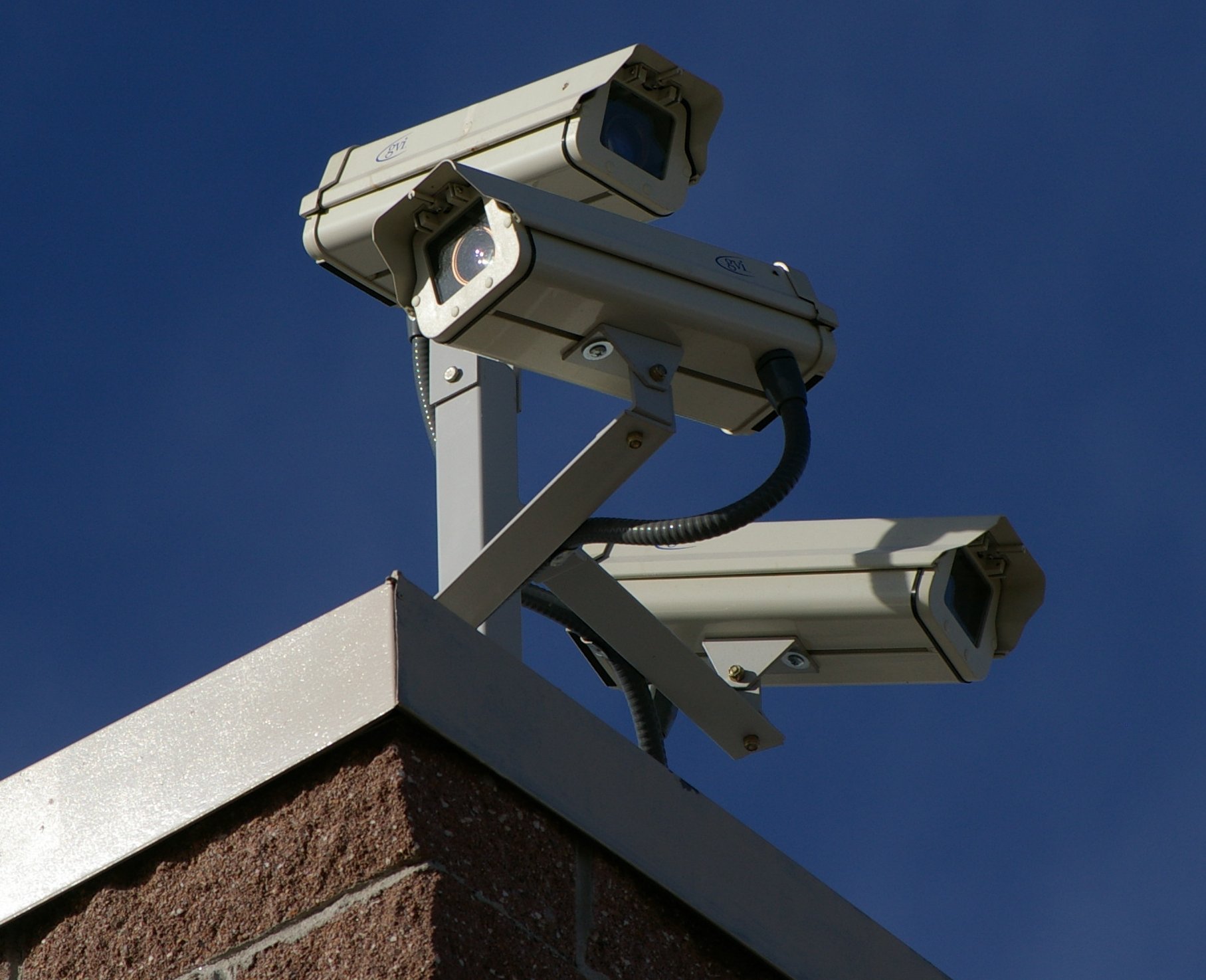 Lawmakers in Oakland intend to spend millions of dollars awarded to the California city in a federal grant to a police dragnet that promises to examine surveillance footage, riling critics who assert the intention of the grant was to stop terrorism.
When the new program debuts in approximately one year police will be able to track drivers as they travel through tolls, scan license plates with the roughly 3,000 surveillance cameras placed throughout the city, and monitor social media platforms to learn about crimes before they occur.
The Oakland program, officially referred to as the Domain Awareness Center, according to the New York Times, comes at a time when police departments across the US are using federal money to launch similar surveillance efforts modeled after the New York Police Department. The NYPD, which operates within New York City as well as far outside, has used federal grants to build a massive surveillance network capable of linking cameras and license plate readers to criminal and suspected terrorist databases.
The Domain Awareness Center also plans to plant gunshot detection sensors through Oakland, which is consistently ranked among the most dangerous cities in the US. Forbes magazine reported that violent crime affects 1,683 of every 100,000 residents in the city, making it the third most dangerous city in America with a population between 100,000 and 499,000 in 2013.
The Oakland City Council voted unanimously on July 31 to adopt the plan to build the surveillance center, which officials have said will be staffed 24 hours a day. Lawmakers voted at the same meeting to ban hammers and spray paint cans at protests in fear that the items will be used as weapons. Waiting outside, protesters admonished council members with chants of “Shame! Shame! Shame!”
“The Domain Awareness Center is the guard tower which will watch over every person in the city of Oakland,” shouted demonstrator Mark Raymond, as quoted by the San Francisco Chronicle. “This program is an attempt to criminalize and imprison all people who live and pass through Oakland.”
All told, the surveillance center’s costs are expected to total $10.2 million in federal grants, and while legislators said they were cognizant of residents’ security while drafting the bill some representatives were shouted down.
“We have tried our best to find the sweet spot where are going to take advantage of the tools that we have at hand to make our city safe… We have done everything we can to safeguard privacy,” said councilwoman Libby Schaaf before she was cut off by jeers and one protester who suggested she “go home to your mansion and kill yourself.”
Schaaf did admit that, while police have traditionally needed just a small evidence sample to arrest a suspect, the new center will have the capability to “paint a pretty detailed picture of someone’s personal life, someone who may be innocent.”
Oakland was awarded a federal grant to ramp up security near the Port of Oakland, a thriving cargo center that is one of the busiest in the US. The 19-mile waterfront is the fifth-busiest container port in the US, with 1,800 ships arriving every year, according to the San Francisco Chronicle. Over $14 billion in goods were exported from the bustling hub in 2012.
To protect the port, and watch civilians throughout the region, Oakland signed a contract with Science Applications International Corporation (SAIC) to build the Domain Awareness Center. The company, which earns most of its $12 million in annual revenue from military contracts, also worked with the NYPD but later paid $500 million to avoid a federal prosecution for receiving illegal kickbacks.
The Times reported that this project is not the first time Oakland has sought to develop such technology. A city audit viewed by the paper revealed that lawmakers spent nearly $2 million in 2012 alone on police tools that did not work or could not be used for a variety of reasons.
Linda Lye, an attorney with the American Civil Liberties Union, said this project might work as intended, but that mere intention already creates a scary problem.
“What they did is approve a vast surveillance center without understanding the implications,” she said earlier this year. “The privacy policies would be drafted only after the center is built. At that point, what opportunity will there be for to determine if the safeguards are sufficient?”
Related article
Anti-piracy curriculum for elementary schools decried as ‘propaganda’
RT | September 24, 2013
Content-industry giants and internet service providers are teaming up to produce multi-grade elementary school curriculum which will denounce copyright infringement.
The likes of the Motion Picture Association of America (MPAA), the Recording Industry Association of America (RIAA), AT&T, Verizon, Google, Microsoft, Facebook, and Comcast are behind the pilot project which will be tested in California elementary schools later this year.
The curriculum, called “Be a Creator,” is not quite complete, producers say, though Wired was able to obtain the various levels of content – from kindergarten to sixth grade – which aim to communicate that copying is theft.
“This thinly disguised corporate propaganda is inaccurate and inappropriate,” said Mitch Stoltz, an intellectual property attorney with the Electronic Frontier Foundation who reviewed the material.
“It suggests, falsely, that ideas are property and that building on others’ ideas always requires permission,” Stoltz says. “The overriding message of this curriculum is that students’ time should be consumed not in creating but in worrying about their impact on corporate profits.”
The content was made by the California School Library Association and the Internet Keep Safe Coalition. The Center for Copyright Infringement commissioned the material. The center’s board is made up of executives from MPAA, RIAA, Verizon, Comcast, and AT&T.
Each grade’s package includes a short video and a teacher worksheet of talking points.
For example, the sixth grade version urges children to realize that copyright infringement can have worse consequences than cheating on a test, which usually results in a bad grade or suspension from school.
“In the digital world, it’s harder to see the effects of copying, even though the effects can be more serious,” the teacher worksheet says.
The material does not comment on fair use, which allows for the reuse of copyrighted works without permission. Rather, students are told that using without permission is “stealing.”
The Internet Keep Safe Coalition, a non-profit organization partnering with governments and major corporations like Facebook and Google, said that fair use is beyond the comprehension of sixth graders.
The curriculum “is developmentally consistent with what children can learn at specific ages,” the group’s president, Marsali Hancock, told Wired, adding that materials for older children will include the concept.
A video for second graders shows a child taking photos and debating whether to sell, keep, or share them.
“You’re not old enough yet to be selling your pictures online, but pretty soon you will be,” reads the teacher lesson plan. “And you’ll appreciate if the rest of us respect your work by not copying it and doing whatever we want with it.”
The groups involved in the curation of the material stressed that it was in draft form at this point, and that some wording will be changed before the pilot project begins in schools.
“We’ve got some editing to do,” said Glen Warren, vice president of the non-profit California School Library Association.
Warren alluded that the Center for Copyright Information (CCI), a content-industry group, has already had influence on the project.
Hancock said the material has not yet been approved by CCI. The group is best known for working with the government and rights holders to begin an internet monitoring program with large ISPs that punish violators with extrajudicial measures like temporary internet termination and weak connection speeds.
CCI’s executive director, Jill Lesser, has alluded to youth education programs in the past.
“Based on our research, we believe one of the most important audiences for our educational efforts is young people. As a result, we have developed a new copyright curriculum that is being piloted during this academic year in California,” she said last week in a testimony on Capitol Hill.
“The curriculum introduces concepts about creative content in innovative and age-appropriate ways. The curriculum is designed to help children understand that they can be both creators and consumers of artistic content, and that concepts of copyright protection are important in both cases,” Lesser testified.
She said that CCI’s board will likely sign off on the curriculum soon.
“We are just about to post those materials in the next week or two on our web site,” Lesser told Wired.
The first grade lesson plan puts content sharing on par with theft.
“We all love to create new things – art, music, movies, paper creations, structures, even buildings! It’s great to create – as long as we aren’t stealing other people’s work. We show respect for other artists and their work when we get permission before we use their work,” the material says. “This is an important part of copyright. Sharing can be exciting and helpful and nice. But taking something without asking is mean.”
The fifth grade lesson introduces the Creative Commons license, though it distorts the legality of copying copyrighted works.
“If a song or movie is copyrighted, you can’t copy it, download it, or use it in your own work without permission,” the fifth grade worksheet reads. “However, Creative Commons allows artists to tell users how and if their work can be used by others. For example, if a musician is okay with their music being downloaded for free – they will offer it on their website as a ‘Free download.’ An artist can also let you know how you can use their work by using a Creative Commons license.”
Ex-FBI counsel implicated in surveillance abuses nominated to crucial federal bench
RT | September 11, 2013
The former top lawyer at the FBI deeply implicated in surveillance abuses revealed before and by Edward Snowden’s leaks was confirmed as a federal judge in a top court for terrorism cases this week.
The US Senate voted 73-24 on Monday in approving Valerie Caproni, Federal Bureau of Investigation general counsel from 2003 to 2011, to the Southern District of New York, one of the country’s most important federal courts for terrorism cases.
Caproni has received bipartisan criticism for allowing and defending surveillance abuses both found to be overbroad during her tenure and those not disclosed when she was counsel but later revealed to be inappropriate or illegal. For example, the Snowden leaks showed Caproni mischaracterized the limits of the Patriot Act during her term.
A 2010 report by the Department of Justice revealed the FBI inappropriately used non-judicial subpoenas called “exigent letters” to gather phone numbers of over 5,550 Americans until 2006.
“The FBI broke the law on telephone records privacy and the general counsel’s office, headed by Valerie Caproni, sanctioned it and must face consequences,” said John Conyers in April 2010 as chairman of the House Judiciary Committee.
Conyers called for Caproni’s firing at the time over the use of the non-judicial subpoenas, according to the Guardian.
“It’s not in the Patriot Act. It never has been. And its use, perhaps coincidentally, began in the same month that Ms Valerie Caproni began her work as general counsel,” Conyers said in 2010.
Caproni told House lawmakers in 2008 if phone numbers — acquired from telephone companies by the FBI via the non-judicial subpoenas evidently sanctioned in the Patriot Act — were not related to a “currently open investigation, and there was no emergency at the time we received the records, the records are removed from our files and destroyed.”
Yet revelations found in documents supplied by Snowden outlined how the National Security Agency stores phone records on all Americans for up five years no matter if they are associated with an open investigation or not. In addition, it’s been found that the NSA has the capability to feed the FBI phone records if there is a “reasonable articulable suspicion” they are related to terrorism.
“Caproni knew that the Bush administration could use or was using the Section 215 provision in the Patriot Act to obtain Americans’ phone records on a broad scale, an issue that has recently been documented by the whistleblower material first printed in the Guardian,” Lisa Graves, a former deputy assistant attorney general who dealt with Caproni while working on national security issues for the ACLU, told the Guardian.
In 2007, DOJ’s Inspector General Glenn Fine found the FBI was serially abusing National Security Letters — a demand regarding national security independent of legal subpoenas– to obtain business records, including “unauthorized collection of telephone or internet email transactional records.” While the larger collection of phone records was still not exposed at the time, Caproni called the inappropriate collection a “colossal failure on our part.”
“Government officials that secretly approved of overbroad surveillance programs the public is only seeing now because of leaks, and whose testimony on the issue obscured rather than revealed these abuses, should be held to account for their actions in a public forum,” former FBI agent Mike German told the Guardian.
Caproni’s nomination to the federal bench had some bipartisan opposition, but not enough to block her appointment.
“She is a woman with impeccable credentials,” Sen. Kirsten Gillibrand (D-N.Y.) said on the Senate floor Monday. “This country needs more women like her.”
Featured Video

Bombing Iran Back Into the Stone Age /Lt Col Daniel Davis & Jim Jatras
or go to
Aletho News Archives – Video-Images
From the Archives
The Occupied Mentality Syndrome
Saudi Arabia on the American chessboard – Part 2
By B. J. Sabri | American Herald Tribune | April 19, 2016
Since the Korean War, but particularly since the Iranian Revolution of 1979 until today, the United States has been steadily escalating its military presence in the Persian Gulf. Taking advantage of many colossal events of the past 36 years, [1] the hyper-empire has institutionalized its massive presence on land and sea, and expanded its objectives to include the unambiguous physical control of the area, as well as the clear understanding that local Arab governments should abide by them. The pretext is always the same: in “defense” of the national interests and security of the United States. From observing how the United States has been interacting with the governments of the region, and by judging from the size of its expeditionary force, we could reach a basic conclusion. The United States is occupying, de facto, the entire Arabian Peninsula. (Yemen, devastated by Saudi and American jets is yet to be conquered. Oman? Britain returned not as colonial ruler but as a soft occupying power.)
Under this articulation, Saudi Arabia, Qatar, Kuwait, and the United Arab Emirates are virtually occupied countries. If we compare this type of occupation to the mandate and protectorate regimes of the past, the results might be identical—the nations affected by it lose sovereignty. When Arab governments comply with the objectives of a foreign power that station military forces on their national milieu, then that power controls them in multiple ways including how they react to policy deliberations and what decisions they intend to take on specific issues. A good method to verify the concept of effective occupation is this: take notice of what the United States says and wants, and then compare it to what the gulf rulers do in response. (I shall discuss this detail at some point in the upcoming parts.)
If the presence of US forces or other means of political pressure are a factor in Saudi Arabia’s interventionist Arab wars, then we need to debate this issue. However, from the history of resistance to colonialism, we learnt: if a powerful state imposes its order on a nation by military means or other forms of coercion, and if this nation does not resist that imposition, then a mental subordination to the powerful state will ensue. This is especially true in the case of Saudi Arabia. One single event, 9/11, has transformed it from a US “ally” into an instant political hostage of the American Empire. … continue
Blog Roll
 Aletho News
- Now everyone is dumping US government bonds
- Brazilian Congressman seeks to bar Israeli military personnel from entering Brazil
- Official reveals evidence of Arab states’ involvement in US-Israeli war on Iran
- His Majesty’s head-chopper: Syria’s MI6-backed president bows to King Charles
- Forced to backtrack: ‘Israel’ drops Hezbollah disarmament goal
- Britain’s Lebanon surveillance network: A digital map for war
- Bahrain faces scrutiny for opposition crackdown after detainee killed
- Hegseth’s Pentagon Purge Designed to Prevent a Mutiny: Karen Kwiatkowski
- Greek shipping firms secretly transporting oil, weapons to Israel
- UN vote on Hormuz force delayed as Iran issues warning
- If Americans Knew
- Israel Is Blocking Palestinians from Easter at Church Where Jesus Resurrected
- Plot to assassinate Palestinian activist follows harassment campaign promoted by Zionist groups and elected officials
- Prominent New York synagogue hosts presentation on why U.S. Jews should support the ethnic cleansing of Gaza
- Tapper vs. Piker: Is the CNN Anchor Auditioning for David Ellison?
- Shouldn’t Democrats Be Able to Condemn Genocide?
- Israel-US kill negotiators, destroy civilian structures, but Iran’s military capabilities still largely intact – Daily Update
- ‘War crime’: Global condemnation as Israeli ministers celebrate death penalty law targeting Palestinian prisoners
- 7 Ways Israel Is Turning Lebanon Into Gaza
- World’s Leading Football Bodies Under Fire Over Israel Policies
- Experts warn of possible use of nukes against Iran
- No Tricks Zone
- Low Intensity Tornado Wrecks Major Solar Farm, Creating A Potential Toxic Dump
- New Study Finds Warming Saves Lives…Cold Temperatures 12 Times More Deadly Than Excess Heat
- German Science Blog Accuses PIK Climate Institute Of Hallucinating Climate Tipping Points
- Devastating Assessment Of Comirnaty Vaccine By Former Senior Pfizer Europe Toxicologist
- New Study: CO2 Is ‘Effectively Negligible’ As An Explanatory Climate Change Factor Since 2000
- Former Pfizer Toxicologist Dr. Helmut Sterz Tells Bundestag Hearing Pfizer Vaccine Should Have Never Been Approved
- Energy Expert: Germany’s Nuclear Phaseout Was A “500 Billion Euro Mistake”
- New Research: South Australia’s Mid-Holocene Sea Surface Temperatures Were 4°C Warmer Than Today
- Storing Green Energy To Last Germany 10 Days Would Require A 60-Million Tonne Battery
- New Studies: UK Sea Levels Were 4 Meters Higher Than Today During The Mid-Holocene
 Aletho News