Iranian model of warfare bleeds US dry while Persian Gulf states watch and learn: Analyst
Press TV | March 16, 2026
Sixteen days into the American-Israeli war on Iran, the battlefield tells a story that Pentagon planners had not anticipated. Tehran’s streets remain filled with defiant crowds, the Strait of Hormuz remains closed for US-linked ships, and the US military bases in the region smolder.
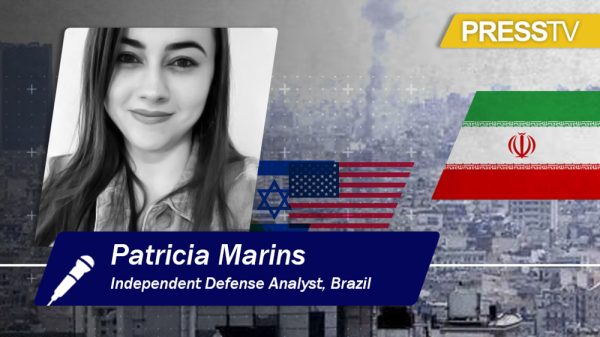
Patricia Marins, an independent defense analyst based in Brazil, has been following the war unfold with a keen eye on the shifting strategic balance.
In an interview with the Press TV website, Marins said she has been witnessing the emergence of something the region has never quite witnessed before: the “Iranian model” of warfare proving itself against the world’s most powerful military.
“The Iranian model possesses several distinct characteristics compared to the American model exported to Arab countries. It is built for attrition warfare and resilience, featuring an extensive network of underground facilities and a focus on long-range precision-guided munitions,” she stressed.
“All of this was achieved through investment in research centers, universities, reverse engineering, and the steady implementation of a domestic defense industry, which in many respects is dual-use.”
On the other hand, the American model exported to the Persian Gulf countries consists of “vulnerable surface installations, almost no degree of indigenous production, and consequently a disconnect between research centers, reverse engineering, and the military industry,” which Marins added is not limited to the US model, but all Western models.
“Kuwait paid over $310 million for each Eurofighter Typhoon, nothing short of extortion,” she said, making a clear distinction between the American and Iranian models.
Today, amid the war that was triggered by the unprovoked US-Israeli attack on February 28, and the assassination of the Leader of the Islamic Revolution, Ayatollah Seyyed Ali Khamenei, and some top-ranking military commanders, that investment is paying dividends.
Marins believes the contrast in the military tech leap is not lost on regional observers.
“I believe this Iranian model is being closely watched by all (Persian) Gulf countries at this moment. I see a high probability of it serving as a reference in several areas. I even believe it has inspired the Saudi missile industry, which is currently absorbing Chinese technology,” she said.
“Iran inspires, yet it still maintains a guarded distance from the (Persian) Gulf countries in this sector.”
Beyond the missile and drone arsenal, Iran also enjoys the geographical advantage, the Brazilian analyst stated.
“Iran’s advantage begins with its geographical position, but it is confirmed by its military prowess. And Iran knows how to leverage both very effectively,” she said
She referred to the Ghadir-class submarine, which is affordable, stealthy, and designed specifically for the waters it operates in – the Persian Gulf – especially in the Strait of Hormuz.
The Strait’s “shallow, high-salinity, and high-temperature conditions create a challenging, noisy, and complex environment for sonar, favoring small, fast, and highly maneuverable platforms,” she asserted.
“It is the perfect marriage between the weapon and the environment in which it operates,” she said. “Iran knows how to use the geography that already favors them.”
Then there is Yemen as well, which has indicated willingness to join the front against the US and Israel, after the Lebanese Hezbollah resistance movement and Iraqi resistance groups.
“Iran has been a master player. Knowing that by maintaining influence in Yemen, in a situation like this, they could exert power over both straits,” Marins said.
“However, all of this requires prudence and maturity.”
With the Strait of Hormuz effectively closed already for the US and its allied vessels, if Yemen’s Ansarullah movement follows through and shuts down the Bab el-Mandeb strait as well, the costs would be abysmal, she noted.
“This would expand the conflict on that axis to European countries, as has already occurred. I believe Iran is weighing the necessity of this escalation and whether it is truly required. While Hormuz involves oil and gas, Bab el-Mandeb involves the flow of goods between the West and Asia,” Marins remarked.
“If this strait is closed, it will have a massive economic impact. I see Iran as prudent and disciplined as a nation must be during a war.”
While media reports have cited figures of $1 billion per day for American attacks, with one estimate putting the first six days at $11 billion, Marins believes the true cost is far higher.
In her projections, she suggests the costs for the US could reach a colossal $360 billion within two months if the war continues unabated, a sum that she stresses “would test the patience of any treasury, let alone American taxpayers already feeling the pinch of soaring oil prices.”
“Israel’s operations during the 12-day war generated a daily cost of around $700 million. However, by the end of the war, once the costs of interceptors and damages were added, this daily cost hit nearly $2 billion,” she told the Press TV website.
“I believe this will be Israel’s cost, but the American cost so far is triple that due to three factors: the number of interceptors expended, the quantity of missiles and guided bombs used, and the cost of damages to bases and radars.”
When these factors are combined, Marins noted, the cost is expected to be “no less than $6-8 billion daily during these two weeks of war.”
On reports that Trump’s advisors are advising him to declare victory and find an exit, Marins doubts the American victory in this war is even possible.
“I don’t think so. I see Iran in a much better strategic position to win the conflict. As long as Iran maintains control of the strait, the pressure will be on Donald Trump’s shoulders, no matter how many bombs he drops,” she said.
But beneath that tactical reality lies a deeper truth about the nature of this war. Iran has demonstrated a capacity to absorb bombings while being resilient, limiting drone actions over its territory, and fighting an asymmetric war on its own terms, Marins said.
“So far, I believe Iran has conducted an asymmetric war with very few mistakes,” Marins said. “One that the US and Israel simply don’t know how to fight.”
Hezbollah Returns: It Didn’t Start a War, It Is Ending One
By Robert Inlakesh | The Palestine Chronicle | March 12, 2026
Hezbollah’s intervention in the war with Israel followed months of Israeli ceasefire violations in Lebanon, challenging Western media narratives about responsibility.
Key Takeaways
- UNIFIL recorded more than 15,400 Israeli ceasefire violations in Lebanon between November 2024 and February 2026.
- Hundreds were killed inside Lebanon during the ceasefire period, including around 150 civilians, while Israeli strikes repeatedly hit Beirut.
- Hezbollah largely maintained the ceasefire for 15 months, cooperating with the Lebanese Armed Forces despite continued Israeli attacks.
- Western media narratives claiming Hezbollah “dragged Lebanon into war” overlook the ongoing Israeli military actions and territorial violations.
- Hezbollah’s battlefield performance suggests the group retained significant military capacity, contradicting claims that it had been decisively weakened.
Media Narrative vs. Reality
When Lebanese Hezbollah chose to fire on Israel, effectively transforming the US-Israeli assault on Iran into a regional war, it did so in retaliation for aggression against Lebanon. Contrary to what Western corporate media has reported, the group is not responsible for initiating the war, and its role in it is crucial to the region’s future.
At the beginning of this month, the BBC ran a story entitled “Battered and isolated, Hezbollah drags Lebanon into another war”. Written by the British State-funded media’s correspondent in Tel Aviv, the piece not only presents a biased and false depiction of events, cheap propaganda that you would expect from the Sun or other tabloids, but fails to even mention Israel in its title.
CNN and others throughout the Western corporate media landscape also published pieces with similarly worded headlines. Therefore, the first point of entry into this topic is to establish the facts, which reveal just how atrocious the BBC and others have been in their framing of the Lebanon-Israel war.
On February 25, 2026, UNIFIL, the United Nations peacekeeping mission in Lebanon, had recorded over 15,400 Israeli violations of the ceasefire agreement that technically went into effect at the end of November 2024. This included the killing of hundreds of people inside Lebanon, mostly Lebanese, but also Syrians and Palestinians, including around 150 civilians in total.
Thousands of civilians, over the 15-month ceasefire period, were forced to flee their homes due to bombings, while Israel attacked the capital, Beirut, a number of times. Additionally, Israel was caught spraying cancer-causing chemical substances across southern Lebanon, also illegally occupying seven points there and refusing to leave the nation’s territory.
That entire time, Hezbollah held its fire and cooperated with the Lebanese Armed Forces, even when Lebanon’s pro-US Prime Minister, Nawaf Salam, pursued a campaign against the group. He aggressively pursued Israeli-US demands, forcing the Lebanese army to disarm Hezbollah, while announcing his intentions to eventually normalize ties with Tel Aviv, a blatant stab in the back to his own people, who were experiencing daily bombing raids by Israel.
Israel committed more ceasefire violations of the Lebanon truce than any military has ever committed against any ceasefire in human history.
In other words, the idea that Hezbollah dragged Lebanon into a war is categorically false. Israel never implemented its side of the deal, and for the residents of southern Lebanon, the war was ongoing throughout those 15 months. The only reason we continued to call it a ceasefire is that Hezbollah chose to uphold it.
The Myth of Hezbollah’s Weakness
Following the cessation of hostilities — at least from the Lebanese side — in November of 2024, US and Israeli officials publicly bragged that they had defeated Hezbollah. In February of 2024, then US envoy to Lebanon, Morgan Ortagus, asserted publicly that Hezbollah had been “defeated” and that its “reign of terror” was over.
This theory of Hezbollah’s apparent weakness was widely accepted among Western leaderships. Evidently, the Lebanese leadership under Nawaf Salam had also gotten this impression. They believed Israel’s unsubstantiated statistics about how it had taken out the majority of the group’s weapons, believing that the terrorist pager attacks and assassinations of key leaders had, in effect, destroyed the organization. At the very least, Hezbollah was believed to have been badly degraded and hanging on by a thread.
Here for the Palestine Chronicle, I have been writing over the past 15 months against this notion, arguing that the merits of this argument do not hold up to scrutiny. The reasons for this are rather simple: the group has a ground force of around 100,000 fighters — larger than the Lebanese Army — as it also demonstrated all the way up until the last days of the 2024 war that it still possessed strategic weapons.
Hezbollah was so confident in its stockpile of drones, for example, that there were accounts of them using dozens of them in singular operations against invading Israeli soldiers toward the end of November 2024. In addition to this, at the end of the conflict, is when the group began to reveal its most deadly capabilities, which clearly still existed after the ceasefire was declared.
The fall of former Syrian leader Bashar al-Assad was initially interpreted as being a major impediment to the transfer of weapons to Hezbollah, yet this eventually turned out to be only partially true. There were even some sources that argued that larger quantities of weapons were being transferred than in the last years of Assad’s reign in power. Other sources alleged that weapons belonging to the former Syrian Arab Army (SAA) may have fallen into Hezbollah’s hands during the collapse of the state.
A key reason why the weapons continued to flow into Lebanon was that the new Syrian state had no real security apparatus. It is, in essence, a collection of armed groups that operate in an environment inside the country where gangsters, local militias, and groups all maintain their own arms.
As has been on display since Ahmed al-Shara’a came to power, he is unable to control many of the militias inside the country, despite his best efforts alongside his US allies to do so. The conflict in Sweida and the coastal massacres were great examples of this.
Therefore, when Hezbollah chose to retaliate against Israel after 15 months of non-stop fire against Lebanon, they did so not from a position of weakness, but with the understanding that it was waging a war effort with the most favorable circumstances for achieving victory.
A War Israel Provoked
Although there are many within the Lebanese Army that seek to resist and protect Lebanon, including its current commander — after all, it is the nation’s official armed forces — it is held back by the government and under constant pressure from the United States. The US does not allow it to possess strategic weapons and won’t allow Hezbollah to integrate into it.
This means that Hezbollah is the only force capable of defending the country against Israeli aggression. That being said, if the pro-US regime in Syria — which has already reached a security understanding with the Israelis — attempts to attack Lebanon, the Lebanese Armed Forces will likely prove capable of defending their borders.
Although the Lebanese Army is not capable of fighting Israel, the Syrian militia forces that constitute its army are clearly less well prepared. Hezbollah will also likely assist the Lebanese Army in such a defense, as it did against Daesh and Al-Qaeda militants during the Syrian War.
Hezbollah, since entering the conflict against the Israeli occupiers, has managed to inflict countless deadly ambushes, thwarted two landing attempts in the Bekaa Valley, and taken out dozens of Israeli military vehicles with guided anti-tank weapons along the border area. In addition to this, it has fired precision missiles at strategic locations south of Tel Aviv and around Haifa, accurately striking their targets with pinpoint precision.
The strength of Hezbollah this time around has shocked Israeli analysts, who are scrambling to explain the sudden revival of the group that they believed to have been weakened south of the Litani River (southern Lebanon).
It is likely that Hezbollah are seeking to drag the Israeli army as deep into Lebanese territory as possible, making them commit to a costly invasion, one in which they can then engage in all-out ground warfare. While Israel has air superiority and more advanced weapons, Hezbollah is a much more formidable ground force than the Israeli army.
In order to force the Israelis into committing to such a large-scale invasion, where their troops will be led into countless ambushes — especially if they try to invade the Bekaa Valley through Syria — we may even see some cross-border operations in the future.
All of this could have been avoided by the Israelis and their arrogant backers in the White House, yet they chose to illegally occupy Lebanese lands and to violate the ceasefire at least 15,400 times. Just as is the case in Gaza, where Israel has committed around 2,000 ceasefire violations so far, it is they who are at fault.
Despite the fact that Hezbollah’s true strength is on full display and that Israel clearly started this conflict, the corporate media will continue to lie about the situation in Lebanon. This should come as no surprise, considering their atrocious and racist reporting throughout the Gaza genocide.
– Robert Inlakesh is a journalist, writer, and documentary filmmaker. He focuses on the Middle East, specializing in Palestine. He contributed this article to The Palestine Chronicle.
Ukrainian Embassy in Beirut sheltering top Mossad agent
The Cradle – March 13, 2026
The Ukrainian Embassy in Beirut is currently harboring a high-profile Israeli intelligence asset wanted by Lebanese authorities, journalist and The Cradle contributor Radwan Mortada has revealed.
Khaled al-Aida, a Palestinian-Syrian with Ukrainian citizenship, has been implicated in bombings and assassinations across Lebanon between 2024 and 2025.
Security investigations have proved his involvement in an assassination attempt at Beirut’s Rafiq Hariri International Airport, as well as the capital’s southern suburb.
Aida was also on the ground during the assassination of former Hezbollah secretary-general, Hassan Nasrallah, according to Mortada, who also reported that Aida had helped Lebanese intelligence dismantle a Mossad cell.
He was eventually caught with an explosive device hidden on a motorcycle intended for later use in southern Beirut.
“Aida managed to escape after the Israeli bombing of the building where he was being held in Beirut’s southern suburbs. The bombing provided him with an opportunity to flee, and he eventually sought refuge in the Ukrainian Embassy, which is now attempting to smuggle him out with the help of the US Embassy,” according to the information obtained by Mortada.
The embassy is reportedly seeking to secure Aida’s exit, requesting a laissez-passer from Lebanese security, while US operatives, including CIA station chief Sherry Baker, are pressuring for his evacuation.
“We will not accept being told that he left in a diplomatic vehicle, or through an illegal crossing, or under the protection of the American Embassy in Lebanon,” Mortada went on to write.
In recent history, Lebanese authorities have repeatedly been coerced by Washington to release agents who have been detained.
“Prime Minister Nawaf Salam, and the General Security Directorate, specifically Major General Hassan Shqeir, are all accountable to the Lebanese people. If they are truly concerned about the interests of Lebanon and the Lebanese, they must arrest Khaled al-Aida and hand him over to the judiciary. This wanted man is a valuable asset for Lebanon, one that should be negotiated for, not given away for free,” Mortada said.
Around two dozen Lebanese prisoners are currently being held in Israeli prisons, some of whom were abducted during the ceasefire.
Mortada’s report comes as Lebanon is under heavy Israeli bombardment. Around 700 have been killed by Israel since 2 March, when Hezbollah responded to over a year of Israeli ceasefire violations.
Israel has stepped up attacks on Beirut’s suburbs as well as the heart of the city, while continuing brutal and deadly attacks across southern and eastern Lebanon.
Israeli planes dropped leaflets over the capital on Friday, threatening that Hezbollah must be disarmed for “everybody’s interest.”
The Lebanese army warned citizens not to open the QR Code on the leaflets, which “link to a WhatsApp contact and another to a Facebook page to communicate with Unit 504 of the Israeli army, which is responsible for recruiting agents.”
Syrian president vows ‘absolute support’ to disarm Hezbollah
The Cradle | March 11, 2026
Lebanese President Joseph Aoun received a phone call on 10 March from his Syrian counterpart, ex-Al-Qaeda chief Ahmad al-Sharaa, who expressed his support for Beirut’s efforts in disarming Hezbollah.
The Lebanese Presidency said Aoun and Sharaa discussed regional developments and stressed that “the current delicate situation requires activating coordination and consultation between the two countries, especially with regard to the need to control the borders and prevent any security breaches from any side.”
The Syrian Presidency also released its own statement on the call with Aoun. “President Sharaa expressed his explicit and absolute support for the efforts led by President Joseph Aoun to disarm ‘Hezbollah.’ He affirmed that this step is essential for solidifying Lebanese state sovereignty and shielding the region from the repercussions of ongoing regional armed conflicts,” the statement said.
It also called for “joint action” between Lebanon and Syria, “to ensure the safety of the Syrian and Lebanese peoples and to protect the gains of stability achieved recently.”
The phone call comes hours after Damascus claimed that it came under attack by Hezbollah on the Syrian–Lebanese border.
The Syrian army said “Hezbollah militias” fired shells toward its positions near Serghaya, adding that reinforcements from the Lebanese resistance group had been observed arriving along the Syrian–Lebanese border.
Syrian officials said they were monitoring the situation, coordinating with the Lebanese army, and studying possible responses, warning that the Syrian army “will not tolerate any attack targeting Syria.”
Hezbollah, which is busy fighting an Israeli invasion in the south, has not released any statements commenting on the matter.
The Lebanese resistance fought in Syria for years alongside the former government, and took part in the recapture of several parts of the country from groups including Al-Qaeda’s Nusra Front, Ahrar al-Sham, and other extremist organizations who were at the time considered the Syrian opposition.
The Nusra Front was later rebranded into Hayat Tahrir al-Sham (HTS), the group that toppled former Syrian president Bashar al-Assad’s government in 2024 and now dominates Syria’s Defense Ministry.
Nusra occupied large swathes of the northern and eastern Lebanese border region for years at the start of the Syrian war, and was eventually expelled by Hezbollah and the Lebanese army.
Clashes broke out between the Lebanese army and Syrian troops earlier this year, after Damascus’s forces advanced against the border under the pretext of dealing with smuggling.
Heavy clashes also erupted between the Syrian army and Lebanese tribes on the border in 2025. Damascus falsely claimed at the time that it was fighting Hezbollah.
Since the start of the war in Iran and the entry of Hezbollah into the conflict, the Syrian military has been building up its presence along the Lebanese border, claiming the measures are aimed at “combating smuggling.”
The new authorities in Damascus have allied themselves with Washington. Damascus has been working, at the request of the US, to prevent any Hezbollah-bound weapons from entering Lebanon.
It has also been cracking down on Palestinian resistance factions.
US envoy Tom Barrack threatened Lebanon last year with a Syrian incursion, and said Damascus would “actively assist us in confronting and dismantling the remnants of ISIS, the IRGC [Iran’s Islamic Revolutionary Guard Corps], Hamas, Hezbollah, and other terrorist networks.”
‘Heinous crime’: Iran denounces Israeli assassination of 4 Iranian diplomats in Lebanon
Press TV – March 11, 2026
Iran’s Ambassador to the United Nations, Amir Saeid Iravani says the Israeli regime has assassinated four senior Iranian diplomats in a “heinous crime” in the Lebanese capital Beirut.
In a letter to UN Secretary-General Antonio Guterres on Monday, the envoy said that on March 8, the regime had carried out a targeted strike against the Ramada Hotel in Beirut, claiming the lives of the victims.
Iravani noted that after the regime’s military had publicly threatened to target Iranian official representatives in Lebanon, the diplomats had been temporarily relocated to the hotel as a safety measure.
This relocation, he said, had been fully coordinated with the Lebanese authorities.
In his letter, the ambassador said that the assassination of the diplomats “while serving as official representatives of a sovereign state in the territory of another sovereign state is a heinous act of terrorism and a grave violation of international law.”
He further stressed that such a “flagrant breach” of the UN Charter and the 1973 Convention on the Prevention and Punishment of Crimes against Internationally Protected Persons could not go unpunished.
Iravani reiterated that the regime bears full responsibility for carrying out “this war crime” and must be held fully accountable for its consequences.
The assassinations came a week after the regime and the United States launched their latest bout of unprovoked aggression towards the Islamic Republic.
The aggression has led to the martyrdom of Leader of the Islamic Revolution Ayatollah Seyyed Ali Khamenei and more than 1,332 civilians, including women and children, as well as several military commanders.
Iran has since taken swift retaliatory action, launching barrages of missile and drone strikes against the occupied territories and US bases across the region.
Hezbollah Foils Israeli Landing in Lebanon’s Bekaa
Al-Manar | March 7, 2026
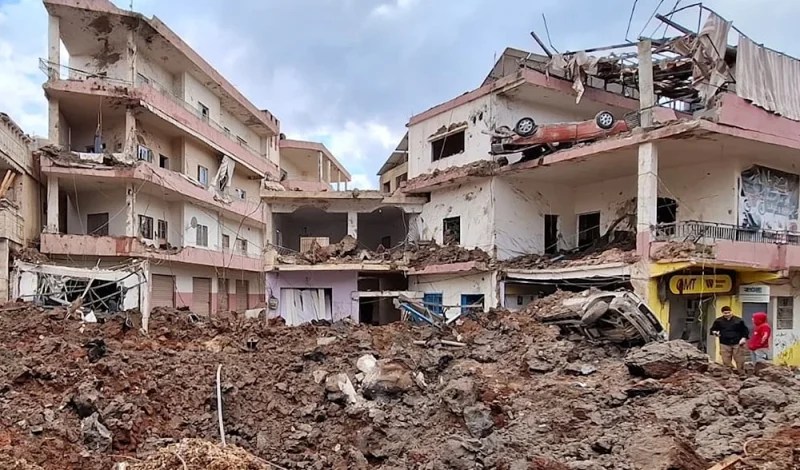
Hezbollah foiled an Israeli landing in the town of Nabi Sheet in the eastern Lebanese region of Bekaa before dawn overnight on Friday-Saturday.
Hezbollah’s Military Media said Islamic Resistance fighters observed four Israeli enemy helicopters infiltrating from the Syrian direction and landing an Israeli infantry force at the mountainous triangle linking the towns of Yahfoufa, Khraibeh, and Maaraboun.
“The enemy unit then advanced toward the eastern neighborhood of Nabi Sheet, (Al-Shukr). At 11:30 AM, upon reaching the cemetery area, the Israeli force was engaged by a group of resistance fighters using light and medium weapons, triggering a fierce clash after the infiltrating force was exposed,” the Military Media’s first statement for Saturday read.
As the confrontation intensified, the Israeli enemy unleashed heavy firepower, launching around forty airstrikes by warplanes and helicopters, to cover the withdrawal of its troops from the engagement zone, according to the statement.
Meanwhile, Hezbollah resistance artillery delivered concentrated fire with appropriate weapons on the perimeter of the battlefield and along the enemy’s withdrawal route, while residents of nearby villages joined in providing supporting fire, the first statement added.
The video shows exchange of fire between resistance fighters and Israeli enemy forces in Nabi Sheet.
In another statement, the third one on Saturday, Hezbollah’s Military Media said: “In response to the enemy’s landing in the Bekaa region, the Islamic Resistance fighters targeted the evacuation area in the outskirts of Nabi Sheet with rocket barrages at 04:15 on Saturday.”
Hebrew media reported that Israeli forces attempted to withdraw after resistance forces revealed the military activity in eastern Lebanon, and that Israeli warplanes and helicopters eventually retreated from the area after the failed airborne landing attempt.
Another video shows heavy destruction in the town of Nabi Sheet after the Israeli landing.
Lebanese Heaslth Ministry announced that the Israeli assault on Nabi Sheet led to martyrdom of 16 people and the injury of 53 others.
Iraqi Resistance: Attacks on Beirut suburbs threaten US interests
Al Mayadeen | March 7, 2026
The Iraqi Resistance Coordination Committee affirmed that recent years have demonstrated that the entire region is governed by one equation: “Either security for all, or security for none.”
Addressing the ongoing aggression against Lebanon, the Iraqi resistance stressed that the security and stability of the southern suburbs of Beirut and their residents form an integral part of the regional security equation. It added that any escalation there would have repercussions for the vital interests of the US in the region.
The committee warned that any attack on the security of the densely populated civilian suburb would inevitably be met with threats to the security of embassies belonging to the aggressor countries, whether in Iraq, Bahrain, Kuwait, or Lebanon.
It further stated that undermining the security of the Beirut suburbs would also directly affect the security of major American oil companies operating in the Arabian Peninsula, stressing that “a warning has been given.”
‘Israel’ issues massive displacement threat to Beirut Southern Suburb
The Israeli occupation, in an unprecedented move, issued a massive displacement threat on Thursday against entire neighborhoods in Beirut’s Southern Suburb. Previously issuing displacement warnings against specific buildings, the Israeli occupation has discarded this strategy and now threatens thousands of homes, businesses, medical facilities, schools, and civilians with bombardment.
The threats have specifically named the neighborhoods of Bourj el-Barajneh, Hadath, Haret Hreik, and Chiyah, which house tens of thousands of civilians, who were ordered to head east along the Beirut-Damascus highway, or north towards Matn or Beirut-Tripoli highways, respectively.
This resulted in severe traffic congestion at the entrances to Beirut’s southern suburbs as residents began leaving their homes.
The Israeli threat eerily resembles those in Gaza, where hundreds of thousands and up to a million civilians were forced to flee their zones amid mass displacement plots.
Iran warns all Israeli embassies ‘legitimate targets’ if Lebanon embassy attacked
Press TV – March 4, 2026
Iran has warned that all Israeli embassies worldwide will be legitimate targets if its diplomatic mission or representatives in Lebanon are hit by the regime.
The warning, issued by General Abolfazl Shekarchi, spokesman for the Iranian Armed Forces, follows an ultimatum from the Israeli war machine demanding that Iranian representatives leave Lebanon immediately within 24 hours.
In a statement, General Shekarchi addressed recent Israeli threats against the Iranian embassy in Lebanon. “Until now, out of respect for the countries of the world, despite our capabilities, we have not taken action against Israeli embassies around the world,” General Shekarchi stated.
However, he warned that any strike on Iranian diplomatic soil would result in a total shift in that policy.
“Should Israel commit such a crime, we will be forced to treat everyone of their embassies across the globe as a legitimate target.
This will certainly be carried out, as Iran is determined to bring Israel and the United States to their knees.”
The threats came against the backdrop of U.S.-Israeli aggression against Iran, which began on Saturday with airstrikes assassinating Leader of the Islamic Revolution Ayatollah Seyyed Ali Khamenei. The following strikes have killed over 1,000 people and damaged civilian infrastructure.
In the meantime, Israeli airstrikes across Lebanon have intensified, killing at least 50 people and injuring 350 in the last 48 hours alone.
The Lebanese group Hezbollah has launched waves of attacks on Israeli military sites, citing both the defense of Lebanon and the assassination of Ayatollah Khamenei.
Iran has launched massive waves of drone and missile attacks at the Israeli-occupied territories and US assets across West Asia.
Did Israel Just Forfeit Its ‘Right To Exist’? — Carlson’s Interview with Huckabee
By Robert Inlakesh | The Palestine Chronicle | February 28, 2026
Key Takeaways
- Senior political figures openly endorsed a Nile-to-Euphrates territorial vision.
- The “Greater Israel” concept is no longer fringe rhetoric.
- Israel’s borders remain undeclared while territorial expansion continues.
- Legal justifications rooted in Balfour and UNGA 181 are increasingly strained.
- The demand to recognize Israel’s “right to exist” faces growing scrutiny.
The Mainstreaming of ‘Greater Israel’
There is no nation on earth whose government constantly demands its critics acknowledge its ‘right to exist’ as does Israel; this is because it seeks the world’s acquiescence as a means of enabling the indefensible. In truth, nobody, short of Christian Zionists and Jewish Supremacists believe Israel has a right to exist.
In Tucker Carlson’s recent interview with US Ambassador to Israel, Mike Huckabee, the idea of Israel’s legitimacy was not only touched upon, but completely unraveled through a basic series of questions. Instead of furiously clashing with the self-described Christian Zionist, all Carlson did was ask serious follow-up questions and demand answers.
Since then, the fallout from what was a trainwreck of an interview for Huckabee has triggered a wave of backlash from countries throughout the region. The US ambassador triggered this backlash after affirming his belief that Israel is entitled to all of the land between the River Nile and the Euphrates River, as part of its biblical right to exist.
This enormous land grab is what is known as the ‘Greater Israel Project’, once dubbed an outlandish conspiracy theory. ‘Greater Israel’ would include all of Lebanon, Jordan, Palestine, most of Syria, along with parts of Iraq, Saudi Arabia, Egypt, and even Turkiye. Therefore, it is no wonder that a US ambassador expressing his belief that Tel Aviv is entitled to all of this territory drew the ire of the entire region.
However, an even more important development came only days later, receiving much less media attention. The leader of the Israeli opposition, former Prime Minister Yair Lapid, expressed his own belief that Israel should seize all of the territory between the Nile and the Euphrates. Pegged as the more liberal and moderate opponent of Israeli Premier Benjamin Netanyahu, Lapid argued that the territory should be seized only when the right “security” predicament presents itself.
Even though Lapid’s comments did not draw the same kind of backlash from the Arab world’s leadership, his open confession of belief in a biblical right to all of ‘Greater Israel’ is a more important and damning development than the comments of Huckabee. This clearly demonstrates that the entire mainstream Israeli political establishment seeks to achieve this vision.
The Loss of Legitimacy
As pointed out during Tucker Carlson’s interview with the US ambassador to Israel, the infamous Balfour Declaration was written by British Lord Arthur Balfour to Lord Walter Rothschild. An important fact that is often never brought into question as the Balfour Declaration is often cited as a legal document justifying Israel’s existence. Instead, it was a document between two men.
From there, Israeli propagandists will point to later British government declarations as cementing this ‘right to establish a Jewish State in occupied Palestine. Finally, there is the 1947 United Nations General Assembly resolution 181 that is held up as Israel’s de facto birth certificate. This, of course, ignores the fact that Israel was only granted 56% of the land, yet seized nearly 80% of the entire territory.
However, all of this is now irrelevant to the question of Israel’s alleged legitimacy and ‘right to exist’. The reason for this is very simple: the British sought to grant the territory of occupied Palestine, and so too did the UNGA resolution 181. No legal document exists to legitimize the occupation of Syrian and Lebanese lands, as the Israelis continue to expand their borders into these neighboring nations.
Which brings us back to the alleged ‘biblical’ right to existence that the US ambassador, Israeli PM Benjamin Netanyahu, and opposition leader Yair Lapid have all expressed their belief in. The Israelis have historically occupied Egyptian territory, and many Israeli politicians, including current ministers in the Likud Party’s coalition government, have expressed their desire to return to Egypt once again.
The Politics of the ‘Right to Exist’
Israel has never declared its borders, and since 1967 has occupied territory from both Syria and Lebanon, in violation of international law. At this current moment, it is capturing more and more land in southern Syria on a near-daily basis.
Therefore, Israel, as a nation that has no definable borders and whose political leadership, along with its society, believes in its biblical right to seize the territory belonging to its neighbors, has no legal basis to exist as it does today. It has committed genocide, apartheid, mass ethnic cleansings, and operates a system of total Jewish Supremacy in all the land it has seized, through war.
In addition to this, the Zionist movement has actively worked, especially since October 7, 2023, to not only undermine the United Nations as a whole, but to replace it. Yet turns around and cites a UNGA resolution as its ‘legal right to exist’. It violates all known diplomatic norms, having attacked the former Iranian embassy in Syria, bombarded Doha despite its status as a US ally, while ignoring a UN Security Council resolution calling for a ceasefire in Gaza back in 2024.
The only argument that can be made for the continued existence of Israel as it functions today is an ideological one. This means that only two categories of human beings fit into this camp, Jewish Supremacists who believe in a biblical title to the land, and their Christian Zionist allies, who also provide a similar, theologically grounded argument.
There is no evidence that the majority, or even a plurality, of Christians believe in the concept of a ‘Greater Israel’, despite the best efforts of Christian Zionist lobby groups – the most powerful of which operate in the United States. In other words, a very small portion of the global population believes in this biblical interpretation. Even more troubling for the Zionist movement is that its settler colonial project was founded and led for much of its history by atheists.
If we are to define Israel by its current borders, which are undeclared and forever expanding, then there simply is no basis for arguing its existence, unless you do so from a theological perspective. As demonstrated through the questions offered to Ambassador Huckabee, who is himself a Christian pastor, there is no way of demonstrating that the Jewish population, or at least the majority of those Jewish people living in occupied Palestine, are directly related to the Israelites of the bible. In fact, all of the available DNA evidence would suggest that the Palestinians are more closely blood related to that population.
There is no nation on earth today that operates a system of ethno-religious supremacy as Israel does, no nation that violates international law as Israel does, nor is there another nation that bases its legitimacy on isolated and out of context passages from religious texts like Israel does either.
The reason why pro-Israel advocates are constantly demanding that everyone validate their legitimacy and ‘right to exist’ is simple: the affirmation of their flimsy arguments is what provides them the basis to continue behaving as the out-of-control regime that Israel is.
What Israel’s ‘right to exist’ comes down to is the belief that it should be allowed to dispossess millions of Muslims, Christians, and other indigenous peoples of their lands, in order to establish a system of domination. That ethnic cleansing is its right, the acquisition of territory via war is its right, and that committing mass murder against anyone who fights back is also their right.
Israel’s biblical ‘right to exist’ is just as valid as its right to kill entire populations it deems to be ‘Amalek’. If they do have that right, then so too does the so-called “Islamic State” terrorist organization.
The arguments made by Daesh (ISIS) and Israel for their ambitions to establish ever-expanding regimes of tyranny both carry the exact same level of historical and factual legitimacy. That is to say, neither argument carries any weight, beyond it being the belief of an isolated group of extremists – amongst the global population – who believe in a warped religious ‘right’ and that their theological arguments make them superior to all other human beings.
– Robert Inlakesh is a journalist, writer, and documentary filmmaker. He focuses on the Middle East, specializing in Palestine.
Lebanon: Between sovereignty and the mirage of normalization
By Ali Abou Jbara | The Cradle | February 26, 2026
The smoke had barely lifted from the latest Israeli bombardment of south Lebanon when another conversation began circulating in Beirut. While border villages buried their dead and families searched through rubble, a parallel discourse surfaced in studios and on digital platforms: normalization with Israel presented as a viable political path.
The ongoing war on Lebanon, marked by unprecedented Israeli escalation, daily raids, and widespread destruction, exposed more than military vulnerability. It revealed that certain voices inside the country no longer conceal their position toward Tel Aviv.
They now speak openly of public normalization as the cure for Lebanon’s crises – even as Israeli warplanes violate Lebanese skies, despite the so-called ceasefire. What is marketed as pragmatism begins to resemble political surrender.
Prominent personalities have amplified this shift. Journalist Marcel Ghanem declared live on his program “Sar al-Waqt” on MTV that he was considering speaking directly with Israeli Prime Minister Benjamin Netanyahu and suggested repealing Lebanese laws that criminalize dealings with Israel.
Digital platforms followed the same trajectory. “Hona Beirut” circulated videos of Israelis sending populist messages to Lebanese audiences – “We want peace with Lebanon. We want to visit Beirut and enjoy fattoush and shawarma” – carefully packaged to soften the image of a state whose aircraft continue to strike Lebanese territory.
Political figures moved even further. MP Paula Yacoubian stated publicly: “If salvation comes through Israel, let it come but save us.” Charles Jabbour, head of the Lebanese Forces (LF) party media apparatus, argued that Israel does not occupy Lebanon and does not attack the Lebanese, claiming instead that it monitors Hezbollah to ensure implementation of past agreements. He concluded: “If Hezbollah wins, Lebanon loses. If Israel wins, Lebanon wins.”
Such statements are deliberate. They substitute national consensus with partisan calculus and recast normalization as responsible governance.
Expansion as governing doctrine
Advocates of a “quick peace” treat Israel as a state seeking stability. The political current in Tel Aviv suggests something else entirely.
Under Netanyahu and his alliance with ultra-religious and nationalist forces, the “Greater Israel” vision operates as a strategic direction.
On 22 September 2023, Netanyahu stood before the UN General Assembly (UNGA) and presented a map that includes Gaza and the occupied West Bank as part of Israel, using the biblical name “Judea and Samaria” instead of the West Bank – in a symbolic dedication to the annexation project.
His coalition partner, Finance Minister and leader of “Religious Zionism” Bezalel Smotrich, had stated in 2016 that Israel’s borders “must extend to Damascus,” and appeared in Paris in March 2023 in front of a map that considers Jordan part of the “Land of Israel.”
Since Menachem Begin and the Likud party came to power in 1977, the concept of “Greater Israel” has morphed into a political program based on settlement expansion and changing demographic realities. This current is based on interpretations from the Book of Genesis that consider the “Promised Land” to extend from the Nile to the Euphrates. Even Israel’s first prime minister, David Ben Gurion, wrote in the 1930s that establishing a state on part of the land would serve as a first stage, not an endpoint.
Following Operation Al-Aqsa Flood, expansionist language hardened. Military operations broadened in Gaza and the occupied West Bank while strikes intensified in Syria and Lebanon. “Security depth” expanded to encompass regional theaters.
On 21 February 2026, US Ambassador to Israel Mike Huckabee said in an interview with Tucker Carlson that, under a biblical interpretation of land promised in Genesis, it “would be fine if [Israel] took it all,” implicitly extending Israel’s reach across much of West Asia – remarks that sparked sharp regional condemnation.
Maps circulated by proponents of this project extend beyond historic Palestine. They incorporate Lebanon, Jordan, most of Syria, half of Iraq, and territories in Saudi Arabia, Egypt, and even Kuwait.
Against that strategic horizon, Lebanese normalization rhetoric begins to feel profoundly detached from the lived reality of the country. Border villages remain scarred, Lebanese airspace is violated without consequence, and sovereignty is subjected to daily erosion, yet normalization is presented as transactional diplomacy, detached from geography and history.
It is precisely here that the Lebanese debate turns unsettling. What does it mean to pursue “peace” with a project whose declared maps stretch beyond its recognized borders? How does a state whose skies, waters, and land are routinely breached convince itself to trust assurances from a government that treats expansion as a generational mission?
The occupied West Bank as precedent
The occupied West Bank offers a concrete case study. Since the 1993 Oslo Accords, the settler population has grown from roughly 250,000 to more than 700,000. Hundreds of settlements and outposts now fragment the territory. Israeli Energy Minister Eli Cohen has described this as imposing “de facto sovereignty” – gradual annexation without formal declaration.
Land confiscations, bypass roads, settlement blocs, and armed settler protection have eroded the territorial basis for Palestinian statehood. Smotrich openly advocates annexation and rejects Palestinian sovereignty. Netanyahu presides over what observers describe as the most right-wing government in Israel’s history, with settlement expansion central to its agenda.
Three decades of negotiations unfolded alongside continuous territorial transformation. Diplomatic processes advanced in parallel with irreversible changes on the ground. This is how “peace” is managed when it is a tool to strengthen control, not to end it.
Despite this record, similar assumptions appear in Lebanese discourse. MP Camille Chamoun of the Free Patriots Party says he does not believe Israel has an interest in violating international agreements and Lebanese borders.
MP Sami Gemayel, head of the Kataeb Party, suggests that relations with Israel and western countries may protect Lebanon. Even Lebanese actress and writer Carine Rizkallah said on the TV program Al-Masar that she hoped there would be no new war with Israel and that “it’s time to end these problems between the two countries.”
The irony is that Lebanese rhetoric promoting normalization leans on an assumption of good faith from the other side, even though the occupied West Bank continues to show how such assumptions unfold in practice. There, decades of agreements, conferences, and international sponsorship did not halt expansion; they unfolded alongside it, as settlements multiplied, land was fragmented, and entire areas were quietly absorbed into a new reality.
If this is where the occupied West Bank has arrived after years of accords and external guarantees, on what basis is Lebanon encouraged to trust similar assurances? The experience is not abstract or distant. It is ongoing, visible, and instructive for anyone willing to look.
Regional patterns of influence
The broader region reinforces this reading. After the fall of the previous Syrian government on 8 December 2024, Israeli influence expanded in southern and central Syria, capitalizing on security vacuums and fragmentation. Strategic corridors between northern Syria and Israeli ports strengthened. Control over the occupied Golan Heights and adjacent water resources deepened.
Turkiye adopted a confrontational stance toward Israeli expansion, warning that the absence of clear red lines destabilizes Syria and opens space for broader intervention. Ankara expanded its diplomatic engagement on Palestine, strengthened regional alliances, and emphasized deterrence, demonstrating that even governments with formal ties to Israel are wary of unchecked expansion.
Across neighboring states, internal divisions have created entry points for influence. Settlement expansion in the occupied West Bank, strikes in Syria, and sustained violations in Lebanon reflect an interconnected strategy.
Normalization premised on unilateral concession narrows strategic space. In regional practice, asymmetrical engagement tends to consolidate the stronger party’s position.
Lebanon operates within that same environment. Any official normalization would unfold against Israel’s strategic framework and military advantage. Expectations of reciprocal restraint lack precedent in current regional dynamics.
Lebanon’s historical record
Lebanon’s experience with Israeli aggression remains documented. In April 1996, Israeli forces bombed a UN base in Qana, killing more than 100 civilians who had sought shelter. In September 1982, the Sabra and Shatila massacre occurred under the watch of the Israeli army. The 1982 Israeli invasion reached Beirut, and south Lebanon remained under occupation until 2000, liberated only through sustained resistance.
The July 2006 war resulted in more than 1,200 Lebanese deaths, extensive infrastructure destruction, and the displacement of nearly one million people. Airspace violations continued long after hostilities subsided.
Following Operation Al-Aqsa Flood and Hezbollah’s decision to open a northern support front, strikes on southern villages resumed, placing Lebanon within a wider expansionist frame.
In this context, normalization proposals detach policy from cumulative experience. They assume recalibration without structural change. Historical precedent suggests otherwise.
Legal foundations
Lebanon’s stance toward Israel is codified in law. Since 1955, the Boycott of Israel Law has prohibited commercial, cultural, and political dealings with the Israeli enemy. The law remains in force and constitutes a foundational element of Lebanese state policy.
The penal code criminalizes espionage and communication with the enemy, including cooperation that provides political, media, or moral benefit. In contemporary circumstances, public statements or digital content that promote normalization may fall within this framework if deemed to confer advantage. Penalties can include imprisonment and fines.
Given ongoing Israeli violations of Lebanese sovereignty, normalization carries national security implications under existing legislation. Judicial and security institutions retain authority to investigate potential breaches.
This legal architecture reflects accumulated historical experience rather than abstract doctrine.
Sovereignty under pressure
The present debate concerns strategic direction under sustained pressure. An expansionist project operates openly in the region. Lebanon’s historical memory remains recent.
Calls for normalization at a moment of ongoing aggression raise structural questions about sovereignty, deterrence, and long-term stability. Strategic environments shaped by military asymmetry rarely reward unilateral accommodation.
Lebanon faces a clear dilemma. Defending sovereignty requires political coherence and deterrent capacity. Pursuing normalization without reciprocal structural change invites further testing of borders and institutions.
The chosen trajectory will shape more than just diplomatic posture. It will define how the state positions itself within a region undergoing forced transformation.
Why Israel Is Escalating Its War Crimes Against Lebanon
By Robert Inlakesh | The Palestine Chronicle | February 23, 2026
Key Analytical Points
- Israel’s pattern of ceasefire violations suggests a deliberate attempt to reshape deterrence rules in Lebanon rather than isolated tactical operations.
- Provocations aimed at Hezbollah appear designed to trigger a response that would justify a broader Israeli escalation under new “rules of engagement.”
- Hezbollah’s restraint signals long-term strategic patience rather than weakness, indicating preparation for a larger confrontation tied to regional dynamics.
- The northern front is increasingly linked to US–Iran tensions, raising the likelihood that Lebanon could become either a preemptive battlefield or a secondary theater in a wider war.
- The balance of power on the ground—particularly Hezbollah’s missile capabilities and ground forces—creates significant deterrent risk for Israel, limiting its escalation options despite mounting pressure.
Escalation under the Cover of Ceasefire
Since the beginning of Ramadan, Israel has notably ramped up its campaign of aggression against Lebanon. Although airstrikes committed throughout Lebanese territory have been routine since the implementation of the November 27, 2024, ceasefire agreement, what we are seeing now is a sign of panic amid rising tensions between Tel Aviv and Tehran.
Israel has committed the most violations of any ceasefire in recorded human history in Lebanon. At the tail end of November of 2025, UNIFIL – the United Nations peacekeeping forces – confirmed that Israel had committed upwards of 10,000 violations of the ceasefire agreement. This is no accident and confirms that the Zionist regime never had any intention of adhering to a cessation of hostilities with Hezbollah.
Instead, the Israelis sought to impose new equations on the ground, enabling total freedom of action, while also using their US allies to pressure the Lebanese state and its army to pursue a policy of undermining the group within the country.
It was never a realistic prospect that the Lebanese army was going to disarm Hezbollah; therefore, the only possible outcomes were going to be civil war or a campaign of pressure. Both favor Tel Aviv, with a civil war conflict being their preferred outcome.
Several times, the Israelis have attempted to provoke a reaction from Hezbollah, which has adhered to the ceasefire and not fired a single munition at their occupiers, who have now illegally established a military presence, intended to be permanent, in southern Lebanon.
These major provocations have included acts such as the assassination of Haytham Ali Tabatabai in southern Beirut. Tabatabai had taken over the role of Hezbollah’s top military chief following the assassination of Fouad Shukr the year prior. The Israelis have attacked the southern suburbs of the Lebanese capital, Dahiyeh, on a number of occasions, also committing civilian massacres in the south of the country up to the northern Bekaa Valley’s Baalbek.
Each of these waves of aggression was clearly designed to draw responses but failed to make Hezbollah bite. The idea was to set new rules of engagement, red lines, and establish a precedent for what constitutes aggression against Israel that would provoke a major bombardment of Lebanon.
Strategic Patience and Military Recalibration
On Hezbollah’s part, it appears that they understood what Israel was attempting to lure them into and instead refrained from responding, waiting for the opportune time to initiate a major war that would enable them to reclaim their territory and inflict what they see as sufficient acts of revenge on the Israeli enemy.
So, while Israel has been provoking Hezbollah and committing its daily acts of aggression against the civilian population in southern Lebanon in particular, Hezbollah has been working to rebuild and establish new battle plans. It has also become clear that the fall of Bashar al-Assad in Syria did not end the weapons transfers between Syria and Lebanon, something that both Israeli and US think tanks have themselves admitted.
Since the beginning of Ramadan, this campaign of incitement has only increased. On Friday, Israel launched an assassination strike, using three missiles, on the Palestinian refugee camp of Ain al-Hilweh, killing two members of Hamas and injuring a number of civilians. Then, later that same day, Israel bombed three populated buildings in the Bekaa Valley, killing 10, eight of whom were members of Hezbollah, and injuring 50 people.
The Northern Front
Israel and its Trump administration are now poised to enter a new conflict with Iran, as the largest US military buildup in the region since the illegal invasion of Iraq in 2003 continues. It has become clear that in the event a regime-change war is waged against the Islamic Republic, Hezbollah will very likely engage in a battle with the Israelis.
Nobody truly understands just how powerful Hezbollah currently is, yet it is clear from the final week of the 2024 Lebanon-Israel war that they possess ballistic missiles capable of successfully striking high-rise buildings in Tel Aviv, along with a large attack drone arsenal. However, their missile and drone power aside, Hezbollah’s biggest asset has proven to be their ground forces, which inflicted the largest number of military casualties during the war.
In other words, Hezbollah will act as Iran’s ground force in any regional war. If they can manage to breach the border into northern occupied Palestine, it will represent a major blow to the Israeli state, yet a battle in the heart of the Bekaa Valley and southern Lebanon could prove even more costly to the Israeli occupying forces.
It is because of this inevitable escalation in the north that the Israelis are displaying signs of panic and continue to target both Hezbollah members and civilians alike. There has even been a campaign of spraying cancer-causing chemical substances in the south, alongside a campaign of intimidation using their drone power, a similar strategy to what we saw in Gaza for decades.
If anything, the Israelis may even urge the United States to help them go after Hezbollah in Lebanon. There is a chance this could lead to a scenario where Lebanon is attacked prior to Iran, yet the inherent risks to this strategy could be that they then lose any element of surprise in their planned assault on Iran, especially in the event that Tehran comes to the aid of Hezbollah.
– Robert Inlakesh is a journalist, writer, and documentary filmmaker. He focuses on the Middle East, specializing in Palestine.
Unidentified drone downed over Lebanon airbase, US forces block authorities from crash site
The Cradle | February 18, 2026
An unidentified drone was downed in the early hours of 17 February after entering the airspace above Hamat Air Base in northern Lebanon, a Lebanese security source revealed exclusively to The Cradle.
The incident unfolded when security at the base, which also hosts US forces, intercepted the aircraft, causing it to crash into nearby woodland.
According to the source, patrols from Hamat municipal police and units of the Lebanese Armed Forces (LAF) headed to the area to examine the wreckage.
US personnel at the scene intervened to stop the inspection of the downed aircraft. According to The Cradle’s source, US troops drew their weapons and prevented Lebanese officials, including the local mayor, from approaching the crash site, asserting that the drone might have been booby-trapped with explosives.
Lebanese authorities did not take possession of the aircraft, the source said, and US officials later revealed that the drone was no longer at the location initially identified as the crash site.
A US general stationed at the base reportedly sought to contact the Hamat mayor to apologize, but the mayor refused the gesture, objecting to the behavior of the forces hosted at the base in northern Lebanon.
The drone infiltration of Lebanese airspace comes as the Israeli army continues to violate the terms of the US-sponsored “ceasefire” without repercussion.
In early February, troops from the UN Interim Force in Lebanon (UNIFIL) near Kfar Kila, southern Lebanon, observed two drones, one carrying an unidentified object assessed as an “immediate threat.” It entered close range, dropped a stun grenade, exploded about 50 meters from the UNIFIL troops, and then headed toward Israeli territory, with no injuries caused.
The UN mission assessed that the drone belonged to the Israeli army and had crossed the Blue Line “in violation of Security Council resolution 1701,” describing the use of armed drones in this manner as “unacceptable.”
Since November 2024, when Lebanese resistance movement Hezbollah ceased attacks against Israel under the terms of the US-brokered truce, the Israeli army has committed over 12,000 violations of Lebanon’s territorial sovereignty, including more than 8,000 airspace breaches and 700 airstrikes.
Israeli attacks have killed 343 Lebanese and caused nearly 1,000 injuries, with civilian casualties including dozens of women and children.
Israeli forces maintain an active military presence at several border outposts on Lebanese territory, hindering the return of more than 64,000 displaced residents after a campaign of destruction that rendered much of the southern border zones uninhabitable.
“Our presence at five points in southern Lebanon is not part of the ceasefire agreement, but we imposed it, and the United States accepted it,” Israel Defense Minister Israel Katz declared on 18 February.
His remarks come as Lebanon’s government acknowledged that the army will need at least four months to implement the next phase of a plan aimed at disarming Hezbollah.
Featured Video
Prof. Ted Postol: Iran Already Achieved Nuclear Deterrence Against Israel
or go to
Aletho News Archives – Video-Images
From the Archives
How the occupied mentality syndrome works
Saudi Arabia on the American chessboard – Part 3
By B. J. Sabri | American Herald Tribune | June 27, 2016
Read part 2: “The occupied mentality Syndrome“
Previously I argued whether Saudi Arabia’s repeated involvements in U.S. interventions and wars stem from free national will or in response to a specific condition. For starters, in Saudi Arabia there is no national will. In Saudi Arabia, the national will is the will of the Al Saud clan. Still, when a major Arab state allies itself with a superpower that committed unspeakable crimes against humanity in almost every Arab country, then something is wrong. This fact alone should compel us to examine the U.S.-Saudi relation for one exceptional reason. As a result of the U.S.-Saudi wars, hundreds of thousands of people in Afghanistan, Iraq, Iran, Libya, Syria, Yemen, and Somalia have lost their lives. Millions became displaced in their own homelands. And millions more rendered refugees.
Attributing the Saudi policies to the bonds of “partnership” with the U.S. is frivolous. There are no bonds between these two thugs except those of business, military deals, secret plots, and wars. Proving this point, bonds such as these have no space for the American and Saudi peoples to share significant cultural or societal exchanges. If partnership is not the reason for the Saudi contribution to the U.S. strategy of empire and imperialism, then another reason must exist.
This leads to three possibilities. … continue
Blog Roll
 Aletho News
- REWRITING THE RISK? INSIDE THE GOVERNMENT’S VACCINE SAFETY MESSAGING
- “Davos Can Really Replace the UN”
- NIAID/NIH and USDA Fund Bioengineered Chimeric Influenza Viruses Built Using Pandemic H1N1 Components: Journal ‘Science Advances’
- Hezbollah hits Israeli warship off Lebanon’s coast, sets it aflame
- Iran slams US strikes on B1 bridge, Mahshahr petrochemical plants as ‘blatant acts of state terrorism’
- In letter to UN chief, Araghchi warns of dire consequences of US-Israeli attacks on Iran’s nuclear facilities
- Why the CIA conspiracy to invade Iran with Kurdish militias failed
- Why Are Upbeat US Claims About Mission to Rescue Pilot ‘Highly Questionable’?
- Aircraft destroyed during US ‘rescue’ of downed F-15 pilot cost more than $100 million each
- Washington University removes professor who condemned US-Israeli war on Iran
- If Americans Knew
- In Iran, Israel-US take aim at “reason, research, and freedom of thought” – Daily Update
- US loses planes over Iran, Israel downgrades Lebanon war goals – Daily Update
- Israel Is Blocking Palestinians from Easter at Church Where Jesus Resurrected
- Plot to assassinate Palestinian activist follows harassment campaign promoted by Zionist groups and elected officials
- Prominent New York synagogue hosts presentation on why U.S. Jews should support the ethnic cleansing of Gaza
- Tapper vs. Piker: Is the CNN Anchor Auditioning for David Ellison?
- Shouldn’t Democrats Be Able to Condemn Genocide?
- Israel-US kill negotiators, destroy civilian structures, but Iran’s military capabilities still largely intact – Daily Update
- ‘War crime’: Global condemnation as Israeli ministers celebrate death penalty law targeting Palestinian prisoners
- 7 Ways Israel Is Turning Lebanon Into Gaza
- No Tricks Zone
- An Inconvenient Tree: Uncovered In Alps… Europe Much Warmer Than Today 6000 Years Ago
- New Study Reports A 60% Slowdown In Greenland’s Ice Loss Rate In The Last Decade
- Low Intensity Tornado Wrecks Major Solar Farm, Creating A Potential Toxic Dump
- New Study Finds Warming Saves Lives…Cold Temperatures 12 Times More Deadly Than Excess Heat
- German Science Blog Accuses PIK Climate Institute Of Hallucinating Climate Tipping Points
- Devastating Assessment Of Comirnaty Vaccine By Former Senior Pfizer Europe Toxicologist
- New Study: CO2 Is ‘Effectively Negligible’ As An Explanatory Climate Change Factor Since 2000
- Former Pfizer Toxicologist Dr. Helmut Sterz Tells Bundestag Hearing Pfizer Vaccine Should Have Never Been Approved
- Energy Expert: Germany’s Nuclear Phaseout Was A “500 Billion Euro Mistake”
- New Research: South Australia’s Mid-Holocene Sea Surface Temperatures Were 4°C Warmer Than Today
 Aletho News