IRAN GOT NOTHING FROM the MoU – Nima Alkhorshid
Daniel Davis / Deep Dive – July 10, 2026
The Cradle | July 21, 2026
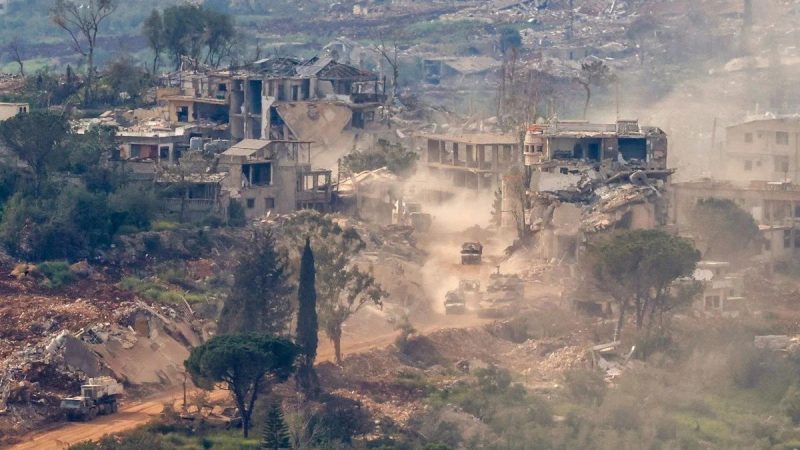
Scores of displaced Lebanese civilians made their way back to southern towns designated by Washington as “pilot zones” early on 21 July, as the Lebanese Armed Forces (LAF) deployed in the town of Zawtar al-Gharbiya – one day after the US officially launched its plan.
An Israeli journalist had previously claimed that Tel Aviv would begin a limited withdrawal on Tuesday as part of the US plan, but local residents returning to the south cast further doubt on Israel’s intention to pull out.
The zones, or at least most of them, “were never occupied by Israeli forces” to begin with, locals told Al-Jazeera on 21 July.
“The inclusion of [these] villages is evidence that Israel is in fact not giving anything up, despite the framework agreement, and is instead able to remain in the [other] areas it has occupied,” the villagers said.
Two Lebanese security sources told Al-Jazeera the same thing, while stressing that two of the “pilot zones” are “not occupied.”
The pilot zone plan is a key aspect of the US-brokered agreement reached between Lebanon and Israel in violation of Lebanese law.
Washington officially launched the project on Monday.
“Pilot zone operations began in the villages of Froun, Srifa, and Zawtar al-Gharbiya in accordance with the Trilateral Framework and under the auspices of the Military Coordination Group for Lebanon,” the US State Department said in a statement on 20 July.
Reports over recent weeks indicated that three pilot zones had initially been declared as part of the plan: Froun, Al-Ghandourieh, and Zawtar al-Gharbiya.
Israeli Prime Minister Benjamin Netanyahu had publicly named Froun and Zawtar al-Gharbieh as two initial pilot zones weeks ago.
Washington’s new announcement on Monday listed Froun, Srifa, and Zawtar al-Gharbiya as the initial pilot zones.
Just like Froun, Srifa is outside the so-called Israeli security zone and is not occupied. Zawtar al-Gharbiya is the only one of the three zones where Israeli forces are present.
Fierce resistance from Hezbollah prevented occupation forces from pushing into both Froun and Al-Ghandourieh during the initial weeks of heavy fighting.
This was recently confirmed by reports from RT and the New Arab, which cited local officials and correspondents on the ground.
The unconstitutional Lebanon-Israel deal would see the establishment of future pilot zones under “mutual consent” between Tel Aviv and Beirut.
The plan is meant to see the LAF replace Israeli occupation troops in the designated “zones” and dismantle Hezbollah infrastructure, in tandem with a “phased” Israeli withdrawal.
However, Lebanese military sources told local media earlier this month that the LAF refuses and rejects direct cooperation with Israel.
“The army will not operate under anyone’s command [including Israel]. Its mission is not to clear the ground for the enemy in order to facilitate its entry into areas it failed to reach because of fierce resistance. The army will not be the reason for the occupation of additional Lebanese territory,” the sources said.
Israel publicly vows that it will not withdraw from south Lebanon. Israeli media says occupation forces have not received any political directive to withdraw from the area. There are still no clear timelines for the US plan.
As residents made their way to the areas on Tuesday morning, Israeli occupation forces continued to carry out major demolition operations, destroying civilian infrastructure on the border.
The Cradle | July 17, 2026
A report aired on Channel 14 on 12 July shows Israeli Defense Minister Israel Katz and other senior officials openly celebrating the apocalyptic destruction of Gaza and the mass killing of Palestinians and their forced displacement to tent cities near the beach.
“The important thing: those neighborhoods like Jabaliya, Shujaiyya, which we only controlled a part of – are destroyed. In ruins,” stated Katz while touring the strip with military officials and journalists.
“When you see Gaza destroyed like this, how do you feel?” a journalist asked him.
“What do I feel? Feel good. What, this is all the result of a deliberate policy that [was designed] to remove threats,” Katz responded.
“Instead of the method of raids – enter, exit, and Hamas returns – the IDF is inside, the residents are outside, and the houses are destroyed.”
Since the start of the genocide in 2023, Israel has destroyed most of Gaza through airstrikes and demolitions, making at least half of Gaza’s 2 million Palestinians homeless and forcing them to live in makeshift tent cities near the sea.
Israel has publicly tried to justify its mass killing of Palestinians and occupation of Gaza by saying it is fighting Hamas. However, Katz stressed that even if Hamas is disarmed, Israel will not end its occupation of Gaza.
“We are not retreating from the Yellow Line, unequivocally, as long as Hamas does not truly disarm. And even after that, we will remain in Gaza!”
One senior officer described all 70,000 Palestinians killed by Israel as “terrorists.”
“I don’t know how to describe this [situation] other than victory … When you control 65 percent of the territory [of the Gaza Strip], when 70,000 terrorists have been killed here, when the majority of the population is on the beach since,” stated Tamir Yadai, deputy chief of staff of the Israeli military
Israel acknowledges the tally of the dead kept by Gaza’s Health Ministry, which has now reached over 73,000, the majority women and children. However, independent estimates suggest the real toll of Palestinians killed by Israel since the start of the genocide is likely much higher, reaching into the hundreds of thousands.
Yadai celebrated the Israeli military’s occupation of Gaza for a “second summer,” saying its troops enjoy “full freedom of operation.”
Yaniv Assor, commander of the Israeli military’s southern command, celebrated Israel’s ongoing killing of Palestinians.
He boasted that since the start of the US-Israeli war on Iran in late February, Israel had carried out 300 targeted assassinations in the strip.
Since a so-called ceasefire was reached in Gaza in October, Israel has killed over 1,100 Palestinians in the strip in near-daily strikes, including on tent encampments housing displaced Palestinians.
Katz has also celebrated Israel’s ongoing destruction of villages in southern Lebanon, saying Israel is now doing to Lebanon what it had previously done in Gaza.
In March, Katz announced that Israel intended to demolish the Lebanese border villages in its newly occupied zone.
“All the houses in the villages adjacent to the border in Lebanon will be destroyed, in accordance with the model of Rafah and Beit Hanoun in Gaza,” he declared.
By Kyle Anzalone | The Libertarian Institute | July 15, 2026
The US Embassy in Lebanon announced that the State Department is offering grants of up to $250,000 to groups that help promote American propaganda.
“The US Embassy in Beirut is opening a new Notice of Funding Opportunity for 2026,” a statement published on Tuesday explained. “We’re looking for partners to implement programs that strengthen ties between the US and Lebanon, with a focus on highlighting US-led peace and stabilization efforts, and advancing digital literacy to help people identify and push back on false, adversarial narratives.”
The State Department website says the program is expected to award $500,000 to at least two groups to promote US propaganda in Lebanon. It adds that the program’s goal is to “strengthen local public understanding of US-led peace and stabilization efforts, and its role as a partner committed to security, economic opportunity, and responsible regional leadership.”
Washington is attempting to broker a peace agreement between Tel Aviv and Beirut. However, Israel is at war with Hezbollah, a non-state military that operates outside of the control of the Lebanese government.
While Beirut and Tel Aviv inked a deal last month, Hezbollah rejected the agreement because it allowed the IDF to occupy Lebanon until the militia is dismantled.
The attempt to negotiate a peace agreement between Tel Aviv and Beirut is making it more difficult for President Donald Trump to end the war against Iran. Iran has linked any ceasefire and peace agreement with Israel ending its war against Lebanon.
By Kit Klarenberg | Global Delinquents | July 17, 2026
In recent years, the Palestinian Civil Defence has been presented by Western media and rights groups as a vital volunteer emergency service, operating out of Lebanon’s myriad refugee camps. First on the scene of major disasters, including the officially unsolved August 2020 Beirut blast, the group has provided news outlets with first-person disaster footage, while apparently winning hearts and minds among the country’s diverse population. But behind the PCD’s noble facade lurks a sinister British intelligence project, exploiting local Palestinian resistance to neutralise Hezbollah.
The PCD has invited comparisons with Syria’s notorious White Helmets, and this is no coincidence. ARK, a ubiquitous British intelligence contractor founded by MI6 veteran Alistair Harris, was behind the creation of both groups. An entry on ARK’s website outlining the firm’s experience of creating “search and rescue teams” overseas notes the Syrian White Helmets’ success directly inspired the PCD’s 2014 founding. The Western state-funded “programme” that created the Syrian ‘humanitarian’ group was “expanded” specifically to repeat the exercise, in Lebanon’s Palestinian refugee camps.
A little-remembered controversy over the White Helmets related to its formal name, Syrian Civil Defence, being indistinguishable from the country’s established civil defence force. On the ground reporting from Vanessa Beeley indicated extremist groups murdered the state’s emergency and medical workers, before stealing their equipment, uniforms and ambulances to found the White Helmets. Beirut’s PCD similarly emulates the long-established Palestinian Civil Defence’s name, a rescue group operating in both Gaza and the West Bank. Is this similarly a malicious attempt to falsely conflate the pair?
Like the White Helmets, Lebanon’s PCD aims to be an alternative, quasi-state structure, advancing regime change objectives. The PCD very visibly provides parallel services to those proffered by Hezbollah. The Resistance group’s Islamic Health Organization, Risala Scout Association and civil defence units are typically responsible for rescuing civilians from rubble, extinguishing fires, and other emergencies. Such provision has significantly bolstered Hezbollah’s support across Lebanon’s multifaith society, problematically for Western powers – including Britain – which desperately want the Resistance faction crippled politically and militarily.
Medics and rescue workers tied to Hezbollah’s healthcare and civil defense wings have been deliberately targeted unrelentingly ever since Tel Aviv’s October 2024 invasion of Lebanon. Much of the country’s south remains cut off from emergency services following Israel’s latest incursion and occupation. The Zionist entity and its Western puppetmasters have made withdrawal from Lebanon contingent on Hezbollah’s neutralisation. While debates about the practicality and plausibility of disarming the Resistance group abound throughout the West, the PCD stands ever-primed to supplant Hezbollah’s frontline duties.
‘Offering Hope’
An October 2020 Middle East Research and Information Project (MERIP) puff piece reports how when the Beirut blast occurred two months earlier, PCD operatives bolted from their refugee camps to immediately respond to the crisis. They were thereafter supposedly “celebrated as heroes in Lebanon” for their humanitarian efforts. This included rescuing civilians from rubble created by the historically devastating eruption, which killed at least 218 people, injured 7,000, displaced 300,000, and inflicted property damage estimated at $15 billion.
The PCD’s establishment was traced by MERIP to “the international community’s humanitarian response to the Syrian refugee crisis,” which provided a vast budget for civil society projects in affected countries, particularly Lebanon. The PCD was reportedly “the most ambitious” of the efforts resultantly launched. The group not only “[filled] an important gap by offering disaster relief in areas abandoned by the state,” but was also intended to blunt purportedly “rampant factionalism” in Lebanon’s refugee camps, and society more generally.
MERIP hinted at the variety of “factionalism” the PCD was ostensibly set up to counter. The outlet noted the group was active in refugee camps that served as the Palestine Liberation Organization’s “primary base” for “armed struggle against Israel,” and remained dominated by anti-Zionist elements. The Beirut blast serendipitously planted the “non-factional” PCD on the map. Having been outfitted with ambulances and a fire truck by ARK well in advance, the group was perfectly positioned to “pick up wounded in the city center.”
However, the PCD reportedly ran head-first into a “cold reception” from a “hostile bureaucracy”. Their status as refugees and lack of identification papers meant Lebanese authorities on the scene did not welcome their presence, ordering them to leave. Undeterred, the group’s leader Hussein Dimasi made urgent calls to state officials. “A line of contact” between Beirut’s General Directorate of General Security and the PCD was established, “which put Dimasi in charge of the rescue mission.” This connection granted the group state approval ever after.

The PCD’s MI6 veteran founder, Alistair Harris, effusively cheered his creation’s practical, political, and propaganda success in a November 2020 article for emergency industry journal Crisis Response. After being praised by the UN for its “pivotal role” tackling Lebanese wildfires the year prior, and the PCD’s ranks having “swelled with Palestinian youths” following the Beirut blast, the group had by then “reset their sights on tackling the Covid-19 public health emergency.” This included producing and distributing free facemasks, with funding from Britain’s Beirut embassy.
Harris fawned how the group’s blast response was “extraordinary and heartening, helping to shatter long-held prejudices with acts of selflessness and offering hope for the future.” The PCD reportedly “grabbed their boots and helmets and ran towards the chaos” without fear. Their recording equipment wasn’t noted, although Harris gushed over how the group’s rescue of “one survivor in particular” was rewarded with “international attention.” In September 2020, the BBC produced a slick package on this rescue, watched by hundreds of thousands on Facebook.
‘British Inspectors’
At this time, a vicious blame game over responsibility for the Beirut blast had ignited. Numerous sources within Lebanon, including state officials, claimed without evidence the detonated ammonium nitrate belonged to Hezbollah, which the Resistance group failed to securely store over the six years it was impounded in the Port of Beirut. The US made similar allegations, wildly linking the explosion to alleged Iranian-supplied weapons supposedly provided to Hezbollah and secretly stored not just throughout Lebanon, but across Europe.
Israel likewise consistently blamed Hezbollah for the blast, while claiming the group had assassinated Lebanese activists, journalists and customs officials “because they knew more than they should have about the Beirut Port explosion.” By contrast, Hezbollah levelled no charges publicly, and supposedly ruled out Tel Aviv’s involvement, despite the incident being openly celebrated by Zionists. Today, it remains unpunished. We are left to ponder whether British intelligence played any role. Given the White Helmets’ Syrian activities, the PCD’s instant post-blast presence is deeply disquieting.
As White Helmets co-chief Emma Winberg, an admitted MI6 officer, explained in a June 2018 talk convened by the NATO-connected Atlantic Council think tank, the group – like Lebanon’s PCD – was equipped with cameras to capture “rescue footage of the bombing of civilian areas.” This allowed for “distribution of content right at the scene of incidents,” and documentation of “potential” International Humanitarian Law violations. After all, as “first responders” the White Helmets were “naturally at the event,” each and every time.
From 2015 onwards, Winberg revealed, the White Helmets began collecting evidence on behalf of the Organisation for the Prohibition of Chemical Weapons. Footage and physical evidence captured by the group of purported nerve agent and chlorine attacks informed the outcome of OPCW investigations, which invariably convicted the Syrian government. It was a position ripe for abuse. When OPCW investigators personally visited the site of an alleged March 2018 chemical attack in Douma, they found ample evidence the entire event had been staged by opposition elements.
However, the OCPW’s official report concluded the alleged chlorine strike was very real, and Bashar Assad’s forces were responsible. These findings were based exclusively on witnesses, photos, videos, and chemical samples provided to the organisation directly by the White Helmets and their leader, James Le Mesurier, Winberg’s husband and an ARK veteran. Politico has revealed how he once “hand-delivered unexploded chemical weapons ordnance in the trunk of a rental car to British inspectors.” Le Mesurier died in Istanbul in strange circumstances, in November 2019.

Markedly, the PCD’s typically highly active, British intelligence-constructed social media channels have remained largely silent since Israel’s avowedly genocidal March invasion. Despite vast numbers of Lebanese civilians killed and injured, over a million displaced, apartment blocks horrifically flattened, and Palestinian refugee camps deliberately targeted, the PCD apparently hasn’t seen fit to run to the rescue this time round. No wonder – despite purportedly being “first responders”, the PCD was not founded by ARK to document, let alone intervene against, the Zionist entity’s unspeakable, manifold crimes.
Syria’s White Helmets now not only comprise the occupied country’s national emergency services, but are being deployed overseas on supposed “international humanitarian operations.” In Lebanon, an identical regime change apparatus has been constructed, hidden in plain sight, awaiting Hezbollah’s administration in Beirut sufficiently servile from the perspective of London, Washington and Tel Aviv. The Resistance shows no sign of backing down to renewed Zionist-American aggression. The PCD and their British intelligence sponsors are surely waiting for a day that will never come.
By Robert Inlakesh | Palestine Chronicle | July 15, 2026
The US Trump administration sought to weaponize diplomacy once again against the Islamic Republic of Iran and implement a surprise attack strategy – this time, Tehran appears to have preempted the American-Israeli plot.
The Iran-US Memorandum of Understanding (MoU) officially died this week, but in reality it was terminated on June 26 with the Lebanon-Israel deal that Washington brokered. The reason why was simple: the United States decided to print on paper a new deal that violated the former by granting Israel de facto permission to maintain a belligerent occupation of southern Lebanese lands.
Throughout the month that the MoU technically held, the US committed various violations of a number of clauses of the agreement, including by direct threats from Donald Trump himself to assassinate the entire Iranian negotiating team. But the Lebanon issue was far more indicative of where things were heading than the limited skirmishes in the Persian Gulf and threats to commit war crimes.
Clause 1 of the MoU concerned the ensuring of the war’s termination on all fronts, with Lebanon being explicitly mentioned. Tehran made it clear that this meant a full withdrawal of Israeli occupation forces from southern Lebanon and the protection of Lebanese sovereignty.
Instead of implementing the clause, Trump and Israeli Prime Minister Benjamin Netanyahu coordinated a careful approach to the Lebanon war, one that would not result in a withdrawal or end to the war, while simultaneously being careful not to provoke any Iranian retaliatory strikes. Therefore, the US worked with Israel to develop a new conspiracy. This involved the use of the US-proxy regime in Beirut to stir division within Lebanon, an attempt to force the Lebanese army to clash with Hezbollah, combined with an initiative to pressure neighboring Syria to invade the Bekaa Valley region in order to take on Hezbollah.
Meanwhile, as this plot was developing, the Israelis returned to the pre-March 2 status quo more or less in Lebanon – Hezbollah froze its retaliatory operations, while Israel continued to blow up civilian homes, bomb on a lower scale, while maintaining its presence inside south Lebanon.
A US military advisory force is being deployed to Beirut in order to guide the Lebanese army on its newly agreed-upon mission to clash with Hezbollah, the stated goal of which is to disarm the movement. Speculation also has it that the US may even be considering deploying thousands of combat troops into Lebanon in order to help prop up the regime in Beirut if the situation goes sideways, although this assertion is yet to be fully substantiated.
The Syrian Observatory for Human Rights (SOHR) has been documenting the ongoing mobilization and military buildup along the Lebanese-Syria border, as Trump himself has repeatedly stated in public that he seeks to use Syria’s forces to invade Lebanon.
Hezbollah’s sudden silence and lack of operations indicate that it has been taking these threats very seriously. Fighting Israel alone has been a battle that it has proven capable of managing, but preparations to fight US-proxies inside Lebanon, the possible collapse of the Lebanese Army into warring factions, and combating a Syrian invasion all demand new defensive and even perhaps offensive preparations.
Iran, for its part, was clearly also coordinated more heavily with Yemen’s Ansarallah leadership. The Yemen front never fully opened during the war earlier this year. Tehran openly challenged Saudi Arabia’s blockade on Yemen, while Ansarallah was mobilizing its forces and declared that it would fight to break the blockade. When Riyadh took the decision to strike Sana’a International Airport, this reopened the Yemen-Saudi War for the first time since early 2022, collapsing the UN-brokered ceasefire.
Yemen’s role in the renewal of the regional war will add major pressure, especially as it holds the card to shut down the Bab Al-Mandab Strait, imposing a blockade in the Red Sea that will choke the global economy further than it has been under the pressure of the Strait of Hormuz blockade. Ansarallah’s capabilities have also significantly developed since 2022, meaning that they will be able to aid Iran in their war efforts against targets in the Arabian Peninsula.
If the US succeeds in pressuring Damascus to launch an assault on Lebanon, then Iraq’s Popular Mobilization Units (PMU) have already threatened to enter the fight on the ground. The PMU would likely seek to seize areas in eastern Syria, like Deir Ezzor, which would open up new supply lines inside Syrian territory and put enormous pressure on its forces.
A US-Israeli plot to collapse the Lebanese State in order to weaken Hezbollah is a major gamble to say the least, one which will inevitably lead to a rise in regional sectarianism. It is also very likely that Arab Gulf media will also act to portray the conflict as a new Sunni-Shia war, as they begin to take more active roles in support of the US-Israeli war effort.
Ultimately, it appears as if the Iranians are not taking any chances and are being proactive, which has been reflected in the scale of their strikes on US assets in the region, including a surprise attack that took out US ATACMS missiles in Kuwait earlier this week.
A return to full-scale war this time around could trigger a series of conflicts that will spiral out of control and thus make any easy off-ramp impossible. The Global economic repercussions will be horrendous, as the only end to the war is total victory or total defeat. The US will be put in a position where it will be forced to withdraw from the region, while Israel is betting on the idea of Iran being significantly weakened as a result of the conflict’s continuation.
No side appears to be backing down, so unless the US suddenly decides to perform a 180-degree pivot in its approach, West Asia is about to erupt into total chaos.
– Robert Inlakesh is a journalist, writer, and documentary filmmaker. He focuses on the Middle East, specializing in Palestine. He contributed this article to The Palestine Chronicle.
By Sondoss Al Asaad | Al Mayadeen | July 15, 2026
For decades, the slogan of “restricting arms to the state” has been presented as a universal principle of sovereignty and state-building. Yet a closer geopolitical examination reveals a striking inconsistency: the doctrine is aggressively promoted in countries like Lebanon and Iraq, while it is largely absent from discussions in surrounding countries such as Syria, Libya, or other fragmented states where multiple armed actors continue to exist.
This selective application raises an uncomfortable question: Is the objective truly the consolidation of state authority, or is the slogan primarily employed where armed movements challenge Israeli military superiority and American hegemony?
Political philosopher Carl Schmitt argues that sovereignty ultimately belongs to whoever decides the exception.
Modern geopolitical practice appears to confirm his observation. The international order invokes legal principles selectively, depending on whether they reinforce or undermine prevailing strategic interests. The debate over arms, therefore, is not merely legal; it is profoundly political.
The Lebanese case illustrates this contradiction with exceptional clarity.
Following the November 2024 ceasefire, “Hezbollah withdrew from the north of the Litani River and ‘accepted’ that decisions regarding war and peace would rest exclusively with the Lebanese state and its armed forces”. The expectation promoted by Western capitals was that this would allegedly strengthen Lebanese sovereignty and reduce tensions.
The reality unfolded differently; the Israeli enemy, unable to establish a lasting foothold inside southern Lebanese villages during sixty-six days of warfare, achieved after the ceasefire what military operations had failed to accomplish. It maintained positions inside Lebanese territory, continued near-daily airstrikes across Lebanon, and expanded targeted assassinations while facing little meaningful deterrence.
The sequence of events inevitably fuelled a renewed domestic debate. If sovereignty means that only the state possesses weapons, what happens when the state itself lacks the capacity to prevent violations of its own borders?
This dilemma reflects what Thomas Hobbes identified centuries ago as the fundamental purpose of political authority: providing security.
The legitimacy of the state rests not merely on possessing legal authority but on its ability to protect those living under its jurisdiction. When that capacity weakens, alternative security arrangements inevitably emerge.
The issue extends beyond Lebanon; In Iraq, international pressure consistently emphasizes integrating or dismantling armed resistance groups under the banner of state monopoly over force. Yet comparable urgency is rarely directed toward states where numerous militias continue to operate without challenging Israeli strategic dominance.
Syria offers another revealing comparison. Multiple foreign militaries, including American, Turkish, and Israeli forces, remain active on Syrian territory alongside various local armed factions.
Libya remains fragmented among competing military authorities and militias. Yet the international discourse seldom revolves around an immediate imperative to monopolize arms before broader political settlements are achieved.
Such inconsistencies have led many observers to conclude that the slogan itself is not universally applied but strategically deployed.
French philosopher Michel Foucault argued that power operates through discourse by defining what becomes accepted as common sense.
The phrase “arms outside the state” has increasingly become one such discourse. It transforms a complex security equation into a simplified legal formula while avoiding a more difficult question: Can sovereignty exist when a state cannot defend its territory?
Press TV – July 12, 2026
The section of the 14-point memorandum that emphasizes the reopening of the Strait of Hormuz under “Iranian arrangements” has become the focal point of confrontation, driven primarily by hostile US actions and its repeated, explicit breaches of commitments.
The exchange of fire between Iran and the US early Sunday once again demonstrated that Washington is not only unwilling to honor its commitments but has effectively blocked any path toward a diplomatic resolution through hostile actions and repeated violations.
Under the 14-point memorandum signed between Iran and the US, Article Five explicitly assigns the management of the Strait of Hormuz to Iran, giving Tehran responsibility for its future administration and maritime services in consultation with Oman.
The inclusion of the phrase “under Iranian arrangements” in the memorandum reflects recognition of Tehran’s central role in governing this strategic waterway.
The text of the memorandum, which was also published by the White House, states that Iran “will guarantee the safe passage of commercial vessels, free of any tolls or charges, for a period of 60 days between the Persian Gulf and the Gulf of Oman”.
It says that the Islamic Republic “will consult with the Sultanate of Oman regarding the future administration and maritime services of the Strait of Hormuz.”
The wording, according to this interpretation, makes clear that responsibility for administering the strait initially rests with Iran, while Oman assumes a consultative and coordinating role.
Immediately after the memorandum was signed, the United States, in coordination with Oman, unveiled a southern shipping corridor designed as an alternative to the Iranian route through the strait.
In a statement, the Islamic Revolution Guards Corps (IRGC) described the newly announced route as “unacceptable and extremely dangerous,” adding that it had been established “without prior notification or coordination with the Islamic Republic of Iran.”
As indicated, the actions of the United States and Oman constitute a clear violation of Article Five of the memorandum, which assigned management of the Strait to Iran.
According to unofficial reports, Oman has declined to fully align itself with Iran and continues to insist that maritime traffic should operate in both directions.
This suggests that Oman, under US pressure, has moved away from its neutral position and begun acting in ways that undermine Iranian interests.
Oman’s foreign minister told a meeting of the Persian Gulf Cooperation Council that Muscat, as a littoral state, bears a special responsibility and stressed that any future arrangements for the strait should not include transit fees.
This position comes despite Article Five of the memorandum, which designates Iran as the principal authority responsible for administering the strait, while assigning Oman only a coordinating role.
The corridor violation is not the only breach by the US of the memorandum’s provisions. The list of America’s overt and repeated violations since the signing of the memorandum clearly shows that Washington has never been committed to its obligations:
1. Violation of Article One (Ending the war on all fronts): The United States had committed to ending hostilities across all fronts, including Lebanon, and to securing the withdrawal of Israeli forces from occupied territories.
However, Israeli prime minister Benjamin Netanyahu declared that Israeli troops would remain in Lebanon for as long as necessary. According to this account, Washington neither enforced this provision nor acted to prevent the continued occupation.
2. Violation of Article Two (Respect for sovereignty and non-interference): The United States had pledged to respect the sovereignty of the Islamic Republic of Iran and refrain from interfering in its internal affairs.
However, the military attacks last night on Iranian cities, as well as the attacks of previous nights—all of which originated from or were facilitated by American bases in Saudi Arabia, Qatar, Bahrain, the UAE, and Kuwait—constitute a gross violation of this clause.
3. Violation of Article Four (Lifting the maritime blockade): Washington had committed to ending the maritime blockade and restoring shipping traffic to full capacity within 30 days. Not only was the blockade maintained, but US officials also threatened to intensify it.
President Donald Trump reportedly told Axios that he would not lift the blockade on Iranian ports because doing so would deprive Washington of its principal source of leverage over Tehran.
4. Violation of Article Six (Economic reconstruction): The United States had committed to guaranteeing a comprehensive reconstruction program for Iran backed by at least $300 billion in financing. No meaningful steps were ever taken to fulfill that commitment.
5. Violation of Article Seven (Lifting sanctions): Washington had pledged to terminate all sanctions imposed on Iran. Instead, sanctions remained in place, while the US Treasury warned that if Oman assisted in establishing a toll collection system, it would face “aggressive” sanctions.
6. Violation of Articles Ten and Eleven (Oil export waivers and release of frozen assets): The United States had committed to immediately issuing waivers for Iranian crude oil exports, petrochemical products, and all related services, while also releasing Iran’s frozen assets.
Through pretext and hostile actions, the US refused to deliver Iran’s $24 billion in blocked assets and revoked Iran’s oil sales license, citing Iran’s actions against unauthorized vessel movements through the Strait of Hormuz—a justification that stemmed from Washington’s own breach of the memorandum.
7. Threats of regime change and assassination of Iranian officials: Despite its explicit commitment not to interfere in Iran’s internal affairs, US officials have continued to issue statements advocating regime change.
More importantly, US Secretary of State Marco Rubio openly rejected the prospect of Iranian administration of the Strait of Hormuz, stating: “We will not tolerate that.”
Before the US and Israeli terrorist attacks against Iran, the Strait of Hormuz remained open, and Iran had no interest in controlling it. Today, however, Tehran is determined to maintain control over the waterway in the future to ensure that the United States can never again use the Persian Gulf as a staging ground for attacks against Iran.
The strikes carried out last night and on previous nights were launched from or facilitated by US bases in Saudi Arabia, Qatar, Bahrain, the United Arab Emirates, and Kuwait. As long as the United States and Israel pose a threat to Iran’s national security, Tehran will maintain a heavy presence in the Strait of Hormuz.
A crucial legal point is that the Strait of Hormuz lies entirely within the territorial waters of Iran and Oman and under international law, no part of it constitutes international waters open to unrestricted passage.
Unlike certain international waterways, the Strait of Hormuz is not part of the high seas but a coastal passage where navigation is governed by the regulations of the littoral states. This legal reality strengthens Iran’s position in administering the strait and challenges US claims regarding freedom of navigation.
Iran, based on its defense doctrine, views control of the strait not as an economic instrument but as a vital requirement for its survival and national security.
Parliament Speaker Mohammad Baqer Qalibaf summarized Tehran’s position: “The era of one-sided deals is OVER. We told you: keep your word or pay the price. Reality is knocking.”
Daniel Davis / Deep Dive – July 10, 2026
Daniel Davis / Deep Dive – July 10, 2026
By Larry C. Johnson | SONAR21 | July 9, 2026
The drama over the Strait of Hormuz escalated on Wednesday with Donald Trump declaring the MoU with Iran is dead and vowed more attacks on Iran. Trump continues to insist that Iran has no right to interfere with any ship trying to transit the Strait of Hormuz, but the fact is that Iran is acting within its rights under the terms spelled out in paragraph five of the MoU (which I discussed in my previous post). The US attack on Iranian outposts along the shore of the Persian Gulf on Tuesday was a set up — i.e., the US coordinated with Qatar and Saudi Arabia to have their ships defy the Iranian protocol to register the voyage with the IRGC, which precipitated the Iranian attack on those vessels. While falsely claiming this was a violation of the MoU, Donald Trump hit Iran with bombs starting late Tuesday night/early Wednesday morning Iranian time.
Unlike the previous incidents on June 25 and June 26, where Iran hit non-compliant ships and the US did a one-off airstrike on Iranian positions on the shore of the Strait of Hormuz following each incident, Trump launched a new series of attacks on Iran on July 8 (Wednesday) even though Iran had not attacked another ship. Why did Trump do this? Was it retaliation for some anti-ship missiles fired at the US Carrier Strike Group operating 200 miles off the coast of Iran? That’s my hypothesis… One or more missiles hit one or more US vessels, causing some damage that has not been reported publicly.
Trump’s Wednesday strikes doubled the size of the ones he ordered on Tuesday. Iran, in response, launched ballistic missiles and drones at US bases in Kuwait, Bahrain, the UAE and Muwaffaq al Salti airbase in Jordan. I have no reports regarding physical battle damage. However, the Trump attack prompted an ominous warning from the spokesman for Iranian Parliament’s National Security Committee, who stated that a renewed US attack will be answered with a change in nuclear doctrine. He also said:
➡ In any future confrontation, the enemy will face a comprehensive, all-out surprise offensive from the Islamic Republic of Iran.
➡ We have many options available that were not even used during the 40-day war.
➡ Options such as withdrawal from the NPT, changing nuclear doctrine, and closing the Bab al-Mandab Strait alongside the Strait of Hormuz are on the table for review.
➡ A bill for NPT withdrawal is also ready for review in parliament — and if Iran faces an existential threat, a change in nuclear doctrine could also be put on the agenda
Pressure is growing in Iran to withdraw from the MoU. The US has violated almost every section of the MoU while Iran has assiduously adhered to it — including keeping Hezbollah from going on the offensive against the Israelis. Trump’s Secretary of the Treasury announced on July 7 that the US would reinstate oil sanctions on Iran, which marks another clear violation of the MoU.
According to vesselfinder.com, the activity in the Strait of Hormuz as I write this article is scant, but the ships transiting the straight are abiding by Iran’s PGSA protocols. If Trump opts to continue attacking Iran on Thursday then I believe that Iran will expand the scope and severity of its retaliatory strikes. Without some immediate concessions from the US, I believe that Iran will agree with Trump — i.e., “The MoU is dead.”
By Jose Nino | Occidental Review | July 7, 2026
The hawks who pushed the United States into its most expensive military operation in decades are already planning the next one. Ben Shapiro and Mark Levin, two of the most listened-to Jewish voices in conservative media, have made clear in the immediate aftermath of the U.S.-Iran Memorandum of Understanding that they view the current peace not as a resolution but as an intermission, one they intend to use to rebuild the political and military conditions for a return to war.
Ben Shapiro published a Daily Wire piece titled “Why Trump Signed The Agreement With Iran,” explaining the MOU while making clear his deep reservations. In the same Fox News appearance hours after the text was released, he simultaneously called the war “the signal act of political bravery, perhaps, of my lifetime” and labeled the Memorandum of Understanding “a disaster that does not achieve any of the actual signal goals that were set by the administration at the beginning.” Shapiro laid out five specific objectives he said the administration had named —ending all nuclear enrichment, dismantling ballistic missiles, ending support for so-called terrorist proxies, permanently reopening the Strait of Hormuz toll-free, and conditioning sanctions relief on Iranian compliance—and argued the MOU met none of them. Despite his public condemnation of the deal, he nonetheless stopped short of urging Trump to reject it, thus revealing something more significant than mere disagreement. It exposed a proposed recalibration among hawkish commentators who now appear to be laying the groundwork for a resumption of hostilities after the November midterm elections.
While commentators debated the terms of the deal, the war itself had already delivered its verdict in blood. The war they championed exacted a staggering price. Operation Epic Fury, which began on February 28, 2026, killed between 7,144 and 9,676 people across multiple countries while wounding approximately 46,965 more. Iran’s Foundation of Martyrs confirmed 3,468 Iranian deaths while independent monitors documented higher figures. Among the dead were 240 women and 212 children. One American strike on the Shajareh Tayyebeh Primary School in Minab, Hormozgan province on February 28 killed approximately 175 to 180 people—the majority of them schoolchildren—a strike investigated by the New York Times, BBC Verify, Reuters, NPR, and CBC all of which concluded the United States was likely responsible. Over 4,000 people were killed in Lebanon according to its Health Ministry.
The economic devastation proved equally severe. The Pentagon reported spending $29 billion by May 12, though this figure excluded damage to American military bases from Iranian retaliation and the costs of munitions expended. By June, the Pentagon sought an additional $87.6 billion supplemental from Congress to cover the full costs of the campaign. Harvard economist Linda Bilmes projected that total costs could reach $1 trillion when accounting for long-term ripple effects including veteran care, replenishment of depleted weapons stockpiles, and regional economic disruption. Iran estimated its losses at $270 billion and demanded compensation as a condition of broader peace negotiations. CSIS independently assessed the total U.S. military campaign cost at approximately $34 to $42 billion—a figure that excluded base damage, munitions replacement costs, and long-term obligations.
This catastrophic toll apparently failed to satisfy those who pushed hardest for the conflict. Mark Levin emerged as the most explicit voice calling for a strategic pause followed by renewed military action. On June 18, the same day CNN reported that Israeli Prime Minister Netanyahu was actively using pro-Israel media figures to influence the deal, Levin posted on X/Twitter his prescription for the path forward. “Time for a change in strategy. We should consider slow walking the enemy, building up our munitions, our oil reserves, get the price of gasoline down, get through the midterms, then knock them out. Instead of rushing to a deal, building up their oil industry, transferring billions to them, etc.”
Levin had advocated for military action against Iran long before the war began. He reportedly lobbied Trump directly at a private White House lunch in early June, falsely warning that Iran was “days away from a nuclear weapon”—a claim the U.S. intelligence community did not support. On his show in May he had argued that “The mass-murdering death cult that is the Iranian regime is not going to commit suicide” and that “they cannot” abide by any deal “because as a matter of religious and political ideology and doctrine, they will not in the end bend to the demands of the great Satan.”
Shapiro adopted a position less explicit but functionally identical. After the MOU was signed at Versailles on June 18, he declared the agreement a disaster and hoped that Trump would return to bombing Iran after November’s midterms. He had previously called the war “the single bravest foreign policy move of my lifetime,” telling Lara Trump on Fox News that what Trump was doing in Iran “has the potential to be a true game changer for America’s role in the world,
The broader hawk faction echoed the same framework for restarting the conflict. Hugh Hewitt called the MOU “halftime” and predicted a return to war after the election. Fox and Friends co-host Brian Kilmeade added that “After the midterms, the gloves come off.” Media Matters described this as the hawks’ new “cope” strategy—a way to avoid criticizing Trump directly while keeping the door open for future military escalation.
These commentators built their case for war over several years. Shapiro praised Trump’s 2020 killing of IRGC commander Qassem Soleimani as “utterly righteous,” calling Soleimani “one of the worst human beings on the planet,” and he consistently argued that Iran required direct confrontation rather than the appeasement he accused the Obama administration of pursuing. When Israel launched preemptive strikes on Iran’s nuclear program in June 2025, Shapiro published a syndicated column declaring that “two lies die: the lie that only negotiations can end the threat of a rogue state seeking nuclear weapons, and the lie that every conflict must necessarily become Iraq.” Levin appeared on Hannity right before the 2026 conflict to argue that “If this Islamic Nazi terrorist mass killing regime gets a nuclear weapon, will they use it? The answer is yes” and that “We don’t need to put up with their crap. It’s time to put it to an end.”
Despite the memorandum of understanding being signed on June 17, the conflict remains far from resolved. The deal lifted the U.S. naval blockade, reopened the Strait of Hormuz, created a 60-day window to negotiate permanent terms, and proposed a $300 billion reconstruction fund. Critics noted that despite the war’s enormous costs, Iran’s government remained intact, its ballistic missile program is still functional, and its support for regional resistance organizations like Hezbollah is still unwavering. The statements from Shapiro and Levin give the game away. They have already begun conditioning their audiences for a second round of bellicosity against the Islamic Republic.
For the likes of Shapiro and Levin, conservatism is merely a skinsuit they don, carefully tailored to win trust and influence within the American Right. But the substance beneath it has nothing to do with American national interests. Every war they cheer, every deal they oppose, every argument they make is calibrated toward using American blood and treasure as a battering ram for the interests of World Jewry. The consequences for the United States, the American people, and the families who bear the cost of their wars are simply not part of their calculation. It is time to stop mistaking their fluency in conservative language for loyalty to this country.
The Cradle | July 7, 2026
A Saudi-flagged crude oil vessel and a Qatari tanker were damaged on 7 July after being struck by projectiles in the Strait of Hormuz, multiple reports have confirmed.
Qatari liquefied natural gas (LNG) tanker Al-Rekayyat was “struck overnight and its engine room set on fire,” maritime sources told Reuters, adding that “a Saudi crude oil tanker has also been damaged.”
“Mayday … This is vessel Al-Rekayyat, LNG vessel Al-Rekayyat. We are being hit by drone on port side, top of engine room. Status: engine room fire and full of smoke. Unable to assess further damage,” the ship’s captain said in a recorded radio call heard by Reuters.
The ship was disabled and called for help, but the crew was unharmed, according to the report.
Iranian state television reported that an LNG ship was hit off the coast of Oman after “ignoring warnings.” Responsibility has yet to be officially claimed by Tehran.
According to Reuters, the Saudi oil tanker Wedyan was damaged in the same area – near Oman’s coast, close to the Strait of Hormuz.
The Wedyan vessel’s last position was inside the Persian Gulf on 3 July. Riyadh has not commented.
“Iran’s military fired at least two missiles at commercial ships transiting the Strait of Hormuz,” US officials told Axios.
Nevertheless, the US government has not officially commented on the incident.
The latest escalation near the strategic waterway comes after Iranian officials responded to new threats from US President Donald Trump.
“Negotiations on final deal will not commence if threats continue. Honor your signature,” Iranian Foreign Minister Abbas Araghchi warned on Tuesday, coinciding with a massive funeral for the country’s late supreme leader Ali Khamenei.
A day earlier, Trump threatened to “finish the job” and “knock down” bridges and energy sites across Iran.
In recent days, Iran has doubled down on its right to jointly manage the strait with Oman. The waterway is effectively under Iranian control.
Last month, a shipping corridor connecting the US and Oman via the Strait of Hormuz was launched, prompting Tehran to call it a breach of Clause 5 of the MoU.
Tehran has since announced that it has reached a deal with Oman on the management of the strait.
Since the MoU was signed, the illegal US blockade has largely ceased, and the Strait of Hormuz has been partially reopened by Iran.
However, Washington has continued to violate the MoU through multiple attacks on Iran, and a failure to rein in Israel’s brutal campaign of ethnic cleansing and occupation in Lebanon.
or go to
Aletho News Archives – Video-Images
By Donald Neff | Washington Report On Middle East Affairs | January 1996
On January 4, 1948, Jewish terrorists drove a truck loaded with explosives into the center of the all Arab city of Jaffa and detonated it, killing 26 and wounding around 100 Palestinian men, women and children.[1] The attack was the work of the Irgun Zvai Leumi – the “National Military Organization,” also known by the Hebrew letters Etzel – the largest Jewish terrorist group in Palestine. The Irgun was headed by Revisionist Zionist Menachem Begin and had been killing and maiming Arabs, Britons and even Jews for the previous ten years in its efforts to establish a Jewish state.
This terror campaign meant that at the core of Revisionist Zionism there existed a philosophical embrace of violence. … continue
 Aletho News If Americans Knew No Tricks Zone
