At least 182 killed, 727 wounded in Israeli air raids across Lebanon
Press TV – September 23, 2024
The Israeli regime’s warplanes have conducted extensive airstrikes against towns and villages across Lebanon, killing at least 182 people.
The country’s health ministry announced the death toll on Monday, saying at least 727 others had also been wounded in the attacks that targeted the areas earlier in the day.
The casualties included “children, women, and emergency workers,” it added, noting that the numbers were provisional.
The country’s media outlets said the aircraft had bombed all the towns and villages lying on the southern border as well as their surroundings.
Israeli warplanes also reportedly targeted eastern Lebanese areas, including the Bekaa Valley.
Lebanese sources said the airstrikes had targeted a total of more than 40 areas in Lebanon during the attacks.
Israeli media outlets, meanwhile, alleged that the attacks had hit locations lying as far as 125 kilometers (77 miles) inside the Lebanese territory.
Israeli military spokesman Danieh Hagari said the the regime “will engage in [more] extensive and precise strikes” against Lebanon, adding that the attacks would “go on for the near future.”
The regime has markedly intensified its attacks against the country since October 7, when it launched a genocidal war on the Gaza Strip.
Lebanon’s Hezbollah resistance movement has responded with numerous strikes against the occupied Palestinian territories as means of both retaliating against the regime and displaying support for the war-hit Gazans.
On Sunday, the group staged its farthest-reaching strikes against the territories since October, firing scores of rockets against the Ramat David Airbase, 20 kilometers (12 miles) southeast of the city of Haifa, and the Rafael weapons manufacturing facility in the Zevulun area north of city.
It described the strike against the facility as its “initial response” to the regime’s detonation of thousands of booby-trapped pagers and walkie-talkie radios that killed at least 39 people and wounded 3,000 others across Lebanon over Tuesday and Wednesday.
Also on Sunday, Hezbollah’s Deputy Secretary General Sheikh Naim Qassem said the movement was in a “new phase” in its battle against the regime.
“Threats will not stop us… We are ready to face all military possibilities,” he noted.
Qassem made the remarks while attending the funeral of Ibrahim Aqil, one of the group’s senior commanders.
Aqil had been martyred alongside 37 others, including three children and seven women, during an Israeli attack on a residential building in a southern suburb of Lebanon’s capital Beirut on Friday.
Pentagon says tens of thousands of troops across West Asia ‘enough to protect Israel’
The Cradle | September 20, 2024
The US is confident in its ability to defend Israel given its current force levels in West Asia, Pentagon spokeswoman Sabrina Singh said on 19 September, amid heightened fears of a wider war between Lebanese Hezbollah and Israel.
“We’re confident in the ability that we have there right now to protect our forces and should we need to come to the defense of Israel as well,” Pentagon spokeswoman Sabrina Singh said in a press briefing Thursday.
The possibility of full-scale war increased following Israel’s terror attacks in Lebanon, which targeted Hezbollah cadre and civilians with exploding pagers earlier this week. The attacks killed 37 Lebanese and injured thousands more.
US military officials began sending additional forces to the region in July. Tensions escalated after Israel’s assassination of Hezbollah commander Fuad Shakr in Beirut and Hamas leader Ismail Haniyeh in Tehran at the end of that month.
While US officials say they will help defend Israel, they claim they will not help it in an offensive war against Iran or Hezbollah.
“We are there in the defense of Israel, should we need to come to their defense. We’re not going in and supporting offensive ground operations in what they do, whether it be in the north or in Gaza,” Singh stated in the press briefing.
US officials speaking on condition of anonymity told the AP that additional resources sent to the region since July have helped as the US forces carry out operations targeting Axis of Resistance groups in Syria, Iraq, and Yemen.
In addition to Hezbollah, the Islamic Resistance in Iraq (IRI) and the Ansarallah-led government of Yemen have hit US and Israeli targets in the region in an effort to oppose Israel’s genocide of Palestinians in Gaza.
The AP reported that about 34,000 US troops have traditionally been deployed to West Asia. The number grew to about 40,000 in October last year as additional ships and aircraft were sent in after the start of the war on Gaza.
Several weeks ago, the total temporarily spiked to nearly 50,000 when US Secretary of Defense Lloyd Austin ordered two aircraft carriers and their accompanying warships to stay in the region.
One aircraft carrier has since left, but US navy warships remain scattered across the region, from the eastern Mediterranean Sea to the Gulf of Oman. Air force and navy fighter jets are strategically based at several locations.
The USS Abraham Lincoln and its three destroyers are in the Gulf of Oman. Two US navy destroyers are in the Red Sea.
There are six US warships and three naval destroyers in the eastern Mediterranean Sea.
Six F/A-18 fighter jets and the USS Georgia guided missile submarine are in the region, but US officials refuse to say where.
The air force has four land-based fighter squadrons in West Asia, which include a squadron of A-10 Thunderbolt II ground attack aircraft, F-15E Strike Eagles, and F-16 fighter jets. US officials also declined to say where the planes are based.
Should the US join Israel in fighting a war against Iran, the air force can also launch attacks from bases within the US itself.
In February, two B-1 bombers flew more than 30 hours from Dyess Air Force Base in Texas and back to strike 85 Islamic Revolutionary Guards Corps (IRGC) targets in Iraq and Syria.
Nasrallah: Blasts declaration of war, enemy to face tough retribution
Press TV – September 19, 2024
Hezbollah Secretary General Sayyed Hassan Nasrallah says pager and walkie-talkie explosions by Israel on Tuesday and Wednesday which killed 37 people and wounded nearly 3,000 in Lebanon are a declaration of war.
“The enemy has crossed all red lines and all laws in this attack. This is a massive terrorist attack, genocide, a massacre,” Nasrallah said Thursday in his first televised address since the attack.
“The Tuesday and Wednesday massacres are a war crime, a declaration of war…you can call it anything,” he said, adding Israel will face “tough retribution and just punishment, where it expects it and where it does not”.
Israel’s willful intent, Nasrallah said, was to kill 4,000 Lebanese people within minutes but many of the pagers were out of service, turned off or stored away.
“When the enemy planned out this attack, they assumed there were at least 4,000 pagers spread out across all of Lebanon. This means that the enemy had the intention of murdering 4,000 people in a single minute.
“The same was repeated on the second day with the aim being to kill thousands of people carrying radio devices,” Nasrallah said.
Some of the attacks, he said, took place in hospitals, pharmacies, marketplaces, commercial shops and even residential homes, private vehicles and public roads where thousands of civilians, including women and children, are present.
Nasrallah said an extensive investigative committee has been formed to study all scenarios, possibilities, and theories, and an almost-definitive conclusion reached.
“I can tell you with utmost certainty that this attack did not break us and will not break us. On the contrary, it will only increase our resolve and determination to continue on in this battle,” he said.
Nasrallah said the aim of the attack is to dissuade the Lebanese resistance from continuing its operations against Israel in solidarity with the Palestinians.
Since October 7 when Hamas carried out the landmark Operation Al-Aqsa Storm inside Israeli occupied territories, Hezbollah has engaged in near-daily cross-border skirmishes with Israeli forces in a show of solidarity with Palestinians in Gaza.
“Why did the enemy do this? When the blessed Al-Aqsa Flood began, the Southern Lebanese support front was opened. This front has inflicted huge losses upon the enemy since October 8, as they have repeatedly admitted themselves,” Nasrallah said.
“The Southern Lebanese front has been a very effective front alongside the other support fronts. The enemy has repeatedly sent us messages to close this front. They resorted to threats of war, and attempted to differentiate between Lebanon and Gaza.”
Nasrallah said after the first attack on Tuesday afternoon, “the enemy sent us a message through official and unofficial channels, threatening that if we do not close our front, they have more in store for us and so the attack on Wednesday came”.
“In the name of the martyrs, the wounded, the ones who lost their eyes and palms, and in the name of every person who has taken on the responsibility of supporting Gaza, we tell Netanyahu and Gallant: the Lebanese front will not stop until the war on Gaza ends,” he said, referring to Israeli prime minister Benjamin Netanyahu and minister of military affairs Yoav Gallant.
Through the attack, Nasrallah said, the enemy wanted the Lebanese people to turn against the resistance.
“This goal failed on Tuesday and Wednesday when we all saw the stances of the people and the wounded who hope to recover to return to the battlefield,” he said.
Nasrallah thanked doctors, officials and everyone who helped in the treatment of victims of the attacks, including the people who donated blood.
“One of the silver linings of the crisis of the past few days is the solidarity and unity experienced across the country,” he said.
Hungary falsely accused of manufacturing pager bombs, but now the trail leads to Bulgaria
By Liz Heflin | Remix News | September 19, 2024
Just yesterday, CEO Hsu Ching-kuang of Gold Apollo, the distributor of the exploding pagers, held a press conference stating that the AR-924 beepers ordered by Hezbollah were manufactured under license by a company called BAC.
“The product was not ours. It was only that it had our brand on it,” he said. According to a company statement, it had authorized “BAC to use our brand trademark for product sales in specific regions, but the design and manufacturing of the products are entirely handled by BAC.” The CEO also noted that there had been a problem with receiving payment from BAC and that these had come via the Middle East.
BAC Consulting Kft. in Budapest is led by Italian-born Cristiana Rosaria Bársony-Arcidiacono, who also works for the European Commission based on her LinkedIn profile.
“The company has had only one employee since its foundation in 2022, so it is completely impractical that it could have participated in the production of any weapons,” wrote Magyar Nemzet earlier.
Now, however, Telex reports that BAC Consulting Kft. acted as a simple intermediary in the transaction. The company itself has not actually performed any activities, has no office, and is only registered with a registered office provider.
The head of BAC Consulting was in contact with a Bulgarian company, Norta Global Ltd, based in Sofia. Norta Global Ltd. was actually behind the deal, although on paper it was BAC Consulting that signed the contract with Gold Apollo.
Telex says the pagers from Taiwan were not brought in by BAC Consulting, but by the Bulgarian company. Norta Global sold and shipped the devices to Hezbollah. Owned by a Norwegian, Norta Global was only registered in 2022 and on paper deals with project management.
Yesterday on X, Zoltán Kovács, the government’s international spokesman, wrote: “Authorities have confirmed that the company in question is a trading intermediary, with no manufacturing or operational site in Hungary. It has one manager registered at its declared address, and the referenced devices have never been in Hungary.”
He further added that “Hungarian national security services are cooperating with all relevant international partner agencies and organizations.”
According to another Telex source, “The Hungarian company involved in the case actually did nothing, the devices were never in Hungary.”
Meanwhile, the High Representative of the Union for Foreign Affairs and Security Policy Josep Borrell has condemned the bombings and called for an investigation “due to the inevitable and heavy collateral damages among civilians, and the broader consequences for the entire population.”
The US has allowed Israel’s attack on Lebanon, and now war may follow
By Robert Inlakesh | RT | September 18, 2024
On Tuesday, Israel was accused of detonating hundreds of wireless communication devices that were primarily being used in a civilian capacity, injuring upwards of 4,000 people. Although the details are still being ironed out, this attack will now force Hezbollah to make major decisions in retaliation.
Less than a day after the Israeli security cabinet officially adopted a new war goal of returning their displaced residents to areas close to the Lebanese border, an indiscriminate attack was carried out throughout Lebanon. This indicates that the war in Gaza has now expanded in the eyes of the Israeli political and military leadership to include Lebanon. However, there are question marks surrounding how such an escalation will take shape.
The US role
Commenting on the issue to reporters, US State Department spokesperson Matthew Miller said that “the US was not involved in it, the US was not aware of this incident in advance and, at this point, we’re gathering information.” He then even went as far as suggesting that the US government was gathering information just as journalists around the world are.
While this was Washington distancing itself from the incident, it is almost comical for an American official to inform the media that the Biden administration has no special information from its ally on the incident. Taking this at face value, it is an embarrassing admission that the ally to which the US has provided tens of billions of dollars worth of weapons and aid over the past 11 months does not even have channels of dialogue to discuss an attack which could lead to a regional war.
Even if we are to assume that the US had no idea about the attack, which is doubtful, the mere fact that American bipartisan support for Israel throughout the course of its war on Gaza has not buckled under immense international condemnation is telling. Every single organ of the United Nations has been ringing the alarm bells, accusing Israel of committing war crimes, and even the United Kingdom has decided to cancel 30 of some 350 weapons-licensing contracts over violations of international law.
While the US has continually stated that it seeks to de-escalate tensions and that it disapproves of an Israel-Lebanon war, at best it is doing nothing to stop it. If the US government were truly so out of the loop with Israel’s escalatory steps and really wanted to stop a regional war, the wake-up call should have come at the end of July.
When Israel bombed a civilian apartment building in Beirut’s southern suburb of Dahiyeh, killing Hezbollah commander Fouad Shukr, then only hours later assassinated the leader of Hamas, Ismail Hanniyeh, in Tehran, this would have been the time when the Americans put pressure on the Israelis to stop. Instead, the US government decided to do the very opposite. At the United Nations Security Council (UNSC) session called to discuss the issue, they condemned Iran. On top of this, just under two weeks later, the US decided to approve a $20-billion weapons package for Israel.
Israeli terrorism
There can be no doubt that the act of sabotage carried out on Tuesday was done using terrorist tactics and its intended goals are important to analyze. While all the precise details remain hidden as to how Israel managed to detonate hundreds of pagers, the impacts are crystal clear and we have enough information to render a judgment.
Firstly, the fact that this occurred across Lebanon and its victims were not just confined to those in the rank-and-file of Hezbollah has now left a lingering feeling of anxiety among the general public. The question cannot help but be posed: If the Israelis can blow up pagers, can they also detonate phones, laptops and other devices, and how many other plots of this nature do they have up their sleeves? This also impacts Hezbollah itself, because there has been a clear breach in the group’s security on one level or another, which directly caused a temporary issue with the means of communication used by the group’s military personnel.
According to the information we have so far, it appears that Israeli intelligence operatives managed to rig a batch of pagers with small amounts of highly explosive material. While the scale is unique in history, this tactic is nothing new. In fact, in 1996, Mossad assassinated a leader of Hamas’ al-Qassam Brigades named Yahya Ayyash, by planting explosive material inside his phone and detonating it remotely. In the 1980s the Israelis even operated a group called the Front for the Liberation of Lebanon from Foreigners (FLLF) to carry out acts of terrorism while posing as a Christian fascist organization, one of its operations attempted to assassinate the US former ambassador to Lebanon, John Gunther Dean.
If this action was carried out as a means of impacting Hezbollah’s communications, prior to Israel launching a larger-scale military operation, then it would have made sense as a tactic that would on some level degrade the capabilities of the group and force them to find alternative means of issuing orders to certain cadres. Yet, this is not what happened, they gave the Lebanese group the time to recover from this blow and so it must be seen within a different context, one of point scoring.
It now puts Lebanese Hezbollah in a tough position. The group must mount some kind of response to this attack, one that is designed to deter the Israelis from carrying out similar attacks in the future. However, the secretary general of Hezbollah, Seyyed Hassan Nasrallah, has made clear that, while his party is prepared for war, it is only interested in continuing to maintain a support front for the Palestinian groups fighting Israel from Gaza.
Since October 8, Hezbollah has carried out thousands of targeted attacks against Israeli military facilities, primarily targeting surveillance, air defense and espionage equipment, but also striking army personnel too. On top of this, the Lebanese armed group has also been targeting specific populated areas that are located along the border region, with rocket barrages, forcing around 100,000 Israelis to flee.
On the other hand, roughly 110,000 Lebanese have been forced to flee their homes in southern Lebanon due to Israeli bombing attacks that have been much more devastating on the nation’s civilian infrastructure than Hezbollah’s has been on Israel’s. In fact, while Hezbollah attacks have only resulted in a handful of Israeli civilian deaths, nearly 200 civilians have been killed by Israeli strikes on Lebanon. This being said, there can be no denying the success of Hezbollah’s operations in conducting a war of attrition that is burdening Israel psychologically, militarily, and economically.
What comes next
Israel has carried out this operation in an attempt to score points against Hezbollah, primarily in the propaganda war, and the alternative goal is to drag the group into opening up a shooting war. The Israelis do not want to be seen as starting the war against Lebanon, both because they seek the support of the collective West and know that the conflict will result in a stalemate at best.
If Hezbollah does not mount a considerable defensive counter operation, it will signal weakness to the Israelis and likely encourage them to continue carrying out similar offensive operations throughout Lebanon. While, on the other hand, if the Hezbollah response is too severe, it may give Israeli Prime Minister Benjamin Netanyahu the perfect excuse to launch the war that he has been threatening to wage for months now.
This moment requires Hezbollah to step up and take risks militarily, at a time when they now have a popular mandate inside Lebanon to respond in self defense. It is clear that the strategy of the Lebanese group has been to continue its daily operations in support of the Gaza Strip, and Israel is determined to end this, which is why it is now attempting to transform the nature of the war and expand it outwards. Unfortunately, due to the US providing full and unconditional support to the Israeli government as it expands the war, we are no longer looking at a war which is isolated to Gaza. Unless there is a ceasefire deal signed with Hamas soon, it appears inevitable that we are heading towards a Lebanon-Israel war that will drag in the entire region.
Robert Inlakesh is a political analyst, journalist and documentary filmmaker currently based in London, UK. He has reported from and lived in the Palestinian territories and currently works with Quds News. Director of ‘Steal of the Century: Trump’s Palestine-Israel Catastrophe’.
Lebanon pager attack ‘a monstrous act of terrorism’ – Moscow
RT | September 18, 2024
The mass detonation of pagers which killed several people and left thousands of others injured in Lebanon on Tuesday was an act of “monstrous terrorism,” Russian officials have said.
Beirut and the militant group Hezbollah, which was the apparent target of the attack, have blamed Israel for the incident. The Jewish state has neither confirmed nor denied responsibility. Media reports have claimed that the Israeli secret service, Mossad, rigged thousands of pager devices with small explosive charges, which were simultaneously triggered via a remote signal.
“This was a monstrous act of terrorism, monstrous in its cynicism and its scale, considering the large number of victims,” Russian Foreign Ministry spokeswoman Maria Zakharova said on Wednesday.
A separate statement by the ministry said that Moscow considers the mass detonations to be “the latest act of hybrid warfare against Lebanon,” adding that “the masterminds of this high-tech attack were seeking to ignite large-scale armed confrontation with the goal of triggering a major war in the Middle East.”
The ministry did not assign blame to any particular party, but called for a thorough investigation. “All people responsible… must be held accountable, so that this new act of terrorism is not ‘swept under the rug’ the way the Western nations want to steer the investigation of the explosions at the Nord Stream gas pipelines,” it added.
The ministry was referring to the sabotage in September 2022 of undersea routes built to deliver Russian natural gas to Germany. The perpetrators have yet to be formally identified, although leaks to the media have suggested the attack was a privately-funded Ukrainian operation.
Commenting on the Lebanon incident, the Kremlin expressed concern about its consequences.
“The region is already in an explosive state. Certainly, incidents like this one – any such incident – can trigger events that would spin the situation out of control,” spokesman Dmitry Peskov told the media.
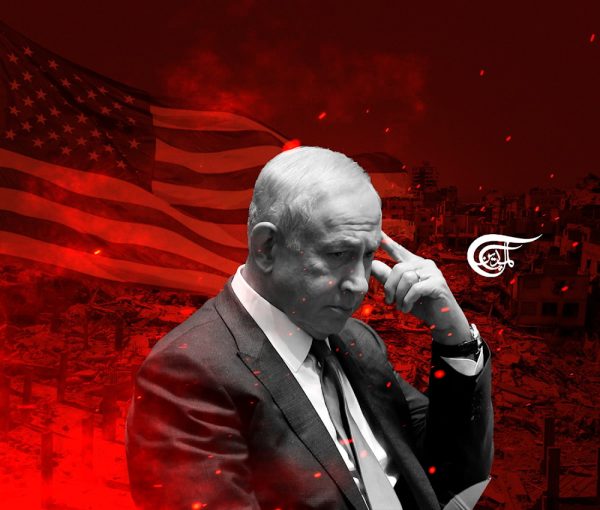
With no coherent war plan, Netanyahu’s regime is using any excuse to derail ceasefire talks
By Robert Inlakesh | Al Mayadeen | September 17, 2024
At this point, it should be clear that Hamas is not and never has been the obstacle to securing a prisoner swap and ceasefire in Gaza. Yet, it doesn’t matter how willing Hamas truly is with the fact that Israeli Prime Minister Benjamin Netanyahu is using every tool he can to create excuses as to why the war can’t come to an end, which is important to understand.
When the United States and their Israeli partners talk about the need for Hamas to sit at the table, calling on the Palestinian Resistance to accept a ceasefire deal, it is all nonsense. The analysis pieces, leaked conversations, and update articles that we see regularly published in The New York Times, The Washington Post, Axios, and other outlets are all adding to a work of fiction that has been crafted for domestic US and Israeli consumption.
There are no current negotiations, just discussions between the Israelis and Americans, which then are forwarded to the negotiating teams of Egypt and Qatar, before the conversation ultimately ends the exact same way it began, as useless ramblings that only give cover for further Israeli war crimes. This is the case as Hamas sits by and waits for the circus to end so that it can actually talk business.
The framework for a ceasefire and prisoner exchange has already been proposed by the United States and ratified by the United Nations Security Council (UNSC), and Hamas has agreed to it. Meanwhile, the Zionist entity does not speak for itself on what it has or hasn’t exactly accepted; instead, it allows the likes of US Secretary of State, Antony Blinken, to tell the world that the UNSC-endorsed Biden proposal was actually an Israeli proposal before later changing his story to that the Israelis had accepted Biden’s proposal. Even at this level, the contradictions prove how unserious the Zionist regime is.
On May 6, when Hamas announced that they had accepted a ceasefire proposal – that was almost identical to the one that Antony Blinken had spent two weeks lauding – the Israeli response was immediate rejection, followed by the invasion of the Rafah crossing.
The Israeli PM has continually argued that the war must continue until Hamas is defeated in Gaza, an objective that even the Israeli army spokesperson Daniel Hagari has said is impossible. Moreover, Netanyahu’s insistence on destroying Hamas is indicative of his outright rejection of a ceasefire. You can either defeat Hamas or do a ceasefire deal with them, you can’t have both, it simply makes no sense.
Another important point to understand is that despite the change in US President Joe Biden’s rhetoric and that of his administration, calling for an “immediate ceasefire”, you will notice that when Israeli officials comment on the issue of a ceasefire, they do so with a focus on the prisoner exchange aspect and often follow this up by stating that they must still retain the right to attack Hamas. In other words, the only ceasefire that the Zionist entity entertains is a temporary one that will ensure the release of their captives, after which they seek the “right” to continue the war. This is exactly what Benjamin Netanyahu argues, which, in essence, means that he’s openly telling Hamas to give up its bargaining chips for no reason.
The issue of Israeli forces remaining in both the Philadelphia and Netzarim corridors is a new addition to the ceasefire talks and directly violates the framework outlined in UNSC Resolution 2735 that was adopted on June 10. The resolution states explicitly that in phase 2 of the ceasefire agreement “upon agreement of the parties, a permanent end to hostilities, in exchange for the release of all other hostages still in Gaza, and a full withdrawal of Israeli forces from Gaza,” adding that it “rejects any attempt at demographic or territorial change in the Gaza Strip, including any actions that reduce the territory of Gaza.”
The evidence that “Israel” outright rejects what is quoted above from the Security Council resolution is not just limited to these new additions to the non-existent ceasefire negotiations. When Benjamin Netanyahu spoke to Congress in July, he swore that his regime was going to secure “total victory” and argued for occupying Gaza internally for a limited period of time instead of permanently. If we look at all the polling data on the opinion of Israelis, the majority of the public also agree with these ideas too.
On top of this, the Israeli military has been creating a “buffer zone” around the perimeter of the Gaza Strip, blowing up and burning every single structure in an area that constitutes 32 percent of the besieged coastal territory. Furthermore, the new addition to the Zionist entity’s war plan which is agreed upon by the majority of the Israeli cabinet is the idea of seizing the entirety of northern Gaza for a “security zone” and expelling the hundreds of thousands of residents who live there.
As occurred in Rafah, where around a million people were completely uprooted and pushed into the ever-changing so-called “safe zone” area of al-Mawasi, the Zionist entity appears to be trying to concentrate the entire Palestinian civilian population into this zone. When the civilians arrive there, they are then repeatedly forced to move on foot and their tents are bombed, burying their bodies beneath mounds of sand.
The Zionist regime is engaged in what is clearly an “endless war”, or a war of attrition, which the United States government is fully backing with tens of billions of dollars worth of weapons. The end goal here is not actually clear, but what is certain is that Benjamin Netanyahu is not about to give up. If we follow the trajectory of the war so far, it is completely dependent upon Israeli domestic politics. The war has worked as follows:
Stage 1: “Israel” launches an unprecedented air attack that decimates civilian infrastructure, while commanding the civilian population to head south, where they are also bombed.
Stage 2: “Israel” invades the Gaza Strip, focusing on the northern part of the territory and claiming that Hamas is operating its HQ out of Al-Shifa Hospital and bases out of other hospitals. It then fails to find any headquarters.
Stage 3: A prisoner exchange is concluded, during which time the Israeli regime is changing its narrative.
Stage 4: “Israel” invades Khan Younis and central Gaza, claiming that the “real Hamas headquarters is in Khan Younis,” ultimately failing to inflict any real blow on the Palestinian Resistance.
Stage 5: “Israel” winds down the clock with more brief military incursions into areas they have already invaded, inflicting countless more civilian massacres and holding off on what they now began arguing was the true headquarters for Hamas in Rafah. During this period, Benjamin Netanyahu argued that the tunnels were being used to transfer weapons and that the war could not be won without a Rafah invasion.
Stage 6: Hamas accepts a ceasefire proposal after the US had been placing pressure on the Israelis to steer clear from a major invasion of Rafah. Netanyahu decides that same day to invade Rafah but not to wage the sort of campaign he was hoping for.
Stage 7: After having invaded every area in Gaza, the Israelis are out of excuses and are throwing out random ideas, hoping they will stick and convince their own population. This has led to reviving the idea of seizing northern Gaza, which was initially proposed at the beginning of the war, yet a large portion of the Israeli public is now demanding the return of the captives, which presents a major issue. So, they are looking for anything new to buy time before the inevitable next steps must be taken.
This brings us to today.
The Zionist regime doesn’t want a ceasefire and the US pressure simply is not there to force it to change its mind. The only thing that is now applying real pressure is the relentless fire from Hezbollah on the northern front, which has grown to the point that it cannot be ignored. In order to stop the Lebanese Resistance, they have two options: End the war on Gaza or start another war with Lebanon. If the Zionist entity will not give up on its genocidal assault on the Gaza Strip, then war with Lebanon is inevitable and will likely end up taking place inside Syrian territory also.
Snowden calls Israeli pager attack ‘Indistinguishable from terrorism’
Al Mayadeen | September 17, 2024
An Israeli cyber attack caused the detonation of hundreds of pagers, resulting in mass casualties across several regions in Lebanon, including Beirut, Bekaa, and the south.
In a series of recent tweets, former US intelligence contractor and whistle-blower Edward Snowden has sharply criticized ‘Israel’ following a series of beeper explosions in Lebanon, describing the actions as “reckless” and comparable to terrorism.
Lebanese Health Minister Firas Abiad has confirmed that 9 martyrs have been killed so far as a result of the explosion of pagers on Tuesday, noting that 2,750 people were injured, including about 200 in critical condition, in 100 hospitals.
An Israeli cyber attack caused the detonation of hundreds of pagers, resulting in mass casualties across several regions in Lebanon, including Beirut, Bekaa, and the south.
Abiad detailed in a press conference that the majority of injuries, in the initial tally he announced, were in the face, eyes, hand, or abdomen.
Snowden’s tweets highlighted the severity of the situation detailing that “What Israel has just done is, via any method, reckless. They blew up countless numbers of people who were driving (meaning cars out of control), shopping (your children are in the stroller standing behind him in the checkout line), et cetera. Indistinguishable from terrorism.”
He also suggested that the pattern of injuries—consistently severe and widespread—points to the use of planted explosives rather than accidental malfunctions. “As information comes in about the exploding beepers in Lebanon, it seems now more likely than not to be implanted explosives, not a hack. Why? Too many consistent, very serious injuries. If it were overheated batteries exploding, you’d expect many more small fires & misfires.”
Hezbollah vows to respond to ‘Israel’ for pager cyber attack
The Islamic Resistance in Lebanon – Hezbollah – held the Israeli occupation fully responsible for the treacherous aggression caused by the cyber attack after obtaining results of its probe, as well as examining available data, regarding the pager detonations earlier today.
In a new statement, Hezbollah confirmed that “Israel” was behind the cyber attack on Lebanon, which left hundreds injured, and caused several fatalities across the country.
The Lebanese Resistance affirmed that the martyrs and injuries inspire the struggle on the path of al-Quds and champion the people of Gaza and the West Bank, as well as extend the continued field support [on the northern front] as a means to back the Palestinian Resistance.
Hezbollah vowed to respond to the Israeli aggression in ways and at times the occupation cannot estimate or anticipate.
“The treacherous and criminal enemy will undoubtedly face its just punishment for this heinous attack, in ways both expected and unforeseen,” the statement read.
Earlier, the Resistance confirmed that a 10-year-old girl and two of its members were killed in the explosions. Lebanon’s Health Minister also announced that eight individuals were killed and 2750 were injured, 200 of whom are in critical condition, across 100 hospitals.
To stifle truth, Israelis threaten to decapitate Lebanese journalist

Al Mayadeen | September 14, 2024
Israeli attempts to silence the truth are relentless, with one method focusing on deliberately targeting journalists who cover the massacres committed by Israeli occupation forces against the Palestinian and Lebanese people, which are crimes against humanity, to say the least.
The latest of such attempts was aimed at Lebanese journalist Amal Khalil, of Al-Akhbar newspaper, who is tasked with covering the Israeli aggression on South Lebanon. Khalil came under a direct threat via WhatsApp, in which a number contacted her and said that “they will decapitate her if she does not leave Lebanon.”
Journalist Amal Khalil revealed that she received a message from the Israeli enemy threatening to kill her and demolish her home and calling on her to leave Lebanon. This prompted Khalil to inform the relevant authorities of this matter, “as the enemy has recently resorted to this method against a lot of people.”
Speaking to Al Mayadeen, journalist Khalil said that the threat she was subjected to is against every journalist who continues to stand strong in the South, documenting Israeli crimes in video and audio.
“I received a message from an Israeli number on my personal phone on August 25,” she recounted in the interview, noting that she contacted the relevant security services, which, in turn, confirmed that this threat was serious and that the number was from inside occupied Palestine.
Khalil recalled the Israeli attacks on journalists in southern Lebanon, which resulted in the martyrdom of Al Mayadeen’s correspondent Farah Omar and cameraman Rabie Me’mari, as well as Reuters photojournalist Issam Abdallah, stressing that all Israeli attempts were to intimidate the press crews and force them to leave.
“After nearly a year of the Israeli aggression, many journalists in Palestine and South Lebanon continue to stand strong and remain steadfast,” stressing that “all credit for exposing the truth of the Israeli killing machine to the public opinion goes to these steadfast journalists.”
“All the bombing and raids will never frighten us,” she asserted.
Due process to take place
Commenting on the incident, the head of the Syndicate of Lebanese Press Editors, Joseph al-Qusaifi, denounced the Israeli threat against “our colleague Amal Khalil” and reported informing the Union of Arab Journalists, the International Federation of Journalists, and the relevant UN bodies of the matter to apply due process.
Al-Qusaifi, who was informed of the incident against Khalil, said she was threatened with being killed and her house demolished via social media under an Israeli number.
The Israeli message calls on Khalil to leave not only South Lebanon, where she is stationed, but Lebanon entirely to Qatar “if you want your head to remain attached to your body.”
The message added, “We know where you are, and we will get to you when the time comes.”
Expressing solidarity with Khalil, Al-Qusaifi condemned “the insolent threat that violates all international charters, covenants, and laws of protecting journalists in times of war.” He warned the relevant journalist and UN bodies “to be aware of the Zionist scheme against every journalist and media professional doing their professional duty and exposing the deliberate crimes committed by the Israeli war machine against civilians in Gaza, the West Bank, and South Lebanon,” vowing to follow up on the matter.
An enemy terrorized by the truth
Blue helmets and protective shields clearly marked with the word “Press” never protected journalists from Israeli attacks. Rather, the Israeli military deliberately attacks journalists to obscure the facts, through deliberate killing in cold blood, terrorizing and making arrests, and targeting family members, homes, and properties. According to the latest tally by the Government Media Office in Gaza, the number of journalists martyred since the beginning of the aggression and the genocidal war on the Gaza Strip has risen to 172, while hundreds remain detained in Israeli occupation prisons and detention centers, under the most heinous forms of abuse and torture.
In addition to targeting individual journalists and their families, Israeli occupation forces have bombed many foreign and local media HQs inside the Gaza Strip during the past period.
In Lebanon, the Israeli attacks targeted many journalists, including Al Mayadeen’s team, which led to the martyrdom of correspondent Farah Omar, cameraman Rabih Me’mari, and their colleague Hussein Aqil by a drone attack. Prior to this incident, Reuters photojournalist Issam Abdallah was martyred and several other journalists were injured, some in serious condition, by a shell from an Israeli tank while they were covering the situation on the border between Lebanon and occupied Palestine.
As a matter of fact, Israeli incitement against journalists and media outlets has extended to the West Bank, as Israeli Prime Minister Benjamin Netanyahu reiterated his call in a government session to shut down the Al Mayadeen Media Network in the region.
“Why are orders against Al Mayadeen in the West Bank not being enforced?” Netanyahu questioned. In response, Communications Minister Shlomo Karhi said that this falls under the authority of Security Minister Yoav Gallant.
Even Israeli Channel 14 made a report on Al Mayadeen, in which it expressed its fear of the channel’s media activity in the West Bank, inciting the renewal of its ban, and expressing its particular displeasure with the meeting with the commander of the Tulkarm Battalion in the al-Quds Brigades, Abu Shujaa.
The far-right channel didn’t stop at mere incitement; it went further by demanding that Israeli Minister of Security Yoav Gallant issue the ban. Gallant, however, is already grappling with numerous complications and challenges, primarily the ongoing resistance his “army” faces in the Gaza Strip, the continued military operations on various fronts—especially in the north—and the mounting problems plaguing his exhausted forces after nearly 11 months of war.
London renews demand to deploy combat troops in Lebanon: Report
The Cradle | September 12, 2024
The UK has renewed pressure on the Lebanese government to sign a Memorandum of Understanding (MoU) that would allow London unrestricted military access to Lebanon’s soil, including the deployment of British troops in the country, Al-Akhbar reported on 11 September.
“The purpose of the memorandum is to define the responsibilities and general principles regarding the deployment of British armed forces within Lebanese territory for purposes other than training activities,” the draft copy of the memorandum, obtained by Al-Akhbar, reads.
The UK Foreign Office submitted the draft in July.
At the end of August, the foreign office sent a two-page letter to the Lebanese government “requesting facilities to deploy its army in Lebanon for the purposes of evacuating citizens, and in the event that Lebanon needs humanitarian assistance from Britain.”
Lebanon’s Foreign Ministry recently sent the draft to the Lebanese army, according to Al-Akhbar.
“The above-mentioned draft memorandum of understanding was studied from all aspects, and the study concluded that the memorandum of understanding raises concerns about Lebanon’s sovereignty and independence, with the scope of the mission of the British armed forces unclear, which increases the state of uncertainty,” the newspaper cites the army response as saying.
The army reportedly “acted as if” it was not informed and did not give prior approval for the UK memorandum, Al-Akhbar revealed.
The UK initially justified this request as a precautionary measure for evacuating citizens in case of war, citing past failures in Afghanistan and Sudan.
However, sources have confirmed to Al-Akhbar that the British requests predate Operation Al-Aqsa Flood and the outbreak of the war in October.
Al-Akhbar had revealed in November last year that the UK was pushing Lebanon to accept this agreement.
The clauses include granting British military personnel immunity from arrest or prosecution, adding that if any are detained, they must be immediately handed over to UK forces. Another is giving them authority to move around the country armed and in uniform.
“The memorandum guarantees that, in the event of a misinterpretation or non-compliance with the terms, Lebanon will not be able to resort to any international court or third party to resolve the dispute,” Al-Akhbar wrote in November.
The Lebanese government has said that the MoU constitutes a violation of Lebanon’s sovereignty.
Hezbollah carries out ‘first phase’ of retaliation, Israel imposes strict censorship
The Cradle | August 25, 2024
Hezbollah launched a major drone and rocket attack at over 10 Israeli targets early on 25 August in what it called the “first phase” of its response to the assassination of top military commander Fuad Shukr in Beirut’s southern suburb on 30 July.
An undisclosed “vital military target,” was the main objective of this operation, according to the Lebanese resistance.
“All the attack drones were launched at the times specified for them and from all their [predetermined] positions and crossed the Lebanese-Palestinian borders towards the desired target and from multiple paths, and thus our military operation for today has been completed and accomplished, praise be to Allah Almighty,” a statement issued by the Lebanese resistance movement said.
The movement said it fired over 320 rockets at sites in the Galilee, which served as a diversion to prevent Israel’s Iron Dome system from shooting down the attack drones.
Meanwhile, the Israeli military claimed it carried out pre-emptive strikes that successfully thwarted a massive attack by Hezbollah after identifying overnight preparations for a major attack.
“Approximately 100 IAF fighter jets struck and destroyed thousands of Hezbollah rocket launcher barrels, aimed for fire toward northern and central Israel.”
The Lebanese resistance movement addressed Israel’s announcements in one of its statements, calling them “empty claims” that “contradict the facts on the ground and will be refuted in a speech” by Secretary-General Hassan Nasrallah.
Following the operation, Israeli media reported that Prime Minister Benjamin Netanyahu issued an order banning press interviews with Likud ministers until further notice.
Additionally, BBC journalist Nafiseh Kohnavard reported on X that the Israeli government “issued a series of new censorship regulations for media that includes the damage caused by rocket attacks to ‘strategic national infrastructure or to military bases.’”
The Israeli military said some 210 rockets and some 20 drones were launched from Lebanon at northern Israel in Hezbollah’s attack this morning.
Some of the projectiles were intercepted, while others impacted, causing damage and injuries. Many rockets also struck open areas, the military said.
Palestinian journalist Qassem Qassem noted that “The Hebrew media is currently exaggerating the size of the enemy army’s ‘preventive’ strike, and the talk about destroying 1,000 missiles directed at Tel Aviv is ridiculous.”
Al-Mayadeen noted that “Hezbollah hit its targets despite the occupation’s reliance on significant American intelligence and operational support. The resistance’s response to the assassination of martyr Fouad Shukr succeeded despite Israel’s full state of alert for over a month.”
Israel’s allies have been scrambling to prevent Iran and Hezbollah from retaliating to the Israeli attacks on their capitals last month. The assassination of top Hezbollah commander Fuad Shukr in Beirut on 30 July killed several civilians, including children.
Washington has expressed hope that reaching an agreement to end the war in Gaza could stymie an incoming response and avoid a larger-scale regional war. Yet ceasefire talks continue to yield no results.
Hezbollah has repeatedly vowed that it will not stop operations until the war in Gaza ends and promised a harsh retaliation to Shukr’s assassination in the Lebanese capital. It has also refused any discussion on Lebanon’s border situation until an end to the war is achieved.
“Our borders with Lebanon will change and will not return to what they were before the war,” an Israeli military source told Sky News Arabia on 21 August, echoing months of Israeli threats to launch an expanded war on Lebanon.
France, Spain install radars in south Lebanon to ‘monitor Hezbollah’: Report
The Cradle | August 21, 2024
French and Spanish radars installed by UNIFIL in the south of Lebanon are being used to target the resistance on behalf of Israel, Lebanese daily Al-Akhbar reported on 15 August.
“A week ago, an Israeli drone targeted two Hezbollah fighters in Naqoura. Eyewitnesses said the drone was not noticed or heard before the surprise attack, which directed attention to the new French radar that was raised above the UNIFIL base in Mount Naqoura, and whether it was used to monitor the movements of the resistance,” Al-Akhbar wrote.
The French radar, the “marine radar” as the daily refers to it, was installed in the south two weeks ago at the request of UNIFIL Chief of Staff, Frenchman Cédric du Gardin, it says.
“Before the end of his term at the end of last July, the former French Chief of Staff sent a letter ‘reprimanding his officers because of their failure to detect any drone, air defense missile or rocket’ launched by the resistance,” the report adds.
Prior to this, a Spanish radar was installed in the Blat Plain in southern Lebanon’s Marjayoun.
Israel “asked the current UNIFIL commander, the Spaniard Arludo Lazarro, to install the radar immediately after his appointment two years ago. However, local Lebanese pressures postponed the decision until Army Commander Joseph Aoun and the government expressed their approval of it, with Defense Minister Maurice Slim refusing,” sources told the newspaper.
The Spanish radar monitors the occupied Shebaa Farms and Kfar Shuba hills on the Lebanese border.
The two radars “complement the French radar system installed since after the July 2006 aggression on Lebanon” in the vicinity of Bint Jbeil, the daily reported.
According to the report, UNIFIL’s navy has also joined the intelligence campaign to make up for the blind spot created by Hezbollah’s attacks on Israeli surveillance sites and equipment.
“A German warship, which has been in command of UNIFIL’s naval forces since 2001, is stationed off the coast of Naqoura. No one knows who is boarding or disembarking off of it or using it for reconnaissance, especially in the area extending from Tyre to Naqoura, which has witnessed several assassinations,” field sources told the newspaper.
UNIFIL has been operating in Lebanon since the first Israeli invasion of 1978. Despite this, their forces failed to end an 18-year occupation and have attempted to expand their areas of influence without proper authorization.
Many in Lebanon have for years accused UNIFIL of acting to suppress resistance in the south on behalf of Israel.
Last year, Washington and London had been trying, on behalf of Israel, to secure Lebanon’s approval for a UN Security Council resolution ensuring freedom of movement for UNIFIL across the country, without accompaniment from the Lebanese army as is the law.
“The US and Israel were unable to implement the freedom of movement clause despite the enormous pressure on Lebanon,” Munir Shehadeh, Lebanon’s former government coordinator for UNIFIL, told Al-Akhbar.
Featured Video
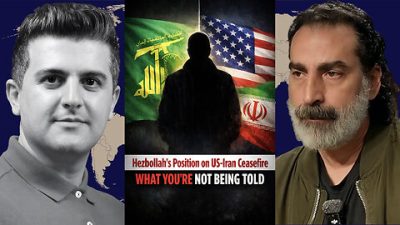
Laith Marouf: Hezbollah’s position on US-Iran ceasefire
or go to
Aletho News Archives – Video-Images
From the Archives
The Dirty Little Secret behind the “Global Terrorism Index”
The Omission of Israeli Terrorism in the Occupied Palestinian Territories
By Karin Brothers | Global Research | December 6, 2014
… The Israeli settlements — all of which are illegal – have been identified as a major impediment to peace. The refusal of a major “global” terrorism report to name the Israeli settlers as one of the groups most responsible for terrorism not only misrepresents a major source of regional violence but exposes the Global Terrorism Index as a propaganda tool that supports a U.S. agenda.
In recent years, governments have been attempting to thwart terrorism by blocking supportive fund-raising. When it comes to Israeli settlements, however, the US and Canada actually encourage fund-raising by giving organizations (such as Christian Friends of Israeli Communities (CFOIC) and the Jewish National Fund) financial support in the form of donor tax-deductions.
Charities which provide funds for the Israeli settlements should be regarded as terror-financing organizations. They should not only lose their tax-deductible status, but they should be banned because they support the violation of international humanitarian law. The terror-financing laws that are being strictly enforced for Muslim charities should be applied to Christian and Jewish charities as well. … Read full article
Blog Roll
 Aletho News
- How UK Regulator Ofcom Quietly Bypassed International Law to Police American Speech
- The Black Cube Files: How Former Mossad Operatives Flipped a Nation
- Laith Marouf: Hezbollah’s position on US-Iran ceasefire: What you’re not being told
- Israel’s priority lies in destroying chances of peace between Iran, US: Ex-UN nuclear chief
- Ceasefire for all or for none: Iran shuts Hormuz over Lebanon attacks
- Strait of Hormuz is Iran’s ‘nuclear weapon’ that forced US retreat: Medvedev
- Energy crisis will last for months – Kremlin envoy
- Europe’s quiet role in the war on Iran
- Forty days that shook the Empire: How Iran turned the tables on US and prevailed
- Netanyahu unilaterally declares Lebanon outside of ceasefire deal
- If Americans Knew
- Gazans face a triple crisis: severe shortages of water and bread, healthcare in tatters
- NY Times reports how Netanyahu took the US into Iran War
- A sigh of relief over Iran, but Gaza and Lebanon in dire straits – Daily Update
- Thousands dead and neighborhoods razed to the ground: Aid agencies fear southern Lebanon is becoming the new Gaza
- The war the US is fighting for Israel could cost trillions
- ‘Cigarette Burns, Nail Wounds’: Toddler Tortured in Gaza to Coerce Father
- Trump Says US Sent ‘a Lot of Guns’ to Protesters in Iran
- Israeli forces destroy 17 UN peacekeeper cameras in south Lebanon
- US-Israeli strikes ‘completely destroy’ synagogue in Tehran
- Archbishop for US Military Says Iran War Is Unjust Under Catholic Teaching
- No Tricks Zone
- An Inconvenient Tree: Uncovered In Alps… Europe Much Warmer Than Today 6000 Years Ago
- New Study Reports A 60% Slowdown In Greenland’s Ice Loss Rate In The Last Decade
- Low Intensity Tornado Wrecks Major Solar Farm, Creating A Potential Toxic Dump
- New Study Finds Warming Saves Lives…Cold Temperatures 12 Times More Deadly Than Excess Heat
- German Science Blog Accuses PIK Climate Institute Of Hallucinating Climate Tipping Points
- Devastating Assessment Of Comirnaty Vaccine By Former Senior Pfizer Europe Toxicologist
- New Study: CO2 Is ‘Effectively Negligible’ As An Explanatory Climate Change Factor Since 2000
- Former Pfizer Toxicologist Dr. Helmut Sterz Tells Bundestag Hearing Pfizer Vaccine Should Have Never Been Approved
- Energy Expert: Germany’s Nuclear Phaseout Was A “500 Billion Euro Mistake”
- New Research: South Australia’s Mid-Holocene Sea Surface Temperatures Were 4°C Warmer Than Today
 Aletho News