What is the Israeli strategy in Gaza?
By Robert Inlakesh | Al-Mayadeen | October 28, 2025
In order to understand the Israeli-US agenda underlying the so-called “peace plan” set forth by US President Donald Trump, it is important to examine the objectives of the Zionist regime and then assess how these aims might be realized. Such an analysis helps reveal what the future may hold and whether the fragile ceasefire is likely to endure.
On October 19, the Gaza ceasefire appeared to have collapsed after the Zionist regime launched over 100 airstrikes, dropping at least 153 tonnes of explosives across the besieged coastal enclave, and killing around 44 civilians. Even Israeli media outlets reported that the ceasefire had broken down and that the war had re-started, before the situation calmed down by the next day.
Initially, the Israeli establishment claimed that two of its soldiers had been killed by Palestinian fighters in an ambush involving RPGs and automatic weapons, asserting that its subsequent attacks were merely a response to this incident—one that Hamas categorically denied any involvement in.
Yet, it wasn’t long until American, Palestinian and even Israeli reporters began to reveal the truth. In reality, while Israeli soldiers, alongside settlers contracted for demolition work, were violating the ceasefire by destroying Palestinian infrastructure, they accidentally drove over an unexploded ordnance. The consistency of reports from multiple sources lent credibility to this account, yet the Zionist military quickly imposed a publication ban on the incident, before later partially admitting to what had truly occurred.
This meant that the Israelis had, in essence, killed their own soldiers by violating the ceasefire and sending their forces to destroy infrastructure within what was effectively an active minefield, then blaming the Palestinians as a pretext to kill more civilians. Up until that point, the Israelis had already committed at least 80 ceasefire violations and killed more than 100 innocent people.
From day one of the ceasefire, the Israelis had also adopted a strategy of outsourcing the Gaza front’s combat operations to three ISIS-linked proxy militias – each stationed in different areas behind the Israeli imposed ‘Yellow Line’ – instead of engaging Hamas directly. The Zionist regime began pursuing a policy of using these proxy forces to carry out assassinations and ambushes against prominent figures and members of Gaza’s security apparatus.
The Israeli strategy, backed by the United States – according to anonymous sources who spoke to Axios – is to begin using reconstruction funds, to build structures behind the Yellow Line, which represents around 54-58% of Gaza’s territory where the occupation refuses to withdraw and works alongside its proxies to control the enclave. At the same time, the Israelis sought to strangle the civilian population living in areas under the Hamas-led civil authority, while offering them the alternative of living under the joint Israeli-collaborator occupation.
This strategy has already begun to crumble, as many of the families which the Zionist Entity sought to co-opt have sided with the resistance and rejected the collaborators in the midst. Meanwhile, the Palestinian Resistance continues to pursue these collaborator death squads and prosecutes them for their various crimes, including acts like murder and aid theft.
Like other similar strategies proposed by the Israeli regime and greenlit by their subservient American backers, this one is likely to fail under pressure and does not make logical sense given the realities on the ground and the fact that the Zionist proxies have no popular support.
So, then, what do the US-Israeli alliance have in store? It is quite simple, they are seeking to achieve some of their goals under the guise of a ceasefire, which they only partially respect by allowing in limited aid supplies and killing less people than they did prior to the so-called “peace deal”.
Similarly, in Southern Lebanon, the Israelis hatched a scheme after the ceasefire was imposed to seize control of more territory than they managed to capture during the war, all while committing daily ceasefire violations. carefully calibrated to stop short of triggering a return to an all-out war.
If they fail to achieve their aims through limited military measures and aggressive maneuvers dressed up as diplomacy, they will resort to full-scale force, because “peace” is not an option.
In order to understand this line of thinking, you first must conclude that the Israelis have pursued their policies up until this point as a means of collapsing the regional resistance against them, eliminating each and every threat posed to their rule.
To the Zionist regime, there is a perceived imperative to produce an “answer to the Gaza question”, a formulation that, in their view, amounts to the elimination of the people of Gaza: an ethnic cleansing campaign and genocide accompanied by the destruction of the entire territory’s infrastructure. This is not only the objective of the Israeli leadership, but a project implicating Israeli society as a whole, a national project of elimination.
October 7, 2023, represented a major blow to the Zionist project, one that collapsed the illusion of its military superiority and shook its ideology to the core. So, it has since pursued a project to teach its adversaries a lesson and to destroy the ability of regional actors to resist them. Gaza is a statement, rise up against us, and we will pulverize you.
To a certain extent, this strategy has so far succeeded to deter any Arab population from rising up. Immediately after October 7, the Jordanians and Egyptians, for example, had started to join mass demonstrations, attempted to breach the border, and clashed with regime forces. Yet the daily scenes of devastation in Gaza, along with the propaganda pushed by the Arab Regimes, crushed their pride, determination, and willingness to continue resisting, at least for now.
The regional resistance, however, remained undeterred, which is why the US-Israeli alliance now seeks to destroy it, or at least to weaken it so severely that it no longer poses a significant threat.
If the Israelis experience another October 7-style military defeat that includes the penetration of its defensive lines, this will represent a decisive, even mortal, blow to the project, and the Zionist regime is well aware of that.
What occurred on October 7 irrevocably transformed the regime and set in motion a series of irreversible changes. Senior Zionist leaders now view current events in stark binary terms: either the re-birth of “Israel” or its gradual demise. If the former is achieved, the regime would secure de-facto control over the region and bury its security issues; if it fails to eliminate Gaza, to break the Lebanese resistance, and to sufficiently weaken Iran, it will be one step away from a crushing defeat.
In the Zionist regime’s thinking, now is a historic opportunity to exterminate all those who resist it, eliminate Gaza entirely, and impose uncontested dominance over the region. Although it has so far failed to achieve these goals, it perceives any inability to secure a “total defeat” as an existential threat to its own survival. Therefore, if “Israel” does not accomplish during the ceasefire what it set out to do, it is likely to pursue those objectives through renewed military action, with Lebanon and Iran expected to become the principal fronts in the future.
Palestinian justice group seeks UK prosecution of British-Israeli citizen for serving in IDF
MEMO | October 24, 2025
The International Centre of Justice for Palestinians (ICJP) has formally applied for a court summons to prosecute a dual British-Israeli national for allegedly breaching UK law by voluntarily serving in the Israeli military. If successful, the case could set a legal precedent for accountability under Britain’s rarely used Foreign Enlistment Act of 1870.
The individual is accused of serving first on the Lebanese border and then in the illegally occupied West Bank as a member of the Israel Defense Forces (IDF). ICJP alleges that the engagement constitutes an offence under Section 4 of the Foreign Enlistment Act (FEA), which prohibits British subjects from enlisting in the military of a foreign state that is at war with a state friendly to the UK.
In a statement released yesterday, the ICJP confirmed that its application for a court summons was submitted on 20 October. The preliminary hearing is expected to take place in the coming weeks.
“This is a significant step in holding suspected war criminals accountable within domestic jurisdictions for offences that they have committed outside of their home countries,” said Mutahir Ahmed, ICJP’s Head of Legal. “War criminals must be held accountable for their role in the genocide, from the most senior generals to the most junior foot soldier.”
The individual named in the filing, who remains unnamed for legal reasons, is not believed to have been conscripted. Israeli law does not compel dual nationals residing abroad to enlist, which ICJP argues makes the engagement a voluntary act and therefore subject to prosecution under UK law.
The legal submission, drafted by senior King’s Counsel, includes both expert testimony and supporting evidence of alleged FEA violations. ICJP says this is the first in a series of prosecutions it is pursuing as part of its broader Global 195 campaign, a reference to the number of UN-recognised states whose nationals may be subject to domestic accountability for war crimes committed abroad.
Palestine has been a State Party to the Rome Statute of the International Criminal Court since April 2015. Its statehood was reaffirmed by a 2021 ICC ruling and more recently recognised by the UK government. As Palestine is considered a “friendly state” under the terms of the Foreign Enlistment Act, ICJP argues that British citizens who engage in hostilities against it through service in the IDF are in breach of UK law.
The organisation says it has gathered evidence on more than 10 British citizens — including dual nationals — who may have either fought in the IDF or provided material support to its military activities. The current application marks what ICJP calls a first test case, with further prosecutions anticipated.
US envoy renews threats against Lebanon as Israeli warplanes strike south
The Cradle | October 20, 2025
US envoy Tom Barrack renewed threats against Lebanon on 20 October in an opinion piece published on his social media account, warning that Beirut must “act” or face an “inevitable” Israeli assault.
The US “must assist Lebanon in decisively distancing itself from Hezbollah before the country is overtaken by a growing global shift toward zero tolerance for terrorist organizations.”
“If Beirut fails to act, Hezbollah’s military wing will inevitably face a major confrontation with Israel, at a moment when Israel is at peak strength and Iranian support for Hezbollah is at its weakest,” the US envoy added.
Barrack went on to say that disarming Hezbollah “is not only a security necessity for Israel, but also Lebanon’s opportunity for renewal, the restoration of sovereignty, and a chance for economic recovery.”
This was not the US envoy’s first threat to Lebanon.
In late September, Barrack confirmed Washington’s intention of placing the Lebanese Armed Forces (LAF) in a direct confrontation with the resistance.
“Who are they going to fight? We’re gonna arm them so they can fight Israel? I don’t think so. So, you’re arming them so they can fight their own people. Hezbollah,” he said. He also warned Lebanon to commit to disarming Hezbollah or face a new Israeli war, while confirming that Israeli forces will not withdraw from south Lebanon until the resistance gives up its arms.
Barrack’s newest comments on 20 October came the same day Israeli warplanes carried out violent strikes on the Al-Mahmoudiya–Jarmaq area in south Lebanon. Israeli drones also buzzed over the capital at low altitude.
A few days earlier, Israel launched its heaviest strikes on Lebanon since the ceasefire, destroying millions of dollars’ worth of reconstruction equipment.
Over 300 people, including scores of civilians, have been killed by Israeli attacks on the country since the ceasefire was reached in November last year. Israel has also expanded the occupation it established during the ceasefire in violation of the deal, and Tel Aviv has said that it will not consider withdrawal until Hezbollah is disarmed first. Washington has publicly backed Israel’s position more than once.
The Lebanese government adopted a decision to disarm Hezbollah in August under heavy pressure from the US.
Hezbollah has rejected the decision. It says it is open to discussing a national defense strategy, which would see its weapons incorporated into the Lebanese army and be available for use in defending the country if needed.
Yet the resistance group has emphasized that these talks cannot take place while Israel continues to attack Lebanon and occupy its territory in the south.
In early September, Lebanese army chief Rudolphe Haikal presented his disarmament plan to the government after being tasked to draft a strategy following the 5 August cabinet decision to disarm the resistance, which Hezbollah continues to reject. Deliberations have been kept confidential, and the army has been ordered to present monthly updates about the implementation.
Given the confidentiality, the timelines of the plan remain unclear. Some Lebanese media reports have said that the government “backtracked” from its decision.
Last month, Barrack said, “the Lebanese … all they do is talk.”
Graham’s Middle East vs. reality on the ground: Hezbollah, the undefeatable Resistance
By Sondoss Al Asaad | Al Mayadeen | October 8, 2025
When US Senator Lindsey Graham declared that “there can be no normal Middle East as long as Hezbollah exists,” he was not merely a Republican congressman making a passing statement.
Rather, Graham was expressing, with complete candor, the profound understanding within the US-Israeli strategy of a reality on the ground and in politics: that Hezbollah is the greatest obstacle to the project of “comprehensive normalization” and the reshaping of the region to suit Tel Aviv and Washington.
Graham’s statement, despite its simplicity, carries connotations that go beyond traditional political rhetoric and deconstruct the “defeat” narrative that Western and Israeli media have been promoting for years.
If Hezbollah had truly been defeated, as they claim, Graham would not have been compelled to make its disarmament a condition for any “normal Middle East.”
This condition reveals that the party remains at the heart of the equation and that no regional project can outweigh its power.
Thus, the rhetoric of “defeat” becomes nothing more than a tool for producing counter-awareness, while American statements themselves acknowledge that the Resistance remains the most formidable force.
Field facts reinforce this conclusion: Between December 2023 and September 2025, American MQ-9 Reaper drones carried out dozens of sorties over Lebanon, some lasting for long hours, reaching up to 18 consecutive hours, with up to three drones participating simultaneously over the South, the Bekaa, and Greater Beirut.
According to the Union Center for Research and Development, these drones don’t just photograph; they also intercept communications, decrypt encryption, and have the capability to strike with Hellfire 3 missiles.
More seriously, these missions are carried out without any coordination with civil aviation authorities, which has led to several incidents that nearly turned into air disasters.
However, Washington sees no harm in this blatant violation of Lebanese sovereignty, instead framing it as a “security necessity” to protect Israel since the “Al-Aqsa Intifada” of 2023.
Fundamentally, this American behavior does not express “normalcy” as Graham desires, but rather the continuation of the abnormality imposed by Washington on Lebanon and the region by violating airspace and sovereignty and employing all intelligence tools to “Israel’s” advantage.
Thus, the paradox becomes clear: Graham is demanding the disarmament of Hezbollah under the pretext of restoring “normalcy”, while his country is practicing the most extreme forms of abnormality on the ground.
Nevertheless, what Washington does not realize is that the Lebanese street is moving in a different direction. The mass scenes that accompanied the funeral of Hezbollah Secretary-Generals, in February 2025, were a revealing moment.
Hundreds of thousands filled the streets in the south, the suburbs, and Beirut, in an unprecedented scene that expressed the depth of popular connection to the Resistance.
These crowds were not merely an emotional response; they were an eloquent political message: the Resistance is not merely an armed organization, but a socio-popular movement rooted in the people’s conscience.
This popular entrenchment was also reflected at the ballot box. The results of the recent municipal elections showed significant progress for the Resistance lists and their allies in the South and the Bekaa, reflecting that the public mood still favors this option and that attempts to promote a narrative of defeat have not affected the broad social base.
Faced with these realities, the Resistance’s domestic opponents, particularly forces linked to the US embassy in Beirut, have resorted to attempting to circumvent the situation through the political-legal process.
Amendments to the electoral law have been proposed, aiming to redistribute representation or introduce new mechanisms, particularly with regard to expatriate seats, in order to reduce the parliamentary weight of the Resistance forces and weaken them within the institutions.
These attempts fall within a single strategic context: if Hezbollah cannot be defeated militarily or popularly, then let us attempt to contain it through the law and the constitution.
However, these maneuvers also reveal the extent of the impasse facing the American camp in Lebanon. The more popular support for the resistance increases and transforms into a tangible electoral presence, the more the external insistence on engineering laws that satisfy the demand for normalization with “Israel” increases.
Indeed, Graham’s statement becomes clearer: He’s not just talking about weapons, but about eliminating the Resistance option from the equation as a whole, by dismantling its battlefield, political, and popular power.
But even this ambition clashes with reality. The popular scene in Lebanon—from the funerals of leaders to the results of the municipal elections—clearly indicates that the Resistance is not in a collapsed defensive position, but rather in a position of strength protected by the balance of deterrence with “Israel” and a renewed popular support.
More importantly, Graham’s rhetoric, which was supposed to be threatening, has turned into an implicit admission: “The Middle East will not be normal without the defeat of Hezbollah,” meaning that the party’s survival is what prevents US-Israeli normalization from becoming an inevitable fate.
The bottom line is that between the rhetoric of a “normal Middle East” and US violations, and between attempts to amend laws and the escalating popular scene, one equation becomes clear: Hezbollah has not been defeated and will not be defeated!
Hezbollah may face challenges, and military, political, or media wars may be waged against it, but its deep-rooted presence among the people and on the ground makes it a constant force in the equation.
Any rhetoric about a “normal Middle East without it” is nothing more than an admission that its power is what deprives the American-Israeli project of its alleged “normality”.
US sent $21.7 billion to Israel to back Gaza genocide: Study
Press TV – October 7, 2025
An academic study has revealed that the United States has funneled $21.7 billion in financial and military assistance to Israel since the onset of the Gaza genocide on October 7, 2023.
The report released on Tuesday by the Costs of War Project at Brown University’s Watson Institute for International and Public Affairs details how the US State Department and the newly renamed Department of War, under both Joe Biden and Donald Trump administrations, have collectively transferred at least $21.7 billion to support Israel’s genocide in Gaza.
According to the study, the United States supplied $17.9 billion to Israel in the first year of the genocide, during former US president Joe Biden’s tenure, and $3.8 billion in the second year.
A large portion of the assistance has already been delivered, while the remainder will be distributed in the coming years, the report added.
The study notes that Washington is expected to allocate tens of billions of dollars in future funding to Israel through various bilateral deals.
Another analysis, also published by the Costs of War Project, states that the United States has spent approximately $9.65 – $12.07 billion on military operations in West Asia over the past two years.
US spending in the region, such as strikes on Yemen in March and May 2025 and attacks on Iranian nuclear sites on June 22, estimates total costs between $9.65 billion and $12 billion since October 7, 2023, including $2 billion to $2.25 billion for operations against Iran.
Although both reports rely on open-source data, they present detailed assessments of US military support for Israel and estimates of the cost of direct American involvement in the region.
Meanwhile, the State Department has not commented on the amount of military assistance given to Israel since October 2023. The White House referred inquiries to the Pentagon, which oversees only a part of the aid that is given to the Zionist entity.
The studies argue that without US backing, the regime would have been unable to maintain its genocidal campaign in Gaza for two years.
The principal study was produced in collaboration with the Washington-based Quincy Institute for Responsible Statecraft.
Pro-Israel groups have accused the institute of isolationism and anti-Israel bias, allegations the organization firmly denies.
Meanwhile, Israel’s war machine continues its campaign of destruction, claiming countless civilian lives across Gaza and the wider region.
Since October 7, 2023, when Israel launched its genocidal war on the besieged Gaza Strip, more than 76,000 Palestinians, including over 20,000 children and 12,500 women, have been killed or gone missing, while in its 12-day war with Iran last June, the regime killed at least 1,604 people.
Why the US is so open about its intentions for Lebanese civil war
By Robert Inlakesh | Al Mayadeen | September 30, 2025
The United States is now openly admitting that it is arming the Lebanese military to fight its own people and that it won’t allow Lebanon to defend itself against the Israelis. This is no mistake and is instead part of a clear-cut strategy, designed to plunge the nation into chaos.
Although Lebanese Prime Minister Nawaf Salam has openly followed orders from his American allies, choosing to pursue the disarmament of Hezbollah without any national defense strategy, a move opposed by the majority of the Lebanese public, it seems that the US is still not impressed.
While some have been duped into believing the policy of pursuing disarmament depends on the willingness of the Lebanese military, this way of reading the current American plot is completely wrong. Disarming Hezbollah is just step one in a much more complex strategy.
Since the ceasefire on November 27, 2024, the Zionist regime has continuously bombarded Lebanese territory, anywhere and at any time. They have committed around 5,000 total violations, continuing to expand their military presence in the south of Lebanon, where the Zionist leadership vows to remain indefinitely.
It is crucial at this stage to ask why, especially since airstrikes, specifically those that kill civilians, only complicate the US-assigned tasks of the Lebanese government, bringing both shame and embarrassment, particularly to Nawaf Salam.
One way of looking at the airstrikes is that the Israelis are seeking to degrade the capabilities of Hezbollah and prevent them from rebuilding following the war. Yet, their strikes are simply not effective enough to make a significant dent in this regard, although they may be hitting some sensitive targets on occasion.
This leaves us with the obvious explanation: the ongoing military assault is part of a war of perception which Hezbollah should behave in a very calculated way to deal with. The Israelis achieve two objectives by carrying out more and more provocative violations of Lebanese sovereignty: they project an image of dominance and attempt to bait Hezbollah into responding.
Some would then ask: Why does Hezbollah not respond? A question sometimes asked rhetorically in order to infer that they are too weak to do so.
The answer is quite simple. Hezbollah has put up a limited military front for almost an entire year in support for Gaza, responding to each Israeli escalation in what it considered a calculated manner. Yet all this merely allowed “Israel” to hatch a plot which harmed not only Hezbollah, but Lebanon as a whole. Despite this, the Zionist regime failed to finish the job, and Hezbollah not only survived but fought a defensive war to a stalemate.
If Hezbollah decides to respond in a limited manner to Israeli aggressions, it would provide the perfect excuse for the occupying entity to launch a large-scale military operation which would significantly damage Lebanon. In return, if Hezbollah does not manage to achieve major and overt military victories in such a confrontation, it would be a devastating blow.
In other words, the next confrontation has to be on a much greater scale than anything seen before, a military campaign in which Hezbollah manages to shock not only the Israelis, but the world, and most importantly, the Lebanese people themselves.
The martyred Secretary General of Hezbollah, Seyyed Hassan Nasrallah, often spoke of the media war with the Zionist entity, treating it with great seriousness. This was because public perception shapes not only political outcomes, but also the course of battles on the ground through morale.
Prior to September 2024, the stock of Hezbollah was incredibly high. The public perception was that the Resistance was capable of defeating the Israelis by itself. This is why the end of the war and its results, the renewed occupation of Lebanese lands, brought shock. In reality, Hezbollah’s capabilities were never matching those of the Israelis, yet the tenacity of the Lebanese fighter and the Resistance’s planning created such an impression, especially following the 2006 war.
The perception of Hezbollah’s strength made the Israeli terrorist pager attack and assassination strikes against its leadership all the more devastating, because the public believed such attacks to be impossible.
This is something that the US has since weaponised, with figures like US envoy Morgan Ortagus even declaring that Hezbollah is over. This brings us to her fellow American envoy Tom Barrack’s recent interview with Sky News Arabia.
Barrack explicitly asserted that the US is supplying the Lebanese army to fight its own people, even laughing at the idea that this support is intended to confront “Israel”. While some analysts interpreted Barrack’s statements as ill-advised or mistaken, they couldn’t be further from the truth, there is a reason why he speaks with such confidence.
The U.S. Trump administration understands full-well that the Lebanese army is not capable of removing Hezbollah’s weapons by force alone. The Americans and their Israeli allies may be many things, but they are not naive on this issue. They understand that many strings must be pulled if Hezbollah is actually going to suffer a blow which will lead to significant military degradation.
Part of this strategy is to try and publicly humiliate not only Hezbollah, but also the Lebanese State and people as a whole. Meanwhile, the Israelis are performing their part in this plot and are escalating their provocative actions, now implementing tactics such as deliberately carrying out civilian massacres, like the one that occurred in Bint Jbeil recently. Also, they are now attempting to clear portions of southern Lebanon by issuing evacuation orders before bombing civilian buildings.
What the likes of Nawaf Salam don’t appear to understand is that they are totally disposable in this equation. Meaning that there is even a danger he could be assassinated by the Israelis or Americans in order to pin the blame on Hezbollah and its allies.
Right now, the US and “Israel” are plotting against Lebanon. They will seek to carry out actions which will be just as detrimental, if not more, than what we witnessed last September, and they are under no illusions about whether the Lebanese army could simply disarm Hezbollah for them.
The Israelis are openly seeking the so-called “Greater Israel”, as per their Prime Minister Benjamin Netanyahu’s own admission earlier this year. A common misconception about the “Greater Israel Project” is that it would mean occupying Lebanon, Syria, Jordan, parts of Iraq, Saudi Arabia, Egypt, and even Türkiye, in the same way it did in Palestinian occupied territories.
In fact, the man who first conceived the “Greater Israel” model, Oded Yinon, in his academic article back in 1982, advocated for an Israeli empire, under which the nations of the region would be broken down into sectarian regimes and ethno-states, all of which would be effectively demilitarized and under the de-facto control of the Zionist Entity.
When the Zionist regime occupied southern Lebanon following the 1982 invasion, during which 20,000 people were killed, it relied on the “South Lebanon Army” to carry out its agenda. A similar system was not set up in the occupied West Bank. There, the Zionists instead injected their population to build illegal settlements and Judaize the area, while collaborators managed the territory under Israeli rule.
Similarly, in Syria, the Zionists are not necessarily interested in settling Daraa, for instance, they would much rather demilitarize the entire south, except the collaborator regime they hope to implement in Sweida. Officials in Tel Aviv have also made it clear that they will never tolerate the rebuilding of the Syrian Arab Army; they will only allow a military force comparable to that of Lebanon.
All of this is to say that there is a psychological war being waged on the people of Lebanon and region at large. Hezbollah is still very much militarily capable of taking the fight to the Israelis, but how they do it is of great importance. We know well that the Resistance still possesses considerable capabilities, because we witnessed newly revealed weapons right up until the final days of the war, many of them in clear abundance.
One mistake that the US may be making, however, is that all its rhetoric about Hezbollah could well backfire.
Iran security chief backs Saudi-Hezbollah rapprochement from Beirut
The Cradle | September 27, 2025
Secretary of Iran’s Supreme National Security Council, Ali Larijani, stated on 27 September that Hezbollah is a “bulwark” against Israeli aggression, rapprochement with Saudi Arabia is to be welcomed, and that the Lebanese people do not need the US as a “guardian.”
Larijani made the statements after arriving in the Lebanese capital on Saturday to attend the anniversary ceremony of the assassination of Hezbollah leader Hassan Nasrallah.
During a press conference following his meeting with Parliament Speaker Nabih Berri in Ain al-Tineh, Larijani said Hezbollah “represents a solid barrier against the Israeli entity,” one year after Israel’s devastating war that killed 4,047 Lebanese, including fighters and civilians.
Despite Israel’s air superiority, Hezbollah fighters were able to prevent the invading Israeli forces from moving deep into Lebanese territory.
However, Israeli troops managed to occupy five points on Lebanese territory near the border that they continue to hold.
Since the end of the war, Israel has carried out thousands of airstrikes, including a drone strike on a family traveling by car as they reached their home in Tyre in southern Lebanon earlier this week.
The strike killed Shadi Charara, a car dealer, and three of his daughters. His wife and one of his daughters survived the strike. A man riding a motorcycle nearby was also killed.
“The resistance represents a significant asset for the Islamic nation,” Larijani stated, while praising Nasrallah for recognizing the danger posed by Israel decades ago and developing plans to confront it.
Larijani pointed out that Iran wants countries in the region to cooperate with each other in the face of the Israeli threat, despite previous disagreements. “They must put these aside and make cooperation the basis of their relations.”
As a result, he praised Hezbollah Secretary-General Sheikh Naim Qassem’s efforts to improve relations with Saudi Arabia.
“Saudi Arabia is a sister country to us, and there are ongoing consultations between us. Today is a day of cooperation in confronting a single enemy,” Larijani stressed.
Regarding the deep US influence in the country, Larijani stated that, “The Lebanese people are rational and do not need a guardian, nor do they need the Americans to appoint themselves as their guardians.”
He also addressed US Special Envoy Tom Barrack’s assertion that the US is arming the Lebanese army not to fight against Israel, but to fight Hezbollah.
Larijani said that Barrack is “stirring up discord, sowing division, and causing problems within the country and among its citizens, while the approach adopted by Iran is based on Lebanese officials addressing their internal issues through consensus.”
Regarding Israeli threats, he stressed that Iran is prepared for another war with Israel, but warned that it would be “stupidity” for Israel to launch such a war and that Iran’s response would be severe.
In June, Israel launched an unprovoked war against Iran, killing at least 935 people and targeting the Islamic Republic’s air defense and nuclear sites. Iran responded by hitting Israel with barrages of ballistic missiles and drone strikes.
After meeting with Speaker Berri, Larijani then headed to the Government Palace, where he met with Prime Minister Nawaf Salam.
The two reviewed the latest developments in the region and bilateral relations between the two countries.
Salam emphasized that Lebanese-Iranian relations “must be based on mutual respect for each party’s sovereignty and non-interference in internal affairs.”
Washington based think tanks advocate war on Lebanon
By Robert Inlakesh | Al Mayadeen | September 16, 2025
Despite the approval of a plan submitted on September 5, by the Lebanese Armed Forces, to disarm Hezbollah, the United States and Israeli regime are not satisfied with the move. What they had hoped for was an aggressive and destructive plot that could have plunged the nation into chaos.
The United States has been pushing the Lebanese government to order the full disarmament of Hezbollah, doing so without providing any tangible guarantees or even allowing Beirut to draft its own national defence strategy. Simply put, the US Trump administration hopes to pursue, through diplomacy, what the Israelis failed to achieve during their war of aggression against Lebanon.
While Lebanese Prime Minister Nawaf Salam has decided to take his orders from the United States on the question of disarmament, it is clear that the plan which was recently adopted by the Lebanese Armed Forces does not meet the standards set by the United States, and by extension, the Israelis.
The plan is supposedly divided into four separate phases, beginning in south of the Litani River. However, the plan was not revealed publicly, and there appears to be no specific deadline as to when Lebanon will achieve its stated mission. Everything has remained quite vague.
This predicament has now sparked outrage amongst Washington-based pro-war think tanks that have a significant impact on the US’s foreign policy decisions.
Take the Zionist Lobby cut out think tank, the Washington Institute for Near East Policy (WINEP), for example. Their most recent article on the issue is titled “Without a Hezbollah Disarmament Deadline, Lebanon Should Face Repercussions”.
The WINEP piece argues that the US government should pressure the Lebanese Army to take escalatory measures that would inevitably result in violent armed clashes with Hezbollah, including seizing a military position north of the Litani River as an initial step toward disarmament, and setting a specific deadline for this process.
The author of the piece, Hanin Ghaddar, writing for the Zionist think tank, advocates weaponising US aid to Lebanon by making it conditional on disarmament demands. She goes even further, arguing that the US should go after Lebanese Parliament Speaker, Nabih Berri, in order to turn the Amal Movement against Hezbollah and to destroy the Shia alliance in the upcoming elections. It is also noted that additional sanctions should be used to the effect of going after Lebanese Shia elected officials. This is a clear call for election interference.
Another notable piece was recently published by Haaretz and reposted by the infamous Zionist think tank, the Foundation for Defense of Democracies (FDD). The author of the piece, entitled “Why Israel Shouldn’t Celebrate Lebanon’s Promise to Disarm Hezbollah Just Yet”, was written by FDD senior fellow David Daoud.
In this article, the FDD think tank senior fellow argues that the Israeli regime should continue bombing Hezbollah sites throughout Lebanese territory and aim at significantly weakening the Lebanese resistance group in order to pave the way towards the Lebanese Armed Forces being able to carry out the rest of the job.
In the WINEP piece, delusional depictions of the Lebanese military’s capabilities when it comes to fighting a war with Hezbollah, use the likes of LAF’s operation in the Nahr al-Bared refugee camp, back in 2007, and the Army’s clashes with ISIS – in which Hezbollah fought alongside them – as examples of how they could prove successful. However, Daoud is less delusional and sets forth a strategy that allows for the Israelis to do all of the heavy lifting instead.
The Atlantic Council think tank has meanwhile been promoting the false idea that the Lebanese public, with the exception of the nation’s Shia population, are in favour of Hezbollah disarmament and that the resistance group has been all but defeated. Completely contradicting this notion however, is the fact that 58% of the Lebanese public polled said they oppose Hezbollah’s disarmament without a national defense strategy.
Even more revealing, however, was that the data published by Lebanon’s Consultative Center for Studies and Documentation exposed that 71.7% said they don’t believe the Lebanese army could defend the country from an Israeli attack, and 76% answered that they didn’t believe Lebanon’s diplomatic maneuvers could stop the Zionist regime from attacking.
The gap here, between 58% that opposed disarmament and the 71.7% to 76% that answered the way they did above, indicates that the respondents answered the disarmament question based upon emotion rather than logic, which could largely be attributed to the effectiveness of anti-Hezbollah propaganda.
Other Washington-based think tanks have also been active on this issue, including the most influential think tank over the Trump administration, the Heritage Foundation. In its case, it openly praised US President Donald Trump for his efforts to expel UNIFIL forces from Lebanon, which will occur under a phasing out approach come the end of 2026.
Across all of the prominent Washington-based Zionist think tanks, the message appears uniform, they all seek further pressure upon Beirut in order to force it to disarm Hezbollah, against the wishes of the majority of the Lebanese public.
The US is directly meddling in Lebanon’s affairs and its moves, including threatening Beirut with another Israeli war, are tantamount to violations of the nation’s sovereignty, in addition to being anti-democratic. For all the talk about “sovereignty”, Lebanese Prime Minister Nawaf Salam and his ilk have remained silent about the US imposing its will on Lebanon, nor do they have a strategy to liberate their territory in the south, or even stop the daily Israeli airstrikes carried out on Lebanese lands.
Israel’s ‘Holy War’ falters: Seven fronts, Zero victory
Netanyahu’s ‘historic and spiritual mission’ is bleeding international support, turning short-term military gains into an imminent strategic defeat.
By Mohamad Hasan Sweidan | The Cradle | September 11, 2025
For nearly two years, Israel has been waging what Netanyahu calls a “multi-front war.” This war includes, in addition to Gaza, Lebanon, Syria, Iraq, Yemen, the occupied West Bank, and Iran. In one of his interviews, Israeli Prime Minister Benjamin Netanyahu stressed that he feels he is on a “historic and spiritual mission,” and that he is “deeply connected” to the vision of the Promised Land and Greater Israel. With these words, Netanyahu confirms that what he calls a “multi-front war” is driven by both religious and political motives.
The danger lies in Netanyahu and the radical religious Zionist right believing that the world must approach the brink of a great war “for the Messiah to descend and save it”. For this reason, they encourage continuing and expanding the violence in Gaza to Lebanon, Iran, and beyond, seeing this as the “age of the Messiah.”
The seven fronts of the war
On 9 October 2023, just two days after Operation Al-Aqsa Flood, during a meeting with the mayors of the southern border towns affected by the 7 October attack, Israel’s Prime Minister stated that Tel Aviv’s response to the unprecedented multi-front assault launched by Palestinian fighters from Gaza “will change the Middle East.” From that moment, it became clear that the war would not remain confined to Gaza, but that Israel would expand it to achieve its main goal, which is a new regional order where the balance of power favors Tel Aviv.
Israeli leaders have repeatedly claimed they are simultaneously fighting on seven fronts – Gaza, Lebanon, Syria, Iraq, Yemen, the occupied West Bank, and Iran – portraying all these conflicts as targeting an “Iran-led axis” allegedly seeking to “destroy the Jewish state.”
To achieve this goal, Israel pursues two main paths: weakening its enemies and enforcing compliance by force on the rest of the region’s states, including US allies. On the first path, Israel has relied on direct military strikes, framing them as “multi-front wars” under a “defensive” rationale.
As for the second path, enforcing compliance by force, Israel repeatedly attacked the “new Syria,” a state no longer hostile to Israel or the US, and has occupied portions of its territory. Syria’s consistently positive overtures toward Tel Aviv did not deter Israel, which persisted in its strikes and continued occupation.
Meanwhile, Israel’s recent strike on Qatar on 9 September fits within two parallel tracks of its policy. The first is aimed directly at Hamas’s political leaders, signaling that there is no safe haven for them anywhere in the world. The second conveys a clear message to Qatar and other US allies in the region; Israel’s approach is not based on shared interests but on fear of consequences. Alliances based on mutual interests are one thing, and compliance enforced through fear is another. At this stage, this is precisely the message Trump seeks to send to the region’s states: “Obey me, or I cannot guarantee that Israel will remain distant from you.” Fundamentally, this warning is addressed to all states in the region, without exception.
Regional states must understand that what once shielded their capitals from Israeli-American aggression was the presence of the Axis of Resistance that maintained a regional deterrence balance for years. Once this axis weakened, Israel was liberated from constraints and began operating without limits. It should not be noted that Qatar is officially designated a “Major Non-NATO Ally” of the US, a status conferred by the Biden administration since March 2022. In addition, Qatar hosts the Al-Udeid Air Base, which is far more than a conventional military base, but serves as the headquarters of US Central Command (CENTCOM) in the region, making it one of Washington’s most strategically significant hubs worldwide. Yet none of this prevented Tel Aviv from attacking it.
What has Israel achieved?
We must begin by defining strategic achievement. In international relations, a strategic achievement can be defined as attaining long-term goals that reshape the balance of power, enhance state security, or expand influence in the international system. Strategic achievement differs from short-term tactical or operational gains in that it “produces changes in the fundamental structures of interaction between states and non-state actors.” This means that strategic achievement must consolidate a lasting advantage in the geopolitical arena.
From this perspective, Israel has so far failed to achieve any strategic accomplishments in West Asia. Instead, over the past two years, it has accumulated a series of tactical gains that it seeks to transform into strategic advantages. In Gaza, Tel Aviv remains unable to eliminate the Hamas, and in Lebanon, it has likewise failed to dismantle Hezbollah – despite managing to weaken both resistance movements. In Iran, its attempts to change the regime or dissuade Tehran from supporting resistance movements have failed. In Yemen, its actions did not stop Sanaa’s support for Gaza.
Therefore, the core of the current battle is to prevent Tel Aviv from transforming its tactical gains into entrenched strategic ones. If Israel fails to eliminate the Palestinian resistance, fails to isolate and disarm Hezbollah in Lebanon, sees Iran continue to support resistance movements and anti-hegemony discourse, and if the Yemeni support front remains steady, then Israel will have exhausted the maximum of its power to impose a regional reality that grants it temporary superiority, neutralizing resistance for a period, but remaining fragile and unsustainable in the medium and long term.
The outcome of this struggle ultimately depends on Tel Aviv’s opponents overcoming the multiple challenges created by its wars in West Asia. Either the resistance forces succeed in thwarting Tel Aviv’s attempts to turn temporary gains into a long-term strategic achievement, or Tel Aviv and Washington succeed in leveraging these tactical gains to impose a new strategic reality that serves their interests.
A critical question then arises: What price has Israel paid to achieve its current ‘accomplishments’?
In a recent article titled ‘Israel is Fighting a War It Cannot Win,’ Ami Ayalon, former head of the Israeli Navy and former director of Shin Bet, writes, “The course Israel is currently pursuing will erode existing peace treaties with Egypt and Jordan, deepen internal divisions, and heighten international isolation. It will fuel greater extremism across the region, escalate religious-nationalist violence by global jihadist groups thriving on chaos, weaken support from US policymakers and citizens, and drive a rise in anti-Semitism worldwide.”
He concludes by saying, “Israel’s military deterrence has been restored, demonstrating its ability to defend itself and deter its enemies. But force alone cannot dismantle Iran’s network of proxies nor secure lasting peace and stability for Israel for generations to come.”
Additionally, as a result of Israeli crimes in Gaza, responsibility for the humanitarian catastrophe there has shifted from Hamas to Israel. For a long time, Tel Aviv sought to portray Hamas as primarily responsible for Gaza’s difficult humanitarian reality. However, Israel’s unlimited aggressiveness undermined this effort.
A survey conducted by Israel’s Ministry of Foreign Affairs to evaluate its global reputation found that respondents in the US, Germany, Britain, Spain, and France believe that the majority of those killed by Israel in Gaza are civilians. The survey also revealed that Europeans, in particular, “agree with characterizing Israel as a state of practicing genocide and apartheid, despite their opposition to Hamas and Iran.” Moreover, a recent Quinnipiac University poll indicated that 37 percent of US voters support Palestinians, compared to 36 percent who support Israelis. The danger of these figures is that they show Israel is losing western public opinion, which may make support for Tel Aviv a key issue in future western elections.
Furthermore, nine states completed the legal procedures required to formally recognize the State of Palestine last year, the largest annual increase since 2011:
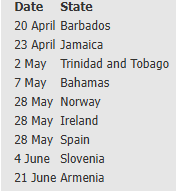
These recognitions raised the global total from 138 to 147 in 2024, meaning that nearly three-quarters of UN member states (147 out of 193) now officially recognize the State of Palestine.
In addition, three of the US’s key allies – France, the UK, and Canada – announced their intention to recognize a Palestinian state, while several other countries are considering the same step. This marks a significant shift that further isolates Israel amid growing international concern over Gaza’s humanitarian crisis. These three countries will become the first G7 members to formally recognize a Palestinian state, posing a clear challenge to Israel. Should they proceed, the US would remain the sole permanent UN Security Council member not to recognize Palestine.
A new combat doctrine
There is no doubt that 7 October marked a turning point in Israel’s military strategy. From that date onward, Israel abandoned for the first time the combat doctrine established by David Ben Gurion, Israel’s first prime minister. Blitz wars were no longer its preferred option, the issue of recovering prisoners was no longer a central priority, and its threshold for human and material losses in any military confrontation rose significantly. This shift compels all regional states to recalibrate their strategies to match Tel Aviv’s new combat doctrine.
It is important to stress that Ben Gurion designed Israel’s combat doctrine to suit its geographic and demographic realities. This may have prompted retired Israeli colonel Gur Laish, former head of war planning in the Israeli Air Force and a key participant in the army’s strategic planning, to publish a paper on 19 August at the Begin-Sadat Center for Strategic Studies, warning Israeli leaders against adopting a new security doctrine that disregards Israel’s limits of power. Yet, the following crucial question remains: Will Netanyahu succeed in proving the effectiveness of Israel’s new approach, or will abandoning Ben Gurion’s doctrine mark the beginning of Israel’s end?
Political Scene in Lebanon: Meetings Confirm Failure of Anti-Resistance Scheme
Al-Manar | September 8, 2025
Since the council of ministers convened at Baabda Palace on September 5 and decided to curb the process of targeting the resistance arms, political tensions in Lebanon started to slide.
The regular meetings between the senior officials in Lebanon was resumed with the House Speaker of Parliament Nabih Berri’s visit to Baabda Palace on Monday
Speaker Berri reviewed the general situation with President Joseph Aoun, affirming that everything is fine.
“With the blessings of Our Lady Mary, everything is fine.”
The House Speaker on Monday also met in Ain el-Tineh with Lebanese Army Commander, General Rudolf Haykal, who presented the military plan to confine weapons under the condition of the Israeli commitment to the ceasefire,
Commenting on the recent parliamentary session, Head of Hezbollah’s parliamentary bloc leader Mohammad Raad said the September 5 outcome signaled a retreat by many in government who realized the earlier arms decision had reached a dead end.
“They found a formula to delay implementation without fully withdrawing from their decision. It’s not a solution—it’s simply a pause,” Hezbollah’s MP asserted.
Raad asserted that Hezbollah’s weapons are “more legitimate than the government itself,” citing the group’s right to defend Lebanese land under national and international law.
Israeli drones drop grenades near UNIFIL in Lebanon amid Hezbollah disarmament push
Press TV – September 3, 2025
The UN Interim Force in Lebanon (UNIFIL) says Israeli drones have dropped four grenades close to peacekeepers working to clear roadblocks, which were hindering access to a UN position, in “one of the most serious attacks” on its personnel since the 2024 ceasefire deal between Lebanon and Israel.
“This is one of the most serious attacks on UNIFIL personnel and assets since the cessation of hostilities agreement of last November,” the UNIFIL said in a statement on Wednesday.
It added, “One grenade impacted within 20 meters and three within approximately 100 meters of UN personnel and vehicles.”
UNIFIL has stated that the Israeli army was notified beforehand regarding its road clearance operations in the area, southeast of the village of Marwahin.
“Any actions endangering UN peacekeepers and assets, and interference with their mandated tasks are unacceptable and a serious violation of Resolution 1701 and international law,” the UNIFIL said.
The resolution, which brokered a ceasefire in the 33-day-long war Israel launched against Lebanon in 2006, calls on the occupying Tel Aviv regime to respect Lebanese sovereignty and territorial integrity.
Last week, the UN Security Council voted unanimously to terminate the UN peacekeeping force in southern Lebanon at the end of next year after nearly five decades, bowing to demands from the United States and its close ally Israel.
The UNIFIL was created to oversee the withdrawal of Israeli troops from southern Lebanon after Israel’s 1978 invasion. Its mission was expanded following the summer 2006 war on Lebanon.
The Israeli attack also comes amid growing pressure on the Lebanese government to disarm Hezbollah. The United States and Israel have increasingly attacked the peacekeeping force for not countering Hezbollah in southern Lebanon.
However, observers note that UNIFIL’s mandate does not include countering Hezbollah, and the resistance movement is widely viewed across Lebanon as a critical deterrent against Israeli aggression.
Despite near-daily Israeli airstrikes and repeated violations of Lebanese airspace and sovereignty, Hezbollah remains the only credible military force capable of confronting the occupation and preventing further Israeli incursions.
Lebanese officials have condemned Israel’s continued occupation of five positions in southern Lebanon, calling it a clear breach of the ceasefire terms.
Prime Minister Nawaf Salam, under growing US-Israeli pressure to push for Hezbollah’s disarmament, welcomed the extension of UNIFIL’s mandate but emphasized the need for Israel to withdraw from occupied Lebanese territory.
Critics, however, question how Lebanese forces can assert control in the south while Israeli troops remain in place and escalate attacks.
As calls to disarm Hezbollah grow louder from Washington and Israel, many in Lebanon argue that such efforts ignore the core issue of Israel’s continued violations of Lebanese sovereignty.
The coming war on Iran will be regional, perhaps international
By Robert Inlakesh | Al Mayadeen | September 2, 2025
It is unlikely that the anticipated continuation of the war on Iran, spearheaded by the Israelis but led by the United States, will be confined to a simple tit-for-tat missile trade-off as we saw earlier this year. The reason for this is simple: too much is at stake if this front again flares up.
Since the US-brokered ceasefire between “Israel” and Iran went into effect on June 29, the United States and the Zionist regime have scrambled to move around military equipment, engage in mass surveillance flights over Lebanon and the Persian Gulf. More recently, the US began an early withdrawal of its forces from the Ain al-Assad base and other installations inside Iraq.
The first point of entry to understanding what is currently brewing across West Asia is understanding the mentality at play on both sides of the divide.
On one side, we have the Zionist regime and its Western allies, who are the aggressors and believe themselves to be fighting what Israeli Prime Minister Benjamin Netanyahu calls a “seven-front war”. Although the front in the Gaza Strip has pervaded public consciousness over the past 23 months, overshadowing the wars on Lebanon, seizure of territory in Syria, bombing of Yemen, and attack on Iran, it is very much part of this wider war.
From the Israeli-American perspective, their ongoing war carries the goal of eliminating what is known as the Axis of Resistance, the leader of which is the Islamic Republic of Iran. The thinking clearly is that this period in time has provided a unique opportunity to crush the regional resistance and with it, achieve regime change in Tehran.
In June, the Israelis clearly got ahead of themselves and believed that they could inflict a similar blow in Iran to the blow they inflicted on Lebanese Hezbollah back in September of 2024. In the first few hours of the Zionist Regime’s illegal attack on Iran, their media boasted of landing such a blow. However, to everyone’s surprise, within 15 hours, the Iranians were back on their feet and began firing bursts of ballistic missiles into central “Tel Aviv”.
Even the US strikes didn’t inflict any kind of kill blow that degraded Iran sufficiently, as it proved more than anything that their nuclear facilities could survive US strikes, even if they were badly damaged. The United States certainly poses a major threat to Iran, but the takeaway here is that the Zionist regime can’t take them on alone.
If there is another battle between Iran and the Israelis, the Zionist Entity is already low on interceptor missiles, and its arsenal would be severely drained within around a week or so. We also still do not know the extent of the damage inflicted by Iran’s ballistic missile strikes, due to Israeli military censorship. Simply put, they don’t even allow the public to know the true number of soldiers killed and wounded in Gaza, so forget the notion that they’d admit what Iran did to them.
Another major player here is Lebanese Hezbollah, which appears to be successfully rebuilding itself and is at an intelligence deficit compared to what they had built up over decades and utilized late last year. Yet, what the Israelis do understand is that in the event that a conflict with Iran arises where Hezbollah chooses to enter the fight on the ground, they may face an existential battle for their very survival.
If, and this evidently depends on varying factors, Hezbollah chooses to launch an all-out ground offensive as Iran fires ballistic missiles in bursts across occupied Palestine, it is plausible that the Lebanese party will inflict a total defeat on the Israeli ground forces and seize huge swaths of territory in the north of Palestine.
The Zionist regime is now claiming to be preparing for mission impossible in the Gaza Strip, amassing troops in order to try and occupy Gaza City, an operation that would take between two to five years to complete, according to Israeli military estimates. It would also be extremely costly for the Israeli ground forces and their military vehicles. If they do commit to this, it would leave them open on the northern front. There is, however, the possibility that this is all a bluff.
If the Israelis are bluffing, they could be preparing for an offensive against Lebanon instead. The thinking here would be to try and halt Hezbollah’s rebuilding process, setting it back even further, and could even involve a ground operation, likely using Syrian territory to invade the Bekaa Valley area.
Such a conflict would be existential for Hezbollah, especially as the US works with the Lebanese government to impose a seizure of its weapons. A repeat of what occurred a year ago would work only to advance the US-Israeli goal of seizing Hezbollah’s weapons, while a victory could at the very least liberate Lebanese territory and represent a massive blow to the disarmament agenda.
Therefore, if Iran is currently in the scope of the Zionists, it would make strategic sense for them to either attack Lebanon first or launch a major offensive at the same time it attacks Iran.
The US withdrawal of forces from Iraq is another major indicator of a regional escalation involving Iran, specifically because of the Popular Mobilization Units (PMU) and the potential they have to inflict enormous damage, given that they enter the fold of the war.
Iraq’s PMU is yet to be mobilized, and its role in the ongoing regional conflict has been minimal. The reason for this is that if some 230,000 men are mobilized, or even a portion of them, it is difficult to suddenly put a halt to their operations, and this will mean a dramatic regional escalation, the likes of which the United States will not be able to manage inside Iraq and will instead use their economic levers as a primary weapon of war.
Depending on how far such a conflict is going to go, there is even the possibility that it could go global. While there is currently no evidence to support this notion, there has been talk that the US naval deployment to the Caribbean, triggering a mass militia mobilization across Venezuela, could be connected. Additionally, China and Russia could use the opportunity of a major Iran-US war to carry out some of their long-desired goals, at a time when Washington has diverted its resources to West Asia.
There is again the possibility that another attack on Iran could look similar to what the world witnessed during what is dubbed the “12-day war”, yet the same stalemate outcome would only lead us back to square one again and beget yet another war. At some point, something will have to give.
The reason why the danger of an all-out regional conflagration appears high as of now is purely down to the Israeli-US refusal to end their genocide against Gaza, indicating that they seek total defeat of the Axis of Resistance and nothing less. Inevitably, one side must win and the other lose; there is currently no such thing as deterrence for either side, only who will triumph and carve out a new regional reality.
Featured Video
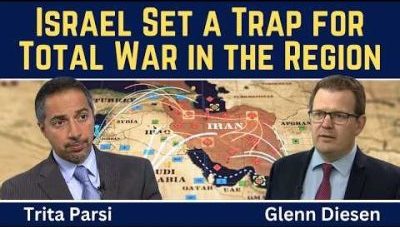
Trita Parsi: Israel Set a Trap for Total War in the Region
or go to
Aletho News Archives – Video-Images
From the Archive
Zionism’s Violent Legacy
By Donald Neff | Washington Report On Middle East Affairs | January 1996
On January 4, 1948, Jewish terrorists drove a truck loaded with explosives into the center of the all Arab city of Jaffa and detonated it, killing 26 and wounding around 100 Palestinian men, women and children.[1] The attack was the work of the Irgun Zvai Leumi – the “National Military Organization,” also known by the Hebrew letters Etzel – the largest Jewish terrorist group in Palestine. The Irgun was headed by Revisionist Zionist Menachem Begin and had been killing and maiming Arabs, Britons and even Jews for the previous ten years in its efforts to establish a Jewish state.
This terror campaign meant that at the core of Revisionist Zionism there existed a philosophical embrace of violence. … continue
Blog Roll
 Aletho News
- Trita Parsi: Israel Set a Trap for Total War in the Region
- Trump’s Iran war is on an Israeli leash
- Saudi oil boss issues global supply warning
- Riyadh Says Its Oil System Is Intact. The Numbers Say Otherwise.
- Trump and Netanyahu Want to “Finish the Job” on Iran
- US ‘one-sided dictation’ not Iran’s beliefs makes rational talks impossible: Baghaei
- Iran’s Next Strike May Not Explode. It Could Shut You Down /Col Doug Macgregor
- Iran: US political targets legitimate if assassinations return
- Iraq shuts key border crossing with Iran under US pressure: Report
- Undersea Internet cables could be targeted in retaliation for attacks on Iran: IRGC deputy chief
- If Americans Knew
- The Israel Lobby’s Changing Fortunes
- AIPAC has become such a political liability that it’s shifting to a more “nimble” approach to buying politicians
- At least 160 Israeli settler attacks in 2 weeks
- Will Gaza’s Ancient Christian Community Disappear Forever?
- Israel’s vision of regional security rests on keeping Arab states weak
- Heidi Levine recounts how Palestinian youths helped save her in settler attack
- DAILY UPDATE: Latest essential news on Palestine, Israel, & region
- Trump’s Intensifying Sabotage of the ICC, for Israel’s Sake
- Israeli military detain US and UK volunteers in West Bank including Democratic NY politician Brad Lander
- Americans at National Conservatism Conference held in Israel this year criticize Israel
- No Tricks Zone
- E-Cars Reduce CO2 Emissions By Only 41% Compared To Internal Combustion Engine Vehicles
- Predictions Made By Renowned Climate Professor Over Past Decades Have Been Proven To Be Poor
- New Study Suggests Large Regions Of The Pacific Ocean Have Been Cooling For The Last 80 Years
- Germany’s Green Energy Debacle: High Energy Costs Force Kahla Porzellan to Close After 182 Years!
- New Study: 50 Years Of The Most Aggressive ‘Net Zero’ Policies Can Only Affect The Global Climate By 0.03°C
- US September “Heat” Was No Record…Many Records Set Decades Ago
- Latest European Green Energy Debacle; Portugal’s Largest Flagship Solar Park Insolvent!
- Green Energy Debacle: German Expert Professor Fritz Vahrenholt Warns Of Severe Economic And Social Consequences
- Two More Paleo Reconstructions Affirm Meters-Higher Sea Levels Across Ireland, Brazil 7000-6000 Years Ago
- New Study: Earth And Venus Surface Warmth Largely Explained By Convection And Lapse Rate, Not CO2 Or Radiation

