Turkiye backs extremists in Lebanon as ‘blackmail’ over Cyprus ties
The Cradle | July 14, 2025
Turkiye has expressed “deep concern” over Lebanese President Joseph Aoun’s recent visit to Cyprus and has plans to “blackmail” Beirut if it chooses to counter Ankara’s influence in the Mediterranean, a senior Lebanese source told The Cradle on 14 July.
“Ankara expressed deep concern over Aoun’s visit to the Cypriot capital, Nicosia, and viewed it as a worrying sign of Beirut’s potential openness to Mediterranean and European partnerships that are inconsistent with its agenda in the Eastern Mediterranean,” the source said.
“Northern Lebanon is witnessing a worrying increase in the number of displaced Syrians with complex security backgrounds,” the source added, noting an increase in cross-border [weapons] smuggling operations which are taking place “under the direct sponsorship and cover of Syrian and Turkish security agencies.”
According to the Lebanese source, Aoun’s visit to Cyprus “revealed files of political and security blackmail prepared by Turkiye for use later if Beirut decides to pursue strategic options that conflict with Ankara’s interests in Lebanon and the region.”
The source went on to say that Ankara “considers northern Lebanon as its traditional area of influence and will not tolerate any new official positioning by Beirut that threatens its geopolitical position in the Mediterranean.”
Turkiye invaded Cyprus in 1974 and controls the northern part of the island. Ankara views Greek Cyprus as a main regional and geopolitical rival.
The Cradle’s Malik Khoury wrote that Ankara is unlikely to take kindly to an improvement of Lebanese–Cypriot ties, and has strong ambitions for northern Lebanon.
“Turkiye has long-standing historical ties to northern Lebanon,” he said. Citing Lebanese sources, he noted Ankara’s “interest in the port of Tripoli.” Geographically and maritime-wise, this is the largest port in the Mediterranean in terms of potential. “If rehabilitated, it could rival the Israeli port of Haifa. Ankara also has its eye on the Qlayaat Airport, near the Syrian border, as well as large areas of the Akkar Plain, rich in minerals and natural resources,” he added.
Thousands of extremist Islamist prisoners, including Syrians linked to the groups now affiliated with authorities in Damascus, are held in Lebanon’s Roumieh prison.
Reports from after the fall of former Syrian president Bashar al-Assad’s government said that Syria was planning to request their repatriation.
A day after Aoun’s visit to Cyprus last week, a source quoted by Syria TV threatened to revive the issue of Syrian prisoners in Lebanon, while hinting at the potential closure of the Syrian–Lebanese border. The report said Damascus is unhappy with Beirut’s “handling” of the situation and is planning a political and diplomatic escalation if the issue is not resolved.
“If you want to breathe air via Cyprus, you will suffocate by land from Damascus,” the source said.
The information provided by the Lebanese source to The Cradle comes as there has been growing concern about potential ambitions by Syria’s extremist-dominated military to take over swathes of northern Lebanon.
There have been reports recently that extremist fighters from Syria have been infiltrating Lebanon.
The Lebanese Armed Forces (LAF) denied these reports on Sunday and said they are working to ensure the security of the border.
Ten people, including two foreign nationals, were detained during an LAF operation in the town of Btebyat in Metn in the Mount Lebanon governorate, according to an army statement Sunday evening. The suspects’ nationalities were not specified.
Initial findings indicated that the individuals were not linked to any extremist organizations. The army’s statement did not acknowledge circulating reports of attempts to stockpile weapons across the country in preparation for attacks.
A report by Israel’s i24 in early July claimed Syria is demanding control over the northern Lebanese city of Tripoli during ongoing talks between Damascus and Tel Aviv.
The concern caused by this report and others like it was compounded on Friday, when US envoy Tom Barrack warned that Lebanon is “going to be Bilad al-Sham (historical name for Greater Syria) again” if Hezbollah does not surrender its arms.
“Syrians say Lebanon is our beach resort,” Barrack added.
The threat of extremist factions, which now make up the bulk of the Syrian state, is not new to Lebanon.
The Syrian army is predominantly made up of what used to be known as Hayat Tahrir al-Sham (HTS), an extremist Al-Qaeda-linked organization which was headed by Syria’s new President Ahmad al-Sharaa (known back then as Abu Mohammad al-Julani).
HTS was formerly known as the Nusra Front – Al-Qaeda’s official branch in Syria. The organization, responsible for deadly suicide attacks inside Lebanon, took over large swathes of the Syrian–Lebanese border in the first few years of the war in Syria, including the barrens of Arsal and Ras Baalbek.
The organization was eventually fully repelled by Hezbollah and the Lebanese army in 2017 in what is referred to as “The Second Liberation.”
HTS and the other groups, which have been incorporated into the Syrian Defense Ministry, have long operated under the direct tutelage of Turkish intelligence.
US envoy warns Lebanon: ‘Disarm Hezbollah or risk Syrian occupation’

The Cradle | July 12, 2025
Lebanon risks being invaded and occupied by Syria and Israel unless Beirut acts to disarm Hezbollah, US special envoy Thomas Barrack warned on 12 July.
Speaking to The National, Barrack, who is the US special envoy for Syria and ambassador to Turkiye, stressed Lebanon faces an existential threat” from the two US allies on its borders, while urging Beirut to act quickly to disarm Hezbollah.
“You have Israel on one side, you have Iran on the other, and now you have Syria manifesting itself so quickly that if Lebanon doesn’t move, it’s going to be Bilad Al Sham again,” he said, using the historical name for greater Syria, which included Lebanon and Palestine.
“Syrians say Lebanon is our beach resort. So we need to move. And I know how frustrated the Lebanese people are. It frustrates me,” he added.
 In December, the former Al-Qaeda offshoot Hayat Tahrir al-Sham (HTS) conquered Damascus, bringing Syria under US, Israeli, and Turkish influence.
Syria’s new government, led by former ISIS commander Ahmad al-Sharaa, has reportedly demanded it be given the Sunni-majority city of Tripoli in northern Lebanon while relinquishing the Golan Heights as part of a peace deal with Israel.
Last month, Barrack presented Lebanese officials with a proposal that calls for reconstruction aid and an end to Israel’s attacks if Hezbollah gives up its weapons.
The war between Israel and Hezbollah ended in November with a US-brokered ceasefire. But Israel continues to carry out air strikes and assassinations throughout Lebanon. Israeli ground forces also occupy five points in the south of the country.
In response to the proposal, Lebanese authorities submitted a seven-page document calling for a full Israeli withdrawal from occupied Lebanese territory, including the Shebaa Farms, and pledging to dismantle Hezbollah’s arms in south Lebanon, but not nationwide as Israel is demanding.
When The National asked Barrack why Lebanese President Joseph Aoun has not publicly committed to a disarmament timetable, Barrack said: “He doesn’t want to start a civil war.”
“We don’t have the soldiers on the ground for the [Lebanese Armed Forces, LAF] to be able to do that yet because they don’t have the money. They’re using equipment that’s 60 years old,” he said.
“Hezbollah is looking at it saying, ‘We can’t rely on the LAF. We have to rely on ourselves because Israel is bombing us every day, and they’re still occupying our land,’” Barrack added.
On 6 July, Hezbollah chief Naim Qassem said the Lebanese resistance movement will not disarm or back down from confronting Israel until it ends its air strikes and withdraws from southern Lebanon.
“We cannot be asked to soften our stance or lay down arms while [Israeli] aggression continues,” Qassem told thousands of supporters gathered in Beirut’s southern suburbs on Sunday.
He was speaking during religious gatherings for Ashura, which commemorates the martyrdom of the Prophet Muhammad’s grandson, Imam Hussein, in 680 AD in Karbala, Iraq.
Lebanese President Aoun stated on Friday that Lebanon has no intention of normalizing relations with Israel.
US President Donald Trump is pressuring both Syria and Lebanon to sign the Abraham Accords, which saw the UAE, Bahrain, and Morocco normalize relations with Israel in previous years.
Tom Barrack’s project to destabilize Lebanon
The Cradle | July 7, 2025
“A century ago, the west imposed maps, mandates, penciled borders, and foreign rule. Sykes-Picot divided Syria and the broader region for imperial gain-not peace. That mistake cost generations. We will not make it again.”
–Tom Barrack, US ambassador to Turkiye and special envoy to Syria
When US Envoy to Turkiye and Syria Tom Barrack made this declaration last month in Ankara, it suggested Washington was repudiating the colonial-era borders imposed on the Levant by Britain and France. But Barrack’s actual meaning was far more insidious: The Sykes-Picot agreement may be dead, but now the US intends to redraw the region’s frontiers to suit one purpose only – Israeli expansionism.
US envoy’s agenda: Redrawing the region by dismantling resistance
Lebanon’s fate remains tightly interwoven with that of Syria and occupied Palestine. Any imposed resolution to the so-called Israeli-Palestinian conflict will inevitably reverberate through both Damascus and Beirut, forcing their governments to make existential choices. Chief among these is the surrender of arms and capabilities, a demand embedded in the US-led effort to transform the region’s balance of power.
Enter Barrack, the Lebanese-American billionaire and close confidant of US President Donald Trump, now repurposed as a roving envoy to Lebanon and Syria. He has since positioned himself as a chief advocate of pulling both Syria and Lebanon into the Abraham Accords, a euphemism for normalizing ties with the occupation state.
Barrack met with top officials in Beirut today, where he was expected to peddle this political reconfiguration under the guise of regional peace.
Maximum pressure and the threat of force
Lebanon is at the sharp end of a US-Israeli campaign to disarm Hezbollah at any cost and within months. The escalation is not a reaction to local dynamics, but rather a consequence of Washington’s regional failures: from the quagmire in Ukraine to its inability to deter Iran or check Israel’s war crimes in Gaza.
With nothing substantive to offer, the US is leaning on coercion to twist arms at the top. Israeli military threats serve as a blunt instrument to corner Lebanese officials into signing off on the resistance’s disarmament – a fantasy the US is now aggressively chasing.
Trump, seeking a legacy boost, is betting on a high-stakes foreign policy gambit: force Lebanon – the last Levantine Arab state still tethered to the Axis of Resistance – into surrender, and break its last defensive stronghold against Israeli expansion.
A new kind of envoy, a new kind of threat
Barrack’s mission departs from the playbook of previous US envoys who, for all their meddling, took Lebanon’s fragility seriously. Not so today. Barrack, who also serves as US ambassador to Turkiye and envoy to Syria, represents a new breed of imperial proxy, unconcerned with sectarian fault lines or civil strife.
Washington now believes Hezbollah is vulnerable. The plan is to crush it politically, and if needed, militarily, even if that means weaponizing the Lebanese army against its own citizens. The Trump administration has made clear it will trade Lebanese stability for US-Israeli hegemony.
According to a Lebanese official cited by Anadolu Agency, Barrack handed Beirut a five-page proposal in June that centered on three main objectives. The first is the monopolization of all weapons under the Lebanese state’s control. The second involves enacting fiscal and economic reforms, including tighter border controls, anti-smuggling efforts, and boosted customs revenues. The third demands a reconfiguration of ties with Syria by demarcating borders and expanding trade.
No timeline is spelled out in the document, but US pressure suggests an expectation for full implementation by year’s end. Lebanon, the official claims, is drafting a unified response based on the ministerial statement and President Joseph Aoun’s inaugural address.
But Beirut has its own demands, including an end to Israeli violations, a full withdrawal from occupied territories, and the launch of reconstruction efforts in the south.
For now, Hezbollah’s official position remains undisclosed. Its response is expected to surface in the coming days, as Barrack returns to Beirut.
After meeting with President Aoun, Prime Minister Nawaf Salam, and Speaker of Parliament Nabih Berri in Beirut today, Barrack announced that he is “satisfied” with the Lebanese authorities’ response to Washington’s request regarding the disarmament of Hezbollah. At the same time, he warned that Lebanon “will be left behind” if it does not move in line with the ongoing regional changes. Barrack also stated that “Hezbollah is a political party, and it also has an armed wing. Hezbollah needs to see that there is a future for them, and that this path is not meant to be only against them, and that there is an intersection between peace and prosperity for them as well.”
Empty promises, no Israeli restraint
During his last visit, Barrack met Lebanon’s three top officials to pitch a phased disarmament plan, divided by time and geography. He hinted at possible US pressure on Tel Aviv to vacate recently occupied points. But when pressed, he admitted there were no guarantees that Israel would halt its aggression.
This is no peace deal. It is an ultimatum.
Barrack’s push marks the culmination of a decades-long campaign to dismantle the region’s anti-imperialist front. With Egypt and Jordan long co-opted, Syria’s Baathist era gutted, and Iraq’s factions fragmented, apart from Yemen’s Ansarallah-aligned army, Hezbollah remains the last major armed deterrent to Israeli expansion.
Washington and Tel Aviv understand this. Disarming Hezbollah clears the path for diplomatic normalization not only with Beirut, but also with Syria’s so-called interim government under de facto President Ahmad al-Sharaa, a former ISIS chief who went by the nom de guerre Abu Mohammad al-Julani, now edging closer to normalization with Tel Aviv.
Capitulation without compensation
The US demands everything and offers nothing. There are no guarantees of Israeli withdrawal. No prisoner releases. No end to airstrikes or assassinations. Not even arms for the Lebanese army or funds for reconstruction.
Instead, Washington continues to throttle the army by blocking weapons transfers and targeting seized stockpiles, cementing its subservience.
Barrack’s so-called solution is a trap. It further strips Lebanon of sovereignty, invites more Israeli strikes across the south, the Bekaa, and even Beirut, and paves the way for sectarian fragmentation under the guise of national reform.
With some domestic factions parroting US-Israeli talking points, the threat is no longer just foreign. Western-backed, right-wing Lebanese elements are gaining narrative traction, openly adopting Tel Aviv’s discourse on resistance weapons. These forces could soon coordinate directly with the occupation state, becoming internal agents of destabilization.
Meanwhile, the proposal ignores the Palestinian refugee question, omits border security mechanisms, and offers no path to deter Israeli incursions. In effect, it sets the stage for a sectarian, security-driven partition of Lebanon.
Divide and conquer: Disarming in stages
Washington’s strategy is clear. It aims to isolate and disarm resistance factions one by one. Last month, the target was Palestinian groups. Now, Hezbollah. The aim is to prevent a unified front by cutting off cross-sectarian solidarity and picking off targets individually.
If these pressures are not absorbed and neutralized, the risks are existential. A major Israeli assault on Lebanon or a manufactured civil conflict is likely. At the same time, extremist groups are resurging in Syria under Sharaa’s watch, a man eager to appease Washington and Tel Aviv at all costs.
Hezbollah and its supporters face a stark choice. They must either surrender to foreign diktats or entrench their defenses and refuse to even entertain a debate on arms as long as threats persist.
This may be the gravest threat to Lebanon’s post-war existence. With the US shedding all pretense of neutrality and openly advocating for a new regional map, the country faces a binary future: resist, or be dismembered.
Lebanon’s salvation hinges on one truth. Only a united front behind the resistance can preserve its sovereignty and shield it from the vultures circling overhead.
BRICS leaders demand ceasefire in Gaza, condemn strikes on Iran
Al Mayadeen | July 6, 2025
Leaders of the BRICS bloc, comprising 11 emerging economies, issued a strong and unified call on Sunday for an immediate, permanent, and unconditional ceasefire in Gaza, as the war enters its 22nd month.
In the final declaration of their summit held in Rio de Janeiro, BRICS leaders urged all parties to engage in good-faith negotiations to halt the war on Gaza and demanded a full withdrawal of Israeli forces from the Strip and all other parts of the occupied Palestinian territories.
“We exhort the parties to engage in good faith in further negotiations to achieve an immediate, permanent and unconditional ceasefire,” the 11-nation bloc said in a final summit statement.
The statement comes as indirect truce negotiations between the Israeli occupation and Hamas resumed in Doha, with international pressure mounting for a resolution to the war.
BRICS condemns strikes on Iran
The summit also addressed the recent escalation between Iran and “Israel”, during which the latter launched an unprovoked 12-day war on the Islamic Republic, culminating in US airstrikes on Iranian nuclear facilities in June.
“We condemn the military strikes against the Islamic Republic of Iran since June 13, 2025,” the statement read, without directly naming the United States or “Israel”.
It added, “We express serious concern over deliberate attacks on civilian infrastructure and peaceful nuclear facilities, which constitute a violation of international law.”
BRICS demands Israeli withdrawal from Lebanon
Moreover, the statement called for a ceasefire in Lebanon and for all “parties to strictly adhere to its terms and fully implement UN Security Council Resolution 1701,” adding, “We condemn the ongoing violations of the ceasefire, as well as the violations of Lebanon’s sovereignty and territorial integrity.”
“We urge Israel to respect the terms agreed upon with the Lebanese government and to withdraw its occupying forces from all Lebanese territory, including the five remaining sites in southern Lebanon.”
BRICS demands Israeli withdrawal from Syria
Regarding Syria, the BRICS leaders reaffirmed their commitment to the independence, sovereignty, and territorial integrity of the country, calling on “Israel” to withdraw troops from Syrian territory without delay, according to the statement.
“We reaffirm our commitment to the sovereignty, independence, unity, and territorial integrity of Syria and call for a peaceful and inclusive Syrian-led and Syrian-owned, UN-facilitated political process, based on the principles of Security Council Resolution 2254 (2015), in a manner that ensures the security and well-being of the civilian population, without discrimination,” it read.
The statement further condemned the threat posed by foreign terrorists in Syria and the risk of the spread of terrorists from Syria to regional countries.
“Syria should firmly oppose all forms of terrorism and extremism and take concrete actions to respond to concerns of the international community about terrorism,” it added.
The BRICS leaders welcomed the lifting of sanctions on Syria and expressed their hope that the country’s economy will be rebuilt.
It is worth noting that the next BRICS summit will be held in India in 2026, a final declaration of the Rio De Janeiro summit said.
BRICS encourages diplomatic efforts on Ukraine
On the Ukrainian issue, the leaders expressed hope that ongoing diplomatic efforts, including the African Peace Initiative and the Group of Friends for Peace, would lead to a sustainable resolution, advocating for dialogue and diplomacy to this end.
“We recall our national positions concerning the conflict in Ukraine as expressed in the appropriate fora, including the UN Security Council and the UN General Assembly. We note with appreciation relevant proposals of mediation and good offices, including the creation of the African Peace Initiative and the Group of Friends for Peace, aimed at peaceful resolution of the conflict through dialogue and diplomacy. We expect that current efforts will lead to a sustainable peace settlement,” the statement read.
Criticism of Trump’s trade policies
In addition to Middle East affairs, the summit took aim at US economic policy. BRICS leaders expressed “serious concerns” over US President Donald Trump’s recent wave of unilateral tariffs, calling them “indiscriminate” and damaging to global trade.
“We voice serious concerns about the rise of unilateral tariff and non-tariff measures which distort trade and are inconsistent with WTO rules,” the statement said.
The bloc warned that these actions could “disrupt global supply chains” and increase economic uncertainty, particularly as Trump has threatened new tariffs on trading partners unless “deals” are reached by August 1.
Lula urges BRICS action on Gaza
In his opening remarks at the summit, Brazilian President Luiz Inácio Lula da Silva drew a parallel with the Cold War’s Non-Aligned Movement, a group of developing nations that resisted formally joining either side of a polarized global order.
“BRICS is the heir to the Non-Aligned Movement,” Lula told leaders. “With multilateralism under attack, our autonomy is in check once again.”
BRICS nations now represent more than half the world’s population and 40% of its economic output, Lula noted in remarks on Saturday to business leaders, warning of rising protectionism.
“If international governance does not reflect the new multipolar reality of the 21st century, it is up to BRICS to help bring it up to date,” Lula added in his opening remarks.
Furthermore, he defended the integrity of Iran’s borders, following the Israeli war and the US bombing of Iranian nuclear facilities, highlighting the failure of US-led wars in the Middle East.
“We cannot remain indifferent to the genocide carried out by Israel in Gaza, the indiscriminate killing of innocent civilians and the use of hunger as a weapon of war,” Lula told fellow BRICS leaders, including those from China, India, and other key emerging economies.
The renewed BRICS stance comes as Israeli Prime Minister Benjamin Netanyahu prepares to meet with Trump at the White House on Monday. Trump has been pushing for an end to the war and expressed hope for a ceasefire agreement in the coming week.
Putin calls era of liberal globalization ‘obsolete’
In his video statement, Russian President Vladimir Putin proposed the formation of a new BRICS investment platform to be developed through the New Development Bank.
“This is a matter of jointly developing harmonized tools to support and raise funds for the economies of our countries and those of the global South and East,” Putin stated, underlining the growing use of national currencies in intra-BRICS trade and calling for further expansion of this practice to reduce dependence on external systems.
Growing global influence
Putin noted that BRICS’ global authority and influence continue to grow each year, surpassing the G7 in terms of purchasing power parity.
“The authority and influence of our association in the world are growing from year to year. BRICS has rightfully established itself among the key centers of global governance,” he said.
He added that BRICS has many like-minded partners in the Global South and East and that the shift away from a unipolar world order is accelerating.
Speaking via video link to the summit in Rio de Janeiro, Putin told BRICS leaders that the era of liberal globalization was obsolete and that the future belonged to swiftly growing emerging markets, which should enhance the use of their national currencies for trade.
“Everything indicates that the model of liberal globalization is becoming obsolete,” Putin said, adding, “The center of business activity is shifting toward the emerging markets.”
Putin also called on the BRICS countries to step up cooperation in a range of spheres, including natural resources, logistics, trade, and finance.
Araghchi mourns Iranians killed by ‘Israel’ in BRICS speech
At the BRICS summit, Iranian Foreign Minister Abbas Araghchi delivered a moving speech where he mourned the Iranians killed by the recent Israeli aggression on Iran.
Araghchi expressed gratitude to fellow BRICS members who recognized the seriousness of recent escalations and condemned the aggression, detailing the destruction of residential areas, military sites, and civilian infrastructure.
The attacks, he said, resulted in the deaths of off-duty soldiers, scientists, university professors, and civilians, including women and children.
Particularly alarming, he noted, was the targeting of Iran’s peaceful nuclear facilities, which are under strict International Atomic Energy Agency (IAEA) oversight. The foreign minister accused the US of direct involvement in the strikes, reinforcing its complicity in what he called “Israel’s” broader campaign of occupation, apartheid, and regional destabilization.
He warned that these attacks not only inflicted human and infrastructural damage but also delivered a “lethal blow” to diplomacy and the international rule of law, occurring just days before a scheduled round of nuclear talks between Iran and the United States.
Calling for international accountability, the top Iranian diplomat urged BRICS leaders to recognize the dangerous precedent set by what he described as unprovoked, lawless aggression by two nuclear-armed states.
‘Act of terrorism’: Iran urges formation of fact-finding group for 1982 abductees in Lebanon
Press TV – July 5, 2025
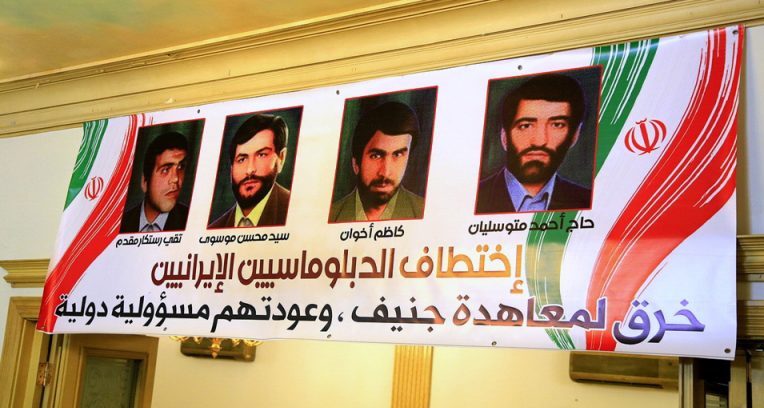
The Iranian Foreign Ministry has decried as an “act of terrorism” the 1982 kidnapping of four Iranian diplomats in Lebanon, reiterating the Islamic Republic’s call for the formation of a fact-finding group to determine the fate of the abductees.
The ministry said in a statement on the occasion of the 43rd anniversary of the abduction of the Iranian diplomats that the Israeli regime is responsible for the abduction and hostage-taking of its citizens, and continues to seriously pursue the matter with relevant international authorities.
On July 4, 1982, Ahmad Motovasselian, a military attaché at Tehran’s Embassy in Beirut, Mohsen Mousavi, the Iranian chargé d’affaires in Lebanon, Taqi Rastegar Moqaddam, an employee of the Embassy, and Kazem Akhavan, a photographer for the Islamic Republic News Agency (IRNA), were abducted by Israeli-affiliated armed groups.
“There is ample evidence, as repeatedly stated, and copious indications proving that the Iranian diplomats were abducted by an armed group inside Lebanon during the occupation of Lebanese soil by the Zionist regime, handed over to the occupying forces, and transferred to the occupied territories,” the statement said.
“The abduction of Iranian diplomats on July 4, 1982, in Beirut was not only an act contrary to international law and a flagrant violation of the 1961 Vienna Convention on Diplomatic Relations, but also constitutes an act of terrorism according to the Convention Against the Taking of Hostages (1979).”
The statement also expressed Tehran’s gratitude for the Lebanese government’s cooperation in following up on the status of the four abducted Iranian diplomats, including Beirut’s registration of the issue through correspondence with the then secretary-general of the United Nations in September 2008.
The Iranian Foreign Ministry, as the statement said, once again calls on the authorities of the Lebanese government, as well as the Secretary-General of the United Nations and the International Committee of the Red Cross and other competent international bodies, to fulfill their legal and humanitarian responsibilities in pursuing the case and to exert all their efforts to clarify the status of the abducted Iranian diplomats.
“In this framework, the proposal for the formation of a joint fact-finding committee between Iran and Lebanon, with the cooperation of the International Committee of the Red Cross, to pursue the matter and clarify the status of the abducted Iranian diplomats is once again emphasized,” the statement said.
The Iranian Foreign Ministry has repeatedly called for the Lebanese government, the UN, and the International Committee of the Red Cross to investigate the incident and determine the fate of the missing diplomats.
Lebanese militiamen from the Lebanese Forces Group admitted to the 1982 kidnapping of the four Iranian nationals who were on a diplomatic mission in North Lebanon. Investigations show that they were last handed to Israel at the time.
Although there is information about those who abducted the Iranian diplomats and their whereabouts, the fate of these Iranians is still shrouded in mystery, with their families and Iranian authorities believing they are still alive and languishing in Israeli jails.
Hezbollah: Israel poses strategic threat to region and beyond
Press TV – July 3, 2025
Sheikh Naim Qassem, the leader of Hezbollah, declared Israel not only an occupier of Palestine but a strategic threat to Lebanon, Egypt, Syria, Jordan, the broader region, and global stability.
In a televised address on Wednesday, Qassem emphasized that Israel’s ideology, actions, and ambitions endanger Muslims, Christians, and Jews alike, destabilizing both regional and global peace.
He noted that the regime’s ideology, behavior, and vision endanger both regional stability and global peace.
Qassem said that since the ceasefire agreement between Lebanon and Israel took effect, the regime has not stopped its aggression and has violated the agreement more than 3700 times.
He stressed that the regime must adhere to the terms it agreed upon with Lebanon and stop its acts of aggression.
The Hezbollah leader said the movement will not be swayed by threats, nor will it accept surrendering its weapons to Israel.
Qassem firmly rejected calls for Hezbollah to disarm, asserting that Lebanon’s defense and sovereignty are internal matters, immune to external pressures.
“We will not submit to humiliation, abandon our land, or compromise under threats,” he stated, stressing that discussions about Hezbollah’s weapons are a domestic issue, with no role for Israel in dictating terms.
Qassem said Hezbollah’s resistance is a defense against a strategic threat impacting multiple nations, including Palestine, Lebanon, Egypt, Syria, and Jordan.
Describing Israel as an existential danger, Qassem noted, “Israel’s threat is not limited to Muslims; it endangers Christians and Jews as well.”
He criticized the regime’s ideology and actions as a risk to global peace and called on those who avoid confronting Israel to resist on humanitarian grounds.
“Coexisting with an expanding, invasive danger is impossible,” he warned, emphasizing Hezbollah’s resistance as rooted in human, Islamic, and national values for future generations.
Lebanese state must address ongoing violations
In late June, Qassem stated that Israel’s continued aggression, including attacks on Nabatieh, the targeting of civilians in southern Lebanon, and strikes on the money exchange sector, is now the Lebanese state’s responsibility to address.
“The state must apply pressure and fulfill its duties,” he urged, rejecting claims that Hezbollah provides pretexts for Israeli attacks.
He cited Israel’s occupation of 600 km² of Syrian territory, destruction of capabilities, and attacks on Iran as evidence of unprovoked aggression.
“You must understand this cannot continue,” Qassem told the public. “Do you imagine we will remain silent forever? All of this has limits.”
Israel used depleted uranium bombs in Iran strikes: Report
The Cradle | June 26, 2025
A well-informed source revealed to Fars News Agency on 26 June that Israel may have used depleted uranium (DU) munitions in its recent airstrikes targeting sensitive sites across Iran.
Initial tests conducted at the impact zones reportedly detected traces suggestive of uranium, although further technical analysis is still underway to confirm the findings.
Depleted uranium, a dense metal used in bombs and tank shells to penetrate armored targets, is not classified as nuclear weaponry, but it poses serious long-term health risks due to its low-level radioactivity and toxic chemical composition.
International health organizations have warned that DU exposure may be linked to increased rates of leukemia, kidney damage, and anemia – especially in children living in contaminated areas.
The US military’s use of DU weapons has been linked to massive increases in cancer rates in Iraq following the US wars on that country in 1991 and 2003.
Military experts are currently examining debris and munitions remnants from bombs dropped by Israel in Iran during the recent 12-day war. More detailed findings will be released once final lab results are available, the source stated, cautioning against premature conclusions.
This would not be the first time Israel has been accused of using prohibited weapons. Human rights groups have previously condemned the Israeli military for its use of white phosphorus and suspected DU-based weapons in past operations in Lebanon and the Gaza Strip, raising international concern over repeated violations of international humanitarian law.
On 6 October, the president of the Lebanese Association of Social Medicine stated that Israel had been bombing the southern suburbs of Beirut using banned bombs with uranium warheads.
President of the association, Raif Reda, called for “collecting samples from the bombing sites and sending reports to the United Nations so the world can witness the bloody, criminal history of the Zionist enemy,” according to statements reported by the National News Agency (NNA).
Following Israel’s massive bombing campaign against Lebanon, the Syndicate of Chemists in Lebanon (SCL) warned that “the use of such types of internationally banned weapons, especially in densely populated Beirut, leads to massive destruction, and their dust causes many diseases, especially when inhaled.”
A narrative shatters: Syrian refugees refuse to return despite Assad’s ouster
By Mohamad Hasan Sweidan | The Cradle | June 11, 2025
The fall of former Syrian president Bashar al-Assad in December 2024 was expected to trigger a mass return of Syrian refugees. It did not. Six months on, UN figures show fewer than eight percent of Syrians abroad have made the journey home. The promise of a new era in Damascus has collided with the harsh realities of insecurity, poverty, and heightened foreign interference.
The Syrian refugee crisis – now in its 14th year – was born of war, western-imposed economic blockade, and the disintegration of state institutions that started in March 2011. What began as internal displacement soon morphed into a mass exodus across West Asia and into Europe, producing one of the most severe refugee crises of the 21st century.
Life after Assad: The enduring refugee crisis
Despite the fall of the Assad government, the Syrian refugee crisis remains unresolved. As of early 2025, the UN reports that approximately 6.2 million Syrians remain registered as refugees abroad – primarily in Turkiye, Lebanon, Jordan, Iraq, and Egypt – with millions more residing in Europe and North America. Only a fraction have returned since the Syrian opposition assumed power.
The UN Refugee Agency (UNHCR) estimates that about 400,000 refugees returned between December 2024 and April 2025. This number rose slightly to 481,730 by May, still below eight percent of the total refugees abroad. This disparity underlines a stark reality: The fall of Assad did not translate into mass return as the west suggested for years, which reveals that there are deeper, unresolved issues that keep Syrians away from Syria.
In West Asia’s key host countries, Turkiye hosts between 2.7 and three million Syrian refugees under a temporary protection regime, in addition to roughly one million unregistered Syrians. Lebanon hosts around 750,000 registered refugees, though Beirut places the actual figure closer to 1.5 million. Jordan houses approximately 650,000 Syrian refugees.
While many refugees may dream of returning, reality intervenes. A mid-2024 survey found 57 percent hoped to return one day, yet fewer than two percent believed this was feasible within the following year. UNHCR identifies safety concerns and the lack of stable livelihoods as the most significant obstacles. These core issues shape the calculus of return – a calculus that has not shifted meaningfully since Assad was in power.
Why Syrians aren’t going back
A May poll cited critical return deterrents: housing and property conditions (69 percent), service availability (40 percent), safety (45 percent), and economic hardship (54 percent). Fourteen years of war have left Syria fractured, devastated, and distrustful. There is no unified, trustworthy security or governance structure. The post-Assad era remains deeply uncertain to Syrian refugees.
The current political set-up in Damascus is a patchwork of domestic and foreign-influenced actors. Despite Assad’s ousting, returnees consistently cite improved security and essential services as prerequisites. A recent survey indicated that 58 percent of Syrians abroad would return only under “safe and dignified conditions,” while 31 percent remain undecided.
Governance challenges are equally daunting. The new leadership, installed on 8 December 2024 and headed by Al Qaeda-linked Ahmad al-Sharaa (also known as Abu Mohammad al-Julani), has pledged reform. But memories of infighting among rebel groups linger. Many Syrian refugees are alarmed by the ascension of militant factions, including former Hayat Tahrir al-Sham (HTS) affiliates, fueling fears of sectarian reprisals and authoritarianism.
Beyond Syria’s borders, refugee networks now serve as lifelines. After more than a decade abroad, Syrian refugees have established enduring community ties. In Turkiye, 60 percent of working-age Syrians are employed, mostly in informal sectors. These jobs, although low-paid, offer stability compared to war-torn Syria.
Yet, most Syrians in Turkiye remain socially unanchored: Over half report feeling disconnected from Turkish society, where racism has become rife, while 84 percent still feel moderately connected to Syria. This duality reflects a long-term migration trend where refugees retain ties to their homeland while integrating abroad.
A recent survey shows that just seven percent of Syrians in Turkiye have concrete plans to leave. Others express the desire to relocate, but without actionable steps. Citizenship also affects permanence: Around 238,000 Syrians had been naturalized in Turkiye by mid-2024, granting them full legal protections, including immunity from deportation. Turkish opposition sources, however, estimate this figure could be as high as 2.5 million.
The return paradox: Poor conditions in host nations, yet no return?
Even deteriorating conditions in host countries have not significantly altered return patterns. Economic collapse in Lebanon, rising costs in Turkiye, and recent conflict along the Lebanese border have not pushed Syrians homeward. Studies consistently show return decisions hinge more on improvements in Syria – security, jobs, services – than on hardships abroad.
Divisions among external powers inside Syria further complicate matters. Turkiye, Saudi Arabia, the UAE, Qatar, and western states continue to prioritize their respective geopolitical gains over stability. The result is a fragmented political order dominated by armed factions and foreign patrons, with little accountability to actual Syrians.
This instability has real consequences. The massacres along Syria’s coast last March, reportedly instigated by UAE-backed elements, required intervention by the new Damascus authority. Such events erode trust and deter return.
Economically, Syria remains in free fall. According to the UN Development Programme (UNDP), 90 percent of Syrians live below the poverty line. The World Bank projects an additional one percent GDP contraction in 2025. The World Food Programme (WFP) says 9.1 million are food insecure, with 3.6 million reliant on aid.
Electricity is available just two to three hours a day, crippling industry and inflating living costs. Despite promises by the transitional government to reform banking and attract Persian Gulf investment, remaining sanctions and market isolation are still serious hurdles, even after Washington lifted most restrictions in May 2025.
Unemployment is rampant, fuel and transport costs are surging, and social safety nets are vanishing. Monthly incomes in many regions fall below $40, while basic food baskets cost twice that amount. The exodus of Syrian professionals continues to deplete the labor market, deepening reliance on remittances in the absence of a coherent reconstruction plan.
Syria remains a high-risk return
The reluctance of millions of Syrians to repatriate was never actually about leadership change – credible data simply does not exist on this. It is about the cumulative consequences of war: insecurity, economic collapse, political fragmentation, and the absence of justice or reconciliation.
Unless those in power focus on rebuilding credible institutions and securing livelihoods – not just reshuffling elites – the prospect of return will remain a perilous gamble.
UNIFIL denies talks on ending its mission in south Lebanon: Exclusive
Al Mayadeen | June 9, 2025
Any discussion about the future of UNIFIL falls solely under the authority of the UN Security Council, the spokesperson for UNIFIL clarified to Al Mayadeen, noting that the force remains committed to coordinating with the Lebanese Army and insists on the full withdrawal of Israeli troops from southern Lebanon.
UNIFIL spokesperson Andrea Tenenti told Al Mayadeen, “There are currently no talks about UNIFIL’s future,” adding that “any such discussion would take place within the UN Security Council.”
Meanwhile, a US State Department spokesperson told Al Mayadeen in a short briefing that the recent reports claiming the United States intends to end the UNIFIL peacekeeping mission in southern Lebanon are inaccurate.
Tenenti stated that UNIFIL continues its operations in southern Lebanon in full cooperation with the Lebanese Armed Forces. He emphasized that Israeli forces should withdraw from their occupied positions in the area, noting that the UN Security Council alone holds the authority to assess whether UNIFIL’s ongoing presence remains necessary and effective.
“Restoring stability to southern Lebanon depends on Israel’s withdrawal from recently occupied positions,” he added.
Lebanese Army is adhering to resolution 1701
Tenenti also affirmed that the Lebanese Army remains committed to implementing UN Resolution 1701, deploying to required areas in close coordination with UNIFIL forces.
When asked about French troops, he responded: “I don’t distinguish between the role of French forces and UNIFIL, all are fulfilling their duties under Resolution 1701.”
The statement follows reports in Israeli media claiming the US and “Israel” agreed to terminate UNIFIL’s operations in southern Lebanon.
The Israeli newspaper Israel Hayom cited sources claiming that “the United States and Israel have agreed to end UNIFIL’s operations in southern Lebanon.” According to the report, the US administration is “not interested in renewing UNIFIL’s mandate,” and “Israel, frankly, isn’t pushing hard to convince them otherwise.”
US, Israel agree to end UNIFIL mandate in south Lebanon: Report
The Cradle | June 9, 2025
The US and Israel have agreed that the United Nations Interim Force in Lebanon (UNIFIL) must cease its operations in the country’s south, according to Hebrew media outlets.
Washington has decided not to renew UNIFIL’s mandate, and Israel “did not try to convince them otherwise,” the report said.
A vote on the UNIFIL mandate is expected to take place at the UN Security Council within the next few months, likely in August.
Another report in Israel Hayom said the US is considering pulling support for UNIFIL. Sources told Times of Israel that the “option is on the table.”
“The US has not yet made up its mind regarding its future support for UNIFIL, but it wants to see major reforms, which could mean pulling support,” the sources added.
No officials from the US, Israel, or the UN have publicly commented on the matter yet.
UNIFIL, which was established in 1978 and expanded after Israel’s war on Lebanon in 2006, currently includes more than 13,000 uniformed personnel tasked with monitoring hostilities along the Blue Line and ensuring humanitarian access.
Israeli Prime Minister Benjamin Netanyahu has been pushing for UNIFIL’s removal from Lebanon since as far back as October 2024.
Analysts have said that the move is intended to eliminate international observers who could monitor or document Israeli military activity in southern Lebanon. During the latest war, UNIFIL forces came under Israeli fire several times.
“The exclusion of outside observers, whether it is journalists or UN peacekeepers, seems a deliberate strategy to limit the scrutiny of Israeli forces at a time when they are most needed,” Shane Darcy, professor at the Irish Centre for Human Rights, said last year during Israel’s ground operation in Lebanon.
Other reports and analyses have said that Washington is looking to pressure Beirut into accepting a new mandate for UNIFIL, including changes that would see the interim force actively work against Hezbollah’s presence in the south and destroy infrastructure without needing to coordinate with the Lebanese army.
Such changes to the UNIFIL mandate are advocated for by Israeli reservist and former head of the Israeli army’s Strategic Planning Division, Assaf Orion, in a 29 May piece for the Washington Institute. “The time has come for UNIFIL to either adapt or disband,” Orion says.
The Israeli media reports about UNIFIL’s future in Lebanon come days after Tel Aviv launched its largest attacks on the Lebanese capital since the start of the ceasefire.
Since the truce was reached in November 2024, Israel has violated the deal over 3,000 times with constant attacks. Israeli forces also maintain an occupation of five locations inside Lebanon, which they established themselves in after the ceasefire, in violation of the agreement.
Hezbollah and the Lebanese state have abided by the agreement. The resistance has handed over weapons and military positions to the Lebanese army south of the Litani River.
Yet it rejects US and Israeli pressure for full disarmament.
On 6 June, Israel’s Defense Minister, Israel Katz, threatened Lebanon with an escalation of attacks if Hezbollah is not disarmed.
“There will be no calm in Beirut, and no order or stability in Lebanon, without security for Israel,” he said.
Lebanese army may partially ‘freeze cooperation’ with US-led ceasefire committee
The Cradle | June 6, 2025
The Lebanese Armed Forces (LAF) released a statement on 6 June warning it could potentially “freeze cooperation” with the US-led ceasefire monitoring committee regarding site inspections, due to constant Israeli violations.
The statement came the morning after Israel carried out a large-scale attack on Beirut’s southern suburb.
In the statement, the LAF condemned Israel’s “daily aggression” against Lebanon and its continued occupation of Lebanese territory. “Immediately after the Israeli enemy announced its threats, it began coordinating with the Cessation of Hostilities Monitoring Committee to prevent an attack. Patrols also headed to a number of sites to inspect them, despite the enemy’s rejection of the proposal,” the statement added.
“The Israeli enemy’s persistent violation of the Agreement and its refusal to cooperate with the Cessation of Hostilities Monitoring Mechanism only weakens the role of the Committee and the Army, and could lead the military establishment to freeze cooperation with the Cessation of Hostilities Monitoring Mechanism regarding site inspections,” the LAF went on to say.
Following the attacks on Thursday evening, Lebanon’s President Joseph Aoun and Prime Minister Nawaf Salam released statements condemning the Israeli airstrikes.
The president said the attack was a “blatant violation of an international agreement” and served as “conclusive evidence” of Israel’s rejection of regional peace.
Salam also condemned the “systematic and deliberate assault on Lebanon’s security, stability, and economy” and called on the international community to “shoulder its responsibility to deter Israel and ensure its full withdrawal from Lebanese territories.”
The Israeli airstrikes on Beirut took place on the eve of the Muslim holiday of Eid al-Adha.
Thousands of civilians were displaced from their homes after Israel issued evacuation orders for eight residential buildings in the southern suburb on Thursday night.
Israeli drones carried out over a dozen “warning strikes” before warplanes struck and destroyed the targeted buildings, marking the largest attack on Lebanon’s capital since the ceasefire was reached last year.
Tel Aviv claimed the buildings were located above underground drone production facilities belonging to the Lebanese resistance movement, Hezbollah.
“After Hezbollah extensively used drones as a key component of its attacks on Israel, the terrorist organization is expanding its drone production industry in preparation for the next war with Israel,” an Israeli army spokesman said.
Lebanese security sources who spoke with several local media outlets said the Lebanese army requested via the US-led ceasefire committee that it enter the buildings and inspect them to refute Israel’s claims.
The sources said the army entered one of the buildings and found no evidence of any weapon facilities. However, Israel rejected the request and began carrying out drone strikes, forcing the army to withdraw.
“In the (ceasefire) agreement, there is a mechanism for inspections if there is a complaint. Israel in general, and Netanyahu in particular, wants to continue the war in the region,” a Hezbollah official told Lebanese media, denying the presence of any drone facilities at the locations targeted by Israel.
As the final round of airstrikes took place, Israeli warplanes also bombed the village of Ain Qana in southern Lebanon, citing the presence of Hezbollah facilities.
Hundreds of people have been killed since the ceasefire agreement, which Israel has so far violated over 3,000 times, was reached in November last year. Israeli forces also maintain an occupation of five locations inside Lebanon, which they established themselves in after the ceasefire, in violation of the deal.
Lebanese diplomatic efforts have so far failed to make progress in forcing Israel to stop its attacks and withdraw its forces from the five points in southern Lebanon, which are separate from the other areas in the south that the Israeli army has been illegally occupying for years.
Lebanon’s continued coordination with the US-led monitoring committee has yielded no results.
Israel’s Channel 14 said on Thursday evening that the latest Israeli strikes on Beirut were carried out in full coordination with Washington.
Featured Video
Trita Parsi: Israel Set a Trap for Total War in the Region
or go to
Aletho News Archives – Video-Images
From the Archive
Zionism’s Violent Legacy
By Donald Neff | Washington Report On Middle East Affairs | January 1996
On January 4, 1948, Jewish terrorists drove a truck loaded with explosives into the center of the all Arab city of Jaffa and detonated it, killing 26 and wounding around 100 Palestinian men, women and children.[1] The attack was the work of the Irgun Zvai Leumi – the “National Military Organization,” also known by the Hebrew letters Etzel – the largest Jewish terrorist group in Palestine. The Irgun was headed by Revisionist Zionist Menachem Begin and had been killing and maiming Arabs, Britons and even Jews for the previous ten years in its efforts to establish a Jewish state.
This terror campaign meant that at the core of Revisionist Zionism there existed a philosophical embrace of violence. … continue
Blog Roll
 Aletho News
- Trita Parsi: Israel Set a Trap for Total War in the Region
- Trump’s Iran war is on an Israeli leash
- Saudi oil boss issues global supply warning
- Riyadh Says Its Oil System Is Intact. The Numbers Say Otherwise.
- Trump and Netanyahu Want to “Finish the Job” on Iran
- US ‘one-sided dictation’ not Iran’s beliefs makes rational talks impossible: Baghaei
- Iran’s Next Strike May Not Explode. It Could Shut You Down /Col Doug Macgregor
- Iran: US political targets legitimate if assassinations return
- Iraq shuts key border crossing with Iran under US pressure: Report
- Undersea Internet cables could be targeted in retaliation for attacks on Iran: IRGC deputy chief
- If Americans Knew
- The Israel Lobby’s Changing Fortunes
- AIPAC has become such a political liability that it’s shifting to a more “nimble” approach to buying politicians
- At least 160 Israeli settler attacks in 2 weeks
- Will Gaza’s Ancient Christian Community Disappear Forever?
- Israel’s vision of regional security rests on keeping Arab states weak
- Heidi Levine recounts how Palestinian youths helped save her in settler attack
- DAILY UPDATE: Latest essential news on Palestine, Israel, & region
- Trump’s Intensifying Sabotage of the ICC, for Israel’s Sake
- Israeli military detain US and UK volunteers in West Bank including Democratic NY politician Brad Lander
- Americans at National Conservatism Conference held in Israel this year criticize Israel
- No Tricks Zone
- E-Cars Reduce CO2 Emissions By Only 41% Compared To Internal Combustion Engine Vehicles
- Predictions Made By Renowned Climate Professor Over Past Decades Have Been Proven To Be Poor
- New Study Suggests Large Regions Of The Pacific Ocean Have Been Cooling For The Last 80 Years
- Germany’s Green Energy Debacle: High Energy Costs Force Kahla Porzellan to Close After 182 Years!
- New Study: 50 Years Of The Most Aggressive ‘Net Zero’ Policies Can Only Affect The Global Climate By 0.03°C
- US September “Heat” Was No Record…Many Records Set Decades Ago
- Latest European Green Energy Debacle; Portugal’s Largest Flagship Solar Park Insolvent!
- Green Energy Debacle: German Expert Professor Fritz Vahrenholt Warns Of Severe Economic And Social Consequences
- Two More Paleo Reconstructions Affirm Meters-Higher Sea Levels Across Ireland, Brazil 7000-6000 Years Ago
- New Study: Earth And Venus Surface Warmth Largely Explained By Convection And Lapse Rate, Not CO2 Or Radiation

